


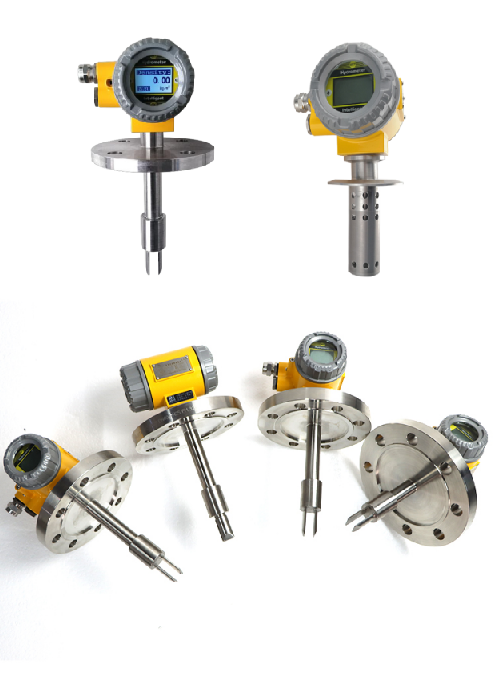
The tuning fork density meter is an inline vibrating-fork sensor that measures liquid density from 0 to 2500 kg/m³ with ±1 kg/m³ accuracy. The fork tines sit directly in the process line — their resonant frequency shifts with the density of the fluid between them, giving a continuous 4–20 mA or Modbus signal with no moving parts. It handles slurries, corrosive acids, and two-phase fluids that break Coriolis meters, and it calibrates once and holds over years.
Sino-Inst ships the tuning fork density meter in eight mounting styles and several wetted-material options (316L, Hastelloy C, PTFE-lined, titanium). Pick the variant below by your fluid and pressure, then confirm with the specs table.
Features of Tuning Fork Density Meter
- Direct inline density — no sample loop, no rotameter, no density calculation from pressure/temperature. The fork sits in the live process line.
- ±1 kg/m³ accuracy, ±0.1 kg/m³ repeatability — matches most Coriolis meters on density alone, at a fraction of the cost.
- Handles bubbles and slurries — the vibrating fork keeps reading through two-phase flow and solids loading up to ~50%, where Coriolis tubes stall.
- No moving parts — no bearings, no seals, no wear. Typical service life is 8+ years on continuous duty.
- Wide wetted-material menu — 316L, 2205 / 2507 duplex, Hastelloy C, titanium, PTFE or PFA lining for acids and chlorinated solvents.
- Eight process connections — DN50 PN16, G1.5″ thread, 3″ tri-clamp, IDF, RJT sanitary, top-mounted rod up to 3 m, submersible IP68 cable, stirred-tank offset bracket.
- 4–20 mA + HART + Modbus RTU — drops straight into a PLC or DCS. The transmitter also reports °API, °Brix, concentration %, and specific gravity directly.
Technical Parameters
| Measuring range | 0 – 2.5 g/cc (0 – 2500 kg/m³); 0 – 100% |
| Accuracy | ±0.001 g/cc (±1 kg/m³); ±0.5% of reading |
| Repeatability | ±0.001 g/cc (±0.1 kg/m³); ±0.1% |
| Operating temperature | -50 °C to +150 °C |
| Working pressure | up to 4 MPa |
| Viscosity range | 0 – 2000 cP |
| Temperature coefficient | < 0.1 kg/m³/°C after compensation |
| Wetted materials | 316L / 2205 / 2507 stainless; Hastelloy C; Titanium; PTFE/PFA lined |
| Fork coating | Standard PTFE or PFA |
| Power supply | 24 VDC, ≥50 mA |
| Output | 4–20 mA, 0–1000 Hz, RS-485 Modbus RTU, HART |
| Output accuracy | ±0.1% of reading or ±0.05% FS |
| Process connection | DIN 50 PN16, G1.5″ thread, 3″ tri-clamp, IDF, RJT sanitary |
| Enclosure rating | IP65 aluminum alloy housing |
| Derived readings | Density, °API, °Brix, concentration %, mass %, volume %, specific gravity |
Tuning Fork Density Meter Working Principle
A piezo driver excites the two fork tines at their natural resonant frequency in vacuum — typically around 1300 Hz. When the fork is immersed in a liquid, the fluid adds effective mass to the tines, and the resonant frequency drops. The frequency shift is proportional to the liquid density.
The transmitter measures this frequency, applies a temperature correction (a built-in Pt100 reads process temperature), and converts to density in kg/m³, °API, °Brix, or concentration %. Because the measurement is based on a physical resonance of the fork — not a flow-dependent effect — density is independent of flow rate, viscosity (up to 2000 cP), and orientation. That’s why a tuning fork works in a storage tank as well as a high-velocity process line.
The fork is also insensitive to bubbles and solids. Small bubbles and particles pass between the tines without damping the resonance. This is the single biggest difference from a Coriolis density meter, which shuts down on two-phase flow.
Models & Configurations
The tuning-fork head is the same mechanical principle across all models. What changes is the wetted material, mounting style, and process fit. Pick the variant by your fluid and pressure, then confirm on the spec table above.
| Model | Wetted material | Temp / pressure | Best for |
|---|---|---|---|
| Alcohol Concentration variant | 316L stainless | -40–120 °C / 4 MPa | Breweries, distilleries, beverage batching |
| Submersible variant | 316L + IP68 cable | -20–80 °C / 0.6 MPa | Tank bottoms, open reservoirs, settling ponds |
| Anti-corrosion variant | Hastelloy C-276 or PTFE-lined | -20–150 °C / 4 MPa | Acid, caustic, chlorinated solvents |
| Slurry / heavy-duty variant | Wear-plated 316L | -20–100 °C / 2.5 MPa | Dredging, mining tailings, cement |
Other available configurations: threaded (G1-1/2) for standard process lines, flange-standard (DN50 PN16-20592) for slurry service including lime and mud, sanitary 3″ tri-clamp for pharma and food, top-mounted rod up to 3 m insertion for large tanks, and stirred-tank special with offset bracket. Custom wetted materials include Hastelloy C, titanium, 2205 and 2507 duplex stainless, and aluminum — specify the medium and we’ll recommend the right alloy.
Applications
Tuning fork density meters show up wherever density is the controlled process variable — concentration in blending, solids loading in slurry, end-point in reactors, interface detection in pipelines that batch multiple products. The fork handles bubbly fluids and slurries that would break a Coriolis meter.
- Petrochemical — batch interface detection in product pipelines (gasoline / diesel / jet fuel), density-based reactor end-point
- Mining & dredging — slurry solids concentration in thickener underflow, tailings transport, dredger discharge lines
- Brewing & beverage — wort gravity, fermentation progress, CIP verification
- Pharmaceuticals — solvent blending, API concentration monitoring, granulation liquor
- Food — sugar syrup °Brix, dairy cream fat content, concentrated juice blending
- Pulp & paper — black liquor density in chemical recovery
- Chemical — sulfuric acid concentration, sodium hydroxide concentration, aqueous ammonia
- Power — flue gas desulfurization limestone slurry density
Related Density Measurement Instruments

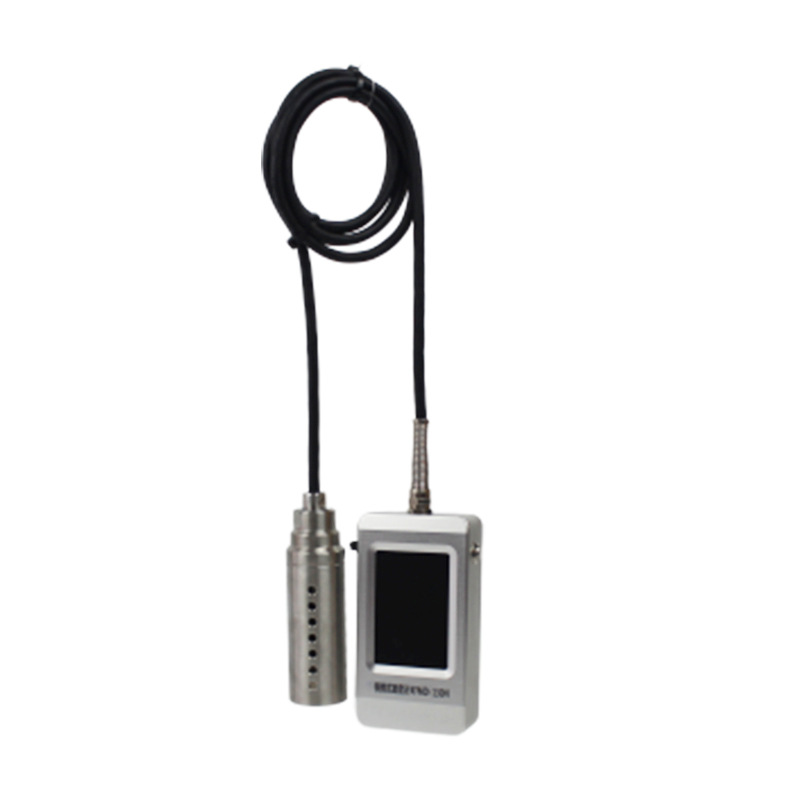
Handheld Petroleum Density Meter
Portable micro-vibrator digital density meter for on-site crude, gasoline, and refined-fuel density checks.
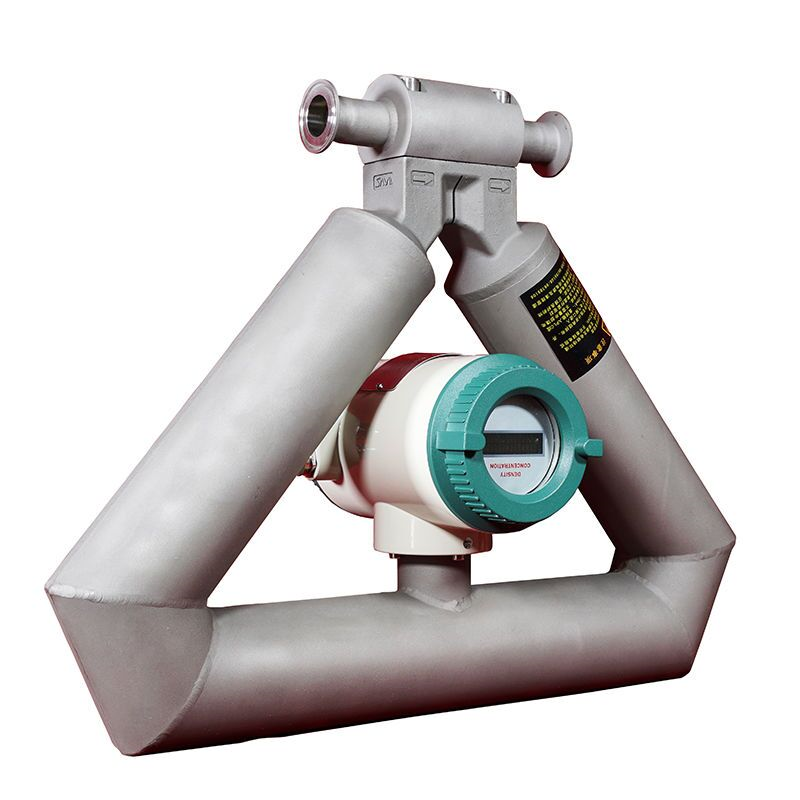
Coriolis Density / Concentration Meter
Inline Coriolis density and concentration meter for high-accuracy custody transfer and brewing applications.

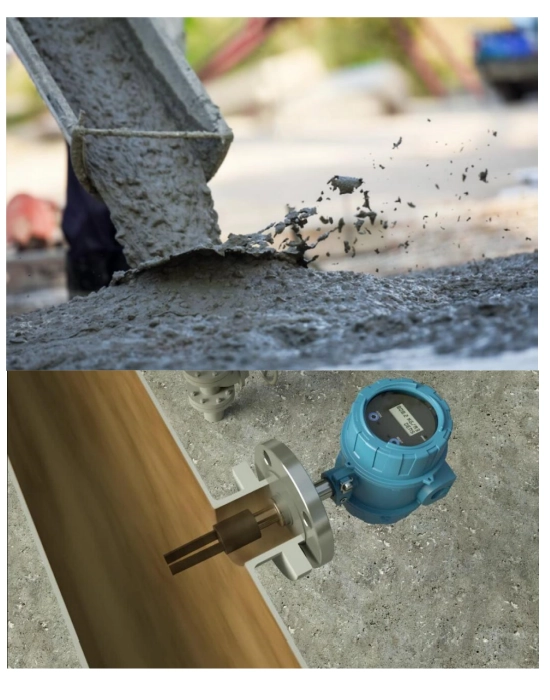
Slurry Density Meter
Heavy-duty slurry density solution for dredging, mining tailings, and cement — the same family as our dredger case study.
Need sizing help or a drawing review? Our engineers can match a tuning fork density meter to your fluid, pressure, and mounting, and ship a quote the same day. Send us the line data below and we’ll get back with a variant recommendation and price.
Request a Quote


Wu Peng, born in 1980, is a highly respected and accomplished male engineer with extensive experience in the field of automation. With over 20 years of industry experience, Wu has made significant contributions to both academia and engineering projects.
Throughout his career, Wu Peng has participated in numerous national and international engineering projects. Some of his most notable projects include the development of an intelligent control system for oil refineries, the design of a cutting-edge distributed control system for petrochemical plants, and the optimization of control algorithms for natural gas pipelines.
Tuning Fork Density Meter: Models & Specs | Sino-Inst
Tuning fork density meter for inline liquid density 0–2500 kg/m³, ±1 kg/m³ accuracy. 316L, Hastelloy, PTFE; submersible, flange, sanitary variants.
Product SKU: Tuning Fork Density Meter
Product Brand: Sino-Inst
Product Currency: USD
Product Price: 1850
Price Valid Until: 2029-09-09
Product In-Stock: InStock
5