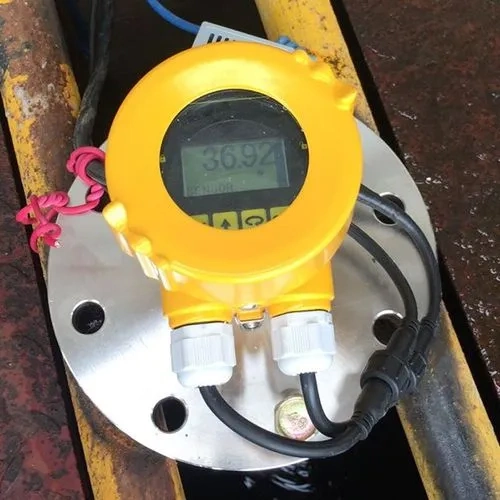
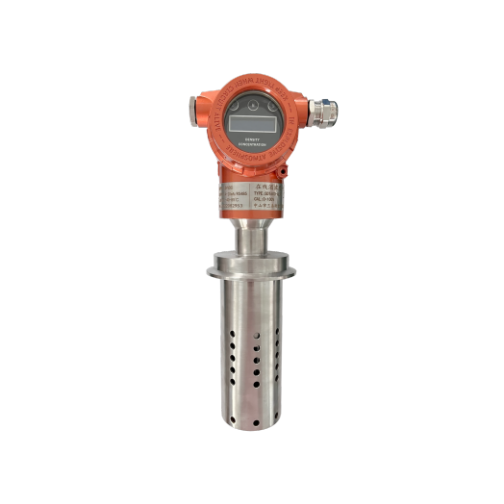
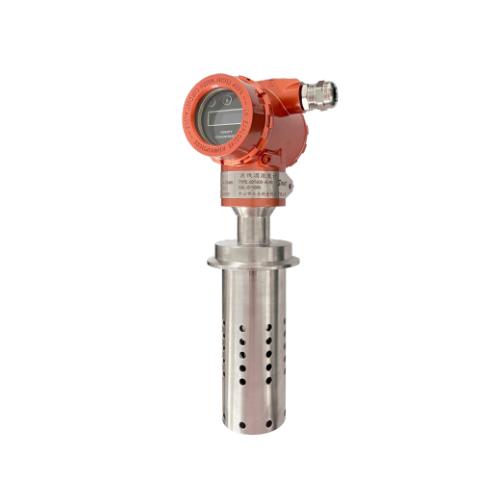
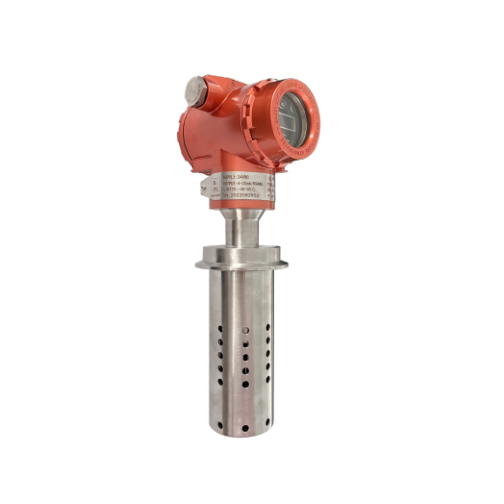
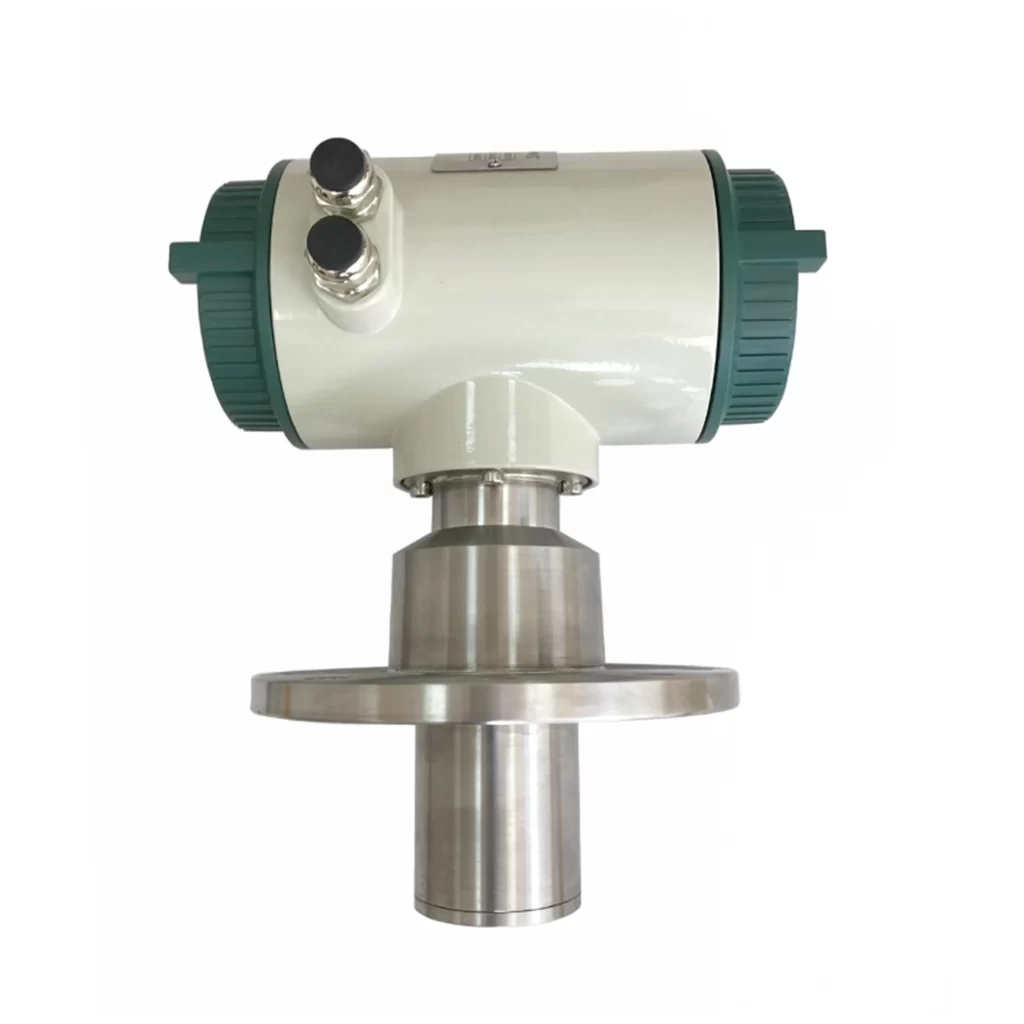
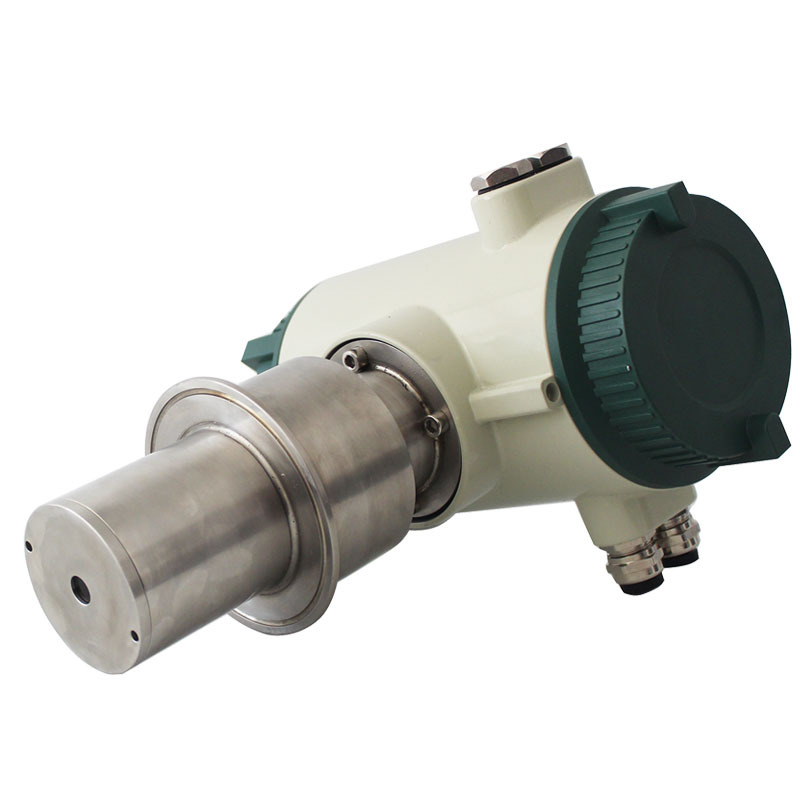
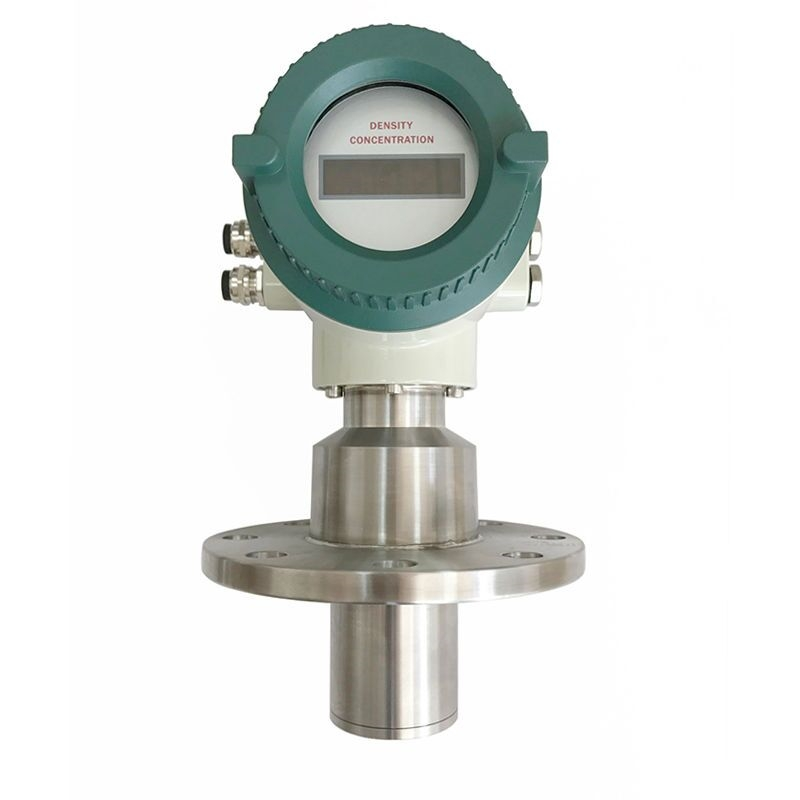
Online Density Meter (DP Type) — Hydrostatic Density Measurement for Slurry & Viscous Fluids

The online DP density meter measures liquid density from a hydrostatic pressure difference between two fixed points in the process. Range is 0.5 – 2.5 g/cc (500 – 2500 kg/m³), accuracy ±0.5% of reading, output 4–20 mA + HART. It handles slurries, corrosive acids, and viscous fluids where Coriolis tubes stall and tuning-fork probes foul, because the sensing diaphragms sit flush and see only pressure — not flow, not viscosity, not bubble content.

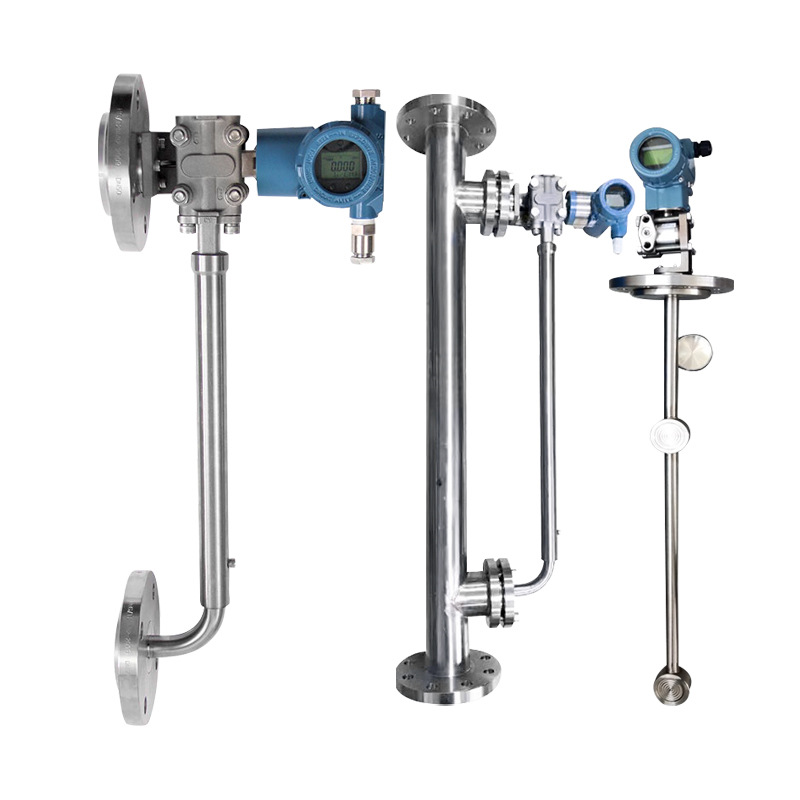
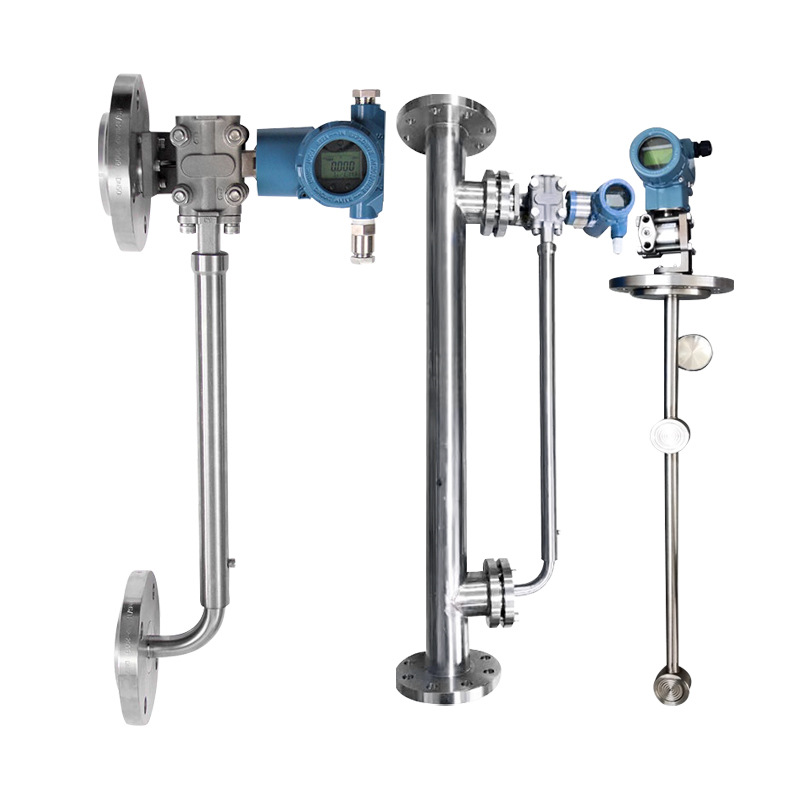
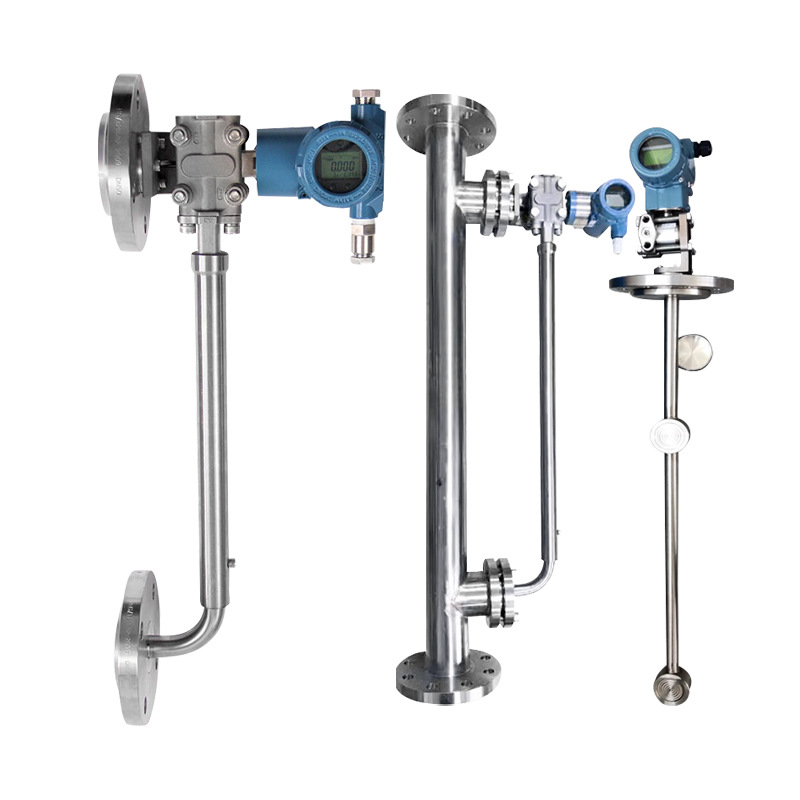
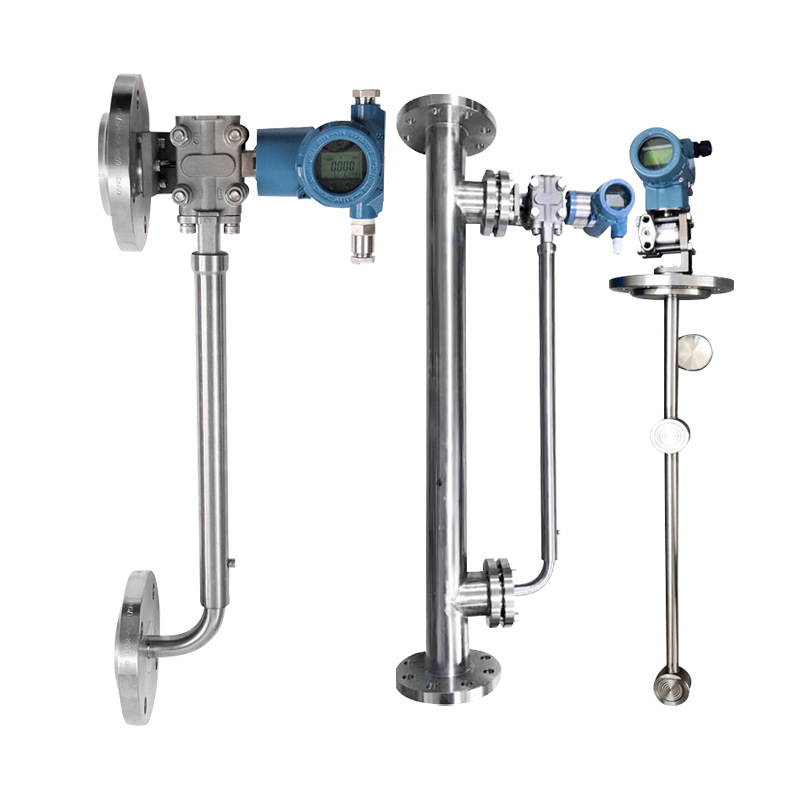
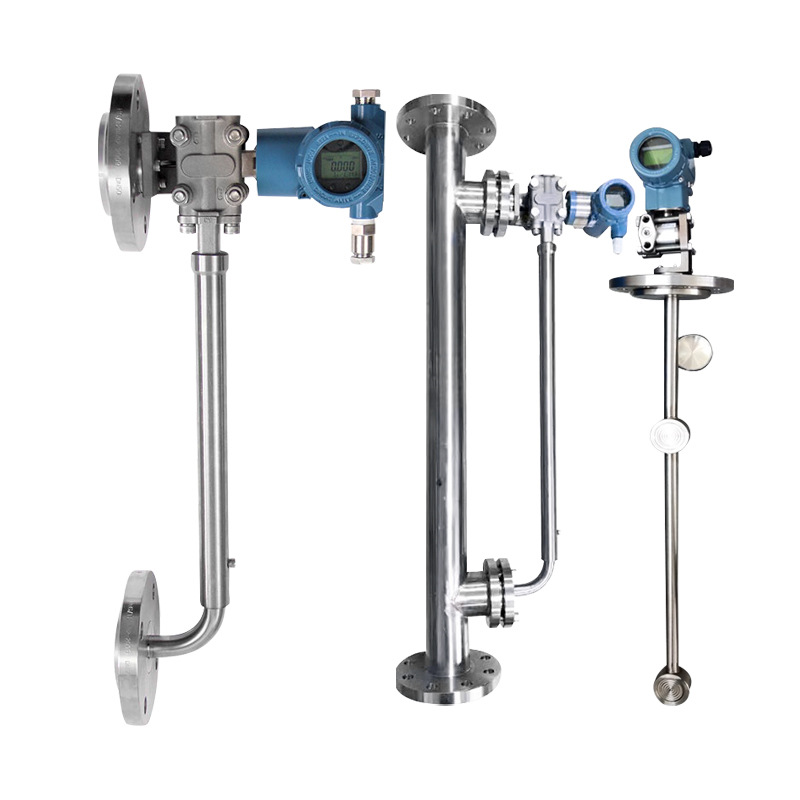
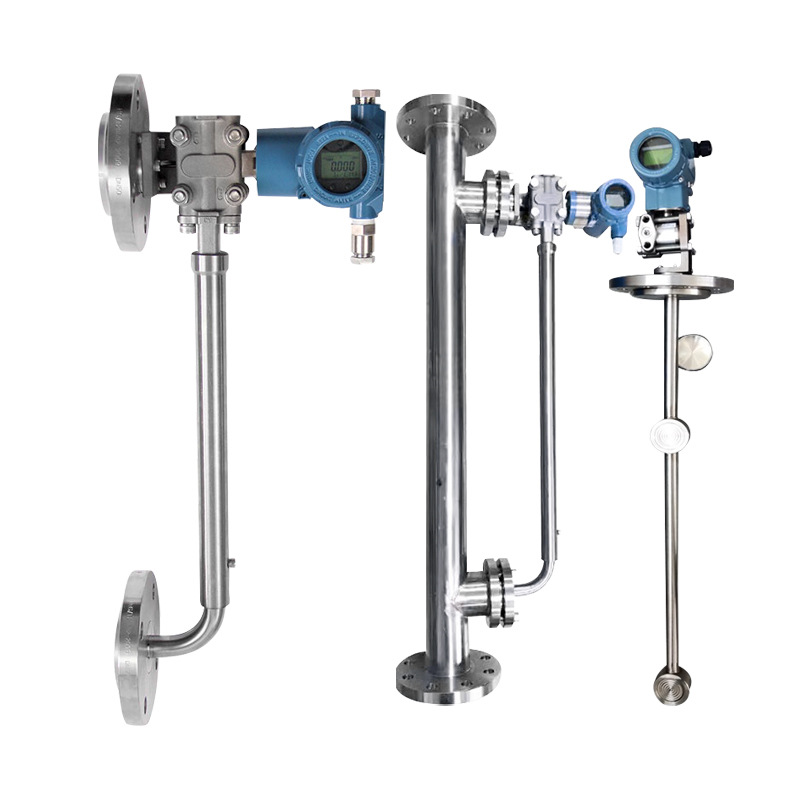
Sino-Inst builds the DP density meter around a high-accuracy differential pressure transmitter and two flush-diaphragm seals connected by oil-filled capillaries. Pick the variant below by your fluid, tank height, and wetted material, then confirm on the spec table.

Online DP density meter with differential pressure transmitter and remote diaphragm seals

Features of the Online DP Density Meter

  • Hydrostatic measurement principle — density comes from ΔP between two known heights. No moving parts in the wetted path, no flow dependency, no viscosity limit.
  • ±0.5% of reading accuracy — with a temperature-compensated DP cell and matched capillaries, density resolves to ±1 kg/m³ across the span.
  • Slurry and viscous-fluid capable — flush diaphragm seals stay clean in tailings, cement slurry, black liquor, sugar syrup, and heavy residuum where Coriolis and tuning fork fail.
  • No density calculation in the host — the transmitter outputs density directly in g/cc, kg/m³, °Bé, °Brix, or concentration %, so the PLC just reads a process variable.
  • Wide wetted-material menu — 316L stainless standard; Hastelloy C-276, Monel 400, tantalum-lined, PTFE-capped options for acids, caustics, and chlorides.
  • Mount on tank, bypass loop, or pipeline — tank-side flanges, insertion rods, inline bypass chambers, and open-sump stilling-well installations are all supported.
  • 4–20 mA + HART + RS-485 Modbus RTU — drops straight into a DCS or PLC. Local LCD shows density, temperature, and percent concentration simultaneously.

Technical Parameters

Measuring range0.5 – 2.5 g/cc (500 – 2500 kg/m³); concentration 0 – 100%
Accuracy±0.5% of reading (±1 kg/m³ typical)
Repeatability±0.1% of reading
Operating temperature-40 °C to +120 °C (standard); up to 200 °C with extended capillary
Process pressureup to 2.5 MPa (higher on request)
Viscosity limitno upper limit — measurement is pressure-based, not flow-based
Wetted material316L stainless (std); Hastelloy C-276, Monel 400, tantalum, PTFE-lined (opt)
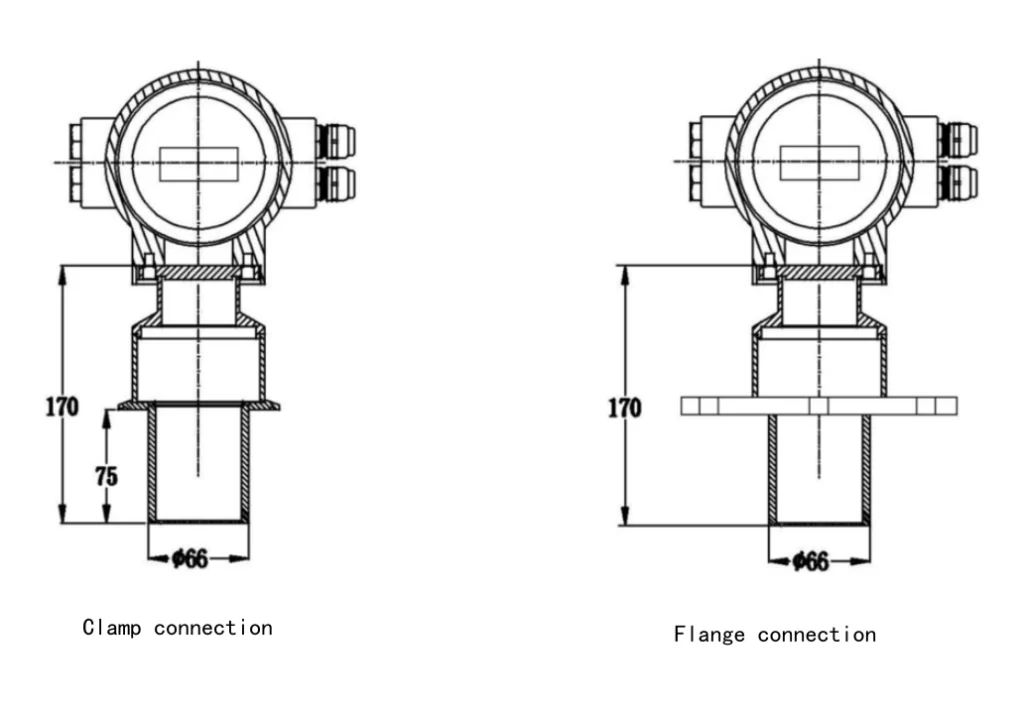
Diaphragm sealFlush-mount; 2″, 3″, 4″ or DN50/80/100 flange; sanitary tri-clamp available
Fill fluidSilicone oil (std); inert halocarbon or high-temp fluorolube (opt)
Capillary length1 m to 10 m, vacuum-sealed, armor-clad
Output4–20 mA with HART 7; RS-485 Modbus RTU option
Power supply24 VDC, loop-powered
Enclosure ratingIP66/67 aluminum alloy; Ex d IIC T6 available
Derived readingsDensity, %solids, °Bé, °Brix, concentration %, specific gravity

DP Density Meter Working Principle

A column of liquid exerts a hydrostatic pressure proportional to its density times the height of the column: P = ρ × g × H. If you measure pressure at two points separated by a known vertical distance H in the same fluid, the difference between them depends only on the fluid density:

ρ = ΔP / (g × H)

The online DP density meter takes the two pressure readings through flush-mounted diaphragm seals connected to a differential pressure transmitter by oil-filled capillaries. Because the separation H is fixed by the mechanical installation, ΔP is a direct read-out of density. The transmitter applies a temperature correction using its own built-in Pt100, then outputs density, percent concentration, or °Bé through 4–20 mA / HART.

Because the diaphragms sense only pressure, the measurement is independent of flow rate, viscosity, and bubble content. The meter keeps reading through two-phase flow, solids concentrations up to ~60%, and high-viscosity liquors where Coriolis U-tubes stall. Solids that would coat a tuning-fork probe slide off a flush diaphragm. For a deeper comparison of principles, see our tuning fork density meter and Coriolis density meter product pages.

Models & Configurations

The DP head and transmitter stay the same across models. What changes is the wetted material, diaphragm style, and mounting fit. Pick the variant by your fluid and installation, then confirm on the spec table above.

ModelWetted materialMountingBest for
Tank-side flanged316L stainless2 × DN50/DN80 PN16 flange on tank wallOpen tanks, atmospheric storage, general slurry service
Remote capillary seal316L or Hastelloy CCapillary 1 – 10 m between seals and DP cellLong reach installations, high-temp or cryogenic service
Bypass loop316L + isolation valvesBypass chamber off main pipeline, DN50 inlinePipeline mounting where tank access is limited
Anti-corrosionHastelloy C-276, tantalum, or PTFE-cappedFlange or clamp, per alloyStrong acid, caustic, chlorinated fluids
Sanitary tri-clamp316L electropolished, 3A cert1.5″ or 2″ tri-clampFood, dairy, brewery, pharma

Other options: high-temp extended-diaphragm (up to 200 °C with fluorolube fill), submersible IP68 for open sumps and basins, and purged-style for fluids that would plate out on a diaphragm. Specify the medium and we’ll recommend the diaphragm alloy and fill fluid. For installation practices that affect DP accuracy, see our DP transmitter installation guide.

Applications

DP density meters are the default choice anywhere density or concentration is a controlled process variable and the fluid is too dirty, too viscous, or too two-phase for Coriolis or tuning-fork technology. The flush-diaphragm interface plus remote capillaries is what makes them field-robust.

  • Mining & mineral processing — thickener underflow, tailings pipeline, cyclone feed density, dredger discharge
  • Pulp & paper — black liquor density in chemical recovery, bleach liquor concentration
  • Chemical — sulfuric acid, caustic soda, aqueous ammonia, ferric chloride concentration control
  • Oil & gas — crude oil storage and transfer, heavy residuum, drilling mud density
  • Food & beverage — sugar syrup °Brix, dairy concentrate, wort gravity, tomato paste
  • Power — flue gas desulfurization limestone slurry density
  • Water & wastewater — thickened sludge, lime milk dosing, MLSS monitoring

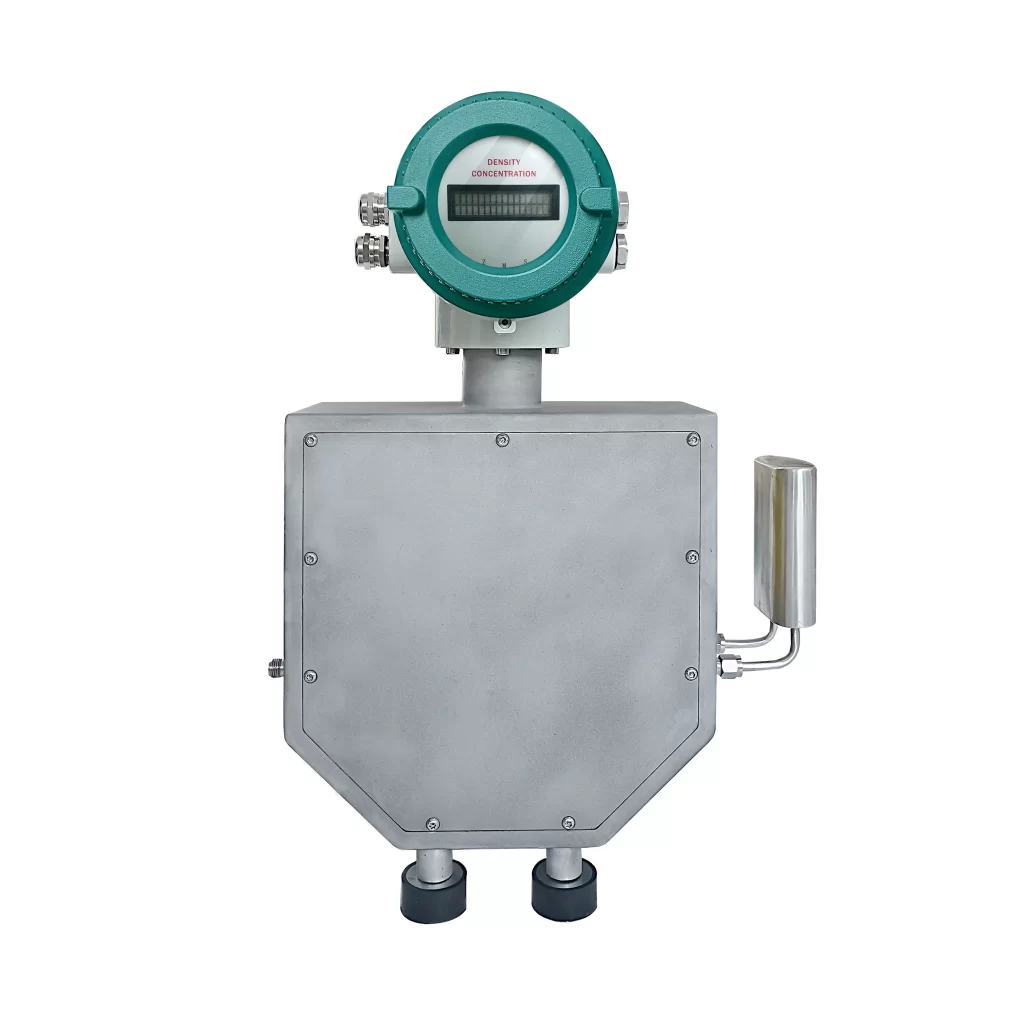
Split-Type Density Meter for Liquids

Separated sensor and transmitter configuration — best for high-temperature or hazardous-area installations where the electronics stay remote.

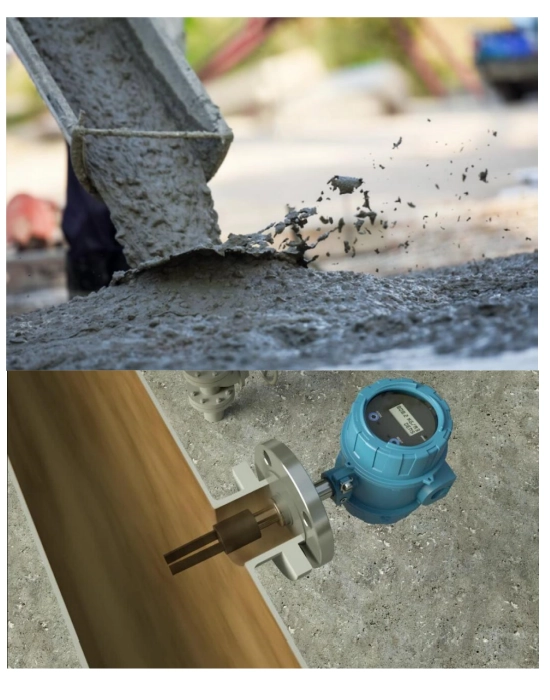
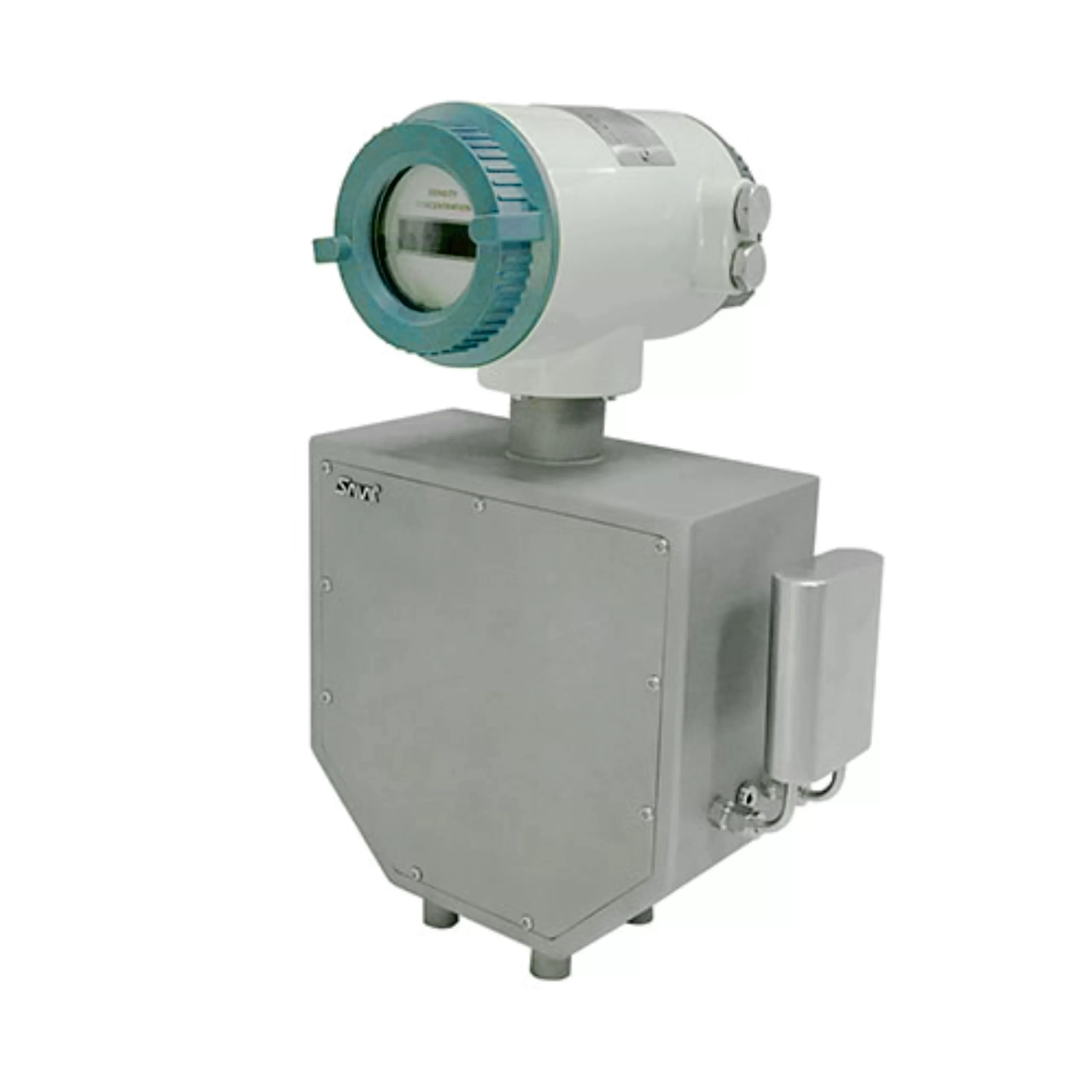
Industrial Slurry Density Meter

Heavy-duty DP-based density solution for dredging, tailings, and cement — wear-plated diaphragms handle abrasive slurries.
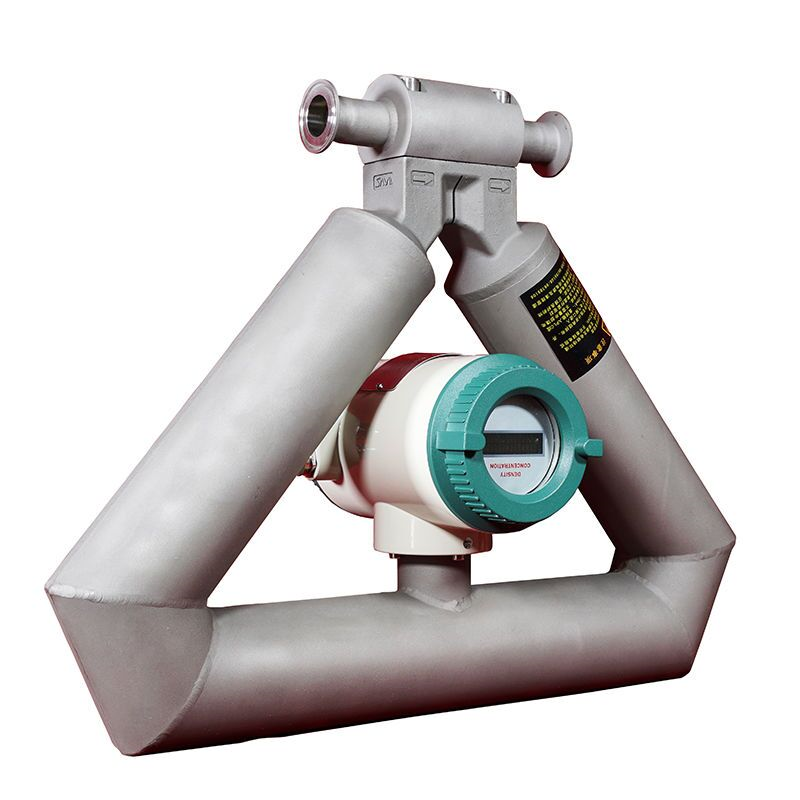
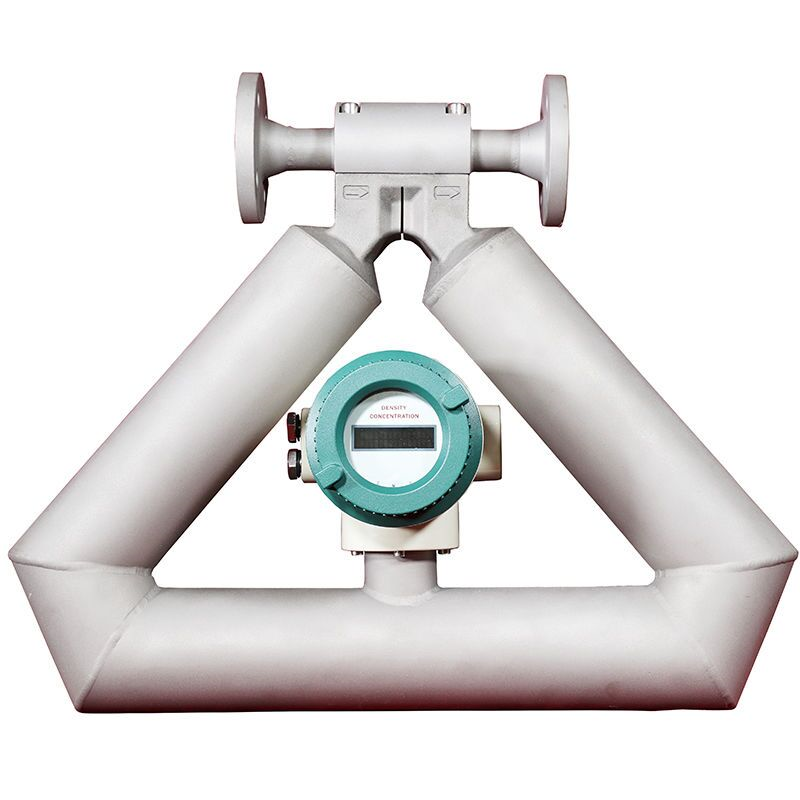
Coriolis Density / Concentration Meter

Inline Coriolis density with ±0.0005 g/cc accuracy — the reference technology for clean, single-phase custody-transfer service.

Need sizing help? Our engineers match a DP density meter to your fluid, tank height, and wetted material, and ship a drawing plus quote the same day. Send the line data below and we’ll come back with a variant recommendation.

Request a Quote

Request a Quote

Please enable JavaScript in your browser to submit the form

Tuning Fork Density Meter

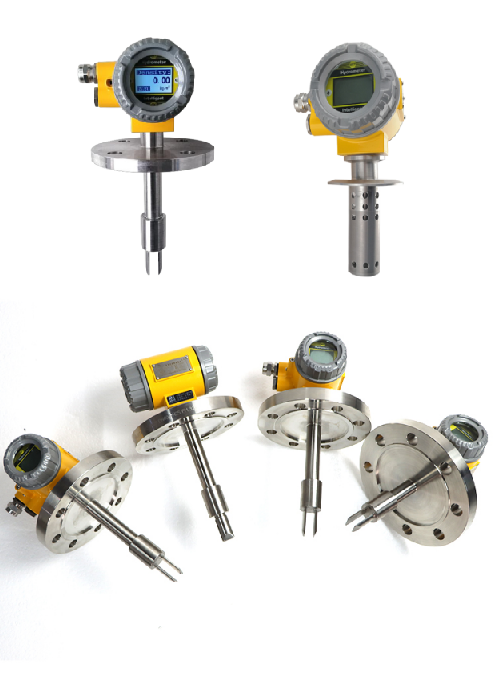
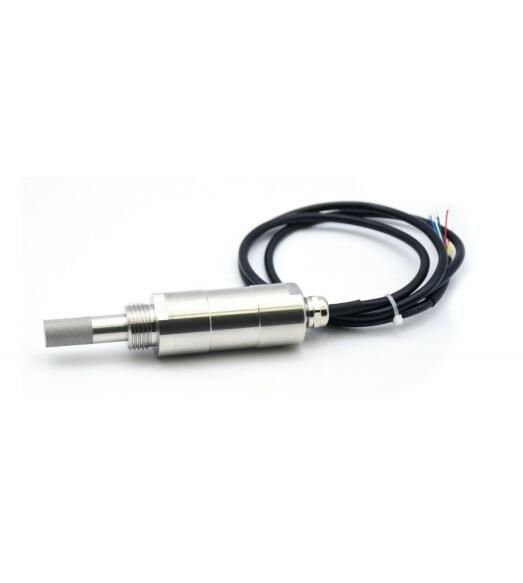
The tuning fork density meter is an inline vibrating-fork sensor that measures liquid density from 0 to 2500 kg/m³ with ±1 kg/m³ accuracy. The fork tines sit directly in the process line — their resonant frequency shifts with the density of the fluid between them, giving a continuous 4–20 mA or Modbus signal with no moving parts. It handles slurries, corrosive acids, and two-phase fluids that break Coriolis meters, and it calibrates once and holds over years.

Sino-Inst ships the tuning fork density meter in eight mounting styles and several wetted-material options (316L, Hastelloy C, PTFE-lined, titanium). Pick the variant below by your fluid and pressure, then confirm with the specs table.

Features of Tuning Fork Density Meter

  • Direct inline density — no sample loop, no rotameter, no density calculation from pressure/temperature. The fork sits in the live process line.
  • ±1 kg/m³ accuracy, ±0.1 kg/m³ repeatability — matches most Coriolis meters on density alone, at a fraction of the cost.
  • Handles bubbles and slurries — the vibrating fork keeps reading through two-phase flow and solids loading up to ~50%, where Coriolis tubes stall.
  • No moving parts — no bearings, no seals, no wear. Typical service life is 8+ years on continuous duty.
  • Wide wetted-material menu — 316L, 2205 / 2507 duplex, Hastelloy C, titanium, PTFE or PFA lining for acids and chlorinated solvents.
  • Eight process connections — DN50 PN16, G1.5″ thread, 3″ tri-clamp, IDF, RJT sanitary, top-mounted rod up to 3 m, submersible IP68 cable, stirred-tank offset bracket.
  • 4–20 mA + HART + Modbus RTU — drops straight into a PLC or DCS. The transmitter also reports °API, °Brix, concentration %, and specific gravity directly.

Technical Parameters

Measuring range0 – 2.5 g/cc (0 – 2500 kg/m³); 0 – 100%
Accuracy±0.001 g/cc (±1 kg/m³); ±0.5% of reading
Repeatability±0.001 g/cc (±0.1 kg/m³); ±0.1%
Operating temperature-50 °C to +150 °C
Working pressureup to 4 MPa
Viscosity range0 – 2000 cP
Temperature coefficient< 0.1 kg/m³/°C after compensation
Wetted materials316L / 2205 / 2507 stainless; Hastelloy C; Titanium; PTFE/PFA lined
Fork coatingStandard PTFE or PFA
Power supply24 VDC, ≥50 mA
Output4–20 mA, 0–1000 Hz, RS-485 Modbus RTU, HART
Output accuracy±0.1% of reading or ±0.05% FS
Process connectionDIN 50 PN16, G1.5″ thread, 3″ tri-clamp, IDF, RJT sanitary
Enclosure ratingIP65 aluminum alloy housing
Derived readingsDensity, °API, °Brix, concentration %, mass %, volume %, specific gravity

Tuning Fork Density Meter Working Principle

A piezo driver excites the two fork tines at their natural resonant frequency in vacuum — typically around 1300 Hz. When the fork is immersed in a liquid, the fluid adds effective mass to the tines, and the resonant frequency drops. The frequency shift is proportional to the liquid density.

The transmitter measures this frequency, applies a temperature correction (a built-in Pt100 reads process temperature), and converts to density in kg/m³, °API, °Brix, or concentration %. Because the measurement is based on a physical resonance of the fork — not a flow-dependent effect — density is independent of flow rate, viscosity (up to 2000 cP), and orientation. That’s why a tuning fork works in a storage tank as well as a high-velocity process line.

The fork is also insensitive to bubbles and solids. Small bubbles and particles pass between the tines without damping the resonance. This is the single biggest difference from a Coriolis density meter, which shuts down on two-phase flow.

Models & Configurations

The tuning-fork head is the same mechanical principle across all models. What changes is the wetted material, mounting style, and process fit. Pick the variant by your fluid and pressure, then confirm on the spec table above.

ModelWetted materialTemp / pressureBest for
Alcohol Concentration variant316L stainless-40–120 °C / 4 MPaBreweries, distilleries, beverage batching
Submersible variant316L + IP68 cable-20–80 °C / 0.6 MPaTank bottoms, open reservoirs, settling ponds
Anti-corrosion variantHastelloy C-276 or PTFE-lined-20–150 °C / 4 MPaAcid, caustic, chlorinated solvents
Slurry / heavy-duty variantWear-plated 316L-20–100 °C / 2.5 MPaDredging, mining tailings, cement

Other available configurations: threaded (G1-1/2) for standard process lines, flange-standard (DN50 PN16-20592) for slurry service including lime and mud, sanitary 3″ tri-clamp for pharma and food, top-mounted rod up to 3 m insertion for large tanks, and stirred-tank special with offset bracket. Custom wetted materials include Hastelloy C, titanium, 2205 and 2507 duplex stainless, and aluminum — specify the medium and we’ll recommend the right alloy.

Applications

Tuning fork density meters show up wherever density is the controlled process variable — concentration in blending, solids loading in slurry, end-point in reactors, interface detection in pipelines that batch multiple products. The fork handles bubbly fluids and slurries that would break a Coriolis meter.

  • Petrochemical — batch interface detection in product pipelines (gasoline / diesel / jet fuel), density-based reactor end-point
  • Mining & dredging — slurry solids concentration in thickener underflow, tailings transport, dredger discharge lines
  • Brewing & beverage — wort gravity, fermentation progress, CIP verification
  • Pharmaceuticals — solvent blending, API concentration monitoring, granulation liquor
  • Food — sugar syrup °Brix, dairy cream fat content, concentrated juice blending
  • Pulp & paper — black liquor density in chemical recovery
  • Chemical — sulfuric acid concentration, sodium hydroxide concentration, aqueous ammonia
  • Power — flue gas desulfurization limestone slurry density

Handheld Petroleum Density Meter

Portable micro-vibrator digital density meter for on-site crude, gasoline, and refined-fuel density checks.

Coriolis Density / Concentration Meter

Inline Coriolis density and concentration meter for high-accuracy custody transfer and brewing applications.

Slurry Density Meter

Heavy-duty slurry density solution for dredging, mining tailings, and cement — the same family as our dredger case study.

Need sizing help or a drawing review? Our engineers can match a tuning fork density meter to your fluid, pressure, and mounting, and ship a quote the same day. Send us the line data below and we’ll get back with a variant recommendation and price.

Request a Quote

Please enable JavaScript in your browser to submit the form

Split Type Density Meter for Liquids

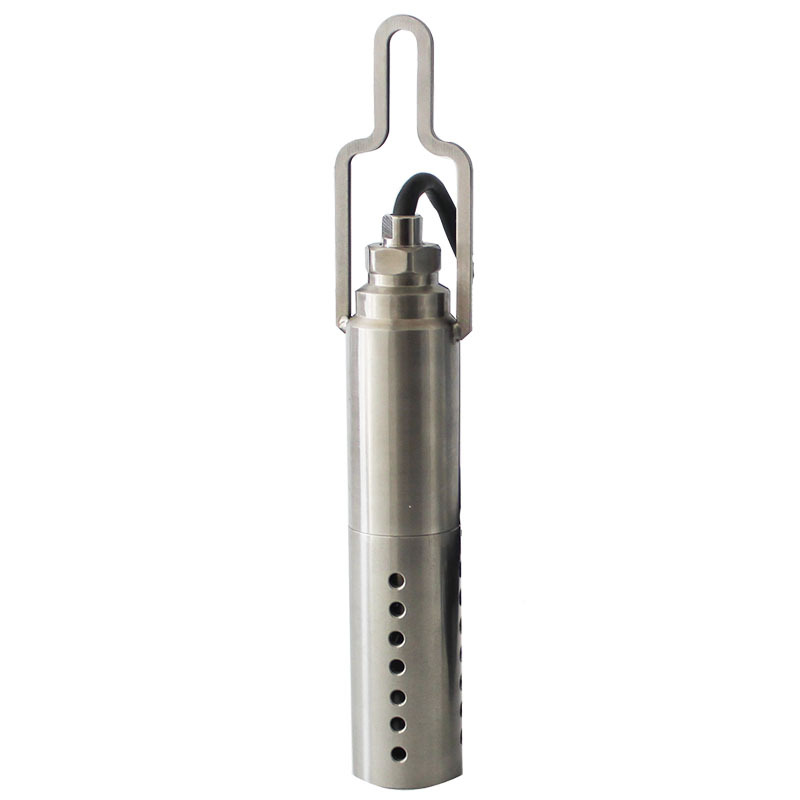
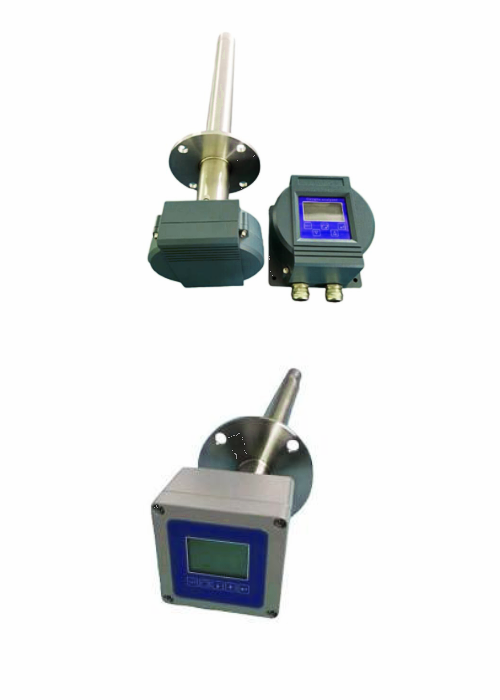
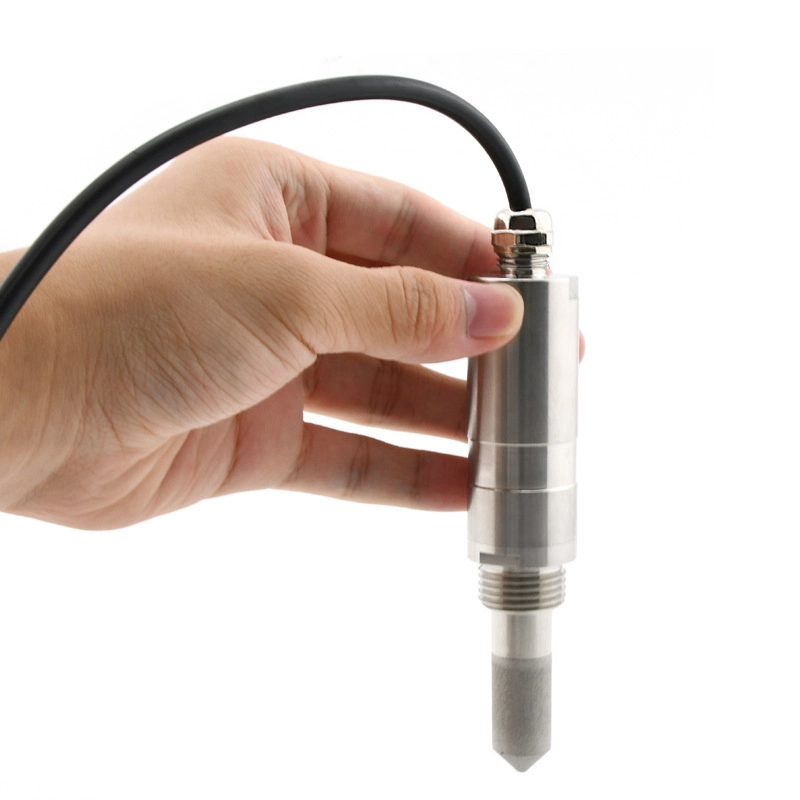
Density meter for liquids is a high-precision density meter based on the principle of vibration. Adopt split design. Submersible density meters can be widely used in closed or open tanks, tanks, diversion channels and open channels. Split Type Density Meter for Liquids is also widely used in the detection of sediment content in hydrological stations. Generate corresponding 4-20mA analog signal according to the change of medium density. At the same time, the digital signal can be converted and output to facilitate remote calibration and monitoring. Depending on the industrial process, density can be expressed in: Brix degrees, GL degrees, Baume degrees, Plato degrees and percent concentration.

Features of Split Type Density Meter for Liquids

  1. Input design, easy to use
  2. Continuous online monitoring
  3. Temperature compensation
  4. Integrated design, maintenance-free
  5. IP68 waterproof design, suitable for deep water measurement
  6. Explosion-proof design, convenient for use in special industries

Technical Parameters

Measuring range:0 – 3 g/cc (0 – 3000 kg/m3)
Calibration range: 0.6 – 1.25 g/cc (600 – 1250 kg/m3)
Measurement accuracy: ± 0.001 g/cc (± 1 kg/m3)
Repeatability: ± 0.0001 g/cc (± 0.1 kg/m3)
Operating temperature range: -50℃ ~ +200℃
Maximum working pressure:20Mpa
Fluid Viscosity Range: 0 – 20000 cP
Temperature coefficient: 0.1 kg/m3/℃ (after correction)
Pressure Effect: Negligible
Built-in temperature sensor: PT100
Wetted material: Stainless steel, Hastelloy C22, manganese alloy 400, titanium alloy, etc.
Fork Coating: Standard, PTFE or Electropolished
Power supply: 20 – 28 VDC, 35 – 45 mA
Analog output: 4 – 20 mA, isolated, not self-powered
Output accuracy (20°C): ± 0.1% of reading or ± 0.05% FS
Output repeatability (-40 ~ +85°C): ± 0.05% FS
Protection class: IP65
Shell: Aluminum alloy

Technical advantages:

  • Direct density or concentration readings, available engineering units include: g/cm3, kg/m3, specific gravity, °Brix, °Baume, °Plato, °GL, percent solids, etc.;
  • Suitable for flowing or static liquids;
  • Suitable for pipeline and tank density measurement;
  • Integrated structure, no moving parts;
  • Standard industrial and hygienic process connections;
  • The instrument has a built-in temperature sensor to provide accurate temperature compensation;
  • Online remote calibration, digital local display;
  • Factory multi-point linear correction, higher precision;
  • On-site recalibration: no standard reference source, no experimental calibration, no process interruption;
  • The converter is compatible with three installation methods: wall-mounted, embedded, and desktop;

Split Type Density Meter for Liquids Applications

Split type density meter for liquids can be widely used in closed or open tanks, tanks, diversion channels and open channels.

Density meter for liquids is also widely used in the detection of sediment content in hydrological stations. In the petrochemical industry, brewing industry, food industry, pharmaceutical industry and mineral processing (such as clay, carbonate, silicate, etc.), it is specifically used for interface detection in multi-product pipelines in the above industries, density detection of stirred mixtures . Reactor endpoint monitoring, separator interface detection.

Application industry

  • Measurement of Lime Slurry Density and Concentration in Desulfurization Industry
  • Density and concentration measurement of ammonia water in the denitrification industry
  • Density and concentration measurement of pulp in mineral processing industry
  • Density and concentration measurement of proportioning liquids in the surface treatment industry
  • Density and concentration measurement of slime during coal conveying
  • Density and concentration measurement of syrups
  • Density and concentration measurement of starch emulsions
  • Density and concentration measurement of medicinal liquids and concentrates in the pharmaceutical industry
  • Density and concentration measurement of chemical reagents such as alcohol and chemical liquids
  • Density and concentration measurement of petroleum and oil-synthetic products

FAQ

A density meter is a tool that measures how much mass of a substance is contained in a certain volume of liquid. In simpler terms, it tells us how “thick” or “thin” a liquid is.

To measure liquid density, you fill a container or sample holder with the liquid. Then, the density meter checks how much the liquid weighs compared to its volume. The result tells you the liquid’s density.

A hydrometer can measure the density of liquids lighter than water. It’s a floating instrument. If the liquid is lighter than water, the hydrometer sinks more. If it’s heavier, it floats higher.

A densimeter, another name for a density meter, is used to find out the density of liquids. People use it in labs, factories, and other places to check the quality of liquids or to learn more about their properties.

More Density meter and measurement analysis solution

The Split Type Density Meter for Liquids can measure the density or concentration of any liquid and also output density, concentration, Baume and temperature simultaneously.

Density Meter for Liquids is an instrument for measuring fluid density using the principle of vibration. It is used to measure fluid density in real time. Fluid density directly depends on the vibration frequency of the fork. At the same time, a temperature sensor provides temperature compensation, and performs pressure compensation and viscosity compensation for the pressure value before leaving the factory.

Split Type Density Meter for Liquids is widely used in reaction kettle, liquid separation, desulfurization and denitrification, ammonia gas recovery, ammonia production, mixing and stirring, petroleum and petrochemical, brewing equipment, food processing, extraction and concentration of traditional Chinese medicine, acid preparation, etc.

We, Sino-Inst, manufacture and supply Split Type Density Meter for Liquids. Our Split Type Density Meter for Liquids is widely exported to various countries. Including the United States, Britain, Australia and other countries. If you need Density Meter for Liquids, please contact our sales engineers!

Request a Quote

Please enable JavaScript in your browser to submit the form

Online Alcohol Density Meter-Alcohol Concentration Meter

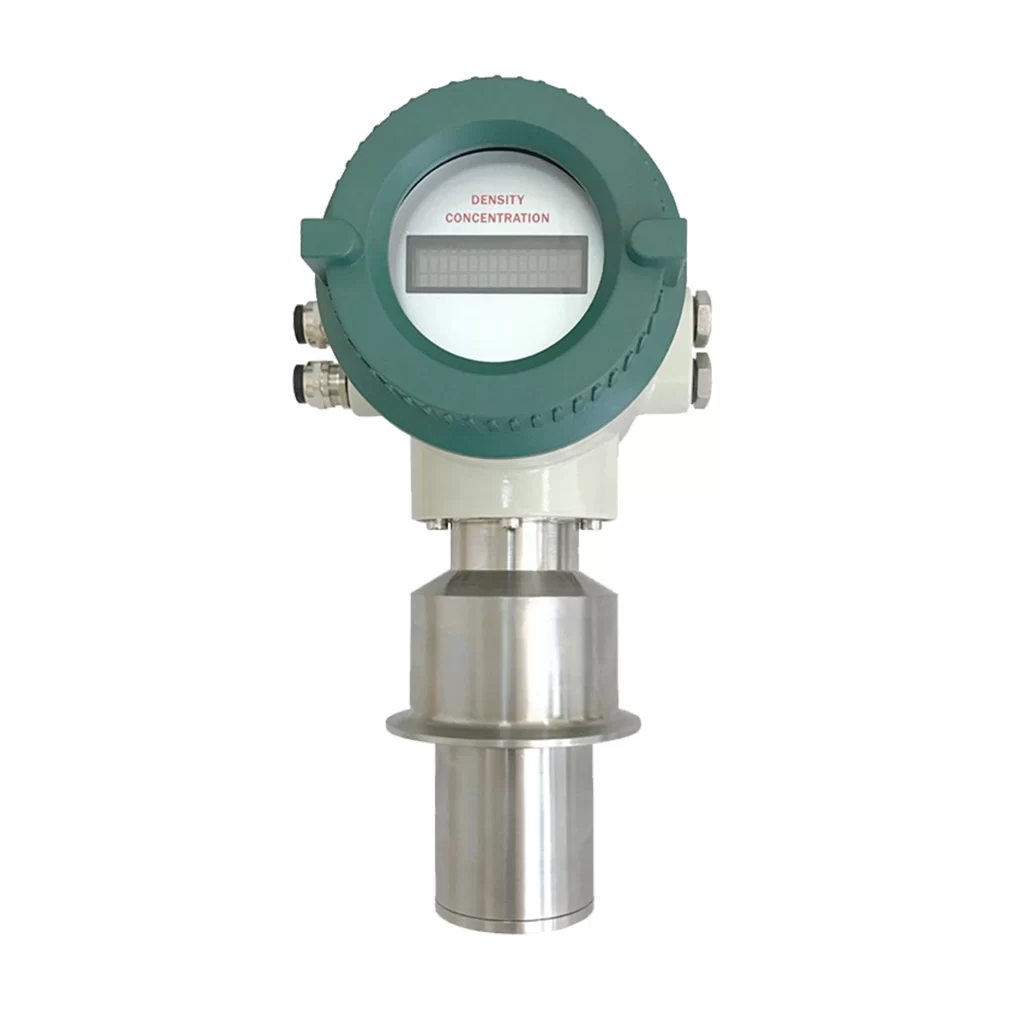
Alcohol Density Meter is also called Alcohol Concentration Meter. The Online Alcohol Density Meter uses an acoustic frequency signal source to excite the metal vibrator. And make the vibrator vibrate freely at the center frequency. This frequency correlates with the density of the contacting liquid. Therefore, the density of the liquid can be measured by analyzing the frequency. Further temperature compensation can eliminate the temperature drift of the system. As for the concentration, the standard wine concentration value at 20°C can be calculated according to the relational formula corresponding to liquid density and concentration.

Features of Online Alcohol Density Meter

  1. With analog signal 4 ~ 20mA and digital signal RS485 remote transmission;
  2. Real-time display of standard alcohol content at 20°C; real-time indication of alcohol concentration and temperature;
  3. You can directly enter the instrument menu to set parameters and debug on site, which is easy to operate;
  4. It has the functions of pure water calibration, fine-tuning of measured value and temperature compensation;
  5. Online real-time measurement, which can be directly used for production process control;
  6. The parts in contact with the liquid are made of 316 stainless steel, which is safe, hygienic and has good corrosion resistance.

Technical Parameters

Signal mode:Four-wire system
output signal:4~20 mA (active output) or RS 485 (Modbus RTU standard protocol, communication rate 9600)
power supply:24VDC (resistive elements cannot be loaded externally or connected in series with PLC)
Measuring range:0~100%, according to the usage, can be calibrated to measure in a certain range
Accuracy:1%,
Explosion-proof grade:Ex dIIB T6 Gb
Work pressure:< 1 MPa
Operating temperature:– 10~ 85℃
Electrical Interface:M 20×1.5
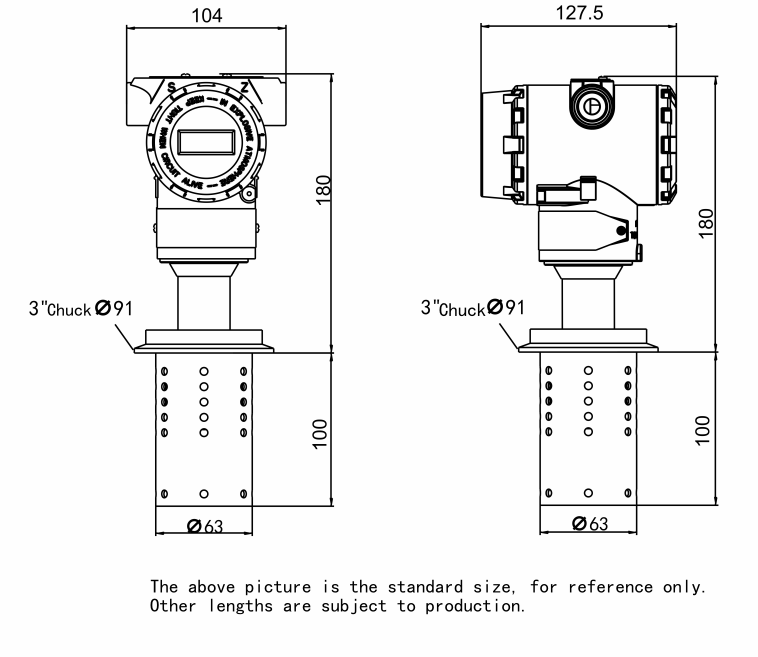
Process interface:3〞Sanitary Quick Release Chuck Ø91 or 2〞Sanitary Quick Release Chuck Ø64
Wetted parts:316 stainless steel
The accuracy±0.001g/cm3±0.25%
The scope of work0~2g/cm30~100%
repeatability±0.0001g/cm3±0.1%
Process temperature effect (corrected)±0.0001g/cm3±0.1% (per ℃)
Process pressure effect (corrected)can be ignoredcan be ignored

(1) The above accuracy applies to the calibration range of 0.8–1.5g/cm3 (800–1500 kg/m3).
(2) The maximum viscosity of the liquid can reach 2000cP.
(3) Temperature effect refers to the maximum measurement deviation caused by the process fluid temperature deviating from the factory calibration temperature.
(4) Pressure effect is defined as the change in sensor flow and density sensitivity due to process pressure deviation from calibration pressure.

Process temperatureStandard: –25℃~+120℃
Customized: –25℃~+150℃
Ambient temperature–25℃~+85℃
Temperature Coefficient20ppm/℃ (after calibration)
Built-in temperature sensortemperature chip
Working pressureStandardWithin 2.5MPa
Special customWithin 6.3MPa
Test pressureTested at 1.5 times the maximum working pressure
Actual maximum working pressure is limited by process connection rating

Online Alcohol Density Meter applications

The online alcohol density meter uses a sound wave frequency signal source to excite the metal vibrator. And make the vibrator vibrate freely at the center frequency. This frequency correlates with the density of the contacting liquid. Therefore, the density of the liquid can be measured by analyzing the frequency. Further temperature compensation can eliminate the temperature drift of the system. As for the concentration, the concentration value at a temperature of 20°C can be calculated according to the relationship between the corresponding liquid density and concentration.

Liquor concentration, density and temperature measurement in liquor production process section:

  1. Alcohol degree measurement in the wine picking process during the brewing stage;
  2. Monitoring of alcohol content in wine storage tanks;
  3. Measurement of the concentration of blended craft wine;
  4. Measurement of alcohol concentration in filling;

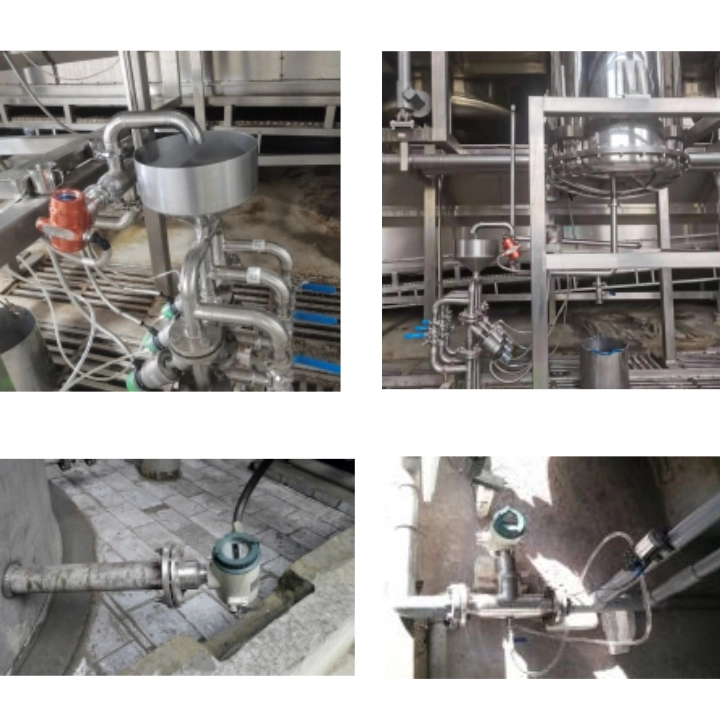
Online Alcohol Density Meter is suitable for various ways such as pipeline installation or container wall insertion installation. Both dynamic and static measurements can be made. Installation method Sanitary quick-loading chuck type.

Alcohol Density – Concentration Measurement Solution

Online Alcohol Density Meter for Comprehensive wine extraction

The production line of the distillation workshop needs to carry out comprehensive collection of alcohol concentration and implement intelligent and digital production first. The grains in the tower are distilled and the wine flows into the tank through the condenser.

The system will distinguish the main effective wines of the head and tail wines according to the concentration of the wines. Equipped with a main fully closed sanitary automatic control valve. Guarantee the qualified delivery conditions for comprehensive and effective liquor. This process section is mostly used for Maotai-flavored wine picking.

The first stage: As the distillation time progresses, what follows is a head with impurities. The system sets the collection and control of wine head by time. About 5kg, at this time the valve opens. The wine head flows into the tank until the set time is reached, and the valve is closed. It can be adjusted according to different liquor brewing processes.

The second stage: the main wine is collected comprehensively through wine tanks. Measure the alcohol concentration in real time with an alcohol density meter to ensure that the comprehensive alcohol content reaches the qualified alcohol content and make effective adjustments.

The third stage: tail wine collection. When the alcohol content is less than the minimum setting, close all valves. Open the tail valve for effective collection.

Online Alcohol Density Meter for Segmented wine extraction

The production line of the distillation workshop needs to collect the alcohol concentration in sections and take the lead in implementing intelligent and digital production. The grains in the tower are distilled and the wine flows into the tank through the condenser. The system will be divided into the following three stages of control according to the different alcohol concentrations, with a fully closed sanitary automatic control valve.

The first stage: With the passage of distillation time, the wine head with impurities comes out. The system sets the collection and control of the wine head through time. It is about 5kg. At this time, the valve opens. The wine head flows into the tank. Until When the set time is reached, the valve closes. It can be adjusted according to different liquor brewing processes.

The second stage: After the separation of the beer head is the focus of the process. At this time, the valve is opened, and the system needs to collect and store the puree with alcohol concentration of Luzhou-flavored (75%~55%)/sesame-flavored (≥20%) in the tank. Carry out grading, and when the corresponding alcohol content range is reached, the corresponding valve is opened for grading collection. When the concentration meter detects that the alcohol content is lower than the minimum range value, the valve is closed. Remarks: Because different brewing processes require different degrees of alcohol extraction, the system can directly set and extract alcohol degrees according to the actual needs of the winery.

The third section: Tail wine collection, when the alcohol content is less than the minimum setting, close all valves. Open the tail valve for effective collection.

FAQ

Alcohol density is measured using specialized tools like alcohol density meters or hydrometers. They are dipped into the liquid, and based on how they float, the alcohol content is determined.

The density meter, often called an alcohol density meter, is a tool designed specifically to measure the alcohol content of a liquid. It shows the percentage of alcohol by volume when it’s immersed in the liquid.

An alcohol density meter measures the alcohol content in a liquid. A hydrometer measures the relative density of a liquid compared to water. While both can be used in brewing and distillation, the alcohol meter is more precise for determining alcohol content.

You can check alcohol percentage at home by using an alcohol density meter or a hydrometer. After preparing your brew or distillate, immerse the tool in the liquid. The reading will tell you the alcohol content. Ensure to follow the instructions for accurate results.

More Density meter and measurement analysis solution

Alcohol production in alcohol factories is completed by multiple processes, mainly controlled by humans. In the process of distilling and extracting alcohol, operators have been operating with experience. Inevitably there are errors affecting the alcohol concentration, which can lead to production defects. The incoherence of the distillation process has largely led to the instability of alcohol, which has become a persistent disease that has plagued the alcohol industry for many years. For a long time, the wine industry has spared no effort to break through the traditional production process and realize production automation.

Our company Sino-Inst has been committed to the development and manufacture of density and concentration measuring instruments. After years of painstaking research and experimentation, it has finally successfully developed an environment that can adapt to the high temperature and humidity in the distillation and extraction process. Online Alcohol Density Meter-Alcohol Concentration Meter can promote the automation of distillation and extraction process in alcohol industry.

If you need Online Alcohol Density Meter-Alcohol Concentration Meter, please feel free to contact our sales engineers!

Request a Quote

Please enable JavaScript in your browser to submit the form

Coriolis Density Meter-Concentration Meter

Coriolis Density Meter is also called Coriolis Concentration Meter. It adopts the principle of operating under the special law of the Coriolis force of the moving liquid. The Coriolis force is related to the density of the liquid, so the density value of the liquid is measured. The concentration is calculated from the density and temperature. The Coriolis principle has high stability, high precision, good long-term stability, and no drift caused by the sensor. Coriolis Density Meter is used in many industries like oil refining, sugar, paper, and chemical. It measures weak acid-base solutions in the wine, salt, and printing industries.

Features of Coriolis Density Meter

  1. The 4-wire transmitter with an integrated structure has no moving parts and is easy to maintain; the 4-wire transmitter has 4-20mA output;
  2. Real-time display of five-digit density value, four-digit decimal (one digit for concentration), real-time indication of current and temperature;
  3. You can directly enter the instrument menu to set parameters;
  4. It is easy to install and use, and the reading can be displayed when the flange surface touches the liquid;
  5. It is used for fluid or static liquid, suitable for pipeline installation or installation on container wall, etc.;
  6. Density and concentration have the functions of pure water calibration, fine-tuning of measured value and temperature compensation;
  7. Continuous online measurement without process interruption, can be directly used for production process control;
  8. All parts in contact with liquid are made of 316 stainless steel or polytetrafluoroethylene, which is safe, hygienic and has good corrosion resistance;
  9. Measuring high viscosity and non-Newtonian flow can also measure uniform multiphase flow;

Technical Parameters

Accuracy±0.001g/cc±1.0kg/m3
The scope of work0~3g/cc0~3000kg/m30~187.4 lb/ft3
Repeatability±0.001g/c±0.1kg/m3±0.006lb/ft3
Process temperature effect (corrected)±0.001%g/cc)±0.1kg/m3(per °C)
Process pressure effect (corrected)can be ignored
(1) The above accuracy is applicable to the calibration range of 0.6-1.25g/cc (600-1250kg/m3)
(2) When a long rod is used, the maximum viscosity of the liquid can reach 500CP, but if it is used, the maximum viscosity of the liquid can reach 20000CP.
(3) Temperature effect refers to the maximum measurement deviation caused by the process fluid temperature deviating from the factory calibration temperature.
(4) Pressure effect is defined as: the change in sensor flow and density due to process pressure deviation from calibration pressure.
Process temperature–10℃~+60℃
Ambient temperature–10℃~+85℃
Temperature CoefficientO.1kg/m3/℃ (after correction)
Built-in temperature sensorPT100
Wetted partsStainless steel 316L, titanium, etc. can be customized
ShellIP65, aluminum alloy
Tine polishingStandard, PFA coated or electropolished
Working pressure3000psi (207bar)
1450psi (100bar)
Test pressureTested at 1.5 times the maximum working pressure
Actual maximum working pressure is limited by process connection rating
Process connection typeflange
Clamp
thread
Explosion-proof certificationEx d Ⅱ B T6 Gb
Power requirements24VDC,50mA
OutputFour-wire system, 4-20mA transmission 4-20mA, optional RS485-Modbus RTU communication
Viscosity range0-20000CP

Fluid and Material Compatibility

TypeNameMolecular formulaConcentration (%)316LHastelloyTitanium alloyzirconiumPTFE
AcidHydrochloric acid (without hydrofluoric acid)HCI0-40××
sulfuric acidH2SO40-50
H2SO450-75××
H2SO475-98
nitric acidHNO30-100
phosphoric acidH3PO40-98××××
Alkalisodium hydroxideNaOH0-50
Potassium hydroxideKOH0-50
Calcium hydroxideCa(OH)20-50
SaltSodium chlorideNaCI0-50×
ammonium chlorideNH4CI0-50×
ammonium sulfate(NH4)2SO40-50×
Otherscarbamide(NH2)2CO0-100
sodium hypochloriteNaOCI0-16××
hydrogen peroxideH2O20-90
☆Recommended
○ Use under specific concentration and temperature limits
× Do not use

Featured Types of Coriolis Density Meters-Concentration Meters

Coriolis density meter industrial applications

The Coriolis density meter is based on the principle of special laws under the action of the Coriolis force of the moving liquid. The Coriolis force is related to the density of the liquid, so as to measure the density of the liquid; then according to the relationship between density and concentration The relational table obtains concentration values at a temperature of 20°C.

Coriolis density meter can be widely used in the detection of oil refining and blending in the petrochemical industry. The food industry is used in sugar industry, vegetable oil and beverage processing, etc. Production site, paper industry, measurement of weak acid-base solution in chemical industry, wine industry, salt, printing and dyeing and other industries. Due to the large flow pipe, it is especially suitable for occasions that are not dry or viscous. It is suitable for pipe installation.

Medium limitationContain gasMaximum Liquid Viscosity
Regular liquidAcid and alkali solution
316LTitaniumContain gas

Generally do not use
20000CP

Typical application conditions:

Petroleum and petrochemical industry— Quality Control — Continuous Online
Wine industry— Quality control — Continuous online inspection
Organic and Inorganic Chemical Materials— Acid/base concentration control
Pharmaceutical Industry— Traditional Chinese medicine concentration, alcohol recovery
Battery industry— Concentration of lithium hydroxide, electrolyte, sulfuric acid solution
Mineral processing— Clays, carbonates, silicates

More Density meter and measurement analysis solution

Coriolis mass flowmeter is a kind of instrument that is commonly used at present and has relatively high stability and reliability of measurement accuracy. Coriolis mass flow meters are not only capable of measuring mass flow meters from Micro Motion, but also of media density.

When the Coriolis Density Meter measures density, its measuring tube vibrates continuously at a certain resonant frequency. Because the resonance frequency is a function of the fluid density. When fluids of different densities fill the vibrating tube, its vibration frequency will also change. Therefore, measuring the frequency change of the vibrating tube completes the density measurement. The linear relationship between the density and the vibration frequency of the vibrating tube.

This method is accurate and reliable in measurement, and is suitable for a wide measurement range of various fluid densities. The pressure loss of Coriolis Density Meter is very small, and it has inherent advantages in measuring the density of viscous fluids such as mud.

There are more and more requirements for density measurement in the current production process, and the accuracy of density measurement directly affects the quality of production process.

We Sino-Inst manufacture and supply many kinds of Coriolis Density Meters-Concentration Meters. Our Coriolis Density Meters are exported to various countries like USA, UK, Germany, Nigeria, Saudi Arabia, Singapore, etc. If you need to measure density, please feel free to contact our sales engineers.

Request a Quote

Please enable JavaScript in your browser to submit the form

Optical Density Meter-Liquid Densitometer

Optical Density Meter is a Liquid Densitometer. Using the propagation law of the spectrum in the liquid, sampling is carried out through a high-resolution spectral sensor. The analysis and calculation process is carried out by the software to obtain the regularity of the concentration. Then through temperature compensation, the concentration of various liquids or liquid mixtures can be measured. The Optical Density Meter is suitable for installation in pipes or on vessel walls. It is widely used to measure the density of liquids with certain transparency. Some examples are ammonia water concentration, Brix sugar refining (sugar concentration). Other examples include sodium hydroxide, potassium hydroxide, sodium carbonate, carbamide, ammonia water, and hydrogen peroxide.

Features of Optical Density Meter

  • Fully integrated “plug and play, maintenance-free” digital measurement for monitoring and control;
  • Provide materials including 316L, PTFE, etc.;
  • continuous measurement;
  • No moving parts, less maintenance;
  • Concentration 4-20mA output;
  • Provide temperature sensor;
  • Suitable for a variety of acids, alkalis, organic solutions;
  • Not easily affected by temperature and flow rate;
  • Suitable for installation in tanks and pipelines;
  • A small amount of solids and air bubbles are allowed;
  • Passed explosion-proof certification;

Technical Parameters

Accuracy±0.5%
The scope of work0~100% (20°C), according to the usage, it can be calibrated to a certain range
repeatability±0.2%
Process temperature effect (corrected)±0.001% (per ℃)
Process pressure effect (corrected)can be ignored
Process temperature–10℃~+60℃
Ambient temperature–10℃~+45℃
Temperature CoefficientO.1%/m3/℃ (after correction)
Built-in temperature sensortemperature chip
Wetted parts316L, polytetrafluoroethylene
GlassAcid and alkali resistance
ShellIP65, aluminum alloy
Working pressure0.8MPa
Test pressureTested at 1.5 times the maximum working pressure
Actual maximum working pressure is limited by process connection rating
Process connection typeflange
Clamp
Explosion-proof certificationEx d ⅡC T6 Gb
Power requirements24VDC,50mA
OutputFour-wire system, 4-20mA
Viscosity range<5000MPa.s

Fluid and Material Compatibility

TypeNameMolecular formulaConcentration (%)316LHastelloyTitanium alloyzirconiumPTFE
AcidHydrochloric acid (without hydrofluoric acid)HCI0-40××
sulfuric acidH2SO40-50
H2SO450-75××
H2SO475-98
nitric acidHNO30-100
phosphoric acidH3PO40-98××××
Alkalisodium hydroxideNaOH0-50
Potassium hydroxideKOH0-50
Calcium hydroxideCa(OH)20-50
SaltSodium chlorideNaCl0-50×
ammonium chlorideNH4Cl0-50×
ammonium sulfate(NH4)2SO40-50×
Otherscarbamide(NH2)2CO0-100
sodium hypochloriteNaOCI0-16××
hydrogen peroxideH2O20-90
☆Recommended
○ Use under specific concentration and temperature limits
× Do not use

Working principle of Optical Density Meter

Imagine you have a flashlight. When you shine it through a clear glass of water, almost all the light passes through. But if you shine it through a dark-colored drink, less light will pass through because the drink is denser.

An Optical Density Meter works a bit like that flashlight. It uses light to see how “thick” or “dense” a sample is. Here’s how:

Light Source: The meter has a light that shines through the sample.
Sample: This is what you want to test, like a liquid.
Detector: On the other side of the sample, there’s a part that catches and measures the light that comes through.
If a lot of light passes through, the sample is less dense. If only a little light passes through, the sample is more dense.

The Optical Densitometer is Based on the Propagation Law of the Spectrum in the Liquid. Sampling is Performed by High-Resolution Sensor. Analyzed AN d processed by software. Obtain the Regularity of the Concentration. The then Through Temperature Compensation. various liquids or liquid mixtures.

Medium limitbubbles, flow rateMaximum Liquid Viscosity
Particlestransparent
Trace particlesclear, pure liquida small amount of bubbles5000MPa.s
Velocity > 1.5m/s

Video: https://www.youtube.com/embed/N8DOxmFBrhE

Optical Density Meter Industrial Applications

Imagine factories where they mix and create things like paint, drinks, or even medicine. They need to make sure everything is just right – not too thick, not too thin, and with the right amount of ingredients. That’s where the Optical Density Meter comes in handy.

  • In the petrochemical industry, it can be widely used in the detection of petroleum, oil refining and oil blending;
  • In the food industry, it is used in the production sites of grape juice, tomato juice, fructose syrup, vegetable oil and soft drink processing;
  • dairy industry;
  • paper industry;
  • Measurement of alkaline solution;
  • brewing alcohol;
  • Printing and dyeing industry: measure ammonia concentration.
  • Organic and Inorganic Chemical Materials: Sodium Hydroxide.
  • Measurement of chemical carbamide, detergent, ethylene glycol, acid-base and polymer density.
  • It can also be used in mining brine, potash, biopharmaceutical and other industries.
  • Brewing and Beverages: Companies that produce beverages such as fruit juice or beer use this tool to check sugar content. More sugar means the drink may be sweeter and thicker.
  • Pharmaceutical Manufacturing: When companies manufacture pharmaceuticals, they need to ensure that the mixture is perfect. A gauge can help check this.
  • Paint making: Have you ever noticed that some paints are thick and some are thin? The factory uses a densitometer to get just the right consistency.
  • Water Treatment: This meter can help check how clean the water is. If the water is too “thick” and contains unwanted material, more cleaning may be required.
  • Agriculture: Farmers use it to check the health of plants. If plants are not healthy, they may not be able to absorb enough light. Meters can provide relevant clues.

These are just a few examples. There are many places where knowing how “thick” or “dense” something is can be very useful, and that’s why the Optical Density Meter is an important tool in industries.

Typical applications:

Denitrification industry— Measure ammonia concentration (0~30%)
Wine industry— Quality control — Continuous online inspection
Organic and Inorganic Chemical Materials— Acid/base concentration control
Pharmaceutical Industry— Traditional Chinese medicine concentration, alcohol recovery
Battery industry— concentration of lithium hydroxide, electrolyte, sulfuric acid solution
Mineral processingClay, carbonate, silicate

FAQ

A densitometer measures how “thick” or “dense” something is, like a liquid or a film. It helps in making sure things are the right consistency.

This is a special tool that checks how much light can pass through something, like a liquid. If less light passes through, it means the liquid is denser.

Both measure how “dense” something is, but in different ways. A density meter usually measures the weight of a liquid, while a densitometer measures things like how light passes through.

Optical density is measured by shining a light through something (like a liquid) and seeing how much light comes out on the other side. The less light that comes out, the higher the optical density.

They’re closely related! Absorbance is about how much light is “soaked up” by something. OD, or Optical Density, is about how much light passes through. So, if something has high absorbance, it’ll have a high OD too.

This method is used in labs and industries to find out how dense a liquid is by checking how much light can pass through it. It helps in making drinks, medicines, and studying cells, among other things.

It’s a way to describe how much light can go through something. If a liquid doesn’t let much light through, it has a high optical density. If it lets a lot of light through, it has a low optical density.

More Density meter and measurement analysis solution

When it comes to measuring the “thickness” or “Density” of liquids, the Optical Density Meter-Liquid Densitometer is a top choice.

Optical Density Meter-Liquid Densitometer uses the law of spectrum propagation in liquid to measure the density of transparent liquid. The liquid must have a certain degree of transparency, which is suitable for pipeline installation or installation on the wall of the container.

Our Sino-Inst Optical Density Meter is widely applicable to the concentration of various liquids or liquid mixtures.

At Sino-Inst, we aren’t just Optical Density Meter supplier – we’re experienced manufacturer. We understand the ins and outs of Optical Density Meter because we’ve crafted it with care. Need something special? We support customizations to meet your specific needs. Trust in our experience and expertise. Ready to elevate your measurements? Choose Sino-Inst today!

Request a Quote

Please enable JavaScript in your browser to submit the form

Handheld Density Meter-Portable Micro Vibrator Digital Density Meter for Petroleum Products

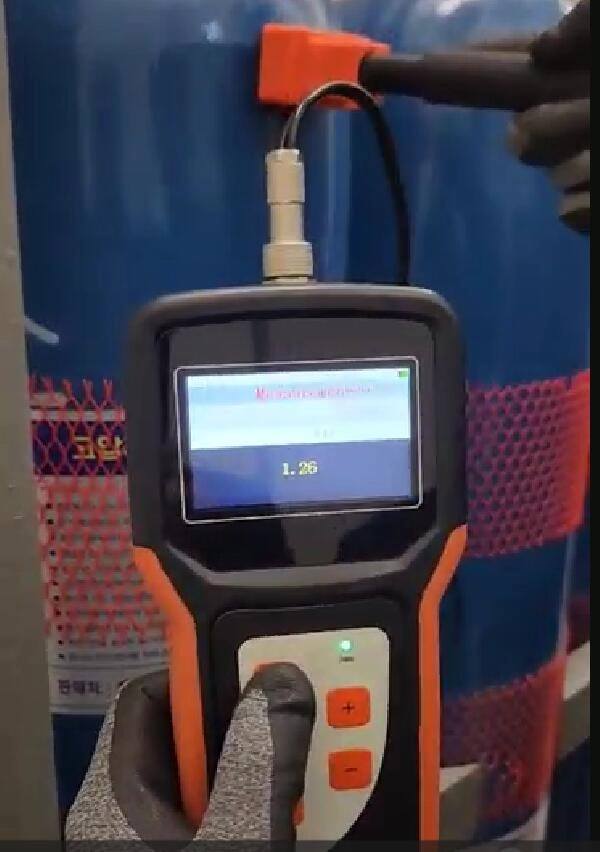
Handheld Density Meter is a portable device used to measure the temperature and density of liquids in tanks. Our Handheld Density Meter is a portable micro-vibrating cylinder digital density meter. It is mainly used to measure the concentration of petroleum products online. Of course, it is also possible to measure the concentration of concentrated ammonium sulfate, etc.

Micro Vibrator Handheld Density Meter Features:

Portable micro-vibrator digital density meter, also known as Handheld Density Meter, adopts portable and hand-held design. Used to measure the temperature and density (concentration) of liquids in tanks. After the measurement is completed, the data will be displayed automatically. Portable design, easy to operate and easy to carry.

  1. Handheld density meter with digital LCD screen and various display contents.
  2. Wide measurement range, simple operation, high measurement accuracy and fast test speed.
  3. The pure water density meter is easy to calibrate, and standard substance calibration can be performed.
  4. The sample demand is small, only about 100ml liquid is needed

Technical Parameters:

  • Density range: 0~2g/ml(g/cm3)
  • Density accuracy: 0.003 g/ml ,
  • Resolution: 0.0001,
  • Repeatability: 0.0005
  • Medium temperature: 0~100℃ (liquid fluidity)
  • Ambient temperature: -40~85℃
  • Temperature Compensation: Automatic
  • Material of internal parts placed in the liquid: stainless steel 316L, ceramics, zirconia, etc.
  • Tine Polish: Standard, PFA Coated or Electropolished

Working Principle

The sensor of the Micro Vibrator Handheld Density Meter is designed according to the principle of component vibration. This vibrating element is similar to a two-toothed tuning fork, the body of which is vibrated by a piezoelectric crystal located at the root of the tooth. The frequency of the motion is detected by another piezoelectric crystal. Through phase shifting and amplification circuit, the fork body is stabilized on the natural resonant frequency. When the medium flows through the fork, the resonance frequency changes due to the change of the medium quality.

Working principle:
The density and vibration frequency of the medium conform to the following mathematical formula: D=K0+K1T+K2T2

Formula:
D = Density of the measured medium
T = natural frequency of the fork
T2=The frequency when the measured medium flows through the fork body

K0, K1, K2=constant According to this formula, the accurate medium density value can be calculated through the electronic processing unit.

Technical Advantages

Tuning fork vibrating density meter with microprocessor-based electronic switching unit combining signal processing, calculation and diagnostic functions.

In addition to convincing measurement accuracy and reliability. While measuring density and temperature, parameters such as basic density, °API, Brix, concentration percentage, mass percentage, volume percentage, and specific gravity can also be calculated.

Handheld Density Meter Applications

The Micro Vibrator Handheld Density Meter is a versatile instrument crucial for several industries. It works by using tiny vibrations to measure the density of fluids.

Key Industries:

  • Petroleum and Chemical: Monitoring the quality of fuel and other chemical products.
  • Brewing: Ensuring the consistency and quality of alcoholic beverages.
  • Food Production: Checking the density of ingredients and final products for quality control.
  • Pharmaceuticals: Ensuring drug formulations are consistent and up to standards.
  • Mineral Processing: Used in the assessment of clays, carbonates, silicates, and more.

Applications:

  • Detecting the interface in multi-product pipelines.
  • Checking the density of mixed fluids.
  • Monitoring reaction endpoints in reaction kettles.
  • Interface detection in separators.

Case Examples: Handheld density meter for petroleum products

Oil Pipeline Interface Detection:

Scenario: When transporting different types of oil in a single pipeline, it’s crucial to detect when one type ends and another begins.
Use of Portable Density Meter: The meter helps in accurate detection, preventing mixing and ensuring product purity.
Parameters: Crude oil density: around 0.8 to 0.93 g/cm³; Diesel density: 0.8 to 0.85 g/cm³.

Fuel Quality Assurance at Refineries:

Scenario: A major refinery needs to regularly check the quality of its gasoline.
Use of Handheld Density Meter: By using the meter, technicians can instantly measure the density at various stages of production.
Parameters: Desired density range: 0.725 to 0.775 g/cm³.

Lubricant Production Quality Control:

Scenario: A factory produces motor lubricants and wants to maintain a consistent product.
Use of Portable Density Meter: By regularly checking the density, they can ensure the lubricant has the right balance of additives and base oil.
Parameters: Desired density range: 0.85 to 0.89 g/cm³.

So, you should know that the Micro Vibrator Handheld Density Meter is an important tool, especially in the field of petroleum products.

By ensuring accurate and consistent measurements, it’s an invaluable tool for quality and process control.

More Digital Density Meters and Detecting Instruments

FAQ

A density meter for fuel oil is a tool that measures how compact or dense the fuel oil is.

A density meter or a hydrometer is used to measure the density of oil.

A portable density meter is used to quickly check the density of liquids on-the-go, without needing a big machine.

The DMA35 is a specific type of portable density meter, mainly used for quick measurements in the field.

A hydrometer is a manual tool that floats in a liquid to measure its density. A digital density meter gives electronic readings, which can be more accurate and faster.

A density meter measures the compactness of liquids. A densitometer usually checks the darkness or lightness of materials, like photographic films.

The primary instruments for measuring density are the density meter and the hydrometer.

What Is Zirconia Oxygen Sensor?

Welcome to the world of Zirconia Oxygen Sensors, a cornerstone of precision in process control and industrial efficiency. Oxygen plays…

The Handheld Density Meter, Micro Vibrator Digital Density Meter for Petroleum Products, is a game-changer in the industry. Whether it’s for quality control in refineries, detecting oil types in pipelines, or ensuring consistent lubricants, this tool is essential. Quick, accurate, and user-friendly, it plays a pivotal role in maintaining the highest standards in petroleum-related operations.

If you’re in need of such a tool or have specific requirements, look no further! We, at Sino-Inst, pride ourselves on being experienced manufacturers and suppliers in this field. Our rich expertise ensures that you receive the best product tailored to your needs. Interested in custom solutions? We’ve got you covered. Reach out today, and let’s enhance your petroleum processes together. Contact Sino-Inst now!

Request a Quote

Please enable JavaScript in your browser to submit the form

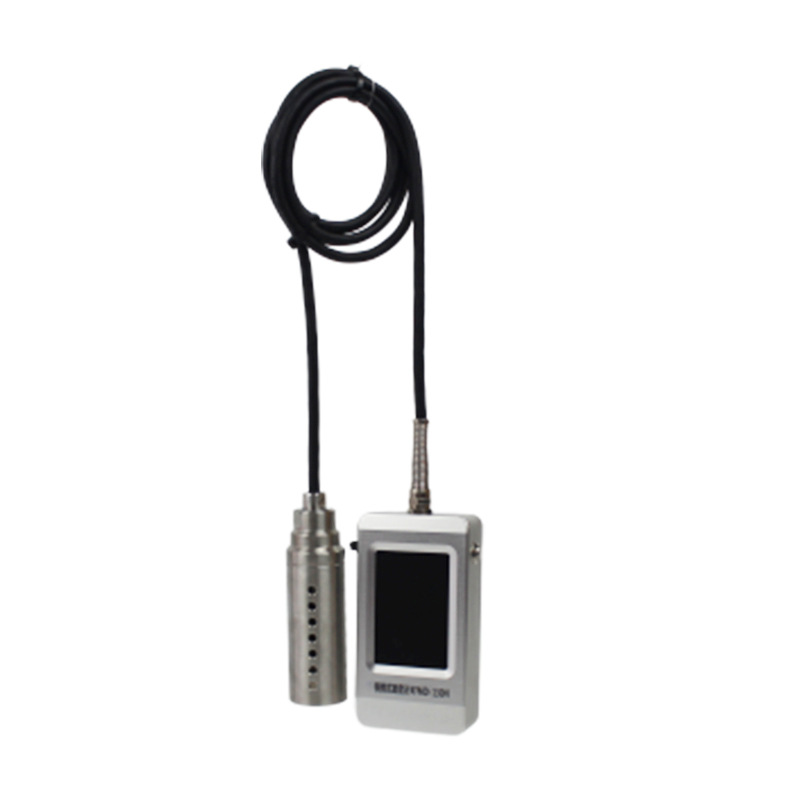
Portable Density Meter-Portable Tuning Fork Density Meter

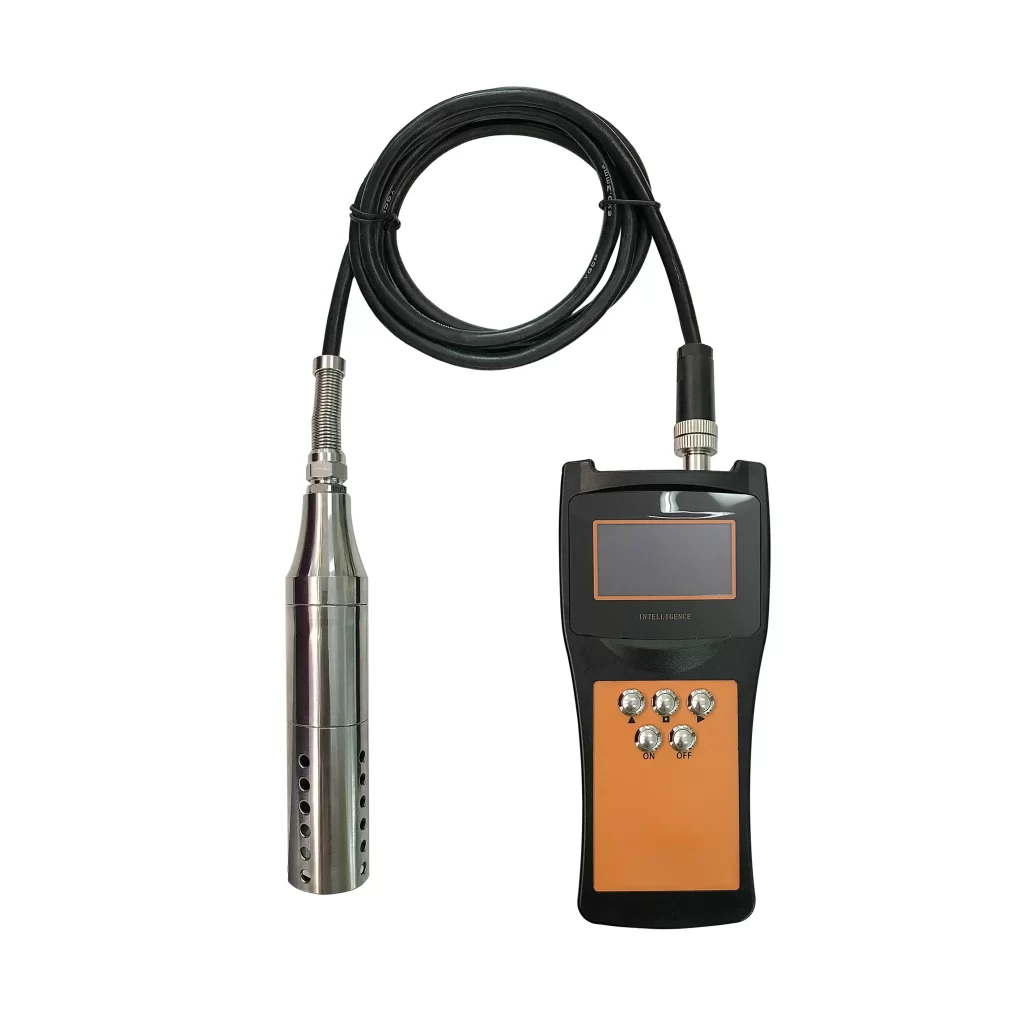
Portable Density Meter is used to measure the density or concentration of liquid media in tanks and pipes. Also called Portable Tuning Fork Density Meter or handheld density meter. Different from the structure of Anton Paar DMA35 Portable Density Meter, our Portable Density Meter is equipped with a handheld host and a submersible probe. It can meet various measurement requirements of users for density, concentration and solid content.

Features of Portable Density Meter

  • Used to measure the temperature and density (concentration) of liquids in tanks. The data will be displayed automatically after the measurement is completed.
  • Portable design, easy to operate and easy to carry.
  • Wide measurement range, suitable for continuous and uninterrupted measurement. The measurement accuracy is high and the test speed is fast.
  • Low maintenance, no moving parts, high durability.
  • Built-in temperature sensor to monitor the temperature of the liquid to be tested at all times.
  • Provide customization including 316L, titanium and other materials
  • Support the calculation of density and standard concentration
  • Automatically provide temperature compensation, with automatic calibration function

Technical Parameters

  1. Power supply: Built-in 3.7VDC lithium battery with rechargeable battery;
  2. Concentration range: 0~100% (20°C), according to the usage, it can be calibrated to a certain range;
  3. Density range: 0~2g/ml, according to the usage, it can be calibrated to a certain range;
  4. Concentration accuracy: 0.5%, resolution: 0.1%, repeatability: 0.2%;
  5. Density accuracy: 0.003 g/mL , resolution: 0.0001, repeatability: 0.0005;
  6. Medium temperature: 0~60°C (liquid state) Environment degree: -40~85°C;
  7. Medium viscosity: <2000mpa·s;
  8. Response speed: 2S

Physical Iindicators

  1. Interface material: stainless steel
  2. Cable material: anti-corrosion silicone rubber
  3. Wetted parts: 316 stainless steel, special requirements are available

Product Performance

The accuracy±0.003g/cm3±3.0kg/m3
Working scope0至3g/cc0至3000kg/m3
Repeatability±0.001g/cc±1kg/m3
Process temperature effect (corrected)±0.0005g/cm3±0.5kg/m3

Temperature Specification

Process temperature–20°C +100°C
Ambient temperature–20℃  +85℃
Temperature Coefficient0.1kg/m3/°C (after calibration)
Built-in temperature sensorPT100

Structural Materials

  • Wetted Parts: Stainless Steel 316L, Hastelloy, Zirconium
  • Tine Polish: Standard

Liquid Viscosity Range

  • Viscosity requirement: < 1000MPa

Liquid and Material Compatibility

TypeNamemolecular formulaConcentration (%)316LHastelloyZirconium
AcidHydrochloric acid (without hydrofluoric acid)HCI0-40×
sulfuric acidH2SO40-50
H2SO450-75×
H2SO475-98
nitric acidNHO30-100
phosphoric acidH3PO40-98×
Alkalisodium hydroxideNaOH0-100×
Potassium hydroxideKOH0-50
Calcium hydroxideCa(OH)20-50
Otherscarbamide(NH2)2CO0-100
sodium hypochloriteNaOCI0-16×
hydrogen peroxideH2O20-90×
☆ Recommended
O Use under specific concentration and temperature limits
X Do not used

Dimensions

Portable Tuning Fork Density Meter working principle

The tuning fork density/concentration meter is used to measure the density or concentration of liquid media. Density or concentration measurement is an important process control in the product manufacturing process.

Tuning fork densitometers can be used as indicators for other quality control parameters such as solids content or concentration values. It can meet various measurement requirements of users for density, concentration and solid content.

A tuning fork portable density meter that uses an acoustic frequency signal source to excite the metal fork. And make the fork vibrate freely at the center frequency. This frequency correlates with the density of the contacting liquid. Therefore, the density of the liquid can be measured by analyzing the frequency, and then the temperature compensation can eliminate the temperature drift of the system.

As for the concentration, the concentration value at a temperature of 20°C can be calculated according to the relationship between the corresponding liquid density and concentration.

This device integrates density, concentration and Baume into one. And has a variety of liquids to choose from.

Particle limitGasMaximum Liquid Viscosity
Particle diameterSuspended particles%
<10 microns<=40%Generally do not use<1000cp
10~50 microns<=20%

Applications

Portable density meters have a wide range of industrial applications across different sectors, including the petrochemical, brewing, food, pharmaceutical, mineral processing, oil, chemical, food and beverage, battery and electrolyte, ammonia preparation, laboratory, and desulfurization industries. They are specifically used for interface detection in multi-product pipelines, density detection of stirred mixtures, end point monitoring of reactors, and interface detection of separators.

Some specific examples of their use include:

  • In the petrochemical industry, portable density meters are used to detect interfaces in multi-product pipelines and to monitor the density of fuel blends.
  • In the food industry, portable density meters are used to monitor the density of food products during production, ensuring consistent quality.
  • In the pharmaceutical industry, portable density meters are used to measure the density of different materials during drug formulation.
  • In the battery and electrolyte industry, portable density meters are used to measure the density of electrolyte solutions, which is important for battery performance.

Overall, portable density meters are a versatile tool for a wide range of industries, helping to ensure consistent quality and optimize production processes.

More Digital Density Meters

More Detection and Analysis Sloutions

What Is Zirconia Oxygen Sensor?

Welcome to the world of Zirconia Oxygen Sensors, a cornerstone of precision in process control and industrial efficiency. Oxygen plays…

Portable Density Meter is used to measure the density or concentration of liquid media in tanks and pipes. After the measurement is completed, the data will be displayed automatically. Portable design, easy to operate and easy to carry.

Density or concentration measurement is an important process control in the product manufacturing process. Our Portable Density Meter – Portable Tuning Fork Density Meter can be used as an indicator of other quality control parameters like solids content or concentration values. It can meet various measurement requirements of users for density, concentration and solid content.

We, Sino-Inst, are a professional density meter manufacturer. We manufacture and supply Portable Density Meter, Online Tuning Fork Density Meter, Differential Pressure Density Meter, Split Density Meter, Coriolis Density Meter, etc.

If you need to monitor density or concentration, please feel free to contact Sino-Inst sales engineers.

Request a Quote

Please enable JavaScript in your browser to submit the form

Digital Density Meter

More Detection and Analysis Sloutions