

A stilling well is a metal pipe installed inside a tank with calibrated holes near the bottom. It surrounds the radar antenna (or any non-contact level transmitter) and dampens the surface chaos — foam, turbulence, swirls from agitators — that throws off level readings. For radar in particular, the pipe also doubles as a low-loss waveguide, recovering 20–40% signal strength on low-dielectric liquids like LPG, hydrocarbons, and condensate. This page covers what a stilling well is, why it matters, and how to size and install one for tank level measurement. On chemical service such as sulfuric acid storage tank level radar, the same stilling-well technique applies once the antenna material is upgraded to PTFE or Hastelloy.
Contents
- What Is a Stilling Well
- Why Radar Level Transmitters Need a Stilling Well
- Stilling Wells for Other Level Transmitters
- Stilling Well Pipe Sizing and Hole Pattern
- Stilling Well Installation in a Tank
- Common Stilling Well Mistakes
- FAQ

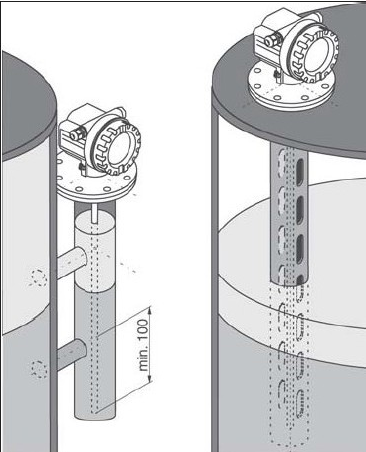
What Is a Stilling Well
A stilling well — also called a still pipe, stilling tube, or bypass chamber — is a vertical pipe mounted inside a tank with one end above the maximum liquid level and the other end submerged near the bottom. Small holes (typically 4–10 mm) drilled along the lower section let liquid in. The liquid inside the pipe rises to the same level as the tank but without the turbulence, foam, or floating debris of the open surface.
The pipe is usually 304 / 316 stainless steel for chemical service, carbon steel for hydrocarbons, or PVC for water in atmospheric tanks. Diameter ranges from DN50 (2″) for small chemical tanks to DN200 (8″) for large crude oil storage. Length matches the tank height plus a 200–400 mm extension above the level transmitter flange.
Why Radar Level Transmitters Need a Stilling Well
Non-contact radar measures the time-of-flight of a microwave pulse reflected off the liquid surface. Three things break that reflection:
- Foam. A 50 mm foam layer can scatter 30 dB of the return signal. Low-dielectric foam (oils, surfactants) is the worst.
- Turbulence and agitators. A mixer-driven surface moves 100 mm/s or more; the radar averages out as noise.
- Low dielectric constant. Liquids with εr < 2.5 (LPG, propane, vacuum gas oil) reflect only 1–3% of the signal in open vessel mode.
A stilling well solves all three. The pipe shields the antenna from foam and surface motion. It also acts as a circular waveguide — the microwave concentrates inside the pipe and reflects off the calmer liquid column, boosting the return signal by 10–20 dB. For LPG and similar low-εr media, a stilling well changes radar from unusable to ±2 mm accuracy.
Stilling Wells for Other Level Transmitters
Stilling wells help more than just radar:
| Transmitter Type | Stilling Well Benefit | Required? |
|---|---|---|
| Non-contact radar (pulse / FMCW) | Waveguide effect, foam isolation | Recommended for εr<2.5 or foaming media |
| Guided wave radar (GWR) | Mechanical protection of probe | Optional, not for signal |
| Ultrasonic | Damps echo from turbulence | Recommended in agitated vessels |
| Float / displacer | Prevents float side-wash | Required in agitated tanks |
| Magnetostrictive | Probe protection | Optional |
| DP / hydrostatic | None (taps go through tank wall) | Not used |
The general rule: any non-contact technology benefits from a stilling well when the surface is foaming, agitated, or has low reflectivity. Contact technologies like DP and hydrostatic do not use them — see our DP level transmitter notes for that case.
Stilling Well Pipe Sizing and Hole Pattern
The pipe diameter must match the radar antenna’s beam angle and the level transmitter’s mounting flange. Three rules:
- Inner diameter ≥ 50 mm for horn-type radar. Smaller pipes attenuate the beam.
- Antenna radial clearance 5–10 mm from pipe wall. Too close and you get wall reflections; too far defeats the waveguide effect.
- Pipe straightness ≤ 1 mm per metre. Bends scatter the radar pulse and bias the level reading by tens of millimetres.
The hole pattern is the second design variable. Holes too small respond too slowly to filling rate; too large defeat the damping. Industry practice:
| Pipe DN | Hole Diameter | Spacing | Total Open Area |
|---|---|---|---|
| DN50 (2″) | 4–6 mm | 50 mm | 2–3% of pipe wall |
| DN80 (3″) | 5–8 mm | 75 mm | 2–3% |
| DN100 (4″) | 6–10 mm | 100 mm | 2–4% |
| DN150 (6″) | 8–12 mm | 100 mm | 3–4% |
| DN200 (8″) | 10–14 mm | 150 mm | 3–5% |
Drill the holes in a staggered helical pattern (60° offset between rows) rather than vertical columns. The helical pattern prevents resonance and damps surface waves more evenly.
Stilling Well Installation in a Tank

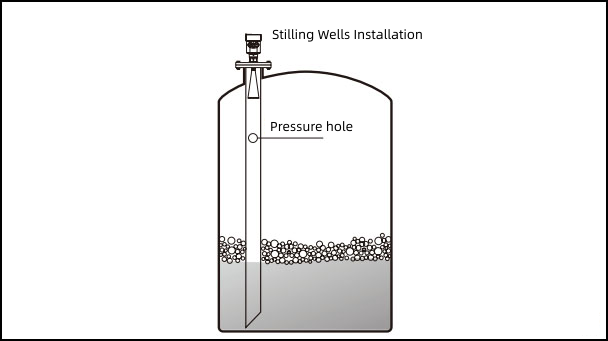
- Submersion depth. The bottom of the pipe sits 80% of minimum operating level below the lowest measured point — never let holes emerge into air during normal operation.
- Top mounting. Welded flange to a tank nozzle is the cleanest. The transmitter bolts to the nozzle’s top flange; the pipe hangs from the same flange or rests on internal brackets. Threaded NPT works for atmospheric tanks below 10 bar.
- Bottom support. For pipes over 4 m, weld a guide ring or bracket near the bottom to prevent swinging from tank-side flow.
- Pressure equalisation hole. Drill one 5–8 mm hole near the top of the pipe (above max level) to vent gas; otherwise pressure traps inside the pipe and falsifies the reading.
- Antenna alignment. The radar horn axis must be parallel to the pipe centerline within 1°. A misaligned antenna throws off level by several millimetres per metre of probe distance. For a deeper look at horn vs parabolic vs rod antennas, see our radar antenna selection guide.
For a complete radar selection walkthrough see our radar water level sensor product page, which lists antenna types compatible with stilling wells.
Common Stilling Well Mistakes
- Using a too-small pipe. A DN40 (1½”) pipe with a DN80 horn antenna attenuates the beam by 6 dB. Match pipe to antenna size first.
- Drilling holes too close to a vent or mixer outlet. Local jet through one hole biases the column. Position holes 90° away from any agitator outflow.
- Skipping the vent hole at the top. Without venting, the column traps gas as tank pressure changes — level reading lags actual tank level by tens of mm.
- Mounting the pipe with a bend. Any non-vertical section becomes a microwave scatterer. Always plumb the pipe to vertical within 1°.
- Using PVC for hydrocarbon service. Plastic stilling wells crack and shrink against hydrocarbons over time. Stainless steel or carbon steel for any oil or solvent.
FAQ
What is a stilling well in a tank?
A stilling well is a vertical pipe installed inside a tank with calibrated holes near the bottom. Liquid inside the pipe reaches the same level as the tank but without surface turbulence or foam, giving level transmitters (especially non-contact radar) a clean measurement column.
Do I need a stilling well for a radar level transmitter?
Use a stilling well when the liquid is low-dielectric (εr below 2.5, like LPG or hydrocarbons), when foam is present, when the surface is agitated by mixers, or when the tank has internal obstructions in the radar beam path. Calm water in a quiet vessel does not need one.
What size stilling well pipe for radar?
Match the pipe inner diameter to the radar horn antenna. A DN80 antenna fits a DN100 stilling well; a DN50 antenna fits a DN80 well. Keep 5–10 mm of radial clearance between antenna edge and pipe wall.
Can a stilling well be used with ultrasonic or float level meters?
Yes. Ultrasonic meters benefit from a stilling well in agitated tanks because the pipe damps turbulence-induced echo noise. Float and displacer meters often need a stilling well to prevent side-wash from disturbing the float position.
Featured Level Transmitters from Sino-Inst

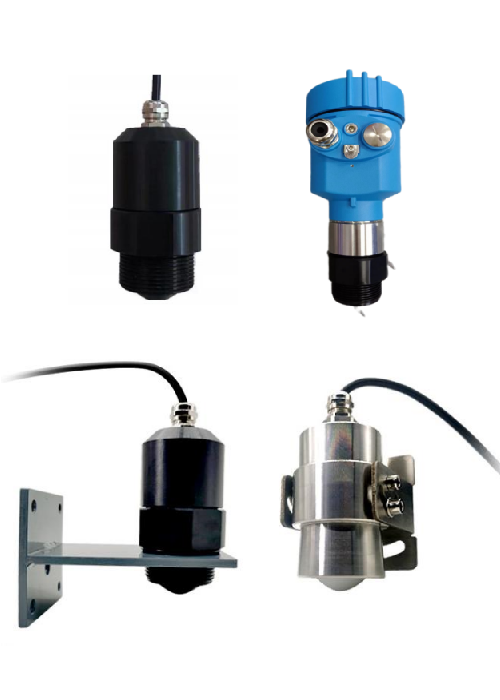
Radar Water Level Sensor
0.05–120 m | ±3 mm | 26 GHz pulse radar. Pairs with DN50–DN200 stilling wells for foaming or low-εr liquids in tanks and reservoirs.

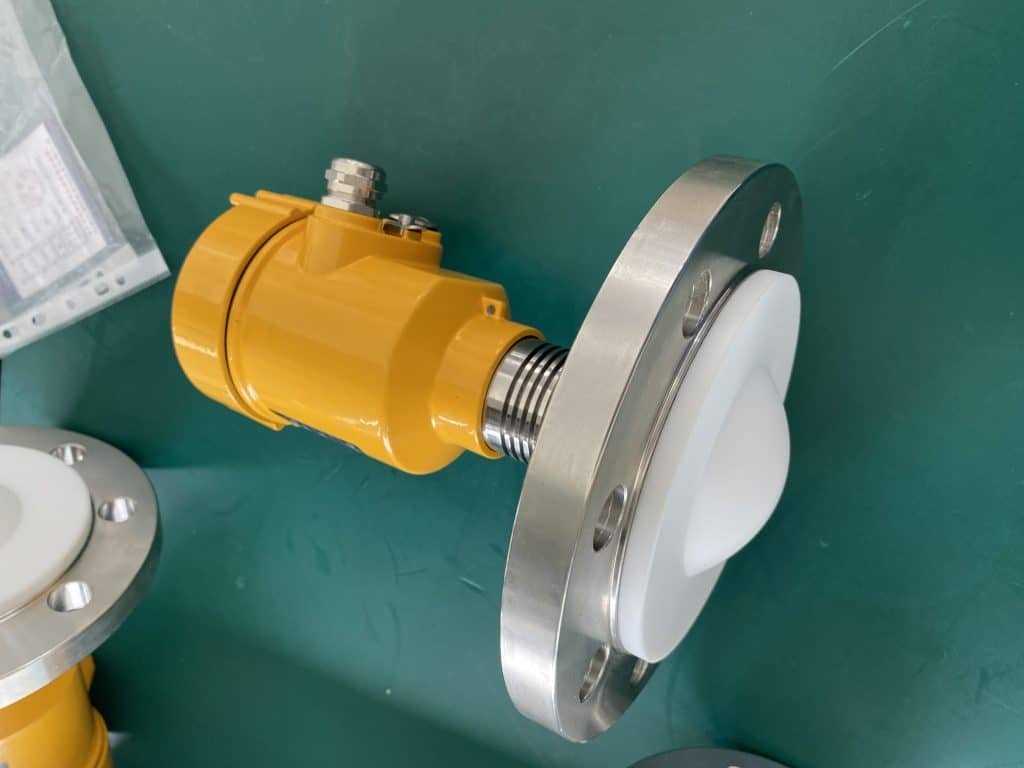
80 GHz FMCW Level Radar
0–120 m | ±1 mm | Narrow beam works with DN50 stilling well. VEGAPULS 64 class alternative for LPG, hydrocarbons, agitated vessels.

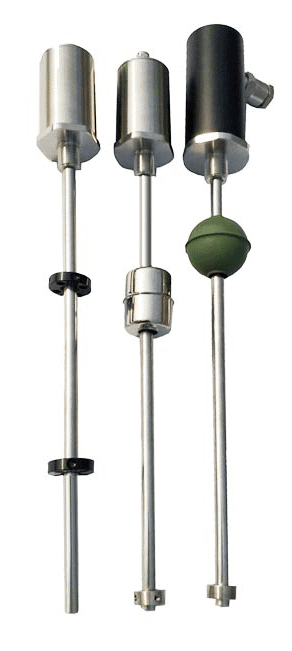
SI-100 Magnetostrictive Transmitter
0.3–6 m rigid probe | ±0.5 mm | Probe slides inside stilling well for mechanical protection in agitated chemical tanks.
Need a Stilling Well Spec for Your Tank?
Send us your tank dimensions, fluid (with dielectric constant if known), and whether the surface is agitated or foaming. Our engineers will recommend the pipe DN, hole pattern, and the matching radar or ultrasonic transmitter — quoted as a complete spec ready to weld in.
If a stilling well is not feasible (e.g., narrow casing or deep well), a submersible pressure transducer is the alternative — it measures hydrostatic head directly without surface optics.
Request a Quote


Wu Peng, born in 1980, is a highly respected and accomplished male engineer with extensive experience in the field of automation. With over 20 years of industry experience, Wu has made significant contributions to both academia and engineering projects.
Throughout his career, Wu Peng has participated in numerous national and international engineering projects. Some of his most notable projects include the development of an intelligent control system for oil refineries, the design of a cutting-edge distributed control system for petrochemical plants, and the optimization of control algorithms for natural gas pipelines.