Category Archives: Blog
Stilling Wells for Radar Level Measurement|What Is It? Why Do You Need It?
Last Updated: April 7, 2026 | Author: Wu Peng, Senior Instrumentation Engineer
Stilling wells isolate radar antennas from surface turbulence, foam, and obstacles. When tanks have agitation or low-dielectric liquids, a properly sized well dampens noise and stabilizes signal. This guide covers sizing, materials, hole specifications, and installation practices based on API 2350 and field experience.
What Is a Stilling Well?
A stilling well is a cylindrical pipe inserted into a tank. It creates a low-velocity zone for the radar antenna, isolating it from surface agitation. Small holes in the pipe sidewall allow liquid inside to reach equilibrium with tank level while damping rapid fluctuations from foaming or mixing action.
The mechanism is simple: liquid enters through calibrated holes (typically 4-5mm, spaced 5-10cm apart) on the lower pipe sections. Above those holes, the wall is solid, creating a damping volume. This arrangement allows step changes in tank level to propagate through within 1-2 seconds while filtering high-frequency noise.
Straight Pipe vs. Bypass Chamber
Straight Pipe: Suspended from a tank nozzle. Fast installation, low cost, typical response time 1-2 seconds. Suitable for temperatures up to ~200°C (SS316L). Requires tank drain-down for removal.
Bypass Chamber: External vessel with inlet and outlet connections. Higher cost and larger footprint but operates to 400°C+. Better for high-pressure vessels and where tank shutdown is impractical. Response time ~5-10 seconds due to external chamber volume.
When Do You Need One?
Foam or surface agitation: Radar cannot distinguish between liquid surface and foam layer. A stilling well separates the antenna from the foam zone—typical error without one is 5-15%.
Mixing or agitation: Moving surface creates noise in the radar signal. The well’s damping removes these fluctuations, stabilizing PID loops and reducing false alarms.
Low-dielectric liquids (under 2.5): Weak reflections demand a stable, calm interface. Even small turbulence can cause signal loss. The quiet environment inside a well improves signal return by 30-50%.
Obstacles or internals: Baffles, heating coils, or feed pipes block direct antenna view. A stilling well provides a clear measurement path independent of tank internals.
Floating roof tanks: Roof movement produces false echoes. The stilling well separates the antenna from structural reflections.
High-viscosity liquids: Slow to equilibrate. A stilling well with appropriate hole sizing dampens surface disturbance while allowing level changes to propagate through in 1-2 seconds.
Design Specifications
Material Selection
SS316L: Standard choice for corrosive or food/pharma contact. Resists acids, salts, and most organics. Typically 20-30% cost premium over carbon steel.
Carbon Steel: Adequate for water, non-corrosive oils, and neutral liquids. Requires paint or internal coating—bare steel will scale and affect hole diameter and signal reflectivity. Spherical tanks often mandate SS due to stress concentration at nozzles.
Alternatives: Inconel or Hastelloy for extreme chemical exposure. PVC for very low temperature. Duplex stainless for high-pressure, high-corrosion environments.
Stilling Well Diameter & Sizing Specifications
| Nominal Diameter | Tank Nozzle Size | Antenna Type | Typical Length | Wall Thickness |
|---|---|---|---|---|
| DN125 (125mm/5″) | 5″ NPT or Flanged | Horn antenna, Small horn | 1.5 – 3m | 2.0-2.5mm SS, 2.5-3mm CS |
| DN150 (150mm/6″) | 6″ NPT or Flanged | Standard horn, Drop antenna | 2.0 – 4m | 2.0-2.5mm SS, 2.5-3mm CS |
| DN200 (200mm/8″) | 8″ NPT or Flanged | Large horn, 26GHz/80GHz | 2.0 – 5m | 2.5-3.0mm SS, 3.0-3.5mm CS |
| DN250 (250mm/10″) | 10″ Flanged | Large horn, Multi-antenna | 2.5 – 6m | 3.0-3.5mm SS, 3.5-4.0mm CS |
| DN300 (300mm/12″) | 12″ Flanged | Extra-large applications | 3.0 – 7m | 3.5-4.0mm SS, 4.0-4.5mm CS |
Hole Design
Diameter: 4-5mm is standard. Smaller holes (<3mm) restrict flow and slow level response. Larger holes (>6mm) pass turbulence and foam. Typical tolerance ±0.3mm due to drilling.
Spacing: 5-10cm vertical distance between hole centers. This determines damping time constant. Closer spacing (5cm) increases damping. Wider spacing (10cm) allows faster response but less noise suppression.
Stagger pattern: Alternate holes on opposite sides to prevent preferential flow direction. For a DN200 pipe (200mm OD), alternate left and right every 5-7cm.
Bottom section: Keep the lowest 100-150mm without holes to prevent siphoning. This is critical—if all holes go to the pipe bottom, liquid can siphon out when tank drains, holding a false low reading.
Top vent: Two 6-8mm ports (or one 8mm port with 6mm check valve) near the pipe top. These equalize pressure and prevent vacuum lock when level drops rapidly. Essential for stable response.
Bottom reflector plate: A flat SS plate welded or bolted to the pipe bottom. Improves radar echo return. Thickness 2-3mm. Must be perpendicular to pipe axis (within 1-2°) to avoid side echoes.
Installation Practices
Gap tolerance (OD to nozzle ID): 1-3mm maximum. Larger gaps allow turbulence and foam to bypass the well. Spec a gasket of appropriate thickness. Measure with feeler gauges during assembly.
Connection method: Welded flange for permanent installations on pressurized tanks. Bolted flanges for modular or removable designs. Threaded NPT works for small wells (DN125) at pressures below 10 bar.
Antenna position: Mount on a rigid support to prevent drift or vibration. Center the antenna along the pipe axis. For horn antennas, maintain 5-10cm radial clearance from the pipe wall to avoid reflections. Position antenna 10-15cm below the nozzle top.
Sealing: Use rubber gasket with Teflon or PTFE reinforcement. Silicone gaskets above 150°C. Metal O-rings for high-pressure service (over 20 bar).
Installation height: Submerge the stilling well to about 80% of minimum operating level. This ensures holes remain in liquid for most operating range, preventing air entry that would degrade radar signal.
Radar Transmitter Compatibility
26GHz pulse radar: Preferred for low-dielectric liquids (0.5-20, e.g. refined oils, alcohols). The longer wavelength penetrates weak reflections. Stilling well response time ~1-2 seconds. Cost-effective and robust in industrial environments. See 26GHz pulse radar transmitters.
80GHz FMCW radar: Higher frequency, narrower beam, faster signal processing (0.5-1 second response). Better immune to external RF noise. Suitable for foam and high-agitation tanks. See 80GHz radar level transmitter guide.
Guided wave radar (GWR/TDR): Rod or cable probe conducting signal directly through the liquid. Works on any dielectric over 1.4 (including very low values). Requires only a small bypass nozzle, not a full stilling well. Excellent for complex tank geometry. See guided wave radar specifications.
Common Mistakes
Gap over 3mm: Foam and turbulence bypass the well. Seals fail from corrosion or mechanical stress. Measure with feeler gauges; use proper gasket thickness.
Holes under 3mm: Restrict flow; level lags tank changes. Drilling tolerances widen gaps. Minimum 4mm holes, staggered pattern.
Holes over 6mm: Turbulence enters; noise increases. Bottom holes allow siphoning. Limit to 5mm, place only in middle 70% of pipe.
No vent ports or blocked vents: Vacuum prevents level drop. Liquid gets trapped inside well. Install two 6-8mm ports at top; use ball valves for maintenance access.
Antenna too close to wall: Reflections from metal pipe create double echoes. Center antenna; maintain 5-10cm clearance. Check with feeler gauge during commissioning.
Well positioned too high: Holes above minimum operating level expose antenna to air. Tank bottom becomes unreachable. Keep lowest holes at least 10-15cm below minimum level.
Scale or corrosion buildup: Blocks holes; changes damping. Removes protective surface from stainless steel. Specify removable flange design; implement annual cleaning for corrosive service.
Standards & Compliance
API 2350: Section 5.4 covers stilling well requirements for petroleum tank gauging. Mandates vent ports to prevent siphoning, specifies hole sizing and spacing for equalization within 30-60 seconds, requires documentation of diameter, material, and installation method.
IEC 61511: Functional safety standard applicable to safety-critical level measurement (overflow protection, process interlocks). Stilling well material, pressure rating, and installation must support the required SIL rating of the overall instrumentation system. Material compatibility with the process fluid is mandatory.
ASME B31.1: Power Piping Code governs bypass chamber design and connections. Relevant for high-temperature or high-pressure installations. Specifies weld quality, hydrostatic testing, and pressure relief requirements.
FAQ
A cylindrical pipe inserted into a tank that dampens surface turbulence and foam. Calibrated holes allow liquid inside to equilibrate with tank level while damping rapid fluctuations. Isolates radar antenna from agitation.
Tanks with foam, agitation, or mixing. Low-dielectric liquids (under 2.5). Obstacles or internals blocking antenna view. Floating roof tanks. High-viscosity liquids. Calm, clear tanks with good dielectric do not require one.
Straight pipe well: suspended from tank nozzle, fast response (1-2 sec), low cost, limited to ~200°C. Bypass chamber: external vessel, high cost, operates to 400°C, slower response (5-10 sec), no tank shutdown needed for maintenance.
SS316L for corrosive or food/pharma service. Carbon steel for water, non-corrosive oils (requires coating). Spherical tanks typically mandate stainless due to stress concentration at nozzles. Select based on liquid chemistry and temperature.
Diameter 4-5mm. Spacing 5-10cm vertical. Staggered on opposite sides. Keep bottom 100-150mm without holes to prevent siphoning. Two vent ports (6-8mm) at top to prevent vacuum lock.
Maximum 1-3mm. Measure with feeler gauges. Larger gaps allow bypass of foam and turbulence. Proper gasket thickness and surface finish are critical.
26GHz pulse radar: preferred for low-dielectric liquids (0.5-20). 80GHz FMCW: faster response, better for high-foam applications. Guided wave radar: smallest footprint, any dielectric over 1.4.
Yes. API 2350 Section 5.4 specifies stilling well requirements for tank gauging: vent ports, siphon prevention, hole sizing. IEC 61511 requires material compatibility and pressure rating to support the SIL rating of the overall instrumentation system.
Related Resources
Technical references on radar level measurement:
- Radar Type Level Transmitters: 26GHz vs. 80GHz
- 80GHz Radar Level Transmitter
- Guided Wave Radar Level Transmitter
- Ultrasonic Level Transmitters
- Radar Level Gauge
- Dielectric Constant in Radar Level Measurement
- High Temperature Level Sensors
- Level Transmitters & Measurement Technology
About the Author
Wu Peng is a Senior Instrumentation Engineer with 18+ years in level measurement, process control, and tank gauging. Leads the technical team at Sino-Inst Engineering across oil & gas, chemical, water treatment, and power generation applications. Certified in IEC 61511 Functional Safety and API 2350 compliance.
Engineering consultation available for: Custom stilling well design, material selection, installation commissioning, API 2350 and IEC 61511 compliance review.
Contact: info@drurylandetheatre.com | +1-555-0123 | https://www.drurylandetheatre.com
Wu Peng, born in 1980, is a highly respected and accomplished male engineer with extensive experience in the field of automation. With over 20 years of industry experience, Wu has made significant contributions to both academia and engineering projects.
Throughout his career, Wu Peng has participated in numerous national and international engineering projects. Some of his most notable projects include the development of an intelligent control system for oil refineries, the design of a cutting-edge distributed control system for petrochemical plants, and the optimization of control algorithms for natural gas pipelines.
Upstream and Downstream Flow Straight Pipe Requirements-for Flowmeter Installation
Upstream and Downstream Straight Pipe Requirements for Flow Meters
Updated April 2026 — By Sino-Inst Engineering Team
Straight pipe length is one of the most overlooked variables in flow meter accuracy. The 10D upstream, 5D downstream rule appears in nearly every standard and installation guide, but applying it correctly requires understanding why the numbers exist and where exceptions apply.
Upstream and Downstream: The Basics
Upstream is the pipe run before your flow meter. Downstream is the run after it. The upstream section determines whether the flow profile entering the meter is stable and fully developed. The downstream section provides space for the meter to make its measurement without interference from what comes next.
A fully developed flow profile means the velocity distribution across the pipe cross-section has reached equilibrium. In straight pipe with constant diameter, this typically takes 40-50 pipe diameters to achieve after a major disturbance like an elbow or tee.
The 10D/5D Rule Explained
This rule comes from empirical testing and flowmeter standards. D is the internal pipe diameter. So for a 2-inch nominal pipe (actual ID ~1.938 inches), 10D upstream = ~19.4 inches, and 5D downstream = ~9.7 inches.
The 10D upstream requirement exists because most flow meters reach acceptable accuracy at that point, even if the flow profile hasn’t fully developed. Orifice plates and differential pressure meters benefit most from this length. Magnetic and Coriolis meters tolerate shorter distances.
The 5D downstream requirement varies. Some meters need 3D, others need 5D or more. This accounts for meter response time and the pressure recovery zone immediately after the measurement point.
Key Point: The 10D/5D rule is a starting point, not a universal truth. Specific meter types, pipe arrangements, and flow conditions can justify shorter or longer runs. Standards like ISO 5167 and ASME MFC-3M define exact requirements for each meter class.
Flow Meter Type Comparison
| Meter Type | Upstream (D) | Downstream (D) | Notes |
|---|---|---|---|
| Orifice Plate | 10–15 | 5 | Varies by beta ratio; narrower beta requires longer upstream |
| Venturi Tube | 5 | 3–5 | Self-recovering design; less sensitive to inlet conditions |
| Magnetic | 5–10 | 3–5 | Accepts shorter runs than DP meters; insensitive to velocity profile |
| Vortex | 10–20 | 5 | Sensitive to swirl; often needs more upstream than orifice |
| Ultrasonic (transit-time) | 10–15 | 5 | Highly affected by velocity asymmetry; demands clean approach |
| Turbine | 10–15 | 5 | Sensitive to swirl and yaw; long upstream reduces uncertainty |
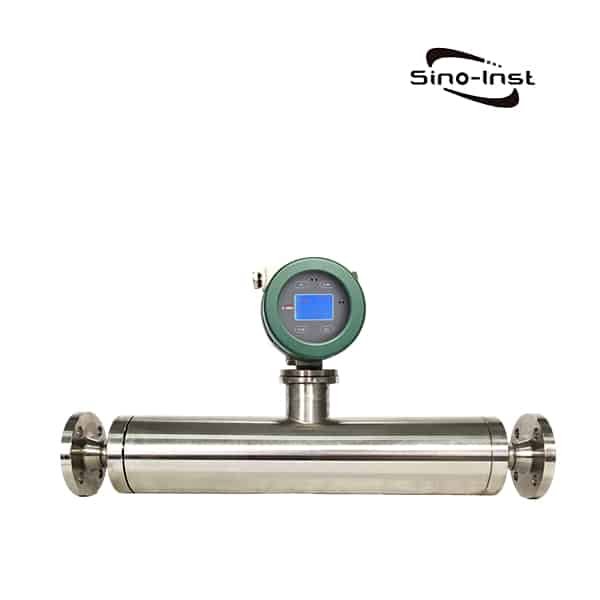
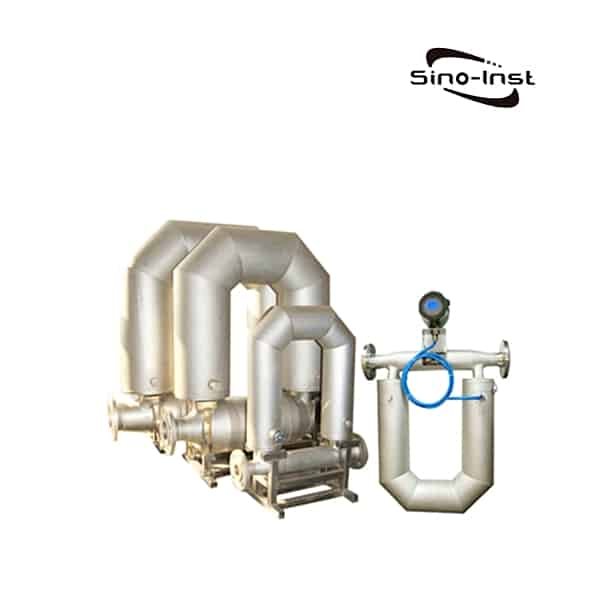
| Coriolis (mass flow) | 0–5 | 0–5 | No straight pipe requirement; measures mass directly |
| Positive Displacement | 0–5 | 0–5 | No straight pipe requirement; output independent of profile |
Requirements by Meter Type
Orifice Plate Meters
Orifice plates are sensitive to inlet velocity profile. Beta ratio (ratio of orifice diameter to pipe diameter) directly affects requirements. At beta = 0.5, you may need 15D upstream. At beta = 0.7, 10D often suffices. The beta ratio changes the pressure drop and flow coefficient, which means the flow disturbance upstream has more or less impact on accuracy.
Field installations with two elbows in the same plane (90° apart) upstream of an orifice meter will show 2–4% higher discharge coefficient than the same meter with 15D straight pipe. This is why standards require either adequate straight run or flow conditioning devices.
Magnetic Flow Meters
Magnetic meters measure the voltage induced by fluid crossing perpendicular electrodes. This measurement is largely immune to velocity profile shape. You can often install one with 5D upstream and 3D downstream, even after an elbow, without significant accuracy loss.
The exception is extreme swirl. If the flow is rotating as it enters the meter, the voltage pattern shifts. This occurs when elbows are stacked perpendicular to each other (one horizontal, one vertical). Even then, 5D straight pipe usually corrects it.
Clogging concerns are the primary reason to maintain minimum straight pipe on magnetic meters—not to stabilize the velocity profile, but to allow solids to remain suspended in the center of the pipe rather than settling near electrodes.
Vortex Flow Meters
Vortex meters measure frequency of fluid oscillations downstream of a bluff body. Swirl entering the meter causes the shedding frequency to shift unpredictably, reducing accuracy. This makes vortex meters more demanding than orifice plates in terms of upstream requirements.
A common mistake is assuming vortex and orifice requirements are the same. Field data shows vortex meters need 15–20D upstream to tolerate two perpendicular elbows. With one elbow and 10D straight pipe, accuracy suffers noticeably in some flow conditions.
Ultrasonic Flow Meters (Transit-Time)
These meters calculate flow by measuring signal propagation time in two diagonal paths through the pipe. Velocity asymmetry—faster flow on one side—causes measurement error. Fully developed, symmetric flow is essential for accuracy above ±2% uncertainty.
Installation guidelines typically specify 10–15D upstream and 5D downstream. After a single elbow, the flow remains asymmetric well past 10D, so if you’re installing after an elbow, consider 20D of straight pipe or a flow straightener.
Turbine Flow Meters
Turbine meters are mechanically simple but sensitive to yaw (flow angle) and swirl. The rotor responds differently depending on the axial component versus the tangential component of velocity. This sensitivity demands good inlet conditions.
Most turbine installations need 10D upstream minimum. Some manufacturers specify 15D after elbows. Downstream, 5D is typical, though backpressure constraints (such as high-pressure applications) sometimes allow as little as 2D.
Coriolis and Positive Displacement Meters
These meters require no straight pipe for accuracy because they measure mass flow or volumetric displacement directly, independent of velocity profile. You can mount them immediately after an elbow with zero impact on measurement accuracy.
Coriolis meters do require some downstream space—not for the meter itself, but for pressure recovery. After the U-tube vibration channels, the flow expands back into the pipe. Allowing 2–5D downstream improves system stability and reduces noise in the signal.
Flow Conditioners and Alternatives
When you can’t meet straight pipe requirements, flow conditioners reduce the needed upstream length from 10D to as little as 2–3D. Common types include tube bundle straighteners, perforated plates, and honeycomb elements.
A tube bundle straightener (arrays of small tubes parallel to flow) costs €300–800 and works reliably. It recovers ~1D of pressure downstream, meaning your permanent pressure drop stays low. This is the best option in tight spaces.
Perforated plate straighteners are cheaper (€100–300) but cause higher permanent pressure loss. They’re adequate for low-speed applications or when small-scale mixing won’t hurt your measurement.
Never use a conditioner as a substitute for good upstream design if you can build the pipe properly. Straighteners add cost, maintenance, and pressure drop. Build 10D upstream when the space exists.
Common Installation Mistakes
Mistake 1: Assuming 10D is sufficient after any disturbance. It isn’t. A single elbow needs 10D, but two elbows (especially perpendicular elbows) need 15–20D for vortex or ultrasonic meters.
Mistake 2: Installing the meter too close to a tee junction. Tee junctions create complex flow patterns that persist for 20–30D. Always measure straight pipe distance from the meter, not from the tee itself.
Mistake 3: Neglecting downstream requirements. A 5D downstream run is just as important as upstream. Many sites focus only on upstream, then install a valve 2D downstream, invalidating both the upstream investment and the meter’s accuracy.
Mistake 4: Applying differential pressure meter rules to ultrasonic or turbine meters. Ultrasonic and turbine meters are more demanding. Don’t assume DP meter guidelines work for other types.
Mistake 5: Installing a flow conditioner, then positioning the meter immediately after it. Conditioners smooth the profile over a distance, not instantly. Leave 2D between the conditioner outlet and the meter.
Frequently Asked Questions
Can I measure pipe ID if the drawing is unavailable?
Yes. For a nominal 2-inch pipe, measure the outer diameter with calipers, then subtract twice the wall thickness (typically 0.154 inch for Schedule 40 steel). Or use a pipe measurement table. Once you have ID, multiply by 10 or 5 to get your required straight lengths.
What if I have only 8D upstream?
Your uncertainty increases, typically by 1–3% depending on meter type and what’s upstream. If the disturbance is a single elbow, an electromagnetic meter or Coriolis meter will work fine. For orifice plates or vortex meters, add a flow straightener.
Does reducer or enlarger fitting count toward straight pipe?
No. Reducers and enlargers create disturbances. Count straight pipe from the last fitting (elbow, tee, valve) to the meter inlet, or from the meter outlet to the next fitting downstream.
Is horizontal vs. vertical installation different?
Gravity affects settling of solids and gas bubbles, but doesn’t change the upstream/downstream rule. What changes is your risk of plugging or air entrainment. Vertical runs require attention to solids settling (magnetic meters) and gas pockets (ultrasonic meters), but straight pipe requirements remain the same.
Can I use the outlet of a storage tank as my upstream run?
Not reliably. Tank outlets create vortex, turbulence, and often asymmetric flow. Always install 10D of straight pipe after the tank discharge, treating the tank outlet as a disturbance source equivalent to an elbow or tee.
How do I select between a ultrasonic and turbine meter when space is limited?
Both need similar straight pipe lengths. If space is truly tight, consider magnetic or Coriolis meters, which tolerate shorter runs. See our flow meter type guide for detailed comparisons.
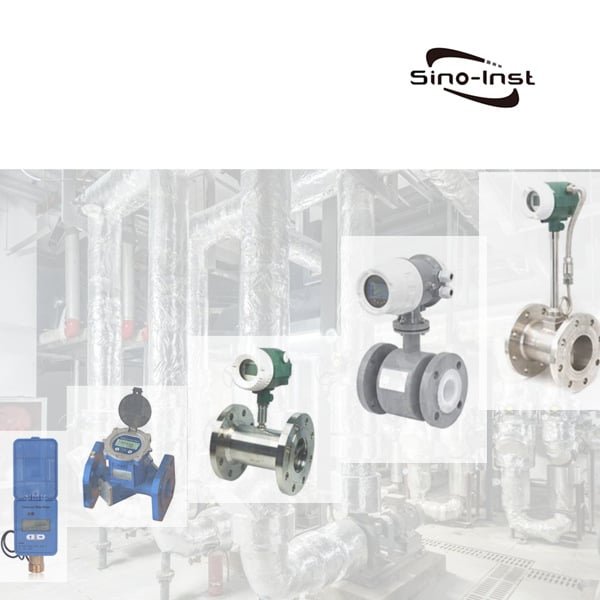
Featured Flow Meters from Sino-Inst
Request a Quote
Need help selecting the right flow meter for your application? Our engineering team can assist with sizing, installation guidance, and specifications tailored to your requirements.
Request a Quote