

SCADA stands for Supervisory Control And Data Acquisition. It is the software-and-hardware stack that lets one operator watch — and steer — dozens or hundreds of field instruments from a single screen. SCADA does not run the loop itself; PLCs and RTUs do. SCADA sits on top, pulling tags, drawing trends, raising alarms, and writing back setpoints. The five letters describe what the system is for, in that order: Supervisory first, Acquisition last. The rest of this page explains each part, where SCADA earns its keep, and where another tool would fit better.
Contents
- SCADA Spelled Out — Supervisory Control And Data Acquisition
- The Five Building Blocks of a SCADA System
- How SCADA Works in a Real Plant
- SCADA vs PLC vs DCS — Decision Matrix
- Where SCADA Earns Its Keep — Cross-Industry Snapshot
- Common Misreadings of “SCADA”
- When SCADA Is the Wrong Tool
- Spec-Sheet Decoder — Acronyms You’ll See Around SCADA
- Frequently Asked Questions
SCADA Spelled Out — Supervisory Control And Data Acquisition
The acronym dates to the 1960s utility industry, when a single dispatcher first needed a screen view of dozens of remote pumping stations. Every letter still earns its place on a modern P&ID.
| Letter | Word | What it means on the floor |
|---|---|---|
| S | Supervisory | One operator oversees many controllers; SCADA does not replace local logic. |
| C | Control | Operator can write setpoints, open/close valves, start/stop pumps from the HMI. |
| A | And | Conjunction — included so the acronym reads as English. |
| D | Data | Tag values (temperature, flow, level, status bits) polled or streamed from the field. |
| A | Acquisition | The act of pulling those tags into a historian for trending, reporting, alarms. |
Two utilities deserve emphasis. Supervisory means SCADA is a layer above the controllers — strip the SCADA away and the plant still runs on the PLC’s ladder logic. Acquisition means the system is, at its core, a data-pulling engine; visualization and alarms are downstream of that pull.
The Five Building Blocks of a SCADA System
Every SCADA installation, from a two-pump booster station to a national gas pipeline, breaks down into the same five layers.
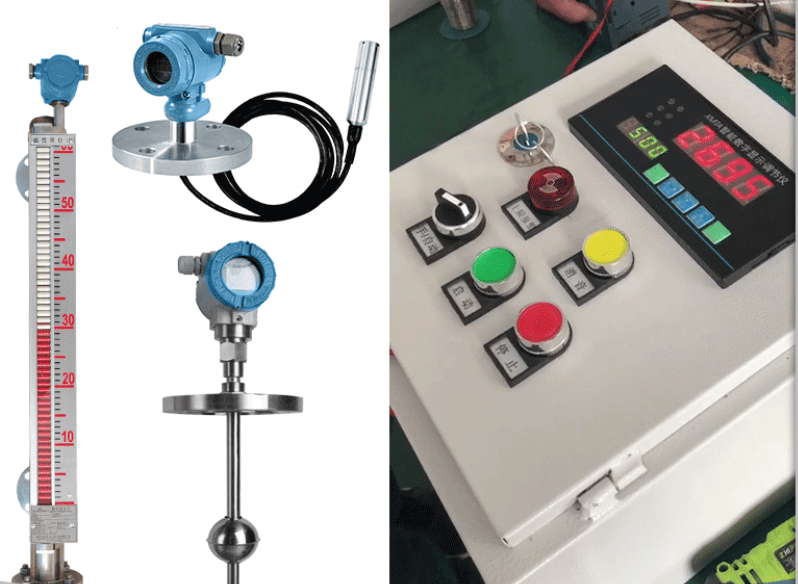
- Field instruments. Sensors and transmitters that convert physical state to a 4-20 mA, HART, or digital signal. A typical plant has hundreds — flow meters, pressure sensors, level probes, thermocouples, gas detectors.
- RTUs and PLCs. Microprocessor controllers that read the field signals, run local logic (interlocks, simple PID), and forward tag values upstream. RTUs are typically remote and ruggedized; PLCs are typically inside the plant cabinet.
- Communication network. The transport layer — Modbus RTU/TCP, OPC UA, DNP3, Ethernet/IP, cellular, or radio. The choice depends on distance, determinism, and security posture.
- Master Terminal Unit (MTU). The supervisory server. It maintains the tag database, runs the historian, evaluates alarms, and pushes setpoints back to the RTUs.
- Human-Machine Interface (HMI). The operator screens. Mimic diagrams, trends, alarm banners, login profiles. The HMI is the face of SCADA; the MTU is the brain.

How SCADA Works in a Real Plant
The signal flow is bidirectional but asymmetric. Data goes up almost continuously; commands come down only when an operator (or a script) asks. A typical polling cycle looks like this:
- Every 1-5 seconds, the MTU sends a Modbus or DNP3 read to each RTU.
- The RTU returns the current tag values — flow in m³/h, pressure in bar, valve position, motor status.
- The MTU stamps the values, archives them in the historian, evaluates each against the alarm limits, and updates the HMI screens.
- If an operator writes a new setpoint or clicks a “Start Pump” button, the MTU pushes a Modbus write to the RTU. The RTU passes the command to the PLC, which executes the change in the next scan.
A common field surprise: SCADA does not close fast loops. Anything tighter than ~100 ms — pressure relief, motor protection, surge control — has to live in the PLC. The SCADA layer is for shift-scale supervision, not millisecond control. Pair SCADA with a tuned PID controller in the PLC, not the other way around.
SCADA vs PLC vs DCS — Decision Matrix
The three terms are not interchangeable, though every vendor’s marketing tries to blur them. Use this matrix when choosing:
| Attribute | PLC | SCADA | DCS |
|---|---|---|---|
| Primary purpose | Local logic execution | Supervisory visualization & data | Plant-wide integrated control |
| Loop speed | 1-50 ms scan | 1-5 s polling | 50-500 ms |
| Orientation | Discrete, machine-level | Data-centric | Continuous, process-centric |
| Scope | One machine / cell | Site to enterprise | One plant, deeply integrated |
| Typical fit | Conveyor, batch skid | Water utility, pipeline, multi-site | Refinery, chemical plant |
| Capex / loop | Low | Low to medium | High |
The most common production architecture is PLC + SCADA. PLCs handle the millisecond control; SCADA sits on top to show, log, and supervise. A DCS replaces both layers with one integrated stack — that integration costs more and only pays back in tightly coupled continuous processes.
Where SCADA Earns Its Keep — Cross-Industry Snapshot

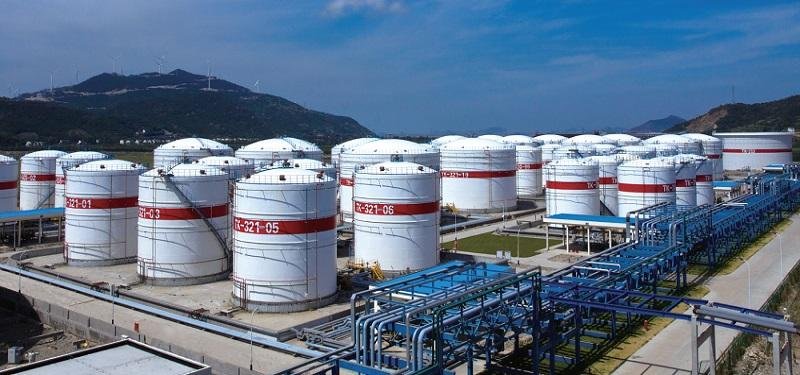
SCADA shows up wherever assets are dispersed and a small team needs visibility across all of them.
- Water and wastewater. Lift stations, treatment plants, reservoirs. Tags from magnetic flow meters and submersible level probes converge to one control room.
- Oil and gas. Pipeline pressure, custody-transfer flow, tank pressure measurement, RTU-equipped wellheads. SCADA over satellite or cellular keeps thousands of kilometers under one screen.
- Power transmission. Substation breaker status, transformer temperatures, line currents. SCADA in this domain is sometimes called EMS (Energy Management System) but the SCADA layer underneath is the same.
- Food and beverage. Clean-in-place (CIP) cycles, fermenter temperatures, batch tracking and differential-pressure flow totalization. SCADA enforces recipe steps and writes batch records for audit.
A unifying pattern: SCADA pays back fastest when the cost of one operator walking the site exceeds the cost of one Modbus radio. That ratio is why utilities adopted SCADA decades before light manufacturing did.
Common Misreadings of “SCADA”
Two misreadings show up regularly in spec documents and interview questions.
- NOT “Sequential Control And Data Acquisition”. Sequential control belongs to a PLC running batch logic. SCADA is supervisory — above the sequence, not inside it.
- NOT “System Control And Data Acquisition”. “System” is generic and obscures the hierarchical meaning. The word is “Supervisory” deliberately, signaling that SCADA observes and overrides without owning the local loop.
The distinction is not pedantic. Auditors, NIST cybersecurity guidance, and ISA-95 all use “Supervisory” — getting the word wrong on a tender response signals limited familiarity with the architecture.
When SCADA Is the Wrong Tool
SCADA is not always the answer. Three situations where a different layer fits better:
- Single-machine logic. A standalone packaging machine with a local HMI does not need a supervisory layer. A PLC plus a panel-mount HMI is cheaper and more reliable.
- High-integration continuous processes. A modern olefins plant or large refinery wants a DCS, where control and supervision share the same engineering database. Bolting SCADA onto bare PLCs in that setting creates integration debt.
- Lightweight IIoT pilots. If the goal is to push a dozen sensors to a cloud dashboard for energy benchmarking, a modern edge gateway plus a cloud time-series database is faster to stand up than a SCADA install. SCADA returns to the picture once control writes are required.
Spec-Sheet Decoder — Acronyms You’ll See Around SCADA
| Acronym | Stands for | Where you meet it |
|---|---|---|
| RTU | Remote Terminal Unit | Ruggedized field controller, often at the well or lift station |
| PLC | Programmable Logic Controller | In-plant logic execution, fast scan |
| HMI | Human-Machine Interface | Operator screen — panel-mount or PC-based |
| MTU | Master Terminal Unit | The supervisory server in the SCADA stack |
| IED | Intelligent Electronic Device | Substation protective relay with embedded logic |
| ICS | Industrial Control System | Umbrella term covering SCADA + DCS + PLC |
| OPC UA | Open Platform Communications Unified Architecture | Modern interoperability protocol |
Most of these terms appear together in vendor datasheets and standards documents. ISA-99 and IEC 62443 treat them all under “industrial control systems” for cybersecurity purposes.
Sensors and Transmitters That Feed SCADA
Every SCADA tag traces back to a physical instrument. The three product families below are typical inputs to a SCADA layer at a water, oil & gas, or chemical site.


SMT3151 Gauge Pressure Transmitter
4-20 mA + HART | 0.075% accuracy | -40 to 85 °C — direct loop into SCADA RTU or PLC analog input card.
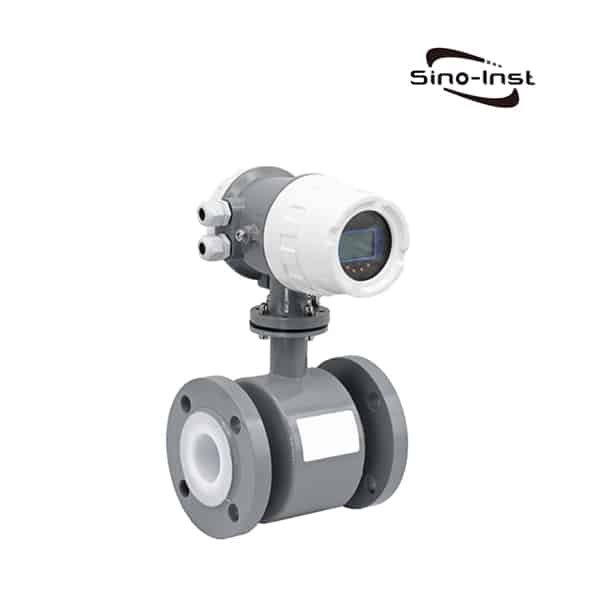
Industrial Magmeter Flow Meters
DN6-DN3000 | 4-20 mA, pulse, Modbus | conductive liquids — workhorse flow tag for water and wastewater SCADA.

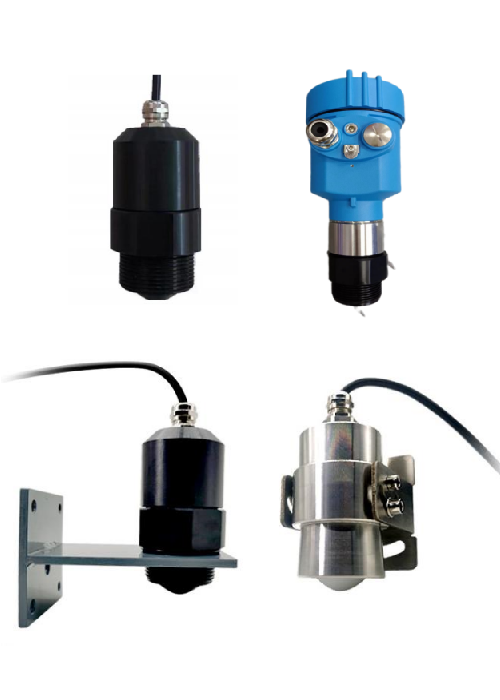
Radar Water Level Sensor
0.05 m to 120 m range | non-contact 80 GHz FMCW | 4-20 mA + HART — reliable tank, river and reservoir level for remote SCADA stations.
Frequently Asked Questions
What does SCADA stand for in PLC discussions?
The acronym is the same — Supervisory Control And Data Acquisition. In a PLC-centric conversation, “SCADA” refers specifically to the software layer above the PLC that visualizes tags and logs data. The PLC runs the loop; SCADA watches it.
Is SCADA the same as HMI?
No. The HMI is one component of a SCADA system — the operator-facing screen. SCADA also includes the historian, alarm engine, tag database, and communication drivers to the RTUs. A panel-mount HMI on a single machine is not SCADA.
Is SCADA part of IIoT?
SCADA predates IIoT by decades, but the two overlap. Modern SCADA platforms expose tags via OPC UA or MQTT and feed cloud dashboards, which is functionally IIoT. The difference is intent: SCADA owns the control authority; IIoT platforms typically do not write back to the field.
Who invented SCADA?
No single inventor — the concept evolved through the 1960s and 1970s among electric utilities and oil pipeline operators who needed centralized telemetry. Early systems used dedicated minicomputers and proprietary telemetry; the term “SCADA” itself was in common use by the mid-1970s.
What language do SCADA systems use?
Two layers, two languages. The PLCs underneath use IEC 61131-3 languages — ladder logic, structured text, function block. The SCADA software itself is typically configured graphically; scripting, when needed, is in VBScript, Python, or vendor-specific languages.
Sino-Inst engineers have specified SCADA-ready instrumentation for water utilities, oil & gas terminals and chemical sites across more than 50 countries. If you are scoping a new SCADA tag list — or replacing legacy field instruments that no longer match modern protocols — contact our team for a sized quote and protocol checklist. Learn more about the Sino-Inst engineering team and request a tailored configuration below.
Request a Quote


Wu Peng, born in 1980, is a highly respected and accomplished male engineer with extensive experience in the field of automation. With over 20 years of industry experience, Wu has made significant contributions to both academia and engineering projects.
Throughout his career, Wu Peng has participated in numerous national and international engineering projects. Some of his most notable projects include the development of an intelligent control system for oil refineries, the design of a cutting-edge distributed control system for petrochemical plants, and the optimization of control algorithms for natural gas pipelines.