

Updated: April 11, 2026
A flow totalizer and a flow meter serve different purposes, though the terms are often used interchangeably. A flow meter measures instantaneous flow rate—how fast fluid is moving right now. A flow totalizer accumulates that flow rate over time to give you a total volume. Many modern instruments combine both functions in one device, which is why the naming gets confusing. This guide clarifies the difference and helps you pick the right instrument.
Contents
- What Is a Flow Totalizer?
- What Is a Flow Meter?
- What Is a Totalizing Flow Meter?
- Flow Totalizer vs Flow Meter: Key Differences
- Flow Totalizer Working Principle
- Applications: Water, Gas, and Steam
- Flow Totalizers from Sino-Inst
- FAQ
What Is a Flow Totalizer?
A flow totalizer is a device that takes a flow rate signal—usually 4-20mA analog or pulse output from a flow sensor—and integrates it over time to display the cumulative volume that has passed through the pipe. Think of it as an odometer for fluid: it tells you the total gallons, liters, or cubic meters delivered, not the speed.

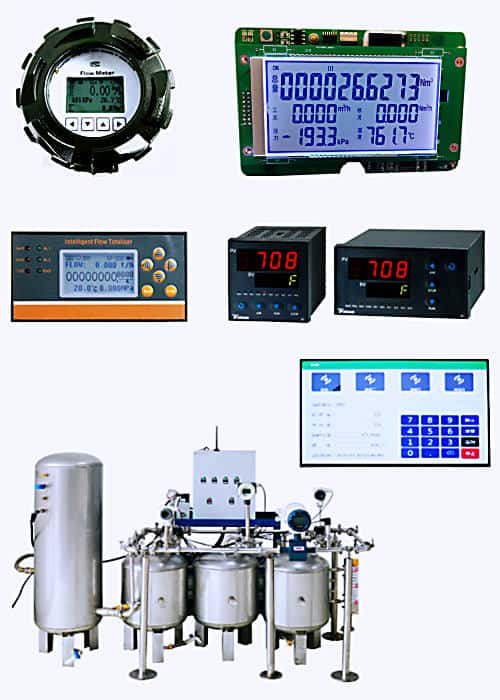
A standalone flow totalizer is typically a panel-mounted digital display unit. It receives a signal from a separate flow sensor (electromagnetic, ultrasonic, turbine, vortex, or other type) and performs the integration calculation internally. Most totalizers display both the instantaneous flow rate and the running total on the same screen.
Totalizers are common in batch processing, custody transfer, and water billing applications where the total volume matters more than the real-time flow rate. For details on how flow signals are generated and processed, see our guide on flow meter K-factor and pulse output.
What Is a Flow Meter?
A flow meter is the sensor that actually measures the flow rate of a fluid in a pipe. It produces an output signal—pulse, 4-20mA, or digital (RS485, HART)—proportional to the flow velocity or volume passing through it. The flow meter is the measurement device; the totalizer is the calculation and display device.
Common flow meter technologies include electromagnetic (for conductive liquids), ultrasonic (clamp-on or inline), turbine (for clean liquids and gases), vortex (for steam and gas), and differential pressure types like orifice plates and venturi tubes. Each technology suits different fluids, pipe sizes, and accuracy requirements.
What Is a Totalizing Flow Meter?
A totalizing flow meter combines the flow sensor and totalizer into a single instrument. The sensor measures flow rate, and the built-in electronics integrate the signal to display both instantaneous rate and cumulative total. Most modern flow meters include this totalization function as standard.
For example, an electromagnetic flow meter with an integral display typically shows GPM (or m³/h) as the live reading and total gallons (or m³) as the accumulated value. You do not need a separate totalizer box unless you want remote display, data logging, or batch control features that the flow meter’s built-in electronics do not support.
Flow Totalizer vs Flow Meter: Key Differences
| Feature | Flow Totalizer | Flow Meter | Totalizing Flow Meter |
|---|---|---|---|
| What it does | Integrates flow signal into cumulative volume | Measures instantaneous flow rate | Measures flow rate + accumulates total |
| Has a sensor? | No (receives signal from external sensor) | Yes (is the sensor) | Yes (sensor + calculator built in) |
| Typical output | Display, relay, 4-20mA retransmission | Pulse, 4-20mA, digital | Display + pulse + 4-20mA + digital |
| Installation | Panel-mounted (control room) | Inline or clamp-on (pipe) | Inline or clamp-on (pipe) |
| Standalone? | Needs a flow sensor | Needs a display/PLC to see totals | Self-contained |
| Cost | Low ($100–500) | Medium ($500–5000+) | Medium ($500–5000+) |
The bottom line: a flow totalizer is a calculator, a flow meter is a sensor, and a totalizing flow meter is both in one package. If your existing flow meter only outputs a 4-20mA or pulse signal and you need to see the running total on a local display, adding a standalone totalizer is the simplest solution.
Flow Totalizer Working Principle
A flow totalizer works by continuously sampling the flow rate signal and integrating it mathematically over time.
For pulse-output sensors: Each pulse represents a fixed volume (e.g., 1 pulse = 0.1 gallons). The totalizer simply counts pulses. Total volume = pulse count × volume per pulse. This is the most accurate totalization method because there is no analog-to-digital conversion error.
For 4-20mA analog sensors: The totalizer converts the current signal to a flow rate value using the configured range (e.g., 4mA = 0 GPM, 20mA = 500 GPM). It then samples this value at regular intervals (typically every 0.1–1 second), multiplies by the time interval, and adds the result to the running total. Total volume = Σ(flow rate × Δt).
Most totalizers also include alarm outputs (batch complete, high/low flow), a grand total that cannot be reset (for custody transfer), and a resettable batch total for day-to-day operations. Communication options like RS485/Modbus allow the total to be read by a PLC or SCADA system. For details on signal wiring between the flow meter and totalizer, see our transmitter wiring guide.
Applications: Water, Gas, and Steam
Water Totalization
Municipal water distribution, irrigation systems, and industrial water billing all rely on flow totalization. Electromagnetic or ultrasonic totalizing flow meters are the standard for water applications because they have no moving parts and maintain accuracy over years of continuous operation. A typical municipal water meter totalizes in cubic meters or gallons and reports to the utility’s billing system via a pulse or digital output.
Gas Totalization
Natural gas, compressed air, and industrial gas systems need totalization for billing and process control. Gas totalization adds complexity because gas volume changes with temperature and pressure. A gas totalizer must apply temperature and pressure compensation to convert the measured volume at operating conditions to a standard volume (e.g., standard cubic feet at 60°F and 14.73 psia). Turbine meters and vortex meters paired with a pressure transmitter and RTD are the standard approach.


Steam Totalization
Steam totalization typically measures mass flow (lb or kg) rather than volume because steam volume varies dramatically with pressure and temperature. Vortex flow meters with integral temperature/pressure compensation are the most common choice for steam totalization. The totalizer calculates mass by multiplying the measured volumetric flow by the steam density (looked up from steam tables based on measured T and P). For energy billing, the mass total is multiplied by the enthalpy to get BTU or kWh—essentially what a BTU meter does.
Flow Totalizers from Sino-Inst
Sino-Inst supplies standalone flow totalizer displays and complete totalizing flow meter systems for water, gas, and steam applications. All products include 4-20mA input, pulse input, RS485/Modbus communication, and batch control outputs.

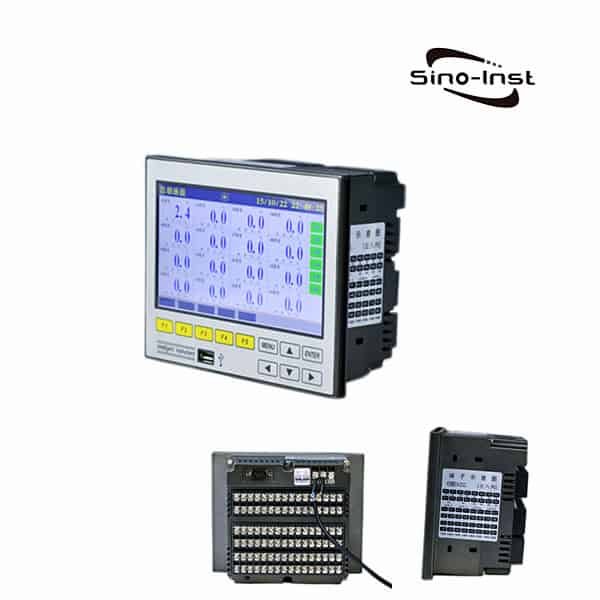
Paperless Recorder R7100
R7100 universal-input paperless recorder with up to 16 channels on one LCD. Accepts thermocouple, RTD, 4-20mA and voltage signals with USB / Ethernet data export.
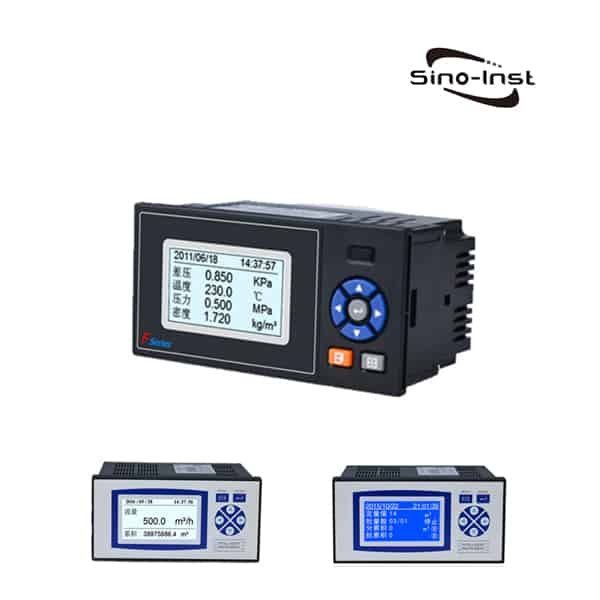
Flow Totalizer F3000X
F3000X flow totalizer displays, accumulates, alarms and transmits signals from any pulse or 4-20mA flow meter. Pairs with mag, vortex, turbine and DP meters for batch control and billing.
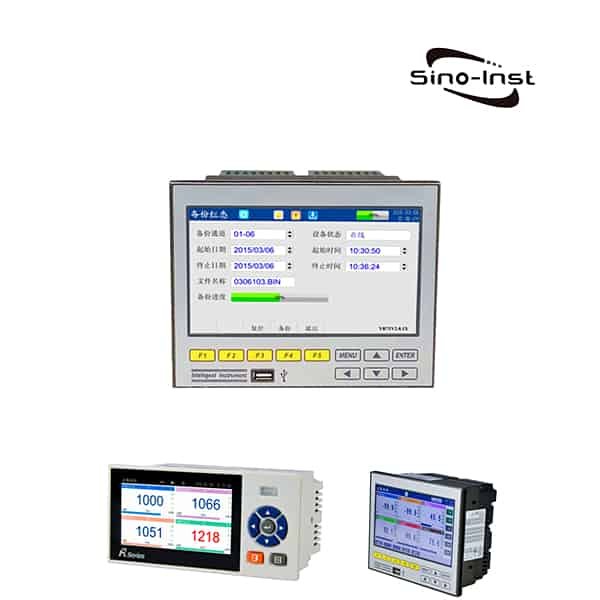
Temperature Recorder R7600
R7600 paperless temperature recorder / data logger with up to 16 isolated channels. Captures industrial RTD and thermocouple signals for heat treatment, HVAC and validation runs.
FAQ
What is the purpose of a flow totalizer?
A flow totalizer accumulates instantaneous flow rate readings over time to give you the total volume of fluid that has passed through the pipe. It is used for billing (water and gas utilities), batch control (chemical dosing, tank filling), inventory management (fuel depots), and regulatory reporting (wastewater discharge permits).
Can I add a totalizer to my existing flow meter?
Yes, if your flow meter has a 4-20mA or pulse output. Connect a standalone totalizer to the flow meter’s output terminals. Configure the totalizer with the flow range (for 4-20mA) or the K-factor (for pulse). The totalizer will then display both instantaneous flow and accumulated total without replacing the flow meter.
What is the difference between batch total and grand total?
The batch total (or resettable total) can be cleared to zero at any time—useful for tracking individual batches, shifts, or daily consumption. The grand total cannot be reset through the user interface and provides a permanent record of cumulative flow since installation. Custody transfer applications require a non-resettable grand total.
Do I need temperature and pressure compensation for gas totalization?
Yes. Gas volume changes significantly with temperature and pressure. Without compensation, the totalized volume will be inaccurate unless the gas is always at the exact reference conditions (usually 60°F and 14.73 psia). A compensated totalizer takes live temperature and pressure inputs and corrects the volume to standard conditions automatically.
Is a flow totalizer the same as a flow computer?
Not exactly. A basic flow totalizer integrates a single flow signal. A flow computer is a more advanced device that handles multiple inputs (flow, temperature, pressure, density), performs gas or steam compensation calculations per AGA or ISO standards, and stores audit-trail data. Flow computers are used in custody transfer and fiscal metering where regulatory compliance requires documented calculations.
Need help choosing the right totalization solution for your application? Whether you need a simple panel-mount totalizer or a complete totalizing flow meter system, our engineering team can help. Contact us with your pipe size, fluid type, and flow range for a recommendation.
Request a Quote


Wu Peng, born in 1980, is a highly respected and accomplished male engineer with extensive experience in the field of automation. With over 20 years of industry experience, Wu has made significant contributions to both academia and engineering projects.
Throughout his career, Wu Peng has participated in numerous national and international engineering projects. Some of his most notable projects include the development of an intelligent control system for oil refineries, the design of a cutting-edge distributed control system for petrochemical plants, and the optimization of control algorithms for natural gas pipelines.