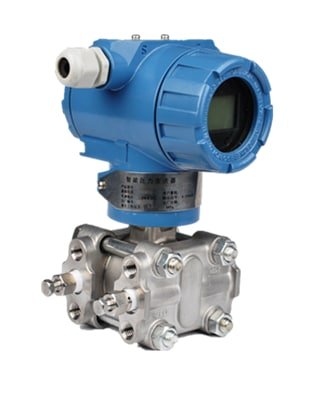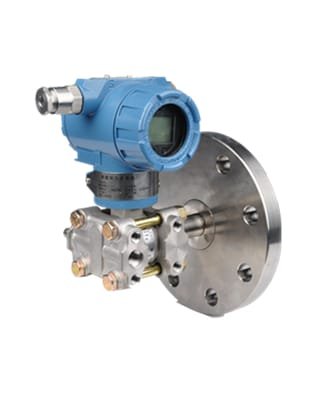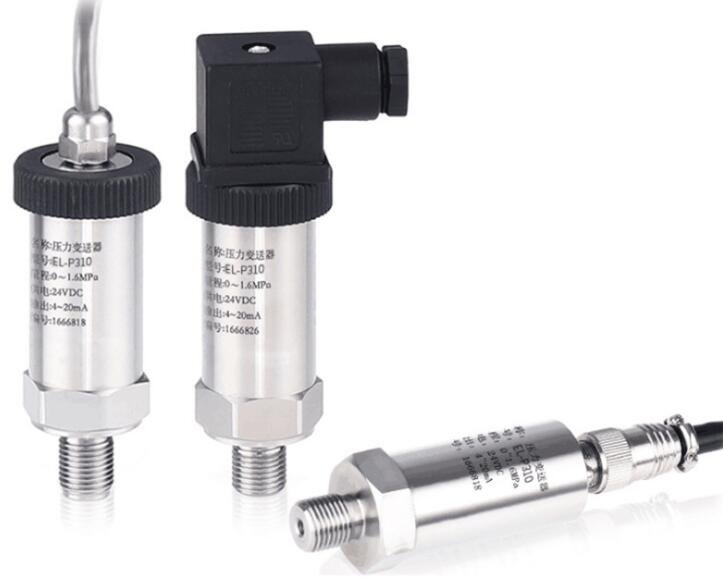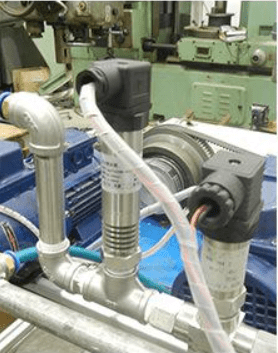
Diaphragm Seal Pressure Level Transmitter

Diaphragm-Seal-Pressure-level-Transmitter

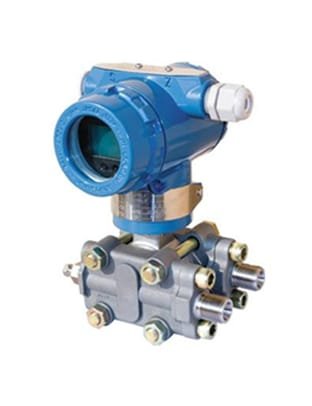
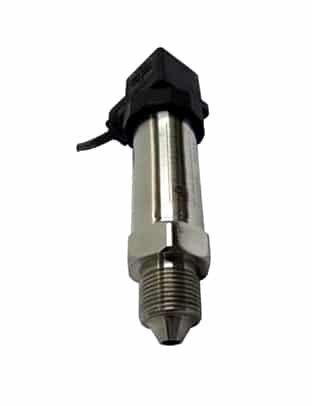
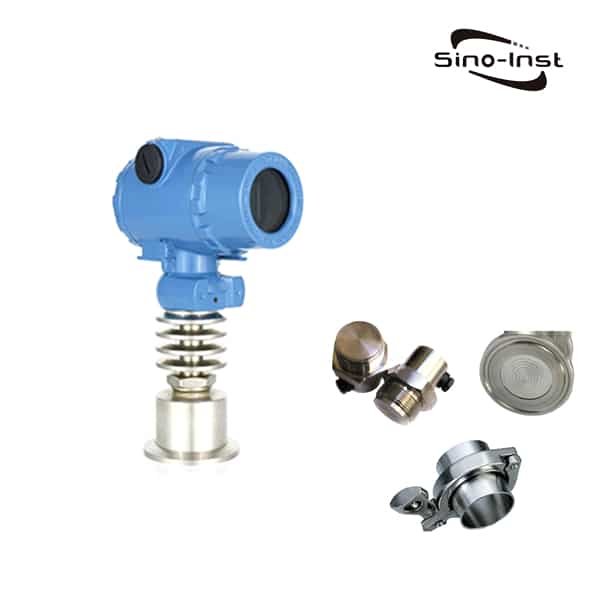
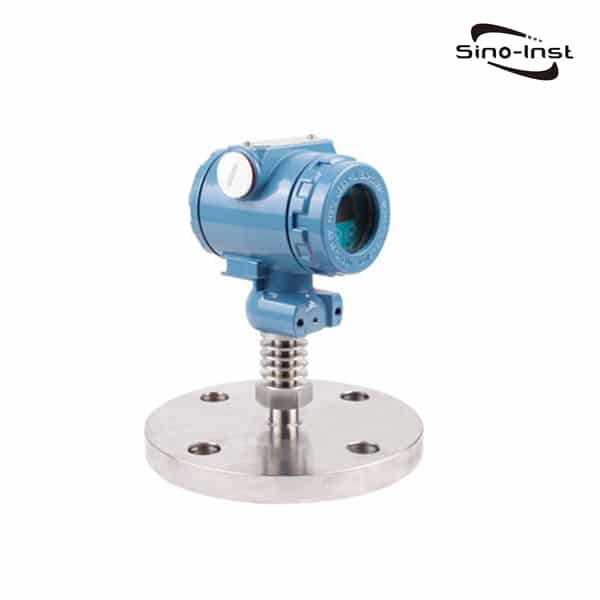
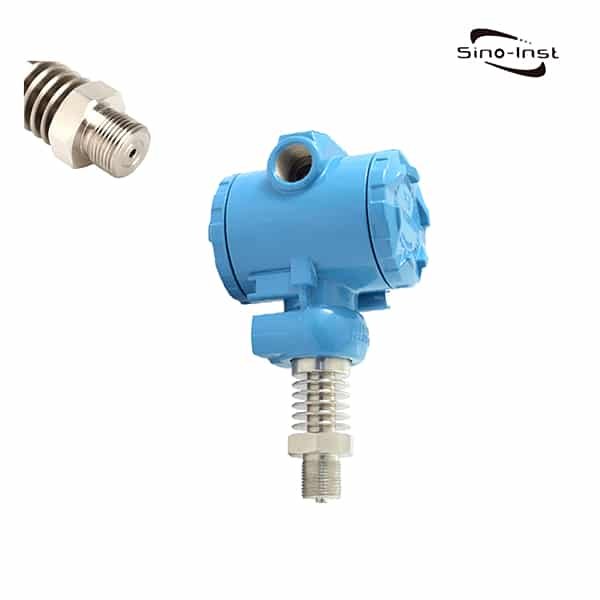
SMT3151TLT Pressure Level Transmitter is an economical flange direct-mounted pressure transmitter. An isolation diaphragm box is added as the measuring liquid contact part. One port is connected to the process tank (or pipeline) by flange (or other connection method).
Mainly used to measure high-temperature, easy to solidify or crystallize, containing suspended solids, too viscous, corrosive or other media that need to maintain sanitary conditions and cannot be contaminated.

Sino-Inst offers a variety of Diaphragm Seal Pressure Transmitters for industrial pressure measurement. If you have any questions, please contact our sales engineers.

Features of Pressure Level Transmitter

  1. Diffusion silicon isolation sensor
  2. Flange installation
  3. Large size diaphragm, fully welded and sealed, long-term reliable and durable
  4. Aluminum alloy junction box with strong seal and good outdoor installation
  5. Used for pressure measurement of gas, liquid and steam
  6. Anti-corrosion metal diaphragm optional
  7. With LCD display optional
  8. Especially suitable for high temperature or viscous liquid
  9. The flange size is customized according to customer requirements. And the installation is flexible and diverse

Read more about Steam pressure transmitter-Pressure measure on steam pipeline 

Specifications of Pressure Level Transmitter

ModelTransmitter type
SMT-3151TLTFlange level transmitter
CodeScale range
2
3
4
5
0-20~100kPa(0-2000~10000mmH2O)
0-70~350kPa(0-7~35mH2O)
0-200~1000kPa(0-20~100mH2O)
0-700~3500kPa(0-70~350mH2O)
CodeOutput form
ELinear output 4-20mAdc
SFLinear output 4-20mAdc+HART signal,Full function buttons on site
FMODBUS-485 signal
CodeFlange standard (high pressure side flange)
AANSI American Standard (HG20615)
DDIN European standard(HG20592)
CodeProcess connection size
ANSI American Standard (HG20615)DIN European standard(HG20592)
251″DN25
401.5″DN40
502″DN50
803″DN80
004″DN100
CodeProcess connection withstand voltage rating
ANSI American Standard (HG20615)DIN European standard(HG20592)
A150LBPN16/25
B300LBPN40
C600LBPN64
D900LBPN100
CodeMeasuring diaphragm
A316 Stainless steel
BHastelloy C
CMonel
DTantalum
ETitanium
FSpecial requirements
CodeInsert barrel lengthInsert barrel material
A0 mmNone
B50 mm316L Stainless steel
C150 mm316L Stainless steel
D200 mm316L Stainless steel
CodeFilling liquid
DOrdinary silicone oil  (-40~104℃)
FHigh temperature silicone oil   (-40~304℃)
SInert liquid  (-40~204℃)
CodeShell materialConduit inlet dimensions
ALow copper aluminum alloy polyurethane coatingM20×1.5
BLow copper aluminum alloy polyurethane coating1/2-14 NPT
CStainless steelM20×1.5
DStainless steel1/2-14 NPT
CodeOptional parts
M10~100%  Linear indicator
M4LCD Multi-function digital display
DaFlameproof  ExdIIBT5Gb;(explosion-proof certificate No. : CE16.1163)
FaIntrinsically safe ExiaIICT4 / T5 / T6Ga;(explosion-proof certificate No. : CE15.2354X)
CXWith corresponding 316 flushing ring

You may like: Explosion Proof Pressure Transmitter for Hazardous locations

Applications for Pressure Level Transmitters

The application which is suitable for diaphragm seal system… For measuring the liquid level, density, flow, and pressure of :

  • High/low temperature fluids
  • Highly corrosive/high viscosity fluids
  • The fluids which may cause clogging of impulse piping in the low temperature
  • Toxic fluids
  • The fluids containing suspended solids which are deposited in the impulse piping and may cause clogging.\

Extended reading: Featured Diaphragm Seal Pressure Transmitters

Diaphragm flange material selection

The biggest advantage of the Diaphragm Seal Pressure Level Transmitter is that different diaphragm materials can be selected. According to different corrosion, media to achieve the best corrosion resistance. The commonly used diaphragm materials are SUS316L stainless steel. Tantalum, Hastelloy, Monel, Pure titanium, F4, etc. 

When choosing a diaphragm pressure transmitter, in addition to the correct choice of structure and range, the more important thing is to choose the material. The so-called reasonable is to consider its corrosion resistance, but also to consider the economy. For example, the corrosion resistance of the tantalum diaphragm and Hastelloy is excellent, but it is expensive. Only used in environments with high corrosivity and other cheap materials are not suitable.

The following table introduces several common corrosion-resistant materials that can be selected for corrosion media. For your reference.

Corrosive mediumTin bronze (QSn6.5-0.4)SUS316Pure tantalum (Ta)Monel (Ni70Cu30)Hastelloy (HC)Polytetrafluoroethylene (F4)
Sulfuric acid (H2SO4)VVVV
Nitric acid (HNO3)VVV
Hydrochloric acid (HCI)VV
Phosphoric acid (H3PO4)VVVVV
Acetic acid (CH3COOH)VVVV
Caustic soda (NaOH)V
Soda ash (Na2CO3)VV
Baking soda (NaHCO3)VV
Chlorine (CI)Dry: VDry: VDry: VVV
Wet: ╳Wet: ╳Wet: ╳
Bromine (Br2)Dry: △Dry: ╳Dry: ○V
Wet: ╳Wet: △Wet: ╳
Ammonia (NH3)VV
Seawater (30% NaCI)VVV
Explanation of symbols: ○ ——best; △ ——conditional use; V——can be used;

Extended reading: Common Pressure Sensor Applications

What is diaphragm seal pressure transmitter?

The diaphragm seal pressure transmitter is the flange type pressure transmitter. This type of pressure transmitter, assembling diaphragm seals to field transmitters for the purpose of measuring pressure, differential pressure, level, and flow.

What is a diaphragm seal?

Diaphragm Seals, also known as Chemical Seals or Gauge Isolators, are used to isolate pressure instrumentation, like pressure gauges, pressure transmitters, pressure switches, level transmitters, and more from process media that is hot, corrosive, clogging, or otherwise damaging to the pressure instrument.

A diaphragm seal has two primary tasks:

  1. Separation of the measuring instrument from the process medium
  2. Transfer of the pressure to the measuring instrument

You may like: Diaphragm pressure gauge

What is remote seal?

The remote seal is used to prevent the medium in the pipeline from directly entering the pressure sensor assembly in the pressure transmitter. It is connected to the transmitter by a capillary filled with fluid. As a result, they’re often used in refining, petrochemical, and chemical plants.

Extended reading: SI-703 Flush Diaphragm Pressure Sensor

More Pressure Measurement Solutions

FAQ

A pressure level transmitter is a device that works on the principle that static pressure is proportional to liquid level height. It is essentially a device that combines the functions of a pressure sensor and a level gauge.

The transmitter uses an advanced isolated diffused silicon sensitive element or a ceramic capacitor pressure sensitive sensor. The measured static pressure of the liquid is converted into an electrical signal.

This process is temperature compensated and linearly corrected, and the final output is a standard electrical signal, common forms are 4~20mA or 1~5VDC, etc.

Extended reading: Flat Pressure Sensor for High Viscosity Fluids

The pressure gauge is an instrument that uses elastic elements as sensitive elements to measure and indicate pressure higher than the ambient pressure. It is used in almost all industrial processes and scientific research fields.

Pressure transmitter is a device that converts pressure into pneumatic or electric signals for control and remote transmission.

The differences between pressure transmitter and pressure gauge are:

  1. The accuracy of the standard instrument required for pressure transmitter calibration is much higher than the accuracy of the standard instrument required for pressure gauge.
  2. The pressure gauge only needs to calibrate a pair of input and output relationships. The pressure transmitter may need to calibrate the relationship between input and communication data.
  3. Pressure gauge calibration must have corresponding metrological qualifications. Pressure transmitters are generally not required except for production and new construction.
  4. The pressure gauge has poor accuracy and no output. It cannot be operated with a hand operator. Generally, 5 points are calibrated. The back and forth difference is different. The intelligent pressure transmitter generally only needs to calibrate the zero point and full scale.
  5. The output of the pressure gauge is a scale indication, and its own display capability. The pressure transmitter is a current output and must be connected to an ammeter display of the corresponding accuracy level.

Extended reading: extrusion melt pressure transducer

A diaphragm seal system consists of a pressure instrument, a fill liquid, and a diaphragm seal, either direct-mount or capillary.

Diaphragm seals are used to seal and protect instruments from process media. The flexibility of the seal lies in the fact that the diaphragm securely seals the contents and penetrates the instrument to accurately measure pressure.

Diaphragm seals are often used in conjunction with pressure transmitters. This combination can be used in extremely harsh environmental conditions.

The fact that they can isolate instruments from any kind of toxic and reactive chemicals makes them particularly useful devices.

Diaphragm-sealed pressure transmitters are used when the medium is corrosive or will corrode the internal parts of the transmitter (for example, ammonia will corrode the copper in the transmitter).

Extended reading: High accuracy pressure transducers

Sino-Inst is a Pressure Level Transmitters manufacturer in China.

We offer all types of Pressure Level Transmitters. Like Direct Mounted, flange-mounted, single flange, double flange, Remote Diaphragm Seals, High Static, Digital Remote.

Most of our Pressure Level Transmitters are used in oil, liquids, DP transmitter, flow measurement, level measurement (like the ultrasonic level measurement), density, and other process variables.

You can ensure product safety by selecting from certified suppliers, with ISO9001, ISO14001 certification. We will share more about instrument calibration, like the flow transmitter calibration.

Request a Quote

Please enable JavaScript in your browser to submit the form

Flange Mounted Differential Pressure Transmitter

Flange Mounted Differential Pressure Transmitter can be directly installed on the pipe or tank. Based on an ordinary pressure/differential pressure transmitter, a Flush flange or extended flange is added. It can be used for differential pressure measurement and liquid level measurement.

Mainly used to measure high temperature, easy to solidify or crystallize, containing suspended solids, too viscous, corrosive or other media that need to maintain sanitary conditions and cannot be contaminated.

Sino-Inst offers a variety of flange-mounted DP transmitters for industrial pressure measurement. If you have any questions, please contact our sales engineers.

Sino-Inst Flange Mounted Differential Pressure Transmitter uses advanced microprocessing technology and digital communication technology. It outputs a 4 to 20 mA DC signal corresponding to the measured differential pressure. It can also be configured with the HART protocol.

SMT3151LT Flange Mounted Differential Pressure Transmitter can replace EJA210E. It is a functional replacement for Rosemount 3051 and Yokogawa EJA.

Extended reading: How to calibrate HART pressure transmitters

Flange Mounted Differential Pressure Transmitter Features:

  • Used to measure the differential pressure of corrosive and non-corrosive gases, steam and liquids;
  • Using a stainless steel diaphragm;
  • Applicable to various hazardous places;
  • Output linear DC current proportional to the differential pressure value;
  • Provide various isolation diaphragms to meet special applications, such as liquid level measurement, corrosive media;
  • High measurement accuracy, 0.1%FS, 0.5%FS;
  • Extensible measurement range;
  • Aluminum and stainless steel housing;
  • With intrinsically safe explosion-proof and isolated explosion-proof capabilities. Can be used in various hazardous places.

Extended reading: Smart Differential Pressure Transmitter

Specification of Flange Mounted Differential Pressure Transmitter

ModelTransmitter type
SMT3151LTFlange liquid level transmitter
CodeScale range
40-4.0~40kPa(0-400~4000mmH2O)
50-20~200kPa(0-2~20mH2O)
60-70~700kPa(0-7~70mH2O)
70-210~2100kPa(0-21~mH2O)
CodeOutput form
ELinear output 4-20mAdc
SFLinear output 4-20mAdc +HART signal
FMODBUS-485 signal
CodeFlange standard (high pressure side flange)
AANSI American Standard (HG20615)
DDIN European Standard (HG20592)
CodeProcess connection size
ANSI American Standard (HG20615)DIN European Standard (HG20592)
251”DN25
401.5”DN40
502”DN50
803”DN80
04”DN100
CodeProcess connection pressure rating
ANSI American Standard (HG20615)DIN European Standard (HG20592)
A150LBPN16/25
B300LBPN40
C600LBPN64
D900LBPN100
CodeHigh pressure side diaphragm
A316 stainless steel
BHastelloy C
CMonel
DTantalum
ETitanium
FSpecial Requirements
CodeHigh pressure side insert tube lengthHigh pressure side insert cylinder material
A0 mmNone
B50 mm316L Stainless steel
C150 mm316L Stainless steel
D200 mm316L Stainless steel
CodeHigh pressure side filling fluid
DGeneral silicone oil  (-40~104℃)
FHigh temperature silicone oil   (-40~304℃)
SInert liquid  (-40~204℃)
Low pressure side structural materialFlange (joint)Exhaust/drain valveIsolation diaphragmSensor filling fluid
22316 Stainless steel316 Stainless steel316 Stainless steelSilicone oil
23316 Stainless steel316 Stainless steelHastelloy CSilicone oil
24316 Stainless steel316 Stainless steelMonelSilicone oil
25316 Stainless steel316 Stainless steelTantalumSilicone oil
33Hastelloy CHastelloy CHastelloy C Silicone oil
35Hastelloy CHastelloy CTantalum Silicone oil
44MonelMonelMonel Silicone oil
S2A remote transmission device (with a remote transmission device on the low-voltage side)
CodeShell materialConduit inlet dimensions
ALow copper aluminum alloy polyurethane coatingM20×1.5
BLow copper aluminum alloy polyurethane coating1/2-14 NPT
CStainless steelM20×1.5
DStainless steel1/2-14 NPT
CodeOptional parts
M10~100%  Linear indicator head
M4LCD multi – power digital display head
D1Side discharge valve at the top (only for the low pressure side of the low pressure side without remote transmission)
D2Side discharge valve at the top (only for the low pressure side of the low pressure side without remote transmission)
DaFlameproof  ExdIIBT5Gb;(explosion-proof certificate no. : CE16.1163)
FaIntrinsically safe ExiaIICT4 / T5 / T6Ga;(explosion-proof certificate no. : CE15.2354X)
CXWith corresponding 316 flushing ring

Extended Reading:

Applications

The single-flange pressure/level transmitter can accurately measure the liquid level and density of various containers. There are two types of flat flange and plug-in flange. It is suitable for high-viscosity medium or suspended liquid measurement.

  1. Viscous medium at high temperature;
  2. Easily crystallized medium;
  3. Precipitation medium with solid particles or suspended matter;
  4. Strongly corrosive or highly toxic medium;
  5. It can eliminate the leakage of the pressure guiding pipe and pollute the surrounding environment. It can avoid the instability of the measurement signal when the isolation liquid is used. The tedious work of frequently supplementing the isolation liquid is required;
  6. Continuously and accurately measure the interface and density;
  7. The remote transmission device can avoid the mixing of different instantaneous media so that the measurement results truly reflect the actual situation of process changes;
  8. Places with high sanitation requirements;
  9. Such as in the production of food, beverage, and pharmaceutical industries. Not only the transmitter contacting the media parts meet hygienic standards, but also should be easy to wash. To prevent cross-contamination of different batches of media.

Pressure level transmitter is good for level measurement. Most of the time, we use submersible hydrostatic level sensor for the level measurement. When you can not use the probe of hydrostatic level sensor, you can try with this pressure level transmitter. Pressure level transmitter, is one type of DP level measure instrument, with the diaphragm.

More

SMT3151LT Differential pressure (DP) level transmitter a new type of differential pressure (DP) transmitter produced by advanced technology and equipment. Continuous level, flow and differential pressure measurement. Liquid level measurement, is the most common measurement process in continuous production processes, such as: petroleum and chemical industry. The liquid level measuring instrument currently widely used, is the differential pressure level transmitter.

More

Flange Mounted Differential Pressure Transmitter Working principle

1. Headcover; 2. Head; 3. Metal bulkhead; 4. Shell; 5. Nameplate label; 6. Explosion-proof joint; 7. Terminal block; 8. Head cover; 9. Drain valve; 10. Bolt; 11. Clamp; 12. Sensor seal; 13. Sensor; 14. Nut; 15. Welded pipe joint assembly

The Flange Mounted Differential Pressure Transmitter is directly mounted on the reserved flange at the bottom of the pipeline or container. It contacts the liquid through the isolation diaphragm.

When the diaphragm is pressurized, it will produce a slight deformation. The displacement of the diaphragm will move with the change of the differential pressure. This change is accurately converted into a 4-20mA DC two-wire current, voltage or digital HART output signal by the amplifier circuit to achieve pressure measurement and transmission.

You may like: differential pressure transmitter working principle|Working Principle of pressure level transmittersdifferential pressure level transmitter working principle

Single flange. VS. Double flanges differential pressure level transmitter

  1. In principle: all are differential pressure transmitters + flange guide pressure;
  2. In terms of structure: the single flange liquid zd position transmitter has only one flange diaphragm box connected to the high pressure side, and the low pressure side to the atmosphere. The double flange liquid level transmitter is high and low pressure side through oil-filled capillary It is connected with two flanged membrane return boxes. There is also a capillary. The single flange transmitter is installed below, and a capillary is drawn from the low pressure side of the single flange transmitter to the upper flange membrane box.
  3. In terms of engineering applications: all can only measure the liquid level of fixed density. The single-flange transmitter can only be used for the liquid level of atmospheric equipment that can be imagined with the atmosphere. The double-flange transmitter can be suitable. Answer: Use closed equipment kettle to measure liquid level;
  4. From the economical point of view, the double flange is definitely more expensive than the single flange. After all, there is one more flange capsule and capillary.

How to choose flange type level transmitter?

Flange-level transmitters often require special environmental processing during production. Requires small range and high accuracy. Flange-level transmitters are also required to withstand high temperatures, corrosion resistance, and high overload withstand capability. Therefore, the scope of application must be clearly defined when selecting the flange type liquid level transmitter.

When choosing a flange-type liquid level transmitter, the following factors are mainly considered:

  1. The measurement object, such as the physical and chemical properties of the measured medium. And working pressure and temperature, installation conditions, speed of liquid level change, etc .;
  2. Measurement and control requirements. Such as measurement range, measurement accuracy, and display method. On-site instructions, long-distance instructions, interface with computer, safety and anti-corrosion. Reliability and construction convenience.

When selecting a double-flange differential pressure transmitter, a very important factor must be paid attention to is the differential pressure level transmitter. It is installed at the bottom of the liquid container. The height of the liquid level is reflected by the gauge pressure signal. In the control process of liquid level measurement in the pharmaceutical and chemical industries. The container holding the liquid is often under pressure. At this time, the conventional static pressure liquid level transmitter cannot meet the measurement requirements. Due to improvements in the sensor circuit and structure. Improve the practical value of differential pressure liquid level measurement technology in the pharmaceutical and food industries.

Piezoresistive Differential Pressure Transmitter
Piezoresistive Differential Pressure Transmitter utilizes the piezoresistive effect of semiconductor silicon materials. Realize accurate measurement of differential pressure.
Smart Differential Pressure Transmitter
Smart Differential Pressure Transmitter measures industrial differential pressure. Can Works with diaphragm seals, capillary, HART. Outputs standard signals (such as 4 ~ 20mA, 0 ~ 5V).
Diaphragm Seal Pressure Transmitter
When the process medium should not come into contact with the pressured parts of the measuring instrument. Diaphragm sealed pressure transmitters are used for pressure measurement.
High-Temperature Pressure Transmitter
High-temperature pressure transmitters with a 4-20mA output.
which has a temperature capability of over 850 °C and is not pyroelectric.

More Pressure and Level Measurement Solutions

Sino-Inst is one of the most excellent DP transmitters, pressure transmitters, and level transmitters suppliers. Sino-Inst can offer you a complete solution for pressure transmitters.

Sino-Inst can offer you with Flange Mounted Differential Pressure Transmitter. Our transmitters can work for you just like EJA210E.

Our Flange Mounted Differential Pressure Transmitters are widely exported to various countries. Including USA, UK, Argentina, Singapore, etc. If you need to purchase Flange Mounted Differential Pressure Transmitter, or have related technical questions, please feel free to contact our sales engineers!

Request a Quote

Please enable JavaScript in your browser to submit the form

SMT3151DP Smart Differential Pressure Transmitter

The SMT3151DP Smart Differential Pressure Transmitter utilizes a single-crystal silicon sensor with German MEMS technology, offering higher measurement accuracy. It outputs standard signals (e.g., 4-20mA, 0-5V) and can also be configured with RS485 Modbus RTU or HART protocols.

The single-crystal silicon sensor core features a dual-beam suspension design, significantly improving accuracy and resistance to unilateral and bilateral overload. A built-in intelligent signal processing module achieves perfect integration of static pressure and temperature compensation. This enhances measurement accuracy and long-term stability across a wide range of static pressure and temperature variations.

Sino-Inst offers a variety of smart differential pressure sensors for industrial pressure measurement. If you have any questions, please contact our sales engineers.

Features

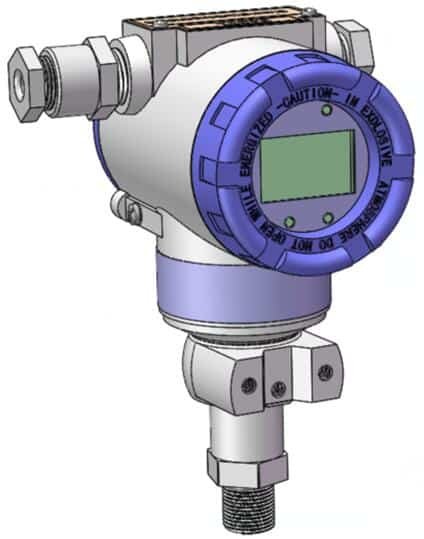
Blue and white custom housing smart differential pressure transmitter
  • Output signal 4-20mA output+RS485/HART communication;
  • 0.075%FS high accuracy, millisecond-level ultra-fast response;
  • Built-in three-button quick operation for on-site adjustment;
  • Self-diagnosis capability;
  • Range coverage is 0-0.1KPa~41.0MPa;
  • Good stability, high precision, adjustable damping, strong resistance to one-way overload.
  • Explosion-proof housing structure.
  • LCD display;
  • IP67 protection rating;
  • Intelligent static pressure compensation and temperature compensation protect the transmitter from the effects of temperature, static pressure, and overpressure, controlling the overall measurement error at the site within the specified parameters;
  • High static pressure resistance, up to 40MPa;

Extended reading: How to calibrate HART pressure transmitters

Technical Specifications

Measurement Range1KPa, 4KPa, 40KPa, 100KPa, 400KPa, 4MPa, 40MPa
Single-Side Overpressure16MPa
Dual-Side Static Pressure16MPa 25MPa 40MPa
Measurement Accuracy±0.075%, ±0.1%, ±0.5% (including linearity, hysteresis, and repeatability from zero)
Measured MediumGas, Liquid, Steam
Output Signal4~20mA DC+RS485/HART protocol
Power SupplyGeneral 10.5~45VDC, intrinsically safe explosion-proof 10.5-26VDC
Power Line Spacing15cm and above (avoid parallel wiring)
Saturation CurrentUpper limit 20.8mA, lower limit 3.8mA
Alarm CurrentUpper limit 22.8mA, lower limit 3.6mA (mode adjustable)
Adjustment FunctionZero and full-scale points can be adjusted locally via the three buttons on the top of the casing or remotely via configuration software
Zero ShiftCan be shifted within the range of -20% to +20% of the maximum range
Output MethodLinear output Square root output (can be remotely adjusted via configuration software)
Operating Temperature-40~85℃
Measured Medium Temperature:-40℃~120℃ (High temperature customizable)
Diaphragm Material316L stainless steel/Hastelloy alloy/Tantalum diaphragm/Gold-plated diaphragm
Position EffectApproximately 200Pa between horizontal and vertical positions
Response Time10ms
Static Pressure Effect< 0.05%FS/10MPa
Overpressure Effect< 0.05%FS/10MPa
Stability≤0.03%FS/year
Power Supply Effect< 0.005%FS/V
Explosion-Proof Rating:Exd Ⅱ CT6 Gb, Exia Ⅱ CT6 Ga
Enclosure Protection Rating:IP67

SMART Differential Pressure Transmitter Datasheet

Order Guide

Use object: liquid, gas, or steam

ModelTransmitter type
DPPressure transmitter
HPAbsolute pressure transmitter
CodeScale range
20-0.10~3.5kPa(0-10~350mmH2O)
30-0.8~8.0kPa(0-80~800mmH2O)
40-4.0~40kPa(0-400~4000mmH2O)
50-20~200kPa(0-2000~20000mmH2O)
60-70~700kPa(0-0.7~7kgf/cm2)
70-210~2100kPa(0-2.1~21kgf/cm2)
80-700~7000kPa(0-7.0~70kgf/cm2)
90-2.1~21MPa(0-21~210kgf/cm2)
00-4.1~41MPa(0-41~4100kgf/cm2)
CodeOutput form
ELinear output 4-20mAdc
SFLinear/square root output 4-20mAdc +HART signal,,Full function buttons on site
FMODBUS-485 signal
Structural materialsFlange connectorExhaust/Drain valveIsolation diaphragmFilling liquid
22316 Stainless steel316 Stainless steel316 Stainless steelSilicone oil
23316 Stainless steel316 Stainless steelHastelloy CSilicone oil
24316 Stainless steel316 Stainless steelMonelSilicone oil
25316 Stainless steel316 Stainless steelTantalumSilicone oil
33Hastelloy CHastelloy CHastelloy CSilicone oil
35Hastelloy CHastelloy CTantalumSilicone oil
44MonelMonelMonelSilicone oil
CodeShell materialConduit inlet dimensions
ALow copper aluminum alloy polyurethane coatingM20×1.5
BLow copper aluminum alloy polyurethane coating1/2-14 NPT
CStainless steelM20×1.5
DStainless steel1/2-14 NPT
CodePressure connection
L11/4NPT-18 Internal thread(excluding waist joint standard)
L21/2NPT-14 Internal thread
L3M20×1.5 External thread
CodeOptional parts
M4LCD multi – power digital display head
B1Pipe bending bracket
B2Plate bending bracket
B3Pipe mounting bracket
C02M20×1.5 nut and Φ 14 pressure short tube
C121/2NPT-14 external thread and Φ14 pressure short tube
C221/4NPT-18 external thread and Φ14 pressure short tube
C321/4NPT-18 to M20×1.5 external thread
C421/2NPT-14 to M20×1.5 external thread
C431/2NPT-14 to 1/4NPT-18 internal thread
C441/2NPT-14 to 1/2NPT-14 external thread
C451/2NPT-14 to G1/2 external thread
D1The side discharge valve is on the upper part
D2The side discharge valve is on the upper part
X1Oil ban
DaFlameproof ExdIIBT5Gb;(explosion-proof certificate no. : CE16.1163)
FaIntrinsically safe ExiaIICT4/T5/T6Ga;(explosion-proof certificate no. : CE15.2354X)

You may like: High temperature pressure transmitter | Magnetostrictive level sensor | Magnetostrictive level transmitter

Working principle of SMART differential pressure transmitter

The intelligent differential pressure transmitter uses a single-crystal silicon piezoresistive sensor as its core component. When pressure is applied to the sensor, the resistance of the single-crystal silicon changes, which is converted into an electrical signal by the circuit, and then digitally processed to output a standard signal (such as 4-20mA or a digital signal).

Its intelligent feature lies in its built-in microprocessor, which can perform temperature compensation, linear correction, and fault diagnosis, ensuring high measurement accuracy and stability.

The SMT3151DP intelligent differential pressure transmitter integrates differential pressure measurement, display, and signal output functions. This intelligent differential pressure transmitter is used to measure the level, density, flow rate, and pressure of liquids, gases, or vapors.

You may like: differential pressure transmitter working principle|Working Principle of pressure level transmitters| differential pressure level transmitter working principle

Smart Differential Pressure Transmitter Applications

SMT3151DP smart differential pressure transmitter is suitable for applications like:

Generally used in liquid, gas or steam differential pressure, flow measurement. The medium temperature is not too high, corrosion is not strong, viscosity is not high, not easy to crystallize and other environments.

If the working static pressure exceeds 16MPa, a high static differential pressure transmitter should be selected.

Smart transmitters work on the function of microprocessors for signal transmission.

Smart pressure transmitter consists of two parts: smart sensor and smart electronic board.

The intelligent sensor part includes: capacitive sensor, measuring diaphragm detection circuit, temperature sensor and temperature compensation circuit.

The part of the intelligent electronic board includes: a microcomputer controller and peripheral circuits. It completes the conversion of the pressure signal to 4-20mA dc.

Extended Reading: Digital Pressure Sensor-RS485

Depending on the type of pressure to be measured:

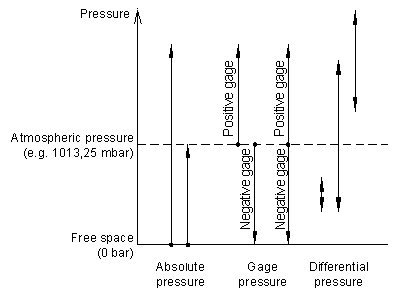
Pressure transmitter types include gauge pressure, absolute pressure, and differential pressure. Gauge pressure refers to the pressure that is less than or greater than atmospheric pressure based on the atmosphere. Absolute pressure refers to the absolute zero pressure as the reference and is higher than the absolute pressure. Differential pressure refers to the difference between two pressures.

According to the working principle of the pressure transmitter:

  • Strain Gauge Pressure Transducers
  • Capacitance Pressure Transducers
  • Potentiometric Pressure Transducers
  • Resonant Wire Pressure Transducers

Extended reading: Silicon Pressure Sensor

Simply put, a differential pressure transmitter is a device that measures two opposing pressures in a pipe or vessel. Differential Pressure (DP) transmitters measure the difference between two pressures. They use a reference point called the low-side pressure and compare it to the high-side pressure. Ports in the instrument are marked high-side and low-side. The DP reading can be either negative or positive depending on whether the low-side or high-side is the larger value. A DP transmitter can be used as a gauge pressure transmitter if the low-side is left open to the atmosphere.

Extended reading: Featured Diaphragm Seal Pressure Transmitters

The most common and useful industrial pressure measuring instrument is the differential pressure transmitter. This equipment will sense the difference in pressure between two ports and produce an output signal with reference to a calibrated pressure range.

The differential pressure transmitter can be used in combination with other accessories and can be used to measure liquid level and flow.

Differential pressure transmitters and pressure transmitters have many similarities. It can be mixed and used most of the time. As long as it is within the range of the differential pressure transmitter, it can measure not only positive pressure but also negative pressure. When measuring positive pressure, the negative port is open to atmosphere, and when measuring negative pressure, the positive port is open to atmosphere.

Differential pressure transmitters can also measure flow, pipeline pressure difference, tank liquid level, bubble water level, dust, or medium that is easy to crystallize and viscous and fluidity is not good.

More Featured Pressure Measurement Solutions

Sino-Inst is a leading manufacturer in the field of measurement and control in China. One big reason for the continued growth of Sino-Inst is our willingness to listen to our customers’ specific needs.

Sino-Inst manufactures a wide variety of mechanical and electronic devices. To measure pressure, level measurement, temperature, and flow. And we’re working constantly to improve our product platform.

If you need to purchase Smart Differential Pressure Transmitters or have related technical questions, please feel free to contact our sales engineers!

Request a Quote

Please enable JavaScript in your browser to submit the form