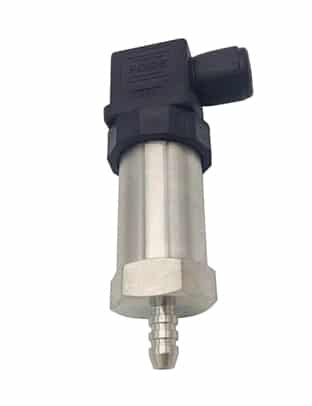
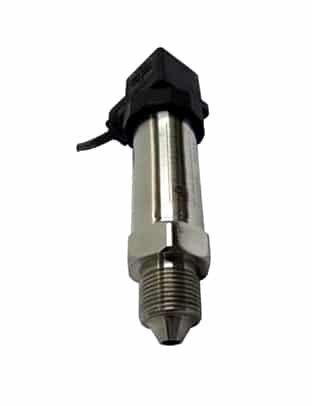
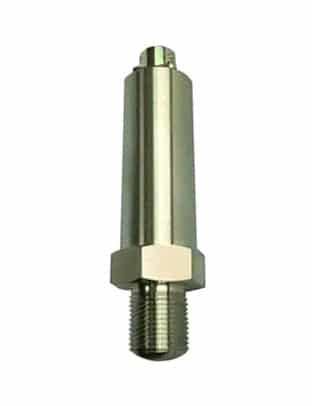
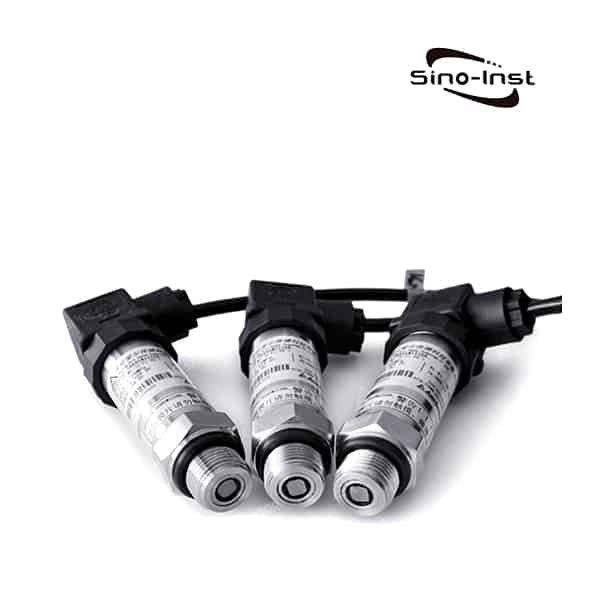
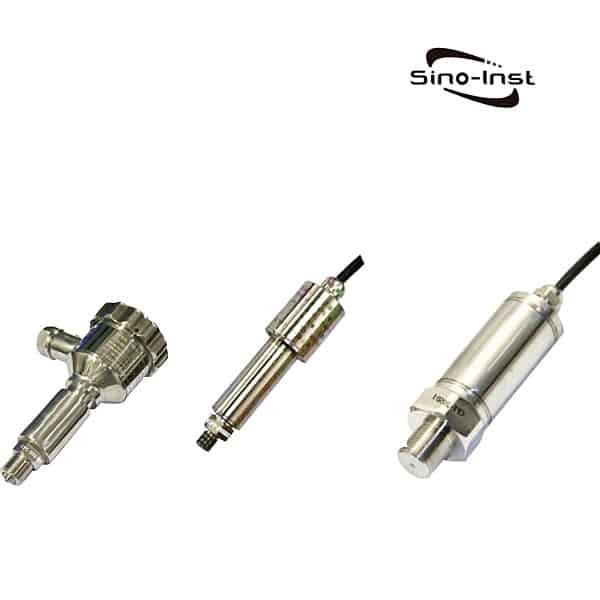
SMART HART Pressure Transmitter

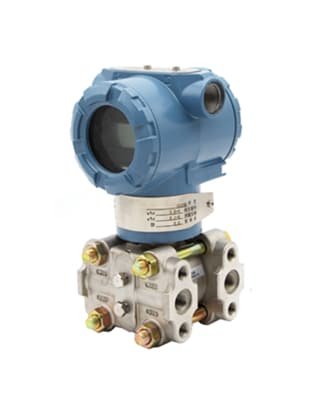
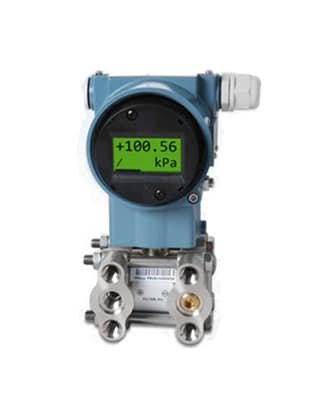
HART pressure transmitter

What is a HART Pressure Transmitter?

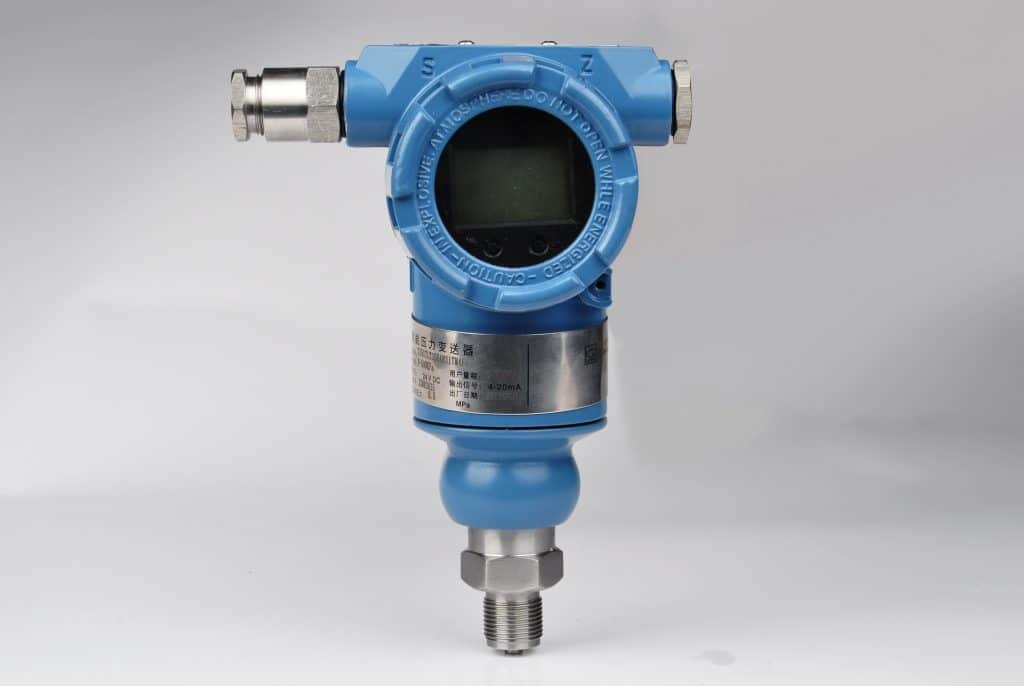
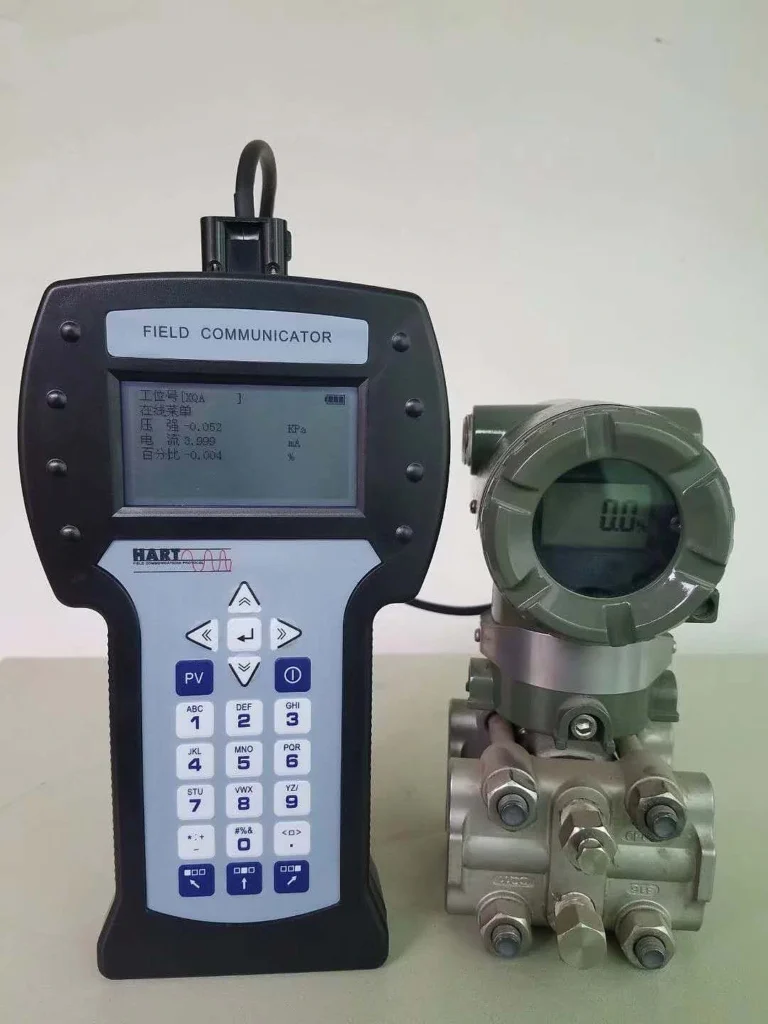
The HART Pressure Transmitter is a two-wire intelligent pressure measurement instrument based on the HART protocol, suitable for precision fluid pressure measurement. The intelligent HART Pressure Transmitter retains a 4~20mA current loop signal while transmitting digital signals. Using a HART handheld device or a smart instrument with HART functionality, users can communicate with the pressure transmitter to perform parameter settings, read diagnostic information, and other operations.

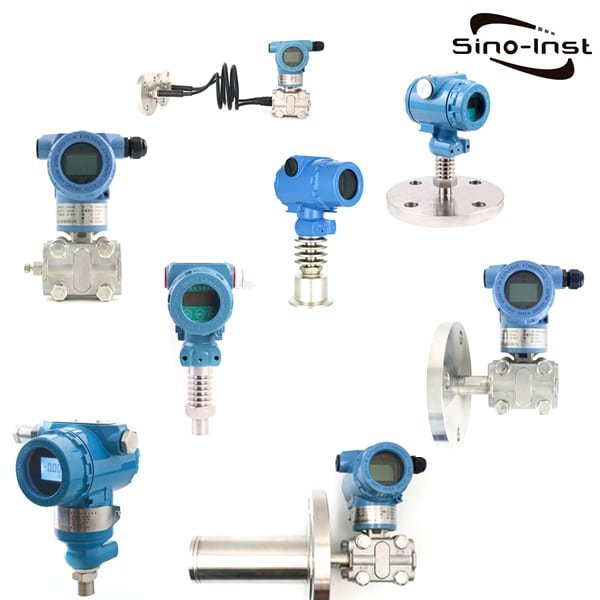
Sino-Inst offers a variety of HART pressure transmitters for industrial pressure measurement. If you have any questions, please contact our sales engineers.

What is hART in a pressure transmitter?

The HART protocol is a backward-compatible smart instrument solution for the transition from analog to digital systems.

A typical HART smart instrument generally consists of a power supply module, sensor interface circuitry, A/D conversion circuitry, MCU, D/A output circuitry, and HART communication circuitry.

HART (Highway Addressable Remote Transducer) is a communication protocol introduced by Rosemount Corporation in 1985 for communication between field smart instruments and control room equipment.

Traditional pressure transmitters only provide a 4-20mA current loop output analog signal. HART smart pressure transmitters retain the 4-20mA current loop signal while transmitting digital signals, playing a crucial role in the transition from analog to digital instruments.

The HART protocol uses FSK frequency shift keying signals based on the Bell202 standard, superimposing a 0.5mA audio digital signal onto a low-frequency 4-20mA analog signal for bidirectional digital communication, with a data transmission rate of 1.2kbps. Since the average value of the FSK signal is 0, it does not affect the magnitude of the analog signal transmitted to the control system, ensuring compatibility with existing analog systems.

In HART protocol communication, the main variables and control information are transmitted via 4-20mA. Additional measurement, process parameters, equipment configuration, calibration, and diagnostic information can be accessed via the HART protocol when needed.

Benefits of HART pressure transmitters

3151 HART pressure transmitter
  • 4~20mA DC current output superimposed HART® protocol digital communication (two-wire system);
  • Adopt digital compensation and nonlinear correction technology;
  • -10℃~80℃ digital wide temperature compensation;
  • With local and remote zero and span adjustment functions;
  • Key operation on site for easy configuration.
  • Shorten troubleshooting time from discovery to problem solving;
  • Continuously verify the integrity of loops and control/automation system strategies;
  • Improve asset efficiency and system availability;
  • Quickly determine and verify control loops and device configurations;
  • Use remote diagnosis to reduce unnecessary on-site inspections.

Featured Industrial HART Pressure Transmitters

HART pressure transmitter is a complete product line of liquid level, differential pressure, gauge pressure and absolute pressure transmitters. Models include flushing diaphragms and sanitary flanges for liquid level measurement, hydrostatic tank metering – HTG. And wetted parts of various materials to suit the process requirements.

HART calibrator is our HART communicator for calibrating instruments. For example pressure transmitter, DP transmitter, liquid level transmitter, a flowmeter, and a temperature transmitter.

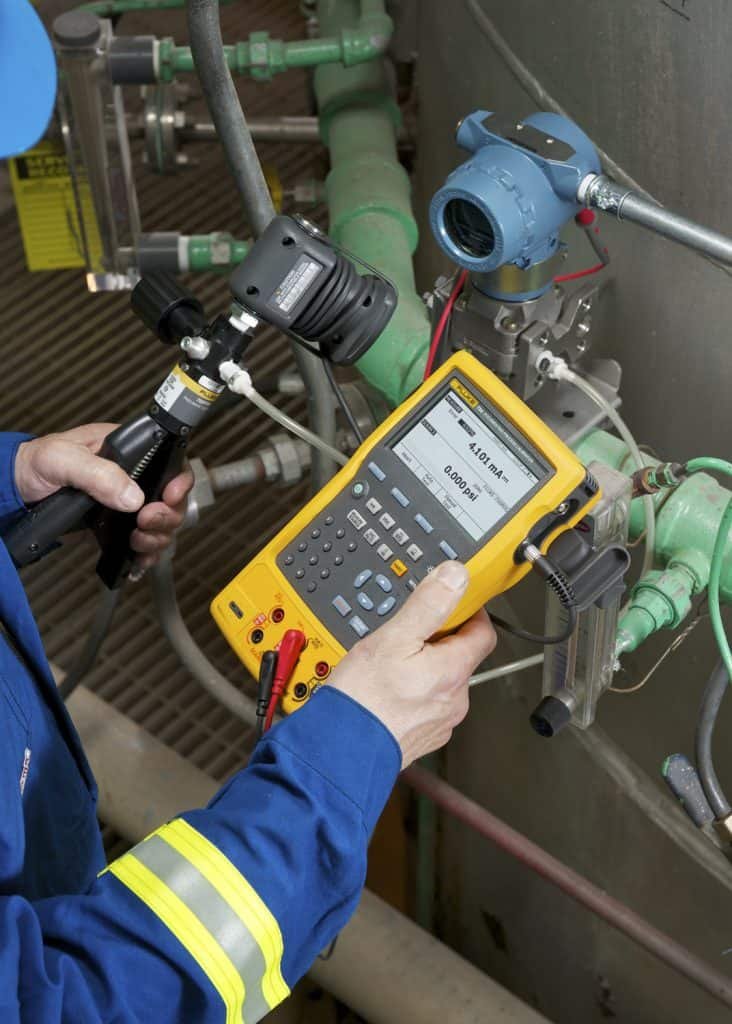
HART communication protocol (Highway Addressable Remote Transducer) is a hybrid analog + digital industrial automation open protocol. Its most significant advantage is that it can communicate through the traditional 4–20 mA analog instrument current loop, sharing only a pair of wires used by the analog host system.

We use this protocol in the HART calibrator. HART communicator (such as HART 475) is the most common HART calibrator.

The proprietary calibration process ensures optimal temperature compensation. This limits the thermal impact on the sensor output. It is suitable for the global process control industry. It provides a cost-effective solution for the use of conventional HART transmitters (such as the HART 475 field communicator).

No. HART is different from 4-20mA. Their main differences are:

  1. Signal Type

4-20mA: Pure analog signal, transmitting only a single process variable (e.g., pressure, flow rate) via current value (4mA-20mA), unable to carry additional data.

HART Protocol: Superimposes a digital signal (FSK modulation) onto the 4-20mA analog signal, enabling dual-channel analog and digital communication, capable of transmitting multiple parameters such as equipment status and diagnostic information.

  1. Communication Capabilities

4-20mA: Unidirectional transmission, supporting only basic measurements, unable to be remotely configured or diagnosed.

HART Protocol: Half-duplex bidirectional communication, supporting remote parameter modification (e.g., range, zero point) and fault diagnosis (e.g., sensor malfunction, loop impedance exceeding limits).

  1. System Compatibility

4-20mA: Requires physical disconnection of the loop for maintenance, cannot be networked with intelligent devices.

HART Protocol: Compatible with traditional analog systems, supports a single-line connection of up to 15 devices, and can be upgraded to WirelessHART or HART IP in the future.

  1. Applications

4-20mA: Suitable for simple applications with limited budgets and only basic measurements required.

HART Protocol: Suitable for high-precision control, smart factories, and other scenarios requiring data interaction, with lower long-term maintenance costs.

The HART protocol extends the functionality of 4-20mA through digital signals, enabling intelligent upgrades, while traditional 4-20mA only retains basic analog transmission capabilities.

You may like: Verabar Flow Meter

How to calibrate a pressure transmitter using HART?

A pressure transmitter is one of the most common instruments in a process plant. To assure its accuracy, it needs to be calibrated.

But what do you need to calibrate it and how is it done?

You may know how to calibrate a pressure transmitter? Or, how to calibrate a differential pressure transmitter? Then, calibrate HART pressure transmitters, kind of like pressure transmitter calibration using a hart communicator. Pressure transmitter manufacturers have improved accuracy and technology, designed into these smart pressure measurement devices.

To calibrate a pressure transmitter, you need:

loop supply (if not connected to the controls system’s loop supply);
a pressure generator to generate input pressure;
an accurate calibrator to measure the input pressure;
an accurate calibrator to measure the output mA current.

Typically, the pressure transmitter is a HART protocol transmitter. So in case, there is any need to adjust/trim it, you will need to use a device supporting HART communication.

How to calibrate HART pressure transmitters?

Explaining how to do the calibration would result in quite a long text. So we have put together a video for you instead. The video shows you how to calibrate and trim a HART pressure transmitter. Please have a look at the video: How to calibrate HART pressure transmitters

Video source: https://www.youtube.com/watch?v=4wLCqH0M9fU&t=9s

HART Pressure Transmitters Calibration Steps

How to calibrate HART pressure transmitters?

Total Time: 20 minutes

1. Isolate the transmitter from the process being measured and its loop wiring.

2. If measuring the mA signal across the transmitter test diode leave the wires intact, but note this method does not give the best mA measurement accuracy.

3. Connect the mA measurement jacks of the 754 to the transmitter.

4. Connect the pressure module cable to the 475, and connect the transmitter test hose from the hand pump to the transmitter.
Press the HART button on the calibrator to see the configuration of the transmitter.

5. Press HART again and the calibrator will offer the correct measure/source combination for the test.

6. If documenting the calibration press As-Found, input the test tolerance and follow the prompts.

7. If the measured mA signal at the test points is found within tolerance the test is complete.
If not, change is required.
Select, adjust, and trim the pressure zero, mA output signal and input sensor.

If you still do not know how to check the pressure transmitter?  Or, how to calibrate a pressure transmitter. Just contact us.

More Pressure Measurement Solutions

Sino-Inst offers over 20 SMART HART Pressure Transmitters. About 50% of these are 4-20ma Low-Pressure Transducers, 40% are Differential Pressure Gauge, and 20% are Diaphragm Seal Pressure transmitters, 20% are 4-20ma differential pressure transmitters.

Sino-Inst sells through a mature distribution network that reaches all 50 states and 30 countries worldwide. HART Pressure Transmitter products are most popular in the domestic market, Southeast Asia, and Mid East.  You can ensure product safety by selecting from certified suppliers with ISO9001, ISO14001 certifications.

Request a Quote

Please enable JavaScript in your browser to submit the form

Diaphragm Seal Pressure Transmitters

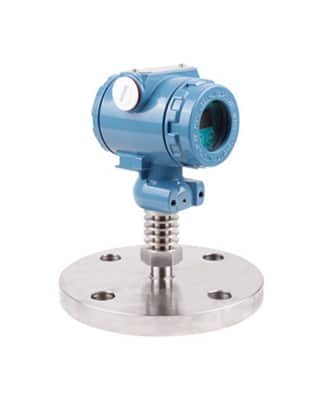
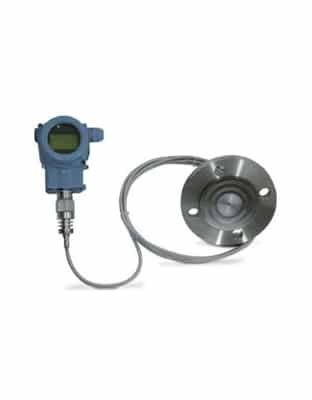
Diaphragm Seal Pressure Transmitters work with Diaphragm Seals for those harsh working conditions. The purpose of the diaphragm seal is to isolate the pressure sensor from the process medium.

The diaphragm seal makes measuring pressure safer and more reliable. It is ideal for protecting pressure process transmitters even under harsh working conditions. The diaphragm seal can isolate the pressure sensor from the process medium. No matter absolute pressure or differential pressure measurement. Mounting with capillary and flange, Diaphragm Seal pressure transmitter can measure pressure, liquid level and flow.When the environment is extremely hot or cold, or when the process connection is difficult to connect to the measuring instrument. When the measured medium is corrosive, sticky, sticky or easily cured. Or when the process is not chemically compatible with the instrument material. It is recommended to use a diaphragm seal.

Sino-Inst offers a variety of Diaphragm Seal Pressure Transmitters for industrial pressure measurement. If you have any questions, please contact our sales engineers.

Featured Diaphragm Seal Pressure Transmitters

Flush diaphragm pressure sensor
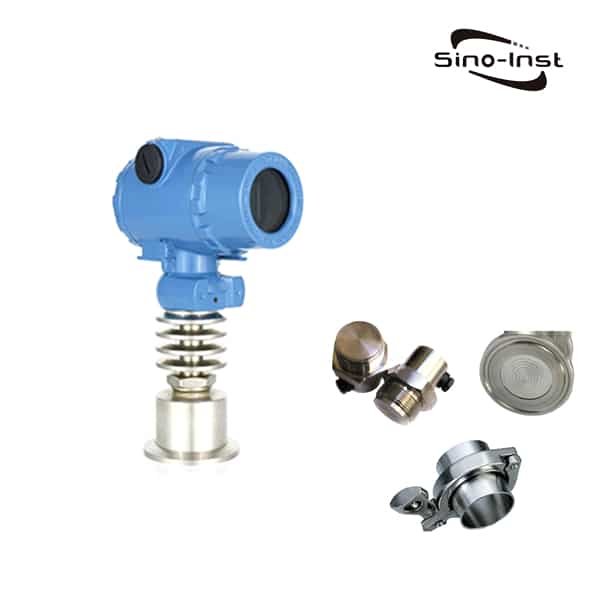
Sanitary Pressure Transmitter
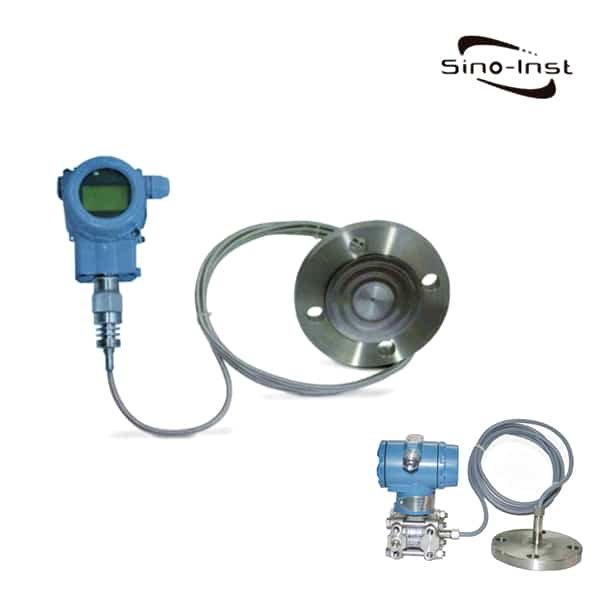
Remote Diaphragm Seal Pressure Transmitter
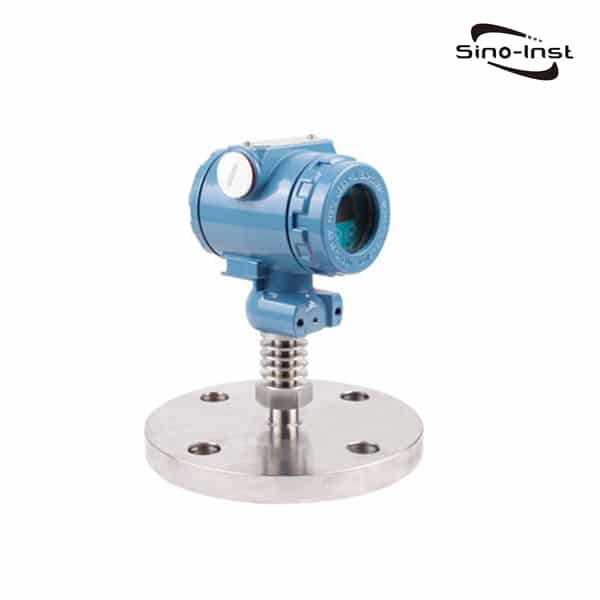
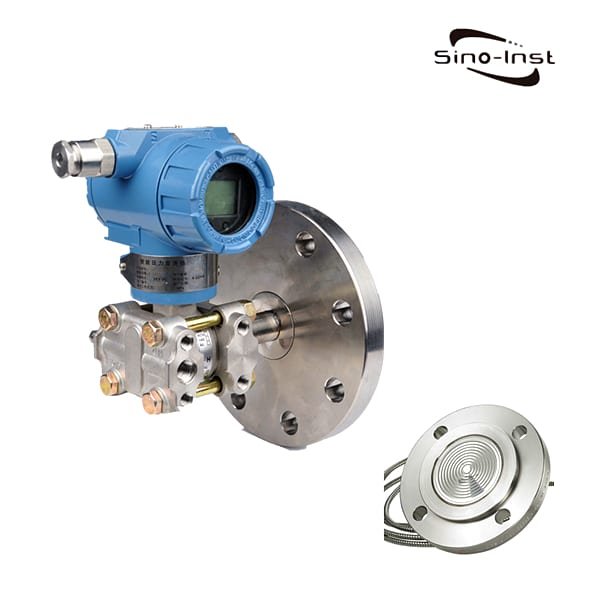
Flange Mounted Differential Pressure Transmitter
Extended Diaphragm Seal DP Level Transmitter
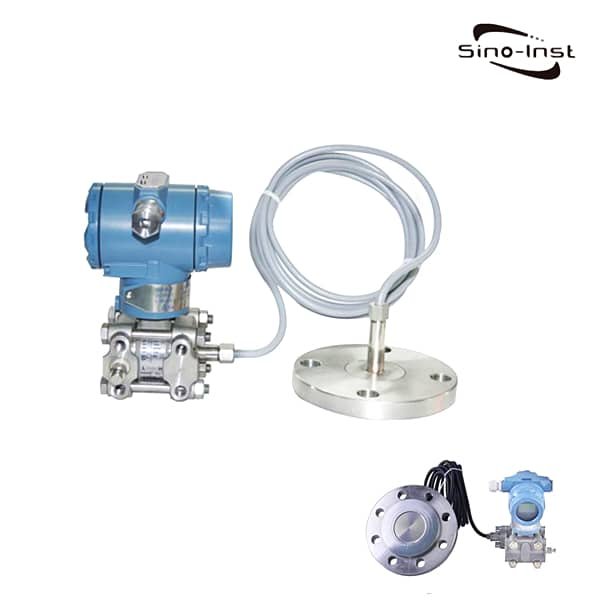
Remote Seal Differential Pressure Transmitter
Differential pressure(DP) level transmitter

What is a diaphragm seal?

Diaphragm seals, also known as chemical seals or remote seals, are used for pressure measurements when the process medium should not come into contact with the pressurised parts of the measuring instrument.

A diaphragm seal has two primary tasks:

  1. Separation of the measuring instrument from the process medium
  2. Transfer of the pressure to the measuring instrument

You may like: Diaphragm pressure gauge

Advantages of diaphragm seals

Diaphragm seals offer the advantage that the “contact surface” between pressure medium and diaphragm is relatively large. Thus ensuring accurate pressure measurement, especially for very low pressures (< 600 mbar). Furthermore, they can be easily dismounted, e.g. for cleaning or calibration purposes.

Rosemount 1199

Rosemount 1199 remote transmission diaphragm system provides the world’s most extensive product variety and specifications to meet the requirements of various measurements and applications.

There are the following types of remote transmission differential pressure / level transmitters:
1) PFW flat type remote transmission device
2) RTW thread installation type remote transmission device
3) EFW inserted barrel remote transmission device
4) RFW flange mounted remote transmission device
5) SCW hygienic remote transmission device

The 1199 remote diaphragm can be assembled to Sino-Inst differential, gauge, and absolute pressure transmitters and liquid level transmitters.

We can learn more about Rosemount 1199 remote diaphragm.

How do diaphragm seals work?

Basically, diaphragm seals are used in all pressure measurement processes to avoid direct contact between the measuring instrument and the medium during this process.

In addition, if the measuring point cannot be installed or read because the measuring point is located in a hard-to-reach location, a diaphragm seal can also be used.

In both cases, the applied pressure is transferred to the measuring instrument through the system fill fluid in the diaphragm seal housing.

The diaphragm of the seal can be made of different materials, such as stainless steel, Hastelloy, Monel or tantalum. In addition, coatings with ECTFE, PFA or gold can also be used.

We can provide the best diaphragm seal design, materials, system fill fluid and accessories for each application. The combined configuration of the pressure measuring instrument and the diaphragm seal is mainly determined by the special application conditions of the diaphragm sealing system.

You may like: How does a pressure transmitter work?

Differential Pressure Transmitter Installation Guide

Diaphragm type pressure transmitter working principle

Diaphragm pressure transmitter is an automated instrument that measures fluid pressure in the industrial field.

  • It is mainly composed of pressure measuring probe, capillary tube, filling liquid and pressure transmission head.
  • One end of the pressure measuring probe is provided with an elastic metal diaphragm
  • When the pressure acts directly on the surface of the measuring diaphragm, the diaphragm will have a slight deformation.
  • The high-precision circuit on the measuring diaphragm transforms this tiny deformation into a highly linear voltage signal proportional to the pressure and also proportional to the excitation voltage.
  • Then use a special chip to convert this voltage signal into an industry standard 4-2OmA current signal or 1-5V voltage signal.
  • Because the measuring diaphragm adopts standard integrated circuit, which contains linear and temperature compensation circuits, it can achieve high precision and high stability.
  • The transmission circuit adopts a special two-wire system chip, which can ensure the output of a two-wire 4-20mA current signal, which is convenient for field wiring.

Read more about: What is industrial pressure transmitter?

When to use diaphragm seal ?

The diaphragm seal pressure transmitter is suitable for the following working conditions:

  1. The high temperature medium needs to be isolated from the transmitter.
  2. The measuring medium has a corrosive effect on the sensitive components of the transmitter.
  3. Suspended liquid or high viscosity medium.
  4. The measured medium solidifies or crystallizes due to changes in the environment or process temperature.
  5. Replacing the measured medium requires strict purification of the measuring head.
  6. The measuring head must be kept clean and hygienic.
  7. Liquid level measurement of sealed pressure vessel.

Difference between bourdon tube and diaphragm pressure gauge:

Frequently
Asked
Questions

The remote seal is used to prevent the medium in the pipeline from directly entering the pressure sensor assembly in the pressure transmitter. It is connected to the transmitter by a capillary filled with fluid. As a result, they’re often used in refining, petrochemical, and chemical plants.

Diaphragm pressure gauge consists of a diaphragm isolator and a universal pressure gauge to form a system pressure gauge. The spring tube is evacuated by special equipment. And fill people with irrigation fluid. Seal it with a diaphragm. When the pressure P of the measured medium acts on the diaphragm, it deforms. The working fluid filled in the compression system makes the working fluid form a △ P equivalent to P, with the help of work. The conduction of the liquid causes a corresponding elastic deformation-displacement at the free end of the elastic element (spring tube) in the pressure meter. According to the working principle of the pressure instrument matched with it, the measured pressure value is displayed.

Diaphragm pressure gauges consist of a system of diaphragms and universal pressure gauges. Diaphragm pressure gauges and equipment are mainly connected with threaded connections, flange connections and sanitary clamps. Diaphragm pressure gauges are suitable for measuring the pressure of medium with strong corrosion, high temperature, high viscosity, easy to crystallize, easy to solidify, and solid floats, as well as occasions where the measurement medium must be avoided from entering the general-purpose pressure meter and to prevent the accumulation of sediment and easy to clean.

The characteristics of the filling fluid determine the performance of the sealing system to a large extent, both in response time and temperature to the heat dissipation conditions.
The initial consideration in choosing a sealed diaphragm to fill fluid is the media compatibility of the process.
Glycerin, silicone oil and halogenated carbon are the most commonly used sealed diaphragm filling fluids.
In general there are three ways to fill a diaphragm seal:
1. Filling a diaphragm seal after assembly of the seal to the instrument
2. Filling a diaphragm seal before assembly of the seal to the instrument
3. Filling a diaphragm seal with a capillary between the seal and the instrument

Related Blogs

  • What is Static Water Pressure?

    What Is Static Water Pressure? Definition of Static Water Pressure: Static Water Pressure refers to the pressure on water when it is stationary or moving in a straight line at…
  • Static Pressure/Hydrostatic Pressure Transmitter

    The Hydrostatic Pressure Transmitter measures the hydrostatic pressure exerted by a hydrostatic head. Use these hydrostatic pressure transmitters to measure the liquid level in storage tanks, processing vessels, collection tanks,…
  • The Myth of Ceramic Pressure Sensor

    What is a ceramic pressure sensor? Ceramic pressure sensors are sensor diaphragms made of ceramic alumina (Al2O3). Ceramic is a material with high elasticity, corrosion resistance, wear resistance, impact, and…
  • What does intrinsically safe mean?

    Intrinsically safe type is an explosion-proof type of electrical equipment. When purchasing electrical equipment, do you often hear about intrinsic safety? For example, when ordering pressure transmitters or flow meters…
  • What does SCADA stands for?

    What does SCADA stand for? SCADA is the abbreviation of Supervisory Control And Data Acquisition. Namely data acquisition and monitoring control system. SCADA system is also called monitoring configuration software,…
  • How to convert a 4-20mA to 0-10V /1-5V signal?

    4-20mA to 0-10v voltage, this is I/V conversion. That is current-voltage conversion, usually used for long-distance signal transmission in the industry. How to convert a 4-20mA to 0-10V /1-5V signal?…
  • What is a PID controller?

    What is a PID controller? A PID controller is an instrument used in industrial control applications to regulate temperature, flow, pressure, speed, and other process variables. PID is the abbreviation…
  • High Frequency Dynamic Pressure Sensor

    Dynamic pressure sensor, the transmitter is a high frequency sensor. Sino-Inst offers a variety of  Dynamic Pressure Sensors for pressure measurement. If you have any questions, please contact our sales…

Sino-Inst is a manufacturer of Diaphragm Seal Pressure Transmitters.

Sino-Inst offers over 20 Diaphragm Seal Pressure Transmitters at best price. About 50% of these are Pressure level Transducer, 40% are Differential Pressure transmitters, and 40% are Diaphragm Seal Pressure transmitters.
A wide variety of Diaphragm Seal Pressure Transmitters options are available to you, such as free samples, paid samples. 

Sino-Inst is a globally recognized supplier and manufacturer of Diaphragm Seal Pressure Transmitters, located in China. Sino-Inst sells through a mature distribution network that reaches all 50 states and 30 countries worldwide. Diaphragm Seal Pressure Transmitters products are most popular in Domestic Market, Southeast Asia, and Mid East. 

You can ensure product safety by selecting from certified suppliers, with ISO9001, ISO14001 certification.

Request a Quote

Please enable JavaScript in your browser to submit the form

Industrial Pressure Transmitters

Industrial pressure transmitters for the process pressure measure, monitor and control application.

Industrial pressure transmitters are sensors with electrical transmission output for remote indication of pressure. Process transmitters differentiate themselves from pressure sensors through their increased range of functionality.

They feature integrated displays, offer high measuring accuracies and freely scalable measuring ranges. Communication is via digital signals, and waterproof and explosion-proof certifications are available. Through connection to diaphragm seals, they are suitable for the harshest operating conditions. Ideal for OEMs, process applications, water processing, and industrial pressure applications.

Sino-Inst offers a variety of pressure senors for industrial pressure measurement. If you have any questions, please contact our sales engineers.

Featured Industrial Pressure Transmitters

Diffused silicon Gauge Pressure Transmitter
A gauge pressure (GP) transmitter compares a process pressure against local ambient air pressure. Gauge pressure transmitters have ports to sample the ambient air pressure in real-time.
Capacitive Gauge Pressure Transmitter
Gauge pressure (GP) transmitters compare process pressure with local ambient air pressure. Gauge pressure transmitters have ports for real-time sampling of ambient air pressure.
Explosion-proof Pressure Transmitter
Explosion-proof Pressure transmitter, or explosion-proof pressure transducer, with the explosion-proof enclosure.
For applications in hazardous areas.
Diaphragm Seal Pressure Transmitter
When the process medium should not come into contact with the pressured parts of the measuring instrument. Diaphragm sealed pressure transmitters are used for pressure measurement.
Hygienic / Sanitary Pressure Transmitter
Also called Hygienic pressure Transmitters, or tri clamp pressure transmitter. Sanitary pressure Transmitters is used to food &beverage or pharmaceutical application.
High-Temperature Pressure Transmitter
High-temperature pressure transmitters with a 4-20mA output.
which has a temperature capability of over 850 °C and is not pyroelectric.

Absolute Pressure Transmitter
Absolute pressure transmitter with 4-20mA output for measuring pressure with absolute type reference. Absolute pressure (AP) transmitter is a measure of the ideal (complete) vacuum pressure.
Hydrostatic pressure transmitter
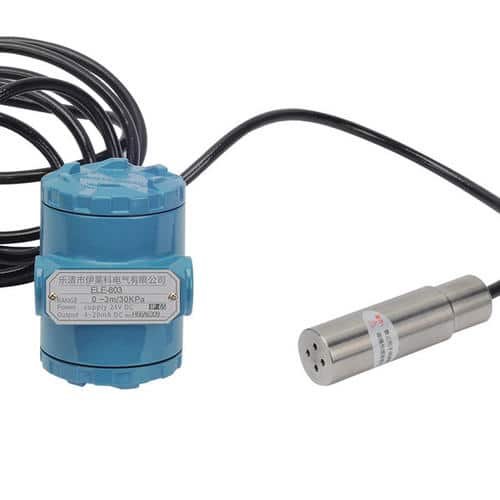
Hydrostatic pressure transmitter is used for fluid hydrostatic pressure measurement. With working static pressure up to 32Mpa, for liquid, gas or steam .
Remote Diaphragm Seal Pressure Transmitter
Remote seal pressure transmitter, with capillary and diaphragm seal, remote mount. Diaphragm seal systems protect pressure transmitters from hot, viscous, contaminated or corrosive media.

Sino-Inst also provides repair services for Industrial pressure transmitters. Such as WIKA, Rosemount, and other brands of pressure transmitters.

What is a smart pressure transmitter?

Digital smart pressure transmitter is pressure sensor with a 12-bit or higher microprocessor. Smart pressure transmitters are high performance microprocessor-based transmitters with flexibility. Pressure calibration and output, automatic compensation.

Smart pressure transmitter also called intelligent pressure transmitter.

The intelligent Industrial pressure transmitters consist of two parts: a smart sensor and a smart electronic board.

The smart sensor part includes: a capacitive sensor. A measuring diaphragm detection circuit. A temperature sensor, and a temperature compensation circuit.

The smart electronic board includes: a microcomputer controller. And the peripheral circuit, complete the pressure signal to 4 ~ 20mA dc conversion.

Smart Industrial pressure transmitter is used to measure the pressure of liquid, gas or steam. And then convert the pressure signal into 4 ~ 20mA DC signal output. The intelligent pressure transmitter produced by Sino-Inst can communicate with the HART communicator. It is widely used in weakly corrosive liquids in industrial pipelines, Gas and steam measurement and control systems.

Industrial pressure transmitters Working Principle

Principle and Application of Diffusion Silicon Pressure Transmitter

The pressure of the measured medium directly acts on the diaphragm of the sensor (stainless steel or ceramic). Causing the diaphragm to generate a micro-displacement proportional to the pressure of the medium. The resistance value of the sensor changes. The electronic circuit detects this change and converts and outputs a standard measurement signal corresponding to this pressure.

Principle of capacitive pressure transmitter

Capacitive pressure transmitter is mainly composed of capacitance sensor and circuit board. The sensor implements pressure-capacitance conversion. The circuit board converts the capacitance to a two-wire 4-20mA.

When the process pressure is applied to the isolation diaphragm from both sides (or one side) of the measuring chamber, it is transferred to the central diaphragm of the chamber through the silicone oil filling liquid. The central diaphragm is a diaphragm with tensioned edges.

Under the action of pressure, a corresponding displacement is generated. This displacement creates a change in differential capacitance!

And through the adjustment, oscillation and amplification of the electronic circuit board! Converted into 4-20mA signal output! The output current is directly proportional to the process pressure!

Types of Pressure Transmitters

Depending on the type of pressure to be measured:

Pressure transmitter types include gauge pressure, absolute pressure, and differential pressure. Gauge pressure refers to the pressure that is less than or greater than atmospheric pressure based on the atmosphere. Absolute pressure refers to the absolute zero pressure as the reference and is higher than the absolute pressure. Differential pressure refers to the difference between two pressures.

According to the working principle of the Industrial pressure transmitters:

  • Strain Gauge Pressure Transducers
  • Capacitance Pressure Transducers
  • Potentiometric Pressure Transducers
  • Resonant Wire Pressure Transducers

Electrical Output of Pressure Transducers

Pressure transmitters are generally available with three types of electrical output. Millivolt, amplified voltage and 4-20mA. Below is a summary of the outputs and when they are best used.

Extended Reading: 4-20ma pressure transducer wiring diagram

Millivolt Output Pressure Transducers

A sensor with a millivolt output is usually the most economical pressure sensor. The output of a millivolt sensor is nominally about 30mV. The actual output is proportional to the input power or excitation of the pressure sensor. If the stimulus fluctuates, the output will change.

Because of this dependence on the level of excitation, a regulated power supply is recommended for millivolt sensors. Because the output signal is so low, the transducer should not be placed in an electrically noisy environment. The distance between the transducer and the reading instrument should also be kept relatively short.

Voltage Output Pressure Transducers

Voltage output transducers include integral signal conditioning, which provides higher output than millivolt transducers. The output is usually 0-5Vdc or 0-10Vdc. Although model-specific, the output of the transducer is usually not a direct function of the stimulus. This means that as long as the regulated power supply falls within the specified power range, it is usually sufficient. Because of their higher output levels, these sensors are not as susceptible to electrical noise as millivolt sensors and can therefore be used in more industrial environments.

4-20 mA Output Pressure Transducers

These types of sensors are also called pressure transmitters. Because 4-20mA signals are least affected by electrical noise and resistance in the signal line, these sensors are best used when signals must be transmitted over long distances. These sensors are typically used in applications where the lead must be 1000 feet or more.

Industrial Applications of Pressure Transmitters

Pressure transmitters are mainly used in the following areas:

  1. Petroleum, petrochemical, chemical. Matching with throttling devices to provide accurate flow measurement and control. Measures pressure and level in pipes and tanks.
  2. Electricity, city gas. And other companies and businesses require high stability and high precision measurement and other places.
  3. Pulp and papermaking are used in places that require chemical-resistant liquids and corrosion-resistant liquids.
  4. Steel, non-ferrous metals, and ceramics are used in furnace pressure measurement and other places that require high stability and high precision measurement. They are also used in places that require stable measurement under strict control (temperature, humidity, etc.).
  5. Machinery and shipbuilding, used to strictly control the place where high precision is required for stable measurement.

Hydrostatic pressure for level measurement:

SI-151 Hydrostatic Level Sensor
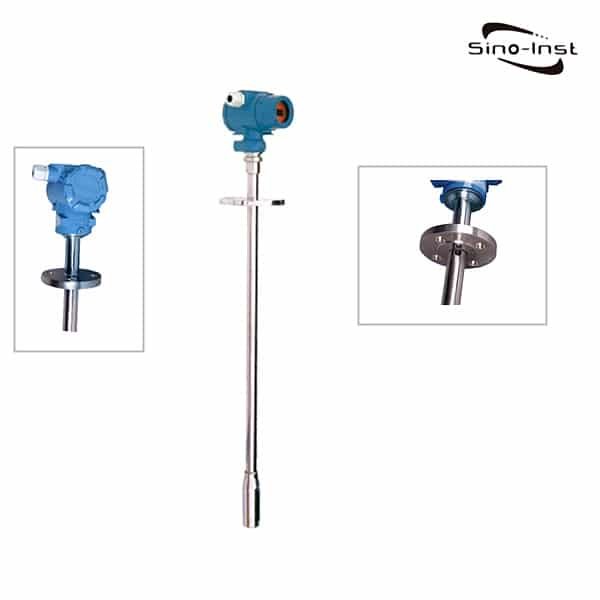
SMT3151TR Hydrostatic level transmitter-Rod Type
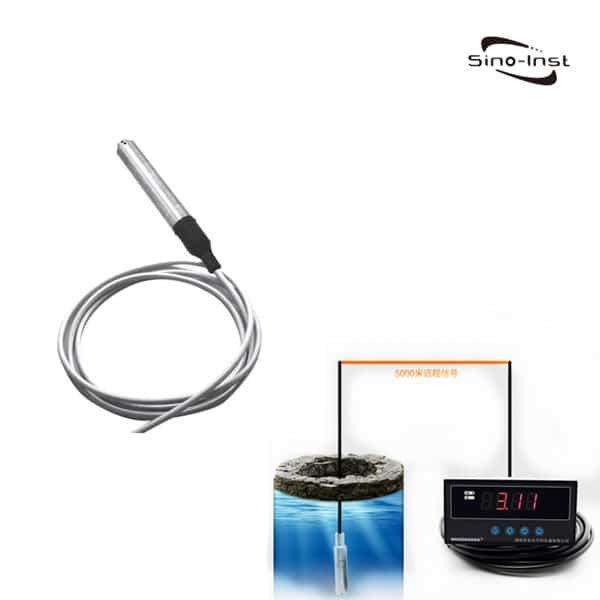
SI-PCM260 Deep Well Water Level Sensor

Pressure Transmitters VS Pressure Sensors VS Pressure Transducers

A pressure sensor is a device or device that can sense a pressure signal and convert the pressure signal into a usable output electrical signal according to a certain rule.

A pressure sensor usually consists of a pressure-sensitive element and a signal processing unit. According to different test pressure types, pressure sensors can be divided into gauge pressure sensors, differential pressure sensors and absolute pressure sensors. A pressure sensor is the core part of pressure transmitter.

In a pressure transducer, a thin-film or piezo-resistive pressure sensor is mounted on a process connection. The transducer converts pressure into an analog electronic output signal, typically as a millivolt per volt output. These signals are not linearized or temperature compensated.

A pressure transmitter has additional circuitry that linearizes, compensates, and amplifies the signal from a transducer. The different signal types are typically voltage signals (eg, 0 to 5 or 0 to 10 volts), milliamp (eg, 4 to 20 milliamp), or digital. The instrument then can transmit the signal to a remote receiver.

If you still don’t know how to choose the right pressure transmitter. Please feel free to contact our sales engineers. We will provide you with the best pressure measurement and control solution.

Guidelines for Troubleshooting Pressure Transmitters

When this happens, you should consider: Is the pressure source itself stable? The degree of anti-interference ability of the instrument or pressure sensor. Is the sensor wiring normal? The sensor itself is vibrating and the cause of the failure. Is the polarity of the power supply reversed?

Check the degree of pressure variable; make 4-20mA output adjustment.

Check the transmitter’s power supply voltage, calibration equipment and set values (4mA and 20mA points). Check whether the pressure interface is leaking or blocked. Check the wiring mode and power supply. If normal, check if the sensor has zero output. Or Perform a simple pressurization to see if the output changes. If there is a change, the sensor is not damaged.

Check if pressure transmission is blocked; check calibration equipment and adjust sensors; check vehicle damping and electromotive force interference.

Frequently
Asked
Questions

1. Do a 4-20mA trimming first to calibrate the D / A converter inside the transmitter. Since it does not involve sensing components, no external pressure signal source is required.

2. Do a full fine-tuning again to make the 4-20mA, digital reading coincide with the pressure signal actually applied. So a pressure signal source is needed.

3. Finally, do the re-ranging, and adjust the analog output 4-20mA to match the external pressure signal source. Its role is exactly the same as that of the zero (Z) and range (R) switches on the transmitter housing.
The communicator can change the range of the intelligent pressure transmitter. And can adjust the zero point and the range without inputting a pressure source. However, this method cannot be called calibration and can only be called “setting the range”. True calibration requires a standard pressure source input to the transmitter.

Adjusting the range (LRV, URV) without using a standard is not calibration. And ignoring the input part (input transmitter pressure) for output adjustment (transmitter conversion circuit) is not a correct calibration. Furthermore, the relationship between the pressure and differential pressure detection components, the A / D conversion circuit, and the current output is not equal. The purpose of calibration is to find the changing relationship between the three.
Emphasize one point:
Only when the input and output (input transmitter pressure, A / D conversion circuit, loop current output circuit) are debugged together, can it be called a true calibration.

First of all, the parameters that must be seen when purchasing a pressure transmitter are:
Pressure range. Range. Measurement medium. Installation method-threaded flange clamps, etc. Installation dimensions. Temperature. Whether with display. Whether with HART protocol. Output type. Current output or voltage output. Explosion-proof level, protection level. Accessories. Mounting bracket.
The above parameters will affect the price of the pressure transmitter.
Sino-Inst, as the manufacturer of pressure transmitter, offer you with the best price.

The input of the pressure transmitter is a pressure signal. The function of the pressure transmitter is to convert the pressure signal input from the outside into a current or voltage signal.

A pressure transmitter is a device that converts pressure into pneumatic or electric signals for control and remote transmission.

It can convert physical pressure parameters such as gas and liquid sensed by the load cell sensor into standard electrical signals (such as 4~20mADC, etc.). Measurement, indication and process adjustment are carried out by supplying secondary instruments such as indicating alarms, recorders and regulators.

Related Products

Related Blogs

  • High Temperature Pressure Transducer with Best Price

    High Temperature Pressure Transducer is also called High Temperature Pressure Sensor, or High Temperature Pressure Transmitter. The High Temperature Pressure Transducer is used for applications where the medium temperature exceeds…
  • What is Static Water Pressure?

    What Is Static Water Pressure? Definition of Static Water Pressure: Static Water Pressure refers to the pressure on water when it is stationary or moving in a straight line at…
  • The Myth of Ceramic Pressure Sensor

    What is a ceramic pressure sensor? Ceramic pressure sensors are sensor diaphragms made of ceramic alumina (Al2O3). Ceramic is a material with high elasticity, corrosion resistance, wear resistance, impact, and…
  • Static Pressure/Hydrostatic Pressure Transmitter

    The Hydrostatic Pressure Transmitter measures the hydrostatic pressure exerted by a hydrostatic head. Use these hydrostatic pressure transmitters to measure the liquid level in storage tanks, processing vessels, collection tanks,…
  • What does intrinsically safe mean?

    Intrinsically safe type is an explosion-proof type of electrical equipment. When purchasing electrical equipment, do you often hear about intrinsic safety? For example, when ordering pressure transmitters or flow meters…
  • How to convert a 4-20mA to 0-10V /1-5V signal?

    4-20mA to 0-10v voltage, this is I/V conversion. That is current-voltage conversion, usually used for long-distance signal transmission in the industry. How to convert a 4-20mA to 0-10V /1-5V signal?…
  • What does SCADA stands for?

    What does SCADA stand for? SCADA is the abbreviation of Supervisory Control And Data Acquisition. Namely data acquisition and monitoring control system. SCADA system is also called monitoring configuration software,…
  • Introduction to Piezoelectric Pressure Sensors

    What is a piezoelectric pressure sensor? The piezoelectric pressure sensor is a sensor that uses the piezoelectric effect of piezoelectric materials to convert the measured pressure into an electrical signal…
  • What Is an Air Pressure Transducer?

    An Air pressure transducer is a sensor that converts the mechanical signal of air pressure into a current signal. Pressure has a linear relationship with voltage or current, and it…
  • Steam Pressure Transmitter

    Steam pressure transmitters are widely used in the measurement and control of various high-temperature steam piping systems. The monitoring of steam pipes is very important. To measure the pressure of…
  • Cryogenic Pressure Transducers

    Cryogenic pressure transducer for low temperature pressure measurement.  -196℃~+125℃、-260℃/-350c(especial). Sino-Inst offers a variety of Pressure Sensors for pressure measure and control. If you have any questions, please contact our sales…
  • High Frequency Dynamic Pressure Sensor

    Dynamic pressure sensor, the transmitter is a high frequency sensor. Sino-Inst offers a variety of  Dynamic Pressure Sensors for pressure measurement. If you have any questions, please contact our sales…

Sino-Inst offers over 20 industrial pressure transmitters.
A wide variety of industrial pressure transmitters options are available to you. Such as free samples, paid samples.
Sino-Inst is a globally recognized manufacturer of industrial pressure transmitters, located in China.
Sino-Inst sells through a mature distribution network that reaches all 30 countries worldwide.
Industrial pressure transmitters products are most popular in Europe, Southeast Asia, and Mid East. You can ensure product safety by selecting from certified suppliers. With ISO9001, ISO14001 certification.

Request a Quote

Please enable JavaScript in your browser to submit the form