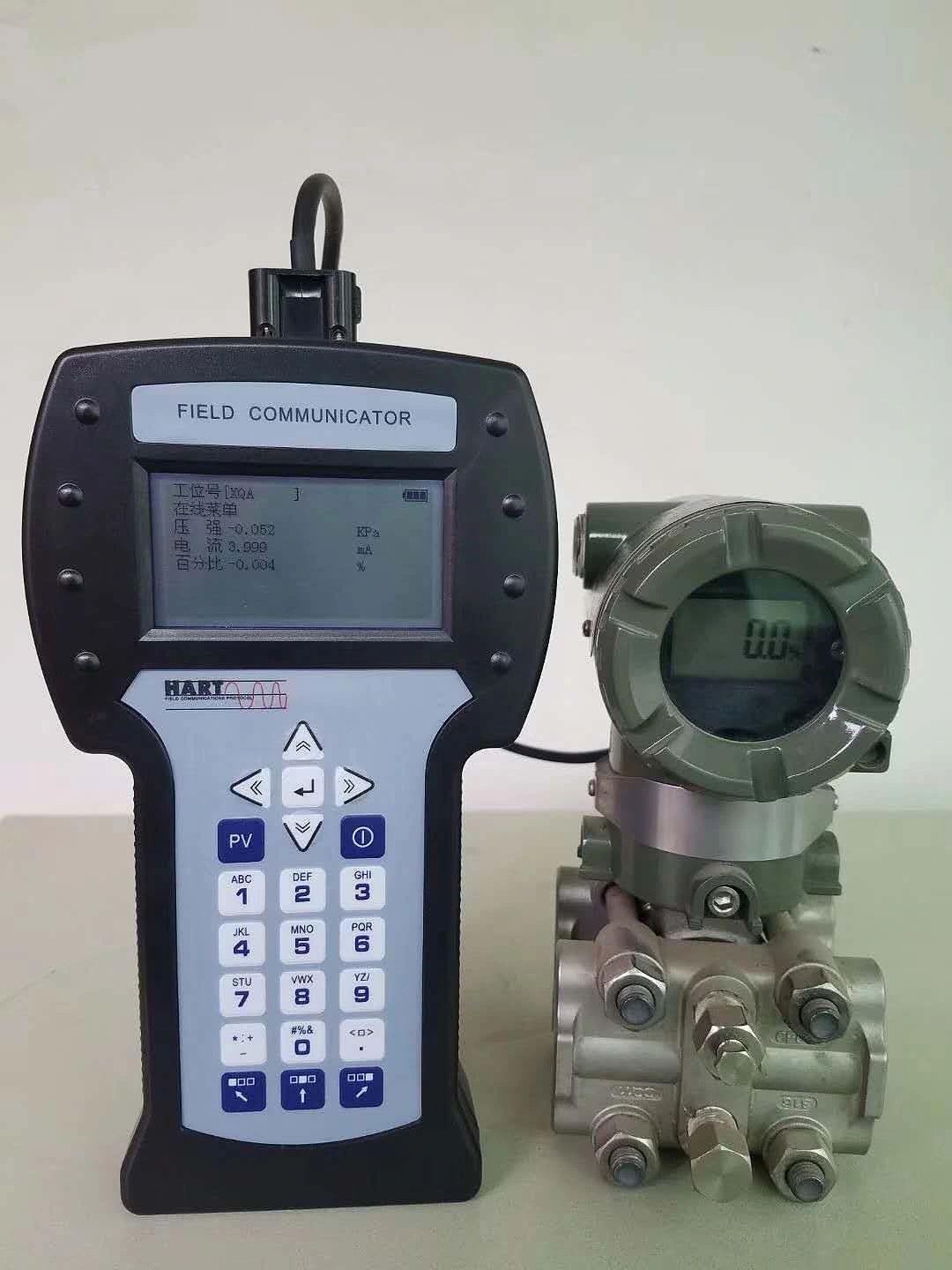
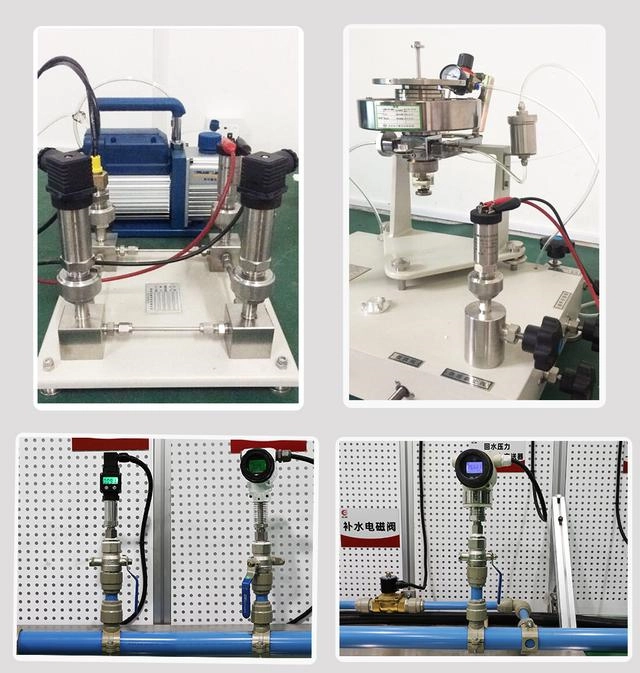
What Is a Pressure Sensor? Types, Principles & Selection Guide

Updated: April 10, 2026

A pressure sensor converts mechanical pressure into an electrical signal. It is the sensing element inside every pressure transmitter, transducer, and switch used in industrial process control. The electrical output—typically a change in resistance, capacitance, or voltage—is proportional to the applied pressure. Pressure sensors measure gauge, absolute, differential, or vacuum pressure depending on the reference. This guide covers the main sensing technologies, how each works, key specifications, and how to select the right type for your application.

Contents

What Is a Pressure Sensor?

A pressure sensor is a device that detects pressure applied to its sensing element and outputs a corresponding electrical signal. The sensing element is usually a thin diaphragm—made of silicon, stainless steel, or ceramic—that deflects when pressure acts on it. That deflection changes a physical property (resistance, capacitance, charge, or frequency) which is measured by the sensor’s internal circuitry.

Pressure sensors are the core component in pressure transmitters and transducers. Without the sensor, there is no measurement. The transmitter adds signal conditioning, temperature compensation, and a standardized output (4-20mA, 0-10V, or digital protocol) on top of the raw sensor signal.

Typical accuracy ranges from ±0.5% to ±0.04% of full scale depending on the technology and price point. Operating temperatures range from -40°C to +125°C for standard silicon sensors, with special designs reaching 300°C or higher for high-temperature applications.

4 Types of Pressure Measurement

The “type” of pressure a sensor measures depends on what reference it uses:

TypeReferenceTypical Application
Gauge pressureLocal atmospheric pressureProcess piping, tank pressure, pump discharge
Absolute pressurePerfect vacuum (0 Pa)Barometric, altitude, vacuum systems
Differential pressureAnother pressure inputFilter monitoring, flow measurement, level in pressurized tanks
Vacuum / compoundAtmospheric (negative range)Vacuum pumps, HVAC, packaging machines

Gauge pressure is the most common in industrial applications. When an engineer says “the line pressure is 10 bar,” they almost always mean gauge pressure—10 bar above atmospheric. For more on how static and dynamic pressures interact, see our guide on static pressure vs dynamic pressure.

5 Pressure Sensing Technologies

1. Piezoresistive (Diffused Silicon)

Four resistors are diffused directly into a silicon diaphragm and connected in a Wheatstone bridge. When pressure deflects the diaphragm, the resistors change value due to the piezoresistive effect, producing a millivolt output proportional to pressure. This is the most widely used technology in industrial pressure sensors.

Advantages: low cost, high volume production (MEMS), good linearity, fast response. Limitations: temperature sensitivity requires active compensation; not suitable for highly corrosive media without isolation diaphragm. Standard accuracy: ±0.25–0.5% FS.

2. Capacitive

A metal or ceramic diaphragm forms one plate of a capacitor. A fixed plate sits behind it. Pressure deflects the diaphragm, changing the gap and therefore the capacitance. The electronics measure this capacitance change with high resolution.

Advantages: excellent long-term stability, low power consumption, high overpressure tolerance (up to 100x rated pressure), very low temperature drift. This is the technology used in premium transmitters like the Rosemount 3051 and Yokogawa EJA series. Standard accuracy: ±0.04–0.1% FS.

3. Strain Gauge (Bonded Foil)

Metal foil strain gauges are bonded to a metal diaphragm or beam. Pressure deflects the structure, straining the gauges and changing their resistance. The resistance change is measured with a Wheatstone bridge. This technology works well for high-pressure applications (up to 10,000 bar) because thick metal diaphragms can handle extreme pressures.

Advantages: wide pressure range, robust construction, works at high temperatures. Limitations: lower sensitivity than piezoresistive, requires careful bonding. Standard accuracy: ±0.1–0.25% FS. For details on how pressure transmitters use these sensors, see our guide on how pressure transmitters work.

4. Piezoelectric

Piezoelectric crystals (quartz, PZT) generate an electric charge when mechanically stressed. The charge is proportional to the applied pressure. Unlike the other technologies, piezoelectric sensors only measure dynamic (changing) pressure—they cannot hold a static reading because the charge leaks away.

Advantages: extremely fast response (microseconds), wide frequency bandwidth, no external power needed for the sensing element. Applications: engine combustion analysis, blast pressure measurement, acoustic sensors. Not used for steady-state process control.

5. Resonant (Vibrating Element)

A vibrating wire, beam, or cylinder changes its resonant frequency when stressed by pressure. The frequency shift is measured digitally with very high resolution. This technology offers the best long-term stability and accuracy of any pressure sensing method.

Advantages: frequency output is inherently digital and noise-immune, excellent stability (±0.01% per year), high accuracy (±0.01–0.04% FS). Limitations: expensive, slower response than piezoresistive. Used in fiscal metering, meteorological stations, and calibration reference instruments.

TechnologyAccuracyBest ForLimitation
Piezoresistive±0.25–0.5%General industrial, OEM, HVACTemperature drift
Capacitive±0.04–0.1%Process control, custody transferHigher cost
Strain gauge±0.1–0.25%High pressure, hydraulic systemsLower sensitivity
Piezoelectric±1%Dynamic pressure, combustionNo static measurement
Resonant±0.01–0.04%Fiscal metering, calibrationExpensive, slow response

Sensor vs. Transducer vs. Transmitter

These three terms are often used interchangeably, but they describe different levels of signal processing:

TermWhat It DoesOutput SignalTypical Use
Pressure sensorConverts pressure to a raw electrical changemV (millivolts), pC (picocoulombs)OEM integration, PCB-level
Pressure transducerSensor + basic signal conditioning0–5V, 0–10V, mV/VTest & measurement, lab instruments
Pressure transmitterSensor + full conditioning + standardized output4-20mA, HART, Profibus, ModbusIndustrial process control, DCS/PLC

In practice: a pressure sensor is the raw MEMS chip. A transducer packages it with amplification and outputs a voltage. A transmitter adds temperature compensation, linearization, and a 4-20mA or digital output that can travel hundreds of meters to a control room. When specifying equipment for industrial applications, you almost always want a transmitter. For wiring details, see our pressure transducer wiring guide.

Key Specifications to Consider

When selecting a pressure sensor, these are the specifications that matter most:

  • Pressure range: Select a range where your normal operating pressure falls at 60–75% of the sensor’s full scale. This gives headroom for pressure spikes without sacrificing resolution.
  • Accuracy: Expressed as % of full scale (FS) or % of reading. A ±0.1% FS sensor on a 0–100 bar range has ±0.1 bar error at any point. For custody transfer, look for ±0.04–0.075% FS.
  • Temperature range: Both operating temperature (media touching the sensor) and ambient temperature (electronics). Silicon sensors typically handle -40 to +85°C. High-temperature versions with oil-filled capillary or cooling fins reach 300°C+.
  • Output signal: 4-20mA is the industrial standard for analog. HART adds digital communication over the same wires. For digital-only, Profibus PA and Foundation Fieldbus are common.
  • Media compatibility: The wetted parts (diaphragm, O-ring, process connection) must be compatible with the process fluid. 316L stainless steel handles most applications. Hastelloy, Monel, or tantalum for aggressive chemicals.
  • Process connection: 1/4″ or 1/2″ NPT, G1/2, M20x1.5, or flange-mounted. Match the connection to your existing pipe fittings.
  • Overpressure rating: The maximum pressure the sensor can withstand without permanent damage. Capacitive sensors typically tolerate 100x overpressure; piezoresistive typically 2–3x.

Common Industrial Applications

Pressure sensors are used across every process industry. Here are the most common application categories:

  • Process control: Monitoring and controlling pressure in reactors, distillation columns, heat exchangers, and pipeline systems. The 4-20mA signal feeds directly into a DCS or PLC for closed-loop control.
  • Flow measurement: Differential pressure sensors across an orifice plate, venturi, or flow nozzle measure flow rate. This is still the most common industrial flow measurement method. For GPM-based flow measurement, see our guide on flow meters with GPM units.
  • Level measurement: A pressure sensor at the bottom of a tank measures hydrostatic head, which is proportional to liquid level. Works for open and pressurized tanks (using a differential pressure sensor for the latter).
  • Hydraulic and pneumatic systems: Monitoring pump discharge, accumulator charge, cylinder force, and system pressure in mobile equipment, presses, and injection molding machines.
  • HVAC and building automation: Duct static pressure, chilled water system pressure, filter differential pressure, and refrigerant pressure in chillers.
  • Safety systems: Pressure relief monitoring, burst disc detection, and SIL-rated pressure switches for emergency shutdown systems per IEC 61511.

Pressure Sensors from Sino-Inst

Sino-Inst manufactures over 20 types of pressure sensors and transmitters covering gauge, absolute, differential, and high-pressure applications. All units ship with factory calibration certificates.

Industrial PSI Pressure Sensor for process control

Gauge Pressure Sensor

Water pressure sensors for tank, pipe and groundwater measurement. 4-20mA / RS485 output with IP68 sealed housing for drinking water, firefighting and irrigation systems.

Differential Pressure Sensor

Budget-friendly DP sensor for HVAC, filter status and airflow monitoring. Compact diaphragm design keeps unit price low without giving up 0.5% accuracy or 4-20mA output.

Pressure Transmitter (4-20mA)

HH3151 HART smart pressure transmitter with remote zero/span, digital diagnostics and 0.075% accuracy. Drop-in upgrade for plants running HART multiplexers or asset-management systems.

FAQ

What is the difference between a pressure sensor and a pressure transmitter?

A pressure sensor is the raw sensing element that converts pressure into a small electrical change (millivolts). A pressure transmitter packages the sensor with signal conditioning, temperature compensation, and a standardized industrial output (4-20mA, HART, Modbus). For process control, you need a transmitter.

How long does a pressure sensor last?

In normal industrial service, a quality pressure sensor lasts 10–20 years. Silicon MEMS sensors have no moving parts and minimal wear. The main failure modes are diaphragm corrosion (wrong material selection), overpressure damage, and electronics degradation from temperature cycling. Regular calibration checks catch drift before it becomes a problem.

Which pressure sensor technology is most accurate?

Resonant (vibrating element) sensors achieve the best accuracy at ±0.01–0.04% FS, but they are expensive. Capacitive sensors offer ±0.04–0.1% FS at a more reasonable price and are the standard choice for high-accuracy process applications. For general industrial use, piezoresistive sensors at ±0.25–0.5% FS provide the best cost-performance ratio.

Can a pressure sensor measure vacuum?

Yes. Absolute pressure sensors measure from 0 Pa (vacuum) upward. Compound pressure sensors (also called vacuum/pressure sensors) measure both positive and negative gauge pressure in a single range, for example -1 to +10 bar. For deep vacuum applications below 1 mbar, specialized capacitance manometers or Pirani gauges are used.

How do I choose the right pressure range?

Select a sensor where your normal operating pressure is 60–75% of the rated full scale. This gives enough headroom for pressure spikes without sacrificing measurement resolution. For example, if your process runs at 8 bar with occasional surges to 12 bar, a 0–16 bar sensor is a good fit. Never operate a sensor continuously above 90% of its rated range.

What is the temperature effect on pressure sensor accuracy?

Temperature changes affect both the zero point and the span of a pressure sensor. This effect is specified as a temperature coefficient, typically in %FS per 10°C. A good industrial transmitter has a total temperature effect of less than ±0.15% FS over a 10–50°C range after compensation. If your process temperature varies widely, look for a sensor with active digital temperature compensation or use a remote diaphragm seal to keep the electronics at stable ambient temperature.

Looking for a pressure sensor or transmitter for your application? Sino-Inst offers gauge, absolute, differential, and high-pressure models with customizable ranges and outputs. Our engineers can help you select the right technology, material, and connection for your specific process conditions. Contact us for a technical consultation or quotation.

Request a Quote

Please enable JavaScript in your browser to submit the form

Pressure Transducer Wiring Diagram: 2-Wire, 3-Wire & 4-Wire Guide

Updated April 2026 — By Sino-Inst Engineering Team

Wiring a pressure transducer correctly is the difference between a clean 4–20 mA signal and hours of troubleshooting. The three wiring configurations — 2-wire, 3-wire, and 4-wire — each have different power supply requirements, signal routing, and use cases.

This guide provides wiring diagrams for all three types, explains the electrical differences, and covers the most common wiring mistakes.

Contents

2-Wire vs 3-Wire vs 4-Wire: Quick Comparison

Feature2-Wire3-Wire4-Wire
Cables required234
Power & signalShare same 2 wiresShared ground, separate signalFully separate
Common output4–20 mA0–10 V or 4–20 mA4–20 mA, 0–10 V, 0–5 V
Power supply12–36 VDC (loop)12–36 VDC12–36 VDC or 220 VAC
Max cable length1–2 km500 m500 m (voltage) / 1–2 km (current)
CostLowestMediumHighest
Best forProcess control, long runsTest/lab, moderate distanceHigh-accuracy, multi-function

2-Wire Pressure Transducer Wiring Diagram

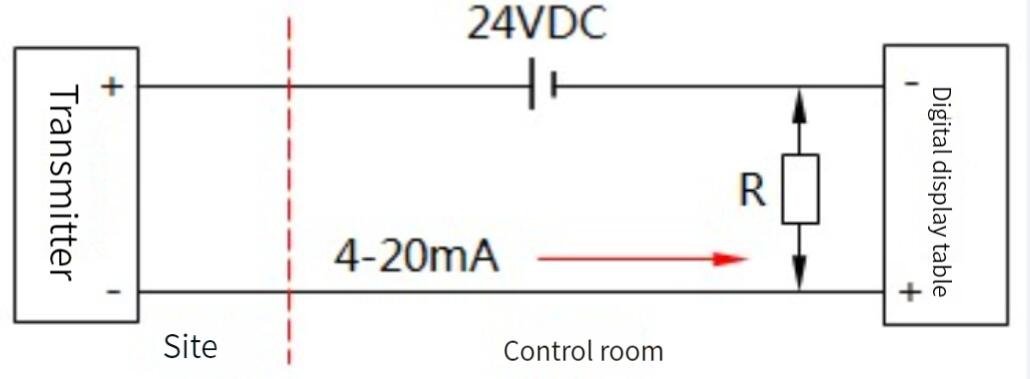
A 2-wire transmitter is loop-powered. The power supply and the 4–20 mA signal share the same two wires. At zero pressure, the transmitter draws 4 mA. At full scale, it draws 20 mA. The PLC analog input reads this current to determine the pressure.

Wiring steps:

  1. Connect the positive (+) terminal of the 24 VDC power supply to the positive (+) terminal of the transmitter.
  2. Connect the negative (−) terminal of the transmitter to the positive (+) input of the PLC analog module (or across a 250 Ω resistor for voltage conversion).
  3. Connect the negative (−) terminal of the PLC analog module back to the negative (−) terminal of the 24 VDC power supply.

The 2-wire configuration is the industry standard for process control. It uses less cable, is immune to lead resistance errors (current signals are not affected by wire length), and supports HART communication on the same two wires. Over 80% of industrial pressure transmitters use 2-wire 4–20 mA connections.

3-Wire Pressure Transducer Wiring Diagram

A 3-wire transmitter has a dedicated power positive wire, a signal output wire, and a shared ground (common) wire. The power supply and signal output share the negative/ground connection.

Wiring steps:

  1. Connect V+ (power positive) to the positive terminal of the 24 VDC power supply.
  2. Connect Signal Out to the positive input of your PLC analog module or display instrument.
  3. Connect GND (common) to both the negative terminal of the power supply and the negative terminal of the PLC input.

The 3-wire configuration is common in voltage-output transmitters (0–5 V, 0–10 V). The separate signal wire avoids the voltage drop issue that affects 2-wire voltage transmitters over long cable runs. However, for distances over 500 m, a 4–20 mA current output is still preferred.

4-Wire Pressure Transducer Wiring Diagram

A 4-wire transmitter has completely separate power and signal circuits — two wires for power, two wires for signal. This isolation between power and measurement eliminates ground loops and allows both current and voltage output options.

Wiring steps:

  1. Connect Power + to the positive terminal of the power supply (24 VDC or 220 VAC depending on model).
  2. Connect Power − to the negative terminal of the power supply.
  3. Connect Signal + (current or voltage output) to the positive input of the PLC analog module.
  4. Connect Signal − to the negative input of the PLC analog module.

The 4-wire configuration is used in high-performance transmitters that need more power than a 2-wire loop can provide (the 4 mA minimum in a 2-wire system limits the available power to roughly 36 mW at 24 V). Transmitters with LCD displays, HART modems, or multiple outputs often require 4-wire power. Some 4-wire models accept 220 VAC directly.

Common Wiring Mistakes

Reversed polarity. Connecting + and − backwards. Most modern transmitters have reverse polarity protection, but some older models can be damaged. Always check terminal markings before applying power.

Wrong supply voltage. Applying 220 VAC to a 24 VDC transmitter destroys it instantly. Confirm the rated voltage on the nameplate.

Load resistance too high. A 2-wire 4–20 mA transmitter needs enough voltage to drive the current through the total loop resistance. If your PLC input impedance plus cable resistance exceeds the transmitter’s maximum load, the signal clips at the top end. Check the specification: most 24 VDC transmitters support up to 500–750 Ω total loop resistance.

Ground loops. Connecting the signal ground to the power ground at multiple points creates a ground loop. This adds 50/60 Hz noise to the signal. Use a single grounding point, or use a 2-wire 4–20 mA transmitter (current loops are inherently immune to ground loops).

Mixing up TEST and OUT terminals. Some transmitters have both OUT (operating output) and TEST (factory calibration) terminals. Only connect to the OUT terminals for normal operation.

Featured Pressure Transmitters from Sino-Inst

2-Wire 4–20 mA Transmitter

HH3151 HART smart pressure transmitter with remote zero/span, digital diagnostics and 0.075% accuracy. Drop-in upgrade for plants running HART multiplexers or asset-management systems.

4-Wire DP Transmitter

DP transmitters measure pressure difference across gas, liquid or steam. 4-20mA / 0-5V output drives liquid level, density and flow loops across process plants.

Explosion-Proof Transmitter

SI-EP489 explosion-proof pressure transmitter with Ex d IIC T6 housing. Designed for oil & gas wellheads, chemical skids and dust-laden hazardous areas where intrinsic safety is mandatory.

Browse all pressure transmitters | How pressure transmitters work | Calibration guide

Pressure Transducer Wiring FAQ

What happens if I wire a 2-wire transmitter with wrong polarity?

Reverse polarity on a 2-wire transmitter blocks current flow completely. The loop reads 0 mA, and the PLC/DCS shows an under-range fault. Most modern transmitters have built-in reverse-polarity protection — the device won’t be damaged, but it won’t output a signal until you swap the wires. Always check with a multimeter before powering on.

Can I use a 4-wire transmitter in a 2-wire loop?

No. A 4-wire transmitter needs a separate power supply and has dedicated signal output terminals. You cannot wire it into a standard 2-wire 4–20 mA loop. If your system only supports 2-wire loops, you need a 2-wire transmitter or a signal isolator to convert the 4-wire output.

How long can I run 4–20 mA signal cable?

With standard 18 AWG twisted-pair cable, a 4–20 mA loop typically runs up to 1,500 meters (about 5,000 feet). The limiting factor is total loop resistance — keep it under what the transmitter can drive. For a 24 VDC supply with a 250 Ω sense resistor, a typical transmitter handles around 600 Ω total loop resistance. Longer runs need thicker cable or a higher supply voltage.

Why does my pressure reading drift after wiring?

Common causes: loose terminal connections causing intermittent contact, incorrect grounding creating ground loops, or EMI pickup from running signal wires alongside power cables. Check all connections are tight, verify single-point grounding, and use shielded cable with the shield grounded at one end only.

Do I need shielded cable for pressure transducer wiring?

For 4–20 mA loops in industrial environments — yes. Shielded twisted-pair cable reduces electromagnetic interference from VFDs, motors, and switchgear. Ground the shield at the control room end only. For short runs in electrically quiet environments, unshielded cable works, but shielded is always the safer choice.

What is the minimum supply voltage for a 2-wire transmitter?

Most 2-wire transmitters need 12–36 VDC, but check the specific model’s datasheet. The actual minimum depends on total loop resistance. A rough formula: V_min = 12V + (0.02A × R_loop). With a 250 Ω load resistor and 50 Ω cable resistance, you need at least 18 VDC. A 24 VDC supply handles most installations.


Written by the Sino-Inst Engineering Team — with over 20 years of experience in industrial pressure measurement, installation, and commissioning across oil & gas, water treatment, HVAC, and chemical processing plants worldwide.

Request a Quote or Technical Support

Need help selecting the right pressure transducer for your wiring configuration? Our engineers can recommend the best signal output type — 2-wire, 3-wire, or 4-wire — based on your system requirements.

Request a Quote

Please enable JavaScript in your browser to submit the form

Flow Rate and Pressure: How They Relate and How to Calculate

Updated April 2026 — By Sino-Inst Engineering Team

Flow rate and pressure are the two most measured variables in any piping system. They are connected, but not in a simple linear way. Pressure difference drives flow. No pressure difference, no flow — even if the pipe is full and pressurized.

Contents

This article covers the actual physics behind the relationship, gives you the working formulas, and shows how to calculate one from the other in real piping systems.

How Flow Rate and Pressure Are Related

A common misconception: high pressure means high flow. Not true. A pipe can sit at 150 psi with zero flow if both ends are at equal pressure. Flow happens only when there is a pressure difference (ΔP) between two points.

Once a piping system is fixed (pipe diameter, length, roughness, fittings), flow rate is proportional to the square root of the pressure difference:

Q ∝ √ΔP

Double the pressure difference and flow increases by about 41%, not 100%. This square-root relationship appears everywhere — in Venturi tubes, orifice plates, and control valve sizing equations.

Key Formulas

Bernoulli’s Equation

For an ideal (inviscid, incompressible) fluid flowing along a streamline:

P₁ + ½ρv₁² + ρgh₁ = P₂ + ½ρv₂² + ρgh₂

Where P is static pressure (Pa), ρ is fluid density (kg/m³), v is velocity (m/s), g is gravity (9.81 m/s²), and h is elevation (m). This equation tells you: when velocity goes up, pressure goes down. That is the principle behind every differential pressure flow meter.

Bernoulli applies to clean, low-viscosity fluids at moderate speeds. For real-world pipe systems, you need to account for friction losses.

Darcy-Weisbach Equation (Pressure Drop in Pipes)

The standard formula for friction-based pressure drop in a straight pipe:

ΔP = f × (L/D) × (ρv²/2)

Where f is the Darcy friction factor (dimensionless), L is pipe length (m), D is internal diameter (m), ρ is density (kg/m³), and v is flow velocity (m/s). The friction factor depends on Reynolds number and pipe roughness — use a Moody chart or the Colebrook equation to find it.

Poiseuille’s Law (Laminar Flow Only)

For laminar flow (Re < 2100) in a circular pipe:

Q = π × d⁴ × ΔP / (128 × μ × L)

Where Q is volumetric flow rate (m³/s), d is pipe diameter (m), ΔP is pressure drop (Pa), μ is dynamic viscosity (Pa·s), and L is pipe length (m). This equation works for heavy oils, glycol, and other viscous fluids moving at low velocity.

DP Flow Meter Formula

For an orifice plate, Venturi, or flow nozzle:

Q = C × ε × A₂ × √(2ΔP / (ρ(1 − β⁴)))

Where C is the discharge coefficient, ε is the expansion factor (for gases), A₂ is the bore area, β is the diameter ratio (bore/pipe), and ΔP is measured differential pressure. This is how every DP flow meter converts a pressure reading into a flow rate.

How to Calculate Flow Rate from Pressure

You cannot calculate flow from a single pressure reading. You need pressure difference between two points, plus information about the system. Here is the practical approach:

  1. Measure ΔP — Install pressure taps at two points along the pipe. The difference is your driving force.
  2. Know your pipe — Internal diameter, length between taps, material (roughness), and any fittings or valves.
  3. Know your fluid — Density and viscosity at operating temperature.
  4. Estimate Reynolds number — Start with an assumed velocity, calculate Re = ρvD/μ. This determines if the flow is laminar or turbulent.
  5. Apply the right formula — Laminar: use Poiseuille. Turbulent: use Darcy-Weisbach with the Moody friction factor. Iterate if needed — start with an estimated f, solve for v, recalculate Re, update f, repeat until values converge.

In practice, most engineers skip the manual calculation. Install a differential pressure flow meter and let the transmitter do the math internally. Modern DP transmitters compute flow rate in real-time from the measured ΔP, programmed pipe data, and fluid properties.

Pressure Drop in Piping Systems

Every pipe, valve, elbow, and fitting consumes energy. That energy loss shows up as pressure drop. Two categories:

Friction loss (major loss) — Caused by fluid viscosity against the pipe wall. Proportional to pipe length and the square of velocity. Longer pipes and faster flow mean more pressure drop.

Minor losses — From elbows, tees, valves, reducers, and flow meters. Each component has a loss coefficient (K-factor). In short runs with many fittings, minor losses can exceed friction losses.

Total pressure drop: ΔP_total = ΔP_friction + Σ(K × ρv²/2)

When selecting a flow meter, check its permanent pressure loss specification. An orifice plate typically causes 40-70% permanent loss of the measured ΔP. A Venturi tube recovers most of the pressure — only 5-20% permanent loss. For applications where pumping energy matters, the Venturi tube or V-Cone meter is a better choice.

Quick Reference: Flow-Pressure Formulas

FormulaUse CaseKey Variables
Q ∝ √ΔPGeneral pipe systemsΔP = pressure difference
Bernoulli (P + ½ρv² + ρgh = const)Ideal flow, DP metersP, v, ρ, h
Darcy-Weisbach (ΔP = f·L/D·ρv²/2)Turbulent pipe frictionf, L, D, ρ, v
Poiseuille (Q = πd⁴ΔP/128μL)Laminar flow (Re < 2100)d, ΔP, μ, L
DP meter (Q = CεA√(2ΔP/ρ(1−β⁴)))Orifice, Venturi, nozzleC, ε, A, ΔP, β, ρ

Featured DP Flow Meters from Sino-Inst

Orifice Plate Flow Meter

Accuracy: ±1% | DN15–DN1200
4-20mA/HART | Steam, gas, liquid

Venturi Tube Flow Meter

Low pressure loss: 5-20% | DN50–DN2000
High accuracy for large pipes

Integral DP Flow Meter

Built-in ΔP transmitter | Compact
4-20mA/HART | Easy install

Browse all flow meters | Use our flow & pressure calculators

Frequently Asked Questions

Does higher pressure always mean higher flow rate?

No. Flow depends on pressure difference, not absolute pressure. A pipe at 200 bar with equal pressure at both ends has zero flow. Increase the pressure at one end while keeping the other constant, and flow begins.

Why is the flow-pressure relationship a square root, not linear?

Friction losses in turbulent flow are proportional to velocity squared (Darcy-Weisbach equation). Since pressure drop goes as v², flow rate (which is proportional to v) goes as the square root of ΔP. Double the flow requires four times the pressure difference.

How do I measure flow rate using pressure?

Use a differential pressure flow meter — an orifice plate, Venturi tube, or flow nozzle installed in the pipe. A DP transmitter measures the pressure drop across the restriction and calculates flow using the square-root relationship. This is the most widely used industrial flow measurement method per ISO 5167.

What is the difference between pressure drop and pressure loss?

They mean the same thing in practice. Pressure drop is the reduction in pressure as fluid moves through a pipe or component. Some engineers reserve “pressure loss” for permanent, non-recoverable losses (friction, turbulence) and “pressure drop” for the total change including recoverable portions (like in a Venturi).

Can I calculate flow rate from a single pressure gauge reading?

Not directly. You need two pressure readings (upstream and downstream) to get a ΔP, or you need a known flow restriction with calibrated characteristics. A single gauge reading tells you the static pressure at one point — it says nothing about velocity or flow rate.

Which flow meter has the lowest pressure drop?

Among DP meters, the Venturi tube has the lowest permanent pressure loss (5-20% of ΔP). Magnetic flow meters and ultrasonic flow meters cause almost no pressure drop because they have no flow obstruction. Orifice plates have the highest pressure loss (40-70% of ΔP).


Request a Quote

Tell us your application — pipe size, fluid, temperature, pressure, required accuracy. Our engineers will recommend the right flow meter and provide a quote within 24 hours.

Request a Quote

Please enable JavaScript in your browser to submit the form

About the Author
Sino-Inst Engineering Team — With over 20 years of experience in industrial process instrumentation, our team specializes in flow, level, pressure, and temperature measurement solutions. We have completed 10,000+ installations across oil & gas, water treatment, chemical, and power generation industries worldwide. Our engineers hold certifications in ISA, IEC, and ISO standards. For technical questions, contact us at rfq@sino-inst.com or call +86-180 4861 3163.

Pressure Transmitter: Working Principle, Types & Selection Guide

Updated April 2026 — By Sino-Inst Engineering Team

A pressure transmitter converts the mechanical force of fluid or gas pressure into an electrical signal — typically 4–20 mA or a digital protocol like HART. That signal goes to a PLC, DCS, or SCADA system for monitoring, control, and alarms.

Contents

Pressure transmitters are found in nearly every process industry: oil and gas, water treatment, chemical plants, power generation, HVAC, and food processing. They measure gauge pressure, absolute pressure, differential pressure, or vacuum — depending on the application.

This guide explains how they work, the five main sensing technologies, signal output options, and how to select the right one for your application.

How Does a Pressure Transmitter Work?

Every pressure transmitter has three functional blocks:

  1. Sensing element — A diaphragm, piezo crystal, or capacitive cell that physically deforms under pressure.
  2. Signal conditioning — Electronics that convert the raw sensor output (resistance change, charge, or capacitance shift) into a proportional electrical signal.
  3. Output stage — Sends the conditioned signal to the control system via analog (4–20 mA) or digital (HART, Modbus, Profibus) protocol.

The process medium pushes against a diaphragm. The diaphragm deflects — maybe 0.001 mm at full scale. That tiny deflection changes the electrical properties of the sensing element (strain, capacitance, or piezoelectric charge). The transmitter electronics measure the change, compensate for temperature, linearize the output, and produce a calibrated signal.

5 Pressure Sensing Technologies

1. Piezoresistive (Diffused Silicon)

A silicon diaphragm has strain gauges diffused directly into its surface. When pressure deflects the diaphragm, the resistance of these gauges changes — a phenomenon called the piezoresistive effect. A Wheatstone bridge circuit converts this resistance change into a voltage proportional to pressure.

This is the most common sensing technology. It covers ranges from 0–100 Pa to 0–100 MPa. Accuracy is typically ±0.25% to ±0.1% FS. Temperature range: -40 to +125°C. Cost-effective and reliable for general industrial use.

2. Capacitive

Two metal plates sandwich a sensing diaphragm. Pressure deflects the diaphragm, changing the gap between the plates and therefore the capacitance. The electronics measure this capacitance change with high precision.

Capacitive sensors dominate in differential pressure measurement and high-accuracy applications. Accuracy reaches ±0.075% FS in premium models. They handle low pressures (down to 0.1 kPa) better than piezoresistive types. This is the technology used in Rosemount 3051, Yokogawa EJA, and other top-tier DP transmitters.

3. Ceramic (Thick-Film)

A ceramic (Al₂O₃) diaphragm has thick-film resistors printed on its back surface. Pressure bends the ceramic, changing the resistance. The ceramic itself acts as the isolation diaphragm — no fill fluid needed.

Ceramic sensors excel in corrosive media because the sensing element contacts the process directly without an oil-filled cavity. They resist chemical attack from most acids and alkalis. Temperature range: -40 to +135°C. Cost is lower than stainless steel models. Common in water treatment, chemical dosing, and food-grade applications.

4. Piezoelectric

Quartz or tourmaline crystals generate an electric charge when mechanically stressed. The charge is proportional to the applied force. A charge amplifier converts this into a usable voltage signal.

Piezoelectric sensors respond extremely fast — microsecond rise times. They measure dynamic pressure events: combustion chamber pulsations, hydraulic hammer, blast waves. They cannot measure static pressure because the charge leaks away over time. Not used for steady-state process monitoring.

5. MEMS (Micro-Electro-Mechanical Systems)

MEMS pressure sensors use semiconductor fabrication techniques to build the diaphragm and sensing elements on a silicon chip. The result is an extremely small, low-power sensor with good accuracy.

MEMS technology has driven down the cost and size of pressure transmitters. Most consumer and automotive pressure sensors are MEMS-based. In industrial applications, MEMS sensors appear in compact transmitters, portable calibrators, and IoT-enabled wireless pressure monitors.

Types of Pressure Transmitters

Pressure transmitters are classified by what pressure reference they use:

TypeMeasuresReferenceTypical Use
Gauge PressurePressure above/below atmosphereAtmospheric (vented)Pipe pressure, tank pressure, pump discharge
Absolute PressurePressure above perfect vacuumSealed vacuumBarometric, vacuum systems, altitude
Differential PressureDifference between two pressuresSecond pressure portFlow measurement, filter monitoring, level
Vacuum/CompoundPressure below atmosphere or both sidesAtmosphericVacuum pumps, HVAC, process vacuum
Hydrostatic (Submersible)Liquid column pressure = levelAtmospheric (vented cable)Tank level, well depth, open channel

Differential pressure transmitters are the most versatile. With an orifice plate or Venturi, a DP transmitter measures flow. Connected to the top and bottom of a tank, it measures level. Across a filter, it monitors clogging. One instrument, three measurements — that is why DP transmitters account for roughly 40% of all pressure transmitter sales worldwide.

Signal Output Options

OutputSignal RangeMax DistanceBest For
4–20 mA (analog)4 mA = zero, 20 mA = full scale1–2 kmUniversal, noise-immune, long runs
0–10 V (voltage)0 V = zero, 10 V = full scale<15 mShort cable runs, lab/test
HART (hybrid)4–20 mA + digital overlay1–2 kmDiagnostics + analog backup
Modbus RS485Digital, multi-drop1.2 kmMultiple transmitters on one cable
Millivolt (mV)0–100 mV typical<3 mOEM integration, low cost

For most industrial installations, 4–20 mA with HART is the standard. The analog signal is immune to electrical noise and works with every PLC on the market. HART adds digital diagnostics — you can read sensor temperature, configure range, and check health without disconnecting wires. For new digital plants, Modbus or Profibus PA eliminates analog entirely.

How to Select a Pressure Transmitter

Start with these six parameters. Get them wrong and nothing else matters.

  1. Pressure type — Gauge, absolute, differential, or vacuum? This determines the transmitter category.
  2. Pressure range — Select a range where your normal operating pressure falls between 25% and 75% of full scale. Oversizing reduces accuracy; undersizing risks damage.
  3. Process media — What fluid contacts the diaphragm? Corrosive chemicals need Hastelloy or tantalum diaphragms. Food-grade requires sanitary tri-clamp connections. High-viscosity fluids need flush-mount diaphragms.
  4. Temperature — Both process temperature and ambient temperature. Standard transmitters handle -40 to +85°C process temp. High-temp models reach +150°C or higher with remote seals. Electronics rarely survive above +85°C ambient without cooling.
  5. Accuracy — General process control: ±0.5% FS is sufficient. Custody transfer or fiscal metering: ±0.075% FS or better. Remember — accuracy specs apply only at reference conditions. In the field, temperature drift and installation effects add error.
  6. Output and protocol — Match your control system. Most PLCs accept 4–20 mA. HART adds diagnostics at no extra wiring cost. Digital protocols (Modbus, Profibus) need compatible I/O cards.

Other factors: hazardous area certification (ATEX, IECEx, FM), ingress protection (IP65 minimum for outdoor, IP68 for submersible), mounting style (direct, remote seal, flush diaphragm), and response time.

Featured Pressure Transmitters from Sino-Inst

Gauge Pressure Transmitter

HH3151 HART smart pressure transmitter with remote zero/span, digital diagnostics and 0.075% accuracy. Drop-in upgrade for plants running HART multiplexers or asset-management systems.

Differential Pressure Transmitter

DP transmitters measure pressure difference across gas, liquid or steam. 4-20mA / 0-5V output drives liquid level, density and flow loops across process plants.

High-Temperature Pressure Transmitter

High-temperature pressure transducer for media up to 300 °C (further extended with cooling tube). 4-20mA output for boiler drums, reactors and superheated-steam lines.

Browse all pressure transmitters | Pressure transmitter wiring guide | Calibration guide

Frequently Asked Questions

What is the difference between a pressure transmitter and a pressure transducer?

Both convert pressure into an electrical signal. A transducer outputs a raw signal (millivolt or resistance change) that needs external conditioning. A transmitter has built-in electronics that output a standardized signal (4–20 mA, 0–10 V, or digital). In practice, most people use the terms interchangeably. If you need a plug-and-play device for a PLC, you want a transmitter.

How accurate are pressure transmitters?

Standard industrial transmitters achieve ±0.25% of full scale. Premium models (like capacitive DP transmitters) reach ±0.075% or ±0.04% FS. Accuracy specifications apply at reference conditions — in the field, temperature drift, vibration, and mounting position add error. Total performance specs give a more realistic picture than accuracy alone.

Can a pressure transmitter measure flow?

A differential pressure transmitter can measure flow when paired with a primary element — an orifice plate, Venturi tube, or flow nozzle. The DP transmitter measures the pressure drop across the restriction. Flow rate is proportional to the square root of ΔP. This is the basis of all DP flow measurement per ISO 5167.

What is the typical lifespan of a pressure transmitter?

10 to 20 years in normal service. Silicon-based sensors have no moving parts to wear out. The electronics and seals age first. Harsh conditions (high temperature, corrosive media, frequent pressure cycles) shorten life. Annual calibration checks catch drift before it causes process problems.

How do I wire a pressure transmitter?

A 2-wire 4–20 mA transmitter needs only two wires — power and signal share the same loop. Connect the positive terminal to the power supply (+), run the negative terminal through your PLC analog input, then back to the power supply (−). Supply voltage is typically 12–36 VDC. For detailed diagrams, see our pressure transmitter wiring guide.

What is the price range for pressure transmitters?

Entry-level OEM sensors: $30–$80. Standard industrial gauge transmitters: $150–$500. High-accuracy DP transmitters: $500–$2,000+. Premium brands (Rosemount, Yokogawa) cost more; equivalent Chinese-manufactured units offer 70–80% of the performance at 30–40% of the price. For specific pricing, contact our sales team.


Request a Quote

Tell us your pressure range, media, temperature, and output requirement. Our engineers will recommend the right transmitter and provide a competitive quote within 24 hours.

Request a Quote

Please enable JavaScript in your browser to submit the form

About the Author
Sino-Inst Engineering Team — With over 20 years of experience in industrial process instrumentation, our team specializes in flow, level, pressure, and temperature measurement solutions. We have completed 10,000+ installations across oil & gas, water treatment, chemical, and power generation industries worldwide. Our engineers hold certifications in ISA, IEC, and ISO standards. For technical questions, contact us at rfq@sino-inst.com or call +86-180 4861 3163.