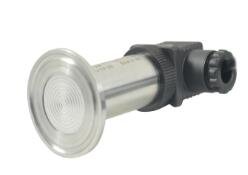
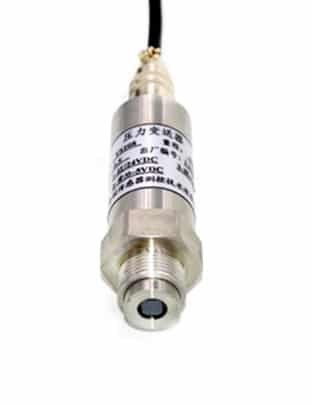
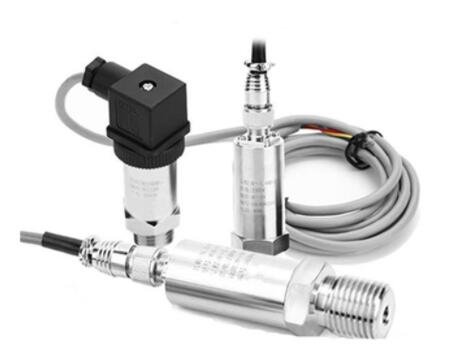
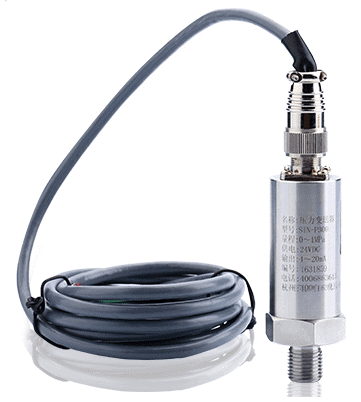
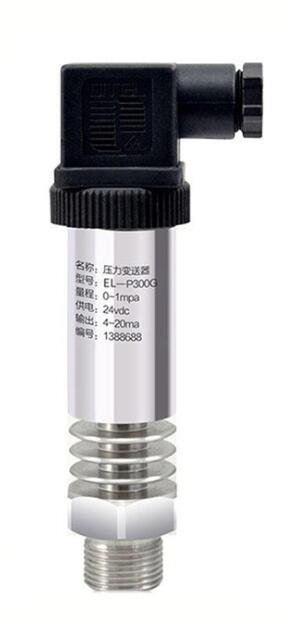
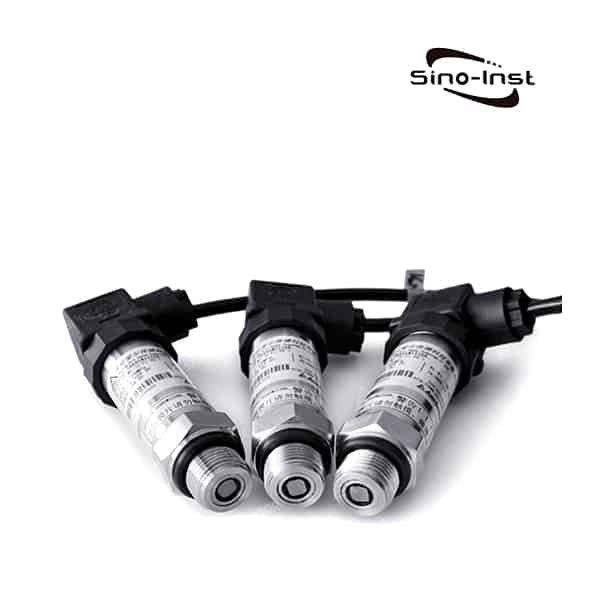
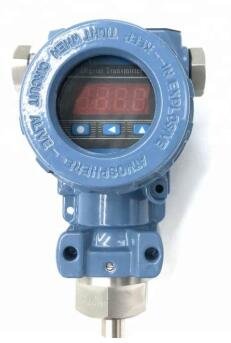
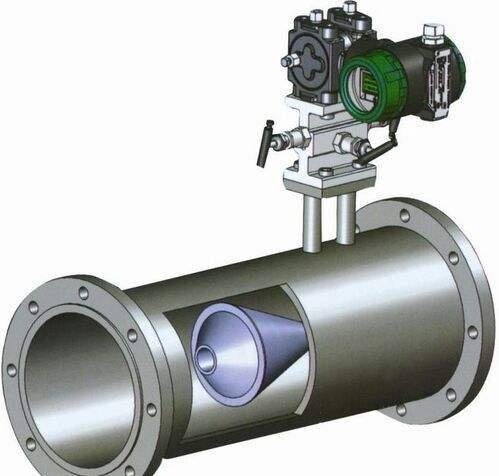
SI-350 Sanitary Pressure Transmitter

Sanitary Pressure Transmitter is also called a Hygienic pressure sensor or tri-clamp pressure transmitter. Sanitary Pressure Transmitter is used for food &beverage or pharmaceutical application.

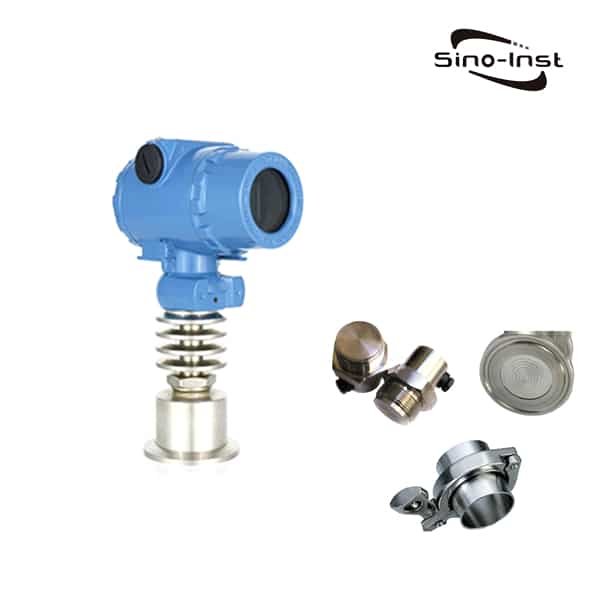
Sanitary Pressure Transmitter

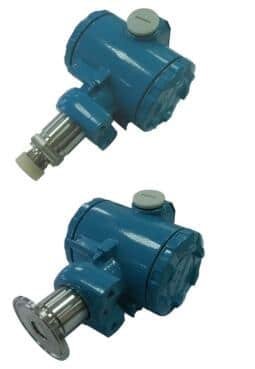
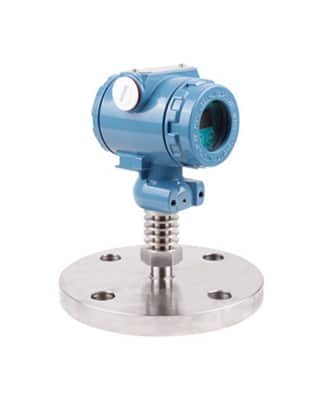
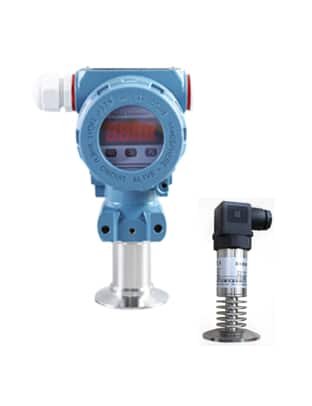
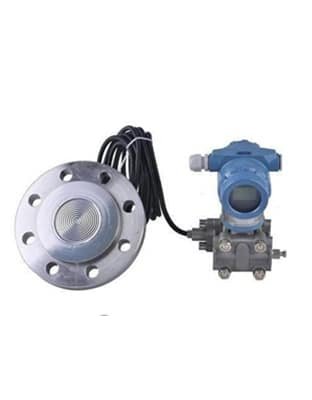
Sanitary Pressure Transmitter, also called tri-clamp pressure transmitter. It is the pressure transducer with the flush diaphragm (flat membrane) as the pressure sensor. Sanitary Pressure Transmitter uses a flat membrane to directly sense the pressure. The sensor interface is available in clamp type, M27 × 2, and flange type.

The sanitary pressure transmitter is designed especially for the requirements of the food and beverage, pharmaceutical and biotechnology industries.
It is particularly suitable for the special conditions of CIP/SIP cleaning processes. Such as chemical stability towards cleaning liquids and high temperatures

Sino-Inst offers a variety of Sanitary Pressure Transmitters for industrial pressure measurement. If you have any questions, please contact our sales engineers.

Features of Sanitary Pressure Transmitter

SI-350 Sanitary Pressure Transmitter
  • Pressure interface with 316L flat diaphragm structure
  • Hygienic, anti-fouling
  • Wide measuring range for absolute pressure, gauge pressure and sealed reference pressure
  • Good sealing and stable work for a long time
  • With heat sink, high temperature media application performance
  • Output signal can be selected, can be customized according to customer requirements

No Liquid Fill Diaphragm, Sanitary Clamp Fitting

The SI-350 sanitary pressure transmitter uses a flat membrane to directly sense the pressure signal. The diffused silicon pressure core acts as a sensitive component. Standard silicone oil is used as the pressure transmission medium.

The measuring end is made of 316L stainless steel and is specially welded and processed. Compact structure, corrosion resistance, vibration resistance, and wide temperature compensation.

SI-350 Sanitary Pressure Transmitter Type prevents fouling, unsanitary and sticky pressure blocking. Due to the pressure felt directly at the exposed end of the threaded diaphragm. It is particularly suitable for pressure measurement of viscous fluids with hygienic requirements in the medical and food industries.
Widely used in food, medicine, brewing, and other health industries. And stress tests that can scale the measurement medium.

Specifications of SI-350 Sanitary Pressure Transmitter

ModelDescription
350-02Sanitary pressure transmitter, range 0- 10kPa, 300%FS overpressure, 2″ sanitary clamp connection.
350-101Sanitary pressure transmitter, range 0- 20kPa, 300%FS overpressure, 1-1/2″ sanitary clamp connection.
350-12Sanitary pressure transmitter, range 0- 400kPa, 200%FS overpressure, 2″ sanitary clamp connection.
350-22Sanitary pressure transmitter, range 0- 600kPa, 200%FS overpressure, 2″ sanitary clamp connection.
350-32Sanitary pressure transmitter, range 0-1MPa, 200%FS overpressure, 2″ sanitary clamp connection.
350-42Sanitary pressure transmitter, range 0-1.6MPa, 200%FS overpressure, 2″ sanitary clamp connection.
350-52Sanitary pressure transmitter, range 0-2.5MPa, 200%FS overpressure, 2″ sanitary clamp connection.
350-62Sanitary pressure transmitter, range 0-6MPa, 150%FS overpressure, 2″ sanitary clamp connection.
350-72Sanitary pressure transmitter, range 0-10MPa, 150%FS overpressure, 2″ sanitary clamp connection.
Range range -100kPa…0~10kPa…10MPa
Pressure type gauge pressure, absolute pressure, sealing pressure
Power output 4 to 20 mA (12 to 30 VDC)
0 to 5V, 1 to 5V, 0.5 to 4.5V, 0 to 10V (12 to 24VDC)
Accuracy 0.5% FS
Hysteresis and repeatability 0.1%FS
Temperature drift 1.5% FS (@-20 °C ~ 85 °C)
Response time ≤ 1ms (up to 90% FS)
Service life ≥10x 10^6
pressure cycle
Working temperature -20 ° C ~ 85 ° C
Storage temperature -40 ° C ~ 85 ° C
Medium temperature -40~85°C (without heat sink)
-40~150°C (three heat sinks), -40°C~250°C (five heat sinks)
Insulation resistance ≥100MΩ/250VDC
Vibration resistance Sinusoidal: 20g, 25Hz~2kHz; IEC 60068-2-6
Random: 7.5grms, 5Hz ~ 1kHz; IEC 60068-2-64
Protection level IP65
Media compatible with a variety of media compatible with 316L stainless steel
Explosion-proof grade Intrinsically safe explosion-proof ExiaIICT6

Guess You’ll Like: Explosion Proof Pressure Transmitter

Applications of Sanitary Pressure Transmitter

Ideal for applications where sanitary conditions are of high priority (i.e. dairy, food processing, pharmaceutical, etc.)

Medical and health, food, wine, dairy, beverages, etc. thick and easy to block, high hygienic requirements, easy to clean occasions.

Environmentally friendly chemical coatings, polyurethane equipment, paint inspection systems, etc.

Extended reading: Vortex Hygienic Flow Meter

  • Sanitary process applications
  • Food and beverage processing
  • Water processing
  • Dairy processing
  • Pharmaceutical processing

Extended reading: Food grade flow meters for Food & Beverage industry

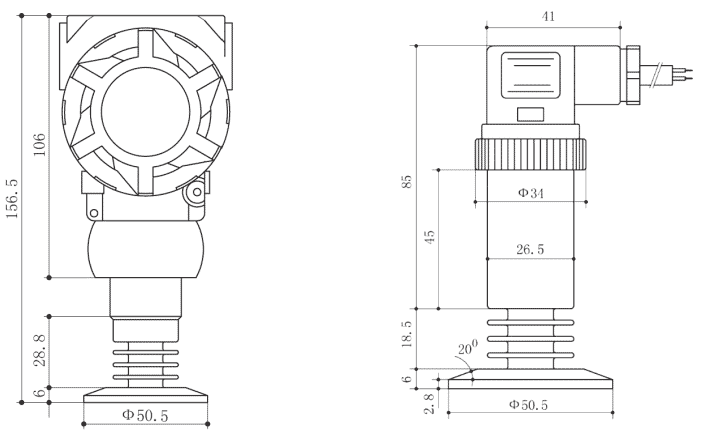
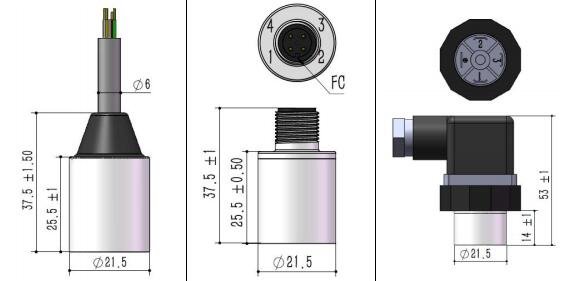
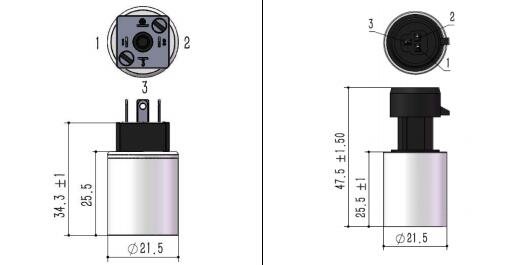
Drawing of SI-350 Sanitary Pressure Transmitter

Read more about: What is industrial pressure transmitter?

More Featured Pressure Transmitters

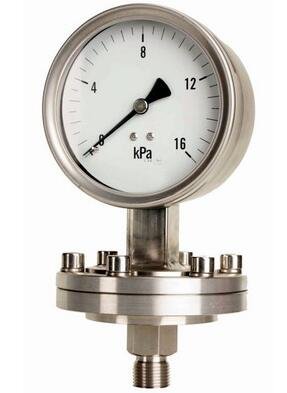
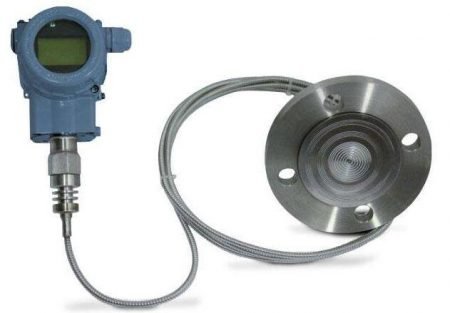
Diaphragm Seal Pressure Transmitter
When the process medium should not come into contact with the pressured parts of the measuring instrument. Diaphragm sealed pressure transmitters are used.
SI-303 Low-Pressure Transducer
Low pressure transducers for air and non-corrosive gases low pressure measurement. 0 ~ 2.5kPa to 0 ~ 30kPa measurable.
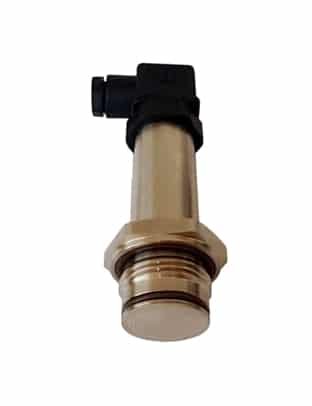
SI-703 Flush diaphragm pressure sensor
Flush membrane / diaphragm structure, anti-blocking design. Pressure measurement of viscous media.
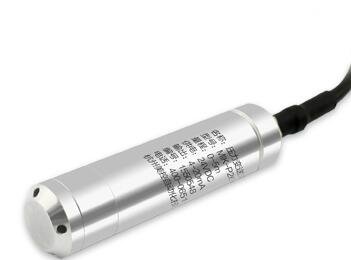
SI-10 Liquid pressure sensor
Liquid pressure sensor is widely used for pressure measurement of various liquids. Like water or oils. IP68 waterproof.
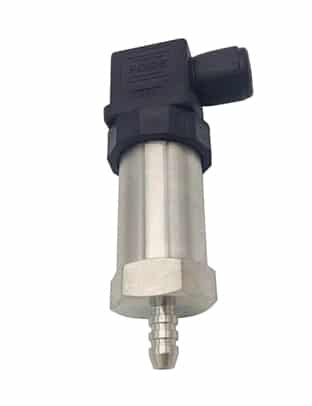
SI-503K Gas Pressure Sensor
Gas pressure sensor for industrial gas pressure monitoring. Pagoda gas nozzle Φ8. Such sensors are also commonly referred to as wind pressure transmitters, exhaust pressure sensors.
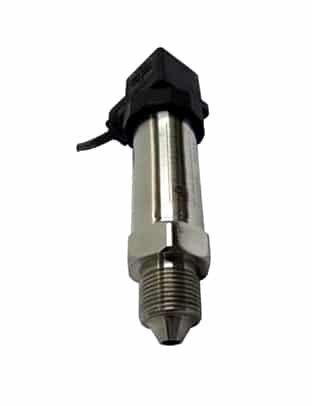
SI-702 High Pressure Sensor
High pressure sensor is pressure transmitter designed for high pressure measure&control. 0 ~ 40MPa… 600MPa. M20 × 1.5, G1 / 2 (others are customized according to requirements)
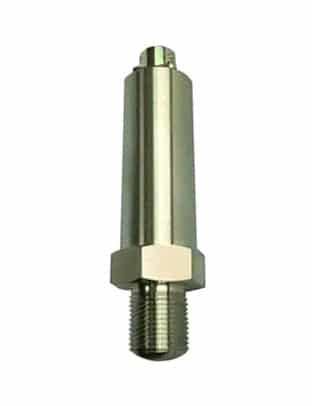
SI-702S Ultra-High Pressure Senors
Pressure sensor for Ultra high pressure applications. Ultra high pressures up to 15,00MPa. 0-2000MPa to 0-7000MPa (customized).Ball head M20 × 1.5, cone head M20 × 1.5.
High-Temperature Pressure Transmitter
High-temperature pressure transmitters with a 4-20mA output.
which has a temperature capability of over 850 °C and is not pyroelectric.

Technical Support

Flush diaphragm pressure transducer

Flush diaphragm pressure sensor uses a diaphragm isolation process. Feel the pressure directly with a flat membrane. There is no pressure hole in the test head. There is no clogging of viscous media during the measurement. Adopting flush membrane structure, diffused silicon pressure-sensitive core body, with good moisture resistance and excellent media compatibility. The sensor interface is available in clamp, thread and flange options. The output signal can be selected from voltage, current, and so on. The flush diaphragm of the sensor prevents problems such as scaling, unsanitary and clogging of viscous liquids.

More

Steam pressure transmitter

High Temperature Pressure Transducer/Transmitter works for steam and fluid. Temperature: -30 ℃ ~ 160-350 ℃, customized up to 850 ° C. It is possible to fit a stand off pipe, pigtail or other cooling device to reduce the media temperature. If not, High Temperature Pressure Transducer/Transmitter is the best choice. The pressure is transmitted to the sensor through the heat dissipation structure on the transmitter. The high-precision signal processing circuit is located in the stainless steel housing. The sensor output signal is converted to standard output signal, like 4-20mA.

More

High pressure transducer

The sino-Inst high-pressure transducer has gone through thousands of fatigue impact tests and several days of low and medium temperature aging cycles before leaving the factory. It has solved the disadvantages of high-pressure sensors in terms of stress and zero instability. Provide customers with reliable products for high voltage measurement. The pressure of the SI-702 series can reach 600MPa. The precision level is high, and the mature production technology can ensure the long-term stability of the sensor with excellent characteristics. SI-702 series pressure sensors are suitable for oil extraction platforms, water flow equipment, high-pressure measurement equipment, hydraulic control systems, test benches, and industrial automation control.

More

Pressure Transducer 4-20mA/Voltage

The signal system of 4-20mA and 1-5V output by the pressure transmitter is stipulated by international standards.In the signal circuit, the pressure transmitter is equivalent to a variable resistor. It is connected in series with the power supply, ammeter (indicator), and load resistance (including wire resistance). The function of the pressure transmitter is to change the current in the circuit in the range of 4-20mA by changing its own resistance according to requirements.The pressure acts on the sensor, and the sensitive element deforms. The deformation will cause the resistance or capacitance value to change. And then it will be converted into an analog 4-20mA output by the conversion circuit.

More

https://www.drurylandetheatre.com/industrial-process-pressure-transmitters/

Other Sanitary Instruments

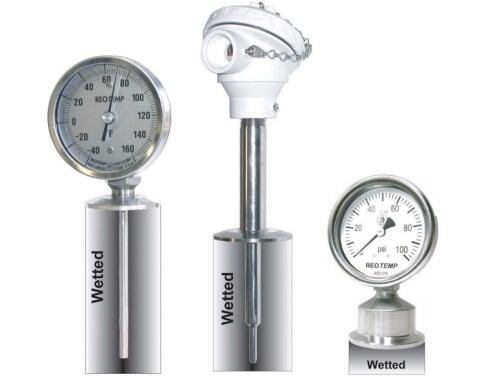
SANITARY BIMETAL THERMOMETER

Sanitary Bimetal Thermometers also called the sanitary thermometer, or tri-clamp thermometer.

Sino-Instrument’s Sanitary Bimetal Thermometers are specially designed for direct insertion into sanitary process applications when a standard thermowell is not specified, or the process environment is not exposed to pressure. 

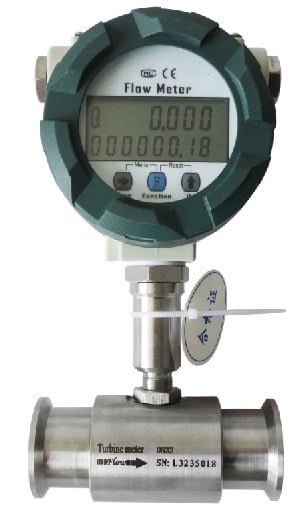
SI-LWGY Sanitary turbine flow meter

Sanitary Flow Meter, also called sanitary turbine flow meter or Hygienic turbine flowmeter.

The Sino-Instrument sanitary turbine flow meter, food grade flow meter, provides accuracy, versatility, and economy, in measuring a wide variety of food, beverage and pharmaceutical products.

All of Sino-Inst pressure transmitters can work with the AMS TREX!

FAQ

What is pressure transmitter how it works?

Pressure Transmitters are sensors with electrical transmission output for remote indication of pressure. Process transmitters differentiate themselves from pressure sensors through their increased range of functionality. They feature integrated displays, offer high measuring accuracies and freely scalable measuring ranges. Communication is via digital signals, and waterproof and explosion-proof certifications are available. Through connection to diaphragm seals, they are suitable for the harshest operating conditions. Ideal for OEMs, process applications, water processing, and industrial pressure applications.

What is the input of the pressure transmitter?

A pressure transmitter is an instrument that converts pressure variables into a standardized output signal that can be transmitted. And there is a given continuous function relationship between the output signal and the pressure variable (usually a linear function). Mainly used for measurement and control of industrial engineering pressure parameters. Differential pressure transmitters are often used for flow measurement.
There are two types of pressure transmitters, electric and pneumatic. The electric standardized output signals are mainly 0mA ~ 10mA and 4mA ~ 20mA (or 1V ~ 5V) DC signals.

How do you calibrate a pressure transmitter?

If the transmitter is used for a period of time, it may cause a change in metering performance. There will be zero drift and increased measurement error. Therefore, it is necessary to perform regular calibration. The accuracy of the calibrator used for calibration should be more than 3 times the required calibration accuracy. Use the pressure calibrator to input the standard pressure values of 0%, 25%, 50%, 75%, and 100% of the range to the transmitter in the forward and reverse directions. Check whether the current output signal is within the allowable accuracy range. If it is out of tolerance, it needs to be adjusted. The adjustment method is as follows (4 ~ 20mA output):
(1) Input a standard pressure of 4mA with a pressure calibrator. Adjust the ZERO (zero) potentiometer. Make the 4mA current output within the accuracy range.
(2) Input a standard pressure of 20mA with a pressure calibrator. Adjust the SPAN (range) potentiometer. Make the 20mA current output within the accuracy range.
(3) ZERO and SPAN will contain each other. Repeat steps (1) (2) until the current output of 4mA point and 20mA point meets the accuracy requirements at the same time. Then check whether the current output of the 25%, 50%, 75% range points meets the accuracy requirements. The transmitter is qualified if it meets the requirements.

What are the types of pressure transmitters?

There are different types of pressure transducers based on their design.
These sensors can come in several shapes and sizes,
but the technology inside can also differ. 
There 4 main types of pressure sensors based on this: 
Strain Gauge Pressure Transducers
Capacitance Pressure Transducers
Potentiometric Pressure Transducers
Resonant Wire Pressure Transducers
More about Industrial Pressure Sensors

Sino-Instrument offers over 10 Sanitary Pressure Transmitters.

About 50% of these are 4-20ma pressure transmitters, 40% are Differential Pressure Gauge. And 20% are Diaphragm Seal Pressure transmitters. 20% are 4-20ma pressure transducer wiring diagrams.

A wide variety of  Sanitary Pressure Transmitter options are available to you, such as free samples, paid samples.

Sino-Instrument is a globally recognized supplier and manufacturer of  Sanitary Pressure Transmitters, located in China.

The top supplying country is China (Mainland), which supply 100% of  Sanitary Pressure Transmitters respectively. 

Sino-Instrument sells through a mature distribution network that reaches all 50 states and 30 countries worldwide.

Sanitary Pressure Transmitter products are most popular in Domestic Market, Southeast Asia, and Mid East. 

You can ensure product safety by selecting from certified suppliers, with ISO9001, ISO14001 certification.

Request a Quote
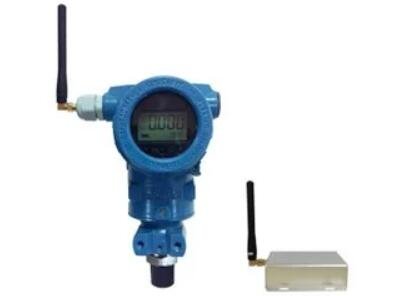
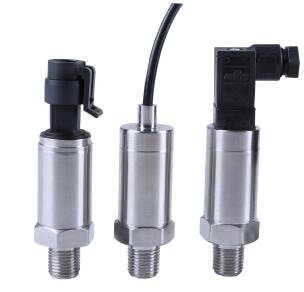
SI-300 Pressure Transducer 4-20mA/Voltage

Pressure transmitters convert pressure signal into 4 ~ 20mA DC, 0-5V, 0-10V signal output.

The signal system of 4-20mA and 1-5V output by the pressure transmitter is stipulated by international standards.In the signal circuit, the pressure transmitter is equivalent to a variable resistor. It is connected in series with the power supply, ammeter (indicator), and load resistance (including wire resistance). The function of the pressure transmitter is to change the current in the circuit in the range of 4-20mA by changing its own resistance according to requirements.The pressure acts on the sensor, and the sensitive element deforms. The deformation will cause the resistance or capacitance value to change. And then it will be converted into an analog 4-20mA output by the conversion circuit.

Sino-Inst offers a variety of 4-20mA pressure senors for industrial pressure measurement. If you have any questions, please contact our sales engineers.

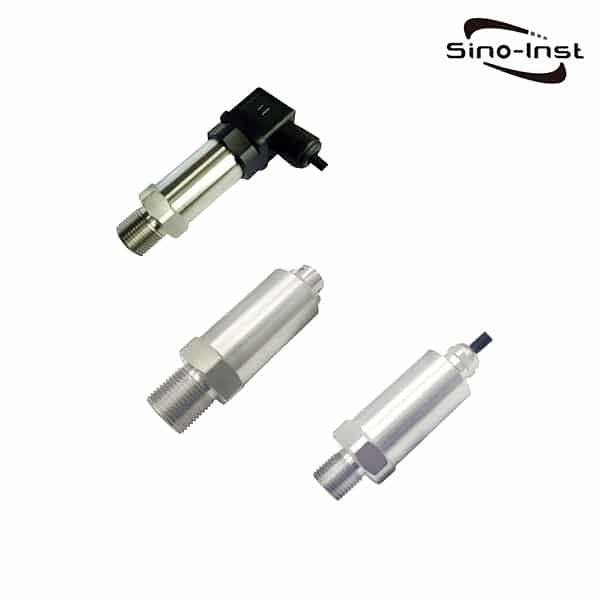
The SI-300 4-20mA/Voltage Pressure Transducer, also called pressure transmitter 4-20mA. It is a pressure sensor with 4-20ma/Voltage output.

4-20mA Pressure Transducer can be OEM as differential pressure, explosion-proof, or sanitary, just as you need.Ideal for OEMs, process applications, water processing, and industrial pressure applications.

Features of SI-300 Pressure Transducer 4-20mA/Voltage

SI-300 Pressure Transducer 4-20mA/Voltage
  • Sensor Type : Industrial Pressure Transducers
  • Pressure Range : 0 – 25 to 14000 psi
  • Output/Span : .5 – 4.5 V, .5 – 4.5 V, 1 – 5 V, 1 – 6 V, 10 mV/V, 4 – 20 mA
  • Type : Compound, Gage, Sealed
  • Accuracy : ±0.5% FSO

All of our pressure transmitters can work with the new AMS TREX

Specifications of SI-300 Pressure Transducer 4-20mA/Voltage

Range range -100kPa…0~10kPa…100MPa (14000psi)
Pressure type Gauge pressure, absolute pressure, sealing pressure
Power supply 24V, 12V
Output signal 4~20mA, 1~5V, 0~10V
Working temperature -20 ° C ~ 85 ° C
Medium temperature -20 ° C ~ 85 ° C
Storage temperature -40 ° C ~ 125 ° C
Zero temperature drift ±1.5% FS (@-20°C~85°C)
Sensitivity temperature drift ±1.5%FS (@-20°C~85°C)
Overload pressure 150% FS
Mechanical vibration 20g (20~5000HZ)
Impact 100g (11ms)
Comprehensive accuracy 0.5, 0.3 optional
Insulation 100MΩ /250VDC
Response time ≤ 1ms (up to 90% FS)
Long-term stability ±0.2%FS/year
EMC Surge (IEC61000-4-5) 2KV
EMC static (IEC61000-4-2) contact discharge 8KV, air discharge 15KV
Protection level IP65
Explosion-proof grade Intrinsically safe explosion-proof ExiaIICT4
Material Housing stainless steel; isolation diaphragm 316L
Media compatible with a variety of media compatible with 316L stainless steel

Read more about: What Is 0-10V Signal Output?

Applications of Pressure Transmitter 4-20mA

  • Industrial OEM Equipment
  • Water Management
  • Pneumatics
  • Hydrogen Storage
  • Sub Sea Pressure
  • HVAC/R Equipment
  • Control Panels
  • Hydraulic Systems
  • Data Loggers

Extended reading: How to convert a 4-20mA to 0-10V /1-5V signal?

Drawings of SI-300 Pressure Transducer 4-20mA/Voltage

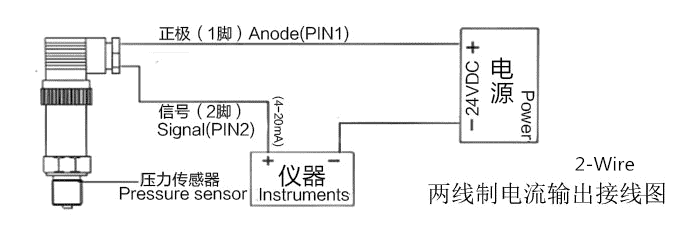
4-20ma pressure transducer wiring diagram

We offer OEM and Reseller Discounts for all kinds of 4-20mA pressure transducer

4-20ma differential pressure transmitter

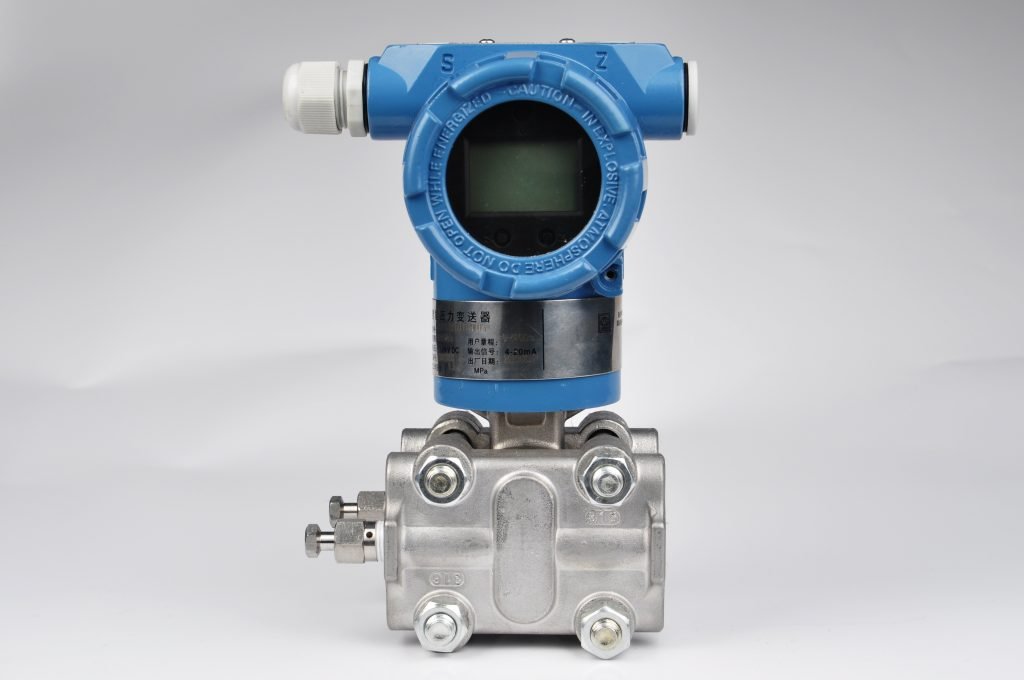
The Smart Differential Pressure transmitter is upgraded differential pressure transmitter, which can work with display, HART communicators, and 4-20mA output. SMT3151DP smart differential pressure transmitters can be used for differential pressure measurement.

Diaphragm seals 4-20ma pressure transducer

Diaphragm seals are used to prevent process medium,
from entering into the pressure-sensing assembly of the Differential pressureGauge pressure,
orAbsolute pressure transmitter.

Industrial Pressure Transmitter

Industrial Pressure Transmitter, are precision engineered to fit most industrial pressure measurement applications.
Sino-Instrument can offer industrial pressure transmitters with the display, 4-20ma output,
which can work as a natural gas pressure transducer,
water pressure transmitter, wastewater pressure transducer.

Submersible Pressure Transducer 4-20mA

Submersible pressure transducer with 4-20mA output,
is normal submersible pressure transmitter for level measurement.
Sino-Instrument Hydrostatic submersed level transducers are sensors,
with an electrical transmission output for indication of liquid level.

What is a 4-20mA Current Loop?

The 4-20 mA current loop is a process control signal commonly used in many industries.

This is an ideal method for transmitting process information. Because the current does not change when it flows from the transmitter to the receiver. It is also simpler and cost-effective. However, the number of voltage drops and process variables that need to be monitored can affect their cost and complexity.

By understanding these basics, you will be able to make more informed decisions about process control in your facility. This may affect your bottom line.

In order to understand what a 4-20 mA direct current (DC) loop is and how it works, we need to understand some math. Don’t worry we won’t study any advanced electrical engineering formulas.

In fact, the formula we need is relatively simple:
V = I x R This is Ohm’s law.

This means that the voltage (V) is equal to the current (I) times the resistance (R) (“I” stands for Intensitéde Courant, French for Current Intensity).
This is the basic equation in electrical engineering.
Consider the simple DC circuit above, which consists of one power supply and three loads.
The current loop requires voltage to drive the current. This is powered by the {PART 1} 12 power supply, which is labeled Vtot. Current then flows through the loop through each load. The voltage drop of each load can be calculated according to Ohm’s law.
The voltage drop V1 across R1 is:
Each element in the loop provides a voltage or has a voltage drop. However, currently, everything is the same in the loop.

This is the key principle of the 4-20 mA loop. The current is the same everywhere in the entire circuit.
It may be difficult to understand why the current stays constant, so compare your home’s water supply system.

There is a certain pressure in the water pipes that pushes the water towards the house. Voltage acts in a similar manner as pressure, pushing current through the circuit.
When the faucet in your home is turned on, the water runs down. The flow of water is similar to the flow of electrons or electricity. The ability of pressure to force water through a pipe is limited by the bending and restraint of the pipe. These limits limit the flow in the pipeline, similar to how resistors limit current.

Even if the pressure and voltage drop at various points, the flow through the pipeline and the current through the wires remain constant throughout the system.

This is why the use of current as a method of transmitting process information is so reliable.

Components of a 4-20 mA Loop

Components of a 4-20 mA Loop

1. Sensor
2. Transmitter
3. Power Source
4. Loop
5. Receiver

Why we use the 4 20mA in transmitting signal?

Why is it 4/20 mA?

The reason for using a current signal is that it is less susceptible to interference. And the internal resistance of the current source is infinite. The wire resistance is connected in series in the loop without affecting the accuracy. And it can be transmitted over ordinary twisted pairs for hundreds of meters.

Due to explosion protection requirements, the upper limit is 20 mA: the spark energy caused by a current interruption of 20 mA is not sufficient to ignite the gas.

The reason why the lower limit is not set to 0mA is to detect a disconnection. During normal operation, the value will not be lower than 4mA. And when the transmission line is disconnected due to a fault, the loop current will drop to 0.

Usually, 20mA is used as the disconnection alarm value. There are two more reasons.
One reason is to avoid interference.
Another reason is that the two-wire system uses 4-20 mA of current. That is, the two wires are the signal line and the power line. The 4 mA is used to provide the quiescent operating current of the circuit for the sensor.

Extended reading: Smart Differential Pressure Transmitter

Pressure transmitter 4-20ma price

First of all, the parameters that must be seen when purchasing a pressure transmitter are:
Pressure range. Range. Measurement medium. Installation method-threaded flange clamps, etc. Installation dimensions. Temperature. Whether with display. Whether with HART protocol. Output type. Current output or voltage output. Explosion-proof level, protection level. Accessories. Mounting bracket.
The above parameters will affect the price of the pressure transmitter.
Sino-Inst, as the manufacturer of pressure transmitter, offer you with the best price.

Q&A

What does a pressure transducer do?

A pressure transducer is a device or device that can sense the pressure signal and convert the pressure signal into a usable output electrical signal according to a certain rule.
A pressure transducer usually consists of a pressure-sensitive element and a signal processing unit. According to different test pressure types, pressure sensors can be divided into gauge pressure sensors, differential pressure sensors and absolute pressure sensors.
Pressure transducer is the most commonly used sensor in industrial practice. It is widely used in various industrial automatic control environments, including water conservancy and hydropower, railway transportation, intelligent buildings, production automatic control, aerospace, military, petrochemical, oil wells, electricity, ships, machine tools , Pipelines and many other industries.

How do you test a 4 20ma pressure transducer?

Pressure transducer is a commonly used pressure instrument, which has certain applications in many industries. When a user detects a pressure transducer, the detection items are different depending on the purpose. Of course, the detection methods will be different. I will introduce 3 common methods for pressure transducer detection, and I hope it can help everyone.
1. Pressure test.
The detection method is: power the sensor. Use your mouth to blow the air holes of the pressure sensor. Use the multimeter’s voltage range to detect the voltage change at the output of the sensor. If the relative sensitivity of the pressure sensor is large, this amount of change will be significant. If nothing has changed, you need to use a pneumatic source instead.
Through the above methods, the condition of a sensor can be basically detected. If accurate testing is required, a standard pressure source is required. Apply pressure to the sensor and calibrate the sensor according to the pressure and the change of the output signal. When conditions permit, temperature detection of relevant parameters is performed.
2. Detection of zero point.
Use the multimeter’s voltage range. Detects the zero output of the sensor without applying pressure. This output is typically a mV level voltage. If it exceeds the sensor specifications. It means that the zero deviation of the sensor is out of range.
3. Detection of bridges.
The main test circuit of the sensor is correct. It is generally a Wheatstone full-bridge circuit, which uses the ohm range of a multimeter to measure the impedance between the input terminals and the impedance between the output terminals. These two impedances are the input and output impedances of the pressure sensor. If the impedance is infinite, the bridge is disconnected. It indicates that there is a problem with the sensor or the definition of the pins is not judged correctly.

What is a low pressure transducer?

Low pressure transducers for air and non-corrosive gases low pressure measurement.
Low pressure transducers also called low pressure transmitters. Sino-Inst offers High-precision low-pressure pressure transducers. 0 ~ 2.5kPa to 0 ~ 30kPa measurable. Low pressure transducer converts the measured pressure into an accurate electrical signal. This process is achieved through a high-performance amplifier circuit. The unique design of this product makes it unique in terms of environmental resistance. It is less affected by temperature changes. Anti-vibration With good long-term stability. Low pressure tranducers are suitable for applicaitons like: Liquid level. Flood warning. Waste water. Clean room. And open channel flow applications.
More about low pressure transducer.

What is the difference between transmitter and transducer?

A pressure sensor is a device or device that can sense a pressure signal and convert the pressure signal into a usable output electrical signal according to a certain rule.
A pressure sensor usually consists of a pressure-sensitive element and a signal processing unit. According to different test pressure types, pressure sensors can be divided into gauge pressure sensors, differential pressure sensors and absolute pressure sensors. A pressure sensor is the core part of pressure transmitter.
In a pressure transducer, a thin-film or piezo-resistive pressure sensor is mounted on a process connection. The transducer converts pressure into an analog electronic output signal, typically as a millivolt per volt output. These signals are not linearized or temperature compensated.
pressure transmitter has additional circuitry that linearizes, compensates, and amplifies the signal from a transducer. The different signal types are typically voltage signals (eg, 0 to 5 or 0 to 10 volts), milliamp (eg, 4 to 20 milliamp), or digital. The instrument then can transmit the signal to a remote receiver.

Sino-Instrument offers over 50 pressure transducers 4-20mA/Voltage.

About 50% of these are 4-20ma differential pressure transmitters, 40% are Differential Pressure Gauge, and 20% are Diaphragm Seal Pressure transmitters, 20% are 4-20ma pressure transducer wiring diagram.

A wide variety of pressure transducers 4-20mA options are available to you, such as free samples, paid samples. 

Sino-Instrument is a globally recognized supplier and manufacturer of  pressure transducers 4-20mA, located in China.

The top supplying country is China (Mainland), which supply 100% of 
pressure transducers 4-20mA respectively. 

Sino-Instrument sells through a mature distribution network that reaches all 50 states and 30 countries worldwide.

Pressure Transducer 4-20mA/Voltage products are most popular in Domestic Market, Southeast Asia, and Mid East. 

You can ensure product safety by selecting from certified suppliers, with ISO9001, ISO14001 certification.

Current Output, 4 – 20 mA Transmitters

SI-390 General Purpose Industrial Pressure Transducer

Industrial pressure transducers are essential devices in various industrial processes. They are designed to convert a liquid or gas(air) pressure into an electrical signal, which can be used to measure or control different industrial applications. SI-390 General Precision Industrial help improve the efficiency and reliability of various industrial processes. Support OEM.

Features of SI-390 Industrial Pressure Transducer

  • Compact structure and easy installation.
  • Advanced diaphragm / oil-filled isolation technology.
  • High stability and high reliability.
  • Resistant to vibration and radio frequency interference.
  • 316L stainless steel isolation diaphragm structure.
  • High precision, all stainless steel structure.
  • Miniature amplifier, voltage and current signal output.
  • Strong anti-interference and long-term stability.
  • Forms and structures are diversified and easy to install and use.
  • Wide measuring range, which can measure absolute pressure, gauge pressure and sealed vacuum pressure.
  • Resistant to vibration and shock.
  • Zero and full range can be adjusted.

Specifications of SI-390 Industrial Pressure Transducer

  • Measuring medium: various liquids, gases or vapors compatible with 316L stainless steel
  • Measuring range: -0.1kPa ~ 0 ~ 0.01kPa ~ 100MPa
  • Overload: 1.5 times full scale pressure or 110 MPa (minimum value)
  • Pressure type: gauge pressure, absolute pressure, sealed reference pressure
  • Power supply: 15~30VDC 15~28 VDC 15~28 VDC
  • Output signal: 4~20mADC 0~10/20 mADC 0/1~5/10VDC
  • Transmission method: two-wire system; three-wire system; three-wire system:
  • Accuracy: Typical: ±0.25% FS Maximum: ±0.5% FS
    • (including nonlinearity, hysteresis, and repeatability)
  • Long-term stability: Typical: ±0.1%FS Maximum: ±0.2%FS
  • Zero temperature coefficient: 0.03% FS / ° C (≤ 100kPa) 0.02% FS / ° C (> 100kPa)
  • Full temperature coefficient: 0.03% FS / ° C (≤ 100kPa) 0.02% FS / ° C (> 100kPa)
  • Working temperature: -30~ 80°C
  • Storage temperature: -40~100°C
  • Load resistance: ≤ (U-15) / 0.02Ω
  • Electrical connection: cable connection, aviation hoe, Hessmann components
  • Housing material: stainless steel 1Cr18Ni9Ti
  • Process interface: M12×1 N20×1.5 or G 1/4 external thread
  • Protection level: IP65
  • Explosion-proof mark: ExiaIICT6 (intrinsic safety explosion-proof type)

Drawings of SI-390 Industrial Pressure Transducer

What is the pressure transducer?

Pressure transducer/transmitter is a device that converts pressure into pneumatic signal or electric signal for control and remote transmission.

It can convert the gas, liquid and other physical pressure parameters felt by the load cell sensor into a standard electrical signal (such as 4-20mADC, etc.). Use secondary instruments such as indicator alarms, recorders, and regulators for measurement, indication, and process adjustment.

Industrial Pressure Transmitters are precision-engineered to fit most industrial pressure measurement applications. Sino-Instrument offers industrial pressure transmitters with the display, 4-20ma output.

The industrial pressure transmitter can work as a natural gas pressure transducer, water pressure transmitter.

The piezoresistive pressure transmitter uses an advanced micromechanical etching process. By diffusing four high-precision resistors with temperature compensation on the silicon wafer. Form a Wheatstone bridge. Due to the piezoresistive effect, the resistance values ​​of the four bridge arm resistors change. The bridge is out of balance. The sensitive element outputs an electrical signal corresponding to a pressure change. The output electrical signal is amplified by the compensation of the non-linear correction circuit to generate a voltage and current signal that has a linear correspondence with the input pressure.

It uses a programmable KELLER-ASIC chip called a “programmable resistor.” The “programmable resistance” chip allows the transmitter to be installed and calibrated with automatic test equipment to improve product quality and reduce costs.

The transmitter uses 6SC series bellows. The piezoresistive silicon pressure sensor is housed in an oil-filled capsule. The dielectric voltage is isolated by the stainless steel diaphragm and transmitted to the wafer through the oil-filled liquid.The sealed pressure gauge has a TAB (Automatically Insulated Tape) sensor. The sensor floats freely in oil to ensure stability and durability.The “programmable resistor” line has a network of programmable resistors. The network adjusts the zero / gain and temperature coefficients.

All SI-390 series transmitters undergo pressure and temperature cycle compensation test procedures. At the end of the compensation test, various parameters are automatically calibrated. And adjusted by computer-controlled test equipment. A final inspection is then carried out and results are obtained. Check if it is correct. The adjustment position is correct and meets the requirements.

The transmitter is very reliable and economical. It is suitable for process control and pressure measurement in petroleum, chemical, metallurgy, power, light industry, textile, building materials, hydrogeology, food, medicine, environmental control, papermaking, and other industries.

SI-390 Industrial Pressure Transmitter is used for process control in the petrochemical, chemical and HVAC industries. They allow measurement results to be transmitted to the control center.The compact, rugged design makes these instruments suitable for a variety of applications. Including hydraulic and pneumatic, vacuum, test equipment. Level measurement, pressure control, compressor control, pump protection and many other processing and control operations. A wide range of electrical and process connection options can meet almost all requirements.

  • Hydraulics and pneumatics
  • Test equipment
  • Pump and compressor control
  • Liquid level measurement
  • Off-road equipment
  • Compressor control
  • Industrial engines
  • Industrial refrigeration

These types of transducers are also known as pressure transmitters.

Since a 4-20mA signal is least affected by electrical noise and resistance in the signal wires, these transducers are best used when the signal must be transmitted long distances. 

It is not uncommon to use these transducers in applications where the lead wire must be 1000 feet or more.

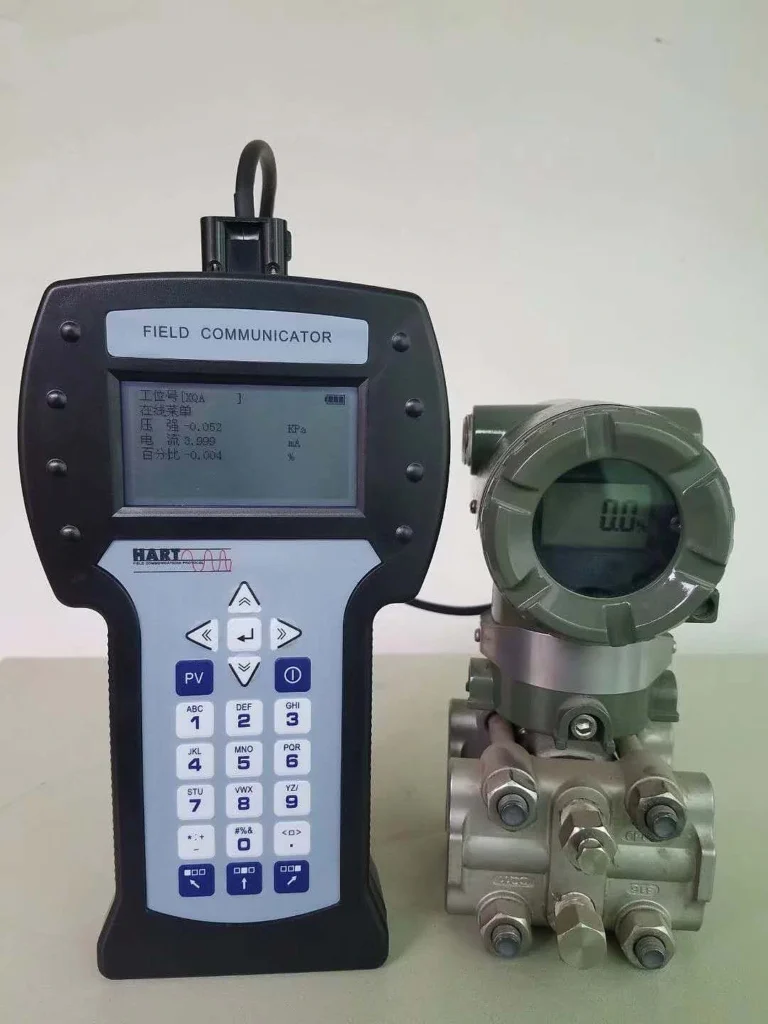
Extended reading: How to calibrate HART pressure transmitters

How to choose the right industrial pressure transducer?

Pressure transmitters are pressure sensors whose electronics can generate measurement signals. The signal can be remotely transmitted via cables, buses or radio frequency.

Consider the unit’s measurement range and maximum pressure capacity, it’s precision, its operational environment (temperatures, vibrations, etc.), the nature of the measured medium and the type of output signal.

  • 1. In order to ensure the stable operation of the product,
    • it is recommended to consider the actual pressure value,
    • and the range of possible migration when selecting the measurement range.
    • The maximum pressure should be within the measurement range,
    • and the company will complete the migration before leaving the factory.
  • 2. The product is installed vertically on the field pressure interface, and the display level is facing the observer.
  • 3. For transmitters with zero pressure and negative pressure, please indicate the range of the range in the order.
  • 4. Intrinsically safe explosion-proof products are limited to products with a pointer head.
  • 5. Qiping diaphragm type transmitter measurement range is 0 ~ 70kPa … 35MPa.
  • 6. When M3 is selected, the ambient temperature range of the transmitter is -20~60°C;
    • when M4 is selected, the ambient temperature range of the transmitter is -30~70°C.

Want to know more about pressure transmitter?

This video gives you the answers to your basic questions about pressure and pressure transmitters.

More Related Industrial Pressure Sensors

More Industrial Pressure Transducer Applications and Markets

Frequently
Asked
Questions

Pressure transmitter types:

  • According to the working principle: it can be divided into capacitive, piezoresistive, resonant, etc. (resonant pressure transmitters can directly output digital pulse signals without going through the signal processing circuit);
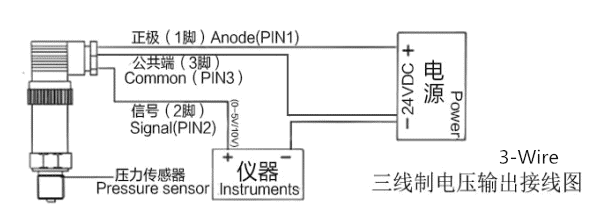
  • According to the wiring method: it can be divided into a two-wire system, a three-wire system (one positive power line. Two signal lines, one of which is GND), a four-wire system (two positive and negative power lines, two signal lines, among them One GND), etc.;
  • According to the output mode: it can be divided into a voltage output, current output, digital signal output, etc.;
  • According to the pressure measurement range: it can be divided into general pressure transmitter (0.001~35MPa), micro pressure transmitter (0~1.5kPa), negative pressure transmitter (0~-100kPa), etc.;
  • According to accuracy: can be divided into high accuracy transmitter (0.1% or 0.075% level) and general transmitter (0.5% level);

Pressure transmitters are widely used. Typical examples are constant pressure water supply, pipeline monitoring, hydraulic systems, automated testing, etc. Used for air pressure, hydraulic, oil pressure testing. There are many users who cooperate with us. We The engineers have accumulated rich field experience.

Sino-Instrument offers 10 Industrial Pressure Transducer products.

These are wireless pressure transmitters, pressure transmitter with display, and water pressure transmitter. A wide variety of Industrial Pressure Transducer options are available to you, such as free samples, paid samples.

The top applying countries are China (Mainland), Hong Kong, and the United States, which supply 96%, 2%, and 1% of wireless pressure transmitter respectively.

Industrial Pressure Transmitter products are most popular in North America, Domestic Market, and South America.

Sino-Inst is a company that designs and manufactures OEM pressure transducers and transmitters featuring various pressure sensor technologies to tailor designs to individual applications.

Our Indutrial pressure transducers are available in various pressure ranges with customized and electrical or pressure connections, as well as analogue and digital interfaces. Contact us today for a standard product quotation or to discuss a custom solution.
Contact Sino-Inst for a standard product quotation or to discuss a custom OEM solution.

Request a Quote

Please enable JavaScript in your browser to submit the form

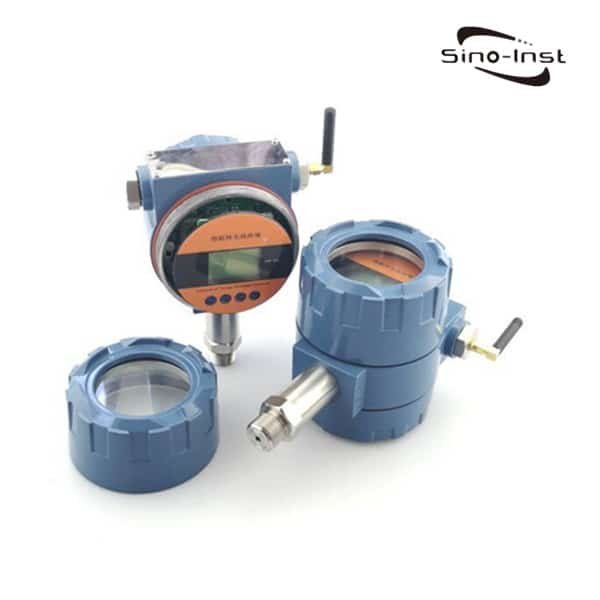
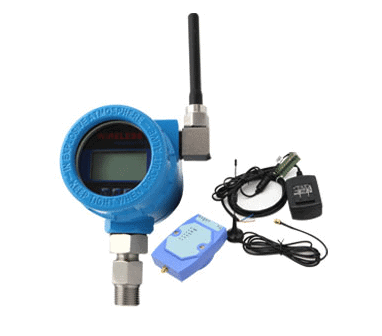
SI2088-W Wireless Pressure Transmitter
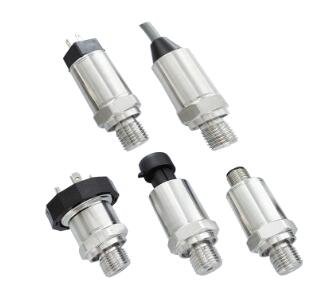
Wireless Pressure Transmitter is often used for outdoor pressure measurement. Battery-Powered Self-Contained Pressure Monitoring Solution.

Wireless Pressure Transmitter is based on GPRS mobile network or NB-iot IoT transmission. Powered by solar panel or 3.6V battery, or wired power supply. NB-IOT / GPRS / LoraWan and eMTC, a variety of networks are available. , Full-scale compensation, high-precision and high-stability amplifier IC temperature compensation function. The medium pressure can be measured as 4 ~ 20mA, 0 ~ 5VDC, 0 ~ 10VDC, 0.5 ~ 4.5VDC and other standard electrical signals. There are many ways to connect product processes and electrical connections, which can best meet the needs of users.

Sino-Inst offers a variety of Wireless Pressure Transmitters for industrial pressure measurement. If you have any questions, please contact our sales engineers.

Features of SI2088-W Wireless Pressure Transmitter

SI2088-W Wireless Pressure Transmitter is a lithium battery-powered digital pressure gauge with wireless data transmission. The built-in high-precision pressure sensor can accurately display the pressure in real time. It has high stability and long-term stability.

This digital pressure gauge is equipped with a large-size high-definition LCD liquid crystal display and a built-in MCU. With the mature GPRS / LTE / NB-IoT network, the pipeline pressure on the spot is uploaded to the data center.

The product adopts a cast aluminum shell with good shock resistance. The built-in SUS630 stainless steel diaphragm has good media compatibility. It can measure gases, liquids, oils and other non-corrosive media to stainless steel.

The product function is practical, the reporting frequency can be set. The pressure collection frequency can be set. It has a real-time pressure alarm function. Once the pressure is abnormal, the alarm data can be sent in time. The alarm pressure value can be set. Two consecutive detections exceed the set value and the detection frequency is automatically increased At the same time, the amount of change will be detected. After the amount of change exceeds 10% of the total range (default, can be set), the data will be reported immediately.

In addition, it also has a variety of pressure unit switching, error clearing, and one-key wake-up functions. It is especially suitable for unmanned, inconvenient power supply, such as fire pipelines, fire terminals, fire pump rooms, and urban water supply, which require remote monitoring.

SI2088-W Wireless Pressure Transmitter
  • Five-digit LCD display, visual key operation
  • Remote parameter setting, panel parameter setting
  • Ultra-low power consumption design, powered by 7.2V lithium battery.
  • Using GPRS / LTE / NB-IoT network, stable signal
  • One key to wake up
  • High precision, full range coverage
  • Message format can be customized (default Modbus_RTU protocol)

Sino-Inst provides products that can replace Rosemount 3051S wireless pressure transmitter. Sino-Inst also provides maintenance and calibration of Rosemount and WIKA pressure measurement products.

Specification Wireless pressure transmitter

Pressure Range: -100kPa ~ 60MPa
Pressure type:Sealed gauge pressure / absolute pressure / differential pressure
Accuracy:± 0.2 ~ ± 0.5% FS
Display: 5 digit LCD display, white backlight
Network standard: GPRS / NB-IOT / LoraWan wireless signal transmission (customized according to demand)
Skyline: External
Sampling interval: It can be set arbitrarily, in seconds, if it needs real-time collection, set to 0
Upload interval: It can be set arbitrarily, in minutes, the fastest is 1 minute, if you need to set it to 0
Wake-up mode: timer, button, alarm wake-up
Configuration mode: local configuration / remote configuration
Upload information: data of each channel, battery information, network status, self-test status, signal strength, alarm information, etc.
Power supply: 3.6V@13Ah section X2
Power consumption: standby current ≤50uA, sending average current ≤100mA
Working temperature: -20 ℃ ~ 70 ℃
Storage temperature: -40 ℃ ~ 85 ℃
Vibration: ≤3g / 10Hz … 150Hz (IEC 60068-2-6-2007)
Protection level: IP67
Pressure-sensitive diaphragm: Stainless steel 316L
Shell material: 304 steel joint + aluminum alloy shell
Installation method: Vertical and horizontal installation

Battery operated wireless pressure transmitter

The wireless pressure transmitter sensor is a battery-powered low-power / wireless digital output digital pressure gauge.

  • Low power consumption design. 3.6V / 7.2V lithium battery can be selected for power supply (ER34615M is recommended).
  • It can report 70,000 times during NB-IoT communication. Battery-powered, ultra-low power operation. Battery life reaches 2-5 years (affected by upload interval time).

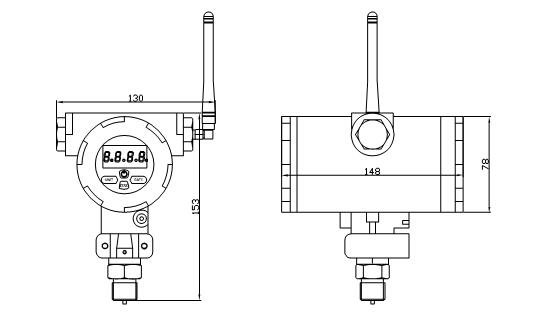
Drawings of SI2088-W Wireless Pressure Transmitter

How Wireless Pressure Transmitter Works ?

Install the wireless pressure transmitter on the pipeline.

When the medium in the pipeline acts on the sensitive element, it is pressed.

Its internal circuit detects an electrical signal proportional to the process pressure.

After the signal is accurately amplified and compensated by the linear amplifier circuit.

Enter the microprocessor to measure, process and display data.

And wirelessly transmit the measurement data to the remote terminal equipment.

The wireless pressure transmitter adopts the wireless remote transmission module added on this basis. It can form a pressure acquisition system with our intelligent wireless receiving terminal.This system changes the transmission mode and switching power supply mode of RS485 and 4-20mA in the industry. It uses 3.6V lithium battery power supply. This simplifies the installation and saves the cost of customer wiring. The purpose of environmental protection. The product is widely used in various industrial pressure measurement systems. Such as oil fields, power, petrochemical and some occasions where wiring is inconvenient.

Applications of SI2088-W Wireless Pressure Transmitter

Wireless pressure transmitters are suitable for measuring non-viscous liquids, vapors and gases, etc.

  • Fire water pipe network
  • Heating
  • Smart Water
  • Medical equipment
  • Other occasions requiring wireless pressure monitoring
  • Advanced HVAC Systems
  • Hydraulic / Pneumatic Systems
  • Agriculture Equipment
  • Energy Generation and Management
  • Pool / Spa Pump Monitoring

Wireless hydrostatic level transmitter

The battery operated hydrostatic level transmitter integrates the functions of liquid level acquisition, wireless reporting and local digital display.

The construction of the wireless liquid level transmitter is simple and ready to use. It is mainly suitable for places where power is not available on site and remote data transmission is required. It can be widely used in liquid level monitoring in urban water supply and drainage, sewage treatment, hydrology and water resources, fire protection, industry and other fields.

Of course, the wireless pressure transmitter can also be customized on other instruments. Such as wireless differential pressure transmitter, wireless absolute pressure transmitter, wireless temperature transmitter, wireless liquid level transmitter, etc.

Wireless Pressure Transducer
Submersible Pressure Transducer
Hydrostatic Level Sensor
Anti-corrosive Submersible Level Transmitter

Wireless Pressure Transmitter Price

Wireless Pressure Transmitter Price will cost more than ordinary pressure transmitters.

First of all, the parameters that must be seen when purchasing a pressure transmitter are:
Pressure range. Range. Measurement medium. Installation method-threaded flange clamps, etc. Installation dimensions. Temperature. Whether with display. Whether with HART protocol. Output type. Current output or voltage output. Explosion-proof level, protection level. Accessories. Mounting bracket.
Extended reading: How to calibrate HART pressure transmitters

The above parameters will affect the price of the pressure transmitter.
Sino-Inst, as the manufacturer of wireless pressure transmitter, offer you with the best price.

Sino-Inst offers 5 wireless pressure transmitter products. These are wireless pressure transmitters, wireless differential pressure transmitter, and wireless temperature transmitter.
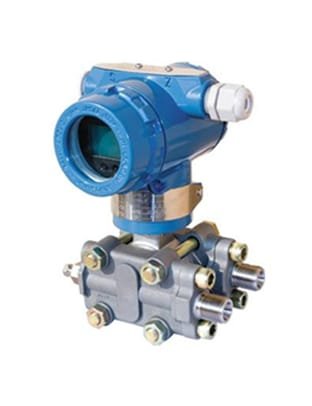
A wide variety of wireless pressure transmitter options are available to you, such as free samples, paid samples. Sino-Inst is wireless pressure transmitter manufacturer, located in China.

Wireless pressure transmitter products are most popular in North America, Domestic Market, and South America. You can ensure product safety by selecting from certified suppliers, with ISO9001, and ISO14001 certification.

Request a Quote

Please enable JavaScript in your browser to submit the form