GPM and LPM are the two flow-rate units printed on almost every industrial pump, valve, and flow meter datasheet. GPM means gallons per minute (US gallons unless the label says otherwise). LPM means litres per minute. The conversion between them is one multiplication, but a small slip — the wrong gallon, the wrong rounding, mass instead of volume — turns a sized line item into the wrong meter on the skid. This page gives the conversion both ways, the lookup tables, and the industrial context the calculator sites don’t.
Contents
- The conversion number you need
- LPM ↔ GPM conversion tables (both directions)
- What “GPM” actually means as a unit
- US gallon vs UK gallon: the 20% gotcha
- GPM vs LPM on flow-meter spec sheets
- Spec-sheet decoder: 0.5–25 GPM in pipe-size terms
- Other flow-rate units: m³/h, CFM, BPH
- Mass vs volumetric: when GPM misleads
- Three common conversion mistakes
- FAQ
- Featured flow meters from Sino-Inst
The Conversion Number You Need
One US gallon equals 3.785411784 litres exactly (NIST). Per minute, the conversion is the same number:
- LPM → GPM (US): multiply LPM by 0.264172. Or divide LPM by 3.7854.
- GPM (US) → LPM: multiply GPM by 3.7854.
- LPM → GPM (UK): multiply LPM by 0.219969. UK gallon is 4.54609 L.
- GPM (UK) → LPM: multiply GPM by 4.54609.
For a quick worked example: a chilled-water pump rated at 150 LPM puts out 150 × 0.264172 = 39.6 US GPM, or 33.0 UK GPM. That 6.6 GPM gap is the gotcha discussed below.
LPM ↔ GPM Conversion Tables (Both Directions)
Common values, rounded to two decimals. Use US gallons unless your meter or local code specifies UK Imperial.
| LPM | GPM (US) | GPM (UK) |
|---|---|---|
| 1 | 0.26 | 0.22 |
| 5 | 1.32 | 1.10 |
| 10 | 2.64 | 2.20 |
| 20 | 5.28 | 4.40 |
| 50 | 13.21 | 11.00 |
| 100 | 26.42 | 22.00 |
| 150 | 39.63 | 33.00 |
| 200 | 52.83 | 43.99 |
| 250 | 66.04 | 54.99 |
| 500 | 132.09 | 109.98 |
| 1000 | 264.17 | 219.97 |
| GPM (US) | LPM | GPM (UK) |
|---|---|---|
| 1 | 3.79 | 0.83 |
| 5 | 18.93 | 4.16 |
| 10 | 37.85 | 8.33 |
| 15 | 56.78 | 12.49 |
| 25 | 94.64 | 20.82 |
| 50 | 189.27 | 41.63 |
| 75 | 283.91 | 62.45 |
| 100 | 378.54 | 83.27 |
| 200 | 757.08 | 166.53 |
| 500 | 1892.71 | 416.34 |
If your application is around flow rate and pressure sizing — for instance HVAC chilled-water or boiler feed — confirm which gallon the pump curve uses before you multiply.
What “GPM” Actually Means as a Unit
GPM is the symbol for gallons per minute. It is a volumetric flow rate — volume per unit time — not a mass flow rate. The “G” is gallons, which is a non-SI unit used mostly in the United States and the United Kingdom. The “PM” is per minute. The full ISO-equivalent expression is gal/min, sometimes written gpm or USgpm to disambiguate the gallon.
The SI counterpart is m³/s, but at industrial flow rates the operational units are LPM (L/min), m³/h, or GPM. On a chilled-water loop the same flow can be written 150 LPM, 9 m³/h, or 39.6 US GPM — same fluid, same pipe, three labels.
US Gallon vs UK Gallon: The 20% Gotcha
The US liquid gallon is 3.7854 L. The UK Imperial gallon is 4.5461 L. The Imperial gallon is about 20.1% larger. That means 100 GPM (UK) is 120 GPM (US) — same physical flow, different number on the label.
Procurement pitfalls we see in field installations:
- A UK-sourced pump rated 40 GPM is actually 48 US GPM. Sizing the meter to 40 US GPM under-ranges the meter and clips the high end.
- Conversion code that hard-codes the US factor (0.2642) treats Imperial gallons as US, producing a 20% under-reading.
- Auto-translated datasheets from European OEMs sometimes drop the “UK” prefix when localising for North America. Always confirm by checking against L/min on the same sheet.
GPM vs LPM on Flow-Meter Spec Sheets
Which unit appears on the meter face depends on where it’s sold and what fluid it handles. Practical pattern after looking at hundreds of vendor PDFs:
| Meter Type | Typical Native Unit | Notes |
|---|---|---|
| Magmeter (water, slurry) | m³/h or LPM (EU/Asia); GPM (US) | Configurable on the transmitter display. |
| Variable-area rotameter | GPM or LPM on the etched scale | Scale is fluid- and SG-specific; not switchable. |
| Ultrasonic clamp-on | m³/h or LPM (EU); GPM (US) | Software-switchable. |
| Turbine / paddle wheel | Pulses, scaled to GPM in US, LPM in EU | K-factor sets the pulse-to-volume ratio. |
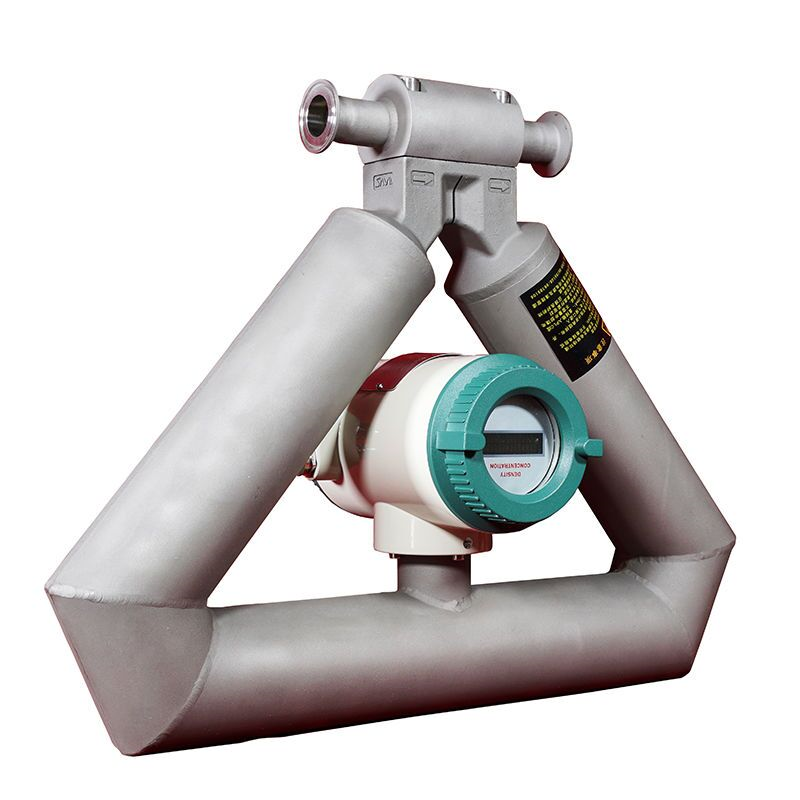
| Coriolis | kg/h or g/s (native mass); GPM/LPM via density | GPM only valid at the configured density. |
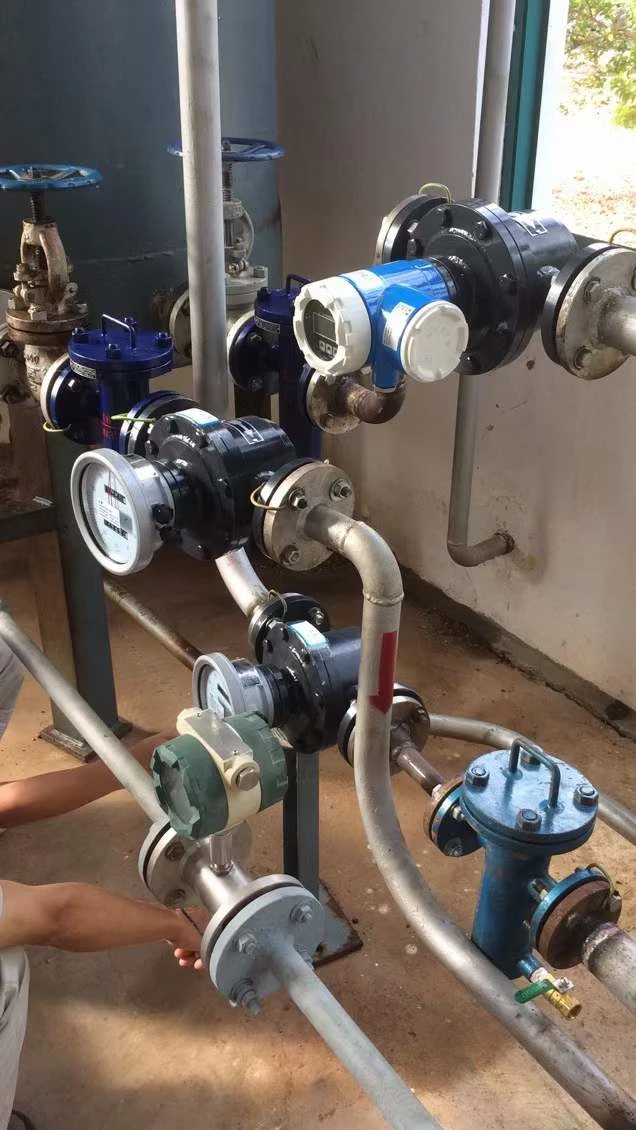
Variable-area meters such as the metal-tube rotameter are the only common type where the unit is physically etched onto the body. Anything with a display can usually toggle between LPM, GPM, and m³/h in the transmitter settings.

Spec-Sheet Decoder: 0.5–25 GPM in Pipe-Size Terms
A range like “0.5 to 25 GPM” tells you the meter, not the pipe. To pick the right line size you cross-reference target velocity. For water, the design rule of thumb is 1–3 m/s in process lines and 1.5–2.5 m/s in chilled-water mains.
| Flow Range (GPM) | LPM | Suggested Line Size (Water, ~2 m/s) |
|---|---|---|
| 0.5–5 | 2–19 | DN15 (½”) |
| 2–20 | 8–76 | DN20 (¾”) |
| 5–50 | 19–189 | DN25 (1″) |
| 15–150 | 57–568 | DN40 (1½”) |
| 30–300 | 114–1136 | DN50 (2″) |
| 80–800 | 303–3028 | DN80 (3″) |
Velocity has to land inside the meter’s specified turndown — typically 10:1 for vortex, 20:1 for paddle wheel, 100:1 for magmeter and Coriolis. The straight pipe requirements upstream and downstream of the meter also matter; under-piped installs invalidate the accuracy curve even when the range looks right on paper.
For pulse-output turbine and paddle-wheel meters, the displayed GPM or LPM depends on the configured K-factor. A K-factor entered in pulses/litre while the display reads GPM throws everything off by the 0.2642 factor.
Other Flow-Rate Units: m³/h, CFM, BPH
GPM and LPM are not the only labels you will see. The common cross-references:
- m³/h (cubic metres per hour): 1 m³/h = 16.667 LPM = 4.403 US GPM. Standard for water utilities and EU process plants.
- L/s (litres per second): 1 L/s = 60 LPM = 15.85 US GPM. Used in firefighting and large pumps.
- CFM / SCFM: cubic feet per minute. Gas units — not interchangeable with GPM. 1 CFM ≈ 28.32 LPM only for actual volume, not standard volume.
- BPH (barrels per hour): oil & gas. 1 US barrel = 42 US gal, so 1 BPH = 0.7 GPM = 2.65 LPM.
- BTU/h: not flow, but flow-derived; for a chilled-water loop, see how the math chains in our BTU meter for chilled water note.
Mass vs Volumetric: When GPM Misleads
GPM is volume per minute. Volume changes with temperature and pressure, so for gases and compressible or hot liquids, the GPM number tells you less than you think.
- Hot water at 90 °C is about 3.6% less dense than at 20 °C. A pump rated 100 GPM cold delivers ~96 GPM of cold-water-equivalent mass when hot.
- For hydrocarbons the temperature correction is bigger (β around 0.001/°C for light products). Custody-transfer specs in oil & gas always state the reference temperature.
- For gases, “GPM” is meaningless unless converted to Nm³/h or kg/h at a stated reference condition. Don’t size a gas process on a GPM figure.
Coriolis and thermal mass meters measure mass directly and avoid this problem. For volumetric meters, apply a density correction or use the inverse-square-root scaling from our linear-to-sqrt converter tool when working with DP-type meters.


Three Common Conversion Mistakes
- Mixing US and UK gallons. An OEM datasheet that says “GPM” with no qualifier in a UK or Commonwealth context is usually UK Imperial. North American docs are usually US. When in doubt, compute the LPM equivalent both ways and see which one matches the rest of the sheet.
- Using GPM for gas flow. GPM is volumetric and only meaningful for incompressible liquids at a known density. For air, nitrogen, or refrigerant gas, work in Nm³/h, kg/h, or SCFM and document the reference conditions.
- Rounding 0.2642 to 0.25. The shortcut “divide by 4” gives a 5.4% error. For custody transfer and BTU calculations that error is enough to fail audit. Use 0.26417 or the full factor.
FAQ
How many LPM is 1 GPM?
1 US GPM is 3.7854 LPM. 1 UK GPM is 4.5461 LPM. If the unit is not specified, US is the safer default for North American equipment and UK for UK/Commonwealth equipment.
How do you convert LPM to GPM by hand?
Multiply litres per minute by 0.2642 for US gallons. Multiply by 0.2200 for UK Imperial gallons. To go the other way, multiply GPM by 3.7854 (US) or 4.5461 (UK) to get LPM.
What’s the difference between GPM and LPM?
Both are volumetric flow-rate units. GPM is gallons per minute (3.7854 L per US gallon, 4.5461 L per UK gallon). LPM is litres per minute. LPM is SI-derived and used globally except in US and UK pumping/HVAC contexts.
Is GPM US or UK by default?
Defaults depend on the document’s origin. US OEM datasheets and most online calculators default to US GPM. UK and historically Commonwealth specs default to UK Imperial. ISO standards always state SI units; if a non-SI gallon is used, the document should specify US or UK explicitly.
Does the conversion factor change with temperature?
The volume-to-volume factor (0.2642 LPM-to-GPM US) is a pure unit conversion and does not change with temperature. Mass flow does change with temperature because density changes — that is a separate correction layered on top of the volumetric conversion.
Featured Flow Meters from Sino-Inst

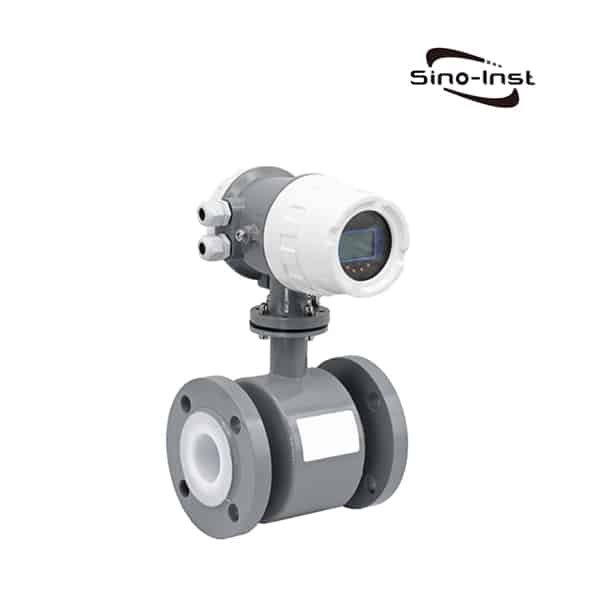
Magnetic Flow Meter
DN15–DN3000 | ±0.2–0.5% | Configurable GPM, LPM, m³/h — switchable on the transmitter for conductive liquids and slurries.
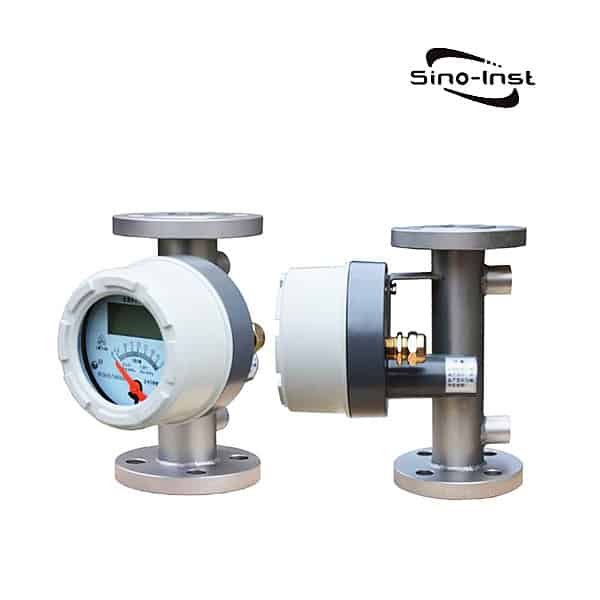
Metal Tube Rotameter
DN15–DN200 | ±1.5–2.5% | Direct GPM or LPM etched scale — variable area for high-temp or opaque fluids.
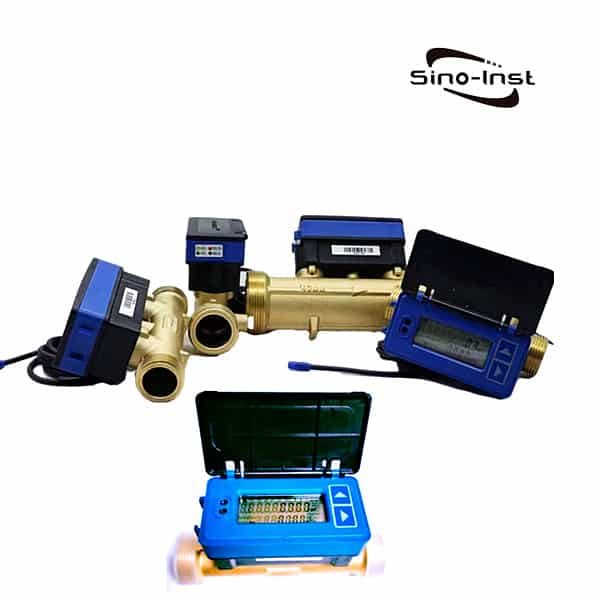
Ultrasonic Water Meter
DN15–DN50 | ±2% | Battery-powered ultrasonic, displays GPM/LPM/m³/h, suitable for residential and commercial water billing.
Need a Flow Meter Sized in Your Units?
If your pump curve is in LPM and your local procurement spec is in GPM (or vice versa), send the line size, fluid, and design flow to our engineers — we’ll quote a meter with the display configured in the unit your operators read.
Volumetric units like GPM and LPM matter most when fluid density is fixed. For phase-shifting media like ammonia, see our ammonia flow meter selection guide — mass flow may be the safer reading.
Request a Quote


Wu Peng, born in 1980, is a highly respected and accomplished male engineer with extensive experience in the field of automation. With over 20 years of industry experience, Wu has made significant contributions to both academia and engineering projects.
Throughout his career, Wu Peng has participated in numerous national and international engineering projects. Some of his most notable projects include the development of an intelligent control system for oil refineries, the design of a cutting-edge distributed control system for petrochemical plants, and the optimization of control algorithms for natural gas pipelines.