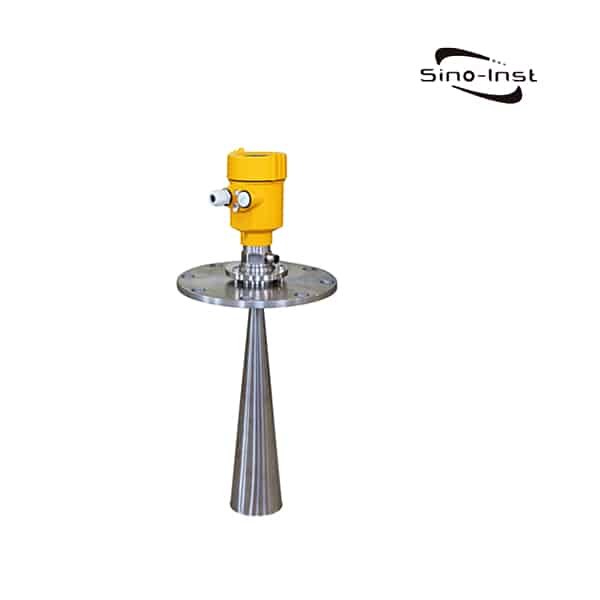
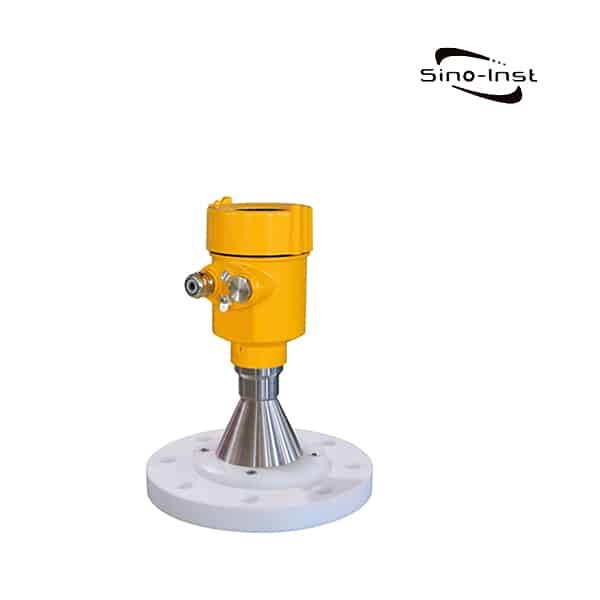
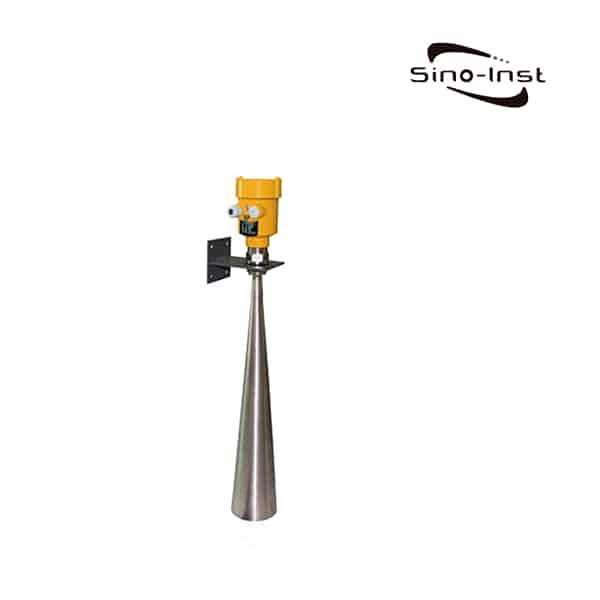
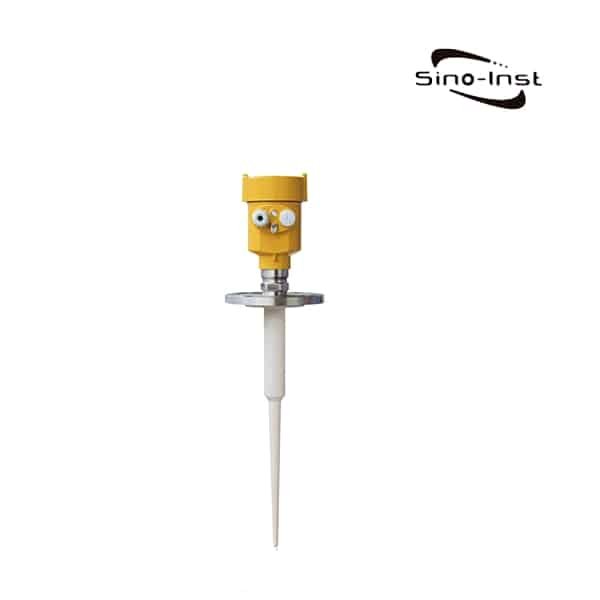
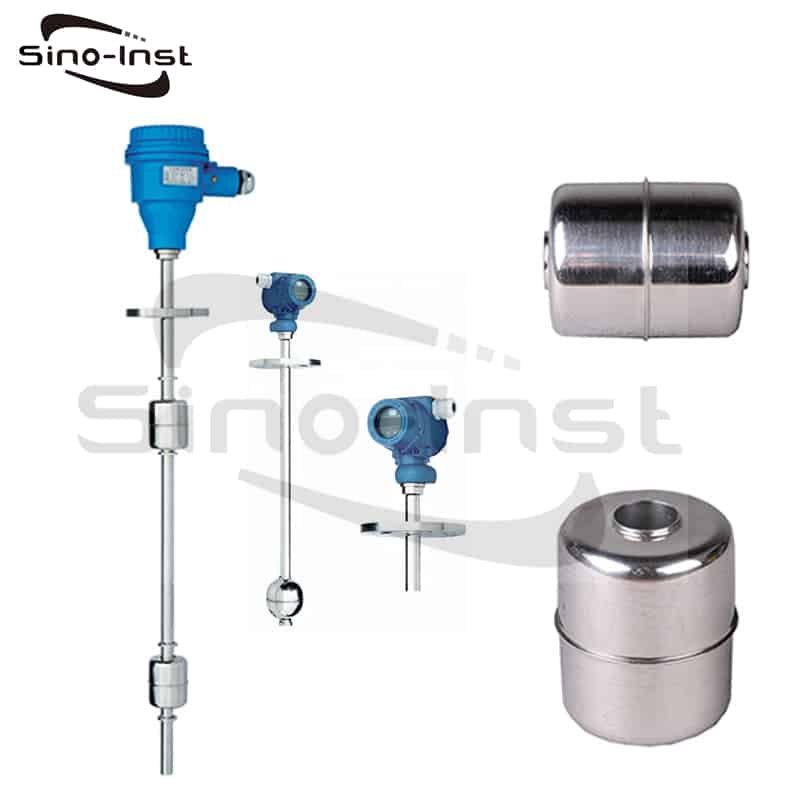
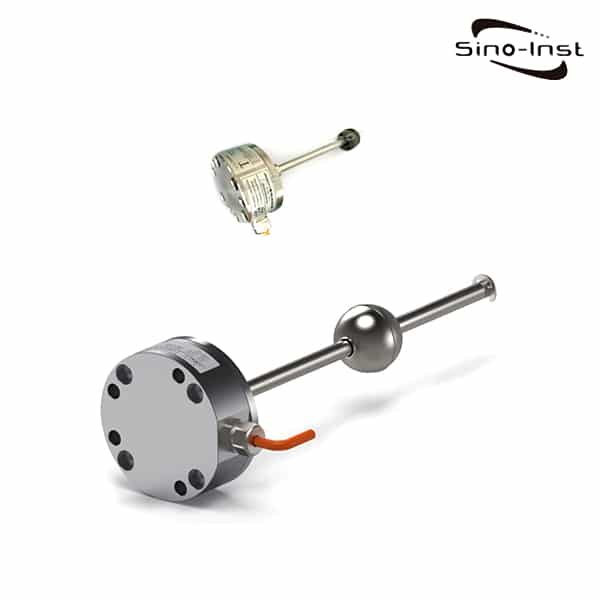
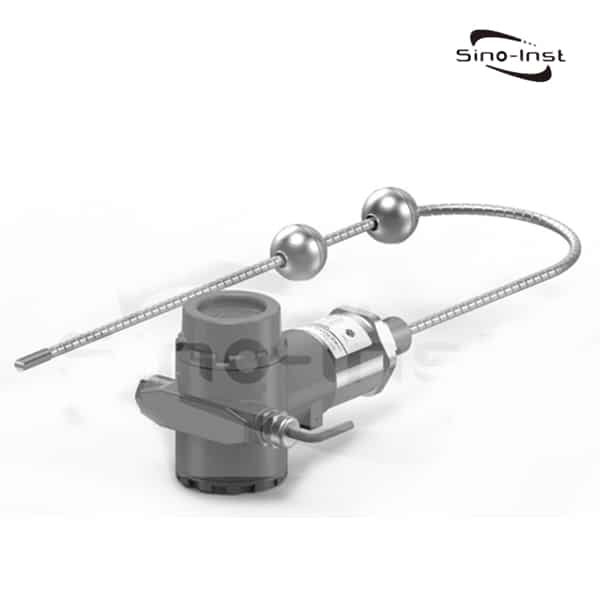
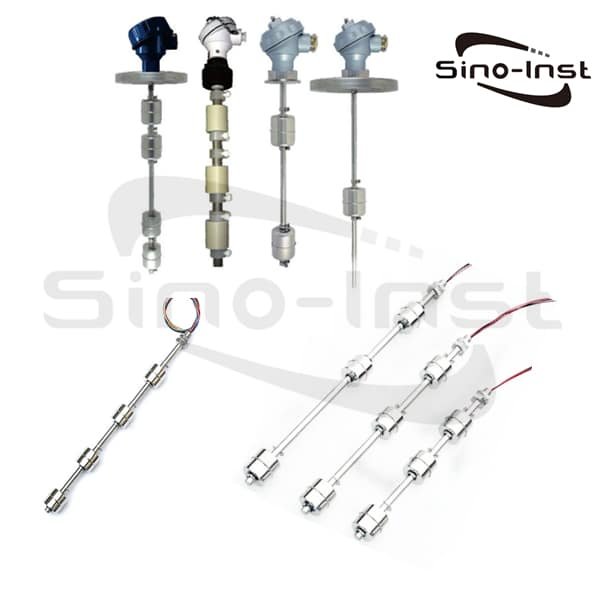
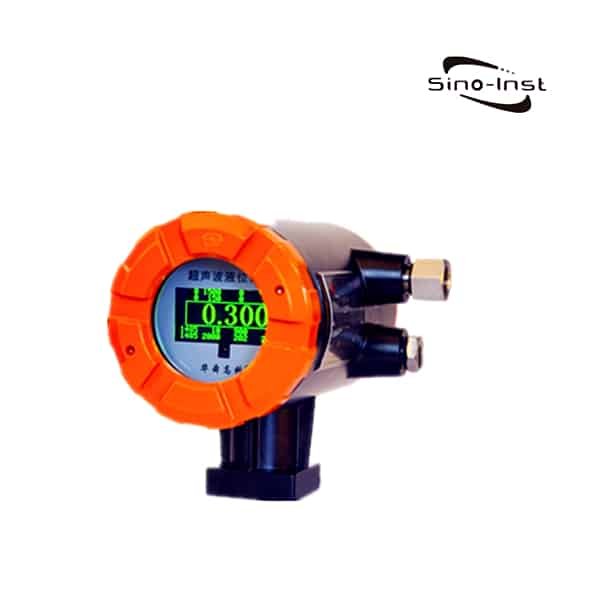
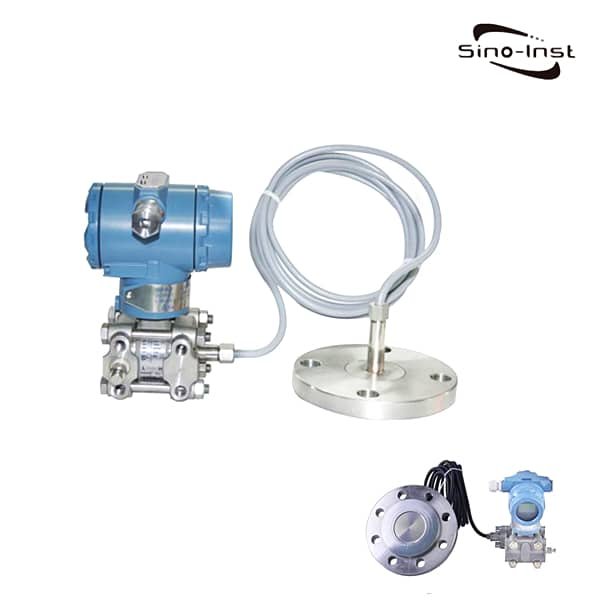
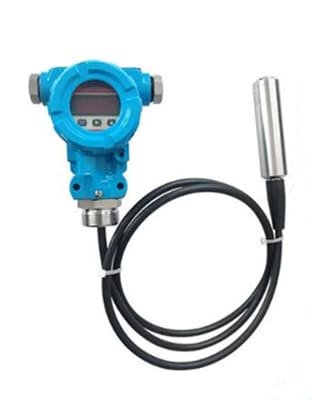
External Tank Level Indicator

External Mounted Tank Level Sensors

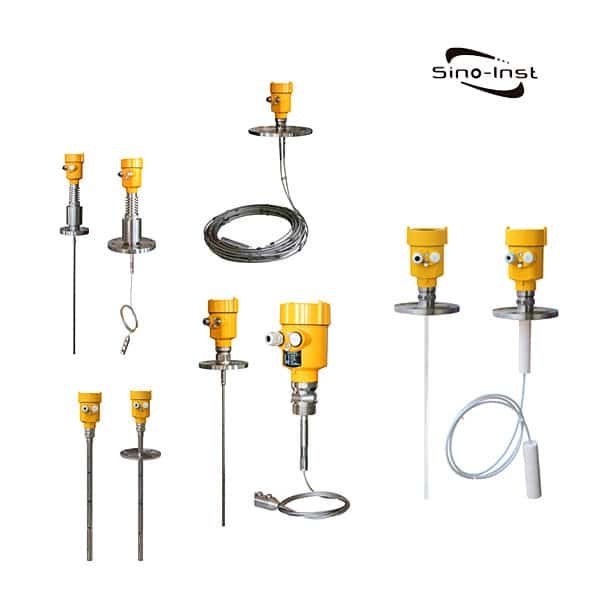
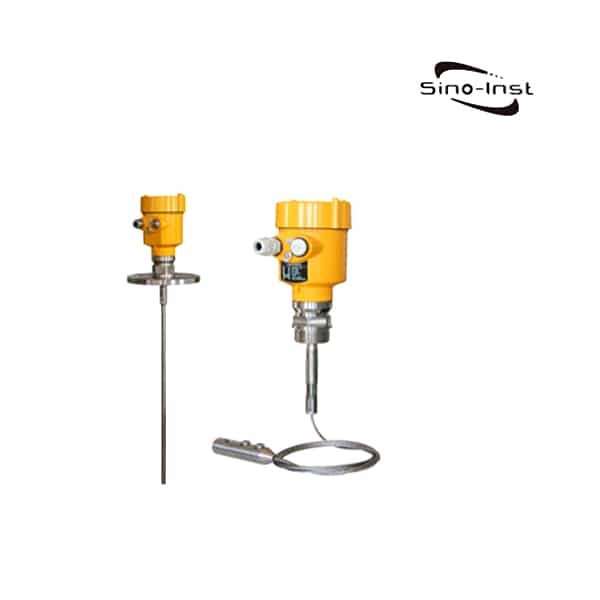
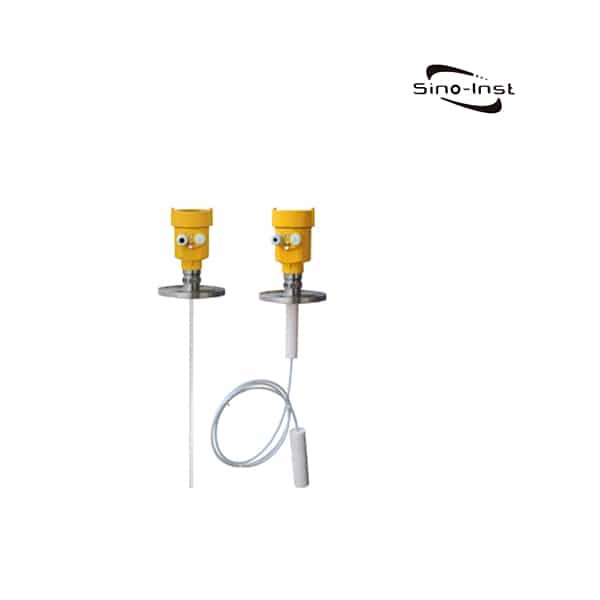
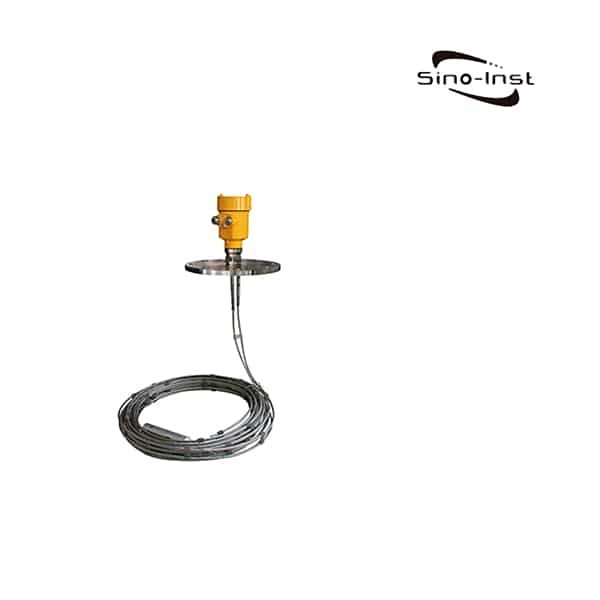
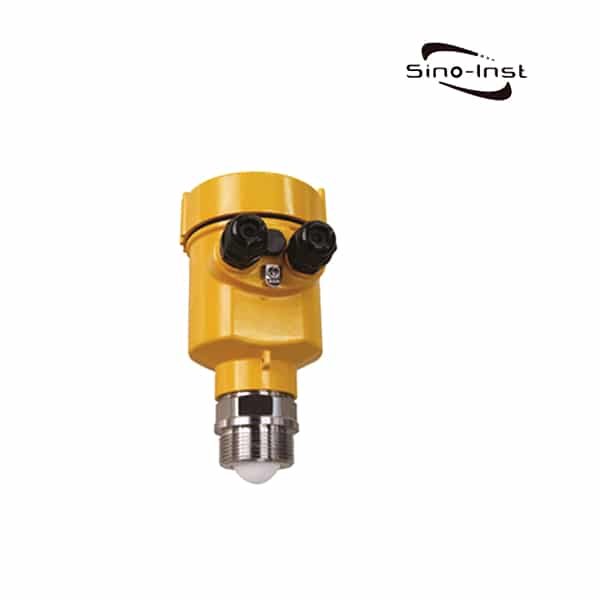
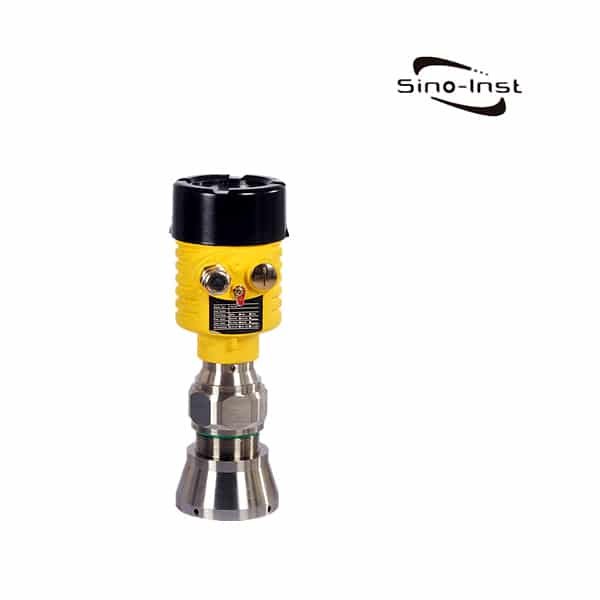
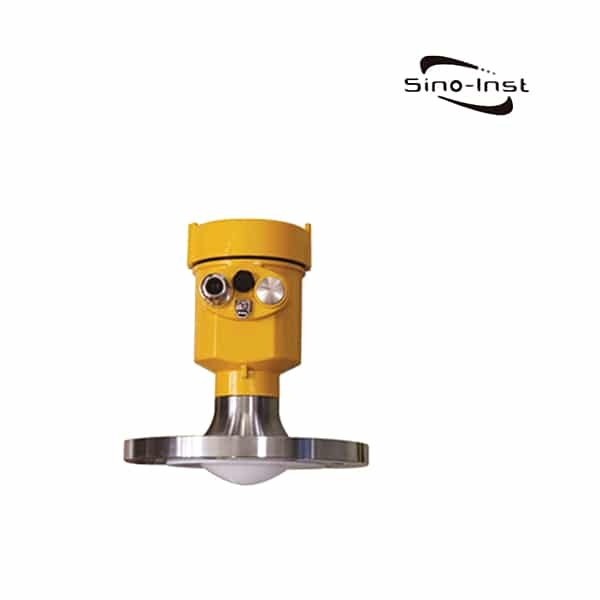
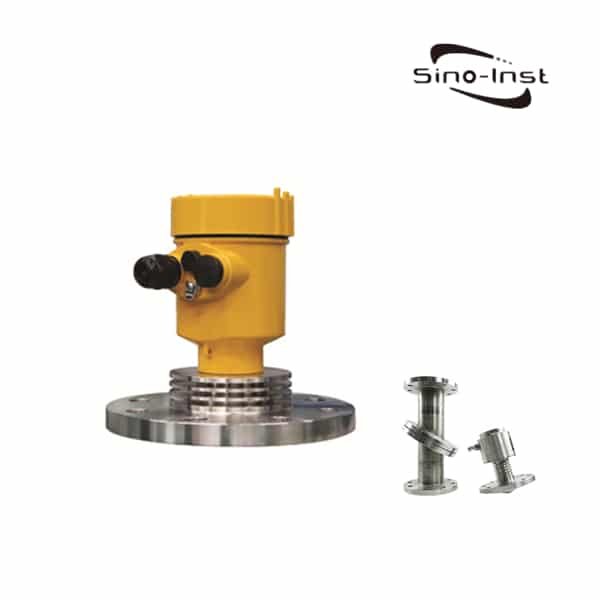
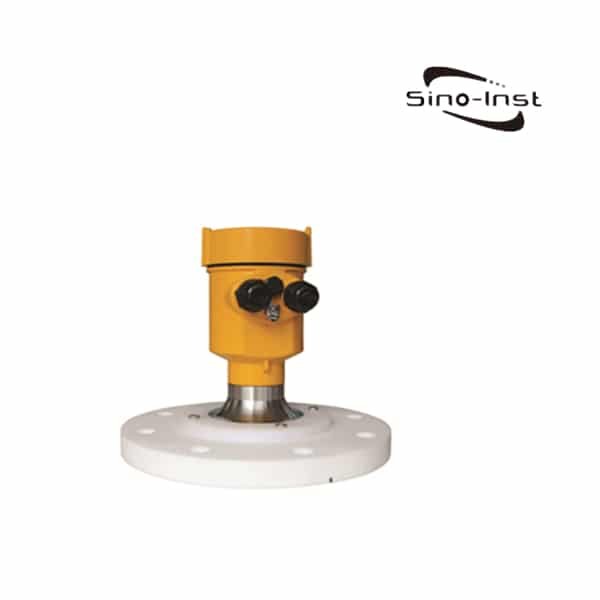
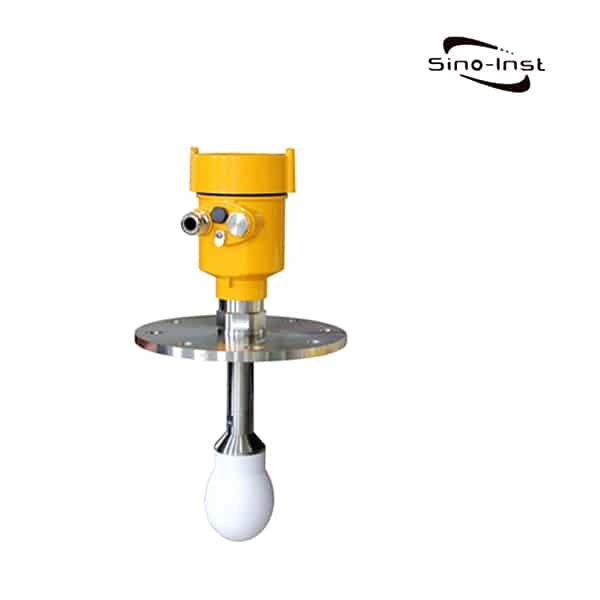
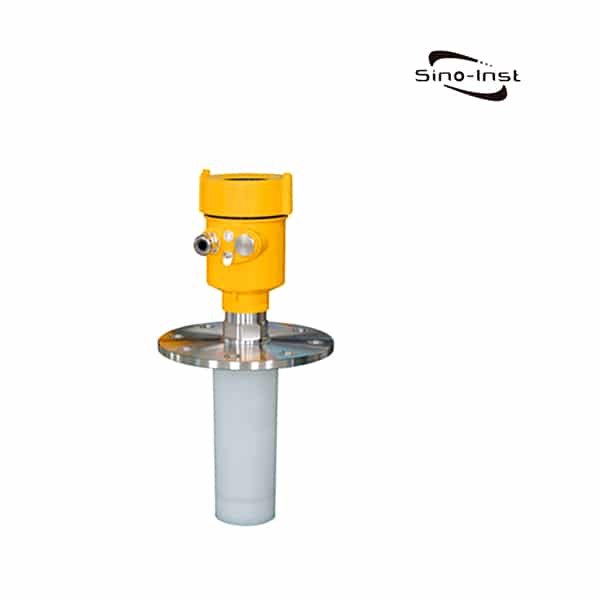
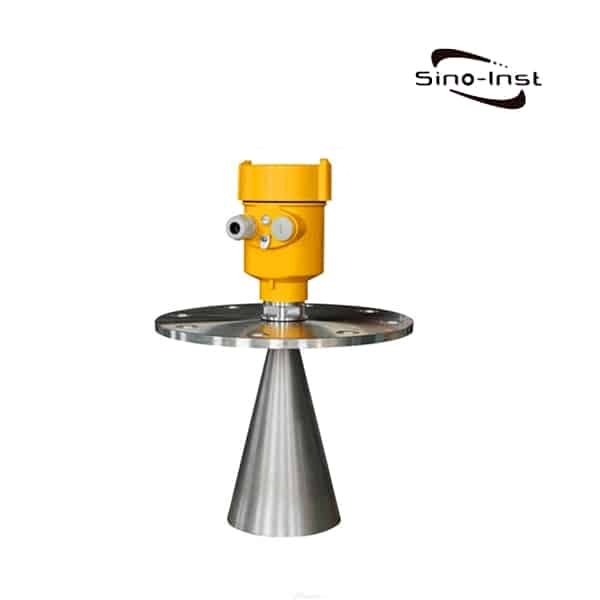
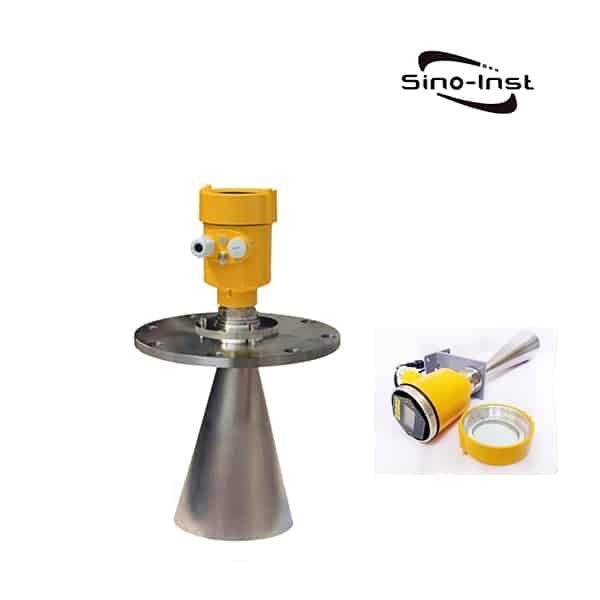
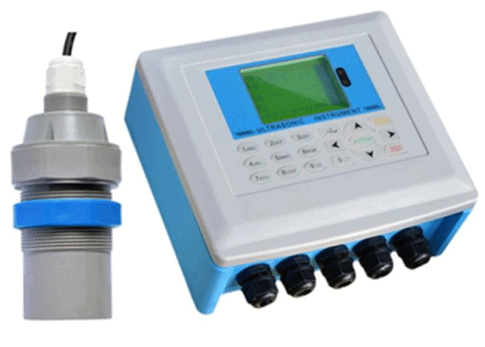
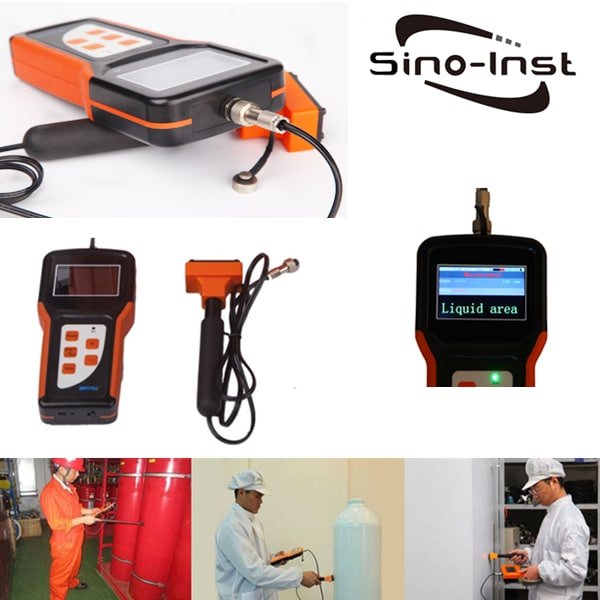
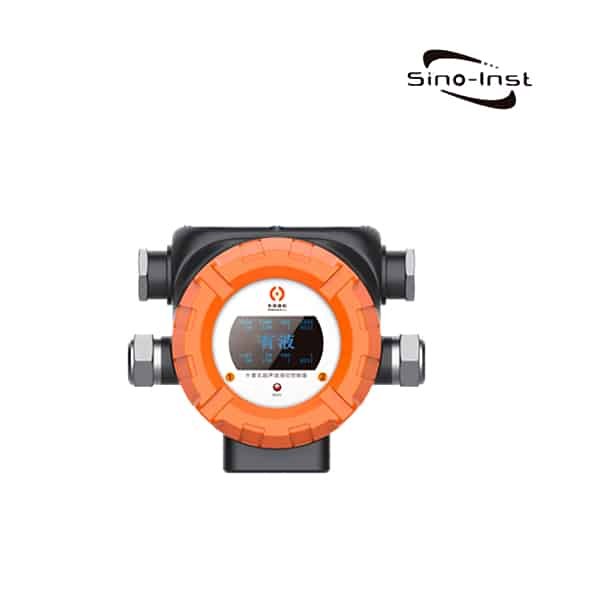
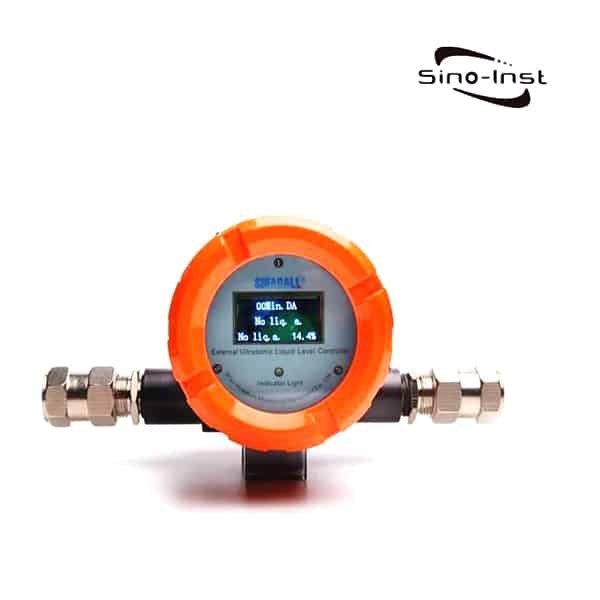
External Tank Level Indicator refers to an externally mounted level sensor. It is used to install on the outside of the liquid storage tank to measure the liquid level of the tank. When measuring with External Tank Level Indicator, install the ultrasonic probe just below the outer wall (bottom) of the container under test. No need to cut holes, easy to install. Does not affect on-site production. It can realize accurate measurement of various toxic substances and various pure liquids in high temperature and high pressure airtight containers.

External Tank Level Indicator

Featured External Tank Level Indicators for Sale

Difficulties Existing in Liquid Level Measurement in Industrial Storage Tank Industry

Most liquid fuels used in industry, such as liquefied petroleum gas, gasoline, diesel, lubricating oil and other refined oils, as well as liquid chemical gases. For example: liquid ammonia, liquid chlorine, are stored in a high-pressure airtight container. In the production process, in order to ensure the safety of production, it is necessary to regularly measure the liquid level of the remaining liquid in the closed container.

Because these liquids are flammable and explosive. Using the traditional liquid level measurement method will cause damage to the tightness of the container. Safety accidents such as liquid leakage are prone to occur. In particular, after the storage tank has been built and put into service. It is hoped that another principle that is different from the existing level gauge will be added, and a level gauge with a different principle will be used. It’s hard for businesses to choose.

Extended reading: What is a capacitive liquid level sensor?

No holes – No damage the tank – External Tank Level Indicator

In response to the above problems, we designed and produced a new type of non-intrusive ultrasonic liquid level measurement system – externally attached liquid level gauge. This enables a truly non-invasive, non-contact measurement method.

Simply mount the measuring probe on the outer wall of the tank or container bottom. The reflection and transmission properties of ultrasonic waves are utilized. Realize the measurement of the liquid level inside the storage tank. The calculated liquid level value is displayed locally and a remote signal is output.

The meter can output measurement results to the control system via 4-20 mA analog signal, HART, RS-485 and other interfaces. At the same time, the data can also be sent to the Internet through wireless transmission via WIFI, GPRS and NBIOT.

Extended reading: Diesel Tank Level Monitoring System

External Tank Level Indicator Applications

External Tank Level Indicator has a wide range of applications. Especially the liquid level measurement application of flammable, explosive, strong corrosive, toxic and harmful pressure vessel storage tanks is more prominent.

Medium:
Liquid chlorine, liquefied gas, liquid ammonia, hydrofluoric acid, propylene, vinyl chloride, ethylene oil, butane, chlorosilane, butadiene, C5, C4, ethylene oxide, butylene oil, silicon tetrachloride, refrigerant , liquid Australia, xylene, hydrochloric acid, nitric acid, lye, isopropanol, ethylene glycol, other media.

Industry :
Chlor-alkali, storage and transportation, petrochemical, refrigeration, coal chemical industry, oil refining, chlorination industry, fertilizer, pesticide, electric power, military, oil depot, liquid storage, and other industries.

Extended reading: level sensors for fuel tanks


In a rubber project, it is necessary to measure the level of butadiene in a spherical tank. Butadiene is easy to self-polymerize to produce high molecular polymers. The selection of ordinary liquid level instruments is relatively limited.

According to the “Tank Farm Automation System Design Regulations”, “each pressure storage tank should be equipped with two sets of independent and different types of liquid level measuring instruments”. If this project chooses conventional contact liquid level gauge. Butadiene is very likely to self-polymerize at the dead corner of the detection port. Therefore, the non-contact type is given priority in the selection of the liquid level gauge.

Extended reading: Sludge Blanket Level Detector Appliactions

In the design of a liquid ammonia spherical tank, the externally attached ultrasonic level gauge also has a good application.

The liquid ammonia in the storage tank is a colorless, pungent odor toxic liquid, which is corrosive to a certain extent.

Because the density of liquid ammonia is greatly affected by temperature, the differential pressure liquid level gauge is not applicable in this project. Finally, the External Tank Level Indicator is selected for detection.

Extended Reading: How to Measure Volume of Liquid

In a high-pressure hydrogenation unit, the parameters of the original level gauge on the high-pressure storage tank were unstable. The owner wants to add a level gauge to compare it with.

However, the on-site installation space of the high-pressure container is small, and the re-opening conditions are not available. After negotiation, it was decided to use an externally attached ultrasonic level gauge.

Not only avoids the economic loss caused by the shutdown of the device and hot work. It also eliminates the potential safety hazard of new leak points of pressure vessels. Simple, precise and reliable installation.

Extended reading: Radar Level Sensor Advantages and Disadvantages

Externally mounted ultrasonic level gauges have lower dielectric constants in some. Such as liquefied gas (dielectric constant <1.9) or the liquid surface contains a large number of bubbles and other situations where the radar level gauge is not suitable for use. Can be a good replacement for radar level gauges.

In some highly corrosive acid-base storage tanks, such as liquid chlorine storage tanks, etc. Externally attached ultrasonic level gauges are also very useful.

Common available media for externally attached ultrasonic level gauges include liquid chlorine, liquefied gas, liquid ammonia, ethylene, butadiene, gasoline, diesel, benzene, liquid bromine, hydrochloric acid, lye, nitric acid, methanol, vinyl chloride, hydrofluoric acid , ethylene glycol, propane, naphtha, ethylene oxide, dimethyl ether.

Extended reading: Float Level Sensors – Single and Multipoint


Externally Attached Ultrasonic Oil Level Sensor – Trucks

Ultrasonic oil level sensor is an external sensor used to measure the liquid level height in tanks and containers.
The sensor uses the ultrasonic detection principle to measure the oil level(liquid level), and then converts the measured height value into the oil volume value through intelligent processing, and then transmits the fuel volume data to the background supervision system through GPS to achieve the purpose of real-time monitoring of vehicle fuel consumption.

At present, the products are mainly used in the field of the Internet of Vehicles to monitor the changes in the internal oil level of the tank in real time, so as to realize the detection of fuel volume. It can be used to prevent oil theft, optimize operating costs, optimize driver driving behavior, assist statistical decision-making, etc. At the same time, this product can also be used in fields such as chemical industry, water conservancy, storage tanks and other fields with liquid level detection needs.

Extended reading: Ultrasonic Oil Level Sensor-External Paste-Truck Fuel Tank

Related Blogs

  • 80GHZ Radar Level Transmitter

    80 GHz Radar Level Measurement 80GHZ Radar Level Transmitter refers to a frequency modulated continuous wave (FMCW) radar product operating at 76-81GHz. It can be used for level measurement of…
  • Material Level Indicators

    The material level indicator refers to an instrument for real-time detection of changes in the height of solid materials in a container. Material level indicator is also known as material…
  • The Secret of Water Level Control

    Water level control refers to the control of high and low water levels by mechanical or electronic methods. It can control solenoid valves, water pumps, etc. to become an automatic…
  • Tank Level Gauges & Indicators

    Tank level gauges are instruments used to indicate and control the height of the liquid level in the tank. Commonly used in water storage tanks, oil storage tanks, and underground…
  • Magnetic Level Gauge/Indicator

    What is a magnetic type level gauge? A magnetic Level Gauge is also called a magnetic level indicator. Magnetic Level Gauge is developed based on the principle of buoyancy and…

Frequently
Asked
Questions

Everyone knows that there are only two ways to detect the water level of the water tank: manually check the water level detection function realized by the guard sensor and so on.

Manual review will have the disadvantages of inaccurate positioning, time-consuming and labor-intensive. Therefore, many water tank water level control is usually solved by sensors.

The water level sensor is a kind of sensor commonly used to detect the liquid level to realize the liquid level control function. It can realize the functions of water shortage protection, no water alarm, anti-overflow function, automatic water addition and so on.

Extended reading: Float Switch Water Level Controller

There are many types of liquid level sensors that can measure water. From our personal experience, hydrostatic submersible level sensors are the easiest to use and relatively low cost.

Extended reading: Hydrostatic Level Measurement

Yes.

Measuring the level of water with ultrasonic sensors is a very common application. Remote water level monitoring is required in many places. Such as factory reservoirs, reservoirs for farmland irrigation, water towers for water supply, river water levels, etc. It is important to do a good job of remote monitoring of water levels in these areas.

Ultrasonic liquid level sensor, non-contact measurement of water level. easy installation. Easy to use.

Ultrasonic technology is not only used to measure level, but also can be used to measure depth.

Extended reading: RF Admittance Level Sensor

Read more about: Common River Water Level Measurement Methods

Sino-Inst offers over 10 External Tank Level Indicators and transmitters for level measurement. About 50% of these are ultrasonic liquid level meters, 40% is the level switches.

A wide variety of External Tank Level Indicators and transmitters options are available to you, such as free samples, paid samples.

Sino-Inst is a globally recognized supplier and manufacturer of External Tank Level Indicators and transmitters instrumentation, located in China.

Request a Quote

Please enable JavaScript in your browser to submit the form

80GHZ Radar Level Transmitter

80 GHz Radar Level Measurement

80GHZ Radar Level Transmitter refers to a frequency modulated continuous wave (FMCW) radar product operating at 76-81GHz. It can be used for level measurement of solids and liquids. Since it operates at a higher frequency, the wavelength is shorter. It has a smaller diameter. Ideal for dusty atmospheres or low reflective media. It has unique advantages in high dust and harsh temperature environment (+200℃). Small dead zone and narrow beam angle allow use in small and tall vessels.

Unique Technical Advantages of 80GHZ Radar Level Transmitter

80GHZ Radar Level Transmitter refers to frequency modulated continuous wave (FMCW) radar products operating at 76-81GHz. Four-wire and two-wire applications are supported. There are multiple models, the maximum range of the product can reach 120m, and the blind area can reach 8 cm.

Because the 80GHZ Radar Level Transmitter operates at a higher frequency. shorter wavelengths. So it is especially suitable for solid applications. The working method of transmitting and receiving electromagnetic waves through a lens. It has unique advantages in high dust and harsh temperature environment (+200℃).

80GHZ Radar Level Transmitter provides flange or threaded fixing, which makes installation convenient and easy.

The main advantages of 80GHZ Radar Level Transmitter are as follows:

  • Based on self-developed CMOS millimeter-wave radio frequency chip. Enables a more compact RF architecture. Higher signal-to-noise ratio, smaller dead zone.
  • The 5GHz operating bandwidth enables the product to have higher measurement resolution and measurement accuracy.
  • The narrowest 3° antenna beam angle. Disturbances in the installation environment have less impact on the meter. Installation is more convenient.
  • Shorter wavelengths and better reflection properties on solid surfaces. Therefore, there is no need for special use of universal flanges for aiming.
  • Support remote debugging and remote upgrade. Reduce waiting time. Improve work efficiency.
  • Support mobile phone Bluetooth debugging. It is convenient for on-site personnel to maintain work.

Extended reading: Non contact level measurement

Communication and debugging

The instrument can be debugged through the LCD in the field. It can also be debugged on the PC side with the optional host computer software.

The communication between the 80GHZ Radar Level Transmitter and the PC is as follows:

  1. USB to RS485 serial cable (four-wire system);
  2. USB to TTL serial cable (two-wire system);
  3. USB to Hart-modem (two-wire system) for communication.
  4. Debugging through bluetooth through mobile phone makes on-site debugging safer and more convenient.
  5. 4G network, remote debugging through remote module.

Extended reading: Radar Level Sensor Advantages and Disadvantages

80GHZ Radar Level Transmitter Measurement Principle

The general principle of the FM continuous wave radar level gauge is that the radar emits electromagnetic waves on the top of the tank. And the electromagnetic waves are received by the radar after being reflected by the medium.

The frequency difference δf between the received signal and the transmitted signal is proportional to the distance R from the surface of the medium:

R=C (speed)*δf (frequency difference)/2/K (frequency modulation slope).

Because the speed of light C and the frequency modulation slope K are known.

The frequency difference δf can be estimated to obtain the distance R from the radar installation position to the material surface.

And then through the known total height of the tank. Subtract the spatial distance from the radar to the material surface (referred to as Empty height) to get the height of the material level.

Extended reading: Magnetostrictive Level Transmitter Working Principle

Terminology

Beam angle:
Beamwidth bounded by 3dB below the maximum value. The minimum beam angle of 80GHZ Radar Level Transmitter is 3°, as shown in the figure.

Distance Resolution:
Range resolution refers to the radar’s ability to distinguish between two objects that are very close together.

If the separation between the two objects is less than the range resolution of the level radar. Then the radar can only measure one distance value. This distance value is not equal to the distance value of any of the objects. It is a combination of the distance values ​​of the two objects.

The FM bandwidth of the 80GHZ Radar Level Transmitter is B=5.1GHz. Minimum distance resolution=C/2B≈3cm.

Measurement accuracy (Accuracy):
If there is only one object and this object has moved a small distance. Whether the level radar can detect distance changes. The indicator of how far a single object has moved is called accuracy.

The IF signal of the 80GHZ Radar Level Transmitter is analyzed by its own algorithm, and the measurement accuracy is 0.1mm.

Ambient temperature:
The temperature of the surrounding air in contact with the device enclosure.

Blind spot:
Refers to the measurement limit of the near end of the instrument, and the instrument cannot measure in the blind area.

dB (decibel):
Indicates the unit of signal amplitude.

Dielectric Constant (DK):
The ability of a dielectric to store electrical energy under the induction of an electromagnetic field. Often referred to as the relative permittivity.

The increase in the permittivity is directly proportional to the increase in the echo amplitude. The relative vacuum/dry air dielectric constant is 1.

Echo:
The reflected signal received by the radar.

Emission cone:
The extension of the antenna beam angle.

False echo:
Any echoes that are not generated by the desired target. Generally, false echoes are generated by obstructions in the container.

Multiple echoes:
The multiple reflection echoes appearing at the target echo distance may be 2 or 3 times.

Polarization:
Emitted electromagnetic wave properties, describing the direction and magnitude of the electric field vector that changes over time.

Range:
(1) Refers to the farthest measurement limit of the instrument
(2) Special, refers to the artificially set maximum distance. Outside this distance, the meter does not consider it when processing data.

Repeatability:
In the same test environment, measure the same reflective target multiple times to measure the deviation of the results.

Speed ​​of light:
Symbol C, the speed of electromagnetic waves. Includes electromagnetic waves and light in free space. The speed of light is 299,792,458 meters per second.

Threshold curve:
A time-varying curve that serves as a threshold beyond which echoes are considered valid.

Extended reading: Amazing Solutions for Continuous Liquid Level Measurement

Beam Angle

The beam angle is the beam angle when the radar wave energy density reaches half of its maximum value (3dB width). Microwaves emit signals outside the beam range and can be reflected by interference objects.

Lens antenna diameterΦ32mmLens antennaΦ42mmLens antennaΦ78mmLens antenna
Beam angle

The larger the antenna size, the smaller the beam Angle alpha, the less the interference echo will be generated.

For more accurate measurements, avoid installing any internal devices (such as limit switches, temperature sensors, bases, vacuum rings, heating coils, baffles, etc.) within the signal beam range.

Linear

ComparedUltrasonicRadar
Common Frequency30 kHz, 240 kHz80GHz
Microwaves TypeMechanical wave(Sound waves)Electromagnetic waves
Dust, condensation, buildupHuge influenceNo influence
Air temperature, pressureHuge influenceNo influence
Air density, and gas compositionHuge influenceNo influence
Suitable ApplicationSimple/stationary measurements (Exp: Water level)Nearly all types of level measurements

Compared26GHz radar80GHZ radar
transmit frequency26GHz76-81GHz
Maximum range70m120m
signal to noise ratio90dB120dB
beam angle10°
Minimum blind spot30cm8cm
highest precision1cm (liquid level)0.7mm
measurable mediumDielectric constant>3Dielectric constant>1.5
applicabilitySimple liquid level, material levelSimple liquid level, complex working conditions such as dust, steam, adhesion, slender installation pipes, stirring, foam, etc.

Extended Reading: What is level transmitter working principle?

80GHZ Radar Level Transmitter Applications

80G high frequency radar level meter has the characteristics of high measurement accuracy, wide application range, non-contact measurement, etc. It can be widely used in material level and liquid level measurement of various highly corrosive and high dust media.

The 80GHz radar level meter can not only measure the liquid level, but also measure the solid material level. Including powder materials. It has a good application in different storage tanks. Process storage tanks (silo), reaction tanks, static storage tanks , Dome tank, flat-top tank, spherical tank, horizontal tank, stilling pipe, bypass pipe, tank with agitator.

Applicable working conditions:

  • Intermediate silo
  • Warehouse
  • hopper
  • Storage tank
  • Process tank
  • Mixing tank

Extended reading: Oil-water interface measurement-Magtech magnetic level indicator

The micro-powder business department of a chemical plant has a variety of tanks, with a field measuring a range of 25 meters. There is a stirrer and heating device inside, and there is high steam when feeding.

As shown in the figure below, when the staff opened the observation cover, strong steam could be seen coming out.

A guided wave radar level gauge is selected before the scene. However, guided wave radar is easily affected by factors such as the corrosiveness of the measuring medium and the viscosity of the medium, and the measurement effect is not good.

Later, the customer chose the 80G radar level meter, and the historical trend chart after use is as follows. It can be seen that the liquid level of the four 80G radar level gauges installed on-site can be measured well in several loading and unloading processes.

Extended Reading: FMCW Radar for High Temperature Level Sensor

Why do we have to choose an 80G millimeter-wave radar level gauge for liquid level measurement under high steam and stirring conditions? Can the 26G radar level gauge measure?

Explain briefly. The 80G radar level gauge has a high transmission frequency, has good penetration, and is not affected by steam.

The launch angle of 3° can effectively avoid the interference of the stirring blade;

The unique echo tracking algorithm (echo locking function) avoids reading multiple echoes when the material level is high.

However, when the 26G radar level gauge is in a high-steam environment, the radar wave cannot penetrate the steam or the echo is greatly weakened after the radar wave reaches the interface of the medium, and the measurement is unstable;

In addition, the launch angle of the 26G radar level gauge is generally above 20°, so that the radar wave is easily affected by the stirring blade, causing false alarms;

And when the material level is high, there is no internal steam and the range is large, the echo is very strong, and it is easy to read multiple echoes.

Therefore, the 80G radar level gauge can be selected to obtain a good measurement effect for liquid level measurement under high steam and stirring conditions.

Extended reading: Radar Level Meter for Corrosive Liquids

So far, it is difficult for radar sensors to measure the level of very light medium and medium with low dielectric constant. Such as plastic foam, polystyrene, oil, etc. The difficulty of measurement is that the dielectric constant of these substances is very low and some media contain a lot of air. . So very little radar energy can be reflected.

Today we will share a related case: a petrochemical unit measures industrial white oil (dielectric constant <2). When the liquid level is low, as shown in the figure below, the liquid level is only about 50mm.

The user used a conventional 26G radar level gauge before. When there is only a small amount of white oil at the bottom of the tank, the radar wave directly penetrates to the bottom of the tank. Because the installation of the guided wave radar level gauge needs to reserve the bottom distance, it cannot be measured normally when the liquid level is relatively low.

Later, the customer chose the 76-81GHz FM continuous wave radar level gauge. The 80G radar level gauge has a 5GHz ultra-large FM scan frequency width. Compared with the ordinary 26G radar level gauge, the echo curve is shown in the figure below. The yellow curve can be seen The representative FM continuous wave radar level gauge. It can accurately read the material level height and tank bottom height. It can clearly distinguish the 50mm oil level height. The 26G radar level gauge represented by the gray curve cannot distinguish the correct liquid level. It penetrates directly through the interface and reaches the bottom of the tank.

The frequency modulation bandwidth of the 80G radar level meter is B=5.1GHz. The minimum distance resolution is Sres=C/(2×B)=2.94cm. Due to the wide frequency modulation bandwidth, the 80G radar level meter has a high resolution. Even if the bottom blind area is small, the meter can distinguish the correct liquid level.

Find more about Guided wave radar level transmitters equipped with Coaxial Probe for liquids with low dielectric constant. For example: non-ionized water, deoxygenated water and other liquid measurement. 

Extended reading: Hydrostatic Level Measurement

More Featured Non-Contacting Radar Level Measurement

Frequently
Asked
Questions

Radar level instruments measure the distance from the transmitter (located at some high point) to the surface of a process material located farther below in much the same way as ultrasonic transmitters – by measuring the time-of-flight of a traveling wave.

Extended reading: RF Admittance Level Sensor

A guided wave radar level transmitter is also called a wave-guided radar level sensor. They can measure both levels and the interface between two media. Through probe rod or cable, complete level contact types continuous level measurement. Such as Coaxial Probe Guided Wave Radar Level Transmitter. This is different from ultrasonic level measurement, which is a non-contact measurement. A guided wave radar level transmitter is often used for tank level measurement. Including liquid and solid. Output 4~20mA/HART, so as to measure and control the level during production.

Extended Reading: Guided-wave radar (GWR) level transmitter working principle

We have two kinds of radar level transmitters:

  • Noninvasive or Non-contact Systems
  • Invasive or Contact System

Extended reading: Float Level Sensors – Single and Multipoint

Read More about: List of Differences: Radar vs Ultrasonic Level Measurement

Related Blogs

  • Material Level Indicators

    The material level indicator refers to an instrument for real-time detection of changes in the height of solid materials in a container. Material level indicator is also known as material…
  • The Secret of Water Level Control

    Water level control refers to the control of high and low water levels by mechanical or electronic methods. It can control solenoid valves, water pumps, etc. to become an automatic…
  • Tank Level Gauges & Indicators

    Tank level gauges are instruments used to indicate and control the height of the liquid level in the tank. Commonly used in water storage tanks, oil storage tanks, and underground…
  • List of Radar Level Sensors

    Non-contact radar level sensor Radar level sensors are used for continuous non-contact level measurement of liquids or solids. And convert it into electrical signals. The radar level sensor emits high-frequency…
  • Point Level Measurement Sensors

    What is Point Level Measurement? Point Level Measurement refers to the use of a point level sensor to detect the material level in a storage tank or silo. Also called…
  • Capacitive Fuel Level Sensor

    The capacitive fuel level sensor refers to a capacitive liquid level transmitter used to measure the oil level. According to the principle of capacitance sensing, when the height of the…
  • Laser Level Transmitter

    What is a laser level transmitter? A laser level transmitter is also called a laser level meter. Industrial Accurate, non-contact, and uninterrupted real-time monitoring of material height. Designed for material…

Sino-Inst offers 80GHZ Radar Level Transmitters for level measurement.

A wide variety of 80GHZ Radar Level Transmitters options are available to you, such as free samples, paid samples.

Sino-Inst is a globally recognized supplier and manufacturer of radar level measurement instrumentation, located in China.

Request a Quote

Please enable JavaScript in your browser to submit the form

Material Level Indicators

The material level indicator refers to an instrument for real-time detection of changes in the height of solid materials in a container. Material level indicator is also known as material level transmitter, material level controller, material level meter, etc.

Level measurement usually refers to the detection of the height of materials (solid or liquid level) in closed or open containers during industrial production. Instruments that accomplish this measurement task are called level gauges. Level measuring instruments are used to monitor liquid or solid material levels. Includes slurries and granular solids.

Material Level Monitoring

Level measuring instruments are industrial automation instruments that measure the liquid level and loading height of liquid and powdery materials. Measure the stacking height or surface position of solid materials such as lumps, granules and powders.

Material Level Monitoring is the measurement of the surface position of solid blocks or powders in a silo to understand the amount of material stored in the silo.

for example:
In thermal power plants, it is necessary to detect the position of coal lumps and pulverized coal in the raw coal hopper and pulverized coal bunker.

Featured Material Level Indicators

The requirements for measuring the level of bulk materials are increasing. Reliable level sensors achieve the required measuring accuracy in all areas of the process chain. Depending on the position, the standard level gauge can be individually configured, making it suitable for various applications.

The measurement of fine powders in the chemical industry is as reliable as the measurement of sand and gravel or the measurement of plastic particles in the construction industry.

A variety of different bulk materials are commonly used in steel production. Material level information facilitates accurate material management and avoids conveyor congestion and feed hopper overflows. This prevents material loss, delays and additional costs.

In general, simple material level information obtained by optical distance sensors or ultrasonic sensors is sufficient.

Extended reading: GWR Solid Level Sensor-for Cement silo-Ash powder measure

The Rotary paddle bin level indicator is based on the principle of rotating machinery. The motor-driven paddles rotate continuously at a standard rotation speed of one revolution per minute.

The increasing bulk material in the silo or container buries the paddles. This blocks the rotation and generates a counter-torque.

This reactive torque turns the built-in rotatable motor out of its original position and signals the switch via the switch arm to open the switch.

The second switch delays cutting power to the motor.

If the level drops again, the paddles are exposed, and the spring will spring the motor back to its original position.

At this time, the motor is powered on and then sends out an output signal. The paddles begin to spin continuously again.

Extended reading: Radar Level Sensor Working Principle

The drying process usually consists of four stages: filling, drying, cooling and draining.

In order to realize media visualization and process automation. The material level of the silos storing wet bulk materials, storage vessels, static layer dryers and circulating dryers must be continuously controlled and monitored.

In storage containers, static layer dryers and circulating dryers. The level switch is used as a full warehouse alarm.

When the material reaches the preset level, the conveying device is automatically closed.

In the wet material or dry material storage container, the opposite is true. The level switch can be used as an empty warehouse alarm and a full warehouse alarm.

In particular, the empty silo alarm requires a sturdy structure of the paddle and is equipped with a protective tube. This can prevent the empty silo material level alarm from being damaged when the silo material falls.

The conveyor for filling the drying containers is powered on via the empty bin alarm. The empty bin alarm also controls the operation of the dryer. The full warehouse alarm will cut off the power supply of the conveying device when the material reaches the allowable level.

Extended reading: Amazing Solutions for Continuous Liquid Level Measurement

The cement silo material level indicator is mainly used for automatic detection and control of the limit material level of various materials (such as powder, granule or block). Different types of material level indicators can meet the requirements of different working conditions. In metallurgy, Grain, flour, building materials, cement, electric power, coal, chemical industry, foundry, rubber, environmental protection dust removal and other industries have a wide range of applications in the process of material transportation and control.

Extended reading: Float Level Sensors – Single and Multipoint

Cement Silo Level Measurement

Cement silo seems to be a simple supporting equipment for concrete mixing plant. In fact, it also contains many auxiliary devices. It is not just a simple silo. It also includes auxiliary devices such as dust collector, arch breaking device, pressure safety valve, Level meter, etc.

The material level meter is mainly used for automatic detection and control of the limit material level of various materials such as cement and fly ash. It is indispensable. What does it do?

The material level meter is a sensor used to sense the height change of the material in the container. It can continuously detect the height, volume and other values ​​of the material in real time and convey relevant information to the computer or display instrument.

In the concrete mixing plant, the cement silo is a closed material storage device. The user cannot intuitively understand the amount of powder in it. At this time, a material level meter is needed.

Simply put, the material level meter in the cement silo can accurately record the position of the material in the cement silo, which is convenient for management.

After understanding the function of the level meter, what are the characteristics of the level meter?

  1. Anti-interference, ready to use:

Because there are no complicated electronic components and their amplifying circuit parts inside. Therefore, the level gauge is not subject to any electromagnetic wave interference. After installation, it can be used for a long time without any debugging and maintenance.

  1. Super anti-shake performance design:

There are no false signals even when the material is flowing.

  1. Shock resistance and anti-loosening structure design. Effectively avoid loosening and slipping of parts. High-quality stainless steel material is used to make it have excellent corrosion resistance and wear resistance.
  2. The material level meter adopts contact measurement. The result is real, accurate and reliable. It can be installed horizontally, inclined and vertically. It is easy to install and use.
  3. Material level display function:

Adopt long-life high-brightness indicator light. The material level display is intuitive and convenient.

  1. Excellent measurement reproducibility and adaptability to environmental conditions:

That is, it is not affected by changes in material particle size, shape, specific gravity, medium, wall scale, adhesion, temperature, humidity, dust concentration, etc.

  1. Double protection function:

The overload protection function prevents the blades from being damaged by excessive external force. The automatic protection function enables the material level device to be powered off when the rotation of the material blades is blocked in the silo, which protects the motor and effectively prolongs its service life.

Extended Reading: Silo/Bin material level measurement system

The Difference Between Material Level Indicator and Level Switch

First of all, the concept of Material Level Indicator and Level Switch is different.

Broadly speaking, Material Level Indicator is divided into two types: switch type and continuous type. It means that Material Level Indicator includes level switch.

In a narrow sense, the Material Level Indicator can detect the material level change in the container in real time, and can achieve continuous measurement. The material level switch only has the function of switching value, which can only monitor and control the point position, and cannot achieve continuous measurement.

Of course, in general, the instruments for continuous measurement use the naming method of Material Level Indicator. Most of the instruments for switching values use the naming method for level switches.

Secondly, the products covered by Level Switch and Material Level Indicator are different.

Divide from a narrow concept.

The material level switch mainly includes vibrating rod material level switch, resistance rotary material level switch, tuning fork material level switch, radio frequency admittance material level switch, etc.

Material Level Indicator mainly includes Ultrasonic Material Level Indicator, Radar Material Level Indicator, Ray Level Indicator, etc.

Frequently
Asked
Questions

There are many different types of level indicators, each with its own application.

Use level indicators to detect and measure the level of liquids in tanks. Standard technologies used to measure liquid level include floats, pressure or depth sensors, ultrasonic detection and conductivity level measurement, and radar measurement.

Some other reference level indicators are tubular level indicators, float and plate level indicators, sight flow indicators, window sight flow indicators, pressure gauges and bi-color indicators. Some level indicators have multiple functions. Examples include built-in controllers, continuous output measurements and adjustable alarm switches.

Different types of liquid level indicators have different working principles. For example, we simply say radar level gauge.

Radar level gauge is a measuring instrument based on the principle of time travel. Radar waves travel at the speed of light, and the run time can be converted into a level signal by electronic components. The probe emits high frequency pulses that travel along the cable probe. When the pulse hits the material surface, it is reflected back and received by the receiver inside the meter. And convert the distance signal into a level signal.

Extended reading: Hydrostatic Level Measurement

Point level control should refer to a way of liquid level control circuit. By setting a control point to control the main working electrical (water pump or electric valve, etc.) to start (open) or stop (close) at this liquid level control point.

Extended reading: RF Admittance Level Sensor

Related Blogs

Sino-Inst offers over 20 Material Level Indicators for level measurement. For detecting high, intermediate, or low levels of liquids, powders and free flowing granular solids stored in tanks, bins, silos or other containers. About 50% of these are Radar level meters, 40% is other tank level sensor.

A wide variety of Material Level Indicators options are available to you, such as free samples, paid samples.

Sino-Inst is a globally recognized supplier and manufacturer of Material Level Indicators instrumentation, located in China.

Request a Quote

Please enable JavaScript in your browser to submit the form

Digital Flow Meter for Argon Gas

What is Digital Flow Meter for Argon Gas?

Digital flow meter for argon gas refers to a flow meter that can be used for detection, display, transmission, and signal output. Digital argon flowmeter and argon regulator are different. Argon regulator has the function of displaying and reducing pressure. Digital flow meter for argon gas cannot be decompressed and regulated. However, instantaneous, cumulative volume/mass flow can be displayed. And output the corresponding digital signal for flow monitoring system monitoring statistics.

Argon Gas

Argon is a rare gas widely used in industry. It is very inert in nature and neither burns nor supports combustion. In aircraft manufacturing, shipbuilding, atomic energy industry and machinery industry. When welding special metals, such as aluminum, magnesium, copper and its alloys and stainless steel, argon is often used as a welding shielding gas to prevent welding parts from being oxidized or nitrided by air.

  1. Aluminum industry. Used to replace air or nitrogen to create an inert atmosphere during aluminum manufacturing. Helps remove unwanted soluble gases during degassing. As well as removing dissolved hydrogen and other particles from molten aluminum.
  2. Steelmaking. Used to displace gases or vapors and prevent oxidation in processes. For stirring molten steel to maintain constant temperature and the same composition. Helps remove unwanted soluble gases during degassing. As a carrier gas, argon can be used to chromatographically determine the composition of a sample. Argon can also be used in the Argon Oxygen Decarburization (AOD) process used in stainless steel refining. The purpose is to remove carbon monoxide and reduce chromium losses.
  3. Metal processing. Argon is used as an inert shielding gas in welding. Provides oxygen- and nitrogen-free protection in the annealing and rolling of metals and alloys. As well as for flushing molten metal to eliminate porosity in castings.
  4. Welding shielding gas. Argon is used as a shielding gas during welding. Burnout of alloying elements and other welding defects resulting therefrom can be avoided. This makes the metallurgical reaction in the welding process simple and easy to control. to ensure high quality welding. The results show that under argon protection, the pores in the remelting zone are precipitation pores. Under open conditions, the pores in the remelting zone are precipitation pores and reactive pores.
  1. Other uses. Electronics, lighting, argon knife, etc.

Argon Flowmeters Types

There are actually many kinds of flow meters that can measure argon. Such as vortex flowmeter, thermal flowmeter, mass flowmeter, differential pressure flowmeter, etc.

Vortex flow meter also called Vortex shedding flow meter. Vortex Flow Meter is suitable for flow measurement of steam and various liquids and gases.

The vortex flowmeter is a volume flow meter that measures the volume flow of gas, steam, or liquid, the volume flow of standard conditions, or the mass flow of gas, steam, or liquid-based on the Karman vortex principle. When the fluid flows through the dust collector rod of the vortex flowmeter, a vortex is formed. The frequency of vortex shedding is proportional to the fluid velocity. Temperature and pressure compensation can be configured.

Differential Pressure Flow Meter is also called DP flow meter. Differential pressure flow meters use the principle of differential pressure to measure the flow of liquid, gas and steam.

The differential pressure flow meter is measured by the working principle that there is a certain relationship between the pressure difference and the flow rate when the medium fluid flows through the throttling device. Differential pressure (DP) flow meters are the most widely used form of flow measurement products today. Including: integrated orifice flowmeter, average velocity tube flowmeter, venturi tube, wedge flowmeter, underwater flowmeter, orifice plate, orifice carrier assembly, nozzle flowmeter.

Extended Reading: Advantages and disadvantages of differential pressure flow meter

Precession vortex flowmeter is a new type of gas flowmeter. It can be used for the measurement of natural gas, propane, air, nitrogen and other gases.

Precession Vortex Gas Flowmeter, like vortex flowmeter, is a velocity flowmeter. The cost performance of the intelligent precession vortex flowmeter is higher than vortex flowmeter. The intelligent precession vortex flowmeter can only measure gas. Precession Vortex Gas Flowmeter can be made into an integrated temperature and pressure compensation. And can measure various gases. Such as compressed air, oxygen, biogas, natural gas, coal gas, etc.

Read more about: Types of biogas flow meters

Mass flow meter directly measures the mass flow of the medium passing through the flow meter. It can also measure the density, temperature and viscosity of the medium

Mass flow meter is a flow measuring instrument that measures the mass flow in the pipeline. The volume of a fluid is a function of fluid temperature and pressure and is a dependent variable. The quality of a fluid is a quantity that does not change with time, space temperature, and pressure.

Extended reading: Volumetric Flow Rate To Mass Flow Rate

Read more about: Applications Of Digital Gas Mass Flow Meters

Argon Flowmeter Regulator

Argon flowmeter pressure reducing valve, stable output pressure, good sealing performance and easy to use. The mother body is made of brass, and the outlet thread is M12X1RH(M).

It is suitable for gas flow monitoring in piping systems, laboratories, MIG/TIG gas shielded welding and other occasions. The input pressure of the flowmeter is set to 0.35mpa. The accuracy level is 4. The square protective cover makes the scales on all sides more clear and easy to read. The flow tube And the protective cover is made of impact-resistant composite material, which is safe and durable.

It can be used for gas pipelines in various high-purity gases, medical experiments, instrumentation and analysis, gas phase analysis, power plant equipment, petrochemical industry, gas control boxes, purging systems, heat treatment equipment, gas busbars, toxic gases, semiconductors and other industries system.

Extended Reading: Magnetic Battery Operated Flow Meter

Argon Gas Flow Meter for Sale

Frequently
Asked
Questions

The flow meter is a tool for measuring flow. The pressure reducing valve is mainly used to stabilize the pressure and keep the pressure within a certain range.

Extended reading: Liquid Bitumen/Asphalt Flow Meter

There are many types of argon flow meters. First, we need to choose a suitable flowmeter according to the actual argon pipeline parameters. Then install the flowmeter in the pipeline. Using an argon flow meter is simple. A typical argon gas flow meter has a local digital display. It also supports signal output, which can be used for remote monitoring.

Extended reading: Buy Digital Gas Flow Meters & Controllers For Air-O2-N2-CO2

The purchase of Argon regulator needs to consider the actual use parameters.

For example:
input pressure;
Export adjustment range;
nominal flow;
Installation connection size;
Outer diameter of output interface;
Configure pressure specifications: input and output, etc.

Extended reading: non contact flow meter

Most of our gas flow meters have a local digital display. Can display the instantaneous flow of gas, cumulative flow, etc.

Of course, there is also a pointer display. Then you need to read the flow value according to the dial scale.

Extended reading: Metal Tube Flow Meter-Variable Area Flow Meters Principle

Read more about: Flow Meter Selection Guide

Related Blogs

  • BTU Meter for Chilled Water

    Updated Apr 9, 2026 — Reviewed by Sino-Inst Engineering Team A BTU meter measures the thermal energy transferred by chilled water in a cooling system. It works by combining flow…
  • Guide for Digital Fuel Flow Meter

    Digital Fuel Flow Meter is a flow meter dedicated to measuring fuel, diesel, gasoline, and petroleum. Digital Fuel Flow Meter generally has a digital display or signal output. Such as…
  • Explore Oil and Gas Flow Meters

    An oil and Gas Flow Meter is A device installed in a pump manifold or treating line to measure the fluid flow rate. Oil and Gas Flow Meters can be…
  • Gas Rotameter Tips

    What is Gas Rotameter? Rotameter is also called float flowmeter. It is often called glass tube float flowmeter, glass rotameter, metal rotameter, and metal tube float flowmeter.Rotameter is mainly used…
  • Air mass flow meter VS Controller

    Air mass flow meter (abbreviated as MFM) is used for precise measurement of gas mass flow.A gas mass flow controller (abbreviated as MFC) is used for precise measurement and control…
  • 2 inch Water Flow Meter

    2 inch water flow meter is also written as 2″ flow meter. If you are planning to buy a 2 inch water flow meter, please be sure to read this…
  • Digital air flow meters

    What Is Digital Air Flow Meters? The digital air flow meter is also a digital gas flow meter. The digital air flow meter can measure and display parameters such as…
  • Industrial Petrol Flow Meters | Selection Guide

    Petrol flow meters are often used for inline monitoring of gasoline flow rates. Positive displacement & Turbine flow meters are commonly used industrial fuel flow meters. Sino-Inst offers a variety…
  • Industrial CO2 flow meters

    CO2 flow meters are instruments that can measure the flow of gaseous or liquid carbon dioxide. CO2 is a common industrial gas, and effective measurement is very important. Sino-Inst offers…
  • Industrial Oxygen Flow Meters

    Oxygen Flow Meters are digital flow meters that can measure industrial oxygen. It is very important to choose a suitable flow meter to measure and monitor the oxygen flow. Sino-Inst…
  • LPG flow meters

    LPG flow meter is used for flow measurement of liquefied petroleum gas. The flow measurement of LPG is very important in industrial production, transportation and trade settlement. Sino-Inst offers LPG/propane…
  • Biogas Flow Meters Selection Guide

    Biogas Flow Meters are instruments that can measure the flow of biogas. Could be a vortex flow meter, thermal mass flow meter, etc. Commonly used in biogas stations, biogas production…

Sino-Instt offer over 10 Digital Flow Meter for Argon Gas, with Best Price.

A wide variety of Digital Flow Meter for Argon Gas options are available to you, such as free samples, paid samples. All of our flow meters can wokrk with the AMS NEW TREX.

Sino-Inst is Digital Flow Meter for Argon Gas suppliers, located in China. CO2 flow meters products are most popular in North America, Mid East, and Eastern Europe.

Request a Quote

Please enable JavaScript in your browser to submit the form

What is Static Water Pressure?

What Is Static Water Pressure?

Definition of Static Water Pressure: Static Water Pressure refers to the pressure on water when it is stationary or moving in a straight line at a constant speed. Static Water Pressure is also called hydrostatic pressure. In fluid dynamics, many authors use the term static pressure, not just pressure, to avoid ambiguity. In general, however, the word “static” can be discarded, and the pressure in use is the same as the static pressure at a given point in the fluid.

How to Calculate static water pressure?

Static Water Pressure Formula

Static Water Pressure or Hydrostatic pressure in a liquid can be calculated as:

p = ρ*g*h

Where:

p = pressure in liquid (N/m2, Pa, lbf/ft2, psf)

ρ = density of liquid (kg/m3, slugs/ft3)

g = acceleration of gravity (9.81 m/s2, 32.17405 ft/s2)

h = height of fluid column – or depth in the fluid where pressure is measured (m, ft)

Extended reading: Static pressure vs dynamic pressure vs total pressure

Height of Water Column to Pressure

Height of Water Column Pressure
(m) (ft) (kPa) (bar) (atm) (psi)
1 3.28 9.81 0.098 0.097 1.42
2 6.56 19.6 0.196 0.194 2.85
3 9.84 29.4 0.294 0.290 4.27
4 13.1 39.2 0.392 0.387 5.69
5 16.4 49.1 0.491 0.484 7.11
6 19.7 58.9 0.589 0.581 8.54
7 23.0 68.7 0.687 0.678 10.0
8 26.2 78.5 0.785 0.775 11.4
9 29.5 88.3 0.883 0.871 12.8
10 32.8 98.1 0.981 0.968 14.2
12 39.4 118 1.18 1.16 17.1
14 45.9 137 1.37 1.36 19.9
16 52.5 157 1.57 1.55 22.8
18 59.0 177 1.77 1.74 25.6
20 65.6 196 1.96 1.94 28.5
25 82.0 245 2.45 2.42 35.6
30 98.4 294 2.94 2.90 42.7
35 115 343 3.43 3.39 49.8
40 131 392 3.92 3.87 56.9
50 164 491 4.91 4.84 71.1
60 197 589 5.89 5.81 85.4
70 230 687 6.87 6.78 100
80 262 785 7.85 7.75 114
90 295 883 8.83 8.71 128
100 328 981 9.81 9.68 142

Extended reading: extrusion melt pressure transducer

Extended reading: Pressure Sensor Applications-Featured Industry Applications

Static Water Pressure Calculator

The Static Water Pressure Calculator can easily and quickly calculate the pressure value. Here is a nice online tool:

Open: Hydrostatic Pressure Calculator

Static Water Pressure Gauge

In the process of industrial process control and technical measurement, because the elastic sensitive element of the mechanical water pressure gauge (Static Water Pressure Gauge) has the characteristics of high mechanical strength and convenient production, the mechanical water pressure gauge is widely used.

The elastic sensing element in the Static Water Pressure Gauge elastically deforms as the pressure changes. Static Water Pressure Gauge adopts spring tube (Bourdon tube), diaphragm, diaphragm, bellows and other sensitive components and is classified according to this. The measured pressure is generally regarded as relative pressure. Generally, the relative point is selected as atmospheric pressure.

The elastic deformation of the elastic element under the action of medium pressure is amplified by the gear transmission mechanism of the water pressure gauge. The water pressure gauge will display the relative value (high or low) relative to the atmospheric pressure.

The pressure value within the measurement range is displayed by the pointer. The indication range of the dial is generally 270 degrees.

It can be divided into precision water pressure gauge and general water pressure gauge. The measurement accuracy levels of precision water pressure gauges are 0.1, 0.16, 0.25, 0.4 and 0.05 respectively. The measurement accuracy levels of general water pressure gauges are 1.0, 1.6, 2.5 and 4.0 respectively.

Extended Reading: Up to 800°C High Temperature Pressure Sensor

Static Pressure vs Dynamic Pressure

The pressure generated by the irregular movement of air molecules on the pipe wall is called static pressure.

When calculating, the static pressure with absolute vacuum as the calculation zero is called absolute static pressure. The static pressure at which the atmospheric pressure is zero is called relative static pressure.

The air static pressure in the air conditioner refers to the relative static pressure. The static pressure is positive when it is above atmospheric pressure and negative when it is below atmospheric pressure.

Extended reading: What Is Flush Diaphragm Pressure Sensor?

Dynamic pressure, when an object is moving in a fluid, the surface is facing the direction of fluid motion. The fluid is completely blocked, and the fluid velocity here is 0. Its kinetic energy is converted into pressure energy, and the pressure increases. Its pressure is called the total resistance pressure (referred to as total pressure or total pressure, represented by P). The difference between it and the undisturbed pressure (i.e. static pressure, represented by P static) is called dynamic pressure (represented by P dynamic)

Extended reading: how to calibrate a pressure transmitter

The biggest difference between dynamic pressure and static pressure is the different definitions. Static pressure refers to the pressure on the surface of an object when it is at rest or in uniform linear motion. And dynamic pressure is the difference between total pressure and static pressure. They are all within the domain of fluid dynamics.

Both static pressure and dynamic pressure are knowledge in the field of physics. The biggest difference between them is the different definitions. Static pressure refers to the pressure on the surface of an object at rest or in uniform linear motion.

When an object moves in a fluid, the fluid facing the surface of the object is completely blocked. The velocity of the fluid is 0. Then the kinetic energy of the fluid is converted into pressure energy, which increases the pressure on the object. This pressure is called total pressure.

The dynamic pressure is the difference between the above-mentioned total pressure and static pressure.

Both dynamic pressure and static pressure are in the field of fluid dynamics. It is a branch of fluid mechanics. It studies the motion law of fluid under the action of force and its interaction with the boundary.

Read More: Differences! Static pressure vs dynamic pressure vs total pressure

Extended Reading: LORA water meter

Water Pressure Is Measured by Which Instrument

In industry, there are multiple instrument options for measuring the static pressure of water.

For example. If you need to measure the water pressure on the pipeline, you can choose a water pressure gauge or a pressure transmitter.

If you need to measure the water pressure in the tank, you can use a diaphragm pressure or differential pressure transmitter.

If Need to measure the pressure of downhole water, you can use a submersible level sensor. The latter two are also commonly used for water level measurement.

Read More: Hydrostatic Level Measurement

Read more about: How to Calculate Pressure Drop in a Pipe?

Frequently
Asked
Questions

“Residual pressure” refers to the residual pressure in the pipeline, gas storage tank, and equipment after the system is shut down, such as boiler steam, air compressor station, etc.

Extended reading: wireless pressure transmitter working principle

Extended Reading: Liquid pressure sensor

Dynamic water pressure (dynamic water pressure) is the normal force acting on the interface between two parts of the moving liquid or on the contact surface between the liquid and the solid. Also known as the osmotic force.

Extended Reading: 3 inch (3″) Water Meter

In the process of water flowing in the soil, it will be affected by the soil resistance, causing the water head to gradually lose. At the same time, the infiltration of water will produce a drag force on the soil skeleton, resulting in changes in the stress and deformation in the soil body. The drag force generated by the soil skeleton is called the seepage force.

In many hydraulic structures, earth dams and foundation pit projects, the size of the seepage force is one of the important factors affecting the safety of the project. cause the construction of the project to be interrupted, and even endanger the safety of adjacent buildings and facilities

Extended reading: Featured Diaphragm Seal Pressure Transmitters

The static pressure box is a necessary accessory for the air supply system to reduce the dynamic pressure, increase the static pressure, stabilize the airflow and reduce the airflow vibration. Its function is to change the dynamic pressure into static pressure, evenly distribute the air volume, and mostly used in front of the slit tuyere.

The pressure generated by the irregular motion of air molecules hitting the pipe wall is called “static pressure”. Static pressure is the pressure perpendicular to the direction of fluid movement, and its function is to overcome the resistance in the process of fluid transportation. Then the purpose of establishing a static pressure box is to obtain static pressure.

Total pressure = dynamic pressure + static pressure: the total pressure of the fan is unchanged, and the wind speed decreases, which means that the dynamic pressure becomes smaller, and the static pressure increases.

Extended reading: Measuring Flow With Pressure Sensors

When supplying air with multiple air ducts, in order to make the air pressure of each air duct the same, it is necessary to establish a static pressure box, so that the dynamic pressure is all converted into static pressure, and then evenly distributed to each air duct.

In the same way, when the multi-air duct returns air, a static pressure box is also required. The air in front of the surface cooler can be fully mixed. Some single air duct air supply pipes are also equipped with static pressure boxes. The purpose is to use the static pressure box to reduce noise. The principle is that the speed of air entering the static pressure box is significantly slower, and the wind noise will be reduced.

The design principle of the static pressure box: the function of the static pressure box is to provide uniform pressure for each branch pipeline. Theoretically, the static pressure inside the static pressure box is equal everywhere. That is to say, the flow rate inside the static pressure box is zero everywhere. The condition for this is that the volume of the plenum is infinite.

This is impossible in engineering projects. Generally, the wind speed in the box can be controlled below 2m/s, or it can be greatly reduced relative to the wind speed of the inlet and outlet ducts.

Extended reading: Magnetic water meter-ultrasonic water meter-mechanical water meter

Hydrostatic pressure is: the normal force acting on the interface between two parts of a stationary liquid or on the contact surface of a liquid and a solid is the pressure exerted by a homogeneous fluid on an object. This is an omnidirectional force and is applied uniformly to all parts of the surface of the object. An increase in hydrostatic pressure reduces the volume of the object under force, but does not change its shape.

Extended reading: Industrial Pressure Transmitters|Buy from the manufacturer

Related Blogs

  • Static Pressure/Hydrostatic Pressure Transmitter

    The Hydrostatic Pressure Transmitter measures the hydrostatic pressure exerted by a hydrostatic head. Use these hydrostatic pressure transmitters to measure the liquid level in storage tanks, processing vessels,…
  • How to convert a 4-20mA to 0-10V /1-5V signal?

    4-20mA to 0-10v voltage, this is I/V conversion. That is current-voltage conversion, usually used for long-distance signal transmission in the industry. How to convert a 4-20mA to 0-10V…
  • What Is an Air Pressure Transducer?

    An Air pressure transducer is a sensor that converts the mechanical signal of air pressure into a current signal. Pressure has a linear relationship with voltage or current,…
  • High Frequency Dynamic Pressure Sensor

    Dynamic pressure sensor, the transmitter is a high frequency sensor. Sino-Inst offers a variety of  Dynamic Pressure Sensors for pressure measurement. If you have any questions, please contact…
  • Water Pressure Transducers

    Water pressure transducers also called a water pressure sensor, are pressure transmitters that can measure water pipe pressure. For the water level/water depth measurement, in the tank, or…

Sino-Inst offers over 20 Static Pressure/Hydrostatic Pressure Transmitter. A wide variety of Static Pressure/Hydrostatic Pressure Transmitter options are available to you. Such as free samples, paid samples.  Read more about: What Are 0-10V Pressure Transducers?

Sino-Inst is a globally recognized manufacturer of Static Pressure/Hydrostatic Pressure Transmitters, located in China. Sino-Inst sells through a mature distribution network that reaches all 30 countries worldwide. Static Pressure/Hydrostatic Pressure Transmitters products are most popular in Europe, Southeast Asia, and Mid East. You can ensure product safety by selecting from certified suppliers. With ISO9001, ISO14001 certification.

Request a Quote

Please enable JavaScript in your browser to submit the form

The Secret of Water Level Control

Water level control refers to the control of high and low water levels by mechanical or electronic methods. It can control solenoid valves, water pumps, etc. to become an automatic water level controller or water level alarm, thereby realizing semi-automation or full automation.

Water level control is generally used for high-level tank water supply and sump drainage. The device that converts the water level signal into an electrical signal to control the start and stop of the water pump is called a water (liquid) level controller. Commonly used water (liquid) level controllers include reed switch water level controllers, float magnetic switch liquid level controllers, electrode type water level controllers, pressure type water level controllers, etc.

Types of water level controllers

  • Floating ball controller
  • Reed water level controller
  • Cable water level controller
  • Electronic water level controller
  • Capacitive water level controller
  • Tuning fork water level controller
  • Electrode water level controller
  • Photoelectric water level controller

Water has buoyancy, and the float level controller is manufactured according to the buoyancy of the liquid. When the liquid level rises, the float system also rises accordingly. When the liquid level decreases, it also decreases accordingly.

When ascending or descending to the set position, the float system will hit the controller at the set position. This will cause the controller to issue an electrical signal.

The electronic control equipment will act immediately when it receives an electrical signal, cut off or connect the power supply, and constitute an automatic control system.

Extended reading: Float Level Sensors – Single and Multipoint

Reed water level controller is suitable for automatic control or alarm of water level in water towers, water tanks, pools, etc. in industrial and mining enterprises, civil buildings, and scientific and technological research fields. At the same time, it can also be widely used in the “three wastes” disposal facilities for environmental protection.

Extended Reading: 3 inch (3″) Water Flow Meter

There are one or several buoys on the cable water level controller that move with the water level. A permanent magnetic ring is fixed in the buoy. When the buoy moves to the upper or lower water level, the corresponding reed switch will accept the magnetic signal and act to send out the water level electrical signal. . Used to alarm or start the pump to work.

Extended reading: Hydrostatic Level Measurement

The electronic water level controller detects the water level through the built-in electronic probe. Then the chip processes the detected signal. When it is judged that there is water, the chip outputs a high level of 24V or 5V, etc. When it is judged that there is no water, the chip outputs 0V .

The concave-convex level signal is read by PLC or other control circuit boards, and drives the electrical appliances such as water pumps.

It can be installed in any direction. When installed horizontally, it will act when the water level reaches the blue line, and the precision is high. When installed vertically, it will act when the water level reaches the red line, which has a certain anti-wave function.

Extended Reading: Wireless Water Meter

The capacitive water level controller changes according to the small capacitance difference caused by the detection of the water level change. It uses a special ADA capacitance detection chip for signal processing. It can output a variety of signal communication protocols.

Capacitive water level detection can detect the change of water level or liquid in the container through any medium. It avoids the disadvantages of poor stability and reliability of traditional water level detection methods.

The tuning fork on the tuning fork water level controller is excited by the crystal to generate vibration. When the tuning fork is immersed in liquid, the vibration frequency will change. This frequency change is detected by the electronic circuit and outputs a controller quantity.

Extended reading: Magnetic water meter-ultrasonic water meter-mechanical water meter

The electrode type water level controller is an integrated measurement system composed of a primary electrode type sensor and a secondary controller. The water level controller is installed on the top of the container or on the wall of the container, and the electrode is inserted into the liquid.

During measurement, there is an AC signal voltage on the electrodes. When the liquid level rises and touches the electrodes, there is a communication signal current flowing between the electrodes, and then a liquid level signal is generated. After the control board receives the liquid level signal, rectification, filtering, Expansion and other processing. Finally, it is converted into a relay closed contact output or a standard current 16mA output for users to use.

When the liquid level drops and leaves the electrodes, there is no communication signal current flowing between the electrodes. The control board cannot receive the liquid level signal, and the relay returns to the release state or the standard current returns to 8mA.

Therefore, the liquid level can be accurately measured through the contact or non-contact of the liquid and the electrode, the pull-in or non-attraction of the relay or the magnitude of the current.

Read more about: Applications Of Submersible Level Transmitter

The photoelectric water level controller uses infrared detection. It uses the principle of refraction and reflection of light. The light will reflect or refract at the interface of two different media.

When the measured liquid is at a high level, the measured liquid and the photoelectric controller form a kind of interface. When the measured liquid is at a low level, the air and the photoelectric controller constitute another interface. These two interfaces will make the photoelectric control The reflected light intensity received by the light-receiving crystal inside the device is different. That is, it corresponds to two different controller conditions.

Extended Reading: Procurement Guide for Ultrasonic liquid level sensors

Featured Water level Control and Sensors

Frequently
Asked
Questions

A water level controller is a device that manages water levels on a variety of systems such as water tanks, pumps and swimming pools. The basic function of a water level controller is to regulate water flow and optimize system performance.

Extended reading: Radar Water Level Sensor Applied To River/Reservoir Monitoring

The water level controller is an instrument that can help users solve the waste of water resources. It can efficiently and timely solve the water cutoff and overflow conditions. More importantly, it can solve the problem of artificial water level control for users and realize automatic water level control.

The main functions of the water level controller are as follows:

  1. The display mode of the instrument: it has the functions of -1999~9999 measured value display and set value display, and can also display the working status of the light-emitting diode;
  2. Control mode: 1-4 limit control can be selected, LED indication. The control method is relay ON/OFF; with hysteresis (can be freely set by the user), the control accuracy is ±1 word, and the contact capacity: AC220V/3A, DC24V/6A resistive load.
  3. With alarm function: 1-4 limit alarm can be selected, LED indication. The alarm mode is relay ON/OFF; with hysteresis (user can freely set) alarm accuracy ±1 word, contact capacity: AC220V/3A, DC24V/6A resistive load.
  4. It can monitor the change of water level, according to the set upper and lower limit values ​​of water level and water level alarm value, it can automatically control the opening and closing of the water pump, and can output external alarm signals, which is convenient for users to take timely measures to deal with it.
  5. The instrument consists of three parts: sensor, transmitter and receiver. One transmitter can be configured with multiple receivers, and several receivers monitor the water level of the same water tower and pool at different locations. Provide users with more accurate water level information.

The water level controller has the characteristics of compact structure, economy, reliability, practicality, energy saving and consumption reduction. It is a new type of automatic control device worthy of promotion.

Extended reading: Float Switch Water Level Controller

The function of the liquid level sensor is to detect the liquid level. The liquid level sensor is widely used in electrical appliances and industrial equipment that require water level control. The liquid level sensor can realize the function of water shortage protection.

Principle of water level sensor:
The water level sensor has a sensor. Transform the sensed water level signal into a current signal.

There are many types of water level sensors, so their specific measurement principles are different.
If you need to learn more. You can refer to:
Differential pressure type liquid level measuring instrument;
Float level measuring instrument;
Electric liquid level measuring instrument;
Ultrasonic liquid level measuring instrument;
Radar liquid level measuring instruments, etc.

Extended reading: Capacitive water level sensor

Related Blogs

Sino-Inst offers over 20 Water Tank Level Sensors for Water Level Control.

About 50% of these are liquid level meters, 40% is the tank level sensor.

A wide variety of Water Tank Level Sensors options are available to you, such as free samples, paid samples.

Sino-Instrument is a globally recognized supplier and manufacturer of level measurement instrumentation, located in China.

Request a Quote

Please enable JavaScript in your browser to submit the form

A New Choice for Boiler Drum Level Measurement – Guided Wave Radar

Boiler Drum Level Measurement is very important and necessary in major factories. Drum level is an extremely important control parameter. It is an important guarantee for the production of high-quality steam. It is also directly related to the safe operation of the steam drum.

Excessive liquid level will cause the steam-water separation of the steam drum. Increase the moisture carried by the steam. Deteriorating steam quality. It can cause water to enter the turbine, and even damage its blades in severe cases. If the liquid level is too low, there is less water in the drum. Water vaporizes faster. Causes the downpipe to carry steam. Cause the steam drum to burst or explode.

Therefore, it is important to choose a suitable and safe liquid level sensor to measure Boiler Drum Level.

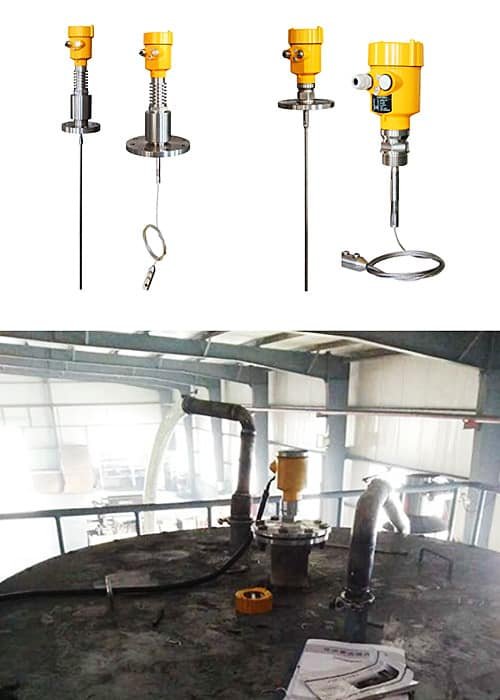
Why is Boiler Drum Level Measurement important?

In the boiler evaporation equipment, the boiler drum is an important part. The natural circulation loop of the boiler is composed of it, the upper header, the lower header, the lead-out pipe, the descending pipe and the water cooling wall. How the boiler drum level is controlled will affect the following aspects.

When the liquid level of the boiler drum is too high. The space where the steam is located is reduced. This results in increased water carryover in the steam. Causes the steam quality to deteriorate. This is one of them. Second, the water level is too high, and the superheater pipe is easy to accumulate salt scale. The tube is overheated and damaged.

The above two situations will occur when the water level is too high. What happens when the steam drum is full of water?

When the steam drum is full of water, there will be a lot of water in the steam. Severe hydraulic shock to steam lines.

The boiler drum water level is too high or too full. So is it too low?
The answer is of course no.

When the water level in the drum is too low, the water circulation will be disrupted. The water wall will exceed the usual temperature and overheat. If the water level is low to a certain extent, there is a serious water shortage. The device is likely to be severely damaged. even lead to accidents.

From the above content, it can be seen that the high and low water level of the boiler drum will have a certain impact on the safe operation of the boiler. In severe cases, it may even affect the safe operation of the unit. Therefore, it is very important to control the liquid level of the boiler drum. The use of liquid level gauges for liquid level measurement is also an inevitable result.

Liquid level data, seemingly unimportant, is actually very important. So no matter what industry, you must understand your own working conditions when choosing a liquid level sensor. Select the liquid level sensor according to the working conditions, so as to choose the appropriate one.

Extended reading: Hydrostatic Level Measurement

Current Situation of Drum Level Measurement

At present, from the basic principle of drum level measurement. The widely used are mainly based on two principles of connecting pipe type (static pressure) and differential pressure type. Drum level measurement instruments mainly include differential pressure level transmitters, Displacer Level Transmitters and guided wave radar level sensors.

The measurement principle of Differential pressure level transmitters is to measure the liquid level by converting the change of liquid level height into the change of differential pressure. This conversion is achieved by balancing the vessel to form a reference water column. The key to its accurate liquid level measurement is the accurate conversion between liquid level and differential pressure.

Using a differential pressure transmitter to measure boiler drum level must take into account certain physical properties of the fluid. The steam drum contains a two-phase mixture of water and steam under saturated conditions. The density of water and steam varies with saturation temperature or pressure. The density of saturated steam on the water surface, as well as the density of saturated water in the drum, must be considered.

Maybe you can refer to: Rosemount-Boiler Drum Level Transmitter Calibration

More about: Use Differential Pressure Transmitter to Measure Liquid Level

The Displacer Level Transmitter works based on the principle of buoyancy.

When the liquid level is at 0, the torsional moment generated by the torsion tube by the gravity of the float is the largest. The rotation angle of the torsion tube is at 0°.

When the liquid level gradually rises to the highest level, the torsion tube is subjected to buoyancy to generate a torque torque and rotates through an angle. The transmitter converts the angle into a 4~20mA DC signal. The signal is proportional to the measured liquid level.

The density change of the medium in this measurement method will affect the measurement accuracy. Mechanical vibration will also cause inaccurate readings.

The electrical contact level sensors belong to the connected tube type level sensors. The principle is to measure the liquid level by using the characteristics that the electrode in the boiler water has a small impedance to the cylinder and the electrode in the steam has a large impedance to the cylinder.

The conductivity of boiler water in high-pressure boilers is generally tens of thousands to hundreds of thousands of times greater than that of saturated steam. Therefore, the indication value of the electric contact level gauge is less affected by changes in the pressure of the steam drum. It can easily transmit liquid level signals remotely. .

However, the reliability of the sampling sensor is poor, the mechanical seal of the motor is easy to leak, the service life of the electrode is short, the indication is discontinuous, and there is a certain amount of maintenance.

Extended Reading: FMCW Radar for High Temperature Level Sensor

To sum up, due to the complexity of the measurement object of the liquid level in the drum, the uncertain factors in the actual operation and the large measurement error, the measurement of the liquid level sensor in the drum often has a large deviation.

Guided wave radar liquid level measurement is a brand-new measurement technology. It overcomes the shortcomings of liquid level measurement instruments such as differential pressure type, float type, and electrical contact. It is a brand-new liquid level measurement device.

Guided Wave Radar Level Transmitter

Guided wave radar level transmitter uses guided wave radar (GWR) technology. Based on the reflection of microwave on the surface medium. Through the probe, continuous level measurement of liquid and solid levels is completed.

A guided wave radar level transmitter is also called a wave-guided radar level sensor. They can measure both levels and the interface between two media. Through probe rod or cable, complete level contact types continuous level measurement. Such as Coaxial Probe Guided Wave Radar Level Transmitter. This is different from ultrasonic level measurement, which is non-contact measurement. A guided wave radar level transmitter is often used for tank level measurement. Including liquid and solid. Output 4~20mA/HART, so as to measure and control the level during production.

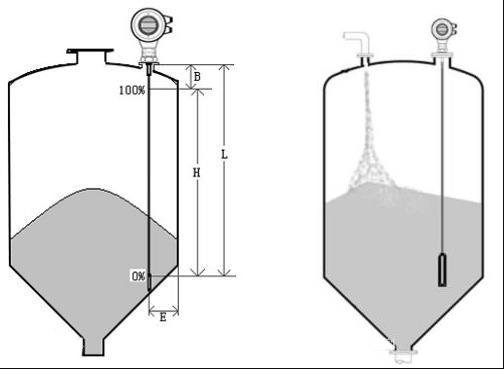
Guided Wave Radar Level Transmitter is a liquid level transmitter based on the principle of time domain reflectometry (TDR).

The electromagnetic pulse propagates along the steel cable or probe at the speed of light. When encountering the surface of the measured medium. Part of the pulse of the Guided Wave Radar Level Transmitter is reflected to form an echo and return to the pulse transmitter along the same path. The transmitter and the measured medium The distance from the surface is proportional to the travel time of the pulse in between. The liquid level height is calculated.

The advantages of the Guided wave radar level transmitter are contact measurement. Signal stability. Measurement unaffected by liquid density and electrical properties. Maintenance free, etc.

However, when the guided wave radar level gauge measures high temperature and high pressure liquids, the measured value will have a large deviation due to the polarization of the air. And the greater the distance between the measurement reference point (flange) and the surface of the measurement medium. The resulting The larger the systematic error.

1) The measurement is accurate.

Density and dielectric constant changes of the medium, as well as fog and foam, have no effect on the measurement. At the same time, the deposition and fouling of the medium on the wave guide have little effect on the liquid level measurement. This is because the signal transmission in the waveguide is not affected by liquid level fluctuations and obstacles in the tank, etc. The feedback signal received by the instrument is correspondingly stronger.

Furthermore, the detected interfering spurious signals in the return signal are extremely small. It is only necessary to detect the transit time of the electromagnetic wave. No signal processing and discrimination is required. Therefore, the measurement of the drum level is accurate.

2) It is convenient to measure and adjust.

Because electromagnetic waves are constant. When programming configuration, only need to input relevant parameters such as measuring range on site. No migration is required to change meter ranges and field calibrations. Greatly improve the efficiency of adjusting the instrument.

More about Advantages of Coaxial Probes

3) Low installation cost and easy maintenance.

Guided wave radar level transmitter consumes less energy. The two-wire transmission method greatly saves the installation cost.

At the same time, the quick universal joint between the probe and the transmitter makes the installation easier. It is more conducive to future maintenance.

Extended reading: Float Level Sensors – Single and Multipoint

Read more about: Condensate Flow Meter-Steam Condensate Flow Meter|Types & Selection Guide

Guided wave radar level transmitter measures drum level

A new type of Guided wave radar level transmitter is used to measure the liquid level of the steam drum of a certain device. The level gauge is certified as a limiting device for high temperature water (HW) and low temperature water (LW) containers. Complies with EN12952-11 and EN12953-9 (TUV certified) standards.

Guided wave radar level transmitter with GPC function technology. Improve the accuracy and reliability of the Guided wave radar level transmitter in high temperature and high pressure environment.

GPC technology

Under high temperature and high pressure conditions, the propagation speed of electromagnetic wave signals in the vapor above the medium (polarized medium) will decrease. At this time, the liquid level value measured by the radar will decrease.

Use guided wave radar with gas phase automatic compensation. Guided wave radar produces a reference reflection within the distance from the flange (measurement reference point), which varies along the rod probe.

Under normal temperature and pressure. The electromagnetic wave has two reflected echoes at the compensation reference end and the liquid level reflecting surface. The measurement is accurate at this time. At this time, the reference distance (the distance from the measurement reference point to the reference rod) is calibrated.

At high pressure, due to the polarization effect of the gas. At this time, the measured distance (the distance from the measurement reference point to the liquid level) has a large deviation from the actual value of the liquid level. if not compensated. Then there will be a large error in the measurement value.

The measured value is compensated by converting the reference reflection.

The calculation formula is: compensation distance = reference distance × (measured distance/measured distance). An accurate actual liquid level value can be obtained.

Application

The steam drum of the boiler plant is the main part of the steam production system.

Use the high temperature heat in the flue gas section of the reformer and the high temperature waste heat of the reformer gas at the furnace outlet. Produce 10.5MPa high pressure steam.

Part of it participates in the reaction as the steam distribution in the process. The other part is sent to the high-pressure steam pipe network to realize the comprehensive utilization of thermal energy and improve the operation efficiency of the device.

Because the traditional measurement can not meet the measurement requirements well. It is necessary to choose other products to replace.

Due to the importance of the steam drum to the boiler plant. To measure the liquid level of the steam drum, three measuring instruments are designed and used: Guided wave radar level transmitter and differential pressure liquid level level transmitter.

Measured by example. At high temperature, the measurement error of ordinary guided wave radar (without GPC) is as high as 18%. With GPC, the measurement error is only 2%.

The measurement data of the GPC guided wave radar level gauge at high temperature is relatively stable and true.

Therefore, it is a perfect combination of guided wave radar technology with GPC and advanced signal processing technology. This makes the guided wave radar level gauge with GPC an ideal solution for level measurement in steam and turbulent boiling conditions.

Extended reading: Vortex Steam Flow Meter

Featured Guided Wave Radar Level Transmitters

Related Level Measurement Blogs

Sino-Inst offers over 10 GWR Corrosive Liquid Chemical Level Sensors for level measurement. About 50% of these are Guided Radar level meters, 40% is the tank level sensor.

A wide variety of GWR Corrosive Liquid Chemical Level Sensors options are available to you, such as free samples, paid samples.

Sino-Inst is a globally recognized supplier and manufacturer of Guided Wave radar level measurement instrumentation, located in China.

Request a Quote

Please enable JavaScript in your browser to submit the form

PD Flow Meters Selection and Application | Oil-Liquid

What is PD flow meter?

PD flow meters (positive displacement flow meters) are the only flow measurement technology that directly measures the volume of fluid passing through the flow meter.
Rotating components within a high precision chamber capture the fluid. The rotational speed of the rotor is proportional to the flow rate. Rotation is caused by the flow of fluid. Mechanical flow meters rely on rotation to drive a magnetic coupling or direct gear train connected to a mechanical counter. Under the conditions of a given flow meter, the volume of this metering space is determined. Just measure the number of rotations of the rotor. The cumulative value of the volume of fluid passing through the flowmeter can then be obtained.

PD Flow Meters can be divided into oval gear flowmeters, scraper flowmeters, dual rotor flowmeters, rotary piston flowmeters, reciprocating piston flowmeters, disc flowmeters, liquid-sealed rotary drum flowmeters, etc.

Features of PD Flow Meters

Advantages

  • High measurement accuracy;
  • The installation pipeline conditions have no influence on the measurement accuracy;
  • Can be used for the measurement of high viscosity liquids;
  • wide range;
  • The direct-reading instrument can directly obtain the accumulation without external energy, and the total amount is clear and easy to operate.

Disadvantages

  • The structure is complex and the volume is huge;
  • The type, caliber, and working state of the medium to be tested are relatively limited;
  • Not suitable for high and low temperature occasions;
  • Most instruments are only suitable for clean single-phase fluids;
  • Generates noise and vibration.

Featured PD Flow Meters

PD Flow Meters are also known as positive displacement flow meters. It is mainly composed of measuring body and measuring part. The metering body consists of a shell and a movable body (rotor of the rotameter). The core part is the movable body, which is the moving part in the measurement process. Each measuring cavity formed by the movable body and the casing is a standard volume unit, which is used to measure the volume of the fluid to be measured.

Extended reading: Fluid flow meter types

The measuring part is actually a rotational speed or counting sensor. Magnetic material is embedded in the pinion extending out of one of the screws on the screw flowmeter. When the screw rotates, the sensor can identify the rotational speed of the screw through the magnetic effect. And convert it into a standard pulse signal or current signal. In this way, the flow can be directly displayed by the secondary instrument or collected and analyzed by the computer.

There are many types of positive displacement flow meters. They can be classified according to different principles. Usually, according to the structure of the measuring element, it is divided into rotor type, scraper type, rotary piston type, reciprocating piston type and diaphragm type.

Among them, the rotor type is the most commonly used. The common gear type, screw type, waist wheel type and egg wheel type flowmeter belong to the rotor type.

Extended reading: Positive Displacement Flow meter Technology

The interior of the positive displacement flowmeter is designed with a space that constitutes a certain volume. The rotor inside the flowmeter rotates under the action of the pressure of the fluid flowing from the inflow port.

With the rotation of the rotor, the fluid flows from the inflow port to the discharge port. At this time, during the rotation of the rotor, a certain volume space is formed between the rotor and the flowmeter housing. The fluid fills this space with the rotation of the rotor. It is continuously sent to the discharge port.

If the volume of the space is designed, the number of rotations of the rotor is measured. The volume given by the space can be obtained, thereby obtaining the volume of fluid flowing through.

Extended reading: Liquid mass flow controller

This fixed-displacement flow measurement method for positive displacement flowmeters can be traced back to the 18th century. It entered the stage of widespread commercial application in the 1930s.

In recent years, the sales of PD flow meters in some industrialized countries have exceeded 20%. In my country, it also accounts for about 20%. It is mainly used in the metering of petroleum-based media.

But because of its precise metering characteristics. In recent years, it has been rapidly expanded to chemical, food, medical and other sectors to accurately measure the total amount and flow of expensive media.

In the measurement of petroleum, an international standard (ISO/DIS 2714) for measurement systems using positive displacement flowmeters has been developed. Moreover, positive displacement flowmeters with high precision, long-term performance retention and high repeatability are also used as standard instruments for industrial flow measurement, calibrating and calibrating industrial instruments.

In short, due to the high accuracy of positive displacement flowmeters, they are often used to measure the flow of relatively expensive media. High viscosity media can be measured. Therefore, it is generally used for the measurement of high-viscosity liquids in petroleum, chemical, metallurgical and other industries.

Extended reading: How to choose a high viscosity flow meter?

Of course it is also suitable for measuring low viscosity liquid media. In addition, positive displacement flowmeters can also measure gases. At the same time, the installation of positive displacement flowmeter does not require the front and rear straight pipe sections.

Extended Reading: Liquid Turbine Flow Meter

The Sanitary Positive Displacement Flow Meter is made of stainless steel and is quickly connected by Tri-clamp. Can be used to measure viscous liquids in the food industry. Such as sweeteners, edible oil, palm oil, honey, fat, tallow, fat, syrup, molasses, etc.

Extended Reading: Fuel Flow Meters for Diesel-Marine fuel-Industrial oil

Extended Reading: Mechanical oil flow meter

Positive Displacement Flowmeter Selection

The manufacturer generally specifies the flow range according to the type of the measured medium (mainly different viscosity), use characteristics (continuous use or intermittent use) and measurement accuracy.

In order to maintain good performance and long service life of the flowmeter. It is recommended to select 80% of the maximum flow rate of the flow meter when the maximum flow rate is used continuously.

If the manufacturer does not clearly specify the flow range according to the type of medium and the characteristics of use. The maximum flow rate for intermittent use can be 100% of the upper flow limit.

When used continuously, the maximum flow rate of medium viscosity liquid is 80% of the upper flow rate of the flowmeter. The maximum flow rate of low-viscosity and high-viscosity liquids is 50% to 60% of the upper flow rate of the flowmeter.

The fundamental error of most positive displacement flow meters is ±0.5%. The basic error of the higher precision flowmeter is ±(0.1%-0.2%). The oval gear flowmeter can reach ±0.05%. The basic error of the lower precision flowmeter (such as the elastic scraper flowmeter) is ±(1.0%-1.5%).

The accuracy of a positive displacement flowmeter is the fundamental error obtained under laboratory conditions. In actual use, field conditions often deviate from laboratory conditions, resulting in additional errors. The actual error should be the sum of the basic error and the additional error. When selecting and using, measures should be taken according to the on-site situation to ensure the measurement accuracy.

Extended reading: Crude Oil Measurement – Radar Level Meter Measuring Vaulted Buffer Tank

Positive displacement flowmeters rely on the fluid to push the measuring fittings, so the pressure loss is high. The pressure loss of a positive displacement flowmeter is larger than that of other types of flowmeters of the same diameter and flow. The pressure loss of general liquids is 20 to 100 kPa.

When measuring liquids with high vapor pressure, excessive pressure drop will cause cavitation. If cavitation exists for a long time, it will damage the flowmeter accessories. Some flowmeters that allow short-term overflow to 120% of the upper limit of measurement should pay more attention to this problem .

Extended reading: Orifice Plate Flow Meter

Fluid corrosiveness is a major factor in determining flowmeter material.

For various petroleum products, cast steel and cast iron are used.
For slightly corrosive chemical liquids and cold water, it is made of copper alloy.
Made of stainless steel for pure water, high temperature water, crude oil, asphalt, high temperature liquids, chemical liquids, food or food raw materials.

The corrosion resistance of positive displacement flowmeters is generally not strong. In the food and biopharmaceutical industries, due to hygiene requirements, flow meters are frequently sterilized. Fittings that come into contact with fluids must be made of stainless steel and other hygienic materials. They must be easily disassembled.

Generally speaking, the viscosity of various gases is similar. It has no effect on the performance of the flowmeter. The viscosity of liquids is quite different.

In order to adapt to the liquid with high viscosity, the positive displacement flowmeter has a structure with a large gap.

Although the volume-second flowmeter is affected by viscosity, it is less affected than differential pressure and float turbine flowmeters. Viscosity generally affects the measurement error, pressure loss and flow range of positive displacement flowmeters.

Extended reading: Ultrasonic Flow Meters Types & Technical Guide

When the flowmeter is used at higher temperatures, the maximum working pressure rating must be reduced. Sudden valve opening and closing can create water hammer effect. Shock force may exceed operating pressure. Shock force may also cause false readings. Buffer tank may be installed if necessary.

Temperature will not only affect the compressive strength of the flowmeter, but also affect the measurement accuracy. Reduced structural clearance can jam moving parts. Therefore, when used at higher temperatures, a dimensional clearance should be reserved to compensate.

Especially when different materials are used in combination, pay more attention to the difference in thermal expansion coefficient.

Changes in temperature also change the viscosity of the liquid, causing flow changes. It can be corrected by automatic temperature compensation, and there must be a suitable preheating time before use, and observe whether it can operate normally.

Extended reading: Heating Oil Flowmeters

Usually the compressibility of liquids is negligible, however, compressibility should not be neglected when measuring oil with high accuracy.

For example, when the pressure of heavy oil rises from 0.5 MPa to 6 MPa, the volume is compressed by 0.45%. LPG is more compressible.

Gases are highly compressible, and their volume decreases at low pressures in proportion to pressure increases. Most positive displacement flow meters are used for low pressure conditions and can be directly converted.

However, under high pressure conditions, the volume reduction is not proportional to the pressure increase. The gas compressibility factor should be considered.

Extended Reading: Summary Of Crude Oil Flow Measurement Options

Extended Reading: Guide and Selection for Diesel Fuel Flow Meters

Sino-Inst, Manufacuturer for PD Flow Meters. For example: crude oil flowmeter, diesel flowmeter, gasoline flowmeter.

Sino-Inst’s PD Flow Meters, made in China, Having good Quality, With better price. Our flow measurement instruments are widely used in China, India, Pakistan, US, and other countries.

Extended reading: Hydraulic oil flow measurement solutions.

Request a Quote

Please enable JavaScript in your browser to submit the form

Tech Guide for Non-Contact Radar Type Level Transmitters

What Is Radar Type Level Transmitter?

The Radar Type Level Transmitter is a kind of instrument that measures the liquid level in the container by microwave. The Radar Type Level Transmitter provides reliable non-contact, maintenance-free continuous measurement of liquids in metal tanks or containers. Not affected by pressure, vacuum or temperature.

Excellent performance under harsh measurement conditions such as flammable, explosive, highly corrosive, high temperature, and viscous. Ideal for corrosive liquids, viscous liquids, slurries, or other applications where direct contact with the medium is not desired. Especially suitable for the measurement of large vertical tanks and spherical tanks. Low dielectric properties allow operation in liquids with a dielectric constant of 2 or greater. It can be used in almost every occasion.

Features of Radar Type Level Transmitters

  1. Radar Type Level Transmitter can measure liquid and solid media. For example: crude oil, slurry, raw coal, pulverized coal, volatile liquids, etc.;
  2. Can be measured in vacuum can measure all media with a dielectric constant> 1.2. Measuring range up to 150m;
  3. The power supply and output signal pass a two-core cable (loop circuit), using 4…20mA output or digital signal output;
  4. Non-contact measurement and installation are convenient and extremely stable materials are used. It is accurate and reliable with a resolution of up to 1mm;
  5. Not affected by noise, steam, dust, vacuum and other working conditions;
  6. Not subject to changes in medium density and temperature. Process pressure can reach 400bar, medium temperature can reach -200℃ to 800℃;
  7. There are various installation methods to choose from: Top installation. Side installation. Bypass pipe installation. And waveguide installation;
  8. Debugging can be selected in many ways: Using programming module debugging , equal to an analytical processing instrument. SOFT software debugging. HART handheld programmer debugging. Debugging is convenient and fast.

Advantages of radar level measurement

  • Measurement is not affected by temperature, pressure or dust
  • User-friendly adjustment saves time
  • Non-contact, continuous level measurement over larger ranges
  • Unaffected by sludge and biomass, dust, foam, oil, grease and other coatings, uneven surfaces, turbulence, pressure, and vacuum
  • Single frequency radar level sensors for liquid sensing, dual frequency radar level sensors for level measurement of aggregates, gravel, sand, coal, asphalt, and other solids
  • Simple mounting and push-button calibration

Radar Level Transmitters Specifications

– 120GHz

Series
SI-FMF11

SI-FMF12

SI-FMF13

SI-FMF15

SI-FMF21
Applicable medium:LiquidLiquid Liquid Liquid Solid
Measuring range:0.05m~30m0.05m~35m0.1m~100m0.1m~35m0.3m~150m
Antenna:32mm lens antenna42mm lens antenna78mm lens antenna78mm lens antenna78mm lens antenna + purging (or without purging)
Accuracy:±2mm±2mm±2mm (range below 35m)
±5mm (range between 35m-100m)
±2mm±5mm
Medium temperature:-40~80℃-40~110℃-40~110℃-40~200℃-40~110℃
Medium pressure:-0.1~0.3 MPa-0.1~1.6MPa-0.1~0.3MPa-0.1~2.5MPa-0.1~0.3MPa
Signal output:Two-wire system/4…20mA/HART protocol
Four-wire system 4…20mA/ RS485 Modbus
Two-wire system/4…20mA/HART protocol
Four-wire system 4…20mA/ RS485 Modbus
Two-wire system/4…20mA/HART protocol
Four-wire system 4…20mA/ RS485 Modbus
Two-wire system/4…20mA/HART protocol
Four-wire system 4…20mA/ RS485 Modbus
Two-wire system/4…20mA/HART protocol
Four-wire system 4…20mA/ RS485 Modbus
Power supply:Two-wire system/DC24V
Four-wire system/DC12~24V
Four-wire system/AC220V
Two-wire system/DC24V
Four-wire system/DC12~24V
Four-wire system/AC220V
Two-wire system/DC24V
Four-wire system/DC12~24V
Four-wire system/AC220V
Two-wire system/DC24V
Four-wire system/DC12~24V
Four-wire system/AC220V
Two-wire system/DC24V
Four-wire system/DC12~24V
Four-wire system/AC220V
Shell:Aluminum/plastic/stainless steelAluminum/plastic/stainless steelAluminum/plastic/stainless steelAluminum /Plastic /Stainless steelAluminum/plastic/stainless steel
Process connection:G1½A / 1½NPT thread / flange ≥DN50G2A thread/flange≥DN65Flange ≥DN80Flange ≥DN80Flange ≥DN80

– 80 GHz

SeriesLM78x0LM78x1LM78x2
Applicable medium:For normal solid applicationFor liquid applicationFor large range solid application
Measuring range:0.3 m ~ 60m0.08m~30m0.6m ~ 120m
Antenna:Lens antenna/
anti-corrosive antenna /
flange isolated by quartz
Lens antenna/
anti-corrosive antenna /
flange isolated by quartz
Lens antenna/
anti-corrosive antenna /
flange isolated by quartz
Accuracy:±1mm±1mm±1mm
Medium temperature:T0:-40~85℃;
T1:-40~200℃;
T2:-40~500℃;
T3:-40~1000℃
T0:-40~85℃;
T1:-40~200℃;
T2:-40~500℃;
T3:-40~1000℃
T0:-40~85℃;
T1:-40~200℃;
T2:-40~500℃;
T3:-40~1000℃
Medium pressure:-0.1~2MPa-0.1~2MPa-0.1~2MPa
Signal output:4 ~ 20mA or RS-4854 ~ 20mA or RS-4854 ~ 20mA or RS-485
Power supply:15~28VDC15~28VDC15~28VDC
Shell:Aluminum alloy, stainless steelAluminum alloy, stainless steelAluminum alloy, stainless steel
Process connection:Thread or flangeThread or flangeThread or flange

– 26 GHz

SeriesSIRD-901 SIRD-902 SIRD-902T SIRD-903 SIRD-904 SIRD-905 SIRD-906 SIRD-908 SIRD-909
Applicable medium:All kinds of corrosive liquidSlightly corrosive liquidCorrosive liquids, vapors, volatile liquidsSolid material, Strong dust
easy to crystallize, condensation occasion
Solid material, Strong dust,
easy to crystallize, condensation occasion
Solid particles, PowderHygienic liquid storage,
Corrosive container
Rivers, Lakes, ShoalRivers, Lakes, Shoal
Measuring range:
10 meters
30 meters20 meters70 meters80 meters30 meters20 meters30 meters70 meters
Antenna:Sealing horn / PTEEHorn Antenna Φ46mm/ Horn Antenna Φ76mm /Horn Antenna Φ96mm / Special CustomInternal tapered rod antenna PVDF / 78mm
Internal tapered rod antenna PFA / 78mm
Horn Antenna Φ76mm / Φ96mm / Φ121mm/Special CustomParabolic antenna Φ196mm /Φ242mmHorn Antenna Φ76mm / Φ96mm / Φ121mm/Special CustomViton / (-40~130) ℃Horn antenna with 76mm/ 96mmHorn antenna with 76mm/ 96mm/ special custom
Accuracy:± 5mm± 3mm±3mm±15mm±15mm±15mm± 3mm± 3mm± 10mm
Medium temperature:-40℃~130℃-40℃~130℃(Standard type)
-40℃~250℃(High-temperature type)
-40℃~130℃(Standard type)
-40℃~250℃(High-temperature type)
-40℃~130℃(Standard type)
-40℃~250℃(High-temperature type)
-40℃~130℃(Standard type)
-40℃~250℃(High-temperature type)
-40℃~130℃(Standard type)
-40℃~250℃(High-temperature type)
-40℃ ~ 130℃-40℃ ~ 100℃40℃ ~ 100℃
Medium pressure:-0.1~0.3 MPa-0.1 ~ 4.0 MPa-0.1~2.0 MPa-0.1~4.0 MPa (Flat flange)
-0.1~0.3MPa (Universal flange)
-0.1 ~ 0.3 MPa-0.1 ~ 4.0 MPa (Flat flange)
-0.1 ~ 0.3 MPa (Universal Flange)
-0.1~4.0 MPaNormal-pressure Normal-pressure
Signal output:4… 20mA /HART (2-wire / 4-wire)
RS485/ Modbus
4… 20mA /HART(2-wire / 4-wire)
RS485/ Modbus
4… 20mA /HART(2-wire / 4-wire)
RS485/ Modbus
4… 20mA /HART (2-wire / 4-wire)
RS485/ Modbus
4… 20mA / HART (2-wire / 4-wire )
RS485/ Modbus
4… 20mA /HART (2-wire / 4-wire )
RS485/ Modbus
4… 20mA/HART (2-wire / 4-wire )
RS485/ Modbus
RS485 / Modbus ( 6~24V DC)
4~20mA / Hart Two-wire ( 24V DC)
RS485 / Modbus ( 6~24V DC)
4~20mA / Hart Two wire ( 24V DC)
Power supply:2-wire(DC24V)/ 4-wire(DC24V /AC220V)2-wire(DC24V)/ 4-wire(DC24V /AC220V)2-wire(DC24V)/ 4-wire(DC24V /AC220V )2-wire(DC24V)/ 4-wire(DC24V /AC220V)2-wire(DC24V)/ 4-wire(DC24V /AC220V)2-wire(DC24V)/ 4-wire(DC24V /AC220V)2-wire(DC24V)/ 4-wire(DC24V /AC220V)(6 – 24V) DC  / Four-wire
24V DC / Two wire
(6 – 24V) DC  / Four-wire
24V DC / Two wire
Shell:Aluminum / Plastic / Stainless steelAluminum / Plastic / Stainless steelAluminum / Plastic / Stainless steelAluminum / Plastic / Stainless steelAluminum / Plastic / Stainless steelAluminum / Plastic / Stainless steelAluminum / Plastic / Stainless steelAluminum / Plastic /Single chamberAluminum / Plastic / Single chamber
Process connection:Thread, Flange Thread, Flange FlangeUniversal FlangeThread, Universal FlangeThread, FlangeFlange Thread G1½ A″ /Frame /Flange Thread G1½ A″ /Frame /Flange

– 6 GHz

Series
SIRD-801
SIRD-802SIRD-803SIRD-804 SIRD-805 SIRD-806
Applicable medium:Liquid, slightly corrosive liquidLiquid, especially for corrosive liquidLiquid, especially with pressure and Volatile LiquidSolid particles or block material,
And it is not suitable for solid powder
Liquid, especially suitable for low dielectric constant, sticky, with mixing liquidSolid, especially suitable for high temperature conditions
Measuring range:20m20m35m35m20m15m
Antenna:The Rod Antenna ( PP/PTFE )The Rod Antenna (PTFE)The Horn AntennaThe Horn AntennaThe Horn AntennaThe Horn Antenna
Accuracy:±10mm± 10mm± 10mm± 20mm± 10mm± 20mm
Medium temperature:(-40 ~ 130) ℃-40℃~130℃(Standard type)
-40℃~180℃(High temperature type)
-40℃~130℃(Standard type)
-40℃~250℃(High temperature type)
-40℃~130℃(Standard type)
-40℃~250℃(High temperature type)
-40℃~130℃(Standard type)
-40℃~250℃(High temperature type)
(-40 ~ 400) ℃
Medium pressure:(-0.1 ~ 0.3) MPa(-0.1 ~ 1.6) MPa(-0.1 ~ 4) MPa(-0.1 ~ 0.3) MPa(-0.1 ~ 4) MPa(-0.1 ~ 0.3) MPa
Signal output:(4 ~ 20) mA/HART(4 ~ 20) mA/HART(4 ~ 20) mA/HART(4 ~ 20) mA/HART(4 ~ 20) mA/HART(4 ~ 20) mA/HART
Power supply:Two-wire (DC24V)
Four-wire(DC24V / AC220V)
Two-wire (DC24V)
Four-wire(DC24V/AC220V)
Two-wire (DC24V)
Four-wire(DC24V/AC220V)
Two-wire (DC24V)
Four-wire(DC24V/AC220V)
Two-wire (DC24V)
Four-wire(DC24V/AC220V)
Two-wire (DC24V)
Four-wire(DC24V/AC220V)
Shell: Aluminum /Plastic / Stainless steelAluminum / Plastic / Stainless steelAluminum / Plastic / Stainless steelAluminum / Plastic / Stainless steelAluminum / Plastic / Stainless steelAluminum / Plastic / Stainless steel
Process connection:Flange (optional) / ThreadWith PTFE plate flangeFlange (optional) / ThreadUniversal joint flangeFlangeFlange

Industrial applications of Radar Type Level Transmitters

Radar level sensors have a very wide range of applications. Almost all media can be measured. This is something other types of meters can only look up to.

It can measure not only spherical tanks and horizontal tanks, but also the liquid level measurement of cylindrical tanks, cylindrical cone tanks, etc.

In terms of tank function, the liquid level in storage tanks, buffer tanks, microwave tubes, and bypass pipes can be measured.

As far as the measured medium is concerned, liquid, particle, slurry, etc. can be measured.

  1. Steel industry

Production processes:
Coal coking: coal preparation bunker, coke bunker, gas tank, coal tar and crude benzene tank
Sintering plant: sintered material mixing bin, cold return ore, pelletizing bin
Ironmaking plant: ironmaking intermediate warehouse, blast furnace material level, etc.

Working characteristics:
Solid material measurement, strong dust, low dielectric constant, long range.
Volatile crystallization of tar and crude benzene;
High temperature and dust adhesion of blast furnace material level;

Selection application:
Solid measurement is mainly based on high-frequency pulse radar level meter.
Guided wave radar level meter can be used for crude benzene and coal tar.

  1. Coal industry

Production link: raw coal bunker, pulverized coal bunker, coal gangue storage level, coal washing pool.
Working condition characteristics: typical solid material measurement, strong dust, low dielectric constant. Long range.
Selection and application: high-frequency pulse radar level meter is mainly used.

  1. Cement industry

Production link: raw material warehouse, raw material homogenization warehouse, clinker warehouse, finished product warehouse, fly ash warehouse, raw coal warehouse, gypsum warehouse, cement slag warehouse
Working condition characteristics: Typical solid material measurement, strong dust, low dielectric constant, long range.
Selection application: High-frequency pulse radar level meter is mainly used.

  1. Power industry thermal power, hydropower, biological power generation

Production processes:
(thermal power) raw coal and pulverized coal silo, circulating water pool, low and high water level, limestone powder silo, ash hopper material level, ash silo, slag silo, desulfurization tower liquid level

Working characteristics:
Solid material measurement, strong dust, low dielectric constant, long range.
Low water level, high temperature and high pressure;
Desulfurization tower liquid level foam, water vapor, crystallization, spray interference, side loading

Selection application:
The measurement of solid materials is mainly based on high-frequency pulse radar level meters.
High and low water level application of guided wave radar;
The low frequency radar level gauge is commonly used in the desulfurization tower liquid level;

  1. Non-ferrous metallurgy industry – aluminum, nickel, zinc, and titanium industries

Production processes:
(Aluminum production) slurry tank, dissolution tank, flash tank, post-dissolution tank, flocculation tank, settling tank, decomposition tank, alumina powder silo.

Working characteristics:
Various chemical reaction environments have high temperature, strong water vapor, stirring or corrosion factors

Selection application:
For the influence of high temperature water vapor, refer to factors such as corrosion, measuring range, stirring, and hanging material;
Choose between guided wave radar or low frequency radar level gauge.
High-frequency radar level gauges are still preferred for solids measurements.

  1. Water conservancy industry

Applications: Hydrological monitoring, flood control alarm, farmland irrigation

Characteristics of working conditions: The signal transmission is far away, the power supply voltage is low, and the installation position is affected by the embankment and dam. The radar wave with small beam angle is preferred.

Selection application: choose high-frequency radar level gauge with MODBUS protocol

  1. Food and pharmaceutical industry

Production processes:
Edible oil tank, soybean meal storage tank

Working characteristics:
Simple tank environment, or with precision requirements, antenna hygiene requirements in the pharmaceutical and food industries

Selection application:
The high-frequency radar level meter is preferred for the measurement environment with high precision;
If there are hygienic requirements, an antenna with a sealed material that meets hygienic conditions should be selected;

  1. Industrial petrochemical, coal chemical

Production processes:
Petrochemical: crude oil depot, gasoline tank, diesel tank, natural gas tank, etc.
Coal coke chemical industry: refer to the coal industry
Calcium carbide chemical industry: coal bunker, calcium carbide bunker, etc.

Working characteristics:
Solid material measurement, strong dust, low dielectric constant, long range.
The measurement environment of various oil depots is simple and may have accuracy requirements
There is pressure in the natural gas spherical tank, and the dielectric constant is small
There is oscillating interference echo in gas tank measurement
Various chemical reactor conditions are different

Selection application:
The measurement of solid materials is mainly based on high-frequency pulse radar level meters.
For various oil depots with precision requirements, high-frequency radar is preferred for spherical tanks;
Gas cabinets that are prone to oscillating interference signals also have limited selection of high-frequency radars;
The chemical reactor is selected according to the actual conditions and parameters;

  1. Environmental protection and water treatment industry

Processing link:
Water collecting well, coarse grid, fine grid, biochemical reaction pool, mud flushing pool, sludge pool, well dissolving medicine pool.

Working characteristics:
Except for ultra-long-range and narrow spaces such as water collection wells, other environments are relatively simple.

Selection application:
The water collecting well can choose guided wave radar or high-frequency radar level gauge according to the range requirements. Generally, ultrasonic level gauges are more commonly used in simple environments.

  1. Semiconductor industry

Production link: silicon micropowder warehouse
Working condition characteristics: very low dielectric constant, strong dust
Selection application: high frequency radar level meter

Radar Type Level Transmitters Applications

  • Liquids with foam, gases (CO2,methane) and other fumes
  • Highly corrosive liquids such as acids and solvents
  • High temperature applications up to 350F such as asphalt
  • Slurries
  • Acids, Caustics and Solvents
  • Vacuum applications
  • Diesel crude oil
  • Sanitary applications
  • Oil-water interface monitoring and detection

Extended reading: Hydrostatic Level Measurement

Ordering Information

When ordering Radar Type Level Transmitters, we need to consider the following factors:

  1. Application medium and measuring range:
    The physical properties of the liquid medium to be measured have a great influence on the measurement range. Liquids are usually divided into four categories: A, B, C, and D.

Class A: non-conductive liquid, the dielectric constant is less than 1.4, which has a great influence on the measurement distance, and the measurement range is
The circumference is small. such as propane.

Class B: non-conductive liquid, the dielectric constant is about 1.9~4, which has a great influence on the measurement distance.
The volume range is medium. Such as gasoline, oil, etc.

Class C: The dielectric constant is about 4~10, which has little influence on the measurement distance and has a large measurement range. like
Concentrated acid, organic solvent vinegar, ethanol, acetone, oil-water mixture, etc.

Class D: conductive liquid, dielectric constant > 10, little influence on the measurement distance, the most measuring range
big. Such as aqueous solution, diluted acid and alkali, etc. ·

When the liquid surface of the tank is smooth. The measurement range of Class A liquid is 5m. For Class B fluids
The volume measurement range is 10m. Class C liquid 15m. Class D liquids can reach 20m. When the liquid level fluctuates, the corresponding measurement range should be appropriately reduced.

  1. Process temperature and process pressure
    Radar Type Level Transmitters are suitable for high temperature and high pressure measurement. However, the temperature and pressure of the tank need to be clearly confirmed.
  2. Antenna style
    The radar level gauge consists of electronic components, waveguide connectors, mounting flanges and antennas.
    The shape of the antenna determines the thin focus and sensitivity. Therefore, the choice of antenna is particularly important.

3.1 Flare Antenna
The horn antenna is suitable for most occasions and has the advantages of good focusing, stable physical and chemical properties, durability and firmness. But it is not suitable for the measurement of corrosive media.

3.2 Rod Antenna
Rod antennas are chemically stable, easy to clean and insensitive to condensation. Suitable for corrosive media.

3.3 Under-the-flange antenna
The flange-mounted antenna is mainly used for the measurement of strong corrosive media.

3.4 Parabolic Antenna
The parabolic antenna has good focusing and is not affected by heating steam, and is especially suitable for in-tank measurement of large containers with heating steam, such as the measurement of residual oil, asphalt, etc., and the measurement range can reach 40m.

3.5 Antenna with stilling pipe or bypass pipe
Install a casing for the antenna. The casing is equivalent to a wire that transmits radar signals. It is suitable for occasions where the surface of the medium fluctuates greatly or the dielectric constant is small.

  1. Display and output signal requirements.
    Our Radar Type Level Transmitters are generally configured with local digital displays. A split display can also be configured if required by the customer.
    Support 4-20mA, 485 and other signal output.
  2. Installation method and installation size.
    Radar Type Level Transmitters support flanged, threaded, bracket mounts. When ordering Radar Type Level Transmitter, customers need to confirm the size with the manufacturer in advance.
  3. Special requirements.
    For example, anti-corrosion, explosion-proof, sanitary and so on.

Extended reading: How to convert a 4-20mA to 0-10V /1-5V signal?

Radar Level Measurement and guide wave radar level measurement Image source: https://instrumentationtools.com/radar-level-measurement/

Very short microwave pulses with very low energy are transmitted and received through the antenna system. The radar wave runs at the speed of light. The operating time can be converted into level signals by electronic components. A special time extension method can ensure stable and accurate measurement in a very short time.

Electromagnetic waves propagate in the air at the speed of light. The distance between the radar level gauge and the surface of the material can be expressed by the following formula:   

D = (1/2)*CT

In the formula:

D ———the distance between the radar level gauge and the surface of the material;   

C ———Speed of light   

T ———Pulse time.

Then the liquid level is:   L = E-D

In the formula:

L — liquid level;   

E ———The total height of the tank;   

D ———Air height.

Even in the presence of false reflections, the new micro-processing technology and the unique ECHOFOX- software can accurately analyze the level echo. By inputting the size of the container, the distance value can be converted into a signal proportional to the level. The instrument can be debugged with empty positions.

Radar Type Level Transmitters have the advantages of high precision, long life, low maintenance, high performance and so on. Widely used in the industry. Continuous measurement can be performed in harsh environments such as high temperature, high pressure, steam, vacuum and high dust. However, different models of Radar Type Level Transmitters are selected in different environments, and the antennas used are also different.

  1. Rod antenna

Insulated rod antennas are usually made of polymer materials such as polytetrafluoroethylene and polypropylene. Good corrosion resistance. Can be used in strong acid, alkali and other media.

However, the microwave emission angle is relatively large (about 30°), and there are many side lobes. For the case where the structure of the tank is more complicated. There will be more interference echoes. The signal-to-noise ratio is small and the precision is low.

But easy to clean. It is often used to measure tanks and corrosive media with good operating conditions, large diameters, and small measuring ranges.

If the measured medium is volatile and condensed, it is better to choose a rod antenna or a water drop antenna.

  1. Flare antenna

At the same frequency, the larger the diameter of the horn, the smaller the emission angle. If it is a high frequency radar level gauge, the emission angle is smaller and the accuracy is higher.

Most economical radar level gauges use microwave frequencies of 5.8GHz or 6.3GHz. Its emission angle is large, and it is easy to generate interference echoes on the container wall or internal components.

Although the horn antenna increases can reduce the emission angle. But the volume increases and the installation is inconvenient. And the improvement is limited.

Using high-frequency radar, the launch angle can reach 8°. This enables high measurement accuracy even when measuring the level of long and narrow tanks.

If it is used in a large-range measurement site, choose a radar level meter with a large horn antenna. Small horn antennas are suitable for small containers.

If the fluidity of the measured medium is poor and there is a phenomenon of hanging material, then choose a horn or a rod radar level gauge.

  1. Parabolic antenna

This is a new type of antenna that has been introduced recently, and is mostly used in radars that transmit at high frequencies. Because its emission angle is only 7°. Ideal for measuring precise targets and measuring around obstacles.

But its antenna size is large. If the X-band is used, the diameter is up to Φ454mm, and the opening size should be larger than 500mm, which is not very convenient for installation and use.

  1. Plane antenna

The planar antenna adopts planar array technology. That is, a multi-point emission source. Compared with a single-point emission source, it is measured on a plane. rather than a definite point.

With the corresponding electronic circuit, the measurement accuracy of the radar level gauge can reach ±1mm. It can be used for precision metering of storage tanks. Mainly used for metrology-grade radar level gauges. Planar antennas are suitable for a variety of working conditions.

Extended Reading: FMCW Radar for High Temperature Level Sensor

  1. Sleeve antenna

When the dielectric constant is small (1.6~3) or the liquid surface produces continuous eddy current or the device in the container causes false reflection, this type of instrument should be selected.

The casing has a focusing effect on the radar wave, and the antenna is installed in the still-pipe or bypass pipe.

The inner diameter of the casing has an effect on the propagation time of the radar wave. Therefore, when setting the parameters, the parameters of the inner diameter of the casing should be set. Compensation for in-travel time.

In addition, this type of antenna requires that the measured medium has good fluidity and is not easy to hang.

If the container under test has a stirring paddle. And the radius of rotation of the blade is almost equal to the diameter of the tank. Then the echo of the radar level gauge will be seriously disturbed. At this time, the still-pipe radar level gauge is used.

  1. Guided wave radar antenna

Sending and receiving electromagnetic waves through guided metal or cables is a contact measurement.

Because it has little effect on dust, steam, and the adhesion medium on the probe. Therefore, it is more widely used in solid material level and liquid level measurement with small dielectric constant.

The dual-cable guided wave radar level gauge uses the change of measuring capacitance to measure the level of the liquid level. The medium between the two electrodes is the liquid and the gas above it. Suitable for level measurement of corrosive and high pressure media.

Fundamentally solve the influence of temperature, humidity, pressure, material conductivity and other factors on the measurement process. Therefore, it has extremely high anti-interference and reliability.

Coaxial tube radar level gauge is a guided wave radar level gauge equipped with a coaxial tube probe. It is used for liquid level measurement and control of liquids with low dielectric constant or surface fluctuations. Such as If the dielectric constant of the measured material is too low, the general type of radar level meter is not suitable.

Extended Reading: Guided-wave radar (GWR) level transmitter working principle

Most of the time, people don’t think of using radar level sensors as level switches.
The output of radar liquid level sensor is mostly 4-20mA.
However, if the customer’s working conditions require output switching. It can also be customized.
For example, we can add a secondary gauge to the output of the radar level sensor. Convert the current signal into a digital signal.

Extended reading: Float Level Sensors – Single and Multipoint

Radar Type Level Transmitters can be used not only in various tanks. It can also be used in various storage tanks.

Extended Reading: Featured Silo Level Sensors

Different storage tanks have different types of Radar Type Level Transmitters.

A spherical tank, also known as a spherical container, has a spherical shell.
This kind of storage tank is mainly used for the storage and transportation of various gases, liquids and liquefied gases. It is widely used in chemical, metallurgy, petroleum and other industries.

Vaulted tank, also known as vaulted storage tank. It refers to the steel container with the top of the storage tank in the shape of a spherical tank and the tank body in the shape of a cylinder.
This type of storage tank is widely used in the fluid industry, such as the most common type C liquids. In addition, refineries also commonly use vaulted tanks to store diesel fuel, fuel oil, and more.

Floating roof tank, also known as floating roof storage tank. It is divided into inner floating roof tank and outer floating roof tank.

An internal floating roof tank is a floating roof tank with a tank top inside. Its top is a combination of a floating roof and a vault. The inside is a floating roof and the outside is a vault.

The floating roof of an external floating roof tank is a floating roof. It floats on the surface of the liquid storage and floats up and down as the liquid flows in and out. In refineries, these two types of storage tanks are often seen.

Horizontal storage tank. It is mainly composed of tank body, accessories and brackets. It is mainly used in the petrochemical industry for the storage of reaction media, crude oil, petroleum products, etc.

Vertical storage tank. It is mainly composed of foundation, tank bottom, tank wall, tank top and accessories. It is often used as a large oil tank for the petroleum industry. If it is divided by the structure of the tank top, vertical storage tanks can be divided into internal floating roof tanks, external floating roof tanks and vaulted roof tanks.

There are not many types of common measurement tanks for Radar Type Level Transmitters. However, different companies will install some auxiliary equipment inside according to the needs of the work, such as the most common heating coils, agitators, and so on. Therefore, when installing the radar level gauge, not only should pay attention to the shape and size of the storage tank, but also pay special attention to the internal structure.

Extended reading: Industrial Tank level indicators and Tank Level Gauges

More Featured Level Transmitters for Sale

Read more about: Working Principle Of High Temperature And High Pressure Capacitive Level

Frequently
Asked
Questions

We have two kinds of radar level transmitters:

  • Noninvasive or Non-contact Systems
  • Invasive or Contact System

Extended reading: Hydrostatic Level Measurement

The radar transmitter uses a high-frequency oscillator as a microwave generator. The generator produces microwave
shoot down through the antenna. When microwaves encounter obstacles, some of them are reflected back. According to the time difference between the transmitted wave and the reflected wave (ie microwave pulse travel). to calculate the distance to the material surface.

Extended reading: Amazing Solutions for Continuous Liquid Level Measurement

There are 7 main types of level transmitters that Sino-Instrument offers. Each type of transmitter works in a different way, and makes it useful for different types of processes.

For more about: Types of Level Transmitters

Difference 1.
Different measuring ranges Ultrasonic liquid level measuring range: 0-50 meters;
The radar level gauge can measure all media with medium constant >1.2 in vacuum. The measuring range can reach 120 meters.

Difference 2.
The ultrasonic level gauge emits different substances by the sensor (transducer) to emit sound waves. After being reflected by the liquid surface, it is received by the same sensor or ultrasonic receiver.
The radar level gauge emits very short microwave pulses with very low energy, which are transmitted and received through the antenna system. The radar waves travel at the speed of light.

Difference 3.
Ultrasonic level gauges are widely used to measure the height of various liquid and solid materials.
Water and sewage treatment: pump room, water collection well, biochemical reaction tank, sedimentation tank, etc.;
Electric power, mining: mortar pool, coal slurry pool, water treatment, etc.
Radar level gauges can measure liquid and solid media.
For example: crude oil, slurry, raw coal, pulverized coal, volatile liquid, etc.

Read more about: Ultrasonic VS Radar level transmitter-different applications

Extended reading: Ultrasonic liquid level sensors

Extended Reading: Dielectric constant for radar level transmitter

About Non-Contacting Radar, Emerson also has a very comprehensive introduction. You can refer to this.

Sino-Inst offers over 10 Radar level transmitters for level measurement. About 50% of these are Radar level meters, 40% is the tank level sensor.

A wide variety of radar level meters options are available to you, such as free samples, paid samples.

Sino-Inst is a globally recognized supplier and manufacturer of radar level measurement instrumentation, located in China.

Request a Quote

Please enable JavaScript in your browser to submit the form

Wastewater Level Sensor for Septic Tank-Sewage Holding Tank

Wastewater level sensor occupies a large proportion in sewage treatment applications. It is used in almost all aspects of sewage treatment. In sewage treatment, the level of waste water, sludge, chemical solutions, etc. needs to be measured. Sewage lift station and wastewater treatment plant often use radar, ultrasonic, pressure sensor, etc. To monitor the liquid level.

In the sewage treatment system using automatic control. The wastewater level sensor is used to measure the liquid level. Many also involve the start and stop of interlocking pumps and the opening and closing of control valves in automatic control.

The following combined process analysis, the selection of wastewater level sensor.

Featured Wastewater Level Sensors

Selection of Level Sensors for Wastewater Treatment

Sewage treatment projects involve the measurement of various process parameters such as liquid level (difference), flow, pressure, temperature, concentration (including PH, dissolved oxygen, etc.), turbidity and so on.

Because the process of sewage treatment involves many occasions that need to measure the liquid level. Also because of the characteristics of the process of sewage treatment itself. In the selection process, it is necessary to select a suitable level gauge according to the characteristics of each process and medium. It will have a great impact on the accuracy, reliability and stability of process measurement and economic life.

It is recommended to choose a level gauge with high accuracy, low maintenance, and long service life as far as possible when the budget permits. The liquid level measurement and control of the entire sewage treatment can be operated reliably, stably and safely.

Pay attention to the following points when selecting Level Sensor

  • Measurement object. Such as the physical and chemical properties of the measured medium. As well as working pressure and temperature, installation conditions, the speed of liquid level changes, etc.;
  • The sensor must be able to measure sewage. The acid, alkali and small particles in the sewage have no influence on its measurement accuracy and life.
  • The sensor has high measurement accuracy, easy to install and easy to adjust.
  • The Level Sensor display is intuitive and has analog output and alarm output functions.
  • Measurement and control requirements. Such as measuring range. Measurement (or control) accuracy. On-site instructions, remote instructions. The interface with the computer. Safe anti-corrosion. Reliability and ease of construction.

Extended reading: sludge blanket level detector

Wastewater Level Sensors Types

In sewage treatment, the level of waste water, sludge, chemical solutions, etc. needs to be measured. In the sewage treatment system using automatic control. The Level Sensor is used to measure liquid level. Many also involve the start and stop of interlocking pumps and the opening and closing of control valves in automatic control.

Compared with other types of measuring instruments, there are many types of level gauges suitable for sewage treatment projects. There are two types of contact and non-contact measurement.

All of the above must be considered. Pay attention to the physical and chemical properties of different measured liquids according to different types of Level Sensors.

The following will analyze the selection of the sewage treatment Level Sensor according to the combined process.

Magnetic flap Level Sensor works according to the principle of buoyancy and magnetic coupling.

When the liquid level in the measured container rises and falls. The float in the main pipe of the level gauge also rises and falls.

The permanent magnetic steel in the float is transferred to the field indicator through magnetic coupling. The red and white turning columns are driven to turn over 180.

When the liquid level rises. The turning column turns from white to red.
When the liquid level drops, the turning column turns from red to white.

The red and white boundary of the indicator is the actual height of the medium liquid level in the container, so as to realize the indication of the liquid level.

Features:

  1. The structure is simple. The display is clear. The reading is intuitive. Especially suitable for on-site display.
  2. There are few openings in the equipment. Generally, a magnetic flap level gauge with remote output is used. It can be monitored on site and remotely.
  3. According to the condition of the medium. For example, the medium that is easy to be fouled and clogged. The main pipe needs to be cleaned regularly to remove the sediment in the pipe. To ensure the accuracy of the measurement. In the sewage treatment process. Magnetic flap Level Sensor is often used in chemical dissolving tanks. Liquid level measurement of acid tank\alkali tank, etc.

Extended reading: Water Tank Level Controller

The static pressure type liquid level measurement method is based on the principle that the static pressure of the liquid column is proportional to the height of the liquid column.

The liquid level measurement is achieved by measuring the static pressure generated by the height of the liquid column.

Differential pressure Level Sensor is used when the liquid level in the container changes. The static pressure generated by the liquid column also works according to the principle of change.

The static pressure type Level Sensor measures the liquid level by measuring the static pressure generated by the liquid level height.

According to P=pgh,
And the density of the liquid P.
The acceleration of gravity g is known.
As long as the pressure P is measured, the liquid level h can be calculated.

One kind of pressure instrument used for liquid level measurement is Submersible Level Sensor.

That is, put the liquid level measuring instrument into the medium of the liquid level to be measured. As the liquid level changes. Pressure detection elements such as diffused silicon in the pressure transmitter convert the static pressure into a resistance signal for liquid level detection. Submersible Level Sensor can be directly put into the measured medium.

Features of Submersible Level Sensor.

  • The structure is simple. Adopt solid structure. No moving parts.
  • It is quite convenient to install and use. long lasting.
  • The measurement range is relatively wide. It can measure from water and oil to phases with higher viscosity, etc.
  • It is not affected by blistering, deposition, and electrical durability of the measured medium. No material fatigue and wear. Insensitive to vibration and shock.
  • The price is cheap. The reliability is relatively high.
  • When installing, pay attention to choosing a place where the fluid is relatively stable and the fluctuation is small. if
  • It is inevitable to avoid the impact of water flow, and when friction and vibration, it is necessary to install an isolation tube. Reduce the impact of water flow. Ensure the accuracy and stability of the measurement.
  • Install the plunger type liquid level timer. It is best to be 100mm to 200mm away from the bottom of the tank or tank. In order to reduce the sedimentation of silt and medium at the bottom of the tank or tank, which affects the accuracy of the measurement.
  • In an environment with poor water quality. Especially when the medium has a lot of suspended solids and impurities. Allow
  • Easy to block the pressure tapping hole. Affect measurement accuracy. The level gauge needs to be cleaned regularly and the pressure tapping hole should be cleared. To ensure the accuracy and stability of the measurement.

The pressure type Level Sensor is suitable for use in processes with better water quality. For example, the supernatant collection tank, filter tank. Clear pool, drain pool and SBR pool. By installing isolation pipes to avoid impurities in the sludge at the bottom of the pool, it can also be used in the thickening tank with stirring.

Float level sensor is a kind of continuous liquid level measurement sensor. Also called float level switch, float level gauge, float level transmitter.

Float level sensors are continuous level sensors. It can display the liquid level percentage, 4~20mA current and liquid level value on the spot. Output the switching value signal to conduct liquid Bit switch control. Low-cost. Single-point or multi- point measurement and control optional.

  1. It is suitable for the liquid level measurement of the liquid medium in the container except for the on-site display. It can also be equipped with remote transmitter, liquid level controller and other functions.
  2. The display is intuitive and eye-catching. The display direction can be changed according to user requirements.
  3. Large measuring range. Not limited by the height of the container.
  4. The display component is completely isolated from the measured medium. Therefore, the sealing is good and reliable.
  5. Simple structure, easy installation and easy maintenance.
  6. Corrosion resistance and explosion-proof.

Ultrasonic Level Sensor is a non-contact meter that uses the principle of echo ranging.

The echo ranging principle is also called the travel time or propagation time measurement principle.

It emits energy waves through a device that can emit energy waves (usually pulse signals). The energy wave is reflected by an obstacle. The reflected signal is received by a receiving device.

Determine the level change according to the time difference of the energy wave movement process. The energy wave signal is processed by the electronic device, and finally converted into an electrical signal related to the level.

The level gauge that uses ultrasonic waves as energy waves is the Ultrasonic Level Sensor.

Ultrasound uses gas (in most cases, air is used as the propagation medium. Changes in air pressure (vacuum), temperature, humidity, and airflow will change the propagation speed of ultrasonic waves.

Features of Ultrasonic Level Sensor

  • Ultrasonic Level Sensor can achieve non-contact measurement. Stable and reliable operation: Ultrasonic Level Sensor is installed above the silo and liquid tank. It does not directly touch the material, which overcomes the disadvantages of other models of Ultrasonic Level Sensor that directly touch the material.
  • The range that can be measured is large. Liquid, block, powder level can be measured.
  • It can measure continuously at fixed points. And can conveniently provide remote measurement and remote control measurement signals.
  • The installation is simple and convenient. And no security protection is required.

The antenna of the radar sensor emits electromagnetic wave signals in the form of beams. The emission wave is being measured
The surface of the material is reflected. The reflected echo signal is still received by the antenna.

Every point in the transmitted and reflected beams is collected by ultrasonic sampling.

The signal is processed by the intelligent processor to get the distance between the medium and the probe. It is sent to the terminal display for display, alarm, operation, etc.

The distance D from the surface of the material is proportional to the time travel T of the pulse:

D=C×T/2

Where C is the speed of light and E is known due to the distance of the empty tank. Then the level L is: L=E-D

Features of Radar Level Sensor:

  • Radar Level Sensor adopts integrated design. There are no moving parts. There is no mechanical wear. Long service life.
  • Due to the characteristics of electromagnetic waves, it is not affected by the environment. Therefore, its measurement applications are relatively wide. The probe of Radar Level Sensor has no contact with the surface of the medium. It is a non-contact measurement. It can accurately and quickly measure different media. The probe is hardly affected by temperature, pressure, gas, etc. It can change greatly under bad working conditions. Use in occasions where the ultrasonic level gauges such as water vapor, steam, and foam are not competent.
  • Radar Level Sensor is also suitable for use in occasions where there is a stirrer and the liquid level changes impermanently.
  • Radar Level Sensor is relatively expensive, but it can be applied to almost every process level control process of sewage treatment.

About Water Level Sensor Types and how they work. OMEGA Engineering has a good introduction video. Let’s take a look.

Ultrasonic Septic Tank Sensor

Septic tank ultrasonic level meter is used as an instrument to intelligently detect the height of the septic tank. Played a vital role in the maintenance of public toilets.

In the previous toilet maintenance, the manure trucks were cleaned regularly and fixedly. Doing so will inevitably cause some waste of resources.

Install septic tank ultrasonic level gauges in public toilets. The liquid level of the manure tank can be monitored in real time. It will automatically alarm when it reaches a certain height. The transmission system is connected to the control center. The front calls the police and the rear supports.

This can greatly save manpower and material resources. It is of great significance for energy saving, environmental protection and resource saving.

Septic tank ultrasonic level meter needs to be equipped with automatic alarm device or SMS alarm device. Ultrasonic module with 485 communication is used for liquid level monitoring. And through multiple communication modules with 485, the liquid level is monitored uniformly by the unified terminal system. This can not only display in real time. It is also possible to remind the user management personnel through a text message reminder or terminal alarm device when the septic tank is almost full.

Septic Tank Alarm Float Switch

The float level switch is specially used for liquid level detection of various medium and small normal pressure and pressure liquid storage tanks, remote transmission of on-site indicator signals, and liquid level alarm. It can be applied to various sanitary, toxic, corrosive media and explosive gas dangerous places. There are also many types of installation. Suitable for various forms of containers.

External Tank Level Indicator

The external tank level indicator is a new type of non-intrusive ultrasonic level measurement system. This is a real non-invasive, non-contact measurement method.

Just install the measuring probe on the outer wall of the bottom of the tank or container. The reflection and transmission characteristics of ultrasonic waves are used to realize the measurement of the liquid level inside the storage tank.

The calculated liquid level value is displayed locally, and a remote signal is output. The meter can output the measurement result to the control system through 4-20 mA analog signal, HART, RS-485 and other interfaces. At the same time, data can also be sent to the Internet via wireless transmission via WIFI, GPRS and NBIOT.

When the ultrasonic wave emitted by the probe propagates to the inner wall of the bottom of the container. The first reflected echo is generated due to the change of the propagation medium. After that, the ultrasonic wave continues to propagate in the measured liquid medium. When propagating to the gas-liquid interface, the propagation medium changes again. Produce a second reflection echo.

Assume that the time difference between the first reflected echo and the second reflected echo is T. According to the propagation speed c of the ultrasonic wave in the measured liquid. The liquid level value L =c*T/2 can be obtained in the container.

The advantage of this liquid level measurement method is that there is no need to open holes or install flanges for the container to be tested. The internal liquid level information can be obtained directly from the outside of the container. The non-intrusive liquid level measurement is truly realized.

Marine Holding Tank Level Indicator

Portable ultrasonic liquid level indicator is best choice for tanks or pipes level measurement. It is designed to measure the presence or absence of liquid at a certain height position in a tank or in pipelines. Non-contact ultrasonic detection technology. SI-ML works perfect for detection of dangerous toxic or corrosive liquids. Under ordinary conditions, the maximum wall thickness of measurable containers is 30mm. The product is suitable for the detection of various types of liquids. Liquids are non-crystalline or other particulate matter. For example CO2 Tank. Thanks to non-contact detection technology, this level indicator is ideal for detecting hazardous toxic or corrosive liquids.
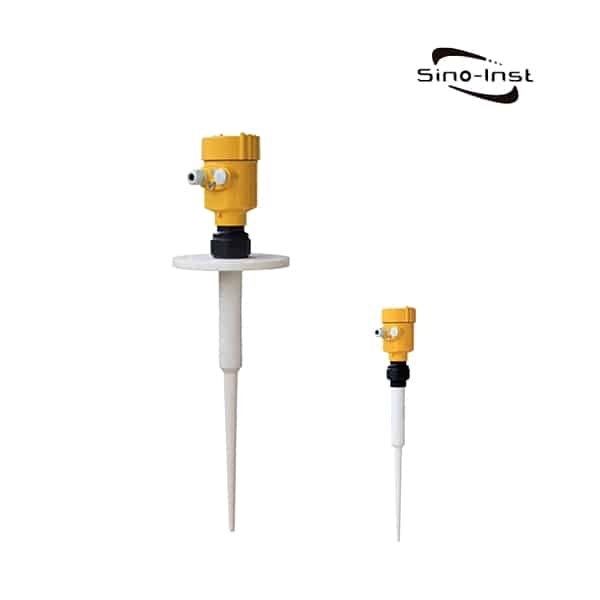
How to Measure Ground Water Level ?

Dynamic monitoring of groundwater level:

It is advisable to use existing water wells, natural outcrops of groundwater, or drilling and exploratory wells in the project. When the borehole is easy to be blocked, a filter can be installed in the borehole for monitoring.

Deep Well water level sensor is to apply Hydrostatic Level Sensor to deep well. Well water level sensor submerged in deep well work together with submersible water pump. Range within 300m ~ 1000m.

The groundwater level online monitoring system is widely used in underground water deep well water level measurement, mine water level gauge deep well measurement, and geothermal well water level measurement.

The groundwater level online monitoring system is based on the principle of hydrostatic pressure in which the pressure is proportional to the water depth. The water pressure sensitive integrated components are used as the sensor probe of the deep well water level measuring instrument.

When the sensor probe is fixed at a certain measuring point underwater. The height of the water column pressure above the measuring point plus the height of the point. The water level (the distance from the water surface to the wellhead) can be measured indirectly. The direct measurement is above the sensor probe The actual height of the liquid level in the deep well.

FOGRod

The FOGRod is a wastewater level sensor manufactured by Wastewater Level. Unlike most level sensors it has no moving parts, sensors or electronics in the wet well.

The FOGRod hangs in a wet well much like a float switch or ultrasonic transducer and connects to a Level Indicator Transducer (LIT) which mounts in your control panel. The LIT has 10 relays that correspond to 10 contacts on the FOGRod.

Frequently
Asked
Questions

We can install a liquid level sensor or liquid level alarm in the water storage tank.
Through the display of liquid level value or alarm of high and low liquid level. We can know when the tank is full.

Ultrasonic externally attached oil level sensor uses the principle of ultrasonic echo ranging. The sensor is installed outside the bottom of the fuel tank and sends out an ultrasonic signal from the bottom, which is reflected by the oil surface, and then calculates the height of the liquid level according to time and speed. At the same time, combined with digital signal processing technology, it overcomes the influence of the container wall and realizes high-precision non-contact measurement of the liquid level in the container, which can meet the requirements of industrial applications in terms of application.

Including water dispensers, water heaters, toilets, humidifiers, etc., and other atomizers, coffee machines, beverage machines, electric steamers and other household appliances, medical and commercial machines, etc., all have water tanks inside.

Many machines cannot directly see the liquid level of the internal water tank. Therefore, a liquid level sensor is needed to detect the liquid level. Generally, detecting low liquid level can give a signal alarm when it is detected that there is almost no water. When a high liquid level is detected, a signal is given to prevent liquid overflow.

Water level sensors work by using sensor probes to indicate water levels in a storage tank. These probes send information back to the control panel to trigger an alarm or indicator. As mentioned above, the control panel can be programmed to automatically turn on your pump to refill the water again.

Tank level sensors monitor the level of liquids, pellets, powders, and other similar products in tanks and process systems. Available sensors include contact, non-contact and submersible sensors, as well as float and rotating paddle level switches.
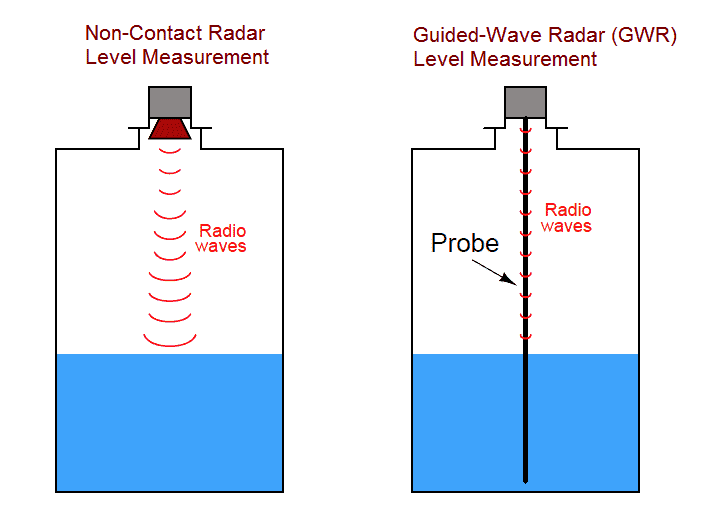
Sino-Inst offers over 50 Wastewater Level Sensors/Systems for Sewage-Wastewater. About 50% of these are Radar level meters, 40% is magnetic level sensor.

A wide variety of Wastewater Level Sensors for Sewage-Wastewater options are available to you, such as free samples, paid samples.

Sino-Inst is a globally recognized supplier and manufacturer of Wastewater Level Sensor/System for Sewage-Wastewater instrumentation, located in China.
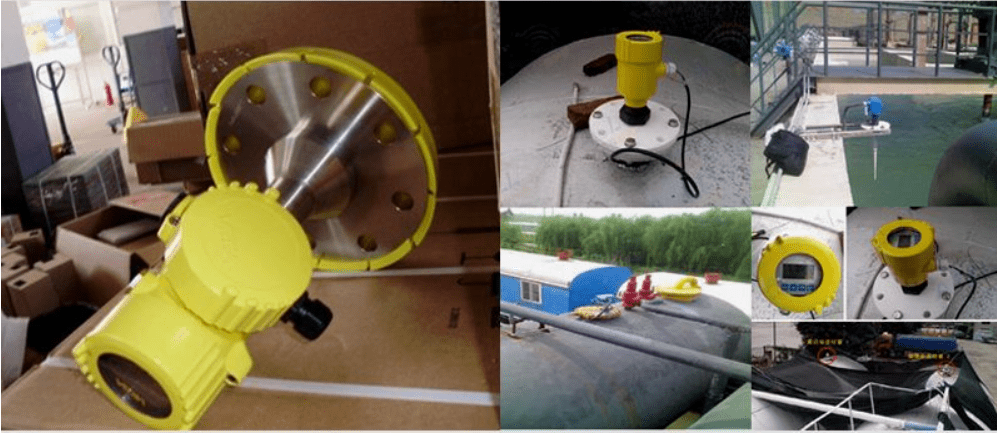
Request a Quote

Please enable JavaScript in your browser to submit the form