Differential Pressure Flow Meter Calculation: Formula, Worked Examples, and Sizing

Updated: April 23, 2026

Every differential pressure flow meter — orifice plate, venturi, flow nozzle, V-cone, averaging pitot — runs the same equation. Bernoulli says the velocity through a restriction goes as the square root of the pressure drop. Multiply by the area and the discharge coefficient, and you have flow. This page covers the formulas in the form you will use them, three worked examples that mirror real plant calculations, and the common errors that turn a 0.5% accuracy meter into a 5% one.

Contents

The DP Flow Calculation Formula

The volumetric flow through any DP element is given by:

The result Q here is in m³/s; for a transmitter display you almost always convert to GPM or LPM depending on the region the meter ships to.

Q = Cd · A2 · √(2 · ΔP / [ρ · (1 − β4)])

For mass flow, multiply by density:

W = Cd · A2 · √(2 · ΔP · ρ / (1 − β4))

Both forms come straight from Bernoulli’s equation. The (1 − β4) term is the velocity-of-approach correction. ISO 5167 — the international standard for orifice, nozzle, and venturi metering — wraps everything except ΔP into a flow coefficient K so the working form becomes:

Q = K · √(ΔP / ρ) (volumetric)

W = K · √(ΔP · ρ) (mass)

For compressible fluids, an expansion factor ε (less than 1.0) is added to account for gas expansion through the restriction:

W = K · ε · √(ΔP · ρ1)

where ρ1 is the density at upstream conditions.

What Each Variable Means

SymbolQuantitySI UnitNotes
QVolumetric flowm³/sMultiply by 3600 for m³/h
WMass flowkg/sMultiply by 3600 for kg/h
CdDischarge coefficient0.60 for sharp orifice, 0.98 for venturi
A2Throat (bore) areaπ·d²/4 where d is bore diameter
ΔPDifferential flow rate and pressure relationshipPa1 kPa = 1000 Pa, 1 bar = 100,000 Pa
ρFluid densitykg/m³At flowing conditions, not standard
βDiameter ratio d/DBore divided by pipe ID
εExpansion factorGas only; 1.0 for liquids
KFlow coefficientCombines Cd, A2, β, units

The discharge coefficient is the part most people get wrong. It is not 0.6 for everything. ISO 5167 publishes the Reader-Harris/Gallagher equation for sharp-edged orifice Cd, which depends on β, Reynolds number, and tap configuration. For first-pass sizing, use 0.60 for orifice, 0.98 for classical venturi, 0.99 for a long-radius nozzle. Final sizing should always come from a sizing tool that solves the iterative equation.

Worked Example 1: Orifice Plate on Water

A 6-inch (DN150) line carries water at 25 °C. An orifice plate with bore diameter d = 90 mm is installed in the line (pipe ID D = 154 mm). The DP transmitter reads ΔP = 25 kPa. Find the volumetric flow.

  • β = d/D = 90/154 = 0.584
  • 1 − β4 = 1 − 0.5844 = 1 − 0.1163 = 0.8837
  • A2 = π · (0.090)² / 4 = 6.362 × 10⁻³
  • ρ = 997 kg/m³ (water at 25 °C)
  • ΔP = 25,000 Pa
  • Cd = 0.605 (sharp-edged orifice, β = 0.584, high Re)

Plug into the volumetric equation:

Q = 0.605 · 6.362 × 10−3 · √(2 · 25,000 / [997 · 0.8837])

Q = 0.00385 · √(56.76) = 0.00385 · 7.534 = 0.0290 m³/s = 104.4 m³/h

That is the answer for water. Notice the square-root behavior: doubling ΔP from 25 to 50 kPa would only raise flow from 104 to 148 m³/h — a 41% increase, not 100%. That non-linearity is the largest weakness of DP flow.

Worked Example 2: Mass Flow on Saturated Steam

A 4-inch (DN100) line carries saturated steam at 10 bar gauge. Pipe ID D = 102 mm. An orifice with d = 60 mm gives β = 0.588. The DP transmitter reads ΔP = 12 kPa. Find the steam mass flow in kg/h.

  • Saturated steam at 10 bar(g) ≈ 11 bar(a), saturation temperature 184 °C
  • Steam density ρ = 5.64 kg/m³ (from steam tables)
  • 1 − β4 = 1 − 0.5884 = 0.8804
  • A2 = π · (0.060)² / 4 = 2.827 × 10⁻³
  • Cd = 0.605
  • Expansion factor ε ≈ 0.985 (small ΔP / P ratio)

Mass flow:

W = 0.605 · 2.827 × 10−3 · 0.985 · √(2 · 12,000 · 5.64 / 0.8804)

W = 1.683 × 10⁻³ · √(153,775) = 1.683 × 10−3 · 392.2 = 0.660 kg/s = 2376 kg/h

Steam flow calculations are sensitive to density. A 10 °C error in steam temperature shifts density by roughly 2%, which shifts mass flow by 1%. Always pick density from current operating pressure and temperature, not the design point.

Worked Example 3: 4-20 mA Output to Flow Rate

A DP transmitter is ranged 0-50 kPa with 4-20 mA output. The corresponding calibrated flow range is 0-200 m³/h on a clean orifice. The transmitter is currently outputting 12 mA. What is the flow?

The relationship between current output and DP is linear:

ΔP = (I − 4) / 16 · 50 kPa = (12 − 4) / 16 · 50 = 25 kPa (50% of span)

But flow is square-root of DP, so 50% DP is not 50% flow:

Q = 200 · √(25/50) = 200 · √0.5 = 200 · 0.7071 = 141.4 m³/h (70.7% of full flow)

This square-root extraction is why DP transmitters today usually have an internal √ function or are paired with a flow computer. The output can be set to either linear-with-DP or linear-with-flow. If the DCS does the extraction, the transmitter sends linear DP. If the transmitter does it, the DCS sees linear flow but loses some resolution at low flow rates. For background on what the milliamp output means, see our 4-20 mA signal conversion guide.

DP Sizing Rules of Thumb

Size the DP element so the full-scale ΔP falls into a sensible band. Too low and signal noise dominates; too high and permanent pressure loss kills pump capacity.

ElementTypical βFull-scale ΔPPermanent Pressure Loss
Sharp-edged orifice0.4 – 0.710 – 50 kPa40 – 80% of ΔP
Classical venturi0.4 – 0.7510 – 50 kPa5 – 20% of ΔP
Long-radius nozzle0.4 – 0.810 – 50 kPa30 – 50% of ΔP
V-cone0.45 – 0.855 – 25 kPa10 – 30% of ΔP
Averaging pitot2 – 10 kPa< 5% of ΔP

Three sizing rules carry most installations through:

  1. Pick ΔP at full flow first. Aim for 25 kPa as a starting target. Below 5 kPa, transmitter zero drift becomes a problem. Above 100 kPa, the permanent pressure loss starts to matter.
  2. Then solve for β. Use the volumetric equation with Cd = 0.605 and your design flow to find A2, then β = d/D.
  3. Check β bounds. Stay between 0.20 and 0.75 for orifice. Outside that range, the Cd uncertainty grows and the standard ISO 5167 formulas no longer apply.

For straight-pipe upstream and downstream requirements once the element is picked, see our upstream and downstream straight pipe guide.

Common Calculation Errors

  • Standard density vs flowing density. Gas calculations done with standard density (15 °C, 1 atm) instead of the actual line condition can be off by 5-15×. Always use ρ at the upstream pressure and temperature.
  • Forgetting (1 − β4). For β below 0.3, the velocity-of-approach factor is close to 1 and can be skipped, but for β = 0.7 it is 0.76 and ignoring it gives a 14% high reading.
  • Wrong unit for ΔP. Mixing kPa, mbar, mmH₂O, and inches of water column accounts for half of all calculation mistakes. Convert everything to Pa before plugging in.
  • Square-root output already extracted. Calculating Q = K · √ΔP when the transmitter has already done the extraction gives Q ∝ ΔP instead of Q ∝ √ΔP — wrong by a factor of √ over the range.
  • Discharge coefficient assumed constant. Cd drifts with Reynolds number below Re = 10⁴. Cold viscous fluids in small pipes hit this region in low flow. Use the Reader-Harris/Gallagher equation, not a fixed 0.6.

DP Transmitters for Flow Measurement

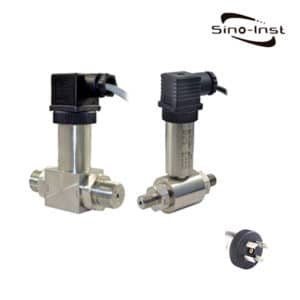
SMT3151DP Smart Differential Pressure Transmitter

SMT3151DP Smart DP Transmitter

±0.075% accuracy, ranges 0.1 to 25,000 kPa, square-root extraction onboard. Standard for orifice, venturi, and nozzle metering loops.
SI-801 Piezoresistive DP Transmitter

Compact piezoresistive DP cell for filter ΔP, blower discharge, and small DP flow loops. Lower cost where ±0.5% is acceptable.
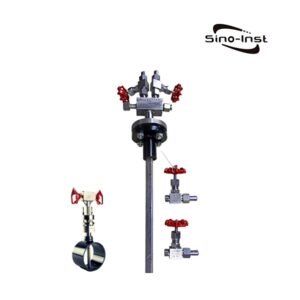
Verabar Averaging Pitot Flow Meter

Insertion DP element with very low permanent pressure loss. Use on large pipes where orifice retrofit is not practical.

FAQ

What is the formula for differential pressure flow measurement?

The working form is Q = K · √(ΔP / ρ) for volumetric flow and W = K · √(ΔP · ρ) for mass flow. K bundles the discharge coefficient, throat area, β-correction, and unit conversions. The relationship is square-root, so flow doubles when ΔP quadruples.

Why is DP flow proportional to the square root of pressure?

Bernoulli’s equation says ΔP = ½ρv², so velocity v = √(2ΔP/ρ). Volumetric flow is Q = A·v, which gives the square-root relationship. Kinetic energy scales with v², so a fixed pressure drop fixes velocity, not flow magnitude directly.

How do I calculate flow from a 4-20 mA DP transmitter?

Convert mA to ΔP linearly: ΔP = (I − 4)/16 · range. Then take the square root and scale to flow: Q = Qmax · √(ΔP / ΔPmax). At 12 mA (50% of span) the flow is 70.7% of maximum, not 50%.

What is the discharge coefficient for an orifice plate?

Around 0.60-0.61 for a sharp-edged orifice with β between 0.4 and 0.7 at high Reynolds numbers. ISO 5167-2 publishes the Reader-Harris/Gallagher equation that gives Cd as a function of β, Re, and tap configuration. Long-radius nozzles run 0.99, and classical venturis 0.98.

How do I size an orifice plate for a given flow?

Pick a target full-scale ΔP (typically 25 kPa). Solve the volumetric equation for A2 with Cd = 0.605 and your design flow. Take β = d/D and check it falls between 0.20 and 0.75. Iterate once with the corrected Cd from the standards.

What is the difference between mass flow and volumetric flow?

Volumetric flow Q (m³/h) is volume per time. Mass flow W (kg/h) is mass per time. They are linked by density: W = Q · ρ. Custody transfer and steam balances use mass flow because density changes with temperature and pressure; volumetric does not stay conserved across heat exchangers or expansion valves.

Get a DP Flow Measurement System Quote

Send us your fluid, design flow, line size, operating pressure, and temperature. We’ll size the DP element, pick the transmitter range, and send back a calculation sheet plus drawing — usually within one business day.

Request a Quote

Please enable JavaScript in your browser to submit the form

Wastewater Level Sensor for Septic Tanks and Sewage Holding Tanks: Selection and Installation

Updated: April 23, 2026

Septic tanks, sewage holding tanks, and lift station wet wells are the dirtiest service for any level sensor. Solids settle on the bottom. Grease and FOG (fats, oils, grease) form a scum layer on top. Hydrogen sulfide attacks anything with brass or copper. Wash-water pumps cycle the level so fast that point switches chatter. The right sensor is rarely the cheapest — but the cheap sensor fails in 6 months and shuts down the lift pump on a Sunday night. This guide walks through which sensor type fits which wastewater application, the installation rules that keep them alive, and the maintenance pattern that operators actually follow. For sensor-by-application selection on buried tanks, our underground tank level indicator guide for fuel, water and septic tanks.

Contents

Which Level Sensor Should I Use for a Septic or Sewage Tank?

For most septic and sewage tanks, a submersible hydrostatic level transmitter with a flush-diaphragm sensor is the right choice. It sits at the bottom of the tank, measures the head of liquid above it, and outputs a continuous 4-20 mA signal proportional to depth. It does not care about scum, foam, or vapor — only about how deep the liquid sits above its diaphragm.

For pump-cycling control where you only need start/stop signals (lift station, pump-out trigger), a multi-point float switch system is cheaper and simpler. For deep concrete vaults and very fouled service, a non-contact ultrasonic or radar mounted in the manhole avoids ever pulling a probe out. The deciding factors are tank depth, fouling severity, whether you need continuous or point measurement, and access for maintenance.

What Makes Wastewater Level Hard to Measure?

Wastewater is not a uniform liquid. It is three layers stacked in the same tank. For potable or industrial water tanks, the equivalent selection guide is water tank level sensors.

  • Sludge layer (bottom). Settled solids, sand, fecal matter. Builds up over months.
  • Liquid layer (middle). The flowing supernatant. This is what the level sensor needs to track.
  • Scum layer (top). Grease, fats, undigested floating material. Often 100-300 mm thick on septic tanks.

Each layer attacks sensors differently. The sludge buries probes inserted from the bottom. The scum coats anything inserted from the top, eventually sealing off ultrasonic transducers and radar antennas. The liquid itself contains H₂S in concentrations that destroy bronze and brass fittings within weeks. On top of all that, lift station wet wells flood and drain in 30-second cycles when the pumps are running, making wave action and turbulence a constant noise source.

Three failure modes account for most wastewater sensor calls:

  1. Diaphragm fouling on submersible sensors. A small recess in front of the sensing diaphragm fills with grease and the pressure no longer transmits. The reading freezes.
  2. Acoustic absorption on ultrasonic sensors. Heavy foam or thick scum absorbs the ultrasonic pulse and the sensor either gives no echo or locks onto the foam surface instead of the liquid.
  3. Cable damage on float switches. The cable rubs against the tank wall as the float swings, and the abrasion exposes copper to H₂S. Float fails to switch within a year.

Sensor Types Compared for Wastewater Service

Sensor TypeBest ForOutputTypical LifeMain Limitation
Submersible hydrostatic (flush diaphragm)Continuous level, septic and sewage holding tanks4-20 mA3-5 yearsDiaphragm fouling, needs occasional rinse
Submersible hydrostatic (vented cable)Open wet wells, deep tanks4-20 mA3-5 yearsVent must stay dry to avoid sensor damage
Multi-point float switchPump start/stop, high-level alarmDiscrete contacts1-3 yearsCable abrasion, no continuous reading
Ultrasonic non-contactDeep manhole vaults, clean service4-20 mA3-5 yearsFails on heavy foam or thick scum
80 GHz radar non-contactDifficult vapor service, raw sewage with foam4-20 mA5-7 yearsHigher capital cost, manhole mounting required
Capacitance probeCheap point switches in sumpsDiscrete contact1-2 yearsCoats with grease, false trips

The submersible hydrostatic transmitter wins for most installations because it is immune to foam, vapor, and turbulence. The pressure of the liquid above the sensor is what it sees, and that pressure is real regardless of what is happening at the surface. For a deeper general framework on tank selection across all liquid types, see our tank level sensor selection guide.

One nuance: if the tank is closed and pressurized (some commercial sewage systems), a vented submersible sensor will not read correctly because barometric pressure is no longer the reference. Use a sealed gauge sensor with separate static pressure compensation, or move to a non-contact radar.

Installation Rules That Save Sensor Life

Half of wastewater sensor failures come from poor installation, not bad sensors. These rules apply across all sensor types:

  • Mount away from inlet and pump suction. Falling sewage and pump wash create wave action and air entrainment. Place the sensor at least 1 metre from the inlet pipe and 0.5 metre from the pump intake.
  • Use a stilling well for submersible sensors. A 100 mm PVC pipe with holes drilled at the bottom isolates the sensor from wave action and traps less scum than the open tank does. Cap the top to keep larger debris out.
  • Hang sensors with stainless braided cable, not the signal cable. The signal cable is for signal. The mechanical load of the sensor goes on a separate stainless suspension. This protects the cable gland from fatigue cracks.
  • Route cable in conduit above the high-water line. Cable submerged in raw sewage absorbs water through micro-cracks within months. Conduit it out of the wet zone as soon as practical.
  • Specify Hastelloy or PVDF wetted parts on H₂S service. Standard 316L stainless pits in concentrated H₂S environments. For long life on heavy sewage, the body and diaphragm both need an upgrade.
  • Provide a wash-down nozzle. Most sites benefit from a 1/2" rinse line aimed at the sensor face that operators can manually open during routine cleaning.

For installations with float switches in addition to a continuous sensor, our float switch installation guide covers the spacing and cable-routing rules.

Maintenance and Cleaning Schedule

Wastewater sensors are not install-and-forget. Build a schedule into the work order system or the sensor will eventually drift, fail silently, and trip a high-high alarm at 2 a.m.

IntervalTaskReason
MonthlyVisual inspection, manual rinse if accessibleClear surface scum and fouling early
QuarterlyPull sensor, wash with detergent and warm waterRemove biofilm before it cements
AnnualCalibration check against a manual dipstickCatch slow drift before it affects pump cycling
AnnualInspect cable jacket and gland for cracksPrevent water ingress into sensor body
3-5 yearsReplace if drift exceeds 1% or visual damageAvoid catastrophic failure during peak load

One under-appreciated trick: log the daily min/max level reading. A submersible sensor with diaphragm fouling will gradually compress its operating range — the daily minimum starts to creep up by 50-100 mm before the sensor visibly fails. Spotting that drift in the historian gives you weeks of warning to schedule cleaning, instead of an emergency call-out.

Sizing the Sensor to Tank Geometry

The sensor range must cover the full operating depth plus margin. A common error is buying a sensor with the same range as the tank height, which leaves no room for over-fill events.

  • Tank max liquid depth: H meters
  • Sensor range: H × 1.25 meters minimum (water column)
  • Convert to pressure: 1 m H₂O ≈ 9.81 kPa

Worked example: A septic holding tank is 3.5 m tall. Specify a submersible sensor ranged 0-44 kPa (≈ 4.5 m H₂O), giving a 25% safety margin for surge events. Cable length: tank depth + 2 m for the cable gland and conduit transition above the manhole.

For tank applications outside the standard sewage range — high-temperature digesters, industrial waste streams — see our broader cooling tower and process tank level guide which covers similar fouling-resistant approaches.

Wastewater Level Sensors from Sino-Inst

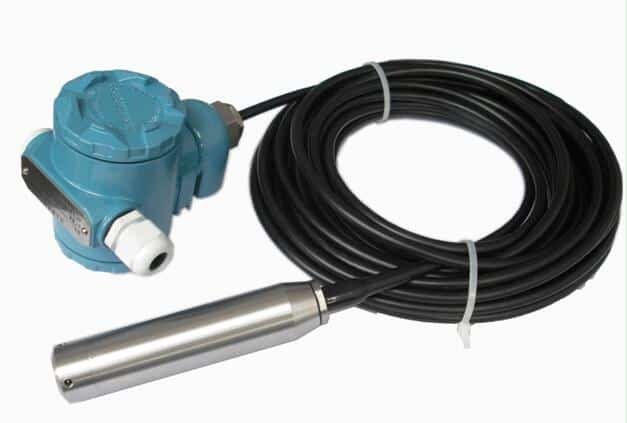
Submersible Hydrostatic Level Transmitter

316L stainless body, flush diaphragm, 4-20 mA output. The standard sensor for septic and sewage holding tanks up to 30 m depth.

Wireless LoRa Level Sensor

Battery-powered hydrostatic sensor with LoRa wireless. Use on remote septic or rural lift stations where running cable is not practical.

Tank Level Sensor Selection Guide

Decision matrix by tank content and conditions. Use to compare hydrostatic, ultrasonic, radar, and float options for sewage, septic, and process tanks.

FAQ

What is the best level sensor for a septic tank?

A submersible hydrostatic transmitter with a flush diaphragm is the best continuous-level option. It is immune to scum, foam, and vapor — the things that defeat ultrasonic sensors in septic service. Pair with a high-level float switch for redundant alarming.

Will an ultrasonic sensor work on a sewage tank?

Sometimes, but not reliably. Heavy foam absorbs the ultrasonic pulse, and grease coats the transducer face. On clean lift stations with low foam, ultrasonic from the manhole works. On septic tanks with active digestion, expect frequent maintenance and missed echoes.

How do I keep the level sensor from clogging?

Three steps: install a flush-diaphragm sensor (no recessed cavity to fill), suspend it in a stilling well to reduce direct contact with debris, and provide a wash-down nozzle that operators can use during routine cleaning. Quarterly manual rinse extends life two to three years.

What material should a sewage level sensor be made of?

316L stainless body works for typical municipal sewage. For high-strength industrial waste or septic tanks with high H₂S concentrations, upgrade to Hastelloy C-276 or PVDF-coated bodies. Avoid brass, bronze, and copper anywhere on the sensor or fittings.

Can I use the same sensor for a septic tank and a sewage holding tank?

Yes if both tanks are open vented. The same submersible hydrostatic transmitter works for both. If the holding tank is sealed and pressurized, switch to a sealed-gauge sensor or a non-contact radar from the tank top.

How long does a wastewater level sensor last?

Three to five years for a properly installed and maintained submersible hydrostatic sensor. Without quarterly cleaning, expect 12-18 months. Float switches typically last 1-3 years before cable abrasion or contact wear forces replacement.

Get a Wastewater Level Sensor Quote

Send us your tank dimensions, type of waste (septic, sewage, industrial), pump cycling pattern, and access constraints. We’ll spec a sensor model, body material, and install drawing — usually within one business day.

Request a Quote

Please enable JavaScript in your browser to submit the form

Pressure Transmitter vs Pressure Gauge: Differences and When to Use Each

Updated: April 23, 2026

A pressure gauge gives you a number on a dial. A how a pressure transmitter works sends a 4-20 mA signal to a control system. That single sentence drives 90% of the selection decision. The remaining 10% is where most plants get it wrong — picking a transmitter when a gauge would have done the job, or trying to skip the gauge on an installation that legally needs one. This article walks through the real differences, when each one is the right call, and why most well-designed plants install both side by side.

A pressure gauge reads static line pressure to the atmosphere; for the distinction with dynamic and total pressure (which need a Pitot port) see our static vs dynamic pressure reference.

Contents

What Is the Difference Between a Pressure Transmitter and a Pressure Gauge?

A pressure gauge displays the reading locally on a mechanical or digital dial. A pressure transmitter converts the same pressure into a 4-20 mA, HART, or digital signal so a PLC, DCS, or SCADA system can use it. The gauge is for human eyes at the equipment. The transmitter is for the control system in another building.

For background on the control algorithm that drives pressure regulation valves, see our explainer on PID controller principle, tuning, and applications.

The internal sensing element can be the same — a Bourdon tube, diaphragm, or piezoresistive cell. For fast dynamic events the choice flips to a piezoelectric pressure sensor instead, since neither a gauge nor a typical 4-20 mA transmitter can follow microsecond transients. What changes is the back end. A gauge ends in a mechanical linkage to a pointer. A transmitter ends in electronics that produce a calibrated current loop. That single architectural difference drives everything else: power requirement, accuracy, signal length, and price.

Pressure Transmitter vs Pressure Gauge: Parameter Comparison

Compare the two on the parameters that matter for plant specification, not the marketing brochure.

ParameterPressure GaugePressure Transmitter
OutputVisual dial reading4-20 mA, HART, Modbus, Profibus
PowerNone (mechanical) or 24 VDC (digital)24 VDC, 2-wire loop
Typical accuracy±1.6% to ±0.5% of full scale±0.075% to ±0.5% of span
Signal rangeLocal onlyUp to 1 km on 4-20 mA
Calibration intervalAnnual visual check1-3 years, depending on service
Hazardous area approvalMechanical: passive safeEx ia / Ex d certified versions
Connection1/4" NPT or G1/2 threadSame process connection plus M20 or 1/2" NPT cable entry
Indicative price$15-$200$200-$1500
Failure modePointer stuck or burst elementLoop breaks, signal drift, or saturates 22 mA

Two numbers in this table are easy to misread. Accuracy on a gauge is quoted as percent of full scale, but on a transmitter it is percent of span. A 0-100 bar gauge at ±1% means ±1 bar regardless of where the pointer sits. A 0-100 bar transmitter ranged for 20-80 bar at ±0.1% of span means ±0.06 bar — close to ten times more accurate when you need to read mid-range pressures. This rangeability is the second hidden advantage of transmitters.

When to Use a Pressure Gauge

Pick a gauge when a person walks past the equipment and needs to read pressure on the spot. Compressed air manifolds, lubrication oil pressure, hydraulic test stands, and small package skids all qualify. The control system either does not exist or does not care about that pressure point.

Specific scenarios where a gauge is the right call:

  • Local indication on isolated equipment. A standalone air compressor in a workshop. No DCS, no HMI, just a maintenance technician.
  • Verification of a transmitter reading. An on-site gauge lets a field operator confirm what the control room is seeing — useful during loop checks and instrument troubleshooting.
  • Code-required pressure indication. ASME B31.3 and PED-certified pressure vessels often require a local gauge regardless of what the control system measures. Specifying a transmitter does not exempt you from the gauge.
  • Low-budget package skids. If the OEM ships a unit with a $40 gauge, replacing it with a $400 transmitter for inventory standardization rarely pays back.
  • No power available. Mechanical gauges work in remote pits, vault stations, and locked-out maintenance scenarios where 24 VDC is not present.

The classic mistake here is over-specifying transmitters on small skid packages because the engineer is uncomfortable with mechanical instruments. A $1200 HART transmitter on a 20 hp compressor adds nothing the operator can use. The gauge is fine.

When to Use a Pressure Transmitter

Pick a transmitter whenever the pressure value has to leave the equipment. Control loops, alarms, data historians, custody transfer, and remote monitoring all require an electronic signal. A transmitter is also the right call when the measurement is in a hazardous area, on a moving asset, or in a location no one walks past during a normal shift.

Specific scenarios where a transmitter is the right call:

  • Closed-loop control. The pressure feeds a PID controller that adjusts a valve or pump. A gauge cannot do this.
  • Process alarms and trips. Safety integrity functions need a signal the SIS can read. ANSI/ISA 84 / IEC 61511 systems specifically rule out reading a gauge as the safety input.
  • Tank inventory and DP-based level. The control system needs continuous level, calculated from differential pressure. See our extended diaphragm seal DP level transmitter page for that specific application.
  • Remote or unmanned sites. A telemetry RTU at a wellhead or pump station needs a 4-20 mA input. No one is reading a gauge there.
  • High-accuracy custody transfer. Fiscal flow measurement and pipeline metering require ±0.075% to ±0.04% accuracy, which is transmitter territory.
  • Long signal runs. The control room is 800 m away. A 4-20 mA loop carries the signal that distance with no degradation.

The opposite mistake is also common — relying on the control system’s transmitter as the only pressure indication and forgetting that field crews still need a local readout during commissioning, maintenance, or DCS outages.

Why You Often Install Both

On most regulated process equipment, gauges and transmitters are not competitors. They sit on the same nozzle. The transmitter feeds the control system. The gauge gives the field operator a backup reading without having to call the control room.

The standard install pattern looks like this: a tee or pressure manifold on the process line, a gauge on one branch with an isolation valve, a transmitter on the other branch with its own isolation. Both can be replaced under hot-line conditions without shutting down the process. The gauge often acts as the bypass during transmitter calibration. This dual install costs roughly 10-15% more than a transmitter alone, and the maintenance team will thank you every year for it.

For installation hardware and impulse line layout, our pressure transmitter installation guide covers the manifold, valve, and orientation rules.

Cost Comparison and Total Lifecycle

Capital cost is only part of the story. Calibration, replacement, and downstream integration are where transmitters spend more.

Cost ItemMechanical GaugeSmart Transmitter
Initial unit cost$15-200$200-1500
Wiring and terminationNone$50-200 per loop
Annual calibration labor15 min visual check30-60 min loop calibration
Documentation per deviceTag plateHART config sheet, calibration certificate
Typical service life5-10 years10-15 years
Spares strategyLike-for-like swapConfigured spare with hot-cut procedure

The gauge wins on raw price. The transmitter wins on data value — the question is whether the data is actually used. If the 4-20 mA signal feeds a recorded historian and a control loop that runs the plant, the transmitter pays for itself many times over. If the signal goes nowhere except a screen no one watches, you bought an expensive gauge.

Pressure Transmitters and Gauges from Sino-Inst

SMT3151 Smart Gauge Pressure Transmitter

4-20 mA + HART, ±0.075% accuracy, 316L wetted parts. The standard process transmitter for control loops and tank measurement.

Industrial Pressure Transmitters

Full process range with HART, Modbus, or Profibus output. Hazardous-area Ex ia certified. Use when the loop has to talk to the DCS.

SI-2000 Differential Pressure Gauge

Local mechanical gauge for filter ΔP, blower discharge, and clean-room HVAC. Magnetic-coupled diaphragm, no power required.

FAQ

Is a pressure transmitter more accurate than a pressure gauge?

Usually yes. A standard process gauge is ±1% of full scale. A smart transmitter is ±0.075% of span and can be reranged to a smaller window for higher resolution. The accuracy gap is roughly 10-13× in favor of the transmitter when measuring partial-range pressures.

Can a pressure transmitter replace a pressure gauge?

Functionally yes if the transmitter has an integrated LCD or HART HMI. Practically, most plants keep both because a mechanical gauge gives a reading during power loss and DCS outages. Code-required local indication still needs a gauge in many jurisdictions.

What output does a pressure transmitter use?

The 4-20 mA two-wire loop is the global standard, with HART superimposed for diagnostics and configuration. Newer plants also use Modbus RTU, Profibus PA, and Foundation Fieldbus. Wireless HART exists but is rare on primary process points.

Do pressure transmitters need calibration?

Yes — typically every 1-3 years depending on service. Calibration involves applying a known reference pressure and trimming the sensor zero, span, and 4-20 mA loop output. Smart transmitters store the calibration history in HART memory.

When should I use a digital pressure gauge instead of a mechanical gauge?

Use a digital gauge when you need ±0.25% accuracy with a local readout but no signal output. Test benches, calibration carts, and pump test rigs are typical. Digital gauges run on batteries or 24 VDC and offer min/max recall.

What is the difference between a pressure transmitter and a pressure transducer?

A transducer outputs a low-level signal — millivolt or 0-5 V — that needs further amplification. A transmitter has a built-in amplifier and outputs a standardized 4-20 mA or HART signal that runs straight into a DCS. In modern process plants, the term "transmitter" is the default; transducers live in OEM equipment and lab instrumentation.

Get a Pressure Transmitter or Gauge Quote

Tell us the process pressure range, fluid, hazardous-area zone, and signal output you need. We’ll come back with a model number, accuracy class, and process connection drawing — usually within one business day.

Request a Quote

Please enable JavaScript in your browser to submit the form

6 Inch Flow Meters (DN150): Types, Flow Ranges & Selection Guide

Updated: April 22, 2026

A 6-inch (DN150) flow meter sits in a specific sweet spot — large enough to handle plant-scale cooling water, wastewater, and district heating loops, but small enough that you still have five mainstream technologies to choose from. The decision is rarely about pipe size. It’s about fluid type, required accuracy, and how much straight pipe you actually have. This guide gives you the flow ranges, a side-by-side type comparison, and a decision path you can follow in under five minutes.

Contents

What Is a 6-Inch (DN150) Flow Meter?

A 6-inch flow meter is a flow measurement device with a 150 mm nominal bore (DN150, 6″ NPS). It measures volumetric or mass flow of liquids, gases, or steam in pipes with an inside diameter of roughly 146-160 mm depending on schedule. At this size, most plants use flanged ANSI 150#, PN16, or PN40 connections.

DN150 is a very common process size. You find it on boiler feedwater lines, cooling tower returns, district heating mains, pulp stock lines, and secondary wastewater discharge. Because the bore is large enough for full-bore inline meters but small enough to still be affordable, all major technology types are available — electromagnetic, turbine, vortex, ultrasonic, Coriolis, and thermal mass.

What Flow Rate Can a 6″ Flow Meter Measure?

A 6-inch flow meter typically handles 25-600 m³/h for liquids and 50-5,000 Nm³/h for gases, depending on the technology. The usable range depends on pipe velocity, not just bore size — most meters need the fluid velocity to stay between 0.5 and 10 m/s.

Use this as a quick sanity check before sizing. If your expected flow drops below the lower limit for weeks at a time, a smaller meter plus a reducer pair is usually more accurate than an oversized DN150.

Fluid / ServiceTypical VelocityDN150 Flow Range
Clean water (cooling / domestic)1-3 m/s65-190 m³/h
Raw / wastewater0.5-2 m/s30-130 m³/h
Slurry (conductive)1-3 m/s65-190 m³/h
Hydrocarbon liquid1-4 m/s65-250 m³/h
Saturated steam (10 bar)20-40 m/s1,300-2,500 kg/h
Air / compressed gas10-30 m/s650-2,000 Nm³/h

A good rule of thumb: if your normal flow sits near the middle of the velocity band and the peak does not exceed 6 m/s, DN150 is the right size. Push velocity past 6 m/s and you accelerate wear on turbines and create noise on vortex meters.

6-Inch Flow Meter Types Compared

Six technologies dominate the DN150 market. Each has strengths tied to fluid type and pressure drop. Use the table below as a first-pass filter, then read the notes that follow for the technology you’re drawn to.

TypeBest ForAccuracyPressure DropStraight PipeRelative Cost
ElectromagneticConductive liquids, slurry, wastewater±0.5%None5D / 3D$$
TurbineClean, low-viscosity liquids±0.5%Low-medium10D / 5D$$
VortexSteam, clean gas, low-viscosity liquid±1%Medium15D / 5D$$
Ultrasonic (transit-time)Clean liquid, energy loops±1-2%None (clamp-on)10D / 5D$-$$
CoriolisMass flow, custody transfer±0.1%HighNone$$$$
Thermal massGas at low pressure±1-2%Low10D / 5D$$

6″ Electromagnetic (Magmeter) — the default for conductive liquids

For water, wastewater, acid, caustic, and most slurries, the magmeter is the first choice at DN150. No moving parts, no pressure drop, handles dirty fluid. The fluid just needs conductivity > 5 µS/cm. Modern 4-20 mA / HART / Modbus outputs are standard, and the flanged body survives decades on cooling loops.

6″ Turbine — for clean, well-filtered liquid

Turbines give excellent repeatability on clean low-viscosity fluids like diesel, jet fuel, or demineralized water. The main caveat is mechanical wear. Particles larger than 100 µm will shorten bearing life on a 6″ turbine. For a pipeline that occasionally passes construction debris, skip it.

6″ Vortex — the steam workhorse

Vortex is the go-to for saturated or superheated steam at DN150. It handles process temperatures up to 400 °C, reads mass flow when paired with integrated pressure/temperature, and has no moving parts. Its weakness is low-flow cutoff — below ~20% of the upper range, the von Kármán vortices become unstable and the reading drops to zero.

6″ Ultrasonic — inline or clamp-on

Transit-time ultrasonic is a strong option for clean liquids where you do not want pressure drop. Clamp-on versions are popular for retrofit on district heating or municipal water where you can’t cut the pipe. At DN150 the ultrasonic signal path is still strong enough that one pair of transducers in V-mode reaches ±1% accuracy after a field calibration. See the upstream and downstream straight pipe guide before you commit to a location.

6″ Coriolis — only when mass accuracy matters

At DN150, Coriolis meters become expensive and physically large. But if you need direct mass flow, density, and ±0.1% accuracy — for custody transfer of crude oil, chemical batching, or any two-phase dosing — nothing else comes close. Budget for a pressure drop of 0.3-1 bar at rated flow.

6″ Thermal mass — for low-pressure gas

Thermal mass meters measure gas mass flow directly without needing pressure or temperature compensation. They work well for compressed air, natural gas, biogas, or flue gas at DN150 sizes. Avoid them in wet gas or if the gas composition varies widely — both cases shift the heat-transfer coefficient and drive readings off.

How Do You Select a 6″ Flow Meter by Fluid?

Start with the fluid, not the budget. Once the fluid rules out half the technologies, the cost argument sorts itself out. Use this matrix:

FluidFirst ChoiceRunner-UpAvoid
Clean water / cooling loopElectromagneticUltrasonicTurbine if debris present
Wastewater / sludgeElectromagneticTurbine, vortex
Demineralized (DI) waterUltrasonicTurbineElectromagnetic (<5 µS/cm)
Hydrocarbon liquidTurbineCoriolisElectromagnetic (non-conductive)
Saturated / superheated steamVortexTurbine, magmeter
Compressed air / natural gasThermal massVortexElectromagnetic
Slurry (mineral, pulp)ElectromagneticTurbine, vortex
Chemical batching, custodyCoriolisUltrasonic if entrained gas

Two practical notes. First, electromagnetic is specified far more often than needed for clean water — ultrasonic clamp-on is frequently good enough and avoids cutting the pipe. Second, Coriolis at 6″ is rarely worth it if ±1% volumetric accuracy meets your specification.

Inline vs Insertion — Which Is Right at 6″?

Inline is almost always preferred at DN150 because the cost gap with insertion probes narrows at this size. But insertion still wins in three cases.

  • Hot-tap retrofit — when shutting down to cut the line is not possible. Insertion probes install through a 2″ valve.
  • Very large flow range — if you also run the same line at DN200 or DN250, one insertion probe can serve several sizes.
  • Low-accuracy totalizing — where ±3% is acceptable (e.g., seasonal irrigation totalizing).

For continuous process measurement with ±1% or better accuracy, choose inline. An inline DN150 electromagnetic at DN150 costs less than most people expect, and you save the insertion-probe field-calibration steps. See our inline water flow meter guide for specific model comparisons.

DN150 Installation: Straight Pipe & Mounting

DN150 is large enough that poor installation costs real accuracy points. The mistake we see most often is mounting the meter right after an elbow. A 1% accuracy meter becomes a 3-5% reading if the flow profile is still swirling.

  1. Install the meter in a full-pipe section. For horizontal lines, mount in a raised loop or vertical-up leg to prevent air pockets.
  2. Respect the straight-pipe rule: 5D upstream and 3D downstream for magmeters; 10D/5D for turbines and ultrasonic; 15D/5D after two elbows on vortex.
  3. Avoid mounting downstream of control valves. Valve-induced turbulence survives 20D or more. Move the meter upstream.
  4. Match flange bolt torque to the gasket spec, and always use the earth rings on electromagnetic meters — the signal floats otherwise.
  5. Leave space for cable conduit access. The junction box on a 6″ magmeter typically needs 300 mm clearance on the side.

If your layout can’t meet the straight-pipe rule, a flow conditioner cuts the upstream requirement roughly in half. For details on pipe configuration effects, read the flow meter straight-length requirements guide.

Featured 6″ Flow Meters

Stainless Steel Magnetic Flow Meter

DN150, PN16 flanged, ±0.5% accuracy. Conductive liquids, wastewater, clean & raw water.

Liquid Turbine Flow Meter

DN150 clean liquid duty, ±0.5%, pulse & 4-20 mA. Diesel, jet fuel, DI water.

T-Series Coriolis Mass Flow Meter

±0.1% mass flow + density, DN150 variants. Custody transfer, chemical batching.

FAQ

What is the maximum flow rate of a 6-inch flow meter?

For liquids, a 6-inch (DN150) flow meter handles up to ~600 m³/h at a 10 m/s velocity cap. For steam at 10 bar, the upper range is around 2,500 kg/h. The practical limit is usually imposed by pressure drop or meter wear rather than the sensor itself.

How much does a 6″ flow meter cost?

Entry-level DN150 electromagnetic and vortex meters start in the low thousands USD. Coriolis jumps to five figures at this size because of the tube geometry and mass. Price swings with wetted material (316L vs Hastelloy vs PTFE lining) as much as with the technology itself.

Can I use an ultrasonic clamp-on on a 6″ pipe?

Yes. At DN150 a single-path V-mode ultrasonic clamp-on reads ±1-2% on clean liquid. For higher accuracy or on thick-walled steel pipes, specify a dual-path Z-mode transducer pair and calibrate against a portable reference meter after installation.

Is a 6-inch flow meter the same as DN150?

Yes, for most flow-meter specifications 6″ NPS and DN150 are interchangeable. The flange dimensions differ slightly between ANSI B16.5 (6″ class 150) and EN 1092 (DN150 PN16), so confirm the flange standard your piping uses before ordering.

Do I need straight pipe before a 6″ flow meter?

Yes. Most DN150 meters require 5-15 pipe diameters (5D-15D = 0.75-2.25 m) of straight pipe upstream and 3-5D downstream. Electromagnetic is the most tolerant (5D/3D); vortex after two elbows is the most demanding (15D/5D). A flow conditioner halves these requirements where space is tight.

Can a 6″ flow meter measure bidirectional flow?

Electromagnetic, Coriolis, and transit-time ultrasonic support bidirectional reading out of the box. Turbine and vortex are unidirectional at DN150 — reverse flow either gives zero or damages the sensor. Confirm bidirectional capability in the datasheet before specifying.

Request a DN150 Quote

Need help matching a 6-inch flow meter to your fluid, velocity, and accuracy target? Send the line size, fluid, nominal/peak flow, and ambient/process temperature. Our engineers will reply within one business day with a shortlist and indicative pricing.

Request a Quote

Please enable JavaScript in your browser to submit the form

6 Types of Flow Elements Compared: Selection Guide

Updated Apr 17, 2026 — Differential pressure (DP) flow measurement relies on a flow element — a restriction in the pipe that creates a pressure drop proportional to flow rate. But not all flow elements perform equally. Each type trades off accuracy, pressure loss, and cost differently. This guide compares all six major types of flow elements with real specs and a decision framework so you can pick the right one for your application.

Contents

What Is a Flow Element?

A flow element is a restriction placed inside a pipe that creates a measurable pressure drop proportional to the flow rate. The DP transmitter reads that pressure difference, and the flow rate is calculated using Bernoulli’s equation: Q is proportional to the square root of the differential pressure.

All DP flow elements share this same operating principle. What separates them is the geometry of the restriction — and that geometry determines accuracy, permanent pressure loss, turndown ratio, and how they handle dirty or multiphase fluids. The discharge coefficient (Cd) captures these geometric differences in a single number.

What Are the 6 Main Types of Flow Elements?

The six main types of DP flow elements are: orifice plate, Venturi tube, flow nozzle, wedge meter, V-cone, and averaging pitot tube. Each uses a different restriction geometry to generate differential pressure.

Orifice Plate

The orifice plate is a thin plate with a concentric bore mounted between flanges. It is the most widely installed flow element globally, covering roughly 40% of all industrial flow measurements. Cd is approximately 0.6, accuracy is typically +/-0.5% to +/-2% of rate depending on installation, and turndown ratio is limited to about 3:1 due to the square-root relationship. Permanent pressure loss runs 40-80% of the generated DP.

Venturi Tube

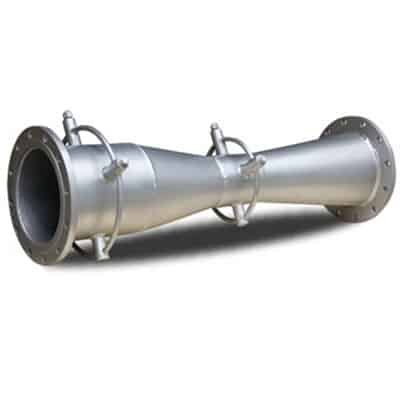
A Venturi tube uses a converging inlet cone, a cylindrical throat, and a diverging recovery cone to gradually accelerate and decelerate flow. This smooth geometry recovers 80-90% of the generated pressure drop. Cd is around 0.98. Accuracy reaches +/-0.5% of rate. The Venturi handles dirty and slurry fluids well because there are no sharp edges to erode, but the unit cost is roughly 5-10x that of an orifice plate.

Flow Nozzle

The flow nozzle sits between an orifice plate and a Venturi in both cost and performance. It features a smooth elliptical inlet converging to a cylindrical throat, but lacks the Venturi’s recovery cone. Pressure recovery is about 40-60%. Cd is approximately 0.99. Flow nozzles are common in steam and high-velocity gas applications where erosion would damage a sharp-edged orifice plate.

Wedge Meter

The wedge meter uses a V-shaped restriction welded into the top of the pipe. It excels with slurries, viscous liquids, and dirty fluids because there are no cavities or stagnation points where solids can accumulate. Accuracy is typically +/-0.5% to +/-1.5%. Turndown reaches 5:1 to 8:1. The wedge geometry works reliably at low Reynolds numbers (below 10,000), where orifice plates become unreliable.

V-Cone

The V-cone positions a cone-shaped element in the center of the pipe, forcing flow to the annular space along the pipe wall. This design conditions the flow profile internally, reducing straight-run requirements to 0-3 diameters upstream. Accuracy is +/-0.5%, turndown reaches 10:1, and pressure recovery is 50-70%. The V-cone is a strong choice for tight installations where long straight runs are unavailable.

Averaging Pitot Tube

An averaging pitot tube (such as an Annubar) inserts a multi-port sensor across the pipe diameter, measuring both total and static pressure at multiple points across the flow profile. Permanent pressure loss is the lowest of any DP element — typically below 5% of the generated DP. Accuracy is +/-0.8% to +/-1.5%. Installation cost is low since the sensor can be hot-tapped into existing pipe without shutdown. Best suited for large pipes (DN200+) in HVAC, utility water, and stack gas.

How Do You Compare Flow Elements?

You compare flow elements across five performance dimensions: accuracy, permanent pressure loss, turndown ratio, relative cost, and application fit (see our companion guide on K-factor calibration). The table below puts all six elements side by side.

Flow ElementAccuracy (% of rate)Pressure Loss (% of DP)TurndownRelative CostBest Application
Orifice Plate+/-0.5 to +/-2.040-80%3:11x (baseline)Clean gas/liquid, budget projects
Venturi Tube+/-0.510-20%4:15-10xHigh-value fluids, slurries, large pipes
Flow Nozzle+/-0.5 to +/-1.040-60%4:12-4xHigh-velocity steam and gas
Wedge Meter+/-0.5 to +/-1.540-60%5:1 to 8:13-5xSlurries, viscous fluids, low Re
V-Cone+/-0.530-50%10:14-7xShort straight runs, wet gas
Averaging Pitot Tube+/-0.8 to +/-1.5<5%4:11-2xLarge pipes, HVAC, retrofit

The key takeaway: orifice plates dominate on cost, but they pay for that savings with the highest pressure loss. For high-value fluids — natural gas, refined chemicals, steam — the Venturi’s 85% pressure recovery translates directly into pumping or compression energy savings that often offset the higher purchase price within 1-3 years.

What Is the Difference Between an Orifice Plate and a Venturi Tube?

The core difference is pressure recovery. An orifice plate recovers only 15-20% of the generated DP, while a Venturi tube recovers 80-90%. This single difference cascades into cost, maintenance, and application decisions.

ParameterOrifice PlateVenturi Tube
Pressure Recovery15-20%80-90%
Cd~0.6~0.98
Purchase Cost (DN100)$200-$600$2,000-$6,000
MaintenancePlate replacement every 2-5 yrs (erosion)Minimal — no wearing edges
Straight Run Upstream15-40D5-10D
Dirty Fluid ToleranceLow (edge buildup)High (smooth bore)
Pipe SizesDN15 to DN1000+DN50 to DN3000+

Consider a 10-inch natural gas pipeline running at 500 SCFM. An orifice plate creates roughly 50 kPa of permanent loss, while a Venturi on the same line loses about 8 kPa. That 42 kPa difference, multiplied across 8,760 hours/year of compressor runtime, can cost thousands in electricity annually. For steam flow measurement, where every kPa of wasted pressure translates to lost thermal energy, the argument for a Venturi or flow nozzle strengthens further.

So when should you stick with an orifice plate? When the fluid is low-value (cooling water, ambient air), the line pressure is high enough that losses don’t matter, or the project budget is tight. Orifice plates are also easiest to re-range — just swap the plate for a different bore.

How Do You Select the Right Flow Element?

Follow a three-step decision process to narrow down six options to one or two candidates.

Step 1: Check Fluid Properties

Is the fluid clean, dirty, or a slurry? For clean gas or liquid, all six elements work. For dirty or viscous fluids, eliminate the orifice plate and averaging pitot tube — solids will foul the pressure taps or erode the sharp orifice edge. Wedge meters and Venturi tubes handle dirty service best.

Step 2: Check Your Pressure Budget

Can the process afford permanent pressure loss? If the system is gravity-fed or the pump is already near its limit, you need a low-loss element: Venturi tube or averaging pitot tube. If line pressure is 20 bar or higher and the loss is negligible relative to system pressure, an orifice plate is perfectly acceptable.

Step 3: Check Accuracy and Turndown Requirements

Do you need +/-0.5% accuracy with custody-transfer traceability? Venturi or V-cone. Is +/-2% enough for process monitoring? An orifice plate saves money. Need turndown beyond 4:1? The V-cone reaches 10:1. Understanding flow meter K-factor behavior across the range helps confirm whether your candidate element stays within spec at both low and high flows.

Frequently Asked Questions

What is the most common flow element?

The orifice plate. It accounts for approximately 40% of all industrial flow measurements worldwide, primarily because of its low cost, simplicity, and the extensive empirical data (ISO 5167) supporting its calibration.

Which flow element has the lowest pressure loss?

The averaging pitot tube produces the lowest permanent pressure loss — typically less than 5% of the generated DP. The Venturi tube comes second, recovering 80-90% of the DP through its diverging cone.

Can I use an orifice plate for steam?

Yes, but flow nozzles are preferred for high-velocity superheated steam. The sharp orifice edge erodes faster in wet or high-velocity steam. If budget requires an orifice plate, use stainless steel 316 or Monel and plan for more frequent inspections.

What turndown ratio can a DP flow element achieve?

Standard orifice plates and pitot tubes achieve 3:1 to 4:1 turndown. V-cone meters reach 10:1. Using stacked DP transmitters or multi-range transmitters can extend turndown to 8:1 or beyond for most element types.

Do flow elements need calibration?

Orifice plates, Venturi tubes, and flow nozzles manufactured to ISO 5167 can be installed without wet calibration — their Cd values are predicted from geometry and Reynolds number. V-cones, wedge meters, and pitot tubes typically require factory calibration against a reference standard.

Featured Flow Elements from Sino-Inst

Orifice Plate Flow Meter

SI-LG orifice plate flow meter — the standard DP primary element for steam, gas and clean liquids. Supports concentric, segmental and eccentric plates, pairs with any smart DP transmitter.

Venturi Tube

Classical venturi flow meter with low permanent pressure loss and high repeatability. Long service life on dirty liquids, gas and steam where orifice plates wear out fast.

V-Cone Flow Meter

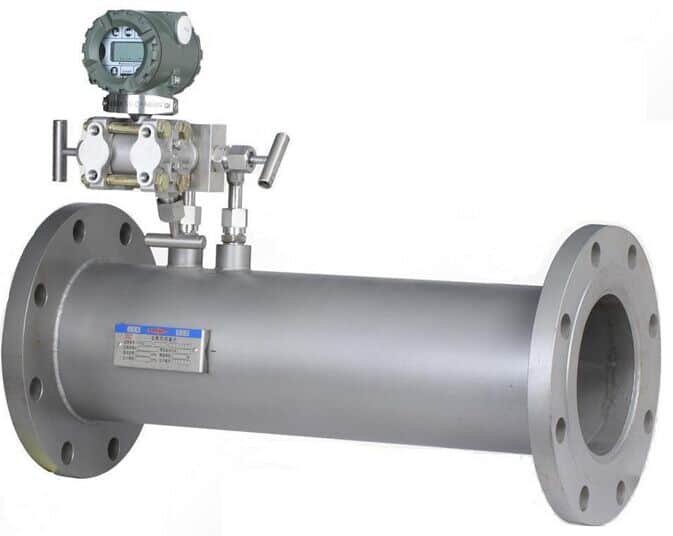
V-cone flow meter (inner-cone / integrated cone type) for DP flow measurement in water, steam, natural gas and dirty process fluids. Rated to 450 °C and 40 MPa with high turndown and low pressure recovery.

n

Need help selecting a flow element for your application? Send us your pipe size, fluid type, operating pressure and temperature, and required accuracy. Our engineers will recommend the right element and provide a quotation — typically within 24 hours.

Request a Quote

Please enable JavaScript in your browser to submit the form

Tank Level Sensors: How to Choose by Tank Content (Decision Matrix)

Updated: April 16, 2026 | By Sino-Inst Engineering Team

Most tank level sensor guides start with the sensor — radar, ultrasonic, hydrostatic, capacitance — and tell you what each one does. That is the wrong way around. The fluid you are measuring eliminates more than half the sensor types before you even think about budget. This guide flips the lookup: pick your tank content first, and the right sensor narrows to one or two choices. Use it for new specifications or to second-guess an existing installation that keeps failing.

Contents

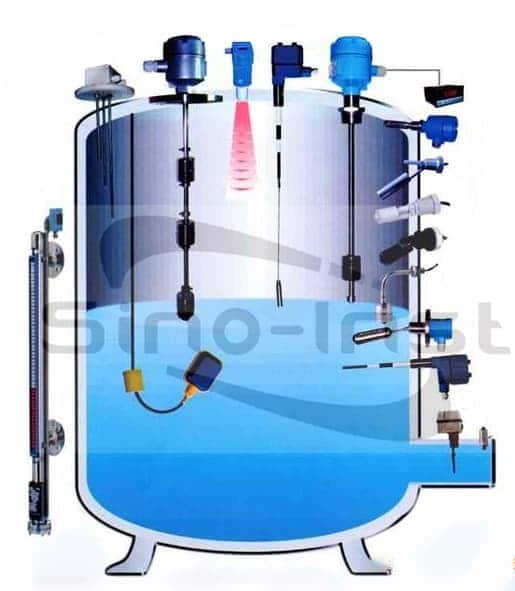
Quick decision matrix: tank content to sensor

Tank contentFirst-choice sensorBackup choiceAvoid
Clean water (tower, cistern, well)Submersible hydrostaticRadar (80 GHz)Capacitance
Diesel / fuel oilMagnetostrictiveServo gaugeUltrasonic (vapor)
Strong acids / causticsGuided wave radar (PFA-coated)Bubbler / DPHydrostatic submersible
Slurry, sludge, mud80 GHz radar (non-contact)DP transmitter with diaphragm sealsFloat, capacitance
Foamy or stratified liquidsGuided wave radarMagnetic level gaugeUltrasonic, free-space radar
Hot oil / asphalt (>200°C)Guided wave radar (HT probe)Servo gaugeSubmersible, capacitance
Food, beverage, pharmaSanitary radar (3A / EHEDG)Sanitary capacitanceBubbler, contact float
LNG, LN2, cryogenicMagnetostrictive (cryo seal)Servo with floatCapacitance, hydrostatic
Solid powders / pellets80 GHz radar with dust shieldGuided wave radarUltrasonic, hydrostatic
Overflow / dry-run point onlyVibrating fork (tuning fork)RF admittance, float switchContinuous transmitter

Step 1: Define what’s in the tank

“Liquid” is not a content category. Conductive vs non-conductive matters for capacitance probes. Dielectric constant matters for radar. Foam matters for ultrasonic. Vapor pressure matters for any non-contact tech. Before specifying anything, write down these six properties of your fluid:

  • Density (kg/m³ at operating temperature)
  • Dielectric constant εr (water = 80, hydrocarbons = 2-4, plastics = 1.5-3)
  • Conductivity (water with salts = high, distilled water = low, oils = none)
  • Viscosity at operating temperature
  • Foam tendency (yes / no / sometimes)
  • Vapor or condensate above the surface (steam, solvent vapor, etc.)

If you cannot get this from the SDS, ask the process engineer who designed the tank. Specifying a level sensor without these numbers is what produces the field calls we get six months later.

Step 2: Continuous reading or point switch?

Continuous transmitters give you a 4-20 mA reading anywhere in the tank’s range. Point switches just close a contact at one fixed level. They cost different orders of magnitude and they fail differently.

NeedUse continuousUse point switch
Inventory trackingYesNo
PID loop / blending controlYesNo
Pump start / stop onlyOptionalYes (cheaper)
Overflow safety / dry-run cutoutNo (use both)Yes (SIL-rated)
Custody transferYes (servo or magnetostrictive)No
Budget under $200Rare (hydrostatic + display)Yes (float, fork)

For pump control, a continuous transmitter feeding the PLC plus an independent float switch as backup is a far more reliable arrangement than two transmitters in voting. The float switch covers the failure mode where the transmitter fails high or stuck. For pump-only switching, see our float switch wiring guide.

Clean water and potable storage

Submersible hydrostatic transmitters are the default. The probe sits at the tank bottom, measures the pressure of the water column above it, and outputs 4-20 mA proportional to depth. Accuracy is ±0.1% FS for quality units, the cable doubles as a vent (atmospheric reference), and there are no moving parts to wear out.

For potable water, choose a NSF/ANSI 61 certified probe. For elevated towers (over 15 m head), check the cable’s vent tube doesn’t sag and form condensate traps — a saturated vent tube reads erratically. The non-contact alternative is 80 GHz radar mounted on the top, which avoids any in-tank hardware but costs roughly 3x.

Fuel, diesel and lubricating oil

Magnetostrictive transmitters dominate this category because hydrocarbons have stable density, low foam, and the float-on-stem principle gives the ±1 mm accuracy that fuel inventory needs. The same probe can carry up to 8 RTDs for ATG (automatic tank gauging) compliance. For an underground or buried tank with restricted top access, the flexible-cable version of the same technology installs through a 2″ riser.

Avoid ultrasonic on diesel — vapor density above the liquid changes the speed of sound, which throws the level reading off by 1-3% as temperature swings. Use it only on water; on fuel it always disappoints in field service.

Acids, caustics and corrosive chemicals

Guided wave radar with a PFA or PTFE-coated probe is the safe specification for sulfuric acid, sodium hydroxide, hydrogen peroxide, and other aggressive chemicals. The radar pulse travels along the probe regardless of dielectric constant, vapor density, or foam. The PFA coating isolates everything but the probe end from the medium.

For storage tanks where in-tank hardware is forbidden by safety policy, fall back to a bubbler system (DP transmitter with a purge gas line). Bubblers are old technology but they are bulletproof on the most aggressive chemicals — nothing wetted is in contact with the tank except the dip tube.

Slurry, sludge and abrasive media

Anything in contact with mining slurry, raw sewage, paper pulp, or cement gets coated, eroded, or both. The default specification is non-contact 80 GHz radar mounted above the tank with a 6° narrow beam and a self-cleaning antenna. Build-up on the antenna is what kills slurry radars; the 80 GHz devices have small antenna footprints and air-purge ports for periodic cleaning.

If radar isn’t an option (sealed tank with no top opening), DP transmitters with remote diaphragm seals on the tank’s high and low pressure taps work — but every cleaning cycle becomes a maintenance event. Avoid floats and capacitance in slurry; both will be disabled within a month.

Food, beverage and pharmaceutical

3A and EHEDG certifications are non-negotiable. Sanitary radar is the dominant choice — flush-mount on a tri-clamp connection, no crevices for product to harbor in, full CIP/SIP cleanability. For low-cost agitated tanks, sanitary capacitance probes work for water-based products but struggle when fat content varies (changing dielectric).

Avoid bubblers (purge gas in product is unacceptable) and avoid contact floats (cleaning impossible).

Cryogenic and extreme temperature

Below -40°C and above 200°C is where most general-purpose level sensors quietly drift out of spec. Magnetostrictive transmitters with cryogenic seal extensions work down to liquid nitrogen temperatures. For LNG bullets, a servo gauge with a stainless float is the API standard.

For molten sulfur, asphalt, and hot oil up to 400°C, guided wave radar with a high-temperature antenna assembly is the only practical continuous solution. Hydrostatic submersibles are not rated; capacitance probes drift severely with temperature. For more on hot-tank installation specifics, see our high-temperature radar level guide.

The common mistake: defaulting to ultrasonic

Ultrasonic level transmitters are cheap, non-contact, and look like a universal solution. They are not. Ultrasonics measure the time-of-flight of a sound pulse to the liquid surface and back. Anything that disrupts the air column between the sensor and the surface throws the reading off.

  • Vapor: any solvent vapor, condensing steam, or even rapid temperature gradients change the speed of sound by several percent.
  • Foam: the pulse reflects off foam, not the actual liquid surface.
  • Dust or fog: attenuates the signal until it reads “lost echo.”
  • Stratified temperature: outdoor tanks in summer have a cool layer near the liquid and hot air at the top — a refraction lens that bends the pulse.

Ultrasonics are appropriate for clean water in open atmospheric tanks at stable temperatures. That is a small slice of real applications. When in doubt, switch to 80 GHz radar — same non-contact installation, immune to all the conditions above, costs about 1.5x.

Featured tank level sensors

Submersible Hydrostatic (Water)

SMT3151TR submersible hydrostatic level transmitter with 316L stainless probe. Drops straight into wells, reservoirs and storage tanks — 4-20mA output for continuous level monitoring.

Magnetostrictive (Fuel)

Magnetostrictive level transmitter with ±1 mm resolution for high-accuracy tank gauging. Preferred choice on fuel depots, API terminals and chemical inventory measurement.

DP Transmitter (Chemical)

DP transmitters measure pressure difference across gas, liquid or steam. 4-20mA / 0-5V output drives liquid level, density and flow loops across process plants.

FAQ

What is the most accurate tank level sensor?

Magnetostrictive transmitters reach ±0.1 mm in custody-transfer configurations, the highest of any commercial tank level technology. Servo gauges (Honeywell Enraf, Endress+Hauser Proservo) match this for tall storage tanks. Hydrostatic and radar are typically ±2-5 mm at best.

What is the cheapest reliable tank level sensor?

For continuous reading on water, a basic submersible hydrostatic transmitter runs $150-300 and works for 5+ years with no maintenance. For point-only level switching, a cable-tilt float switch is under $40. Don’t pay more for fancier tech if your application doesn’t need it.

Can one sensor replace multiple float switches?

Yes. A continuous transmitter feeding a PLC can derive any number of virtual setpoints in software — high-high alarm, high pump-stop, low pump-start, low-low cutoff — from one 4-20 mA reading. The trade-off is single point of failure; most safety systems still keep one independent float switch as a backup.

Do I need radar or ultrasonic for an outdoor tank?

Radar. Ultrasonic readings drift in summer when the air column above the liquid stratifies into hot upper / cool lower zones, and they fail outright in heavy rain or fog. 80 GHz radar is unaffected by atmospheric conditions.

How do I measure level in a tank with foam on top?

Guided wave radar — the radar pulse travels along a probe into the foam and reflects off the actual liquid surface below it. Free-space radar and ultrasonic both reflect off the foam itself and read incorrectly. The other option is a magnetic level gauge with an external chamber: foam stays in the main tank, the chamber sees clean liquid.

What sensor works for solid material in tanks (powders, pellets)?

80 GHz radar with a dust-shielded antenna is the modern default. Guided wave radar with a single rope probe works for tanks under 30 m where the rope can swing freely. Avoid ultrasonic — solids have an irregular angle of repose that scatters the pulse.

How often should tank level sensors be calibrated?

Hydrostatic and DP transmitters drift slowly and benefit from annual zero/span verification. Magnetostrictive and servo gauges measure time-of-flight and don’t drift mechanically — every 2-3 years is usually enough. Radar gauges have no moving parts and need calibration only when something physically changes inside the tank (new internals, repositioned nozzle).

Need help specifying for your tank?

Send tank dimensions, fluid SDS, operating temperature/pressure, and any agitation or foam characteristics. We’ll spec a primary and a backup option, with an honest reason if the lowest-cost answer is the right one.

Request a Quote

Please enable JavaScript in your browser to submit the form

Inline Water Flow Meters: Types, Sizing & Buying Guide (2026)

Updated: April 15, 2026

An inline water flow meter measures water flow while installed directly in the pipeline — no bypass, no strap-on sensors. Three technologies dominate this space: mechanical (turbine), electromagnetic, and ultrasonic. The right choice depends on pipe size, water quality, required accuracy, and whether you need digital output for building automation or SCADA.

This guide compares the three technologies with real specs and prices, walks through sizing and installation, and gives a straight answer to the question most buyers ask first: which type do I actually need?

Contents

What Is an Inline Water Flow Meter?

An inline water flow meter is a flow-measuring device cut directly into the pipe so all water passes through the sensing element. This differs from clamp-on (strap-on) meters, which sit outside the pipe, and from insertion meters, which measure a small cross-section through a tap.

Inline designs give the highest accuracy — typically ±0.5% to ±2% of reading — because every drop of water touches the sensor. The trade-off is pressure drop and the need to shut down the line for installation.

You’ll find inline meters in residential sub-metering, HVAC chilled water loops, irrigation systems, cooling towers, and light industrial water treatment. For a deeper look at hot water metering specifically, see our hot water flow meters guide.

What Are the 3 Main Types of Inline Water Flow Meters?

Mechanical, electromagnetic, and ultrasonic — these three cover more than 90% of installed inline water meters worldwide.

Mechanical (Turbine and Multi-Jet)

A mechanical meter uses a rotor or impeller that spins as water flows past. Rotations are converted to volume through a register or pulse output. Multi-jet meters dominate residential service (¾” and 1″), while turbine meters cover industrial sizes up to 12″.

Accuracy is typically ±1.5% to ±2%. They work on clean water only — sand, scale, and fibers wear the bearings. Expected service life is 10–15 years for residential units and shorter under heavy industrial use.

Electromagnetic (Magmeter)

A magmeter generates a magnetic field across the pipe. Conductive water moving through the field induces a voltage proportional to flow velocity (Faraday’s law). No moving parts, no pressure drop, and accuracy of ±0.2% to ±0.5%.

Magmeters need water with conductivity above 5 µS/cm — fine for tap water, process water, and wastewater; not suitable for deionized water. For full specs and models, see our magnetic flow meter guide.

Inline Ultrasonic (Transit-Time)

Inline ultrasonic meters fire sound pulses upstream and downstream between two transducers. The time difference is proportional to flow velocity. No moving parts, no pressure drop, accuracy ±1% to ±2%.

They handle clean water and most process water, but air bubbles and heavy solids degrade signal. Increasingly popular for residential district metering because they have no mechanical wear and run on a battery for 10+ years.

Mechanical vs Electromagnetic vs Ultrasonic: Which Is Best?

There’s no single winner. Match the technology to the water and the job.

ParameterMechanicalElectromagneticUltrasonic
Accuracy±1.5% – ±2%±0.2% – ±0.5%±1% – ±2%
Pressure DropMedium–HighNoneNone
Moving PartsYesNoNo
Water QualityClean onlyAny conductiveClean, low bubbles
Pipe Size Range½” – 12″½” – 120″½” – 48″
Turndown10:1 – 50:1100:1 – 1000:1100:1
PowerNone (register) or 9VAC or 24VDCBattery 10+ yrs or DC
Typical Price (DN50)$150 – $400$600 – $1,500$500 – $1,200
Service Life10–15 years20+ years15+ years

Pick mechanical for residential billing and low-cost sub-metering. Pick electromagnetic when you need high accuracy, wide turndown, or zero pressure drop on cooling loops and process water. Pick ultrasonic for battery-powered district metering and retrofits where you can’t run power.

How Do You Size an Inline Water Flow Meter?

Size the meter to the flow rate, not to the pipe. The common mistake is to match meter size to pipe diameter — this oversizes the meter and kills accuracy at normal flow.

Aim for flow velocity between 0.5 and 3 m/s (1.6–10 ft/s) through the meter. Outside this window, mechanical meters lose accuracy at the low end, and all types see excessive wear or cavitation at the high end.

  1. Find your normal operating flow rate (not peak).
  2. Compute required pipe area: A = Q / v, using v = 2 m/s as target.
  3. Pick the meter size whose nominal rating covers your normal flow in the middle of its range.
  4. If your pipe is larger than the meter, use eccentric reducers and the upstream and downstream straight pipe rule (10D upstream, 5D downstream).

How Do You Install an Inline Water Flow Meter?

Proper installation is the difference between ±0.5% and ±5% accuracy. Four rules cover 95% of field installations:

  • Straight pipe runs. Provide 10× diameter upstream and 5× diameter downstream, free of elbows, valves, and reducers.
  • Full pipe. Electromagnetic and ultrasonic meters need 100% liquid. Install on a vertical rising section or a well-flooded horizontal section.
  • Flow direction. Match the arrow on the meter body to flow direction. Reverse installation voids warranty on most mechanical meters.
  • Isolation. Put shutoff valves on both sides and a strainer (20–40 mesh) upstream of mechanical and small ultrasonic meters.

A common field error is installing the meter right after a pump or control valve. Turbulence from these devices skews the flow profile for 20+ pipe diameters downstream and produces readings that can be off by 5–10%.

How Much Does an Inline Water Flow Meter Cost?

Prices scale with pipe size, technology, and output. For a DN50 (2″) water line, expect these ranges from a direct manufacturer:

  • Mechanical multi-jet with pulse output: $150–$400
  • Inline ultrasonic, battery-powered: $500–$1,200
  • Electromagnetic with 4–20 mA + Modbus: $600–$1,500
  • Sanitary tri-clamp electromagnetic: $900–$2,000

Jumping to DN100 (4″) roughly doubles these. DN200+ pricing varies heavily by lining and electrode material — contact our engineers for a quote on anything above DN150.

Featured Inline Water Flow Meters

Inline Ultrasonic Water Flow Meter

In-line transit-time ultrasonic flow meter with pre-calibrated pipe spool. Wetted-transducer design delivers higher accuracy than clamp-on whenever a line shutdown is acceptable.

Residential Ultrasonic Water Meter

Insertion ultrasonic water flow meter for DN100-DN3000 mains. Hot-tap installation means no pipe cutting and no shutdown — ideal for water utilities, irrigation and cooling loops.

Electromagnetic Water Flow Meter

Electromagnetic water flow meter for drinking water, sewage, seawater and cement slurry. IP68 sensor for buried mains, optional MID / OIML R49 compliance for custody transfer billing.

FAQ

What does “inline” mean on a flow meter?

Inline means the meter is installed directly in the pipeline — water flows through the sensor body. Clamp-on and insertion meters are the two non-inline alternatives.

Can I install an inline water flow meter in any orientation?

Horizontal is preferred for most types. Vertical rising flow is also acceptable and helps keep the meter full. Avoid horizontal-downward orientations, which trap air at the sensor.

What’s the most accurate inline water flow meter?

Electromagnetic meters, at ±0.2% to ±0.5% of reading, are the most accurate for any conductive water. Coriolis meters are more accurate still but cost 3–5× more and are overkill for water service.

Do inline water flow meters need straight pipe?

Yes. All three types require at least 10 pipe diameters upstream and 5 downstream, free of fittings. Some electromagnetic models tolerate 5D/3D, but you pay a small accuracy penalty.

How often does an inline water meter need calibration?

For custody-transfer use, calibrate annually. For process monitoring, every 3–5 years is typical. See our flow meter calibration guide for procedures.

Can an inline water flow meter work on hot water?

Yes. Electromagnetic meters handle up to 180°C with proper lining (PFA or PTFE). Ultrasonic models go to 150°C. Mechanical multi-jets are usually rated 30–90°C — always check the data sheet.

Still unsure which inline water flow meter fits your line? Send us your pipe size, flow range, water type, and required output — our engineers will reply within 24 hours with a specific recommendation and a quote.

Request a Quote

Please enable JavaScript in your browser to submit the form

How Does a Capacitive Liquid Level Sensor Work? (Engineer’s Guide 2026)

Updated: April 15, 2026

A capacitive liquid level sensor detects level by measuring the capacitance change between a probe and the tank wall (or a second probe) as the liquid rises or falls. The liquid acts as the dielectric — its dielectric constant determines how much capacitance changes per centimeter of level. That’s the whole working principle in one sentence.

What matters in the field is knowing when this technology works well (oils, water, most chemicals, slurries) and when it doesn’t (varying dielectric, heavy coating, high-purity water). This guide walks through the physics, sensor types, calibration, and the dielectric-constant numbers you actually need to size a probe.

Contents

How Does a Capacitive Liquid Level Sensor Work?

The sensor acts as one plate of a capacitor; the tank wall or a second rod acts as the other plate. Liquid between them is the dielectric material. When level rises, more of the probe is submerged, dielectric material replaces air (εr of water is 80 vs air’s 1), and capacitance jumps.

The transmitter converts that capacitance change into a 4–20 mA or digital signal proportional to level. The equation:

C = (ε0 × εr × A) / d

Where ε0 is the vacuum permittivity, εr is the relative dielectric constant of the liquid, A is the submerged electrode area, and d is the gap. Because εr is the only variable that depends on the medium, the sensor must be calibrated to the specific liquid.

What Are the Main Types of Capacitive Level Sensors?

Four probe configurations cover almost every tank scenario.

  • Bare rod (single probe, metal tank). The rod and the conductive tank form the capacitor. Simplest and cheapest. For conductive liquids like water, the rod must be insulated.
  • Insulated rod. PTFE or PFA jacket prevents shorting in conductive media. Standard for water, acids, and alkalis.
  • Dual-rod (coaxial). A second rod replaces the tank wall — used in plastic or fiberglass tanks where there’s no grounded reference.
  • RF admittance. Adds a driven guard to cancel out coating effects on the probe. Used on sticky liquids like slurries, glue, and chocolate. See our RF admittance level sensor guide.

What Dielectric Constants Work with Capacitive Sensing?

Capacitive sensors work reliably when the liquid’s dielectric constant is ≥1.8 and stable. Below that, capacitance change per cm is too small to measure reliably. If εr varies with temperature or composition, calibration drifts.

Liquidεr (approx.)Capacitive sensing
Air / vapor1.0Reference
Gasoline, kerosene2.0Marginal — needs sensitive electronics
Diesel, fuel oil2.1–2.3Good
Lubricating oil2.2–2.8Good
Vegetable oil3.0Good
Alcohols (ethanol)24Excellent
Water (tap)80Excellent — requires insulated probe
Aqueous acids/bases40–80Excellent — requires insulated probe

Do not use capacitive sensing on liquids with unpredictable εr — examples include variable oil–water emulsions and slurries of changing solids content. Use guided wave radar or float-based measurement instead.

What Are the Advantages and Disadvantages?

Short answer: capacitive is a low-cost, rugged workhorse, but it’s sensitive to medium properties and probe coating.

AdvantagesDisadvantages
No moving parts — long service lifeNeeds stable dielectric constant
Works in pressurized and high-temp tanks (to 200 °C, 40 bar)Coating on probe shifts calibration
Compact — fits small tanks where radar doesn’tMetal tank required for single-rod types
Low cost: $150–$600 per sensorMust be recalibrated if liquid changes
Accuracy ±1% of full scaleFoam and vapor can affect top of range

How Do You Calibrate a Capacitive Liquid Level Sensor?

Two-point calibration handles most capacitive sensors. Do it with the actual process liquid, not water. For general calibration procedures across flow and level instruments, see our calibration procedures guide.

  1. Empty the tank. Set the low (4 mA / 0%) point. This captures probe-to-tank baseline capacitance.
  2. Fill to 100% of measuring range. Set the high (20 mA / 100%) point.
  3. Verify at midpoint. Fill to 50% and check reading is 12 mA ±1%. If off, check for probe coating or partial air gap.
  4. Log ambient temperature. εr of many oils changes 0.1% per °C. For wide temperature swings, use a transmitter with temperature compensation.

A common field mistake is to calibrate with water when the tank will hold oil. The dielectric constants differ by a factor of 30, and the sensor reads nonsense until you recalibrate.

Capacitive vs Float vs Ultrasonic: Which to Pick?

Capacitive wins on cost and durability in small-to-medium tanks with stable liquids. Float meters win where power or electronics aren’t available. Ultrasonic wins on non-contact measurement in open tanks.

CriterionCapacitiveFloatUltrasonic
Contact with liquidYesYesNo
Moving partsNoYesNo
Handles foam / vaporFairFairPoor
Handles sticky / coating liquidsPoor (RF admittance: Good)PoorGood
Accuracy±1% FS±3–5% FS±0.5% FS
Typical cost (1 m range)$150–$600$50–$300$300–$800

Featured Capacitive Level Sensors

Capacitance Level Transmitter

SI700 RF capacitance level transmitter for continuous and point level detection in liquids and solids. Resists coating, condensation and vapour layers — reliable where radar struggles.

Capacitive Water Level Sensor

Contact and non-contact capacitive water level sensor for storage tanks, wells and corrosive liquids. Resists temperature, humidity and conductivity drift for reliable readings where floats fail.

Capacitive Level Switch

Capacitive (RF) level sensor for liquid, solid and interface measurement. Handles high-temp, corrosive and easy-to-crystallise media with anti-clogging probes and 4-20mA output.

FAQ

Can a capacitive level sensor measure both liquids and solids?

Yes, for solids with dielectric constant ≥1.8 — grain, plastic pellets, cement powder all work. The accuracy is lower (±3%) because dielectric varies with bulk density.

Does probe length affect accuracy?

Longer probes give higher capacitance change per unit level, which improves resolution. Up to a point — probes over 4 m may need a high-sensitivity transmitter. Never cut a factory probe in the field; it changes the calibration curve.

What makes RF admittance different from standard capacitive?

RF admittance uses a driven guard electrode that cancels out capacitance caused by coating on the probe. Standard capacitive sensors drift when a residue builds up; RF admittance ignores it. Use RF admittance on sticky liquids and heated oils.

Does a capacitive sensor work with pure deionized water?

Yes, but with reduced accuracy. DI water’s dielectric constant is the same (80), but its low conductivity causes response instability. For ultra-pure water service, conductivity-based or ultrasonic water level sensors are more reliable.

Is capacitive level sensing safe for hazardous areas?

Yes. Intrinsically safe and explosion-proof versions are available with ATEX and IECEx certifications. Specify Ex ia for flammable liquid tanks and Ex d for vapor spaces.

How long does a capacitive level sensor last?

With no moving parts, expected life is 10–15 years in normal service. PTFE-jacketed probes in aggressive chemicals last 5–10 years before coating degradation forces replacement.

Need to confirm whether capacitive is the right fit for your tank? Send us the liquid, probe length, and tank material. Our engineers will recommend the right probe type and output, plus a quote — usually within 24 hours.

Request a Quote

Please enable JavaScript in your browser to submit the form

Float Switch for Water Tank: Wiring Diagrams + Troubleshooting

Updated: April 16, 2026 | By Sino-Inst Engineering Team

A float switch on a water tank is just a mechanical contact in your pump’s power loop. When the float rises, the contact opens (or closes); the pump stops (or starts). 90% of the calls we get about float switch failures are not failed switches at all — they are wiring mistakes, wrong terminal selection (NO vs NC), or pumps drawing more current than the switch’s contacts can handle. This page walks through the three wiring patterns that cover most water tank applications and a step-by-step fault-finding flow.

Contents

Quick wiring answer (read this first)

For an emptying tank (sump pump that runs when level rises): use the Normally Open (NO) contact. Float floats up → NO closes → pump runs.

For a filling tank (cistern pump that runs when level drops): use the Normally Closed (NC) contact. Float drops → NC stays closed → pump runs to refill.

If the float switch is rated for less amperage than your pump’s full-load current (FLA), wire it to a contactor or pump relay coil instead of directly to the motor. This is covered in Scenario C below.

How a float switch interrupts the pump circuit

A float switch is a single-pole device. Inside the float housing is either a mercury bulb (older designs), a steel ball that rolls into a microswitch (modern tilt-type), or a sealed reed switch on a stem with a magnet inside the float. All three behave the same way at the terminals: there is a common (C) wire and either a normally open (NO) or normally closed (NC) wire — sometimes both, in a single-pole double-throw (SPDT) switch.

The float switch is wired in series with one leg of the pump’s power supply. Power flows from the line, through the switch contact, through the pump motor, and back to neutral. Open the contact and the pump loses power. There is no logic, no controller, no signal — it is the same as a wall light switch with a heavier rating.

Cable-tilt floats use the cable itself as the pivot. The length of free cable below the cord grip sets the differential between pump-on and pump-off levels. For tank gauging applications that need continuous level (not just on/off), see our guide on tank level sensor types and selection.

NO or NC: choosing the right terminal for fill or empty

Read the application backwards. Decide first what state the pump must be in when the tank is full, then pick the contact that gives you that state.

ApplicationPump should run whenFloat position when runningUse terminal
Sump / sewage / lift pumpTank is filling up (empty it)Float UPNO (closes when float rises)
Cistern / make-up waterTank is draining (refill it)Float DOWNNC (closes when float drops)
High-level alarm onlyLevel is dangerously highFloat UPNO to alarm coil
Low-level dry-run cutoutLevel is too low (must STOP pump)Float UP (cuts off when float drops)NO to interlock chain

If your float switch only has two wires, the manufacturer has pre-wired it for one mode. Cable-tilt floats labeled “pump down” or “drain” are NO; floats labeled “pump up” or “fill” are NC. Checking with a multimeter on continuity is faster than reading the data sheet — flip the float by hand and watch the beep.

Scenario A: single float driving the pump directly

This is the simplest setup. Use it when the pump’s full-load amperage is below the float switch’s contact rating (typically 10A at 250VAC for a quality cable-tilt float, 5A for cheap reed-stem types).

  1. Cut the line (hot) wire of the pump cord, not the neutral. Cutting neutral leaves the pump energized when the float opens — a shock risk during service.
  2. Strip both ends of the cut and one lead of the float switch. Junction them in a watertight box outside the tank if possible.
  3. Connect line-in → float common; float NO (or NC, per the table above) → pump line-in.
  4. Cap or insulate the unused float lead (NC if you used NO, and vice versa). A floating bare conductor in a damp pump pit is the #1 reason these systems fail.
  5. Bond the pump’s green/ground wire all the way through to the supply ground. The float switch never interrupts ground.

Cable-tilt models (the egg-shaped floats on a cord) self-set their pump-on / pump-off differential by the length of cord below the cable clamp. A short tether (4–6 inches) gives a tight ±3 inch level band; a long tether (12–18 inches) gives a 12+ inch band. Long tethers reduce pump cycling, which is what kills small submersibles.

Scenario B: dual float for fill and high-level cutoff

Use two floats when one float can’t safely handle both the start command and a backup safety cutoff. Common cases: cisterns where overflow would damage the building, sewage tanks where a stuck float means flooding, fuel transfer systems.

  • Lower float (working float): wired to start/stop the pump on its normal differential band.
  • Upper float (high-level cutoff): wired in series with the working float on a fill system, OR to an alarm/shutdown circuit on a drain system. If the working float jams, the upper float overrides.

For a fill cistern: line → upper-float NC → lower-float NC → pump line-in. Both floats must be DOWN (NC closed) for the pump to run. The pump stops as soon as either float rises. The upper float should be set 4–6 inches below the overflow line so it has time to act before water spills.

For a sump pump: lower float NO drives the pump; upper float NO drives a 12V alarm or an internet-connected sensor. The upper float never touches the pump circuit — its only job is to tell you the working float failed.

Scenario C: float through a contactor for large pumps

If your pump’s nameplate shows more than 8–10 amps, do not run pump current through the float switch contacts. Contact welding is what kills float switches in heavy applications: every start arc burns a little metal, and after a few hundred cycles the contacts fuse closed and the pump runs forever.

The fix is a contactor (motor starter relay) sized to the pump. The float switch only carries the contactor coil current — typically 100–300 mA at 24V or 120V — which is well within any float switch’s rating. The contactor’s heavy contacts handle the pump load and can be replaced as a wear part.

  1. Wire the float switch to the contactor coil terminals (A1, A2). Float NO in series with the coil hot leg.
  2. Wire the pump motor leads to the contactor’s load contacts (T1, T2, T3 for 3-phase).
  3. Add a thermal overload block downstream of the contactor sized to the pump’s FLA × 1.15.
  4. If you need remote start/stop, wire a HAND-OFF-AUTO selector switch in parallel with the float across the coil.

This is also the right approach for explosion-proof installations. The float can be intrinsically safe (low energy, in the hazardous area), the contactor sits in a non-hazardous panel. For a deeper look at high-current and DP-style installation rules, see our DP transmitter installation guide.

Five wiring mistakes that burn out pumps and switches

  • Switching the neutral, not the line. Pump stays energized when float opens; the casing can become live if internal insulation fails.
  • Picking the wrong NO/NC terminal. Pump runs continuously or never starts. Test with a multimeter before powering up.
  • Tether too short on a cable float. Pump cycles every 30 seconds, motor windings overheat in days.
  • Float allowed to rest against the tank wall. Float wedges, never tilts. Always install with at least 6 inches of free swing.
  • Running 15A pump current through a 10A float contact. Contacts weld closed; pump runs the well dry. Add a contactor (Scenario C).

Troubleshooting flow when the pump won’t stop or won’t start

Run this in order. The first three steps catch about 80% of float switch problems without removing the switch from the tank.

  1. Check power at the pump. Disconnect the float from the circuit (jumper across float wires) and try the pump. If the pump still won’t run, the problem is upstream of the switch — breaker, cord, motor.
  2. Manually flip the float. With the system de-energized, lift the float through its full travel. You should hear a faint click (microswitch) or feel a snap (mercury). No sound = stuck switch, replace.
  3. Continuity test at the float wires. Disconnect both float leads. Touch a multimeter on continuity to the two leads. Tilt the float — beep should go on/off cleanly. Intermittent or no change = internal switch failure.
  4. Inspect the cord grip and tether. Cable that has slipped 1–2 inches will shift the trigger level enough to either short-cycle or never trigger. Re-clamp with the original tether length.
  5. Look for grease or scale on the float body. A float coated in pump grease becomes neutrally buoyant and stops tilting. Wipe clean with mineral spirits.
  6. Measure inrush current at the contacts. If you’ve replaced two switches in six months, the pump is over-amping the contacts. Move to Scenario C wiring with a contactor.

When to replace the switch (and when not to)

Replace if: the float body is cracked, the cord insulation is damaged, the continuity test in step 3 is intermittent, or the contacts show black welding marks when opened. Float switches are not user-serviceable — there are no contacts you can clean inside a sealed cable-tilt body.

Don’t replace if: the issue is grease/scale on the float (clean it), the tether has slipped (re-clamp), or the wiring is plain wrong (rewire per the table above). A new switch in the same wrong configuration fails just as fast as the old one.

For continuous water tank monitoring (level reading, not just switching), a 4-20 mA hydrostatic submersible or ultrasonic gauge is a better tool. See our water tank level sensors guide for the trade-offs.

FAQ

Why does my float switch click but the pump doesn’t run?

The switch is doing its job — the pump circuit is broken somewhere else. Test continuity through the float leads while you tilt it, then check the pump’s own cord and breaker. A clicking switch with no pump action is almost never a failed float.

Can I use the same float switch for hot water (over 60°C / 140°F)?

Standard polypropylene cable-tilt floats are rated to about 50°C continuous. For hotter water (boiler feed, condensate tanks), pick a stainless-steel stem float with a Buna-N or Viton seal rated to 120°C. The cheap pool-pump style will deform and sink within weeks at boiler temperatures.

Do I need a relay if my pump is only 1/3 HP?

Probably not. A 1/3 HP submersible pump draws roughly 6–8 amps running and 15–25 amps inrush at start. Most quality cable-tilt floats are rated 13A inductive at 120V, which covers it. If you’re cycling more than 4 times per hour or using a no-name float, add a contactor anyway — it costs less than a replacement switch.

How long should a float switch last?

In clean water with proper sizing, 100,000+ cycles or roughly 5–7 years. In sewage with grease and stringy debris, expect 1–2 years and inspect quarterly. Switches in chemical service rarely make it past 6 months without seal degradation; use a non-contact alternative there.

Can I wire two pumps off one float switch?

Not directly. Wire each pump’s contactor coil in parallel off the same float NO contact, and stagger the contactor pull-in voltages so they don’t both start simultaneously and trip the breaker. For lead/lag duplex pumping, use a duplex pump controller with an alternator relay — the float is just one input.

Need help sizing or troubleshooting?

Send your pump nameplate, tank dimensions, and a photo of the existing wiring to our engineers. We’ll specify the right float series and wiring scheme — and we’ll tell you straight if a continuous-level sensor would be the better tool. Use the form below or contact us via the contact page.

Request a Quote

Please enable JavaScript in your browser to submit the form

What Is a Metal Tube Flow Meter? Rotameter Specs & Selection Guide

Updated: April 15, 2026

A metal tube flow meter is a variable-area (VA) rotameter built with a stainless steel measuring tube instead of glass. A float inside the tube rises to a height proportional to the flow rate, and a magnetic coupling transfers that position to an external scale or a 4–20 mA transmitter. It’s the standard choice for high-pressure, high-temperature, or opaque fluids where a glass rotameter won’t survive.

This guide covers the working principle, when to pick metal tube over glass or digital flow meters, accuracy and pressure limits, and what to specify when ordering one. If you already know you need a rotameter and just want the specs, jump to the comparison table and product cards below.

Contents

What Is a Metal Tube Flow Meter?

A metal tube flow meter — also called a metal tube rotameter or LZ-series variable area flow meter — measures liquid or gas flow using a float suspended in a vertical metal tube. “Metal tube” distinguishes it from the glass-tube rotameters used for low-pressure water and air service.

Typical construction: 304 or 316L stainless tube, a stainless or Hastelloy float, and an external magnetic indicator with pointer or LCD display. Wetted parts can be PTFE-lined for acid and chlorine service. Connection is flanged or threaded, sizes DN15–DN200.

How Does a Metal Tube Rotameter Work?

Fluid enters the bottom, flows upward, and lifts a float until the upward drag force balances gravity. Higher flow pushes the float higher. A permanent magnet inside the float couples through the stainless wall to an external indicator or transmitter — no mechanical feedthrough, no seals to leak.

The governing equation is a balance between float weight and the dynamic pressure of flow through the annular gap:

Q = Cd × A × √(2 × g × Vf × (ρf − ρ) / (Af × ρ))

Where Q is volumetric flow, A is the annular flow area, Vf and Af are the float volume and cross-section, ρf and ρ are float and fluid density. What this tells you in practice: a float calibrated for water will read wrong on heavier oils or gases — always calibrate for the specific fluid.

For a deeper comparison of variable-area flow measurement vs other technologies, see our rotameter vs flow meter comparison.

Metal Tube vs Glass Tube vs Digital Rotameter

Metal tube is the right answer when pressure, temperature, or opacity rules out glass. Digital VA meters add outputs but cost more.

ParameterGlass TubeMetal TubeDigital VA
Max Pressure1 MPa (145 psi)25 MPa (3,600 psi)25 MPa
Max Temperature120 °C300 °C300 °C
Accuracy±2% – ±5% FS±1.5% – ±2.5% FS±1% FS
Turndown10:110:120:1
OutputVisual onlyVisual + 4–20 mA / HART / alarm4–20 mA / HART / Modbus
Opaque / colored fluidUnreadableOK (magnetic coupling)OK
Relative cost3–4×5–7×

Pick metal tube when you’re above 10 bar, above 120 °C, or measuring oil, slurry, or steam condensate. Stick with glass for clean low-pressure water and air. Pay for digital VA only if you need remote output on fluids where a magnetic flow meter or vortex flow meter won’t work.

What Pressure, Temperature and Accuracy Can It Handle?

Typical metal tube rotameter specs for standard LZ-series:

  • Size range: DN15 to DN200 (½” to 8″)
  • Flow range: 2.5 L/h to 100 m³/h for water; 0.1 to 1,000 Nm³/h for air
  • Pressure: PN16 to PN64 standard; PN250 on request
  • Temperature: −40 °C to +300 °C; higher with remote indicator
  • Accuracy: ±1.5% of full scale (±1% for calibrated premium units)
  • Repeatability: ±0.5%
  • Turndown ratio: 10:1
  • Outputs: local pointer, LCD, 4–20 mA, HART, alarm contact, pulse

Where Are Metal Tube Flow Meters Used?

Metal tube rotameters dominate three duty areas where digital flow meters either cost too much or can’t cope with the fluid.

  • Chemical injection and dosing. Low flow, aggressive fluids, and the need for a local visual indicator make rotameters the default on batch reactors and wastewater treatment skids.
  • Utility gas and steam condensate. Where upstream straight run is short and accuracy requirements are moderate, a metal tube VA is simpler than Coriolis or thermal mass.
  • Oil and lubricant supply lines. Dark fluids make glass rotameters unreadable. Magnetic coupling solves this without electronics.
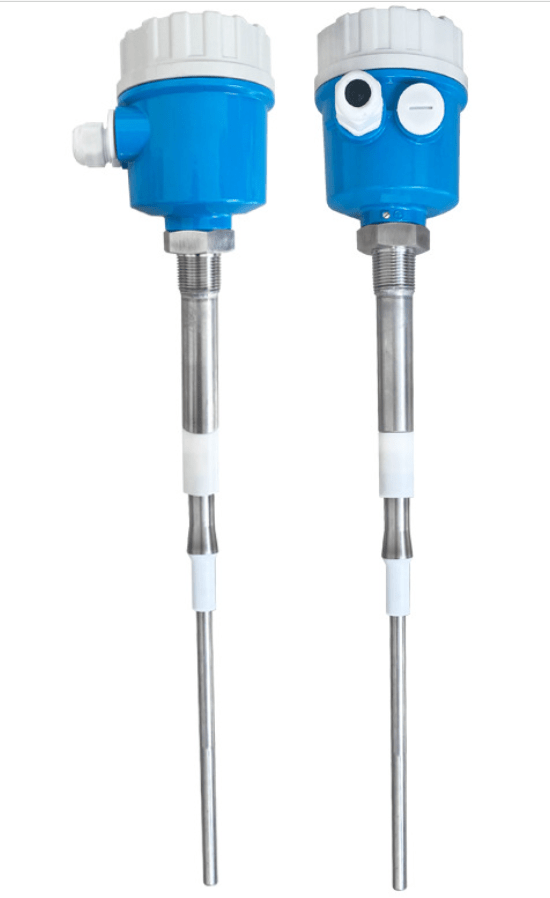
  • High-pressure gas cylinders and analyzers. PN64+ rating handles industrial gas distribution without bulky electronics.

How to Specify a Metal Tube Flow Meter

Get these six items right on the RFQ and you’ll receive a workable quote without back-and-forth.

  1. Fluid. Name and density/viscosity. “Water” isn’t enough — brine, DI water, and boiler feed all calibrate differently.
  2. Flow range. Minimum and maximum normal flow. Size for the meter’s mid-range, not the max.
  3. Operating pressure and temperature. Nominal and maximum. Adds 20% margin as a default.
  4. Connection type. Flanged (ANSI B16.5 or EN 1092-1) vs threaded; pipe size and rating.
  5. Output and display. Local pointer only, LCD+4–20 mA, HART, alarm switches — each adds cost.
  6. Orientation and mounting. Vertical is standard. Horizontal or top-mount needs a specific float design — call it out.

Common mistake on RFQs: asking for a single meter to cover 0–100 m³/h on the same spec sheet. Turndown is 10:1, so that unit will not read below 10 m³/h reliably. Either split into two meters or switch to a vortex or electromagnetic meter with 100:1 turndown.

Featured Metal Tube Rotameters

LZ Metal Tube Rotameter

Variable-area metal-tube rotameter for liquid, gas and steam in low-flow lines. Local dial plus optional remote 4-20mA transmitter — built for small-flow chemical dosing and utility service.
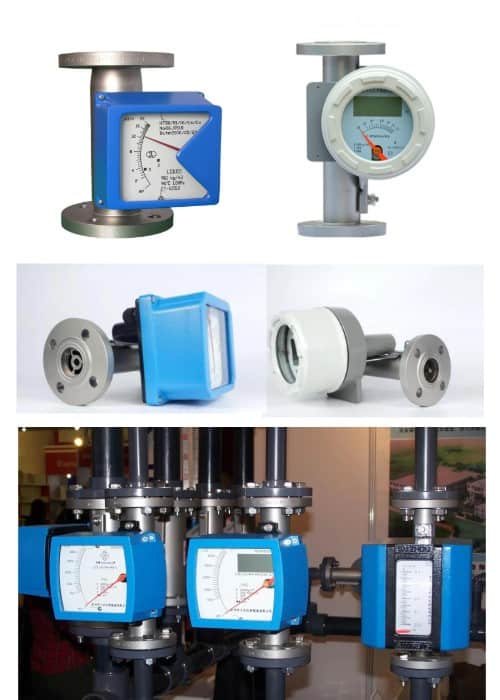
High-Temp Metal Rotameter

Metal-tube rotameter rated to 25 MPa for high-pressure liquid and gas service. Local dial plus optional 4-20mA output — built for hydraulic, LNG and chemical-injection skids.

PTFE-Lined Metal Rotameter

Variable-area metal-tube rotameter for liquid, gas and steam in low-flow lines. Local dial plus optional remote 4-20mA transmitter — built for small-flow chemical dosing and utility service.
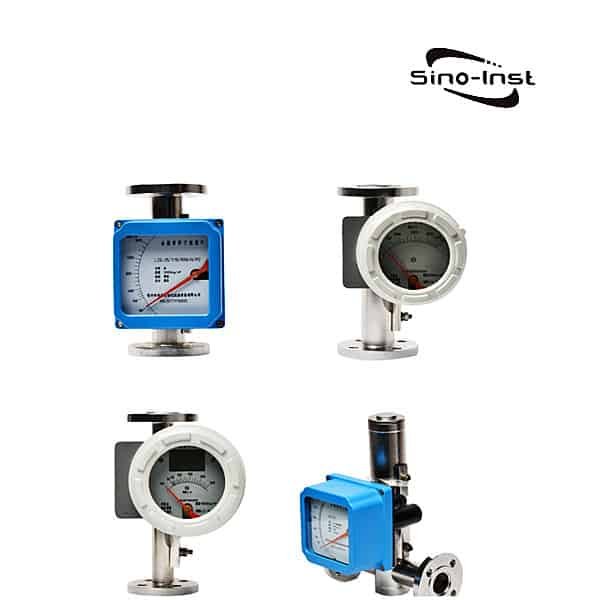
FAQ

What does LZ mean on a metal tube rotameter?

LZ is the Chinese industry naming code for metal tube variable-area flow meters. LZD is a version with damping, LZB has been superseded by LZ for glass-tube designs. Spec sheets from Chinese manufacturers will use LZ-, LZB-, LZD- prefixes interchangeably.

Does a metal tube rotameter need straight pipe upstream?

Yes — 5 pipe diameters upstream and 250 mm downstream is the standard recommendation. Turbulence pushes the float off centre and skews the reading. See the full flow meter straight length requirements.

Can a metal tube rotameter measure gas and liquid with the same unit?

No. The float is sized for the fluid’s density. A float calibrated for air won’t measure water correctly. Order separate units or ask for a dual-calibration chart if flow alternates between two known fluids.

How often does a metal tube rotameter need recalibration?

Every 2–3 years for process use. Check the float visually after any line flush — debris wedged in the annular gap causes readings to stick at specific values. Our flow meter calibration guide covers the full procedure.

What’s the minimum viscosity a metal tube rotameter can handle?

Viscosity immunity varies by float type. Standard ball floats work up to ~30 cP. For heavier lubricants and syrups, specify a viscosity-immune float (V-shape or dual-ring) which extends the range to ~300 cP.

Are metal tube rotameters ATEX certified?

Yes — most manufacturers offer ATEX Ex ia or Ex d versions for hazardous area installation. Specify the zone and gas group on the order. Standard mechanical pointer units without electronics are inherently suitable for most hazardous areas.
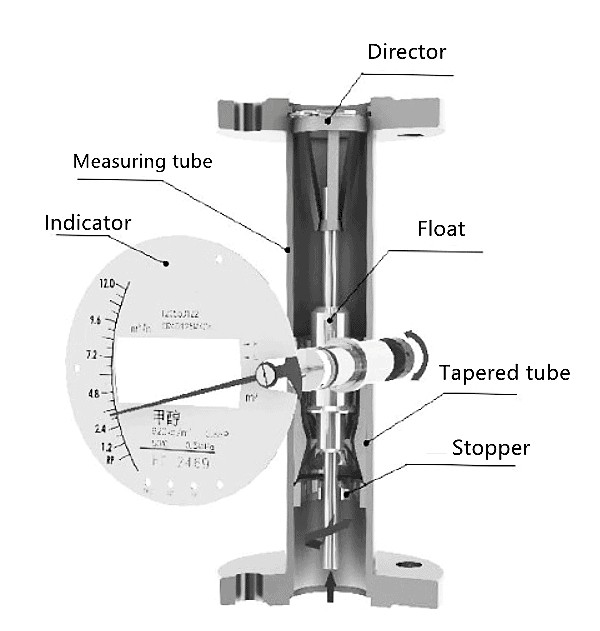
Ready to spec a metal tube rotameter? Send us fluid, flow range, pressure, temperature, and connection size. Our engineers reply within 24 hours with a sized unit and a price — no account needed.

Related: high-temperature steam condensate metering.

Request a Quote

Please enable JavaScript in your browser to submit the form