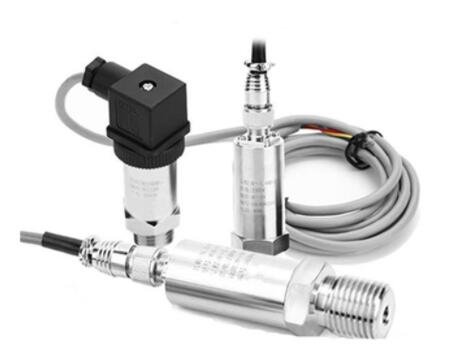
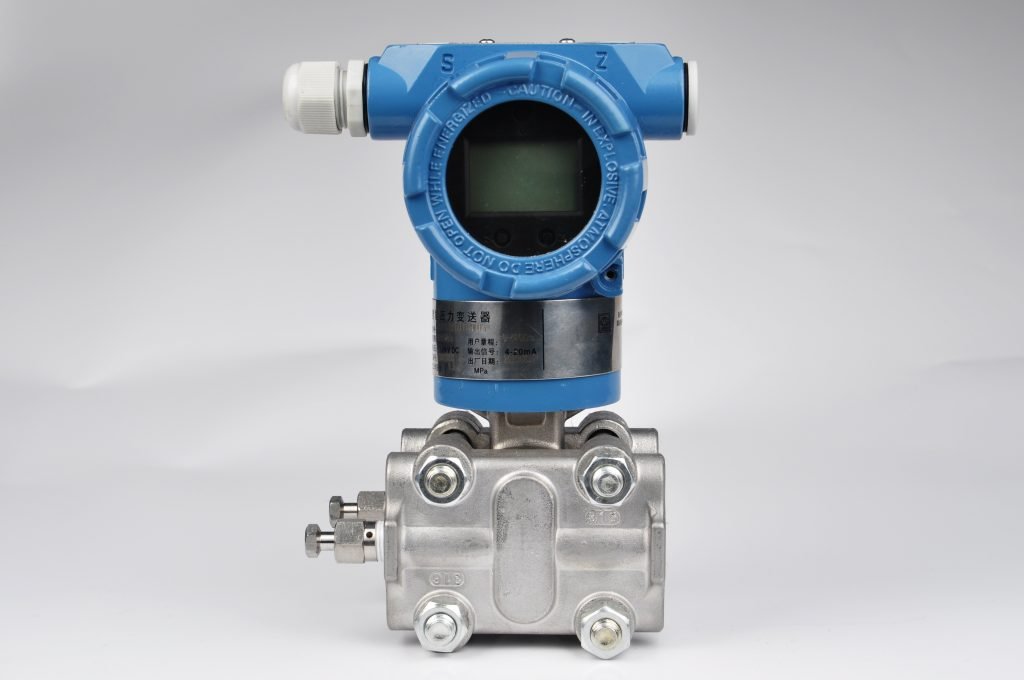
Capacitive pressure transducer

Capacitive pressure transducer

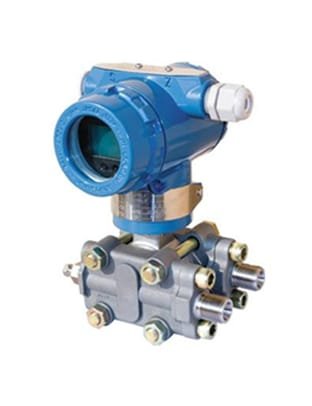
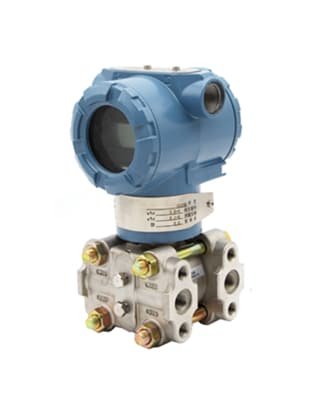
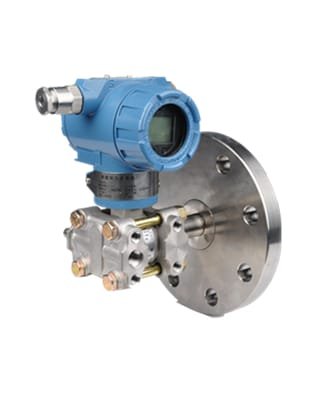
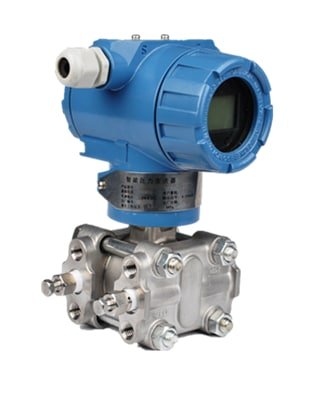
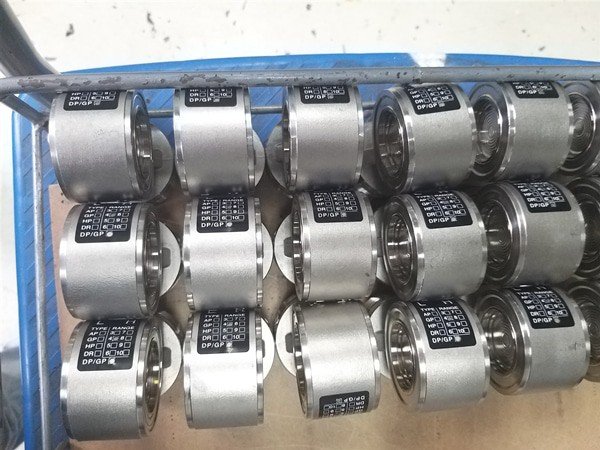
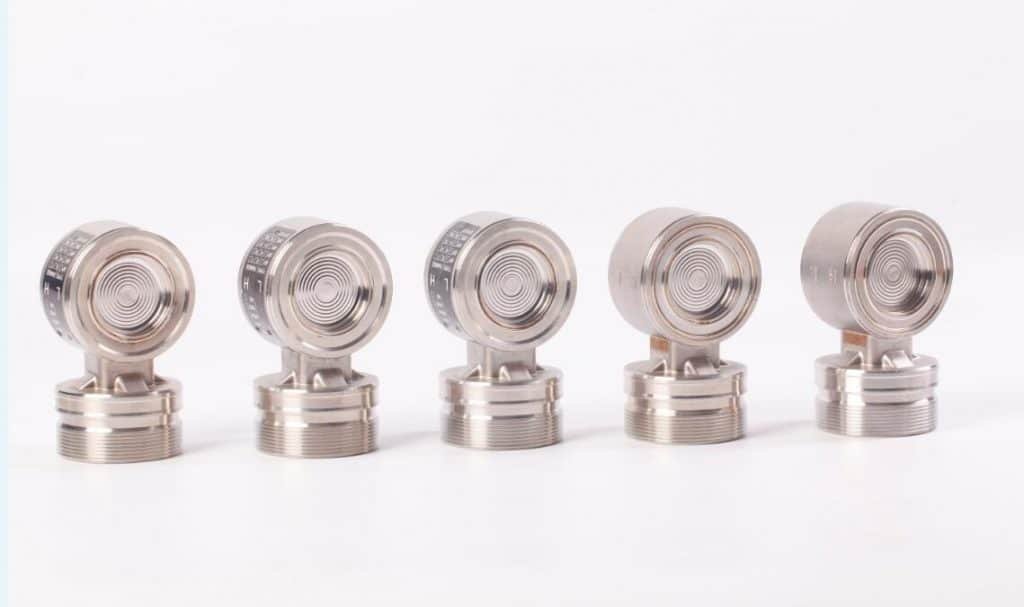
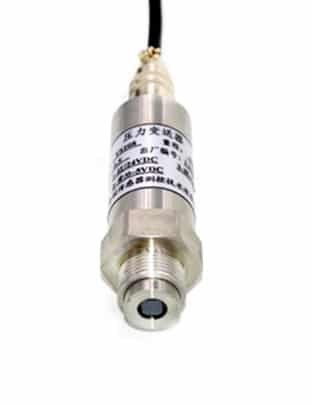
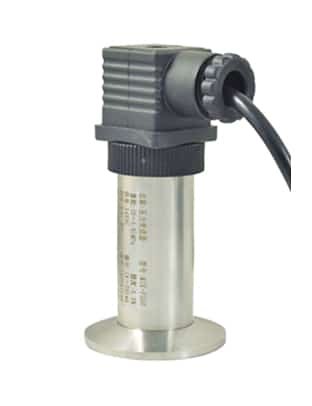
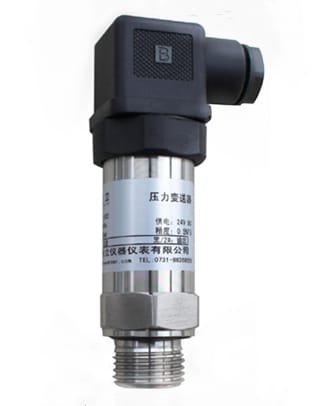
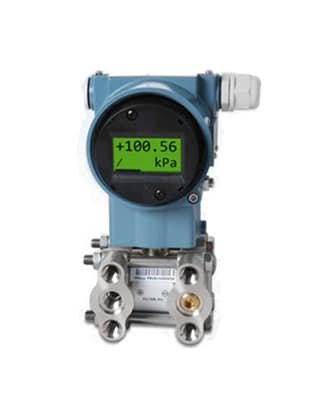
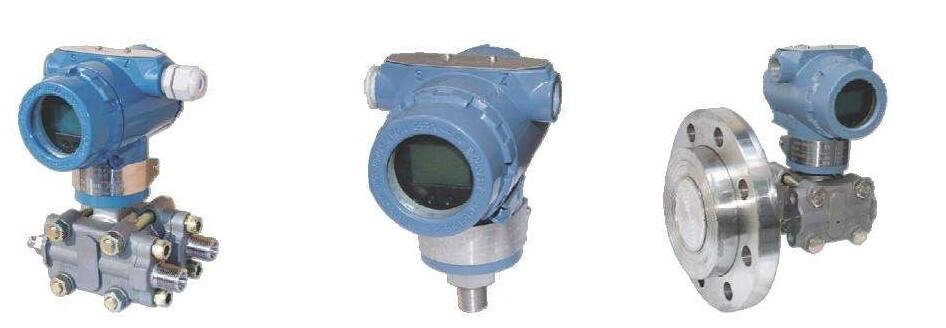
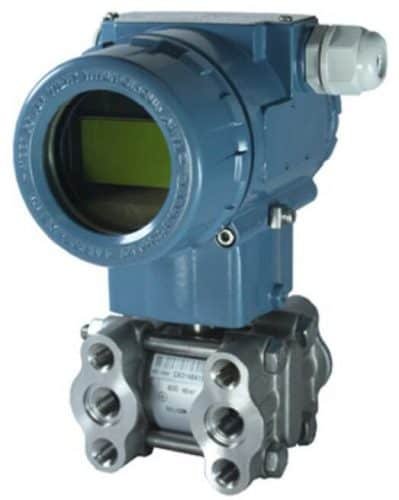
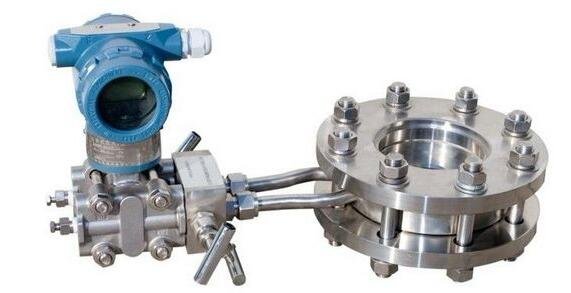
A capacitive pressure transducer also called a Capacitance pressure transmitter or a Capacitance pressure sensor. The capacitive type pressure transmitter is a differential pressure type sensor.

What is the capacitive pressure transducer?

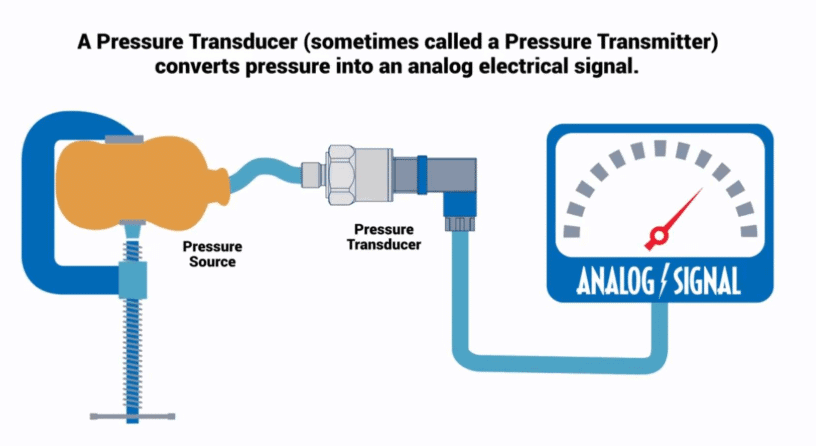
The capacitance pressure transmitter is a pressure measurement device, which converts an applied pressure into a current signal, Like 4-20mA.

A pressure transducer is a device that measures the pressure of a fluid, indicating the force the fluid is exerting on surfaces in contact with it.

Pressure transducers are used in many control and monitoring applications, such as flow, airspeed, level, pump systems, or altitude.

A pressure transducer consists of two main parts: an elastic material that will deform when exposed to a pressurized medium. And an electrical device that detects the deformation and converts it into a usable electrical signal.

The elastic material can be formed into many different shapes and sizes, depending on the sensing principle and range of pressures to be measured.

This often involves a diaphragm combined with an electrical device, that uses a resistive, capacitive, or inductive principle of operation.

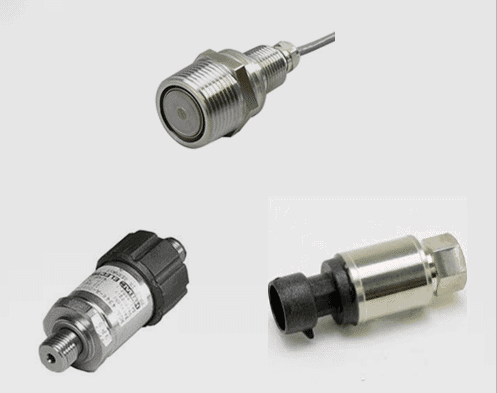
Featured Capacitive pressure transducers

How does a capacitance pressure transducer work?

Capacitive Pressure Transducer Working Principle

A variable capacitance pressure transducer has a capacitive plate (diaphragm), and another capacitive plate (electrode) fixed to an unpressurized surface. With a gap of a certain distance between the diaphragm and the electrode.

A change in pressure will widen or narrow the gap between the two plates, which varies the capacitance.

This change in capacitance is then converted into a usable signal.

Capacitive Pressure Transducer Working Principle:

– A linear change in capacitance with changes in the physical position of the moving element, may be used to provide an electrical indication of the element’s position.

The capacitance is given by:

C = Aε/d

C – Capacitance between two conductors

A – Area of overlapping between those conductors

d – Distance separating the conductors

ε – Dielectric permittivity of the insulating medium

The permittivity of the medium and the area of overlapping will be constant in this case, the only varying parameter. In this case, is the distance between the conductors which varies when the pressure varies, which changes the capacitance.

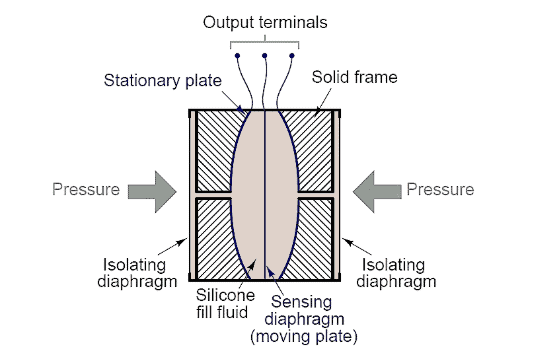
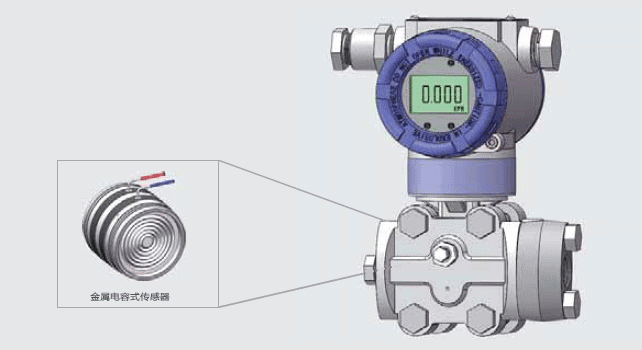
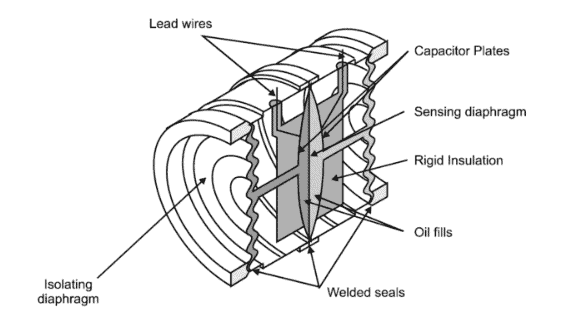
So the pressure variation results in the capacitance variation. Our capacitance pressure sensor is shown below. Just like A Rosemount capacitance pressure sensor:

The capacitance chamber is isolated from the process with an isolation chamber.

The pressure applied at one side. As the pressure at the high-pressure side increases the isolating diaphragm gets pushed toward the metal frame. Transferring its motion to the sensing diaphragm via the fill fluid.

The fill fluid will be oil.

A capacitance detector circuit connected to this cell uses a high-frequency AC excitation signal to measure the difference in capacitance between the two halves. Translating that into a DC signal ultimately becomes the signal output by the instrument representing pressure.

The simple capacitance detector connection with the electrical circuit is shown below:

capacitance detector connection

Advantages of Capacitive Pressure Transducer:

  • Inaccuracy 0.01 to 0.2%
  • Linearity
  • Fast response
  • Range of 80Pa to 35MPa

Disadvantages of Capacitive Pressure Transducer:

  • Temperature sensitivity
  • Stray capacitance problem
  • Vibration
  • Limited overpressure capability
  • Cost

Read more What is a diaphragm seal?

What does a pressure transducer do?

A pressure transducer is a measuring device which converts an applied pressure into an electrical signal.

Generally, a pressure transducer consists of two parts, an elastic material that deforms under the application of pressure. And an electrical part which detects this deformation.

Extended Reading: 4-20ma pressure transducer wiring diagram

Capacitive pressure sensor applications

Types of Pressure Sensors:

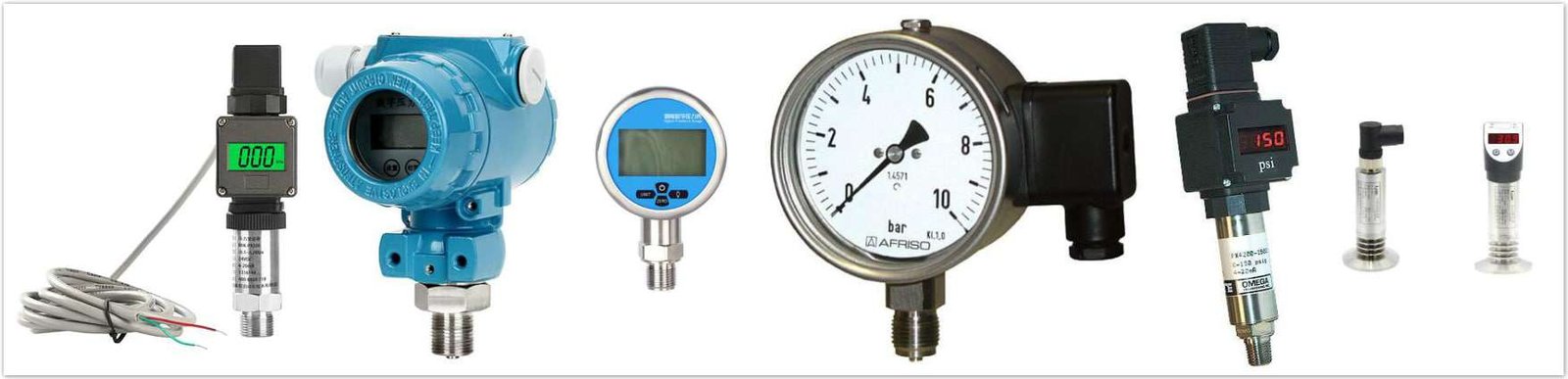
There are different types of pressure transducers based on their design.

These sensors can come in several shapes and sizes, but the technology inside can also differ. 

There 4 main types of pressure sensor based on this: 

  • Strain Gauge Pressure Transducers
  • Capacitance Pressure Transducers
  • Potentiometric Pressure Transducers
  • Resonant Wire Pressure Transducers

Know more about Industrial Pressure Sensors

Absolute measurements are generally used in applications where you need a repeatable reference pressure; i.e. in an experiment or in a barometric application.

For example, if you are looking to replicate a test that was originally completed by a colleague in Denver, CO and you are at a facility in Boston.

May you may want to use an absolute sensor to minimize variables in your test.

Other applications include weather stations, altimeter calibration equipment, and semiconductor fabs and many more.

However, if you want to measure or control a pressure that is based on current conditions a gauge sensor may be best.

Generally, if you want to measure or control a pressure that is influenced by changes in atmospheric pressure.

This style sensor is used in any application where you want to overcome the atmospheric conditions, to produce a task or pull a vacuum to accomplisher another type of task.

The applications for gauge pressure sensors are quite vast.

Some examples are pump discharge pressure, fire hose discharge pressure, tank level, steam pressure in a commercial boiler and many more.

Extended Reading: strain gauge pressure transducer

A sensor capable of compound pressure measurement is one that can measure both positive and negative (vacuum) pressures.

Often compound pressure ranges are utilized in applications, where different parts of a process may either be higher or lower than the atmosphere.

For example, if you were a manufacturer of a collapsible water bottle, in one part of the process you may pressurize a mold to form the bottle, but they pull a vacuum to release the part.

In this case, you may be able to use only one sensor instead of two to accomplish the same task.

Remember that Differential pressure is the difference in pressure between two points of measurement.

You can measure very low to high pressures in all kinds of different media including liquids, gases, water, refrigerants, and air.

Thus, if you want to measure the difference in pressure across a filter (see below), you could use a differential pressure transducer like 3151DP to tell you when it was time to change the filter.

So you can maintain the Indoor Air Quality (IAQ) of your building.

Differential applications can be quite varied, some examples supply and return pressure in a chiller, airflow stations, leak detection systems, pressurized tank level, hospital isolation or protection rooms, and many more.

Extended reading: Smart Differential Pressure Transmitter

How much does it cost a pressure transducer?

There are a number of factors that will impact the price of a pressure transducer.

The biggest differentiator is whether you can use a standard, off-the-shelf pressure transducer, or if you need a custom pressure transducer.

For an off-the-shelf pressure transducer, pressure transducer prices will be most affected by the level of accuracy required for your application.

The more accurate, typically the more expensive the pressure transducer.

To learn more about the pricing of custom pressure sensors click here.

Related Products

SI-303 Low-Pressure Transducer
Low pressure transducers for air and non-corrosive gases low pressure measurement. 0 ~ 2.5kPa to 0 ~ 30kPa measurable.
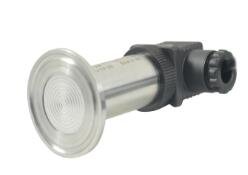
SI-350 Sanitary Pressure Transmitter
Sanitary Pressure Transmitter, also called tri clamp pressure transmitter,
is the pressure transducer with the flush diaphragm (flat membrane) as the pressure sensor.
SI-300 Pressure Transducer 4-20mA/Voltage
The 4-20mA/ Voltage Pressure Transducer,
also called pressure transmitter 4-20mA,
is a pressure sensor with4-20ma/Voltage output.
SI-512H High Temperature Pressure Sensor
High Temperature Pressure Sensor for pressure measurement of high temperature gas or liquid. Such as steam pressure. High temperature up to 800 ℃.
SI-706 Combined Pressure and Temperature Sensor-Dual function
Combined pressure and temperature sensor for Simultaneous measurement.
Thermocouple types: J, K, E type or PT100 platinum resistance. 
Absolute Pressure Transmitter
Absolute pressure transmitter with 4-20mA output for measuring pressure with absolute type reference. Absolute pressure (AP) transmitter is a measure of the ideal (complete) vacuum pressure.
Hydrostatic pressure transmitter
Hydrostatic pressure transmitter is used for fluid hydrostatic pressure measurement. With working static pressure up to 32Mpa, for liquid, gas or steam .
Diffused silicon Gauge Pressure Transmitter
A gauge pressure (GP) transmitter compares a process pressure against local ambient air pressure. Gauge pressure transmitters have ports to sample the ambient air pressure in real-time.
Capacitive Gauge Pressure Transmitter
Gauge pressure (GP) transmitters compare process pressure with local ambient air pressure. Gauge pressure transmitters have ports for real-time sampling of ambient air pressure.
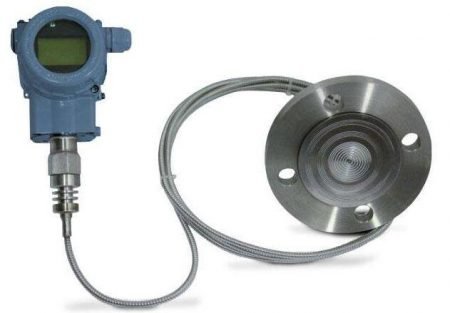
Extended Diaphragm Seal DP Level Transmitter Extended Diaphragm Seal DP Transmitter is a level transmitter direct mounted on pipe or tank. The isolation diaphragm is in direct contact with the liquid medium.

In addition to pressure measurement, capacitive technology is also used in liquid level measurement. Read more about: Capacitive Level Measurement Principle.

Sino-Instrument offers over 50 Capacitive pressure transducers.

About 50% of these are 4-20ma Low-Pressure Transducers, 40% are Differential Pressure Gauge.

And 20% are Diaphragm Seal Pressure transmitters, 20% are 4-20ma differential pressure transmitters.

A wide variety of  Capacitive pressure transducers options are available to you, such as free samples, paid samples. 

Sino-Instrument is a globally recognized supplier and manufacturer of  Low-Pressure Transducers, located in China.

The top supplying country is China (Mainland), which supply 100% of  Capacitive pressure transducers respectively. 

Capacitive pressure transducers products are most popular in Domestic Market, Southeast Asia, and Mid East. 

You can ensure product safety by selecting from certified suppliers, with ISO9001, ISO14001 certification.

Request a Quote

Please enable JavaScript in your browser to submit the form

Pressure indicator transmitters


Pressure transmitters and transducers with industry-leading performance help improve operations in a wide range of industries

What is a pressure indicator transmitter?

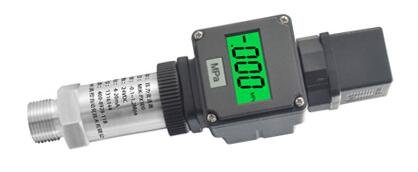
Pressure indicator transmitters are industrial instruments,
which has a digital display for providing a local indication of pressure indicating,
and a 4-20 mA output pressure transmitter (which is also called the smart pressure gauge),
for sending an analog signal to control & monitor instrumentation.
The built-in digital indicators can be scaled via push buttons or change pots,
to any pressure unit or a 0-100% full scaling.
No additional external supply is required,
since the digital indicator is powered by the 4-20mA current loop,
from the pressure transmitter.

Sino-Instrument can offer pressure indicator transmitters for differential pressure measurement,

pressure level measurement, and water pressure measurement.

Pressure indicator transmitters can work with manifold, diaphragm seal, hart, orifice plate,

to measure different types of flow or level.

Pressure indicator transmitter

Pressure Indicators

by Sino-Instrument

  • More Reliable
  • Better Price
  • Many Years of experience in development and production

Contact us

Email: huahengxa@gmail.com
WhatsApp: +86-180 4861 3163
WeChat: +86-180 4861 3163
Mob: +86-18048613163

Types of the pressure indicator transmitters

The basis for an electronic pressure indicator is formed by the pressure sensor.

It converts the measurement parameter of pressure into an electronic signal.

The advantage of electronic pressure indicator lies

in the excellent dynamic performance and low material stress.

This gives them a high load resistance and long-term stability.

They are available in very small sizes.

Sino-Instrument develops and produces all leading sensor technologies:

The ceramic thick film, metal thin film and piezoresistive.

Electronic assemblies or components are integrated into a mechanical pressure indicator.

The measured pressure is displayed locally, however,

besides, the pressure indicator offers an electrical signal,

or includes an electrical switching function.

With these instruments, the measured value can also be read reliably on site,

if the power supply fails or the measuring signal is disrupted.

With the combination of mechanical pressure indicators with different signals and switches,

this results in a comprehensive range of mechatronic pressure indicators.

For our pressure indicators, we use the latest sensor technologies,

tested millions of times over in automotive applications.

They work without any kind of mechanical contact,

consequently, they are wear-resistant,

and there’s absolutely no influence on the pressure indicator.

Because of their robustness and simple handling,

indicating pressure indicators are widely used.

Their elastic pressure elements deform under the influence of pressure.

The measuring system is made from a capsule element,

diaphragm element or Bourdon tube.

The measuring systems are made from copper alloys, alloyed steels or,

if required for specific measuring tasks, from special materials.

Sino-Instrument manufactures mechanical pressure indicators,

with scale ranges from 0 … 0.007 psi up to 0 … 100,000 psi with indication accuracies of up to 0.1 %.

For pressure measurement with high dynamic pressure loads or vibration,

you will find mechanical pressure indicators with liquid filling in the Sino-Instrument portfolio.

Through their damping, they are optimally protected against destruction.

Even for the most demanding measuring requirements,

you’ll find the right solution with Sino-Instrument.

Diaphragm seals enable pressure measurement with harsh conditions such as,

for example, corrosive, highly viscous or fibrous media, very high temperatures,

awkwardly placed measuring points,

hygienic regulations or also toxic media or media harmful to the environment.

You may like:

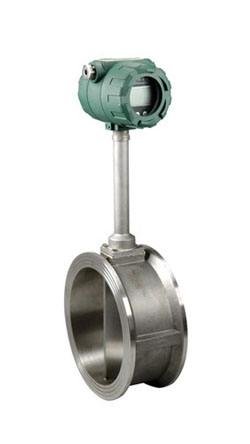
Differential Pressure Flowmeters

Orifice flow meter

verabar flow meter

venturi flow meter

What is the function of a pressure transmitter?

The main function of the pressure transmitter is to transmit the pressure signal to the electronic device,

which in turn displays the pressure on the computer.

The pressure transmitter amplifies the weak electrical signal collected by the pressure sensor,

to transfer or activate the control element.

Or a signal source that converts the non-electricity of the sensor input,

into an electrical signal while amplifying it for remote measurement and control.

The analog quantity can also be converted to a digital quantity as needed.

The pressure sensor converts the mechanical pressure value into a proportional electrical signal.

The pressure sensor typically consists of a stable main body and a (thin) diaphragm.

The diaphragm is the most important element for the measurement of the pressure,

and is equipped with strain-sensitive and compression-sensitive resistance structures,

so-called strain gauges (DMS).

The diaphragm is deflected under the influence of pressure.

Thus, the strain gauges attached to it are elongated or compressed,

and its electrical resistance changes.

This change in resistance is directly proportional to the pressure.

For example, if the resistors are wired to a Wheatstone measuring bridge,

the resulting electrical signal can be measured and transferred to an indicator.

You may like the pressure level transmitter

What is the difference between the pressure gauge and pressure indicator?

A pressure Indicator is an instrument that indicates pressure.

A pressure Gauge is also a type of pressure Indicator.

It is a mechanical device.

Pressure indicators can work on mechanical deflection (in case of pressure gauge) or Piezoelectric effect,

change in capacitance, change in inductance, etc.

These are generally digital type instruments.

What is the difference between the pressure switch and pressure transmitter?

A pressure switch is an active electromechanical device,

which measures the pressure in a system,

and when the pressure reaches too high or too low of a given setpoint,

the device will “switch” meaning it will open or close a circuit,

that powers a certain device (like an alarm system or a shutdown valve).

A pressure transmitter or pressure transducer, on the other hand,

is also an electromechanical device,

which measures pressure but instead of signaling a switch,

it merely sends a read-out signal of what the specific pressure value is to a remote location.

Usually, a pressure switch, rather than a transmitter,

will be used in pressure-system applications,

where safety is of paramount importance.

An oil wellhead, for example, can see some very high-pressure spikes,

and if the pressure reaches too high, a possible well blowout can occur.

A pressure switch in this application makes sense so that when the pressure reaches too high,

the switch can trigger a blowout preventer,

which can actuate to reduce pressure in the system.

In contrast, the pressure transmitter has no inherent mechanical switching element.

However, transmitters prove to be much more versatile in that,

via third-party software that interprets the given pressure reading,

they can be extremely useful for measuring efficiencies of pressure systems,

and can control many industrial functions,

such as inlets and outlets, chemical or fuel mixtures,

or can even act as a safety switch itself depending on how the software is set up to control the system.

Extended reading: Smart Differential Pressure Transmitter

Sino-Instrument is pressure transmitters manufacturer in China.

We offer all types of Pressure indicator transmitters.

Like Direct Mounted, flange-mounted, single flange, double flange,

Remote Diaphragm SealsHigh Static, Digital Remote.

Most of our pressure transmitters are used in oil, liquids,

DP transmitterflow measurementlevel measurement (like the ultrasonic level measurement),

density, and other process variables.

Pressure transducers are generally available with three types of electrical output;

millivolt, amplified voltage, and 4-20mA.

You can ensure product safety by selecting from certified suppliers,

with ISO9001, ISO14001 certification.

We will share more about instrument calibration, like the flow transmitter calibration.

Request a Quote

Pressure Transmitter Calibration

Pressure transmitter calibration is what you need to do before you install the pressure transmitters. Also called pressure transducer calibration, or pressure sensor calibration.

In this article, we will share pressure transmitter calibration using hart communicator.

Pressure transmitters used in the process industries are very durable and reliable instruments.

Even so, they still require periodic maintenance and calibration to ensure optimal performance.

Before we start to calibrate the pressure transmitter, we should know:

What is span in pressure transmitter?


Fig. showing span and zero adjustment

Span value:
The difference between two minimum value and maximum value of readings is known as a span value.

As shown in fig. below span = 20mA – 4mA

Zero Value:
The value of readings at zero lines (Y-axis) is known as zero value as shown in the figure.

How Often Should You Calibrate a Pressure Transmitter?

Pressure transmitters require regular maintenance and calibration to ensure optimum performance.

There are no specific rules for the calibration of pressure transmitters. However, this depends on the regulations the company must comply with and the purpose of the calibration. Examples include safety specifications, application requirements, process conditions or as part of standard maintenance.

General industry practice is to calibrate pressure transmitters every 1 to 3 years based on the above conditions.

If it is found that there are obvious errors, or it is more important, the calibration cycle can be shortened.

Extended reading: Pressure Sensor Applications-Featured Industry Applications

how to calibrate a 4-20mA pressure transmitter

Once you have established the calibration interval and MPE, you are ready to perform the actual calibration procedure on your pressure transmitter.

The best-practice recommendation is:

  1. Mount the transmitter in a stable fixture free from vibration or movement.

  2. Exercise the sensor or membrane before performing the calibration.

    This means applying pressure and raising the level to approximately 90 percent of the maximum range.
    For a 150 psi cell that means pressurizing it to 130–135 psig. Hold this pressure for 30 seconds, and then vent.
    Your overall results will be much better than if you calibrate “cold.” cent of the maximum range.
    For a 150 psi cell that means pressurizing it to 130–135 psig.
    Hold this pressure for 30 seconds, and then vent.
    Your overall results will be much better than if you calibrate “cold.”

  3. Perform a position zero adjustment (zero the transmitter).

    This is important because the orientation of the fixture used for calibration may be different than the way the transmitter is mounted in the process.
    Failing to correct for this by skipping this step can result in nonconformance.
    You may like:
    Magnetostrictive level transmitters
    Magnetostrictive level sensor

  4. Begin the Pressure Transmitter Calibration procedure.

    Typically this means three points up (0 percent/50 percent/100 percent) and then three points down.
    The 4–20 mA output should be 4 mA, 12 mA, and 20 mA at the three points (or the correct digital values for a smart transmitter).
    Each test point should be held and allowed to stabilize before proceeding to the next.
    Normally that should take no more than 30 seconds.
    You can use more points if you require higher confidence in the performance of the instrument.

  5. Compare the results of your pressure transmitter to your reference device.

  6. Document the results for your records.

Pressure transmitter calibration formula

There is a formula that we can easily use to convert most (or all) units utilizing 4 to 20 mA signal to mA units.

There are others out there but this is the simplest I know.

Below is a simple formula for pressure to current conversion. 

For example:

the range is :  0 to 10 Bar

Full range = 10 Bar

Displayed or measured value:  7 Bar

15.2 mA is the equivalent current value of a 7 Bar pressure.

(Read more about: Common Units Of Pressure

For Value or range which is not starting with zero ( with a vacuum range), use below linear interpolation formula. 

You can also encode this to excel for easier conversion.

If you want to know and calculate the error,

Just subtract the True value with your computed value.

Error = Measured Value – True Value.

If the Pressure Transmitter has an accuracy of 0.5% of the range,

then 0.005 x 7= +/-0.035 Bar,

you can use this as the tolerance to determine a pass or fail result.

Or you can ask the user for their respective tolerances.

Read more about: What Is 0-10V Signal Output?

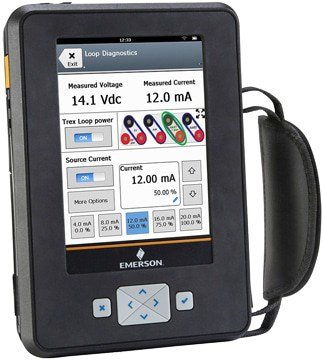
How to calibrate pressure transmitter with hart communicator

Equipment required for Pressure Transmitter Calibration

Pressure transmitter, multimeter, HART communicator

The basic procedure for Pressure Transmitter Calibration

  1. Isolate the Pressure Transmitter from the Process.
  2. Slowly open the vent plug and the vent valve to release the pressure.
  3. Connect the multimeter with the transmitter and ensure that output is 4ma when 0 pressures are applied.
  4. Connect the handheld test pump (pressure source) to the transmitter.
  5. Ensure there is no leak.
  6. Apply pressure range at 0%, 25%, 50%, 75%, 100% and check there is any error.
  7. If there is any error calibration should be done.

Read more about HART Pressure Transmitter

If the transmitter is the analog transmitter

  1. Apply 0% pressure as per LRV with handheld test pump and check multimeter if it is not 4ma adjust the zero pot in the transmitter and correct transmitter output to 4ma
  2. Apply 100%pressure as per the URV and correct 20ma in multimeter by adjusting span pot in the transmitter
  3. Repeat these steps to rectify the error.

In case of SMART Transmitter

  1. We have to use HART communicator, connect the communicator with the transmitter select the HART Communicator Menu for lower range value trim and upper range value trim.
  2. Basic Set up – Calibration – Zero Trim/Sensor Trim —Lower/Upper range value trims.
  3. HART communicator will automatically calibrate the transmitter.
  4. Restore the process connection
  5. Take the transmitter on line. Ensure there is no leak  

a small example of five-point calibration is given below

Low range value=0psi

upper range value=200psi

This calibration can work for Rosemount 3051 calibration.

Preparing for Field Calibration of Differential Pressure Transmitters

The usual practice is to disassemble the joint of the pressure guiding tube and the differential pressure transmitter, and then connect to the pressure source for calibration. It is troublesome and labor-intensive. The most worry is that there will be leakage or the pressure guiding pipe will be broken when disassembling and assembling the joint.

No matter what type of differential pressure transmitter, the positive and negative pressure chambers have exhaust, drain valves or cocks. This provides convenience for on-site calibration of the differential pressure transmitter, so that it can be calibrated without removing the pressure guiding tube. Differential pressure transmitter.

But make a fitting with the same thread as the vent, drain valve or cock.

When the differential pressure transmitter is calibrated, first close the positive and negative valves of the three-valve group. Open the balance valve, and then loosen the exhaust and drain valves to vent.

Then use a self-made connector to replace the vent, drain valve or cock connected to the positive pressure chamber.
The negative pressure chamber is kept unscrewed, allowing it to vent to the atmosphere.

The pressure source is connected with the self-made joint through the rubber tube. Close the balance valve. And check the air circuit sealing.

Then connect the ammeter (voltmeter) and the hand-operated communicator into the differential pressure transmitter circuit, and start the calibration after power-on and preheating.

Field Calibration of Conventional Differential Pressure Transmitters

First adjust the damping to zero state, first adjust the zero point. Then add full pressure to adjust the full scale, so that the output is 20mA. The adjustment should be fast in the field. Here is a quick adjustment method for zero point and span.

When the zero point is adjusted, it has almost no effect on the full scale, but when the full scale is adjusted, it has an effect on the zero point. When there is no migration, the effect is about 1/5 of the range adjustment amount, that is, the range is adjusted upward by 1mA. The zero point will move upward by about 0.2mA ,vice versa.

E.g:
The input full scale pressure is 100kPa, the reading is 19.900mA.
The range-adjusting potentiometer makes the output 19.900+(20.000-19.900)×1.25=20.025mA, and the range increases by 0.125mA. Then the zero point increases by 1/5×0.125=0.025, and the zero-point potentiometer makes the output 20.000mA.

After the zero point and full scale adjustment are normal, check the middle scales, and make fine adjustments if they are out of tolerance. Then carry out the adjustment work of migration, linearity and damping.

Smart Differential Pressure Transmitter Field Calibration

The intelligent differential pressure transmitter is between the input pressure source and the output 4-20mA signal. In addition to machinery and circuits, there is also a microprocessor chip that operates on the input data.

Therefore, the field calibration method of intelligent differential pressure transmitter is different from that of conventional differential pressure transmitter.

Read more about: Static Pressure Vs Dynamic Pressure Vs Total Pressure

The differential pressure liquid level transmitter has been calibrated according to customer requirements in terms of range, accuracy, linearity and other parameters. And mark the range, accuracy, etc. on the nameplate of the differential pressure liquid level transmitter. As long as the parameters such as the density of the measured medium meet the requirements of the nameplate, there is usually no need to adjust.

If the customer needs to adjust the span or zero position, please adjust according to the following methods. Assuming that the range of the differential pressure liquid level transmitter is 0~10 meters:

  1. Unscrew the back cover of the differential pressure liquid level transmitter, connect an external standard 24VDC power supply and an ammeter (requires an accuracy of 0.2% or higher) to adjust.
  2. When there is no liquid in the differential pressure liquid level transmitter. Adjust the zero point potentiometer so that the output current is 4mA.
  3. Pressurize the differential pressure liquid level transmitter to the full scale (10 meters). Adjust the full-scale resistor so that the output current is 20mA.
  4. Repeat the above steps two or three times until the signal is normal.
  5. Please input 25%, 50% and 75% respectively to check the deviation of the differential pressure liquid level transmitter.
  6. For non-water media, when the differential pressure liquid level transmitter is calibrated with water, it should be converted according to the pressure generated by the actual use of the medium density. For example, when the density of the medium is 1.3, the 1.3m water level should be used to calibrate the 1m range.
  7. After adjustment, tighten the back cover.
  8. The calibration cycle of the differential pressure liquid level transmitter is once a year.
  9. The HART intelligent differential pressure liquid level transmitter of Sino-Inst can be selected, which is convenient to adjust the range of the differential pressure liquid level transmitter.

Learn more about Pressure Transmitter Calibration

When you buy a pressure transmitter, for example, you have the instrument range, which is the pressure range the device can support.

This range covers the overpressure that might occur in the device.

The measuring range covers the values where the transmitter works properly, omitting the overpressure zone.

The lower range limit (LRL) and upper range limit (URL) define this range.

Inside the measuring range, you’ll find the calibration span, the range in which your device will be working, depending on your application.

The calibration span covers the difference between your upper range value (URV), the maximum value your transmitter can read, and the lower range value (LRV), the minimum value the device can read.

So there you go!

You should also know that each instrument has a minimum and maximum calibration span it can support.

If you go below or over these limits, you’ll lose accuracy in your readings.

Make sense? Let me give you an example, just to make it clearer.

Let’s say you want a pressure transmitter with a measurement range of -100 to 200 kilopascals (kPa).

This device can measure pressures as low as -100 and as high as 200 kPa.

If your application just requires pressure between -20 to 50 kpa, then this will be your calibration range.

Your calibration span is the URV-LRV.

By the numbers: 50 – (-20) = 70 kPa.

Therefore, you get a calibration span of 70 kPa, which falls inside the span range (10 to 200 kPa).

A pressure transmitter or pressure sensor is a device that measures pressure in a liquid, fluid, or gas. 

Pressure transmitters are commonly used to measure the pressure inside of industrial machinery, in order to alert the user before a catastrophe occurs.

Extended reading: Pressure Sensor Applications-Featured Industry Applications

Yes, pressure transducers require calibration.
Pressure transducers are used in many applications to provide accurate, real-time data on how systems work. Calibration is critical to maintaining the accuracy of pressure sensors. And it’s not a one-time process.

If the sensor deviates from its specified pressure range, it may cause erroneous pressure readings. This results in degraded device performance and possible security issues.

Calibration allows users to be completely confident that their pressure transducers are performing correctly and accurately measuring the desired pressure range.

If you cannot find an answer to your question in our Pressure Transmitter Calibration you can always contact us and we will be with you shortly.

More Pressure Measurement Solutions

  • What Is a Smart Pressure Transmitter?

    What Is a Smart Pressure Transmitter? Smart pressure transmitter is also called Smart pressure sensor or Smart pressure transducer. Smart pressure transmitter is the best pressure measuring instrument. It is…
  • High Temperature Pressure Transducer with Best Price

    High Temperature Pressure Transducer is also called High Temperature Pressure Sensor, or High Temperature Pressure Transmitter. The High Temperature Pressure Transducer is used for applications where the medium temperature exceeds…
  • What is Static Water Pressure?

    What Is Static Water Pressure? Definition of Static Water Pressure: Static Water Pressure refers to the pressure on water when it is stationary or moving in a straight line at…
  • The Myth of Ceramic Pressure Sensor

    What is a ceramic pressure sensor? Ceramic pressure sensors are sensor diaphragms made of ceramic alumina (Al2O3). Ceramic is a material with high elasticity, corrosion resistance, wear resistance, impact, and…
  • Static Pressure/Hydrostatic Pressure Transmitter

    The Hydrostatic Pressure Transmitter measures the hydrostatic pressure exerted by a hydrostatic head. Use these hydrostatic pressure transmitters to measure the liquid level in storage tanks, processing vessels, collection tanks,…
  • What does intrinsically safe mean?

    Intrinsically safe type is an explosion-proof type of electrical equipment. When purchasing electrical equipment, do you often hear about intrinsic safety? For example, when ordering pressure transmitters or flow meters…
  • What is a PID controller?

    What is a PID controller? A PID controller is an instrument used in industrial control applications to regulate temperature, flow, pressure, speed, and other process variables. PID is the abbreviation…
  • What Is an Air Pressure Transducer?

    An Air pressure transducer is a sensor that converts the mechanical signal of air pressure into a current signal. Pressure has a linear relationship with voltage or current, and it…
  • Steam Pressure Transmitter

    Steam pressure transmitters are widely used in the measurement and control of various high-temperature steam piping systems. The monitoring of steam pipes is very important. To measure the pressure of…

Conclusion:

It is normal for the pressure transmitter to have a certain error. But if the error is too large, it needs to be calibrated. There are two types of Pressure Transmitter Calibrations: conventional method and intelligent calibration. no matter where
Kinds of preparations must be done before calibration, and then calibrate and debug through the handheld operator.

There are no mandatory fixed requirements for Pressure Transmitter Calibration. Generally, enterprises can formulate them by themselves. Normally, they can be calibrated once a year. Crucially, the calibration cycle can be shortened.

About how to calibrate the pressure transmitter, and what needs to be paid attention to during the process of Pressure Transmitter Calibration. If you still have questions, please feel free to contact our engineers.

Request a Quote

Please enable JavaScript in your browser to submit the form