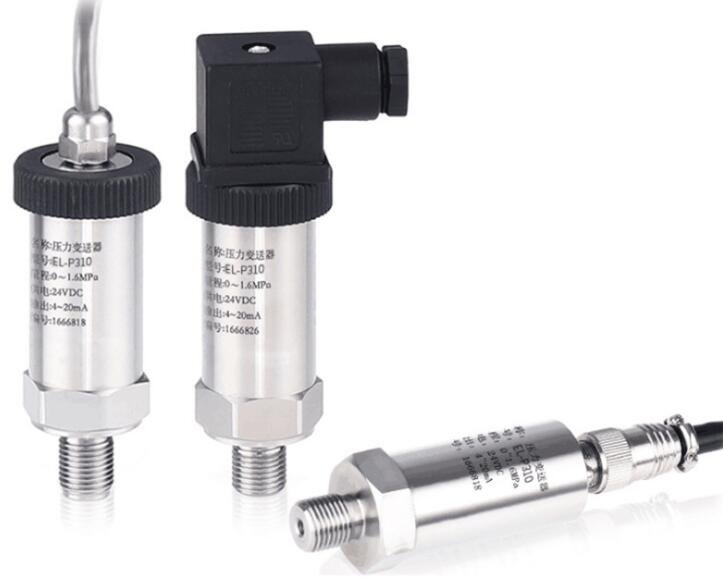
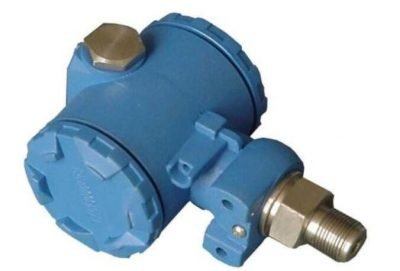
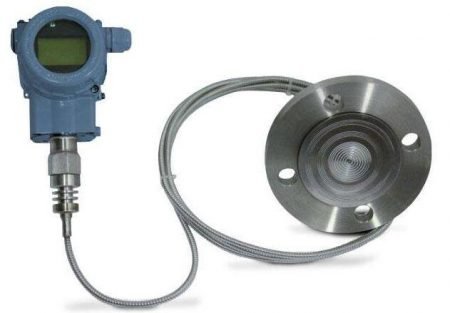
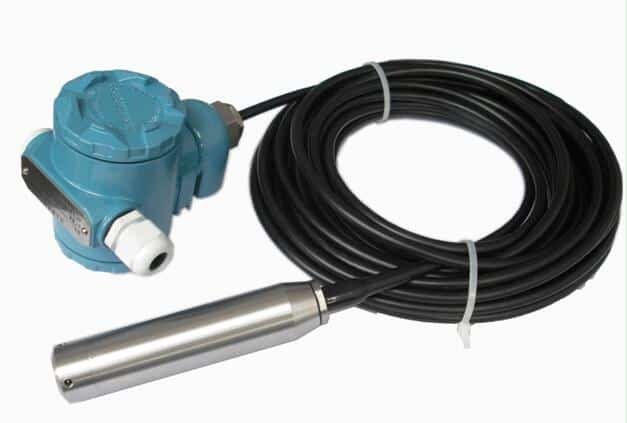
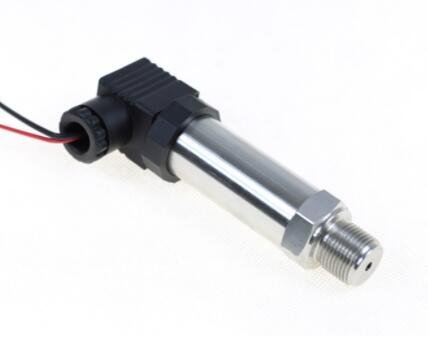
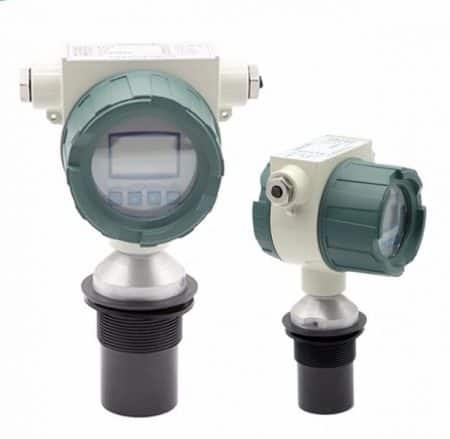
SI-PCM260 Deep Well Water Level Sensor

Deep Well water level sensor is to apply Hydrostatic Level Sensor to deep well. Well water level sensor submerged in deep well work together with submersible water pump. Range within 300m ~ 1000m.

SI-PCM260 Deep Well Water Level Sensor

Deep Wells Water level sensor is based on the principle that the measured liquid pressure is proportional to the height of the liquid. The piezoresistive effect of the advanced foreign isolated silicon diffused sensor is used. Change to electrical signal. After temperature compensation and linear correction, convert to 4-20mA standard electrical signal. Well water level sensor submerged in deep well work together with water pump. It is extremely difficult to replace and submit an inspection. Therefore, it adopts stainless steel cable, waterproof, sealing ring, and other four-level seals. Special cables and special water sealing technology make the transmitter highly reliable and stable.

Sino-Inst offers a variety of Well water level sensors for industrial level measurement. If you have any questions, please contact our sales engineers.

Features of Deep Well Water Level Sensor:

  • Suitable for deep well / groundwater level monitoring. Large measuring range: up to 500-1000 meters.
  • Military factory grade steel cable. Cable diameter φ10mm.
  • Three European waterproof technology. 50MPa high pressure waterproof test.
  • Triple lightning protection. Core lightning protection motherboard.
  • Easy to install. Just connect two wires.

Specifications of Deep Well Water Level Sensor

RangeVarious ranges within 300m ~ 1000m
Medium temperature-20 ℃ ~ 70 ℃
Ambient temperature-10 ℃ ~ 60 ℃
Supply voltageDC 24V (12V ~ 32V)
Load characteristicsCurrent output type≤500Ω; Voltage output type: ≥3KΩ
Insulation resistance> 100MΩ
level of accuracyClass A: 0.2 Class B: 0.5 Class
Non-linear± 0.2% F.S
Hysteresis and reproducibility± 0.1% F.S
Long-term stability± 0.1% F.S / y
Thermal zero drift± 0.03 % F.S / ℃
Response time≤50ms
Maximum working pressure2 times the range
Electrical connectionsStainless steel cable connection
Material of external partsStainless steel / 316 stainless steel
Shell materialStainless steel / 316 stainless steel
Measuring mediumOil, water and other media compatible with 316 stainless steel
Protection levelIP68

Extended Reading: 3 inch (3″) Water Flow Meter

Applications of Deep Well Water Level Sensor

  • Suitable for deep water level measurement of deep wells and groundwater;
  • Pumping stations, reservoirs, water channels and other water supply and sewage projects;
  • The pressure and oil level of the gas field in the oil field;
  • Ships and marine equipment;
  • Groundwater resource management;

Extended reading: Capacitive water level sensor

Submersible pressure transmitter for level measurement

By videos below, you can know more about submersible pressure transmitter for level measurement:

Video source: https://www.youtube.com/embed/EMotg3BQjlI?rel=0

How this Water Level Sensor Works

Well Water Level Sensor is one type of Hydrostatic Level Sensor.

The basic working principle of Hydrostatic Level Sensor is static pressure level measurement.

In liquid, the pressure generated at a certain depth is generated by the weight of the medium itself above the measurement point. It is proportional to the density of the medium and the local acceleration of gravity.

The formula P = ρgh reflects the proportional relationship between them.

Where P = pressure, ρ = medium density, g = gravity acceleration, h = depth of measurement point.

Therefore, the physical quantity measured by the input liquid level gauge is actually pressure. It can be understood by the calibration unit mH2O of the input level gauge. The actual liquid level must be obtained by conversion after knowing the two parameters of density and gravity acceleration. In the industrial field, such conversion is usually performed by a secondary instrument or PLC.

The Hydrostatic Level Sensor mainly measures corrosive liquids such as hydrochloric acid, hydrogen peroxide, etc. Or chemical and electroplating wastewater. Mainly used in measuring corrosive media. It has the advantages of strong corrosion resistance and stable performance.

Extended Reading: LORA water meter

Deep Well Water Level Sensor Installation:

Well Water Level Sensor and oil pipe (water pipe) go down to install together:

  1. The deep well liquid level transmitter should use the special ferrule fixing cable for the matching oil pipe (water pipe). Prevent crushing and damaging the cable. The sensor part should be installed vertically to prevent the sediment and other impurities from burying or blocking the transmitter probe part.
  2. The three-way outlet part is filled with special sealant pad and sealant. Use a wrench to tighten the compression nut. Prevent air leakage.
  3. The entire signal line leads to the interior of the power distribution cabinet. Prevent rainwater at the terminal from penetrating into the cable to cause damage. The transmitter is used for the installation of hydrology, seismic monitoring wells and reservoir dams.
  4. When the transmitter is used alone for downhole measurement. When the cable length is greater than 100 meters, an additional load-bearing wire rope should be added. Go down with the signal cable together. Protect the signal cable to prevent the signal cable from being damaged due to excessive force.

Extended reading: Magnetic water meter-ultrasonic water meter-mechanical water meter

Well Water Level Sensor calibration method:

Unscrew the protective cover. You can see the zero and full range resistors. External standard power supply and ammeter (above 0.2 pole). To adjust. Proceed as follows:

◆ In the case of no liquid in the transmitter. Adjust the zero resistor. Make it output current 4mA.
◆ Transmitter is filled to full scale. Adjust the full-scale resistor. Make the output current 20mA,
◆ Repeat the above steps two or three times. Until the signal is normal.
◆ The adjustment is completed. Tighten the protective cover.

Extended Reading: What is level transmitter working principle?

Precautions for using Well Water Level Sensor:

  1. When the static pressure input type liquid level gauge is installed. The pressure tube must be inserted vertically into the measured medium;
  2. For media with impurities or crystals. The head of the gas collector must be cleaned regularly. To prevent clogging;

Read more about: Why Is The Submersible Level Transducer The First Choice For Water Level Measurement?

FAQ

How do I check the water level in my well?

If it is a deep well, the range is wide. Can only be measured in water. Pressure type liquid level transmitter can be used in the water.
Read more about: Submersible Level Transmitter-Straight Rod Insertion

How does the water level sensor work?

The liquid level sensor mainly has contact type and non-contact type. Different water level sensors have different working principles.
1. The first type is contact. Including single flange static pressure / double flange differential pressure liquid level transmitter, float type liquid level transmitter, magnetic liquid level transmitter, input type liquid level transmitter, electric inner float level transmission Devices, electric float level transmitters, capacitive level transmitters, magnetostrictive level transmitters, service level transmitters, etc.
2. The second type is non-contact. Divided into ultrasonic liquid level transmitter, radar liquid level transmitter, etc.

Extended reading: Radar Water Level Sensor Applications

Deep Wells Water level sensor is designed for deep well level measurement. It effectively solves the problem of deep well liquid level measurement difficulty. Sino-Inst offers over 50 water level sensors. About 50% of these are Submersible level Transmitter, 40% are water meters, and 40% are level meters.
A wide variety of water level sensors options are available to you, such as free samples, paid samples. 
Sino-Inst is a globally recognized supplier and manufacturer of Submersible Pressure Transmitter , located in China. The top supplying country is China (Mainland). You can ensure product safety by selecting from certified suppliers, with ISO9001, ISO14001 certification.

Request a Quote

Please enable JavaScript in your browser to submit the form

SI-2000 Differential Pressure Gauge

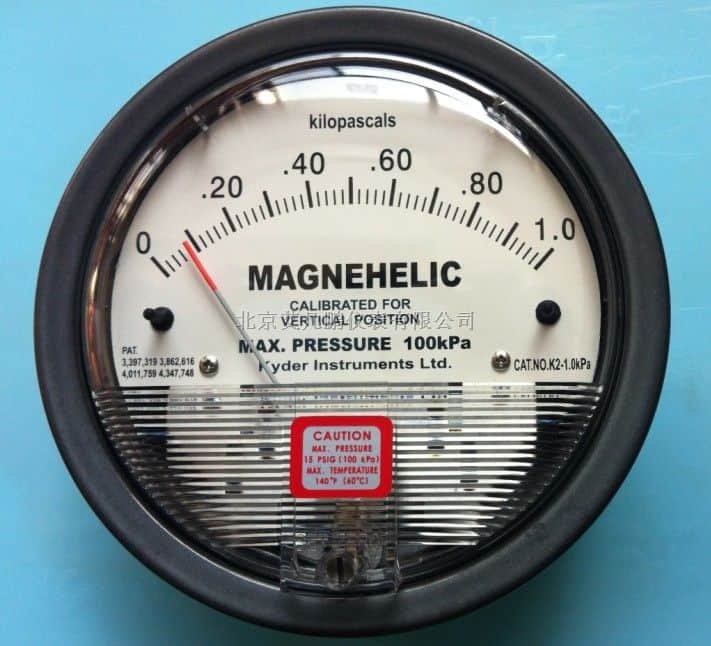
Differential Pressure Gauge measures the pressure difference between two points. Quickly measure the positive, negative or DP of air or non-corrosive gas.

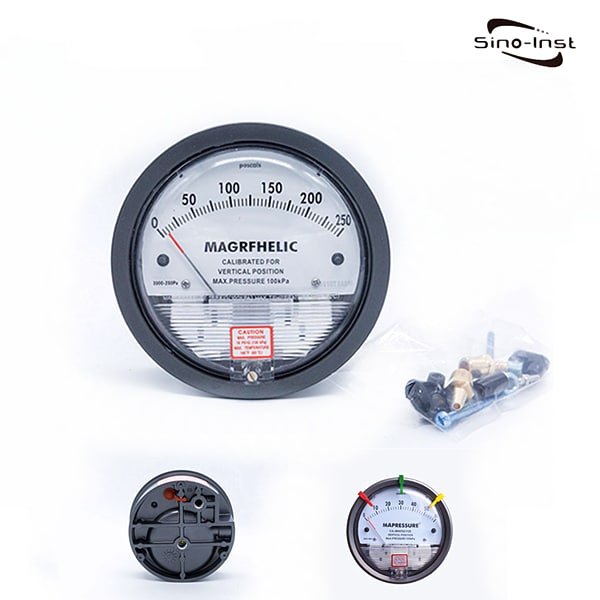
Differential pressure gauge measures the pressure difference between two independent pressure sources. Differential pressure gauge is a more economical method. Used for process monitoring or control, which allows a small amount of migration of process media. Suitable for air and non-flammable, non-corrosive applications. And certain air and natural gas applications. Using a simple, frictionless magnet spiral movement, it can quickly indicate the pressure of low pressure or non-corrosive gas. Whether positive, negative (vacuum is also available) or differential pressure. This design can prevent vibration, jitter, and overvoltage. No liquid needs to be filled in the watch.

Sino-Inst is a manufacturer of Differential Pressure Gauge. Sino-Inst supplies Differential Pressure Gauges made in China. DWYER 2000 Differential Pressure Gauges, Magnehelic differential pressure gauges are also available.

Features of Differential Pressure Gauge

  • Up to 81 kinds of range selection, can accurately meet your requirements
  • Using simple and unique patented double helix frictionless magnetic moving parts, you can quickly measure the positive pressure of air or non-corrosive gas, measure negative or differential pressure
  • Designed to resist shock, shock and overload protection
  • No liquid U-tube pressure gauge liquid evaporation, freezing, poisoning and leakage problems
  • Can measure fan, blower, filter resistance, furnace ventilation, orifice plate
  • Pressure drop and other system pressures. Can also be used in various purification rooms, biological safety
  • Cabinet, clean bench, dust removal equipment, medical breathing equipment, air intake
  • Sample differential pressure detection
  • Up to 63 models with different ranges and engineering units, suitable for various applications
  • Ultra-thin design: embedded thickness is only 38.5mm, overall thickness is only 52.2mm
  • Patented wave stripe decorative mask, beautiful and elegant
  • Standard accuracy up to 2%; after high precision calibration, up to 1% FS
  • Optional mirror dial to eliminate visual reading error and brushed 304 SS or plated bezel

Specifications of Differential Pressure Gauge

  • Accuracy: ±2% (ascending pressure)
  • Pressure Ranges: 0-5 thru 0-150 psi
  • Dial size: 2″, 2 1/2″, 3 1/2″, 4″, 4 1/2″ and 6″
  • Case: stainless steel
  • Body: aluminum, brass or stainless steel 
  • Wetted Material: body material, Teflon ®, ceramic and various O-ring materials
  • Medium: air and non-flammable, compatible gas (optional natural gas)
  • Shell: cast aluminum or ABS shell, plexiglass beveled panel. Dark gray coating for 168 hours salt spray test
  • Withstand voltage range: -20Hg. to 15 psi (-0.677 bar to 1.034 bar)
  • Temperature range: 20 to 140 °F (-6.67 to 60 °C)
  • Opening size: 114mm
  • Installation positioning: diaphragm for the vertical direction
  • Connector: the same 1/8″ NPT high and low-pressure connector, one pair on the side and one pair on the back
  • Weight: 500g / only
  • Standard accessories:
    • two 1/8″ NPT threaded joints for high and low-pressure joints and connected to rubber hoses;
    • two 1/8″ NPT plugs for blocking the remaining two high and low-pressure ports;
    • Three threaded countersunk mounting connectors (mounting ring, snap ring retainer are used to replace the three ports on the MP and HP metering accessories).
RANGES FOR REFERENCEPaKpaInches of WaterMM of Water Dual Scale    
0-300-0.50-.250-6 in w.ccPa or Kpa
0-600-10-.500-100-.250-62 Pa
0-1000-1.50-1.00-150-0.50-125 Pa
0-1250-20-2.00-250-1.00-250 Pa
0-3000-50-8.00-300-2.00-500 Pa
0-5000-80-10 0-500-3.00-750Pa
-30-0-300-100-200-800-4.00-1.0kPa
-60-0-600-200-500-1000-5.00-1.25kPa
-100-0-1000-300-1000-1250-6.00-1.5kPa
-250-0-2500-500-1800-2000-8.00-2.0kPa
-500-0-5000-600-2500-3000-0.50-2.5kPa
VARIOUS RANGES  CAN BE CUSTOMIZED FOR YOU

You may like: Diaphragm Seal Pressure/ Differential Pressure Transmitters

What is a differential pressure gauge?

SI-D2000 Differential Pressure Gauge

Differential pressure gauges are suitable for measuring small pressure differences between two pressure sources in an industrial process. Measure the pressure loss of the filter and observe the working state of the valve. It is widely used to measure the pressure of fan and blower, filter resistance, wind speed, furnace pressure, orifice differential pressure, bubble water level, liquid amplifier or hydraulic system pressure, etc. It is also used for air-gas ratio control and automatic valve control during the combustion process.

Differential pressure gauge is suitable for measuring the differential pressure, flow rate and other parameters of various liquid (gas) media in the process flow of industrial sectors such as chemical, chemical, metallurgy, electric power, and nuclear power. The instrument structure is all made of stainless steel. Among them, the measurement system (double bellows emergency connection parts) and the pressure guiding system (including joints, conduits, etc.) adopt special structure design and advanced technology.

Principle of differential pressure gauge

How does a differential pressure gauge work ?

Based on the pressure-sensitive element, two bellows with the same stiffness are used. Therefore, they are forced to produce the same concentrated force on the movable bracket under the same measured medium. Because the two sides of the spring sheet do not produce deflection under the action of equal moments. It is still in the original position. In this way, the gear transmission mechanism does not operate. The pointer is still at the zero position.

When different pressures are applied (generally the high-pressure end is higher than the low-pressure end), the forces of the two bellows acting on the movable bracket are not equal. The corresponding displacements are generated. The gear transmission mechanism is driven and amplified. The pointer deflection The latter indicates the differential pressure between the two.

Home > DP Transmitters > D2000 Differential Pressure Gauge

Differential Pressure Gauge Application

The SI-2000 differential gauge is ideal Where safe and reliable pressure measurement is essential:

  • Filtration Monitoring
  • Pressure Drop across a Strainer
  • Flow Rate

Dwyer Magnehelic series 2000 differential pressure gauge

American Dwyer differential pressure gauge/ Dwyer 2000 differential pressure gauge

The Dwyer 2000 series differential pressure gauge is an ultra-low-range, inexpensive, and solid structure field indicator. It uses the frictionless Magnehelic movement principle to eliminate wear, hysteresis and gaps. Without liquid filling, it will not vaporize and freeze. It can quickly indicate the low pressure and non-corrosive gas (positive pressure, negative (vacuum) and differential pressure). There are 81 ranges, the minimum range is 0-60Pa, or 0-6mm water column or 0-0.25′ water column). This design has anti-vibration, shaking and high resistance to overpressure.

Main technical indicators of American Dwyer differential pressure gauge Dwyer 2000

  • Accuracy: accuracy 2% FS (suffix 0 is 3%; suffix 00 is 4%) Rated pressure: -0.7 ~ 1Kg / cm
  • Connection: 1/8 “NPT internal thread, two pairs of high and low pressure ports, on the side and back
  • Overpressure: The vent will open automatically when it is about 1.75Kg / cm2
  • Ambient temperature: -5 ℃ ~ 60 ℃, weight 0.5Kg
  • Outer shell: cast aluminum outer shell, the main body and components pass the 168-hour salt spray test, and the exterior is dark gray coating.
  • Standard accessories: two 1/8 “NPT threaded joints, used as high and low pressure joints and can be connected with rubber tubes; two 1/8” NPT plugs; three threaded countersunk fittings.
  • According to the requirements of the National GMP Drug Production Verification Guidelines for clean workshops, we recommend selecting:
    • Add positive micro-pressure (5-10Pa) to the workshop or room, and select a 2000-60Pa micro differential pressure gauge.
    • Check the filtering effect of coarse, medium and high-efficiency air filters, use differential pressure gauges such as 2000-125, 250Pa, 500Pa or 1Kpa, and observe the pressure difference of the filter at any time to replace the filter.

Scope and model:
2000-60PA 0-60Pa,
2300-120PA, 0- ± 60Pa,
2000-125PA0, -125Pa,
2300-250PA, 0– ± 125Pa,
2000-125PA, 0-250Pa,
2300-500PA, 0- ± 250Pa,
2000-500PA, 0-500Pa,
2000-750PA, 0-750Pa

81 range specifications including 2000-30KPA.
Sino-Inst provides DWYER differential pressure gauge, micro differential pressure gauge, mechanical differential pressure gauge including MAGNEHELIC 2000 series. All products can be ordered, domestic brands include: MACROHELIC and MAGRFHELIC, price concessions, spot supply.

Differential pressure gauge price

Reference Price:
Dwyer 2000 series differential pressure gauge: USD 75.00 / pc
SI-2000 Differential Pressure Gauge: USD49.50 / pc

The exact price needs to be determined according to the product parameters and the quantity purchased.

Differential pressure gauge installation

1-Surface Mount

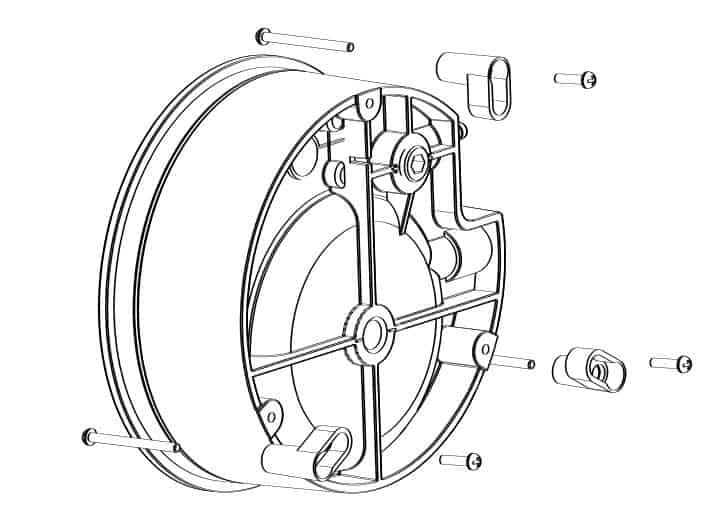
(1) Installation method one, as shown in the following picture 1. Drill three installation vias with an angle of 120 degrees and a diameter of 4.5mm on the installation plane. Use the corresponding short installation screws in the accessory package to match the screw holes on the bottom of the instrument. Make it secure .
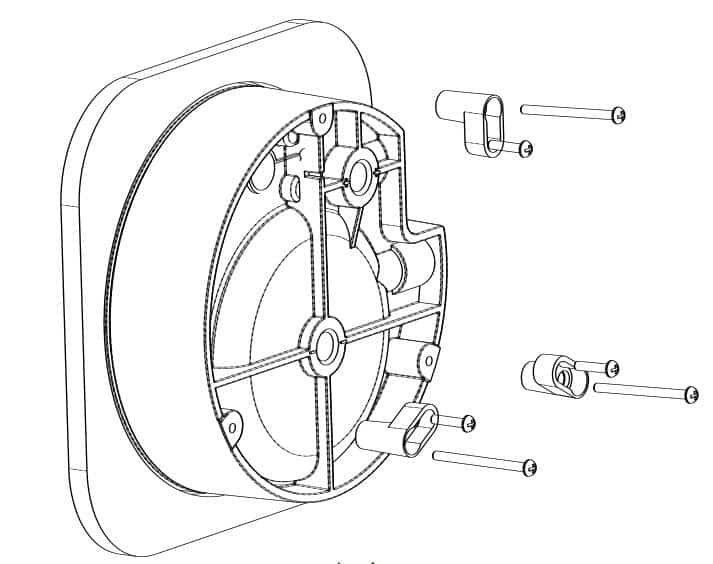
  (2) Mounting method two, as shown in the following figure 2. Take three mounting brackets first. Use the corresponding installation short screws in the accessory package. Fix the mounting bracket to the three mounting screw holes on the bottom of the instrument. Then take the longest three screws. Lock with the installation plane

2-Embedded (panel) installation

Cut the installation and insertion holes with a diameter of 115.5mm on the panel. Insert the meter into the holes. See Figure 3 below. Take three mounting brackets, and use the corresponding installation short screws in the accessory package. Fix the mounting bracket to the three mounting screw holes on the bottom of the meter. Then take the longest three screws. Fasten the meter to the panel.

3-Embedded (color steel plate) installation

Cut the embedded hole with a diameter of 115.5mm on one side of the color steel plate. As shown in figure 4 below, install the A-S1 / S2 panel into the color steel plate.
The pressure port on the back of the meter is firmly installed. Among them, accessories A-S1 / S2 and A-S81 need to be purchased separately.

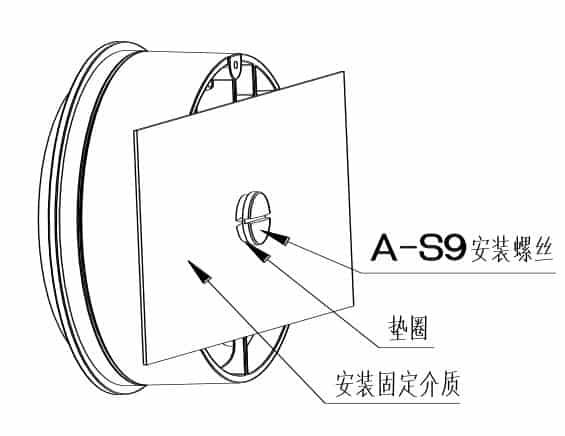
4-For other installation methods. see the following figure 5. Use special screws A-S9 to fix the installation with the pressure interface on the back of the instrument. Accessories A-S9 need to be purchased separately.

5-Zero adjustment

After installing the instrument, adjust the zero position. Using a suitable flat-blade screwdriver, turn the zero adjustment screw at the bottom of the transparent mask counterclockwise. Align the pointer with the zero position of the dial. During zero adjustment, both the high-pressure port and the low-pressure port can communicate with the atmospheric pressure.

6-Pressure connection

With the standard configuration accessories, according to actual needs, correctly connect the “+” and “-” pressure ports. Note that the instrument has a pair of pressure ports on the side and back. The unused pair of plug seals in the application accessories.

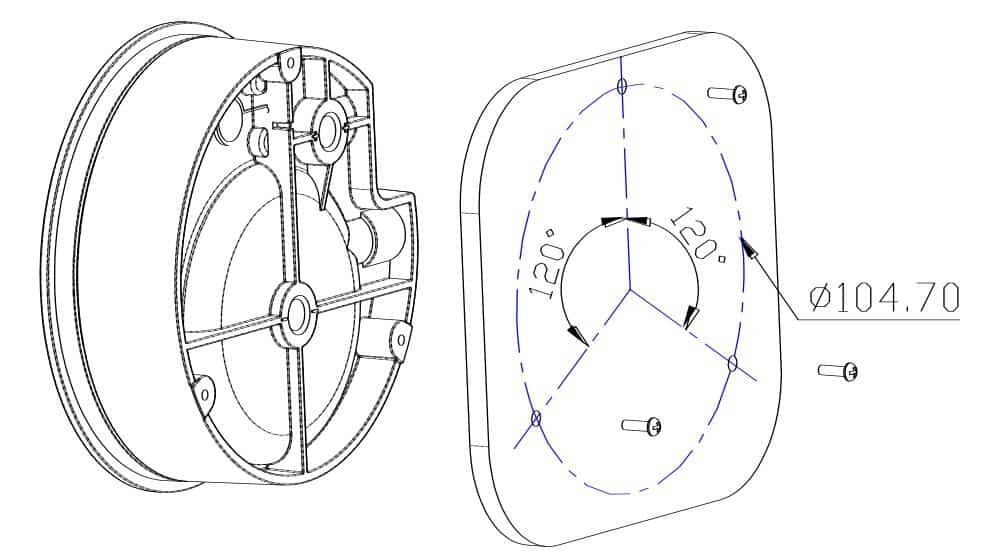
Differential-pressure-gauge-installation-picture-1
Differential-pressure-gauge-installation-picture-2
Differential-pressure-gauge-installation-picture-3
Differential-pressure-gauge-installation-picture-5
Differential-pressure-gauge-installation-picture-4

FAQ

How do you hook up a differential pressure gauge?

Two pressure ports for L (low pressure) and H (high pressure). Different connections can quickly indicate gas pressure. Including positive, negative or differential pressure. Zero calibration can be directly operated externally.
Pressure measurement: Connect the pressure source to any one of the two high-pressure ports with an air pipe, and block the unused one; make one or two low-pressure ports open to the atmosphere.
Differential pressure measurement: Connect the high-pressure source to any one of the two high-pressure ports with an air pipe, and connect the low-pressure source to any one of the two low-pressure ports with an air pipe; block the two pressure ports that are not used on the meter.
Negative pressure measurement: Connect the pressure source to any one of the two low-pressure ports with an air duct, and block the unused one; make one or two high-pressure ports open to the atmosphere.

How to calibrate differential pressure gauge?

Send to Calibration Institute for calibration. Self-calibration requires equipment and qualifications, otherwise it will not be recognized.
If no report is required, you can calibrate yourself:
First, at least one certified high-precision micro-pressure gauge or pressure gauge is required as a reference standard. Then select 5-7 points in the full range and give a fixed pressure difference at both ends of the differential pressure gauge. If it is a micro differential pressure gauge, you can use a micro pressure pump to give pressure to the high pressure port. If it is a large number of differential pressure gauges, you can use a liquid pump to give pressure to the high-pressure port. Then observe the reading between the reference standard and the differential pressure gauge, record and calculate the relative error.

What is the function of a pressure gauge?

The role of the pressure gauge is used to measure and indicate the size of the pressure in the pressure product. If the pressure product does not have a pressure gauge, or if the pressure gauge fails, the pressure of the pressure product cannot be expressed. This directly threatens safety.
A sensitive and accurate pressure gauge is installed on the pressure product. The operator can operate the pressure product correctly with the pressure gauge to ensure safe and economical operation.
The pressure gauge can accurately indicate the level of the steam pressure in the pressure product. The operator can adjust the heating degree of the product according to the indicated value of the pressure gauge. In order to ensure the requirements of the gas department and the safe operation of pressure products.

Sino-Instrument offers over 50 Differential Pressure Gauge products. About 50% of these are differential pressure meters, 40% are water meters, and 40% are level meters.
A wide variety of Differential Pressure Gauge options are available to you, such as free samples, paid samples.
Sino-Instrument is a globally recognized supplier and manufacturer of Differential Pressure Gauge, located in China.
The top supplying country is China (Mainland), which supply 100% of Differential Pressure Gauge respectively.

Sino-Instrument sells through a mature distribution network that reaches all 50 states and 30 countries worldwide. Differential Pressure Gauge products are most popular in Domestic Market, Southeast Asia, and Mid East. You can ensure product safety by selecting from certified suppliers, with ISO9001, ISO14001 certification.

Request a Quote

SI-SBW Field Mounted HART Temperature Transmitter

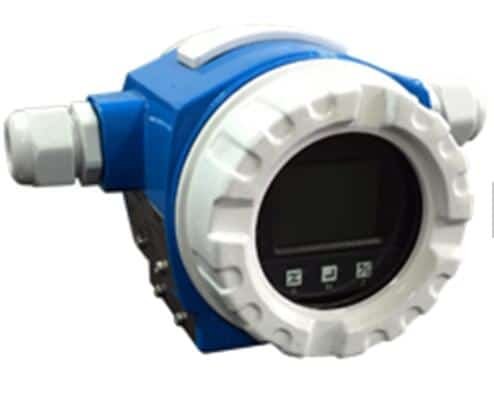
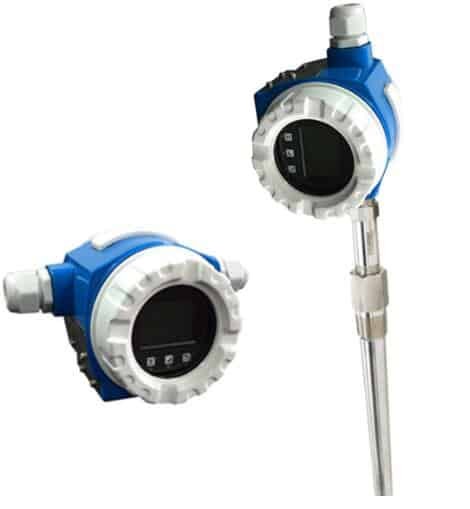
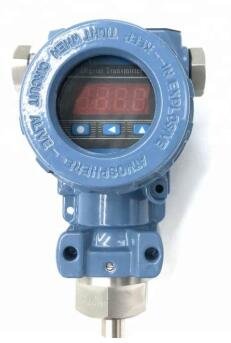
The SI-SBW explosion proof field mounted HART temperature transmitter,

features a local display, HART compatibility, and a 4-20mA output.

The field mounted transmitter is available as a complete RTD,

or thermocouple assembly customized to your process.
Series SI-SBW HART Temperature Transmitter

The Series SI-SBW HART® temperature transmitter is a 2-wire transmitter,

with an analog output.

It has measurement input for resistance thermometers (RTD) in 2-, 3- or 4-wire connections,

thermocouples, resistance and voltage inputs.

The transmitter can be programmed with a PC or HART® protocol hand-held terminal.

These small units can be mounted in Pyromation DIN (Form B) connection heads,

or they can be used for surface mounting by using a 35 mm DIN-rail mounting clip.

Key Features of SI-SBW Field Mounted HART Temperature Transmitter

SI-SBW FIELD MOUNTED HART TEMPERATURE TRANSMITTER
  • Universal settings with HART® protocol for various signals.
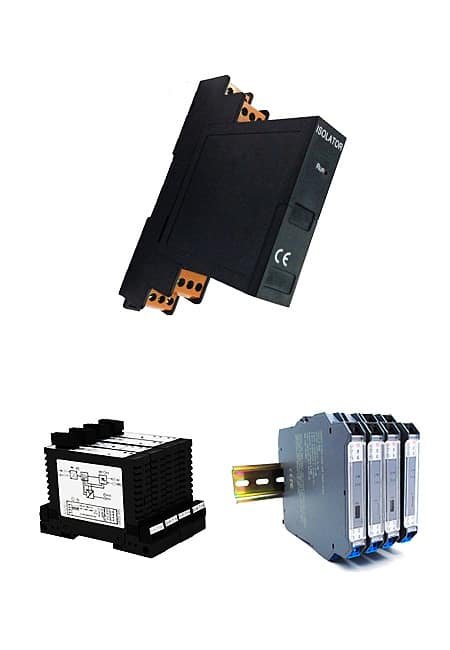
  • Galvanic isolation
  • 2-wire technology, (4 to 20) mA analog output
  • High accuracy in total ambient temperature range
  • Fault signal on sensor break or short circuit
  • UL Recognized Component
  • Intrinsically safe and non-incendive for hazardous locations
  • RTD or TC input, analog output
  • High definition local operator interface (LOI) with 3 optical buttons
  • Selectable red or white backlight
  • Ex d explosion proof / flame proof aluminum head
  • HART 7 functionality with HART 5 compatibility

High Definition Display of SI-SBW HART Temperature Transmitter

  • 0, 90, 180, & 270 degree position adjustments
  • Monitoring, programming and diagnostics view
  • Extensive diagnostics with flashing red or white backlight

Local Operator Interface (LOI) of SI-SBW HART Temperature Transmitter

  • 3 optical buttons; up, down and enter
  • Dynamically adaptive to wear or accumulation of dirt
  • Immune to interference from ambient light sources
  • Useable with or without gloves

Configuration of SI-SBW HART Temperature Transmitter

  • From the LOI through guided menu
  • PReset and HART modem
  • HHC, DCS or AMS via HART

SI-SBW HART Temperature Transmitter Mounting / Installation

  • For installation in zone 0, 1, 2 and zone 20, 21, 22 and in Class 1, Division 1 and 2 applications
  • Hardware assessed for use in SIL 2 applications
  • Mounting on 1.5”–2” pipe bracket or on wall / bulkhead

SI-SBW HART Temperature Transmitter Application

  • Linearized temperature measurement with TC and RTD sensors e.g. Pt100 and Ni100
  • HART communication and 4…20 mA analog PV output for individual, difference or the average temperature measurement of up to two RTD or TC input sensors
  • Up to 63 transmitters (HART 7) can be connected in a multi-drop communication setup
  • Temperature measurement of a wide range of TC and RTD types.
  • Conversion of wide span linear resistance and potentiometer inputs.
  • Conversion of bipolar mV signals to 4…20 mA.
  • Integration into asset management schemes.
  • Critical applications requiring superior accuracy and/or sensor redundancy and drift detection.

Technical Characteristics ofSI-SBW HART Temperature Transmitter

  • NAMUR NE43 and NE89
  • HART protocol revision can be changed by user configuration to either HART 5 or HART 7 protocol
  • True dual input transmitter. The high-density 7-terminal design accepts the widest range of dual input combinations.
  • Sensor redundancy – output automatically switches to the secondary sensor in the event of primary sensor failure, maintaining uptime.
  • Sensor drift detection – alerts when sensor differential exceeds user-defined limits, for maintenance optimization.
  • Dynamic variable mapping for process data in addition to the primary variable e.g. dual input features such as average, differential and min./max. tracking.
  • Groundbreaking digital and analog signal accuracy over full input span and ambient conditions.
  • Extensive sensor matching including Callendar Van Dusen and custom linearizations.
  • Programmable input limits with runtime metering ensure maximum process traceability and sensor out of range protection.
  • IEC 61508: 2010 full assessment up to SIL 3 together with enhanced EMC Functional Safety testing to IEC 61236-3-1.
  • Meets NAMUR NE21, NE43, NE44, NE89, NE95, and NE107 compliant diagnostics information.

Extended reading: RTD vs. Thermocouple: What’s the Difference, and Which Should You Use?

Specifications of SI-SBW HART Temperature Transmitter

Environmental Conditions

Operating Temperature-40°C to +85°C
Storage Temperature-40°C to +85°C
Calibration Temperature 20…28°C
Relative humidity 0…100% RH (condensing)
Protection degree IP54 / IP66 / IP68 / type 4X

Mechanical Specifications

DimensionsØ 110 mm
Dimensions (HxWxD), aluminum109.3 x 145 x 126 mm
Weight approx.1.3kg
Wire size0.13 x1.5 mm2 / AWG 26…16 stranded wire
Screw terminal torque0.4 Nm
VibrationIEC 60068-2-6
  2…25 Hz±1.6 g
  25…100 Hz±4 g
Number of digits5
BacklightSelectable ON/OFF
Backlight colorSelectable white or red

Input Specifications

RTD typePt50/100/200/500/1000; Ni50/100/120/1000
Cable resistance per wire5 Ω (up to 50 Ω per wire is possible with reduced measurement accuracy)
Sensor currentNom. 0.2 mA
Thermocouple typeB, E, J, K, N, R, S, T
Cold junction compensation (CJC)Constant, internal or external via a Pt100 or Ni100 sensor

4-20mA Output Specifications

Signal range4…20 mA
Min. signal range16 mA
Load (@ current output)≤ (Vsupply – 10) / 0.023 [Ω]
Load resistance, with backlight≤ (Vsupply – 12) / 0.023 [Ω]
Sensor error indicationProgrammable 3.5…23 mA
NAMUR NE43 Upscale/Downscale23 mA / 3.5 mA
Updating time440 ms
HART protocol revisionsHART 7 and HART 5

Sino-Instrument has always been a famous digital thermometer manufacturer, China

Our main products are:

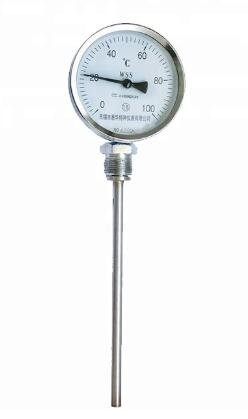
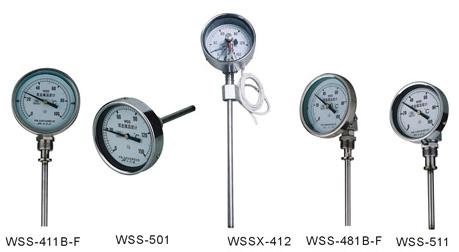
industrial thermometerWSS bimetal thermometer,

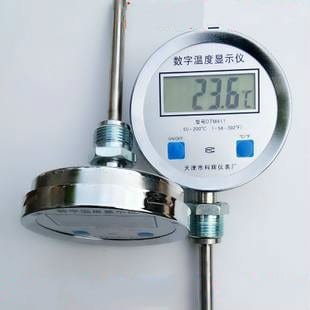
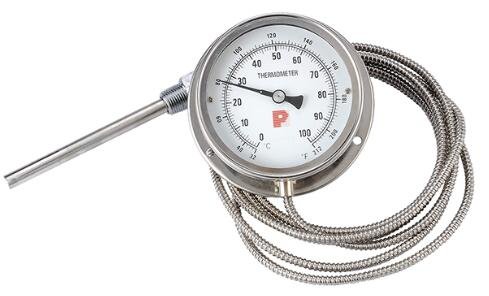
digital bimetal thermometerremote bimetal thermometer,

shock pressure gauge, temperature transmitter,

liquid level gaugedifferential pressure transmitterpressure transmitter.

Special specifications can be customized/OEM,

according to the drawings or samples provided by the user.

If you need the datasheet, price, or more information about SI-DTM Digital Thermometer/Transmitter

Just Contact Us.

Request a Quote

Please enable JavaScript in your browser to submit the form

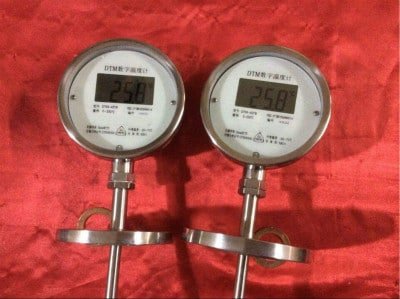
SI-DTM HVAC Digital Remote Reading Thermometer with Threaded Connection

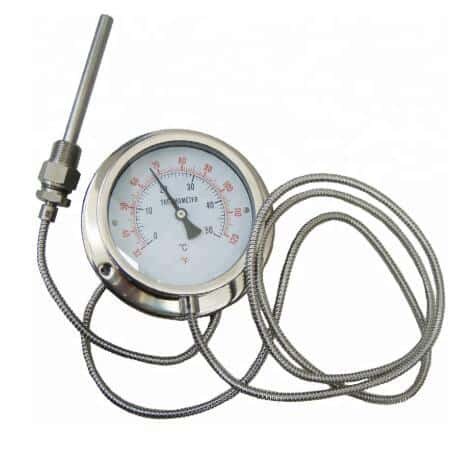
SI-DTM HVAC Digital Remote Reading Thermometer with Threaded Connection, also called remote reading digital thermometer,

is a high accuracy thermometer with digital display.

It features an IP67/NEMA 4X enclosure and a 5-year battery life.

The Digital Remote Reading Thermometer is perfect,

for a variety of markets and applications,

where a high accuracy digital readout is required.

Our remote reading versions also operate on the gas expansion principle.

The technical information about local reading dial thermometers

is thus applicable to them as well.

All models of our remote reading dial thermometers conform to EN 13190 Class 1.

Features of SI-DTM Digital Remote Reading Thermometer

SI-DTM HVAC Digital Remote Reading Thermometer with Threaded Connection

  • High Accuracy 1,000Ω RTD (Class A)
  • Water Resistant IP67/NEMA 4X
  • 5 Year Battery Life
  • 4-20 mA Output Available
  • Low or High Temperature Range Models
  • Quick connect electrical terminals
  • Industrial armored capillary
  • An cheap vapour thermometer for remote reading applications
  • Stainless steel or black steel case
  • Vapour actuated
  • Panel mounted (Front Flange or U-Clamp)
  • Dual scale (°F & °C)
  • ASME B40.200 compliant

SI-DTM HVAC Digital Remote Reading Thermometer with Switch

SI-DTM HVAC Remote Reading Thermometer with Switch,

combines an easy to read 3-1/4″ dual scale dial thermometer and an SPDT relay.

Color coordinated pointers display the current process temperature and set point.

To change the set point, a front adjustment knob controls the red set point pointer.

The design of the internal mechanical switch movement prevents the set point pointer,

from sticking to the process indicating pointer.

A 10.5 ft (3.2 m) stainless steel flex hose capillary prevents kinking and leaking of the measuring fluid

when bending the capillary.

For quick installation, electrical connections can be made to male quick connects,

or to the finger-safe screw terminals.

Thermometer includes a u-clamp mounting bracket for panel mounting.

Specifications of SI-DTM Digital Remote Reading Thermometer

  • Sensing Element:RTD, Type Pt1000Ω, Class A
  • Temperature Ranges:-58°F to 392°F (-50°C to 200°C) or -328°F to 1112°F (-200°C to 600°C)
  • Accuracy:± ( 0.72 + 0.002 x |t-32|) °F, ± ( 0.42 + 0.002 x |t|) °C, where t = temperature. Example: At 32°F accuracy is ± 0.72 °F.
  • Output (Optional):4-20 mA, M12 Connector
  • Refresh Rate:3 Seconds
  • Display:4-digit LCD, 1/2” Height
  • Display Resolution: See Table 1
  • RFI Effect:1% or Less Typical
  • Temperature Effect:<0.01% FS/°C
  • Ambient Temperature Range:32°F to 122°F (0°C to 50°C)
  • Storage Temperature Range:-4°F to 158°F (-20°C to 70°C)
  • Housing Material: Stainless Steel 316
  • Lens: Plastic Polycarbonate (Standard) or Glass
  • Probe Material:304 Stainless Steel
  • Weight:12 oz., Varies by Configuration
  • Environmental Protection: NEMA 4X/IP67
  • Power:1 x 3.6V AA Battery (M12 is loop powered 9-36 VDC.)
  • Battery Life:5 Years Minimum in Continuous Mode
  • Electronic Display Temperature Limit:
    • If the temperature of the electronics in the display housing exceeds 122°F (50°C),
    • permanent damage to the display will occur.
    • A remote mount is recommended for high temperature applications.

Applications of SI-DTM Digital Remote Reading Thermometer

  • Freezers, walk-in refrigeration units, food storage cabinets, heating, and ventilation.
  • Widely specified in the HVAC, commercial and mechanical industry segments
  • High temp shut down in process applications
  • Boiler or chiller control

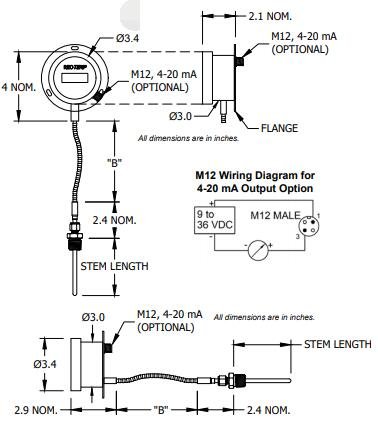
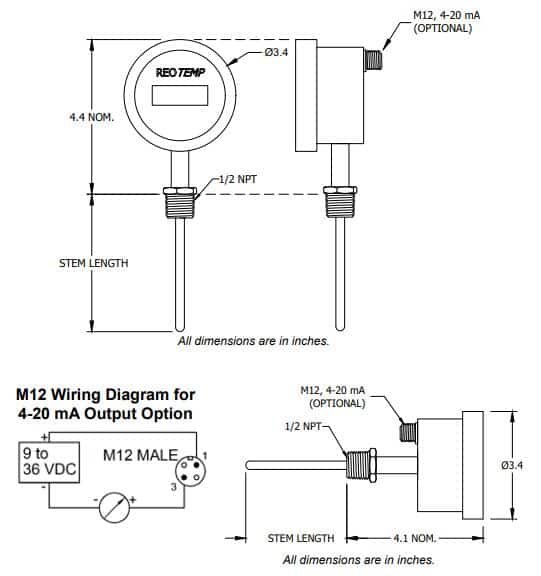
Drawings of SI-DTM Digital Remote Reading Thermometer

Extended reading:  Tri Clamp Sanitary Thermometers

Threaded thermometer With integrated transmitter

The thermowell with fixed threaded connection,

or adjustable compression fitting enables direct installation into the process.

All wetted parts and also the case are from stainless steel.

The case and the exchangeable measuring insert are screwed together,

using a knurled nut.

This enables the exchange of the measuring insert,

without having to remove the instrument from the process.

Through the plug connection, the simple installation of the transmitter is ensured.

The integrated electronics convert the temperaturedependent resistance signal of the measuring element into a linear unit signal.

For the signal outputs, 4 … 20 mA, 0 … 10 V and also 0.5 … 4.5 V ratiometric are available.

Sino-Instrument has always been a famous digital thermometer manufacturer, China

Our main products are:

industrial thermometerWSS bimetal thermometer,

digital bimetal thermometerremote bimetal thermometer,

shock pressure gauge, temperature transmitter,

liquid level gaugedifferential pressure transmitterpressure transmitter.

Special specifications can be customized/OEM,

according to the drawings or samples provided by the user.

If you need the datasheet, price, or more information about SI-DTM Digital Thermometer/Transmitter

Just Contact Us.

Request a Quote

Please enable JavaScript in your browser to submit the form

SI-DTM Digital Thermometer/Transmitter

SI-DTM Digital Thermometer/Transmitter is a high accuracy thermometer with digital display.

It features an IP67/NEMA 4X enclosure and a 1-year battery life.

The Digital Thermometer is perfect for a variety of markets and applications,

where a high accuracy digital readout is required.

Features of SI-DTM Digital Thermometer/Transmitter

SI-DTM Digital Thermometer

High Accuracy 1,000Ω RTD (Class A)

Water Resistant IP67/NEMA 4X

5 Year Battery Life

4-20 mA Output Available

Low or High Temperature Range Models

Specifications of SI-DTM Digital Thermometer/Transmitter

  • Accuracy: ± ( 0.72 + 0.002 x | t-32 | ) °F,± ( 0.42 + 0.002 x | t | ) °C, where t = temperature. Example: At 32°F accuracy is ± 0.72 °F.
  • Sensing Element: RTD, Type Pt1000Ω, Class A
  • Temperature Ranges:
    -58°F to 392°F (-50°C to 200°C) or -328°F to 1112°F (-200°C to 600°C)
  • Output (Optional) :
    4-20 mA, M12 Connector
  • Refresh Rate : 3 Seconds
  • Display : 4-digit LCD, 1/2” Height
  • Display Resolution: See Table 1
  • RFI Effect :1% or Less Typical
  • Ambient Temperature Range : 32°F to 122°F (0°C to 50°C)
  • Housing Material : Stainless Steel 316
  • Lens : Plastic Polycarbonate (Standard) or Glass
  • Probe Material :304 Stainless Steel
  • Weight : 12 oz., Varies by Configuration
  • Environmental Protection: NEMA 4X/IP67
  • Power : 1 x 3.6V AA Battery (M12 is loop powered 9-36 VDC.)
  • Battery Life: 5 Years Minimum in Continuous Mode
  • Electronic Display Temperature Limit :
    If the temperature of the electronics in the display housing exceeds 122°F (50°C), permanent damage to the display will occur. A remote mount is recommended for high or low temperature applications.

Table 1: Display Resolution

ModelRangeDecimal Point
Low Temp,
Displays Decimal
-58°F to 392°F
(-50C to 200C )
Yes
High Temp,
No Decimal
-328°F to 1112°F
(-200°C to 600°C)
No

Extended reading:  Tri Clamp Sanitary Thermometers

Applications of Digital Thermometer/Transmitter

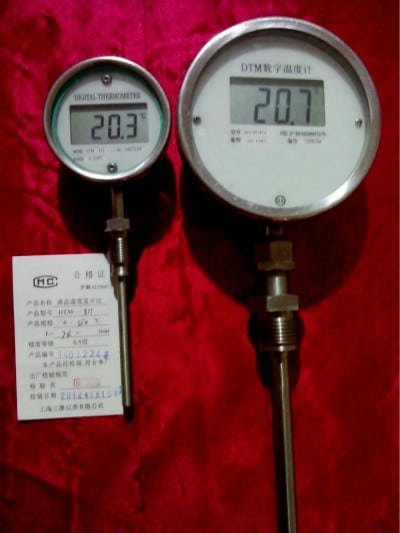
DTM radial digital thermometers can be hung or mounted on the outer walls of a variety of equipment.

It is recommended to use a high-capacity alkaline battery,

as the working power source for the thermometer.

The effective working hours of the thermometer vary with different batteries.

When the temperature is out of range,

the temperature probe should be immediately removed from the measured medium,

or the temperature of the measured medium should be restored to the measurement range in time,

and the temperature probe cannot have a wide range of temperature drastic changes.

All operations that violate the specified method of use,

will affect the measurement accuracy and service life of the thermometer.

Process Market:
Industrial Market:
  • General Industrial
  • HVAC
  • Equipment Skids
Medical and Life Sciences:
  • Pharmaceutical / Biotech
  • Food and Beverage

Drawings of SI-DTM Digital Thermometer/Transmitter

Drawings of SI-DTM Digital Thermometer-Transmitter

Sino-Instrument has always been a famous digital thermometer manufacturer, China

Our main products are:

industrial thermometer, WSS bimetal thermometer,

digital bimetal thermometer, remote bimetal thermometer,

shock pressure gauge, temperature transmitter,

liquid level gauge, differential pressure transmitter, pressure transmitter.

Special specifications can be customized/OEM,

according to the drawings or samples provided by the user.

If you need the datasheet, price, or more information about SI-DTM Digital Thermometer/Transmitter

Just Contact Us.\

Request a Quote

Please enable JavaScript in your browser to submit the form

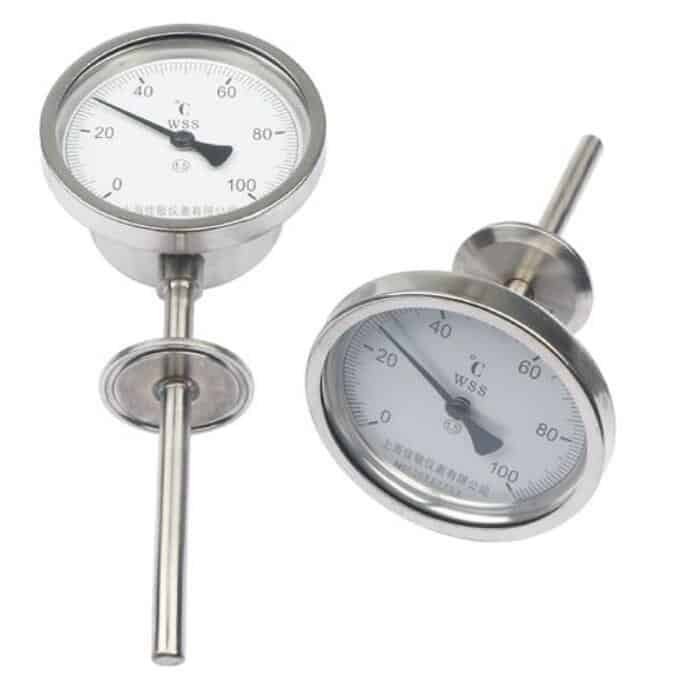
SI-WSS Tri Clamp Sanitary Thermometers

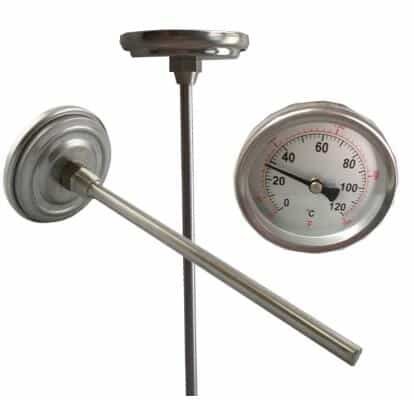
Sanitary Bimetal Thermometers also called the sanitary thermometer, or tri-clamp thermometer.

Sino-Inst’s Sanitary Bimetal Thermometers are specially designed for direct insertion into sanitary process applications when a standard thermowell is not specified, or the process environment is not exposed to pressure.
Sanitary thermometers are ideal for the food, beverage and pharmaceutical industries.

LEARN MORE

Features of SI-WSS Sanitary Bimetal Thermometers

SANITARY BIMETAL THERMOMETER

3-A Conformance Certificate Included

Made to ASME B40.3 Specifications

Accuracy ± 1% Full Scale. (ASME B40.3)

All-Stainless Construction

Hermetically Sealed (ASME B40.3)

Silicone Fillable for Vibration

Standard and Custom Stem Lengths

Standard External Reset

Tri-Clamp® Design for Fast Installation and Removal

OEM Logo Dials/Custom Dials

Specifications of SI-WSS Sanitary Bimetal Thermometers

  • Accuracy: ± 1% Full Scale (ASME B40.3 Grade A)
  • Dial Size: ( 3”, 4”, or 5” ) 63 up to 150 mm
  • Dial Material:
    • Anodized aluminum with black marks on satin matte finish background;
    • White or Hi-Vis™ background available.
  • Stem Length:  2.5 – 24″, other lengths available
  • Stem Diameter: 1/4” (std)
  • Head, Bezel, Mounting Bushing, Stems: 300 Series SS, 316SS (optional)
  • Operating Conditions: 
    • The head temperature should not exceed 200°F (150°F if silicone filled).
    • The stem should not be exposed to continuous temperatures exceeding 50% over-range or 800°F(550°F if silicone filled).
  • Temperature Ranges: See inside back cover of temperature catalog for the complete list of ranges.
  • Case Rating: IP67, NEMA 6 Rated (Hermetically sealed per ASME B40.3)
  • Lens: Glass (std), Acrylic, Polycarbonate, Tempered Glass, Laminated Safety Glass
  • Immersion: Minimum 2” in liquid, and 4” in gas for most ranges. Certain ranges require up to 4” in liquids & 5” in gas
  • Mounting Connection: 1/2” NPT (std), 1/4” NPT, 3/4” NPT, Plain Hex Bushing, 1/2” BSPT, 1/2” NPT Union, Sanitary Tri-Clamp®
  • Temperature Sensing Area: Last 2” to 4” of the stem

Note:

Thermowells should be used whenever the stem or bulb would be exposed to pressure, corrosion, velocity, abrasion or shear forces.

Thermowells also make it possible to remove the thermometer, without losing pressure or the contents of the process.

Extended reading: Food grade flow meters for Food & Beverage industry

Care of Sanitary Surfaces

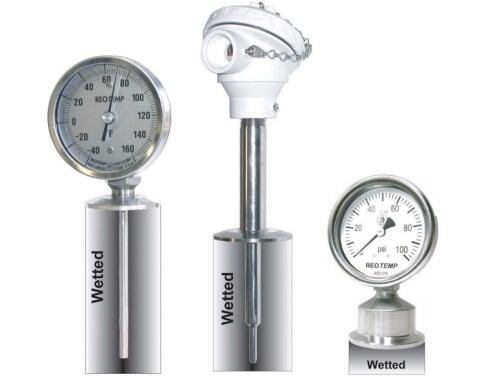
All Sino-Instrument 3-A marked sanitary instruments have carefully prepared Wetted Surfaces.

These surfaces contain no cracks or crevices, where germs could breed, and they are polished to a maximum roughness average (Ra) of 32.

The “wetted surfaces” of an instrument are the surfaces, that will come in contact with your process fluid.

Consult the diagrams below to see the wetted surface, for the instrument you have received.

SANITARY BIMETAL THERMOMETER

All Sino-Instrument sanitary instruments are shipped with packaging that protects the wetted surfaces.

To preserve the sanitary compliance of the instrument, CARE SHOULD BE TAKEN to prevent any scratching, denting, or abrasion of the wetted surfaces prior to or during installation.

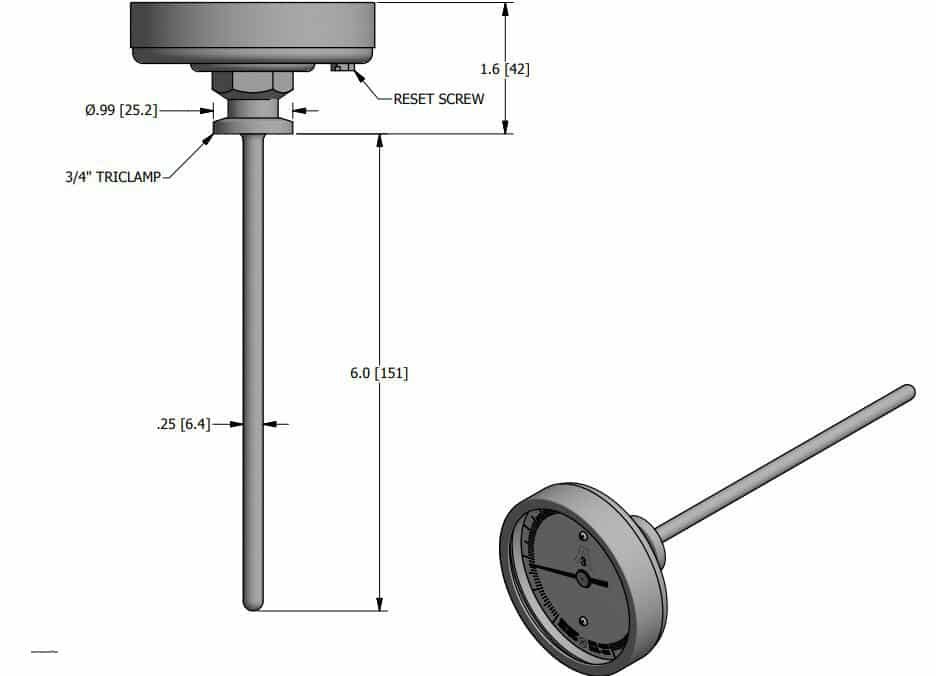
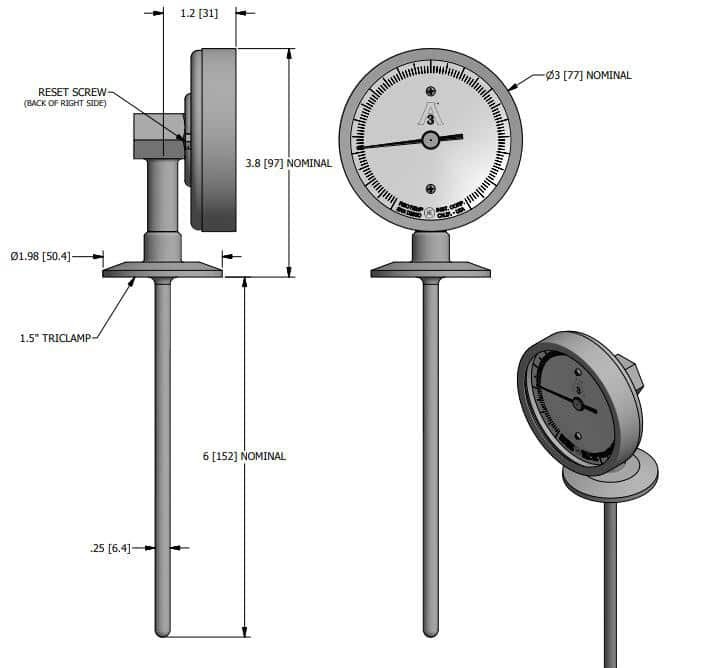
Drawings of SI-WSS Sanitary Bimetal Thermometers

The working principle of Tri Clamp Sanitary Thermometers:

Bimetal thermometers measure temperature through the inside of the system. The temperature sensing is realized by the coil spring bimetallic sheet made of bimetallic material.

Its bimetal material is composed of two inseparable metal sheets. Because the thermal expansion coefficients of the two metal sheets are different. Therefore, different degrees of stretching deformation will occur under the condition of temperature change. This stretching deformation is approximately proportional to temperature.

One end of the metal sheet is fixed and the other end is fixed integrally with the indicating shaft. Therefore, when the metal sheet is stretched and deformed, the indicator shaft is driven to rotate and the corresponding temperature value is indicated on the dial.

SI-WSS Serial code

ModelNominal diameter
D (mm)
Scale range
Graduation mark
Insertion length
L (mm)
Protecting pipe length
d (mm)
Installation screw thread
mm
WSS-3600-50
0-100
0-150
0-200
0-300
0-400
0-500
1
2
2
5
5
10
10
75;100;
150;200;
250;300;
400;500
6M16×1.5
WSS-4
WSSX-4
10010M27×2
WSS-515010

SI-WSS Sanitary Bimetal Thermometers Dimension

ModelDimension mm
DHLL1L2L3M
WSS-3060/75;100;
150;200;
250;300;
400;500;
6212 16×1.5
WSS-314660
WSS-324455
WSS-40100/721627×2
WSS-414694
WSS-424482
WSS-485864
WSS-50150/7216
WSS-5146112
WSS-524482
WSS-585864
WSSX-401100/72164227×2
WSSX-4114694
WSSX-4214482
WSSX-481  

If you need the datasheet, price, or more information about SI-WSS Bottom Connect Bimetal Thermometer.

Just Contact Us.

Related Blogs

Sino-Inst, Manufacuturer for Tri Clamp Sanitary Thermometers. Also known as clamp flange bimetal thermometer, chuck thermometer, sanitary chuck thermometer, pipeline thermometer, industrial thermometer. Widely used in pharmaceutical, food machinery industry and other fields.

Sino-Inst’s Tri Clamp Sanitary Thermometers, made in China, Having good Quality, With better price. Our Temperature measurement instruments are widely used in China, India, Pakistan, US, and other countries.

Request a Quote

Please enable JavaScript in your browser to submit the form

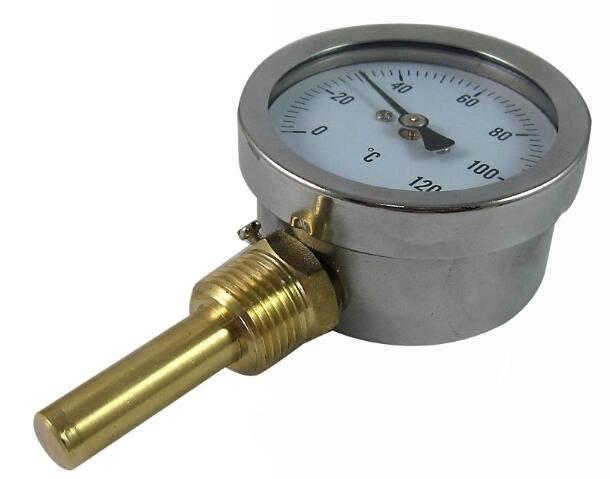
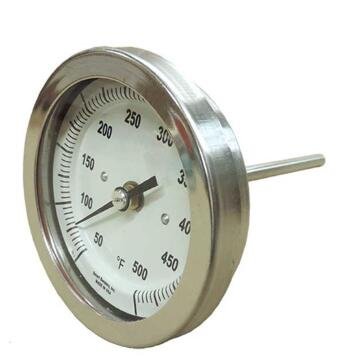
SI-WSS Back Connect Bimetal Thermometer

3″, 4″, and 5″ Back Connect Large Industrial Bimetal Thermometers:

A rugged 90° back angle, rear threaded connection design.

Sino-Instrument’s Bimetal Thermometers are reliable and accurate temperature sensors,

requiring no electricity or wiring. 

Back Connect Thermometers are ideal for local,

eye-level temperature readings in most process applications.

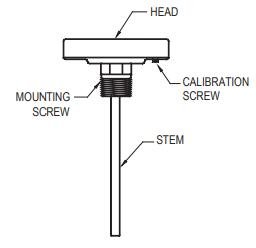
They can be recalibrated with a turn of the calibration screw on the back of the dial.

A variety of options are available for your specific process needs.

Commonly used in industrial, pulp and paper,

food and beverage processing, HVAC, and OEM applications.

Features of SI-WSS Back Connect Bimetal Thermometer

SI-WSS Back Connect Bimetal Thermometer

Back connection with external reset

Made to ASME B40.3 Specifications

Accuracy ± 1% Full Scale (ASME B40.3 Grade A)

All Stainless Steel Construction

Hermetically Sealed (ASME B40.3)

Silicone Fillable for Vibration

Standard and Custom Stem Lengths

Standard External Reset for Calibration

OEM Logo Dials/Custom Dials

Specifications of SI-WSS Back Connect Bimetal Thermometer

  • Accuracy: ± 1.5% Full Scale (ASME B40.3 Grade A)
  • Dial Size:  63 up to 150 mm
  • Dial Material:
    • Anodized aluminum with black marks on satin matte finish background;
    • White or Hi-Vis™ background available.
  • Stem Length:  2.5 – 24″, other lengths available
  • Stem Diameter: 1/4” (std)
  • Head, Bezel, Mounting Bushing, Stems: 300 Series SS, 316SS (optional)
  • Operating Conditions: 
    • The head temperature should not exceed 200°F (150°F if silicone filled).
    • The stem should not be exposed to continuous temperatures exceeding 50% over-range or 800°F(550°F if silicone filled).
  • Temperature Ranges: See inside back cover of temperature catalog for the complete list of ranges.
  • Case Rating: IP67, NEMA 6 Rated (Hermetically sealed per ASME B40.3)
  • Lens: Glass (std), Acrylic, Polycarbonate, Tempered Glass, Laminated Safety Glass
  • Immersion: Minimum 2” in liquid, and 4” in gas for most ranges. Certain ranges require up to 4” in liquids & 5” in gas
  • Mounting Connection: 1/2” NPT (std), 1/4” NPT, 3/4” NPT, Plain Hex Bushing, 1/2” BSPT, 1/2” NPT Union, Sanitary Tri-Clamp®
  • Temperature Sensing Area: Last 2” to 4” of the stem

Note:

Thermowells should be used whenever the stem or bulb would be exposed to pressure,

corrosion, velocity, abrasion or shear forces.

Thermowells also make it possible to remove the thermometer,

without losing pressure or the contents of the process.

SI-WSS Back Connect Bimetal Thermometer Applications

General process instrumentation in the chemical, petrochemical,

oil and gas, energy and water/wastewater industries

Temperature measurement in harsh and aggressive environments

With liquid dampening suitable for applications with high vibrations.

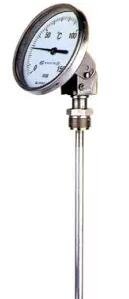
Drawings of SI-WSS Back Connect Bimetal Thermometer

Installation and Use Procedure, All Angle Thermometer

CAUTION:

This thermometer is designed to allow the face to be positioned,

so that it can be easily read.

Sino-Instrument recommends that the thermometer be positioned only one time,

to assure proper performance during its lifetime.

A. Carefully remove the thermometer from the shipping box.

Inspect for any shipping damage. If damaged report it to your freight carrier.

B. Loosen, but do not remove, the bracket set screws (see sketch) so that the bracket can rotate around the stem.

(Do not turn the calibration screw unless calibration is desired).

C. Rotate the bracket by hand so the stem may be flexed in the desired direction. Tighten the “A” bracket set screws.

D. Grasp the head and stem approximately were shown and adjust the head to the desired angle.

E. Tighten the “B” bracket set screws.

F. Install the thermometer into the process fitting or thermowell.

Tighten the hex screw, using an open-end wrench of the appropriate size.

Continue to tighten the hex screw until the head is facing the desired position.

Maintenance of SI-WSS Back Connect Bimetal Thermometer

1) Cleaning:

a) Keep the dial lens clean for proper viewing.

Clean using commercial window cleaner.

b) Periodic cleaning of residue from the stem may be required to ensure thermometer sensitivity if installed without a thermowell. 
2) Calibration:

Periodic calibration should be as determined by the user.

a) Immerse the thermometer stem into a temperature-calibrated medium. Immerse entire stem or 4” (100mm) minimum.

b) Use a small open-end wrench or flat tipped screwdriver to turn the calibration screw.

Turn the calibration screw to adjust the thermometer pointer, to the correct temperature if necessary.

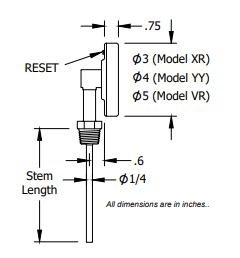
SI-WSS Bimetal Thermometer

If you need the datasheet, price, or more information about SI-WSS Bottom Connect Bimetal Thermometer,

Just Contact Us.

Request a Quote

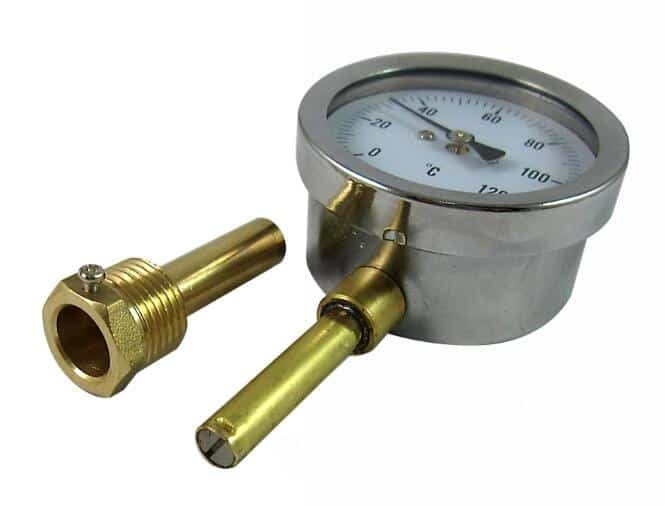
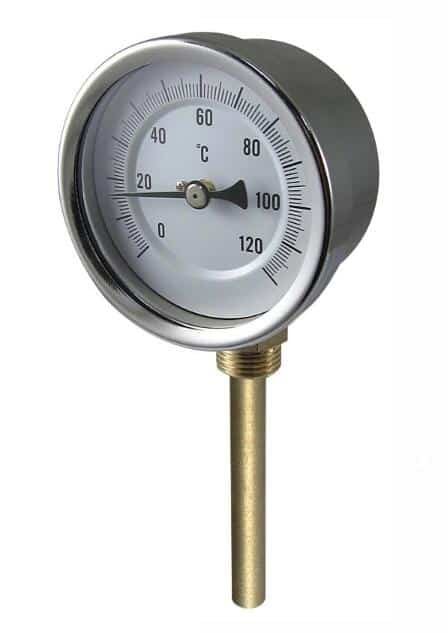
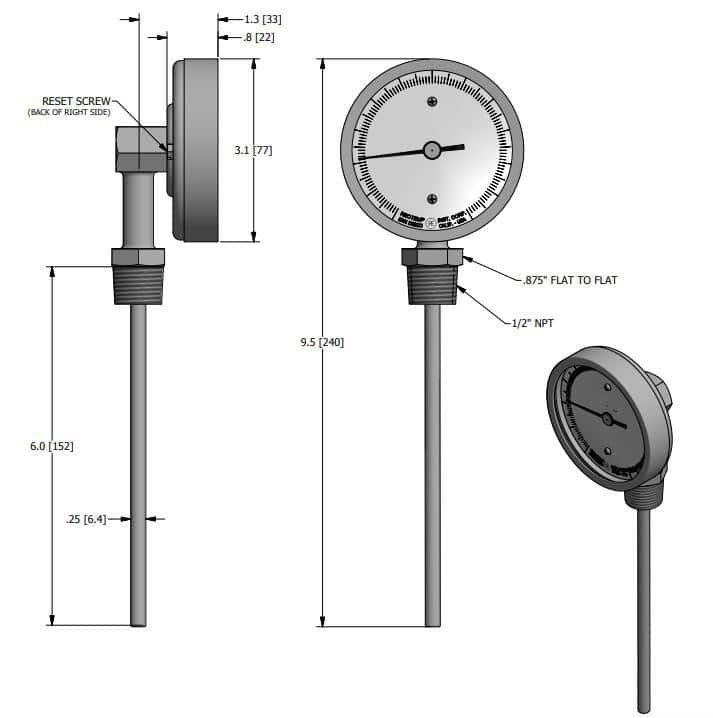
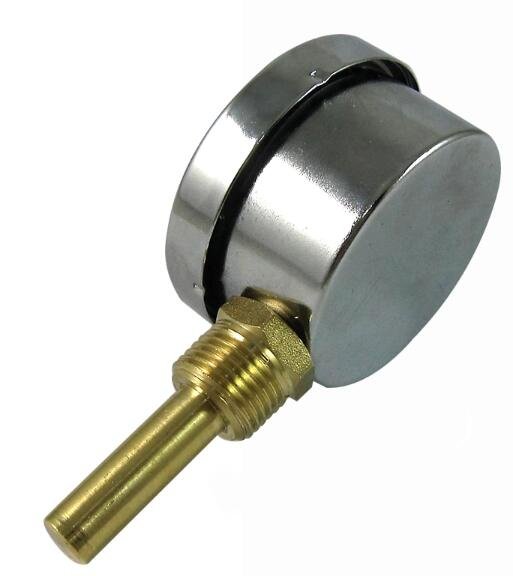
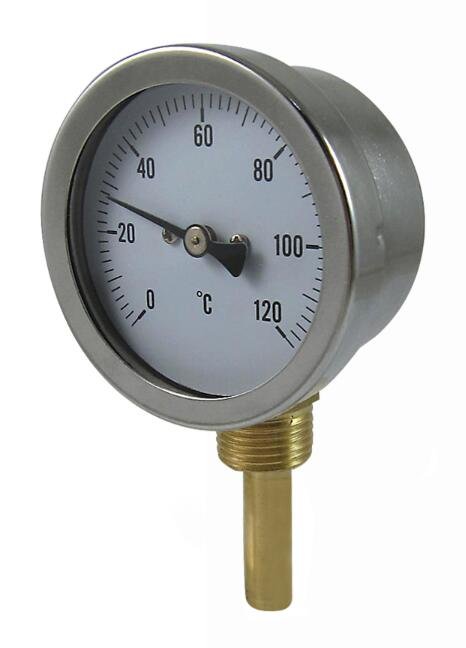
SI-WSS Bottom Connect Bimetal Thermometer

Sino-Instrument’s Bottom Connect Bimetal Thermometers,

are reliable and accurate temperature sensors requiring no electricity or wiring.

The Bottom Connect Thermometers are ideal for side and elevated installations,

on tops or sides of tanks or pipes and are ideal for local indication.

They can be recalibrated with a turn of the calibration screw on the back of the dial.

A variety of options are available for your specific process needs.

Features of SI-WSS Bottom Connect Bimetal Thermometer

Made to ASME B40.3 Specifications

Accuracy ± 2% Full Scale (ASME B40.3 Grade A)

All Stainless Steel Construction

Hermetically Sealed (ASME B40.3)

Silicone Fillable for Vibration

Standard and Custom Stem Lengths

Standard External Reset for Easy Calibration

OEM Logo Dials/Custom Dials

Applications of SI-WSS Bottom Connect Bimetal Thermometer

SI-WSS series bimetal thermometers are designed for light industry,

HVAC use, especially for refrigeration and hot water.

Specifications of SI-WSS Bottom Connect Bimetal Thermometer

  • Accuracy: ± 1.5% Full Scale (ASME B40.3 Grade A)
  • Dial Size:  63 up to 150 mm
  • Dial Material:
    • Anodized aluminum with black marks on satin matte finish background;
    • White or Hi-Vis™ background available.
  • Stem Length:  2.5 – 24″, other lengths available
  • Stem Diameter: 1/4” (std)
  • Head, Bezel, Mounting Bushing, Stems: 300 Series SS, 316SS (optional)
  • Operating Conditions: 
    • The head temperature should not exceed 200°F (150°F if silicone filled).
    • The stem should not be exposed to continuous temperatures exceeding 50% over-range or 800°F(550°F if silicone filled).
  • Temperature Ranges: See inside back cover of temperature catalog for the complete list of ranges.
  • Case Rating: IP67, NEMA 6 Rated (Hermetically sealed per ASME B40.3)
  • Lens: Glass (std), Acrylic, Polycarbonate, Tempered Glass, Laminated Safety Glass
  • Immersion: Minimum 2” in liquid, and 4” in gas for most ranges. Certain ranges require up to 4” in liquids & 5” in gas
  • Mounting Connection: 1/2” NPT (std), 1/4” NPT, 3/4” NPT, Plain Hex Bushing, 1/2” BSPT, 1/2” NPT Union, Sanitary Tri-Clamp®
  • Temperature Sensing Area: Last 2” to 4” of the stem

Note:

Thermowells should be used whenever the stem or bulb would be exposed to pressure,

corrosion, velocity, abrasion or shear forces.

Thermowells also make it possible to remove the thermometer,

without losing pressure or the contents of the process.

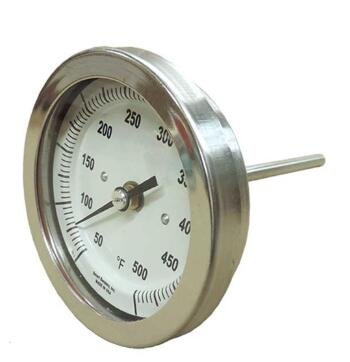
Drawings of SI-WSS Bottom Connect Bimetal Thermometer

Extended reading:  Tri Clamp Sanitary Thermometers

Installation and Use Procedure, All Angle Thermometer

CAUTION:

This thermometer is designed to allow the face to be positioned,

so that it can be easily read.

Sino-Instrument recommends that the thermometer be positioned only one time,

to assure proper performance during its lifetime.

A. Carefully remove the thermometer from the shipping box.

Inspect for any shipping damage. If damaged report it to your freight carrier.

B. Loosen, but do not remove, the bracket set screws (see sketch) so that the bracket can rotate around the stem.

(Do not turn the calibration screw unless calibration is desired).

C. Rotate the bracket by hand so the stem may be flexed in the desired direction. Tighten the “A” bracket set screws.

D. Grasp the head and stem approximately were shown and adjust the head to the desired angle.

E. Tighten the “B” bracket set screws.

F. Install the thermometer into the process fitting or thermowell.

Tighten the hex screw, using an open-end wrench of the appropriate size.

Continue to tighten the hex screw until the head is facing the desired position.

Maintenance of SI-WSS Bottom Connect Bimetal Thermometer

1) Cleaning:

a) Keep the dial lens clean for proper viewing.

Clean using commercial window cleaner.

b) Periodic cleaning of residue from the stem may be required to ensure thermometer sensitivity if installed without a thermowell. 
2) Calibration:

Periodic calibration should be as determined by the user.

a) Immerse the thermometer stem into a temperature-calibrated medium. Immerse entire stem or 4” (100mm) minimum.

b) Use a small open-end wrench or flat tipped screwdriver to turn the calibration screw.

Turn the calibration screw to adjust the thermometer pointer, to the correct temperature if necessary.

SI-WSS Bimetal Thermometer

If you need the datasheet, price, or more information about SI-WSS Bottom Connect Bimetal Thermometer,

Just Contact Us.

Request a Quote

Please enable JavaScript in your browser to submit the form

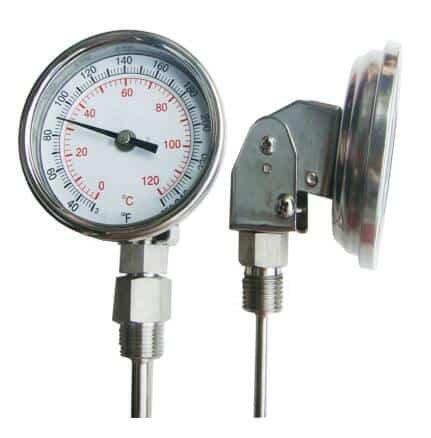
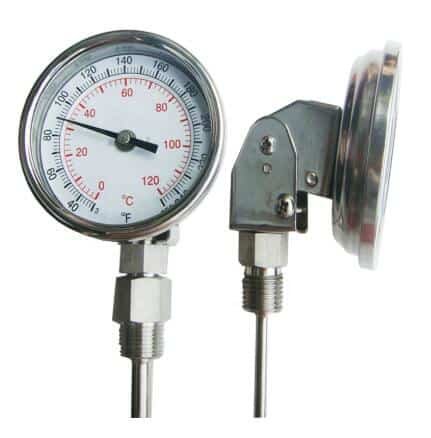
SI-WSS Adjustable Angle Bi-Metal Thermometer

What Is a Bi-Metal Thermometer?

The bi-metal thermometer is a simple, durable, and inexpensive temperature measuring device. The bimetal thermometer combines two different metals with linear expansion coefficients. Different metals expand at different rates when heated. The bimetallic strip particles deflect to indicate the temperature. Therefore, bi-metal thermometers are also called dial thermometers.

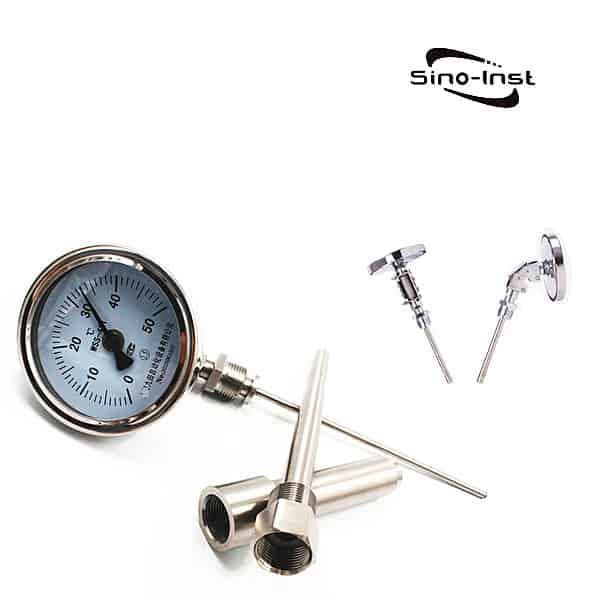
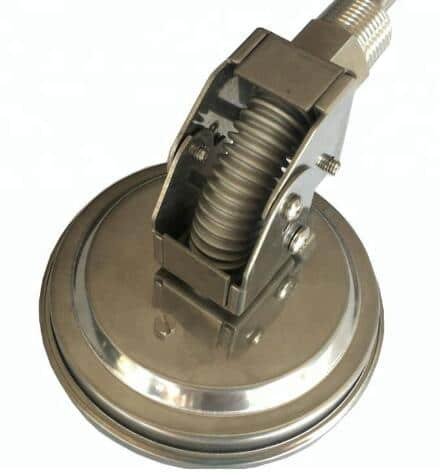
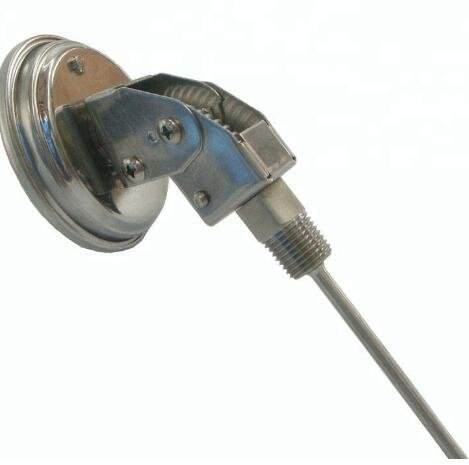
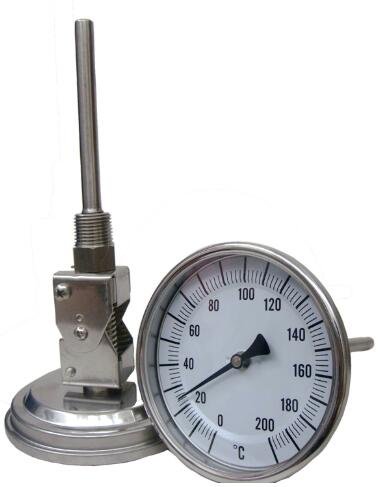
WSS series bi-metal thermometer is an on-site detection instrument for measuring low and medium temperatures. Directly measure the temperature of fluid, steam, and gas in the range of -80℃~500℃. The structure of the bimetal thermometer is divided into radial, axial and universal.

Features of SI-WSS Adjustable Angle Bi-metal Thermometer

  1. WSS bimetal thermometer is waterproof and dustproof to IP65.
  2. It is anti-corrosion and anti-vibration. The whole instrument is made of stainless steel. It is suitable for corrosive occasions.
  3. The dial of the oil-filled bimetallic thermometer is filled with oil, which increases the damping of the pointer and plays a seismic effect.
  4. When the hot-jacket bimetal thermometer needs to be replaced when the equipment is overhauled or the bimetal thermometer is damaged, there is no need to cool down, reduce pressure, or stop the machine. You only need to remove the watch core. The enterprise can avoid unnecessary economic losses. Continuous production can be achieved.
  5. The electrical contact bimetal thermometer has a mechanical electrical contact device. When the temperature of the measured medium changes. The thin shaft on the free end drives the pointer and the movable contact to rotate. The temperature change value is indicated on the dial. When it is with The instant when the fixed contact is contacted or disconnected. The relay and contactor in the external circuit system are activated to achieve the purpose of automatic control and alarm.
  6. This instrument has reliable structure, novel appearance, light weight and beautiful appearance.

Adjustable Bimetal Thermometer Specifications:

  • Accuracy: ± 1.5% Full Scale (ASME B40.3 Grade A)
  • Dial Size:  63 up to 150 mm
  • Dial Material:
    • Anodized aluminum with black marks on satin matte finish background;
    • White or Hi-Vis™ background available.
  • Stem Length:  2.5 – 24″, other lengths available
  • Stem Diameter: 1/4” (std)
  • Head, Bezel, Mounting Bushing, Stems: 300 Series SS, 316SS (optional)
  • Operating Conditions: 
    • The head temperature should not exceed 200°F (150°F if silicone filled).
    • The stem should not be exposed to continuous temperatures exceeding 50% over-range or 800°F(550°F if silicone filled).
  • Temperature Ranges: See inside back cover of temperature catalog for the complete list of ranges.
  • Case Rating: IP67, NEMA 6 Rated (Hermetically sealed per ASME B40.3)
  • Lens: Glass (std), Acrylic, Polycarbonate, Tempered Glass, Laminated Safety Glass
  • Immersion: Minimum 2” in liquid, and 4” in gas for most ranges. Certain ranges require up to 4” in liquids & 5” in gas
  • Mounting Connection: 1/2” NPT (std), 1/4” NPT, 3/4” NPT, Plain Hex Bushing, 1/2” BSPT, 1/2” NPT Union, Sanitary Tri-Clamp®
  • Temperature Sensing Area: Last 2” to 4” of the stem

Note:

Thermowells should be used whenever the stem or bulb would be exposed to pressure, corrosion, velocity, abrasion or shear forces.

Thermowells also make it possible to remove the thermometer, without losing pressure or the contents of the process.

Measuring range °C Scope of application
Industrial, commercial Laboratory, small
-80~+40
-40~+80
0~50
0~100
0~150
0~200
0~300
0~400
0~500

Drawings of Adjustable Angle Bimetal Thermometer

Form A B C E L d
Axial type 65 23 73 75
100
150
200
300
400
500
750
1000
Φ6
Φ8
Φ10
105 23 73
155 23 73
Radial type 65 50 110 34
105 50 110 34
105 50 110 34
135°direction 105 23 85
155 23 85
Universal type 105 23 178 120
155 23 178 120

Adjustable Angle Bi-metal Thermometer Applications

The bimetal thermometer is an on-site detection instrument for measuring low and medium temperatures.

The bimetal thermometer can directly measure the temperature of the liquid, steam, and gaseous media in the range of -80℃~+500℃ in various production processes.

The bimetallic thermometer features an on-site temperature display, which is intuitive and convenient. Safe and reliable. long-lasting. It has a variety of structural forms. Can meet different requirements.

Bimetal thermometers are available in axial type, radial type, universal type, and other meter head models. The length of the bimetal thermometer probe can be customized according to customer needs.

The on-site temperature display is intuitive, convenient, safe, and reliable, and has a long service life. The core-pulling thermometer can maintain or replace the movement in a short time without stopping the machine. Axial type, radial type, 135 type, universal type, and other varieties are complete. Adapt to various on-site installation needs.

Extended reading:  Tri Clamp Sanitary Thermometers

Bi-metal Thermometer Order Guide

Model WSS Bimetallic thermometer
Nominal diameter of dial   3 Φ60
  4 Φ100
  5 Φ150
Dial form 0 Axial (straight)
1 Radial (angle type)
2 135° direction (obtuse angle type)
8 Universal (adjustable angle type)
Installation fixed form 0 No fixtures
1 Movable external thread
2 Movable internal thread
3 Fixed thread
4 Fixed flange
5 Ferrule thread
6 Ferrule flange
Form of protection normal type
W Protection type
F Anticorrosive
Model Temperature range Accuracy class Protection tube material Standard Installation fixed form
D L
WSS-480 -80~+40
-40~+80
0~50
0~100
0~150
0~200
0~300
0~400
0~500
1.5 1Cr18Ni9Ti
304
316
316L
Hastelloy C-276
PTFE anti-corrosion
Φ100 75
100
150
200
300
400
500
750
1000
1500
2000
No fixtures
WSS-580 Φ150
WSS-481 Φ100 Movable external thread
WSS-581 Φ150
WSS-482 Φ100 Movable internal thread
WSS-582 Φ150
WSS-483 Φ100 Fixed thread
WSS-583 Φ150
WSS-484 Φ100 Fixed flange
WSS-584 Φ150
WSS-485 Φ100 Ferrule thread
WSS-585 Φ150
WSS-486 Φ100 Ferrule flange
WSS-586 Φ150

Selection instructions:

Please provide the model, dial diameter, accuracy grade, installation and fixing form, temperature measurement range, protective tube material, protective tube diameter, length, or insertion depth.

Selection examples:

Universal bimetal thermometer, dial diameter Φ100, temperature measurement range 0~400℃, level 1.5, movable external thread M27×2, length 450mm WSS-481, 0~400℃, L=450, M27×2, level 1.5

Installation and Use Procedure, All Angle Thermometer

CAUTION:

This thermometer is designed to allow the face to be positioned, so that it can be easily read.

Sino-Instrument recommends that the thermometer be positioned only one time, to assure proper performance during its lifetime.

A. Carefully remove the thermometer from the shipping box.

Inspect for any shipping damage. If damaged report it to your freight carrier.

B. Loosen, but do not remove, the bracket set screws (see sketch) so that the bracket can rotate around the stem.

(Do not turn the calibration screw unless calibration is desired).

C. Rotate the bracket by hand so the stem may be flexed in the desired direction. Tighten the “A” bracket set screws.

D. Grasp the head and stem approximately were shown and adjust the head to the desired angle.

E. Tighten the “B” bracket set screws.

F. Install the thermometer into the process fitting or thermowell.

Tighten the hex screw, using an open-end wrench of the appropriate size.

Continue to tighten the hex screw until the head is facing the desired position.

Maintenance of SI-WSS Adjustable Angle Bimetal Thermometer

1) Cleaning:

a) Keep the dial lens clean for proper viewing.

Clean using commercial window cleaner.

b) Periodic cleaning of residue from the stem may be required to ensure thermometer sensitivity if installed without a thermowell.

2) Calibration:

Periodic calibration should be as determined by the user.

a) Immerse the thermometer stem into a temperature-calibrated medium. Immerse entire stem or 4” (100mm) minimum.

b) Use a small open-end wrench or flat tipped screwdriver to turn the calibration screw.

Turn the calibration screw to adjust the thermometer pointer, to the correct temperature if necessary.

SI-WSS Adjustable Angle Bimetal Thermometer

Frequently
Asked
Questions

The accuracy grade of the bimetal thermometer is divided by its allowable error as a percentage of the dial scale value.

The greater the number of accuracy levels, the greater the allowable error to account for the limit value of the dial scale. The larger the range, the greater the allowable error of the absolute value of the measured temperature value for the same accuracy level.

Class 1.5 and Class 1.0 respectively indicate that the allowable error of the thermometer is ±1.5 and ±1.0% of the range under normal use.

The current 1.5-level accuracy has been able to meet the measurement needs of most customers.

The bimetallic thermometer uses a hot bimetallic piece wound into a threaded shape as a temperature-sensing device. And install it in the protective sleeve. One end is fixed, called the fixed end. The other end is connected to a thin shaft, called the free end.

A pointer is provided on the free end spool.

When the temperature changes, the free end of the temperature sensing device rotates accordingly. Drive the pointer on the thin shaft to produce angle changes. Indicate the corresponding temperature on the dial.

The temperature measurement range is -80~600C, which is suitable for temperature measurement when the precision is not high in the industry. As a kind of temperature sensing element, the bimetal can also be used for automatic temperature control.

The bimetal thermometer reads quickly. Real-time measurement is achieved. Therefore, bimetal thermometers have been widely used in industrial production and manufacturing.

At the same time, because it uses metal materials to measure temperature, because of the high melting point performance of the metal itself. Can withstand very high temperatures. Therefore, the measurement effect of this temperature under high-temperature conditions is particularly excellent.

Much high-temperature liquid, gas, and other medium temperature tests. Will use this WSS series bimetal thermometer to measure temperature.

Most bimetal thermometers are pointer type. The temperature is displayed in time.
Of course, with the development of products, bimetal thermometers with digital display have appeared. It is more convenient for users to read.

If you need the datasheet, price, or more information about SI-WSS Adjustable Angle Bimetal Thermometer,

Just Contact Us.

Request a Quote

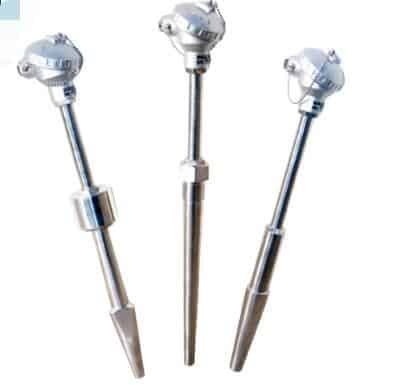
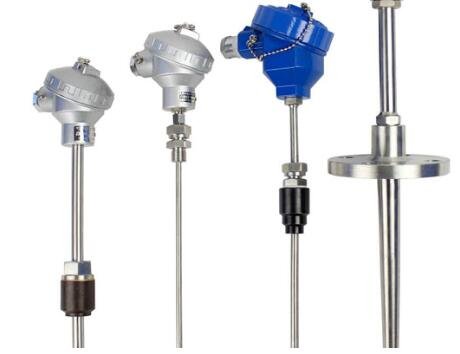
WZP PT100 Series Assembled Thermal Resistance

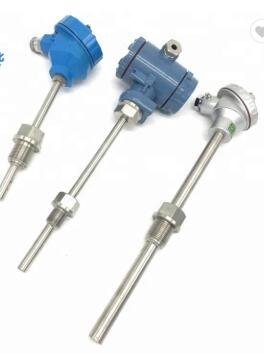
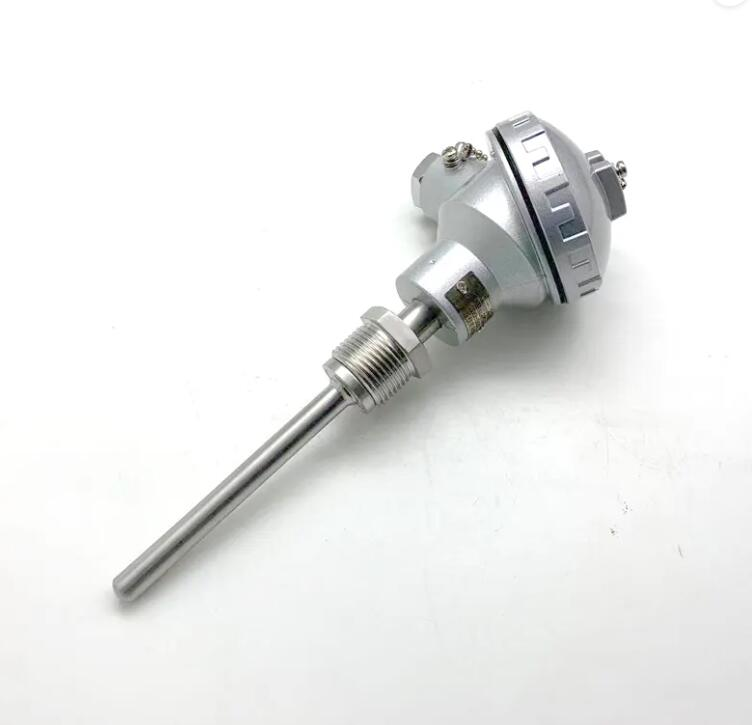
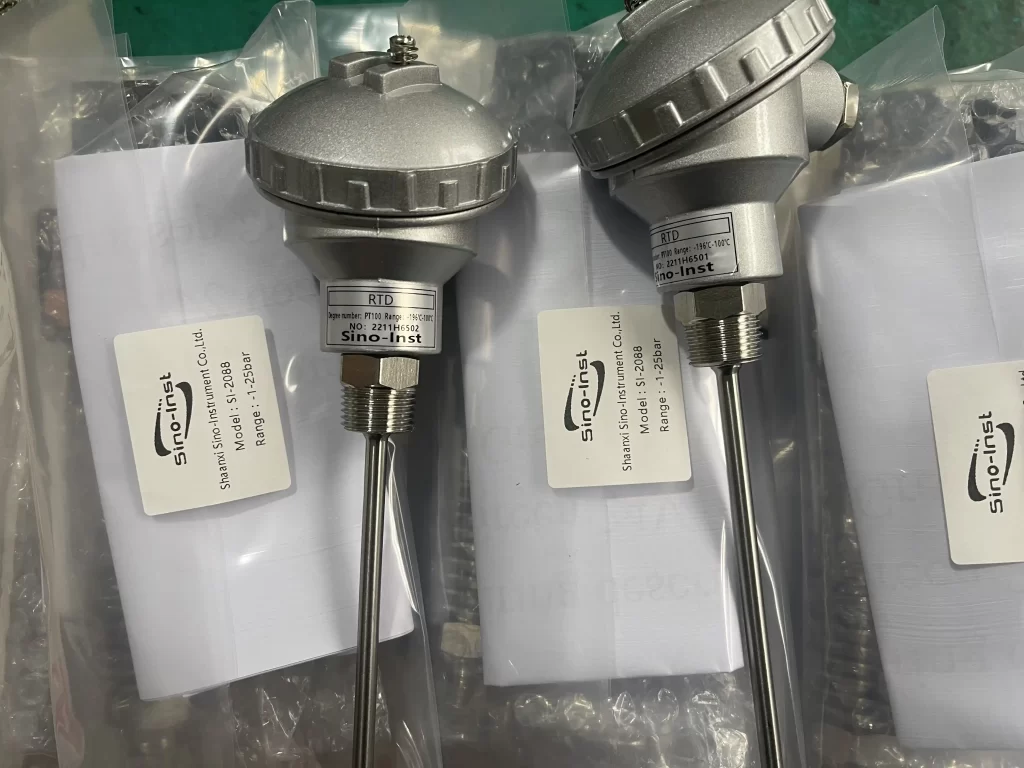
WZP PT100 is an industrial thermal resistance. It is used as a sensor for measuring temperature, and it is used in conjunction with display instruments, recording instruments and electronic regulators.

WZP PT100 industrial thermal resistance is the most commonly used temperature detector in the middle and low temperature areas. The main features are high measurement accuracy and stable performance. Among them, the measurement accuracy of platinum thermal resistance is the highest. It is not only widely used in industrial temperature measurement, but also made into a standard reference instrument.

WZP thermal resistance range specification

Thermal resistance

type

Temperature range °C

Graduation

Allowable deviation t


WZP platinum resistance


-200-420


Pt 100

Class B

Allow ± (0.30+0.005 t )

Grade A (-200-650°C)

Allow ± (0.15+0.002 t )

WZC copper resistance


 150-100

Cu50

-50-100tolerance

±(0.30+6.0x10⁻³t)

Note:   ︱ t ︱  is the absolute value of the humidity measured by the hygrometer;

More About WZP PT100

PT100 and RTD are both temperature sensors, but PT100 specifically refers to a type of RTD (Resistance Temperature Detector).

RTD is a type of temperature sensor that works by measuring changes in electrical resistance as temperature changes. PT100 RTDs have a resistance of 100 ohms at 0 degrees Celsius, which makes them a common choice for temperature measurement in industrial and scientific applications.

So, PT100 is just one type of RTD sensor that has a specific resistance value at a specific temperature.

A PT100 temperature sensor is a type of temperature sensor that measures temperature by detecting changes in electrical resistance. Specifically, it is an RTD (Resistance Temperature Detector) that has a resistance of 100 ohms at 0 degrees Celsius.

As the temperature changes, the resistance of the sensor also changes in a predictable way, allowing the sensor to accurately measure the temperature. PT100 sensors are commonly used in industrial and scientific applications where precise temperature measurement is important.

PTC and PT100 are both types of temperature sensors, but they work in different ways.

PTC stands for Positive Temperature Coefficient, and it is a type of thermistor that increases in resistance as temperature increases. In other words, the resistance of a PTC sensor goes up as the temperature it is measuring goes up. PTC sensors are commonly used in applications such as over-temperature protection in electronic circuits.

PT100, on the other hand, is a type of RTD (Resistance Temperature Detector) that has a specific resistance value of 100 ohms at 0 degrees Celsius. As temperature changes, the resistance of a PT100 sensor changes in a predictable way, allowing it to accurately measure temperature. PT100 sensors are commonly used in industrial and scientific applications where precise temperature measurement is important.

So, the main difference between PTC and PT100 is that PTC sensors increase in resistance as temperature increases. While PT100 sensors have a specific resistance value at a specific temperature and change resistance in a predictable way as temperature changes.

Calibrating a PT100 temperature sensor involves comparing its readings to known, accurate temperatures and making adjustments to the sensor’s output to ensure it is reading accurately.

Here are the basic steps for calibrating a PT100 sensor:

  1. Obtain a reference thermometer or other temperature calibration device with a known, accurate temperature reading.
  2. Place the reference thermometer and the PT100 sensor in a controlled environment with a stable temperature.
  3. Wait for the temperature to stabilize and record the readings from both the reference thermometer and the PT100 sensor.
  4. Compare the readings and calculate the difference between the two.
  5. Adjust the output of the PT100 sensor as needed to match the reference thermometer reading.
  6. Repeat the process at several different temperatures to ensure accuracy across a range of temperatures.

It’s important to note that calibrating a PT100 sensor can be a complex and technical process. And it may be best to consult with a professional or use specialized calibration equipment to ensure accurate results.

Here are some key differences between RTD temperature sensors and thermocouples:

RTD Temperature SensorsThermocouples
Higher accuracy and repeatability;
Smaller temperature range;
Less susceptible to EMI;
More stable over time and exhibit less drift;
Require a stable, regulated power source to operate;
Can be more expensive;
Wider temperature range;
Can operate in harsher environments;
Do not require a power source to operate;
Can be less expensive;
More susceptible to EMI;
Can exhibit more drift and require frequent calibration;

Read more about: RTD Working Principle & Thermocouple Working Principle

Order Guide

W

Z

Spec

Content


P


Pt resistance

C


Cu resistance


Thermal resistance material


1


Without fixed device

2


Fixed threaded

3


Movable flange

4


Fixed flange

5


Loose coupling type

6


Fixed thread conical

7


Direct coupling type

8


Fixed threaded pipe joint type

9


Movable threaded pipe joint type


Fixed installation form

2


Splash proof

3


Waterproof type

4


Explosiveproof type


Junction box form

0

Φ16mm protection tube

1

Φ12mm protection tube

Protection tube diameter

No unified designAll kinds of protection tube

W

Z

P


3

3

0

1

More temperature measurements and applications

Standard Platinum Rhodium Thermocouple

Standard Platinum Rhodium Thermocouple-Platinum Thermocouple Standard Platinum Rhodium Thermocouple is a temperature measurement standard device produced by our company. There…

RTD vs Thermocouple

RTD vs Thermocouple- What is the difference? What are they used for? Both RTDs and thermocouples are sensors used to…

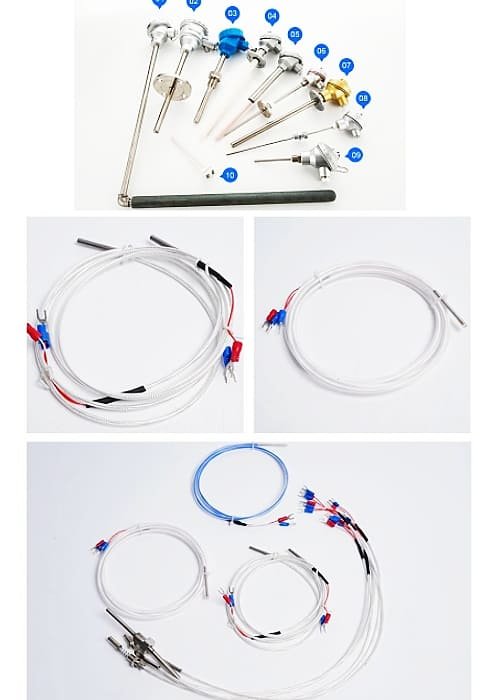
Industrial thermal resistance has the characteristics of high sensitivity and good stability and is widely used. If equipped with corrosion protection tube. Can also be used in corrosive media.

We produce two types of assembled thermal industrial thermometers: WZP PT100 and Pt 10 platinum thermal resistances that meet the professional standard JB/T8622- 1997 (equivalent to the International Electrotechnical Commission IEC751-83 standard) and Cu50 and Cu100 that meet the professional standard JB/T8623- 1997 Copper thermal resistance.

If you need WZP PT100 Series Assembled Thermal Resistance, Please feel free to contact our sales engineers.

Request a Quote

Please enable JavaScript in your browser to submit the form