
Updated 2026-05-11 by the Sino-Inst engineering team.
A dew point meter for compressed air reports the pressure dew point (PDP) — the temperature at which water vapour condenses out of the air at line pressure. That single number decides whether your dryer is delivering the ISO 8573-1 humidity class your plant signed up for. Most field problems with moisture in compressed air are not dryer failures; they are wrong sensor selection, wrong placement, or a sensor that has drifted 8 °C since the last calibration.
This guide covers PDP fundamentals, the ISO 8573-1 classes that fix sensor range, three sensor technologies (chilled mirror, aluminum oxide, capacitive polymer), a step-by-step measurement procedure for in-line and portable instruments, dryer pairing, what to do when the reading is out of spec, and the four mistakes that pull readings off year after year.
Contents
- Pressure Dew Point Explained for Compressed Air
- ISO 8573-1 Humidity Classes and Sensor Range Selection
- Three Sensor Technologies: Chilled Mirror, Al₂O₃, and Capacitive Polymer
- Dryer Technology and Achievable Pressure Dew Point
- Step-by-Step Procedure to Measure Dew Point in Compressed Air
- Sensor Placement and Sample Conditioning
- How to Reduce Pressure Dew Point When You Are Out of Spec
- Calibration and Drift: Why a 1-Year-Old Sensor Reads 8 °C High
- Featured Dew Point Meters for Compressed Air
- FAQ
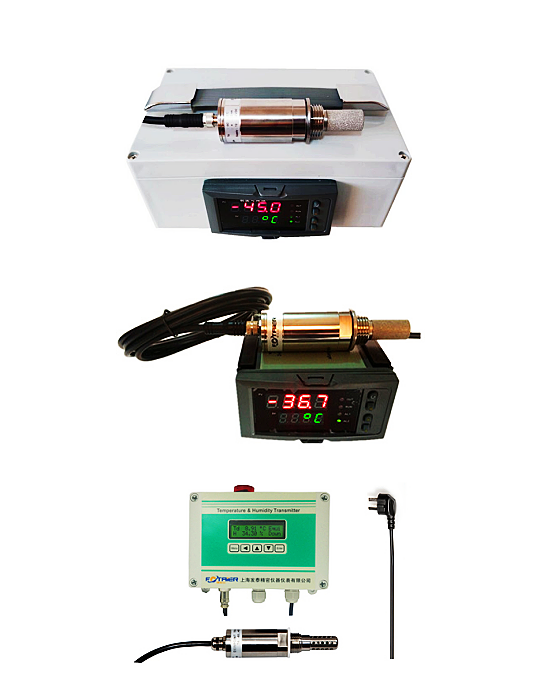
Pressure Dew Point Explained for Compressed Air
Pressure dew point is measured at the working pressure of the line. Atmospheric dew point is the same temperature after the sample has been expanded back to 1 atm. The two numbers are not interchangeable. A sample at 7 barg with +3 °C PDP is equivalent to roughly -23 °C atmospheric dew point — a 26 °C gap that catches engineers out on audits.
This matters on every spec sheet. Compressed air specifications are written in PDP, but most cheap psychrometers report atmospheric dew point. Take a hand-held instrument, vent the sample to ambient, and read -23 °C — you have not exceeded ISO 8573-1 Class 4 (+3 °C PDP), you have just barely met it. Reading the wrong column has flunked more compressed-air audits than any real dryer fault. Always confirm whether a number is at line pressure or after expansion.
The conversion isn’t intuitive either. At 10 barg the gap widens further, so a portable meter reading -30 °C after expansion does not mean you have Class 2 air. For background on absolute vs gauge pressure references, see our static vs dynamic pressure guide.
ISO 8573-1 Humidity Classes and Sensor Range Selection
ISO 8573-1:2010 defines seven humidity classes. The class you have to meet is set by what the air feeds, not by the dryer you happen to own. Pick the class first; the sensor range falls out of it.
| Class | PDP target | Typical use | Sensor range needed |
|---|---|---|---|
| 1 | ≤ -70 °C | Pharma, semiconductor, breathing air | -100 to -40 °C |
| 2 | ≤ -40 °C | Instrument air, paint spray, food packaging | -80 to -20 °C |
| 3 | ≤ -20 °C | Plant control air in cold climates | -60 to 0 °C |
| 4 | ≤ +3 °C | General plant air, pneumatic tools | -20 to +20 °C |
| 5 | ≤ +7 °C | Light pneumatic load (refrigerant dryer) | -10 to +20 °C |
| 6 | ≤ +10 °C | Coarse air, agitation | 0 to +30 °C |
| X | User-defined | Process-specific | By spec |
One trap to watch: a Class 2 sensor (-80 to -20 °C) loses resolution above -20 °C, so it cannot tell you whether you have exceeded Class 4. Spec to your worst-case PDP target plus about 20 °C of headroom, not your best-case. A second trap: 4-20 mA outputs are usually scaled across the full sensor span, so if you buy a -80 to +20 °C sensor and only care about Class 4 territory, you waste 75 % of the resolution on the lower end. Either scale the transmitter output to your range of interest, or buy a Class-matched sensor.
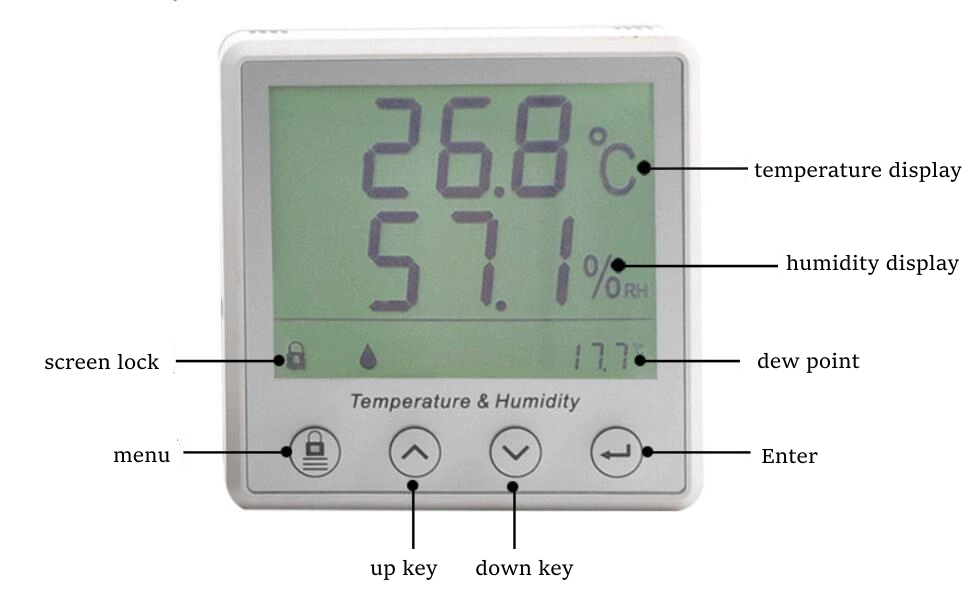
Three Sensor Technologies: Chilled Mirror, Al₂O₃, and Capacitive Polymer
Three technologies dominate field dew point measurement in compressed air. They differ by 5–10 °C in absolute accuracy and by an order of magnitude in price and maintenance.
| Technology | Range | Accuracy | Best for | Cost band |
|---|---|---|---|---|
| Chilled mirror | -90 to +90 °C | ±0.1 °C | Lab reference, cal standard | $$$$ |
| Aluminum oxide capacitive (Al₂O₃) | -110 to +20 °C | ±2 °C | Cryogenic, Class 1, hydrogen service | $$$ |
| Capacitive polymer film | -80 to +60 °C | ±2 °C | Class 2-4 plant air, instrument air | $ |
Chilled mirror is the laboratory primary — a cooled metal mirror with optical detection of condensation. The reading is by definition correct because it physically forms condensate at the dew point. Slow (minutes per reading) and expensive, and the mirror needs cleaning. Use it as your calibration reference, not as the in-line sensor.
Aluminum oxide capacitive sensors use a porous Al₂O₃ layer whose dielectric constant changes with adsorbed water. They tolerate extreme dryness (-110 °C is realistic), which makes them the choice for hydrogen, cryogenic nitrogen, and Class 1 pharma air. Drift is moderate at 3-5 °C per year, and the cell needs an annual factory bake-out.
Capacitive polymer film sensors are the workhorse for compressed air in the Class 2-4 range. They are faster (90 % response in 30-60 seconds with proper sampling), cheaper, and have a 200 °C auto-bake cycle that drives moisture back out daily. Drift is 2-3 °C per year in clean air but climbs to 5-10 °C in oily lines, which is why filtration matters more than the sensor brand.
Dryer Technology and Achievable Pressure Dew Point
The dryer fixes the floor your sensor will see; pick the right pair so the sensor sits in the middle of its calibrated range.
- Refrigerant dryer: +3 to +10 °C PDP. Cheapest, used for Class 4-6.
- Heatless desiccant dryer: -40 °C PDP nominal, -70 °C achievable. Class 2 standard, Class 1 with tight tower switching.
- Heated desiccant dryer: -40 to -70 °C PDP, lower purge loss than heatless (5-7 % vs 14 %).
- Membrane dryer: -20 to -40 °C PDP for low-flow point-of-use applications.
If your specification calls for Class 2 air but you own a refrigerant dryer, no amount of sensor calibration fixes that — you need a desiccant tower. The dew point meter is a diagnostic tool, not a corrective one. For broader gas-dew-point context (CO₂, N₂, hydrocarbons), see our guide to what gases a dew point meter can detect.
Step-by-Step Procedure to Measure Dew Point in Compressed Air
There are two field procedures, depending on whether you have an in-line transmitter or a portable spot-check meter.
In-line transmitter (continuous monitoring):
- Confirm the sensor is mounted downstream of the dryer outlet and downstream of the coalescing filter, but upstream of any after-filter that could retain moisture.
- Open the sample bleed valve to 1-2 NL/min purge through the measuring chamber. Without purge, response time stretches from minutes to hours.
- Let the 4-20 mA / RS485 output settle for 5-15 minutes after any pressure or flow change. Capacitive polymer sensors respond fast, but gas exchange around the film is the rate-limiter.
- Trend continuously over 24 h. A clean compressed air line should show diurnal swing under 3 °C; larger swings point at dryer cycling problems.
Portable spot-check (audit):
- Connect the portable meter to a Minimess test point downstream of the dryer using a 2-3 m sample hose in stainless or PTFE. Avoid rubber — plasticisers outgas into the sensor and shift the calibration warm.
- Set the flow regulator on the meter to 1 NL/min. Vent any condensate trap before starting.
- Allow 15-30 minutes for the reading to stabilise. Keep the sample at line pressure during the wait — measuring at a vented sample reads atmospheric dew point, not PDP.
- Record both PDP and line pressure on the audit log. The two together let you compute atmospheric dew point and cross-check any downstream spec written in that reference.
The same straight-run logic that shapes flow-meter sample placement applies here — see our upstream and downstream straight pipe guide for the underlying sampling principle.
Sensor Placement and Sample Conditioning
Install the in-line probe at least 2 metres downstream of the dryer outlet, after the coalescing filter, and before the final after-filter. Three placement rules from field installations:
- Mount the probe horizontally, never sensor-down. Liquid water collecting on the polymer destroys the calibration in hours.
- Use stainless or PTFE in the sample line. PVC and rubber outgas plasticisers that load the sensor.
- Keep the sample line under 5 m. Long lines act as moisture buffers and slow the reading by an hour or more.
Sample conditioning is where most field measurements quietly fail. A common mistake is plumbing the probe straight into the dryer header without a sample loop — at zero flow, the polymer equilibrates to whatever the dead leg has been doing for the past week, not to the live process. A 1-2 NL/min bleed is the cheapest insurance against this.
How to Reduce Pressure Dew Point When You Are Out of Spec
If the dew point meter shows you above your ISO 8573-1 target, work down this list before assuming the dryer has failed.
- Verify the reading. Confirm the sensor was calibrated in the last 12 months. A polymer sensor running 8 °C high after a year in oily air is normal, not faulty.
- Check the pre-filter. Liquid water carryover from the receiver overwhelms any dryer downstream. Replace coalescing elements at 4000 hours or per ΔP alarm.
- Inspect dryer cycling. On twin-tower desiccant dryers, a stuck purge valve or failed tower switch raises PDP by 10-30 °C. Listen for the tower changeover at the timer interval.
- Check ambient and inlet conditions. Refrigerant dryers degrade above 35 °C inlet temperature. Heatless desiccant dryers consume up to 14 % of throughput as purge — under-sizing the dryer for plant air demand shows up as PDP creep.
- Upgrade dryer technology. Refrigerant only reaches +3 °C PDP. If the spec calls for Class 2 or better, you need a desiccant tower added in series or in replacement. For installations facing pressure-side fluctuations alongside moisture, our pressure transmitter installation guide covers the same impulse-line discipline.
Calibration and Drift: Why a 1-Year-Old Sensor Reads 8 °C High
Polymer-capacitive dew point sensors drift by 2-3 °C per year in clean air and 5-10 °C in oily air. Four practical errors accelerate that:
- Skipping the coalescing filter. Compressor oil mist coats the polymer and shifts the calibration warm — typically 5-8 °C in 12 months.
- Wet exposure. A single bulk-water hit damages the dielectric layer permanently. Once a polymer sensor has seen liquid water, it never reads correctly again.
- Neglected auto-cal cycles. Modern sensors run a 200 °C bake every 24 h to drive moisture out; if power is interrupted, drift compounds month over month.
- Annual factory cal that ignores process conditions. A sensor returned for cal at -40 °C reference will not match a +3 °C process. Calibrate at the band you actually run in.
Featured Dew Point Meters for Compressed Air

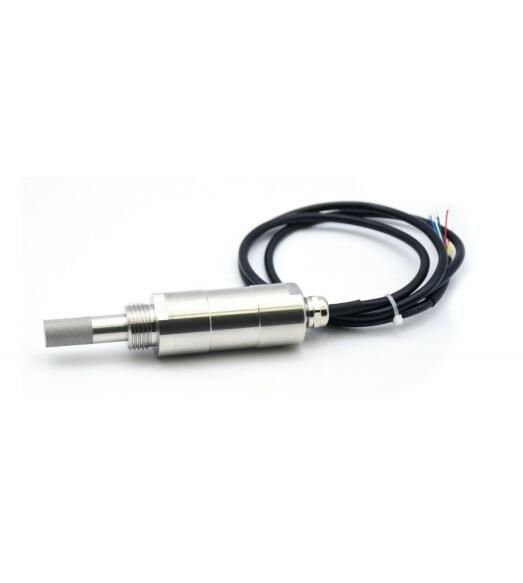
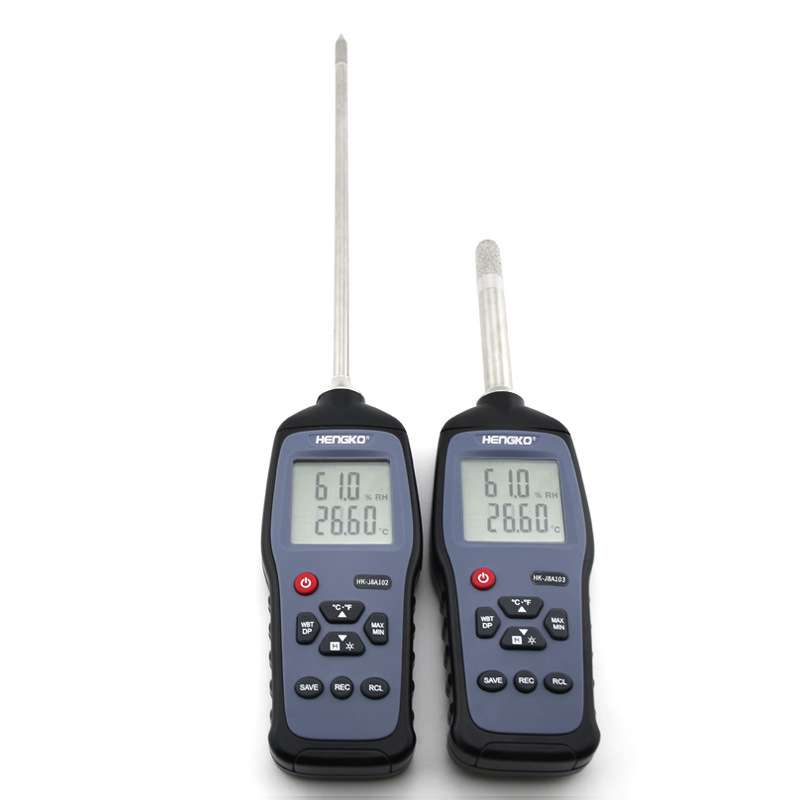
Dew Point Transmitter 608 Series
In-line probe, -80 to +20 °C PDP, 4-20 mA / RS485 Modbus, ±2 °C accuracy.
FAQ
How do you measure the dew point of compressed air?
Use a polymer-capacitive sensor in a sample cell at line pressure with 1-2 NL/min purge through the cell. Allow 5-15 minutes for in-line transmitters and 15-30 minutes for portable spot-checks to settle on each new reading.
What is the dew point limit for compressed air?
It depends on the ISO 8573-1 class required. Instrument air is usually Class 2 at -40 °C PDP; general plant air is Class 4 at +3 °C PDP; pharma and semiconductor air is Class 1 at -70 °C PDP. There is no single number.
How do you reduce the dew point in compressed air?
Verify sensor calibration first, then check coalescing filter ΔP, then check dryer cycling and ambient inlet temperature. If readings are confirmed and the dryer is healthy, the only durable fix is upgrading from refrigerant to desiccant drying, or adding a desiccant tower in series.
What is the difference between pressure dew point and atmospheric dew point?
Pressure dew point is measured at line pressure; atmospheric dew point after expansion to 1 atm. 7 barg air at +3 °C PDP corresponds to roughly -23 °C atmospheric dew point — the two are not interchangeable on a spec sheet.
What is the best dew point for instrument air?
ISA-7.0.01 calls for instrument air at least 10 °C below the lowest ambient temperature the air will see. In temperate plants that means -40 °C PDP (Class 2); in arctic service, -70 °C PDP (Class 1).
How often should a compressed air dew point sensor be calibrated?
Annually for clean instrument air, every 6 months for plant air on oil-lubricated compressors. Send the sensor back at the PDP band you actually operate in, not the factory default.
Can a dew point meter be installed downstream of an oil filter?
Yes — and it should be. Place the probe after the coalescing oil filter but before the after-filter. Oil mist on the polymer is the fastest way to ruin the sensor.
Which sensor technology is best for Class 1 compressed air?
Aluminum oxide capacitive sensors reach -110 °C and are the right choice for Class 1 air (-70 °C PDP). Capacitive polymer sensors lose resolution below -60 °C and should not be used for pharma or semiconductor service.
Need help picking a dew point meter for your dryer and ISO 8573-1 class? Our engineers can quote and ship within 24 hours — message us with your line pressure, target PDP, and flow rate.
Request a Quote
Request a Quote

Wu Peng, born in 1980, is a highly respected and accomplished male engineer with extensive experience in the field of automation. With over 20 years of industry experience, Wu has made significant contributions to both academia and engineering projects.
Throughout his career, Wu Peng has participated in numerous national and international engineering projects. Some of his most notable projects include the development of an intelligent control system for oil refineries, the design of a cutting-edge distributed control system for petrochemical plants, and the optimization of control algorithms for natural gas pipelines.