
Updated 2026-05-31 by the Sino-Inst Engineering Team
An online dew point meter only protects your process if three things line up. You read pressure dew point, not atmospheric dew point. You match the meter range to your ISO 8573-1 air-quality class. And you mount the sensor downstream of the dryer. Get any one wrong and the display is confident but false. That is how a “−40 °C” system still drops liquid water at a point of use. This guide walks through the three decisions you actually make before buying or replacing a meter.
Contents
- What is an online dew point meter, and how is it different from a portable one?
- Pressure dew point vs. atmospheric dew point
- Which ISO 8573-1 air-quality class do you need?
- Capacitive polymer vs. chilled mirror vs. metal oxide
- Where should you install the sensor?
- Beyond compressed air: SF6, natural gas, and plastics drying
- How to choose: a 6-point checklist
- Featured online dew point meters
- Frequently asked questions
What Is an Online Dew Point Meter, and How Is It Different From a Portable One?
An online dew point meter is a fixed sensor installed in the gas line. It measures moisture continuously and outputs a live signal — usually 4–20 mA or Modbus — to your control system or an alarm. A portable dew point meter does the same physics as a spot check: you carry it to a test port, take a reading, and move on.
The split matters because the two answer different questions. Portable units verify a dryer during commissioning or a quarterly audit. Online units catch the failure you would otherwise miss — a desiccant bed breaking through at 3 a.m., or a refrigerated dryer losing capacity in summer. If a wet excursion can scrap product or corrode a line, you want continuous monitoring, not a snapshot. Many plants run both: a fixed meter at the dry-air header and a portable one for point-of-use troubleshooting.
Pressure Dew Point vs. Atmospheric Dew Point: Why the Same −40 °C Means Two Things
This is the single most common mistake we see. Pressure dew point (PDP) is the dew point of the gas at its working pressure. Atmospheric dew point is what that same gas would show after it expands to ambient pressure. They are not interchangeable. Compressing a gas raises its dew point, so a value that looks safe at atmosphere can be wet inside a pressurized line.
ISO 8573-1 specifies compressed-air dryness as pressure dew point. ISO 8573-3 sets reference conditions of 20 °C and 7 barg so readings compare on a common basis. So when a dryer is rated “−40 °C,” confirm whether that is PDP or atmospheric, and make sure your meter reports the same basis. A sensor in the pressurized line reads PDP directly. One mounted after a pressure-reducing valve reads atmospheric dew point and needs a correction. Our rule on site is simple: measure at line pressure when you can, and never compare a PDP spec to an atmospheric reading. For that case we cover sampling detail in our guide to the dew point meter for compressed air.
Which ISO 8573-1 Air Quality Class Do You Need?
Pick the meter’s range from your target air-quality class, not the other way around. A meter optimized for very dry air can be compromised by humid exposure. A wide-range humid sensor will not resolve a Class 1 reading. This table maps the ISO 8573-1 humidity classes to a typical dryer and the range you should specify.
| ISO 8573-1 humidity class | Pressure dew point | Typical dryer / application | Meter range to specify |
|---|---|---|---|
| Class 1 | ≤ −70 °C PDP | Desiccant dryer; electronics, lithium, lab gas | Down to −80 °C, fast-settling sensor |
| Class 2 | ≤ −40 °C PDP | Desiccant dryer; pharma/medical air, PET drying | −60 to 0 °C, condensation-tolerant |
| Class 3 | ≤ −20 °C PDP | Desiccant or premium refrigerated; paint, blow molding | −40 to +20 °C |
| Class 4 | ≤ +3 °C PDP | Refrigerated dryer; general plant air, tools | −20 to +50 °C |
Medical and pharmaceutical air commonly targets −40 °C PDP or drier, which puts it in Class 2 territory. Drying PET resin before blow molding needs the same −40 °C class. Skip it and moisture flashes off in the mold, leaving silver streaks and bubbles. The same logic protects a dew point monitor in food and cold-storage air.

Capacitive Polymer vs. Chilled Mirror vs. Metal Oxide: Which Sensor Fits?
Three sensing technologies cover almost every industrial install, and the trade-off is accuracy versus maintenance. Capacitive polymer sensors are the default for online compressed-air work. They are low maintenance, tolerant of condensation, and cheap enough to put one on every header. Chilled mirror is the laboratory reference and does not drift, but it is maintenance-heavy and sensitive to contamination. Metal-oxide sensors sit in between, tend to drift, and usually need a return to the factory for recalibration.
| Technology | Accuracy / drift | Maintenance | Best fit |
|---|---|---|---|
| Capacitive polymer | Good; can drift, verify periodically | Low; field-swappable | Continuous online compressed air and gases |
| Chilled mirror | Highest; no drift | High; clean mirror, sensitive to oil/dust | Reference, calibration lab, critical low PDP |
| Metal oxide | Moderate; drifts | Factory recalibration | Legacy installs, trace moisture |
The practical takeaway: use a capacitive polymer transmitter for the line. Keep a chilled-mirror or a freshly calibrated portable unit as the reference you check it against. A capacitive sensor that has not been verified in two years is the quiet reason a “compliant” system fails an audit.
Where Should You Install the Sensor?
Install the sensor downstream of the dryer, never upstream. Upstream the probe sits in saturated air, and a capacitive element soaked in liquid water reads falsely wet for hours or fails outright. We have pulled more dead sensors off the wet side of a dryer than from any other cause.
The reliable arrangement is a stainless-steel sample cell teed off the dry-air header. Add an isolation valve ahead of it so you can remove the sensor without depressurizing the line. Bleed a controlled 1–2 L/min of sample through the cell. Too much flow cools the sensor and drags the reading below the real dew point. Too little, and a dead leg gives you stale air that does not represent the system. Use stainless tubing for low dew points, since plastic and rubber outgas moisture and keep you from ever reaching a dry reading. For point-of-use checks, sample as close to the critical process as possible. A receiver tank or a long run can add moisture the header never sees.
Beyond Compressed Air: SF6, Natural Gas, and Plastics Drying
Dew point is not only a compressed-air parameter. Moisture in SF6 switchgear degrades insulation and forms corrosive byproducts, so utilities monitor it as a maintenance indicator. Custody-transfer and pipeline natural gas carry a water dew point spec to prevent hydrate formation and corrosion. Plastics processors monitor the dryer feeding the resin hopper. Each wants the same core measurement but different hardware. In flammable streams such as natural gas, select a meter with the right hazardous-area certification rather than a general compressed-air model. If your moisture question is really a gas-composition question, an oxygen sensor or an integrated zirconia oxygen analyzer may belong alongside the dew point meter. A multi-gas detector covers the safety side. Our note on which gases a dew point meter can detect goes deeper on compatibility.
How to Choose an Online Dew Point Meter: A 6-Point Checklist
- Range — set it from your ISO 8573-1 class, with headroom below your target PDP.
- Pressure rating — confirm the sensor is rated for line pressure if you want PDP directly.
- Response time — drier setpoints settle more slowly; budget stabilization time at very low PDP.
- Output and integration — 4–20 mA, Modbus/RS485, alarm relays; match your PLC or monitor.
- Certification — hazardous-area rating for natural gas, biogas, or solvent-laden streams.
- Calibration plan — decide upfront how often you verify the sensor and against what reference.
One note on economics. Dew-point demand control on a desiccant dryer purges only when moisture actually rises. That can cut dryer energy by roughly 20%, so an online meter often pays for itself on utilities alone.
Featured Online Dew Point Meters
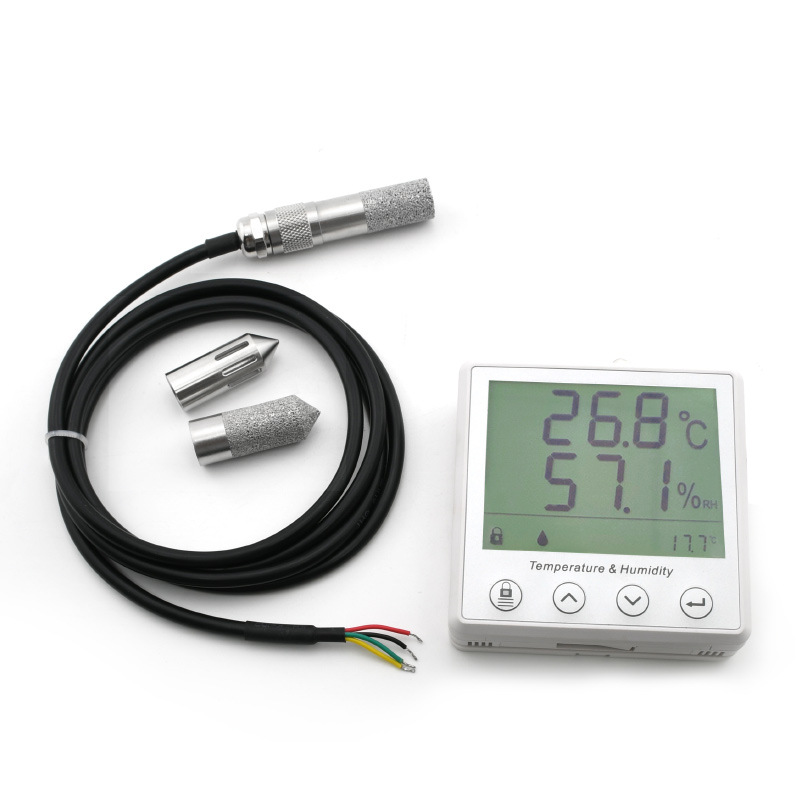
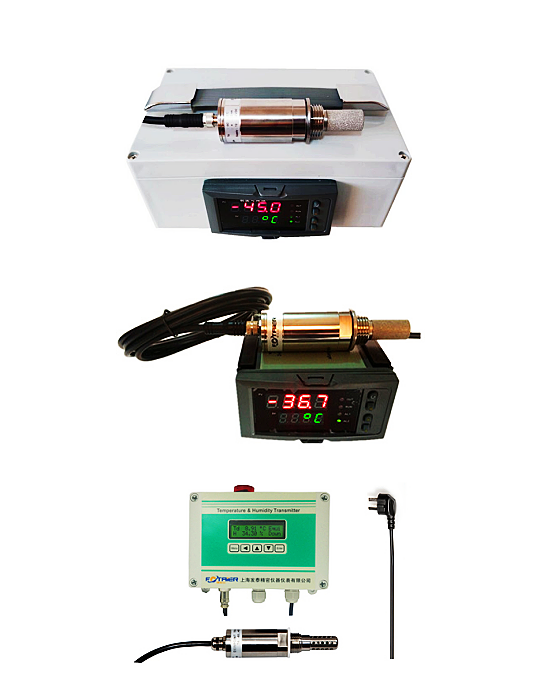
Online Dew Point Meter (602 Series)
Fixed inline meter for continuous compressed-air and gas monitoring. Wide PDP range with 4–20 mA / RS485 output for direct PLC and alarm integration at the dry-air header.
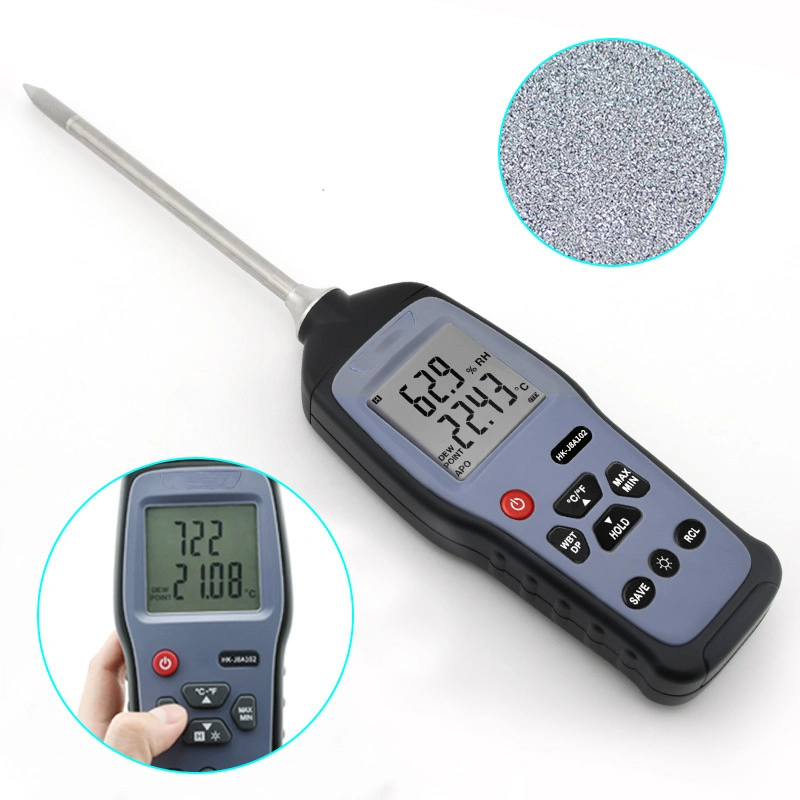
Portable Dew Point Meter
Handheld unit for commissioning, audits, and point-of-use troubleshooting. Fast spot readings to verify a fixed meter or find where moisture enters the line.
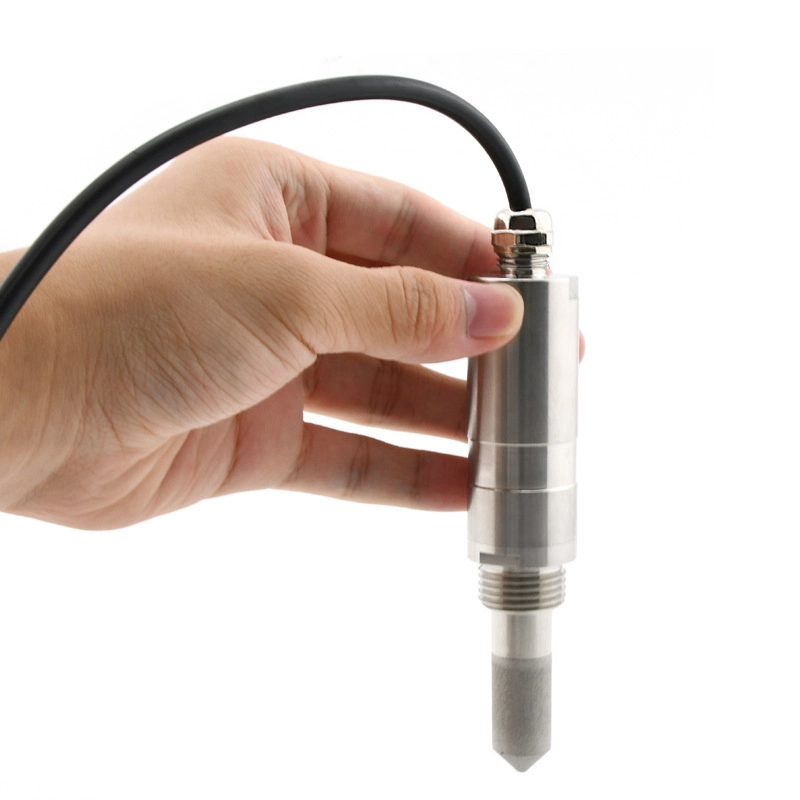
Dew Point Transmitter (608 Series)
Loop-powered transmitter for SF6, natural gas, and process gases beyond compressed air. Capacitive sensor with stable output for permanent moisture monitoring.
Frequently Asked Questions
How do I measure dew point in a compressed air system?
Install a dew point sensor downstream of the dryer. Use a stainless sample cell teed off the dry-air header with an isolation valve, and bleed 1–2 L/min of sample through it. Read pressure dew point at line pressure for a true picture of moisture risk inside the system.
Is pressure dew point the same as atmospheric dew point?
No. Pressure dew point is measured at the gas’s working pressure. Atmospheric dew point is the value after the gas expands to ambient pressure. Compression raises dew point, so the two differ. ISO 8573-1 specifies compressed-air dryness as pressure dew point, referenced to 20 °C and 7 barg by ISO 8573-3.
Where should a dew point sensor be installed?
Always downstream of the dryer, never upstream where saturated air can flood and ruin a capacitive sensor. Use a sample cell off a tee, an isolation valve for maintenance, controlled 1–2 L/min flow, and stainless tubing for low dew points to avoid moisture outgassing.
How often does a dew point sensor need calibration?
Capacitive polymer sensors can drift, so verify them periodically — typically annually — against a chilled-mirror reference or a freshly calibrated portable meter. Chilled-mirror instruments do not drift but still benefit from periodic verification. Set the interval in your maintenance plan before you buy.
What dew point do I need for ISO 8573-1 Class 2?
Class 2 requires a pressure dew point of −40 °C or lower, which a desiccant dryer typically delivers. Specify a meter that resolves comfortably below −40 °C with some headroom, and confirm the reading is pressure dew point rather than atmospheric.
Can one dew point meter cover both very dry and humid readings?
Within limits. Some sensors handle a wide span. But instruments optimized for very low dew points can be compromised by humid exposure, and wide-range humid sensors will not resolve Class 1 air. Match the range to your target class instead of expecting one meter to do everything.
About this article
Written and technically reviewed by the Sino-Inst engineering team — last reviewed 2026-05-31 (AI-assisted drafting). Based on ISO 8573-1 air-quality classes and ISO 8573-3 reference conditions, plus field experience installing online dew point meters on compressed-air, SF6, and gas-drying systems. Questions? Reach our application engineers.
Request a Quote
Tell us your air-quality target, line pressure, and gas. A Sino-Inst engineer will recommend the right range, sensor technology, and mounting for your online dew point meter.
Request a Quote

Wu Peng, born in 1980, is a highly respected and accomplished male engineer with extensive experience in the field of automation. With over 20 years of industry experience, Wu has made significant contributions to both academia and engineering projects.
Throughout his career, Wu Peng has participated in numerous national and international engineering projects. Some of his most notable projects include the development of an intelligent control system for oil refineries, the design of a cutting-edge distributed control system for petrochemical plants, and the optimization of control algorithms for natural gas pipelines.