
Updated: April 10, 2026
Class 1 Div 1 and Class 1 Div 2 are two NEC hazardous location classifications that define how likely flammable gases or vapors are to be present. The distinction matters because it determines what type of electrical equipment you can install. Div 1 means ignitable concentrations exist under normal conditions. Div 2 means they only appear during abnormal events like leaks or equipment failure. Get the classification wrong, and you risk either an explosion or overspending on equipment rated far beyond what the area requires.
Contents
- What Is a Class 1 Hazardous Location?
- Class 1 Division 1: Definition and Requirements
- Class 1 Division 2: Definition and Requirements
- Class 1 Div 1 vs Div 2: Key Differences
- Protection Methods by Division
- Gas Groups A, B, C, and D
- Choosing Instruments for Hazardous Areas
- Explosion-Proof Instruments from Sino-Inst
- FAQ
What Is a Class 1 Hazardous Location?
The NEC (NFPA 70) Article 500 defines Class 1 locations as areas where flammable gases, vapors, or liquids are present or may be present in the air in sufficient quantities to produce ignitable mixtures.
Class 1 covers the broadest range of industrial hazardous environments. Refineries, chemical plants, fuel loading docks, paint spray booths, and gas pipeline facilities all fall under Class 1. The key factor is the presence of flammable gases or vapors—not combustible dusts (that is Class 2) or fibers (Class 3).
Within Class 1, the NEC further divides locations into Division 1 and Division 2 based on the probability and frequency of the hazardous atmosphere. This division directly affects equipment selection, installation cost, and maintenance requirements.
Class 1 Division 1: Definition and Requirements
Per NEC Article 500.5(B)(1), a Class 1 Division 1 location is an area where one or more of these conditions exist:
- Ignitable concentrations of flammable gases or vapors can exist under normal operating conditions.
- Ignitable concentrations may exist frequently because of repair or maintenance operations or because of leakage.
- Breakdown or faulty operation of equipment or processes might simultaneously release ignitable concentrations and cause electrical equipment failure that serves as an ignition source.
In practical terms: the inside of a fuel storage tank vapor space, the area around an open chemical reactor, or the immediate zone around a gasoline dispenser nozzle are all Div 1 locations. The hazardous atmosphere is expected to be there during normal operations.
Equipment installed in Div 1 must use the most stringent protection methods: explosion-proof enclosures (Ex d), intrinsic safety (Ex i), or purged/pressurized systems (Ex p). There is no room for compromise—a single spark can reach an ignitable mixture at any time.
Class 1 Division 2: Definition and Requirements
Per NEC Article 500.5(B)(2), a Class 1 Division 2 location is an area where:
- Volatile flammable liquids or gases are handled, processed, or used, but are normally confined within closed containers or systems and can only escape through accidental rupture, breakdown, or abnormal operation.
- Ignitable concentrations are normally prevented by positive mechanical ventilation, and the area might become hazardous only through failure or abnormal operation of the ventilation equipment.
- The area is adjacent to a Class 1 Division 1 location, and ignitable concentrations might occasionally migrate into it.
Think of it this way: a properly sealed pump room with ventilation where flammable gas only escapes if a gasket fails. Or a laboratory where solvents are stored in sealed containers and only exposed briefly during use. Under normal conditions, the atmosphere is safe. The hazard only appears when something goes wrong.
Div 2 allows less expensive protection methods such as non-incendive equipment (Ex nA), restricted breathing enclosures, or hermetically sealed devices. The lower probability of a hazardous atmosphere means you do not need full explosion-proof housings for every piece of equipment—though you still need certified gear. For more on how pressure transmitters handle hazardous area ratings, see our technical guide.
Class 1 Div 1 vs Div 2: Key Differences
The table below summarizes the main differences between Division 1 and Division 2 classifications:
| Criteria | Class 1 Division 1 | Class 1 Division 2 |
|---|---|---|
| Hazardous atmosphere present | During normal operations | Only during abnormal conditions |
| Probability of ignitable mixture | High (continuous, intermittent, or periodic) | Low (accidental release only) |
| NEC reference | Article 500.5(B)(1) | Article 500.5(B)(2) |
| Equipment protection level | Explosion-proof, intrinsically safe, purged | Non-incendive, restricted breathing, hermetically sealed |
| Div 1 equipment allowed? | Yes (required) | Yes (over-rated but acceptable) |
| Div 2 equipment allowed? | No | Yes |
| Typical cost impact | High (premium enclosures and wiring) | Moderate (less stringent enclosures) |
| Example locations | Inside tank vapor space, open reactor, fuel dispenser zone | Ventilated pump room, solvent storage, area adjacent to Div 1 |
One rule to remember: equipment certified for Div 1 can always be used in Div 2. But Div 2 equipment cannot be used in Div 1 locations. When in doubt, specifying Div 1-rated equipment eliminates classification risk at the cost of higher upfront expense.
Protection Methods by Division
Division 1 Protection Methods
Explosion-proof (Ex d): The enclosure is built to contain an internal explosion without letting flame or hot gases escape to ignite the surrounding atmosphere. This is the most common method for Div 1 motors, junction boxes, and lighting fixtures. The enclosure must pass hydrostatic and explosion tests per UL 1203 or IEC 60079-1.
Intrinsic safety (Ex i): Electrical energy in the circuit is limited below the minimum ignition energy of the specific gas group. Two levels exist: Ex ia (safe with two faults—suitable for Div 1) and Ex ib (safe with one fault—suitable for Div 2 only). Most 4-20mA transmitters and sensor loops use this method because the power levels are already low.
Purged/pressurized (Ex p): Clean air or inert gas maintains positive pressure inside the enclosure, preventing flammable gas from entering. Used for large control panels or analyzer housings. Requires a continuous purge supply and interlock system per NFPA 496.
Division 2 Protection Methods
Non-incendive (Ex nA): The equipment does not produce arcs or sparks capable of igniting a specific gas under normal operation. This is the most cost-effective method for Div 2. Standard industrial instruments with sealed contacts often qualify.
Hermetically sealed: Components are sealed so that no flammable gas can reach potential ignition sources. Common in relays and switches used in Div 2 areas.
Restricted breathing: The enclosure limits gas exchange to a rate that prevents ignitable concentrations from forming inside. Used for terminal boxes and small enclosures in Div 2 zones.
Understanding these protection methods helps when selecting instruments. For instance, when choosing a pressure transducer wiring configuration, you need to verify whether the wiring method is rated for your specific division.
Gas Groups A, B, C, and D
Within Class 1, the NEC further categorizes gases into four groups based on their explosion characteristics. The group determines the minimum enclosure strength and maximum gap dimensions for explosion-proof equipment:
| Group | Representative Gas | MESG (mm) | MIC Ratio | Common Applications |
|---|---|---|---|---|
| A | Acetylene | 0.25 | 0.40 | Welding shops, chemical synthesis |
| B | Hydrogen | 0.28 | 0.45 | Refineries, battery charging rooms, electrolysis plants |
| C | Ethylene | 0.65 | 0.80 | Petrochemical plants, polyethylene production |
| D | Propane, Methane | 0.90 | 0.80 | Oil/gas production, LNG facilities, paint booths |
MESG is the Maximum Experimental Safe Gap—the largest gap through which flame cannot propagate. MIC is the Minimum Igniting Current ratio. Group A (acetylene) is the most dangerous and requires the most robust enclosures. Group D covers the most common industrial gases and allows the widest range of certified equipment.
When specifying instruments, always match the equipment group rating to the gases present. An instrument rated for Group D is not safe for Group B environments. In mixed-gas facilities, rate everything for the most hazardous group present.
Choosing Instruments for Hazardous Areas
Selecting the right process instrument for a hazardous area involves three decisions:
- Identify the classification: Confirm whether your installation point is Class 1 Div 1 or Div 2, and which gas group applies. This information comes from the area classification drawing prepared by the plant’s electrical engineer per NEC Article 500 or API RP 505.
- Select the protection method: For Div 1, you need Ex d or Ex ia rated instruments. For Div 2, Ex nA or Ex ib may be sufficient. Match the instrument’s certification to the area classification.
- Verify certifications: Check that the instrument carries the appropriate approval mark: UL/cUL for North America, ATEX for Europe, or IECEx for international sites. The marking should state the class, division, and group—for example, “Class I, Div 1, Groups C & D.”
A common mistake in field projects: installing a Div 2 rated instrument in what turns out to be a Div 1 zone after an area reclassification. Always verify the current classification drawing before procurement. For level measurement in hazardous tanks, guided wave radar and pressure-based level transmitters are popular because Ex ia versions are widely available.
Also consider the wiring method. In Div 1 areas, all conduit must be sealed at boundaries, and only explosion-proof fittings are permitted. In Div 2, standard conduit with seal fittings at the boundary is generally acceptable. For details on wiring practices, refer to NEC Articles 501.10 and 501.15.
Explosion-Proof Instruments from Sino-Inst
Sino-Inst manufactures a full range of Ex d and Ex ia rated process instruments for Class 1 Div 1 and Div 2 installations. All products carry the Ex marking and are available with ATEX or IECEx certification on request.
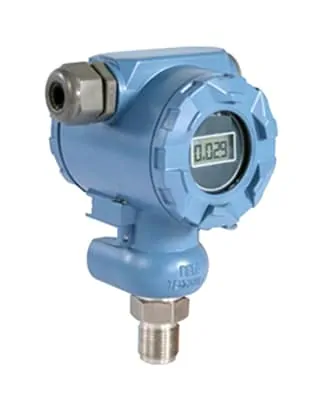
Explosion-Proof Pressure Transmitter
Ex d IIC T6 | 4-20mA/HART | 0–100 MPa
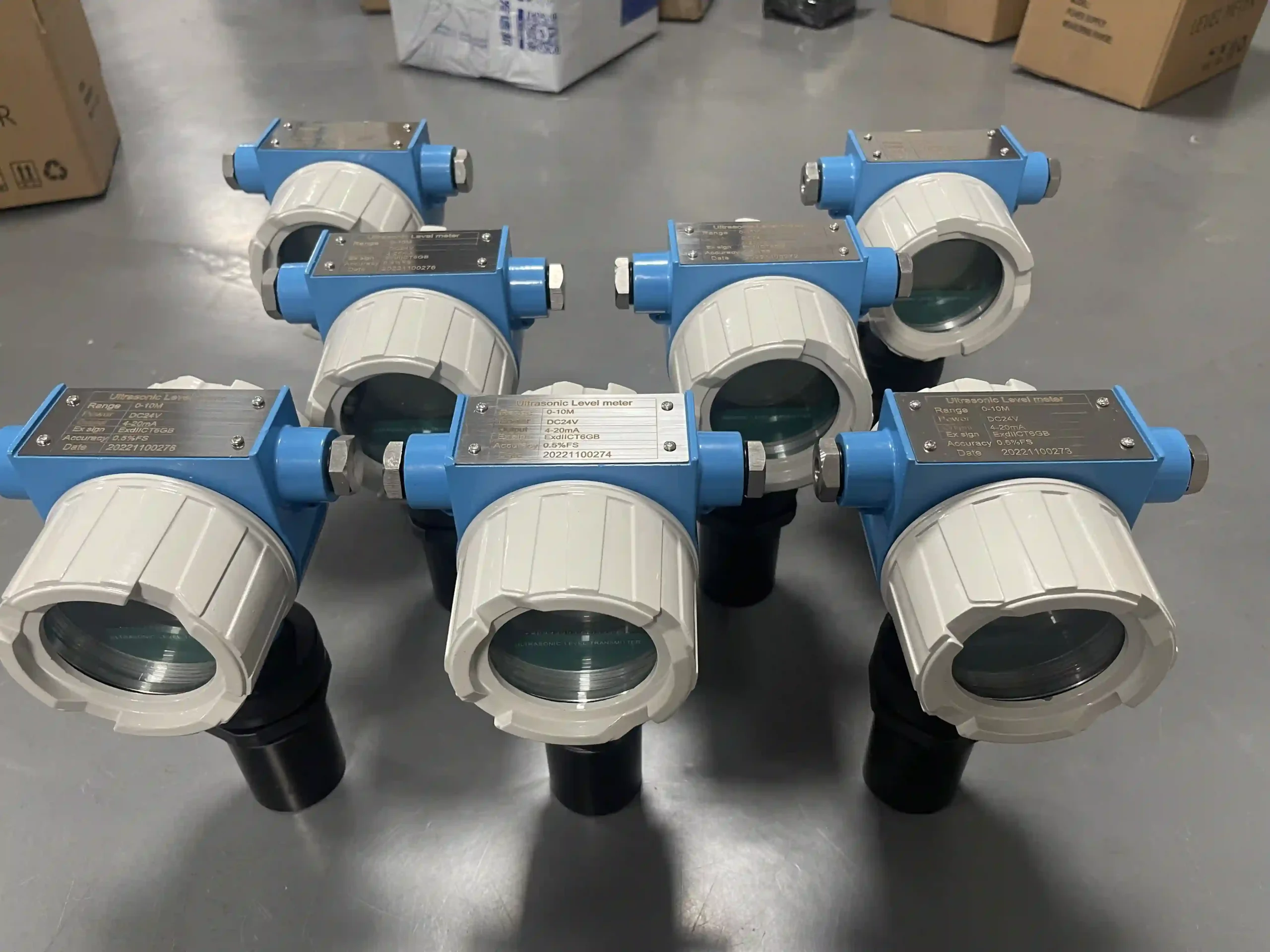
Explosion-Proof Ultrasonic Level Meter
Ex d IIC T6 | 4-20mA | Range 0.3–20 m
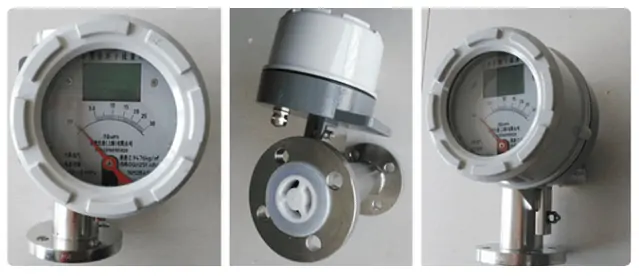
Explosion-Proof Rotameter Flow Meter
Ex d IIC T4 | DN15–DN100 | Water, Gas, Oil
FAQ
Can I use Class 1 Div 1 equipment in a Div 2 area?
Yes. Equipment rated for Div 1 exceeds the requirements for Div 2 and is always acceptable in Div 2 locations. The reverse is not true—Div 2 equipment cannot be installed in Div 1 areas.
What is the difference between Division and Zone classification?
The Division system (Div 1/Div 2) is the traditional North American method per NEC Article 500. The Zone system (Zone 0/1/2) follows IEC 60079-10-1 and is used internationally and accepted in North America under NEC Article 505. Zone 0 has no direct Division equivalent—it covers areas where ignitable gas is present continuously, while Div 1 groups Zone 0 and Zone 1 together.
Who determines the area classification for a plant?
The facility owner’s electrical engineer or a qualified third-party consultant creates the area classification drawing. Standards like API RP 500 (Division method) or API RP 505 (Zone method) provide guidance on how far each classification zone extends from the source of release.
Does Class 1 Div 2 require conduit sealing?
Yes, but less extensively than Div 1. Per NEC 501.15, seals are required at boundaries between Div 2 and unclassified areas when the conduit enters an enclosure containing ignition-capable equipment. In Div 1, seals are required at every entry to an explosion-proof enclosure.
What certifications should I look for on hazardous area instruments?
In North America, look for UL or cUL listing per UL 1203 (explosion-proof) or UL 913 (intrinsically safe). For international projects, ATEX (EU Directive 2014/34/EU) and IECEx scheme certificates are the standard. The marking plate on the instrument should clearly state the class, division, group, and temperature code. For guidance on selecting the right pressure sensor for your application, check the hazardous area rating on the datasheet before ordering.
What does the temperature code (T-code) mean?
The T-code indicates the maximum surface temperature of the equipment. It must be lower than the autoignition temperature of the gas present. For example, T6 means the surface will not exceed 85°C, which is safe for most common gases. T1 (450°C) is the least restrictive. Always check the autoignition temperature of your specific gas against the equipment T-code.
Need help selecting explosion-proof instruments for your hazardous area project? Our engineering team can review your area classification drawing and recommend the right protection level—whether Div 1 or Div 2. We supply pressure transmitters, flow meters, level transmitters, and temperature sensors with Ex d and Ex ia certifications. Contact us for a technical consultation or quotation.
Request a Quote

Wu Peng, born in 1980, is a highly respected and accomplished male engineer with extensive experience in the field of automation. With over 20 years of industry experience, Wu has made significant contributions to both academia and engineering projects.
Throughout his career, Wu Peng has participated in numerous national and international engineering projects. Some of his most notable projects include the development of an intelligent control system for oil refineries, the design of a cutting-edge distributed control system for petrochemical plants, and the optimization of control algorithms for natural gas pipelines.