
Updated: April 10, 2026
Flow meter calibration is the process of comparing a meter’s output against a traceable reference standard and adjusting it to minimize measurement error. Every flow meter drifts over time due to wear, fouling, or process changes. Without regular calibration, a 1% error on a custody transfer meter handling 10,000 barrels per day means roughly 100 barrels of unaccounted product. This guide covers the main calibration methods, step-by-step procedures, recommended intervals, and field calibration techniques that work without removing the meter from the line.
Contents
- What Is Flow Meter Calibration?
- Why Calibrate a Flow Meter?
- 5 Flow Meter Calibration Methods
- Step-by-Step Calibration Procedure
- Calibration Intervals by Application
- Field Calibration Without Removing the Meter
- Calibration vs. Verification
- Flow Meters from Sino-Inst
- FAQ
What Is Flow Meter Calibration?
Flow meter calibration means running a known quantity of fluid through the meter and comparing its reading to the actual value. The “known quantity” comes from a reference standard—a gravimetric system, volumetric prover, or master meter—that is traceable to national standards (NIST in the US, PTB in Germany, NIM in China).
The output of calibration is a set of correction factors or K-factors at multiple flow points. These factors tell you exactly how much the meter deviates from true flow at each point across its range. For meters with electronic transmitters, the correction is often programmed directly into the device. For more on K-factors and how they work, see our guide on flow meter K-factor calculation.
Why Calibrate a Flow Meter?
There are four practical reasons to keep flow meters calibrated:
- Custody transfer accuracy. When fluid changes ownership—oil pipelines, natural gas sales, water billing—the meter reading directly translates to money. API and AGA standards require regular proving.
- Process control reliability. Batch dosing, chemical blending, and boiler feedwater control all depend on accurate flow readings. A drifted meter throws off the entire control loop.
- Regulatory compliance. EPA discharge permits, pharmaceutical GMP requirements, and food safety regulations mandate traceable flow measurement with documented calibration records.
- Troubleshooting baseline. A recent calibration certificate gives you a known reference point. When process issues arise, you can rule out the flow meter as the source of error.
The cost of calibration is small compared to the cost of measurement error. A 2% error on a custody transfer meter processing $1 million in product per month means $20,000 in potential loss or overcharge.
5 Flow Meter Calibration Methods
1. Gravimetric (Weighing) Method
Fluid flows through the meter into a weigh tank on a precision scale. After a timed collection, you divide the collected mass by fluid density to get volume, then compare against the meter reading. This is the primary standard method and achieves uncertainty as low as ±0.02%. National metrology labs use this as their reference.
Limitation: requires stopping and draining the tank between runs. Not practical for large flow rates above about 500 m³/h.
2. Volumetric (Standing Start-Stop) Method
Similar to the gravimetric method, but uses a calibrated collection vessel instead of a scale. Fluid is diverted into the vessel using a fast-acting valve. You read the volume from a calibrated sight glass or level gauge. Achievable uncertainty: ±0.1–0.2%.
This is the most common lab method for water flow meters. Simple to set up but limited to flow rates where the collection time is practical (typically 30 seconds to 5 minutes per run).
3. Pipe Prover (Displacement) Method
A precision sphere or piston travels through a calibrated section of pipe. As the displacer sweeps a known volume between two detector switches, the meter pulses are counted. The ratio of counted pulses to known volume gives the meter factor. Provers achieve ±0.02–0.05% uncertainty.
This is the standard method for custody transfer meters in oil and gas per API MPMS Chapter 4. Bidirectional provers (ball travels both ways) average out timing errors. Compact provers use a piston in a smaller package. Understanding the relationship between flow rate and pressure helps when sizing prover systems.
4. Master Meter Comparison
A pre-calibrated reference meter (master meter) is installed in series with the meter under test. Both meters see the same flow. The master meter reading serves as the reference. Typical uncertainty: ±0.25–0.5%, depending on the master meter’s own calibration.
This method is quick and works well for field verification. The master meter must be the same technology or better than the test meter, and its calibration must be current and traceable.
5. Sonic Nozzle (Critical Flow) Method
Used for gas flow meter calibration. When the pressure ratio across a converging nozzle reaches a critical value (about 0.528 for air), the gas velocity at the throat reaches sonic speed. At this condition, mass flow depends only on upstream pressure and temperature—downstream conditions do not matter. This gives a stable, repeatable reference flow. Uncertainty: ±0.2–0.5%.
Sonic nozzle arrays can be combined in parallel to cover wide flow ranges. This is the standard method in gas meter calibration labs per ISO 9300.
| Method | Medium | Uncertainty | Best For |
|---|---|---|---|
| Gravimetric | Liquid | ±0.02% | Primary standard, lab calibration |
| Volumetric | Liquid | ±0.1–0.2% | Water meter calibration labs |
| Pipe Prover | Liquid | ±0.02–0.05% | Custody transfer (oil & gas) |
| Master Meter | Liquid/Gas | ±0.25–0.5% | Field verification, quick checks |
| Sonic Nozzle | Gas | ±0.2–0.5% | Gas meter calibration labs |
Step-by-Step Calibration Procedure
This general procedure applies to most flow meter types in a lab or shop setting. Adjust specifics for your meter technology and reference standard.
- Prepare the test fluid. Use clean, degassed water (for liquid meters) or dry, filtered air/nitrogen (for gas meters). Record the fluid temperature and pressure—you will need these for density correction.
- Install the meter. Follow the manufacturer’s recommended upstream/downstream straight pipe lengths. For most meters, this means 10D upstream and 5D downstream minimum. See our straight pipe requirements guide for details.
- Stabilize flow. Run the system at the target flow rate for at least 2–5 minutes before collecting data. Wait until the meter reading is stable and any air pockets have cleared.
- Collect data at multiple points. Test at minimum 5 flow rates across the meter’s range: typically 10%, 25%, 50%, 75%, and 100% of maximum flow. At each point, take at least 3 repeat measurements.
- Calculate error. At each flow point: Error (%) = [(Meter Reading − Reference Value) / Reference Value] × 100. Record all values.
- Adjust if needed. If errors exceed the meter’s specified accuracy, adjust the K-factor, zero, span, or linearization table per the manufacturer’s procedure.
- Repeat verification. After adjustment, re-run the calibration at all test points to confirm the meter now reads within specification.
- Document results. Issue a calibration certificate showing: meter serial number, test date, reference standard used (with its own calibration traceability), test conditions, as-found and as-left errors at each point.
Calibration Intervals by Application
There is no universal calibration interval. The right schedule depends on the application, fluid conditions, and how much measurement drift your process can tolerate:
| Application | Typical Interval | Driving Standard |
|---|---|---|
| Custody transfer (oil & gas) | Monthly proving, annual lab cal | API MPMS Ch. 4, 5, 12 |
| Natural gas fiscal metering | Every 6–12 months | AGA Report No. 3, 7, 9 |
| Water utility billing | Every 1–2 years | AWWA C700 series |
| Pharmaceutical process | Every 6–12 months | FDA 21 CFR Part 211 |
| General process control | Annually | ISO 9001 / plant SOP |
| HVAC energy metering | Every 2–3 years | ASHRAE, local codes |
Start with the manufacturer’s recommendation, then adjust based on your own drift history. If a meter consistently passes calibration with minimal error, you can extend the interval. If it frequently drifts out of spec, shorten it or investigate root causes like fouling or pipe vibration.
Field Calibration Without Removing the Meter
Removing a flow meter from the line for lab calibration costs downtime and labor. These field methods let you verify or adjust a meter in place:
Clamp-On Ultrasonic Comparison
A portable clamp-on ultrasonic flow meter is temporarily mounted on the pipe next to the installed meter. Both meters read the same flow simultaneously. The clamp-on meter serves as a transfer reference. This method works best when the clamp-on meter has been recently lab-calibrated and the pipe conditions (wall thickness, lining) are well characterized. Achievable field uncertainty: ±1–2%.
Tank Volume Comparison
Run the flow meter and measure the resulting level change in a tank of known dimensions. Multiply the level change by the tank cross-section area to get volume. Compare this to the meter’s totalized reading. Water utilities frequently use clear water reservoir volumes for this check. Uncertainty depends on level measurement accuracy—typically ±1–3%.
In-Line Prover
For custody transfer applications, a permanently installed prover loop allows proving without removing the meter. The prover sphere or piston sweeps a known volume while the meter counts pulses. This is the gold standard for field calibration in oil and gas. For more on flow meter installation requirements that affect accuracy, see our straight length requirements guide.
Calibration vs. Verification
These two terms are often confused. They are different processes with different outcomes:
| Aspect | Calibration | Verification |
|---|---|---|
| Purpose | Determine and correct measurement error | Confirm the meter still meets its specification |
| Output | Calibration certificate with as-found/as-left data | Pass/fail statement |
| Adjustment | Yes—meter is adjusted if needed | No—meter is tested only, not adjusted |
| Traceability | Required (NIST, PTB, NIM, etc.) | Recommended but not always required |
| When to use | Initial commissioning, after repair, scheduled intervals | Periodic checks between full calibrations |
In practice, many organizations run a verification at 6-month intervals and a full calibration annually. If the verification shows the meter has drifted beyond a warning threshold (e.g., 50% of the allowable error), they pull it for early calibration.
Flow Meters from Sino-Inst
Sino-Inst supplies flow meters with factory calibration certificates traceable to national standards. Each meter ships with a multi-point calibration report covering 5+ flow rates across the operating range.
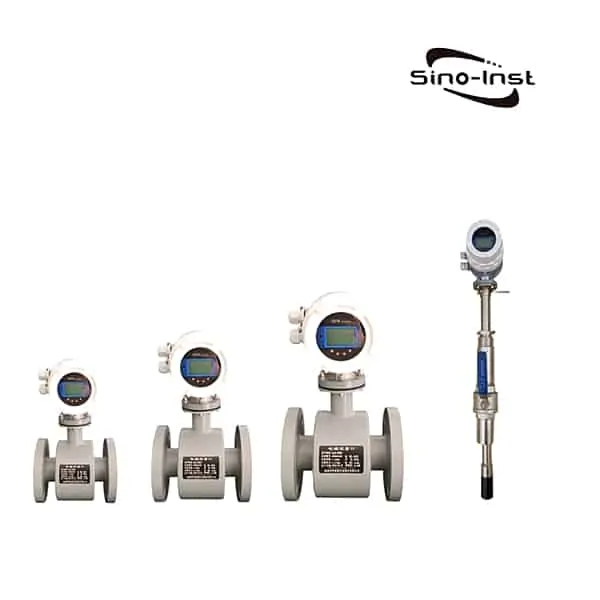
Magnetic Flow Meter
4-20mA/HART | DN10–DN2000 | ±0.5% accuracy
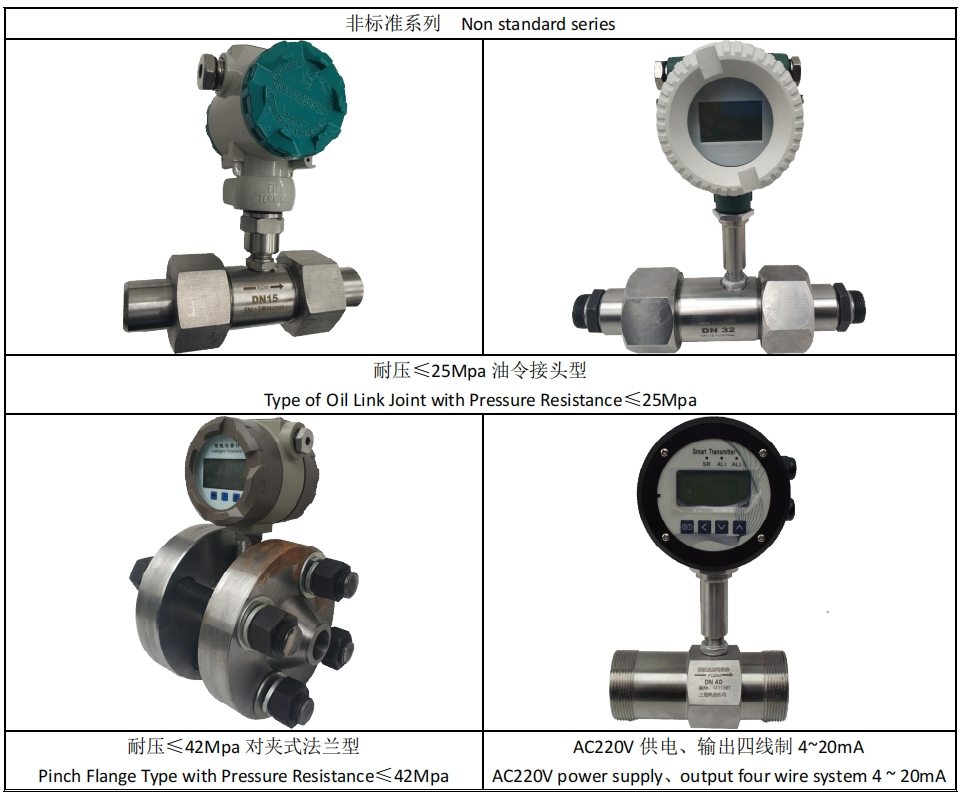
Turbine Flow Meter
Pulse output | DN4–DN200 | ±0.5–1% accuracy
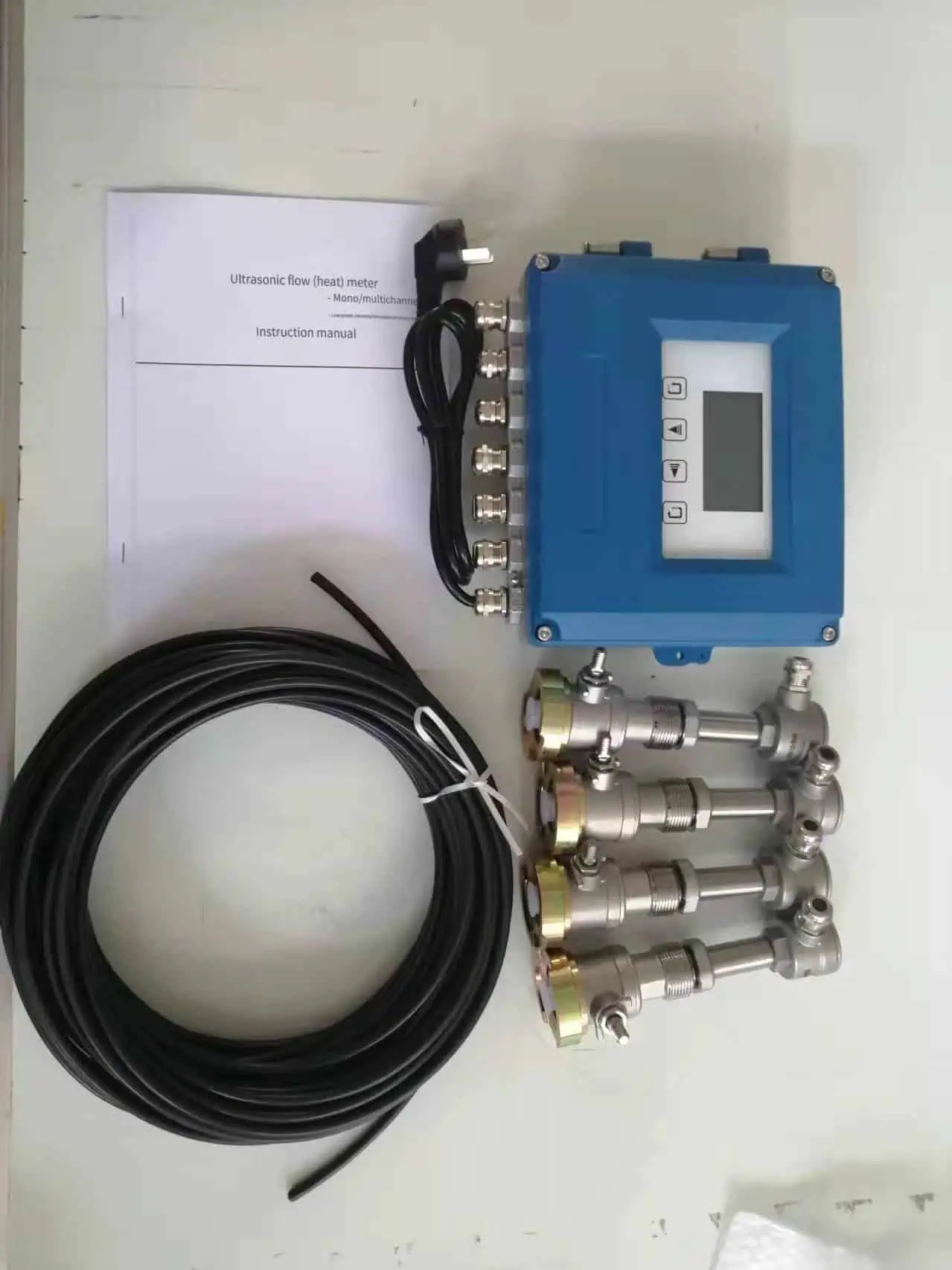
Ultrasonic Flow Meter
Clamp-on/Insertion | DN15–DN6000 | ±1% accuracy
FAQ
How often should a flow meter be calibrated?
It depends on the application. Custody transfer meters in oil and gas are typically proved monthly and lab-calibrated annually. Process control meters are calibrated once a year. Water utility meters every 1–2 years. Start with the manufacturer’s recommendation and adjust based on your drift history.
Can I calibrate a flow meter in the field?
Yes, using three main methods: clamp-on ultrasonic comparison (±1–2%), tank volume comparison (±1–3%), or an in-line prover (±0.02–0.05%). Field calibration is a verification, not a full primary calibration, but it is adequate for most process control applications.
What is the most accurate calibration method?
The gravimetric (weighing) method is the primary standard with uncertainty as low as ±0.02%. Pipe provers are close at ±0.02–0.05% and are the practical standard for custody transfer applications. Both require traceable reference equipment.
Does a magnetic flow meter need calibration?
Yes. Although mag meters have no moving parts and are considered low-maintenance, the electrode surfaces can foul, and the liner can degrade over time. Factory calibration is done on a gravimetric or volumetric test bench. Field verification can be done using the meter’s built-in diagnostic tools (coil test, empty pipe detection) or with a clamp-on reference meter.
What standards govern flow meter calibration?
Key standards include: ISO 4185 (gravimetric method for liquids), ISO 8316 (volumetric method), ISO 9300 (sonic nozzle for gas), API MPMS Chapter 4 (proving), and ASME MFC series. Your local metrology authority may have additional requirements. For flow meters using GPM units, the calibration report should include both GPM and metric equivalents.
What is a calibration certificate?
A calibration certificate is a formal document that records the results of a calibration. It includes the meter identification, test date, reference standard used (with traceability statement), test conditions (fluid, temperature, pressure), and the as-found and as-left readings at each test point. A valid certificate must be issued by an accredited lab or by a lab with demonstrated traceability to national standards.
Need a flow meter with a traceable calibration certificate? Sino-Inst provides factory calibration on all flow meters, with multi-point test data included. We also offer custom calibration at specific flow points matching your process conditions. Contact our engineering team for a quotation or technical consultation.
Request a Quote

Wu Peng, born in 1980, is a highly respected and accomplished male engineer with extensive experience in the field of automation. With over 20 years of industry experience, Wu has made significant contributions to both academia and engineering projects.
Throughout his career, Wu Peng has participated in numerous national and international engineering projects. Some of his most notable projects include the development of an intelligent control system for oil refineries, the design of a cutting-edge distributed control system for petrochemical plants, and the optimization of control algorithms for natural gas pipelines.