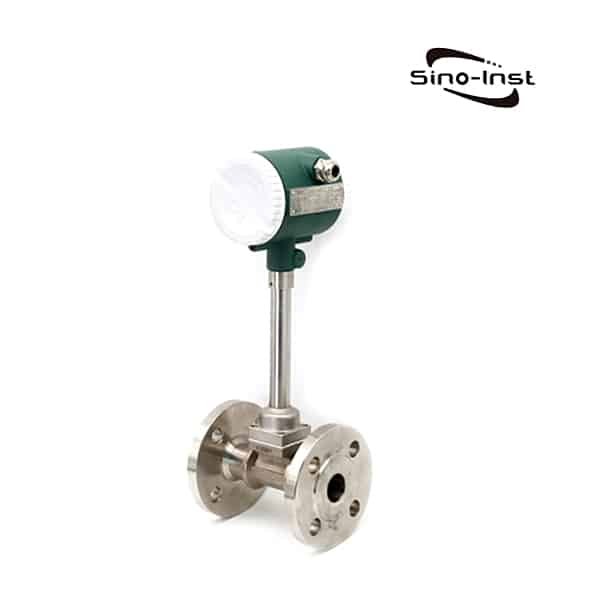
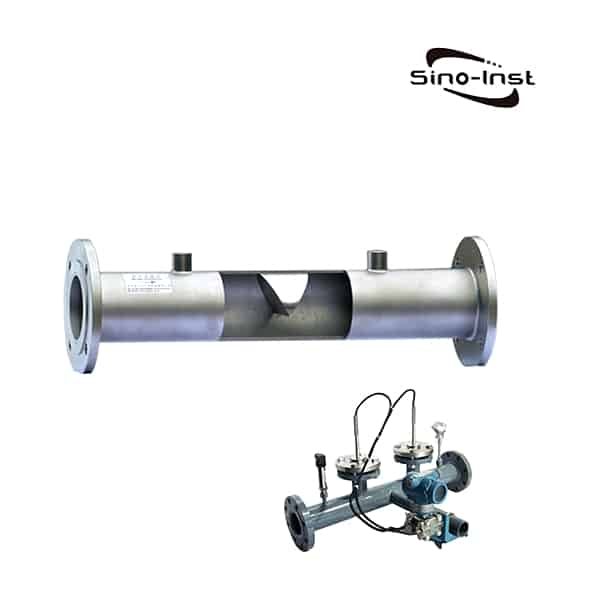
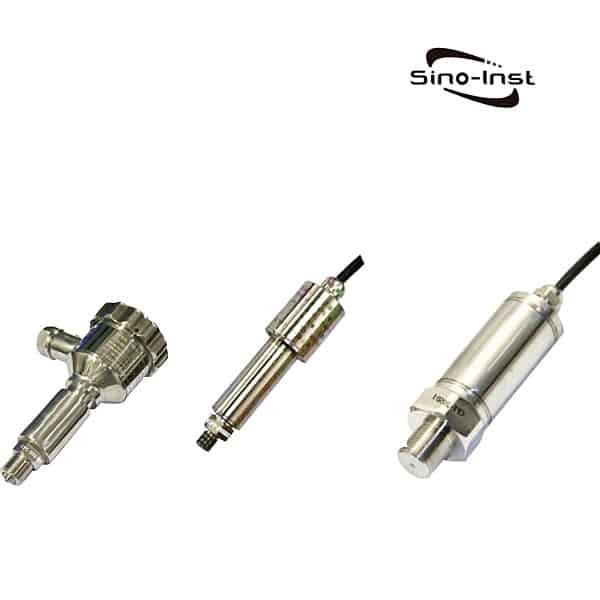
Flow Totalizer vs Flow Meter: Differences & Selection Guide

Updated: April 11, 2026

A flow totalizer and a flow meter serve different purposes, though the terms are often used interchangeably. A flow meter measures instantaneous flow rate—how fast fluid is moving right now. A flow totalizer accumulates that flow rate over time to give you a total volume. Many modern instruments combine both functions in one device, which is why the naming gets confusing. This guide clarifies the difference and helps you pick the right instrument.

Contents

What Is a Flow Totalizer?

A flow totalizer is a device that takes a flow rate signal—usually 4-20mA analog or pulse output from a flow sensor—and integrates it over time to display the cumulative volume that has passed through the pipe. Think of it as an odometer for fluid: it tells you the total gallons, liters, or cubic meters delivered, not the speed.

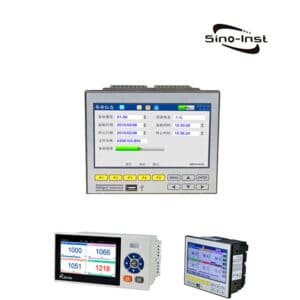
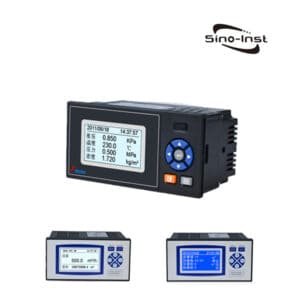
Flow totalizer meter panel showing flow rate and accumulated total

A standalone flow totalizer is typically a panel-mounted digital display unit. It receives a signal from a separate flow sensor (electromagnetic, ultrasonic, turbine, vortex, or other type) and performs the integration calculation internally. Most totalizers display both the instantaneous flow rate and the running total on the same screen.

Totalizers are common in batch processing, custody transfer, and water billing applications where the total volume matters more than the real-time flow rate. For details on how flow signals are generated and processed, see our guide on flow meter K-factor and pulse output.

What Is a Flow Meter?

A flow meter is the sensor that actually measures the flow rate of a fluid in a pipe. It produces an output signal—pulse, 4-20mA, or digital (RS485, HART)—proportional to the flow velocity or volume passing through it. The flow meter is the measurement device; the totalizer is the calculation and display device.

Common flow meter technologies include electromagnetic (for conductive liquids), ultrasonic (clamp-on or inline), turbine (for clean liquids and gases), vortex (for steam and gas), and differential pressure types like orifice plates and venturi tubes. Each technology suits different fluids, pipe sizes, and accuracy requirements.

What Is a Totalizing Flow Meter?

A totalizing flow meter combines the flow sensor and totalizer into a single instrument. The sensor measures flow rate, and the built-in electronics integrate the signal to display both instantaneous rate and cumulative total. Most modern flow meters include this totalization function as standard.

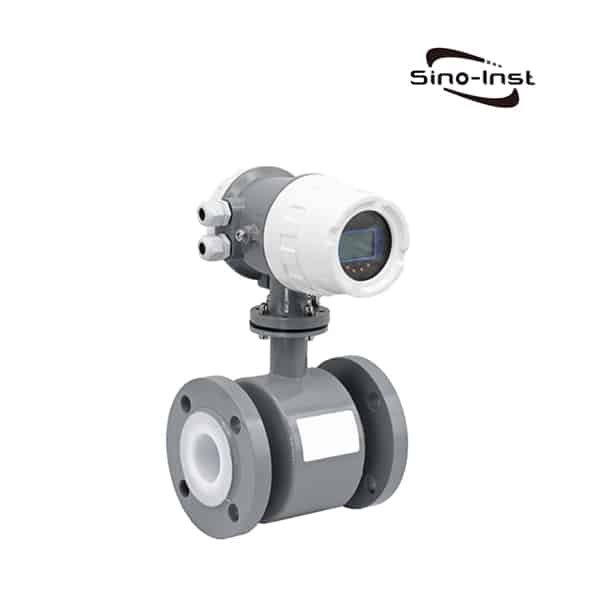
For example, an electromagnetic flow meter with an integral display typically shows GPM (or m³/h) as the live reading and total gallons (or m³) as the accumulated value. You do not need a separate totalizer box unless you want remote display, data logging, or batch control features that the flow meter’s built-in electronics do not support.

Flow Totalizer vs Flow Meter: Key Differences

FeatureFlow TotalizerFlow MeterTotalizing Flow Meter
What it doesIntegrates flow signal into cumulative volumeMeasures instantaneous flow rateMeasures flow rate + accumulates total
Has a sensor?No (receives signal from external sensor)Yes (is the sensor)Yes (sensor + calculator built in)
Typical outputDisplay, relay, 4-20mA retransmissionPulse, 4-20mA, digitalDisplay + pulse + 4-20mA + digital
InstallationPanel-mounted (control room)Inline or clamp-on (pipe)Inline or clamp-on (pipe)
Standalone?Needs a flow sensorNeeds a display/PLC to see totalsSelf-contained
CostLow ($100–500)Medium ($500–5000+)Medium ($500–5000+)

The bottom line: a flow totalizer is a calculator, a flow meter is a sensor, and a totalizing flow meter is both in one package. If your existing flow meter only outputs a 4-20mA or pulse signal and you need to see the running total on a local display, adding a standalone totalizer is the simplest solution.

Flow Totalizer Working Principle

A flow totalizer works by continuously sampling the flow rate signal and integrating it mathematically over time.

For pulse-output sensors: Each pulse represents a fixed volume (e.g., 1 pulse = 0.1 gallons). The totalizer simply counts pulses. Total volume = pulse count × volume per pulse. This is the most accurate totalization method because there is no analog-to-digital conversion error.

For 4-20mA analog sensors: The totalizer converts the current signal to a flow rate value using the configured range (e.g., 4mA = 0 GPM, 20mA = 500 GPM). It then samples this value at regular intervals (typically every 0.1–1 second), multiplies by the time interval, and adds the result to the running total. Total volume = Σ(flow rate × Δt).

Most totalizers also include alarm outputs (batch complete, high/low flow), a grand total that cannot be reset (for custody transfer), and a resettable batch total for day-to-day operations. Communication options like RS485/Modbus allow the total to be read by a PLC or SCADA system. For details on signal wiring between the flow meter and totalizer, see our transmitter wiring guide.

Applications: Water, Gas, and Steam

Water Totalization

Municipal water distribution, irrigation systems, and industrial water billing all rely on flow totalization. Electromagnetic or ultrasonic totalizing flow meters are the standard for water applications because they have no moving parts and maintain accuracy over years of continuous operation. A typical municipal water meter totalizes in cubic meters or gallons and reports to the utility’s billing system via a pulse or digital output.

Gas Totalization

Natural gas, compressed air, and industrial gas systems need totalization for billing and process control. Gas totalization adds complexity because gas volume changes with temperature and pressure. A gas totalizer must apply temperature and pressure compensation to convert the measured volume at operating conditions to a standard volume (e.g., standard cubic feet at 60°F and 14.73 psia). Turbine meters and vortex meters paired with a pressure transmitter and RTD are the standard approach.

Steam Totalization

Steam totalization typically measures mass flow (lb or kg) rather than volume because steam volume varies dramatically with pressure and temperature. Vortex flow meters with integral temperature/pressure compensation are the most common choice for steam totalization. The totalizer calculates mass by multiplying the measured volumetric flow by the steam density (looked up from steam tables based on measured T and P). For energy billing, the mass total is multiplied by the enthalpy to get BTU or kWh—essentially what a BTU meter does.

Flow Totalizers from Sino-Inst

Sino-Inst supplies standalone flow totalizer displays and complete totalizing flow meter systems for water, gas, and steam applications. All products include 4-20mA input, pulse input, RS485/Modbus communication, and batch control outputs.

Paperless Recorder R7100

R7100 universal-input paperless recorder with up to 16 channels on one LCD. Accepts thermocouple, RTD, 4-20mA and voltage signals with USB / Ethernet data export.

Flow Totalizer F3000X

F3000X flow totalizer displays, accumulates, alarms and transmits signals from any pulse or 4-20mA flow meter. Pairs with mag, vortex, turbine and DP meters for batch control and billing.

Temperature Recorder R7600

R7600 paperless temperature recorder / data logger with up to 16 isolated channels. Captures industrial RTD and thermocouple signals for heat treatment, HVAC and validation runs.

FAQ

What is the purpose of a flow totalizer?

A flow totalizer accumulates instantaneous flow rate readings over time to give you the total volume of fluid that has passed through the pipe. It is used for billing (water and gas utilities), batch control (chemical dosing, tank filling), inventory management (fuel depots), and regulatory reporting (wastewater discharge permits).

Can I add a totalizer to my existing flow meter?

Yes, if your flow meter has a 4-20mA or pulse output. Connect a standalone totalizer to the flow meter’s output terminals. Configure the totalizer with the flow range (for 4-20mA) or the K-factor (for pulse). The totalizer will then display both instantaneous flow and accumulated total without replacing the flow meter.

What is the difference between batch total and grand total?

The batch total (or resettable total) can be cleared to zero at any time—useful for tracking individual batches, shifts, or daily consumption. The grand total cannot be reset through the user interface and provides a permanent record of cumulative flow since installation. Custody transfer applications require a non-resettable grand total.

Do I need temperature and pressure compensation for gas totalization?

Yes. Gas volume changes significantly with temperature and pressure. Without compensation, the totalized volume will be inaccurate unless the gas is always at the exact reference conditions (usually 60°F and 14.73 psia). A compensated totalizer takes live temperature and pressure inputs and corrects the volume to standard conditions automatically.

Is a flow totalizer the same as a flow computer?

Not exactly. A basic flow totalizer integrates a single flow signal. A flow computer is a more advanced device that handles multiple inputs (flow, temperature, pressure, density), performs gas or steam compensation calculations per AGA or ISO standards, and stores audit-trail data. Flow computers are used in custody transfer and fiscal metering where regulatory compliance requires documented calculations.

Need help choosing the right totalization solution for your application? Whether you need a simple panel-mount totalizer or a complete totalizing flow meter system, our engineering team can help. Contact us with your pipe size, fluid type, and flow range for a recommendation.

Request a Quote

Please enable JavaScript in your browser to submit the form

What Is a BTU Meter? Types, Working Principle & Selection Guide

Updated: April 11, 2026

A BTU meter measures the thermal energy transferred in a heating or cooling system. It combines a flow sensor with a pair of temperature sensors and a calculator to determine how many BTUs (British Thermal Units) pass through a piping loop over time. HVAC engineers use BTU meters to bill tenants for actual energy consumption, verify chiller performance, and identify inefficiencies in district cooling or heating networks.

Contents

What Is a BTU?

A BTU (British Thermal Unit) is the amount of heat needed to raise the temperature of one pound of water by one degree Fahrenheit. In metric terms, 1 BTU equals approximately 1,055 joules or 0.293 watt-hours.

BTU is the standard unit for rating heating and cooling equipment capacity in North America. A residential air conditioner might be rated at 24,000 BTU/h (2 tons of cooling), while a large commercial chiller can deliver millions of BTU/h. Knowing the actual BTU consumption—not just the rated capacity—is what makes a BTU meter valuable.

What Is a BTU Meter?

A BTU meter (also called an energy meter or heat meter) is an instrument that calculates thermal energy transfer by measuring two things simultaneously: the flow rate of the heat-transfer fluid and the temperature difference between the supply and return lines.

Every BTU meter system has three core components:

  • Flow sensor — measures the volume of water passing through the pipe (electromagnetic, ultrasonic, or mechanical)
  • Temperature sensor pair — typically matched PT1000 RTDs installed on the supply and return lines
  • Calculator (integrator) — processes flow and temperature data to compute cumulative energy in BTU, kWh, MJ, or GJ

The calculator multiplies flow volume by the temperature difference (delta-T) and the specific heat of the fluid to produce the energy reading. This is the fundamental measurement behind every chilled water BTU metering application.

BTU Meter Working Principle

The BTU meter calculates thermal energy using this formula:

Q = V × ρ × Cp × ΔT

Where Q is heat energy (BTU), V is water volume (gallons), ρ is water density, Cp is specific heat capacity (1 BTU/lb·°F for water), and ΔT is the temperature difference between supply and return lines (°F).

In practice, the flow sensor sends a pulse or analog signal proportional to the flow rate. The two PT1000 sensors measure supply and return water temperatures simultaneously. The calculator samples these inputs every few seconds, computes the instantaneous thermal power (BTU/h), and integrates it over time to give the cumulative energy total.

Accuracy of the BTU reading depends on all three components. The flow sensor is typically the largest source of error. Electromagnetic and ultrasonic flow sensors achieve ±0.5–1% accuracy, while mechanical types are closer to ±2–3%. The matched PT1000 pair should have a combined error of less than ±0.1°C to keep the temperature measurement contribution small.

BTU Meter Calculation Example

Here is a practical calculation for a chilled water system:

Given: Flow rate = 500 GPM, supply temperature = 42°F, return temperature = 56°F.

Step 1: ΔT = 56°F − 42°F = 14°F

Step 2: Convert GPM to lb/min: 500 GPM × 8.34 lb/gal = 4,170 lb/min

Step 3: BTU/min = 4,170 × 14 × 1.0 = 58,380 BTU/min

Step 4: BTU/h = 58,380 × 60 = 3,502,800 BTU/h (about 292 tons of cooling)

This calculation is what the BTU meter’s integrator performs continuously. The meter accumulates these readings over hours, days, and months to show total energy consumption for billing or performance analysis.

BTU Meter Types

BTU meters are classified by the flow measurement technology used in the base meter.

Ultrasonic BTU Meters

Ultrasonic BTU meters use transit-time or Doppler techniques to measure flow velocity without any moving parts. Clamp-on versions mount externally on the pipe, making them ideal for retrofit installations. Inline versions offer higher accuracy (±0.5–1%). Ultrasonic meters work well with clean water and glycol mixtures. They have the longest service life—typically 10+ years without maintenance—because nothing contacts the flow stream in clamp-on designs.

Electromagnetic BTU Meters

Electromagnetic (mag) BTU meters apply Faraday’s law: a conductive fluid moving through a magnetic field generates a voltage proportional to its velocity. They offer excellent accuracy (±0.5%) and handle dirty or particle-laden water without performance degradation. Mag meters require a minimum fluid conductivity of about 5 μS/cm, which all water-based systems exceed. They are the preferred choice for chilled water and hot water loops in commercial HVAC. For more on how electromagnetic flow measurement works, see our GPM flow meter guide.

Mechanical BTU Meters

Mechanical meters use turbine wheels or impellers driven by the fluid. They are the lowest-cost option but have moving parts that wear over time. Typical accuracy is ±2–3%. Suitable for residential or small commercial systems where cost matters more than long-term precision. Expect to replace the flow cartridge every 5–6 years.

FeatureUltrasonicElectromagneticMechanical
Accuracy±0.5–1%±0.5%±2–3%
Moving partsNoneNoneYes (impeller)
MaintenanceVery lowLowPeriodic replacement
Pipe size rangeDN15–DN6000DN10–DN2000DN15–DN150
Dirty water toleranceLow (transit-time)HighLow
CostMedium–HighMediumLow
Typical lifespan10+ years10+ years5–6 years

BTU Meter for Chilled Water Systems

Chilled water systems are the most common application for BTU meters. In a typical district cooling setup, a central chiller plant produces chilled water at 40–45°F and distributes it to multiple buildings. Each building has a BTU meter on its chilled water loop to measure actual cooling energy consumed.

The flow sensor is installed on the return line (where flow is more stable). One PT1000 sensor goes on the supply line, the other on the return line. The delta-T in a well-operating chilled water system is typically 10–16°F. If the delta-T drops below 8°F, it usually signals a control valve problem or coil fouling—the BTU meter data helps diagnose this.

For sub-metering in multi-tenant buildings, the BTU meter enables fair cost allocation. Each tenant pays for their actual cooling consumption rather than a proportional share based on floor area. This alone can reduce energy waste by 15–25% because tenants have an incentive to control their usage. For a dedicated guide, see our page on BTU meters for chilled water.

Installation Guidelines

Proper installation is the single biggest factor affecting BTU meter accuracy. Here are the key points:

Flow sensor placement: Install on the return line in a straight pipe section. Maintain the manufacturer’s required upstream/downstream straight lengths (typically 10D/5D for mag meters, 15D/10D for ultrasonic). Avoid installing immediately after pumps, elbows, or partially closed valves.

Temperature sensors: Use matched PT1000 pairs from the same manufacturer. Install them in thermowells that are fully immersed in the flow. The supply sensor goes on the supply pipe, the return sensor on the return pipe—sounds obvious, but swapped sensors produce negative energy readings.

Wiring: Use shielded cable for temperature sensors to prevent electrical noise from affecting the small resistance signals. Keep sensor cables away from power cables and VFD outputs. A common field error is running PT1000 wires in the same conduit as 480V power—this introduces enough noise to cause 1–2°F measurement error.

Commissioning: After installation, verify that the flow direction arrow on the sensor matches the actual flow direction. Check that both temperature sensors read within 0.1°F of each other when the system is off (no flow, water at the same temperature). If the sensors disagree by more than 0.3°F, the BTU accuracy will suffer at low delta-T conditions.

BTU Meter vs Flow Meter

A flow meter measures volume or mass flow rate—gallons per minute, cubic meters per hour. A BTU meter uses a flow meter as one of its components but adds temperature measurement and energy calculation to produce a thermal energy reading.

ParameterBTU MeterFlow Meter
What it measuresThermal energy (BTU, kWh, MJ)Flow rate (GPM, m³/h) or total volume
ComponentsFlow sensor + 2 temp sensors + calculatorFlow sensor only
OutputEnergy consumption over timeInstantaneous flow rate and totalized volume
Typical applicationHVAC energy billing, chiller monitoringWater distribution, process control
CostHigher (more components)Lower (single device)

If you only need to know how much water is flowing, a flow meter or flow totalizer is sufficient. If you need to know how much heating or cooling energy that water is carrying, you need a BTU meter.

BTU Meters from Sino-Inst

Sino-Inst supplies complete BTU metering systems for HVAC, district energy, and industrial heating/cooling applications. Each system includes a calibrated flow sensor, matched PT1000 temperature sensor pair, and an energy calculator with RS485/Modbus output.

Ultrasonic BTU Meter

Transit-time and Doppler ultrasonic flow meters for clean liquids and dirty slurries. Clamp-on, insertion and in-line versions — pick by fluid type, pipe size and accuracy target.

Electromagnetic BTU Meter

Industrial electronic flow meters for digital fluid flow measurement. Compare electromagnetic, ultrasonic, vortex and turbine types to pick the right one for your pipe, fluid and accuracy budget.

BTU Measurement System

Transit-time and Doppler ultrasonic flow meters for clean liquids and dirty slurries. Clamp-on, insertion and in-line versions — pick by fluid type, pipe size and accuracy target.

FAQ

What is the difference between a BTU meter and an energy meter?

They are the same thing. “BTU meter” is the common term in North America where energy is measured in BTU. “Energy meter” or “heat meter” is more common internationally where energy is measured in kWh, MJ, or GJ. The device and working principle are identical—only the display unit differs.

Why use PT1000 instead of PT100 for BTU meters?

PT1000 has a base resistance of 1,000 ohms at 0°C compared to 100 ohms for PT100. The higher resistance means the sensor signal is less affected by lead wire resistance, which allows two-wire connections without significant error. For BTU metering, where the delta-T might be only 10–15°F, even small measurement errors are significant. PT1000 gives better accuracy with simpler wiring.

Can I use a BTU meter for steam systems?

Standard BTU meters are designed for closed-loop water systems where the same water flows through supply and return lines. Steam systems involve phase change (water to steam and back), which changes the calculation significantly. For steam energy metering, you need a differential pressure flow meter (vortex or orifice) with temperature/pressure compensation and a steam-specific energy calculator.

How often should a BTU meter be calibrated?

Most standards and building codes require recalibration every 3–5 years. Electromagnetic and ultrasonic flow sensors hold their calibration well because they have no moving parts. The temperature sensor pair should be checked annually by comparing both sensors at the same temperature. If the pair drifts more than 0.2°F apart, replace them.

What accuracy class should I specify for tenant billing?

For commercial tenant billing, specify a BTU meter that meets EN 1434 Class 2 or better (overall system accuracy of ±2% at the design flow rate). Most electromagnetic and ultrasonic meters exceed this easily. Mechanical meters may only meet Class 3, which is acceptable for monitoring but marginal for billing purposes.

What is the minimum delta-T for accurate BTU measurement?

Most BTU meter calculators need a minimum delta-T of 3°F (1.5°C) to produce a reliable reading. Below this threshold, the temperature measurement error becomes a large percentage of the actual difference, and the energy calculation becomes unreliable. In chilled water systems, design delta-T is typically 10–16°F, so this is rarely an issue during normal operation.

Need help selecting the right BTU metering system for your HVAC project? Our engineering team can help you choose the correct flow meter technology, pipe size, and sensor configuration. We provide complete systems with flow sensor, matched PT1000 pair, and energy calculator—ready to install. Contact us for a technical consultation or quotation.

Request a Quote

Please enable JavaScript in your browser to submit the form

What Is a Pressure Sensor? Types, Principles & Selection Guide

Updated: April 10, 2026

A pressure sensor converts mechanical pressure into an electrical signal. It is the sensing element inside every pressure transmitter, transducer, and switch used in industrial process control. The electrical output—typically a change in resistance, capacitance, or voltage—is proportional to the applied pressure. Pressure sensors measure gauge, absolute, differential, or vacuum pressure depending on the reference. This guide covers the main sensing technologies, how each works, key specifications, and how to select the right type for your application.

Contents

What Is a Pressure Sensor?

A pressure sensor is a device that detects pressure applied to its sensing element and outputs a corresponding electrical signal. The sensing element is usually a thin diaphragm—made of silicon, stainless steel, or ceramic—that deflects when pressure acts on it. That deflection changes a physical property (resistance, capacitance, charge, or frequency) which is measured by the sensor’s internal circuitry.

Pressure sensors are the core component in pressure transmitters and transducers. Without the sensor, there is no measurement. The transmitter adds signal conditioning, temperature compensation, and a standardized output (4-20mA, 0-10V, or digital protocol) on top of the raw sensor signal.

Typical accuracy ranges from ±0.5% to ±0.04% of full scale depending on the technology and price point. Operating temperatures range from -40°C to +125°C for standard silicon sensors, with special designs reaching 300°C or higher for high-temperature applications.

4 Types of Pressure Measurement

The “type” of pressure a sensor measures depends on what reference it uses:

TypeReferenceTypical Application
Gauge pressureLocal atmospheric pressureProcess piping, tank pressure, pump discharge
Absolute pressurePerfect vacuum (0 Pa)Barometric, altitude, vacuum systems
Differential pressureAnother pressure inputFilter monitoring, flow measurement, level in pressurized tanks
Vacuum / compoundAtmospheric (negative range)Vacuum pumps, HVAC, packaging machines

Gauge pressure is the most common in industrial applications. When an engineer says “the line pressure is 10 bar,” they almost always mean gauge pressure—10 bar above atmospheric. For more on how static and dynamic pressures interact, see our guide on static pressure vs dynamic pressure.

5 Pressure Sensing Technologies

1. Piezoresistive (Diffused Silicon)

Four resistors are diffused directly into a silicon diaphragm and connected in a Wheatstone bridge. When pressure deflects the diaphragm, the resistors change value due to the piezoresistive effect, producing a millivolt output proportional to pressure. This is the most widely used technology in industrial pressure sensors.

Advantages: low cost, high volume production (MEMS), good linearity, fast response. Limitations: temperature sensitivity requires active compensation; not suitable for highly corrosive media without isolation diaphragm. Standard accuracy: ±0.25–0.5% FS.

2. Capacitive

A metal or ceramic diaphragm forms one plate of a capacitor. A fixed plate sits behind it. Pressure deflects the diaphragm, changing the gap and therefore the capacitance. The electronics measure this capacitance change with high resolution.

Advantages: excellent long-term stability, low power consumption, high overpressure tolerance (up to 100x rated pressure), very low temperature drift. This is the technology used in premium transmitters like the Rosemount 3051 and Yokogawa EJA series. Standard accuracy: ±0.04–0.1% FS.

3. Strain Gauge (Bonded Foil)

Metal foil strain gauges are bonded to a metal diaphragm or beam. Pressure deflects the structure, straining the gauges and changing their resistance. The resistance change is measured with a Wheatstone bridge. This technology works well for high-pressure applications (up to 10,000 bar) because thick metal diaphragms can handle extreme pressures.

Advantages: wide pressure range, robust construction, works at high temperatures. Limitations: lower sensitivity than piezoresistive, requires careful bonding. Standard accuracy: ±0.1–0.25% FS. For details on how pressure transmitters use these sensors, see our guide on how pressure transmitters work.

4. Piezoelectric

Piezoelectric crystals (quartz, PZT) generate an electric charge when mechanically stressed. The charge is proportional to the applied pressure. Unlike the other technologies, piezoelectric sensors only measure dynamic (changing) pressure—they cannot hold a static reading because the charge leaks away.

Advantages: extremely fast response (microseconds), wide frequency bandwidth, no external power needed for the sensing element. Applications: engine combustion analysis, blast pressure measurement, acoustic sensors. Not used for steady-state process control.

5. Resonant (Vibrating Element)

A vibrating wire, beam, or cylinder changes its resonant frequency when stressed by pressure. The frequency shift is measured digitally with very high resolution. This technology offers the best long-term stability and accuracy of any pressure sensing method.

Advantages: frequency output is inherently digital and noise-immune, excellent stability (±0.01% per year), high accuracy (±0.01–0.04% FS). Limitations: expensive, slower response than piezoresistive. Used in fiscal metering, meteorological stations, and calibration reference instruments.

TechnologyAccuracyBest ForLimitation
Piezoresistive±0.25–0.5%General industrial, OEM, HVACTemperature drift
Capacitive±0.04–0.1%Process control, custody transferHigher cost
Strain gauge±0.1–0.25%High pressure, hydraulic systemsLower sensitivity
Piezoelectric±1%Dynamic pressure, combustionNo static measurement
Resonant±0.01–0.04%Fiscal metering, calibrationExpensive, slow response

Sensor vs. Transducer vs. Transmitter

These three terms are often used interchangeably, but they describe different levels of signal processing:

TermWhat It DoesOutput SignalTypical Use
Pressure sensorConverts pressure to a raw electrical changemV (millivolts), pC (picocoulombs)OEM integration, PCB-level
Pressure transducerSensor + basic signal conditioning0–5V, 0–10V, mV/VTest & measurement, lab instruments
Pressure transmitterSensor + full conditioning + standardized output4-20mA, HART, Profibus, ModbusIndustrial process control, DCS/PLC

In practice: a pressure sensor is the raw MEMS chip. A transducer packages it with amplification and outputs a voltage. A transmitter adds temperature compensation, linearization, and a 4-20mA or digital output that can travel hundreds of meters to a control room. When specifying equipment for industrial applications, you almost always want a transmitter. For wiring details, see our pressure transducer wiring guide.

Key Specifications to Consider

When selecting a pressure sensor, these are the specifications that matter most:

  • Pressure range: Select a range where your normal operating pressure falls at 60–75% of the sensor’s full scale. This gives headroom for pressure spikes without sacrificing resolution.
  • Accuracy: Expressed as % of full scale (FS) or % of reading. A ±0.1% FS sensor on a 0–100 bar range has ±0.1 bar error at any point. For custody transfer, look for ±0.04–0.075% FS.
  • Temperature range: Both operating temperature (media touching the sensor) and ambient temperature (electronics). Silicon sensors typically handle -40 to +85°C. High-temperature versions with oil-filled capillary or cooling fins reach 300°C+.
  • Output signal: 4-20mA is the industrial standard for analog. HART adds digital communication over the same wires. For digital-only, Profibus PA and Foundation Fieldbus are common.
  • Media compatibility: The wetted parts (diaphragm, O-ring, process connection) must be compatible with the process fluid. 316L stainless steel handles most applications. Hastelloy, Monel, or tantalum for aggressive chemicals.
  • Process connection: 1/4″ or 1/2″ NPT, G1/2, M20x1.5, or flange-mounted. Match the connection to your existing pipe fittings.
  • Overpressure rating: The maximum pressure the sensor can withstand without permanent damage. Capacitive sensors typically tolerate 100x overpressure; piezoresistive typically 2–3x.

Common Industrial Applications

Pressure sensors are used across every process industry. Here are the most common application categories:

  • Process control: Monitoring and controlling pressure in reactors, distillation columns, heat exchangers, and pipeline systems. The 4-20mA signal feeds directly into a DCS or PLC for closed-loop control.
  • Flow measurement: Differential pressure sensors across an orifice plate, venturi, or flow nozzle measure flow rate. This is still the most common industrial flow measurement method. For GPM-based flow measurement, see our guide on flow meters with GPM units.
  • Level measurement: A pressure sensor at the bottom of a tank measures hydrostatic head, which is proportional to liquid level. Works for open and pressurized tanks (using a differential pressure sensor for the latter).
  • Hydraulic and pneumatic systems: Monitoring pump discharge, accumulator charge, cylinder force, and system pressure in mobile equipment, presses, and injection molding machines.
  • HVAC and building automation: Duct static pressure, chilled water system pressure, filter differential pressure, and refrigerant pressure in chillers.
  • Safety systems: Pressure relief monitoring, burst disc detection, and SIL-rated pressure switches for emergency shutdown systems per IEC 61511.

Pressure Sensors from Sino-Inst

Sino-Inst manufactures over 20 types of pressure sensors and transmitters covering gauge, absolute, differential, and high-pressure applications. All units ship with factory calibration certificates.

Gauge Pressure Sensor

Water pressure sensors for tank, pipe and groundwater measurement. 4-20mA / RS485 output with IP68 sealed housing for drinking water, firefighting and irrigation systems.

Differential Pressure Sensor

Budget-friendly DP sensor for HVAC, filter status and airflow monitoring. Compact diaphragm design keeps unit price low without giving up 0.5% accuracy or 4-20mA output.

Pressure Transmitter (4-20mA)

HH3151 HART smart pressure transmitter with remote zero/span, digital diagnostics and 0.075% accuracy. Drop-in upgrade for plants running HART multiplexers or asset-management systems.

FAQ

What is the difference between a pressure sensor and a pressure transmitter?

A pressure sensor is the raw sensing element that converts pressure into a small electrical change (millivolts). A pressure transmitter packages the sensor with signal conditioning, temperature compensation, and a standardized industrial output (4-20mA, HART, Modbus). For process control, you need a transmitter.

How long does a pressure sensor last?

In normal industrial service, a quality pressure sensor lasts 10–20 years. Silicon MEMS sensors have no moving parts and minimal wear. The main failure modes are diaphragm corrosion (wrong material selection), overpressure damage, and electronics degradation from temperature cycling. Regular calibration checks catch drift before it becomes a problem.

Which pressure sensor technology is most accurate?

Resonant (vibrating element) sensors achieve the best accuracy at ±0.01–0.04% FS, but they are expensive. Capacitive sensors offer ±0.04–0.1% FS at a more reasonable price and are the standard choice for high-accuracy process applications. For general industrial use, piezoresistive sensors at ±0.25–0.5% FS provide the best cost-performance ratio.

Can a pressure sensor measure vacuum?

Yes. Absolute pressure sensors measure from 0 Pa (vacuum) upward. Compound pressure sensors (also called vacuum/pressure sensors) measure both positive and negative gauge pressure in a single range, for example -1 to +10 bar. For deep vacuum applications below 1 mbar, specialized capacitance manometers or Pirani gauges are used.

How do I choose the right pressure range?

Select a sensor where your normal operating pressure is 60–75% of the rated full scale. This gives enough headroom for pressure spikes without sacrificing measurement resolution. For example, if your process runs at 8 bar with occasional surges to 12 bar, a 0–16 bar sensor is a good fit. Never operate a sensor continuously above 90% of its rated range.

What is the temperature effect on pressure sensor accuracy?

Temperature changes affect both the zero point and the span of a pressure sensor. This effect is specified as a temperature coefficient, typically in %FS per 10°C. A good industrial transmitter has a total temperature effect of less than ±0.15% FS over a 10–50°C range after compensation. If your process temperature varies widely, look for a sensor with active digital temperature compensation or use a remote diaphragm seal to keep the electronics at stable ambient temperature.

Looking for a pressure sensor or transmitter for your application? Sino-Inst offers gauge, absolute, differential, and high-pressure models with customizable ranges and outputs. Our engineers can help you select the right technology, material, and connection for your specific process conditions. Contact us for a technical consultation or quotation.

Request a Quote

Please enable JavaScript in your browser to submit the form

How to Calibrate a Flow Meter: 5 Methods & Step-by-Step Guide

Updated: April 10, 2026

Flow meter calibration is the process of comparing a meter’s output against a traceable reference standard and adjusting it to minimize measurement error. Every flow meter drifts over time due to wear, fouling, or process changes. Without regular calibration, a 1% error on a custody transfer meter handling 10,000 barrels per day means roughly 100 barrels of unaccounted product. This guide covers the main calibration methods, step-by-step procedures, recommended intervals, and field calibration techniques that work without removing the meter from the line.

Contents

What Is Flow Meter Calibration?

Flow meter calibration means running a known quantity of fluid through the meter and comparing its reading to the actual value. The “known quantity” comes from a reference standard—a gravimetric system, volumetric prover, or master meter—that is traceable to national standards (NIST in the US, PTB in Germany, NIM in China).

The output of calibration is a set of correction factors or K-factors at multiple flow points. These factors tell you exactly how much the meter deviates from true flow at each point across its range. For meters with electronic transmitters, the correction is often programmed directly into the device. For more on K-factors and how they work, see our guide on flow meter K-factor calculation.

Why Calibrate a Flow Meter?

There are four practical reasons to keep flow meters calibrated:

  • Custody transfer accuracy. When fluid changes ownership—oil pipelines, natural gas sales, water billing—the meter reading directly translates to money. API and AGA standards require regular proving.
  • Process control reliability. Batch dosing, chemical blending, and boiler feedwater control all depend on accurate flow readings. A drifted meter throws off the entire control loop.
  • Regulatory compliance. EPA discharge permits, pharmaceutical GMP requirements, and food safety regulations mandate traceable flow measurement with documented calibration records.
  • Troubleshooting baseline. A recent calibration certificate gives you a known reference point. When process issues arise, you can rule out the flow meter as the source of error.

The cost of calibration is small compared to the cost of measurement error. A 2% error on a custody transfer meter processing $1 million in product per month means $20,000 in potential loss or overcharge.

5 Flow Meter Calibration Methods

1. Gravimetric (Weighing) Method

Fluid flows through the meter into a weigh tank on a precision scale. After a timed collection, you divide the collected mass by fluid density to get volume, then compare against the meter reading. This is the primary standard method and achieves uncertainty as low as ±0.02%. National metrology labs use this as their reference.

Limitation: requires stopping and draining the tank between runs. Not practical for large flow rates above about 500 m³/h.

2. Volumetric (Standing Start-Stop) Method

Similar to the gravimetric method, but uses a calibrated collection vessel instead of a scale. Fluid is diverted into the vessel using a fast-acting valve. You read the volume from a calibrated sight glass or level gauge. Achievable uncertainty: ±0.1–0.2%.

This is the most common lab method for water flow meters. Simple to set up but limited to flow rates where the collection time is practical (typically 30 seconds to 5 minutes per run).

3. Pipe Prover (Displacement) Method

A precision sphere or piston travels through a calibrated section of pipe. As the displacer sweeps a known volume between two detector switches, the meter pulses are counted. The ratio of counted pulses to known volume gives the meter factor. Provers achieve ±0.02–0.05% uncertainty.

This is the standard method for custody transfer meters in oil and gas per API MPMS Chapter 4. Bidirectional provers (ball travels both ways) average out timing errors. Compact provers use a piston in a smaller package. Understanding the relationship between flow rate and pressure helps when sizing prover systems.

4. Master Meter Comparison

A pre-calibrated reference meter (master meter) is installed in series with the meter under test. Both meters see the same flow. The master meter reading serves as the reference. Typical uncertainty: ±0.25–0.5%, depending on the master meter’s own calibration.

This method is quick and works well for field verification. The master meter must be the same technology or better than the test meter, and its calibration must be current and traceable.

5. Sonic Nozzle (Critical Flow) Method

Used for gas flow meter calibration. When the pressure ratio across a converging nozzle reaches a critical value (about 0.528 for air), the gas velocity at the throat reaches sonic speed. At this condition, mass flow depends only on upstream pressure and temperature—downstream conditions do not matter. This gives a stable, repeatable reference flow. Uncertainty: ±0.2–0.5%.

Sonic nozzle arrays can be combined in parallel to cover wide flow ranges. This is the standard method in gas meter calibration labs per ISO 9300.

MethodMediumUncertaintyBest For
GravimetricLiquid±0.02%Primary standard, lab calibration
VolumetricLiquid±0.1–0.2%Water meter calibration labs
Pipe ProverLiquid±0.02–0.05%Custody transfer (oil & gas)
Master MeterLiquid/Gas±0.25–0.5%Field verification, quick checks
Sonic NozzleGas±0.2–0.5%Gas meter calibration labs

Step-by-Step Calibration Procedure

This general procedure applies to most flow meter types in a lab or shop setting. Adjust specifics for your meter technology and reference standard.

  1. Prepare the test fluid. Use clean, degassed water (for liquid meters) or dry, filtered air/nitrogen (for gas meters). Record the fluid temperature and pressure—you will need these for density correction.
  2. Install the meter. Follow the manufacturer’s recommended upstream/downstream straight pipe lengths. For most meters, this means 10D upstream and 5D downstream minimum. See our straight pipe requirements guide for details.
  3. Stabilize flow. Run the system at the target flow rate for at least 2–5 minutes before collecting data. Wait until the meter reading is stable and any air pockets have cleared.
  4. Collect data at multiple points. Test at minimum 5 flow rates across the meter’s range: typically 10%, 25%, 50%, 75%, and 100% of maximum flow. At each point, take at least 3 repeat measurements.
  5. Calculate error. At each flow point: Error (%) = [(Meter Reading − Reference Value) / Reference Value] × 100. Record all values.
  6. Adjust if needed. If errors exceed the meter’s specified accuracy, adjust the K-factor, zero, span, or linearization table per the manufacturer’s procedure.
  7. Repeat verification. After adjustment, re-run the calibration at all test points to confirm the meter now reads within specification.
  8. Document results. Issue a calibration certificate showing: meter serial number, test date, reference standard used (with its own calibration traceability), test conditions, as-found and as-left errors at each point.

Calibration Intervals by Application

There is no universal calibration interval. The right schedule depends on the application, fluid conditions, and how much measurement drift your process can tolerate:

ApplicationTypical IntervalDriving Standard
Custody transfer (oil & gas)Monthly proving, annual lab calAPI MPMS Ch. 4, 5, 12
Natural gas fiscal meteringEvery 6–12 monthsAGA Report No. 3, 7, 9
Water utility billingEvery 1–2 yearsAWWA C700 series
Pharmaceutical processEvery 6–12 monthsFDA 21 CFR Part 211
General process controlAnnuallyISO 9001 / plant SOP
HVAC energy meteringEvery 2–3 yearsASHRAE, local codes

Start with the manufacturer’s recommendation, then adjust based on your own drift history. If a meter consistently passes calibration with minimal error, you can extend the interval. If it frequently drifts out of spec, shorten it or investigate root causes like fouling or pipe vibration.

Field Calibration Without Removing the Meter

Removing a flow meter from the line for lab calibration costs downtime and labor. These field methods let you verify or adjust a meter in place:

Clamp-On Ultrasonic Comparison

A portable clamp-on ultrasonic flow meter is temporarily mounted on the pipe next to the installed meter. Both meters read the same flow simultaneously. The clamp-on meter serves as a transfer reference. This method works best when the clamp-on meter has been recently lab-calibrated and the pipe conditions (wall thickness, lining) are well characterized. Achievable field uncertainty: ±1–2%.

Tank Volume Comparison

Run the flow meter and measure the resulting level change in a tank of known dimensions. Multiply the level change by the tank cross-section area to get volume. Compare this to the meter’s totalized reading. Water utilities frequently use clear water reservoir volumes for this check. Uncertainty depends on level measurement accuracy—typically ±1–3%.

In-Line Prover

For custody transfer applications, a permanently installed prover loop allows proving without removing the meter. The prover sphere or piston sweeps a known volume while the meter counts pulses. This is the gold standard for field calibration in oil and gas. For more on flow meter installation requirements that affect accuracy, see our straight length requirements guide.

Calibration vs. Verification

These two terms are often confused. They are different processes with different outcomes:

AspectCalibrationVerification
PurposeDetermine and correct measurement errorConfirm the meter still meets its specification
OutputCalibration certificate with as-found/as-left dataPass/fail statement
AdjustmentYes—meter is adjusted if neededNo—meter is tested only, not adjusted
TraceabilityRequired (NIST, PTB, NIM, etc.)Recommended but not always required
When to useInitial commissioning, after repair, scheduled intervalsPeriodic checks between full calibrations

In practice, many organizations run a verification at 6-month intervals and a full calibration annually. If the verification shows the meter has drifted beyond a warning threshold (e.g., 50% of the allowable error), they pull it for early calibration.

Flow Meters from Sino-Inst

Sino-Inst supplies flow meters with factory calibration certificates traceable to national standards. Each meter ships with a multi-point calibration report covering 5+ flow rates across the operating range.

Magnetic Flow Meter

Electromagnetic (EMF) flow meter for conductive liquids — water, slurry, chemicals, effluent. No moving parts, zero pressure drop, DN3-DN3000 range; the gold standard for wastewater.

Turbine Flow Meter

Turbine-type volumetric flow meter for clean liquids and gases. Proven pulse-output technology used across LPG, hydrocarbons, water and compressed-air billing applications.

Ultrasonic Flow Meter

Transit-time and Doppler ultrasonic flow meters for clean liquids and dirty slurries. Clamp-on, insertion and in-line versions — pick by fluid type, pipe size and accuracy target.

FAQ

How often should a flow meter be calibrated?

It depends on the application. Custody transfer meters in oil and gas are typically proved monthly and lab-calibrated annually. Process control meters are calibrated once a year. Water utility meters every 1–2 years. Start with the manufacturer’s recommendation and adjust based on your drift history.

Can I calibrate a flow meter in the field?

Yes, using three main methods: clamp-on ultrasonic comparison (±1–2%), tank volume comparison (±1–3%), or an in-line prover (±0.02–0.05%). Field calibration is a verification, not a full primary calibration, but it is adequate for most process control applications.

What is the most accurate calibration method?

The gravimetric (weighing) method is the primary standard with uncertainty as low as ±0.02%. Pipe provers are close at ±0.02–0.05% and are the practical standard for custody transfer applications. Both require traceable reference equipment.

Does a magnetic flow meter need calibration?

Yes. Although mag meters have no moving parts and are considered low-maintenance, the electrode surfaces can foul, and the liner can degrade over time. Factory calibration is done on a gravimetric or volumetric test bench. Field verification can be done using the meter’s built-in diagnostic tools (coil test, empty pipe detection) or with a clamp-on reference meter.

What standards govern flow meter calibration?

Key standards include: ISO 4185 (gravimetric method for liquids), ISO 8316 (volumetric method), ISO 9300 (sonic nozzle for gas), API MPMS Chapter 4 (proving), and ASME MFC series. Your local metrology authority may have additional requirements. For flow meters using GPM units, the calibration report should include both GPM and metric equivalents.

What is a calibration certificate?

A calibration certificate is a formal document that records the results of a calibration. It includes the meter identification, test date, reference standard used (with traceability statement), test conditions (fluid, temperature, pressure), and the as-found and as-left readings at each test point. A valid certificate must be issued by an accredited lab or by a lab with demonstrated traceability to national standards.

Need a flow meter with a traceable calibration certificate? Sino-Inst provides factory calibration on all flow meters, with multi-point test data included. We also offer custom calibration at specific flow points matching your process conditions. Contact our engineering team for a quotation or technical consultation.

Request a Quote

Please enable JavaScript in your browser to submit the form

Class 1 Div 1 vs Div 2: NEC Hazardous Location Guide

Updated: April 10, 2026

Class 1 Div 1 and Class 1 Div 2 are two NEC hazardous location classifications that define how likely flammable gases or vapors are to be present. The distinction matters because it determines what type of electrical equipment you can install. Div 1 means ignitable concentrations exist under normal conditions. Div 2 means they only appear during abnormal events like leaks or equipment failure. Get the classification wrong, and you risk either an explosion or overspending on equipment rated far beyond what the area requires.

Contents

What Is a Class 1 Hazardous Location?

The NEC (NFPA 70) Article 500 defines Class 1 locations as areas where flammable gases, vapors, or liquids are present or may be present in the air in sufficient quantities to produce ignitable mixtures.

Class 1 covers the broadest range of industrial hazardous environments. Refineries, chemical plants, fuel loading docks, paint spray booths, and gas pipeline facilities all fall under Class 1. The key factor is the presence of flammable gases or vapors—not combustible dusts (that is Class 2) or fibers (Class 3).

Within Class 1, the NEC further divides locations into Division 1 and Division 2 based on the probability and frequency of the hazardous atmosphere. This division directly affects equipment selection, installation cost, and maintenance requirements.

Class 1 Division 1: Definition and Requirements

Per NEC Article 500.5(B)(1), a Class 1 Division 1 location is an area where one or more of these conditions exist:

  • Ignitable concentrations of flammable gases or vapors can exist under normal operating conditions.
  • Ignitable concentrations may exist frequently because of repair or maintenance operations or because of leakage.
  • Breakdown or faulty operation of equipment or processes might simultaneously release ignitable concentrations and cause electrical equipment failure that serves as an ignition source.

In practical terms: the inside of a fuel storage tank vapor space, the area around an open chemical reactor, or the immediate zone around a gasoline dispenser nozzle are all Div 1 locations. The hazardous atmosphere is expected to be there during normal operations.

Equipment installed in Div 1 must use the most stringent protection methods: explosion-proof enclosures (Ex d), intrinsic safety (Ex i), or purged/pressurized systems (Ex p). There is no room for compromise—a single spark can reach an ignitable mixture at any time.

Class 1 Division 2: Definition and Requirements

Per NEC Article 500.5(B)(2), a Class 1 Division 2 location is an area where:

  • Volatile flammable liquids or gases are handled, processed, or used, but are normally confined within closed containers or systems and can only escape through accidental rupture, breakdown, or abnormal operation.
  • Ignitable concentrations are normally prevented by positive mechanical ventilation, and the area might become hazardous only through failure or abnormal operation of the ventilation equipment.
  • The area is adjacent to a Class 1 Division 1 location, and ignitable concentrations might occasionally migrate into it.

Think of it this way: a properly sealed pump room with ventilation where flammable gas only escapes if a gasket fails. Or a laboratory where solvents are stored in sealed containers and only exposed briefly during use. Under normal conditions, the atmosphere is safe. The hazard only appears when something goes wrong.

Div 2 allows less expensive protection methods such as non-incendive equipment (Ex nA), restricted breathing enclosures, or hermetically sealed devices. The lower probability of a hazardous atmosphere means you do not need full explosion-proof housings for every piece of equipment—though you still need certified gear. For more on how pressure transmitters handle hazardous area ratings, see our technical guide.

Class 1 Div 1 vs Div 2: Key Differences

The table below summarizes the main differences between Division 1 and Division 2 classifications:

CriteriaClass 1 Division 1Class 1 Division 2
Hazardous atmosphere presentDuring normal operationsOnly during abnormal conditions
Probability of ignitable mixtureHigh (continuous, intermittent, or periodic)Low (accidental release only)
NEC referenceArticle 500.5(B)(1)Article 500.5(B)(2)
Equipment protection levelExplosion-proof, intrinsically safe, purgedNon-incendive, restricted breathing, hermetically sealed
Div 1 equipment allowed?Yes (required)Yes (over-rated but acceptable)
Div 2 equipment allowed?NoYes
Typical cost impactHigh (premium enclosures and wiring)Moderate (less stringent enclosures)
Example locationsInside tank vapor space, open reactor, fuel dispenser zoneVentilated pump room, solvent storage, area adjacent to Div 1

One rule to remember: equipment certified for Div 1 can always be used in Div 2. But Div 2 equipment cannot be used in Div 1 locations. When in doubt, specifying Div 1-rated equipment eliminates classification risk at the cost of higher upfront expense.

Protection Methods by Division

Division 1 Protection Methods

Explosion-proof (Ex d): The enclosure is built to contain an internal explosion without letting flame or hot gases escape to ignite the surrounding atmosphere. This is the most common method for Div 1 motors, junction boxes, and lighting fixtures. The enclosure must pass hydrostatic and explosion tests per UL 1203 or IEC 60079-1.

Intrinsic safety (Ex i): Electrical energy in the circuit is limited below the minimum ignition energy of the specific gas group. Two levels exist: Ex ia (safe with two faults—suitable for Div 1) and Ex ib (safe with one fault—suitable for Div 2 only). Most 4-20mA transmitters and sensor loops use this method because the power levels are already low.

Purged/pressurized (Ex p): Clean air or inert gas maintains positive pressure inside the enclosure, preventing flammable gas from entering. Used for large control panels or analyzer housings. Requires a continuous purge supply and interlock system per NFPA 496.

Division 2 Protection Methods

Non-incendive (Ex nA): The equipment does not produce arcs or sparks capable of igniting a specific gas under normal operation. This is the most cost-effective method for Div 2. Standard industrial instruments with sealed contacts often qualify.

Hermetically sealed: Components are sealed so that no flammable gas can reach potential ignition sources. Common in relays and switches used in Div 2 areas.

Restricted breathing: The enclosure limits gas exchange to a rate that prevents ignitable concentrations from forming inside. Used for terminal boxes and small enclosures in Div 2 zones.

Understanding these protection methods helps when selecting instruments. For instance, when choosing a pressure transducer wiring configuration, you need to verify whether the wiring method is rated for your specific division.

Gas Groups A, B, C, and D

Within Class 1, the NEC further categorizes gases into four groups based on their explosion characteristics. The group determines the minimum enclosure strength and maximum gap dimensions for explosion-proof equipment:

GroupRepresentative GasMESG (mm)MIC RatioCommon Applications
AAcetylene0.250.40Welding shops, chemical synthesis
BHydrogen0.280.45Refineries, battery charging rooms, electrolysis plants
CEthylene0.650.80Petrochemical plants, polyethylene production
DPropane, Methane0.900.80Oil/gas production, LNG facilities, paint booths

MESG is the Maximum Experimental Safe Gap—the largest gap through which flame cannot propagate. MIC is the Minimum Igniting Current ratio. Group A (acetylene) is the most dangerous and requires the most robust enclosures. Group D covers the most common industrial gases and allows the widest range of certified equipment.

When specifying instruments, always match the equipment group rating to the gases present. An instrument rated for Group D is not safe for Group B environments. In mixed-gas facilities, rate everything for the most hazardous group present.

Choosing Instruments for Hazardous Areas

Selecting the right process instrument for a hazardous area involves three decisions:

  1. Identify the classification: Confirm whether your installation point is Class 1 Div 1 or Div 2, and which gas group applies. This information comes from the area classification drawing prepared by the plant’s electrical engineer per NEC Article 500 or API RP 505.
  2. Select the protection method: For Div 1, you need Ex d or Ex ia rated instruments. For Div 2, Ex nA or Ex ib may be sufficient. Match the instrument’s certification to the area classification.
  3. Verify certifications: Check that the instrument carries the appropriate approval mark: UL/cUL for North America, ATEX for Europe, or IECEx for international sites. The marking should state the class, division, and group—for example, “Class I, Div 1, Groups C & D.”

A common mistake in field projects: installing a Div 2 rated instrument in what turns out to be a Div 1 zone after an area reclassification. Always verify the current classification drawing before procurement. For level measurement in hazardous tanks, guided wave radar and pressure-based level transmitters are popular because Ex ia versions are widely available.

Also consider the wiring method. In Div 1 areas, all conduit must be sealed at boundaries, and only explosion-proof fittings are permitted. In Div 2, standard conduit with seal fittings at the boundary is generally acceptable. For details on wiring practices, refer to NEC Articles 501.10 and 501.15.

Explosion-Proof Instruments from Sino-Inst

Sino-Inst manufactures a full range of Ex d and Ex ia rated process instruments for Class 1 Div 1 and Div 2 installations. All products carry the Ex marking and are available with ATEX or IECEx certification on request.

Explosion-Proof Pressure Transmitter

SI-EP489 explosion-proof pressure transmitter with Ex d IIC T6 housing. Designed for oil & gas wellheads, chemical skids and dust-laden hazardous areas where intrinsic safety is mandatory.

Explosion-Proof Ultrasonic Level Meter

Non-contact explosion-proof ultrasonic level sensor for hazardous areas. Two-wire intrinsically safe version simplifies installation on tanks, sumps and open channels in ATEX zones.

Explosion-Proof Rotameter Flow Meter

Variable-area metal-tube rotameter for liquid, gas and steam in low-flow lines. Local dial plus optional remote 4-20mA transmitter — built for small-flow chemical dosing and utility service.

FAQ

Can I use Class 1 Div 1 equipment in a Div 2 area?

Yes. Equipment rated for Div 1 exceeds the requirements for Div 2 and is always acceptable in Div 2 locations. The reverse is not true—Div 2 equipment cannot be installed in Div 1 areas.

What is the difference between Division and Zone classification?

The Division system (Div 1/Div 2) is the traditional North American method per NEC Article 500. The Zone system (Zone 0/1/2) follows IEC 60079-10-1 and is used internationally and accepted in North America under NEC Article 505. Zone 0 has no direct Division equivalent—it covers areas where ignitable gas is present continuously, while Div 1 groups Zone 0 and Zone 1 together.

Who determines the area classification for a plant?

The facility owner’s electrical engineer or a qualified third-party consultant creates the area classification drawing. Standards like API RP 500 (Division method) or API RP 505 (Zone method) provide guidance on how far each classification zone extends from the source of release.

Does Class 1 Div 2 require conduit sealing?

Yes, but less extensively than Div 1. Per NEC 501.15, seals are required at boundaries between Div 2 and unclassified areas when the conduit enters an enclosure containing ignition-capable equipment. In Div 1, seals are required at every entry to an explosion-proof enclosure.

What certifications should I look for on hazardous area instruments?

In North America, look for UL or cUL listing per UL 1203 (explosion-proof) or UL 913 (intrinsically safe). For international projects, ATEX (EU Directive 2014/34/EU) and IECEx scheme certificates are the standard. The marking plate on the instrument should clearly state the class, division, group, and temperature code. For guidance on selecting the right pressure sensor for your application, check the hazardous area rating on the datasheet before ordering.

What does the temperature code (T-code) mean?

The T-code indicates the maximum surface temperature of the equipment. It must be lower than the autoignition temperature of the gas present. For example, T6 means the surface will not exceed 85°C, which is safe for most common gases. T1 (450°C) is the least restrictive. Always check the autoignition temperature of your specific gas against the equipment T-code.

Need help selecting explosion-proof instruments for your hazardous area project? Our engineering team can review your area classification drawing and recommend the right protection level—whether Div 1 or Div 2. We supply pressure transmitters, flow meters, level transmitters, and temperature sensors with Ex d and Ex ia certifications. Contact us for a technical consultation or quotation.

Request a Quote

Please enable JavaScript in your browser to submit the form

Flow Rate and Pressure: How They Relate and How to Calculate

Updated April 2026 — By Sino-Inst Engineering Team

Flow rate and pressure are the two most measured variables in any piping system. They are connected, but not in a simple linear way. Pressure difference drives flow. No pressure difference, no flow — even if the pipe is full and pressurized.

Contents

This article covers the actual physics behind the relationship, gives you the working formulas, and shows how to calculate one from the other in real piping systems.

How Flow Rate and Pressure Are Related

A common misconception: high pressure means high flow. Not true. A pipe can sit at 150 psi with zero flow if both ends are at equal pressure. Flow happens only when there is a pressure difference (ΔP) between two points.

Once a piping system is fixed (pipe diameter, length, roughness, fittings), flow rate is proportional to the square root of the pressure difference:

Q ∝ √ΔP

Double the pressure difference and flow increases by about 41%, not 100%. This square-root relationship appears everywhere — in Venturi tubes, orifice plates, and control valve sizing equations.

Key Formulas

Bernoulli’s Equation

For an ideal (inviscid, incompressible) fluid flowing along a streamline:

P₁ + ½ρv₁² + ρgh₁ = P₂ + ½ρv₂² + ρgh₂

Where P is static pressure (Pa), ρ is fluid density (kg/m³), v is velocity (m/s), g is gravity (9.81 m/s²), and h is elevation (m). This equation tells you: when velocity goes up, pressure goes down. That is the principle behind every differential pressure flow meter.

Bernoulli applies to clean, low-viscosity fluids at moderate speeds. For real-world pipe systems, you need to account for friction losses.

Darcy-Weisbach Equation (Pressure Drop in Pipes)

The standard formula for friction-based pressure drop in a straight pipe:

ΔP = f × (L/D) × (ρv²/2)

Where f is the Darcy friction factor (dimensionless), L is pipe length (m), D is internal diameter (m), ρ is density (kg/m³), and v is flow velocity (m/s). The friction factor depends on Reynolds number and pipe roughness — use a Moody chart or the Colebrook equation to find it.

Poiseuille’s Law (Laminar Flow Only)

For laminar flow (Re < 2100) in a circular pipe:

Q = π × d⁴ × ΔP / (128 × μ × L)

Where Q is volumetric flow rate (m³/s), d is pipe diameter (m), ΔP is pressure drop (Pa), μ is dynamic viscosity (Pa·s), and L is pipe length (m). This equation works for heavy oils, glycol, and other viscous fluids moving at low velocity.

DP Flow Meter Formula

For an orifice plate, Venturi, or flow nozzle:

Q = C × ε × A₂ × √(2ΔP / (ρ(1 − β⁴)))

Where C is the discharge coefficient, ε is the expansion factor (for gases), A₂ is the bore area, β is the diameter ratio (bore/pipe), and ΔP is measured differential pressure. This is how every DP flow meter converts a pressure reading into a flow rate.

How to Calculate Flow Rate from Pressure

You cannot calculate flow from a single pressure reading. You need pressure difference between two points, plus information about the system. Here is the practical approach:

  1. Measure ΔP — Install pressure taps at two points along the pipe. The difference is your driving force.
  2. Know your pipe — Internal diameter, length between taps, material (roughness), and any fittings or valves.
  3. Know your fluid — Density and viscosity at operating temperature.
  4. Estimate Reynolds number — Start with an assumed velocity, calculate Re = ρvD/μ. This determines if the flow is laminar or turbulent.
  5. Apply the right formula — Laminar: use Poiseuille. Turbulent: use Darcy-Weisbach with the Moody friction factor. Iterate if needed — start with an estimated f, solve for v, recalculate Re, update f, repeat until values converge.

In practice, most engineers skip the manual calculation. Install a differential pressure flow meter and let the transmitter do the math internally. Modern DP transmitters compute flow rate in real-time from the measured ΔP, programmed pipe data, and fluid properties.

Pressure Drop in Piping Systems

Every pipe, valve, elbow, and fitting consumes energy. That energy loss shows up as pressure drop. Two categories:

Friction loss (major loss) — Caused by fluid viscosity against the pipe wall. Proportional to pipe length and the square of velocity. Longer pipes and faster flow mean more pressure drop.

Minor losses — From elbows, tees, valves, reducers, and flow meters. Each component has a loss coefficient (K-factor). In short runs with many fittings, minor losses can exceed friction losses.

Total pressure drop: ΔP_total = ΔP_friction + Σ(K × ρv²/2)

When selecting a flow meter, check its permanent pressure loss specification. An orifice plate typically causes 40-70% permanent loss of the measured ΔP. A Venturi tube recovers most of the pressure — only 5-20% permanent loss. For applications where pumping energy matters, the Venturi tube or V-Cone meter is a better choice.

Quick Reference: Flow-Pressure Formulas

FormulaUse CaseKey Variables
Q ∝ √ΔPGeneral pipe systemsΔP = pressure difference
Bernoulli (P + ½ρv² + ρgh = const)Ideal flow, DP metersP, v, ρ, h
Darcy-Weisbach (ΔP = f·L/D·ρv²/2)Turbulent pipe frictionf, L, D, ρ, v
Poiseuille (Q = πd⁴ΔP/128μL)Laminar flow (Re < 2100)d, ΔP, μ, L
DP meter (Q = CεA√(2ΔP/ρ(1−β⁴)))Orifice, Venturi, nozzleC, ε, A, ΔP, β, ρ

Featured DP Flow Meters from Sino-Inst

Orifice Plate Flow Meter

Accuracy: ±1% | DN15–DN1200
4-20mA/HART | Steam, gas, liquid

Venturi Tube Flow Meter

Low pressure loss: 5-20% | DN50–DN2000
High accuracy for large pipes

Integral DP Flow Meter

Built-in ΔP transmitter | Compact
4-20mA/HART | Easy install

Browse all flow meters | Use our flow & pressure calculators

Frequently Asked Questions

Does higher pressure always mean higher flow rate?

No. Flow depends on pressure difference, not absolute pressure. A pipe at 200 bar with equal pressure at both ends has zero flow. Increase the pressure at one end while keeping the other constant, and flow begins.

Why is the flow-pressure relationship a square root, not linear?

Friction losses in turbulent flow are proportional to velocity squared (Darcy-Weisbach equation). Since pressure drop goes as v², flow rate (which is proportional to v) goes as the square root of ΔP. Double the flow requires four times the pressure difference.

How do I measure flow rate using pressure?

Use a differential pressure flow meter — an orifice plate, Venturi tube, or flow nozzle installed in the pipe. A DP transmitter measures the pressure drop across the restriction and calculates flow using the square-root relationship. This is the most widely used industrial flow measurement method per ISO 5167.

What is the difference between pressure drop and pressure loss?

They mean the same thing in practice. Pressure drop is the reduction in pressure as fluid moves through a pipe or component. Some engineers reserve “pressure loss” for permanent, non-recoverable losses (friction, turbulence) and “pressure drop” for the total change including recoverable portions (like in a Venturi).

Can I calculate flow rate from a single pressure gauge reading?

Not directly. You need two pressure readings (upstream and downstream) to get a ΔP, or you need a known flow restriction with calibrated characteristics. A single gauge reading tells you the static pressure at one point — it says nothing about velocity or flow rate.

Which flow meter has the lowest pressure drop?

Among DP meters, the Venturi tube has the lowest permanent pressure loss (5-20% of ΔP). Magnetic flow meters and ultrasonic flow meters cause almost no pressure drop because they have no flow obstruction. Orifice plates have the highest pressure loss (40-70% of ΔP).


Request a Quote

Tell us your application — pipe size, fluid, temperature, pressure, required accuracy. Our engineers will recommend the right flow meter and provide a quote within 24 hours.

Request a Quote

Please enable JavaScript in your browser to submit the form

About the Author
Sino-Inst Engineering Team — With over 20 years of experience in industrial process instrumentation, our team specializes in flow, level, pressure, and temperature measurement solutions. We have completed 10,000+ installations across oil & gas, water treatment, chemical, and power generation industries worldwide. Our engineers hold certifications in ISA, IEC, and ISO standards. For technical questions, contact us at rfq@sino-inst.com or call +86-180 4861 3163.

Pressure Transducer Wiring Diagram: 2-Wire, 3-Wire & 4-Wire Guide

Updated April 2026 — By Sino-Inst Engineering Team

Wiring a pressure transducer correctly is the difference between a clean 4–20 mA signal and hours of troubleshooting. The three wiring configurations — 2-wire, 3-wire, and 4-wire — each have different power supply requirements, signal routing, and use cases.

This guide provides wiring diagrams for all three types, explains the electrical differences, and covers the most common wiring mistakes.

Contents

2-Wire vs 3-Wire vs 4-Wire: Quick Comparison

Feature2-Wire3-Wire4-Wire
Cables required234
Power & signalShare same 2 wiresShared ground, separate signalFully separate
Common output4–20 mA0–10 V or 4–20 mA4–20 mA, 0–10 V, 0–5 V
Power supply12–36 VDC (loop)12–36 VDC12–36 VDC or 220 VAC
Max cable length1–2 km500 m500 m (voltage) / 1–2 km (current)
CostLowestMediumHighest
Best forProcess control, long runsTest/lab, moderate distanceHigh-accuracy, multi-function

2-Wire Pressure Transducer Wiring Diagram

A 2-wire transmitter is loop-powered. The power supply and the 4–20 mA signal share the same two wires. At zero pressure, the transmitter draws 4 mA. At full scale, it draws 20 mA. The PLC analog input reads this current to determine the pressure.

Wiring steps:

  1. Connect the positive (+) terminal of the 24 VDC power supply to the positive (+) terminal of the transmitter.
  2. Connect the negative (−) terminal of the transmitter to the positive (+) input of the PLC analog module (or across a 250 Ω resistor for voltage conversion).
  3. Connect the negative (−) terminal of the PLC analog module back to the negative (−) terminal of the 24 VDC power supply.

The 2-wire configuration is the industry standard for process control. It uses less cable, is immune to lead resistance errors (current signals are not affected by wire length), and supports HART communication on the same two wires. Over 80% of industrial pressure transmitters use 2-wire 4–20 mA connections.

3-Wire Pressure Transducer Wiring Diagram

A 3-wire transmitter has a dedicated power positive wire, a signal output wire, and a shared ground (common) wire. The power supply and signal output share the negative/ground connection.

Wiring steps:

  1. Connect V+ (power positive) to the positive terminal of the 24 VDC power supply.
  2. Connect Signal Out to the positive input of your PLC analog module or display instrument.
  3. Connect GND (common) to both the negative terminal of the power supply and the negative terminal of the PLC input.

The 3-wire configuration is common in voltage-output transmitters (0–5 V, 0–10 V). The separate signal wire avoids the voltage drop issue that affects 2-wire voltage transmitters over long cable runs. However, for distances over 500 m, a 4–20 mA current output is still preferred.

4-Wire Pressure Transducer Wiring Diagram

A 4-wire transmitter has completely separate power and signal circuits — two wires for power, two wires for signal. This isolation between power and measurement eliminates ground loops and allows both current and voltage output options.

Wiring steps:

  1. Connect Power + to the positive terminal of the power supply (24 VDC or 220 VAC depending on model).
  2. Connect Power − to the negative terminal of the power supply.
  3. Connect Signal + (current or voltage output) to the positive input of the PLC analog module.
  4. Connect Signal − to the negative input of the PLC analog module.

The 4-wire configuration is used in high-performance transmitters that need more power than a 2-wire loop can provide (the 4 mA minimum in a 2-wire system limits the available power to roughly 36 mW at 24 V). Transmitters with LCD displays, HART modems, or multiple outputs often require 4-wire power. Some 4-wire models accept 220 VAC directly.

Common Wiring Mistakes

Reversed polarity. Connecting + and − backwards. Most modern transmitters have reverse polarity protection, but some older models can be damaged. Always check terminal markings before applying power.

Wrong supply voltage. Applying 220 VAC to a 24 VDC transmitter destroys it instantly. Confirm the rated voltage on the nameplate.

Load resistance too high. A 2-wire 4–20 mA transmitter needs enough voltage to drive the current through the total loop resistance. If your PLC input impedance plus cable resistance exceeds the transmitter’s maximum load, the signal clips at the top end. Check the specification: most 24 VDC transmitters support up to 500–750 Ω total loop resistance.

Ground loops. Connecting the signal ground to the power ground at multiple points creates a ground loop. This adds 50/60 Hz noise to the signal. Use a single grounding point, or use a 2-wire 4–20 mA transmitter (current loops are inherently immune to ground loops).

Mixing up TEST and OUT terminals. Some transmitters have both OUT (operating output) and TEST (factory calibration) terminals. Only connect to the OUT terminals for normal operation.

Featured Pressure Transmitters from Sino-Inst

2-Wire 4–20 mA Transmitter

HH3151 HART smart pressure transmitter with remote zero/span, digital diagnostics and 0.075% accuracy. Drop-in upgrade for plants running HART multiplexers or asset-management systems.

4-Wire DP Transmitter

DP transmitters measure pressure difference across gas, liquid or steam. 4-20mA / 0-5V output drives liquid level, density and flow loops across process plants.

Explosion-Proof Transmitter

SI-EP489 explosion-proof pressure transmitter with Ex d IIC T6 housing. Designed for oil & gas wellheads, chemical skids and dust-laden hazardous areas where intrinsic safety is mandatory.

Browse all pressure transmitters | How pressure transmitters work | Calibration guide

Pressure Transducer Wiring FAQ

What happens if I wire a 2-wire transmitter with wrong polarity?

Reverse polarity on a 2-wire transmitter blocks current flow completely. The loop reads 0 mA, and the PLC/DCS shows an under-range fault. Most modern transmitters have built-in reverse-polarity protection — the device won’t be damaged, but it won’t output a signal until you swap the wires. Always check with a multimeter before powering on.

Can I use a 4-wire transmitter in a 2-wire loop?

No. A 4-wire transmitter needs a separate power supply and has dedicated signal output terminals. You cannot wire it into a standard 2-wire 4–20 mA loop. If your system only supports 2-wire loops, you need a 2-wire transmitter or a signal isolator to convert the 4-wire output.

How long can I run 4–20 mA signal cable?

With standard 18 AWG twisted-pair cable, a 4–20 mA loop typically runs up to 1,500 meters (about 5,000 feet). The limiting factor is total loop resistance — keep it under what the transmitter can drive. For a 24 VDC supply with a 250 Ω sense resistor, a typical transmitter handles around 600 Ω total loop resistance. Longer runs need thicker cable or a higher supply voltage.

Why does my pressure reading drift after wiring?

Common causes: loose terminal connections causing intermittent contact, incorrect grounding creating ground loops, or EMI pickup from running signal wires alongside power cables. Check all connections are tight, verify single-point grounding, and use shielded cable with the shield grounded at one end only.

Do I need shielded cable for pressure transducer wiring?

For 4–20 mA loops in industrial environments — yes. Shielded twisted-pair cable reduces electromagnetic interference from VFDs, motors, and switchgear. Ground the shield at the control room end only. For short runs in electrically quiet environments, unshielded cable works, but shielded is always the safer choice.

What is the minimum supply voltage for a 2-wire transmitter?

Most 2-wire transmitters need 12–36 VDC, but check the specific model’s datasheet. The actual minimum depends on total loop resistance. A rough formula: V_min = 12V + (0.02A × R_loop). With a 250 Ω load resistor and 50 Ω cable resistance, you need at least 18 VDC. A 24 VDC supply handles most installations.


Written by the Sino-Inst Engineering Team — with over 20 years of experience in industrial pressure measurement, installation, and commissioning across oil & gas, water treatment, HVAC, and chemical processing plants worldwide.

Request a Quote or Technical Support

Need help selecting the right pressure transducer for your wiring configuration? Our engineers can recommend the best signal output type — 2-wire, 3-wire, or 4-wire — based on your system requirements.

Request a Quote

Please enable JavaScript in your browser to submit the form

Pressure Transmitter: Working Principle, Types & Selection Guide

Updated April 2026 — By Sino-Inst Engineering Team

A pressure transmitter converts the mechanical force of fluid or gas pressure into an electrical signal — typically 4–20 mA or a digital protocol like HART. That signal goes to a PLC, DCS, or SCADA system for monitoring, control, and alarms.

Contents

Pressure transmitters are found in nearly every process industry: oil and gas, water treatment, chemical plants, power generation, HVAC, and food processing. They measure gauge pressure, absolute pressure, differential pressure, or vacuum — depending on the application.

This guide explains how they work, the five main sensing technologies, signal output options, and how to select the right one for your application.

How Does a Pressure Transmitter Work?

Every pressure transmitter has three functional blocks:

  1. Sensing element — A diaphragm, piezo crystal, or capacitive cell that physically deforms under pressure.
  2. Signal conditioning — Electronics that convert the raw sensor output (resistance change, charge, or capacitance shift) into a proportional electrical signal.
  3. Output stage — Sends the conditioned signal to the control system via analog (4–20 mA) or digital (HART, Modbus, Profibus) protocol.

The process medium pushes against a diaphragm. The diaphragm deflects — maybe 0.001 mm at full scale. That tiny deflection changes the electrical properties of the sensing element (strain, capacitance, or piezoelectric charge). The transmitter electronics measure the change, compensate for temperature, linearize the output, and produce a calibrated signal.

5 Pressure Sensing Technologies

1. Piezoresistive (Diffused Silicon)

A silicon diaphragm has strain gauges diffused directly into its surface. When pressure deflects the diaphragm, the resistance of these gauges changes — a phenomenon called the piezoresistive effect. A Wheatstone bridge circuit converts this resistance change into a voltage proportional to pressure.

This is the most common sensing technology. It covers ranges from 0–100 Pa to 0–100 MPa. Accuracy is typically ±0.25% to ±0.1% FS. Temperature range: -40 to +125°C. Cost-effective and reliable for general industrial use.

2. Capacitive

Two metal plates sandwich a sensing diaphragm. Pressure deflects the diaphragm, changing the gap between the plates and therefore the capacitance. The electronics measure this capacitance change with high precision.

Capacitive sensors dominate in differential pressure measurement and high-accuracy applications. Accuracy reaches ±0.075% FS in premium models. They handle low pressures (down to 0.1 kPa) better than piezoresistive types. This is the technology used in Rosemount 3051, Yokogawa EJA, and other top-tier DP transmitters.

3. Ceramic (Thick-Film)

A ceramic (Al₂O₃) diaphragm has thick-film resistors printed on its back surface. Pressure bends the ceramic, changing the resistance. The ceramic itself acts as the isolation diaphragm — no fill fluid needed.

Ceramic sensors excel in corrosive media because the sensing element contacts the process directly without an oil-filled cavity. They resist chemical attack from most acids and alkalis. Temperature range: -40 to +135°C. Cost is lower than stainless steel models. Common in water treatment, chemical dosing, and food-grade applications.

4. Piezoelectric

Quartz or tourmaline crystals generate an electric charge when mechanically stressed. The charge is proportional to the applied force. A charge amplifier converts this into a usable voltage signal.

Piezoelectric sensors respond extremely fast — microsecond rise times. They measure dynamic pressure events: combustion chamber pulsations, hydraulic hammer, blast waves. They cannot measure static pressure because the charge leaks away over time. Not used for steady-state process monitoring.

5. MEMS (Micro-Electro-Mechanical Systems)

MEMS pressure sensors use semiconductor fabrication techniques to build the diaphragm and sensing elements on a silicon chip. The result is an extremely small, low-power sensor with good accuracy.

MEMS technology has driven down the cost and size of pressure transmitters. Most consumer and automotive pressure sensors are MEMS-based. In industrial applications, MEMS sensors appear in compact transmitters, portable calibrators, and IoT-enabled wireless pressure monitors.

Types of Pressure Transmitters

Pressure transmitters are classified by what pressure reference they use:

TypeMeasuresReferenceTypical Use
Gauge PressurePressure above/below atmosphereAtmospheric (vented)Pipe pressure, tank pressure, pump discharge
Absolute PressurePressure above perfect vacuumSealed vacuumBarometric, vacuum systems, altitude
Differential PressureDifference between two pressuresSecond pressure portFlow measurement, filter monitoring, level
Vacuum/CompoundPressure below atmosphere or both sidesAtmosphericVacuum pumps, HVAC, process vacuum
Hydrostatic (Submersible)Liquid column pressure = levelAtmospheric (vented cable)Tank level, well depth, open channel

Differential pressure transmitters are the most versatile. With an orifice plate or Venturi, a DP transmitter measures flow. Connected to the top and bottom of a tank, it measures level. Across a filter, it monitors clogging. One instrument, three measurements — that is why DP transmitters account for roughly 40% of all pressure transmitter sales worldwide.

Signal Output Options

OutputSignal RangeMax DistanceBest For
4–20 mA (analog)4 mA = zero, 20 mA = full scale1–2 kmUniversal, noise-immune, long runs
0–10 V (voltage)0 V = zero, 10 V = full scale<15 mShort cable runs, lab/test
HART (hybrid)4–20 mA + digital overlay1–2 kmDiagnostics + analog backup
Modbus RS485Digital, multi-drop1.2 kmMultiple transmitters on one cable
Millivolt (mV)0–100 mV typical<3 mOEM integration, low cost

For most industrial installations, 4–20 mA with HART is the standard. The analog signal is immune to electrical noise and works with every PLC on the market. HART adds digital diagnostics — you can read sensor temperature, configure range, and check health without disconnecting wires. For new digital plants, Modbus or Profibus PA eliminates analog entirely.

How to Select a Pressure Transmitter

Start with these six parameters. Get them wrong and nothing else matters.

  1. Pressure type — Gauge, absolute, differential, or vacuum? This determines the transmitter category.
  2. Pressure range — Select a range where your normal operating pressure falls between 25% and 75% of full scale. Oversizing reduces accuracy; undersizing risks damage.
  3. Process media — What fluid contacts the diaphragm? Corrosive chemicals need Hastelloy or tantalum diaphragms. Food-grade requires sanitary tri-clamp connections. High-viscosity fluids need flush-mount diaphragms.
  4. Temperature — Both process temperature and ambient temperature. Standard transmitters handle -40 to +85°C process temp. High-temp models reach +150°C or higher with remote seals. Electronics rarely survive above +85°C ambient without cooling.
  5. Accuracy — General process control: ±0.5% FS is sufficient. Custody transfer or fiscal metering: ±0.075% FS or better. Remember — accuracy specs apply only at reference conditions. In the field, temperature drift and installation effects add error.
  6. Output and protocol — Match your control system. Most PLCs accept 4–20 mA. HART adds diagnostics at no extra wiring cost. Digital protocols (Modbus, Profibus) need compatible I/O cards.

Other factors: hazardous area certification (ATEX, IECEx, FM), ingress protection (IP65 minimum for outdoor, IP68 for submersible), mounting style (direct, remote seal, flush diaphragm), and response time.

Featured Pressure Transmitters from Sino-Inst

Gauge Pressure Transmitter

HH3151 HART smart pressure transmitter with remote zero/span, digital diagnostics and 0.075% accuracy. Drop-in upgrade for plants running HART multiplexers or asset-management systems.

Differential Pressure Transmitter

DP transmitters measure pressure difference across gas, liquid or steam. 4-20mA / 0-5V output drives liquid level, density and flow loops across process plants.

High-Temperature Pressure Transmitter

High-temperature pressure transducer for media up to 300 °C (further extended with cooling tube). 4-20mA output for boiler drums, reactors and superheated-steam lines.

Browse all pressure transmitters | Pressure transmitter wiring guide | Calibration guide

Frequently Asked Questions

What is the difference between a pressure transmitter and a pressure transducer?

Both convert pressure into an electrical signal. A transducer outputs a raw signal (millivolt or resistance change) that needs external conditioning. A transmitter has built-in electronics that output a standardized signal (4–20 mA, 0–10 V, or digital). In practice, most people use the terms interchangeably. If you need a plug-and-play device for a PLC, you want a transmitter.

How accurate are pressure transmitters?

Standard industrial transmitters achieve ±0.25% of full scale. Premium models (like capacitive DP transmitters) reach ±0.075% or ±0.04% FS. Accuracy specifications apply at reference conditions — in the field, temperature drift, vibration, and mounting position add error. Total performance specs give a more realistic picture than accuracy alone.

Can a pressure transmitter measure flow?

A differential pressure transmitter can measure flow when paired with a primary element — an orifice plate, Venturi tube, or flow nozzle. The DP transmitter measures the pressure drop across the restriction. Flow rate is proportional to the square root of ΔP. This is the basis of all DP flow measurement per ISO 5167.

What is the typical lifespan of a pressure transmitter?

10 to 20 years in normal service. Silicon-based sensors have no moving parts to wear out. The electronics and seals age first. Harsh conditions (high temperature, corrosive media, frequent pressure cycles) shorten life. Annual calibration checks catch drift before it causes process problems.

How do I wire a pressure transmitter?

A 2-wire 4–20 mA transmitter needs only two wires — power and signal share the same loop. Connect the positive terminal to the power supply (+), run the negative terminal through your PLC analog input, then back to the power supply (−). Supply voltage is typically 12–36 VDC. For detailed diagrams, see our pressure transmitter wiring guide.

What is the price range for pressure transmitters?

Entry-level OEM sensors: $30–$80. Standard industrial gauge transmitters: $150–$500. High-accuracy DP transmitters: $500–$2,000+. Premium brands (Rosemount, Yokogawa) cost more; equivalent Chinese-manufactured units offer 70–80% of the performance at 30–40% of the price. For specific pricing, contact our sales team.


Request a Quote

Tell us your pressure range, media, temperature, and output requirement. Our engineers will recommend the right transmitter and provide a competitive quote within 24 hours.

Request a Quote

Please enable JavaScript in your browser to submit the form

About the Author
Sino-Inst Engineering Team — With over 20 years of experience in industrial process instrumentation, our team specializes in flow, level, pressure, and temperature measurement solutions. We have completed 10,000+ installations across oil & gas, water treatment, chemical, and power generation industries worldwide. Our engineers hold certifications in ISA, IEC, and ISO standards. For technical questions, contact us at rfq@sino-inst.com or call +86-180 4861 3163.

SMART HART Pressure Transmitter

What is a HART Pressure Transmitter?

The HART Pressure Transmitter is a two-wire intelligent pressure measurement instrument based on the HART protocol, suitable for precision fluid pressure measurement. The intelligent HART Pressure Transmitter retains a 4~20mA current loop signal while transmitting digital signals. Using a HART handheld device or a smart instrument with HART functionality, users can communicate with the pressure transmitter to perform parameter settings, read diagnostic information, and other operations.

Sino-Inst offers a variety of HART pressure transmitters for industrial pressure measurement. If you have any questions, please contact our sales engineers.

What is hART in a pressure transmitter?

The HART protocol is a backward-compatible smart instrument solution for the transition from analog to digital systems.

A typical HART smart instrument generally consists of a power supply module, sensor interface circuitry, A/D conversion circuitry, MCU, D/A output circuitry, and HART communication circuitry.

HART (Highway Addressable Remote Transducer) is a communication protocol introduced by Rosemount Corporation in 1985 for communication between field smart instruments and control room equipment.

Traditional pressure transmitters only provide a 4-20mA current loop output analog signal. HART smart pressure transmitters retain the 4-20mA current loop signal while transmitting digital signals, playing a crucial role in the transition from analog to digital instruments.

The HART protocol uses FSK frequency shift keying signals based on the Bell202 standard, superimposing a 0.5mA audio digital signal onto a low-frequency 4-20mA analog signal for bidirectional digital communication, with a data transmission rate of 1.2kbps. Since the average value of the FSK signal is 0, it does not affect the magnitude of the analog signal transmitted to the control system, ensuring compatibility with existing analog systems.

In HART protocol communication, the main variables and control information are transmitted via 4-20mA. Additional measurement, process parameters, equipment configuration, calibration, and diagnostic information can be accessed via the HART protocol when needed.

Benefits of HART pressure transmitters

3151 HART pressure transmitter
  • 4~20mA DC current output superimposed HART® protocol digital communication (two-wire system);
  • Adopt digital compensation and nonlinear correction technology;
  • -10℃~80℃ digital wide temperature compensation;
  • With local and remote zero and span adjustment functions;
  • Key operation on site for easy configuration.
  • Shorten troubleshooting time from discovery to problem solving;
  • Continuously verify the integrity of loops and control/automation system strategies;
  • Improve asset efficiency and system availability;
  • Quickly determine and verify control loops and device configurations;
  • Use remote diagnosis to reduce unnecessary on-site inspections.

Featured Industrial HART Pressure Transmitters

HART pressure transmitter is a complete product line of liquid level, differential pressure, gauge pressure and absolute pressure transmitters. Models include flushing diaphragms and sanitary flanges for liquid level measurement, hydrostatic tank metering – HTG. And wetted parts of various materials to suit the process requirements.

HART calibrator is our HART communicator for calibrating instruments. For example pressure transmitter, DP transmitter, liquid level transmitter, a flowmeter, and a temperature transmitter.

HART communication protocol (Highway Addressable Remote Transducer) is a hybrid analog + digital industrial automation open protocol. Its most significant advantage is that it can communicate through the traditional 4–20 mA analog instrument current loop, sharing only a pair of wires used by the analog host system.

We use this protocol in the HART calibrator. HART communicator (such as HART 475) is the most common HART calibrator.

The proprietary calibration process ensures optimal temperature compensation. This limits the thermal impact on the sensor output. It is suitable for the global process control industry. It provides a cost-effective solution for the use of conventional HART transmitters (such as the HART 475 field communicator).

No. HART is different from 4-20mA. Their main differences are:

  1. Signal Type

4-20mA: Pure analog signal, transmitting only a single process variable (e.g., pressure, flow rate) via current value (4mA-20mA), unable to carry additional data.

HART Protocol: Superimposes a digital signal (FSK modulation) onto the 4-20mA analog signal, enabling dual-channel analog and digital communication, capable of transmitting multiple parameters such as equipment status and diagnostic information.

  1. Communication Capabilities

4-20mA: Unidirectional transmission, supporting only basic measurements, unable to be remotely configured or diagnosed.

HART Protocol: Half-duplex bidirectional communication, supporting remote parameter modification (e.g., range, zero point) and fault diagnosis (e.g., sensor malfunction, loop impedance exceeding limits).

  1. System Compatibility

4-20mA: Requires physical disconnection of the loop for maintenance, cannot be networked with intelligent devices.

HART Protocol: Compatible with traditional analog systems, supports a single-line connection of up to 15 devices, and can be upgraded to WirelessHART or HART IP in the future.

  1. Applications

4-20mA: Suitable for simple applications with limited budgets and only basic measurements required.

HART Protocol: Suitable for high-precision control, smart factories, and other scenarios requiring data interaction, with lower long-term maintenance costs.

The HART protocol extends the functionality of 4-20mA through digital signals, enabling intelligent upgrades, while traditional 4-20mA only retains basic analog transmission capabilities.

You may like: Verabar Flow Meter

How to calibrate a pressure transmitter using HART?

A pressure transmitter is one of the most common instruments in a process plant. To assure its accuracy, it needs to be calibrated.

But what do you need to calibrate it and how is it done?

You may know how to calibrate a pressure transmitter? Or, how to calibrate a differential pressure transmitter? Then, calibrate HART pressure transmitters, kind of like pressure transmitter calibration using a hart communicator. Pressure transmitter manufacturers have improved accuracy and technology, designed into these smart pressure measurement devices.

To calibrate a pressure transmitter, you need:

loop supply (if not connected to the controls system’s loop supply);
a pressure generator to generate input pressure;
an accurate calibrator to measure the input pressure;
an accurate calibrator to measure the output mA current.

Typically, the pressure transmitter is a HART protocol transmitter. So in case, there is any need to adjust/trim it, you will need to use a device supporting HART communication.

How to calibrate HART pressure transmitters?

Explaining how to do the calibration would result in quite a long text. So we have put together a video for you instead. The video shows you how to calibrate and trim a HART pressure transmitter. Please have a look at the video: How to calibrate HART pressure transmitters

Video source: https://www.youtube.com/watch?v=4wLCqH0M9fU&t=9s

HART Pressure Transmitters Calibration Steps

How to calibrate HART pressure transmitters?

Total Time: 20 minutes

1. Isolate the transmitter from the process being measured and its loop wiring.

2. If measuring the mA signal across the transmitter test diode leave the wires intact, but note this method does not give the best mA measurement accuracy.

3. Connect the mA measurement jacks of the 754 to the transmitter.

4. Connect the pressure module cable to the 475, and connect the transmitter test hose from the hand pump to the transmitter.
Press the HART button on the calibrator to see the configuration of the transmitter.

5. Press HART again and the calibrator will offer the correct measure/source combination for the test.

6. If documenting the calibration press As-Found, input the test tolerance and follow the prompts.

7. If the measured mA signal at the test points is found within tolerance the test is complete.
If not, change is required.
Select, adjust, and trim the pressure zero, mA output signal and input sensor.

If you still do not know how to check the pressure transmitter?  Or, how to calibrate a pressure transmitter. Just contact us.

More Pressure Measurement Solutions

Sino-Inst offers over 20 SMART HART Pressure Transmitters. About 50% of these are 4-20ma Low-Pressure Transducers, 40% are Differential Pressure Gauge, and 20% are Diaphragm Seal Pressure transmitters, 20% are 4-20ma differential pressure transmitters.

Sino-Inst sells through a mature distribution network that reaches all 50 states and 30 countries worldwide. HART Pressure Transmitter products are most popular in the domestic market, Southeast Asia, and Mid East.  You can ensure product safety by selecting from certified suppliers with ISO9001, ISO14001 certifications.

Request a Quote

Please enable JavaScript in your browser to submit the form

Industrial Magmeter Flow Meters

Magmeter flow meter guide covering working principle, selection, specs, installation advantages, and Sino-Inst electromagnetic solutions.

What is a Magmeter Flow Meter?

Choose the Suitable Magmeter Flow Meters

I’ve found that when it comes to reliability and long-term value, the magmeter flow meter is often the best investment for any liquid-based operation. It’s a versatile magnetic flow meter that eliminates the common failure points found in traditional mechanical meters.

Key Advantages of Using a Magmeter Flow Meter

  • Zero Maintenance Headaches: Because there are no moving parts inside the sensor, there’s nothing to wear out, jam, or break. This translates to a massive reduction in downtime and service costs.
  • Obstructionless Design: This is a full bore magmeter. The internal flow path is completely clear, meaning there is no pressure drop. Your pumps don’t have to work harder to push fluid through the meter.
  • High Accuracy Levels: For processes where precision is non-negotiable, these units deliver. Most of our flow meter accuracy specifications hit between ±0.2% and ±0.5% of the flow rate.
  • Immune to Fluid Variables: As a specialized conductive liquid flow sensor, it isn’t affected by changes in temperature, pressure, or viscosity. If your fluid thickness changes mid-process, the reading stays true.
  • Bidirectional Flow: An inline electromagnetic flowmeter can measure flow in both directions. This is a huge plus for complex piping systems where backflow or directional changes occur.
More Flow Meters

First, let us look at the structure of the magmeter.

The structure of electromagnetic flowmeter is mainly composed of magnetic circuit system, measuring catheter, electrode, shell, lining and converter.

The electromagnetic flowmeter is made according to Faraday’s law of electromagnetic induction. It is used to measure the volume flow of conductive liquid.

Faraday’s law of induction (referring to the induction of an electric potential inside the conductor when the conductor passes through a magnetic field) is the basic principle of electromagnetic flowmeter measurement.

This measurement principle can be applied to conductive fluids.

The fluid flows into a pipe whose magnetic field is perpendicular to the direction of the fluid, and the electric potential induced in the fluid can be measured using two symmetrically arranged electrodes.

The signal voltage UE is proportional to the magnetic induction intensity B, the electrode spacing D and the average fluid velocity v.

Because the magnetic induction intensity B and the electrode spacing D are constant. Therefore, the signal voltage UE is proportional to the average flow velocity v.

The equation used to calculate the volume flow rate shows that the signal voltage UE is linearly proportional to the volume flow rate.

The sensed signal voltage is converted into the graduation in the converter, analog and digital output signals.

Our magmeter flow meter solutions are engineered to thrive where other technologies fail. Because they have no moving parts and rely on conductivity, they are the go-to choice for several demanding global industries.

Wastewater Flow Measurement and Management

We primarily deploy these meters in municipal and industrial water systems. Since the inline electromagnetic flowmeter features an unobstructed bore, it handles raw sewage, influent, and effluent without clogging.

  • Leak Detection: High accuracy helps monitor distribution networks.
  • Effluent Monitoring: Ensures compliance with environmental discharge regulations.
  • Chemical Dosing: Precise control for water treatment chemicals.

Handling Corrosive Chemicals and Acids

For chemical processing, we recommend a chemical compatible flowmeter equipped with specialized liners like PTFE or PFA. These materials are immune to the aggressive nature of acids and caustics that would otherwise destroy mechanical meters.

  • Safety: No leak paths through moving seals.
  • Reliability: Maintains flow meter accuracy specifications even in highly volatile environments.
  • Versatility: Works with a wide range of conductive process fluids.

Hygienic Flow for Food and Beverage

In the food and beverage sector, hygiene is everything. Our magmeter flow meter designs meet strict sanitary standards, featuring stainless steel housings and food-grade liners.

  • Clean-in-Place (CIP): Can withstand high-temperature steam and chemical cleaning without removal.
  • Zero Contamination: No internal crevices where bacteria can grow.
  • Applications: Ideal for milk, juice, beer, and liquid chocolate.

Measuring Abrasive Slurries in Mining and Paper Mills

slurry flow meter needs to be tough. We use heavy-duty rubber or ceramic liners to protect the device from the constant bombardment of solids in mining and pulp applications.

IndustryTypical FluidKey Requirement
MiningOre SlurriesAbrasion Resistance
Pulp & PaperPaper Stock/Black LiquorHigh Solids Handling
ChemicalSulfuric AcidChemical Inertness
WaterPotable WaterLow Pressure Drop

Extended Reading: Guide: Magnetic Flowmeter Installation

Magmeter liner selection should be selected according to the corrosiveness, abrasiveness and temperature of the measured medium.

  • Hard/soft rubber is resistant to general weak acid and alkali corrosion. Temperature resistance is 65℃. Soft rubber has abrasion resistance.
  • Polytetrafluoroethylene (PTFE) is almost resistant to strong acid and alkali corrosion except hot phosphoric acid. The temperature of the medium can reach 130℃. But it is not resistant to wear.
  • Polyurethane rubber has good wear resistance. But it is not resistant to acid and alkali corrosion. Temperature resistance is also poor. The medium temperature is less than 65°C.
Liner MaterialsFunctionsApplications
Hard rubber1. It is resistant to hydrochloric acid, acetic acid, oxalic acid, ammonia, phosphoric acid and 50% sulfuric acid, sodium hydroxide, and potassium hydroxide at room temperature.
2. Avoid strong oxidants. 
1, below 70℃
2. General acid, alkali, and salt solutions. 
Soft rubber1. It has good elasticity and good wear resistance;
2. It is resistant to the corrosion of general low-concentration acids, alkalis, and salt media, and is not resistant to the corrosion of oxidizing media. 
1. Below 70℃;
2. Measure general water, sewage, mud, ore slurry
Polytetrafluoroethylene (PTFE)
Modified polytetrafluoroethylene (PFA)
1. The material with the most stable chemical properties in plastics. It can withstand boiling hydrochloric acid, sulfuric acid, nitric acid and aqua regia, as well as strong alkalis and various organic solvents;
2. Poor abrasion resistance and adhesion. 
1.-40℃~+130℃C(PTFE),
-40℃~+160℃(PFA);
2. Strong corrosive media such as acid and alkali;
3. Sanitary media. 
PO1. It can withstand hydrochloric acid, acetic acid, oxalic acid, ammonia, phosphoric acid, sulfuric acid, sodium hydroxide, and potassium hydroxide at room temperature.
2. It can withstand concentrated alkali and various organic solvents. 
1. Below 70℃;
2. General acid, alkali, and salt solutions;
3. General water, sewage, mud, mineral slurry. 
CeramicsWear resistance, high temperature resistance, corrosion resistanceBelow 200℃

Getting your magmeter flow meter installed correctly is the difference between pinpoint accuracy and total frustration. I’ve seen many industrial flow metering setups fail simply because basic layout rules were ignored. To get the best ROI from your full bore magmeter, follow these hard-and-fast rules.

Straight Run Requirements

For a stable flow profile, you need straight pipe sections before and after the meter. Turbulence from valves or elbows will throw off your readings.

  • Upstream: Maintain at least 5x the pipe diameter (5D) of straight pipe before the meter.
  • Downstream: Maintain at least 2x the pipe diameter (2D) of straight pipe after the meter.
  • Pro Tip: If you have a high-disturbance element like a pump nearby, I recommend increasing the upstream run to 10D.

Proper Grounding and Electrode Orientation

Since an electromagnetic flow meter measures tiny microvolt signals, electrical noise is the enemy.

  • Grounding: You must ensure the fluid and the sensor are at the same electrical potential. Use grounding rings if you are installing in plastic or lined pipes.
  • Electrode Alignment: Always install the meter so the electrode axis is horizontal. If electrodes are vertical, air bubbles at the top or sediment at the bottom will break the circuit and cause signal loss.

Ensuring Full Pipe Conditions

magmeter flow meter cannot measure accurately if the pipe is only half-full. The sensor must be completely submerged in the conductive liquid to function.

Installation ScenarioRecommended Practice
Vertical PipesAlways flow upward. This ensures the pipe stays full and prevents air pockets.
Horizontal PipesAvoid the highest point of the system where air collects.
Downhill RunsInstall a “U-trap” or an orifice plate downstream to create backpressure and keep the meter full.

Avoiding Air Pockets and Sediment

Air bubbles are the most common cause of “jumpy” readings in wastewater flow measurement. I suggest avoiding installations immediately after a pump intake or at the very top of a pipe header. If your application involves slurry flow meter usage, high-velocity flow is your friend to prevent solids from settling on the electrodes.

Magnetic flowmeter is a widely used flow measuring instrument. How should we calibrate it?

Let’s take a look at the calibration method of electromagnetic flowmeter:

  1. Determine the corresponding water pump according to the pipe diameter and flow rate of the verification test;
  2. After the flowmeter is correctly installed and connected, it should be energized and preheated for about 30 minutes in accordance with the requirements of the verification regulations;
  3. If the high-level tank water source is used, check whether the overflow signal of the stabilized water tower appears. Before the formal test, use the verification medium to circulate in the pipeline system for a certain period of time. At the same time, check whether there is any leakage in the sealing parts of the pipeline;
  4. The verification medium should be filled with the electromagnetic flowmeter sensor before the formal verification. Then the downstream valve should be closed to adjust the zero position;
  5. At the beginning of the verification, open the valve at the front of the pipeline and slowly open the valve behind the electromagnetic flowmeter to adjust the flow at the verification point.
  6. During the calibration process, the flow stability of each flow point should be within 1% to 2%-flow method. The total amount law can be within 5%.
    • The temperature change of the verification medium should not exceed 1℃ when the verification process of a flow point is completed. It should not exceed 5℃ when the entire verification process is completed.
    • There must be a sufficiently high pressure downstream of the electromagnetic flowmeter to be checked to ensure that no flashing and cavitation occur in the flow pipeline;
  7. After the test, close the valve at the front end of the test pipeline. Then stop the pump to avoid emptying the voltage stabilization facility. At the same time, the remaining verification medium in the test pipeline must be vented and the control system and the air compressor must be closed.

Extended reading:
What is the K-factor in a flow meter?
Cryogenic Flow Meters|Liquid Nitrogen-Liquid Oxygen-LNG fluids

Magnetic flow meter pDF

Frequently
Asked
Questions

A Rotameter flow meter is a variable area flow meter based on float position measurement. It is suitable for liquid and gas volumetric flow measurement and control.

Read more: Rotameter flow meter working principle

All electromagnetic flowmeters need to be calibrated when they leave the factory. Each finished product needs to pass the calibration line inspection before leaving the factory.

It is to install the product on the assembly line. The front end adopts a strictly debugged standard table. A series of coefficients such as the diameter of the flowmeter, the damping coefficient, and the sensor coefficient of the electromagnetic flowmeter are set at the back end. To achieve the same flow rate as the standard meter.

If calibration is done on-site, it may generally be used to calibrate outside the sealed pipeline. Such as portable ultrasonic flowmeter. But the accuracy is generally 0.5. If you just check it, you can use a portable ultrasonic flowmeter.

Read more: Magnetic flow meter calibration

Ultrasonic flow meters and electromagnetic flow meters have different measurement principles.

Electromagnetic flowmeter must measure conductive liquid. The ultrasonic flowmeter can measure pure single-phase liquid. It has nothing to do with the conductivity of the liquid.

The electromagnetic flowmeter must be in contact with the medium to measure. The ultrasonic flowmeter can do contact and non-contact measurement.

The electromagnetic flowmeter is a flow measuring instrument. The measuring principle of the electromagnetic flowmeter is measured according to its principle of conduction. Most of the flow measurement on the market is solved by electromagnetic flowmeters.

The electromagnetic flowmeter is a pure liquid volume measurement instrument.

The mass flow meter is a function of fluid volume and fluid temperature and pressure. Is a dependent variable. The quality of a fluid is a quantity that does not change with time, space temperature, and pressure.

Mass flow meters are compared with electromagnetic flow meters. It can measure non-conductive media. This is one of the biggest differences. In addition, the accuracy of the mass flow meter is higher. The cost is large, and there are fewer applications in the market.

There is a big difference in the performance of general-purpose electromagnetic flowmeters on the market. Some have high precision and many functions. Some have low precision and simple functions.

The basic error of the instrument with high accuracy is (±0.5%~±1%)R.
The instrument with low accuracy is (±1.5%~±2.5%)FS.
The price difference between the two is 1 to 2 times.

Extended reading: Orifice Plate Flow Meter

You may like:

  • Industrial Oxygen Flow Meters

    Oxygen Flow Meters are digital flow meters that can measure industrial oxygen. It is very important to choose a suitable flow meter to measure and…
  • Industrial CO2 flow meters

    CO2 flow meters are instruments that can measure the flow of gaseous or liquid carbon dioxide. CO2 is a common industrial gas, and effective measurement…
  • Biogas Flow Meters Selection Guide

    Biogas Flow Meters are instruments that can measure the flow of biogas. Could be a vortex flow meter, thermal mass flow meter, etc. Commonly used…
  • LPG flow meters

    LPG flow meter is used for flow measurement of liquefied petroleum gas. The flow measurement of LPG is very important in industrial production, transportation and…
  • Industrial LPG/Propane flow meter

    Featured Inline Propane Flow Meter Propane is also generally referred to as liquefied petroleum gas (LPG). So what is the difference and connection between propane…
  • Clamp on Flow Meters for Liquid Pipes

    Clamp on flow meters refers to the non-contact flow meter, or strap-on flow meters, which clamps the ultrasonic sensor outside the pipeline for measurement. Sino-Inst…
  • Sanitary Flow Meters for Sale

    Common sanitary flow meters are sanitary magnetic flow meters and sanitary turbine flow meters. Composed of 304/316 stainless steel. A Sanitary flowmeter with Tri-Clamp fittings…
  • Liquid Flow Meters Guide

    What is a liquid flow meter? A liquid flow meter is a kind of meter that measures the flow of liquid fluid in pipes or…
  • Cryogenic Flow Meters for Sale

    Cryogenic Flow Meters for Highly Accurate and Reliable Cryogenic Fluids Flow Measurement. Sino-Inst offers a variety of  Cryogenic Flow Meters for Cryogenic fluids flow measurement…

Magnetic flow meter manufacturers

Sino-Inst is one of the reliable Magnetic flow meter manufacturers and suppliers in China. Magnetic flow meters are applied for wastewater flow rate measurement.

Sino-Inst offers over 20 Magnetic flow meters at the Best Price. A wide variety of Magmeters options are available to you, such as free samples and paid samples.

About 40% of these are magnetic flow meters, 30% are Insertion Magnetic Flow Meter, and 30% are sanitary flow meters. Magmeters’ products are most popular in North America, the Middle East, and Eastern Europe.

You can ensure product safety by selecting from a certified supplier with ISO9001 and ISO14001 certifications.

Request a Quote

Please enable JavaScript in your browser to submit the form