
A pressure transmitter converts process pressure into a 4-20 mA, HART, or digital signal that a control system can read. Inside the housing, a sensing element deflects under pressure; the deflection is measured as a change in resistance, capacitance, or frequency; analog circuitry conditions and scales the signal; and an output stage drives the loop. The rest of this guide walks through the six sensing technologies in use today, the five common transmitter types you will see on a P&ID, how to read the accuracy line on a spec sheet, and the field installation mistakes that quietly cost accuracy. When the receiving PLC expects a voltage instead of a current loop, you can convert the 4-20 mA signal to 0-10 V using a precision resistor.
Process transmitters measure static pressure at the diaphragm — for the difference between static, dynamic, and total pressure, and how Pitot probes read each, see our static vs dynamic vs total pressure guide.
Contents
- Working Principle in 60 Seconds
- Six Pressure Sensing Technologies
- Five Pressure Transmitter Types on a P&ID
- Signal Outputs Decoded
- Engineering Selection Checklist
- Common Installation Mistakes
- Spec-Sheet Decoder
- Frequently Asked Questions
Working Principle in 60 Seconds
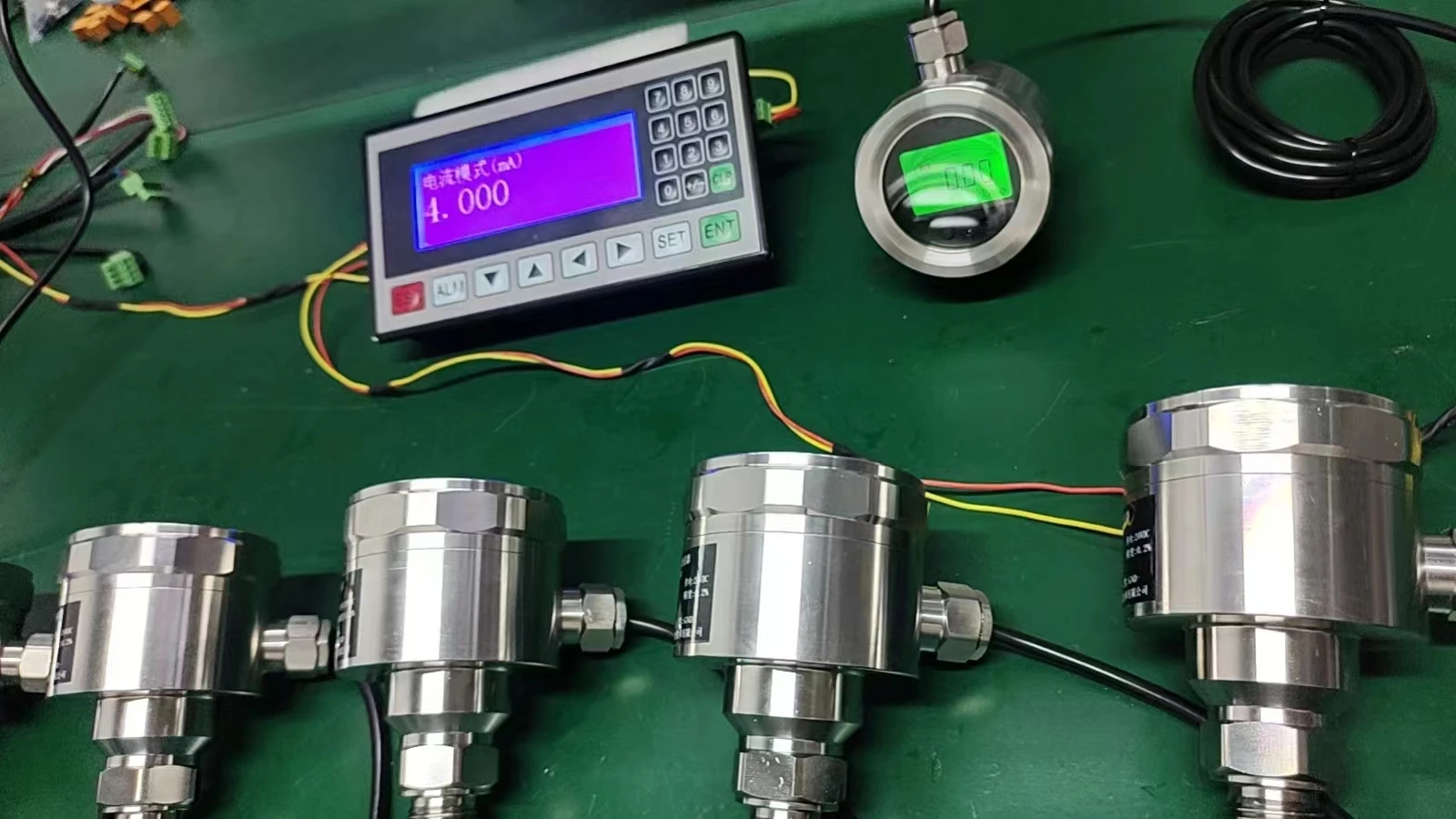
Process pressure pushes on a diaphragm. The diaphragm deflects — typically by micrometres. A sensing element behind the diaphragm reports that deflection as a change in electrical property: resistance for piezoresistive bridges, capacitance for capacitive cells, frequency for resonant sensors. An ASIC linearises and temperature-compensates the reading, then drives a current loop output proportional to applied pressure.
The classic span is 4 mA at 0% of range, 20 mA at 100%. The live-zero (4 mA, not 0 mA) is deliberate: it lets the receiver distinguish a true zero-pressure reading from a broken loop wire. Engineers have leaned on that convention since the 1950s.
Six Pressure Sensing Technologies
Different sensing elements suit different working ranges, fluids, and accuracy targets. Engineers can also reference the full list of common pressure units when setting transmitter ranges.
| Technology | How it works | Typical accuracy | Sweet spot |
|---|---|---|---|
| Piezoresistive (strain gauge) | Diffused silicon resistors form a Wheatstone bridge on the diaphragm; pressure changes resistance | ±0.075% to ±0.25% | General industrial, oil & gas, HVAC |
| Capacitive | Diaphragm forms one plate of a capacitor; deflection changes capacitance | ±0.025% to ±0.075% | Custody transfer, low-DP measurement |
| Resonant (silicon) | Pressure changes the natural frequency of a vibrating silicon beam | ±0.04% to ±0.1% | High-stability subsea and fiscal metering |
| Piezoelectric | Quartz or PZT crystal generates charge under stress | ±0.1% to ±0.5%, dynamic only | Engine combustion, ballistic, impact |
| Optical (fibre) | Pressure changes the wavelength reflected from a Bragg grating | ±0.05% to ±0.2% | EMI-noisy substations, downhole |
| Inductive / LVDT | Diaphragm moves a magnetic core inside a coil | ±0.25% to ±0.5% | Rugged hydraulic and pneumatic service |
Piezoresistive sensors win most general-purpose specifications on price, while capacitive sensors take over when accuracy specs go below ±0.05%. Optical fibre transmitters are a recent entrant into hazardous-area and downhole oil & gas use, where electromagnetic isolation justifies the cost. For the field installation procedure with hook-up by service, manifold selection, and zero/range steps, see our DP transmitter installation.
Five Pressure Transmitter Types on a P&ID
- Gauge Pressure (PG, PT). Reference to atmospheric. Most common type for tank levels, pump discharge, hydraulic systems. Range 0-1 bar through 0-700 bar.
- Absolute Pressure (PA). Reference to vacuum. Used in vacuum process, vapour pressure, altitude, and barometric correction. Range 0-1.6 bar abs to higher.
- Differential Pressure (DP). Two process ports; transmitter reports the difference. Flow elements (orifice, venturi), filter monitoring, and DP-level transmitters all use this class.
- Multivariable. One transmitter outputs flow, DP, static pressure, and temperature simultaneously. Used in fiscal metering and natural-gas custody transfer.
- Remote Seal / Diaphragm Seal. Capillary-coupled fill fluid isolates the sensor from corrosive, hot, or viscous media. Found on glycol service, polymer reactors, food & pharma.
Signal Outputs Decoded
The transmitter is only as useful as the receiver it talks to. Match the output protocol to the control hierarchy. For step-by-step bench calibration including HART sensor and D/A trim, see our pressure transmitter calibration procedure.
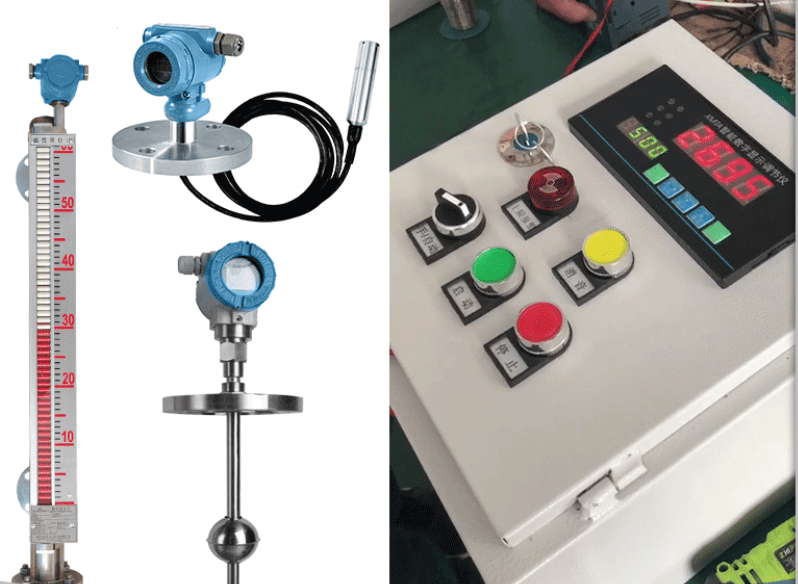
- 4-20 mA analog. The lingua franca. Two-wire, loop-powered, immune to voltage drop. Pairs with any PLC analog input card.
- 4-20 mA + HART. A digital sideband on the same two wires. Lets a HART handheld read diagnostics, ranges, and tags without breaking the loop.
- Modbus RTU / RS-485. Multi-drop digital. Best for retrofits and substation/water-utility installations where a SCADA historian reads dozens of tags from one cable.
- FOUNDATION Fieldbus / PROFIBUS PA. Native-fieldbus protocols. Lower wiring counts but require trained engineering and a fieldbus power supply.
- Wireless HART, ISA100. For remote tanks, rotating equipment, and brownfield additions where pulling cable is uneconomic.
Most greenfield projects still default to 4-20 mA with HART superimposed. The combination keeps the analog signal robust for safety loops while exposing diagnostics on demand. Read more on how signal-output choices affect transmitter selection.
Engineering Selection Checklist
Walk a specification request from process data sheet to purchase order using these eight checks:
- Measured variable. Gauge, absolute, differential, or compound? Pick before anything else.
- Operating range. Place normal operating pressure between 25% and 75% of full scale. Overranging the top end shortens diaphragm life; undersizing kills accuracy.
- Required accuracy. Match to the loop need: ±0.5% for general utility, ±0.1% for safety loops, ±0.025% for custody transfer.
- Wetted materials. 316L for clean water and air; Hastelloy C, Monel, or tantalum for chlorides, sulphuric, and fluorinated streams.
- Process connection. 1/2″ NPT, G1/2″, or DIN flange — confirm against the existing tap.
- Output protocol. Decide before specifying — see the section above.
- Hazardous-area certificates. ATEX, IECEx, CSA, FM. Get the Ex-d or intrinsically safe variant if the area zone requires it.
- Ambient + process temperature. Plain transmitters run -40 to 85 °C ambient; remote seal extends process side to 400 °C with the right fill fluid.
For a deeper look at how transmitters differ from mechanical gauges, see pressure transmitter vs pressure gauge — different categories of instrument that look similar from outside but behave very differently in service.
Common Installation Mistakes
- Impulse line freezing. Outdoor lines on winter service need heat-tracing or a diaphragm seal. A frozen line reads constant or wildly noisy.
- Pulsation on positive-displacement pumps. Install a needle-valve snubber or pulsation dampener. Without one, the sensor sees 10× the true mean and ages prematurely.
- Mounting orientation on remote seals. Capillaries fight gravity; mounting the seal above the transmitter on a long capillary introduces a head-pressure offset that drifts with ambient temperature.
- Single-isolation valve on safety service. Three-valve manifolds for DP, five-valve for SIL-rated service. Single-valve installs cannot be safely zeroed in-line.
- Vent / drain neglect. Liquid lines on gas service need a high vent; gas lines on liquid service need a low drain. Trapped air or condensate gives a +/- offset that operators chase for shifts.
Spec-Sheet Decoder
| Spec line | What it really means |
|---|---|
| ±0.075% of span | Best-fit straight-line accuracy across full calibrated span. Worst case at endpoints. |
| ±0.04% URL | Refers to the Upper Range Limit (URL), not the calibrated span. Often better than “of span” at low ranges. |
| BFSL | Best Fit Straight Line — the linearity method behind “%” accuracy. Tighter than terminal-based. |
| Turndown 100:1 | You can calibrate the transmitter at 1% of URL and still keep stated accuracy. Useful for stocking spares. |
| Long-term stability ±0.1%/5 yr | Drift you should expect between calibration cycles. |
| EMC IEC 61326 | The transmitter passes industrial EMC immunity — important on VFD-rich plants. |
Featured Pressure Transmitters from Sino-Inst

SMT3151 TGP Gauge Pressure Transmitter
4-20 mA + HART | 0.075% accuracy | -40 to 85 °C — the workhorse Sino-Inst gauge transmitter for general process service.

Diaphragm Seal Pressure Transmitters
Capillary-coupled seal | flush, extended, or remote diaphragm | corrosion and high-temperature service to 400 °C.
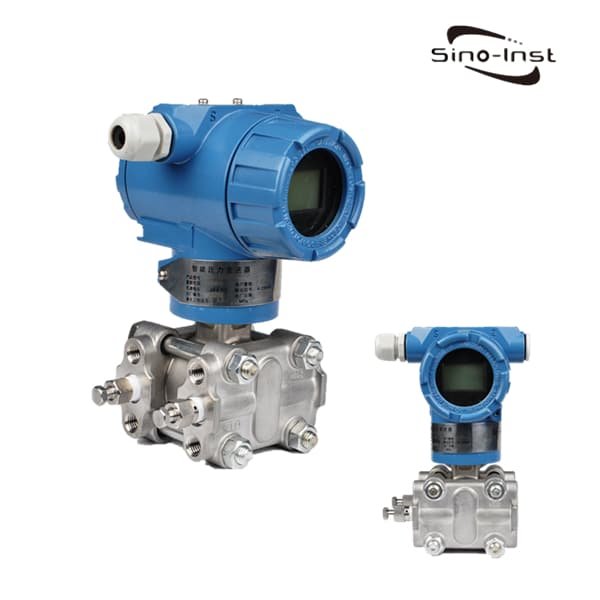
SMT3151DP Smart Differential Pressure Transmitter
100:1 turndown | 0.075% accuracy | HART + 4-20 mA — DP across orifice, filter, or for tank-level applications.
Frequently Asked Questions
How does a pressure transmitter work in simple terms?
Process pressure flexes a thin metal diaphragm by a few micrometres. A sensing element behind the diaphragm — typically a piezoresistive bridge or a capacitive cell — converts that flex into an electrical signal. Onboard electronics linearise, temperature-compensate, and scale the signal to a 4-20 mA loop output that any control system can read. For background on the wetted parts list, see our materials guide.
What is the difference between a pressure transmitter and a pressure sensor?
The sensor is the raw element — the silicon strain bridge or ceramic capacitive cell. The transmitter is the sensor plus signal conditioning, temperature compensation, EMC filtering, and a standard process output. Sensors live inside transmitters; you wire transmitters into plant control.
What does “smart” pressure transmitter mean?
A smart transmitter has a microprocessor on board. It supports HART digital communication for ranging and diagnostics, applies multi-point temperature and linearity correction internally, and stores its own tag and calibration record. Non-smart (analog) transmitters trim by potentiometer and have no digital sideband.
How accurate is a typical industrial pressure transmitter?
General-purpose units sit at ±0.075% to ±0.25% of calibrated span. Custody-transfer transmitters reach ±0.025%. Below that you are buying a metrology-grade instrument, not a process transmitter.
Can I use one pressure transmitter for level measurement?
Yes. Static head in a vented tank is directly proportional to liquid level when density is known; a gauge transmitter mounted at the bottom of the tank reads level via P = ρgh. Pressurised tanks need a differential pressure transmitter to subtract head-space pressure. See the SMT3151LT DP level transmitter for that application.
Sino-Inst engineers have specified pressure transmitters for refineries, water utilities, chemical plants, and pharmaceutical sites across more than 50 countries. Send your process data sheet — span, accuracy, wetted material, process connection — and the team will return a sized configuration with delivery and certificate package. Read more about the Sino-Inst engineering team and request a quote below.
Request a Quote

Wu Peng, born in 1980, is a highly respected and accomplished male engineer with extensive experience in the field of automation. With over 20 years of industry experience, Wu has made significant contributions to both academia and engineering projects.
Throughout his career, Wu Peng has participated in numerous national and international engineering projects. Some of his most notable projects include the development of an intelligent control system for oil refineries, the design of a cutting-edge distributed control system for petrochemical plants, and the optimization of control algorithms for natural gas pipelines.