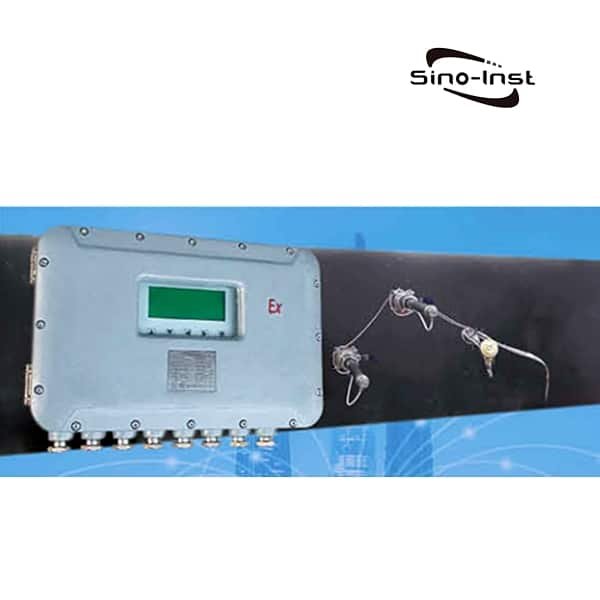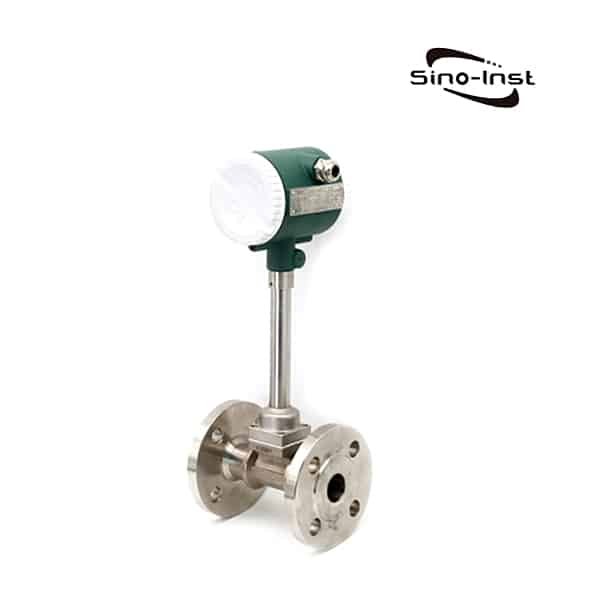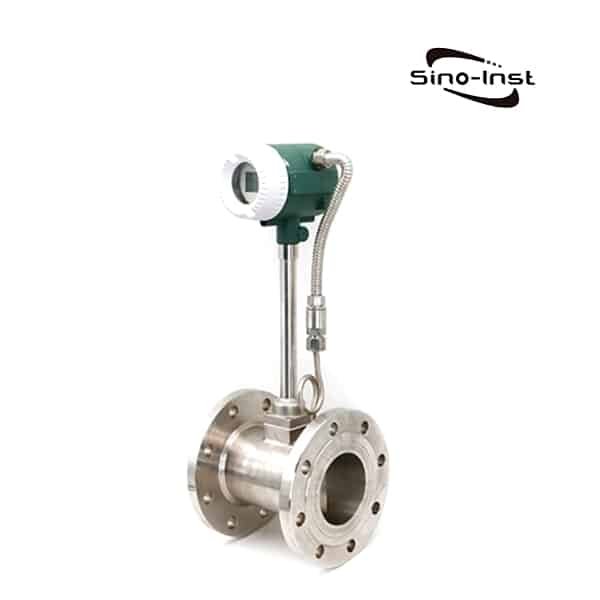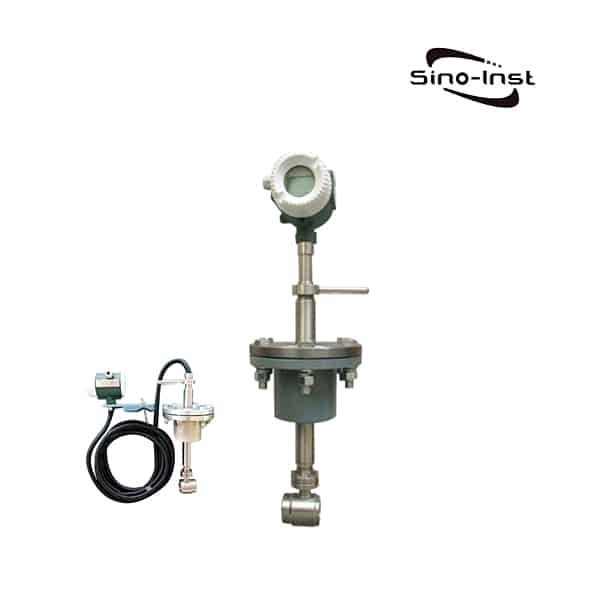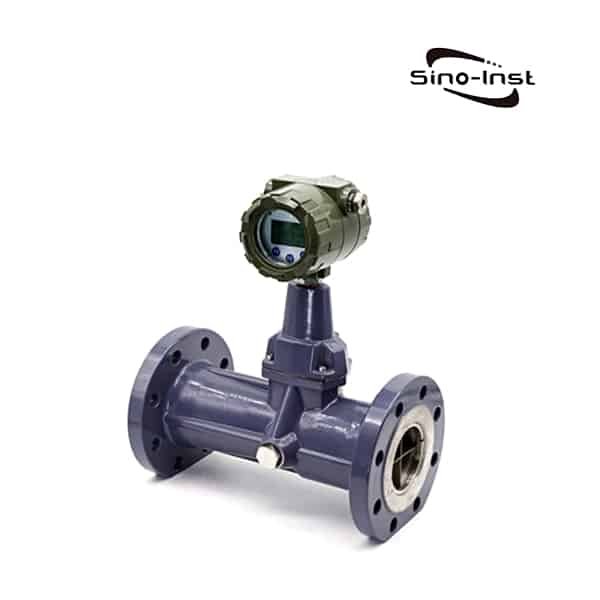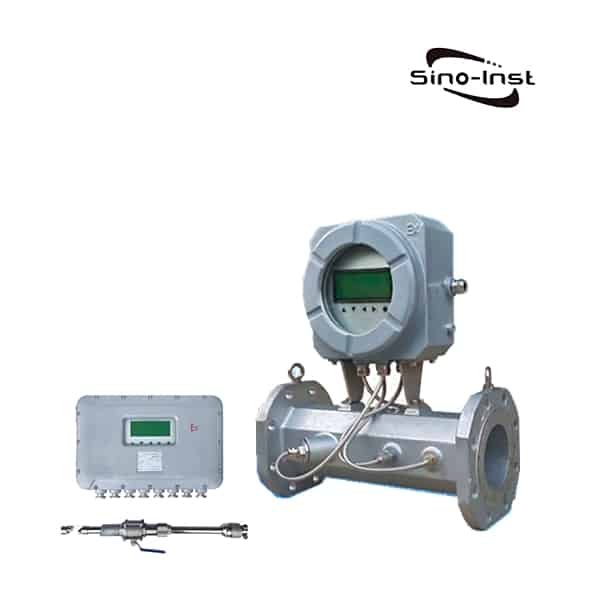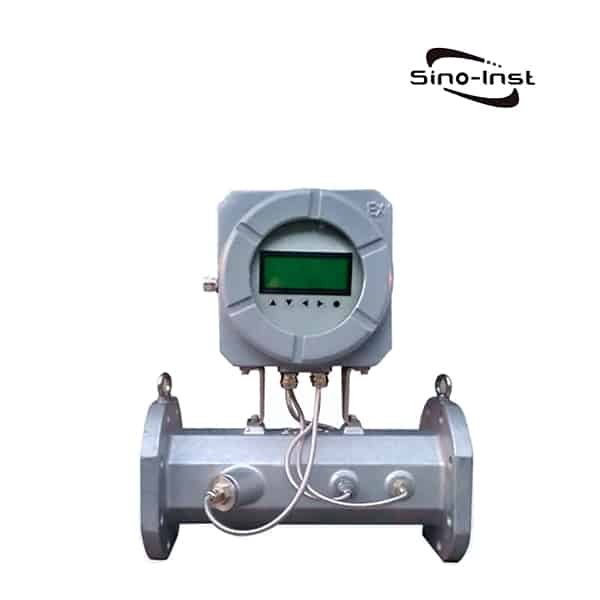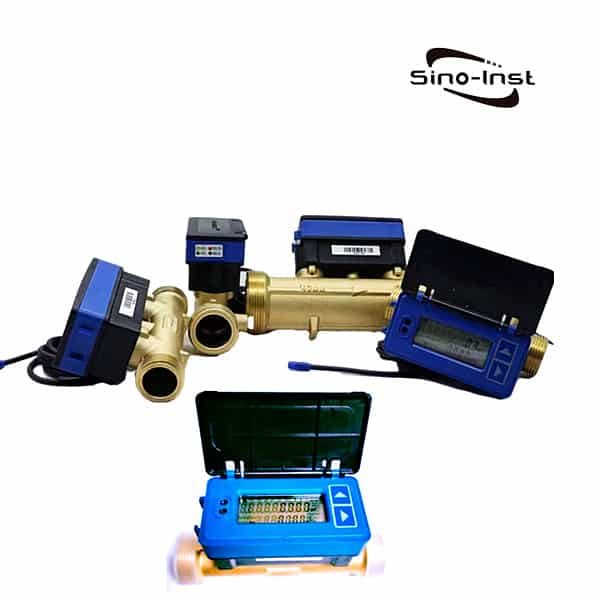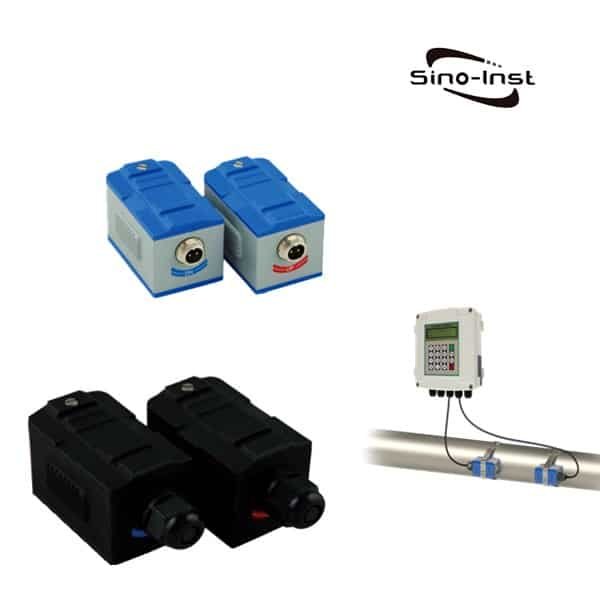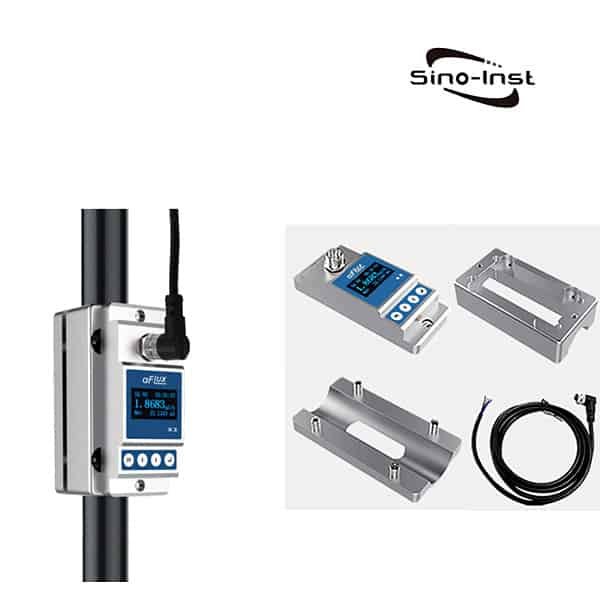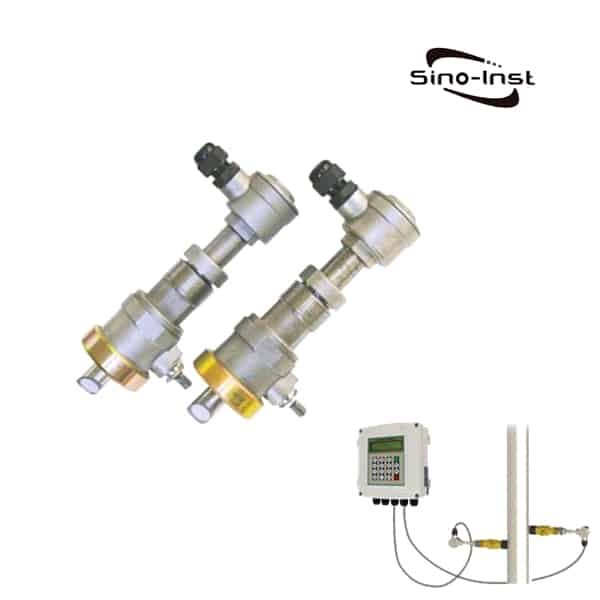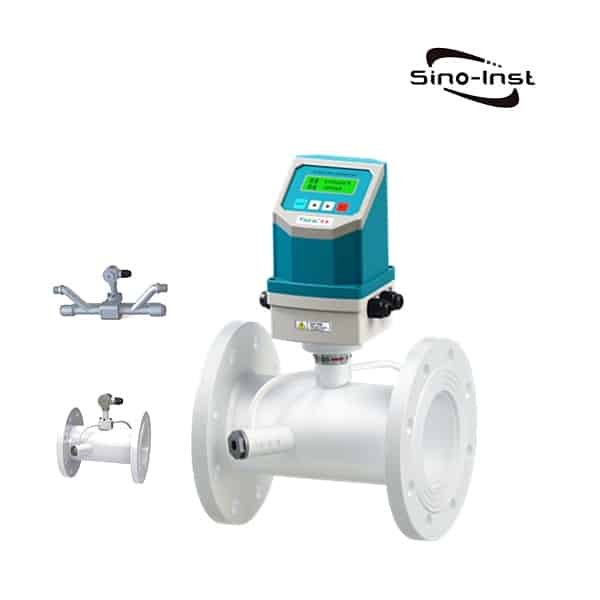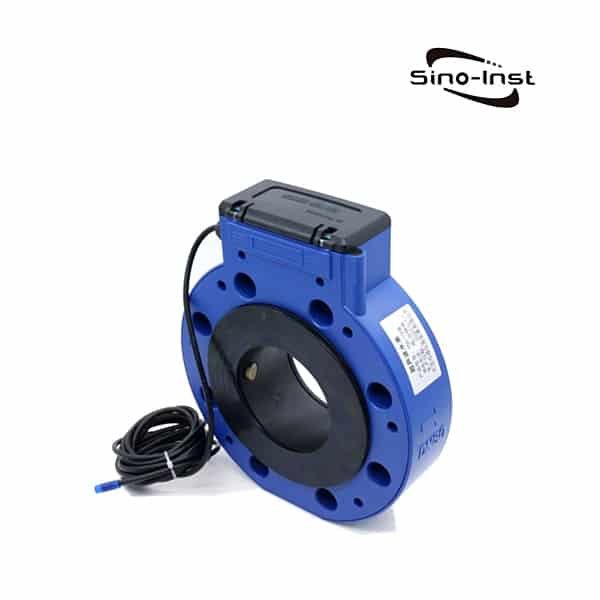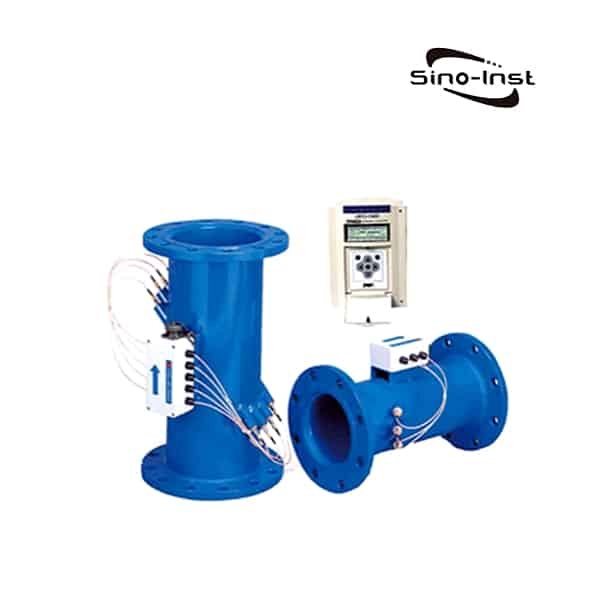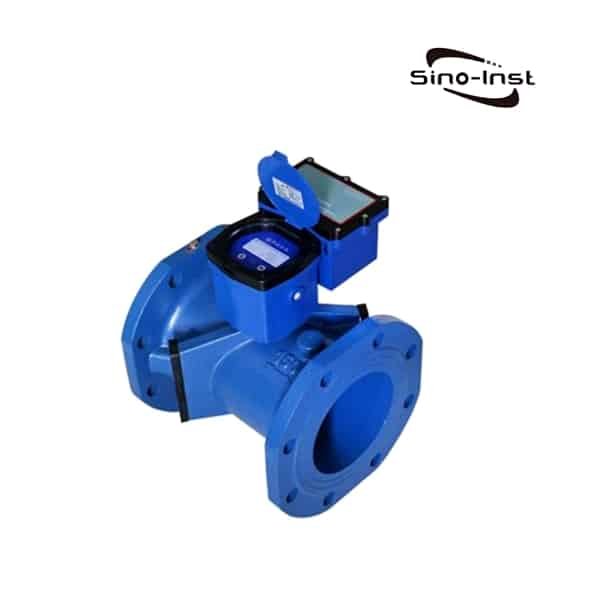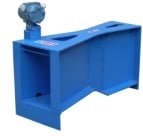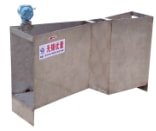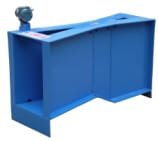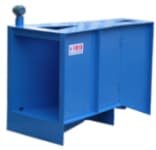
A-J same side plug-in Ultrasonic Gas Flow Meter

A-J same side plug-in Ultrasonic Gas Flow Meter

A-J is a plug-in gas ultrasonic flowmeter on the same side. Use single or dual channel mode. The sound channel design of the ultrasonic transducer takes into account the requirements of various working conditions. It is suitable for measurement in a variety of harsh environments. Suitable for low flow rate measurement. Suitable for low-frequency pulsating flow measurement.

Sino-Inst offers a variety of  Ultrasonic gas flow meters for flow measurement. If you have any questions, please contact our sales engineers.

A-J Ultrasonic Gas Flow Meter Applications

  • Gas (coke oven gas, blast furnace gas, converter gas, producer gas, blue coal gas) and other gases measurement;
  • Gas measurement of biogas, bio-fermentation gas, biomass gas, landfill gas, aeration of water treatment plants, etc.;
  • Measurement of exhaust gases such as flare gas, flue gas, exhaust gas, exhaust gas, tail gas, etc.;
  • Measurement of non-corrosive gases such as air, oxygen, nitrogen, argon, helium, etc.;
  • Metering of chemical gases such as ammonia;

A-J Ultrasonic Gas Flow Meter Flow Range

Nominal diameter

Turndown ratio

Starting flow

Q max

Q min

Metric system(mm)

British system (inch)

(m³/h)

(m³/h)

(m³/h)

1300

50”

60:1

950

144000

2400

1400

54”

60:1

1100

166200

2770

1600

62”

60:1

1450

217200

3620

1800

72”

60:1

1850

274800

4580

2000

80”

60:1

2250

339000

5650

2200

88”

60:1

2750

411000

6850

2400

96”

60:1

3250

489000

8150

2600

104”

60:1

3800

573000

9550

2800

112”

60:1

4450

666000

11100

3000

120”

60:1

5050

762000

12700

3200

128”

60:1

5800

870000

14500

3400

136”

60:1

6500

981000

16350

3600

144”

60:1

7300

1098000

18300

3800

152”

60:1

8150

1230000

20500

4000

160”

60:1

9050

1356000

22600

4200

168”

60:1

10000

1500000

25000

4400

176”

60:1

11000

1641000

27350

4600

184”

60:1

12000

1794000

29900

4800

192”

60:1

13000

1950000

32500

5000

200”

60:1

14150

2121000

35350

Read more about: Benefits Of Digital Gas Mass Flow Meters

A-J Ultrasonic Gas Flow Meter Technical specifications

Technical specifications

Parameter category

Specifications

structure type

Direct type

Applicable caliber

>DN1200

Number of channels

Single channel, dual channel

Flow rate range

0.5-30m/s

level of accuracy

1.5% for single channel, 1.0% for dual channel

Resolution

0.001m/s

Work pressure

0-1.0MPa (default gauge pressure sensor, if you need absolute pressure sensor, you need to customize)

Measuring direction

One-way or two-way measurement

Measurement requirements

Medium temperature

-20℃~60℃(Limit temperature -40℃~85℃)

Ambient temperature

-25℃~ +55℃

Signal, communication and other functions

output signal

4-20mA, frequency (pulse)

Communication Interface

RS-485

Operating Voltage

24VDC

Power consumption

Starting current should be ≥ 2A, steady state operating power <15W

data storage

18 months

Front and rear straight pipe

10D before, 5D after

Use operation

Support waveform real-time display and debugging. Set operating parameters through the instrument menu

Alarm function

When the pressure, temperature, ultrasonic signal, instrument hardware, etc. are abnormal, an alarm is generated, and the alarm information can be obtained through the upper computer software to facilitate maintenance.

Explosion protection

Explosion-proof grade

Flowmeter host Ex d IIB T5 Gb, transducer Ex mb IIC T5 Gb

Protection level

IP65

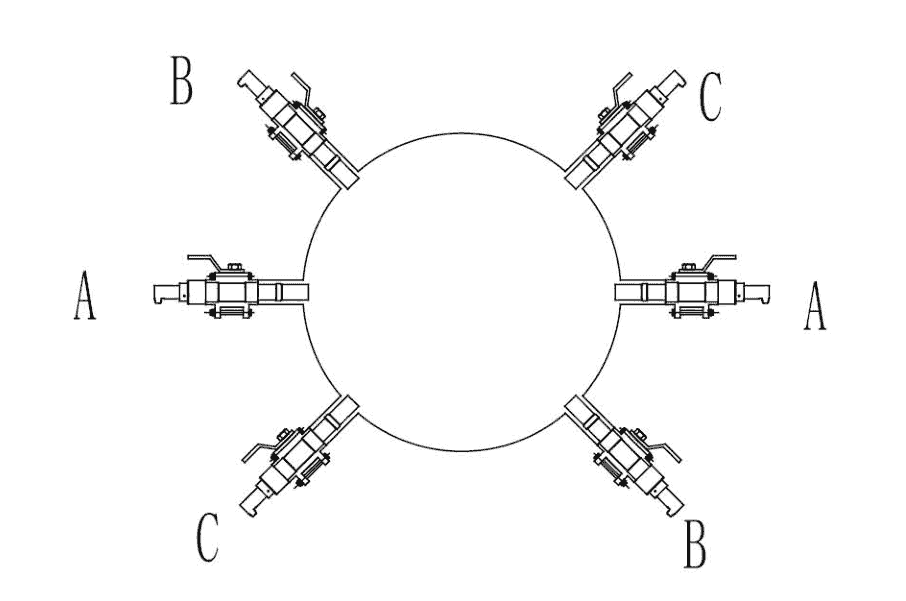
A-J Ultrasonic Gas Flow Meter installation location

Installation locationInstallation description
CVertical installation, it is recommended to install in this position. Long maintenance period and low maintenance
B、DSuitable for general conditions with water and dust, the maintenance period is shorter than that of C
A、EIt is suitable for general conditions with water and dust, and the maintenance period is shorter than that of positions C, B, and D

The vortex flowmeter is a volume flowmeter that measures the volume flow of gas, steam or liquid, the volume flow of standard conditions or the mass flow of gas, steam or liquid based on the Karman vortex principle. When the fluid flows through the dust collector rod of the vortex flowmeter, a vortex is formed. The frequency of vortex shedding is proportional to the fluid velocity. Temperature and pressure compensation can be configured.

Sino-Inst’s Ultrasonic Gas Flow Meter offer reliable and accurate volume flow measurement in a large range of sizes and pressure rating while being fully compliant with international standards.

Sino-Inst is the risk-free choice for your gas flow measurement applications.

Sino-Inst’s Ultrasonic Gas Flow Meter, made in China, Having good Quality, With better price. Our flow measurement instruments are widely used in China, India, Pakistan, US, and other countries.

A-C Plug-in Ultrasonic Gas Flow Meter on both sides

A-C Plug-in gas ultrasonic flowmeters on both sides, using single or dual channel mode. The sound channel design of the ultrasonic transducer takes into account the requirements of various working conditions. It is suitable for measurement in a variety of harsh environments. Suitable for low flow rate measurement. Suitable for low-frequency pulsating flow measurement.

Sino-Inst offers a variety of  Ultrasonic gas flow meters for flow measurement. If you have any questions, please contact our sales engineers.

A-C Ultrasonic Gas Flow Meter application

  • Gas (coke oven gas, blast furnace gas, converter gas) and other gases measurement;
  • Gas measurement of biogas, bio-fermentation gas, biomass gas, landfill gas, aeration of water treatment plants, etc.;
  • Measurement of exhaust gases such as flare gas, flue gas, exhaust gas, exhaust gas, tail gas, etc.;
  • Measurement of non-corrosive gases such as air, oxygen, nitrogen, argon, helium, etc.;
  • Metering of chemical gases such as ammonia;

A-C Ultrasonic Gas Flow Meter Flow Range

Nominal diameter

Turndown ratio

Starting flow

Q max

Q min

Metric system(mm)

British system (inch)

(m³/h)

(m³/h)

(m³/h)

250

10”

60:1

35

5400

90

300

12”

60:1

51

7500

125

350

14”

60:1

70

10500

175

400

16”

60:1

90

13500

225

500

20”

60:1

140

21000

350

600

24”

60:1

200

30000

500

700

28”

60:1

280

41400

690

800

32”

60:1

360

54000

900

900

36”

60:1

450

69000

1150

1000

40”

60:1

565

84000

1400

1100

44”

60:1

685

102000

1700

1200

48”

60:1

815

123000

2050

A-C Ultrasonic Gas Flow Meter Technical specifications

Technical parameter

Parameter category

Specifications

structure type

Direct type

Applicable caliber

DN250-DN1200 (other calibers can be customized)

Number of channels

Single channel, dual channel

Flow rate range

0.5-30m/s

level of accuracy

1.5% for single channel, 1.0% for dual channel

Resolution

0.001m/s

Work pressure

0-1.0MPa (default gauge pressure sensor, if you need absolute pressure sensor, you need to customize)

Measuring direction

One-way or two-way measurement

Measurement requirements

Medium temperature

-20℃~60℃ (Limit temperature -40℃~85℃)

Ambient temperature

-25℃~ +55℃

Signal, communication and other functions

output signal

4-20mA, frequency (pulse)

Communication Interface

RS-485

Operating Voltage

24VDC

Power consumption

Starting current should be ≥ 2A, steady state operating power <15W

data storage

18 months

Front and rear straight pipe

10D before, 5D after

Use operation

Support waveform real-time display and debugging. Set operating parameters through the instrument menu

Alarm function

When the pressure, temperature, ultrasonic signal, instrument hardware, etc. are abnormal, an alarm is generated, and the alarm information can be obtained through the upper computer software to facilitate maintenance.

Explosion protection

Explosion-proof grade

Flowmeter host Ex d IIB T5 Gb, transducer Ex mb IIC T5 Gb

Protection level

IP65

A-C Ultrasonic Gas Flow Meter installation location
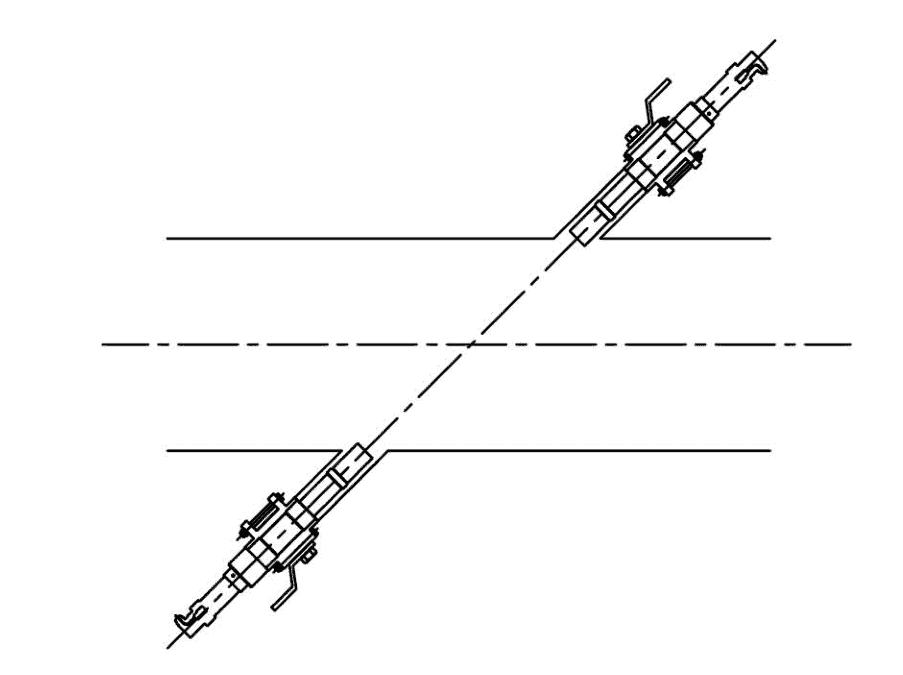
Installation locationInstallation description
AHorizontal installation, it is recommended to install according to this position, the maintenance period is long, and the maintenance amount is small
B、CSuitable for general conditions with water and dust, the maintenance period is shorter than that of A position

The gas turbine flowmeter integrates temperature, pressure, flow sensors and intelligent flow totalizers. The gas turbine flowmeter has high accuracy and good repeatability, so it is suitable for trade measurement and industrial process detection. It is widely used in many kinds of gas in petroleum, chemical, metallurgy, aviation, scientific research and other sectors and industrial fields. Such as natural gas, city gas, propane, butane, air, nitrogen and other gases measurement.

Sino-Inst’s Ultrasonic Gas Flow Meter offer reliable and accurate volume flow measurement in a large range of sizes and pressure rating while being fully compliant with international standards.

Sino-Inst is the risk-free choice for your gas flow measurement applications.

Sino-Inst’s Ultrasonic Gas Flow Meter, made in China, Having good Quality, With better price. Our flow measurement instruments are widely used in China, India, Pakistan, US, and other countries.


A-S single rod plug-in Ultrasonic Gas Flow Meter

A-S is a single-pole plug-in Ultrasonic Gas Flow Meter. Use single or dual channel mode. The sound channel design of the ultrasonic transducer takes into account the requirements of various working conditions. It is suitable for measurement in a variety of harsh environments. Suitable for low flow rate measurement. Suitable for low-frequency pulsating flow measurement.

Sino-Inst offers a variety of  Ultrasonic gas flow meters for flow measurement. If you have any questions, please contact our sales engineers.

A-S Ultrasonic Gas Flow Meter application

  • Gas (coke oven gas, blast furnace gas, converter gas) and other gases measurement;
  • Gas measurement of biogas, bio-fermentation gas, biomass gas, landfill gas, aeration of water treatment plants, etc.;
  • Measurement of exhaust gases such as flare gas, flue gas, exhaust gas, exhaust gas, tail gas, etc.;
  • Measurement of non-corrosive gases such as air, oxygen, nitrogen, argon, helium, etc.;
  • Measurement of coal-bed methane, mine gas and other gases;

A-S Ultrasonic Gas Flow Meter Flow range

Nominal diameter

Turndown ratio

Starting flow

Q max

Q min

Metric system(mm)

British system (inch)

(m³/h)

(m³/h)

(m³/h)

250

10”

60:1

35

5400

90

300

12”

60:1

51

7500

125

350

14”

60:1

70

10500

175

400

16”

60:1

90

13500

225

500

20”

60:1

140

21000

350

600

24”

60:1

200

30000

500

A-S Ultrasonic Gas Flow Meter Technical specifications

Technical parameter

Parameter category

Specifications

structure type

Direct type

Applicable caliber

DN250-DN600 (other calibers can be customized)

Number of channels

Mono

Flow rate range

0.5-30m/s

level of accuracy

1.5%

Resolution

0.001m/s

Work pressure

0-1.0MPa (default gauge pressure sensor, if you need absolute pressure sensor, you need to customize)

Measuring direction

One-way or two-way measurement

Measurement requirements

Medium temperature

-20℃~60℃(Limit temperature -40℃~85℃)

Ambient temperature

-25℃~ +55℃

Signal, communication and other functions

output signal

4-20mA, frequency (pulse)

Communication Interface

RS-485

Operating Voltage

24VDC

Power consumption

Starting current should be ≥ 2A, steady state operating power <15W

data storage

18 months

Front and rear straight pipe

10D before, 5D after

Use operation

Support waveform real-time display and debugging. Set operating parameters through the instrument menu

Alarm function

When the pressure, temperature, ultrasonic signal, instrument hardware, etc. are abnormal, an alarm is generated, and the alarm information can be obtained through the upper computer software to facilitate maintenance.

Explosion protection

Explosion-proof grade

Flowmeter host Ex d IIB T5 Gb, transducer Ex mb IIC T5 Gb

Protection level

IP65

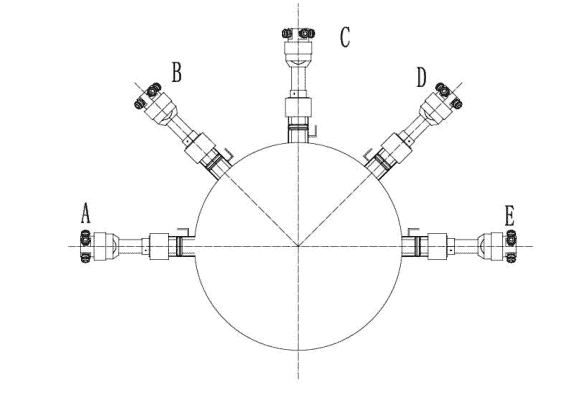
A-S Ultrasonic Gas Flow Meter Installation

Installation locationInstallation description
A、EHorizontal installation, it is recommended to install according to this position, the maintenance period is long, and the maintenance amount is small
B、DSuitable for general conditions with water and dust. The maintenance cycle is shorter than the installation position of A and E
CSuitable for conditions with less water and dust, the maintenance cycle is shorter than the installation positions of A, B, D, E

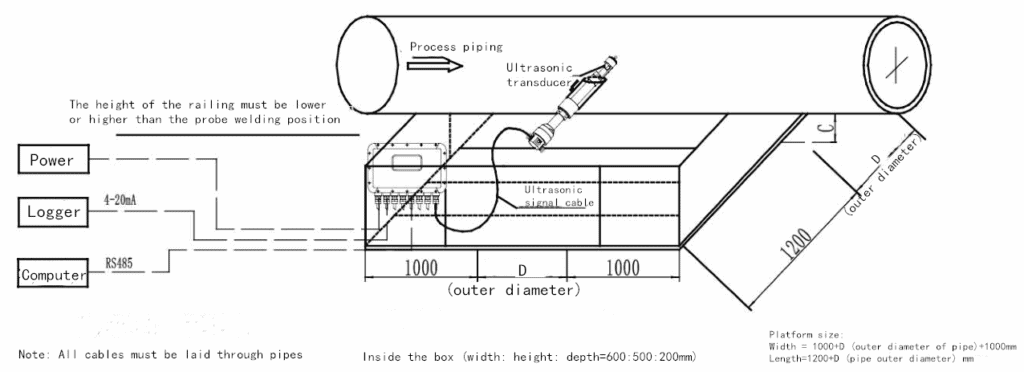
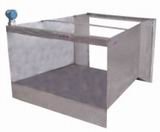
A-S Ultrasonic Gas Flow Meter site platform construction diagram

The gas turbine flowmeter integrates temperature, pressure, flow sensors, and intelligent flow totalizers. The gas turbine flowmeter has high accuracy and good repeatability, so it is suitable for trade measurement and industrial process detection. It is widely used in many kinds of gas in petroleum, chemical, metallurgy, aviation, scientific research, and other sectors and industrial fields. Such as natural gas, city gas, propane, butane, air, nitrogen, and other gases measurement.

Sino-Inst’s Ultrasonic Gas Flow Meter offer reliable and accurate volume flow measurement in a large range of sizes and pressure rating while being fully compliant with international standards.

Sino-Inst is the risk-free choice for your gas flow measurement applications.

Sino-Inst’s Ultrasonic Gas Flow Meter, made in China, Having good Quality, With better price. Our flow measurement instruments are widely used in China, India, Pakistan, US, and other countries.

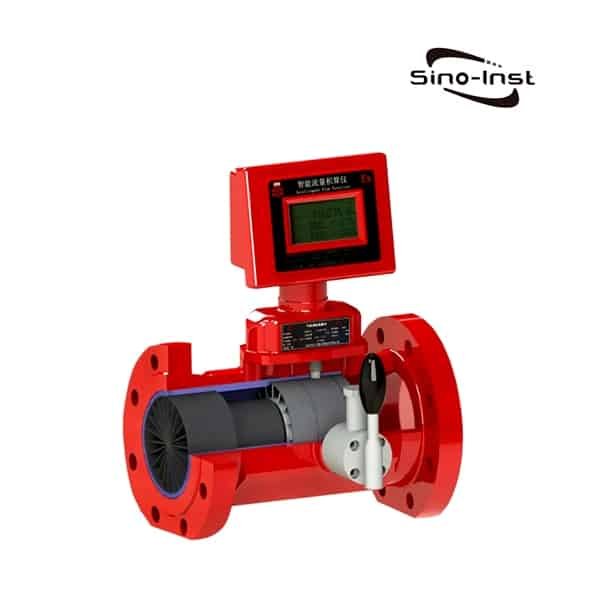
A-D pipe segment Ultrasonic Gas Flow Meter

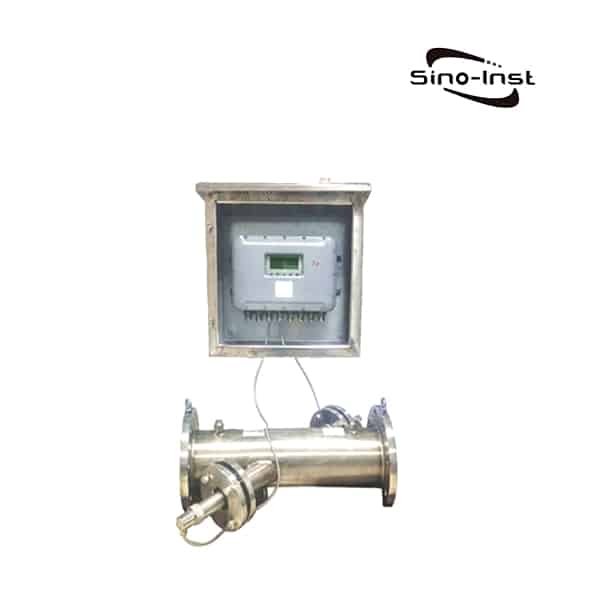
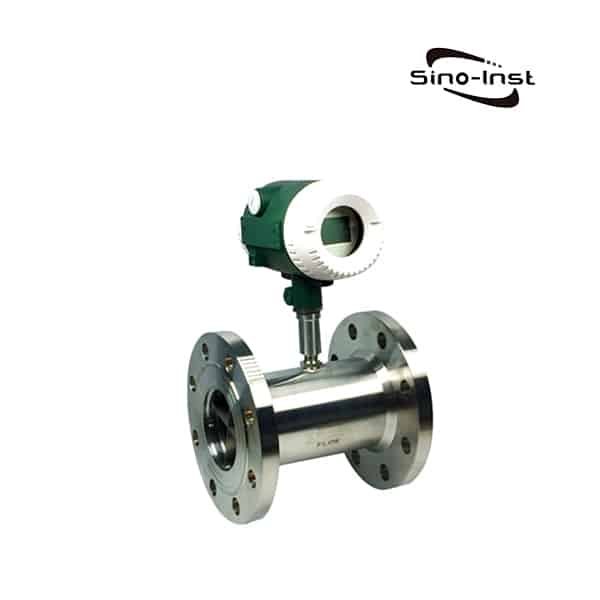
A-D Ultrasonic Gas Flow Meter is a pipe section type flow meter, using single or dual channel mode. The sound channel design of the ultrasonic transducer takes into account the requirements of various working conditions. It is suitable for measurement in a variety of harsh environments. Suitable for low flow rate measurement. Suitable for low-frequency pulsating flow measurement.
Sino-Inst offers a variety of  Ultrasonic gas flow meters for flow measurement. If you have any questions, please contact our sales engineers.

A-D Ultrasonic Gas Flow Meter application

  • Gas (coke oven gas, blast furnace gas, converter gas, producer gas, blue coal gas) and other gases measurement;
  • Gas measurement of biogas, bio-fermentation gas, biomass gas, landfill gas, aeration of water treatment plants, etc.;
  • Measurement of exhaust gases such as flare gas, flue gas, exhaust gas, exhaust gas, tail gas, etc.;
  • Measurement of non-corrosive gases such as air, oxygen, nitrogen, argon, helium, etc.;
  • Metering of natural gas, liquefied petroleum gas, coal bed methane, oil and gas, mine gas, wellhead gas and other gases;
  • Metering of chemical gases such as hydrogen, acetylene and ammonia;

A-D Ultrasonic Gas Flow Meter Flow range

Nominal diameter

Turndown ratio

Starting flow

Q max

Q min

Metric systemmm

British system (inch)

m³/h

m³/h

m³/h

50

2

30:1

1.4

212

7

80

3

33:1

3.6

400

12

100

4

50:1

5.6

700

14

150

6

60:1

12.7

1900

32

200

8

60:1

22.6

3400

56

A-D Ultrasonic Gas Flow Meter Technical specifications

Technical parameter

Parameter category

Specifications

structure type

Direct type

Applicable caliber

DN50-DN200 (other calibers can be customized)

Number of channels

Single channel, dual channel

Flow rate range

0.5-30m/s

level of accuracy

1.5% for single channel, 1.0% for dual channel

Resolution

0.001m/s

Flow cutoff point

Qt= 0.2 Q max

Repeatability

1.0 Level: Qt-Qmax 0.2%; Qmin-Qt 0.4%
1.5 Level: Qt-Qmax 0.3%; Qmin-Qt 0.6%

Work pressure

0-1.0MPa (The default gauge pressure sensor, if you need an absolute pressure sensor, you need to customize it)

Measuring direction

One-way or two-way measurement

Measurement requirements

Medium temperature

-20℃~60℃

Ambient temperature

-25℃~ +55℃

Signal, communication and other functions

output signal

4-20mA, frequency (pulse)

Communication Interface

RS-485

Operating Voltage

24VDC

Power consumption

Starting current should be ≥ 2A, steady state operating power <15W

data storage

18 months

Front and rear straight pipe

10D before, 5D after

Use operation

Support waveform real-time display and debugging. Set operating parameters through the instrument menu

Alarm function

When the pressure, temperature, ultrasonic signal, instrument hardware, etc. are abnormal, an alarm is generated, and the alarm information can be obtained through the upper computer software to facilitate maintenance.

Explosion protection

Explosion-proof grade

Ex d mb IIB Gb

Protection level

IP65

Extended reading: Ultrasonic Insertion Flow Meter for Lined/Large Pipes

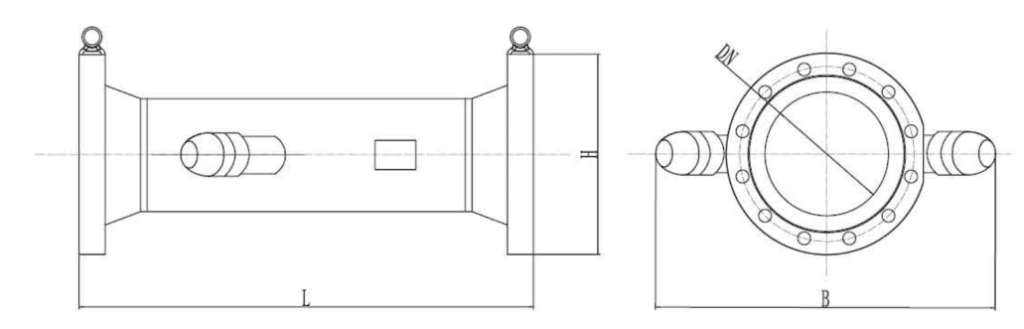
A-D Ultrasonic Gas Flow Meter pipe size

Nominal caliber

Nominal pressure

Flange standard

Measuring tube inner diameter

Body length

Body width

Body height

DN

MPa

(mm)

L(mm)

B(mm)

H(mm)

50

1.0

GB/T 9119

50

520

400

165

80

1.0

GB/T 9119

80

550

430

200

100

1.0

GB/T 9119

100

550

450

220

150

1.0

GB/T 9119

150

600

500

285

200

1.0

GB/T 9119

200

700

550

340

The gas turbine flowmeter integrates temperature, pressure, flow sensors and intelligent flow totalizers. The gas turbine flowmeter has high accuracy and good repeatability, so it is suitable for trade measurement and industrial process detection. It is widely used in many kinds of gas in petroleum, chemical, metallurgy, aviation, scientific research and other sectors and industrial fields. Such as natural gas, city gas, propane, butane, air, nitrogen and other gases measurement.

Sino-Inst’s Ultrasonic Gas Flow Meter offer reliable and accurate volume flow measurement in a large range of sizes and pressure rating while being fully compliant with international standards.

Sino-Inst is the risk-free choice for your gas flow measurement applications.

Sino-Inst’s Ultrasonic Gas Flow Meter, made in China, Having good Quality, With better price. Our flow measurement instruments are widely used in China, India, Pakistan, US, and other countries.

Ultrasonic Gas Flow Meter – A series

The A series Ultrasonic Gas Flow Meter solves the problem of gas measurement.

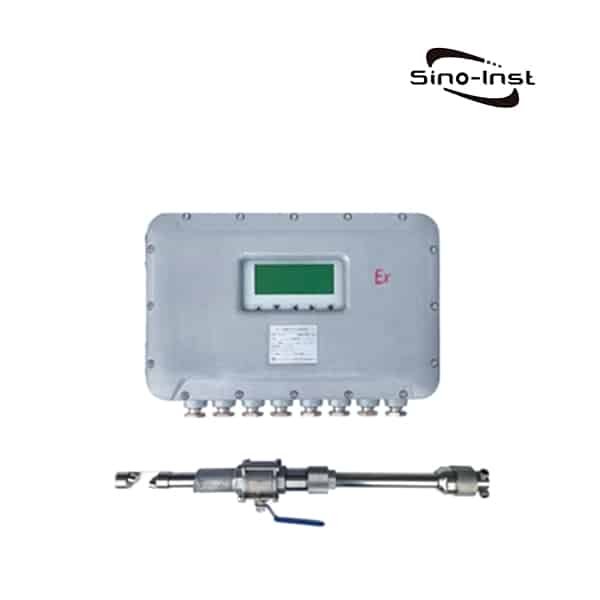
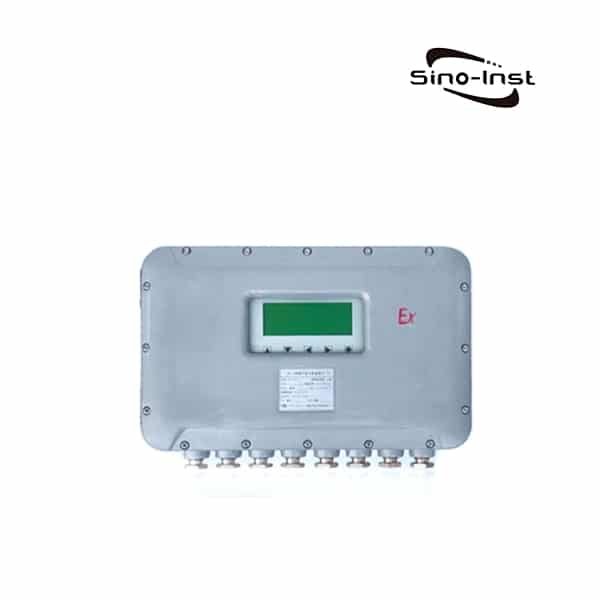
A series Ultrasonic Gas Flow Meter is a split flowmeter suitable for gas measurement under complicated working conditions. The gas ultrasonic flowmeter consists of a flowmeter host, a flowmeter body, an ultrasonic transducer, a pressure transmitter, a temperature transmitter, and installation accessories.

Sino-Inst offers a variety of  Ultrasonic gas flow meters for flow measurement. If you have any questions, please contact our sales engineers.

Features of Ultrasonic Gas Flow Meter – A series

  • The measurement is not affected by the components, and the dust and moisture are small. Suitable for measuring multi-component gases or gases with changes in composition;
  • The all-metal design of the transducer is highly reliable and resistant to dirt. It can measure dirty gases such as coal gas and flue gas, and has a long service life;
  • Use professional digital signal processor. The running speed is fast and the algorithm reliability is high. The flow response is real-time, which can meet the gas measurement of complicated working conditions with rapid changes in temperature, pressure and humidity;
  • The starting velocity is small, the starting velocity is 0.2 m/s. Suitable for measuring low-speed flow;
  • Large turndown ratio, turndown ratio 60:1. Measuring flow rate from 0.5~30 m/s;
  • Can measure pulsating flow and bidirectional flow;
  • No moving parts, no pressure loss. Reduce use and maintenance costs;
  • Support online non-stop gas installation and maintenance;
  • Supports real-time waveform display and debugging, and the operation interface is menu-oriented, which is convenient for users to use;
  • Support intelligent alarm, convenient for customer maintenance;
  • Large measuring range, support DN50-DN5000 pipe section measurement

Guess You’ll Like: Ultrasonic flow meters types & technical guide

Model of Ultrasonic Gas Flow Meter – A series

CodeContentMeaning
1D: Pipe segment installation
S: Single pole plug-in installation
C: Plug-in installation on both sides
J: Plug-in installation on the same side
Installation form 
2S:  Single channel
D: Two-channel
Number of channels 
3DN50 DN80 DN100 DN150 DN200…….DN5000Caliber 
4A: Helium, nitrogen, neon, argon, air and non-corrosive gases
B: Coal-bed methane, natural gas, oil and gas, ethanol boil-off gas, methane, ethane, propane, other alkanes and olefin gases
C: Blast furnace gas, converter gas, coke oven gas, carbon monoxide, mine gas and other gases
D: Flue gas, torch gas, exhaust gas, exhaust gas, exhaust gas and other gases
E: Biogas, fermentation gas, biomass gas and other gases
F: Other types of gas
Application field

Example: A-SS-600D represents the A series split single-rod plug-in installation flow meter, measuring pipe section DN600, and the medium used is Class D gas.

Ultrasonic Gas Flow Meter – A series Installation Precautions

  • Do not install the flow meter host for outdoor use. When necessary, it should be installed in the instrument protection box. Avoid sun and rain.
  • The main unit of the flow meter should be installed vertically on the bracket or on the wall. And do not install in places subject to strong vibration.
  • The flowmeter host should avoid sharing an AC power supply with inverters, electric welders and other equipment.
  • The housing of the flowmeter host must be grounded separately (grounding resistance <4Ω).
  • The installation position of the transducer should be as far away as possible from the position that has a great influence on the fluid distribution. Such as: pump, elbow, tee, reducer, etc.
  • The installation position of the transducer should be as far away as possible from the throttle or regulating valve.
  • The installation location of the flow meter host and transducer should avoid the environment that can cause resonance of the signal processing unit, ultrasonic transducer and other components. And avoid environments where strong electromagnetic or electronic interference may exist.
  • When installing, ensure a certain length of straight pipe section upstream and downstream. Usually requires 10D upstream and 5D downstream.
  • Where there is a danger of lightning strikes, lightning arresters should be installed.
  • When the distance between the flow transmitter and the ultrasonic probe is far, the direct connection with the flowmeter signal cable will cause signal attenuation and interference. So try to shorten the distance between the two. Generally required: the cable connection distance between the host and the probe is less than 10 meters.
  • The signal cable connected between the flow transmitter and the ultrasonic probe should be isolated from the power line and avoid using the same casing.

Read more about: Industrial Gas Measurement with Digital Gas Mass Flow Meters

More Features Gas Flow Meters

Sino-Inst’s Ultrasonic Gas Flow Meter offer reliable and accurate volume flow measurement in a large range of sizes and pressure rating while being fully compliant with international standards.

Sino-Inst is the risk-free choice for your gas flow measurement applications.

Sino-Inst’s Ultrasonic Gas Flow Meter, made in China, Having good Quality, With better price. Our flow measurement instruments are widely used in China, India, Pakistan, US, and other countries.

Ultrasonic Gas Flow Meters

Ultrasonic Gas Flow Meter uses the principle of measuring the transit time of ultrasonic waves in the pipeline. Ultrasonic Gas Flow Meter is an ideal choice for various gas measurements.

The gas ultrasonic flowmeter is suitable for blast furnace gas, converter gas, coke oven gas, mixed gas, gas, compressed air, chlorine, nitrogen and other industrial gases. Suitable for large-caliber gas measurement, suitable for low flow rate, pulsating flow gas measurement. It has the advantages of not being affected by gas components, dirt resistance, fast response, wide range, high precision, good stability, and less maintenance.

Sino-Inst offers a variety of  flow meters for flow measurement. If you have any questions, please contact our sales engineers.

Ultrasonic Gas Flow Meter Introduction

The ultrasonic gas flow meter is designed and manufactured according to the national standard GB/T-18604-2014 and the verification regulation JJG-1030-2007 using the principle of ultrasonic time difference method. Also refer to the US AGA8/AGA9/AGA10 report. Various performance indicators have reached the international advanced level of gas measurement.

Compared with traditional flow meters, gas ultrasonic flow meters have no pressure loss, strong anti-interference ability, wide range ratio, can measure small flow, can measure bidirectional flow and pulsating flow, and have the characteristics of being independent of gas composition. It is a new type of flow meter with excellent performance.

Features and advantages of Ultrasonic Gas Flow Meter

  • Suitable for multi-component metering. Gas flow measurement is not affected by changes in composition.
  • It can measure small flow and solve the problem of low flow gas measurement.
  • Large turndown ratio meets the measurement requirements of high flow rate and low flow rate.
  • Pulsating flow can be measured.
  • It can be measured in both directions.
  • Can measure dirty gas containing impurities and moisture;
  • Corrosion resistant, can measure corrosive gas flow.
  • It can be installed online and maintained online.
  1. It adopts industrial design and the flowmeter has no moving parts. No pressure loss, reducing product use and maintenance costs.
  2. It adopts all-metal transducer, which is resistant to dirt and corrosion. With a unique algorithm, it can ensure the gas flow measurement in the dirty medium.
  3. Supports intelligent alarms such as pressure, temperature, flow, and ultrasonic signals. It can realize the early warning of the ultrasonic transducer before maintenance is required. Reduce maintenance frequency. Reduce maintenance costs.
  4. Visual waveform display, menu-based instrument interface. It is convenient to use and debug the instrument.

Ultrasonic Gas Flow Meter Applications

  • Gas (coke oven gas, blast furnace gas, converter gas, producer gas, blue coal gas) and other gases measurement;
  • Gas measurement of biogas, bio-fermentation gas, biomass gas, landfill gas, aeration of water treatment plants, etc.;
  • Measurement of exhaust gases such as flare gas, flue gas, exhaust gas, exhaust gas, tail gas, etc.;
  • Measurement of non-corrosive gases such as air, oxygen, nitrogen, argon, helium, etc.;
  • Metering of natural gas, liquefied petroleum gas, coal bed methane, oil and gas, mine gas, wellhead gas and other gases;
  • Metering of chemical gases such as hydrogen, acetylene and ammonia;

Read more about: Liquid Ultrasonic flow meters types & technical guide

Ultrasonic Gas Flow Meter Measuring principle

The ultrasonic flowmeter is realized by measuring the propagation time of ultrasonic waves in the pipeline. The gas flow rate is obtained by the flow velocity, the cross-sectional area of the pipe and the Reynolds number.

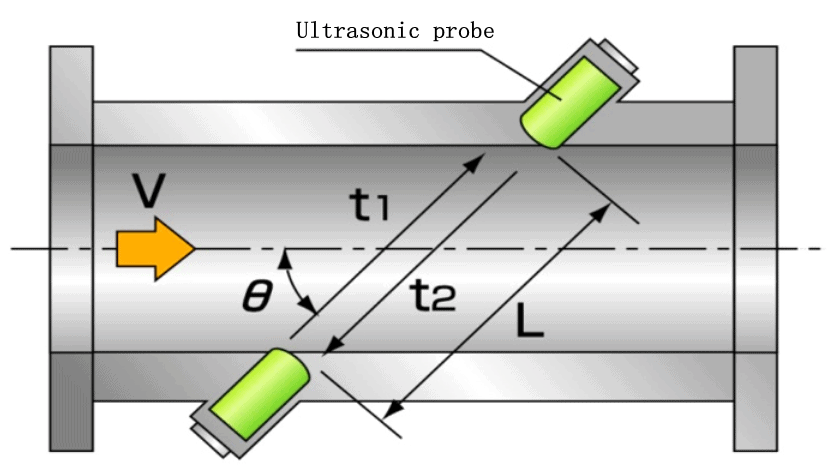
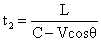
Ultrasonic flow meters use the sound wave propagation velocity method to measure the flow rate by calculating the time difference. Assuming: the sound velocity when the fluid is at rest is c, and the fluid velocity is v, then the propagation velocity in the forward flow is c+vcosθ, and the propagation velocity in the reverse flow is c-vcosθ.

Set up two ultrasonic generators (also receivers) T1 and T2 in the fluid, the distance between T1 and T2 is L, the time from T1 to T2 is t1, the time from T2 to T1 is t2, and the diameter is D , The angle between the ultrasonic transmission axis and the central axis is θ, and the time difference between the forward and reverse directions is △t=t2-t1.

L: Ultrasonic sensor distance
C: Speed of sound
V: average flow velocity
θ: Ultrasonic transmission shaft and measuring tube
The angle of the central axis
t1: Ultrasonic propagation time (downstream)
t2: Ultrasonic transmission time (backflow)
Q: Flow
A: Cross-sectional area
K: correction factor

According to the above settings:
Suppose the travel time in the forward direction is t1, and the travel time in the reverse direction is t2.

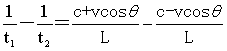
Take the reciprocal of its propagation time as the difference, namely:

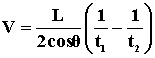
Can eliminate the speed of sound term C:

The “reciprocal difference of propagation time” method with superior repeatability: it is not affected by changes in the speed of sound (temperature), the measurement object is only time, and there is almost no change in year-round use.

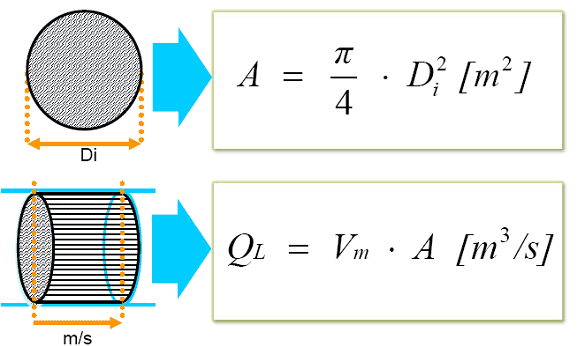
Flow rate is related to fluid velocity and cross-sectional area:

Flow rate = velocity * cross-sectional area

After correction by the flow correction coefficient, the flow can be calculated as follows:

Sino-Inst’s Ultrasonic Gas Flow Meter offer reliable and accurate volume flow measurement in a large range of sizes and pressure rating while being fully compliant with international standards.

Sino-Inst is the risk-free choice for your gas flow measurement applications.

Sino-Inst’s Ultrasonic Gas Flow Meter, made in China, Having good Quality, With better price. Our flow measurement instruments are widely used in China, India, Pakistan, US, and other countries.

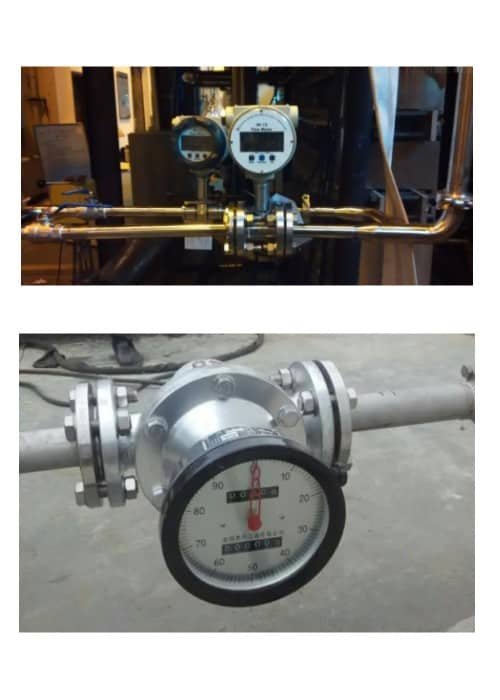
Turbine Flow meter Vs Gear Flow meter

When you need to measure oil flow, do you also encounter a problem: Turbine Flow meter Vs Gear Flow meter? How to choose?

Turbine flow meters and gear flow meters are commonly used flow meters. Although there is only one word difference literally, there are still different essential differences between the two.

Turbine Flow meter

Turbine flow meters are velocity flow meters, also called impeller flow meters. Can be used to measure the instantaneous flow and cumulative flow of liquids and gases.

Turbine flowmeters are widely used in flow measurement: petroleum, organic liquids, inorganic liquids, liquefied gas, natural gas, coal gas and cryogenic fluids. Turbine flowmeter signals can be divided into pulse signals or current signals (4-20mA). It is suitable for use with secondary display, PLC, DCS and other computer control systems.

Know more about: Turbine type Flow Meter for Liquid & Gas technology

Gear Flow meter

Oval gear flowmeter is a precision instrument used to measure liquid flow. It is a direct reading cumulative meter. It is a positive displacement flow meter that measures the sum of the liquid flow through the pipeline.

The oval gear flowmeter can choose two counting mechanisms: mechanical display meter and electronic display meter. The display meter has the functions of displaying cumulative flow, instantaneous flow, and zero return. It can realize on-site display and remote control.

For different measuring media (acid, alkali, organic liquid, oil, food, etc.), the flowmeter can be made of different materials (cast steel, stainless steel, and 316). It is suitable for flow measurement in chemical, petroleum, pharmaceutical, electric power, metallurgy, and food industries. Extended reading: Cylinder Gear flow meter for micro flow measurement.

Read more about Everything You Need To Know About Electronic Flow Meters

Let’s sort it out for everyone:

Turbine Flow meter Vs Gear Flow meter

1. Different measurement principles:

The liquid turbine flowmeter is a velocity flowmeter. The accuracy is 0.5%, which can be improved to 0.2%. The material of the watch body is generally stainless steel. According to site requirements, explosion-proof products can be made.

Oval gear flowmeter is a positive displacement flowmeter. The accuracy is 0.5%. Oval gear flowmeter is a purely mechanical mechanism. When the rotor of the flowmeter rotates, it drives the rotation of the counter to generate a cumulative total. Oval gear flowmeters are especially popular on occasions where explosion-proof requirements are relatively high.

2. Requirements of the working pressure:

The working pressure of the oval gear flowmeter is generally not large, 1.6Mpa. Using cast steel material, it can reach 2.5Mpa.

In contrast, turbine flowmeters are easier to make into high-pressure products. The maximum pressure of the high-pressure turbine flowmeter can reach over 25Mpa.

Requirements for low working pressure:

Turbine flowmeter does not have much requirement for the low working pressure in the pipeline, basically, it can be measured when the medium flows through it.

However, oval gear flow meters have higher requirements for small working pressures. Because of the different calibers, the pressure required to push the flowmeter rotor to work is different. The small working pressure required from small diameter to large diameter is between 0.3~0.8Mpa.

Extended reading: Positive displacement flow meter working principle

3. The influence of working temperature:

The maximum working temperature of the turbine flowmeter is 120°C. The maximum working temperature of the oval gear flowmeter is 160℃.

4. The difference of applicable media:

Water, solvents, light oils, etc. can be well suited for liquid turbine flow meters, but media with too high viscosity are not suitable.

The elliptical gear flowmeter is generally suitable for oily media. The viscosity of the applicable medium is higher than that of the turbine flowmeter. The greater the viscosity of the medium, the higher the accuracy.

For some corrosive media, both types of flowmeters can partially measure.

But the stainless steel oval gear flowmeter is not cost-effective. And for water and some electrolyte solutions, oval gear flow meters cannot be used. Because the internal mechanical parts are easily damaged by water.

Extended reading: Turbine flow meter Applications

Turbine Flow Meter Application Case: Demineralized Water.

5. Requirements on the installation site:

As a positive displacement flowmeter, the elliptical gear flowmeter has relatively low requirements for the straight pipe sections before and after and basically has no requirements for straight pipe sections.

The turbine flowmeter, as a velocity flowmeter, has higher requirements for the front and rear straight pipe sections. Especially for some small diameter turbine flowmeters, a corresponding straight pipe section must be matched.

Extended reading: Turbine Insertion Flow Meter for Large Diameter Pipeline

6. The difference between display and signal output:

The mechanical meter head of the oval gear flowmeter displays the cumulative amount. To display the instantaneous flow, you need to output a signal, and the matching secondary instrument displays the instantaneous flow value.

Turbine flowmeter can display instantaneous flow and accumulated flow on-site, and can also output with the remote signal.

7. The problem of maintaining accuracy:

The accuracy of turbine flow meters and oval gear flow meters cannot be maintained for a long time. In order to maintain the accuracy of the flowmeter, it must be calibrated regularly.

You may need to measure the flow of lubricating oil, diesel, fuel, hydraulic oil, etc.
Combine the above points and your requirements. You should be able to decide which flow meter to choose. If you still have technical questions, please contact our sales engineers in time.

Extended reading:
What is the K-factor in a flow meter?
Cryogenic Flow Meters|Liquid Nitrogen-Liquid Oxygen-LNG fluids

Turbine Flow Meter Specification

Product Name:Liquid Turbine Flowmeter
Measuring medium:water, oil, alcohol and other liquids (viscosity <5×10⁻⁶M2/S)
Diameter range:DN4~DN200 (DN4~80 commonly used thread connection)
Accuracy class:±1%R; ±0.5%R; ±0.2%R (special customization)
Output signal:square wave pulse (voltage type), 4-20MA, 0-5V (intelligent type)
Operating environment:-20℃~+60℃; 5%~90%RH
Connection method:external/internal thread, flange, clamp
Communication method:RS485 communication MODBUS-RTU (intelligent type)
Body material:stainless steel 1CR18NI9TI, 316L (hygienic type)
Protection class:IP65 (ordinary type); IP68 (special custom)

Turbine Flow meter Vs Gear Flow meter working principle

About the working principle of Turbine Flow meter Vs Gear Flow meter. I think the following video provides a good explanation. let’s look at it together:

Turbine Flow Meter Advantages and Disadvantages

Advantages:

  1. High precision. Generally up to ±1%R, ±0.5%R.
  2. Output pulse frequency signal. It is suitable for total measurement and connection with computer. No zero drift, strong anti-interference ability.
  3. The structure is compact and lightweight. Easy installation and maintenance. Great flow capacity.
  4. Good repeatability, short-term repeatability can reach 0.05~0.2%. It is because of good repeatability. Frequent calibration or in-line calibration results in extremely high accuracy.
  5. There are many types of special sensors. It can be specially designed according to user needs. Such as: low temperature type, bidirectional, downhole type, special type for sand mixing, etc.
  6. The pressure compensation can be performed under the stable pressure state of the measured gas.
  7. The range is wide, the medium and large diameters can reach 1:20, and the small diameters are 1:10.

Disadvantages:

  1. Regular calibration is required. There is no way to maintain accuracy for long periods of time. Cannot work continuously for a long time.
  2. Higher requirements for the cleanliness of the medium. But filters can be installed.
  3. The flowmeter is greatly affected by the flow velocity distribution of the incoming flow (a flow regulator can be installed).
  4. It is not suitable for places where the flow rate changes rapidly.
  5. Not suitable for testing corrosive media.

Turbine Type Flow Meter Installation Guidelines

In order to ensure the accurate measurement of the turbine flowmeter, the installation location and method must be selected correctly.

  1. Requirements for straight pipe sections:
    • The flowmeter must be installed horizontally on the pipeline (the inclination of the pipeline is within 50), the axis of the flowmeter should be concentric with the axis of the pipeline during installation, and the flow direction should be consistent.
    • The length of the upstream pipeline of the flowmeter should have an equal diameter straight pipe section of not less than 2D. If the installation site is allowed, it is recommended that the upstream straight pipe section is 20D and the downstream is 5D.
  1. Requirements for piping:
    The inner diameter of the upstream and downstream piping at the installation point of the flowmeter is the same as the inner diameter of the flowmeter.
  2. Requirements for bypass pipes:
    In order to ensure that the normal use of the medium is not affected during the maintenance of the flowmeter, a cut-off valve (stop valve) should be installed on the front and rear pipelines of the flowmeter, and a bypass pipeline should be set at the same time. The flow control valve should be installed downstream of the flowmeter. When the flowmeter is used, the shut-off valve installed upstream must be fully opened to avoid unstable flow of the fluid in the upstream part.
  3. Requirements for the external environment:
    The turbine flowmeter is best installed indoors. When it must be installed outdoors, sun protection, rain protection and lightning protection measures must be adopted to avoid affecting the service life.
  4. Requirements for impurities contained in the medium:
    In order to ensure the service life of the flowmeter, a filter should be installed before the straight pipe section of the flowmeter.
  5. Installation site:
    The flowmeter should be installed in a place that is easy to maintain and free from strong electromagnetic interference and heat radiation
  6. Requirements for installation and welding:
    The user can configure a pair of standard flanges to be welded on the front and rear pipes. Welding with flow meter is not allowed!
    Before installing the flowmeter, the welding slag and other dirt in the pipeline should be strictly removed. To ensure that the flowmeter is not damaged during use.

Frequently
Asked
Questions

If the flowmeter is divided into 5 categories. Then the five commonly used flowmeters are:

  1. Electromagnetic flowmeter
  2. Differential pressure flowmeter
  3. Turbine flowmeter
  4. Ultrasonic flowmeter
  5. Volumetric flowmeter (PD)

For liquids, it is generally ±0.25%R-±0.5%R,
High precision type can reach ±0.15%R;

And the medium is gas, generally ±1%R-±1.5%R;
The special type is ±0.5%R-±1%R.

Turbine flowmeter is the main type of velocity flowmeter. It uses a multi-blade rotor (turbine) to sense the average flow rate of the fluid, and derives the flow or total amount of the meter.

More abou: More Details About Turbine Flow Meter

For different working principle, We offer different types of flow meters, like:

  • Differential Pressure Flow Meters
  • Orifice Plate
  • Venturi Tube
  • Flow Nozzles
  • The Sonic Nozzle – Critical (Choked) Flow Nozzle
  • Calorimetric Flowmeter
  • Ultrasonic Doppler Flowmeter
  • Positive Displacement Flowmeter
  • Variable Area Flowmeter or Rotameter
  • Velocity Flowmeters
  • Pitot Tubes
  • Electromagnetic Flowmeter
  • Turbine Flowmeter
  • Vortex Flow Meter
  • Thermal Flowmeter
  • Coriolis Flowmeter
  • Mass Flowmeters
  • Open Channel Flowmeters

Turbine flowmeters are widely used in the following measurement objects:
Petroleum, organic liquids, inorganic liquids, liquefied gases, natural gas, natural gas and cryogenic fluids.

Transshipment and centralized transportation stations for liquefied petroleum gas, refined oil and light crude oil abroad. The first and second stations of large crude oil pipelines are widely used for trade settlement.

More Flow Measurement Solutions

  • Flow Pressure Transducers for Fluid Pipelines

    Flow Pressure Transducers are measurements of fluid pressure within a pipeline. When fluid flows through a pipe, pressure acts on the pipe wall. The medium in the pipeline can be…
  • Crude Oil Flow Meter

    Crude Oil Flow Meter refers to a type of flow meter that can accurately monitor and measure the flow of crude oil. Crude oil is an industrial raw material with…
  • Non Contact Flow Meters Measure Liquid Flow

    What is non contact flow meter? Non Contact Flow Meters refers to flow meters that can achieve flow measurement without contacting the fluid medium. No need to destroy the pipeline…
  • Mechanical Oil Flow Meters

    What is mechanical oil flow meter? Mechanical oil flow meter refers to a flowmeter that can detect the volume flow of oil inline. Most importantly, this type of flowmeter is…
  • Clamp on Water Flow Meter

    What is Clamp on Water Flow Meter? Clamp on Water Flow Meter is also known as the clamp-on ultrasonic flowmeter. Using an ultrasonic flowmeter to measure water flow rate is…
  • Kerosene Gasoline/ Kerosene Flow Meter

    A kerosene flow meter is a flow meter that can be used to measure the flow of kerosene. Kerosene is a common oil in industrial production. It is an organic…
  • Slurry Flow Meter

    Flow Meter for Slurry Application Slurry is a product of domestic sewage and industrial wastewater treatment. Slurry consists of solid impurities, a slurry of suspended substances. The main characteristic of…
  • Measuring Steam Flow and Steam Flow Meters

    Measuring Steam Flow Measuring Steam Flow is a difficult task. But again, it’s a very important thing. Steam flow measurement is difficult, the main reason is determined by the characteristics…

This article “Turbine Flow meter Vs Gear Flow meter”, Sino-Inst provides you. Please indicate the source!

Sino-Inst, Manufacturer for Turbine Flow meter & Gear Flowmeters, like gas turbine flow meter, liquid turbine flow meter, sanitary turbine flow meter, insertion turbine flow meter, steam turbine flow meter, and natural gas turbine flow meter.

Sino-Inst’s Turbine Flow meter & Gear Flow meter, made in China, Having good Quality, With better price. Our flow measurement instruments are widely used in China, India, Pakistan, the US, and other countries.

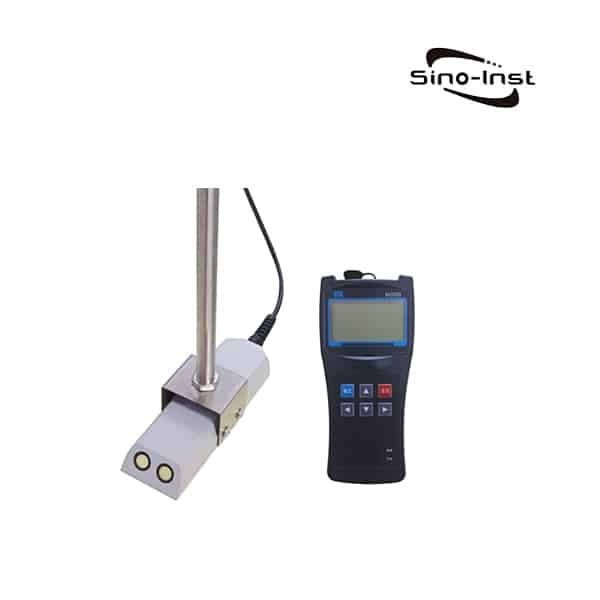
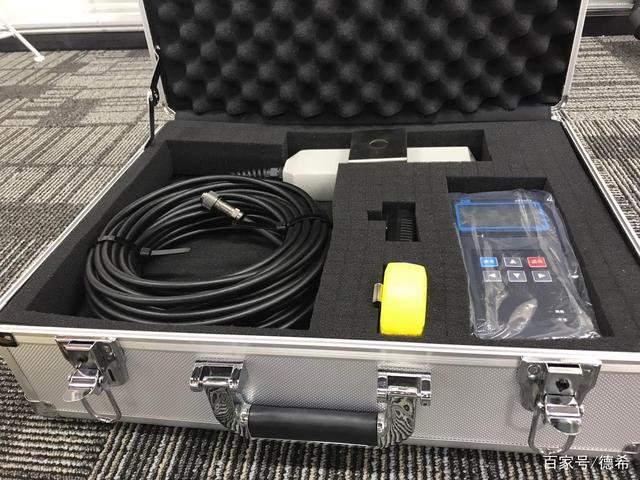
Portable Doppler Flow Meter

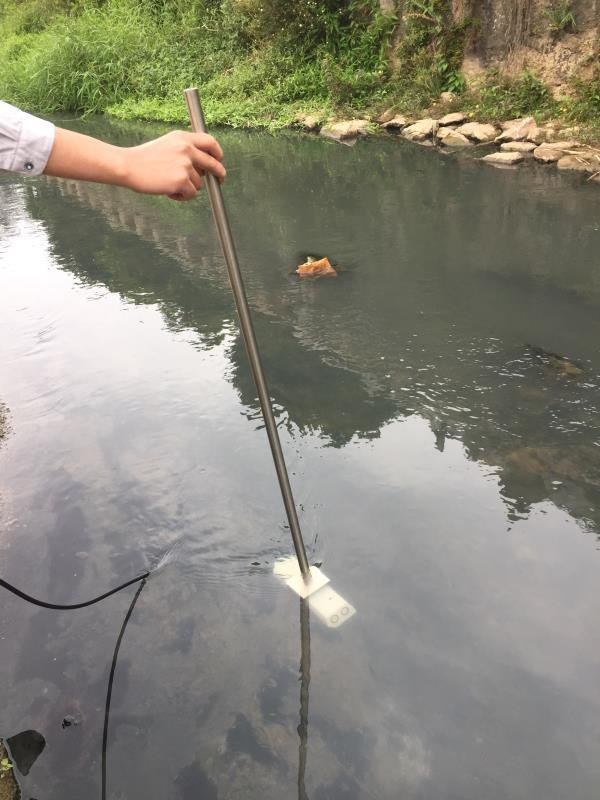
The Portable Doppler Flow Meter uses the Doppler effect of sound waves propagating in the fluid. Hand-held design, suitable for handheld wading water flow measurement.

The Portable Doppler Flow Meter (Model: LSX-2) can obtain the velocity of the fluid by measuring the Doppler frequency shift of the sound waves scattered by the moving particles in the fluid. Combined with the built-in pressure water level gauge, the velocity area method can be used to measure the flow of the liquid. It is suitable for flow measurement of open channels, rivers, pipelines and difficult-to-build standard sections. It can work continuously for more than 12 hours on a single charge.

Sino-Inst offers a variety of  Ultrasonic flow meters for flow measurement. If you have any questions, please contact our sales engineers.

Features of Portable Doppler Flow Meter

  • The flow rate range can reach 0.02-5m/s, and the resolution is 1mm/s.
  • High response time. It takes a long time to get the flow rate and the measurement results are refreshed in real time.
  • Flow measurement by velocity area method, suitable for full and non-full pipes. The water level relationship of the section can be set freely.
  • The integrated pressure and water level sensor can directly measure the water depth and can be used in shallow water.
  • Fluid mechanics shell design. Little impact on the flow state of the water body. Does not affect the measurement accuracy.
  • Small and lightweight handheld terminal with a graphic display interface. It can display the flow rate, flow, water level, and water temperature in real time.
  • 16MB internal storage space. It can store more than 100,000 data.
  • Equipped with data receiving software. Used for data export and processing.
  • Built-in multiple standard flow rate measurement methods and flow calculation methods.
  • Rechargeable battery pack, continuous use for more than 12 hours.

Specifications of Portable Doppler Flow Meter

Fluid velocityRange20mm/s-5000mm/s
measurement accuracy±1% of measured flow rate
Resolution1mm/s
Liquid levelRange0-5m
measurement accuracy±1cm
Resolution1mm
Flow rateRange0.001m3/s to 9999m3/s depends on the actual section
measurement accuracy±3%
Resolution0.0001m3/s
Other parametersPower supply rangeBuilt-in rechargeable battery, fully charged for more than 12 hours
Collection cycle5 meters, 10 meters optional
Interface TypeUSB
Storage temperature-20-80℃
Operating temperature0-60℃
Protection levelIP68
shell materialPVC

Extended reading: Make Ultrasonic Open Channel Flow Meter Work for You

Portable Doppler Flow Meter to measure open channel flow

Portable Doppler ultrasonic open channel flowmeter uses the principle of Doppler velocity area method to monitor flow. It is designed for flow velocity and flow measurement in open channels and partially filled pipes.

The principle of the Portable Doppler Flow Meter is to measure the fluid flow rate using the ultrasonic Doppler principle.

The liquid level is measured by pressure and ultrasonic sensors. The calculator can set multiple point coordinates to simulate the shape of the weir trough to obtain the cross-sectional area, so as to measure and monitor the flow.

The principle of ultrasonic Doppler is adopted, that is, any liquid flowing in the pipeline has discontinuous disturbance.

These discontinuous disturbances can be suspended solid particles or bubbles, or interfaces caused by fluid disturbances.

This disturbance causes the reflected ultrasonic wave to produce a Doppler frequency shift Δf. The Doppler shift Δf is a linear function of the flow velocity. By measuring the Doppler frequency shift Δf, and according to the propagation speed of sound waves in the water. The flow velocity of the disturbance can be calculated, and then the water flow velocity can be obtained.

Only need to connect the flowmeter probe and the handheld controller when using the equipment.

Use the measuring rod to fix the flowmeter probe.

Put the flowmeter probe into the channel or water body to be measured.

The hand-held controller can display the corresponding flow rate information.

How much is a 2 inch water flow meter? Let’s find out.

Portable transit time flow meter

Handheld Ultrasonic Flow Meter ( Model:2000H) has been successfully applied to measurement work in various industries. The measuring range is 20-6000mm (0.5-20 inches). A non-contact measurement method is adopted. Flexible operation and easy to carry. Conductive or non-conductive, corrosive or non-corrosive liquids can be measured. Various fluids: water, pure water, sewage, sea water, chemical fluids, river water, fuel Oil etc. can be measured.

Sino-Inst, Manufacuturer for Portable Doppler Flow Meters. It can measure a single sound-conducting liquid medium. It can measure even liquids such as water, sea water, oil, and slurry.

Sino-Inst’s Portable Doppler Flow Meter, made in China, Having good Quality, With better price. Our flow measurement instruments are widely used in China, India, Pakistan, US, and other countries.

Request a Quote

Please enable JavaScript in your browser to submit the form

Wall Mounted Ultrasonic Doppler Flow Meter

What is a Doppler flow meter? Doppler Flow Meter is a flow meter that uses the doppler effect principle to monitor the liquid flow rate.

Doppler Flow meter use reflected ultrasonic sound to measure the fluid velocity. By measuring the Doppler frequency shift of the sound waves scattered by the moving particles in the fluid, the velocity of the fluid can be obtained. Combined with the built-in pressure water level gauge. Using the velocity area method. The flow of liquid can be measured. Suitable for flow measurement in open channels, rivers, and various full and partial open channels.

Sino-Inst offers a variety of  Ultrasonic flow meters for flow measurement. If you have any questions, please contact our sales engineers.

Features of Doppler Flow Meter

  • All functions in one design. Simultaneous measurement of average flow rate, water depth, and water temperature
  • The velocity area method is used to measure the flow, and there is no head loss. There is no need to build a standard weir.
  • The ultrasonic Doppler principle is used to measure the flow velocity. The measurement accuracy is high and the initial speed is low.
  • No mechanical rotor structure. It has no effect on the water flow state, and the measurement is more accurate.
  • Comes with a temperature sensor. It can be used to compensate for the effect of water temperature on the speed of sound.
  • It can measure instantaneous flow and cumulative flow.
  • Using frequency domain Doppler analysis algorithm. The data is stable and reliable, and the real-time performance is strong.
  • Simple installation. No need for auxiliary engineering facilities

Specifications of Doppler Flow Meter

Fluid velocity Range 20mm/s-5000mm/s
measurement accuracy ±1% of measured flow rate
Resolution 1mm/s
Liquid level Range 0-5m
measurement accuracy ±1cm
Resolution 1mm
Flow rate Range 0.001m3/s to 9999m3/s depends on the actual section
measurement accuracy ±3%
Resolution 0.0001m3/s
Other parameters Power supply range 9-24V
Collection cycle Can be set
Interface Type RS485(Modbus)
Storage temperature -20-80℃
Operating temperature 0-60℃
Protection level IP68
shell material PVC

Guess You’ll Like: Ultrasonic flow meters types & technical guide

What is a Doppler flow meter?

Doppler flowmeter is an ultrasonic flowmeter that uses the Doppler effect of sound waves propagating in fluids. It is suitable for the flow measurement of open channels, rivers and difficult-to-build standard sections, as well as the flow measurement of various full and partial open channels.

The Doppler flowmeter uses the principle of ultrasonic Doppler to measure. By measuring the Doppler frequency shift of the sound waves scattered by the moving particles in the fluid, the velocity of the fluid can be obtained. Combined with the built-in pressure water level gauge, the velocity area method can be used to measure the flow rate of the liquid.
According to different application scenarios, it can be called river flowmeter, sewer flowmeter, channel flowmeter, farmland irrigation flowmeter, non-full pipe flowmeter, etc.

Doppler flowmeters do not need to cut off the pipeline to install pipe-segment sensors like electromagnetic flowmeters. There is no need to use a shut-off device. Do not install a fixed weir to control the flow of water from a fixed outlet.

The Doppler flowmeter can measure in both clean and muddy water, and can also measure reverse flow velocity.

Read mroe about: Irrigation Flow Meters for Agriculture Water System

Doppler flow meter working principle

For flow velocity measurement, the first thing to explain is the Doppler shift. When there is relative motion between the wave source and the observer, the frequency received by the observer is different from the true frequency of the wave source. The difference between the frequency of the received signal and the frequency of the sound source is called the Doppler shift. Its size is determined by the relative speed between the two. This physical phenomenon is called the Doppler effect.

When measuring the flow velocity, the wave emitted by the probe encounters suspended matter, solid particles, vapor bubbles, and even unstable vortices and disturbances in the medium that follow the wave. Both will produce reflected waves that deviate from the transmit frequency, resulting in Doppler frequency changes. This effect is proportional to the velocity of movement of the reflector.

The receiving probe receives the reflected wave from each point. After complex signal processing, dynamic spectrum analysis and accuracy calculation. The flow velocity of the fluid in the pipe section can be obtained.

Flow rate calculation

The ultrasonic beam emitted from the Doppler velocity sensor (transducer) encounters particles or bubbles moving in the fluid. It is reflected back and received by the Doppler flow sensor (transducer). The Doppler frequency shift of the transmitted signal and the received signal is proportional to the fluid velocity.

Among them:
u is the channel flow rate,
f1 is the working frequency of the sensor,
δfd is the Doppler frequency difference.

Flow calculation

Real-time flow velocity and water level data collected by acoustic Doppler flowmeter.
The data acquisition and processing unit receives the flow rate and water level data. Calculate the instantaneous flow rate and record it as Qs;
Then calculate the accumulated flow rate and record it as Q; its flow rate can be calculated as follows:

Qs=AV

In the formula, A is the water area of the pipeline, and V is the average flow velocity of the section.

Q = QsT

In the formula, the instantaneous flow of Qs section, T is the accumulated time (unit h).

Read more about: Ultrasonic flow meters types & technical guide

Ultrasonic doppler flow meter advantages and disadvantages

Advantages of ultrasonic Doppler flowmeter:

  1. Contact measurement. Can accurately measure the flow rate of the fluid;
  2. Wide range of use. It can measure the flow velocity of rivers, channels, dissatisfied pipelines, and urban underground pipe network sewer scenarios;
  3. Simple installation. No baffle or weir groove is needed. The data can be measured by simply contacting the sensor directly with the fluid;
  4. Low power consumption, diversified power supply methods, 6v power supply. Optional external power supply, battery power supply, solar power supply;

Disadvantages of ultrasonic Doppler flowmeter:

  1. Cannot measure pressured pipelines, closed pipelines and high temperature environments;
  2. The water depth is less than 10cm and cannot be measured;
  3. The stable data can only be measured in a place where the water flow is stable, and there are certain requirements for the selection of the installation location;
  4. For a site with a large turbidity, it is not as good as a site with more floating objects, garbage, and bottom silt, and accurate data cannot be measured;

Ultrasonic Doppler Flow Meter Applications

Fixed Doppler ultrasonic flowmeters

Mainly used in environmental testing of urban sewage treatment plants, drainage pumping stations, and mining, oilfields, metallurgy, chemical, oil refining, paper, food and other industries.

Flow measurement of urban drainage, industrial wastewater, domestic sewage, mud, paper pulp, oil-water mixture, etc.

It is suitable for hard pipes such as steel and hard plastic pipes.

It can measure two-phase liquids containing suspended solid particles or bubbles in tubes with various tube diameters and wall thicknesses.

Doppler flow meter open channel

There are many monitoring methods for measuring the flow of water in open channels, among which the water level flow method and the velocity area method are the majority. The former uses an ultrasonic open channel flowmeter to measure, and the latter uses a Doppler flowmeter to measure in an open channel.

The methods used for different open channels are different. Here we mainly talk about what conditions the Doppler flowmeter must meet for measurement in an open channel.

The Doppler flowmeter is in full contact with the water through the flow rate sensor. The real-time flow rate is measured. Input the width, shape, and water depth of the open channel to the host. The host uses the speed area method to convert the real-time flow.

Therefore, it requires the water depth to immerse the sensor in order to obtain more accurate data.

Due to the principle of ultrasonic measurement, it is determined that the Doppler flowmeter measurement in the open channel needs to meet the following conditions:

  1. The flow rate of the water flow should be uniform, and there should be no plain flow (to ensure such measurement conditions, the site should meet the straight channel with 15 times the channel width)
  2. Water depth requirement: no sensor (Yuzheng Doppler flowmeter requires water depth ≥13cm)
  3. Width of open channel ≥50cm
  4. The water flow velocity is required to be 0.04m/s-10.00m/s. If the flow velocity is too fast, the measurement will be inaccurate
  5. There should be no rubbish and large floating objects in the open channel
  6. The water in the open channel should not be too pure, for example, pure water cannot be measured

The above six points are the conditions that need to be met simultaneously for the measurement in the open channel of the Doppler flowmeter. Of course, before the measurement, the selection of installation and the selection of the installation point are also very important.

If you still don’t understand the details, you can contact Sino-inst technical consultant to get in touch to solve your troubles in detail.

Extended reading: Make Ultrasonic Open Channel Flow Meter Work for You

Application of Ultrasonic Doppler Flowmeter in Irrigation District

1.Check the water level and velocity curve

Portable Doppler ultrasound can be used to place it in the channel of the irrigation area. During the upstream discharge process, the water level, velocity, and flow changes are measured. The water level, velocity, and flow meter are generated.

In the later calculation, you can directly use the ultrasonic water level gauge or the radar water level gauge for online monitoring. Combine the existing water level, velocity and flow relationship to get the flow value under the current water level.

When the upstream and downstream channels of the irrigation area are changed, re-measurement is required. This method is suitable for use in irrigation areas that require cost and require mass monitoring.

2.Long-term online monitoring

Use LSX-1 Doppler ultrasonic flowmeter with telemetering terminal. Use city power or solar power system for power supply. Fix the flowmeter in the channel. The telemetry terminal periodically collects the data in the flowmeter and sends it to the server remotely via GPRS. The data can be viewed through the WEB platform.

Portable Doppler Flow Meter

The Portable Doppler Flow Meter uses the Doppler effect of sound waves propagating in the fluid. Hand-held design, suitable for handheld wading water flow measurement.

The Portable Doppler Flow Meter (Model: LSX-2) can obtain the velocity of the fluid by measuring the Doppler frequency shift of the sound waves scattered by the moving particles in the fluid. Combined with the built-in pressure water level gauge, the velocity area method can be used to measure the flow of the liquid. It is suitable for flow measurement of open channels, rivers, pipelines and difficult-to-build standard sections. It can work continuously for more than 12 hours on a single charge.

Transit time vs Doppler flow meter

There are two types of ultrasonic flowmeters, one is the time difference measurement method, and the other is the Doppler method. Many users often only know one of them.

Here, we make a simple comparison so that you can choose the correct model.

1.The measurement principle is different.

The main principle of the time difference method is that when the ultrasonic beam propagates in the liquid, the flow of the liquid will cause a small change in the propagation time. The change in its propagation time is proportional to the flow rate of the liquid.

At zero flow, the time required for the two sensors to transmit and receive sound waves is exactly the same. The only technology that can actually measure zero flow.

When the liquid is flowing, the transmission time of sound waves in the counter-current direction is longer than that in the downstream direction. The Doppler method uses the characteristic that the ultrasonic wave will be scattered when encountering tiny solid particles or bubbles in the propagation path.

2.The applicable medium is different.

The time difference ultrasonic flowmeter can only measure clean liquids. It will not work well when it contains more solid particles or bubbles.

The Doppler method uses the scattering characteristics of ultrasonic waves for measurement. Therefore, the Doppler method is suitable for measuring fluids containing solid particles or bubbles, but clean liquids cannot be measured.

3.The measurement accuracy is different.

The time difference method has higher measurement accuracy, and the Doppler method has lower measurement accuracy.

Since scattered particles or bubbles exist randomly, the sound transmission performance of the fluid is also different. If it is a fluid with poor sound transmission performance, the scattering is stronger in the low velocity area near the pipe wall.

However, the scattering of fluids with good sound transmission performance is dominant in the high velocity area, which makes the measurement accuracy of the Doppler method lower.

Although it adopts a structure in which the transmitting transducer and the receiving transducer are separated. In this way, only the scattering in the middle area of ​​the velocity profile can be received. However, the measurement accuracy is still lower compared with the time difference method.

4.The working conditions are different.

The time difference method is suitable for full pipe measurement.
The Doppler method is suitable for measuring the flow of full pipes, partial pipes, open channels, etc.

OMEGA Engineering has a good explanation of Doppler vs Transit Time. Let’s look together.

Video source: https://www.youtube.com/watch?v=NQWNYARWmB8

More Featured Ultrasonic Flowmeters

Sino-Inst, Manufacuturer for Ultrasonic Doppler Flow Meters. It can measure a single sound-conducting liquid medium. It can measure even liquids such as water, sea water, oil, and slurry.

Sino-Inst’s Ultrasonic Doppler Flow Meter, made in China, Having good Quality, With better price. Our flow measurement instruments are widely used in China, India, Pakistan, US, and other countries.

Ultrasonic Open Channel Flow Meter

Ultrasonic open channel flow meter can measure the water level, flow rate, and total volume flowing through weirs, troughs, channels, and partially filled pipes. Ultrasonic open channel flow meter is used in conjunction with Parshall flume. Using hydraulic flow measurement, ultrasonic positioning, microcomputer processing, digital display, and other technologies. It can be installed and automatically measured in harsh environments. Commonly used for agricultural irrigation water discharge measurement, wastewater, sewage, and other measurements.

Sino-Inst offers a variety of  Ultrasonic flow meters for flow measurement. If you have any questions, please contact our sales engineers.

Features of Ultrasonic Open Channel Flow Meter

  • Ultrasonic non-contact liquid level measurement does not affect the flow rate at all. Accurate liquid level measurement is an ideal level meter.
  • The probe has low power consumption, simple installation and easy positioning. It is widely used in rivers, water supply, factories, urban sewage pipelines and other related fields.
  • The flow totalizer is easy to operate and suitable for wide types of water measuring weirs, including thin-walled right-angled triangular weirs, rectangular weirs, and Parshall grooves.
  • The flow totalizer has the function of historical flow recording. It can record the flow data of the past 60 hours, 30 days, 12 months, and 10 years. More historical data can be recorded in real time through the SD card.
  • Comprehensive instrument control functions, four-way relay signal output, easy to connect to commonly used actuators (motors, alarms, etc.).
  • According to the requirements of working conditions, the probe can choose special models such as IP68, anti-corrosion, explosion-proof, small blind area high-precision, ultra-low power consumption, large range and other special models.
  • Built-in remote communication module, various communication protocols can be customized (customized when ordering).

Extended reading: Flow Totalizer Meter vs Flow Meter

Specifications of Ultrasonic Open Channel Flow Meter

StructureOne-piece and split type
Measuring range0.1m³/h~99999.99m³/h is determined according to different weirs and troughs
Cumulative flowThe maximum is: 429000000.00m3
Level measurement accuracy0.50%
Resolution3mm or 0.1% (whichever is greater)
Flow measurement accuracyStandard weirs and troughs 1~5% (weir troughs and channels that meet the requirements of the national standard),
non-standard weirs and troughs 10~50%
powered by220VAC±15% 50HZ, or 24VDC 120mA, (optional) 12VDC,
battery powered, solar powered
Protection levelDisplay instrument IP66, probe IP68
Probe selection instructionsIt is recommended to use 100KHz M48×2 probe for No.1-5 Parshall grooves,
The measuring range is 1 meter, it is not easy to hit the wall or corner of the Parshall groove to form false signals;
The probe blind area is small, only 10-13 cm, and the mounting bracket can be made lower;
It is recommended to use 64Khz M48×2 probe for No. 6-25 Parshall slot, measuring range 2 meters, blind area 30 cm.

Application of Ultrasonic Open Channel Flow Meter

Ultrasonic open channel flowmeter has a special structure with a Parshall groove. It can be used to continuously monitor the flow of sewage in the open channel and accumulate the flow. It is suitable for flow measurement under the conditions of water canal, agricultural irrigation, wastewater discharge, water conservancy, hydropower, environmental protection, and other industrial and agricultural open channels.

The open channel flowmeter transmits and receives ultrasonic waves under the control of a computer. Calculate the distance between the open channel flowmeter and the measured liquid surface according to the transmission time. So as to get the height of the liquid level.

So what problems should be paid attention to in the use of ultrasonic open channel flowmeters?

  1. The host of the ultrasonic open channel flowmeter should be installed indoors. Check lines and sensors regularly;
  2. Regularly check whether the filter screen and the still water well are blocked by foreign matter;
  3. Perform metrological verification of the instrument regularly;
  4. Regularly check the corrosion of the probe and replace it as needed

Ultrasonic open channel flowmeter has a special structure with a Parshall groove. It can be used to continuously monitor the flow of sewage in the open channel and accumulate the flow. It is used to measure the liquid flow in self-flowing partial pipes and open discharge channels. It is suitable for flow measurement under the conditions of water canal, agricultural irrigation, wastewater discharge, water conservancy, hydropower, environmental protection and other industrial and agricultural open channels.

Extended reading: Ultrasonic flow detectors types

Parshall Flume (PVC material, stainless steel material) for Open Channel Flow Meter

When choosing the type of weir and trough for measuring water, it is necessary to consider the size of the flow in the channel, the flow pattern of the water in the channel, and whether it can form a free flow. According to the different large flow, we can choose different weir grooves.

  • The large flow rate is less than 40 liters/sec. It is recommended to use a right-angled triangular weir;
  • It is recommended to use Parshall tank for more than 40 liters/sec;
  • The upstream channel is short, and the large flow rate is greater than 40 liters/sec. It is recommended to use a rectangular weir.

Conditions permit, a good choice of Parshall slot. The water level-flow relationship of the Parshall trough is calibrated by the laboratory, and the requirements for the upstream flow into the trough are relatively weak. The water level-flow relationship of the triangular weir and the rectangular weir is derived from theoretical calculations, and it is easy to cause additional errors due to ignoring some use conditions.

Use glass fiber reinforced plastic to make the measuring weir or trough. The size of the mouth of the triangular weir and the rectangular weir should be accurate, and the surface facing the water inlet should be smooth; the size of the throat part of the Parshall groove should be accurate, and the inner surface of the groove should be smooth.

Common installation methods and installation precautions of Parshall groove:

  • Put the Parshall trough into the open channel. Keep the trough level. The centerline of the Parshall trough should coincide with the centerline of the channel, so that the water flow into the Parshall trough does not appear drift.
  • After the Parshall trough is filled with water, the flow state of the water should flow freely. The submergence degree of the Parshall trough is less than the specified critical submergence degree.

Require:
Keep the downstream discharge of the Parshall trough unblocked. Do not accumulate water, if not unblocked. Keep the water level difference greater than or equal to 30MM.

The straight section before the Parshall trough has a distance buffer of 1 to 3 meters. The buffer channel should be level with the bottom of the trough. It is convenient for ultrasonic measurement.

It must be ensured that there is a water level difference downstream of the Parshall trough. The discharge is unobstructed and no water will accumulate.

Extended reading: Dam water level measurement

Open Channel Ultrasonic Flow Meter Working Principle

The open channel flowmeter is based on the specific shape of the Parshall metering groove/weir plate metering groove. It guarantees a certain liquid level and knows a certain flow rate. The Parshall groove/weir plate metering groove is selected as the specific flow channel. The measurement accuracy is high. Easy to install.

The sensor measures the height of the liquid level, which is processed by 89C52 series single-chip microcomputers to obtain the instantaneous flow and cumulative flow values.

The flow can be expressed by the following formula:
  Q=KHn
  Q: Instantaneous flow rate (t/h) K: Flow rate constant
  H: height of liquid level n: nth power value

The instantaneous flow is processed by the cumulative accumulation to obtain the cumulative flow.

Extended reading: Radar Non Contact Water Level Sensor

Inline Ultrasonic Flow Meter

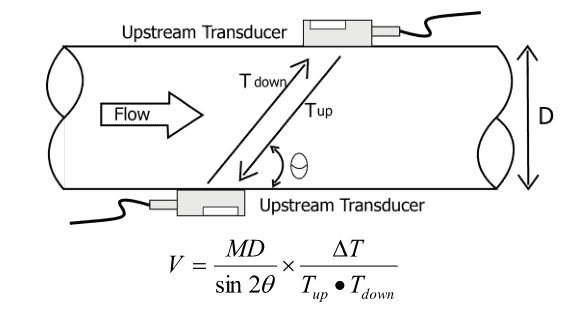
Transit Time Ultrasonic Flow Meter adopts the measurement principle of the time difference method. It uses the ultrasonic wave emitted by the sensor to propagate in the flowing fluid. The sound wave propagation speed in the downstream direction will increase, and the backward direction will decrease. In the same propagation distance, there will be different transmission times. According to the difference between the transmission time and the measured The relationship between fluid velocity measures the fluid velocity.

The flow rate of the fluid is different in different positions in the tube. The flow rate in the center of the tube is faster than the flow rate near the wall of the tube. The flow velocity distribution of the fluid in the pipeline can be represented by the flow velocity cross-sectional distribution diagram.

By setting the flowmeter and considering the cross-sectional distribution of the flow velocity, the average flow velocity can be calculated. Then the volume flow of the fluid can be obtained according to the cross-sectional area of the pipe.

Notes:
V measure fluid velocity
M ultrasonic reflection times
D pipe diameter
θ The angle between the ultrasonic signal and the fluid
T up The time when the downstream sensor transmits the signal to the upstream
T down Time from the upstream sensor to downstream
ΔT = T up – T down

Guess You’ll Like: Ultrasonic flow meters types & technical guide

Ultrasonic Doppler Flow Meter uses the physical principle of Doppler frequency shift to measure the water flow velocity.

Doppler effect (Doppler frequency shift) principle:
The sound waves emitted by one object are received and reflected by another object. If the object emitting the sound wave is moving relative to the receiving object. The frequency of the sound wave received by the receiving object will be different from the frequency of the emitted sound wave.

If the relative distance between two objects is reduced, the received frequency will increase.
If the relative distance between two objects is increased, the received frequency will decrease.

Such Doppler effects often occur in daily life. For example: when you hear the sirens (sounds) of an oncoming police car. The sound will appear higher in frequency. When the police car is far away from you, the sound it hears will become lower.

Through the difference between the frequency of transmitting ultrasonic waves and the frequency of receiving ultrasonic waves, the specific flow rate can be calculated. Then the water level is measured by the pressure sensor, and the water passing area is calculated from the water level and channel size.
Finally, the velocity and area are integrated to calculate the final instantaneous flow.

Calculation formula:
Velocity × water area × 3600 seconds = instantaneous flow rate (cubic meters/hour)

Read mroe about: Irrigation Flow Meters for Agriculture Water System

Ultrasonic Open Channel Flow Meter Measures Sewage

Because the ultrasonic open channel flow meter uses open channel non-contact measurement. Therefore, the probe can be separated from the host. It can effectively solve the problems of probe corrosion and instrument accuracy, so it is widely used in irrigation and drainage and sewage measurement.

Read more about: Common River Water Level Measurement Methods

Note when installing:

  • To ensure that the sewage flowing through the flow tank has no foreign matter. A filter must be installed not far upstream of the flow tank;
  • To ensure that the sewage flowing through the flow tank is stable and without ripples. A still water well connected to the flow trough can be arranged on the side of the flow trough. The inner diameter of the well is ≥100mm. The bottom of the well should be 150mm below the lowest point of the trough. The width of the straight section of the trough ≥ 10 times the width of the water surface of the weir. The highest water level downstream is lower than the lowest water level of the weir;
  • The emission surface of the sensor probe should be parallel to the liquid surface. The distance between the lower end of the sensor and the highest liquid level should be ≥0.7 m;
  • There should be no strong light, electromagnetic field and other radiation sources around the sensor;
  • There should be measures to prevent rain and snow above the ultrasonic sensor.

Note in use:

  • Because the places where sewage ultrasonic sensors are installed are places with relatively poor environment. Therefore, the host of the instrument should be installed indoors. There should be a dedicated person to take care of it. Conduct regular inspections of lines and sensors;
  • The meter should be checked regularly.

Read more about: Waste water measurement

More Featured Ultrasonic Flow Meter

Frequently
Asked
Questions

Open Channel flow meters measure level, flow rate and total volume of water flowing through weirs, flumes, channels and partially filled pipes. These meters perform best where the sediment does not build up.

Types of open channel flow meters (open channel flow measurement method)

In principle, open channel flow measurement methods can be divided into two categories: water level method and velocity area method.

The water level method is to measure the upstream (or upstream and downstream) water levels of water measuring buildings and convert them into flow through empirical formulas or experimental curves.

The velocity area method does not need to build a water measuring building, and the flow rate is obtained by measuring the cross-sectional area of the water (in fact, the cross-sectional area is calculated by the measured water level) and the cross-sectional velocity.

Ultrasonic flowmeter is composed of three parts: ultrasonic transducer, electronic circuit and flow display and accumulation system.

The ultrasonic transmitting transducer converts electrical energy into ultrasonic energy and transmits it into the measured fluid. The ultrasonic signal received by the receiver is amplified by the electronic circuit and converted into an electrical signal representing the flow rate for display and totalizer for display And accumulate. In this way, the flow detection and display are realized.

According to the detection method, it can be divided into different types of ultrasonic flowmeters such as propagation velocity difference method, Doppler method, beam shift method, noise method, and related method. The ultrasonic flowmeter is a kind that has only begun to be applied with the rapid development of integrated circuit technology in the past ten years.

The usual accuracy of our ultrasonic flowmeter is 1%. The highest is 0.5% for a liquid ultrasonic flowmeter and 1.0% for a gas ultrasonic flowmeter.

  1. According to the measurement principle

(1) Time difference method ultrasonic flowmeter;
(2) Frequency difference method ultrasonic flowmeter;
(3) Phase difference method ultrasonic flowmeter;
(4) Doppler ultrasonic flowmeter;
(5) Ultrasonic flowmeters for partially full pipes and river channels that combine liquid level measurement and average flow velocity measurement.

  1. According to the way of use

(1) Portable ultrasonic flowmeter;
(2) Fixed (standard pipe section) ultrasonic flowmeter.

  1. According to the installation method of the transducer

(1) Standard pipe section ultrasonic flowmeter;
(2) Clip-on ultrasonic flowmeter;
(3) On-site plug-in ultrasonic flowmeter with hole opening.

  1. According to whether the transducer is in contact with the fluid

(1) Immersion (contact) ultrasonic flowmeter;
(2) Non-invasive (non-contact) ultrasonic flowmeter.

  1. According to the nature of the measured fluid

(1) Liquid ultrasonic flowmeter;
(2) Gas ultrasonic flowmeter.

  1. According to the number of transducer channels

(1) Mono ultrasonic flowmeter;
(2) Two-channel ultrasonic flowmeter;
(3) Multi-channel ultrasonic flowmeter.

Sino-Inst, Manufacturer for Open Channel Flow Meters. It can measure a single sound-conducting liquid medium. It can measure even liquids such as water, seawater, oil, and slurry.

Sino-Inst’s Open Channel Flow Meter, made in China, Having good Quality, With better price. Our flow measurement instruments are widely used in China, India, Pakistan, the US, and other countries.