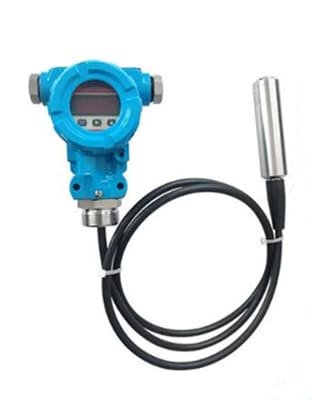
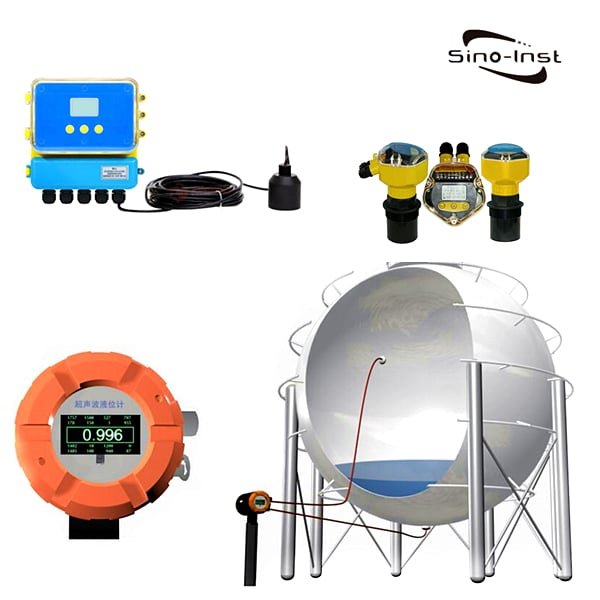
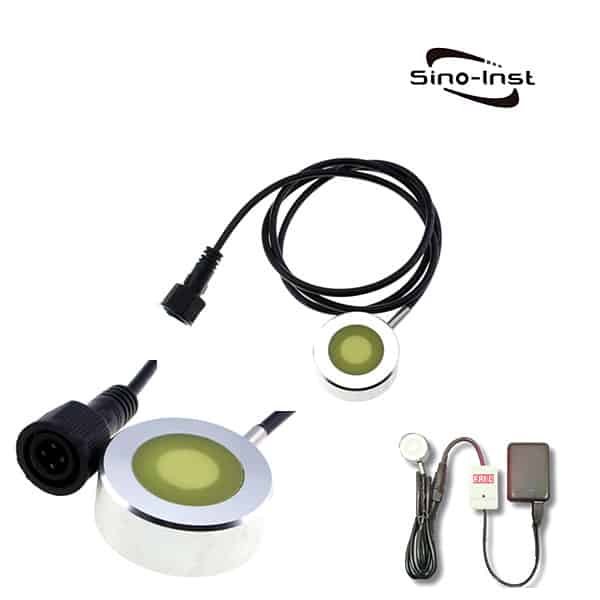
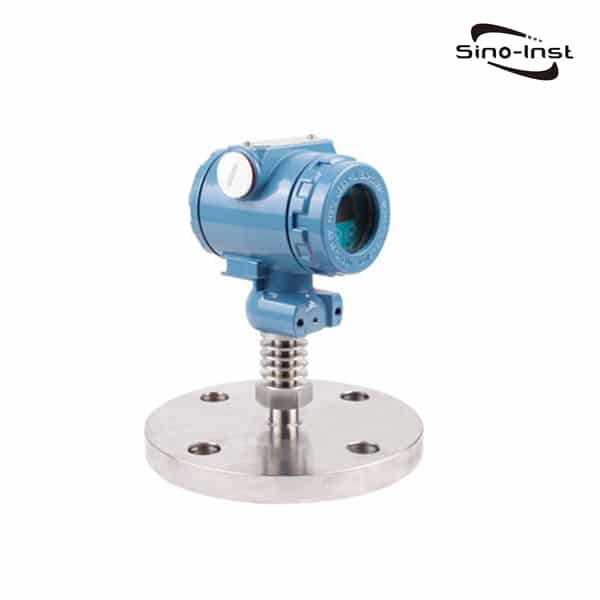
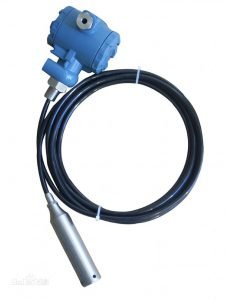
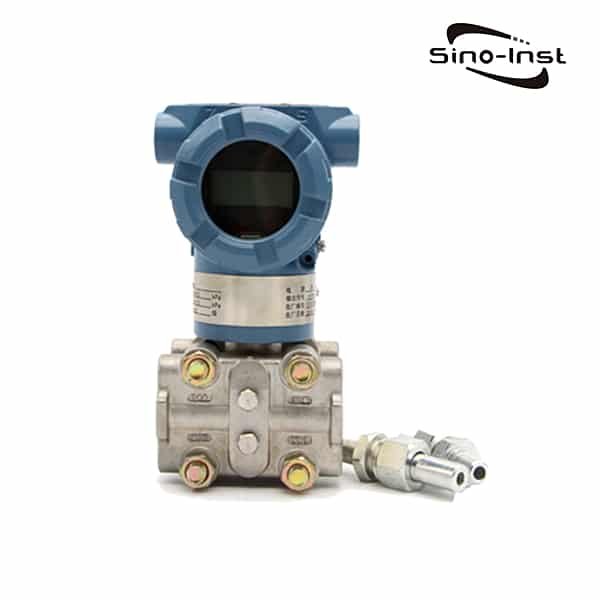
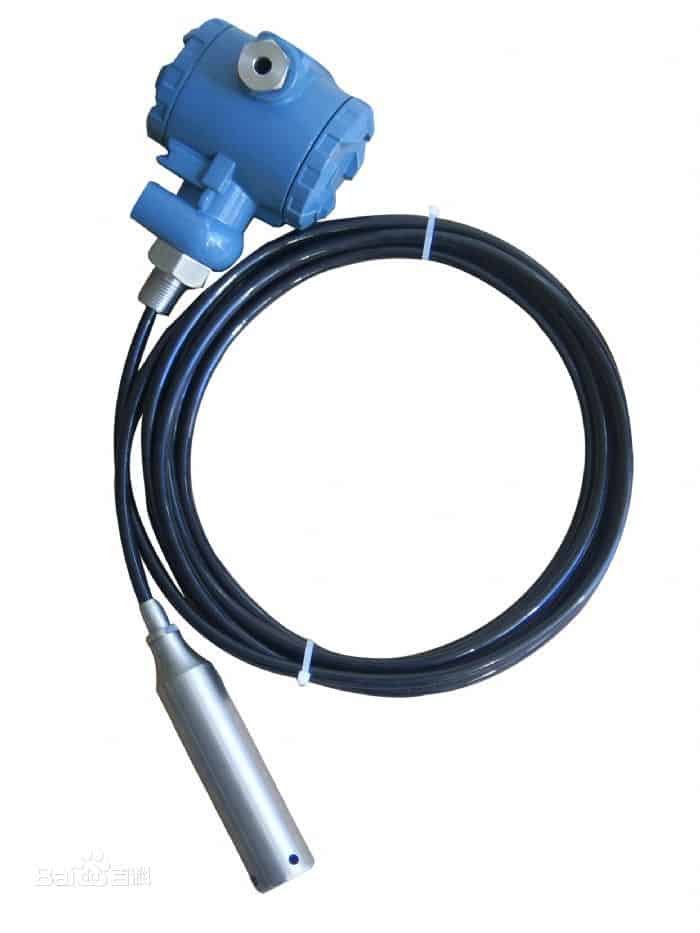
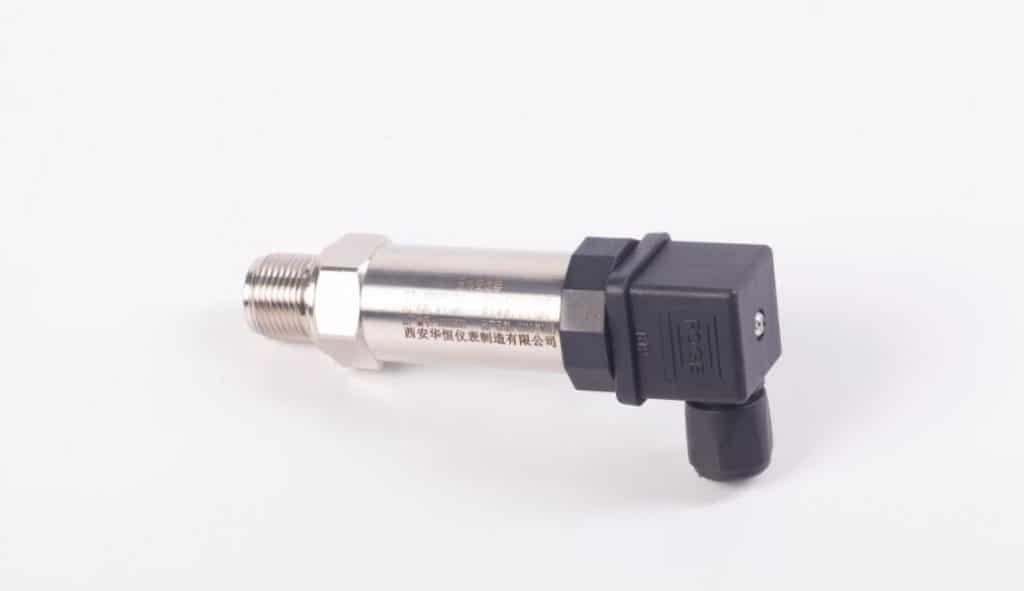
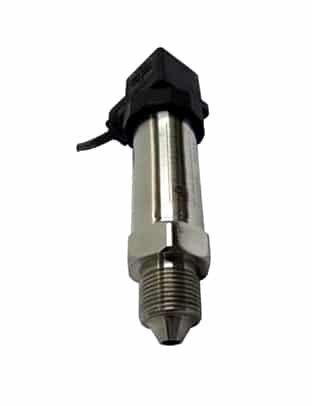
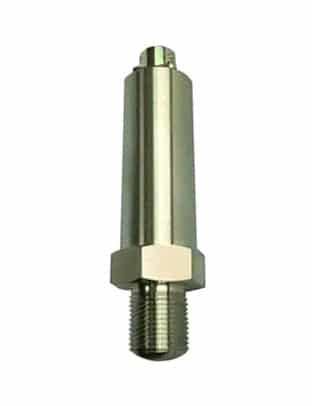
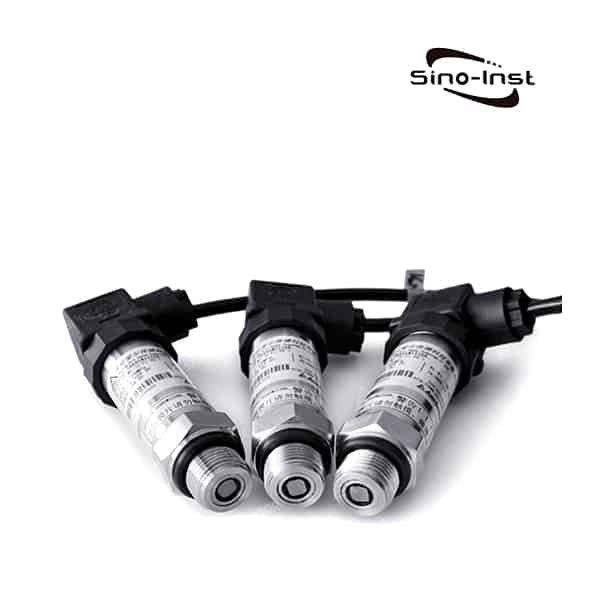
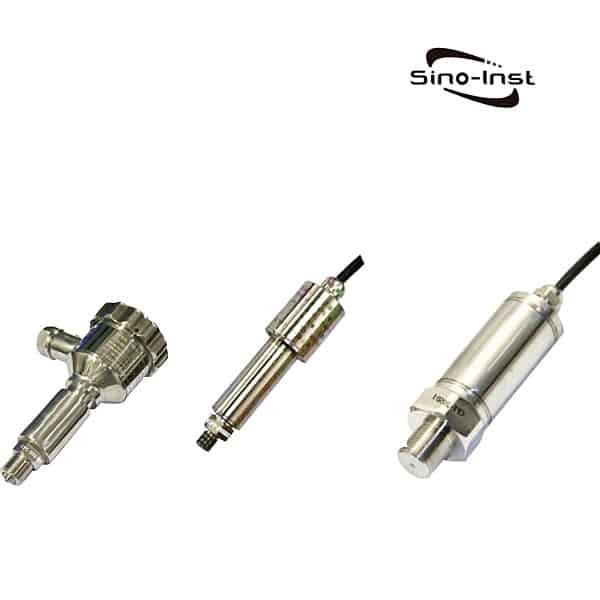
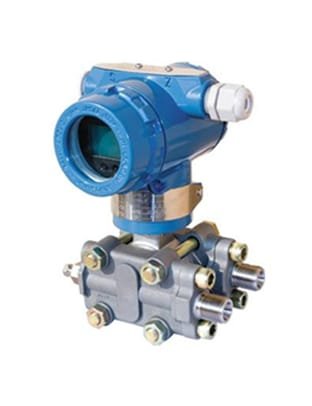
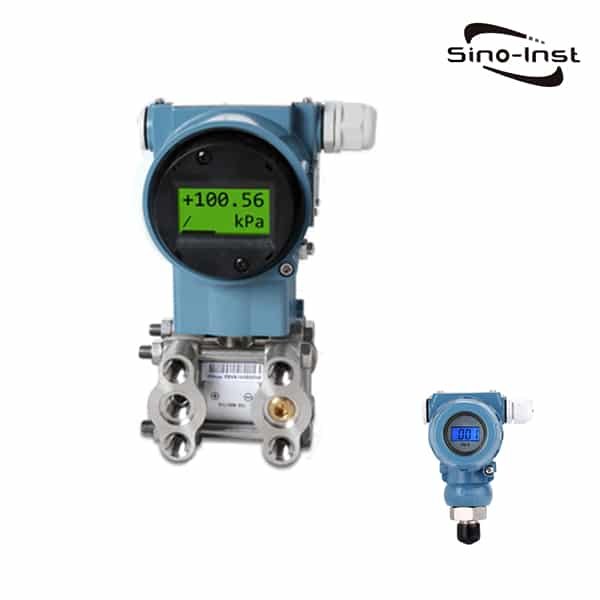
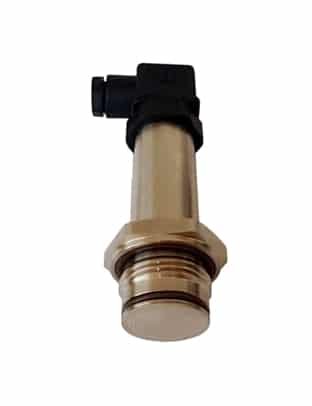
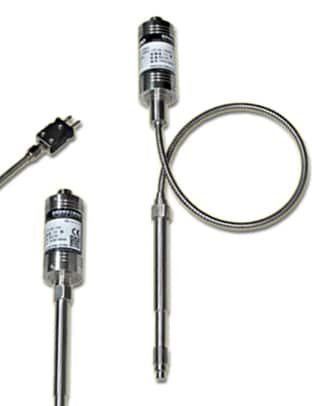
SI-EP489 Explosion Proof Pressure Transmitter

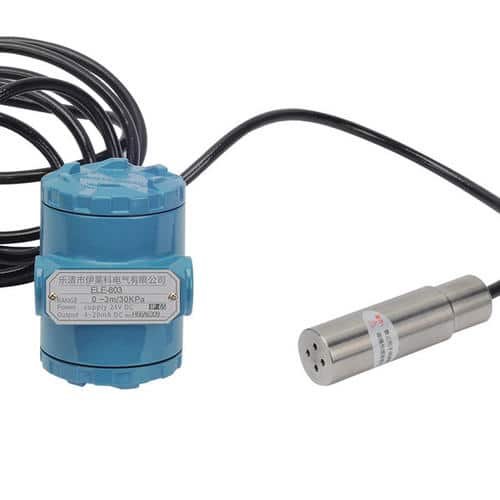
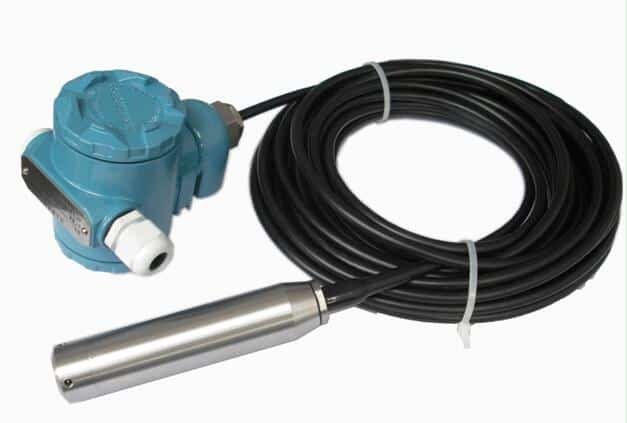
Explosion Proof Pressure transmitter refers to a pressure sensor with explosion-proof or intrinsically safe housing. Suitable for hazardous and explosive areas.

Explosion-proof Pressure Transmitter

Explosion Proof Pressure transmitter, or explosion-proof pressure transducer, with the explosion-proof enclosure. For applications in hazardous areas. Class I, Division 1. Flameproof ExdIIBT5Gb; Intrinsically safe ExiaIICT4/T5/T6Ga.
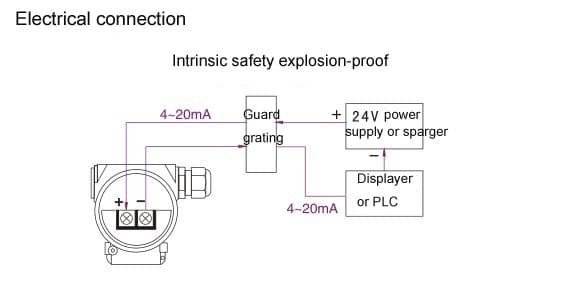
SIEP489 has flexible pressure calibration, push-button configuration, and programmable using HART® Communication. All our electronic pressure transducers can be offered with Explosion-proof. Select explosion-proof pressure transmitters with Ex d certification and 4-20mA output signals for installation.

Sino-Inst offers a variety of Explosion-proof pressure sensors for industrial pressure measurement. If you have any questions, please contact our sales engineers.

Features of Explosion Proof Pressure Transmitter

  • FM approved as “explosion-proof” for class I, div. 1 hazardous areas
  • Available with EXD approval “flameproof enclosure” for II 2 G Ex d II C
  • Current or voltage output
  • Designed for harsh ambient conditions
  • Low-power version available as an option

Specifications of SIEP489 explosion-proof pressure transmitter:

Standard range
Pressure typeGauge pressure, absolute pressure, sealing pressure
Pressure range (bar)1 1.6 2.5 4 6 10 16 25 40 60 100 160 200 250 300 400 500 600 750 1000 1500
Pressure range (psi)15 30 50 75 100 200 300 500 750 1K 1.5K 3K 5K 10K 12K 15K 25K
Technical Specifications
Accuracy±0.3 %FS    ±0.5 %FS
Long-term stability (1 year)±0.25 %FS
Response frequency (-3DB)3.2kHz
Temperature compensation-20~+85℃
Storage temperature-40~+125℃
Load ResistanceVoltage output: RL > 100KΩ, current output: RL≤ (supply voltage-9V) / 20mA
Overload pressure150% FS (Range < 6Bar) 300% FS (Range≥6Bar)
Destruction pressure200% FS (Range < 6Bar) 500% FS (Range≥6Bar, limit 10000Bar)
Mechanical vibration±20g
Shock (11mS)100g
Protection levelIP65
material17-4PH (Range≥6Bar) 304 or 316L (Range <6Bar)
Electrical connectionsDirect lead
Pressure interfaceM20X1.5   G1 / 4       NPT1 / 4 (others can be customized)
Explosion-proof gradeExd II CT6 Gb
Signal output4~20 mA0.5 ~ 4.5VDC (proportional output)0.5~4.5VDC0~5VDC0~10VDCRS485RS232
Signal line specifications2 Wire3 Wire3 Wire3 Wire3 Wire4 Wire4 Wire
Supply voltage9~30VDC5VDC9~30VDC9~30VDC15~30VDC9~30VDC9~30VDC

Read more about: What Is the Difference Between Class 1 Div 1 and Class 1 Div 2 ?

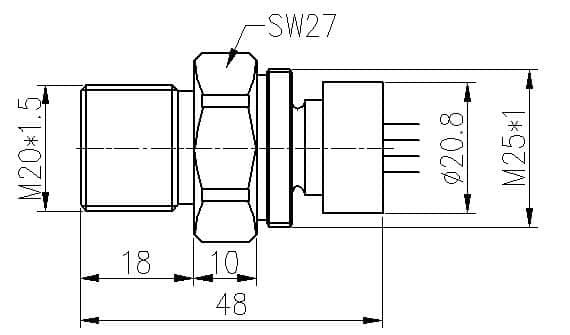
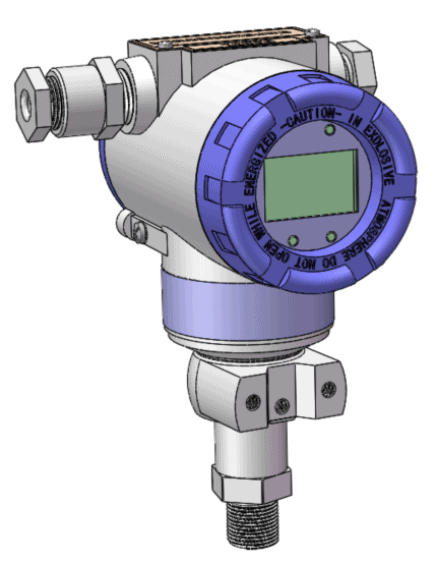
Explosion proof pressure transmitter drawing

Applications of explosion proof pressure transmitter

Oil & Gas equipment needs a pressure transducer, that is reliable and able to withstand extreme environmental and pressure conditions.

  • Borehole monitoring
  • Oil Field Equipment
  • Refineries and petrochemical industry
  • Drilling platforms and pipelines
  • Upstream Oil and Gas Production
  • Natural Gas Compression and Transfer Control
  • Alternative Energy     
  • Industrial and OEM Applications

We can provide maintenance, calibration and other services of the same type of products. Such as WIKA, Rosemount pressure transmitter.

Contact us now to see how we can help you with a pressure gauge solution that fits your exact needs.

Know More About Explosion proof pressure transmitter

Explosion-proof pressure transmitters are available in a wide range of specifications,
easy to install and use, safe and explosion-proof.
They can be widely used in petrochemical, electric power, metallurgy, pharmaceutical, food processing, and other industries.

Products comply with the “IEC” standard, and explosion-proof pressure transmitters are internationally renowned.

The company’s high-precision, high-stability pressure sensor components,
through high-reliability amplifier circuit and precise temperature compensation,
convert the absolute or gauge pressure of the measured medium into 4~20mA, 0~5VDC, 0~10VDC, and 1~5VDC. Such as standard electrical signals.

High-quality sensors hermetically sealed soldering technology
and a complete assembly process ensures excellent quality and performance.
The product is available in a variety of interface styles.
And a variety of lead styles to best meet customer needs.
And is suitable for use with a variety of measurement and control equipment.

Explosion proof pressure transmitter working principle

The explosion-proof pressure transmitter consists of an integrated intelligent sensor and peripheral circuits.

The sensor part is composed of a pressure sensor, a signal modulation circuit, a dedicated digital processing chip, a temperature sensor, and data memory, and the peripheral electronic circuit part is composed of an LCD display, function keys, and an EMC circuit.

The pressure signal is converted into an electrical signal by the pressure sensor. And the electrical signal is modulated. And sent to a dedicated digital processing chip for data processing.
And then converted into a 4~20 mA output signal corresponding to the pressure signal.
And the HART digital signal is superimposed on the current signal for communication.

Extended reading: How to calibrate HART pressure transmitters

Potentially explosive environment.

Such as flammable gas, dust environment, oil refinery, petrochemical plant, gas station, gas station, etc., explosive gas environment.

Under atmospheric conditions, a mixture of combustible substances in the form of gas, steam or mist, and air. After being ignited in the mixture, the combustion will spread throughout the environment of the unburned mixture.

Such as CH4, C2H2, C2H4, NH3, CO, C2H5OH, and other explosion-proof electrical equipment.

Read more about Steam pressure transmitter-Pressure measure on steam pipeline 

Intrinsically safe VS explosion-proof

The explosion-proof of the current pressure transmitter: mainly two forms of isolation explosion-proof and intrinsically safe explosion-proof.

Intrinsically safe explosion-proof:

“i” (Intrinsically safe electrical equipment and related equipment) Intrinsically safe circuits, circuits that cannot ignite the specified explosive gas or steam under the specified test conditions, under the specified test conditions, the electric sparks and thermal effects generated under the specified fault state . Intrinsically safe electrical equipment: All circuits are intrinsically safe electrical equipment.

Example: Intrinsic Safety: Ex ia II BT4

Flameproof:

It refers to the electrical equipment that encloses the components that can ignite the explosive mixture in a shell, and the shell can withstand the explosive pressure of the internal explosive mixture and prevent the explosion of the surrounding explosive mixture.

For example: Flameproof: Ex d II CT6

Ex(ia)ⅡC T6:

SignSymbolMeaning
Explosion-proof declarationExMeet certain explosion-proof standards, such as my country’s national standards
Explosion-proof methodiaAdopt ia-level intrinsically safe explosion-proof method, can be installed in О area
Gas categoryIl cIt is allowed to involve IIC explosive gas
Temperature groupT6The surface temperature of the instrument does not exceed 85℃

Ex(ia)ⅡC:

SignSymbolMeaning
Explosion-proof declarationExCompliance with European explosion-proof standards
Explosion-proof methodiaAdopt ia-level intrinsically safe explosion-proof method, can be installed in О area
Gas categoryll cIt is allowed to involve explosive gas of IIc

Technical Support

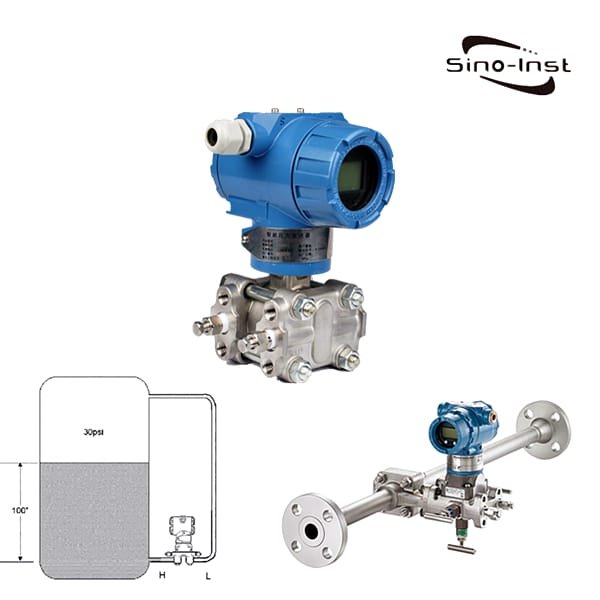
Explosion-proof differential pressure transmitter

Explosion-proof differential pressure transmitter is used to measure the liquid level, flow rate and pressure of liquid, gas or steam under high working pressure environment. Then converted into 4 ~ 20mA DC signal output. Intelligent type can communicate with HART Communicator.

More

Steam pressure transmitter

High Temperature Pressure Transducer/Transmitter for measuring pressure in hot environments. Liquids or gases up to 850 ° C. Such as steam, food processing & engine monitoring.

Application of high temperature pressure transmitter in steam pipeline.

More

Water pressure transmitter

Liquid level sensors also called a water pressure sensor, or water pressure transducer. SI-10 liquid pressure sensor uses waterproof device to achieve IP68 waterproof rating. Like: water pipe pressure, oil pressure for pipe or tank.SI-10 liquid pressure sensor is a piezoresistive silicon pressure sensor. 

More

Natural gas pressure transducer

Gas pressure sensor for industrial gas pressure monitoring. Pagoda gas nozzle Φ8. Such SI-503K Pagoda Joint Gas Pressure sensor uses stainless steel as a whole. High-precision strain gage and advanced technology. It has high sensitivity, stable performance and good impact resistance.

More

Sino-Inst offers over 20 Explosion Proof Pressure Transmitters. A wide variety of  Pressure sensors options are available to you. Such as free samples, paid samples. 

Sino-Instrument is a globally recognized manufacturer of Pressure sensors, located in China. Sino-Instrument sells through a mature distribution network that reaches all 30 countries worldwide. 

Pressure sensors products are most popular in Europe, Southeast Asia, and Mid East. You can ensure product safety by selecting from certified suppliers. With ISO9001, ISO14001 certification.

Request a Quote

Please enable JavaScript in your browser to submit the form


Capacitance Level Transmitter

Continuous level measurement and point level detection in liquids and solids with capacitance probes.

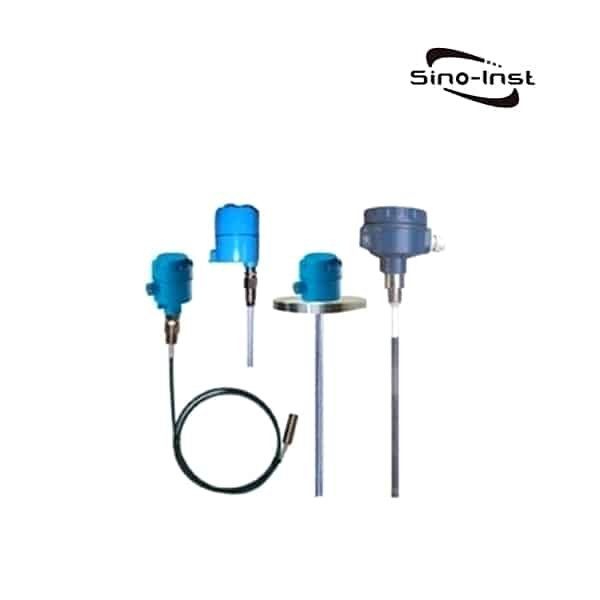
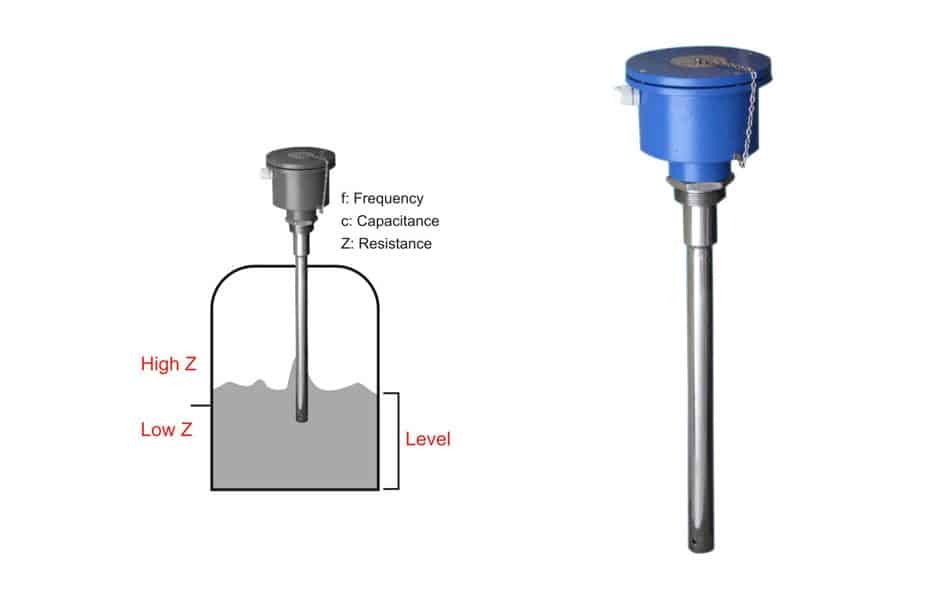
Capacitance level detectorsalso known as Capacitance level transmitter, are also referred to as radio frequency (RF) or admittance level sensors. They operate in the low MHz radio frequency range, measuring admittance of an alternating current (ac) circuit that varies with level. Capacitance level sensors are a proved, as well as a cost-effective solution for level measurement, and point level detection in liquids and bulk solids. Various transmitters for continuous level measurement and switches, for point level detection are available. The measurement of the interface is also possible. The measuring principle is proven in millions of applications.

Sino-Inst offers a variety of  Capacitance Level Transmitters for level measurement. If you have any questions, please contact our sales engineers.

Features of SI700 RF capacitance level transmitter

  • Capacitive level measurement enables measurement without blind spots over the entire sensor length
  • Fully insulated capacitive sensors also measure aggressive liquids
  • Cost-effective measurement for trouble-free and maintenance-free operation

Capacitance measurement: Measuring Principle

The principle of capacitive level measurement,

is based on the capacitance change of a capacitor.

The probe and the tank wall form a capacitor,

whose capacitance is dependent on the amount of product in the tank:

An empty tank has a lower, a filled tank a higher capacitance.

A simple capacitor consists of two electrode plate,

separated by a small thickness of an insulator,

such as solid,

liquid, gas, or vacuum.

This insulator is also called as dielectric.

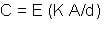
Value of C depends on dielectric used,

area of the plate and also distance between the plates.

Where:

C = capacitance in picofarads (pF)

E = a constant known as the absolute permittivity of free space

K = relative dielectric constant of the insulating material

A = effective area of the conductors

d = distance between the conductors

This change in capacitance can be measured using AC bridge.

Benefits RF Capacitance Level Transmitter

Proven and tested measuring principle – robust and safe

Universally adaptable probe

Reliable operation also in strong build-up formation and viscous media

Easy commissioning

Parameters of RF Capacitance Level Transmitter

FEATURES:

  • Liquids and Bulk Solids
  • KSHIELD™ Sensing Probes and Single Setpoint
  • Electronics that Provide Immunity to Buildup
  • Integral and Remote Electronics
  • Easy Set Up Via External Magnet or Pushbuttons
  • Housing with Glass Viewing Cover
  • Wide Variety of Sensing Probes to (450ºF / 800 psig)
  • Single Point Detection
  • Single Touch Initialization
  • Element Sensitivity Down to 0.5 pF

OPTIONS:

  • 316L SS Enclosure
  • External “Alarm” Indicating Lamp
  • Tip Extended Extensions to 60 in / 1524 mm
  • Pipe Extensions to 240 in / 6096 mm
  • Industry Standard Bulk Solids Mounting Plate
  • Process Connections: 3/4” NPT, 1 1/4” NPT, and Custom Flanges

Applications of
Capacitance Level Transmitter

Capacitance Level Probes are used for measuring level of:

  1. Liquids
  2. Powered and granular solids
  3. Liquid metals at very high temperature
  4. Liquefied gases at very low temperature
  5. Corrosive materials like hydrofluoric acid
  6. Very high-pressure industrial processes.

To the high-temperature pressure transmitter.

Sino-Instrument supplies RF Capacitance level transmitters,

is used in bulk solids, such as pellets, granules, powders, slurries,

flow / no flow, conductive products and interface.

Request a Quote

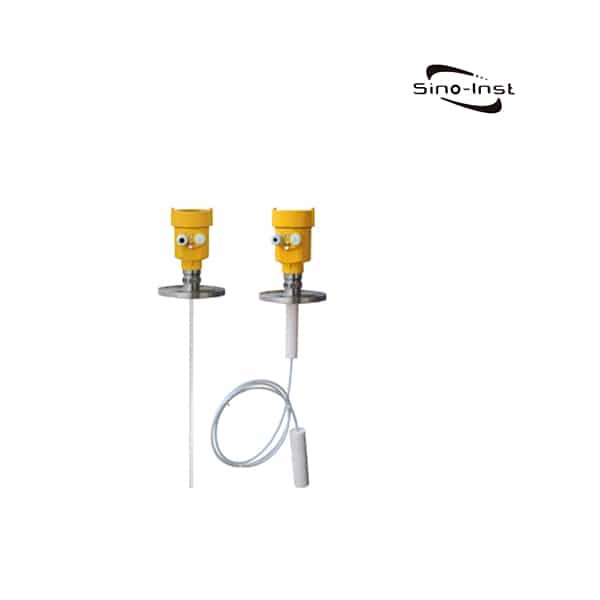
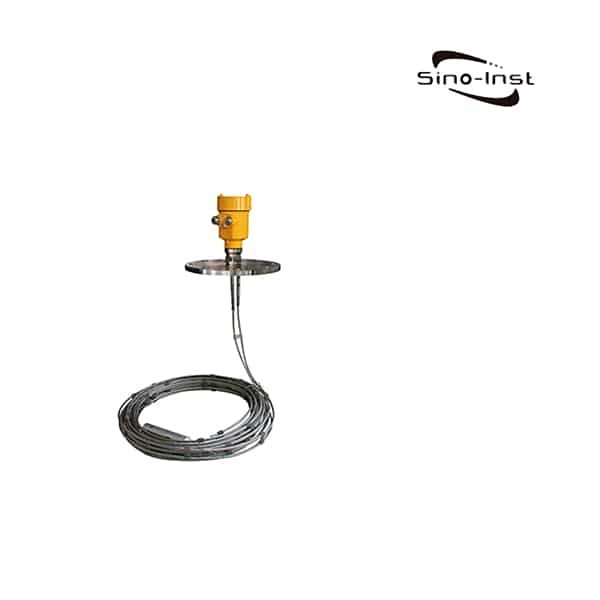
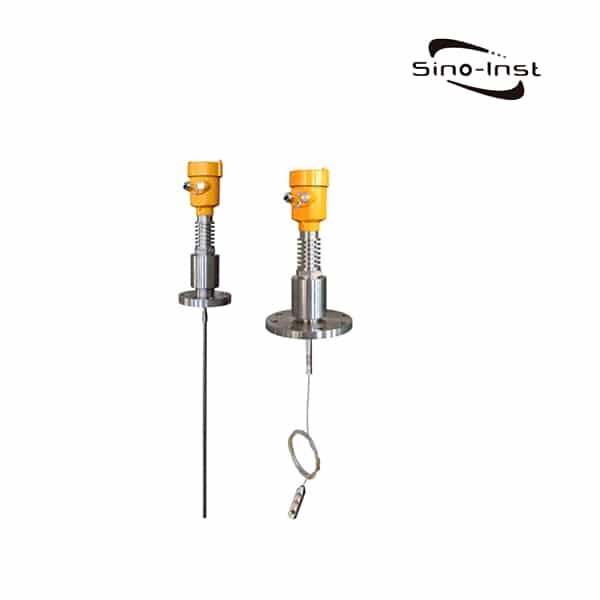
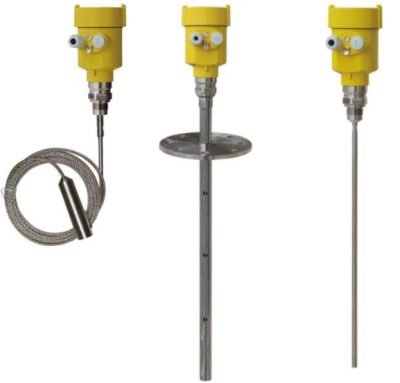
SIRD70 Guided Wave Radar Level Transmitters

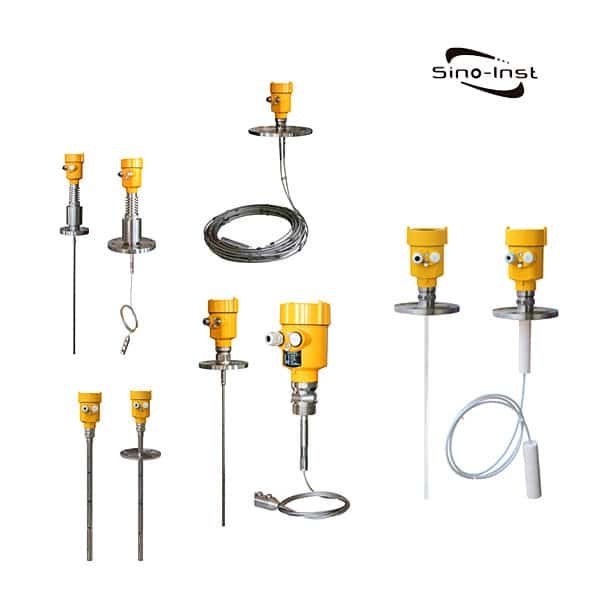
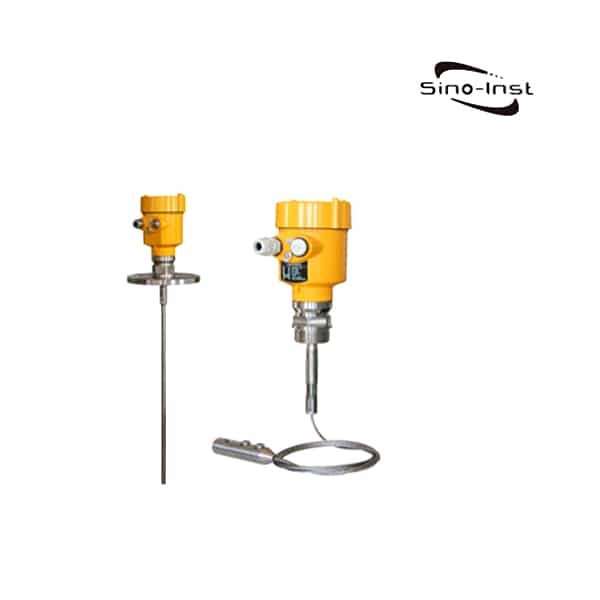
Guided wave radar level transmitter uses guided wave radar (GWR) technology. Based on the reflection of microwave on the surface medium. Through the probe, continuous level measurement of liquid and solid levels is completed.

A guided wave radar level transmitter is also called a wave-guided radar level sensor. They can measure both levels and the interface between two media. Through probe rod or cable, complete level contact types continuous level measurement. Such as Coaxial Probe Guided Wave Radar Level Transmitter. This is different from ultrasonic level measurement, which is non-contact measurement. A guided wave radar level transmitter is often used for tank level measurement. Including liquid and solid. Output 4~20mA/HART, so as to measure and control the level during production.

Sino-Inst offers a variety of Guided wave radar Level Transmitters for industrial level measurement. If you have any questions, please contact our sales engineers.

We also supply level transmitters, like: Pressure Level Transmitter; Submersible Level Transmitter; and (DP) level transmitter

Features of Guided Wave Radar Level Transmitters

  • Using advanced microprocessors and unique echoDiscovery echo processing technology, the guided wave radar level sensor can be used in a variety of complex conditions.
  • A variety of process connections and types of detection components, guided wave radar level sensor for a variety of complex conditions and applications. Such as high temperature, high pressure, etc.
  • With the pulse working mode, the guided wave radar level meter has very low transmitting power. And can be installed in various metal and non-metal containers without harm to the human body and the environment.

Customer benefits:

  • Microwaves are unaffected by temperature, pressure, specific gravity and vapors
  • Easy to install
  • No moving parts
  • Ignores light continuous coatings
  • Good for vacuum service
  • More direct energy return – more consistent signal
  • Built-in waveform screen (Scope Trace)

Industries served:

  • Oil and gas production
  • Refining
  • Pharmaceutical and biotech
  • Power generation
  • Pulp and paper
  • Iron and steel
  • Chemicals
  • Food and beverage
  • Marine

Parameters of SIRD70 Guided wave radar level transmitters

General Parameters

Probe Material:

  • Rod                                               Stainless Steel 316L/PTFE
  • Cable                                            Stainless Steel 316L/PTFE
  • Coax                                             Stainless Steel 316L/PTFE
  • Seal                                              Viton fluororubber , Kalrez Fluorinated rubber 
  • Process Connection                     Stainless Steel 316L
  • Shell                                             Stainless Steel 316L, Plastic,Aluminum
  • Ground  Terminal                          Stainless Steel 316L

Power: 2-Wire   

  • Standard Version                           (16~26)V DC
  • Intrinsic Safe Version                    (21.6~26.4)V DC
  • Power Consumption                      max. 22.5mA
  • Ripple Allowed
    • – <100Hz                                        Uss < lV
    • – (100~100K)Hz                            Uss < l0mV

Flameproof Type

  • (22.8 ~ 26.4) V DC       2-wire system
  • (198 ~242)V AC   4-wire system / 110V AC    4-wire system
  • Power Consumption                                  max. 1VA,1W

Output                           

  • Output Signal                               (4~20)mA/HART
  • Resolution                                    1.6μA
  • Failure mode                                20.5mA;22mA;3.9mA, hold
  • 2-wire load resistance                  See the diagram below
  • 4-wire load resistance                  Max.500 ohm
  • Integration Time                           ( 0~36)sec, adjustable
SIRD70 guided wave radar level transmitters

Specifications of Guided Wave Radar Level Transmitters

Max Measurement Distance 701         30m/6m(Cable /Rod)
702         20m/6m(Cable /Rod)
703         30m/6m(Cable /Rod)
704           6 m
705         15m/6m(Cable /Rod)
Measurement Interval           About 1sec (Depend on parameter settings)
Adjustment Time                About 1sec (Depend on parameter settings)
Resolution of Display  1mm
Accuracy             ±10mm(See the accuracy illustration diagram below)
Temperature for Storage/Transport               (-40~80) ℃Process Temperature  (Probe)  
701、704       (-40~250)℃
702            (-40~200)℃
703            (-40~130)℃
705            (-200~400)℃
Relative Humidity   <95%  
Pressure         Max. 40MPa
Vibration Proof  Mechanical vibration 10m/s² , (10~150)Hz

guided wave radar level transmitter data sheet

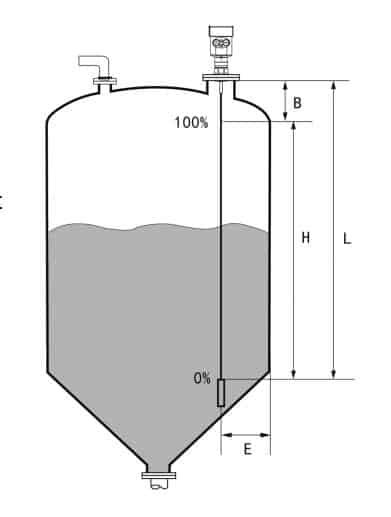
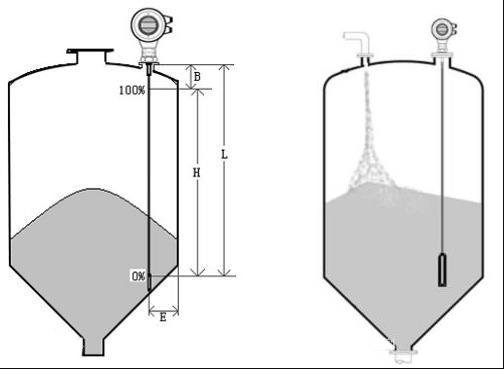
Guided wave radar level transmitter range

Explanation

H— Measuring range

L—Empty distance

B—The top of the blind

E—The minimum distance from the probe to the tank wall

–Blindspot is the minimum distance between the top of the highest material surface materials and the measurement reference point.

–The bottom of the blind refers to a distance near the very bottom of the cable that can not be accurately measured.

–Between the top and bottom of the blind is blind effective measure distances. 

Note:

In order to ensure the accuracy of level measurement, the material should be located between the top and bottom of the blind.

Measuring Range:

The following table lists the relationship between different types of measured media and measurement distance.

Media DK(ε)Solid particlesLiquidMeasuring range
11.4~16-Condensation gas, such as N2CO23m (only refers to the coaxial rod probe)
21.6~19-Plastic with particles
-White limestone, special cement
-sugar
-Liquefied petroleum gas, such as propane
-Solvent
-Freon 12/ Freon
-Palm oil
25m
31.9~25-Ordinary cement, gypsum-Mineral oil, fuel30m
42.5~4-Cereals, seeds
-stone
-Sand
-Benzene, styrene, toluene
-Furan
-Naphthalene
30m
54~7-Wet stones, ores
-salt
-Chlorobenzene, chloroform
-Cellulose spray
-Isocyanide hydrochloric acid, this amine
30m
6>7-mineral powder
-Carbon black
-coal
-Aqueous liquid
-alcohol
-Liquid ammonia
30m

Extended reading: Radar Level Meter for Corrosive Liquids

What is guided wave radar?

Micropower impulse radar (MIR) combines time domain reflectometry (TDR), equivalent time sampling (ETS), and modern low power circuitry.

This synthesis of technologies creates a high-speed Guided Wave Radar (GWR) transmitter.

The electromagnetic pulses are propagated via a waveguide, that focuses the energy and yields a system, many times more efficient than Non-Contact Radar (Non-contact radar level transmitters).

Time domain reflectometry (TDR)

TDR uses pulses of electromagnetic (EM) energy to measure distances or levels.
When a pulse reaches a dielectric discontinuity (such as one created by a media surface), a portion of the pulse is reflected.
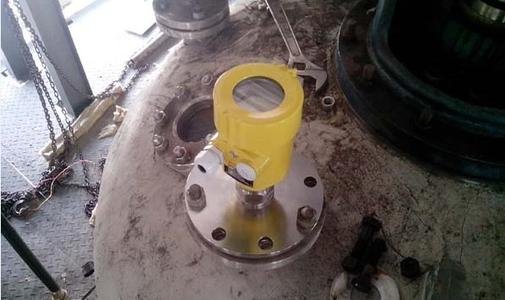
The greater the dielectric difference between air and the process medium being measured, the greater the amplitude of the reflection.

Equivalent time sampling (ETS)

ETS, or Equivalent Time Sampling, is used to measure the high speed, low power EM energy.
ETS is a critical key in the application of TDR to vessel-level measurement technology.
The high-speed EM energy (1000 ft/us) is difficult to measure over short distances, and at the resolution required in the process industry.
ETS captures the EM signals in real time (nanoseconds), and reconstructs them in equivalent time (milliseconds), which is much easier to measure with today’s technology.

Guided-wave radar (GWR) level transmitter working principle

Levelflex works with high-frequency radar pulses, which are emitted and guided along with the probe.

As the pulse meets the medium surface, part of the emitted pulse is reflected due to a change of the dc value (relative dielectric constant).

The Time-of-Flight between pulse launching and receiving is measured, and analyzed by the instrument and constitutes a direct measure for the distance, between the process connection and the product surface.

Install for guided wave radar level transmitter

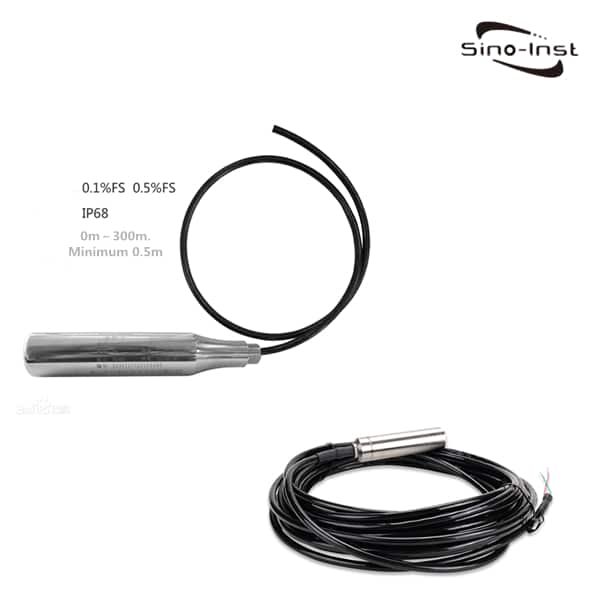
Waveguides can be metal rigid rods or flexible metal cables. The microwave pulse travels down the outside of the rod or cable. It is reflected on the surface of the material to be tested, and the echo is received by the antenna. The propagation distance can be calculated from the time difference between the launch and echo pulses.
Advantages:

  • Compared with ultrasonic and radar level gauges, the work is stable and reliable;
  • Like radar level gauges, the strength of the reflected signal depends on the dielectric or conductivity of the material being measured. However, the guided wave type can measure materials with lower dielectric constants.
  • It has a strong ability to suppress steam and foam, and the measurement is not affected;
  • Not affected by liquid density, looseness of solid materials, temperature, and dust during feeding;
  • Low maintenance, high performance, high precision, high reliability and long service life.

Disadvantages:

  • Double rods (cables) and coaxial tubular waveguides are easily affected by external structures due to the concentration of electric field energy;
  • It is easy to accumulate material between the rods (or inside the tube), resulting in false echoes and affecting the measurement effect;
  • The cable buried in the material will generate a large pull-down force due to the gravity of the material, causing the cable to be pulled off and other failures.

Extended reading: Features Of Magnetostrictive Level Transmitters

The microwave pulse emitted by the high frequency radar level transmitter is transmitted through the antenna, while the guided wave radar level transmitter is transmitted through the detection component.

So, is the installation standard of the guided wave radar level transmitter the same as that of the high-frequency radar level transmitter?

Today, let’s take a look at the installation standards of guided wave radar level transmitters.

  1. Try to avoid the facilities in the tank during installation, and avoid the detection components (steel cables or steel rods) contacting internal obstacles during the measurement process, which will affect the measurement accuracy.
  2. When installing, try to keep the detection component perpendicular to the surface of the measured medium. In this way, the microwave pulses sent out can reach the designated position, and the later data can be accurate.
  3. During installation, the guided wave radar level transmitter should keep a certain distance from the container wall, and should be kept away from the feed and discharge ports. The feed and discharge ports have a great influence on the accuracy and stability of the guided wave radar level transmitter, so attention must be paid.
  4. If the guided wave radar level transmitter is threaded, its length should not exceed 15mm. Generally, the length of the thread is inversely proportional to the stability of the measurement, that is, the shorter the thread, the more stable the measurement.
  5. During installation, if the cable is too long, we need to cut off the power supply of the guided wave radar level transmitter, remove the cable, and remove the screw on the heavy hammer, and then intercept it from the bottom of the cable.
  6. During installation, if the guided wave radar level transmitter is installed in the still-pipe, pay attention to fix the radar probe with an insulating bracket to ensure that the probe and the still-pipe are concentric, so as to avoid vibration caused by improper installation and affect the accuracy of the measurement.
  7. When installing the guided wave radar level meter, if the connection surface of the container is made of other materials than metal, either use a metal flange to connect, or configure a metal plate.

The above are the main installation standards of the seven-point guided wave radar level transmitter summarized by Sino-Inst. In fact, the standard of guided wave radar level transmitter is far more than that.

When installing, be sure to read the manual of the self-contained product in detail. If you have any questions, you can contact the manufacturer’s engineer.

The relative permittivity of a medium is a physical quantity that characterizes the polarization of the medium.

It is determined by the properties of the medium itself.

Therefore, different media have different relative permittivity.

The dielectric constant of the measured medium directly affects the reflectivity of the high-frequency pulse signal.

When an electromagnetic pulse hits the surface of a medium, the electromagnetic wave is reflected and refracted.

The larger the relative permittivity, the smaller the reflection loss. On the contrary, the smaller the relative permittivity, the greater the transmission loss and the more serious the signal attenuation.

When the conductivity of the measured medium is greater than 10mS/cm, all of them will be reflected back. That is, the stronger the echo signal.

The signal will be extremely attenuated due to too small relative permittivity. Therefore, each guided wave radar level gauge has a minimum relative permittivity to ensure that the radar level gauge can be used normally.

Different companies’ guided wave radar liquid level transmitters have different structural designs and different requirements for minimum relative permittivity.

What is the difference between radar and ultrasonic level transmitter?

Radar liquid level sensors and ultrasonic liquid level sensors are non-contact liquid level measuring instruments. They mainly differ in the following three aspects:

Working principle

  1. Ultrasonic level sensor
    The ultrasonic level sensor uses non-touch measurement method. It is suitable for liquid level measurement in water conservancy and hydrology, chemical petroleum and sewage treatment. The probe of the ultrasonic level sensor is also called a transducer. The transducer emits ultrasonic pulses to the object to be measured. After touching the surface of the medium, the sound wave is reflected by the surface of the medium and is received by the transducer again. The time from when the sound wave is emitted to when it is absorbed and consumed after reflection will be proportional to the distance between the transducer and the medium.
  2. Radar level sensor
    Radar level sensors also use non-touch measurement methods. The measuring principle is similar to that of an ultrasonic level sensor. That is, the antenna emits electromagnetic waves, and the electromagnetic waves are reflected back after reaching the measured liquid surface. Then the antenna receives and recognizes the time distance that Baud has.

Adaptability

The time consumed by the ultrasonic storage and analysis of the sound waves in each period of the ultrasonic level sensor is slightly longer. For this reason, if the rate of liquid level change is too fast, it is generally not recommended to use an ultrasonic level sensor. In addition, the ultrasonic level sensor is sensitive to misty vapor and fine dust within the area. Therefore, ultrasonic level sensors are not suitable for high-pressure and high-temperature environments, misty spaces filled with vapor, or spaces with dust. But on the contrary, the radar level sensor can prevent the disturbance of the above-mentioned environment.

Cost performance

The market price of ultrasonic level sensors produced in China usually ranges from one thousand yuan to several thousand yuan. The appearance of its products is more delicate than that of radar level sensors, so transportation costs will be reduced accordingly. In comparison, the structural design of the radar level sensor is more messy and the measurement steps are more refined, so the price is higher. Especially when the user needs a radar level sensor with HART protocol, the unit price is more expensive. But now the price gap is not big, and it is shrinking year by year.

Through induction and comparison, it is not difficult to find that the ultrasonic level sensor and the radar level sensor have their own advantages and disadvantages. Therefore, it is recommended that users should consider many aspects when purchasing liquid level timing. It is not only necessary to meet the preset specifications, but also to scientifically include the above aspects into consideration.

Extended reading: Ultrasonic Oil Level Sensor-External Paste-Truck Fuel Tank

Maybe you still have questions like:

How to calibrate radar level transmitter?

What’s the guided wave radar level transmitter principle of operation?

You can just contact us for more information about GWR level transmitters.

Our guided wave radar (GWR) level transmitters, are made in China,

With better price, and higher quality.

Frequently
Asked
Questions

Guided wave radar devices, also called wave-guided radar level transmitters.
Have no moving parts and require minimum maintenance.
They can measure both levels and the interface between two media.
The guided wave radar level sensor is applied to water storage tanks,
acid and alkali storage tanks, slurry storage tanks,
solid particles, and small oil storage tanks.
All kinds of conductive, non-conductive media, corrosive media.
Such as coal bunkers, ash silos, oil tanks, acid tanks, etc.

Radar level transmitters use radar technology to perform the non-contact continuous level measurement. The radar level indicator converts the level into an electrical signal. The level signal output can then be utilised by other instrumentation to monitor or control. Liquids and solids are commonly measured with this measuring technique. Like: Fly ash silo. Radar level sensors are divided into: Pulsed radar technology and frequency modulated continuous wave (FMCW) radar level sensors.
Extended reading: Radar level sensor for solids – Dust solid level measurement

The main factors affecting the price of guided wave radar level sensors are: Type of medium. Explosion-proof requirements, material and size, temperature, output signal, interface type. Connection method, etc. The reference price is 500-900USD.

Guided wave radar is a measuring instrument based on the principle of time travel. The radar wave travels at the speed of light, and the running time can be converted into a level signal by electronic components.
The instrument measures the distance from the reference point to the material surface. The probe sends out high-frequency pulses and propagates along the cable. When the pulses meet the material surface, they are reflected back and received by the receiver in the instrument. The time signal is converted into a material level signal.

GWR level transmitter is guided wave radar level transmitter. GWR level transmitter is an instrument based on guided wave radar to measure level.

Straighten the wave guide cable, place an internal obstacle with a radius of 30cm, put a vise (simulate the liquid level), and use a steel ruler with high precision to compare the error and calculate the accuracy.

The above method is not very accurate.
If possible, it can be installed on the tank, and the dipstick can be compared.

Related Products

Related Blogs

Sino-Inst offers over 10 GWR Corrosive Liquid Chemical Level Sensors for level measurement. About 50% of these are Guided Radar level meters, 40% is the tank level sensor.

A wide variety of GWR Corrosive Liquid Chemical Level Sensors options are available to you, such as free samples, paid samples.

Sino-Inst is a globally recognized supplier and manufacturer of Guided Wave radar level measurement instrumentation, located in China.

Request a Quote

Please enable JavaScript in your browser to submit the form

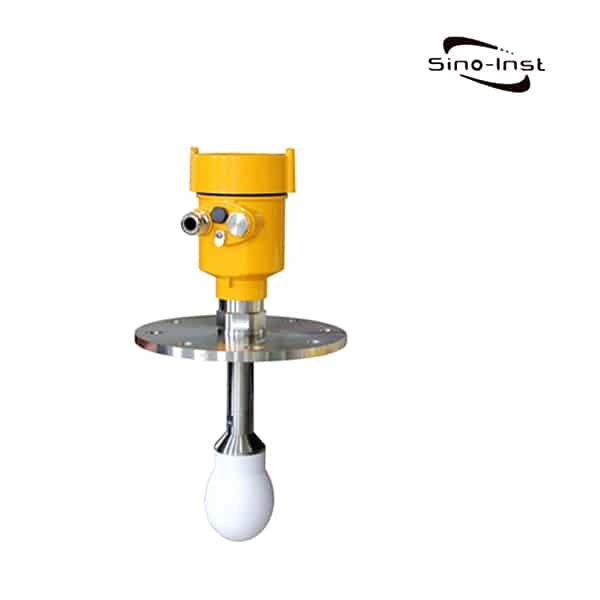
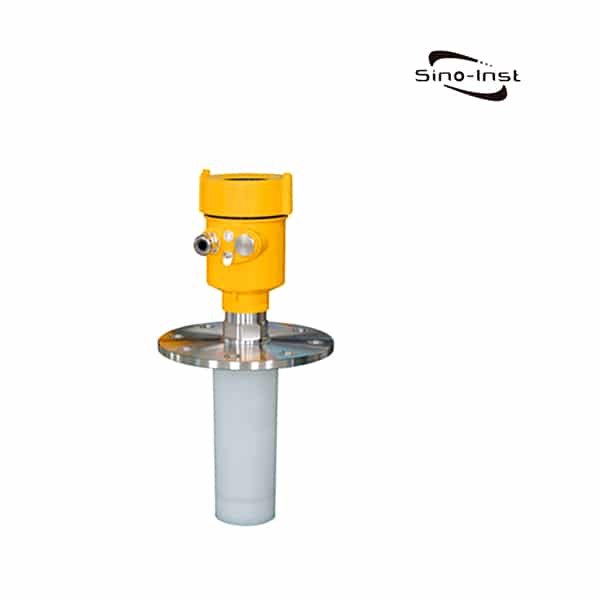
SIRD-901 Radar Corrosive Liquid Chemical Level Sensor

Liquid Chemical Level Sensor is suitable for level measurement of corrosive chemicals. Pulse radar non-contact measurement. Antenna made of PTFE.

Liquid Chemical Level Sensor works for level measure and monitor of corrosive liquids for Chemical Processing. The level measurement of corrosive chemicals places extremely high demands on the sensor. Downtime must be avoided. The radar liquid level sensor wrapped in PTFE is corrosion resistant and has a long service life. The sensor has both analog and digital outputs that comply with industry standards. SIRD-901 Radar Corrosive Liquid Chemical Level Sensor is a 26GHz pulse radar level transmitter. The measuring distance can reach 10 meters. The antenna has been further optimized and is suitable for the measurement of various corrosive liquids.

Sino-Inst offers a variety of Radar Corrosive Liquid Chemical Level Sensors for industrial level measurement. If you have any questions, please contact our sales engineers.

Features of SIRD-901 Radar Corrosive Liquid Chemical Level Sensor

The SIRD90 series radar sensor is a 26G Hz radar level measuring instrument, with a maximum distance of up to 80 meters.

  • Non-Contact Measurement
  • Continuous Level Measurement
  • Pulse Radar Measurement Range 0.254 to 15.24m (10″ to 50′)
  • Simple Push-Button Calibration
  • High measurement accuracy
  • Measurement is not affected by temperature, pressure or dust
  • User-friendly adjustment saves time

Parameters of SIRD-901 Radar Corrosive Liquid Chemical Level Sensor

Radar Level Transmitters
Application:All kinds of corrosive liquid
Measuring Range:10 meters
Process Connection:Thread G1½″A / Thread 1½″ NPT /  Flange
Process  Temperature:-40℃~130℃
Process Pressure:-0.1~0.3 MPa
Accuracy:± 5mm
Protection Grade:IP67
Frequency Range:26GHz
Supply:2-wire(DC24V)/ 4-wire(DC24V /AC220V)
Signal Output:4… 20mA /HART (2-wire / 4-wire)RS485/ Modbus
Outer Covering:Aluminum / Plastic / Stainless steel
Explosion-proof Grade:ExiaⅡC T6 Ga/ Exd ⅡC T6 Gb
Antenna MaterialStainless Steel  /  PTFE

Applications of Radar Corrosive Liquid Chemical Level Sensor

Application of radar level transmitter
  • Solid materials;
  • Process vessels or strong dust are easy to crystallize;
  • Condensation occasions
  • Solid Particles
  • Dust
  • Slightly corrosive liquids
  • Various corrosive liquids
  • Hygienic liquid storage containers
  • Strong corrosive containers

Extended reading: Radar Non Contact Water Level Sensor

Corrosive Liquid Chemical Level Sensor in Chemical Processing

Generally, in chemical plants, you will encounter liquid level measurement such as petroleum storage tanks, chemical storage tanks, chemical storage tanks, sewage treatment plants, dosing tanks, seaside, and docks.

Used to measure corrosive media such as sulfuric acid, nitric acid, hydrochloric acid, hydrofluoric acid, sodium hydroxide, and concentrated alkali.

When encountering these corrosive media, corrosive liquid level sensors are generally used. Use non-contact radar level sensors to measure corrosive liquids such as sulfuric acid, hydrochloric acid, and nitric acid.

Following the introduction of Sino-Inst, we have to consider four major principles when choosing a level gauge to measure.

Extended reading: GWR Corrosive Liquid Chemical Level Sensor

The first principle is to consider the principle of non-contact measurement and choose a non-contact liquid level sensor.

Because the probe of the liquid level sensor does not need to contact the medium. The principle of sensing band is used to obtain the current liquid level information. Such a liquid level sensor, for example, when measuring a level, a radar level gauge does not contact the measured medium, and the material used is tetrafluoroethylene. At the same time, it is a fully enclosed anticorrosive structure. Therefore, the effect is very good for liquid level measurement of viscous, corrosive, turbid and other liquids.

The second principle is to consider the convenience of installation.

Due to the uniqueness of the measurement of corrosive liquids such as sulfuric acid, hydrochloric acid, and nitric acid. It needs simple installation on site. It needs to be simple to open a hole in the tank.

Therefore, in the selection process of the level gauge, it is necessary to consider the characteristics of reliable work, easy installation, long service life, and maintenance-free.

The third principle is sensor selection.

When the radar level gauge measures corrosive media, the general manufacturer will choose the anti-corrosion type tetrafluoro material contact surface. Considering environmental factors, a physically sealed anti-corrosion probe should be selected for this occasion.

The fourth principle is the choice of the host part.

As the host part, good sealing is required. As long as there is a little medium leakage, it is possible to enter the inside of the level gauge from the housing or the wire inlet. As a result, the internal circuit board is corroded.

For corrosive gases in the environment, anticorrosive high frequency radar level gauges can be used to protect the service life of the host.

The above is Sino-Inst analyzes how to choose the level sensor for concentrated sulfuric acid and hydrochloric acid. If concentrated sulfuric acid and hydrochloric acid exceed a certain temperature range, steam or vaporization occurs. It is necessary to consider the actual situation on site and re-select the appropriate level sensor.

Extended reading: FMCW Radar Level Transmitter 120GHz

How does a Radar Corrosive Liquid Chemical Level Sensor work?

In radar level measurement, microwaves are transmitted by the antenna system of the radar sensor, to the measured product, reflected by the product surface, and received back by the antenna system.

The time from emission to reception of the signals is proportional to the level in the vessel. In continuous non-contact level measurement with radar, the sensor sends microwave signals towards the medium from above.

The surface of the medium reflects the signals back in the direction of the sensor. Using the received microwave signals, the sensor determines the distance to the product surface and calculates the level from it.

Liquids and solids are commonly measured with this measuring technique.

Extended Reading: Dielectric constant for radar level transmitter

Featured Level Sensors for Chemical Processing

Continue reading

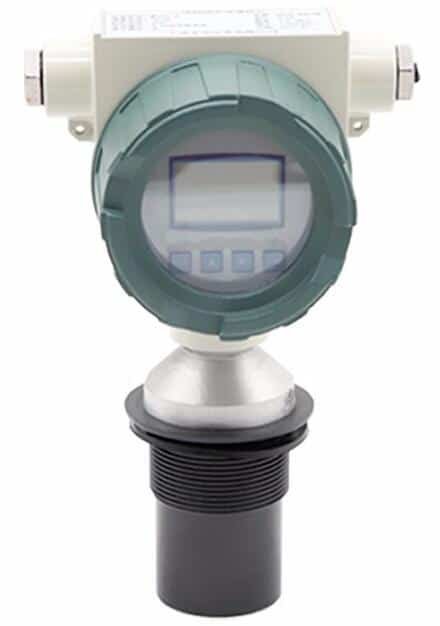
ULT-100 Ultrasonic level transmitter

Ultrasonic Level Transmitter, also called Ultrasonic level sensor, or ultrasonic level Indicator. Ultrasonic Level Transmitter provides reliable, accurate, non-contact measurement of liquid levels. Ultrasonic non-contact technology offers no moving parts to wear, jam, corrode, or get coated like contact technologies. ULT-100 Ultrasonic level transmitter is an explosion-proof product specially suitable for measuring flammable and explosive liquids.

Learn About: Magnetostrictive level transmitter

Magnetostrictive level sensor

Features of ULT-100 Ultrasonic level transmitter

  1. Provides reliable, accurate, and non-contact level measurement of compatible liquids
  2. Non-contact technology offers no moving parts to wear, jam, corrode or get coated like contact technologies
  3. Mapping software makes effective measuring surface only a 3″ (76.2 mm) diameter column.with no concerns of ladders, pipes, or other tank intrusions in the remaining sound cone
  4. FM approved explosion-proof making it ideal for use in hazardous locations
  5. Easy programming with 6 digit LCD display and simple menu structure
  6. Output range is adjustable with choices of inputting tank dimensions. or by filling and emptying the tank. while calibrating and it automatically and scaling to levels it senses
  7. Window cover allows easy viewing of the display
  8. Fail-safe output options and diagnostic capabilities

Specifications of Ultrasonic Level Transmitter

Wire System Two-wire system
Installation mode Intergrated
Basic parameters Maximum measuring range
(High temperature, fluid)
30m
Maximum measuring range
(high temperature, moisture)
20m
Maximum measuring range
(particle > 4mm solid)
10m
Blind area 0.25-0.5m
measurement accuracy ±0.3%FS(Standard conditions)
Resolution ±1mm
Input Power supply 12~36VDC/85~265VAC
Max electric current >22mA
Ripple requirement less than ±20mA
Output Analog signal 4-20mA
Digital signal RS485, HART 5.0, Modbus RTU
Switch 4 way
Material Transmitter Die Casting Aluminum Alloy
Probe Waterproof ABS/Corrosion Resistant PTFE
Flange Flange standard needs to be provided by customers. Size is related to installation method.
Various kinds of PVC, PP, PTFE, carbon steel and stainless steel flanges can also be customized.
Environment condition Ambient temperature -20°C~60°C. If temperature less than 20°C, LCD display will be limited.
Outdoor instruments should be protected against ultraviolet rays if they are exposed to direct sunlight.
Protection level IP67
Explosion proof level Flamproof type ExdIICT4
Intrinsically safe type ExiaIICT4
Process condition Process temperature -40℃~100℃, High temperature probe is required when exceed 70℃
Process pressure 0.8~3bar or 0.08~0.3MPa, Below 3000m altitude.
Product characteristics Analog and digital output can be shared
High level of protection
Strong anti-interference ability
Comprehensive function
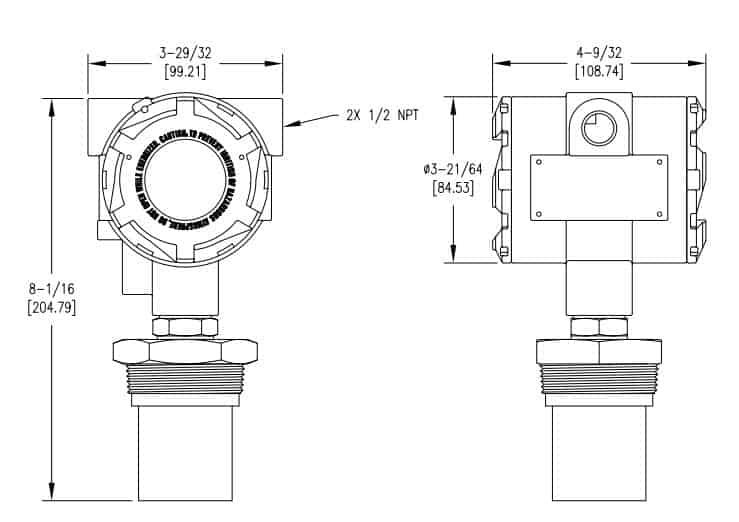
Drawings of ultrasonic level transmitter

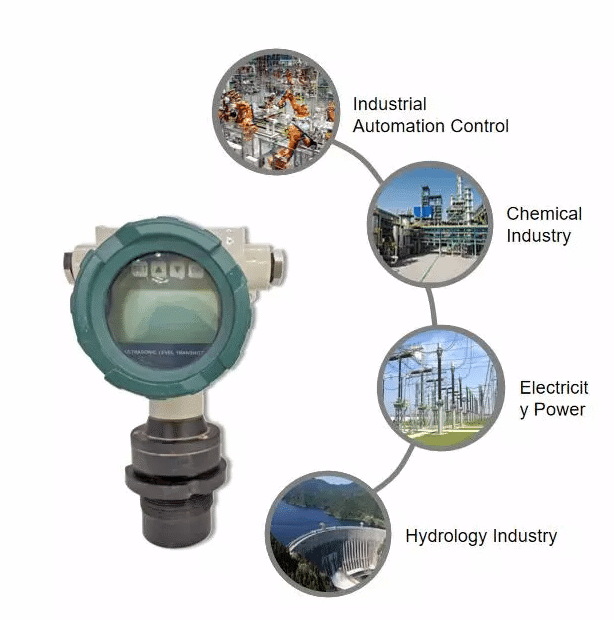
Applications of Ultrasonic Level Transmitters

  • Chemical
  • Mining
  • Aggregate
  • Power generation
  • Pulp and paper
  • Iron and steel
  • Wastewater
  • Food and beverage
  • Quarries
Applications of Ultrasonic Level Transmitters

Extended reading: The Secret of Ultrasonic Level Measurement

Extended reading: Guide to Ultrasonic Level Transmitters

Continue reading

SMT3151LT Pressure Level Transmitter

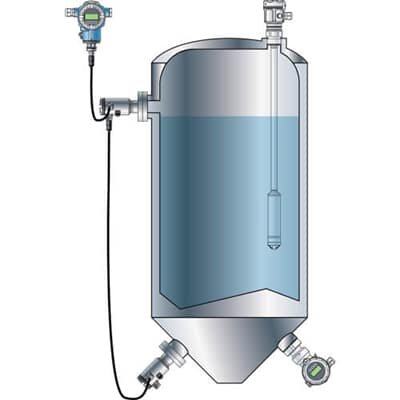
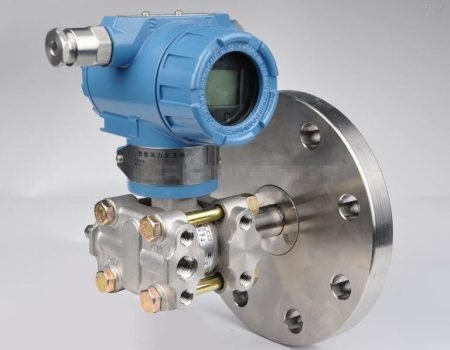
Pressure level transmitter is good for level measurement. Most of the time, we use submersible hydrostatic level sensor for the level measurement. When you can not use the probe of hydrostatic level sensor, you can try with this pressure level transmitter. Pressure level transmitter, is one type of DP level measure instrument, with the diaphragm.

The liquid level (pressure/differential pressure) transmitter,

is a pressure signal, measured at the reference side of atmospheric pressure (a low-pressure side),

with one or two ports for flange (or other connection) and process pipe connection.

So, we can say that the SMT3151LT pressure level transmitter,

also is one kind of diaphragm type level transmitter.

A pressure level transmitter is an on-site transmitter, that is mounted directly on a pipe or vessel.

Since the isolating diaphragm is directly in contact with the liquid medium,

it is not necessary to take out the pressure guiding tube on the positive pressure side,

so that the liquid level (Magnetostrictive level gauge), pressure, and density of the medium,

such as high temperature, high viscosity, easy crystallization,

easy precipitation and strong corrosion can be measured,

and then It is converted to 4~20mA.DC signal output

Features of SMT3151LT Pressure level transmitter

  • 0-2.1Mpa
  • -40~204℃
  • Flange-mounted
  • 4-20mA, HART
  • 316 stainless steel
  • Explosion-proof

Working Principle of pressure level transmitters:

DP Level Technology

On the basis of common pressure/differential pressure transmitter,

one or two isolation membrane boxes are added to measure the liquid receiving part.

Mainly used for measuring high temperature,

easy to solidify or crystallize,

containing solid suspended matter, too viscous,

corrosive or other needs to maintain sanitary conditions, non-polluting media.

The basic measurement element,

is the same as the technical performance,

and technical index of the 3151 pressure/differential pressure transmitter.

After adding the remote transmission device,

there will be a small decrease in measurement accuracy,

slow reaction speed,

and the installation position should be attended to,

when the pressure is relatively small,

so as to ensure that the measured pressure is within the measurement range,

of the basic measurement element.

In other words, a column of water of a specific height,

will always exert the same amount of pressure on a transducer.

And because weight is a force, and pressure is force applied over an area,

in this case, the area of the transducer,

we can take the pressure reading from the transducer and translate it into a level.

Extended reading: Flat Pressure Sensor for High Viscosity Fluids

What is the working principle of level transmitter?

There are many different kinds of level measurement transmitters, including:

  • Capacitance
  • Hydrostatic
  • Magnetic
  • Radar
  • Ultrasonic
  • Guided Microwave

Each of these transmitters works in different ways, making them useful for different types of processes.

These transmitters use liquid stored in a tank or container,as a dielectric medium between two or more electrodes.The energy capacity of the capacitor circuit increases,when there is more liquid and decreases if there is less liquid. By measuring the variations in the capacitance value,capacitance level transmitters can calculate the current fill level of the tank or container.

Capacitance Level Transmitters:

  • Hydrostatic Level Transmitters::

Also known as pressure level transmitters,these transmitters help in determining fluid contents of a container,by measuring the pressure of the resting body of the fluid within it. The greater the force of liquid, the greater the volume of fluid.

Read more about: Hydrostatic level measurement: Measuring Principle

  • Magnetic Level Transmitters:

These transmitters use a magnetic object,which is suspended in a buoyant float.This is usually in a narrow auxiliary column,to restrict lateral movements of the float.While the float is on top of the liquid,the movement of the float is measured by a different magnetic device.This allows a precise and stable fill level to be transmitted.This method is suitable for continuous measurement,owing to the tendency of the float to rise or sink based on the liquid level.

New: SI-LT Magnetostrictive level transmitter with Local Digital Display

These transmitters work on the principle of radar by using radio wave emissions.These transmitters are normally mounted at the top of a tank filled with a liquid.The transmitter sends a radar signal into the liquid and receives a reflection of the signal.The transmitters then analyze the current fill level of the tank based on the time taken by the transmitted signal to return.

In this type of transmitter, an ultrasonic transducer is mounted at,or near the top of a container containing liquid.The transducer sends out an ultrasonic pulse.The pulse hits the surface of the liquid and gets reflected.The sensor then calculates the fill level based on the time between the transmitted and received signal.

  • Guided Microwave Level Transmitters:

These transmitters work by sending a microwave pulse,through a sensor cable or rod.The signal hits the surface of the liquid,and travels back to the sensor,and then to the transmitter housing.The electronics integrated into the transmitter housingdetermine the filling level based on the time,taken by the signal to travel down the sensor and back up again.These types of level transmitters are used in industrial applications,in all areas of process technology.

How do you use a DP transmitter for level measurement?

How does a hydrostatic level transmitter work?

Hydrostatic pressure for level measurement:

SI-151 Hydrostatic Level Sensor
SMT3151TR Hydrostatic level transmitter-Rod Type
SI-PCM260 Deep Well Water Level Sensor

Featured Continuous level sensors

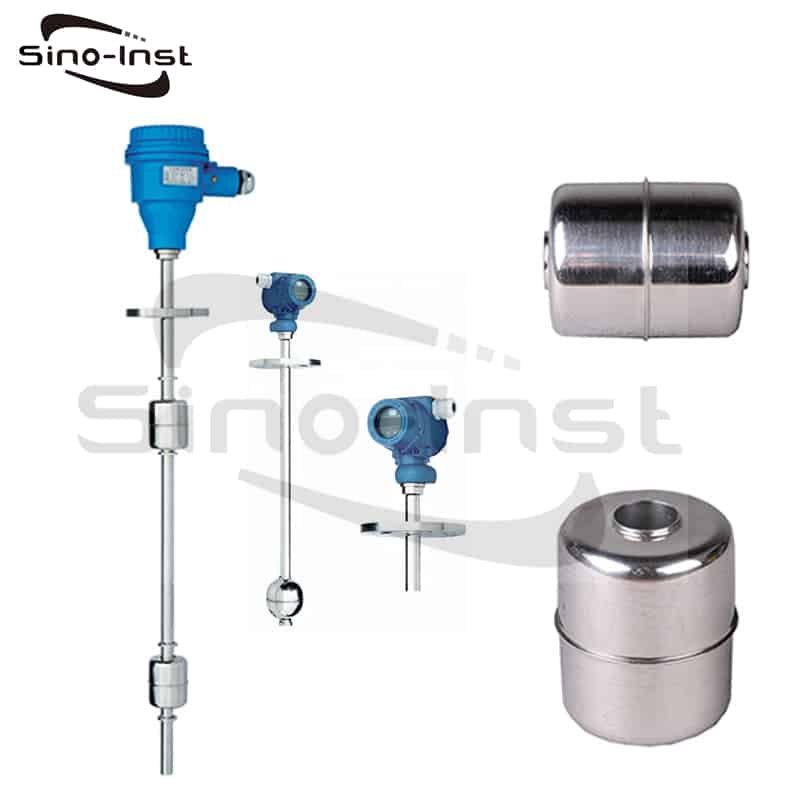
SI-U01 Float Level Sensor
SI-U02 Multi-Point Liquid Level Float Switch
SI-U03 Float Switch Water Level Controller
SI-U04 Magnetic Float Level Sensor-Reed Switch

Pressure level transmitter manufacturer

Sino-Instrument, we are the pressure level transmitter manufacturer in China.

We supply SMT3151LT pressure level transmitters.

We offer flamges:

  • DN50 (2″)
  • DN80 (3″)
  • DN100 (4″)
  • DN40
  • Flush flange
  • Insert barrel flange

And for the material of diaphragm, we offer :

316 Stainless steel
Hastelloy C
Monel
Tantalum
Titanium
Special requirements

If you need to know more about the SMT3151LT pressure level transmitters,

you can refer to the :

Request a Quote

Please enable JavaScript in your browser to submit the form

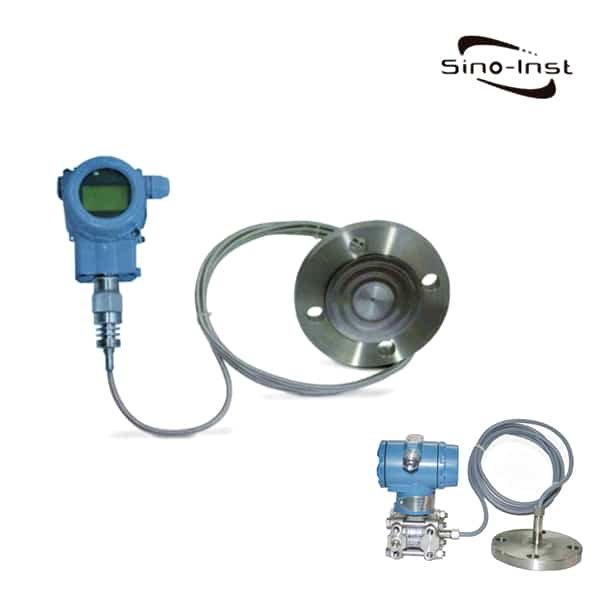
SMT3151 Remote Diaphragm Seal Pressure Transmitter

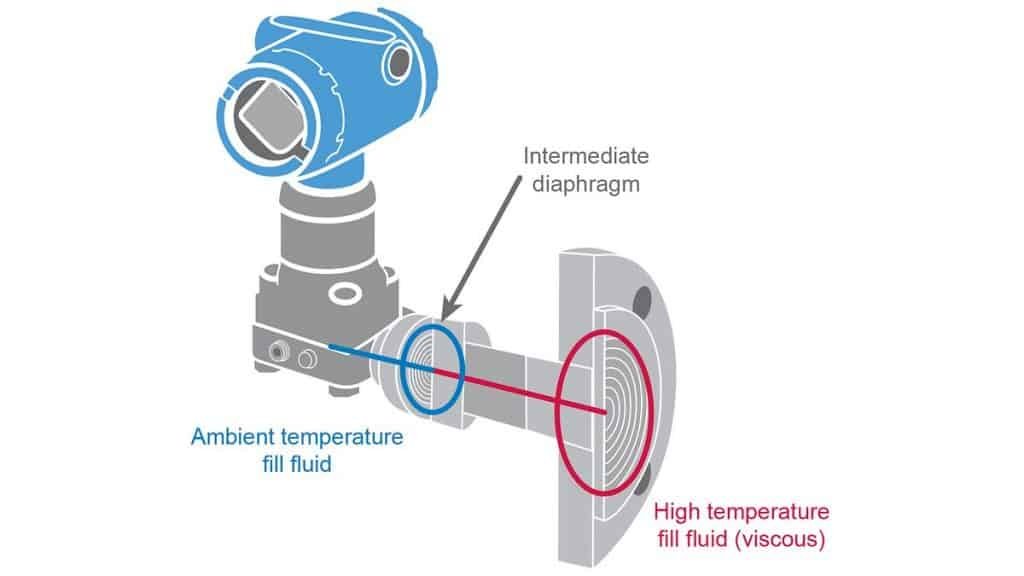
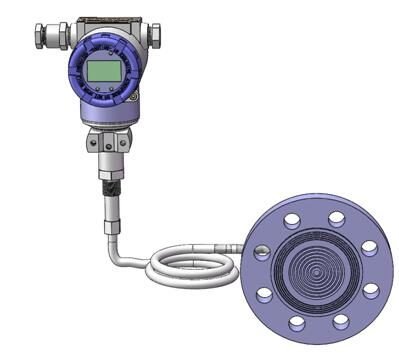
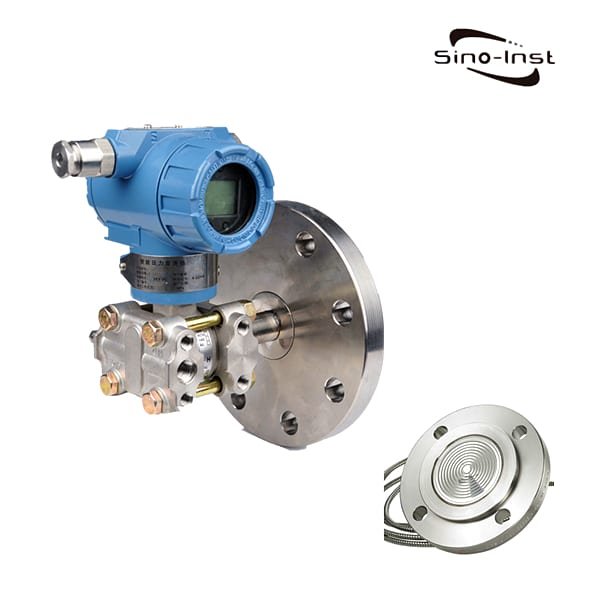
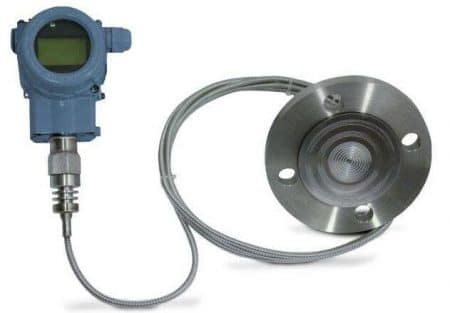
Remote seal pressure transmitter, with capillary and diaphragm seal, remote mount. Diaphragm seal systems protect pressure transmitters from hot, viscous, contaminated or corrosive media.

Remote Diaphragm seal pressure transmitter with capillary is used as a level transmitter. Diaphragm Seals also called chemical seals, are used in applications where pressure sensor requires isolation from the process media. These applications are corrosive, high temperature, clogged. Or must sanitary fluids to remain in the pipeline or container. The pressure of the liquid in the process does not affect the pressure sensor. Instead, it is applied to the remote seal. And through the capillary, hydraulic pressure is transmitted to the pressure sensor. Installing and filling the diaphragm seal, the impact on instrument performance will be minimized.

Sino-Inst also offers repair, refurbishment or replacement of used transmitters with remote seals.

Features of Remote Diaphragm Seal Pressure Transmitter

Protect pressure sensor

The remote transmission diaphragm can protect the transmitter diaphragm from corrosive, aggressive or extreme temperature.

Various sealing diaphragms are available

Sino-Inst can provide a suitable sealing diaphragm according to your measurement requirements. For example, remote threaded seal, flush flanged type seals, remote flange seal-RTJ gasket surface, extended flanged seal, etc.

Suitable for special environments.

Such as:
High / low temperature fluids;
Highly corrosive / high viscosity fluids;
Toxic fluids;
The fluids containing suspended solids which are deposited in the impulse piping and may cause clogging.

Specifications of Remote Diaphragm Seal Pressure Transmitter

 Measurement parameters: pressure, liquid level
 Measuring range: lower limit: -100% URL (continuously adjustable);
upper limit: to + 100% URL (continuously adjustable)
 Output: two-wire system, 4-20mADC + HART output, digital communication; output signal limit: Imin = 3.9mA, Imax = 20.5mA
 Alarm current:①Low report mode (minimum): 3.7mA
②High report mode (maximum): 21mA
③No report mode (hold): keep the effective current value before the fault
④Alarm current standard setting: high report mode
 Response time: the damping constant of the amplifier part is 0.1s; the time constant of the sensor and the remote flange is 0.2-6s, which depends on the range of the sensor, the range ratio, the length of the capillary, and the viscosity of the filling fluid The additional adjustable time constant is: 0.1-60s.
 Ambient temperature: minimum: depends on the filling liquid; maximum: 85 ℃; with liquid crystal display, fluorine rubber sealing ring is -20 ~ +65 ℃
 Storage temperature / transport temperature: minimum: depends on filling liquid; maximum: 85 ℃
 Relative humidity: 0-100%
 Anti-shock: acceleration: 50kg; duration 11ms
 Anti-vibration: 2g to 500Hz
 Process medium temperature limit: medium temperature: -20 ~ 400 ℃
 Pressure limit of transmitter body: vacuum to maximum pressure
 Rated pressure of remote flange: ANSI standard: 150psi-600psi; DIN standard: PN1.6MPa-PN10MPa
 Warm-up time: <15s
 Explosion-proof performance: NEPSI explosion-proof license: ExdⅡCT6; NEPSI intrinsically safe license: ExiaⅡCT4; allowable temperature is -40 ~ + 65 ℃
 Power and load conditions:① The power supply voltage is DC24V, R≤ (Us-12) / Imax kΩ, where Imax = 23mA
②Max power supply voltage: 42VDC
③Minimum power supply voltage: 12VDC, 15VDC (backlit LCD display)
④Digital communication load range: 250-600Ω
 Electrical connection: M20 × 1.5 cable sealing buckle, the terminal is suitable for 0.5-2.5mm2 wire
 Process connection: The remote flange meets ANSI standard or DIN standard. Can be installed directly, please refer to the dimension drawing for flange size
 Material: Measuring capsule: stainless steel 316L; diaphragm: stainless steel 316L, Hastelloy C, tantalum
 Process connection: stainless steel 316
 Filling fluid: silicone oil, high temperature silicone oil, ultra high temperature silicone oil, vegetable oil
 Pressure transmitter shell: aluminum alloy material, epoxy resin on the surface
 Shell sealing ring: NBR
 Nameplate: Stainless steel 304
 Weight:DN50 / 2 inches about 7-10kg; DN80 / 3 inches about 8-11kg; DN100 / 4 inches about 9-12kg
 Shell protection grade: IP67

Read more What is a diaphragm seal?

Types of SMT3151 Remote Diaphragm Seal System Pressure Transmitters

3151T flange type remote pressure transmitter

The selection is as follows:
3151TGP4SF00S1M4B4 0~40kPa
1199FFW A50AADL03H00

On behalf of the 3151TGP base table plus an American standard 2”150LB flange type remote transmission device, the capillary length is 3 meters.

3151T flat remote pressure transmitter

The selection is as follows:
3151TGP4SF00S1M4B4 0~40kPa
1199PFWA50AADL03H00

On behalf of the 3151TGP base table plus an American standard 2”150LB flat remote transmission device, the capillary length is 3 meters.

3151T type insert barrel remote pressure transmitter

The selection is as follows:
3151TGP4SF00S1M4B4 0~40kPa
1199EFWA50AABDL03H00

On behalf of the 3151TGP base table plus an American standard 2”150LB plug-in remote transmission device, the capillary length is 3 meters, the insertion barrel length is 100mm.

3151T threaded remote pressure transmitter

The selection is as follows:
3151TGP7SF00S1M4B4 0~1000kPa
1199RTWA1AADL03H00

On behalf of the 3151TGP base table plus a threaded connection remote transmission device, capillary length of 3 meters, user connection thread specifications 1/2NPT-14.

3151T type three clamp type remote pressure transmitter

The selection is as follows:
3151TGP5SF00S1M4B4 0~100kPa
1199SCWA1A0DL03H00

On behalf of the 3151TGP base table plus a three-clamp type remote transmission device, the capillary length is 3 meters, the user connection clamp specification is 1 1/2 inch.

3151GP/DP flange type remote pressure transmitter

The selection is as follows:
3151GP4SF22S1M4B3 0~40kPa
1199FFW A50AADL03H00

On behalf of the 3151GP base table plus an American standard 2”150LB flange type remote transmission device, the capillary length is 3 meters.

3151GP/DP flat remote pressure transmitter

The selection is as follows:
3151GP4SF22S1M4B3 0~40kPa
1199PFWA50AADL03H00

On behalf of the 3151GP base table plus an American standard 2”150LB flat remote transmission device, the capillary length is 3 meters.

3151GP/DP type insert barrel remote pressure transmitter

The selection is as follows:
3151GP4SF22S1M4B3 0~40kPabr>
1199EFWA50AABDL03H00

On behalf of the 3151GP base table plus an American standard 2”150LB plug-in remote transmission device, the capillary length is 3 meters, the insertion barrel length is 100mm.

3151GP/DP type threaded remote pressure transmitter

The selection is as follows:
3151GP7SF22S1M4B3 0~1000kPa
1199RTWA1AADL03H00

On behalf of the 3151GP base table plus a threaded connection remote transmission device, capillary length of 3 meters, user connection thread specifications 1/2NPT-14 specific size,

3151GP/DP type three clamp type remote pressure transmitter

The selection is as follows:
3151TGP5SF22S1M4B3 0~100kPa
1199SCWA1A0DL03H00

On behalf of the 3151GP base table plus a three-clamp type remote transmission device, the capillary length is 3 meters, the user connection clamp specification is 1 1/2 inch.

Diaphragm Seal System

Remote Diaphragm seal pressure transmitter, is the capillary type pressure transmitter. This type pressure transmitter, assembling diaphragm seals to field transmitters for the purpose of measuring pressure, differential pressure, level, and flow.

Diaphragm seals are used to prevent process medium from entering into the pressure-sensing assembly of the Differential pressure, Gauge pressure, or Absolute pressure transmitter.

Applications which is suitable for diaphragm seal system

  • For measuring the liquid level, density, flow and pressure of ;
  • high/low-temperature fluids;
  • highly corrosive/high viscosity fluids ;
  • the fluids which may cause clogging of impulse piping in the low temperature ;
  • toxic fluids;
  • the fluids containing suspended solids, which are deposited in the impulse piping and may cause clogging.
How do diaphragm seals work?

You may like: Diaphragm pressure gauge

How do diaphragm seals work?

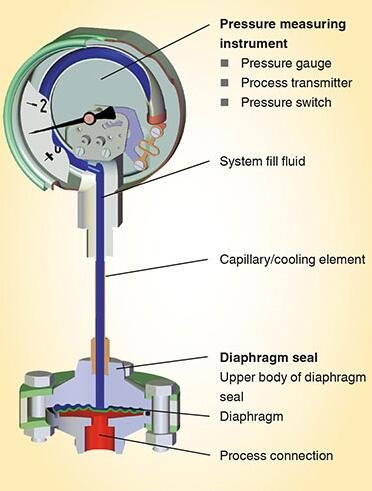
Basically, diaphragm seals are used in all pressure measurement processes to avoid direct contact between the measuring instrument and the medium during this process. In addition, if the measuring point cannot be installed or read because the measuring point is located in a hard-to-reach location, a diaphragm seal can also be used. In both cases, the applied pressure is transferred to the measuring instrument through the system fill fluid in the diaphragm seal housing.
The diaphragm of the seal can be made of different materials, such as stainless steel, Hastelloy, Monel or tantalum. In addition, coatings with ECTFE, PFA or gold can also be used.

We can provide the best diaphragm seal design, materials, system fill fluid and accessories for each application. The combined configuration of the pressure measuring instrument and the diaphragm seal is mainly determined by the special application conditions of the diaphragm sealing system.

How does a diaphragm pressure sensor work?

When the diaphragm seal pressure transmitter is working, the high and low pressure side isolation diaphragms and the filling liquid transfer the process pressure to the center filling liquid. The filling fluid in the center transmits the pressure to the sensing diaphragm in the center of the δ-chamber sensor. The sensing diaphragm is a tensioned elastic element, and its displacement changes with the differential pressure. For GP gauge pressure transmitters, the atmospheric pressure is applied to the low-pressure side of the sensing diaphragm. AP absolute pressure transmitter, the low pressure side always maintains a reference pressure. The maximum displacement of the sensing diaphragm is 0.004 inches (0.10 mm). The displacement is proportional to the pressure. The two capacitance fixed plates of the measuring diaphragm are linearly converted into a 2-wire current, voltage or digital HART output signal of 4-20mADC by the amplifying circuit.

What is a diaphragm seal?

Diaphragm seals, also known as chemical seals or remote seals, are used for pressure measurements when the process medium should not come into contact with the pressurised parts of the measuring instrument.

A diaphragm seal has two primary tasks:

  1. Separation of the measuring instrument from the process medium
  2. Transfer of the pressure to the measuring instrument

Extended reading: SI-703 Flush Diaphragm Pressure Sensor

What is remote seal?

The remote seal is used to prevent the medium in the pipeline from directly entering the pressure sensor assembly in the pressure transmitter. It is connected to the transmitter by a capillary filled with fluid. As a result, they’re often used in refining, petrochemical, and chemical plants.

Applicaitons of diaphragm seal

Typical applications where a diaphragm seal provides a cost-effective solution, to protecting the pressure instrument are:

  • In applications where the process fluid is corrosive;
  • In applications where the process fluid has a high viscosity,
    is comprised of slurries, sludge or other material that can actually coat,
    or damage a traditional pressure measuring device;
  • In applications where the process fluid can freeze or polymerize,
    thus causing a condition that might lead to the instrument becoming immobilized,
    or incapable of transmitting an accurate pressure measurement or signal.

The process side of the seal is isolated by a flexible diaphragm. The internal space between this diaphragm and pressure measuring sensor is filled with a system fill fluid. The pressure is transmitted from the measured medium, by the elastic diaphragm into the fluid. And from there to the measuring element, i.e. to the pressure measuring instrument or the transmitter.

Often, between the diaphragm seal and pressure measuring instrument, a capillary is connected. Capillary can eliminate or to minimize temperature effects from the hot fluid to the measuring instrument.

A Remote seal is mounted to the process by threaded, flanged, in-line, sanitary, or other connections. Usually, the fittings consist of T-pieces which are integrated into a pipeline, or of welding sockets which are welded to a pipeline, the process reactor or a tank.

This diaphragm seal type offers the advantage, that the “contact surface” between pressure medium and the diaphragm is relatively large. Thus ensuring accurate pressure measurement, especially for very low pressures (< 600 mbar).

Although standard remote seal bodies and diaphragms, are made of stainless steel, a variety of materials, from carbon steel to Hastelloy® C-276, are available to meet the demand of most applications.

A remote seal from Sino-Instrument can operate in pressure applications from 10″ Hg to 20,000 psi, and media temperatures between -130°F and 752°F. We can try to Learn more about the functionality, areas of application and advantages of a diaphragm seal in the following WIKA video.

Extended reading: Flat Pressure Sensor for High Viscosity Fluids

Diaphragm type pressure transmitter

https://www.drurylandetheatre.com/diaphragm-sealed-differential-pressure-transmitters-for-sale/

Data sheet of SMT3151 Diaphragm Seal Pressure transmitters

Diaphragm seal pressure transmitter installation

  1. The remote pressure transmitter without capillary can be directly installed through the remote flange. The position deviation will produce a correctable zero offset
  2. The electronic watch case can rotate 360 degrees at the maximum. The positioning screw can fix it at any position.
  3. Single-crystal silicon remote flange is connected with the matching flange conforming to ANSI / DIN standard. The matching flange should be equipped with soft gasket and fixed bolts and nuts. The user can choose to install bolts and nuts.
  4. For the remote transmission pressure transmitter with capillary, if the remote transmission sealing device is lower than the transmitter body, the maximum height drop between the remote transmission sealing device and the transmitter body should be less than 5m. When the working pressure is lower than 100kPa absolute pressure, the transmitter body must be lower than the remote transmission sealing device.
  5. The minimum bending radius of the capillary is 75mm, winding is strictly prohibited

Q&A

Parameters that determine the design of a remote seal transmitter

Location of the transmitter (indoor versus outdoor).
Temperatures (process and ambient).
Exposure to vacuum.
Pressure (operating and maximum).
Length of capillary.
Type of seal desired.
Process connection, material of construction and similar considerations.
Installation requirements.
Measurement span.

When are threaded connections used with diaphragm seals?

The combinations of diaphragm seals with threaded connection can be used for processes with extreme temperatures and with aggressive, adhesive, corrosive, environmentally hazardous or toxic media.

Why are there different system fill fluids with diaphragm seals?

In selecting the system fill fluid for diaphragm seals, factors such as compatibility (physiologically harmless) and also temperature and pressure conditions at the measurement location are of crucial importance. Depending on the system fill fluid, the appropriate minimum and maximum operating temperature range must be observed.

How are the diaphragm seals connected?

The diaphragm seals are available with female or male thread in their basic design. Due to the wide variety of available process connections they can be mounted to many different connections without any problems. Generally these connections are T-pieces which are integrated into a pipeline or welded to a pipeline by means of a welding socket.

Sino-Instrument offers SMT3151 Diaphragm Seal Pressure transmitter. Work the same as Wika diaphragm seal pressure transmitter; diaphragm seal pressure transmitter Rosemount; Yokogawa diaphragm seal pressure transmitter.

Sino-Instrument are diaphragm seal pressure transmitters manufacturer. We can offer you automated instruments from China, With best price.

Request a Quote

Please enable JavaScript in your browser to submit the form

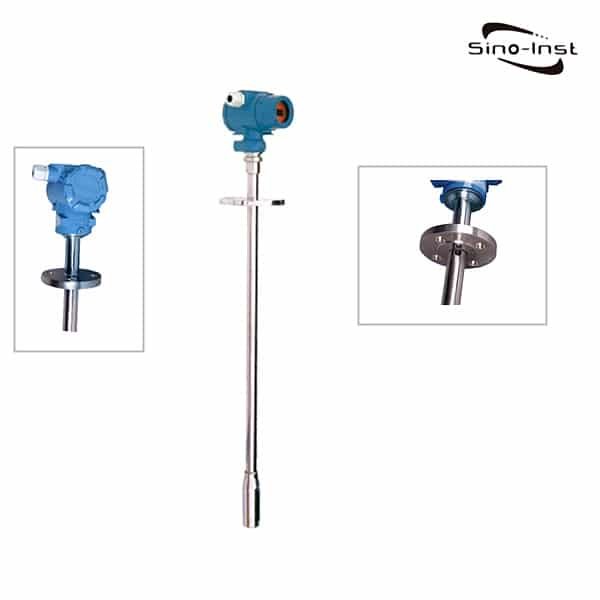
SMT3151TR Hydrostatic Submersible Level Transmitter-Straight Rod Insertion

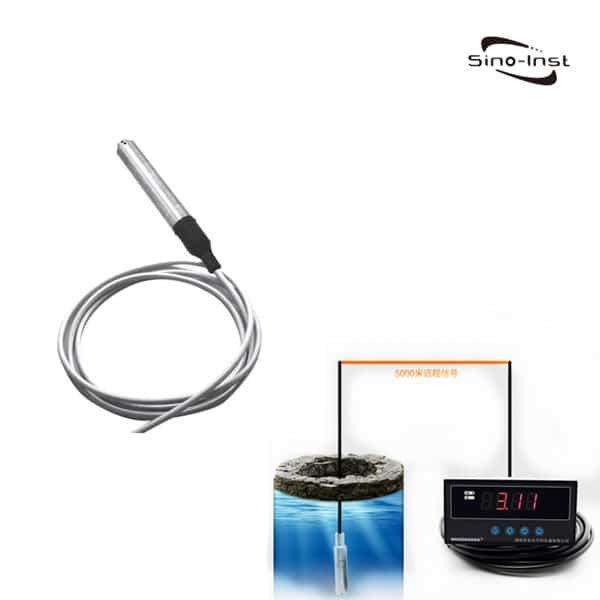
The Submersible Level Transmitter is the most commonly used tank level indicator. There are stainless steel probes that are placed at the bottom of tanks, wells, or other liquid containers. Output 4-20mA signal. For liquid level measurement and control.

The difference between the SMT3151TR Hydrostatic Submersible Level Transmitter and other submersible level transmitters is that it is a straight rod insertion type.

  • Measuring range: select within 0 ~ 5m (more than 5m negotiate order)
  • Measurement accuracy: 0.5
  • Output signal: 4 ~ 20mADC; 0 ~ 20mA;
  • Working temperature: -50 ~ 80 ℃/ -50~450℃ (High temperature type);
  • Wetted materials: stainless steel, polypropylene (PP), PTFE
  • Explosion-proof grade: ExiaIICT6Gb ExIICT6Gb

Sino-Inst offers a variety of Hydrostatic Submersible Level Transmitters for flow measurement. If you have any questions, please contact our sales engineers.

Features of Hydrostatic Submersible level transmitter

  • Solid structure, no moving parts, high reliability and long service life;
  • From water to sewage, from oil to liquid with high viscosity, high-precision measurement can be carried out, and it is not affected by foaming and sedimentation of the medium;
  • With multi-purpose mounting bracket, easy to install and use;
  • Lightning protection design. Has good anti-interference and lightning protection capabilities;
  • With power reverse polarity protection and overload current limit protection;
  • The new material is not easy to fatigue and wear, and has strong resistance to vibration, impact and overload]
  • High temperature type can be customized. High temperature reaches 450 ℃.

Extended reading: HART protocol digital signal (two-wire system)

Specifications of Submersible Level Transmitter

Measuring range:0~5m
Accuracy:0.5
Signal output:4~20ADC, 0~20mA
Loading resistance:0~600Ω
Transmitting distance:>1000m
Working voltage:24VDC
Working temperature:-50~ +80 °C;    -50~ +450 °C; 
Environmental temperature:-40~ +50 °C
Relative humidity:≤85%
Contacting liquid material:Stainless steel
Installation type:Flange: DN32 (HG/T20593,20595-97) RF sealing face ;  
G2″ thread(customize)
Electrical connection:M20×1.5
Explosion-proof grade:Exia II CT6Ga;   Exd II CT6Gb

Applications of Submersible Level Transmitter

Sino-Inst’s Hydrostatic Level Transmitter is used in various industrial and municipal environments. Especially in water supply and wastewater treatment plants. Mainly used for water level measurement of urban water supply, oil tanks, petrochemical and other open tanks.

Hydrostatic Level Transmitter measures the hydrostatic pressure of a liquid medium. Liquid level information is transmitted through electrical signals. The signal changes linearly and proportionally. To measure the hydrostatic pressure above the sensor.

If your measurement range is greater than 5 meters, please refer to Submersible Pressure Transducer.

If you are measuring the fuel tank level, you can choose a magnetostrictive liquid level sensor with higher accuracy and longer service life.

More Featured Hydrostatic Level Transmitters

Installation of Submersible Level Transmitter

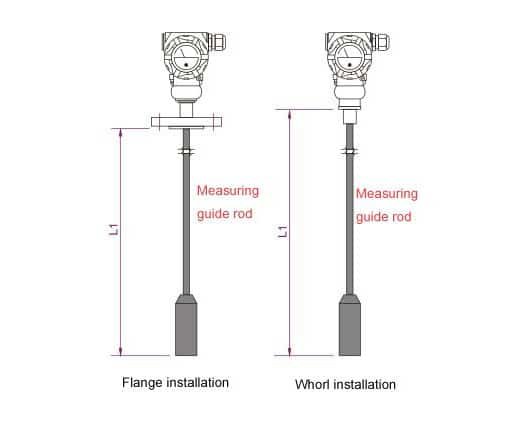
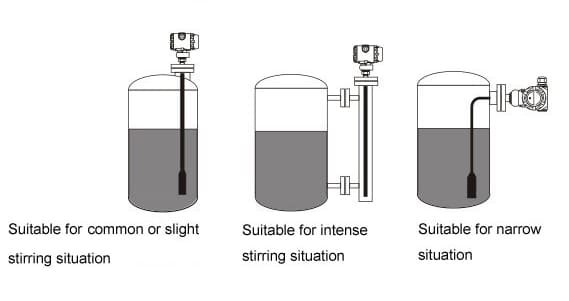
The rod type static pressure liquid level transmitter has two standard installation methods of G11 / 2 thread and flange.

Thread installation
For the transmitter that is directly installed with G11 / 2 thread, a G11 / 2 round nut is provided at the time of delivery. Generally, there are two ways for installation.

  1. The installation position has G11 / 2 thread. The liquid level transmitter can be screwed in directly. The attached round nut can be used or screwed on to prevent loosening.
  2. There is no G11 / 2 thread in the installation position. Can use the existing Φ50 ~ Φ60 light hole, or install a bracket with Φ50 ~ Φ60 hole. Install the liquid level transmitter, and screw on the round nut to fix it.

Flange mounting
The standard installation dimensions of flanges are in accordance with DN50, GB9119.6-88
If there are other flange mounting holes in the installation location, please indicate the flange size or the corresponding specifications and standard numbers when ordering, in order to meet the installation requirements.

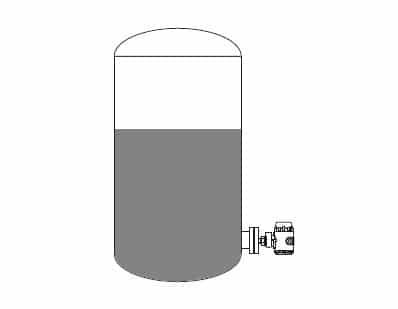
Of course, we can also directly measure the liquid level with a pressure transmitter. For example, install a Hydrostatic pressure transmitter directly at the bottom of the tank. The installation is shown on the right.
If you want to measure the tank liquid level like this, you can refer to:

What is hydrostatic level transmitter?

Hydrostatic level transmitter is actually a type of pressure transmitter. Hydrostatic level transmitter is the application of pressure transmitter to liquid level measurement. The submersible Hydostatic pressure level transmitter is based on the principle that the measured liquid static pressure is proportional to the height of the liquid. Piezoresistive effect using diffused silicon or ceramic sensitive elements. Convert static pressure into electrical signal. After temperature compensation and linear correction. Convert to 4-20mADC standard current signal output. In order to achieve liquid level measurement.

Read more about: [What is and How it Works]Hydrostatic Level Sensor

Submersible level transmitter working principle

The basic working principle of Hydrostatic Level Sensor is static pressure level measurement.

In liquid, the pressure generated at a certain depth is generated by the weight of the medium itself above the measurement point. It is proportional to the density of the medium and the local acceleration of gravity.

The formula P = ρgh reflects the proportional relationship between them.

Where P = pressure, ρ = medium density, g = gravity acceleration, h = depth of measurement point.

Therefore, the physical quantity measured by the input liquid level gauge is actually pressure. It can be understood by the calibration unit mH2O of the input level gauge. The actual liquid level must be obtained by conversion after knowing the two parameters of density and gravity acceleration. In the industrial field, such conversion is usually performed by a secondary instrument or PLC.

The Hydrostatic Level Sensor mainly measures corrosive liquids such as hydrochloric acid, hydrogen peroxide, etc. Or chemical and electroplating wastewater. Mainly used in measuring corrosive media. It has the advantages of strong corrosion resistance and stable performance.

Let’s see How is hydrostatic pressure measured ?

Video source: https://www.youtube.com/watch?v=T2OPoEod_jM&feature=emb_logo

Hydrostatic level transmitter advantages and disadvantages

About Hydrostatic level transmitter advantages and disadvantages, we do a simple analysis here. If you want to know more about the advantages and disadvantages of level transmitters. Please refer to Sino-Inst Level Transmitters.

Advantages

  • High measurement accuracy;
  • The ultra-high range can be customized up to 1000 meters.
  • Easy to install;
  • The signal can be transmitted remotely;
  • The corrosion of various media can be resisted by choosing different materials;
  • Suitable for explosion-proof occasions;
  • Low cost;

Disadvantages

Extended reading: Hydrostatic Pressure Transmitter

Hydrostatic level transmitter price

Compared with other liquid level transmitters, Hydrostatic level transmitter has lower cost. The price of Hydrostatic level transmitter is mainly affected by the measurement situation. such as:

  1. Range range;
  2. Medium temperature;
  3. The medium is corrosive;

Sino-Inst is a manufacturer of Hydrostatic level transmitter. Sino-Inst provides customers with the best Hydrostatic level transmitter price. For example, the general-purpose Hydrostatic level transmitter has a reference price of USD70. If you want to know the exact price, please contact our sales engineer.

Sino-Instrument offers detailed product specifications and data sheets for review. Our application engineers, can help ensure you choose exactly what you need for your specific installation. Or if you need the RFQ instantly, we can offer you with the submersible level transmitter price immediately.

Frequently
Asked
Questions

Magnetostriction means that the change of the magnetization direction in ferromagnetic substance will cause the change of the medium lattice spacing. As a result, the length and volume of the ferromagnetic substance change.
Magnetostrictive level transmitter is a level transmitter based on the principle of magnetostriction. It is a high-precision, high-resolution transmitter driven by a magnetic float.

Ultrasonic Level Indicator, also called Ultrasonic level sensor, or ultrasonic level transmitter. In this type of transmitter, an ultrasonic transducer is mounted at, or near the top of a container containing liquid. The transducer sends out an ultrasonic pulse. The pulse hits the surface of the liquid, and gets reflected. The sensor then calculates the fill level based on the time between the transmitted and received signal.

Sino-Inst offers over 10 Submersible Level Transmitters. About 50% of these are Submersible Level Sensors, 40% are water level meters, and 40% are for tank level. A wide variety of Hydrostatic Level Sensor options are available to you, such as free samples, paid samples.

Sino-Inst is a globally recognized supplier and manufacturer of Hydrostatic level transmitter.
Submersible Level Transmitter instrumentation, located in China.

Sino-Inst sells through a mature distribution network that reaches all 50 states and 30 countries worldwide. Submersible Level Transmitter products are most popular in Domestic Market, Southeast Asia, and Mid East. You can ensure product safety by selecting from certified suppliers, with ISO9001,ISO14001 certification.Send RFQ NOW, You may get the price now.

Request a Quote

Please enable JavaScript in your browser to submit the form

3051HP Hydrostatic Pressure Transmitter

What is hydrostatic pressure transmitter?

Hydrostatic Pressure Transmitters is an instrument that measures the hydrostatic pressure or differential pressure exerted by a hydrostatic head.

Feel the measured pressure through the remote transmission device installed on the pipeline or container. The pressure is transmitted to the main body of the transmitter through the filling silicone oil (or other liquid) in the capillary tube. Then there is the delta chamber and the amplifier circuit board in the main body of the transmitter. Convert into 4-20mA DC signal output. HP Smart can communicate with a HART handheld communicator. Use it to set, monitor, or form an on-site monitoring system with the host computer.

Hydrostatic Pressure Transmitters are often used to measure the level, flow, and pressure of liquids, gases, or steam under high working pressure environments.

Features of Hydrostatic Pressure Transmitter

The Hydrostatic pressure transmitter is used to measure the liquid level, flow, and pressure of the liquid, gas or steam under high working pressure, and then convert to 4~20mA DC signal output.

The Hydrostatic pressure transmitter is used to measure the liquid level, flow, and pressure of the liquid, gas or steam under high working pressure, and then convert to 4~20mA DC signal output.

  • The high hydrostatic pressure transmitter can measure differential pressure below 32MPa hydrostatic pressure.
  • With 32MPa working pressure and overload protection.
  • Ensuring reliable application of the transmitter in Hydrostatic pressure systems.

Read more about: Steam pressure transmitter-Pressure measure on steam pipeline 

Specifications of Hydrostatic Pressure Transmitter

Measure Range of Hydrostatic pressure sensor:

Differential pressure: 0-1.3-6790KPa
Hydrostatic pressure: 32MPa

  • Use object: liquid, gas or steam
  • Output signal: 4-20mA dc. Output superimposed HART protocol digital signal (two-wire system)
  • Power source: external power supply 24V dc. Power supply range 12V ~ 45V
  • Installation in dangerous places:
    • Flameproof  ExdIIBT5Gb;(explosion-proof certificate no. :CE16.1163)
    • Intrinsically safe ExiaIICT4/T5/T6Ga;(explosion-proof certificate no. : CE15.2354X) ;
  • Accuracy: ± 0.1%, ±0.2%
  • Stability: ±0.25%/6 months of maximum range
ModelTransmitter type
HPAbsolute pressure transmitter
CodeScale range
20-0.10~3.5kPa(0-10~350mmH2O)
30-0.8~8.0kPa(0-80~800mmH2O)
40-4.0~40kPa(0-400~4000mmH2O)
50-20~200kPa(0-2000~20000mmH2O)
60-70~700kPa(0-0.7~7kgf/cm2)
70-210~2100kPa(0-2.1~21kgf/cm2)
80-700~7000kPa(0-7.0~70kgf/cm2)
90-2.1~21MPa(0-21~210kgf/cm2)
00-4.1~41MPa(0-41~4100kgf/cm2)
CodeOutput form
ELinear output 4-20mAdc
SFLinear/square root output 4-20mAdc +HART signal,,Full function buttons on site
FMODBUS-485 signal
CodeStructural materials
Flange connectorExhaust/Drain valveIsolation diaphragmFilling liquid
22316 Stainless steel316 Stainless steel316 Stainless steelSilicone oil
23316 Stainless steel316 Stainless steelHastelloy CSilicone oil
24316 Stainless steel316 Stainless steelMonelSilicone oil
25316 Stainless steel316 Stainless steelTantalumSilicone oil
33Hastelloy CHastelloy CHastelloy CSilicone oil
35Hastelloy CHastelloy CTantalumSilicone oil
44MonelMonelMonelSilicone oil
CodeShell materialConduit inlet dimensions
ALow copper aluminum alloy polyurethane coatingM20×1.5
BLow copper aluminum alloy polyurethane coating1/2-14 NPT
CStainless steelM20×1.5
DStainless steel1/2-14 NPT
CodePressure connection
L11/4NPT-18 Internal thread(excluding waist joint standard)
L21/2NPT-14 Internal thread
L3M20×1.5 External thread
CodeOptional parts
M4LCD multi-power digital display head
B1Pipe bending bracket
B2Plate bending bracket
B3Pipe mounting bracket
C02M20×1.5 nut and Φ 14 pressure short tube
C121/2NPT-14 external thread and Φ14 pressure short tube
C221/4NPT-18 external thread and Φ14 pressure short tube
C321/4NPT-18 to M20×1.5 external thread
C421/2NPT-14 to M20×1.5 external thread
C431/2NPT-14 to 1/4NPT-18 internal thread
C441/2NPT-14 to 1/2NPT-14 external thread
C451/2NPT-14 to G1/2 external thread
D1The side discharge valve is on the upper part
D2The side discharge valve is on the upper part
X1Oil ban
DaFlameproof ExdIIBT5Gb;(explosion-proof certificate no. : CE16.1163)
FaIntrinsically safe ExiaIICT4/T5/T6Ga;(explosion-proof certificate no. : CE15.2354X)

Hydrostatic Pressure Transmitter Applications

  • Viscous medium at high temperature
  • Crystallizable medium
  • Precipitating medium with solid particles or suspended matter
  • Strong corrosive or highly toxic medium
  • It can eliminate the phenomenon that the pressure guiding tube leaks and pollutes the surrounding environment. It can avoid the instability of the measurement signal when the isolation fluid is used. The tedious work of frequently supplementing the isolation fluid is required.
  • Continuous and accurate measurement of interface and density
  • The remote transmission device can avoid the mixing of different instantaneous media. So that the measurement result truly reflects the actual situation of the process change.
  • Occasions requiring high hygiene and cleanliness
  • For example, in the production of food, beverage and pharmaceutical industries, it is not only required that the parts of the transmitter contacting the medium meet the hygienic standards. It should also be easy to wash. To prevent cross-contamination of different batches of media.

Extended reading: Silicon Pressure Sensor

Hydrostatic Pressure

Hydrostatic pressure is the pressure generated by the weight of the liquid above the measurement point when the liquid is stationary. The height of the liquid column with uniform density is proportional to the hydrostatic pressure. As the weight of the fluid exerting downward force from above increases, the hydrostatic pressure increases in proportion to the depth measured from the surface.

Read more about: Differences! Static pressure vs dynamic pressure vs total pressure

If the fluid is inside the container, the depth of the object placed in the fluid can be measured.
The hydrostatic characteristics of a liquid are not constant, and the main factors affecting it are the density and local gravity of the liquid. In order to determine the hydrostatic pressure of a particular liquid, both quantities need to be known.

The deeper an object is placed in a fluid, the greater the pressure it bears. This is because the weight of the fluid is higher than its weight. Due to the weight of the fluid, the denser the fluid above it, the greater the pressure on the submerged object.

Measuring principle

The pressure in the liquid increases as the filling height increases. The hydrostatic pressure is transmitted to the measuring unit through the stainless steel diaphragm. Bubbling, accumulation of liquids, fluctuating electrical characteristics, and container design will not affect the measured value.

Extended reading: What is flush diaphragm?

Formula for calculating hydrostatic pressure

The formula for calculating the hydrostatic pressure of a column of liquid is:

Phyd = h.ρ.g

Prel = h.ρ.g

Pabs = h.ρ.g + Patm

Phyd = Hydrostatic Pressure (Pa)
Prel = Relative Pressure (Pa)
Pabs = Absolute Pressure (Pa)
Patm = Atmospheric Pressure (Pa)
h = Liquid Height (m)
ρ = Liquid Density (kg/m3)
g = Local Gravity (m/s2)

The above calculation formula is also the working principle of hydrostatic liquid level sensor.

The hydrostatic pressure sensor measures the hydrostatic pressure applied by the hydrostatic head. Output 4-20mA.
Use a hydrostatic pressure transmitter to measure the storage tank and pump inlet. And other applications where hydrostatic pressure is used to determine the liquid level.

Hydrostatic Pressure Sensor/Transmitter can also be used with paperless recorder.

Hydrostatic Level Sensor measures the hydrostatic pressure by the submersible pressure sensor. The static pressure of the liquid is proportional to the height of the liquid. Then the static pressure was converted into an electrical signal. Convert to analog signal output or 4-20mADC. With digital display. For water level measurement, hydrostatic level sensor is a low cost type. Different types of measuring cells are used in level measurement based on the hydrostatic principle.

Lightning protection, anti-corrosion, explosion-proof optional. IP68 is optional.

Read more about: Hydrostatic Level Sensor

The basic working principle of Hydrostatic Level Sensor is static pressure level measurement.

In liquid, the pressure generated at a certain depth is generated by the weight of the medium itself above the measurement point. It is proportional to the density of the medium and the local acceleration of gravity.

The formula P = ρgh reflects the proportional relationship between them.

Where P = pressure, ρ = medium density, g = gravity acceleration, h = depth of measurement point.

Therefore, the physical quantity measured by the input liquid level gauge is actually pressure. It can be understood by the calibration unit mH2O of the input level gauge. The actual liquid level must be obtained by conversion after knowing the two parameters of density and gravity acceleration. In the industrial field, such conversion is usually performed by a secondary instrument or PLC.

The Hydrostatic Level Sensor mainly measures corrosive liquids such as hydrochloric acid, hydrogen peroxide, etc. Or chemical and electroplating wastewater. Mainly used in measuring corrosive media. It has the advantages of strong corrosion resistance and stable performance.

Extended reading: Static pressure vs dynamic pressure vs total pressure

There are various methods and techniques for measuring fluid level using hydrostatic pressure sensors. Depending on the installation, they all have advantages and disadvantages. Hydrostatic pressure measurement is an accurate and convenient technique for determining fluid height or volume.

Let’s take a look at each according to the installation location of the hydrostatic pressure sensor.

Externally mounted type

Image source: https://www.yourlevelexperts.com/zh-hant/product/hydrostatic-pressure/

The Hydrostatic pressure liquid level sensor can be installed to the outside of the container through threads or flange fittings. If necessary, capillaries can also be used.

Submersible type

Picture source: network picture

If the externally mounted sensor is not available, a submersible pressure sensor can be used. The electrical connection with IP68 rating is suitable for long-term permanent immersion. The electronic equipment of the sensor can be protected from the external environment.

Read more about: [What is and How it Works]Hydrostatic Level Sensor

DP transmitters are Differential Pressure Transmitters. DP transmitter measures the pressure difference between the gas or liquid at both ends of the transmitter. Output 4~20mA, 0~5V. Used for liquid level, density, and pressure of liquid, gas, and steam.

DP transmitters are different from pressure transmitters as they have 2 pressure interfaces. With flanges, capillaries, valves, brackets, throttle devices. Differential pressure transmitters are used to measure the level, density, and flow of liquids, gases, and vapors. Then convert it into 4–20mADC current signal output.

Read more.

pressure transducer often called a pressure transmitter, is a transducer that converts pressure into an analog electrical signal.

Although there are various types of pressure transducers, one of the most common is the strain-gage base transducer.

The conversion of pressure into an electrical signal is achieved by the physical deformation of strain gauges, which are bonded into the diaphragm of the pressure transducer, and wired into a Wheatstone bridge configuration.

Pressure applied to the pressure transducer produces a deflection of the diaphragm, which introduces strain to the gages.

The strain will produce an electrical resistance change proportional to the pressure.

Read more.

Hydrostatic pressure transmitter fault debugging steps:

How to debug the fault of Hydrostatic pressure transmitter

Total Time: 30 minutes

Check the power supply

Check if the power supply of the differential pressure transmitter is reversed, and whether the positive, and negative poles of the power supply are connected correctly.

Measure the power supply

Measure the power supply of the transmitter, whether there is 24V DC voltage. It must ensure that the power supply voltage to the transmitter is ≥12V
(that is, the voltage of the transmitter power input terminal is ≥12V).
If there is no power supply, check whether the circuit is disconnected, whether the instrument is selected incorrectly (input impedance should be ≤250Ω), and so on.

Check the display meter

If the pressure transmitter is equipped with a meter head, it is necessary to check whether the dislay meter is damaged. You can short-circuit the two wires of the meter head first. If it is normal after a short circuited, it means the head is damaged.
If the meter head is damaged, Then you need to change the header.

Check the current

If there is a problem with the differential pressure transmitter, connect the ammeter to the 24V power supply circuit to check if the current is normal.
If it is normal, the transmitter is normal. In this case, check if other instruments in the loop are normal.

Connect the power supply

Connect the power supply to the transmitter power input terminal, and connect the power cable to the power supply wiring port.
If you still have any question with the selection, application, and use of pressure transmitters, you can just contact our engineer today.

Related Blogs

Extended reading: Use of high temperature melt pressure sensor

Hydrostatic pressure transmitter/sensor measures the level, density, and pressure of liquid, gas, or steam. And then converts it into a 4-20 mA DC signal output. The Hydrostatic pressure transmitter can communicate with the HART communicator intelligently. Use it to set, monitor or form a site monitoring system with the host computer. Use a Hydrostatic pressure sensor to measure tanks, processing vessels, headers, pump inlets and others using hydrostatic pressure to determine the liquid height. SI3051HP Hydrostatic pressure transmitters, with working Hydrostatic pressure up to 32Mpa.

Extended reading: Best Price Ceramic Pressure Sensor

Sino-Inst offers a variety of Hydrostatic Pressure Transmitters for industrial pressure measurement. If you have any questions, please contact our sales engineers.

Request a Quote

Please enable JavaScript in your browser to submit the form

OEM Pressure Sensor-General Industrial Applications

OEM Pressure Sensor is an economical product. It uses all stainless steel wetted parts, has a compact size and high cost performance.

This pressure transmitter measures gauge pressure and absolute pressure. The measurement system is fully welded and can be used for most liquid and gas media. This series provides a variety of electrical outputs as well as electrical connections and pressure interfaces to meet most application requirements. The compact structure is very suitable for installation in a small space.

Sino-Inst offers a variety of OEM pressure senors for industrial pressure measurement. If you have any questions, please contact our sales engineers.

Industrial OEM Pressure Sensor Features

  • Measuring range: 0-0.6,1,2,5,10,20,30,40,50,60 ~ 150MPa;
  • Available in gauge, absolute and sealed gage styles;
  • Constant current / constant voltage power supply;
  • Isolated structure, suitable for a variety of fluid media;
  • Standard OEM pressure sensitive element;
  • All 316L stainless steel;
  • Tantalum diaphragm optional, titanium structure optional;
  • Standard male thread pressure connection available;
  • Flexible customer customization ;

Specifications

  • Measuring range: 0-0.6,1,2,5,10,20,30,40,50,60 ~ 150MPa
  • Comprehensive accuracy: 0.1% FS, 0.25% FS, 0.5% FS
  • Output signal: 1.0mV / V, 1.5mV / V, 2.0mV / V
  • Power supply voltage: 10VDC (3 ~ 15VDC)
  • Output impedance: 350/1000/1650 / 2000Ω
  • Medium temperature: -20 ~ 85 ℃ ~ 125 ℃
  • Ambient temperature: -20 ~ 85 ℃
  • Insulation resistance: greater than 2000MΩ / 100VDC
  • Response time: <1-5ms
  • Sealing grade: IP65
  • Long-term stable performance: 0.15% FS / year
  • Vibration effect: within the mechanical vibration frequency of 20Hz ~ 1000Hz, the output change is less than 0.1% FS
  • Electrical connection: red-positive power, black (yellow)-negative power, blue-positive signal, white-negative signal
  • Mechanical connection: M20 × 1.5, other threads can be customized according to customer requirements

5 Types of Industrial Pressure Sensors

Piezoelectric pressure sensor:

Piezoelectric effect is the main working principle of piezoelectric sensors. Piezoelectric sensors cannot be used for static measurement. Because the charge after external force is applied, it can only be saved when the loop has infinite input impedance. This is not the case, so this determines that piezoelectric sensors can only measure dynamic stress.

Ceramic pressure sensor:

Ceramic pressure sensors are based on the piezoresistive effect. Pressure directly acts on the front surface of the ceramic diaphragm, causing the membrane to deform slightly. Thick film resistors are printed on the back of the ceramic diaphragm and connected into a Wheatstone bridge. Because of the varistor The piezoresistive effect makes the bridge generate a voltage signal that is highly linear and proportional to the pressure and proportional to the excitation voltage. The standard signal is calibrated to 2.0 / 3.0 / 3.3mv / v according to different pressure ranges. Strain sensors are compatible.

Diffused silicon pressure sensor:

The working principle of a diffused silicon pressure sensor is also based on the piezoresistive effect. Using the piezoresistive effect principle, the pressure of the measured medium directly acts on the diaphragm of the sensor (stainless steel or ceramic). The diaphragm produces a micro-displacement proportional to the pressure of the medium. Change the resistance value of the sensor. Use electronic circuits to detect this change, and convert and output a standard measurement signal corresponding to this pressure.

Sapphire pressure sensor:

Utilizing strain-resistance working principle. Using silicon-sapphire as the semiconductor sensitive element has unparalleled metrological characteristics. Therefore, silicon-sapphire semiconductor sensitive components are used. They are not sensitive to temperature changes and have good working characteristics even under high temperature conditions. Sapphire has extremely strong radiation resistance. In addition, silicon-sapphire semiconductor sensitive components, pn drift.

Piezoresistive force sensor:

Resistance strain gage is one of the main components of a piezoresistive strain sensor. The working principle of a metal resistance strain gage is that the resistance of the strain resistance absorbed by the base material changes with the mechanical deformation.

Applications of OEM pressure sensor

Industrial process control: liquid level measurement, gas, liquid pressure measurement;

Pressure testing instruments: pressure calibration instruments, hydraulic systems and switches; refrigeration equipment and air conditioning systems, aviation and marine testing.

OEM pressure transmitter

More Featured Pressure Measurement Solutions

OEM pressure transmitter manufacturer in China

Sino-Inst sensors are produced in three basic configurations: gauge pressure sensors, absolute pressure sensors and sealed gauge pressure sensors.

A large percentage of OEM pressure sensors produced by Sino-Instrument, are used in our own pressure transducers, and pressure transmitters, so Sino-Inst understands the OEM viewpoint.

Whatever the need, Sino-Inst can provide the solution!

Request a Quote

Please enable JavaScript in your browser to submit the form