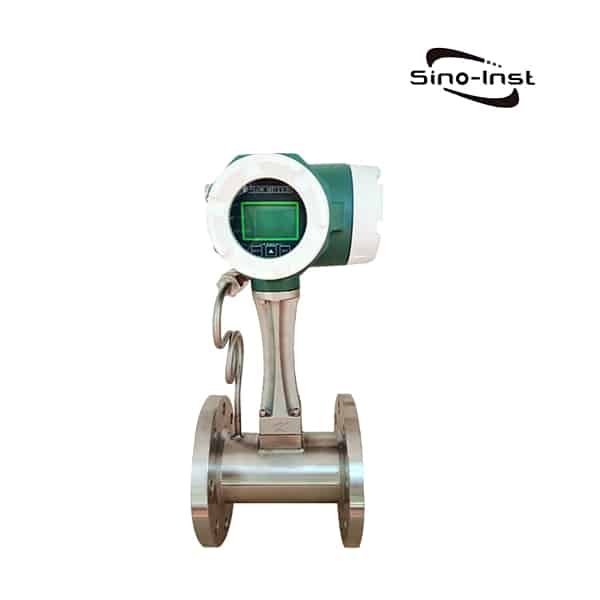
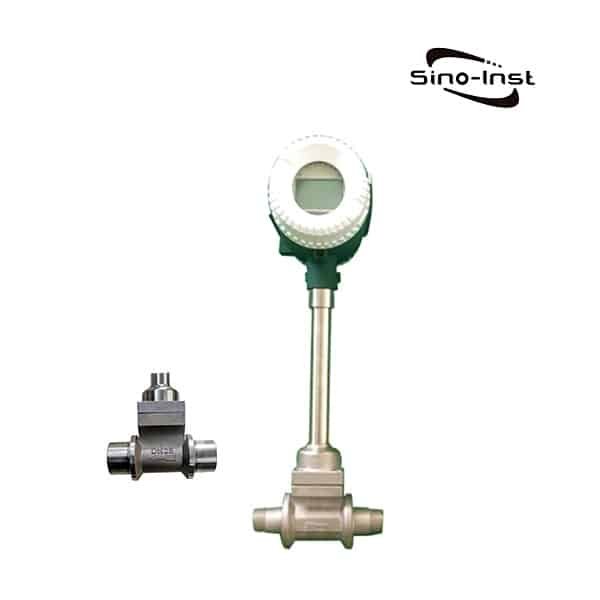
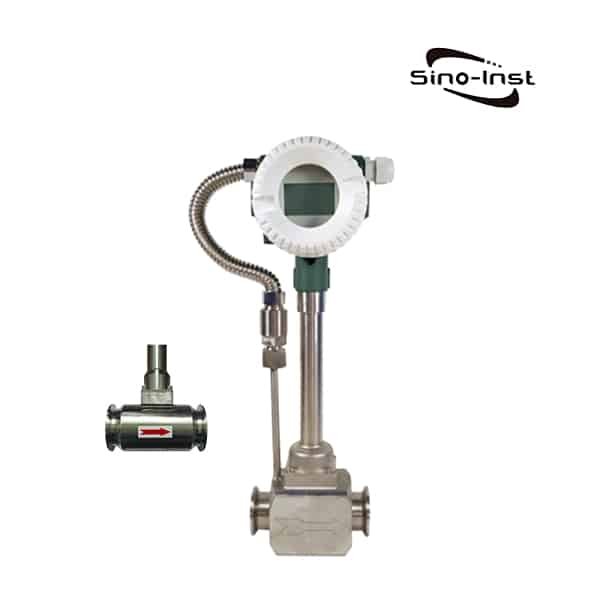
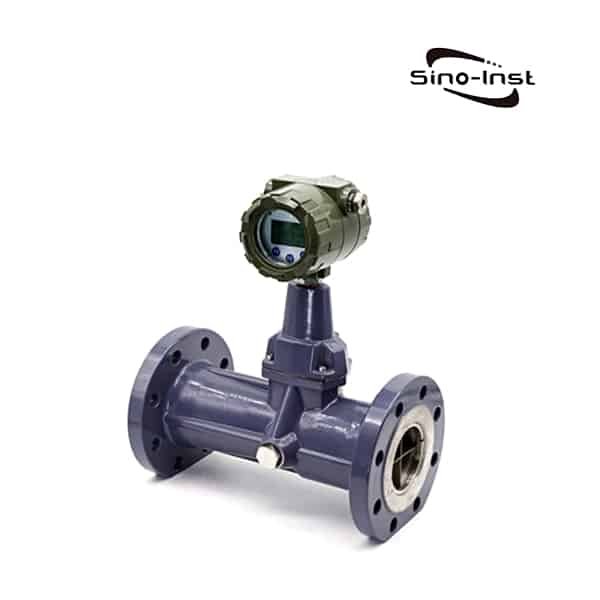
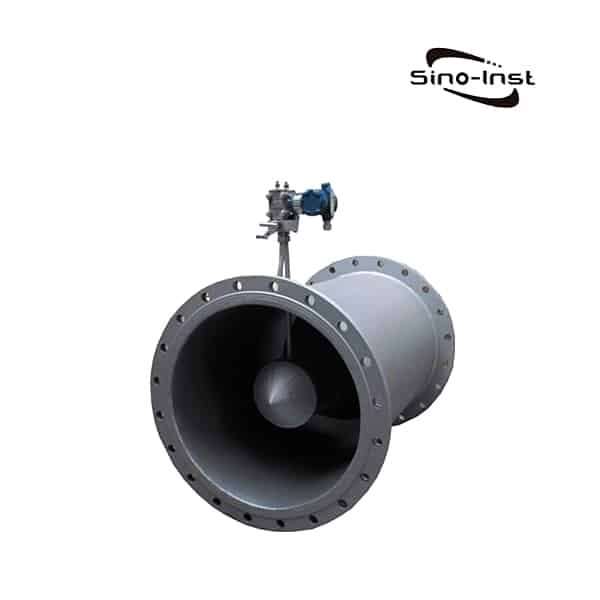
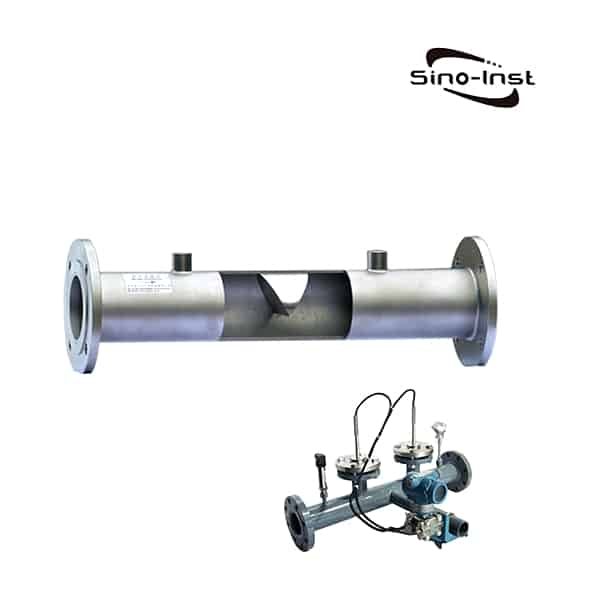
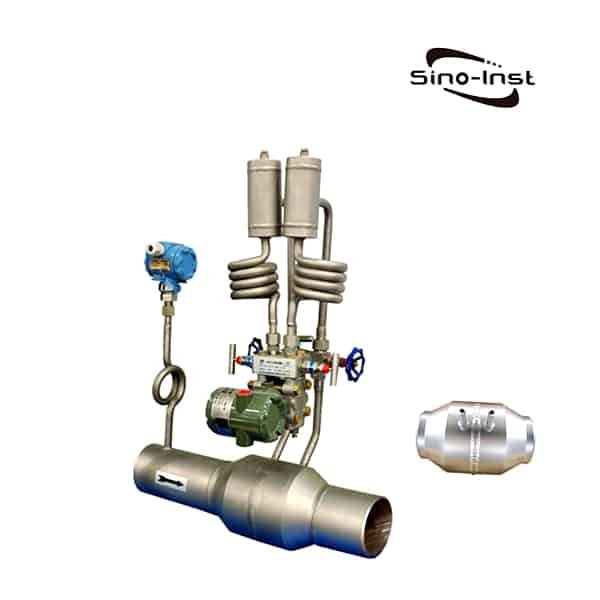
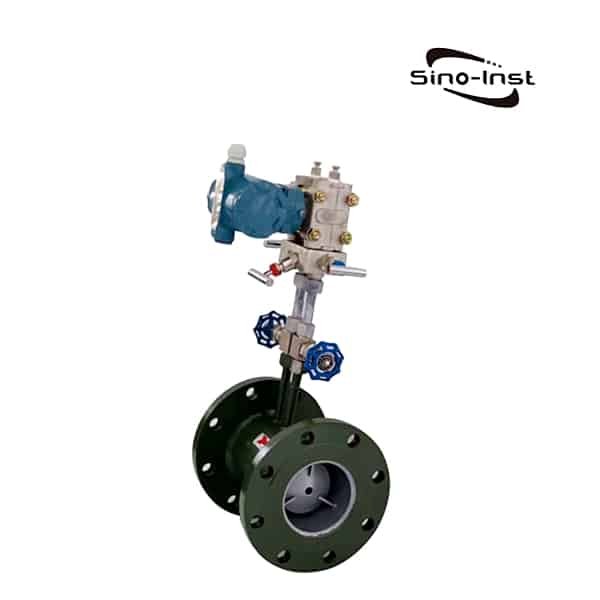
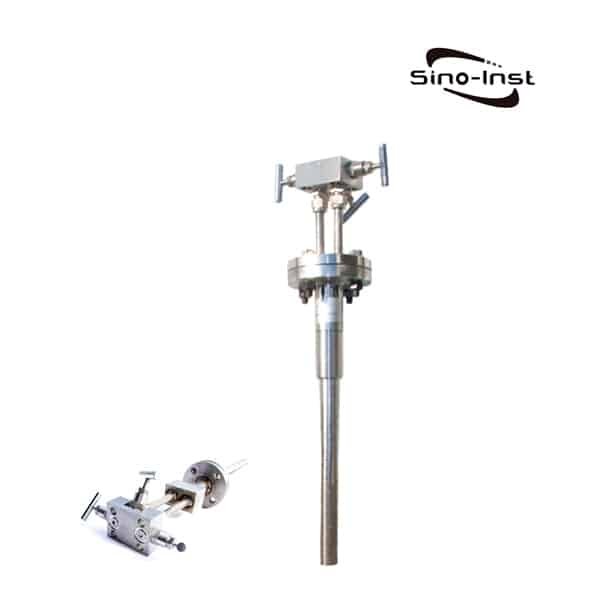
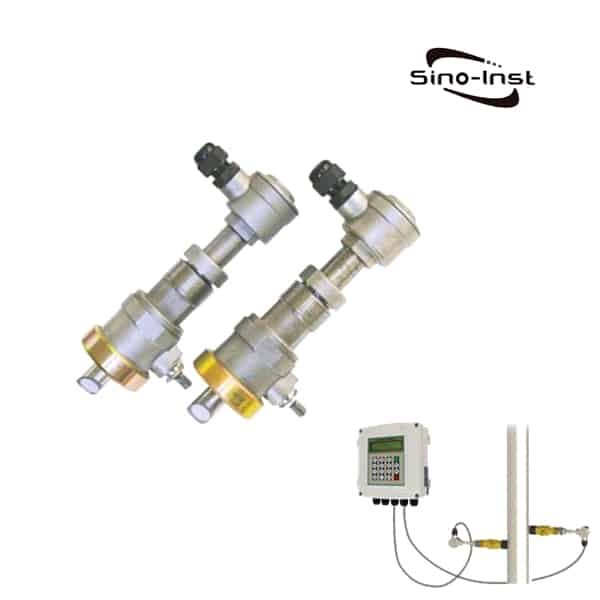
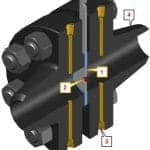
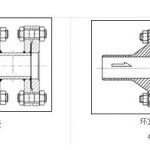
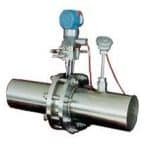
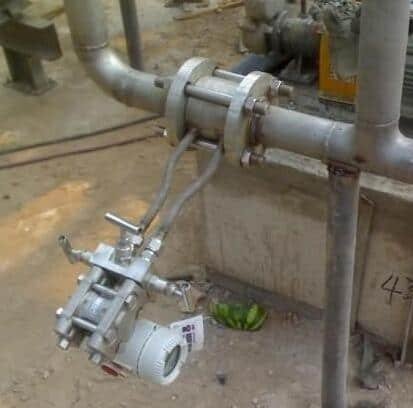
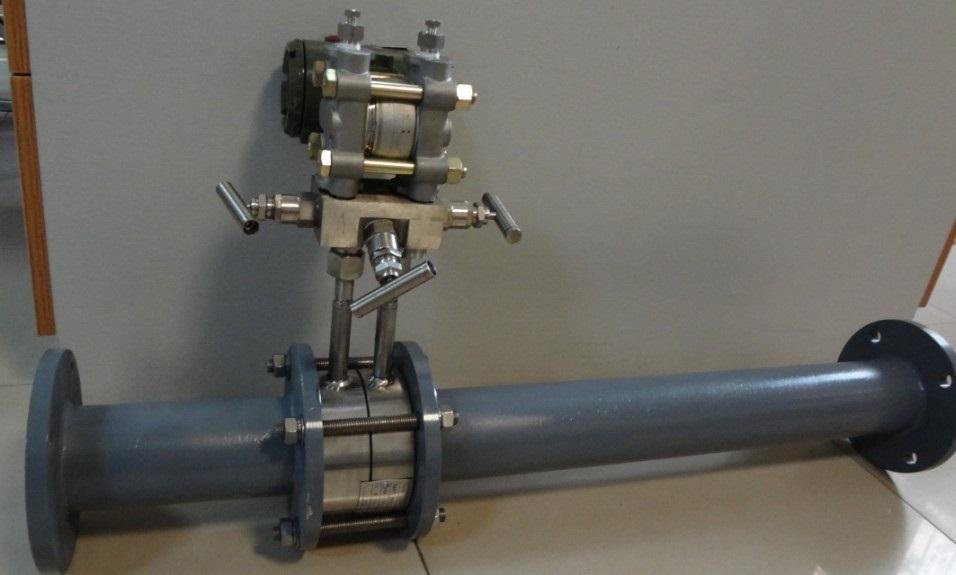
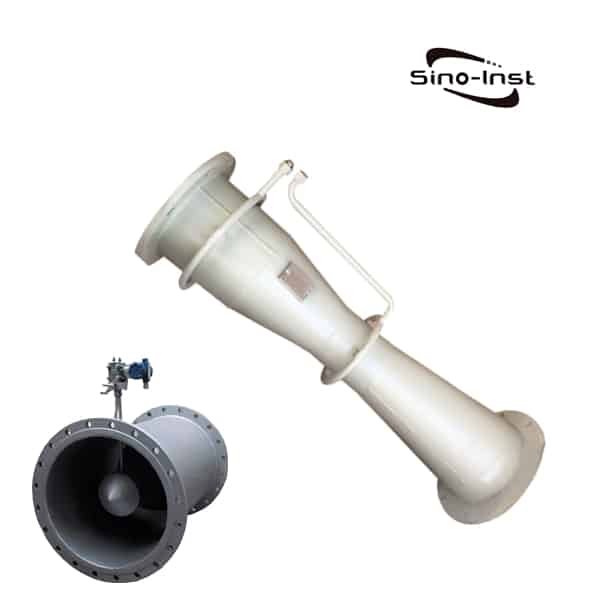
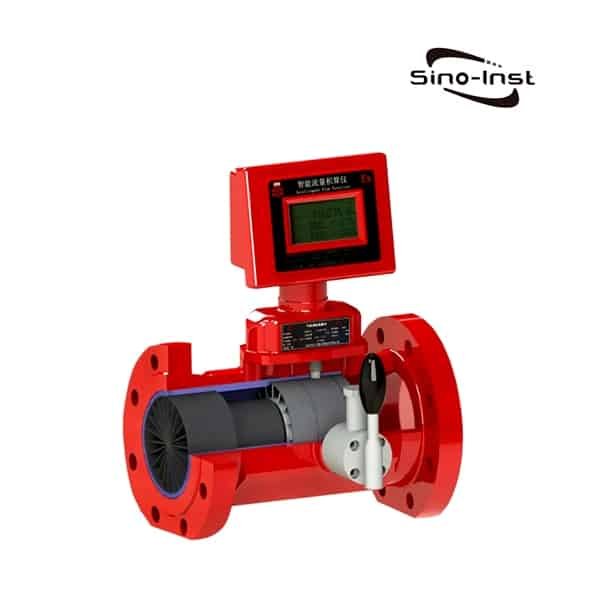
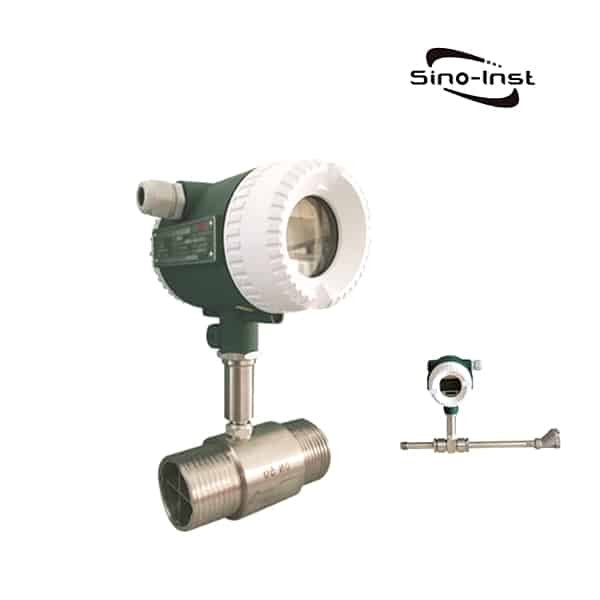
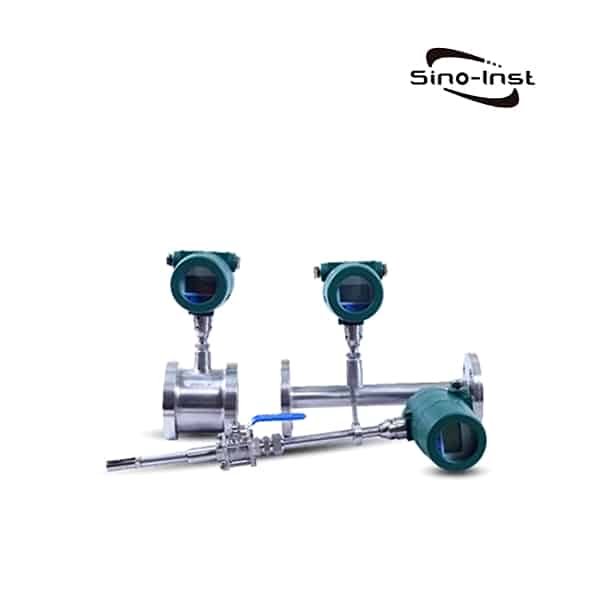
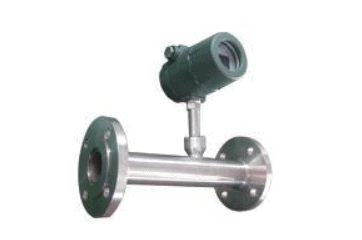
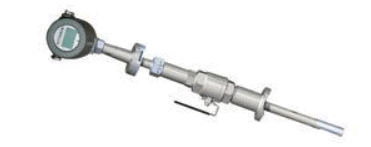
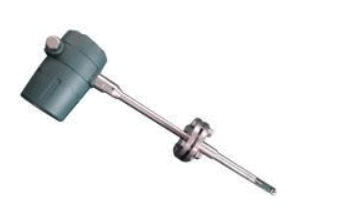
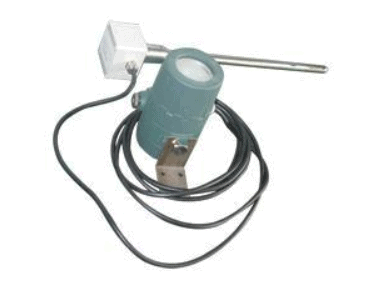
Insertion Vortex Flow Meter

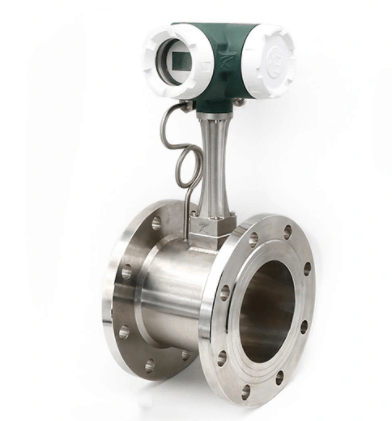
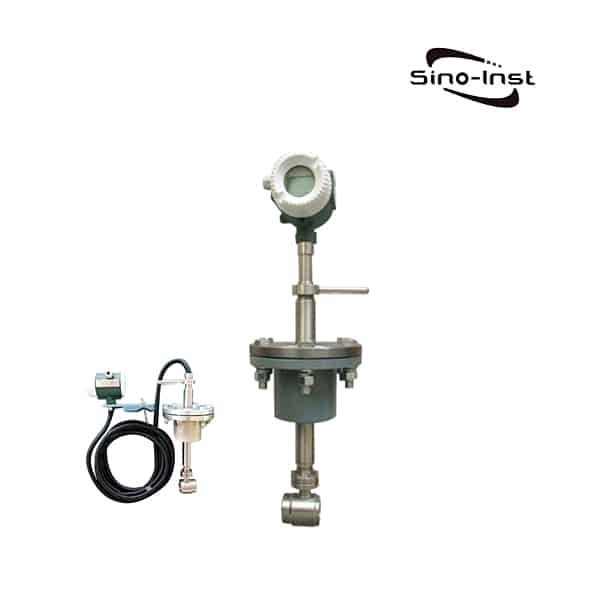
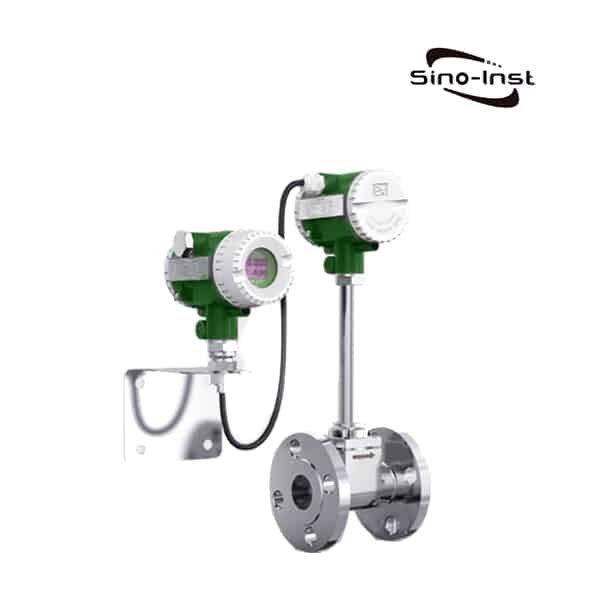
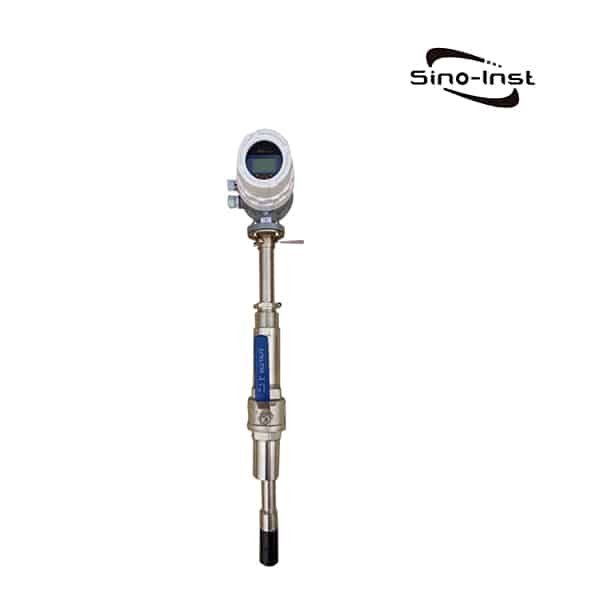
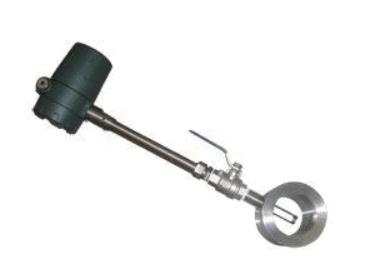
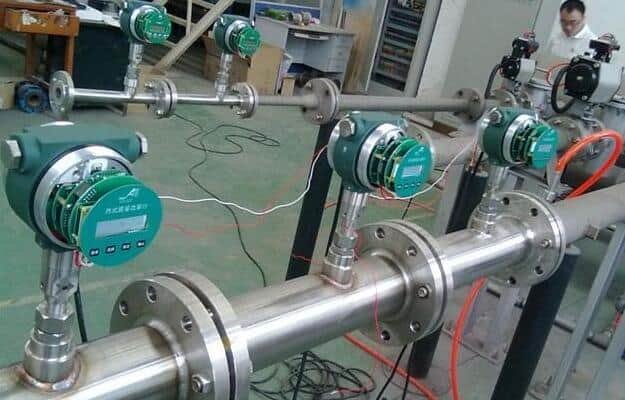
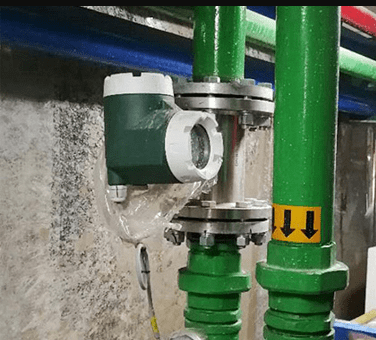
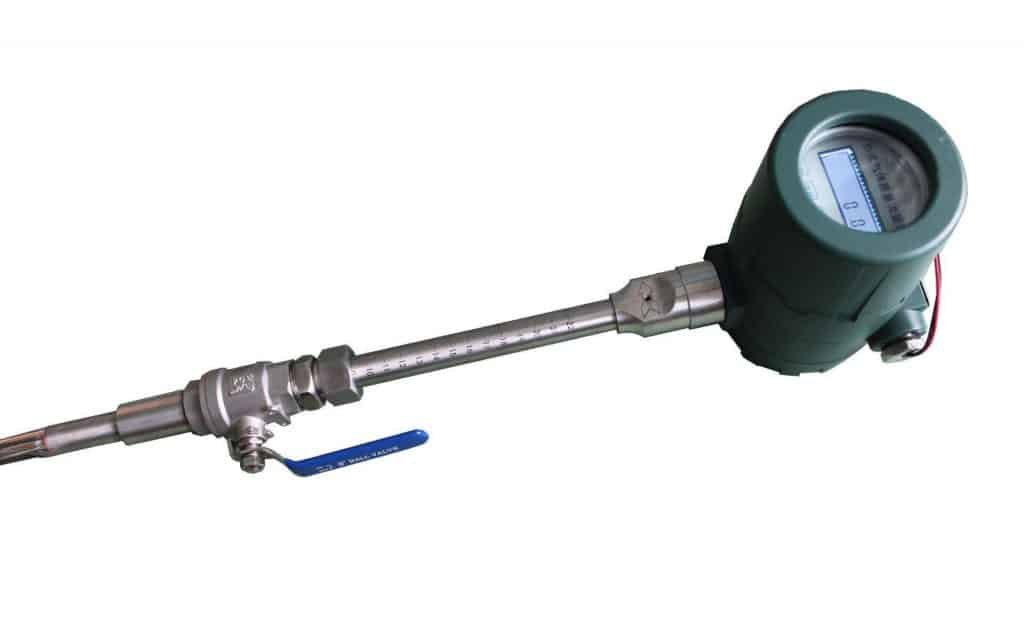
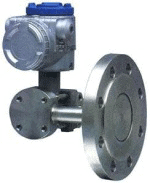
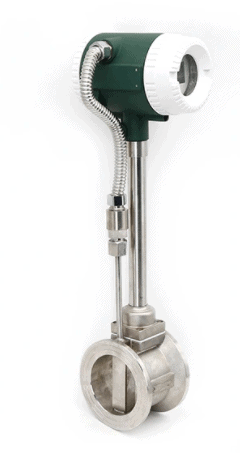
Insertion Vortex Flow Meter is mainly used for flow measurement of gas, liquid, and steam fluid in large-diameter pipelines.

Insertion Vortex Flow Meter

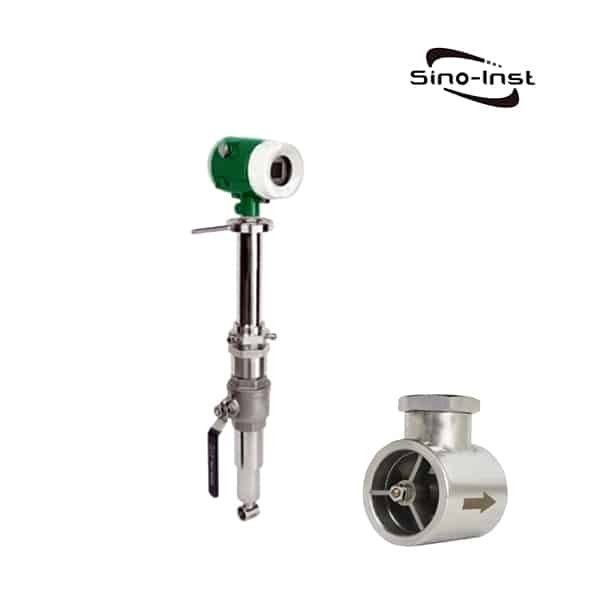
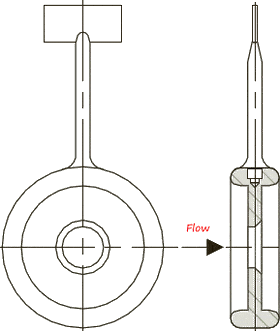
Insertion Vortex Flow Meter is used on large-size pipes. Reduce piping installation to save costs. The insertion vortex flowmeter is mainly used for large-caliber gas, liquid and vapor medium fluids. When measuring volume flow, it is hardly affected by fluid density, pressure, temperature and viscosity. With plug-in structure, there is no need to cut pipes and drill welded flanges. Just plug it in, easy to install. Greatly save labor costs and product costs.

Insertion Vortex flow meter reference price: USD 500-1500/pc.

Sino-Inst offers a variety of  Vortex flow meters for flow measurement. If you have any questions, please contact our sales engineers.

Features of Insertion Vortex Flow Meter

  1. It is suitable for the measurement of large-diameter pipelines (DN150~DN2000), and is used in occasions that require less precision;
  2. Easy installation, no need to cut pipes. Greatly save labor costs and product costs;
  3. It has a very unique medium versatility. It can be used for flow measurement and control of most steam, gas and liquid;
  4. Simple structure, no holes and gaps design. No wear, dirt, no moving parts, low failure rate. Has high stability and reliability;
  5. The vortex flowmeter uses the latest signal processing technology, and the entire system analyzes the measured signal. Then eliminate external interference and medium disturbance. Therefore, stable measurement can be achieved even in harsh process conditions;
  6. The piezoelectric element of the vortex flowmeter is embedded in the probe body. No contact with the medium, no filler inside. Low pressure loss and long service life;
  7. The vortex flowmeter originally forms a signal. Its output frequency has a linear relationship with flow rate. There is no zero drift problem;
  8. Adopt advanced digital signal processing technology. Low lower limit and excellent vibration resistance.

Specifications of Insertion Vortex Flow Meter

Measuring mediumSuperheated/saturated steam, liquid and gas
Measuring rangeSee the flow range table of the plug-in vortex flowmeter for details
DiameterPlug-in: DN150~DN2000
Connection methodPipe opening with connecting flange
Flange standard GB9119-2000 1.6, 2.0, 2.5, 4.0 (MPa)
structureIntegrated type, split type, diving type
Probe body insertion rod304 (standard supply), 316L (other material supply agreement)
Medium temperature (℃)(-40~80)℃, (-40~250)℃, (-40~350)℃
Environment temperature (℃)(-30~+65)℃ Atmospheric pressure: 86kPa~106kPa
Nominal pressureLiquid 1.6MPa, 2.0MPa, 2.5MPa, 4.0MPa
Gas and steam 1.6MPa, 2.5MPa
Accuracy2.50%
Velocity range (m/s)Liquid: 0.5~5, Gas: 6~500, Steam: 7~60
Output signal1: No local display frequency signal: high level ≥5V low level 1V, square wave, pulse duty ratio: 1:1
2: Standard current signal; (4-20) mA standard current signal proportional to the flow
3: Local display instantaneous flow, cumulative flowmeter. Simultaneously output the proportional (4-20) mA standard current signal and pulse frequency signal or (4-20) mA+HART
Power supplyVoltage pulse type: DC12V or DC24V
Standard current output, local display: DC24V
Battery powered local display lithium battery: 3.6V
Ambient temperatureAmbient temperature (-40~+55) ℃,
relative humidity 5~90 ​​(%),
atmospheric pressure: 86kPa~106kPa
Protection levelIP65 is used for indoor and outdoor installation,
IP68 can be used for diving installation
Explosion-proof gradeIntrinsically safe Ex ia ⅡC T6 Ga
displayLCD display instantaneous flow, cumulative flow, vortex frequency
Cable interfaceM20×1.5 (internal thread, recommended); 1/2NPT (internal thread)

What is Vortex Flow?

When a fluid moves through a stationary object (“bluff body”) with a high Reynolds number, the fluid becomes a vortex on either side of the object.
Each vortex will form, then separate from the object and continue to move with the flowing gas or liquid, once twisted in an alternating manner.
This phenomenon is called vortex rotation, and the pattern of moving vortices carried downstream of a stationary object is called vortex street.

How does a vortex flow meter work?

Vortex Flow Meter Working Principle

Vortex flowmeter is a speed-type flowmeter produced according to karman’s vortex principle,
which can be used for the measurement and measurement of conventional gas, steam and
liquid.

Vortex flow sensor has high precision and wide range ratio, no moving parts in use, which can
improve mechanical stability and reduce maintenance.Vortex flowmeter is almost not affected by the temperature, pressure and composition of medium when measuring the volume of working condition.

Therefore, it is convenient to calibrate the instrument, so vortex street flow sensor is widely used in production and life.

When a trigonal column vortex generator is set in the fluid, regular vortices are generated alternately on both sides of the vortex generator, which is called Carmen vortex.

The vortex columns are arranged asymmetrically downstream of the vortex generator. Vortex flowmeter is produced according to this principle.

Vortexes are generated by generating bodies and the number of vortexes is detected by high-sensitivity sensors. In a certain range, the number of vortexes generated is proportional to the flow rate.

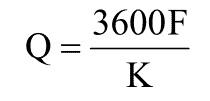
In vortex flowmeter, the relationship between flow rate and the number of vortexes generated
can be expressed by the following formula:

Q:Operating volume flow of the measured medium. The unit is m3/h。
F:Frequency of the number of vortices produced by the generating body. The unit is Hz.
K:Refers to the calculated or calibrated flow coefficient. It represents how many frequency signals per cube. the coefficient is usually obtained by calibration.

The formula of standard table method calibration coefficient K:

The formula can also be used for flow correction.

More about vortex flow meter working principle wikipedia.

OMEGA Engineering has a great explanation video about vortex flow meter working principle. Let’s take a look!

Video source: https://www.youtube.com/watch?v=QxCeVVXF2ng&feature=emb_logo

Types of vortex flow meter

Depending on the mounting style, the types of vortex flow meters include:

  1. Insertion flow meter
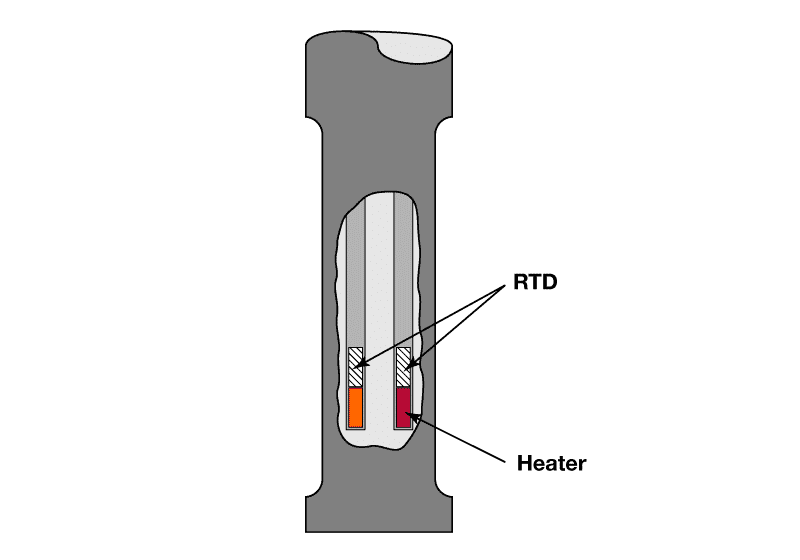
    Each insertion type of vortex flow meter consists of a built-in bluff body and three sensors, namely one sensor to record the vortex shedding frequency, an RTD temperature sensor, and a solid-state pressure sensor. These components are located in close proximity to each other in a short tube and together they form an assembly called an insertion sensor head. The sensor probe is inserted carefully into a hole made into the pipeline using flanged or male NPT process connections.

This flow meter is also provided an LCD display and keypad to program and monitor the system settings. The insertion flow meter used in pipes which are 2 inches or larger. Since it is a retractable meter, there is no need to shut down the system to take the required measurements.

  1. Inline flow meter
    An Inline flow meter is similar to the insertion flow meter in terms of its components. It also has a bluff body and three sensors to register the vortex shedding frequency, temperature, and pressure. It differs from an insertion flow meter in that it replaces a part of the pipeline and not inserted through it.

Classified by connection method

The connection mode of vortex flowmeter and pipeline can be divided into flange connection type and flange clamping type. These two connection types have their own advantages.

The flange connection type connects the vortex street meter body and the flange into a whole, which is easy to install. But it increases the machining cost for the manufacturer. For different pressure levels, flanges with different pressure levels need to be cast and smelted. The user needs to install the matching anti-flange on the pipe during installation.

However, the flange-mounted flowmeter has no bulky flanges at both ends, which is relatively light. On the premise of ensuring the sealing surface and mechanical strength requirements, it is enough to only manufacture the flangeless surface.

When users use it, they can choose flanges with different pressure levels according to different working pressures. Connect it with bolts, and then directly weld to the pipe.

Where are vortex flow meters used?

The vortex flowmeter is mainly used in the flow measurement of industrial pipeline medium fluid. The medium can be gas, liquid, steam, etc. The main scope of action includes:

  • During industrial production, such as metallurgy, coal, electric power, chemical, pharmaceutical, environmental protection and other manufacturing;
  • Energy measurement. Including the scientific measurement of primary and secondary energy. Such as coal, petroleum gas, natural gas, etc., to achieve energy saving and reduce consumption;
  • Environmental protection engineering. Including flow measurement of flue gas, sewage, etc.;
  • Transportation. Including pipeline transportation for control, distribution and scheduling, and better economic accounting through measurement results.

Vortex flow meter advantages and disadvantages

1.Advantages of vortex flowmeter

(1) The vortex flowmeter has no moving parts, and the measuring element has a simple structure, reliable performance and long service life.

(2) The vortex flowmeter has a wide measuring range. The turndown ratio can generally reach 1:10.

(3) The volume flow of the vortex flowmeter is not affected by thermal parameters such as the temperature, pressure, density or viscosity of the fluid being measured. Generally, no separate calibration is required. It can measure the flow of liquid, gas or steam.

(4) The pressure loss it causes is small.

(5) The accuracy is high, the repeatability is 0.5%, and the maintenance is small.

2.Disadvantages of vortex flowmeter

(1) The volume flow of the vortex flowmeter is not affected by the temperature, pressure, density and other thermal parameters of the measured fluid. But the final measurement result of liquid or steam should be mass flow, and for gas, the final measurement result should be standard volume flow. Both mass flow or standard volume flow must be converted by fluid density. The changes in fluid density caused by changes in fluid operating conditions must be considered.

(2) The main factors that cause flow measurement errors are: measurement errors caused by uneven pipeline flow rates; it is impossible to accurately determine the medium density when the fluid working condition changes. The wet saturated steam is assumed to be dry saturated steam for measurement. If these errors are not limited or eliminated, the total measurement error of the vortex flowmeter will be very large.

(3) Poor vibration resistance. External vibration can cause measurement errors of the vortex flowmeter, or even fail to work normally. The high-velocity impact of the channel fluid will cause additional vibrations to the cantilever of the vortex generator, which reduces the measurement accuracy. The influence of large pipe diameter is more obvious.

(4) Poor adaptability to measuring dirty media. The generating body of the vortex flowmeter is very easy to be dirty by the medium or entangled by the dirt, and the change of the geometric body size has a great influence on the measurement accuracy.

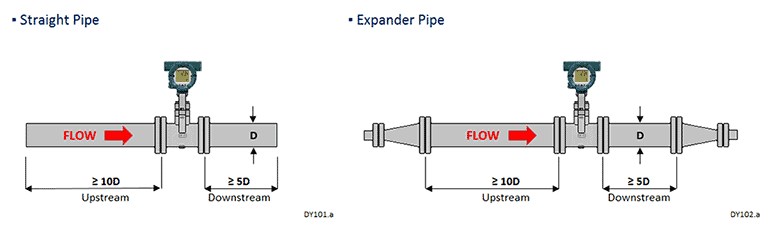
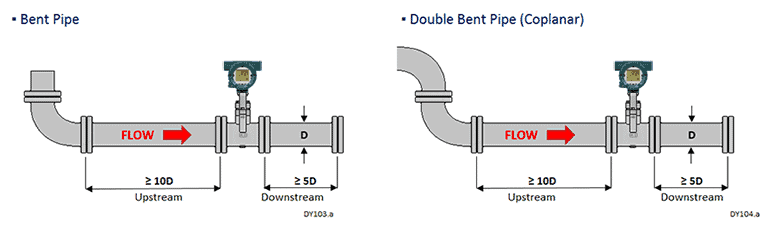
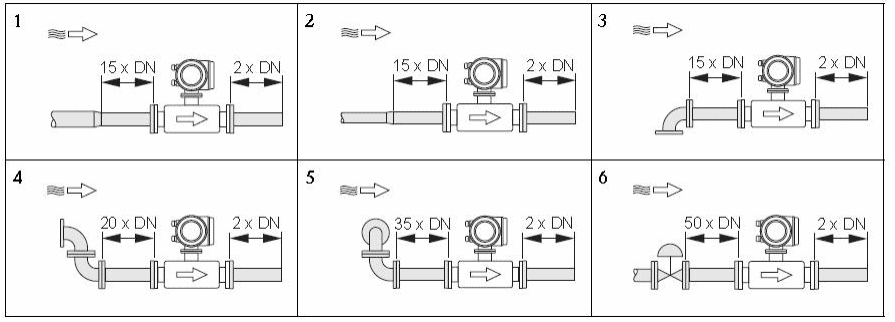
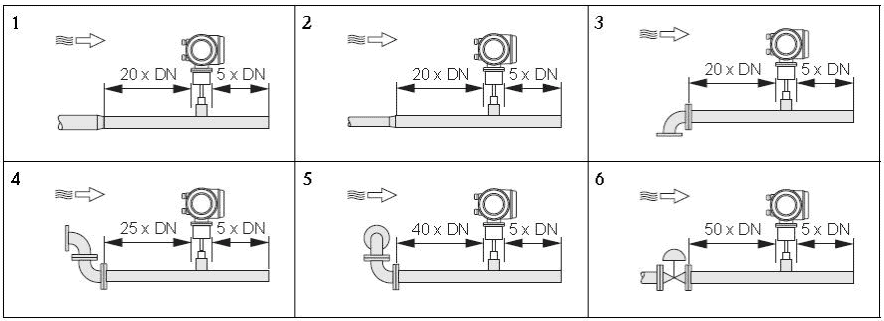
(5) High requirements for straight pipe sections. Experts pointed out that the straight pipe section of the vortex flowmeter must ensure the front 40D and the 20D to meet the measurement requirements.

(6) Poor temperature resistance. Vortex flowmeters generally can only measure the fluid flow of media below 300°C.

Insertion vortex flow meter installation

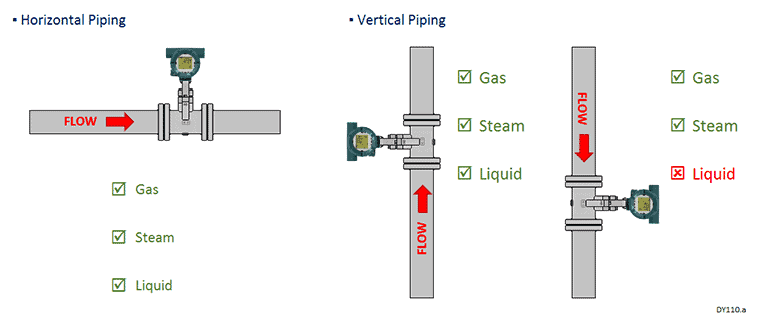
1.Continuous flow dismountable sensor

①The mounting seat is welded well. First install the ball valve on the mounting seat, tighten and seal with bolts;

②Open the ball valve. Insert the vortex probe into the ball valve. Then tighten the lifting mechanism and the ball valve with bolts. Pay attention to sealing;

③Before leaving the factory. The insertion depth of the measuring head has been adjusted. Do not adjust or disassemble the measuring head at will. Otherwise, it may cause leakage or affect measurement accuracy.

2. Dismountable sensor after the current is cut off

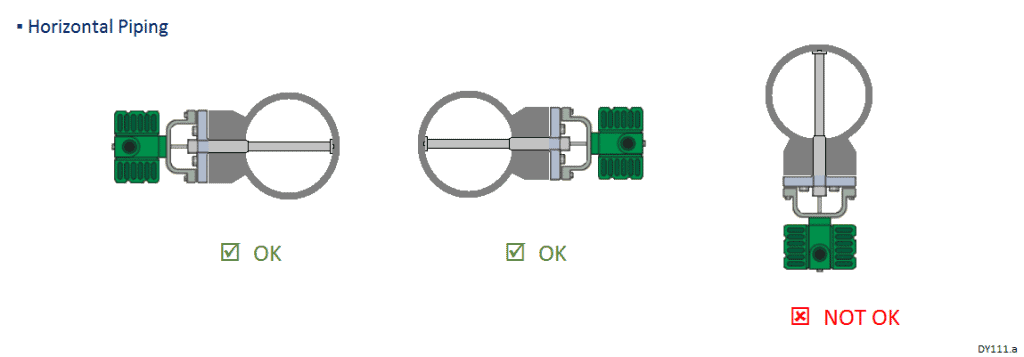
Because the insertion depth of the sensor is designed according to the user’s measuring pipe diameter. So only pay attention to the installation direction when installing. Fasten it with bolts.

Guess you like: Insertion Magnetic Flow Meter-Large diameter online install

Vortex Steam Flow Meter

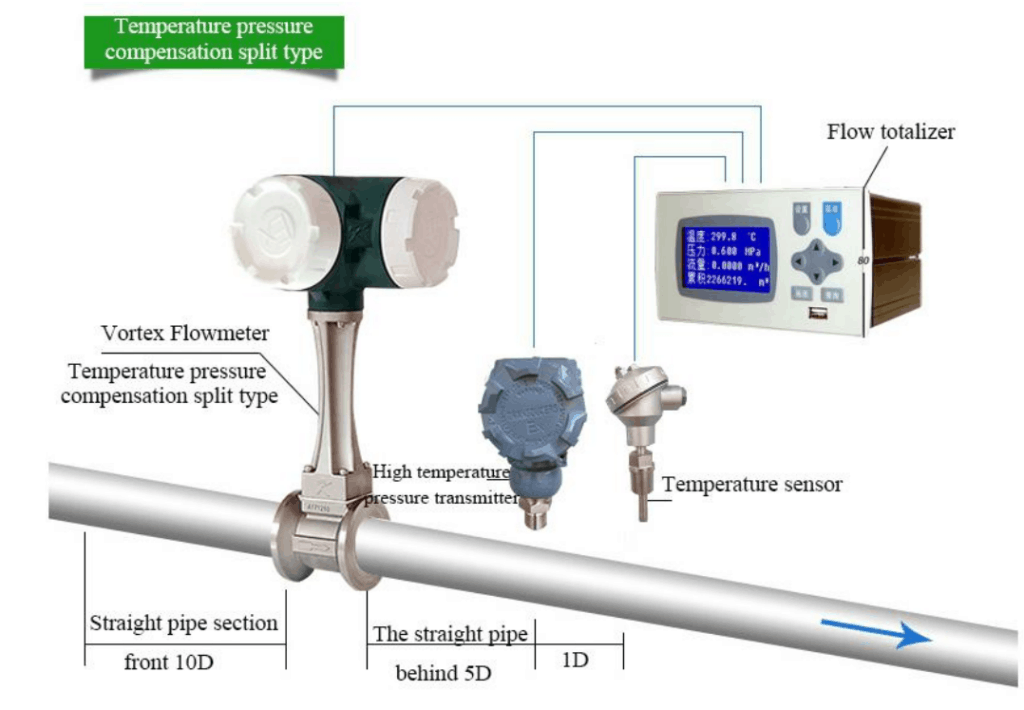
The vortex steam flow meter concentrates temperature and pressure compensation in the vortex flowmeter. Automatically detect the temperature and pressure of the medium in the pipeline, and the density automatically participates in the calculation. It can display the instantaneous mass flow and cumulative mass flow of the medium. It can also display the temperature and pressure of the medium. It can measure liquid, general gas, saturated steam, superheated steam, etc.

Vortex steam flow meter reference price: USD 200-1500/pc.

You may like:

Sino-Instt offer over 10 Insertion Vortex Shedding flow meters, with Best Price.

A wide variety of industrial Vortex shedding flow meters options are available to you, such as free samples, paid samples. All of our flow meters can wokrk with the AMS NEW TREX.

About 13% of these are magnetic flow meter, 14% are Insertion Magnetic Flow Meter, 25% are Venturi flow meter, 13% are Handheld ultrasonic flow meter, and others are Liquid Turbine Flow Meters.

Sino-Inst is Insertion Vortex shedding flow meter suppliers, located in China. Vortex shedding flow meter products are most popular in North America, Mid East, and Eastern Europe.

Request a Quote

Vortex Steam Flow Meter

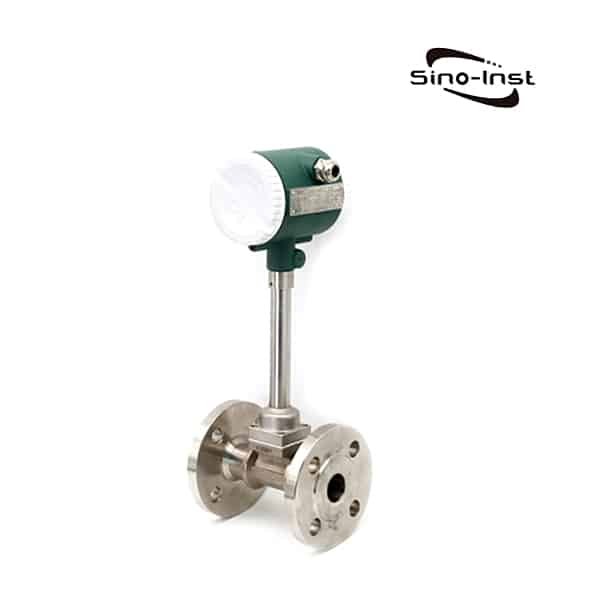
Steam flow meter is mainly used for the steam flow measurement. The vortex flow meter concentrates temperature and pressure compensation. Can measure superheated/saturated steam, liquid and gas.

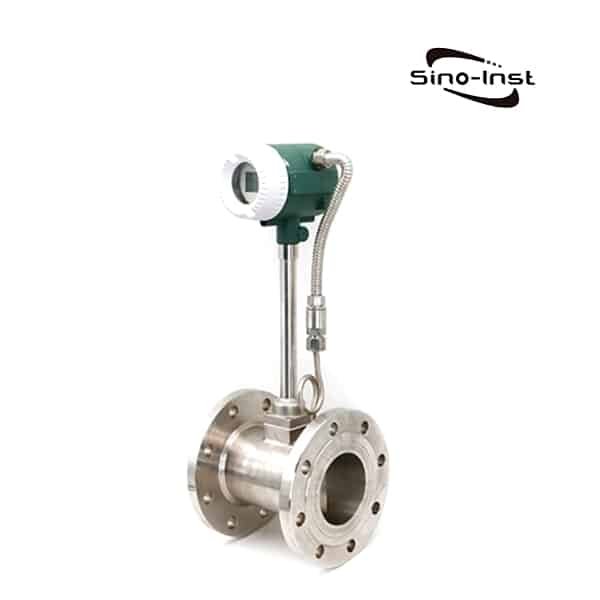
The vortex steam flow meter concentrates temperature and pressure compensation in the vortex flowmeter. Automatically detect the temperature and pressure of the medium in the pipeline, and the density automatically participates in the calculation. It can display the instantaneous mass flow and cumulative mass flow of the medium. It can also display the temperature and pressure of the medium. It can measure liquid, general gas, saturated steam, superheated steam, etc.

Vortex steam flow meter reference price: USD 200-1500/pc.

Sino-Inst offers a variety of  Vortex flow meters for flow measurement. If you have any questions, please contact our sales engineers.

Features of Steam Flow Meter

  1. Easy to install. It is suitable for the measurement of steam, compressed air and other gases;
  2. Integrated temperature and pressure dual compensation. The instantaneous flow and accumulated flow, temperature, pressure and other data after compensation can be directly read on the meter head;
  3. It has a very unique medium versatility. It can be used for flow measurement and control of most steam, gas and liquid;
  4. Simple structure, no holes and gaps design. No wear, dirt resistance, no moving parts, low failure rate. It has high stability and reliability;
  5. The vortex flowmeter uses the latest signal processing technology, and the entire system analyzes the measured signal. Then eliminates external interference and media disturbance. Therefore, stable measurement can be achieved even in harsh process conditions;
  6. The piezoelectric element of the vortex flowmeter is embedded in the probe body. It does not touch the medium. There is no filling material inside. The pressure loss is small and the service life is long;
  7. The original signal formed by the vortex flowmeter. Its output frequency has a linear relationship with the flow rate. There is no zero drift problem;
  8. Adopt advanced digital signal processing technology. Low lower limit. Excellent anti-vibration performance.

Read more about: Steam pressure transmitter-Pressure measure on steam pipeline 

Vortex Steam Flow Meter Specification

Measuring mediumSuperheated/saturated steam, liquid and gas
Measuring rangeSee flow range table for details
caliberWafer type/flange type: DN15~DN400~DN1000
Medium temperature (℃)(-40~80)℃, (-40~150)℃, (-40~300)℃, (-40~400)℃
Environment temperature (℃)(-20~+70)°C atmospheric pressure: 86kPa~106kPa
Nominal pressureLiquid 1.6MPa, 2.0MPa, 2.5MPa, 4.0MPa, 5.0MPa, 6.3MPa, 10.0MPa, 25MPa
Gas and steam 1.6MPa, 2.0MPa, 2.5MPa, 4.0MPa, 5.0MPa
Accuracy±1.0%, ±1.5%
Flow rate range (m/s)Liquid: 0.15~7 Gas: 1.5~60 Steam: 2~70
output signalThree-wire voltage pulse: high level≥5V low level<1V
Standard current signal: (4-20) mA standard current signal proportional to the flow rate, local display flow, cumulative flow.
And output proportional to the flow rate (4-20) mA standard current signal and pulse frequency signal
Communication method: RS-485 communication
Power supplyThree-wire voltage pulse: DC12V, DC24V
Standard current output, local display: DC24V
Battery power supply (lithium battery): 3.6V
Ambient temperature(-20~+70)°C atmospheric pressure: 86kPa~106kPa
Protection levelIP65
Explosion-proof gradeIntrinsically safe Ex ia ⅡC T6 Ga
displayLCD displays instantaneous flow, cumulative flow, vortex frequency,
temperature and pressure (integrated temperature and pressure)
Cable interfaceM20×1.5 (internal thread, recommended);
1/2NPT (internal thread)
Installation formIntegrated installation;
split installation
(the measuring tube and the indicator are connected by a 10-core special shielded cable)
Diameter (DN)Liquid flow range (m3/h)Output frequency range (Hz)Gas flow range (m3/h)Output frequency range (Hz)
151.2~6.290~9005~25265~2640
201.5~1040~3968~50218~1982
251.6~1632~32510~70172~1420
322~2020~25015~150130~1350
402.5~2513~13022~220115~1147
503.5~359~9336~32096~854
656~608~8250~48061~583
8010~1006~6570~64045~417
10015~1505~50130~110043~367
12525~2505~47200~170033~290
15040~4004~40280~224027~221
20080~8003~33580~496024~207
250140~14003~26970~800020~171
300200~20002~221380~1100017~136

Extended reading: Flow Totalizer F3000X for Data collection and calculation

Vortex Steam Flow Meter Applicaitons

  1. And saturated steam flow measurement
  2. Steam boiler monitoring
  3. Compressor air monitoring
  4. Measure the consumption of compressed air system
  5. Measure industrial gas consumption
  6. SIP and CIP processing in the food, beverage and pharmaceutical industries

Extended reading: Measuring Flow With Pressure Sensors

What is the principle of vortex Steam flow meter?

Or, How steam flow is measured?
How is the steam flow rate calculated?

The basic principle of the intelligent vortex flowmeter, is the Karman vortex principle. That is “the vortex separation frequency is proportional to the flow velocity”.

The diameter of the flowmeter body is basically the same as the nominal diameter of the meter. The axis of the cylinder is perpendicular to the flow direction of the measured medium, and the bottom surface greets the fluid.

When the measured medium flows through the cylinder, Vortex is alternately generated on both sides of the column, and the vortex is continuously generated and separated.

In the downstream of the column, two rows of vortices, namely “vortex street”, are formed. Theoretical analysis and experiments have shown, that the frequency of vortex separation is proportional to the flow rate of the column side medium.

f=(sr*V)/d

In the formula:

F── the frequency of the vortex separation of the column side (Hz);

V── column side flow rate (m/s);

D── the width of the cylinder facing surface (m);

Sr ─ Strauhal number.

It is a constant that is substantially independent of fluid properties, and flow rate depending on the shape of the cross-section of the cylinder.

Extended reading: Liquid Bitumen/Asphalt Flow Meter

Temperature and pressure compensation of vortex steam flowmeter

Gases are compressed fluids. If its volume state has changed. It is mainly caused by changes in temperature and pressure indicators.

In the process of measuring the gas flow, on the one hand, the flowmeter must be able to accurately output the standard volume flow. On the other hand, the output of mass flow is also required.

And the vortex flowmeter is used to measure the volume flow. It is necessary to ensure that the measurement is carried out in the environment of the working condition. Therefore, the vortex flowmeter is used in the measurement process of general gas and steam. The temperature and pressure compensation function should be fully considered. And make a reasonable instrument selection.

After temperature and pressure compensation, the volume flow of the working condition can be converted into a mass flow. Or it is converted into other volume flow, that is, the standard volume flow.

For general gases during measurement. The compensation principle is to calculate according to the formula, which belongs to the standard gas state equation:

P0V0/T0= P1V1/T1.

where:
The absolute pressure (Pa) in the standard state represented by P0;
The absolute pressure (Pa) in the working state represented by P1;
T0 represents the thermodynamic temperature (K) in the standard environment;
T1 represents the thermodynamic temperature (K) under working conditions;
V0 represents the gas volume in the standard environment;
V1 is the gas volume in the operating state.

Extended reading: How to realize the flow accumulation function in PLC?

During the steam measurement. The work that needs to be done is the compensation of saturated steam. There are two methods of application, one is pressure compensation and the other is temperature compensation.

There are usually two specific compensation modes.

That is, if the vortex flowmeter sensor does not have a temperature detection element and built-in pressure. Static compensation can only be implemented inside the instrument. That is to say, the compensation is realized by inputting the fixed pressure value and temperature value. This mode is more suitable for occasions without large temperature and pressure changes.

If the vortex flowmeter sensor has a temperature detection element and built-in pressure. The meter takes into account the results of the measured temperature and pressure. Master the state of steam. Determine which type of steam is superheated steam or saturated steam.

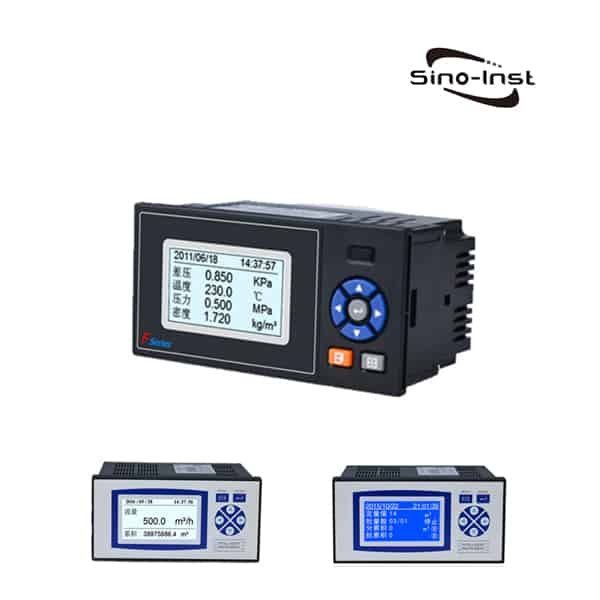
For mass flow, the calculation method needs to obtain the steam database index stored in the instrument and implement intelligent calculation. The other is to use the steam flow totalizer. in the steam flow totalizer. The volume flow and temperature of the working conditions measured by the transmission vortex flowmeter. And to transmit the signal measured by the pressure transmitter.

The steam flow totalizer has built-in superheated steam and saturated steam compensation algorithms. Can accurately output mass flow and standard volume flow. Moreover, the heat and specific enthalpy can be output correctly.

Extended reading: How to Calibrate DP Level Transmitter

Steam Flow Meter Types

Commonly used flow meters for steam flow measurement include: differential pressure flow meters, vortex flow meters, rotary wing steam flow meters, V cone flow meters, elbow flow meters, and flute-shaped uniform velocity tube flow meters. These steam flow meters work principles and The usage requirements are different.

Sino-Inst shares the knowledge of these steam flow meters with you.

Extended reading: metal tube flow meter

In the measurement of steam flow, the differential pressure flowmeter still ranks first. It is based on authoritative standards and has test pieces that are easy to copy. The structure is simple, firm, reliable, and has a long service life. The usable temperature and pressure range is wide. Low price, no need for real flow calibration and other advantages.

Extended Reading: Advantages and disadvantages of differential pressure flow meter

The complete set of differential pressure flow meters is composed of standard throttling devices, differential pressure transmitters and flow totalizers from different manufacturers, so it is flexible and convenient to use.

The differential pressure flowmeter is especially suitable for measuring high temperature, high pressure saturated steam and superheated steam.

Differential pressure flow meters also have shortcomings. Such as: installation is more complicated, easy to leak, maintenance and disassembly labor intensive. The turndown ratio is only 3:1, and the pressure loss is large. Due to changes in the measurement conditions during use, the process parameters deviate from the design values, which will cause larger measurement errors.

Extended reading: Integral DP Flow Meter|Gas, liquid, steam|Compact structure

The vortex flowmeter has a simple structure and does not need a pressure guiding tube. The measurement range is large, and the turndown ratio can reach 10:1. The advantages of small pressure loss, etc., account for an increasing proportion of saturated steam flow measurement. The installation difficulty is similar to the orifice plate, and it has certain requirements for straight pipe sections.

Vortex flowmeters also have disadvantages. For example, regular verification cannot be done by general users and needs to be removed for inspection. Its stability is affected by the flow rate, and the stress-type vortex flowmeter is more sensitive to vibration and is susceptible to measurement errors due to the impact of pipeline or equipment vibration. Vortex flowmeters are also limited by temperature. Generally, it cannot exceed 500°C. The vortex flowmeter cannot be used to measure multiphase flow.

Read more about: Vortex Shedding Flow Meter Working Principle

Rotary wing steam flowmeter has a wide range of applications in the measurement of saturated steam in small and medium-sized enterprises. It is a measuring instrument based on pure mechanical principles. It has simple structure, firmness and low maintenance. Only the inner orifice plate needs to be replaced to adjust the range. It also has the advantages of manual adjustment of pressure compensation, and no power supply.
But there are also shortcomings. Such as: straight pipe section has certain requirements. The adaptable range of pipe diameter is limited and can only be installed horizontally. The accuracy is not high, and manual meter reading is not convenient for measurement management.

Features of thermal gas mass flow meter:

  • The range of fluid media has been expanded: gas, gas and liquid, and liquid. Proprietary humidity algorithm software makes fluid flow measurement more accurate.
  • The replacement of the sensor does not require recalibration. The instrument adopts modular design, which realizes interchangeability and is easy to maintain.
  • Using Bluetooth and GPGS technology, it is convenient for on-site and remote monitoring and maintenance of the instrument.
  • Adopt “FLUD” proprietary fluid software technology to make the straight pipe section needed for instrument measurement shorter
  • No drift, maintenance-free, and high sensitivity.
  • When the product is installed and running, there is no need to use any measurement system as a reference standard for calibration.
  • Various functions are set up on site configuration.

The measuring principle of the V cone flowmeter is the same as that of the differential pressure flowmeter, and it is also a throttling differential pressure flowmeter.

When measuring gas flow and steam flow, the v-cone flowmeter measures high temperature and high pressure, and the flow of normal temperature and normal pressure media is a small expert in measurement.

The v-cone flowmeter is actually a differential pressure flowmeter, and the measurement flow is calculated by capturing the pressure difference before and after the throttling device. This is an internationally certified measuring throttling device. Even leaving the factory without calibration, the purpose of high-precision flow measurement can be achieved.

Extended reading: V-Cone Flow Meter Applications

The elbow flowmeter is an elbow with a fixed geometric size and a fixed shape. Its structure is simple, without any additional parts and throttling parts. Therefore, there is basically no pressure loss. The turndown ratio can reach 10:1. High precision, maintenance-free measuring device, long life, high temperature resistance, high pressure resistance, vibration resistance, etc.

But there are also shortcomings. For example, the differential pressure generated by the measurement is relatively low, generally around 3000 Pa. Therefore, the selection requirements for differential pressure transmitters are relatively high. When measuring steam flow, temperature and pressure compensation are still required.

The flute-shaped uniform velocity tube flowmeter is based on the pitot tube velocity measurement principle. It outputs a differential pressure signal. Used in conjunction with a differential pressure transmitter for measuring differential pressure. It can measure the flow of steam, liquid and gas. The structure is simple, the pressure loss is small, and the length of the upstream and downstream straight pipe sections is short. Easy to install, the range ratio can reach 10:1. It is resistant to high temperature and pressure, is not affected by abrasion, and has no leakage.

The flute-shaped average velocity tube flowmeter also has its shortcomings. If the on-site installation conditions are demanding, the differential pressure generated is small, and some are only 20-30Pa. Must be equipped with high-precision differential pressure transmitter.

Due to the structure, the flow rates of the pressure ports are different, and there is a certain pressure difference between the pressure ports. There is a flow of medium between the pressure holes. If there is a medium, it may be blocked and cause measurement errors. The fluid to be measured flows in the circular tube, and the pressure distribution caused by the circular tube is different when the fluid flows in due to the different separation points of the fluid. The flow coefficient is unstable and the flow is unstable.

Extended reading: Use of high temperature melt pressure sensor

Clamp on Steam Flow Meter

The clamp-on ultrasonic flowmeter cannot measure steam. Generally, it measures the flow of medium such as water and uniform liquid.
The measurement of steam generally uses a temperature and pressure compensated vortex flowmeter or a differential pressure flowmeter.

Portable Steam Flow Meter

The FLUXUS G601 ST is the world’s ONLY clamp on steam meter! This device is able to measure steam flow non-invasively from outside the pipe which means that there is no interruption of operation or supply. This also means there is no pressure loss, need to open the pipe, or to reduce the pipe size for measurement.

Read more about: Condensate Flow Meter-Steam Condensate Flow Meter|Types & Selection Guide

Featured Steam Flow Meters
Related Blogs:

  • Guide for Digital Fuel Flow Meter

    Digital Fuel Flow Meter is a flow meter dedicated to measuring fuel, diesel, gasoline, and petroleum. Digital Fuel Flow Meter generally has a digital display or signal output…
  • Mechanical Water Flow Meters

    Mechanical water flow meters refer to a type of flow meter suitable for clean water processes or applications. The working principle of a mechanical water flow meter is…
  • Explore Oil and Gas Flow Meters

    An oil and Gas Flow Meter is A device installed in a pump manifold or treating line to measure the fluid flow rate. Oil and Gas Flow Meters…
  • Velocity Flow Meters

    Flow Meter Types There are many types of flow meters. Basically, there are the following types of flow meters Why are there so many types of flow meters?…
  • Strap on Ultrasonic Flow Meters

    What is Strap on Ultrasonic Flow Meters? Strap on Ultrasonic Flow Meter is also often called Clamp On Type Flow Meter. The unique feature of Strap on Ultrasonic…

Frequently
Asked
Questions

In fact, different steam flow meters work differently.
Of course, the most commonly used is definitely the vortex flowmeter.
The steam flowmeter is a volumetric flowmeter that measures the volume flow of gas, steam or liquid, the volume flow of standard conditions or the mass flow according to the Kármán Vortex Street principle. And can be used as flow transmitter in automatic control system.

How is steam flow measured? Maybe everyone knows how to measure with a flowmeter. Because there are many types of flow meters on the market, I don’t know how to choose. There are measuring liquids, gases, slurries and so on.

First, the temperature of the steam is relatively high. We have to choose a flowmeter that can withstand high temperature to measure. For example: V cone, orifice plate, balance, vortex street, turbine can all be measured. Among them, the measuring caliber of V cone flowmeter is from DN15-DN2000. The range is also relatively wide, so it is also favored by the majority of users.

When choosing a flowmeter, you should confirm the working conditions of the site, the temperature and pressure range, the power supply is generally 220VAC, the default installation method is flange installation, the output signal is 4-20mA, and the range diameter should also be confirmed.

There are many types of flowmeter, those suitable for steam and condensate applications include:

  • Orifice plate flowmeters.
  • Turbine flowmeters (including shunt or bypass types).
  • Variable area flowmeters.
  • Spring loaded variable area flowmeters.
  • Direct in-line variable area (TVA) flowmeters.
  • Ultrasonic flowmeters.
  • Vortex shedding flowmeters

Each of these flowmeter types has its own advantages and limitations. To ensure accurate and consistent performance from a steam or condensate flowmeter, it is essential that it is correctly matched to the intended application.

Extended reading: Ultrasonic Flow Meters Types & Technical Guide

All of our Flow Meters can work with the NEW AMS TREX !

Sino-Instt offer over 10 Vortex Shedding flow meters, with Best Price.

A wide variety of industrial Vortex shedding flow meters options are available to you, such as free samples, paid samples. All of our flow meters can wokrk with the AMS NEW TREX.

About 13% of these are magnetic flow meter, 14% are Insertion Magnetic Flow Meter, 25% are Venturi flow meter, 13% are Handheld ultrasonic flow meter, and others are Liquid Turbine Flow Meters.

Sino-Inst is Vortex shedding flow meter suppliers, located in China. Vortex shedding flow meter products are most popular in North America, Mid East, and Eastern Europe.


Request a Quote

Please enable JavaScript in your browser to submit the form

Vortex Shedding Flow Meter

Vortex shedding flow meter, also called Vortex flow meter. Vortex shedding flow meter is suitable for measuring steam flow rate as well as liquids and gases.

Vortex shedding flow meter, easy installation, low cost, analog and 4-20mA output. Pressure & temperature compensation can improve the sensor for more accurate measurement. Vortex shedding flow meter is suitable for measuring steam and various liquids and gases. When the fluid flows through the assembly line of the vortex flowmeter, a vortex is formed. The frequency of vortex shedding is directly proportional to the fluid velocity.

Vortex shedding flow meter reference price: USD 200-1500/pc.

Sino-Inst offers a variety of  Vortex flow meters for flow measurement. If you have any questions, please contact our sales engineers.

Industrial Vortex Shedding Flow Meter Features

  1. Sonic nozzle calibration. High repeatability and high measurement accuracy
  2. Temperature compensation and pressure temperature can be freely selected. To meet more on-site use
  3. The circuit board is aging and running before leaving the factory. And the whole meter is calibrated one by one. It is more suitable for on-site use
  4. Wide application range. Gas, liquid and steam can be measured
  5. Low pressure loss. Low energy loss. Conducive to energy saving
  6. Simple and firm structure, no moving parts. High reliability and low maintenance

Specifications of Vortex Shedding Flow Meter

Diameter(mm)DN15,20,25,40,50,65,80,100,125,150,200,250,300,(300~1000 plug-in)
Nominal pressure(MPa)DN15-DN200 4.0 (>4.0,Consulting supply)
DN250-DN300 1.6(>1.6,Consulting supply)
Medium temperature(ºC)Piezoelectric type :-40~150,-40~260,-40~330℃;
Projected Capacitive:-40~400℃ (Consulting supply)
Body material 1Cr18Ni9Ti (Other material order by Consulting supply)
Permissible vibration
acceleration
Piezoelectric type :0.2g   Projected Capacitive:1.0-2.0g
Accuracy±1%R,±1.5%R;plug-in:±2.5%R
Range of degrees1:6~1:25
Power SupplySensor:DC+12V,DC+24V;
Transmitter:DC+12V,DV+24V;
Battery-powered:3.6V battery
Output signalPulse:high level:≥5V
low level:≤1V;
electricity current:4~20mA
Pressure loss coefficientComply with JB/T9249 standard Cd≤2.4
Explosion-proof coefficientIntrinsic safety :Ex ia II CT2-T4
Explosion-proof type:Exd II CT2-T5
Level of protection Ordinary type:IP65 
Diving type:IP68
Environmental conditionsTempersature:-20ºC~55ºC,
relative humidity 5%~90%,
atmospheric pressure:86~106kPa
Applicable mediumgas ,liquid,steam
Transmission distance Three-wire pulse output:≤300m,
Two-wire standard current output:(4~20mA)≤1500m
load resistance≤500Ω;
RS485/HART≤1200m.

Vortex Shedding Flow Meter Structure

The basic structure of LUGB series vortex flowmeter is shown in figure 1. It is mainly
composed of shell, vortex generator, flow sensor, temperature sensor, pressure sensor, shield bar,
integrator and other main accessories

  1. Integrating instrument
  2. Pressure transducer
  3. Shielding rod
  4. Shell
Table of operating flow range of vortex street flow sensor under reference condition
Diameter
(mm)
LIQUID GAS
Range of measurements
(m³/h)
Output
frequency range
(Hz)
Range of measurements
(m³/h)
Output
frequency range
(Hz)
15 0.3~5 35~600 2.2~20 260~2000
20 0.6~10 29~420 4~36 210~1900
25 1.2~16 25~336 8.8~55 190~1140
32 1.8~20 18~264 10~150 156~1080
40 2~40 10~200 27~205 140~1040
50 3~60 8~160 35~380 94~1020
65 4~85 6~120 35~800 94~940
80 6.5~130 4.1~82 86~1100 55~690
100 15~220 4.7~69 133~1700 42~536
125 20~350 3.2~57 150~2000 38~475
150 30~450 2.8~43 347~4000 33~380
200 45~800 2~31 560~8000 22~315
250 65~1250 1.5~25 890~11000 18~221
300 95~2000 1.2~24 1360~18000 16~213
-300 100~1500 5.5~87 1560~15600 85~880
-400 180~3000 5.6~87 2750~27000 85~880
-500 300~4500 5.6~88 4300~43000 85~880
-600 450~6500 5.7~89 6100~61000 85~880
-800 750~10000 5.7~88 11000~110000 85~880
-1000 1200~1700 5.5~88 17000~170000 85~880
>(100) Consulting supply   Consulting supply  

Vortex Shedding Flow Meter Working Principle

Vortex flowmeter is a speed-type flowmeter produced according to karman’s vortex principle,
which can be used for the measurement and measurement of conventional gas, steam and
liquid.

Vortex flow sensor has high precision and wide range ratio, no moving parts in use, which can
improve mechanical stability and reduce maintenance.Vortex flowmeter is almost not affected by the temperature, pressure and composition of medium when measuring the volume of working condition.

Therefore, it is convenient to calibrate the instrument, so vortex street flow sensor is widely used in production and life.

When a trigonal column vortex generator is set in the fluid, regular vortices are generated alternately on both sides of the vortex generator, which is called Carmen vortex.

The vortex columns are arranged asymmetrically downstream of the vortex generator. Vortex flowmeter is produced according to this principle.

Vortexes are generated by generating bodies and the number of vortexes is detected by high-sensitivity sensors. In a certain range, the number of vortexes generated is proportional to the flow rate.

In vortex flowmeter, the relationship between flow rate and the number of vortexes generated
can be expressed by the following formula:

Q:Operating volume flow of the measured medium. The unit is m3/h。
F:Frequency of the number of vortices produced by the generating body. The unit is Hz.
K:Refers to the calculated or calibrated flow coefficient. It represents how many frequency signals per cube. the coefficient is usually obtained by calibration.

The formula of standard table method calibration coefficient K:

The formula can also be used for flow correction.

Applications of Vortex Shedding Flow Meter

Steam Flow Measurement

Steam has often been described as the ‘lifeblood’ of the industry.
Vortex meters are known to be superior devices for steam flow measurement, due to their inherent linear measurement, large turndown, low-pressure drop, and high accuracy.

The vortex flowmeter is ideal for high temperature, superheated, and saturated steam applications, since it eliminates the need for separate components and associated installation temperature.

In addition, it provides quality, dependability and high-pressure ratings,along with a stable and reliable flow measurement.

Read more about: Steam Flow Measurement: Do you need temperature and pressure

Liquid Applications

Liquid applications in the oil refinery industry become challenging, since the process liquid is a higher viscosity at lower process temperatures.

As a result, clogging becomes an issue when a flow meter has moving parts.

Sino-Instrument vortex meters have advanced self-diagnostics, that alert the operator if clogging or plugging in the area around the shedder bar are present.

Alerts are also triggered in high-vibration environments and those with excessive flow fluctuations in the area around the shedder bar. This enables automatic condition-based maintenance.

Extended reading: Integral DP Flow Meter|Gas, liquid, steam|Compact structure

Installation for Industrial Vortex Flow Meter

Know more about vortex shedding flow meter:

A vortex flow meter is a flow measurement device best suited for flow measurements, where the introduction of moving parts presents problems.

They are available in industrial grade, brass or all plastic construction.

Sensitivity to variations in the process conditions are low, and with no moving parts have relatively low wear compared to other types of flow meters.

Vortex flow meters operate under the vortex shedding principle, where an oscillating vortexes occur, when a fluid such as water flow past a bluff (as opposed to streamlined) body.

The frequency that the vortexes are shed depend on the size and shape of the body.

It is ideal for applications where low maintenance costs are important.

Industrial size vortex meters are custom built and require appropriate sizing for specific applications.

The Vortex Shedding flow meter detects the vortices, that are created by a process medium going past a bluff body.

The frequency of these vortices can be equated into flow velocity, which, in turn, is used to calculate volumetric flow rate.

The integral temperature sensor is used in saturated steam service, to determine the operating conditions and specific volume of the steam being measured.

The steam table incorporated into the electronics, then calculates the flow or energy of the steam flowing through the meter.

The optional pressure sensor can be used for similar calculations, for gasses and superheated steam.

Intelligent Signal Processing (ISP) provides stable readings, free of external influences.

What are the applications of vortex flowmeter?

  1. A vortex flowmeter can be used to measure the flow of various industrial water. Including chemical, light industry, electric power, metallurgy, building materials, petroleum and other industries in the production process of circulating water, wastewater, waste liquid measurement.
  2. Part of the measurement of corrosive liquids, such as sulfuric acid, hydrochloric acid, nitric acid, acetic acid, and other acids. And a variety of chemical solutions.
  3. The flow measurement of non-conductive liquids. Electromagnetic flowmeter in the flow measurement of conductive liquids dominates, while in the field of non-conductive liquid flow measurement, vortex flowmeter has a great place to use. In the petrochemical, pharmaceutical, food, semiconductor industry, vortex flowmeter has also been more widely used, for example methanol, formaldehyde, acetone, toluene, trichloroethylene, ethylene, butane liquid ammonia, etc., and semiconductor industry pure water and ultra-clean pure water, etc..
  4. Part of the low viscosity oil flow measurement, such as gasoline, kerosene, diesel oil, and heavy oil and residual oil flow measurement after the viscosity has been reduced by heating.
  5. Large diameter pipeline water flow measurement, full pipe vortex flowmeter is mainly used to measure small and medium diameter water flow, while the insertion type vortex flowmeter can be used to measure the flow measurement of large diameter pipeline. Vortex flowmeter is widely used in urban water pipelines and chemical, electric power, metallurgy, paper, and chemical fiber, and other enterprises in the industrial water mainline.

More industrial vortex flow meters:

Sino-Instt offer over 10 Vortex Shedding flow meters, with Best Price.

A wide variety of industrial Vortex shedding flow meters options are available to you, such as free samples, paid samples. All of our flow meters can wokrk with the AMS NEW TREX.

About 13% of these are magnetic flow meter, 14% are Insertion Magnetic Flow Meter, 25% are Venturi flow meter, 13% are Handheld ultrasonic flow meter, and others are Liquid Turbine Flow Meters.

Sino-Inst is Vortex shedding flow meter suppliers, located in China. Vortex shedding flow meter products are most popular in North America, Mid East, and Eastern Europe.

The United States, and India, which export 99%, 1%, and 1% of ultrasonic level transmitter respectively. You can ensure product safety by selecting from a certified supplier, with ISO9001, ISO14001 certification.

Request a Quote

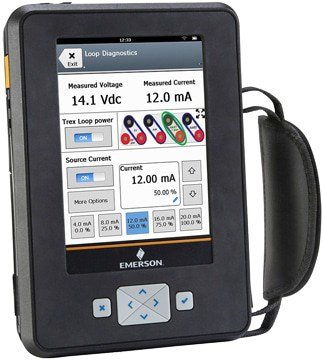
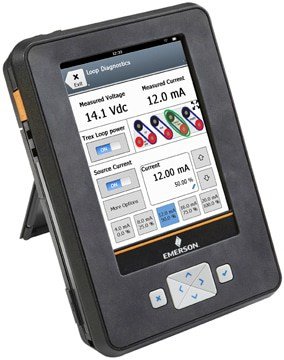
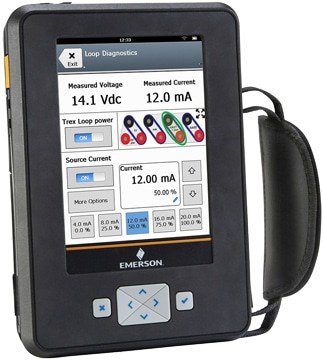
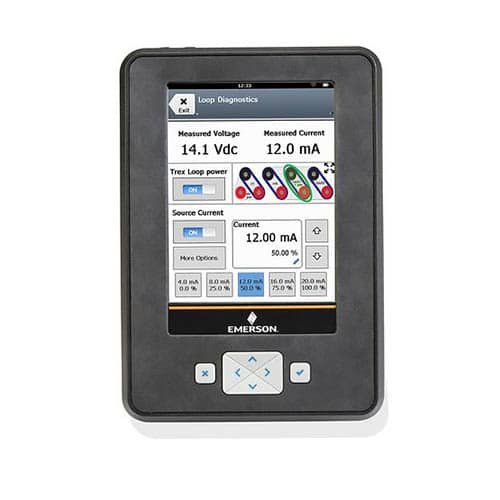
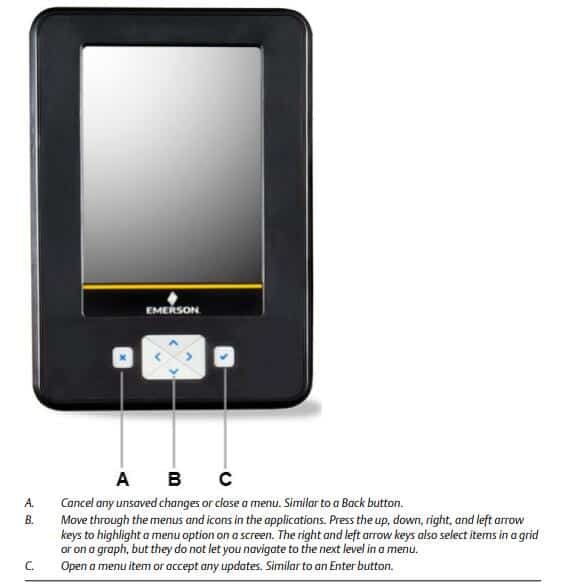
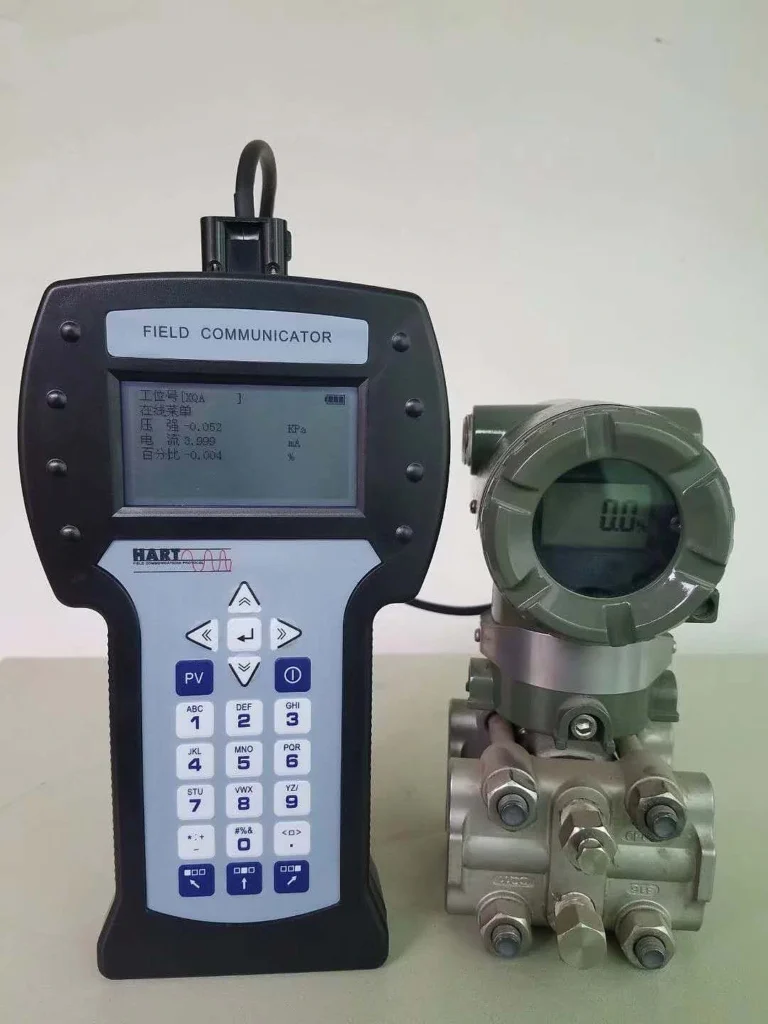
Emerson AMS TREX Device Communicator

Emerson AMS TREX Device Communicator,Drive Reliability Goals with Your Handheld Communicator

Enables HART or Fieldbus Module device communications,

5.7-inch touchscreen display,

intrinsically safe

The AMS Trex Device Communicator delivers a modern user experience in a rugged,

intrinsically safe package,

providing the experience of consumer devices in a tool,

built to withstand harsh industrial environments.

Problems with Foundation Fieldbus and HART devices

can be diagnosed in the field while the devices are still installed.

Simple issues can be addressed on the spot,

avoiding unnecessary, and potentially destructive,

an invasive physical investigation of the problem.

The Trex communicator streamlines activities in the field,

allowing technicians to isolate and repair problems while devices continue to run.

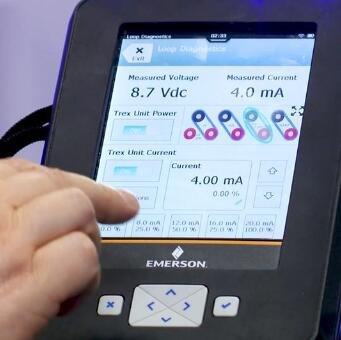
Segment and loop diagnostic tools quickly validate loop and

Fieldbus segment characteristics for easy troubleshooting.


With numerous communication options,

your communicator has never been more connected.

To the Magnetostrictive level sensor

To the Coriolis mass flow meter

To the Wastewater Flow Meter

To the Insertion Magnetic Flow Meter

Emerson TREX Device Communicator Highlights

  1. Commission and validate devices faster
  2. Quickly fix issues in the field with advanced device diagnostics
  3. Configure and test valves inline
  4. Improve efficiency with a modern, intuitive user interface
  5. Intrinsically safe; usable anywhere you need to go

Competitive Price of Emerson AMS Trex Communicator

Are you looking for Emerson AMS Trex Communicator?

And do we have A competitive price?

Why buy the AMS Trex from us?

Contact us, you may get your answers.

We have AMS Trex communicator in stock.

Inquiry now and you will get Emerson AMS Trex price 20% off. 

By the way, the price starts at $6,000.00 this moment,

please noticed that we guarantee that 100% Germany origin and brand new.

We offer many models of  Emerson AMS Trex Communicator with different price, hope to receive your inquiry email right now.

Sino-Instrument can offer the best price FOR AMS Trex communicator price in India, Pakistan and Middle East Africa, Asia.

Each TREX Device Communicator Includes

  1. AC Adapter
  2. USB Cable
  3. Lead Set with connectors
  4. Hand Strap
  5. Quick Start Guide and Resource DVD
  6. ValveLink Mobile application available at no charge once Trex unit is activated

AMS TREX Device Communicator Key Features:

  • Microprocessor: 800 MHZ ARM Cortex A8/NXP
  • Memory: Internal Flash 2 GB NAND and 32 GB extended flash
  • RAM: 512 MB DDR3 SDRAM
  • Display: 5.7 in color VGA resistive touchscreen
  • Battery Operating Time: 8+ hours of typical use
  • Operating Temperature: -4 to 122°F
  • Enclosure Rating: IP54
  • Shock Tested to survive a 1-meter drop test onto concrete
  • Power the loop functionality
  • Quickly resolve field devices issues with advanced diagnostics
  • Configure and test valves inline
  • Intrinsically safe
  • Automatically synchronize field data with AMS Device Manager
  • Upgrade software and apps online

Order Information-AMS TREX Device Communicator

Configuration Guide
ModelProduct Description
TREXBase Trex Platform (1)
CodeCommunication Protocol
CDevice Communicator communication module
LDevice Communicator Plus communication module (2)
CodeApplications
HHART Application
FHART + Foundation Fieldbus Applications (3)
CodePower Module Type
PRechargeable Lithium-Ion Power Module
CodeProduct Certifications
KLATEX, CSA (US/Canada) and IECEx Intrinsically Safe (includes FISCO as applicable)
NANo Approval
CodeRadio Options
WWireless(4)
9None
CodeSupport (5)
S1Standard Support (1 Year)(6)
S3Standard Support (3 Year)(6)
P1Premium Support (1 Year)(7)
P3Premium Support (3 Year)(8)
CodeCarrying Case
SCarrying Case(9)
Typical HART Model Number: TREX-L-H-P-KL-W-S3-S
Typical HART/Fieldbus Model Number: TREX-L-F-P-KL-W-S3-S
Configuration Notes
(1)Includes AC Adapter, USB Cable, Lead Set with connectors, Hand Strap, Quick Start Guide and Resource DVD. ValveLink Mobile application available at no charge once Trex unit is activated.
(2)Includes additional Lead Set with connectors.
(3)Includes Foundation Fieldbus Power Plug when ordered with Device Communicator Plus communication module (L).
(4)Includes Bluetooth, WiFi, and NFC radios. Available only in countries where spectrum approval has been obtained.
(5)Includes 1-year warranty against manufacturing defects unless otherwise stated.
(6)Includes technical support and software updates.
(7)Includes Standard Support and coverage against accidental damage.
(8)Includes Standard Support, extended coverage against manufacturing defects, and accidental damage.
(9)Leave blank for no carrying case.

Order #: TREXLFPKL9P3

TREXLHPKLWS3S

Technical Documents

Emerson AMS TREX Device Communicator Datasheet.pdf

Emerson AMS Trex Device Communicator Quick Start Guide.pdf

Emerson AMS Trex Device Communicator User Manual.pdf

Emerson-Three Strategies to Drive Reliability with Handheld Communicators Article.pdf

KNOW MORE ABOUT AMS TREX Device Communicator Features

A Rugged and Reliable Device Communicator

For a communicator to be useful in the field,

it must be built to last and ready for anything.

The Trex communicator is designed to withstand the harsh conditions,

in and around manufacturing facilities.

The rugged device is easy to hold,

yet designed to take the bumps and drops that come from normal use in the plant.

Besides, the Trex communicator is protected against moisture and extreme temperatures,

allowing you to work regardless of environmental conditions.

The sturdy exterior is designed by Intrinsic Safety standards,

to limit the buildup of static electrical energy.

Unlike consumer-grade mobile devices,

the Trex communicator will withstand the abuse of a harsh field environment.

Designed based on user feedback and with field use in mind,

the carrying case features an access window,

that allows you to use the communicator

and contains pockets large enough to carry the charger,

extra lead sets, or other tools you may need in the field.

Touchscreen Display for the Field

The Trex communicator features a 5.7” resistive touchscreen display,

for easy use with bulky work gloves.

The adjustable backlit screen can be easily changed to save power,

or adapt to dark environments or bright sunlight,

ensuring a crisp display that can always be read – no matter the external conditions.

Software and Application Upgrades

The Trex communicator includes Upgrade Studio,

a PC application to help keep the Trex unit up-to-date with new software and apps.

Upgrade Studio can even connect to multiple devices at once,

allowing you to simultaneously upgrade,

and perform installs on your entire fleets of AMS Trex Device Communicators.

With Upgrade Studio, add critical diagnostic tools to your toolkit,

and push them out to any number of Trex communicators.

With multiple apps available and many more in development,

Upgrade Studio will make the Trex communicator your go-anywhere, do-anything device:

Field Communicator

Loop Diagnostics

Fieldbus Diagnostics

Valvelink Mobile

Trex Help

Engineered with You in Mind

Designed for comfortable, one-handed,

all-day operation in the field,

the Trex communicator is packaged in an evenly-balanced form factor,

with a rugged hand strap so you can easily hold it,

even when working in tight spaces.

It comes standard with 32 GB of application memory,

providing plenty of space to customize it with the apps of your choice.

With built-in Bluetooth, USB, and WiFi connectivity,

you can move data to and from the communicator,

using the connectivity option that is most convenient.

With numerous communication options,

your communicator has never been more connected.

The communicator’s robust lithium-ion power module will keep it running for hours, well over a full shift,

even when it is being used to power other devices in the field.

Intrinsic Safety to Follow You Anywhere

The Trex communicator is built to go wherever you may need to be.

Unlike consumer mobile devices that cannot be taken into hazardous areas,

without shutting down the processor pulling a hot work permit,

the Trex unit meets global Intrinsic Safety requirements:

  • ATEX
  • CSA (US/Canada)
  • IECEx
  • FISCO

Gain freedom and flexibility with a communicator,

that can go anywhere you need to, when you need to,

without worrying if the device will put you at risk.

Power the Loop

The Trex communicator includes built-in functionality to power a device.

Simply connect the communicator to an instrument to power it.

Technicians no longer waste time rounding up a power supply or confirming adequate loop resistance before testing,

speeding configuration on the bench.

Power the loop functionality allows device configuration in the field on new projects
—even before power and I/O infrastructure are in place.

Transmitter configuration no longer needs to be the last step of new projects.

Configure transmitters before the host system, wiring, piping,
and other project elements arrive,

keeping transmitter configuration from being a critical path item,

allowing more flexibility in new project scheduling and leading to faster startups.

Powering devices from the communicator,
allows you to isolate the device from the rest of the system,

helping you identify installation problems like power supply,
wiring, I/O card, and configuration issues.

Powerful Valve Diagnostics

Valve problems are particularly costly to diagnose and repair.

Field technicians are often required to pull a valve to investigate a problem,

and removing valves for inspection usually means shutting down the process.

Further complicating troubleshooting, technicians often need to disassemble the valve,

to determine the root cause of the problem.

This frequently leads to further damage to the valve,

ending in a more time consuming and expensive repair.

Using the ValveLink Mobile app on the Trex unit,

you can perform valve diagnostics in the field,

including valve signature, dynamic error band, PD one button sweep,

and step response,

without having to pull the valve or perform invasive troubleshooting steps.

ValveLink Mobile works with HART and Foundation Fieldbus Fisher® FIELDVUE™ digital valve controllers

and provides an intuitive user interface that is easy to understand and use.

The large touchscreen on the Trex communicator makes it easier

than ever to see all valve diagnostic details.

Diagnose Communication Problems

The Trex communicator can configure and troubleshoot Foundation Fieldbus devices,

and segments in your plant.

Use the communicator to create a quality segment,

by diagnosing the network DC voltage and average noise.

Detect power supply problems using the communicator’s power the loop functionality,

or by monitoring low-frequency noise on a segment.

You can also verify whether the DC voltage is correct in HART loops.

What is the default level of support for Trex units?

A support option must be included with every unit sale.

Standard Support is the default option,

which provides a limited warranty to cover the Trex unit against defects,

in materials and workmanship under normal use and care.

Support also includes access to the Global Service Center (GSC) phone support,

firmware updates, and automated Device Driver (DD) updates.

Does the customer have the option to sign up for multi-year Standard Support?

Customers have the option to buy three-year standard support,

which will provide customers access to GSC phone support,

firmware updates, and automated DD updates.

Note that addition standard support does not extend hardware warranty.

How can the Trex unit be protected against accidental damage?

Customers may purchase either one-year or three-year Premium Support,

that will include accidental damage support.

To the Magnetostrictive level transmitter

What is the coverage of the accidental damage?

The following items are covered:

  • Liquid spilled on or in unit
  • Drops fall and other collisions
  • damage caused by an electrical surge
  • Damaged or broken LCD due to a drop or fall
  • Blown fuse in the ammeter
  • The following items are NOT covered:
  • Intentional damage (such as hammer marks)
  • Normal wear
  • Cosmetic damage
  • Theft

How many times can one unit be fixed under “accidental damage” per year?

Only one incident in a given 12-month period is allowed per unit under Premium Support.

Can a customer upgrade Trex support from Standard to Premium?

Yes, if a customer signed up for Standard Support,

they will have the option to upgrade to Premium Support upon inspection,

by a primary service center.

Can a customer renew Premium Support on a Trex unit?

Yes, if a customer signed up for Premium Support,

they have the option to renew it for additional years.

Standard Support can be purchased at any time.

Premium Support can be initially be purchased with new units only.

Both Standard Support and Premium Support can be renewed after support expires.

Sino-Instrument offer all kinds of pressure transducers, DP transmitters, magnetic flow meters, and other automated instruments,

which can work with HART.

Sino-Instrument offers over 10 Emerson AMS TREX Device Communicator.

A wide variety of Emerson AMS TREX Device Communicator options are available to you, such as free samples, paid samples. 

Sino-Instrument is a globally recognized supplier of
Emerson AMS TREX Device Communicator, located in China.

The top supplying country is China (Mainland), which supply 100% of 
Emerson AMS TREX Device Communicator respectively.

Sino-Instrument sells through a mature distribution network that reaches all 50 states and 30 countries worldwide.

Emerson AMS TREX Device Communicator products are most popular in Domestic Market, Southeast Asia, and Mid East. 

You can ensure product safety by selecting from certified suppliers, with ISO9001, ISO14001 certification.

Sino-Instrumen is a reliable supplier, for:

Request a Quote

Please enable JavaScript in your browser to submit the form

Magnetic Water Flow Meter

Magnetic Water Flow Meter is an electromagnetic flowmeter used to measure conductive fluids. Conductive liquids such as drinking water, sewage, wastewater, seawater, ammonia, cement slurry, etc.

Magnetic Water Flow Meter provide highly accurate flow measurement for a wide variety of conductive fluid applications. Magnetic Water Flow Meter is a volumetric flow meter that measures liquids or liquid slurries that have a minimum conductivity of 5 µS/cm. Based on Faraday’s law of electromagnetic induction. Magnetic Water Flow Meter is ideal for wastewater applications or any dirty liquid which is conductive or water based. It is widely used in water treatment, environmental protection sewage measurement and control, papermaking and other industrial and agricultural production processes for flow measurement and control.

Sino-Inst offers a variety of  Magnetic Flow Meters for flow measurement. If you have any questions, please contact our sales engineers.

Features of Magnetic Water Flow Meter

  • Not affected by changes in fluid density, viscosity, temperature, pressure and conductivity. The linear measurement principle can achieve high-precision measurement;
  • There are no flow blocking parts in the measuring pipe. The pressure loss is small, and the requirements for straight pipe sections are low;
  • Nominal diameter DN6-DN3000 covers a wide range. There are many choices of lining and electrodes. It can meet the requirements of measuring a variety of conductive fluids;
  • The converter adopts programmable frequency low frequency rectangular wave excitation. It improves the stability of flow measurement and has low power loss;
  • The converter adopts 16-bit embedded microprocessor. Full digital processing, fast calculation speed. Strong anti-interference ability, reliable measurement. High accuracy, flow measurement range up to 1500:1;
  • High-definition backlit LCD display. Easy to use, simple to operate, easy to learn and understand;
  • With RS485 or RS232 digital communication signal output;
  • With conductivity measurement function, it can judge whether the sensor is empty or not. With self-check and self-diagnosis function;
  • Adopt SMD devices and surface mount (SMT) technology. High circuit reliability;
  • Can be used in corresponding explosion-proof occasions.

Guess you like: What is Reynolds number?

Specifications of Magnetic Water Flow Meter

Measuring medium:Conductive liquids
Diameter(mm)DN15~DN3000
Pressure(MPa)DN15-DN300, PN<1.6MPa; DN350-DN800, PN<1.0MPa;
above DN900, PN<0.6MPa;
Measuring tube materialCarbon steel,304 stainless steel
The sensor measures the head materialABS/Polypropylene
Electrode materialSUS316,hastelloy B,hastelloy C
Accuracyflow velocity≤0.5m/s,±1.5%,Full range velocity>1m/s,±1.0%
Medium temperature(ºC)ABS:+80ºC, Polypropylene:+80ºC
Environmental conditions-25ºC~+60ºC
relative humidity5%~95%,
Atmospheric pressure86~106kPa
Straight pipe section requirementsupstream 15D,downstream 10D
Ingress protectionIP65,Optional IP68
Connectionflange connection,threaded connection
Power supply mode:24V power supply or 220V power supply, 3.6V lithium battery power supply
Explosion-proof grade:intrinsically safe ExdⅡia CT2-T5 flameproof ExdⅡCT2-T5
Transmission distance:Two-wire 4-20mA standard current output: ≤1500m;
485 output and HART output: ≤1200m

Take a quick look: How electromagnetic flowmeters work ?

Magnetic Water Flow Meter Applications

KLD electromagnetic water flowmeter can be used to measure the volume flow of conductive fluid in a closed pipeline. It is widely applied in the flow measurement and control in the fields of chemical and petroleum industry, metallurgy industry, water and wastewater, agriculture and irrigation, paper making, food and beverage industry and pharmaceutical industry.

The premise of using Magnetic Water Flow Meter is that the measured liquid must be conductive. The conductivity of the liquid cannot be lower than the threshold, the lower limit. If the conductivity is lower than the threshold, it will cause measurement error until it can not be used.

It can be measured even if the value exceeds the threshold, and the indication error does not change much. The threshold value of general electromagnetic flowmeter is between 10-4~(5×10⁻⁶)S/cm, depending on the model. It also depends on the length of the flow signal line between the sensor and the converter and its distributed capacitance. The product manual usually stipulates the signal line length corresponding to the conductivity.

Read more about: Digital Water Flow Meters

Magnetic Water Flow Meter to Measure Waste Water

The sewage treatment process is mainly through biological oxidation, flocculation, precipitation and other processes to achieve the purpose of sewage purification. At each stage, a certain gauge is needed to measure.

In the sewage industry, according to the characteristics of the corrosiveness, abrasiveness, temperature and condensation of the tested substance and the price tolerance. Different lining and electrode materials should be selected.

In the sewage treatment process, it is necessary to configure corresponding detection instruments according to the process requirements to form a reliable control system.

Generally, sewage treatment plants are equipped with flow meters in the following process inspection procedures:

  1. Water inlet pipe.
  2. Detection of mud volume from primary settling tank to mud storage tank.
  3. Detection of surplus and sludge flow in the sludge pump room.
  4. Detection of the return sludge flow in the sludge pump room.
  5. Detection of the effluent flow of the secondary settling tank distribution well.
  6. Detection of the sludge intake of the digestion tank.
  7. Digestion tank Mud output detection. 8. Flocculation tank reagent input detection, etc.

More about: Sewage Flow Meter Selection

Magnetic Water Flow Meter to Measure Industrial Water

The conductivity of industrial water and its aqueous solution is greater than 10-4S/cm. The conductivity of acid, alkali and salt solution is between 10-4~10-1S/cm, so there is no problem in use. Low distilled water is 10-5S/cm and there is no problem.

The electromagnetic flowmeter cannot measure liquids with very low conductivity. Such as petroleum products and organic solvents. Cannot measure gas, steam and liquids containing more and larger bubbles.

It is found from the data that some pure liquids or aqueous solutions have low conductivity and are considered unusable. However, in actual work, we will encounter examples that can be used because of impurities. Such impurities are beneficial to increase conductivity.

For aqueous solutions, the conductivity in the data is measured in the laboratory with pure water ratio. The actual aqueous solution may be proportioned with industrial water. The conductivity will be higher than found, which is also conducive to flow measurement.

Extended reading: Industrial VS Residential inline water flow meters

Magnetic Flow Meter Price

Electromagnetic flowmeter selection table
KLD               SENSOR
Nominal
diameter
15             DN15 0.19-3.18m³/h
            … Unit:mm
3000             DN3000 
Pressure rating 6           0.6Mpa
10           1.0Mpa
16           1.6Mpa
40           4.0Mpa
          Special requirements
160           16.0Mpa
Connection mode F         Flange
I         plug-in
C         Sanitary type-clamping connection
ST         Sanitary-thread connection
Lining material 1       Polytetrafluoroethylene(PTEE)
2       Polychloroprene
3       Polyurethane rubber
4       F46
5       Fluorosilicone gum
6       PFA
Electrode material Y     One body
F     Separate type
L     Separate type/immersion
Structure of flowmeter 1   SUS316L
2   Hastelloy b 2B
3   Hastelloy b 2C
4   Titanium
5   Tantalum
6   Platinum iridium alloy
7   Stainless steel coated tungsten carbide
Output signal P Volume flow4-20mA/pulse
B Volume flow4-20mA/RS232
M Volume flow4-20mA/RS485
H Volume flow HART protocal output

Extended Reading: LORA water meter

Main performance of lining material:

Lining materialMain performanceScope of application
Polytetrafluoroethylene (PTFE)1. A material with relatively stable chemical properties in plastics can withstand boiling hydrochloric acid, sulfuric acid and aqua regia, but also resistant to concentrated alkalis and various organic solvents, and is not resistant to chlorine trifluoride, high-flow liquid fluorine, liquid oxygen, and ozone. corrosion.
2. Poor wear resistance
Strong corrosive media
such as concentrated acid and alkali
PFACorrosion resistance is the same as PTFE, strong resistance to negative pressureCan be used in negative pressure state
F461. Corrosion resistance is the same as PTFE 2. Low abrasion resistance 3. Strong negative pressure resistance1. Same as PTFD
2. Can be used for low-wear media
Neoprene1. Excellent elasticity, high breaking force, good wear resistance
2. Resistant to the corrosion of a certain low concentration of acid, alkali, and salt media, and not resistant to the corrosion of oxidizing media
Water, sewage, ore slurry, weak abrasive mud
Polyurethane1. Excellent abrasion resistance (equivalent to 10 times of natural rubber)
2. Poor acid and alkali resistance
3. Cannot be used for water mixed with organic solvents
Neutral and strong abrasion slurry, coal slurry, mud, etc.

Corrosion resistance of electrode material:

Electrode materialCorrosion resistance
SUS316Used for industrial water, domestic water, and weak alkali corrosive media,
Widely used in petroleum, chemical, urea, vinylon and other industries
Stainless steel coated tungsten carbideFor non-corrosive, strong abrasive media
Hastelloy B (HB)It has good corrosion resistance to all concentrations of hydrochloric acid below the boiling point, and it is also resistant to sulfuric acid, phosphoric acid, hydrofluoric acid, organic acids, etc.
Corrosion of oxidizing acid, alkali, and non-oxidizing salt solution
Hastelloy C (HC)It is resistant to oxidizing acids, oxidizing salts or other oxidizing agents.
Titanium (Ti)It is resistant to corrosion by sea water, various chlorides and hypochlorites, oxidizing acids, organic acids, alkalis, etc., but not resistant to corrosion by purer reducing acids. But if the acid contains an oxidant, the corrosion is greatly reduced
Tantalum (ta)It has excellent corrosion resistance, which is very similar to glass, except for hydrofluoric acid, fuming sulfuric acid and alkali, it can withstand the corrosion of almost all chemical media.
Platinum-iridium alloyAlmost suitable for all chemical substances, but not suitable for aqua regia and ammonium salt.

Extended Reading: 3 inch (3″) Water Flow Meter

The price of electromagnetic flowmeter is determined by the selection of electromagnetic flowmeter. The Magnetic Water Flow Meter reference price is USD550.00-3000.

The key questions which need to be answered before selecting a magnetic flow meter are:

  • Is the fluid conductive or water based?
  • Is the fluid or slurry abrasive?
  • Do you require an integral display or remote display?
  • Do you require an analog output?
  • What are the minimum and maximum flow rate for the flow meter?
  • What are the minimum and maximum process pressure?
  • What are the minimum and maximum process temperature?
  • Is the fluid chemically compatible with the flow meter wetted parts?
  • What is the size of the pipe?
  • Is the pipe always full?

How much is a 2 inch water flow meter? Let’s find out.

If you have question about Magnetic flow meter,

Please contact us, our engineer will offer help.

Extended Reading: Guide: Magnetic Flowmeter Installation

Featured Water Flow Meters

Extended reading: Sludge flow meter for sewage treatment return activated sludge system

Sino-Inst offers over 50 magnetic water flow meter for flow measurement. About 50% of these are wastewater flow meters, 40% is the liquid flow sensor. And 20% are Ultrasonic Flow Transmitter and mass flow meter.

A wide variety of flow meters options are available to you, such as free samples, paid samples.

Sino-Inst is a globally recognized supplier and manufacturer of flow measurement instrumentation, located in China.

Request a Quote

Please enable JavaScript in your browser to submit the form

SI-LG Orifice Plate Flow Meter

Orifice plate flow meter also called orifice flow meter or orifice plate. Orifice plate flow meter is a kind of differential pressure flow meter.

Orifice plate flow meter works together with an orifice plate, differential pressure transmitter, with Differential Pressure Measurement principle. Easy installation. Orifice plate flow meters can be used with gases, liquids, corrosive, and high temperature fluids. Orifice flow meters can measure steam, gas, liquids, and many industrial areas. Applications include steam flow, boiler feedwater, and fluid flow rates in building water lines.

Sino-Inst, Manufacturer for differential pressure flow meters. Including the Orifice plate, Venturi, Annubar, etc. Suitable for liquid, gas, and steam flow measurement. Please contact our sales engineers for technical support!

Features of Orifice Plate Flow Meter

  • The structure of the throttling device is easy to copy, simple, firm, stable and reliable in performance, long in service life, and low in price.
  • Orifice flowmeter calculation adopts international standards and processing
  • Wide application range, all single-phase flows can be measured, and some mixed-phase flows can also be applied.
  • The standard throttling device can be put into use without real flow calibration.
  • The integrated orifice plate is simpler to install, no pressure pipe is needed, and it can be directly connected to a differential pressure transmitter and a pressure transmitter.
  • It has a wide range of applications, including all single-phase fluids (liquid, gas, steam) and partial mixed-phase flows. The pipe diameter and working conditions (temperature, pressure) of the general production process can be measured;

Orifice Plate Flow Meter Specification

SI-LG integrated orifice flowmeter is a high-range ratio differential pressure flow device. Composed of standard orifice plate and multi-parameter differential pressure transmitter (or differential pressure transmitter, temperature transmitter and pressure transmitter).

It can measure the flow of gas, steam, liquid and natural gas, and is widely used in process control and measurement in petroleum, chemical, metallurgy, electric power, heating, water supply, and other fields.

Execution standardDesign, manufacture, and installation in accordance with international standard ISO5167-1(1991)(national standard GB/T2624-93),
British standard BS1042 and other standards
Precision level(1)Standard orifice plate, standard nozzle: there are many factors that affect the measurement error.
If the installation and use meet the relevant provisions of international standard ISO5167-1 (1991), the accuracy level can generally reach level 1 ~1.5.

(2) For non-standard orifice plates (such as double orifice plates, circular missing orifice plates, small orifice plates, etc.).
Due to insufficient test data, there is no “standard” to check, so calibration should be conducted after the design and manufacture is completed. (liquid flow is usually calibrated with water. And the air calibrates the gas flow.
The level of accuracy (basic error) can be achieved after calibration: level 1 ~1.5, if not calibrated.
Only by empirical data calculation, design, accuracy in ±2.5%.
Diameter(mm)25,40,50,65,80,100,125,300,350,400, 450,500,600,700,800,900,1000,1200
Nominal working pressure(MPa)0.6,1.0,1.6,2.5,4.0,6.3,10.0,16.0, ≤40Mpa.
(when ≥20Mpa ,it can use high pressure lens orifice plate or welding type)
Conditions of useThe environment temperature:-30ºC~60ºC
Medium temperature:-30ºC~550ºC
Working power supply24VDC/220VAC
Singal remote output4~20mA
Communication outputRS485 communication(Modbus-RTU);
Hart protocol
Signal interfaceInternal thread M20*1.5
(NPT1/2 needs to be customized, long delivery time)
Protection levelIP65 (customized  IP68 for basic model)
Explosion-proof levelExdIICT6 GB
DisplayDifferential pressure, instantaneous flow, cumulative flow

Orifice Plate Types

Sino-Inst supplies all kinds of the orifice plate, for differential applications.

SQUARE EDGE (STANDARD) BORE

For the common square edge concentric bore orifice, the bore and bevel is the standard method of limiting the plate edge thickness.

Unless otherwise specified, plates will be beveled to the currently accepted standards.

QUADRANT EDGE BORE

The quadrant edge bore is an orifice with the inlet edge rounded. Instead of beveling, the plate is counterbored to the desired edge thickness.

The radius of the quarter circle bore is a function of the orifice-to-pipe ratio (d/D). Thickness at the throat is equal to the radius.

This bore is specifically designed for viscous fluids such as heavy crudes, syrups, and slurries with Reynolds Numbers below 100,000.

ECCENTRIC BORE

Eccentrically bored orifice plates are plates, with the orifice off-center, or eccentric, as opposed to concentric.

The bore of the eccentric orifice normally is inscribed in a circle, which is 98% of the pipe diameter, so that solids or slurries may pass through.

Eccentric orifice plates are used in many industries, including heavy and light chemicals, steel, paper, nuclear and petrochemicals.

SEGMENTAL BORE

Segmentally bored orifice plates are provided for measurement, where solids are entrained in a gas or liquid flow stream.

The circular portion of the bore is inscribed within a circle, which is normally 98% of the pipe diameter.

The segmental opening may be placed either at the top or bottom of the pipe.

Industries using these bores include sewage treatment, steel, chemical, water conditioning, paper, and petrochemical.

RTJ Type Orifice Plates

The RTJ type orifice plate incorporates an integral gasket, either oval or octagonal ring, for mounting between ring type joint flanges.

It is based on proven technology, has no moving parts and is suitable for high temperature and pressure applications.

RTJ type orifice plates can be supplied complete with ANSI B16.36 orifice flanges.

Orifice plates are recommended for clean liquids, gases, and low-velocity stream flows.

Plate thicknesses depend on line size and differential pressure and should be sufficient, to prevent the plate from bending under operating conditions. Orifice plates can be made in accordance with customer drawings as required.

If you still have questions about orifice plate flow meters, Just contact us. Our engineers will offer help.

Advantages of Orifice Plate Flow Meter

  • The Orifice meter is very cheap as compared to other types of flow meters.
  • Less space is required to Install and hence ideal for space-constrained applications
  • The operational response can be designed with perfection.
  • Installation direction possibilities: Vertical / Horizontal / Inclined.

Orifice Flow Meter Applications

  • Natural Gas
  • Water Treatment Plants
  • Oil Filtration Plants
  • Petrochemicals and Refineries

Of course, in the water supply or wastewater treatment industry, in addition to orifice flowmeters, electromagnetic flowmeters are also the first consideration for many users in the measurement of water flow.
For example, if you need to measure the flow of wastewater in a 2-inch pipe. Then you may refer to: Magnetic Flow Meters Guides.

How much is a 2 inch water flow meter? Let’s find out.

Orifice Plate Flow Meter Installation

1. Meter manifold piping should always be installed to enable calibration as well as to protect the differential element against overage.

2. The meter should be installed as close as possible to the orifice fitting.

3. Always slope the manifold lines gently from the orifice fitting to the meter to eliminate any high or low points in the manifold lines.

4. Use condensate chambers or air traps to remove either liquid from a gas system or gas from a liquid system if lows or highs in the manifold piping cannot be avoided.

It is important when pressurizing or depressurizing differential measuring devices to apply or release pressure to or from the high and low meter chambers uniformly, so as not to impose excessive overage.

What is an Orifice Meter?

An orifice meter is a conduit and a restriction to create a pressure drop.

An hourglass is a form of the orifice.

A nozzle, venturi or thin sharp-edged orifice can be used as the flow restriction.

In order to use any of these devices for measurement, it is necessary to empirically calibrate them.

That is, pass a known volume through the meter and note the reading in order to provide a standard for measuring other quantities.

Due to the ease of duplicating and the simple construction, the thin sharp-edged orifice has been adopted as a standard and extensive calibration work has been done, so that it is widely accepted as a standard means of measuring fluids.

Provided the standard mechanics of construction are followed no further calibration is required.

The minimum cross-sectional area of the jet is known as the “vena contract”.

How does an orifice flow meter work?

I guess most people wondered: What is the working principle of orifice meter?

As the fluid approaches the orifice the pressure increases slightly and then drops suddenly as the orifice is passed.

It continues to drop until the “vena contract” is reached, and then gradually increases, until at approximately 5 to 8 diameters downstream, a maximum pressure point is reached, that will be lower than the pressure upstream of the orifice.

The decrease in pressure as the fluid passes thru the orifice, is a result of the increased velocity of the gas passing thru the reduced area of the orifice.

When the velocity decreases as the fluid leaves the orifice the pressure increases, and tends to return to its original level (To level transmitters).

All the pressure loss is not recovered because of friction, and turbulence losses in the stream.

The pressure drop across the orifice increases when the rate of flow increases.

When there is no flow there is no differential.

The differential pressure is proportional to the square of the velocity, it thus follows that if all other factors remain constant, then the differential is proportional to the square of the rate of flow.

Video source: https://www.youtube.com/embed/oUd4WxjoHKY?rel=0

Equations used in this orifice plate Calculator

Qv = 218.527*Cd*Ev*Y1*(d2 )*[Tb/Pb]*[(Pf1*Zb*hw)/(Gr*Zf1*Tf)]0.5 (3-6)

Where

Cd = Orifice plate coefficient of discharge

d = Orifice plate bore diameter calculated at flowing temperature (Tf) – in.

Gr = Real gas relative density (specify gravity)

hw = Orifice differential pressure in inches of water at 60 degF

Ev = Velocity of approach factor

Pb = Base pressure – psia

Pf1 = Flowing pressure (upstream tap – psia

Qv = Standard volume flow rate – SCF/hr.

Tb = Base temperature – degR

Tf = Flowing temperature – degR

Y2 = Expansion factor (downstream tap)

Zb = Compressibility at base conditions (Pb,Tb)

Zf1 = Compressibility (upstream flowing conditions – Pf1, Tf)

Orifice Plate Flow Meter Calculation

Converters for conversion and calculation of flow. Or a calculation tool that requires flow measurement to obtain other measurement parameters. Help users choose the right flow sensor and transmitter!

DP Flow Meter Output CalculatorFlow Meter 4-20mA Current Output CalculatorFlow Velocity & Pipe Diameter to Volumetric Flow Rate Calculator
Mass Flow & Density to Volume Flow CalculatorMass Flow Rate Unit ConverterVolume Flow Rate Converter
Volume Flow & Density to Mass Flow CalculatorVolumetric Flow Rate & Pipe Diameter to Flow Speed Calculator

Venturi Flow Meter

Venturi flow meter is also called classical venturi, and is used to call venturi meter, standard venturi. It is used to measure the flow of single-phase stable fluid in closed pipelines.

Venturi flow meter is a flow measurement method based on the principle of differential pressure. Commonly used to measure the flow of fluids such as air, natural gas, coal gas, and water. In the standard throttling device, the upstream and downstream straight pipe sections required by it are short. The lasting pressure loss is small, the performance is stable, and the maintenance is convenient.

What is the difference between Venturimeter and orifice meter?

The difference between venturi flowmeter and orifice flowmeter:

Orifice flow meters and Venturi flow meters are very different in many aspects.

In order to reduce the loss of the kinetic energy of the fluid mechanics flowing through the saving components, the Venturi flowmeter uses each section of tapered and divergent tubes to replace the orifice.

The orifice flowmeter is equipped with an interchangeable orifice plate with a small circular hole on the upper side, which is much smaller than the diameter of the pipe. The orifice plate is placed on the side of the fluid mechanics pipe.

More about: Venturi Tube Flowmeter

1.The orifice flowmeter is similar to the Venturi flowmeter in the working principle. But some of the main differences are: the orifice plate can be easily replaced to accommodate a wide range of different flow rates.
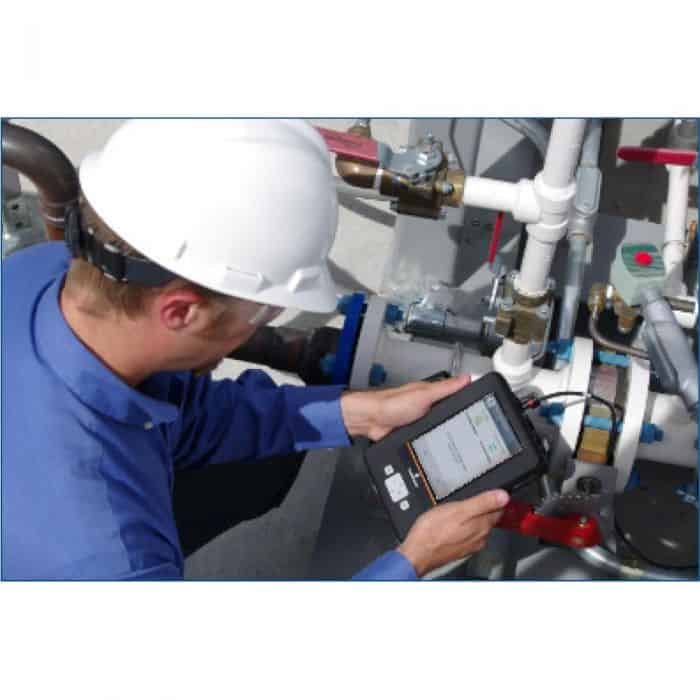
The throat diameter of the venturi is fixed, so that the measured flow rate range is limited by the actual pressure difference.

Due to the vortex on the downstream side of the orifice, the permanent loss of the orifice flowmeter is very large.

The structure and shape of the Venturi flowmeter can avoid the formation of vortices, which can greatly reduce permanent losses.

2.The energy loss of Venturi flowmeter in measuring flow is much smaller than that of orifice flowmeter.
However, because the venturi flowmeter is more time-consuming in manufacturing and processing than the orifice flowmeter, and the price is high, the orifice flowmeter has the least trouble and the lowest cost during pipeline installation.

3.In terms of fluid measurement, Venturi flowmeters are generally used for low-velocity gas flow measurement.

The flow coefficient of the orifice plate in the orifice flowmeter is significantly affected by the fluid disturbance, and this disturbance comes from the influence of the valves, elbows and other pipe fittings installed upstream of the orifice plate. The value of its discharge coefficient is less affected by downstream disturbances. Generally, this kind of flowmeter should be installed at a distance of 50 times and 10 times the pipe diameter from the upstream and downstream disturbance components, respectively. Obviously the required distance is related to the nature of the disturbance.
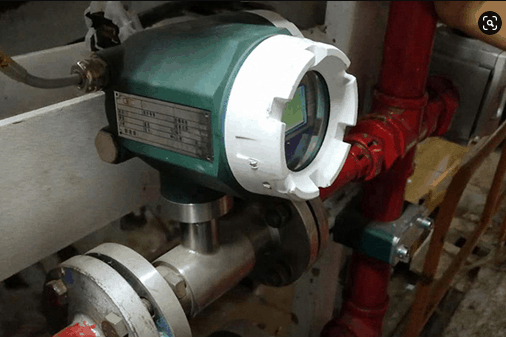
Therefore, when measuring with an orifice flowmeter, the orifice flowmeter must be installed correctly according to the disturbance of the fluid.

The above is a detailed introduction to the question of “What is the difference between a venturi flowmeter and an orifice flowmeter”, I hope to help everyone.
If you have any other questions about this issue, please click Online Consultation and consult online customer service.

Extended reading:  Flow Nozzle for Steam Flow Measurement

Orifice flow meter

Frequently
Asked
Questions

Orifice Meter is a liquid and gas flow measuring instrument. It is mainly used in high temperature and high pressure measurement conditions. Orifice Meter has the characteristics of high temperature resistance, the temperature can reach 700 degrees, and the pressure is 30MPa. In the field of high temperature and high pressure measurement, Orifice Meter is Use more differential pressure flowmeters.
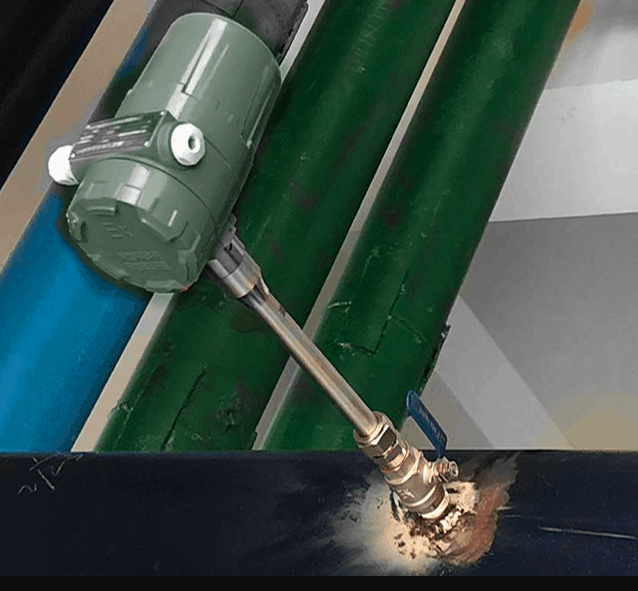
What is the calibration accuracy of the orifice flowmeter?
The orifice flowmeter is a flow measuring instrument. The accuracy of the orifice flowmeter is within the range of ±0.5% to 1.5%. The orifice flowmeter has the characteristics of high temperature and high pressure. It is mainly used to measure steam and hot air. , Measurement conditions of heat transfer oil.

DPT meter is also a differential pressure transmitter.

DP transmitters are Differential Pressure Transmitters. DP transmitter measures the pressure difference between the gas or liquid at both ends of the transmitter. Output 4~20mA, 0~5V. Used for liquid level, density and pressure of liquid, gas and steam.

DP transmitters are different from pressure transmitters as they have 2 pressure interfaces. With flanges, capillaries, valve, brackets, throttle devices. Differential pressure transmitters are used to measure the level, density, and flow of liquids, gases, and vapors. Then convert it into 4–20mADC current signal output.

More Featured Products

Related Blogs

  • Digital Flow Meter for Argon Gas

    What is Digital Flow Meter for Argon Gas? Digital flow meter for argon gas refers to a flow meter that can be used for detection, display, transmission, and signal output…
  • Guide for Digital Fuel Flow Meter

    Digital Fuel Flow Meter is a flow meter dedicated to measuring fuel, diesel, gasoline, and petroleum. Digital Fuel Flow Meter generally has a digital display or signal output. Such as…
  • Water Flow Measurement for Pipes and Open Channels

    Water flow measurement is common in both industry and life. You may often hear about the use of electromagnetic flowmeters to measure wastewater. The clamp-on ultrasonic flowmeter measures large water…
  • Mechanical Water Flow Meters

    Mechanical water flow meters refer to a type of flow meter suitable for clean water processes or applications. The working principle of a mechanical water flow meter is to measure…
  • Explore Oil and Gas Flow Meters

    An oil and Gas Flow Meter is A device installed in a pump manifold or treating line to measure the fluid flow rate. Oil and Gas Flow Meters can be…
  • Velocity Flow Meters

    Flow Meter Types There are many types of flow meters. Basically, there are the following types of flow meters Why are there so many types of flow meters? This starts…
  • Strap on Ultrasonic Flow Meters

    What is Strap on Ultrasonic Flow Meters? Strap on Ultrasonic Flow Meter is also often called Clamp On Type Flow Meter. The unique feature of Strap on Ultrasonic Flow Meter…
  • 4-20ma Flow Meters

    What is 4-20ma Flow Meter? 4-20mA Flow Meters are those flow meters with 4-20mA current signal output function. The signal current of general instruments is 4-20mA. This means that the…

Sino-Inst offers 12 orifice plate flow meter products. About 90% of these are flow meters.

A wide variety of orifice flow meter options are available to you, such as brass, carbon steel. You can also choose from free samples.

Sino-Inst is an orifice plate flow meter supplier. Orifice plate flow meter products are most popular in Domestic Market, Southeast Asia, and Mid East.

You can ensure product safety by selecting from certified suppliers, including 375 with ISO9001, ISO14001, and Other certification.

Request a Quote

Please enable JavaScript in your browser to submit the form

Gas Thermal Mass Flow Meter

What is a Thermal Mass Flow Meter?

Thermal Mass Flow Meter, also called calorimetric flow meter, is an instrument that measures gas flow based on the principle of thermal diffusion. When the fluid passes through a pipe heated by a heat source, the temperature field will change. The thermal mass flow meter uses this The fluid flow rate is measured based on the change or the relationship between the energy required to increase the fluid temperature and the fluid mass. Generally used to measure the mass flow of gas. It is widely used in many industrial fields.

Figure 1. Simplified thermal gas mass flow meter-suitable for pipe diameters above DN80 and below DN500
Figure 2. Full-tube thermal gas mass flowmeter-suitable for pipe diameters above DN15 and below DN80
Figure-3.-Standard thermal gas mass flow meter (special models need to be customized)-suitable for pipe diameters above DN80 and below DN4000
Figure 4. Flange plug-in gas mass flow meter
Figure-5.-Simplified-split-display-gas-mass-flow-meter
Figure-6.-Flange-mounted-gas-mass-flowmeter

Thermal mass flow meter specification

DescriptionSpecifications
Measuring MediumVarious gases (Except the acetylene)
Pipe SizeDN10~DN4000mm
Velocity0.1~100 Nm/s
Accuracy±1~2.5%
Working TemperatureSensor: -40℃~+220℃
Transmitter: -20℃~+45℃
Working PressureInsertion Sensor: medium pressure≤ 1.6MPa
Flanged Sensor: medium pressure≤ 1.6MPa
Special pressure please contact us
Power SupplyCompact type: 24VDC or 220VAC, Power consumption ≤18W
Remote type: 220VAC, Power consumption ≤19W
Response Time1s
Output4-20mA (optoelectronic isolation, maximum load 500Ω), Pulse,
RS485 (optoelectronic isolation) and HART
Alarm Output1-2 line Relay, Normally Open state, 10A/220V/AC or 5A/30V/DC
Sensor TypeStandard Insertion, Hot-tapped Insertion and Flanged
ConstructionCompact and Remote
Pipe MaterialCarbon steel, stainless steel, plastic, etc
Display4 lines LCD
Mass flow, Volume flow in standard condition, Flow totalizer, Date and Time, Working time, and Velocity, etc.
Protection ClassIP65
Sensor Housing
Material
Stainless steel (316)

Thermal mass flow meter advantages and disadvantages

Pros

  1. No need for temperature and pressure compensation for gas flow measurement. Convenient and accurate measurement;
  2. Wide range ratio, can be used for gas leak detection;
  3. Measuring flow rate range: 0.1Nm/s~100Nm/s.
  4. Good seismic performance and long service life, free from the influence of vibration on measurement accuracy;
  5. Overall digital circuit measurement, accurate measurement and convenient maintenance;
  6. Using RS-485 communication, factory automation and integration can be realized. click for inqueries
  7. No pressure loss, suitable for pipes of any shape with known cross-sectional area.
  8. Corrosion-resistant sensor, suitable for measuring corrosive gas.
  9. It is especially suitable for large-caliber measurement to ensure the accuracy of measurement and is suitable for trade settlement.
  10. The amount of construction is very small. Due to the plug-in structure, it can be installed and maintained online.
  11. The base-type instrument can display on-site and control with alarm.

Cons

  1. The thermal mass flow meter responds slowly.
  2. Places where the measured gas composition changes greatly. Due to changes in the cp value and thermal conductivity, the measured value will vary greatly and cause errors.
  3. For small flow, the meter will bring considerable heat to the gas to be measured.  
  4. For thermally distributed thermal gas mass flow meters, if the measured gas deposits a scale layer on the pipe wall, the measured value will be affected. Must be cleaned regularly. The thin tube type instrument has the disadvantage of being easy to be blocked, and it cannot be used under normal circumstances.
  5. The use of pulsating flow will be restricted.
  6. Thermal mass flow meters for liquids are also restricted in the use of viscous liquids.

Thermal mass flow meter applications

The thermal measuring principle is widespread in the industry, and is being used successfully in many applications with gas flow, for example:

  1. Gas flow measurement in steel plants and coking plants;
  2. Boiler air flow, measure secondary air volume;
  3. Measurement of flue gas flow from chimney;
  4. Measurement of waterfall gas flow in water treatment;
  5. Gas flow measurement during the production process of cement, cigarette and glass factories;
  6. Compressed air flow measurement;
  7. Gas flow measurement of natural gas, coal gas, liquefied gas, torch gas, hydrogen and other gases.
  8. Carbon dioxide (for beverage production and chilling)
  9. Argon (in steel production)
  10. Nitrogen and oxygen (production)
  11. Natural gas (for burners and boiler feed control)
  12. Air and biogas measurement (e.g. in wastewater plants)

Thermal mass flow meter for liquids

Generally, Thermal mass flow meters produced in China are used to measure gas mass flow.

If you need to measure liquid mass flow. Please contact our sales engineer. We will provide you with detailed product recommendations.

Thermal mass flow meter installation

insertion mass flow meter:

  1. Position determination: Keep away from elbows, solenoid valves, and other parts to ensure a stable flow field;
  2. Welding of the welding base: drill a Φ22 round hole in the pipe, and weld the welding base;
  3. Install the instrument: put the locking head into the probe rod during installation, and tighten it with a wrench after confirming the insertion depth;
  4. It is recommended that the user adopt a continuous flow ball valve when selecting the model, which is easy to disassemble. Especially in the medium place that is harmful to the human body.
  5. In the caliber smaller than DN300, the insertion depth is 1/2D+15mm. In the DN300-DN1000 caliber, the insertion depth is 1/4D+15mm. Above DN1000, the insertion depth is 1/8D+15mm.

Pipe inline thermal mass flow meter:

  • Can be installed horizontally and vertically.
  • When installing, first weld the special flange to the front and rear straight pipe sections.
  • Then clamp the front and rear straight pipe sections, gaskets, and instruments with stud bolts and connect them into one.
  • Then install this component on the pipeline. When installing, pay attention to the direction marked on the instrument should be consistent with the direction of the fluid.

Note:

(1) The integrated plug-in type should be inserted into the axis of the pipeline to be tested, so the length of the measuring rod depends on the diameter of the measuring pipe. It should be stated when ordering. If it cannot be inserted into the axis of the pipeline, the manufacturer will provide calibration coefficients to complete accurate measurement.

(2) The one-piece full-tube type adopts the national standard GB/T9119-2000 and is produced in accordance with the GB/T9119-2000 standard. (Other standards will be implemented after consultation and confirmation with the manufacturer.)

This measuring principle is based on the fact that heat is drawn from a heated body when a fluid flows past.

The thermal mass flow meter is a flow meter based on the principle of thermal diffusion.

That is when the fluid flows through the object, the amount of heat loss of the heat-generating object is proportional to the flow rate of the fluid.

SI-RSL Thermal mass flowmeters

Specifically, the flowmeter sensor has two standard RTDs. One for the heat source and one for measuring the temperature of the fluid.

When the fluid passes, the temperature difference between the two is nonlinear with the flow rate.

The meter can convert this relationship into a linear output, that measures the flow signal.

There are two design methods for the flowmeter manufactured, by the principle of thermal diffusion: one is based on the principle of constant temperature difference. The other is based on the principle of constant power.

Based on a common data model:

P / ▷ T = A + B (Q) N.

Among them:

P—dissipated power,

▷T—the temperature difference between the two sensors,

Q—mass flow,

N—exponential coefficient,

A, B is the coefficient related to the thermal performance of the gas.

The principle of constant temperature difference:

▷T remains unchanged, and the dissipated power P and the flow rate Q of the fluid are exponentially increasing.

Constant power principle:

The dissipated power is constant, and the temperature difference ▷T is in a decreasing relationship with the flow rate Q of the fluid.

Know more about How Thermal Mass Flow Meter Technology Works?

Video source: https://www.youtube.com/watch?v=YfQSf2NBGqc

Thermal meters require a fully developed flow profile as a prerequisite for correct flow measurement. For this reason, please note the following points when installing the device.

  • Observe the recommended inlet and outlet requirements.
  • Good engineering practice is necessary for the associated pipe work and installation.
  • Ensure correct alignment and orientation of the sensor.
  • Take measures to reduce or avoid condensation (e.g. install a condensation trap, thermal insulation, etc.).
  • The maximum permitted ambient temperatures and the medium temperature range must be observed.
  • Install the transmitter in a shaded location or use a protective sun shield.
  • For mechanical reasons, and in order to protect the pipe, it is advisable to support heavy sensors.
  • No installation in where large vibration exists.
  • No exposure in the environment containing a lot of corrosive gas.
  • No sharing power supply with frequency converter, electric welding machine and other machines which can make power-line interference. If necessary, please add power conditioner for transmitter power supply

The minimum recommendations for inlet and outlet runs (without flow conditioner) are:

Flanged sensor

1 = Reduction, 2 = Expansion, 3 = 90° elbow or T-piece, 4 = 2 × 90° elbow, 5 = 2 × 90° elbow (3-dimensional), 6 = Control valve.

Insertion sensor

1 = Reduction, 2 = Expansion, 3 = 90° elbow or T-piece, 4 = 2 × 90° elbow, 5 = 2 × 90° elbow (3-dimensional), 6 = Control valve or pressure regulator.

A specially designed perforated plate flow conditioner can be installed if it is not possible to observe the inlet runs required.

Extended reading: Gas mass flow controller working principle

Thermal mass flow meter and Coriolis flow meter are both flow meters used to measure fluid mass flow rate.

The thermal type can only be used in gases. It uses the different heat conduction and absorption capabilities of various gases to measure the heat transfer or heat energy loss from heating to induction to correspond to the flow rate.

Thermal Mass Flowmeters (Thermal Mass Flowmeters, TMF for short) are used to measure thermal flow meters in China. The fluid mass flow is measured by the temperature field change generated when the fluid flows through the pipe heated by the external heat source. Or a flow meter that uses the relationship between the energy required to increase the temperature of the fluid and the mass of the fluid when the fluid is heated to a certain value to measure the mass flow of the fluid. Generally used to measure the mass flow of gas.

Thermal Mass Flowmeters have the characteristics of low pressure loss; large flow range; high precision, high repeatability and high reliability; no moving parts and can be used for extremely low gas flow monitoring and control. Utilizes the heat (or temperature) of the heated fluid Changing the mass flow of fluids has a long history.

Read more about: Applications Of Digital Gas Mass Flow Meters

The usual mass flowmeter refers to Coriolis flowmeter. Use the Coriolis principle (the interference of the earth’s rotation on the curved material) to directly measure the mass of fluid flowing through. Can measure gas and liquid.

The volume of a fluid is a function of fluid temperature and pressure and is a dependent variable. The quality of a fluid is a quantity that does not change with time, space temperature, and pressure.

As mentioned earlier, the flow measurement values ​​of commonly used flow meters, such as orifice flow meters, turbine flow meters, vortex flow meters, electromagnetic flow meters, rotameters, ultrasonic flow meters, and oval gear flow meters, are fluid. Volume flow.

Extended reading: Fuel Flow Meter for Boat-Selection & Application

You may like:

More Featured Industrial Gas Flow Meters

FAQ

A thermal mass flow meter measures the flow of gas or liquid using heat. Think of it like this: it heats up a small part of the fluid and then checks how quickly the heat moves. Faster heat movement means more fluid is flowing.

Thermal mass flow meters are usually very accurate. They can give readings that are close to the actual flow. But, just like any tool, they can sometimes be a little off. It’s always good to make sure they’re set up right for the best results.

No, they’re not the same. A vortex flow meter measures how swirls or “vortices” are made when fluid flows past an object. A thermal mass flow meter, on the other hand, uses heat. So, they work in different ways. Read more about: vortex flow meter straight run requirement.

There are many good thermal mass flow meters out there. The best one depends on what you need it for. It’s a good idea to talk to someone who knows a lot about them or read reviews before buying one.

Sino-Inst offer over 10 Thermal Mass Flow Meters, with Best Price.

A wide variety of Thermal Mass Flow Meters options are available to you, such as free samples, paid samples. All of our flow meters can work with the AMS NEW TREX. About 13% of these are magnetic flow meter. 14% are Insertion Magnetic Flow Meter. 25% are Venturi flow meter. 13% are Handheld ultrasonic flow meter, and others are Liquid Turbine Flow Meters.

Sino-Inst is Thermal Mass Flow Meter supplier and Manufacturer, located in China. Mass flow meter products are most popular in North America, Mid East, and Eastern Europe.

The United States, and India, which export 99%, 1%, and 1% of Thermal Mass Flow Meter respectively.

You can ensure product safety by selecting from a certified supplier, with ISO9001, ISO14001 certification.

Request a Quote

Please enable JavaScript in your browser to submit the form

SI-1110 Wireless Pressure Transducer

Wireless Pressure Transducer is also called Wireless Pressure Transmitter. Wireless Pressure Transducer is a wireless remote transmission module added to the common pressure transmitter. Works with the receiver. Battery powered. Can realize true wireless working wireless transmission. This product has a variety of wireless transmission methods, including GPRS/LoRa/NB-IoT/ZigBee.

Sino-Inst offers a variety of Wireless Pressure Transdcuers for industrial pressure measurement. If you have any questions, please contact our sales engineers.

Features of Wireless Pressure Transducer

Wireless Pressure Transmitter SI-1110
  • Five-digit LCD screen, white backlight;
  • Waterproof design, waterproof grade ≥IP66;
  • GPRS/NB-iot optional, LORA protocol can be customized development;
  • Cast aluminum explosion-proof shell, durable, beautiful product;
  • The protocol is self-edited and can be customized, timely transmission and alarm;
  • Sending interval, the buttons can be adjusted from 1 minute to 24 hours;
  • Low power consumption design, 3.6V lithium battery power supply, can support more than 15000 times;
  • Remote parameter configuration (transmission frequency, collection frequency, alarm value, etc.) to reduce maintenance costs.

Extended Reading: Digital Pressure Sensor-RS485

Specifications of Wireless pressure transducer

Dimension of wireless pressure transducer
Power SupplyInternal Battery, 2200mAh@7.4V Lithium
Pressure mediumgas or liquid compatible to wetted stainless steel
Pressure ranges-1…0~0.01bar…1000bar
Pressure typegauge(G), absolute(A), sealed gauge(S)
WirelessLoRaWANR CN470/EU868/US915/AS923Mhz,10km in view sight
Accuracy0.5%FS
Long term stability<0.1%FS/year
Relay output(2 relays)220V/3A
Indicator4 digits LCD display
Compensation temperature range-20~+85°C
Working temperature range-40~+125℃
Temperature coefficient of zero0.2%FS/10℃
Temperature coefficient of span0.2%FS/10℃
Insulation resistance100MQ@50VDC
Electrical connectionM20×1.5 female
Material of wetted part1Cr18Ni9Ti
Material of membrane316L
Material of housingcast aluminium
Process connectionM20x1.5,G1/2 or others
Overload pressure150%FS

Read more about: Common Units Of Pressure

Wireless Gateway

ChipSX1276
Spreading Factor6-12
Bandwidth7.8-500KHZ
Bitrate0.018-37.5kbps
Sensitivity-141dBm
Frequency Range137-1020MHz
Emission Power17土1 dBm
Sleep Current1.45uA
Stand_By Current1.8mA
Receiver Current12.15mA
Emission Current93mA
Max.DATA Rate300kbps
CertificationFCC&CE,IC,TELEC

Extended reading: What is flush diaphragm?

LORA

Item

Name

Function

System Configuration

Core

ARM Cortex-A53

Basic frequency

1.2GHZ

RAM

1Gbytes

Flash

4Gbytes eMMC

Communication Mode

10M/100M Internet Interface


GPRS/3G/4G Wireless Communication


Wireless Communication

Lora

Electric Performance

Power Supply

PoE +48V input

IEEE 802.3 af/at

Average Consumption

5W

Peak Power

15W

Lora output power

Type:14dBm@868MHZ

17dBm@470MHZ

Max:27dBm

Lora Receive Sensitivity

-141dBm@SF12,BW=125KHZ

Inner sensor

Temperature Sensor

Temperature Sensor

User interface(Outer)

4G Antenna Interface

4G Connect to Server

User interface(Inner)

LoraWan Antenna Interface

LoraWan Connect to Sensor

GPS Antenna Interface

Connect to the outer GPS module

PoE Interface

10M/100M Ethernet cable connect to Server

Micro Sim Card


USB

USB boot, Burning or update

Serial Com

Online debug

LED100

System Running Indicator

LED200

FDX-LED Mode indicator

LED201

LNKA_LED Connection status indicator

LED202

SPD_LED data rate indicator

LED203

4G mode indicator

Mechanical dimension and weight

dimension

145x95x40mm

Weight

715g

Installation

Wall mount or Holding pole

Working Temperature

Working Temperature

-40~75℃

Storage Temperature

-40~85℃

The wireless pressure transmitter has optimized the circuit design, power management, communication protocol, and realized the “micro-power consumption” design of wireless communication. Using micro-transmission power and high-sensitivity receiving strategy, it has the advantages of real-time online monitoring of battery power and so on.

The wireless pressure transmitter system is mainly composed of pressure sensor, signal processing circuit, wireless module, power management circuit, battery and antenna. On this basis, a wireless remote transmission module is added, which can form a pressure acquisition system with our intelligent wireless receiving terminal.

This system has changed the transmission mode of RS485 and 4-20mA current signal and the power supply mode of switching power supply in the past, and used 3.6V lithium battery for power supply. This simplifies the installation method and saves the cost of customer wiring. Really achieve the purpose of energy saving and environmental protection.

Read more about: Industrial pressure transmitters Working Principle

The wireless pressure transmitter is a high-precision, low-power radio transmission pressure detection instrument. Powered by lithium battery, IP65 waterproof cast aluminum casing. Support data recording and data supplementary transmission functions. No wiring, no external power supply required. Built-in 3.6V lithium battery.

In the field of the Internet of Things, there are various communication technologies at the same time.

Divided by the dimension of transmission distance, in the field of local area wireless network, there are BLE, Wi-Fi, ZigBee, etc., which are widely used in home, enterprise and other scenarios.

For wide-area wireless networks, there are LoRa, NB-IoT, etc., which are specially used for low-rate, low-power, and wide-coverage IoT services.

NB-IOT/Zigbee/Lora comparison

WiFi is ubiquitous in life, but we know very little about NB-IOT, Zigbee, and Lora. Sino-Inst compares the three wireless networking solutions from five aspects to help you understand these three technologies.

  1. Transmission distance comparison

NB-IoT: Long-distance, up to ten kilometers, generally more than 10KM; NB-IoT technology improves the power spectral density, realizes wide-area coverage, and effectively solves the problem that existing wireless signals are difficult to cover.

LoRa: Long distance, up to ten kilometers, 1~2 kilometers in cities, and 20 kilometers in suburbs;

ZigBee: short distance, 10 meters to 100 meters level;

  1. Single-network access node capacity

NB-IOT: about 200,000. Compared with traditional 2G, 3G and 4G, NB-IoT has a 50-100 times increase in uplink capacity;

LoRa: about 60,000, which is actually related to the number of gateway channels, node packet sending frequency, data packet size, etc. Generally, there are 500 to 5000;

ZigBee: more than 60,000 in theory, 200-500 in general

  1. Battery life

NB-IOT: theoretical about 10 years / AA battery, no need to charge;

LoRa: Theoretically about 10 years/AA battery;

ZigBee: Theoretically about 2 years/AA battery;

  1. Cost

NB-IOT: The cost of the module is less than 5 US dollars, and the future target is reduced to 1 US dollar. The low cost and low power consumption make NB-IOT more cost-effective and wider application range than other types of IoT;

LoRa: The module is about $5;

ZigBee: The module is about 1~2 US dollars;

  1. Transmission speed

NB-IOT: theoretical 160kbp ~ 250Kbps, generally less than 100kbps in practice, limited by low-speed communication interface UART;

LoRa: 0.3~50kbps;

ZigBee: theoretical 250kps, practically less than 100kbps, limited low-speed communication interface UART;

Wireless pressure transmitters are low-power wireless transmission digital pressure transmitters that are battery powered. This product has a variety of wireless transmission methods, including GPRS/LoRa/NB-IoT/ZigBee. Users can choose the appropriate configuration according to their needs.

The wireless digital pressure transmitter of GPRS transmission, with the mature GPRS network, uploads the pipeline pressure on site to the cloud. Users can match IP addresses and other general parameters on-site or remotely.

Wireless digital pressure transmitter with LoRa transmission. Use with LoRa gateway. It has the advantages of low power consumption, long transmission distance, strong signal penetration, and self-organized network.

NB-IoT transmits wireless digital pressure transmitter. Adopt the latest NB-IoT technology. Low power consumption, high transmission efficiency, low tariff and other advantages.

Wireless digital pressure transmitter with ZigBee transmission. It is characterized by close proximity, low complexity, self-organization, low power consumption, and low data rate.

Extended reading: Use of high temperature melt pressure sensor

Applications of wireless pressure transducer

  • Pipeling pressure monitoring
  • Machinery and oil industry
  • Paper making, pharmaceutical
  • Electric power, environmental protection and food industry
  • metallurgical and chemical industry
  • 6 Field or inconvenient power distribution

Extended reading: Featured Diaphragm Seal Pressure Transmitters

Wireless differential pressure sensor

Wireless differential pressure sensor is a wireless transmission type differential pressure sensor. Supporting test software, with display, curve recording, data storage and other functions. Mainly used for measuring and monitoring system of gas differential pressure. This product is a wireless product developed mainly for inconvenient wiring environment on site.

This product can also output the RS485 signal of the MODBUS communication protocol and the analog signal of 0~5VDC, which is truly a three-in-one product. It is convenient for on-site customers to use data collection systems in different fields.

Wireless differential pressure sensors are mainly used in:

  • Pipeline differential pressure long distance transmission
  • Filter network monitoring
  • Pipeline differential pressure monitoring
  • Power station operation inspection
  • Locomotive brake system
  • Thermoelectric unit
  • Building fire pressure monitoring
  • Industrial process detection and control
  • Laboratory pressure calibration, etc.

Extended reading: What is a pressure sensor?

Pressure transducers for sale

Diaphragm Seal Pressure Transmitter
Explosion-proof Pressure Transmitter
Diffused silicon Gauge Pressure Transmitter
Wireless Pressure Transducer
Submersible Pressure Transducer
Hydrostatic Level Sensor
Anti-corrosive Submersible Level

Extended reading: Industrial Pressure Transmitters|Buy from the manufacturer

Wireless Pressure Transducer Price

Wireless Pressure Transducer Price will cost more than ordinary pressure transmitters.

First of all, the parameters that must be seen when purchasing a pressure transmitter are:
Pressure range. Range. Measurement medium. Installation method-threaded flange clamps, etc. Installation dimensions. Temperature. Whether with display. Whether with HART protocol. Output type. Current output or voltage output. Explosion-proof level, protection level. Accessories. Mounting bracket.

The above parameters will affect the price of the pressure transmitter.
Sino-Inst, as the manufacturer of wireless pressure transmitter, offer you with the best price.

Frequently
Asked
Questions

Wireless pressure sensors are also wireless pressure transmitters.

The wireless pressure transmitter is added with a wireless remote transmission module, which can form a pressure acquisition system with an intelligent wireless receiving terminal. Including GPRS/LoRa/NB-IoT/ZigBee multiple transmission methods are optional.

Pressure transmitters can be categorized into four main types:

  • Gauge Pressure Transmitter.
  • Absolute Transmitters.
  • Differential-Pressure Transmitter.
  • Multivariable Pressure Transmitters.

Extended Reading: Liquid pressure sensor

A pressure transmitter is a device that converts pressure into pneumatic or electric signals for control and remote transmission.

It can convert physical pressure parameters such as gas and liquid sensed by the load cell sensor into standard electrical signals (such as 4~20mADC, etc.). Measurement, indication and process adjustment are carried out by supplying secondary instruments such as indicating alarms, recorders and regulators.

Related pressure measurement solutions

  • High Frequency Dynamic Pressure Sensor

    Dynamic pressure sensor, the transmitter is a high frequency sensor. Sino-Inst offers a variety of  Dynamic Pressure Sensors for pressure measurement. If you have any questions, please…
  • How to Calibrate a Pressure Transmitter

    What is Calibrate a Pressure Transmitter? Calibrate a Pressure Transmitter is an important step to help pressure transmitters make accurate measurements. Only when the input and output…
  • MEMS Pressure Sensors

    MEMS pressure sensors are pressure sensors manufactured using MEMS technology. MEMS pressure sensors include silicon piezoresistive pressure sensors and silicon capacitive pressure sensors. Sino-Inst offers a variety…
  • Capacitive pressure transducer

    What is the capacitive pressure transducer? The capacitance pressure transmitter is a pressure measurement device, which converts an applied pressure into a current signal, Like 4-20mA. A…

Extended reading: How to Calibrate DP Level Transmitter

Sino-Inst offers 5 wireless pressure transducer products. These are wireless pressure transmitters, wireless differential pressure transmitter, and wireless temperature transmitter.

A wide variety of wireless pressure transducer options are available to you, such as free samples, paid samples. Sino-Inst is wireless pressure transmitter manufacturer, located in China.

Wireless pressure transducer products are most popular in North America, Domestic Market, and South America. You can ensure product safety by selecting from certified suppliers, with ISO9001, and ISO14001 certification.

Request a Quote

Please enable JavaScript in your browser to submit the form

SI-520 Digital Pressure Sensor

Digital Pressure Sensor is particularly suitable for use in computer control systems.

Digital pressure sensors measure the relative pressure of hydraulic and pneumatic systems. Pressure transmitters provide absolute or differential analog readings over a wide measurement range. SI-520 Digital Pressure Sensor passes high-reliability digital circuit 485 and precision temperature compensation. RS485 half-duplex working mode. This protocol complies with the MODBUS communication protocol. And uses a subset of RMOD methods in the MODBUS protocol. Digital Pressure Sensor adopts 304ss seal and welding, and has compact structure. Digital Pressure Sensor has good moisture resistance and excellent media compatibility.

Sino-Inst offers a variety of low pressure transducers for industrial pressure measurement. If you have any questions, please contact our sales engineers.

Such sensors are also commonly referred to as:RS485 pressure transmitter. MODBUS protocol transmitter. RS485 bus sensor. Digital signal pressure transmitter.

Measurement medium: weakly corrosive liquid; weakly corrosive gas.

The digital pressure sensor is a new type of RS485 digital output sensor. Compared with the transmitters that generally output analog signals on the market, it is more suitable for the signal acquisition of the majority of industrial automation users.

RS485 digital sensor has broad development prospects. It is widely used in various industrial automation environments. It involves oil pipelines, water conservancy and hydropower, railway transportation, intelligent buildings, production automation, aerospace, military industry, petrochemicals, oil wells, electricity, ships, machine tools, hydraulic machinery and many other industries.

The working principle of the digital pressure sensor is that the pressure acts directly on the diaphragm of the sensor, so that the diaphragm produces a micro-displacement proportional to the pressure of the medium. The resistance of the sensor changes, and the electronic circuit is used to detect this change. And convert the output A digital standard signal corresponding to this pressure.

Extended reading: What is an air pressure transducer?

Digital Pressure Sensor Features

  • RS485 communication interface or HART communication protocol (optional)
  • Using digital compensation and non-linear correction technology
  • -10 ℃ ~ 70 ℃ digital wide temperature compensation
  • Support networking application
  • Digital display (optional)
  • Special requirements can be customized to suit various occasions

Extended reading: Pressure indicator transmitters

Specifications of SI-520 Digital Pressure Sensor

Amount-0.1~0,0-1,6,10~100MPaAmbient temperature-20~85℃
Supply voltage24VDC(10~36VDC)Medium temperature-20~85~105℃-500
output signalRS485 half duplexResponse time<1ms
ProtocolMODBUS protocolElectrical InterfaceStainless steel waterproof sealed terminal
Precision0.1%FS、 0.25%FS、0.5%FSThreaded connectionM20 * 1.5 or according to customer requirements
Sampling rate:10 times / second.Overload capacity150%
Communication speed9600bps,n,8,1Sealing levelIP65/68
Communication speed9600bps,n,8,1Stability:≤ ± 0.15% FS / year
Serial port settingsNo parity, 8-bit data, 1 stop bit.
Serial baud rate200,240,048,009,600,000,000,000,000,000,000,000
Vibration effect≤ ± 0.15% FS / year (mechanical vibration frequency: 20Hz ~ 1000Hz)

Extended reading: High Pressure Flow Meters for Liquids-Steam-Gas

SI-520 Digital Pressure Sensor Dimensions

Digital Pressure Sensor Applicaitons

  • Various liquids, gases, or vapors compatible with 304, 316L stainless steel
  • Static & dynamic pressure measurement
  • Vacuum measurement/control
  • Barometric pressure measurement
  • Fluid level measurement
  • Gas Flow
  • Medical Instrumentation
  • HVAC

You may like: Capacitive pressure transducer [What is & How does it work]

What does 485 communication (modbus protocol) mean in a pressure transmitter?

The pressure transmitter has a common 4-20mA output and has Hart protocol. There is also 485 communication which is the modbus protocol. Today we will talk about what is 485 communication.

MCU pin outputs TTL level. TTL level means when the MCU pin outputs 0 level. In general, the voltage is 0V. When the MCU pin outputs 1 level, the voltage is 5V. Because the TTL level is generated by a signal line and a ground line. The interference signal on the signal line will be transmitted to the receiving end with the effective signal, so that the effective signal is interfered. 485 communication actually converts the TTL level from the MCU through a converter chip in the hardware layer.

485 communication features:

  1. RS-485 electrical characteristics:
    Logic “1” is represented by the voltage difference between the two lines being + (2-6) V. Logic “0” is represented by the voltage difference between the two lines being-(2-6) V. The interface signal level is lower than that of RS-232-C, so it is not easy to damage the chip of the interface circuit. And this level is compatible with TTL level, which can be easily connected to TTL circuits.
  2. The maximum data transmission rate of RS-485 is 10Mbps.
  3. The RS-485 interface is strong, which means it has good anti-noise interference.
  4. The standard value of the maximum transmission distance of the RS-485 interface is 4000 feet, in fact it can reach 3000 meters (theoretical data, in actual operation, the limit distance is only about 1200 meters). In addition, the RS-232-C interface allows only one transceiver to be connected on the bus, that is, a single station capability. The RS-485 interface allows up to 128 transceivers on the bus. That is to say, it has multi-station capability, so that users can easily set up a device network using a single RS-485 interface.

RS485 disadvantages:

RS485 bus is a conventional communication bus. It cannot do automatic arbitration of the bus. That is, data cannot be sent simultaneously to avoid bus contention. Therefore, the communication efficiency of the entire system is necessarily low, and the amount of data redundancy is large. RS485 bus is not suitable for application places with high speed requirements. At the same time, because there is usually only one host on the RS485 bus, this bus method is a typical centralized-decentralized control system. Once the host fails, the communication of the entire system is limited to a paralyzed state. Therefore, it is an important measure to do online backup of the host.

Extended Reading: Resistive Pressure Transducer

More Featured Digital Pressure Transmitters

Technical Support

  • What is Static Water Pressure?

    What Is Static Water Pressure? Definition of Static Water Pressure: Static Water Pressure refers to the pressure on water when it is stationary or moving in a straight line at…
  • The Myth of Ceramic Pressure Sensor

    What is a ceramic pressure sensor? Ceramic pressure sensors are sensor diaphragms made of ceramic alumina (Al2O3). Ceramic is a material with high elasticity, corrosion resistance, wear resistance, impact, and…
  • Static Pressure/Hydrostatic Pressure Transmitter

    The Hydrostatic Pressure Transmitter measures the hydrostatic pressure exerted by a hydrostatic head. Use these hydrostatic pressure transmitters to measure the liquid level in storage tanks, processing vessels, collection tanks,…
  • What is a PID controller?

    What is a PID controller? A PID controller is an instrument used in industrial control applications to regulate temperature, flow, pressure, speed, and other process variables. PID is the abbreviation…
  • What does SCADA stands for?

    What does SCADA stand for? SCADA is the abbreviation of Supervisory Control And Data Acquisition. Namely data acquisition and monitoring control system. SCADA system is also called monitoring configuration software,…
  • Introduction to Piezoelectric Pressure Sensors

    What is a piezoelectric pressure sensor? The piezoelectric pressure sensor is a sensor that uses the piezoelectric effect of piezoelectric materials to convert the measured pressure into an electrical signal…
  • What Is an Air Pressure Transducer?

    An Air pressure transducer is a sensor that converts the mechanical signal of air pressure into a current signal. Pressure has a linear relationship with voltage or current, and it…
  • How to Calibrate a Pressure Transmitter

    What is Calibrate a Pressure Transmitter? Calibrate a Pressure Transmitter is an important step to help pressure transmitters make accurate measurements. Only when the input and output are debugged together…

A pressure sensor is a device or device that can sense a pressure signal. And convert the pressure signal into a usable output electrical signal according to a certain rule.
A pressure sensor usually consists of a pressure-sensitive element and a signal processing unit. According to different test pressure types, pressure sensors can be divided into gauge pressure sensors, differential pressure sensors and absolute pressure sensors.
More: Industrial Pressure Sensors

gauge pressure (GP) transmitter, compares a process pressure against local ambient air pressure.

Gauge pressure transmitters have ports to sample the ambient air pressure in real-time.
Today’s highly accurate gauge pressure transmitters can be affected by fluctuations in the local ambient pressure.
Measurements above the ambient air pressure are represented, as a positive number, while a negative number represents measurements below ambient.
A gauge pressure measurement is indicated by the letter ‘g’ following the unit of measure of the reading (i.e., inH₂O(g) or psig).
More: Gauge Pressure Transmitter

Pressure sensor is a commonly used pressure instrument, which has certain applications in many industries. It is very important for the user to determine how to detect the pressure sensor when using the pressure sensor. According to the purpose of detecting the pressure sensor, the detection items are different, of course, the detection methods will be different. Today, I will mainly introduce the three detection methods commonly used by pressure sensors. I hope they can help everyone.
Pressurization test. The checklist method is to supply power to the sensor. Blow the air holes of the pressure sensor with your mouth. Use the voltage range of the multimeter to detect the voltage change at the output of the sensor. If the relative sensitivity of the pressure sensor is large, this amount of change will be significant. If nothing has changed, you need to use a pneumatic source instead.

Through the above methods, the condition of a sensor can be basically detected. If you need accurate detection, you need to use a standard pressure source to pressure the sensor. Calibrate the sensor according to the pressure and the amount of change in the output signal. When conditions permit, temperature detection of relevant parameters is performed.
Detection of zero point. Use the voltage range of the multimeter to detect the zero point output of the sensor when no pressure is applied. This output is generally a mV level voltage. If it exceeds the sensor’s technical indicators, it means that the zero deviation of the sensor is out of range.
The detection of the bridge circuit. The main test circuit of the sensor is correct. Generally, it is a Wheatstone full bridge circuit. The ohm range of the multimeter is used. The impedance between the input terminal and the impedance between the output terminal. These two impedances It is the input and output impedance of the pressure sensor. If the impedance is infinite, the bridge is disconnected, indicating that there is a problem with the sensor or that the pin definition is not judged correctly.
Extended reading: What is a pressure sensor?

Frequently
Asked
Questions

The working principle of the digital pressure sensor is that the pressure directly acts on the diaphragm of the sensor. The diaphragm generates a micro-displacement that is proportional to the pressure of the medium. The resistance of the sensor changes. This change is detected by electronic circuits. The output is converted to correspond to this Digital standard signal of pressure.
More about: How does a pressure transmitter work?

There are different types of pressure transducers based on their design.

These sensors can come in several shapes and sizes, but the technology inside can also differ. 

There 4 main types of pressure sensor based on this: 

  • Strain Gauge Pressure Transducers
  • Capacitance Pressure Transducers
  • Potentiometric Pressure Transducers
  • Resonant Wire Pressure Transducers

More about Industrial Pressure Sensors

In fact, the pressure sensor can do both digital and analog signal output.
When you order a pressure sensor, you need to confirm with the manufacturer: Do you need a local digital display? What kind of signal output is required, etc. General pressure sensors support 4-20mA, 0-5V, 0-10V and other signal outputs. Or RS485, HART and other protocols.

Extended reading: extrusion melt pressure transducer

Digital pressure switches are mainly based on electronic pressure transmitters. This provides the switch with the complete functionality of a transmitter. Simple control tasks can be performed using the integrated pressure switch. The switching points can be set individually using the digital display or an I/O link.

Extended reading: Miniature Pressure Switch

A pressure sensor is a device or device that can sense a pressure signal. And convert the pressure signal into a usable output electrical signal according to a certain rule.
A pressure sensor usually consists of a pressure-sensitive element and a signal processing unit. According to different test pressure types, pressure sensors can be divided into gauge pressure sensors, differential pressure sensors and absolute pressure sensors.
More: Industrial Pressure Sensors

gauge pressure (GP) transmitter, compares a process pressure against local ambient air pressure.
Gauge pressure transmitters have ports to sample the ambient air pressure in real-time.
Today’s highly accurate gauge pressure transmitters can be affected by fluctuations in the local ambient pressure.
Measurements above the ambient air pressure are represented, as a positive number, while a negative number represents measurements below ambient.
A gauge pressure measurement is indicated by the letter ‘g’ following the unit of measure of the reading (i.e., inH₂O(g) or psig).
More: Gauge Pressure Transmitter

Extended Reading: MEMS Pressure Sensors

Sino-Inst offers over 20 Digital Pressure Sensors. A wide variety of  Digital Pressure Sensors options are available to you. Such as free samples, paid samples. Sino-Inst is a globally recognized manufacturer of Digital Pressure Sensors, located in China.

Sino-Inst sells through a mature distribution network that reaches all 30 countries worldwide. Digital Pressure Sensors products are most popular in Europe, Southeast Asia, and Mid East. You can ensure product safety by selecting from certified suppliers. With ISO9001, ISO14001 certification.

Request a Quote

Please enable JavaScript in your browser to submit the form

SI3151 Level TRANSMITTERS Direct Mounted Flange Type

Sino-Instrument > level transmitter > Hydrostatic for Liquids

High-performance level measurement using a differential pressure transmitter.

  1. High-reliability micro-capacitance silicon cell
  2. All welded construction with no flange ‘O’ rings
  3. Exceptional resistance to harsh environments
  4. Electronic linearisation to correct tank shape
  5. Hart® 5.2 multi-drop communication
  6. Versatile indicator with 5-digit display
  7. Field repair possible with common spare parts
  8. The built-in loop calibration facility
  9. Wide range of flange types
  10. Large installed base

Most DP type level transmitters use an ‘O’ ring seal,

which will perish within 6 to 12 months usage in a hostile process environment. 

The FCX series transmitter uses an all-welded construction with fill fluid,

that has been subjected to high vacuum for an extended period to remove entrained air. 

This provides long term reliability not found in any level transmitter of its type.

Each application is different. Please feel free to get in touch to discuss your requirements.

Data sheet:

https://www.drurylandetheatre.com/SI/SMT3151TLT Direct-mounted level (pressure) transmitter.pdf

Request a Quote