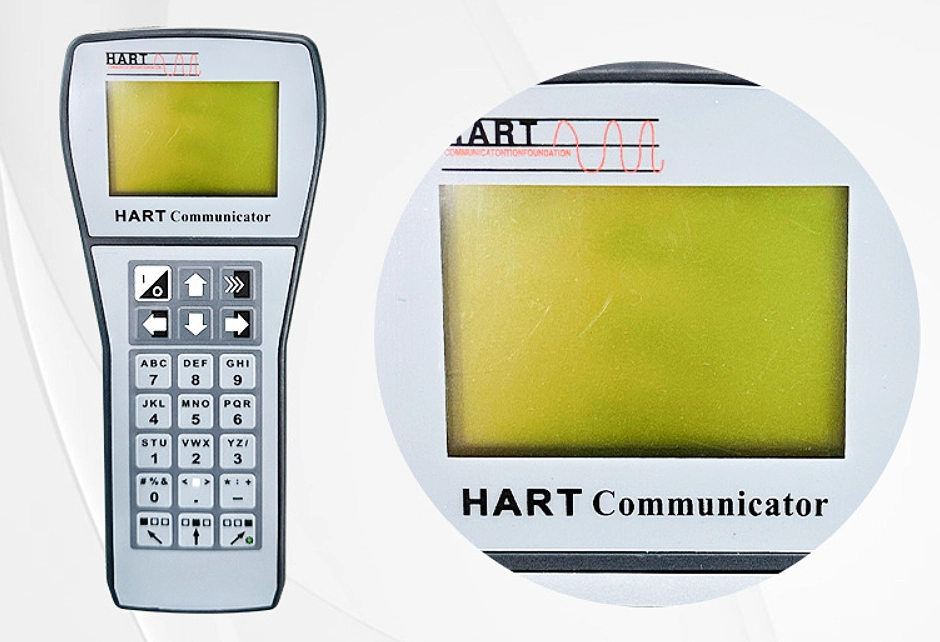
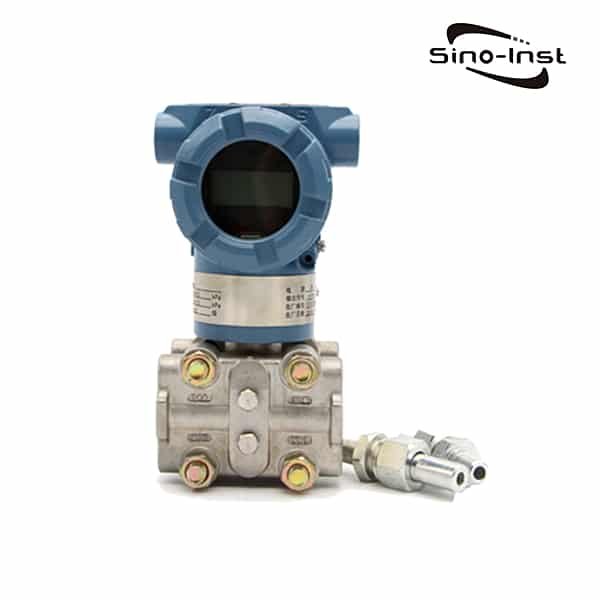
Rosemount HART 475 Field Communicator

Rosemount 475 Field Communicator — Emerson-Rosemount handheld HART / FOUNDATION Fieldbus configurator. Limited original stock available.

The Rosemount 475 is the handheld field communicator used worldwide to configure, commission, and troubleshoot HART and FOUNDATION Fieldbus devices — pressure transmitters, flowmeters, level gauges, temperature transmitters, valves, and positioners. Sino-Inst supplies original Emerson 475 units plus all compatible HART instruments and accessories.
Features of the Rosemount 475 Field Communicator

  • Dual protocol support — Works with all HART® and FOUNDATION Fieldbus devices from 300+ manufacturers, covering 1,000+ device types.
  • Field-upgradeable — Download the latest HART and FOUNDATION Fieldbus DD files over the internet and upgrade the unit on-site without shipping it back.
  • Intrinsically safe certification — Only handheld that meets ATEX, CENELEC, FM, CSA, and FISCO intrinsic safety requirements for use in Zone 0/1/2 hazardous areas.
  • Color touchscreen — 8.9 cm 1/4 VGA (240 × 320) color display with automatic dimming for outdoor readability.
  • Rugged design — IP51 front rating, survives 1 m drop onto concrete, rated for -10 °C to 50 °C operation.
  • AMS Device Manager compatible — Transfers configuration data directly to and from Emerson AMS software via infrared or USB.
  • Easy Upgrade Option — 3-year subscription includes unlimited system-card upgrades as new device drivers are released.

Technical Parameters

Processor80 MHz Hitachi SH3
Display1/4 VGA (240 × 320), 8.9 cm color touchscreen, auto-dimming
Built-in memory / RAM32 MB / 32 MB
System card1 GB or higher SD card
Interface3 × 4 mm banana jacks (HART / Fieldbus)
Infrared port115 kbs/s, max 30 cm
Keyboard25 keys (4 operation, 12 alpha, 4 shoulder, 4 function, power)
BatteryRechargeable lithium-ion, ~20 h runtime, 100–240 VAC charger
Charger socketMini DIN 6-pin
Operating temperature-10 °C to +50 °C
Storage temperature-20 °C to +55 °C (with battery); -20 °C to +60 °C (without)
Humidity0–95 % non-condensing
Ingress protectionIP51 (front)
Drop resistance1 m onto concrete
Weight~0.9 kg (incl. battery)
Hazardous area approvalATEX, CENELEC, FM, CSA, FISCO (intrinsically safe)

Rosemount 475 Working Principle

The 475 connects in parallel to a 4–20 mA loop carrying a HART-compatible instrument, or to a FOUNDATION Fieldbus segment. HART signalling superimposes a 1200 / 2200 Hz FSK waveform on top of the analog current, letting the communicator read and write device parameters without disturbing the primary measurement.

Once connected, the 475 loads the device’s DD (Device Description) from its system card, displays the live readings, and lets the technician configure range, damping, units, tag, and all device-specific settings. Configuration data can be saved, copied between identical devices, or exported to AMS Device Manager.

Compatible with HART 275, HART 375, and all imported / domestic devices running HART protocol on 1151, 3051, EJA, ABB, and similar platforms.

Models and Configuration Options

The most commonly supplied 475 part numbers:

Model numberDescription
475HP1ENA9GM9Basic — HART only, English, no certification
475HP1ENAUGM9HART only, English, 3-year Easy Upgrade
475HP1EKL9GM9HART, intrinsically safe (FM/CENELEC/ATEX/CSA + FISCO)
475HP1EKLUGM9HART, intrinsically safe + 3-year Easy Upgrade
475FP1EKLUGM9HART + FOUNDATION Fieldbus, intrinsically safe, 3-year upgrade

The 475 part number is built up from digit groups — use this legend to decode any variant:

PositionCodeMeaning
ProtocolH / FHART only / HART + FOUNDATION Fieldbus
BatteryPRechargeable Li-ion pack
Power supply1 / 9Charger included (0–24 VAC, US/UK/EU plugs) / excluded
LanguageE / D / J / REnglish / German / Japanese / Russian
CertificationKL / NAFM + CENELEC/ATEX + CSA IS (incl. FISCO) / No certification
UpgradeU / 93-year Easy Upgrade / excluded
ModeGMGraphics Enhanced + Configuration Management
BluetoothT / 9With Bluetooth / without
AccessoryA / SSpare Li-ion battery / Standard rubber boot

Applications

The Rosemount 475 is used across process industries wherever HART or FOUNDATION Fieldbus instruments are deployed:

  • Commissioning new pressure, level, flow, and temperature transmitters — range setting, zero/span trim, tag and LRV/URV configuration.
  • Routine plant maintenance and fault diagnosis on HART instrument loops.
  • Calibration support: reading primary variable, injecting simulated outputs, verifying loop integrity.
  • Valve and positioner configuration on HART- and Fieldbus-based control valves.
  • Bulk cloning of configuration from one transmitter to many identical spares.
  • Fieldbus segment diagnostics: signal level, noise, and wiring checks on FF H1 networks.

Frequently Asked Questions

Is the Rosemount 475 still manufactured?

Emerson discontinued new 475 production and shifted its handheld roadmap to the AMS Trex. Sino-Inst holds original Rosemount 475 stock in limited quantities. For long-term support, we also supply the AMS Trex and the HART 375 as direct alternatives.

What is included in a standard 475 order?

Each unit ships with the Rosemount 475 communicator, Li-ion battery pack, charger with US/UK/EU plug options, system card loaded with current DD files, test leads with 4 mm banana connectors, rubber protective boot, and quick-start guide. Calibration certificate on request.

Lead time and shipping?

In-stock units ship in 3 business days via DHL/FedEx to 80+ countries. Lithium battery regulations require air freight. Each unit comes with a 6-month workmanship warranty; Easy Upgrade licences (where applicable) are transferred to the buyer’s name.

Related HART Communicator Products

HART 375 Field Communicator

HART 375 Field Communicator

Earlier-generation HART-only handheld. Direct budget alternative when FOUNDATION Fieldbus support is not required.

Emerson AMS Trex Device Communicator

Emerson’s current successor to the 475 with Bluetooth, WiFi, and power-over-loop. Recommended when long-term firmware support is needed.

HART Pressure Transmitter

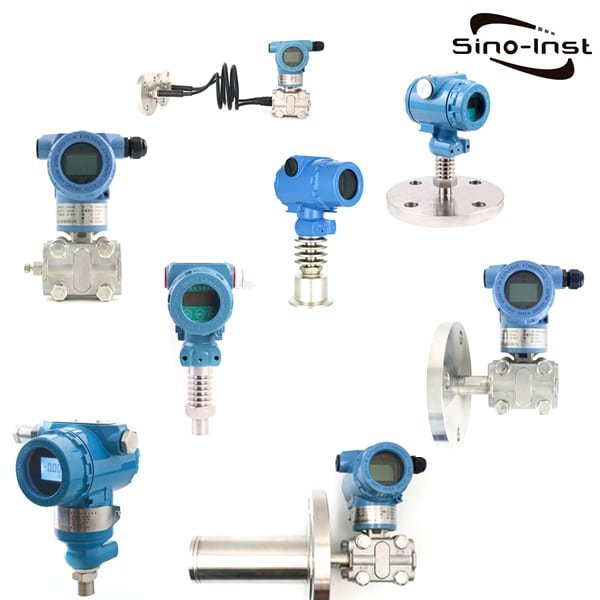
HART-compatible pressure transmitter family from Sino-Inst — the most common device configured with a 475 in the field.

Request a Quote

Send us your required 475 part number (or describe the protocols and hazardous-area rating you need) and we will respond within one business day with availability, pricing, and lead time. Contact support@drurylandetheatre.com or use the form below.

Request a Quote

Please enable JavaScript in your browser to submit the form

Magnetic Level Gauge Indicator: How It Works, Types, and When It Beats a Sight Glass

Updated April 24, 2026 by the Sino-Inst Engineering Team

A magnetic level gauge is a mechanical indicator that reads liquid level from the outside of a vessel using a magnetic float sealed in a bypass chamber. No power, no sight glass, no wetted electronics. It is what most oil, gas, and chemical plants now use in place of tubular sight glasses — especially above 150 psi or when the fluid is toxic, flammable, or opaque.

This guide covers how a magnetic level gauge works, the two indicator styles (roller and capsule), how it compares to a sight glass, and the transmitter and switch options you can bolt on without breaking the process seal.

Contents

How Does a Magnetic Level Gauge Work?

A magnetic level gauge works on the principle of communicating vessels: liquid in a bypass chamber sits at the same height as liquid in the main tank. Inside that chamber, a float containing a ring magnet rises and falls with the level. The float’s magnetic field passes through the non-magnetic chamber wall (typically 316L stainless) and flips an external indicator strip. You read the level from outside the pressure boundary.

Three physical principles are doing the work at the same time:

  • Communicating vessels — the bypass chamber is piped into the tank at two points, so levels equalize.
  • Archimedes’ buoyancy — the float’s density is set so it rides on the liquid surface, not in the vapor or submerged.
  • Magnetic coupling — the float’s ring magnet flips each indicator element (roller or capsule) as it passes.

Because the indicator and any transmitter are outside the chamber, they never touch the process. This is the single biggest reason the magnetic level gauge has displaced the tubular sight glass in modern plants.

What Are the Main Parts of a Magnetic Level Indicator?

Every magnetic level gauge is built from four parts:

  1. Float chamber — a non-magnetic pipe (304/316L SS, Hastelloy, titanium) with flanged or threaded process connections. This is the pressure-bearing part. Rated to match the tank: typically 150#, 300#, or 600# ANSI.
  2. Float — a hollow cylinder with an embedded ring magnet. Density is matched to the lightest expected process fluid; the same float won’t work for both water and diesel.
  3. Indicator rail — the external strip you read. Either bi-colour rollers or a moving capsule behind a glass tube.
  4. Options — clamp-on magnetostrictive transmitter, reed-switch level alarms, heat tracing, steam jacketing, insulation.

What Are the Types of Magnetic Level Indicators?

Magnetic level indicators split two ways: by mounting and by indicator style.

By mounting:

  • Side-side (bypass, external cage) — two nozzles on the tank side. The most common configuration. Serviceable without tank entry.
  • Top-mounted — chamber hangs inside the tank. Used when side nozzles are not available or the fluid is clean enough to not foul the chamber.
  • Top-bottom — one top nozzle, one bottom nozzle. Used for tall atmospheric tanks where you can’t get two side connections.

By indicator style: roller (bi-colour flags) or capsule (shuttle). See the next section.

Roller vs Capsule Indicator: What’s the Difference?

Roller and capsule indicators do the same job but fail differently. The roller style is better for high-vibration service; the capsule style is better for cold climates and dirty installations.

IndicatorHow It Shows LevelBest ForWatch Out For
Bi-colour rollersEach 10 mm roller flips 180° as the float passes; red above / silver below the liquid lineStandard service, long-distance readability (visible at 30+ m)Individual rollers can stick after years of vibration; easy to field-swap
Capsule (shuttle)A single bi-colour capsule tracks the float inside a glass tubeCold outdoor service (no rollers to freeze), dusty plantsIf the capsule drops off during shock, it won’t track until manually reset

Rollers are the default for 95% of installations. Order the capsule style only if you are in Arctic service, a food plant with frequent washdowns, or somewhere rollers would collect dust.

Magnetic Level Gauge vs Sight Glass: Which Is Better?

For pressurized, toxic, corrosive, or dark fluids, a magnetic level gauge is safer and easier to read than a tubular or reflex sight glass. Sight glass still wins on cost for clean water service at low pressure — nothing else. Here is the side-by-side:

CriterionMagnetic Level GaugeTubular / Reflex Sight Glass
Pressure boundaryMetal chamber, matched to piping ratingGlass — can shatter; requires gauge glass class per ASME
Readability30+ m (red/silver contrast)3 m (you need to stand at the tank)
Leak pathZero moving seals on the process sideGasket leaks, glass-to-metal seal maintenance
CleaningChamber interior is internally bypassed — no fouling on the readoutGlass fouls with scale, coating, opaque fluids
Transmitter add-onClamp-on magnetostrictive or reed switches anytimeSeparate instrument required
Initial cost2–4× sight glass at the same pressure ratingLowest initial cost
5-year TCOLower (no gasket/glass replacement, no cleaning)Higher when you count maintenance shutdowns
Hazardous serviceSafe — metal pressure boundaryRisk of fugitive emission on glass failure

The short rule: sight glass for open water tanks and low-pressure clean service; magnetic level gauge for everything else, especially hydrocarbons, steam drums, and anything over 150 psi.

Can You Add a Transmitter or Switch to a Magnetic Level Gauge?

Yes — and this is the main reason MLGs have spread in DCS-controlled plants. Because the float carries a magnet, you can clamp any magnetostrictive or reed-switch transmitter to the outside of the chamber and pick up the same float position electronically. No wetted parts, no process intrusion, and you can add or remove the transmitter during operation.

Three common add-ons:

  • Magnetostrictive transmitter — clamps to the chamber; 4–20 mA HART output, ±0.05% FS. This is the standard choice when you need the level on the DCS. See our magnetostrictive level transmitters guide for the selection matrix.
  • Reed-switch level alarms — external clamp-on switches at hi/lo/hi-hi/lo-lo points. SPDT relay output, no power on the process side.
  • Guided wave radar — mounted in parallel on the same bypass chamber for SIL-rated redundant measurement. We cover the calibration on our guided wave radar calibration guide.

Where Does a Magnetic Level Gauge Fail?

A magnetic level gauge has three real failure modes, and every field engineer has seen each one at least once:

  1. Wrong float density. If the process fluid density changes (mixed-phase service, interface measurement, seasonal temperature), the float sinks or rides too high. Specify the float for the minimum expected SG. For interface service, specify a float that floats on the heavier phase.
  2. Ferrous particles stuck to the float. In wastewater, pulp stock, or any service with magnetite scale, iron particles accumulate on the float magnet and add mass until the float hangs up. Install a Y-strainer upstream of the bypass or switch to a non-magnetic measurement.
  3. Freezing / wax solidification in the chamber. The bypass chamber has dead legs. In cold climates, heat-trace and insulate the chamber. For waxy crude, add steam tracing at a minimum 70 °C bath.

None of these are design flaws — they are specification mistakes. Get the float and the tracing right on day one and an MLG will run for 20 years without calibration. For related troubleshooting on bypass-chamber instruments, see our stilling wells for radar level primer.

Installation Checklist

  • Side process connections centered on the MIN and MAX measuring points — the chamber must span the full indicating range.
  • Isolation valves and a drain/vent on each process connection — needed for hydrotest and float removal.
  • Chamber installed vertical within 1° — a tilted chamber makes the float drag on the wall.
  • No ferromagnetic pipe or rebar within 150 mm of the indicator rail — external magnetic fields will flip rollers the wrong way.
  • Match the float to the lowest fluid density expected. For interface work, match to the heaviest.
  • For steam service, always steam-jacket the chamber. A cold chamber on a hot-steam drum will condense and indicate false.
  • Before commissioning: lift the float with a magnet from outside and confirm every roller flips smoothly over the full range.

Related Sino-Inst Level Products

When an MLG alone is not enough — typically when you need an analog signal to the DCS or redundant level measurement — these three Sino-Inst instruments are the usual pairings:

SI-100 Magnetostrictive Level Transmitter

Rigid probe, ±0.03% FS, 316L wetted parts. Clamp a chamber-mount variant alongside an MLG to turn visual readout into a 4–20 mA HART signal without breaking the process seal.

SIRD70 Guided Wave Radar

−40 to 250 °C, unaffected by foam or vapor. Mount on a parallel nozzle for SIL-rated redundancy with the MLG doing visual backup.

SI-2116 Magnetostrictive Level Sensor

Integral flange-mount, interface capable. Good choice when you need both total level and oil-water interface from one instrument.

FAQ

How accurate is a magnetic level gauge?

The visual readout is accurate to about ±10 mm, limited by roller pitch. Add a magnetostrictive transmitter for ±0.03% FS (typically ±1 mm on a 3 m range). The MLG itself does not drift because it is mechanical.

Can a magnetic level gauge measure interface?

Yes, with two floats of different density — one rides on the light phase, one on the heavy phase. Each has its own indicator rail or transmitter channel. Interface MLGs are common on oil-water separators and amine flash drums.

What is the maximum pressure and temperature for a magnetic level gauge?

Standard units handle 600# ANSI (about 100 bar) and up to 450 °C with an insulated/jacketed chamber. Above these ratings, specify forged body and Inconel 625 floats — available but with 8–12 week lead times.

Does a magnetic level gauge need calibration?

The mechanical indicator does not — it is a 1:1 display of float position. Calibration applies only to the bolted-on transmitter or switches, and only during commissioning or after a float swap.

Can I use a magnetic level gauge on a plastic or FRP tank?

Yes. The chamber is a separate metal part connected via isolation valves; the tank material is irrelevant. Common in FRP acid tanks where a metal chamber with Hastelloy or titanium wetted parts is the only durable option.

Will the magnetic field affect other instruments nearby?

The float magnet is weak outside the chamber (a few gauss at 150 mm). It will not disturb electronic instruments at normal installation distances. Avoid mounting a compass or Hall-effect proximity switch within 300 mm of the indicator rail.

How long does a magnetic level gauge last?

20–30 years in clean service. The usual maintenance item is the float — after a decade the seam welds can fatigue. Budget a spare float during the initial purchase; swap during the next turnaround.

Need a Magnetic Level Gauge Quote?

Send us your tank parameters (fluid, SG, pressure, temperature, connection size, span) and we will return a chamber specification with material selection and transmitter options within one business day. Our engineers have 15+ years building MLGs for steam drums, hydrocarbon separators, amine units, and cryogenic tanks.

Request a Quote

Please enable JavaScript in your browser to submit the form

Flow Meters for Molasses, Honey, and Syrup: Viscous Fluid Measurement Guide

Updated: April 24, 2026 — by Sino-Inst Engineering Team

Molasses, honey, syrup, resin, and asphalt all share the same headache: they stop common flow meters from working. Orifice plates clog. Electromagnetic meters read zero when the fluid is non-conductive. Turbine bearings seize under high viscosity. Below we walk through which flow meter technologies actually handle sticky fluids, how viscosity changes the selection, and where each technology fits by fluid and application.

Contents

Why Viscous Liquids Break Common Flow Meters

Most general-purpose flow meters are designed around water-like fluids (1 cP). Push viscosity past 10 cP and several technologies lose accuracy. Past 100 cP, most fail outright.

Three failure modes show up most often in the field. First, velocity-based meters (turbine, vortex, orifice) assume turbulent flow. High-viscosity molasses at a pumping rate of 2 m/s often stays laminar, which flattens the velocity profile and breaks the K-factor. Second, electromagnetic meters need a conductive fluid (≥5 µS/cm). Pure honey and syrup sit below that threshold. Third, mechanical parts that touch the fluid — turbine rotors, vortex shedder bars — get coated, then dragged. A clean meter reads 5% low. A coated one reads 20% low or stalls.

What works is either a meter that does not rely on flow regime (Coriolis, positive displacement) or a meter that isolates the sensing element from the fluid entirely (ultrasonic clamp-on for specific cases).

Viscosity Reference for Molasses, Honey, and Syrup

Temperature changes viscosity by an order of magnitude. Blackstrap molasses at 10°C is a different fluid than the same molasses at 50°C. Sizing the meter on the wrong temperature is the most common selection error we see.

FluidViscosity @ 20°C (cP)Viscosity @ 50°C (cP)Typical Conductivity
Light corn syrup1,500–3,000200–500Low
Honey8,000–15,000800–1,500Very low (non-conductive)
Light molasses5,000–10,000600–1,200Medium
Blackstrap molasses50,000–100,0005,000–15,000Medium
HFCS 55200–40040–80Low
Glucose syrup 43 DE20,000–40,0002,000–4,000Low
Liquid asphalt (hot, 150°C)300–800Non-conductive
Epoxy resin (uncured)5,000–20,000500–2,000Non-conductive

For design purposes, use the minimum operating temperature to set the upper viscosity bound. That is where the meter has to handle the worst case — cold-start flow after a process shutdown, for example.

Flow Meter Options That Handle High Viscosity

Five technologies cover almost every viscous fluid application. Each has a clear sweet spot and a clear failure point.

Coriolis Mass Flow Meters

Coriolis measures the inertial force on a vibrating tube as fluid passes through it. Viscosity does not affect the reading directly — a Coriolis meter on water, honey, and molasses reads the same mass flow if the mass flow is the same. Accuracy holds at ±0.1% to ±0.2% of reading on mass for viscosities up to 500,000 cP in suitable tube geometries.

The trade-off is pressure drop. Pushing 50,000 cP blackstrap through a 25 mm Coriolis tube can cost 2–3 bar. For our detailed write-up on this technology, see what is a Coriolis mass flowmeter.

Oval Gear Positive Displacement Meters

Oval gear meters capture a fixed volume between two meshing gears per rotation. The higher the viscosity, the better the gear seals — accuracy actually improves from 1% on low-viscosity oil to 0.2% on syrup. Handles up to about 1,000,000 cP at low flow rates.

Oval gear meters do not care about flow profile, conductivity, or straight-pipe runs. They are the go-to choice for batching fuel oil, adhesive, ink, and asphalt. See our technical guide on PD flow meters for oil and viscous liquids for sizing details.

Helical Gear and Twin-Screw Meters

A helical (also called screw) meter uses two intermeshing screws rather than gears. Pulsation is lower, which matters for process control loops that feed a blending skid. Accuracy is 0.1–0.2% of reading. Top viscosity ceiling exceeds 1,000,000 cP. More expensive than oval gear but quieter and better suited to continuous service.

Progressive Cavity Flow Elements

Not a meter by itself — this is usually a metering pump combined with an encoder that counts revolutions. Used where a pump is needed anyway (drum unloading, tote dispensing). Works on pastes and fluids with suspended solids that would jam a gear meter. Accuracy around 1%.

Thermal Mass and Ultrasonic — Where They Fit

Thermal mass meters are built for gases, not viscous liquids. Skip them here. Ultrasonic transit-time is technically feasible for viscosities up to about 1,000 cP on clean fluids with stable density, but signal attenuation gets tough past that. Clamp-on ultrasonic can work on hot asphalt lines where installation of an inline meter is impractical, with 2–5% typical accuracy.

How to Pick by Fluid and Application

Use the fluid viscosity at its coldest expected temperature and cross-reference against the service type. The matrix below is our default starting point for sizing.

ApplicationFluid ExampleRecommended PrimaryRecommended Alternative
Custody transfer / billingMolasses tanker unloadingCoriolisOval gear (if flow <50 m³/h)
Batching / recipe dosingHoney, glucose in food plantOval gearCoriolis
Continuous process controlSyrup blending lineTwin-screw or helicalCoriolis
Drum / tote dispensingAdhesive, inkOval gear or gear meterProgressive cavity
Hot bitumen transferAsphalt at 150°CCoriolis (hot-rated)Oval gear (jacketed)
High-solids slurryChocolate, fruit pureeCoriolisProgressive cavity

One quick decision rule: if the downstream process requires mass (custody transfer, batching to a weight recipe, density compensation for sugar content), the answer is almost always Coriolis. If volumetric is fine and cost matters, oval gear wins. For a broader overview of meter types we carry for sticky fluids, see our high-viscosity flow meters catalog.

Material and Sanitary Considerations

Food-grade molasses, honey, and syrup need 316L stainless wetted parts with a surface finish of Ra ≤ 0.8 µm. Seals must be FDA/3-A compliant — EPDM for CIP with caustic, FKM for hot fill. Oval gear meters for food service use a polished housing with tri-clamp connections so the meter can be broken down and cleaned in place.

Asphalt and resin applications run hotter. Check that the meter body and electronics are rated for the jacket steam temperature, not just the fluid. A 150°C asphalt line with 180°C steam jacket will destroy a meter rated only for 150°C process. Coriolis sensors with remote-mount transmitters handle this better than integral versions.

For abrasive fluids (sugar crystals, cocoa solids), check the gear material. Hardened 440C stainless or tungsten carbide rotors last 3–5x longer than 304 on these services. See our oval gear meter for liquid asphalt for a model spec’d for this duty.

Sizing and Installation Tips for Thick Fluids

Size the meter for the minimum flow first, not the maximum. A 25 mm oval gear has a useable range of 0.2–6 m³/h on a 10,000 cP fluid. Under-sizing at the low end loses the first batch of every shift. Over-sizing at the high end causes pressure drop problems.

Velocity target for Coriolis on viscous fluid: 1–3 m/s. Dropping below 0.5 m/s in a large tube hurts zero stability; going above 5 m/s costs 5 bar of pressure drop. For oval gear, keep rotational speed below 75% of the catalog maximum to extend bearing life.

Install a strainer upstream — 100 mesh for food, 40 mesh for adhesive and asphalt. A single sugar crystal or a piece of pallet wrap will lock a gear meter. Put the strainer where an operator can actually reach it; a strainer behind a tank skirt will not get cleaned.

Heat tracing and insulation: continuous tracing on all piping between the tank and the meter. A 30-minute shutdown in an un-traced line can turn molasses into a plug that breaks the meter on restart.

T-series Triangle Coriolis Mass Flowmeter

For custody transfer and batching of molasses, syrup, and hot asphalt. ±0.1% accuracy on mass, handles up to 500,000 cP, 316L wetted parts, hot-rated to 200°C.

LCD Oval Gear High-Viscosity Flow Meter

Volumetric batching for honey, resin, adhesive, fuel oil. 0.2–0.5% accuracy, viscosity up to 1,000,000 cP, 4-20 mA + pulse output, local LCD totalizer.

Gear Flow Meter for Viscosity and Micro Flow

Micro-flow dosing for high-viscosity fluids — from 0.5 mL/min. Ideal for lab, R&D, and small-batch production of inks, coatings, and lubricants.

FAQs

What flow meter is best for molasses?

A Coriolis mass flow meter is the standard answer for molasses because it measures mass directly and is unaffected by the large viscosity swings that molasses goes through between storage temperature and process temperature. For smaller batching applications under 50 m³/h, an oval gear meter with a heated housing is a cheaper alternative that still holds 0.5% accuracy.

Can you use a magnetic flow meter on honey?

No. Pure honey has a conductivity below 5 µS/cm, which is the minimum threshold for magnetic flow meters. Electromagnetic meters will give no reading or an unstable reading. Use Coriolis or oval gear instead.

How viscous can an oval gear meter handle?

A standard oval gear meter handles up to 1,000,000 cP at reduced flow. The practical ceiling is driven by pressure drop rather than the meter itself — pushing 500,000 cP adhesive through a 25 mm meter at full rated flow can cost more than 10 bar, which most pumps cannot deliver. Size up the meter bore to keep pressure drop under 2 bar for continuous service.

Does viscosity change the accuracy of a Coriolis meter?

Not directly. A properly installed Coriolis meter reads the same mass flow on water as on 100,000 cP syrup. What changes is the pressure drop and the zero stability at very low flow rates. At flow rates below 5% of full scale on high-viscosity fluid, zero drift can become a larger fraction of reading — so the turndown on viscous service is often 20:1 instead of the catalog 100:1.

What about syrup with suspended sugar crystals?

Gear meters will grind crystals and eventually fail. Coriolis handles suspended solids well as long as they stay entrained — no settling in the tube. For slurries with settlable solids, a progressive cavity metering pump is the only reliable option.

How do I measure asphalt flow at 150°C?

Use a Coriolis meter with a high-temperature option (rated 200°C or higher on process) or a jacketed oval gear meter with steam tracing on the housing. Insulate the entire run from the tank to the meter. For retrofits where an inline meter is not possible, clamp-on ultrasonic on an insulated pipe can give ±3–5% accuracy — acceptable for inventory tracking but not for custody transfer.

Need Help Sizing a Meter for Your Viscous Fluid?

Send us your fluid name, viscosity curve, operating temperature, flow range, and pipe size. Our engineers will come back within one business day with a Coriolis or PD recommendation, an accuracy estimate, and a quote. Contact support@drurylandetheatre.com or fill in the form below.

Request a Quote

Please enable JavaScript in your browser to submit the form

Pressure Transmitter vs Pressure Gauge: Differences and When to Use Each

Updated: April 23, 2026

A pressure gauge gives you a number on a dial. A pressure transmitter sends a 4-20 mA signal to a control system. That single sentence drives 90% of the selection decision. The remaining 10% is where most plants get it wrong — picking a transmitter when a gauge would have done the job, or trying to skip the gauge on an installation that legally needs one. This article walks through the real differences, when each one is the right call, and why most well-designed plants install both side by side.

Contents

What Is the Difference Between a Pressure Transmitter and a Pressure Gauge?

A pressure gauge displays the reading locally on a mechanical or digital dial. A pressure transmitter converts the same pressure into a 4-20 mA, HART, or digital signal so a PLC, DCS, or SCADA system can use it. The gauge is for human eyes at the equipment. The transmitter is for the control system in another building.

The internal sensing element can be the same — a Bourdon tube, diaphragm, or piezoresistive cell. What changes is the back end. A gauge ends in a mechanical linkage to a pointer. A transmitter ends in electronics that produce a calibrated current loop. That single architectural difference drives everything else: power requirement, accuracy, signal length, and price.

Pressure Transmitter vs Pressure Gauge: Parameter Comparison

Compare the two on the parameters that matter for plant specification, not the marketing brochure.

ParameterPressure GaugePressure Transmitter
OutputVisual dial reading4-20 mA, HART, Modbus, Profibus
PowerNone (mechanical) or 24 VDC (digital)24 VDC, 2-wire loop
Typical accuracy±1.6% to ±0.5% of full scale±0.075% to ±0.5% of span
Signal rangeLocal onlyUp to 1 km on 4-20 mA
Calibration intervalAnnual visual check1-3 years, depending on service
Hazardous area approvalMechanical: passive safeEx ia / Ex d certified versions
Connection1/4" NPT or G1/2 threadSame process connection plus M20 or 1/2" NPT cable entry
Indicative price$15-$200$200-$1500
Failure modePointer stuck or burst elementLoop breaks, signal drift, or saturates 22 mA

Two numbers in this table are easy to misread. Accuracy on a gauge is quoted as percent of full scale, but on a transmitter it is percent of span. A 0-100 bar gauge at ±1% means ±1 bar regardless of where the pointer sits. A 0-100 bar transmitter ranged for 20-80 bar at ±0.1% of span means ±0.06 bar — close to ten times more accurate when you need to read mid-range pressures. This rangeability is the second hidden advantage of transmitters.

When to Use a Pressure Gauge

Pick a gauge when a person walks past the equipment and needs to read pressure on the spot. Compressed air manifolds, lubrication oil pressure, hydraulic test stands, and small package skids all qualify. The control system either does not exist or does not care about that pressure point.

Specific scenarios where a gauge is the right call:

  • Local indication on isolated equipment. A standalone air compressor in a workshop. No DCS, no HMI, just a maintenance technician.
  • Verification of a transmitter reading. An on-site gauge lets a field operator confirm what the control room is seeing — useful during loop checks and instrument troubleshooting.
  • Code-required pressure indication. ASME B31.3 and PED-certified pressure vessels often require a local gauge regardless of what the control system measures. Specifying a transmitter does not exempt you from the gauge.
  • Low-budget package skids. If the OEM ships a unit with a $40 gauge, replacing it with a $400 transmitter for inventory standardization rarely pays back.
  • No power available. Mechanical gauges work in remote pits, vault stations, and locked-out maintenance scenarios where 24 VDC is not present.

The classic mistake here is over-specifying transmitters on small skid packages because the engineer is uncomfortable with mechanical instruments. A $1200 HART transmitter on a 20 hp compressor adds nothing the operator can use. The gauge is fine.

When to Use a Pressure Transmitter

Pick a transmitter whenever the pressure value has to leave the equipment. Control loops, alarms, data historians, custody transfer, and remote monitoring all require an electronic signal. A transmitter is also the right call when the measurement is in a hazardous area, on a moving asset, or in a location no one walks past during a normal shift.

Specific scenarios where a transmitter is the right call:

  • Closed-loop control. The pressure feeds a PID controller that adjusts a valve or pump. A gauge cannot do this.
  • Process alarms and trips. Safety integrity functions need a signal the SIS can read. ANSI/ISA 84 / IEC 61511 systems specifically rule out reading a gauge as the safety input.
  • Tank inventory and DP-based level. The control system needs continuous level, calculated from differential pressure. See our extended diaphragm seal DP level transmitter page for that specific application.
  • Remote or unmanned sites. A telemetry RTU at a wellhead or pump station needs a 4-20 mA input. No one is reading a gauge there.
  • High-accuracy custody transfer. Fiscal flow measurement and pipeline metering require ±0.075% to ±0.04% accuracy, which is transmitter territory.
  • Long signal runs. The control room is 800 m away. A 4-20 mA loop carries the signal that distance with no degradation.

The opposite mistake is also common — relying on the control system’s transmitter as the only pressure indication and forgetting that field crews still need a local readout during commissioning, maintenance, or DCS outages.

Why You Often Install Both

On most regulated process equipment, gauges and transmitters are not competitors. They sit on the same nozzle. The transmitter feeds the control system. The gauge gives the field operator a backup reading without having to call the control room.

The standard install pattern looks like this: a tee or pressure manifold on the process line, a gauge on one branch with an isolation valve, a transmitter on the other branch with its own isolation. Both can be replaced under hot-line conditions without shutting down the process. The gauge often acts as the bypass during transmitter calibration. This dual install costs roughly 10-15% more than a transmitter alone, and the maintenance team will thank you every year for it.

For installation hardware and impulse line layout, our pressure transmitter installation guide covers the manifold, valve, and orientation rules.

Cost Comparison and Total Lifecycle

Capital cost is only part of the story. Calibration, replacement, and downstream integration are where transmitters spend more.

Cost ItemMechanical GaugeSmart Transmitter
Initial unit cost$15-200$200-1500
Wiring and terminationNone$50-200 per loop
Annual calibration labor15 min visual check30-60 min loop calibration
Documentation per deviceTag plateHART config sheet, calibration certificate
Typical service life5-10 years10-15 years
Spares strategyLike-for-like swapConfigured spare with hot-cut procedure

The gauge wins on raw price. The transmitter wins on data value — the question is whether the data is actually used. If the 4-20 mA signal feeds a recorded historian and a control loop that runs the plant, the transmitter pays for itself many times over. If the signal goes nowhere except a screen no one watches, you bought an expensive gauge.

Pressure Transmitters and Gauges from Sino-Inst

SMT3151 Smart Gauge Pressure Transmitter

4-20 mA + HART, ±0.075% accuracy, 316L wetted parts. The standard process transmitter for control loops and tank measurement.

Industrial Pressure Transmitters

Full process range with HART, Modbus, or Profibus output. Hazardous-area Ex ia certified. Use when the loop has to talk to the DCS.

SI-2000 Differential Pressure Gauge

Local mechanical gauge for filter ΔP, blower discharge, and clean-room HVAC. Magnetic-coupled diaphragm, no power required.

FAQ

Is a pressure transmitter more accurate than a pressure gauge?

Usually yes. A standard process gauge is ±1% of full scale. A smart transmitter is ±0.075% of span and can be reranged to a smaller window for higher resolution. The accuracy gap is roughly 10-13× in favor of the transmitter when measuring partial-range pressures.

Can a pressure transmitter replace a pressure gauge?

Functionally yes if the transmitter has an integrated LCD or HART HMI. Practically, most plants keep both because a mechanical gauge gives a reading during power loss and DCS outages. Code-required local indication still needs a gauge in many jurisdictions.

What output does a pressure transmitter use?

The 4-20 mA two-wire loop is the global standard, with HART superimposed for diagnostics and configuration. Newer plants also use Modbus RTU, Profibus PA, and Foundation Fieldbus. Wireless HART exists but is rare on primary process points.

Do pressure transmitters need calibration?

Yes — typically every 1-3 years depending on service. Calibration involves applying a known reference pressure and trimming the sensor zero, span, and 4-20 mA loop output. Smart transmitters store the calibration history in HART memory.

When should I use a digital pressure gauge instead of a mechanical gauge?

Use a digital gauge when you need ±0.25% accuracy with a local readout but no signal output. Test benches, calibration carts, and pump test rigs are typical. Digital gauges run on batteries or 24 VDC and offer min/max recall.

What is the difference between a pressure transmitter and a pressure transducer?

A transducer outputs a low-level signal — millivolt or 0-5 V — that needs further amplification. A transmitter has a built-in amplifier and outputs a standardized 4-20 mA or HART signal that runs straight into a DCS. In modern process plants, the term "transmitter" is the default; transducers live in OEM equipment and lab instrumentation.

Get a Pressure Transmitter or Gauge Quote

Tell us the process pressure range, fluid, hazardous-area zone, and signal output you need. We’ll come back with a model number, accuracy class, and process connection drawing — usually within one business day.

Request a Quote

Please enable JavaScript in your browser to submit the form

Wastewater Level Sensor for Septic Tanks and Sewage Holding Tanks: Selection and Installation

Updated: April 23, 2026

Septic tanks, sewage holding tanks, and lift station wet wells are the dirtiest service for any level sensor. Solids settle on the bottom. Grease and FOG (fats, oils, grease) form a scum layer on top. Hydrogen sulfide attacks anything with brass or copper. Wash-water pumps cycle the level so fast that point switches chatter. The right sensor is rarely the cheapest — but the cheap sensor fails in 6 months and shuts down the lift pump on a Sunday night. This guide walks through which sensor type fits which wastewater application, the installation rules that keep them alive, and the maintenance pattern that operators actually follow.

Contents

Which Level Sensor Should I Use for a Septic or Sewage Tank?

For most septic and sewage tanks, a submersible hydrostatic level transmitter with a flush-diaphragm sensor is the right choice. It sits at the bottom of the tank, measures the head of liquid above it, and outputs a continuous 4-20 mA signal proportional to depth. It does not care about scum, foam, or vapor — only about how deep the liquid sits above its diaphragm.

For pump-cycling control where you only need start/stop signals (lift station, pump-out trigger), a multi-point float switch system is cheaper and simpler. For deep concrete vaults and very fouled service, a non-contact ultrasonic or radar mounted in the manhole avoids ever pulling a probe out. The deciding factors are tank depth, fouling severity, whether you need continuous or point measurement, and access for maintenance.

What Makes Wastewater Level Hard to Measure?

Wastewater is not a uniform liquid. It is three layers stacked in the same tank.

  • Sludge layer (bottom). Settled solids, sand, fecal matter. Builds up over months.
  • Liquid layer (middle). The flowing supernatant. This is what the level sensor needs to track.
  • Scum layer (top). Grease, fats, undigested floating material. Often 100-300 mm thick on septic tanks.

Each layer attacks sensors differently. The sludge buries probes inserted from the bottom. The scum coats anything inserted from the top, eventually sealing off ultrasonic transducers and radar antennas. The liquid itself contains H₂S in concentrations that destroy bronze and brass fittings within weeks. On top of all that, lift station wet wells flood and drain in 30-second cycles when the pumps are running, making wave action and turbulence a constant noise source.

Three failure modes account for most wastewater sensor calls:

  1. Diaphragm fouling on submersible sensors. A small recess in front of the sensing diaphragm fills with grease and the pressure no longer transmits. The reading freezes.
  2. Acoustic absorption on ultrasonic sensors. Heavy foam or thick scum absorbs the ultrasonic pulse and the sensor either gives no echo or locks onto the foam surface instead of the liquid.
  3. Cable damage on float switches. The cable rubs against the tank wall as the float swings, and the abrasion exposes copper to H₂S. Float fails to switch within a year.

Sensor Types Compared for Wastewater Service

Sensor TypeBest ForOutputTypical LifeMain Limitation
Submersible hydrostatic (flush diaphragm)Continuous level, septic and sewage holding tanks4-20 mA3-5 yearsDiaphragm fouling, needs occasional rinse
Submersible hydrostatic (vented cable)Open wet wells, deep tanks4-20 mA3-5 yearsVent must stay dry to avoid sensor damage
Multi-point float switchPump start/stop, high-level alarmDiscrete contacts1-3 yearsCable abrasion, no continuous reading
Ultrasonic non-contactDeep manhole vaults, clean service4-20 mA3-5 yearsFails on heavy foam or thick scum
80 GHz radar non-contactDifficult vapor service, raw sewage with foam4-20 mA5-7 yearsHigher capital cost, manhole mounting required
Capacitance probeCheap point switches in sumpsDiscrete contact1-2 yearsCoats with grease, false trips

The submersible hydrostatic transmitter wins for most installations because it is immune to foam, vapor, and turbulence. The pressure of the liquid above the sensor is what it sees, and that pressure is real regardless of what is happening at the surface. For a deeper general framework on tank selection across all liquid types, see our tank level sensor selection guide.

One nuance: if the tank is closed and pressurized (some commercial sewage systems), a vented submersible sensor will not read correctly because barometric pressure is no longer the reference. Use a sealed gauge sensor with separate static pressure compensation, or move to a non-contact radar.

Installation Rules That Save Sensor Life

Half of wastewater sensor failures come from poor installation, not bad sensors. These rules apply across all sensor types:

  • Mount away from inlet and pump suction. Falling sewage and pump wash create wave action and air entrainment. Place the sensor at least 1 metre from the inlet pipe and 0.5 metre from the pump intake.
  • Use a stilling well for submersible sensors. A 100 mm PVC pipe with holes drilled at the bottom isolates the sensor from wave action and traps less scum than the open tank does. Cap the top to keep larger debris out.
  • Hang sensors with stainless braided cable, not the signal cable. The signal cable is for signal. The mechanical load of the sensor goes on a separate stainless suspension. This protects the cable gland from fatigue cracks.
  • Route cable in conduit above the high-water line. Cable submerged in raw sewage absorbs water through micro-cracks within months. Conduit it out of the wet zone as soon as practical.
  • Specify Hastelloy or PVDF wetted parts on H₂S service. Standard 316L stainless pits in concentrated H₂S environments. For long life on heavy sewage, the body and diaphragm both need an upgrade.
  • Provide a wash-down nozzle. Most sites benefit from a 1/2" rinse line aimed at the sensor face that operators can manually open during routine cleaning.

For installations with float switches in addition to a continuous sensor, our float switch installation guide covers the spacing and cable-routing rules.

Maintenance and Cleaning Schedule

Wastewater sensors are not install-and-forget. Build a schedule into the work order system or the sensor will eventually drift, fail silently, and trip a high-high alarm at 2 a.m.

IntervalTaskReason
MonthlyVisual inspection, manual rinse if accessibleClear surface scum and fouling early
QuarterlyPull sensor, wash with detergent and warm waterRemove biofilm before it cements
AnnualCalibration check against a manual dipstickCatch slow drift before it affects pump cycling
AnnualInspect cable jacket and gland for cracksPrevent water ingress into sensor body
3-5 yearsReplace if drift exceeds 1% or visual damageAvoid catastrophic failure during peak load

One under-appreciated trick: log the daily min/max level reading. A submersible sensor with diaphragm fouling will gradually compress its operating range — the daily minimum starts to creep up by 50-100 mm before the sensor visibly fails. Spotting that drift in the historian gives you weeks of warning to schedule cleaning, instead of an emergency call-out.

Sizing the Sensor to Tank Geometry

The sensor range must cover the full operating depth plus margin. A common error is buying a sensor with the same range as the tank height, which leaves no room for over-fill events.

  • Tank max liquid depth: H meters
  • Sensor range: H × 1.25 meters minimum (water column)
  • Convert to pressure: 1 m H₂O ≈ 9.81 kPa

Worked example: A septic holding tank is 3.5 m tall. Specify a submersible sensor ranged 0-44 kPa (≈ 4.5 m H₂O), giving a 25% safety margin for surge events. Cable length: tank depth + 2 m for the cable gland and conduit transition above the manhole.

For tank applications outside the standard sewage range — high-temperature digesters, industrial waste streams — see our broader cooling tower and process tank level guide which covers similar fouling-resistant approaches.

Wastewater Level Sensors from Sino-Inst

Submersible Hydrostatic Level Transmitter

316L stainless body, flush diaphragm, 4-20 mA output. The standard sensor for septic and sewage holding tanks up to 30 m depth.

Wireless LoRa Level Sensor

Battery-powered hydrostatic sensor with LoRa wireless. Use on remote septic or rural lift stations where running cable is not practical.

Tank Level Sensor Selection Guide

Decision matrix by tank content and conditions. Use to compare hydrostatic, ultrasonic, radar, and float options for sewage, septic, and process tanks.

FAQ

What is the best level sensor for a septic tank?

A submersible hydrostatic transmitter with a flush diaphragm is the best continuous-level option. It is immune to scum, foam, and vapor — the things that defeat ultrasonic sensors in septic service. Pair with a high-level float switch for redundant alarming.

Will an ultrasonic sensor work on a sewage tank?

Sometimes, but not reliably. Heavy foam absorbs the ultrasonic pulse, and grease coats the transducer face. On clean lift stations with low foam, ultrasonic from the manhole works. On septic tanks with active digestion, expect frequent maintenance and missed echoes.

How do I keep the level sensor from clogging?

Three steps: install a flush-diaphragm sensor (no recessed cavity to fill), suspend it in a stilling well to reduce direct contact with debris, and provide a wash-down nozzle that operators can use during routine cleaning. Quarterly manual rinse extends life two to three years.

What material should a sewage level sensor be made of?

316L stainless body works for typical municipal sewage. For high-strength industrial waste or septic tanks with high H₂S concentrations, upgrade to Hastelloy C-276 or PVDF-coated bodies. Avoid brass, bronze, and copper anywhere on the sensor or fittings.

Can I use the same sensor for a septic tank and a sewage holding tank?

Yes if both tanks are open vented. The same submersible hydrostatic transmitter works for both. If the holding tank is sealed and pressurized, switch to a sealed-gauge sensor or a non-contact radar from the tank top.

How long does a wastewater level sensor last?

Three to five years for a properly installed and maintained submersible hydrostatic sensor. Without quarterly cleaning, expect 12-18 months. Float switches typically last 1-3 years before cable abrasion or contact wear forces replacement.

Get a Wastewater Level Sensor Quote

Send us your tank dimensions, type of waste (septic, sewage, industrial), pump cycling pattern, and access constraints. We’ll spec a sensor model, body material, and install drawing — usually within one business day.

Request a Quote

Please enable JavaScript in your browser to submit the form

Differential Pressure Flow Meter Calculation: Formula, Worked Examples, and Sizing

Updated: April 23, 2026

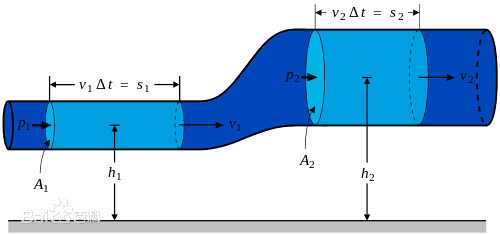
Every differential pressure flow meter — orifice plate, venturi, flow nozzle, V-cone, averaging pitot — runs the same equation. Bernoulli says the velocity through a restriction goes as the square root of the pressure drop. Multiply by the area and the discharge coefficient, and you have flow. This page covers the formulas in the form you will use them, three worked examples that mirror real plant calculations, and the common errors that turn a 0.5% accuracy meter into a 5% one.

Contents

The DP Flow Calculation Formula

The volumetric flow through any DP element is given by:

Q = Cd · A2 · √(2 · ΔP / [ρ · (1 − β4)])

For mass flow, multiply by density:

W = Cd · A2 · √(2 · ΔP · ρ / (1 − β4))

Both forms come straight from Bernoulli’s equation. The (1 − β4) term is the velocity-of-approach correction. ISO 5167 — the international standard for orifice, nozzle, and venturi metering — wraps everything except ΔP into a flow coefficient K so the working form becomes:

Q = K · √(ΔP / ρ) (volumetric)

W = K · √(ΔP · ρ) (mass)

For compressible fluids, an expansion factor ε (less than 1.0) is added to account for gas expansion through the restriction:

W = K · ε · √(ΔP · ρ1)

where ρ1 is the density at upstream conditions.

What Each Variable Means

SymbolQuantitySI UnitNotes
QVolumetric flowm³/sMultiply by 3600 for m³/h
WMass flowkg/sMultiply by 3600 for kg/h
CdDischarge coefficient0.60 for sharp orifice, 0.98 for venturi
A2Throat (bore) areaπ·d²/4 where d is bore diameter
ΔPDifferential pressurePa1 kPa = 1000 Pa, 1 bar = 100,000 Pa
ρFluid densitykg/m³At flowing conditions, not standard
βDiameter ratio d/DBore divided by pipe ID
εExpansion factorGas only; 1.0 for liquids
KFlow coefficientCombines Cd, A2, β, units

The discharge coefficient is the part most people get wrong. It is not 0.6 for everything. ISO 5167 publishes the Reader-Harris/Gallagher equation for sharp-edged orifice Cd, which depends on β, Reynolds number, and tap configuration. For first-pass sizing, use 0.60 for orifice, 0.98 for classical venturi, 0.99 for a long-radius nozzle. Final sizing should always come from a sizing tool that solves the iterative equation.

Worked Example 1: Orifice Plate on Water

A 6-inch (DN150) line carries water at 25 °C. An orifice plate with bore diameter d = 90 mm is installed in the line (pipe ID D = 154 mm). The DP transmitter reads ΔP = 25 kPa. Find the volumetric flow.

  • β = d/D = 90/154 = 0.584
  • 1 − β4 = 1 − 0.5844 = 1 − 0.1163 = 0.8837
  • A2 = π · (0.090)² / 4 = 6.362 × 10⁻³
  • ρ = 997 kg/m³ (water at 25 °C)
  • ΔP = 25,000 Pa
  • Cd = 0.605 (sharp-edged orifice, β = 0.584, high Re)

Plug into the volumetric equation:

Q = 0.605 · 6.362 × 10−3 · √(2 · 25,000 / [997 · 0.8837])

Q = 0.00385 · √(56.76) = 0.00385 · 7.534 = 0.0290 m³/s = 104.4 m³/h

That is the answer for water. Notice the square-root behavior: doubling ΔP from 25 to 50 kPa would only raise flow from 104 to 148 m³/h — a 41% increase, not 100%. That non-linearity is the largest weakness of DP flow.

Worked Example 2: Mass Flow on Saturated Steam

A 4-inch (DN100) line carries saturated steam at 10 bar gauge. Pipe ID D = 102 mm. An orifice with d = 60 mm gives β = 0.588. The DP transmitter reads ΔP = 12 kPa. Find the steam mass flow in kg/h.

  • Saturated steam at 10 bar(g) ≈ 11 bar(a), saturation temperature 184 °C
  • Steam density ρ = 5.64 kg/m³ (from steam tables)
  • 1 − β4 = 1 − 0.5884 = 0.8804
  • A2 = π · (0.060)² / 4 = 2.827 × 10⁻³
  • Cd = 0.605
  • Expansion factor ε ≈ 0.985 (small ΔP / P ratio)

Mass flow:

W = 0.605 · 2.827 × 10−3 · 0.985 · √(2 · 12,000 · 5.64 / 0.8804)

W = 1.683 × 10⁻³ · √(153,775) = 1.683 × 10−3 · 392.2 = 0.660 kg/s = 2376 kg/h

Steam flow calculations are sensitive to density. A 10 °C error in steam temperature shifts density by roughly 2%, which shifts mass flow by 1%. Always pick density from current operating pressure and temperature, not the design point.

Worked Example 3: 4-20 mA Output to Flow Rate

A DP transmitter is ranged 0-50 kPa with 4-20 mA output. The corresponding calibrated flow range is 0-200 m³/h on a clean orifice. The transmitter is currently outputting 12 mA. What is the flow?

The relationship between current output and DP is linear:

ΔP = (I − 4) / 16 · 50 kPa = (12 − 4) / 16 · 50 = 25 kPa (50% of span)

But flow is square-root of DP, so 50% DP is not 50% flow:

Q = 200 · √(25/50) = 200 · √0.5 = 200 · 0.7071 = 141.4 m³/h (70.7% of full flow)

This square-root extraction is why DP transmitters today usually have an internal √ function or are paired with a flow computer. The output can be set to either linear-with-DP or linear-with-flow. If the DCS does the extraction, the transmitter sends linear DP. If the transmitter does it, the DCS sees linear flow but loses some resolution at low flow rates. For background on what the milliamp output means, see our 4-20 mA signal conversion guide.

DP Sizing Rules of Thumb

Size the DP element so the full-scale ΔP falls into a sensible band. Too low and signal noise dominates; too high and permanent pressure loss kills pump capacity.

ElementTypical βFull-scale ΔPPermanent Pressure Loss
Sharp-edged orifice0.4 – 0.710 – 50 kPa40 – 80% of ΔP
Classical venturi0.4 – 0.7510 – 50 kPa5 – 20% of ΔP
Long-radius nozzle0.4 – 0.810 – 50 kPa30 – 50% of ΔP
V-cone0.45 – 0.855 – 25 kPa10 – 30% of ΔP
Averaging pitot2 – 10 kPa< 5% of ΔP

Three sizing rules carry most installations through:

  1. Pick ΔP at full flow first. Aim for 25 kPa as a starting target. Below 5 kPa, transmitter zero drift becomes a problem. Above 100 kPa, the permanent pressure loss starts to matter.
  2. Then solve for β. Use the volumetric equation with Cd = 0.605 and your design flow to find A2, then β = d/D.
  3. Check β bounds. Stay between 0.20 and 0.75 for orifice. Outside that range, the Cd uncertainty grows and the standard ISO 5167 formulas no longer apply.

For straight-pipe upstream and downstream requirements once the element is picked, see our upstream and downstream straight pipe guide.

Common Calculation Errors

  • Standard density vs flowing density. Gas calculations done with standard density (15 °C, 1 atm) instead of the actual line condition can be off by 5-15×. Always use ρ at the upstream pressure and temperature.
  • Forgetting (1 − β4). For β below 0.3, the velocity-of-approach factor is close to 1 and can be skipped, but for β = 0.7 it is 0.76 and ignoring it gives a 14% high reading.
  • Wrong unit for ΔP. Mixing kPa, mbar, mmH₂O, and inches of water column accounts for half of all calculation mistakes. Convert everything to Pa before plugging in.
  • Square-root output already extracted. Calculating Q = K · √ΔP when the transmitter has already done the extraction gives Q ∝ ΔP instead of Q ∝ √ΔP — wrong by a factor of √ over the range.
  • Discharge coefficient assumed constant. Cd drifts with Reynolds number below Re = 10⁴. Cold viscous fluids in small pipes hit this region in low flow. Use the Reader-Harris/Gallagher equation, not a fixed 0.6.

DP Transmitters for Flow Measurement

SMT3151DP Smart DP Transmitter

±0.075% accuracy, ranges 0.1 to 25,000 kPa, square-root extraction onboard. Standard for orifice, venturi, and nozzle metering loops.

SI-801 Piezoresistive DP Transmitter

Compact piezoresistive DP cell for filter ΔP, blower discharge, and small DP flow loops. Lower cost where ±0.5% is acceptable.

Verabar Averaging Pitot Flow Meter

Insertion DP element with very low permanent pressure loss. Use on large pipes where orifice retrofit is not practical.

FAQ

What is the formula for differential pressure flow measurement?

The working form is Q = K · √(ΔP / ρ) for volumetric flow and W = K · √(ΔP · ρ) for mass flow. K bundles the discharge coefficient, throat area, β-correction, and unit conversions. The relationship is square-root, so flow doubles when ΔP quadruples.

Why is DP flow proportional to the square root of pressure?

Bernoulli’s equation says ΔP = ½ρv², so velocity v = √(2ΔP/ρ). Volumetric flow is Q = A·v, which gives the square-root relationship. Kinetic energy scales with v², so a fixed pressure drop fixes velocity, not flow magnitude directly.

How do I calculate flow from a 4-20 mA DP transmitter?

Convert mA to ΔP linearly: ΔP = (I − 4)/16 · range. Then take the square root and scale to flow: Q = Qmax · √(ΔP / ΔPmax). At 12 mA (50% of span) the flow is 70.7% of maximum, not 50%.

What is the discharge coefficient for an orifice plate?

Around 0.60-0.61 for a sharp-edged orifice with β between 0.4 and 0.7 at high Reynolds numbers. ISO 5167-2 publishes the Reader-Harris/Gallagher equation that gives Cd as a function of β, Re, and tap configuration. Long-radius nozzles run 0.99, and classical venturis 0.98.

How do I size an orifice plate for a given flow?

Pick a target full-scale ΔP (typically 25 kPa). Solve the volumetric equation for A2 with Cd = 0.605 and your design flow. Take β = d/D and check it falls between 0.20 and 0.75. Iterate once with the corrected Cd from the standards.

What is the difference between mass flow and volumetric flow?

Volumetric flow Q (m³/h) is volume per time. Mass flow W (kg/h) is mass per time. They are linked by density: W = Q · ρ. Custody transfer and steam balances use mass flow because density changes with temperature and pressure; volumetric does not stay conserved across heat exchangers or expansion valves.

Get a DP Flow Measurement System Quote

Send us your fluid, design flow, line size, operating pressure, and temperature. We’ll size the DP element, pick the transmitter range, and send back a calculation sheet plus drawing — usually within one business day.

Request a Quote

Please enable JavaScript in your browser to submit the form

6 Inch Flow Meters (DN150): Types, Flow Ranges & Selection Guide

Updated: April 22, 2026

A 6-inch (DN150) flow meter sits in a specific sweet spot — large enough to handle plant-scale cooling water, wastewater, and district heating loops, but small enough that you still have five mainstream technologies to choose from. The decision is rarely about pipe size. It’s about fluid type, required accuracy, and how much straight pipe you actually have. This guide gives you the flow ranges, a side-by-side type comparison, and a decision path you can follow in under five minutes.

Contents

What Is a 6-Inch (DN150) Flow Meter?

A 6-inch flow meter is a flow measurement device with a 150 mm nominal bore (DN150, 6″ NPS). It measures volumetric or mass flow of liquids, gases, or steam in pipes with an inside diameter of roughly 146-160 mm depending on schedule. At this size, most plants use flanged ANSI 150#, PN16, or PN40 connections.

DN150 is a very common process size. You find it on boiler feedwater lines, cooling tower returns, district heating mains, pulp stock lines, and secondary wastewater discharge. Because the bore is large enough for full-bore inline meters but small enough to still be affordable, all major technology types are available — electromagnetic, turbine, vortex, ultrasonic, Coriolis, and thermal mass.

What Flow Rate Can a 6″ Flow Meter Measure?

A 6-inch flow meter typically handles 25-600 m³/h for liquids and 50-5,000 Nm³/h for gases, depending on the technology. The usable range depends on pipe velocity, not just bore size — most meters need the fluid velocity to stay between 0.5 and 10 m/s.

Use this as a quick sanity check before sizing. If your expected flow drops below the lower limit for weeks at a time, a smaller meter plus a reducer pair is usually more accurate than an oversized DN150.

Fluid / ServiceTypical VelocityDN150 Flow Range
Clean water (cooling / domestic)1-3 m/s65-190 m³/h
Raw / wastewater0.5-2 m/s30-130 m³/h
Slurry (conductive)1-3 m/s65-190 m³/h
Hydrocarbon liquid1-4 m/s65-250 m³/h
Saturated steam (10 bar)20-40 m/s1,300-2,500 kg/h
Air / compressed gas10-30 m/s650-2,000 Nm³/h

A good rule of thumb: if your normal flow sits near the middle of the velocity band and the peak does not exceed 6 m/s, DN150 is the right size. Push velocity past 6 m/s and you accelerate wear on turbines and create noise on vortex meters.

6-Inch Flow Meter Types Compared

Six technologies dominate the DN150 market. Each has strengths tied to fluid type and pressure drop. Use the table below as a first-pass filter, then read the notes that follow for the technology you’re drawn to.

TypeBest ForAccuracyPressure DropStraight PipeRelative Cost
ElectromagneticConductive liquids, slurry, wastewater±0.5%None5D / 3D$$
TurbineClean, low-viscosity liquids±0.5%Low-medium10D / 5D$$
VortexSteam, clean gas, low-viscosity liquid±1%Medium15D / 5D$$
Ultrasonic (transit-time)Clean liquid, energy loops±1-2%None (clamp-on)10D / 5D$-$$
CoriolisMass flow, custody transfer±0.1%HighNone$$$$
Thermal massGas at low pressure±1-2%Low10D / 5D$$

6″ Electromagnetic (Magmeter) — the default for conductive liquids

For water, wastewater, acid, caustic, and most slurries, the magmeter is the first choice at DN150. No moving parts, no pressure drop, handles dirty fluid. The fluid just needs conductivity > 5 µS/cm. Modern 4-20 mA / HART / Modbus outputs are standard, and the flanged body survives decades on cooling loops.

6″ Turbine — for clean, well-filtered liquid

Turbines give excellent repeatability on clean low-viscosity fluids like diesel, jet fuel, or demineralized water. The main caveat is mechanical wear. Particles larger than 100 µm will shorten bearing life on a 6″ turbine. For a pipeline that occasionally passes construction debris, skip it.

6″ Vortex — the steam workhorse

Vortex is the go-to for saturated or superheated steam at DN150. It handles process temperatures up to 400 °C, reads mass flow when paired with integrated pressure/temperature, and has no moving parts. Its weakness is low-flow cutoff — below ~20% of the upper range, the von Kármán vortices become unstable and the reading drops to zero.

6″ Ultrasonic — inline or clamp-on

Transit-time ultrasonic is a strong option for clean liquids where you do not want pressure drop. Clamp-on versions are popular for retrofit on district heating or municipal water where you can’t cut the pipe. At DN150 the ultrasonic signal path is still strong enough that one pair of transducers in V-mode reaches ±1% accuracy after a field calibration. See the upstream and downstream straight pipe guide before you commit to a location.

6″ Coriolis — only when mass accuracy matters

At DN150, Coriolis meters become expensive and physically large. But if you need direct mass flow, density, and ±0.1% accuracy — for custody transfer of crude oil, chemical batching, or any two-phase dosing — nothing else comes close. Budget for a pressure drop of 0.3-1 bar at rated flow.

6″ Thermal mass — for low-pressure gas

Thermal mass meters measure gas mass flow directly without needing pressure or temperature compensation. They work well for compressed air, natural gas, biogas, or flue gas at DN150 sizes. Avoid them in wet gas or if the gas composition varies widely — both cases shift the heat-transfer coefficient and drive readings off.

How Do You Select a 6″ Flow Meter by Fluid?

Start with the fluid, not the budget. Once the fluid rules out half the technologies, the cost argument sorts itself out. Use this matrix:

FluidFirst ChoiceRunner-UpAvoid
Clean water / cooling loopElectromagneticUltrasonicTurbine if debris present
Wastewater / sludgeElectromagneticTurbine, vortex
Demineralized (DI) waterUltrasonicTurbineElectromagnetic (<5 µS/cm)
Hydrocarbon liquidTurbineCoriolisElectromagnetic (non-conductive)
Saturated / superheated steamVortexTurbine, magmeter
Compressed air / natural gasThermal massVortexElectromagnetic
Slurry (mineral, pulp)ElectromagneticTurbine, vortex
Chemical batching, custodyCoriolisUltrasonic if entrained gas

Two practical notes. First, electromagnetic is specified far more often than needed for clean water — ultrasonic clamp-on is frequently good enough and avoids cutting the pipe. Second, Coriolis at 6″ is rarely worth it if ±1% volumetric accuracy meets your specification.

Inline vs Insertion — Which Is Right at 6″?

Inline is almost always preferred at DN150 because the cost gap with insertion probes narrows at this size. But insertion still wins in three cases.

  • Hot-tap retrofit — when shutting down to cut the line is not possible. Insertion probes install through a 2″ valve.
  • Very large flow range — if you also run the same line at DN200 or DN250, one insertion probe can serve several sizes.
  • Low-accuracy totalizing — where ±3% is acceptable (e.g., seasonal irrigation totalizing).

For continuous process measurement with ±1% or better accuracy, choose inline. An inline DN150 electromagnetic at DN150 costs less than most people expect, and you save the insertion-probe field-calibration steps. See our inline water flow meter guide for specific model comparisons.

DN150 Installation: Straight Pipe & Mounting

DN150 is large enough that poor installation costs real accuracy points. The mistake we see most often is mounting the meter right after an elbow. A 1% accuracy meter becomes a 3-5% reading if the flow profile is still swirling.

  1. Install the meter in a full-pipe section. For horizontal lines, mount in a raised loop or vertical-up leg to prevent air pockets.
  2. Respect the straight-pipe rule: 5D upstream and 3D downstream for magmeters; 10D/5D for turbines and ultrasonic; 15D/5D after two elbows on vortex.
  3. Avoid mounting downstream of control valves. Valve-induced turbulence survives 20D or more. Move the meter upstream.
  4. Match flange bolt torque to the gasket spec, and always use the earth rings on electromagnetic meters — the signal floats otherwise.
  5. Leave space for cable conduit access. The junction box on a 6″ magmeter typically needs 300 mm clearance on the side.

If your layout can’t meet the straight-pipe rule, a flow conditioner cuts the upstream requirement roughly in half. For details on pipe configuration effects, read the flow meter straight-length requirements guide.

Featured 6″ Flow Meters

Stainless Steel Magnetic Flow Meter

DN150, PN16 flanged, ±0.5% accuracy. Conductive liquids, wastewater, clean & raw water.

Liquid Turbine Flow Meter

DN150 clean liquid duty, ±0.5%, pulse & 4-20 mA. Diesel, jet fuel, DI water.

T-Series Coriolis Mass Flow Meter

±0.1% mass flow + density, DN150 variants. Custody transfer, chemical batching.

FAQ

What is the maximum flow rate of a 6-inch flow meter?

For liquids, a 6-inch (DN150) flow meter handles up to ~600 m³/h at a 10 m/s velocity cap. For steam at 10 bar, the upper range is around 2,500 kg/h. The practical limit is usually imposed by pressure drop or meter wear rather than the sensor itself.

How much does a 6″ flow meter cost?

Entry-level DN150 electromagnetic and vortex meters start in the low thousands USD. Coriolis jumps to five figures at this size because of the tube geometry and mass. Price swings with wetted material (316L vs Hastelloy vs PTFE lining) as much as with the technology itself.

Can I use an ultrasonic clamp-on on a 6″ pipe?

Yes. At DN150 a single-path V-mode ultrasonic clamp-on reads ±1-2% on clean liquid. For higher accuracy or on thick-walled steel pipes, specify a dual-path Z-mode transducer pair and calibrate against a portable reference meter after installation.

Is a 6-inch flow meter the same as DN150?

Yes, for most flow-meter specifications 6″ NPS and DN150 are interchangeable. The flange dimensions differ slightly between ANSI B16.5 (6″ class 150) and EN 1092 (DN150 PN16), so confirm the flange standard your piping uses before ordering.

Do I need straight pipe before a 6″ flow meter?

Yes. Most DN150 meters require 5-15 pipe diameters (5D-15D = 0.75-2.25 m) of straight pipe upstream and 3-5D downstream. Electromagnetic is the most tolerant (5D/3D); vortex after two elbows is the most demanding (15D/5D). A flow conditioner halves these requirements where space is tight.

Can a 6″ flow meter measure bidirectional flow?

Electromagnetic, Coriolis, and transit-time ultrasonic support bidirectional reading out of the box. Turbine and vortex are unidirectional at DN150 — reverse flow either gives zero or damages the sensor. Confirm bidirectional capability in the datasheet before specifying.

Request a DN150 Quote

Need help matching a 6-inch flow meter to your fluid, velocity, and accuracy target? Send the line size, fluid, nominal/peak flow, and ambient/process temperature. Our engineers will reply within one business day with a shortlist and indicative pricing.

Request a Quote

Please enable JavaScript in your browser to submit the form

Sulfuric Acid Storage Tank Level Sensor: Radar vs Ultrasonic vs DP

Updated: April 22, 2026

Sulfuric acid storage tanks are the worst-case scenario for level instrumentation. Concentrated H₂SO₄ corrodes 316 stainless, dilute H₂SO₄ corrodes differently but just as fast, and the vapor space is full of fuming droplets that coat any wetted sensor. The right answer for most sites is a non-contact radar with the correct antenna material and a sensible installation. This guide walks through the chemistry, the method comparison, and the installation rules that keep a sulfuric acid level system running for years instead of months.

Contents

How Do You Measure Sulfuric Acid Storage Tank Level?

The standard solution is a non-contact 80 GHz radar transmitter mounted in the tank top with a PTFE-covered antenna. Radar is preferred because no part of the sensor touches the liquid, which removes 90% of corrosion failure modes. Accuracy runs ±3 mm on an 8-10 m tall tank, which is fine for inventory management and pump-protection interlocks.

For small day tanks under 3 m tall, a flush-diaphragm DP transmitter with PTFE-coated diaphragms and capillary seals is a valid second option when radar mounting space is tight. For continuous tank-farm telemetry where one sensor has to serve a row of tanks, centralized magnetostrictive systems have niche uses — but radar is the default.

Why Is Sulfuric Acid Level So Difficult?

Sulfuric acid does not behave like one fluid. It behaves like three, depending on concentration.

ConcentrationBehaviorMain Corrosion Issue
93-98% (concentrated)Passivating on carbon steel, attacks stainlessFuming above 60 °C, pits 316L
40-80% (intermediate)Aggressive on steel and stainlessHighest overall corrosion rate
<10% (dilute)Dissolves carbon steel rapidlyNeeds polymer or alloy

On top of concentration effects, three physical problems hit the sensor.

  • Fuming vapor. Concentrated acid gives off SO₃ mist, which condenses on cold sensor surfaces.
  • Crystallization. Between 65% and 85% concentration, sulfuric acid crystallizes below 0 °C. Outdoor tanks in winter form solid plugs around probes.
  • Temperature swing. Filling with fresh acid releases heat of dilution — temperature can swing 30 °C in an hour, breaking thermal equilibrium for contact sensors.

These conditions rule out float switches, capacitance probes, most guided-wave radars, and anything else that relies on a wetted component. Non-contact is the direction to move. For the general tank-selection framework, cross-reference tank level sensor selection by content type.

Radar vs Ultrasonic vs DP for Sulfuric Acid

Three non-contact or minimally-wetted technologies compete in sulfuric acid tanks. Each has a legitimate use case. Match them to the concentration and tank geometry.

MethodWorks ForAccuracyMain Failure ModeBest Fit
80 GHz non-contact radarAll concentrations, all tank heights±3 mmAntenna fouling without PTFE coverMain storage tanks
UltrasonicDilute acid only, low vapor±0.25% of rangeVapor attenuates the sound pathDay tanks, dilute service
DP with PTFE diaphragmAll concentrations, short tanks±0.1% of spanDiaphragm fatigue from temperature cyclingSmall tanks, closed vessels
Magnetostrictive floatDilute acid only, clean service±1 mmFloat corrosion, crystallization plugRare, only with PTFE float

Ultrasonic often shows up in old plants because it was cheap 20 years ago. Modern 80 GHz radar is now close enough in price that ultrasonic rarely wins on total cost of ownership for sulfuric service. The exception is low-vapor dilute tanks where ultrasonic still delivers reliable readings at lower spare-parts cost.

Required Radar Specs for Sulfuric Acid Service

A generic 80 GHz radar will not survive concentrated sulfuric vapor. Check these five specs on the datasheet before specifying.

  • Antenna material: PTFE-encapsulated lens. PTFE tolerates H₂SO₄ up to 260 °C. Raw stainless antennas pit within weeks.
  • Flange material: PTFE-lined or Hastelloy C276. The flange sees splash and vapor condensate. Carbon steel corrodes; 316L pits.
  • Process seal: ceramic disk behind PTFE. Blocks vapor from reaching the waveguide.
  • Frequency: 80 GHz FMCW. Narrow beam means you can mount off-center to avoid splash impact from fill nozzles.
  • Ingress protection: IP66/67 on the housing. Outdoor acid storage sites are corrosive even outside the tank.

A dielectric constant of roughly 30-35 for concentrated H₂SO₄ means the radar signal reflects strongly from the liquid surface. Signal margin is not an issue here — only the sensor materials are.

Installation Rules for Acid Tanks

Installation decides how long the radar lasts. The mistakes we see most often come from treating an acid tank like a water tank.

  1. Mount off the fill point. Never install the radar directly above a fill nozzle — splashing acid hits the antenna. Position at least 1 m from any fill line.
  2. Use a stilling well only if essential. Stilling wells collect crystalline deposits in intermediate-concentration acid. Prefer open-beam installation. If a stilling well is required for turbulent tanks, use a PTFE-lined well.
  3. Tilt the flange 2-3°. A small tilt away from horizontal lets condensate drain off the antenna lens instead of pooling.
  4. Vent the tank below the sensor flange. Keep the vapor path separate from the radar beam path.
  5. Earth-bond the flange. Static buildup during fast filling can arc to the radar electronics. A dedicated 6 mm² earth strap prevents it.

For tanks with internal mixers or splash plates, the transmitter’s signal-processing setup should include a “false echo” suppression routine run at a known low level. This captures the permanent echoes from internals so they can be filtered during normal operation. See our stilling wells guide for the pros and cons when internals cannot be moved.

Common Measurement Errors on Acid Tanks

These are the failure patterns we see during site audits on sulfuric acid storage tanks.

SymptomLikely CauseFix
Reading locked at tank-top distanceAntenna fouled with vapor condensateSwap to PTFE-covered antenna, add purge port
Reading jumps by 200-500 mm during fillingSplash onto antenna or foam on surfaceReposition away from fill line, enable signal averaging 5-10 s
Slow drift upward over weeksCrystallization on antenna (65-85% acid, cold ambient)Insulate and trace-heat the flange, relocate to insulated tank wall
Erratic reading with agitator runningSurface turbulence, false echo from wave crestsInstall stilling well or apply false-echo suppression profile
Low-dielectric alarmNot an issue on H₂SO₄ — investigate empty tank or mis-configured referenceRecalibrate empty-tank reference; check tank is not dry

Any of these symptoms on a brand-new installation usually trace back to the wrong antenna material or a flange tilted the wrong way. Fix the hardware first; never tune a signal-processing workaround around a hardware problem.

Level Sensors for Corrosive Storage Tanks

Tank Level Sensor Selection Guide

Decision matrix by tank content. Covers radar, ultrasonic, DP, and magnetostrictive options.

Diaphragm Seal Pressure Transmitter

Flush-flanged PTFE-covered diaphragm. Use on small day tanks where radar won’t fit.

Flange-Mounted DP Transmitter

DP with capillary seals, Hastelloy or PTFE diaphragm. For closed acid tanks with head-space pressure.

FAQ

What is the best level sensor for sulfuric acid?

An 80 GHz non-contact radar with a PTFE-encapsulated antenna is the best all-around choice. It works across all acid concentrations, resists fuming vapor, and never contacts the liquid.

Can I use an ultrasonic level sensor on sulfuric acid?

Only on dilute (<30%) sulfuric acid in tanks with low vapor load. Concentrated acid produces SO₃ fumes that scatter the ultrasonic pulse and give drifting readings. Radar is more reliable above 30% concentration.

What material should the antenna be?

PTFE (Teflon) is the industry standard for sulfuric acid antennas. Either a PTFE-encapsulated horn or a lens antenna with a PTFE window. Avoid 316L, titanium, or bare PEEK — all three have compatibility limits below 95 °C.

How accurate is radar on a sulfuric acid tank?

Expect ±3 mm over a 10 m measuring range for a correctly installed 80 GHz radar. The high dielectric constant of sulfuric acid gives an excellent reflection, so accuracy is limited by signal processing and beam stability, not by the fluid.

Do I need to heat-trace the sensor flange?

Yes on outdoor tanks storing 65-85% acid in climates where ambient temperature drops below 5 °C. Sulfuric acid crystallizes in this concentration range at low temperatures, and the flange is the coldest surface. Trace heat the flange and the first 300 mm of nozzle.

How often does a sulfuric acid radar need maintenance?

A correctly specified radar runs 3-5 years between interventions. Maintenance is a visual inspection of the antenna for residue, an earth-bond check, and a verification of the empty-tank reference. Replacement of the full sensor is rare if materials were chosen right.

Get a Sulfuric Acid Level System Quote

Tell us your acid concentration, tank height and diameter, fill/discharge pattern, and ambient conditions. We’ll come back with a radar model, antenna material, flange spec, and installation drawing — usually within one business day.

Request a Quote

Please enable JavaScript in your browser to submit the form

Blast Furnace Level Measurement with 80/120 GHz Radar: Design & Purge Guide

Updated: April 22, 2026

Measuring level inside a blast furnace shaft is one of the hardest jobs in process instrumentation. The environment combines red-hot gas, dust clouds, pressure pulses, and electromagnetic noise. Guided-wave probes and mechanical plumb-bobs wear out in months. An 80 GHz or 120 GHz non-contact radar, installed with the right purge and alignment, is the only sensor that survives and delivers continuous burden-profile data. This guide explains what the radar must do, why frequency matters, and how the purge system keeps it alive.

Contents

Can You Measure Blast Furnace Level With Radar?

Yes — high-frequency FMCW radar (80 GHz or 120 GHz) is the only level sensor proven to run continuously inside a blast furnace shaft. It works because radar is immune to dust, steam, and thermal noise that blind optical, mechanical, or capacitive systems. The radar installed with an air or nitrogen purge and ceramic-window isolation reports burden profile within ±30 mm at a measuring range of up to 30 m.

Mechanical plumb-bob gauges and radioisotope systems are still used on older furnaces, but they are single-point or require licensed sources. A 120 GHz radar sweeps the full burden cross-section when scanning-aimed, and is maintenance-free between scheduled refractory shutdowns.

What Makes Blast Furnace Level Measurement So Hard?

Five conditions combine to kill most level instruments.

  • Process temperature 150-250 °C at the sensor flange — much higher inside the vessel, with thermal radiation load on any exposed surface.
  • Dust loading of 10-30 g/m³ in the top-gas space, fouling windows and antennas within days.
  • Internal pressure 2-3 barg with pressure pulses during charging.
  • Coke oven gas (CO, H₂) at reducing atmosphere — oxygen-sensitive sealants fail.
  • Charge surface irregularity — the burden is sloped, asymmetric, and moves as material is charged and descends.

A radar needs to see through the dust, not collect it on a lens. It needs a flange seal rated for reducing atmosphere. And it needs a narrow antenna beam to scan the sloped burden profile, not just report one point. Miss any of these and the instrument either fails early or reports misleading data to the charging system.

Which Radar Frequency Works on a Blast Furnace?

80 GHz or 120 GHz FMCW radar is the only frequency band that produces a narrow-enough beam for blast furnace burden scanning. A 120 GHz radar with a 100 mm lens antenna gives a 2° beam angle — tight enough to aim at a specific burden zone and see through the 20 m shaft without false echoes from the walls.

Lower frequencies (6 or 26 GHz) were the first generation of radar used on blast furnaces and are still common for cheaper bin-level jobs. But at 26 GHz the beam opens to roughly 8-10°, which washes out the sloped burden into a single average and generates mirror echoes from the shaft wall. On a 10 m diameter furnace that is good enough for an interlock, not for burden-profile control.

FrequencyTypical Beam AngleFit for Blast Furnace
6 GHz (pulse)20-30°Not suitable — hit by walls
26 GHz (FMCW)8-10°Single-point only, bin use
80 GHz (FMCW)3-4°Good — single or dual beam
120 GHz (FMCW)1.5-2°Best — burden-profile scanning

Another 120 GHz advantage: the wavelength (2.5 mm) is close to the dust particle size, so strong dust clouds scatter less of the signal compared to what 26 GHz users expect. Field data from Chinese and Indian steelmakers published between 2022 and 2025 consistently show 120 GHz outperforming 80 GHz by 20-40% in heavy-dust campaigns. For background on the core technology, see our guided wave vs non-contact radar comparison.

Design Features a Blast Furnace Radar Must Have

A catalogue 80 GHz radar for silos will die within weeks on a blast furnace. The specific features below separate a bin-radar product from a blast-furnace-rated one.

Required FeatureTypical SpecWhy It Matters
Antenna materialHigh-purity alumina ceramicSurvives 400 °C radiated heat, not damaged by alkali vapor
Process windowAlumina or borosilicate diskIsolates the waveguide from process gas
Flange ratingPN40 / 300# or higherHandles pressure pulses during charging
Sensor ambient rating-40 to +80 °C at electronicsElectronics sit above the cooling flange
Air/N₂ purge portG½” with flow meterKeeps antenna surface clean
Scanning beam (optional)Motor-aimed ±30°Measures burden profile, not just one point
Signal processingMulti-echo trackingRejects false echoes from shaft wall, ring deposits

Motor-aimed (scanning) radars are relatively new. They sweep across the shaft cross-section every few seconds and build a 2D burden map. This is how modern automated charging systems stack coke and ore in shaped layers — the radar tells the chute where material has actually piled up.

Purge & Air-Cooling System Design

The purge system is not optional. Without continuous gas purge and flange cooling, the antenna window fouls in days and the electronics overheat. Build the purge loop with three jobs in mind.

  1. Window cleaning. Feed instrument air (or N₂ where a reducing atmosphere is guaranteed) at 40-80 Nm³/h through a tangential port below the window. The jet pattern sweeps dust outward.
  2. Thermal barrier. A secondary flow of 20-40 Nm³/h cools the flange, limiting the electronics ambient to below 80 °C.
  3. Back-pressure control. Include a pressure regulator with a local gauge and a low-flow alarm wired to the DCS. Losing purge means losing the instrument.

Instrument air must be dry and oil-free to ISO 8573-1 Class 2 or better. Oily air deposits carbon on the window at process temperature, and within a week the radar reports a “distance = window” false echo. For furnaces running hydrogen injection, nitrogen is mandatory to prevent explosive atmosphere inside the purge line.

Installation Geometry & Signal Path

Installation geometry decides whether the radar can see the burden or fights it. Work through these points before cutting the top-cone nozzle.

  • Stand-off distance. Mount the antenna face at least 1.5 m above the top-cone to keep it out of the direct charging stream.
  • Aim angle. Tilt 5-10° off-vertical so specular reflections from the top-cone walls do not re-enter the antenna.
  • Clearance from wall. Keep the beam footprint at least 500 mm from any refractory wall at the measurement depth.
  • Nozzle length. Use a short nozzle (≤300 mm). Long nozzles create multiple reflections that confuse echo tracking.
  • Valve isolation. Include a DN80 or DN100 ball valve below the flange so the radar can be swapped during short shutdowns without losing furnace pressure.

The most common mistake is mounting a single radar right on the top centerline. The center position receives descending charge material and ring deposits build up fastest there. Off-center mounting with a small aim angle clears most of these issues and also aligns better with the sloped burden when using burden-profile scanning. For a broader view of radar mounting, compare the stilling-well approach for liquids — the logic is different because the blast furnace needs open beam scanning, not a contained waveguide.

Radar Level Transmitters for High-Temperature Service

64/80 GHz FMCW Level Radar

Narrow-beam FMCW, up to 120 m range, ceramic lens antenna. Suited for dusty silos and furnaces.

80 GHz Radar Level Transmitter

Compact 80 GHz unit, IP67, flange mount, 4-20 mA / HART output for high-temp solids.

Guided Wave Radar Transmitter

TDR probe alternative for hopper bottoms or secondary bins where non-contact is impractical.

FAQ

What temperature can a blast furnace radar tolerate?

The radar’s ceramic antenna tolerates up to 400 °C continuous at the process side, while the electronics stay below 80 °C thanks to flange cooling and the purge flow. The sensor is not mounted directly in the flame zone — it sees the burden surface from 1.5 m above the top-cone where gas temperatures are 150-250 °C.

Why is 120 GHz better than 26 GHz for blast furnaces?

A 120 GHz radar with a lens antenna produces a beam under 2° wide. A 26 GHz radar with the same physical antenna diameter produces an 8-10° beam, which hits the shaft wall and averages the burden profile into a meaningless single number. Narrow beam equals better burden mapping.

Do I really need air purge on the radar?

Yes. Without continuous purge, the antenna window fouls with dust and alkali condensate within days, and the electronics overheat from radiant load. Specify 40-80 Nm³/h instrument air (dry, oil-free) plus a flow alarm wired to the DCS.

Can one radar give me the full burden profile?

A single fixed-aim radar gives one point. For burden-profile data you need either a scanning (motor-aimed) radar or multiple fixed radars at 3-6 positions across the top-cone. Scanning radars are more common on new furnaces; multi-point fixed arrays are typical on retrofits.

How accurate is blast furnace radar level?

A correctly installed 120 GHz radar with a narrow beam resolves burden height to ±30 mm over a 25 m range. Accuracy degrades if the purge fails or if refractory ring deposits create ghost echoes that the signal processing cannot filter.

Quotation for a Blast-Furnace-Rated Radar

Send us your furnace top-cone drawing, nozzle size, burden diameter, and whether you need single-point or scanning burden profile. We’ll come back with frequency recommendations (80 vs 120 GHz), antenna size, purge specification, and delivery timeline.

Request a Quote

Please enable JavaScript in your browser to submit the form

Online Density Meter (DP Type) — Hydrostatic Density Measurement for Slurry & Viscous Fluids

The online DP density meter measures liquid density from a hydrostatic pressure difference between two fixed points in the process. Range is 0.5 – 2.5 g/cc (500 – 2500 kg/m³), accuracy ±0.5% of reading, output 4–20 mA + HART. It handles slurries, corrosive acids, and viscous fluids where Coriolis tubes stall and tuning-fork probes foul, because the sensing diaphragms sit flush and see only pressure — not flow, not viscosity, not bubble content.

Sino-Inst builds the DP density meter around a high-accuracy differential pressure transmitter and two flush-diaphragm seals connected by oil-filled capillaries. Pick the variant below by your fluid, tank height, and wetted material, then confirm on the spec table.

Features of the Online DP Density Meter

  • Hydrostatic measurement principle — density comes from ΔP between two known heights. No moving parts in the wetted path, no flow dependency, no viscosity limit.
  • ±0.5% of reading accuracy — with a temperature-compensated DP cell and matched capillaries, density resolves to ±1 kg/m³ across the span.
  • Slurry and viscous-fluid capable — flush diaphragm seals stay clean in tailings, cement slurry, black liquor, sugar syrup, and heavy residuum where Coriolis and tuning fork fail.
  • No density calculation in the host — the transmitter outputs density directly in g/cc, kg/m³, °Bé, °Brix, or concentration %, so the PLC just reads a process variable.
  • Wide wetted-material menu — 316L stainless standard; Hastelloy C-276, Monel 400, tantalum-lined, PTFE-capped options for acids, caustics, and chlorides.
  • Mount on tank, bypass loop, or pipeline — tank-side flanges, insertion rods, inline bypass chambers, and open-sump stilling-well installations are all supported.
  • 4–20 mA + HART + RS-485 Modbus RTU — drops straight into a DCS or PLC. Local LCD shows density, temperature, and percent concentration simultaneously.

Technical Parameters

Measuring range0.5 – 2.5 g/cc (500 – 2500 kg/m³); concentration 0 – 100%
Accuracy±0.5% of reading (±1 kg/m³ typical)
Repeatability±0.1% of reading
Operating temperature-40 °C to +120 °C (standard); up to 200 °C with extended capillary
Process pressureup to 2.5 MPa (higher on request)
Viscosity limitno upper limit — measurement is pressure-based, not flow-based
Wetted material316L stainless (std); Hastelloy C-276, Monel 400, tantalum, PTFE-lined (opt)
Diaphragm sealFlush-mount; 2″, 3″, 4″ or DN50/80/100 flange; sanitary tri-clamp available
Fill fluidSilicone oil (std); inert halocarbon or high-temp fluorolube (opt)
Capillary length1 m to 10 m, vacuum-sealed, armor-clad
Output4–20 mA with HART 7; RS-485 Modbus RTU option
Power supply24 VDC, loop-powered
Enclosure ratingIP66/67 aluminum alloy; Ex d IIC T6 available
Derived readingsDensity, %solids, °Bé, °Brix, concentration %, specific gravity

DP Density Meter Working Principle

A column of liquid exerts a hydrostatic pressure proportional to its density times the height of the column: P = ρ × g × H. If you measure pressure at two points separated by a known vertical distance H in the same fluid, the difference between them depends only on the fluid density:

ρ = ΔP / (g × H)

The online DP density meter takes the two pressure readings through flush-mounted diaphragm seals connected to a differential pressure transmitter by oil-filled capillaries. Because the separation H is fixed by the mechanical installation, ΔP is a direct read-out of density. The transmitter applies a temperature correction using its own built-in Pt100, then outputs density, percent concentration, or °Bé through 4–20 mA / HART.

Because the diaphragms sense only pressure, the measurement is independent of flow rate, viscosity, and bubble content. The meter keeps reading through two-phase flow, solids concentrations up to ~60%, and high-viscosity liquors where Coriolis U-tubes stall. Solids that would coat a tuning-fork probe slide off a flush diaphragm. For a deeper comparison of principles, see our tuning fork density meter and Coriolis density meter product pages.

Models & Configurations

The DP head and transmitter stay the same across models. What changes is the wetted material, diaphragm style, and mounting fit. Pick the variant by your fluid and installation, then confirm on the spec table above.

ModelWetted materialMountingBest for
Tank-side flanged316L stainless2 × DN50/DN80 PN16 flange on tank wallOpen tanks, atmospheric storage, general slurry service
Remote capillary seal316L or Hastelloy CCapillary 1 – 10 m between seals and DP cellLong reach installations, high-temp or cryogenic service
Bypass loop316L + isolation valvesBypass chamber off main pipeline, DN50 inlinePipeline mounting where tank access is limited
Anti-corrosionHastelloy C-276, tantalum, or PTFE-cappedFlange or clamp, per alloyStrong acid, caustic, chlorinated fluids
Sanitary tri-clamp316L electropolished, 3A cert1.5″ or 2″ tri-clampFood, dairy, brewery, pharma

Other options: high-temp extended-diaphragm (up to 200 °C with fluorolube fill), submersible IP68 for open sumps and basins, and purged-style for fluids that would plate out on a diaphragm. Specify the medium and we’ll recommend the diaphragm alloy and fill fluid. For installation practices that affect DP accuracy, see our DP transmitter installation guide.

Applications

DP density meters are the default choice anywhere density or concentration is a controlled process variable and the fluid is too dirty, too viscous, or too two-phase for Coriolis or tuning-fork technology. The flush-diaphragm interface plus remote capillaries is what makes them field-robust.

  • Mining & mineral processing — thickener underflow, tailings pipeline, cyclone feed density, dredger discharge
  • Pulp & paper — black liquor density in chemical recovery, bleach liquor concentration
  • Chemical — sulfuric acid, caustic soda, aqueous ammonia, ferric chloride concentration control
  • Oil & gas — crude oil storage and transfer, heavy residuum, drilling mud density
  • Food & beverage — sugar syrup °Brix, dairy concentrate, wort gravity, tomato paste
  • Power — flue gas desulfurization limestone slurry density
  • Water & wastewater — thickened sludge, lime milk dosing, MLSS monitoring

Split-Type Density Meter for Liquids

Separated sensor and transmitter configuration — best for high-temperature or hazardous-area installations where the electronics stay remote.

Industrial Slurry Density Meter

Heavy-duty DP-based density solution for dredging, tailings, and cement — wear-plated diaphragms handle abrasive slurries.

Coriolis Density / Concentration Meter

Inline Coriolis density with ±0.0005 g/cc accuracy — the reference technology for clean, single-phase custody-transfer service.

Need sizing help? Our engineers match a DP density meter to your fluid, tank height, and wetted material, and ship a drawing plus quote the same day. Send the line data below and we’ll come back with a variant recommendation.

Request a Quote

Request a Quote

Please enable JavaScript in your browser to submit the form