
GPM and LPM are the two flow-rate units you will see on every industrial pump, valve, and flow meter datasheet. GPM is gallons per minute (US-spec by default). LPM is litres per minute. Converting between them is a single multiplication, but a half-percent error at the conversion step can throw off sizing and procurement decisions for a whole skid. This page gives the formula, a quick-reference table, the US vs UK gallon gotcha, a decoder for reading GPM-spec flow meter sheets when your system is metric, and the m³/h, CFM, and BPH conversions you will hit at scale.
Contents
- The GPM to LPM Conversion Formula
- GPM ↔ LPM Conversion Table
- US Gallon vs UK Gallon
- When Each Unit Ships on Flow Meters
- Spec-Sheet Decoder: GPM Range to Pipe Size
- Other Flow Rate Units: m³/h, CFM, BPH
- Mass vs Volumetric Flow: When GPM Lies
- Three Common Conversion Mistakes
- FAQ
The GPM to LPM Conversion Formula
One US gallon is exactly 3.78541 litres. From that single fact:
- GPM → LPM: multiply by 3.78541
- LPM → GPM: multiply by 0.264172 (or divide by 3.78541)
So a pump rated 10 GPM moves 37.85 LPM. A meter reading 100 LPM is 26.42 GPM. Carry four significant figures during the multiplication; round only at the end. For high-accuracy custody applications, prove the meter against a calibrated reference before commissioning.
GPM ↔ LPM Conversion Table
| GPM (US) | LPM | m³/h |
|---|---|---|
| 1 | 3.79 | 0.227 |
| 2 | 7.57 | 0.454 |
| 5 | 18.93 | 1.136 |
| 10 | 37.85 | 2.271 |
| 25 | 94.64 | 5.678 |
| 50 | 189.27 | 11.36 |
| 100 | 378.54 | 22.71 |
| 250 | 946.35 | 56.78 |
| 500 | 1893 | 113.6 |
| 1000 | 3785 | 227.1 |
US Gallon vs UK Gallon: The Quiet 20% Gotcha
GPM is not unique. There are two gallons in industrial use:
| Unit | Volume | Ratio to US |
|---|---|---|
| US gallon | 3.78541 L | 1.000 (default) |
| Imperial (UK) gallon | 4.54609 L | 1.201 |
A UK gallon is 20.1% larger than a US gallon. A British vendor quoting “100 GPM” really means 100 imperial GPM = 454.6 LPM, not 378.5 LPM. Always check the datasheet header — most US instrument vendors print “US GPM”; UK process equipment often prints “IGPM” or “UKGPM”. When unsure, ask before you spec a pump motor.
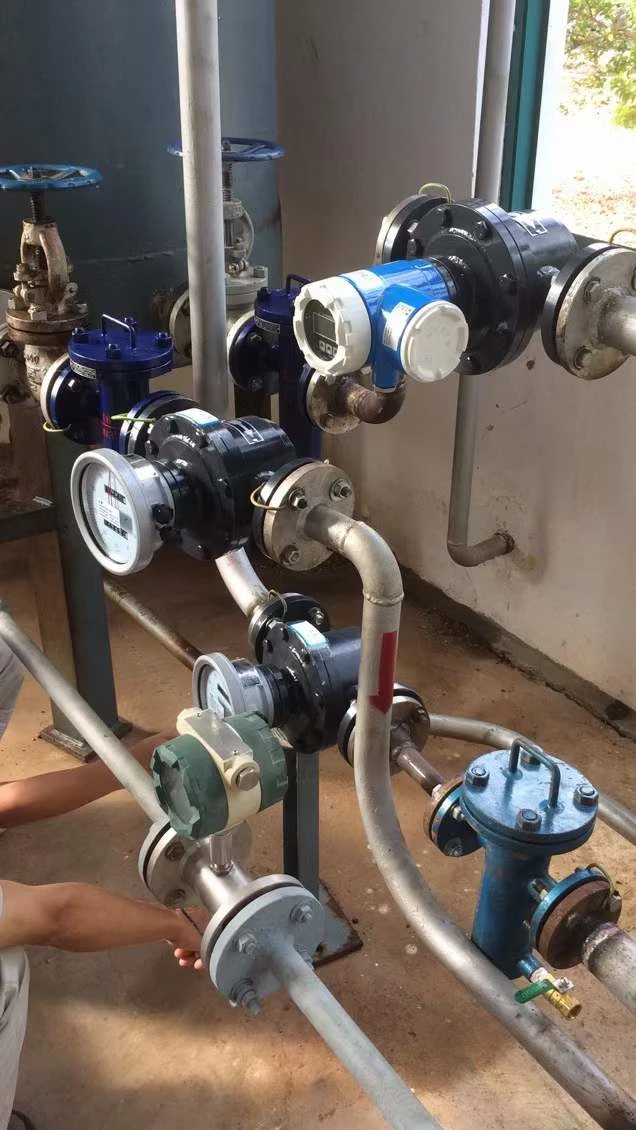
When Each Unit Ships on Flow Meters
The unit on the meter face usually maps to the market it was built for. Turbine pulse meters and rotameters made for US water and HVAC service display GPM. Magnetic flow meters and Coriolis meters built for chemical and pharma global markets display LPM (or m³/h for larger sizes). European-spec equipment defaults to LPM. Indian and Southeast Asian water authorities use both, but lean LPM for utility billing and GPM for irrigation pumps (see our companion guide on BTU meter for chilled water).
A practical rule from a sizing perspective: pumps in the 1–500 GPM band map to the most common DN15 through DN150 line sizes. Above 1000 GPM, jump straight to m³/h on the spec sheet to keep numbers compact.
Spec-Sheet Decoder: GPM Range to Pipe Size
When a vendor quotes a meter’s “flow range 5–50 GPM” you can sanity-check the line size with this table (assumes water at 1.5 m/s typical pipe velocity):
| Line Size | Typical Range (GPM) | Equivalent (LPM) |
|---|---|---|
| DN15 (½”) | 1–10 | 4–38 |
| DN25 (1″) | 3–25 | 11–95 |
| DN50 (2″) | 10–100 | 38–379 |
| DN80 (3″) | 25–250 | 95–946 |
| DN100 (4″) | 50–450 | 189–1703 |
| DN150 (6″) | 120–1100 | 454–4164 |
| DN200 (8″) | 220–2000 | 833–7571 |
If your process flow falls below 30% of the meter’s max-rated GPM you lose accuracy on most magnetic, turbine, and vortex technologies. Spec a smaller line size or a higher-turndown meter — see our straight-pipe requirements guide before locking in the size.
Other Flow Rate Units: m³/h, CFM, BPH
GPM and LPM are not the only volumetric units you will see. Three others dominate specific industries:
| Unit | Full Name | Typical Use | 1 GPM Equivalent |
|---|---|---|---|
| m³/h | cubic metres per hour | European utility water, large industrial flow | 0.2271 |
| CFM | cubic feet per minute | Compressed air, ventilation, natural gas | 0.1337 (for liquid; gas conversions use STP) |
| BPH | barrels per hour | Crude oil custody transfer | 1.428 (US oil barrel = 42 gal) |
| L/s | litres per second | Hydraulic system design | 0.0631 |
| SCFM | standard CFM | Gas flow at 14.696 psia / 60°F | Volume-corrected variant of CFM |
For gas service the “S” prefix matters more than people expect. ACFM (actual CFM) is the volume at the actual line pressure and temperature; SCFM is the same gas referenced to standard conditions. A compressor rated 200 SCFM at 14.7 psia delivers only ~70 ACFM at 90 psig — same mass, smaller physical volume. Vortex flow meters for steam and gas service usually display SCFM or kg/h, not GPM.
Mass vs Volumetric Flow: When GPM Lies
GPM measures volume. For most water and HVAC duty that is fine — water density is stable at 1.00 kg/L from 4°C to 30°C. For everything else, volume changes with temperature and pressure but mass does not. Three cases where a GPM reading will mislead you:
- Hot oil at 200°C. Lube oil expands ~13% from 20°C to 200°C. A 100 GPM reading at the hot side equals only 88.5 GPM corrected to standard conditions. Custody-transfer billing converts to mass.
- Steam. Volumetric flow in a steam line changes radically with pressure. Mass flow (lb/h or kg/h) is the only reliable basis. Spec a vortex or Coriolis meter, not a GPM-output device.
- Compressed gas. A nitrogen blanket delivered at 200 SCFM converts to only 35 ACFM at 5 bar tank pressure. Without standard-conditions correction the GPM-equivalent reading is meaningless.
The fix is to either pair the GPM-rated meter with a density input (HART or 4-20 mA) so the DCS can compute mass flow, or specify a Coriolis meter that measures mass directly. For low-flow chemical injection and refrigerant duty see the worked Coriolis example in our refrigerant flow meter guide.
Three Common Conversion Mistakes
- Using 3.8 as the factor. Rounding to 3.8 instead of 3.78541 adds 0.4% error — small at 10 GPM, costly at 1000 GPM (4 LPM gap that compounds across a year of billing).
- Confusing IGPM with US GPM. The 20% imperial-vs-US gap silently breaks pump sizing. Always confirm the gallon definition before you convert.
- Forgetting GPM is volumetric, not mass. For density-sensitive media (oil, chemicals, slurry) a GPM-rated meter reads volume, not the kg/min you may actually need. Pair with density or specify a Coriolis mass meter.
FAQ
What does GPM mean on a flow meter?
GPM stands for gallons per minute. On industrial flow meters it almost always refers to US gallons unless the meter explicitly says IGPM or UKGPM. The reading is volumetric flow rate — the volume of fluid passing the sensor per minute.
How do I convert 1 GPM to LPM?
Multiply by 3.78541. So 1 GPM = 3.78541 LPM (≈ 3.79 LPM rounded to two decimals). For the reverse, 1 LPM = 0.264172 GPM.
Is GPM the same as flow rate?
GPM is one unit of flow rate. Other common volumetric flow rate units are LPM (litres per minute), m³/h (cubic metres per hour), CFM (cubic feet per minute for gas), and BPH (barrels per hour for oil). Mass flow rate uses kg/min or lb/min instead.
How do I convert GPM to m³/h?
Multiply GPM by 0.2271. So 100 GPM = 22.71 m³/h. m³/h is the standard unit in European municipal water billing and most large-diameter industrial flow installations.
Featured Flow Meters from Sino-Inst
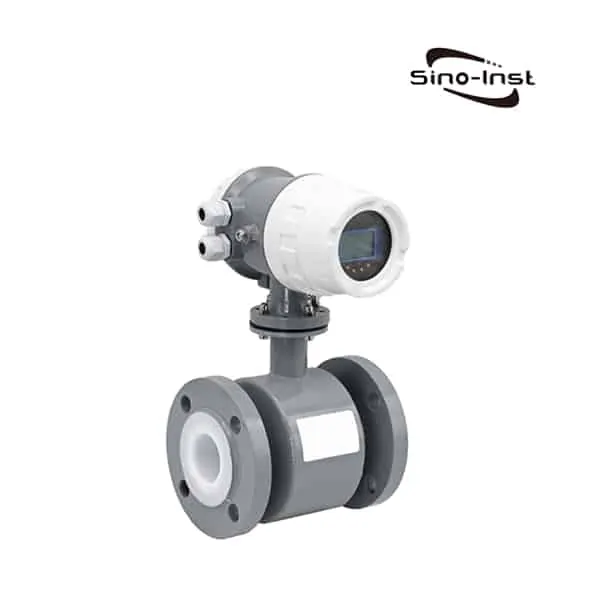
Magnetic Water Flow Meter
DN10–DN3000 | ±0.5% | Selectable GPM / LPM / m³/h on display. Faraday-law magmeter for water, wastewater, conductive liquids.
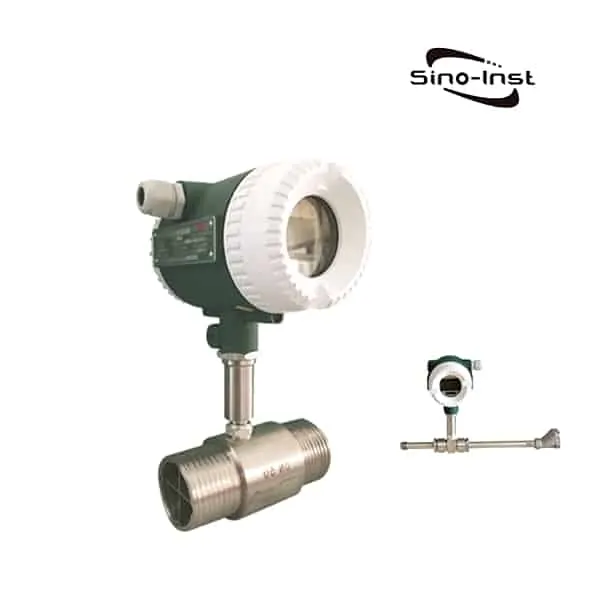
Turbine Pulse Flow Meter
DN4–DN200 | ±0.5% | Pulse output scales 1 pulse/gallon for direct GPM telemetry. Fuel oil, water, clean liquids.
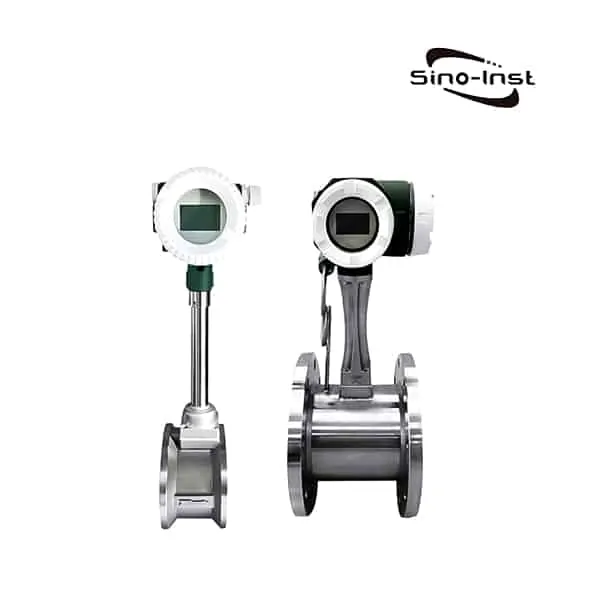
Vortex Flow Meter
DN15–DN300 | ±1% | Reads in LPM, m³/h, or GPM. Steam, gas, low-viscosity liquids with K-factor pulse output.
Need a Flow Meter Sized in Your Units?
Send us your line size, target flow range (in any unit), fluid, and process pressure / temperature. Our engineers will recommend the meter technology and confirm the spec sheet reads in the units your DCS already expects.
Request a Quote

Wu Peng, born in 1980, is a highly respected and accomplished male engineer with extensive experience in the field of automation. With over 20 years of industry experience, Wu has made significant contributions to both academia and engineering projects.
Throughout his career, Wu Peng has participated in numerous national and international engineering projects. Some of his most notable projects include the development of an intelligent control system for oil refineries, the design of a cutting-edge distributed control system for petrochemical plants, and the optimization of control algorithms for natural gas pipelines.