
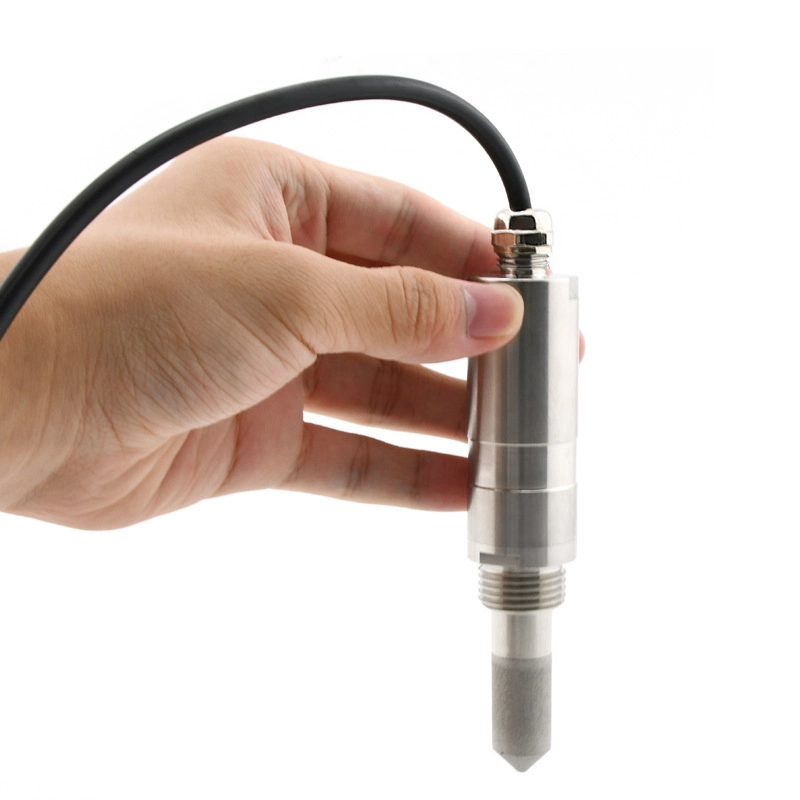
Updated 2026-06-01 by the Sino-Inst Engineering Team
A dew point meter measures moisture in far more than compressed air. The same capacitive probe that checks your dryer can read nitrogen, SF6, natural gas, CO2, and most inert gases. But “can measure” is not “plug in and trust the number.” Corrosive gases poison the sensor, high pressure can destroy it, and a reading taken at the wrong pressure basis is confidently wrong. This guide lists which gases a dew point meter can detect, which ones need sampling first, and the moisture spec each application actually demands.
Contents
- Can one dew point meter measure every gas?
- Which gases can a dew point meter detect? (reference table)
- Pressure dew point vs. atmospheric dew point
- Gases that damage or fool the sensor
- Sampling and pre-conditioning: why “can measure” is not “plug in”
- Which sensor for multi-gas work?
- Per-application dew point specs
- Related dew point and gas products
- Frequently asked questions
Can One Dew Point Meter Measure Every Gas?
Mostly yes — for non-corrosive, non-condensing gases. A dew point meter measures water vapour, and water vapour behaves the same whether it is carried by air, nitrogen, or SF6. So a single capacitive or metal-oxide probe can read moisture across a wide list of gases. The limits are chemistry and pressure, not the gas’s identity. If the gas attacks the sensing element, or arrives wet enough to condense liquid on the probe, the measurement fails regardless of how “compatible” the gas looks on paper.
That is the honest version of “yes, it measures many gases.” The reading is trustworthy when the gas is dry-ish, clean, and chemically inert toward the probe. The rest of this article is about the cases where one of those three conditions breaks.
Which Gases Can a Dew Point Meter Detect?
Here is the cross-gas view the SF6-only product pages never give you. The table covers the gases we are asked about most, whether a standard capacitive dew point meter measures them directly, the corrosion risk, whether sampling is needed, and the moisture target each application typically holds.
| Gas | Measurable? | Corrosion risk | Sampling needed? | Typical moisture target |
|---|---|---|---|---|
| Compressed / instrument air | Yes, direct | None | In-line probe | −40 °C PDP (ISO 8573-1 Class 2) |
| Nitrogen (N2) | Yes, direct | None | In-line probe | −60 to −40 °C PDP |
| SF6 (switchgear) | Yes | Low unless decomposed | Regulated sampling, reclaim gas | ≤ −36 °C (IEC 60480 in-service) |
| Natural gas | Yes | Low; H2S variants corrosive | Sampling + hazardous-area rating | ≤ −5 °C water dew point @ pipeline P |
| CO2 | Yes | Forms acid when wet | Sampling for wet streams | Application-specific |
| Hydrogen (H2) | Yes | None (sensor); flammable | Hazardous-area rating | Generator/process spec |
| Argon / Helium | Yes, direct | None | In-line probe | Welding / electronics spec |
| Gases with H2S, Cl2, NH3 | Not directly | High — poisons probe | Scrub / dedicated sensor | Consult application |
The pattern is clear: the clean, inert gases — air, N2, Ar, He, H2 — are direct reads. SF6 and natural gas are measurable but want a regulated sampling setup. The acidic and reactive streams need scrubbing or a different instrument. For a deeper compressed-air walkthrough, see our guide to the dew point meter for compressed air.
Pressure Dew Point vs. Atmospheric Dew Point
Before you compare any two readings, settle the pressure basis. Pressure dew point (PDP) is the dew point of the gas at its working pressure. Atmospheric dew point is what that same gas would read after expanding to ambient. Compressing a gas raises its dew point, so a value that looks dry at atmosphere can be wet inside the line. The number is meaningless without the pressure it was taken at.
This trips up multi-gas work constantly. An operator measures SF6 at line pressure, then compares it to a portable reading taken after a regulator dropped the gas to atmosphere, and panics at the gap. Both numbers can be correct — they are just different bases. The rule on our sites: measure at line pressure when the sensor is rated for it, always record the pressure, and never compare a PDP spec to an atmospheric reading. SF6 limits such as IEC 60480 are quoted at a defined basis for exactly this reason.
Gases That Damage or Fool the Sensor
Three things ruin a dew point sensor faster than anything else. Corrosive contaminants — hydrogen sulphide, chlorine, ammonia — chemically attack a metal-oxide or capacitive element and shift its calibration permanently. Liquid water from an upstream upset floods a capacitive probe and pins it wet for hours, or kills it outright. And over-pressure beyond the sensor’s rating physically damages the cell. None of these announce themselves; you get a plausible reading that is quietly wrong or a probe that slowly dies.
A case from our files: a substation crew measured compressed air with a portable meter, got a clean −40 °C, then pushed the same probe straight onto an SF6 reclaim port at full bottle pressure with no regulator. The reading was nonsense and the sensor needed recalibration. The gas was perfectly “measurable” — the install was not. Treat reactive and high-pressure gases as a sampling problem first and a measurement problem second.
Sampling and Pre-Conditioning: Why “Can Measure” Is Not “Plug In”
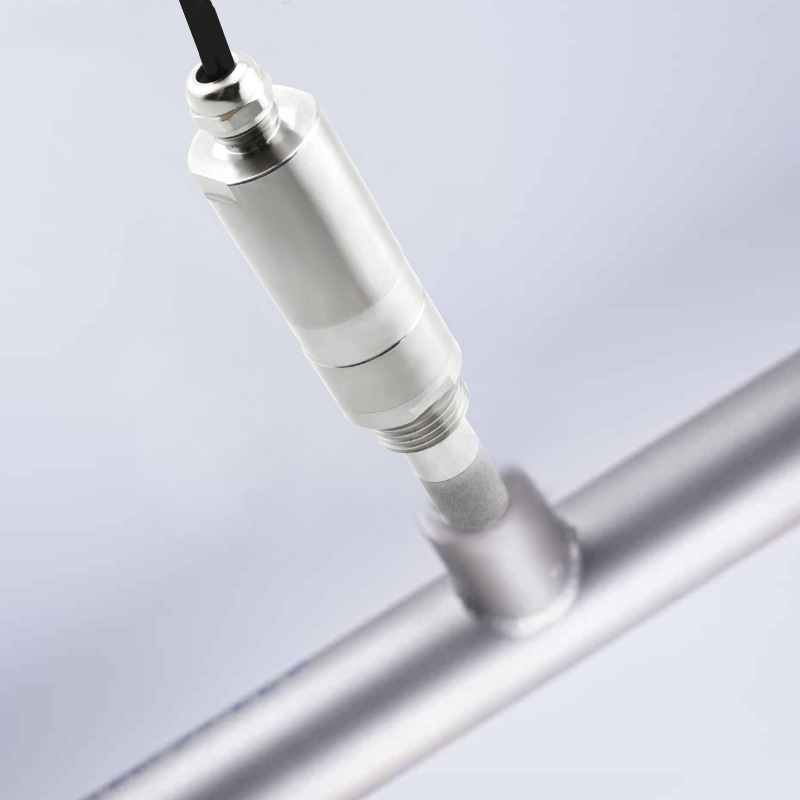
For anything other than clean line air, the sensor needs a sampling system, not a bare insertion. A workable SF6 or natural-gas setup uses a pressure regulator to bring the gas to the sensor’s rated pressure, a stainless sample cell so you can isolate and remove the probe, and a controlled bleed of roughly 1–2 L/min through the cell. Too much flow cools the element and reads falsely dry; too little leaves stale gas that does not represent the system. Use stainless tubing for low dew points, since plastic and rubber outgas moisture and keep you from ever reaching a dry reading.
For valuable gases like SF6, route the sample to a reclaim bag rather than venting it. A fixed install on a header is better served by an online dew point meter plumbed into a permanent sample loop, while a dew point monitor for cold-storage air shows how the same sampling logic adapts to food and process environments.
Which Sensor for Multi-Gas Work?
For monitoring several gas lines with one instrument, a capacitive or metal-oxide (MEMS) probe is the practical default. It covers roughly −80 to +20 °C dew point, tolerates the occasional damp excursion, and is cheap enough to keep as a portable spot-checker. Chilled-mirror instruments are the laboratory reference and do not drift, but they are maintenance-heavy and intolerant of oil and dust — overkill for routine plant rounds. Keep a chilled-mirror or a freshly calibrated portable as the reference you periodically check the working sensor against.
Per-Application Dew Point Specs
- Compressed air — ISO 8573-1 sets the classes: Class 2 ≤ −40 °C PDP, Class 3 ≤ −20 °C PDP, all quoted as pressure dew point.
- SF6 switchgear — IEC 60480 gives an in-service moisture limit around ≤ −36 °C; new gas is drier still.
- Pipeline natural gas — water dew point commonly ≤ −5 °C at transmission pressure to prevent hydrate and corrosion.
- Instrument nitrogen — typically −60 to −40 °C PDP depending on the downstream analyzer or process.
Different gas, different judge — but the same probe can read all of them if you respect the chemistry and the pressure basis. If your question is really about gas composition rather than moisture, the moisture meter sits alongside other analysers; our note on density meters and types and the field guide to measuring crude oil density cover the analytical side for liquids.
Related Dew Point and Gas Products
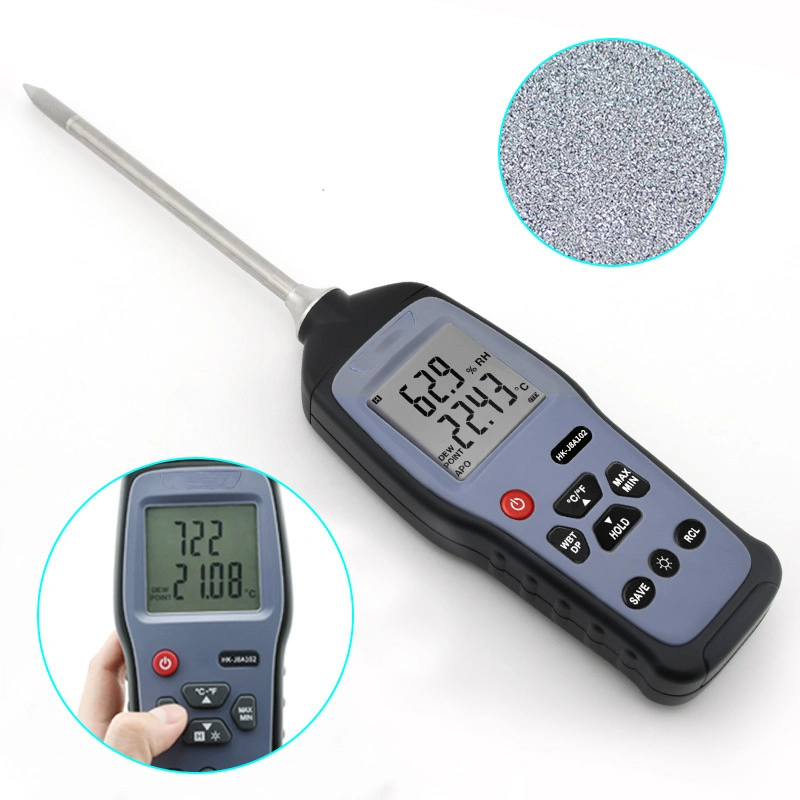
Portable Dew Point Meter
Handheld unit for spot-checking compressed air, N2, SF6, and inert gases. Fast readings with a regulated sampling kit for pressurized or reclaim-gas points.
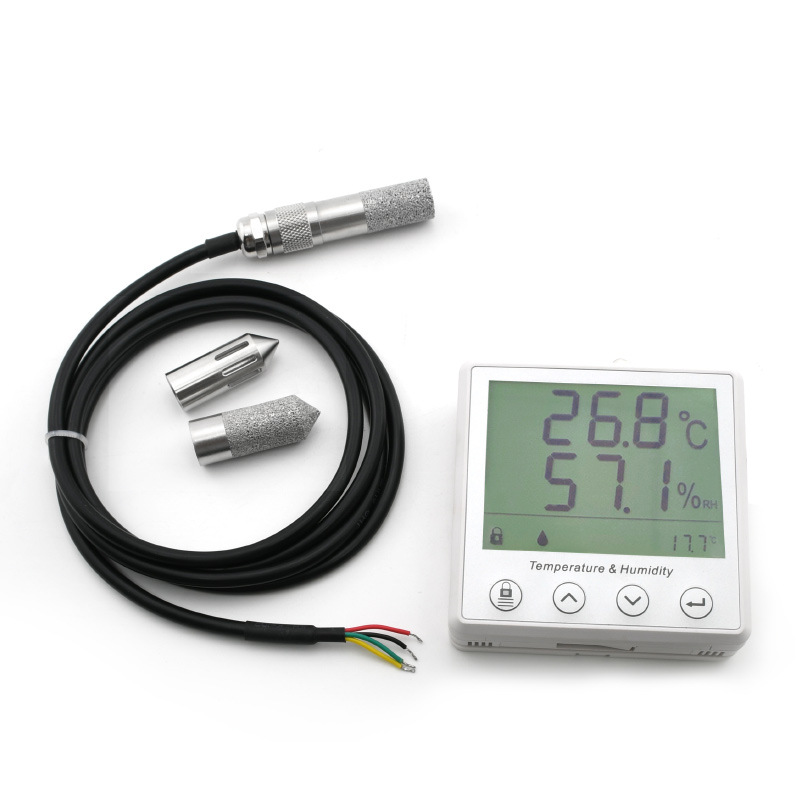
Industrial Online Dew Point Meter
Fixed inline meter for continuous moisture monitoring on dry-air and gas headers. 4–20 mA / RS485 output for direct PLC and alarm integration.
Gas Detection & Analysis
Analysers and detectors for moisture, oxygen, and hazardous gases. For reactive or flammable streams where a dew point probe alone is not enough.
Frequently Asked Questions
Can a dew point meter measure SF6 gas?
Yes. A capacitive dew point meter measures moisture in SF6, which is why utilities use it on switchgear. Use a pressure regulator and a sample cell rather than inserting the probe at full bottle pressure, and route the sample to a reclaim bag. The in-service moisture limit referenced by IEC 60480 is around −36 °C.
Can the same dew point meter measure natural gas and compressed air?
Generally yes, if the gas is non-corrosive. Compressed air reads in-line directly. Natural gas needs a sampling setup and, because it is flammable, a meter with the correct hazardous-area certification. Confirm the pressure basis for each so you are not comparing pressure dew point to atmospheric dew point.
Which gases will damage a dew point sensor?
Corrosive contaminants such as hydrogen sulphide, chlorine, and ammonia chemically attack the sensing element and shift calibration. Liquid water from an upstream upset floods a capacitive probe, and pressure beyond the sensor’s rating damages the cell. Scrub reactive streams or use a dedicated sensor instead of a standard moisture probe.
Do I need sampling to measure dew point in a pressurized gas?
For pressurized or valuable gases, yes. Use a regulator to reach the sensor’s rated pressure, a stainless sample cell with an isolation valve, and a controlled 1–2 L/min bleed. Use stainless tubing for low dew points to avoid moisture outgassing, and reclaim costly gases like SF6 rather than venting.
What dew point is acceptable for compressed air?
It depends on the ISO 8573-1 class. Class 2 requires a pressure dew point of −40 °C or lower, typical for desiccant-dried pharma and PET-drying air. Class 3 allows ≤ −20 °C. All ISO 8573-1 dryness figures are pressure dew points, not atmospheric.
About this article
Written and technically reviewed by the Sino-Inst engineering team — last reviewed 2026-06-01 (AI-assisted drafting). Based on ISO 8573-1 air-quality classes and IEC 60480 SF6 moisture limits, plus field experience measuring dew point in compressed air, SF6, and process gases. Questions? Reach our application engineers.
Request a Quote
Tell us the gas, line pressure, and moisture target. A Sino-Inst engineer will recommend the right dew point meter, sensor technology, and sampling setup for your gases.
Request a Quote

Wu Peng, born in 1980, is a highly respected and accomplished male engineer with extensive experience in the field of automation. With over 20 years of industry experience, Wu has made significant contributions to both academia and engineering projects.
Throughout his career, Wu Peng has participated in numerous national and international engineering projects. Some of his most notable projects include the development of an intelligent control system for oil refineries, the design of a cutting-edge distributed control system for petrochemical plants, and the optimization of control algorithms for natural gas pipelines.