

Updated May 30, 2026
Produced water is one of the harder duties you can hand an electromagnetic flow meter: it is salty, often laced with oil, sand, and chloride, and it punishes the wrong liner or electrode within months. The good news is that the measuring principle itself is a strong fit — produced water is highly conductive, so a magnetic flow meter has no trouble seeing it. The whole job is choosing the liner and electrodes for the abuse, and getting the full-pipe, grounding, and velocity conditions right. This guide is built around the three failure modes that actually take these meters down in the field.
Contents
- Can a magnetic flow meter measure oilfield produced water?
- The three failure modes in produced water
- Liner selection: PTFE/PFA vs polyurethane
- Electrode selection: 316L vs Hastelloy vs tantalum
- Getting the EMF preconditions right in dirty water
- Magnetic vs clamp-on ultrasonic for produced water
- Related flow products
- Frequently asked questions
Can a magnetic flow meter measure oilfield produced water?
Yes, and the conductivity that scares people off other media is exactly what makes it work. An electromagnetic flow meter needs the fluid to conduct — roughly 5 microsiemens per centimetre is enough — and produced water, being brine, sits orders of magnitude above that. Oil droplets and suspended solids do not stop it reading as long as the continuous water phase stays conductive and the pipe runs full. What the principle cannot fix on its own is mechanical and chemical survival: that is what liner and electrode selection are for. Before anything else, confirm the line runs full and is properly grounded — our magnetic flow meter installation guide covers the grounding and commissioning that a stable reading depends on.
The three failure modes in produced water
Almost every produced-water mag meter problem is one of three things, and naming them up front saves you from chasing the wrong fix. First, oil-fouled electrodes: a thin oil film insulates the electrode, the signal drifts over days, and the meter gets blamed when it is actually clean-able. Second, sand abrasion: high velocity plus suspended solids scours the liner until it is breached, after which calibration walks and the meter eventually leaks. Third, chloride pitting: high-chloride brine attacks a 316L electrode, etching it until the contact degrades. Each one points to a different countermeasure, which is why the rest of this guide is organised around liner, electrode, and operating conditions rather than a single product spec.
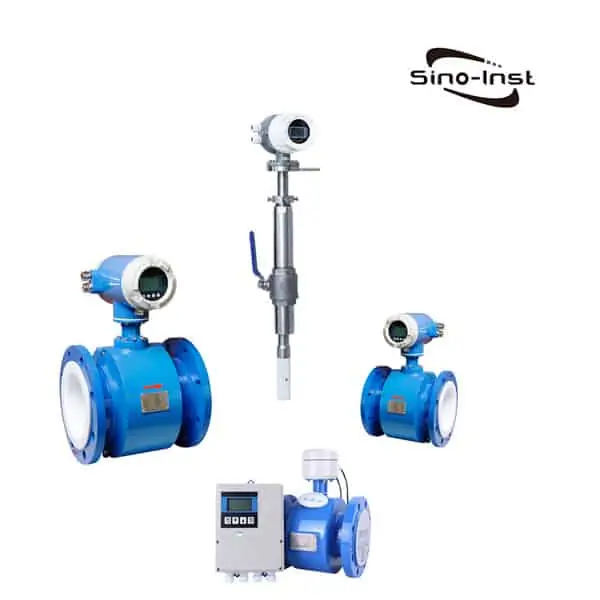
Liner selection: PTFE/PFA vs polyurethane
The liner is the part that meets the abrasion and the chemistry, so match it to whichever dominates your stream. Polyurethane is the abrasion champion: it shrugs off sand and grit that would scour a fluoropolymer, which makes it the default for high-solids produced water — but it softens above roughly 80°C and is less happy with strong solvents. PTFE and PFA reverse the trade: they handle hot water, oil, and aggressive chemistry but wear faster under sand. The practical rule is to let the worst actor decide. If sand is the enemy, choose polyurethane and keep velocity down; if heat or solvents lead, choose a fluoropolymer and control abrasion by sizing.
| Liner | Abrasion (sand) | Temp limit | Oil / solvent | Best for |
|---|---|---|---|---|
| Polyurethane | Excellent | ~80°C | Fair | High-sand produced water |
| PTFE | Fair | ~180°C | Excellent | Hot, oily, chemically aggressive |
| PFA | Fair | ~150°C | Excellent | Clean bore, full vacuum rating |
When sand forces polyurethane but the flow is high, the fix is geometry: step up a pipe size so velocity drops into the gentle range. Our 6-inch DN150 flow meter sizing guide shows how bore and flow range trade off when you upsize to protect the liner.
Electrode selection: 316L vs Hastelloy vs tantalum
Electrodes fail by chloride attack and by fouling, and produced water serves up both. On corrosion, 316L is the baseline but pits under the chloride load typical of brine; Hastelloy C is the workhorse upgrade for salty produced water, and tantalum is reserved for the most acidic, high-chloride streams where even Hastelloy struggles. On fouling, the oil film is the recurring headache — so where oil carryover is real, specify cleanable electrodes (mechanical scraper or ultrasonic) or an anti-adhesion electrode design, and plan a periodic back-flush. That single choice is what stops the every-few-days drift that gets a perfectly good meter condemned. For the precise grade and head options, see the magnetic water flow meter range.
Getting the EMF preconditions right in dirty water
The meter only delivers its rated accuracy if four conditions hold, and dirty water makes each easier to get wrong. The pipe must run full — mount in a low point or a vertical up-flow leg so it never drains, the same reasoning behind vertical flow meter installation. Grounding must be solid: produced water carries electrical noise, and grounding rings plus a clean signal-cable run keep the millivolt signal readable, which is why shielded twisted-pair signal cable matters here more than on clean water. Keep velocity in the 1–3 m/s band — toward the low end when sand is present to spare the liner, checked against the straight-run requirements for your layout. And confirm conductivity is above the 5 µS/cm floor, which produced water clears easily.
Magnetic vs clamp-on ultrasonic for produced water
Searches for a wastewater flow meter often land on clamp-on ultrasonic because it is non-invasive, but for a permanent produced-water line a wetted magnetic meter is usually the more forgiving choice. It has no moving parts, adds no pressure loss, and reads a full bore of conductive water regardless of oil droplets or suspended solids. Clamp-on ultrasonic earns its place for temporary surveys or where you cannot break into the pipe, but entrained gas and heavy solids degrade its transit-time reading. If you are weighing the two technologies head to head, our magnetic vs ultrasonic comparison lays out where each is trustworthy.
Related flow products
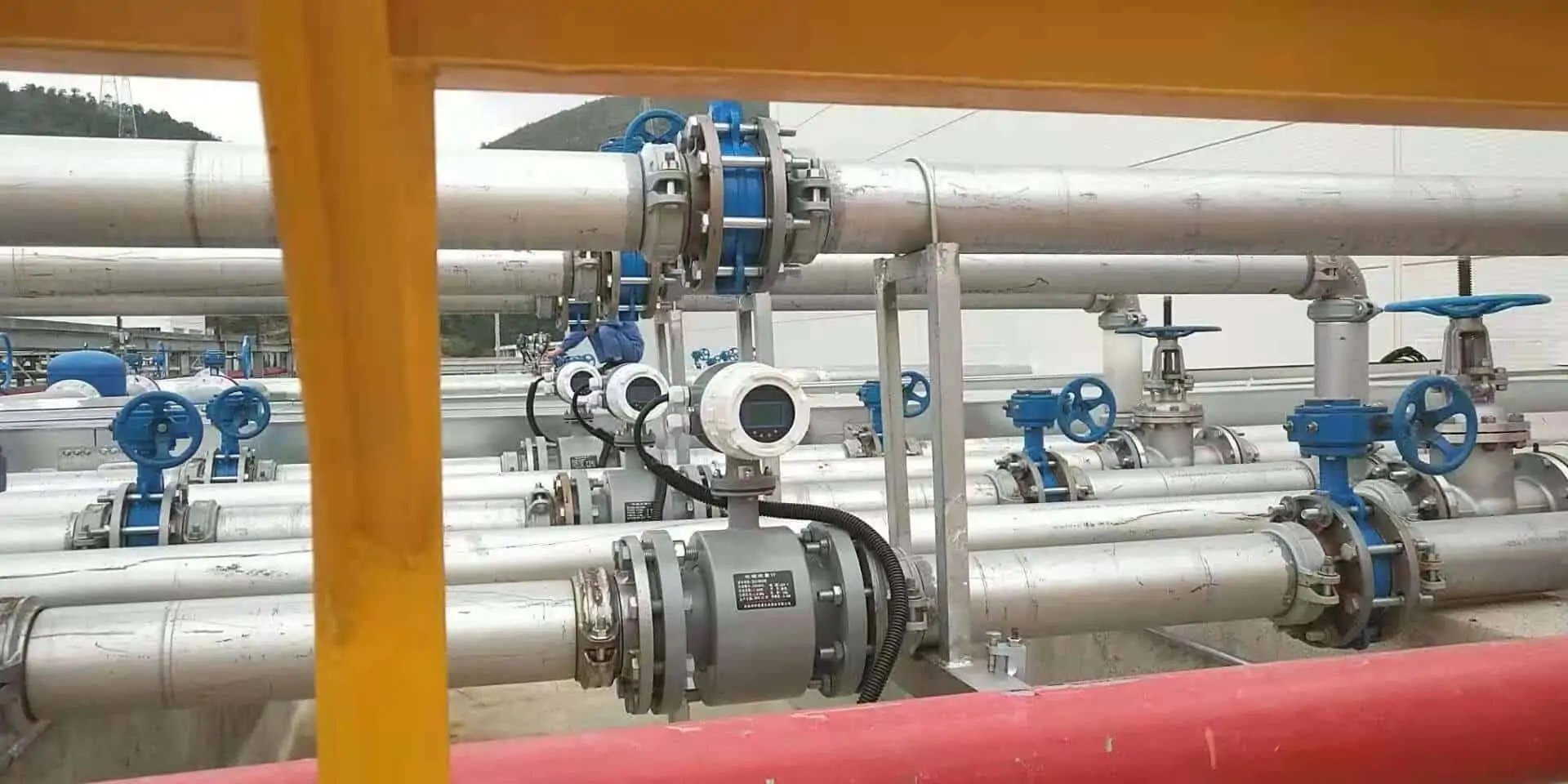
Magnetic Water Flow Meter
Wetted electromagnetic meter for conductive water, with PTFE, PFA, or polyurethane liners and 316L, Hastelloy, or tantalum electrodes for produced-water duty.
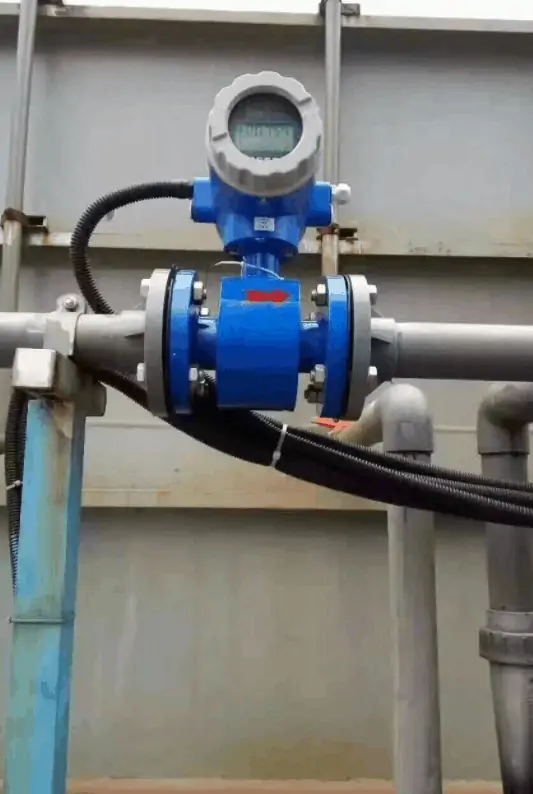
Installation and Grounding Guide
Straight-run, grounding-ring, and full-pipe commissioning steps — the setup details that decide whether a produced-water reading stays stable.
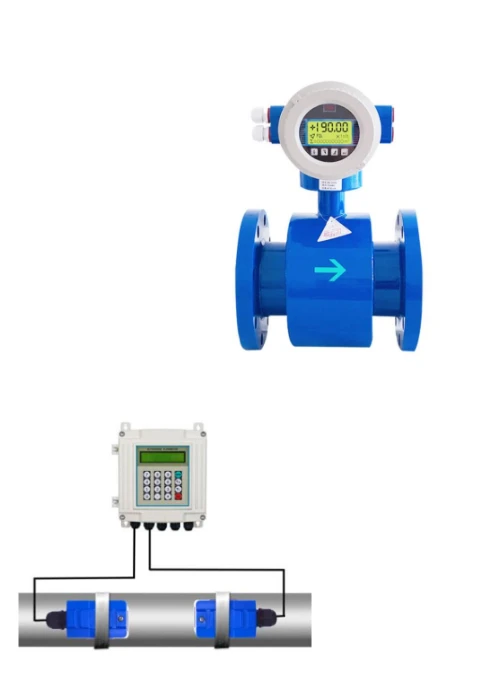
Magnetic vs Ultrasonic
When a wetted magnetic meter beats clamp-on ultrasonic on dirty, full-bore water — and the temporary-survey cases where ultrasonic still wins.
Frequently asked questions
Can a magnetic flow meter measure oilfield produced water?
Yes. Produced water is salty and highly conductive — usually thousands of microsiemens per centimetre, far above the 5 µS/cm minimum an electromagnetic flow meter needs. The real constraints are a full pipe, reliable grounding, and choosing a liner and electrodes that survive oil film, sand, and chloride.
What liner is best for an abrasive produced-water mag meter?
Polyurethane resists sand abrasion far better than PTFE and is the usual pick for high-solids produced water, but it tops out near 80°C. Where the water is hot or carries solvents and oil, PTFE or PFA handles the chemistry and temperature; you then control abrasion by upsizing the bore to drop velocity.
Which electrode material resists chloride corrosion in produced water?
Plain 316L pits under high chloride. For salty produced water, step up to Hastelloy C for chloride resistance, or tantalum for the most aggressive, acidic, high-chloride streams. The electrode choice is about chloride and acidity, not just abrasion.
Why does my produced-water mag meter reading drift every few days?
An oil film building on the electrodes is the classic cause — it insulates the electrode and the signal wanders, which is easy to misread as a failed meter. Specify cleanable electrodes (scraper or ultrasonic), an anti-stick electrode design, and a periodic back-flush rather than replacing a meter that is actually fine.
What is the minimum conductivity for a magnetic flow meter?
About 5 µS/cm for a standard electromagnetic flow meter. Produced water is well above this, so conductivity is rarely the problem — a partially empty pipe or poor grounding is far more often the cause of an unstable reading.
Magnetic or clamp-on ultrasonic for produced water?
For full, conductive, dirty produced water in a fixed line, a wetted magnetic meter is more forgiving: it has no moving parts, no pressure loss, and is unaffected by oil droplets or suspended solids in a full bore. Clamp-on ultrasonic suits temporary or non-invasive checks but struggles with entrained gas and heavy solids.
About this article
Written and technically reviewed by the Sino-Inst engineering team — last reviewed 2026-05-30 (AI-assisted drafting). Based on electromagnetic flow measurement principles and field experience with oilfield produced-water reinjection lines. Questions? reach our application engineers.
Get help specifying a produced-water mag meter
Tell us your water chemistry, sand and oil load, line size, and temperature, and our engineers will recommend the liner, electrode, and grounding setup. Request a quote below.
Request a Quote

Wu Peng, born in 1980, is a highly respected and accomplished male engineer with extensive experience in the field of automation. With over 20 years of industry experience, Wu has made significant contributions to both academia and engineering projects.
Throughout his career, Wu Peng has participated in numerous national and international engineering projects. Some of his most notable projects include the development of an intelligent control system for oil refineries, the design of a cutting-edge distributed control system for petrochemical plants, and the optimization of control algorithms for natural gas pipelines.