Ultrasonic CO2 Level Indicator: How It Works, Specs & Measurement Guide

An ultrasonic CO2 level indicator is a portable, non-contact device that tells you how full a liquid CO2 cylinder is without opening it, weighing it, or puncturing the wall. You hold the probe against the outside of the cylinder, press the measure button, and the meter reads the level through the steel wall using ultrasonic reflection. This matters because the most common CO2 applications — fire suppression systems, beverage supply, cryogenic supply — all use sealed cylinders where conventional sight gauges or sensors can’t be installed. This guide covers how the indicator works, which cylinder diameters it fits, how to take a correct reading, and where it beats weighing and pressure-based methods.

Contents

How Does an Ultrasonic CO2 Level Indicator Work?

The indicator sends a burst of ultrasonic energy through the cylinder wall and measures the reflected signal. When the probe is pressed against the cylinder above the liquid line, the ultrasonic pulse passes through the steel, bounces off the far wall through the gas phase, and returns with low attenuation. Below the liquid line, the pulse travels through steel, then through liquid CO2, reflects off the far wall, and returns with much higher attenuation and a distinctive signature. The electronics compare the return signal strength against a threshold and output “liquid” or “no liquid” for that spot.

You move the probe vertically along the cylinder to find the transition — that’s the liquid level. A numeric parameter on the screen tells you how confident the reading is: parameter ≥ 2 means gas phase, parameter < 2 means liquid, and values around 2 mean you're within roughly 5 cm of the actual liquid surface. Moving the probe 1 cm at a time in that range pinpoints the level.

Because the method is entirely non-contact, it works on sealed, pressurized cylinders that would be impossible to drill for a conventional level probe. For the same reason it handles CO2, Halon, FM-200, Novec 1230, propane, and any other liquefied gas under pressure without any gas-specific calibration.

Which CO2 Cylinders Does It Fit?

The portable indicator has pre-loaded calibration for four standard CO2 cylinder diameter ranges. Pick the matching size from the menu before measuring.

Cylinder ModeExternal DiameterTypical Use
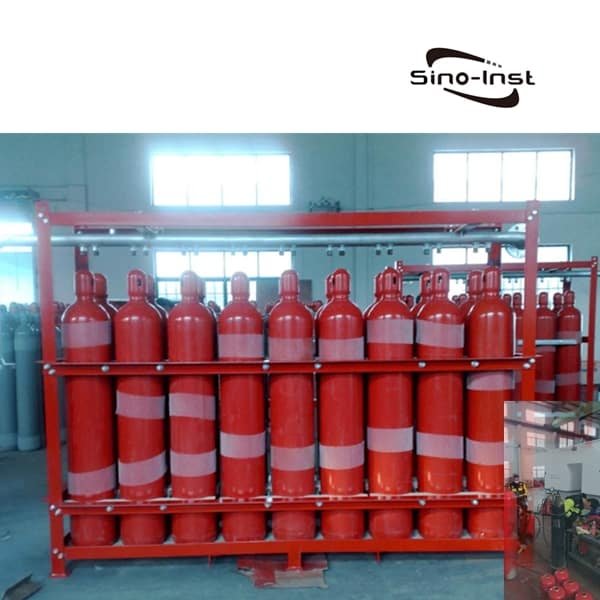
Small CO2210 – 230 mmBeverage-grade 5–15 kg bottles
Medium CO2265 – 285 mmFire-suppression 25–30 kg cylinders
Large CO2340 – 360 mmIndustrial bulk cylinders
Extra-large CO2390 – 410 mmLarge fire-suppression banks
Common modeAny diameter up to 3 m spherical/horizontal/verticalNon-standard tanks and vessels

Wall thickness up to 30 mm is supported. The cylinder material can be carbon steel, stainless steel, glass, or unfoamed plastic — anything that transmits ultrasound cleanly. If your cylinder is outside the four CO2 diameters, use the Common mode, which accepts any tank shape up to 3 m diameter without a pre-loaded profile. Accuracy drops slightly in Common mode because the calibration isn’t cylinder-specific.

Specifications

Measurement accuracy< 5 mm at the liquid surface transition
Wall thickness range3 – 30 mm
Container materialsSteel, stainless steel, glass, unfoamed plastic
Measurable mediaLiquefied CO2, Halon, FM-200, Novec 1230, propane, pure liquids, slurries without crystallization
Ambient temperature-20 °C to +60 °C (-4 °F to +140 °F)
Ambient humidity15% to 85% RH
DisplayHigh-contrast OLED, readable under direct sunlight
PowerTwo customer-supplied lithium batteries
Typical current draw~100 mA average
EnclosureRugged portable handheld

How Do You Measure the Level in a CO2 Cylinder?

The measurement takes under a minute once you know the cylinder size. Follow these steps to get a clean reading and avoid the common mistakes that produce false negatives on partly-full bottles.

  1. Wipe the contact band of the cylinder clean. Paint, rust, or stickers on the wall block the ultrasonic signal.
  2. Power on the indicator, select “CO2 cylinder” from the menu, then select the cylinder diameter range that matches your bottle.
  3. Start from the bottom of the cylinder (you expect liquid there). Press the probe vertically, flat against the wall. Any tilt or air gap gives a false “no liquid” reading.
  4. Press the Measure button. Watch the indicator: green = liquid present at this height, red = no liquid.
  5. Move the probe up in 5–10 cm increments. When the reading flips from green to red, you’re at the liquid level.
  6. Take three spot readings at the transition around the cylinder circumference. Welds and shadows can distort a single reading; the consistent result across three points is the real level.

Two zones always give invalid readings: the very bottom dome (weld seam reflections) and the top neck (valve, outlet plumbing, and vapor space geometry). Stay in the cylindrical mid-section. On a typical 275 mm fire-suppression bottle, useful measurement zone runs from about 10 cm above the bottom to 10 cm below the shoulder.

Ultrasonic vs Weighing vs Pressure: Which Method Wins?

The three common ways to check a CO2 cylinder are weighing, pressure reading, and ultrasonic non-contact level. Each has a niche. The ultrasonic indicator wins for any scenario where you need a fast check without disconnecting the cylinder or moving it onto a scale.

MethodTypical AccuracyTime per CylinderNeed to Disconnect?Works on Low-fill?
Weighing (scale)±0.1 kg2–5 min (move + weigh)Usually yesYes
Pressure gaugePoor — pressure stays ~57 bar at 20 °C until nearly emptyInstantNoNo — useless until the last 5%
Ultrasonic indicator±5 mm (2–3% of cylinder volume)30–60 secNoYes

The killer limitation of a pressure gauge on a CO2 cylinder is that pressure stays at the saturation value (~57 bar at room temperature) as long as any liquid is present. A cylinder that’s 90% full and a cylinder that’s 10% full read the same pressure. By the time the gauge drops, you’re almost empty. This is why fire-suppression inspectors stopped relying on pressure for half-yearly checks and moved to ultrasonic.

Weighing is accurate but slow and impractical on banked installations where 16 or 24 cylinders are strapped to a manifold. Detaching each one and weighing it takes hours. Ultrasonic lets an inspector walk down the bank and check all 24 in about 15 minutes. For deeper reading on ultrasonic theory, see our ultrasonic level transmitter guide.

Where Is This Device Actually Used?

The largest installed base is fire-suppression system inspection. NFPA 12 and equivalent codes require periodic verification that every suppression cylinder is within its specified fill range, and ultrasonic is the fastest legal way to do it. A single technician clears a data-center suppression room in under an hour.

Other recurring applications:

  • Beverage industry — bar and restaurant CO2 supply cylinders, where detach-and-weigh interrupts service
  • Industrial gas distribution — cylinder-fill stations verifying post-fill weights on a sample basis
  • LPG distribution — propane bottles in refill stations and truck-mounted banks
  • Novec 1230 and FM-200 clean-agent suppression in server rooms and marine engine rooms
  • Halon legacy systems still in service on military and offshore platforms
  • Liquid nitrogen and argon low-pressure cryogenic dewars (see our cryogenic level sensor guide for continuous-monitoring alternatives)

For applications that need a permanent fixed sensor rather than a portable spot check, the ultrasonic concept doesn’t transfer well — long-term cylinder monitoring usually uses load cells on the cylinder bracket. The portable indicator is the right tool specifically when you’re walking a site and need quick verification across many cylinders.

If the method above fits your process, these are the sensors Sino-Inst ships for it. Each card links to full specs and a quote form.

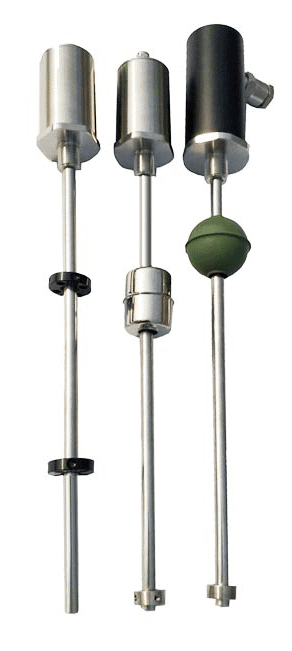
SI-100 Magnetostrictive Level Transmitter

Continuous level transmitter for large bulk CO2 storage tanks, immune to vapour and pressure changes.

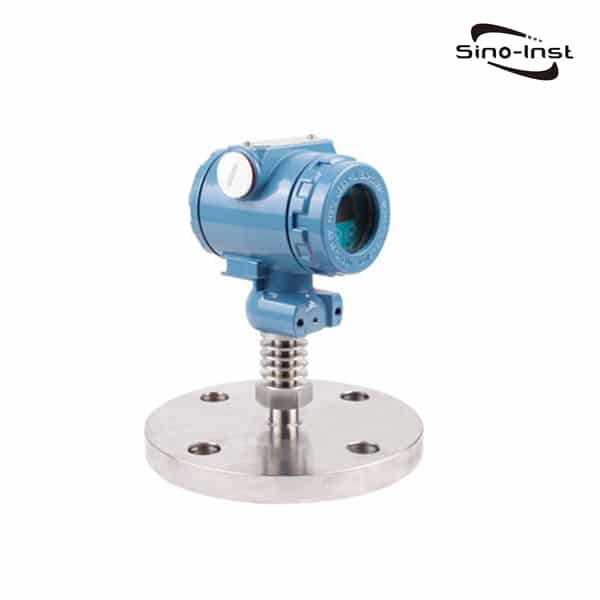
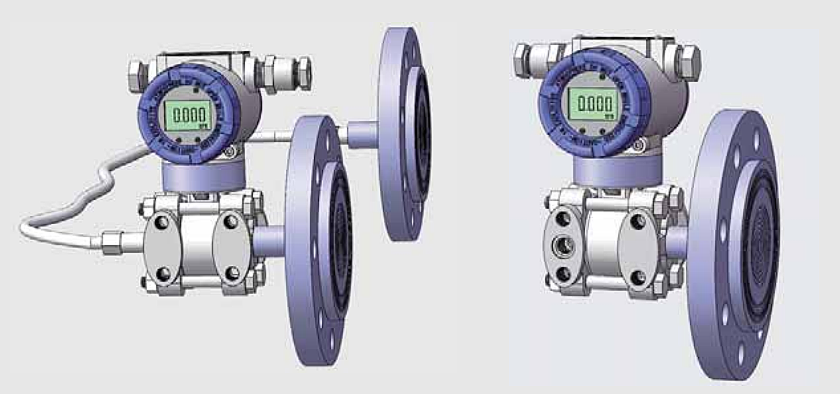
Flange-Mounted DP Transmitter

Differential pressure level transmitter for pressurised CO2 vessels where portable ultrasonic can’t fit.

Tank Level Sensors Selection Guide

Decision matrix to pick the right level sensor by tank contents, pressure, and mounting constraints.

FAQ

Does an ultrasonic CO2 level indicator work through insulation?

No. The probe must contact bare cylinder wall. Foam insulation, thick paint coats, or fiberglass jackets kill the signal. If the cylinder is jacketed, you have to find an inspection patch cut into the jacket, or remove a section of insulation for the measurement.

Is calibration required for each gas type?

No. The indicator detects the acoustic impedance difference between gas phase and liquid phase, which is large for every liquefied gas (CO2, Halon, FM-200, Novec 1230, propane). You don’t need a separate calibration per gas. The pre-loaded profiles are for cylinder diameters, not gas types.

What’s the accuracy on a partly-full cylinder?

Within ±5 mm at the actual liquid surface. Converted to volume, that’s about ±2–3% on a standard 275 mm diameter fire-suppression cylinder. If you need sub-1% precision, weigh the cylinder on a calibrated scale — ultrasonic is a fast check, not a fiscal-grade measurement.

Can I use the indicator on an aluminum cylinder?

Yes. Aluminum transmits ultrasound cleanly, same as steel. The indicator works on carbon steel, stainless, aluminum, glass, and unfoamed plastic up to 30 mm wall thickness. What it won’t handle is composite fiber-wrapped cylinders (CNG Type 3 or 4), because the fiber layer scatters the ultrasonic signal.

Why do I get “no liquid” on a cylinder I know is full?

Three common causes: (1) the probe isn’t flat against the wall (any tilt or air gap blocks the signal), (2) you’re measuring in the bottom dome or top neck (always invalid zones), (3) paint, rust, or grease is blocking acoustic coupling — wipe the contact patch clean or add a drop of coupling gel. Try three points around the circumference at mid-height; if all three read no liquid, the cylinder really is empty.

Get Pricing & Application Support

Sino-Inst supplies portable ultrasonic liquid-level indicators for CO2, Halon, FM-200, Novec 1230, and propane cylinder inspection. Tell us your typical cylinder diameter range and how many bottles you need to check per shift, and we’ll spec the right model. Contact our engineers below.

Request a Quote

Please enable JavaScript in your browser to submit the form

How to Check Level in Underground Tanks: 5 Methods & Sensor Selection Guide

Measuring level in an underground tank is harder than measuring an above-ground tank. You can’t just drop a sight gauge on the side. After the tank is buried, you’re stuck with whatever nozzles, manholes, and sensors were specified at install time. Picking the wrong method means you either get inaccurate readings, or you tear up the ground to retrofit. This guide covers the five level-measurement methods that actually work on buried tanks, when each one is the right choice, and the installation constraints you need to verify before you order.

Contents

What’s the Easiest Way to Check Level in an Underground Tank?

The easiest way is a manual dipstick lowered through the tank’s fill-port or manhole. It takes thirty seconds, costs almost nothing, and works on any tank. The catch is that dipsticks only give you a spot reading — you have to physically open the tank every time, and there’s no output signal for a control system.

For anything beyond occasional spot checks, you need a fixed sensor. The five practical options for buried tanks are: magnetostrictive probes, submersible hydrostatic pressure sensors, radar (free-space and guided-wave), ultrasonic transducers, and capacitance probes. Each handles a different combination of medium, accuracy, and installation footprint.

Which Level Measurement Method Fits Which Tank?

Pick the method by the medium first, then by the required accuracy. Fuel and high-value liquids need ±1 mm class accuracy, so magnetostrictive wins. Water and sewage can use ±0.5% FS pressure sensors, which are much cheaper. Corrosive chemicals rule out most contact sensors — PTFE-coated radar or PTFE submersibles are the only safe picks.

MethodBest ForTypical AccuracyInstallationContact With Medium
Magnetostrictive probeFuel, oil, custody transfer±1 mmTop-mount through manhole, up to 25 m lengthYes (float + stem)
Submersible hydrostaticWater, sewage, diesel±0.2% FSCable-suspended to bottom, needs vent tubeYes (fully submerged)
80 GHz FMCW radarCorrosive liquids, LPG, variable density±2 mmTop-mount, needs clear line of sightNo
Guided-wave radar (GWR)Foaming liquids, turbulent surfaces±3 mmTop-mount, probe hangs to bottomYes (probe only)
UltrasonicWater, simple liquids±0.25% FSTop-mount, no contactNo

If your tank was already installed with specific nozzles, the method is often already decided for you. Thread or flange dimensions in an existing manhole tell you whether a magnetostrictive rod fits, whether you have enough head-room for a radar cone, or whether you’re stuck with a cable-suspended submersible. Check the tank drawing before you spec the sensor.

Which Level Sensor Works Best for Underground Fuel Tanks?

For underground fuel tanks at gas stations, a magnetostrictive level probe is the standard. Accuracy is ±1 mm, which matters when you’re reconciling inventory against truck deliveries — a 10 mm error on a 50,000 L tank is 500 L of diesel you can’t account for.

The installation footprint on a fuel tank is already defined: the top manhole has a 2″ or 4″ threaded port reserved for the level gauge. A magnetostrictive rod up to 25 m drops through this port; a float with a ring magnet slides along the stem, and the probe calculates level from the return pulse travel time. Explosion-proof housings (ExdⅡCT6 Gb) are required because of the flammable vapor in the ullage space.

A second optional float gives you an oil-water interface measurement — useful for detecting water bottom accumulation from condensation. Up to 8 PT100 temperature points along the stem enable density-compensated volume calculation, which is what an automatic tank gauge (ATG) system needs for leak detection to SIR standards. For real-time monitoring from the office, the probe outputs 4–20 mA, HART, or Modbus RS-485. See our magnetostrictive level transmitter working principle guide for the pulse-timing detail.

If sub-millimeter accuracy isn’t a hard requirement, an explosion-proof ultrasonic level meter is the cheaper fallback — but you lose the oil-water interface capability and temperature compensation.

How Do You Measure Level in Underground Water and Septic Tanks?

For underground water cisterns and septic tanks, a submersible hydrostatic pressure sensor is the most cost-effective option. You drop a 4–20 mA cable-mount transmitter to the tank bottom through a manhole; the sensor reads hydrostatic pressure and converts it to water column height. For rainwater cisterns and domestic sewage, ±0.2% FS is plenty.

Real example from one of our customers: two horizontal underground septic tanks, 1800 mm and 1500 mm tall, with reserved Φ450 mm manholes. Installation constraints made a standard top-mount radar awkward because the manhole neck is narrow and offset. We specified 80 GHz radar with an anti-corrosion PTFE antenna, customized flange to match the manhole. 80 GHz is the right frequency here because the narrow beam angle (~3°) fits down the neck without catching reflections off the tank wall. Check our wastewater level sensor selection guide for more septic tank cases.

Rule of thumb: if the manhole is wide and accessible, use a submersible pressure sensor (cheaper). If the manhole is narrow or the medium is aggressive, use 80 GHz radar (more forgiving on geometry). Ultrasonic is a third option for clean water tanks but fails on foaming sewage.

What Level Sensor Handles Corrosive Chemicals in Buried Tanks?

For underground tanks containing acids, bases, and corrosive organics, use either PTFE-coated radar or a PTFE-lined submersible. Anything with stainless wetted parts will corrode out in months on 98% sulfuric acid, hydrochloric acid, or sodium hydroxide.

Real case: a customer needed level measurement on a metal tank holding 98% sulfuric acid. We equipped the FMW1180G radar with a PTFE-coated antenna (-40 to 80 °C, -0.1 to 0.3 MPa), 1-1/2″ NPT PTFE process connection, two-wire 24 VDC, 4–20 mA + HART, and local digital display. No direct contact between the sulfuric acid and stainless components — the PTFE antenna cone is the only wetted part.

Large chemical plants sometimes run 300,000-gallon underground storage for ethylene, benzene, or other feedstocks. On these, a second factor kicks in: tank stirring. If there’s an agitator, free-space radar may catch the turbulent surface and throw spurious readings. Guided-wave radar (GWR) with a coaxial probe is the correct pick because the probe channels the microwave pulse past the turbulence. For details see our guided wave radar calibration notes.

How Accurate Are Underground Tank Level Sensors?

Real-world accuracy depends as much on installation as on the sensor spec. Here’s what you should actually expect on a buried tank:

  • Magnetostrictive: ±1 mm spec, ±2–3 mm real-world after field calibration and ambient temperature variation. This is the best you’ll get.
  • 80 GHz radar: ±2 mm spec, ±5 mm real-world for clean liquids; accuracy degrades on foaming or condensing surfaces.
  • Submersible pressure: ±0.2% FS spec, but drift from temperature cycling and sensor aging adds another 0.5% over 12 months. Re-zero annually.
  • Ultrasonic: ±0.25% FS in clean conditions. Steam, condensation on the transducer, and dusty ullage air all degrade the signal. Not recommended for volatile fuels.
  • Capacitance: ±0.5% FS. Drifts with medium dielectric changes (water content, temperature). Needs periodic recalibration on petroleum products.

Two installation mistakes that kill accuracy on buried tanks: (1) mounting a radar antenna too close to the tank wall (standoff should be at least 300 mm), and (2) using a submersible pressure sensor without a properly terminated vent tube — atmospheric pressure swings then show up as level error. The same straight-pipe discipline we use on flow meters applies to level sensors in cluttered tank tops.

If the method above fits your process, these are the sensors Sino-Inst ships for it. Each card links to full specs and a quote form.

SI-100 Magnetostrictive Level Transmitter

Rigid-probe magnetostrictive sensor for buried fuel tanks, 0.2–6 m range, ±0.1 mm resolution, intrinsically safe.

SMT3151 Submersible Pressure Transmitter

Hydrostatic level transmitter for underground water and septic tanks, 4-20 mA output, IP68 stainless housing.

Ultrasonic Level Sensor

Non-contact ultrasonic transducer for clean water and wastewater tanks, 0.4–15 m range, top-mount only.

FAQ

How do I check the water level in my underground tank?

For a one-off check, use a dipstick or a weighted measuring tape lowered through the fill port. For continuous readings, install a submersible hydrostatic pressure sensor at the tank bottom — it outputs 4–20 mA that any PLC or display can read. For non-contact monitoring through the tank top manhole, an 80 GHz radar level meter or an ultrasonic transducer both work.

Which is the best water level indicator for a buried cistern?

For a residential or commercial buried cistern, a submersible pressure sensor gives the best price-to-performance ratio — around $100–200, ±0.2% accuracy, easy install through the manhole. If the cistern accumulates sludge or has a floating scum layer, use 80 GHz radar instead because the pressure sensor gets buried in sediment.

What’s the difference between a level indicator and a level gauge?

A level indicator shows a simple visual reading — full/empty, or a percentage on an LED bar. A level gauge gives a precise numerical reading in mm, inches, or volume units, usually with a 4–20 mA output for remote monitoring. On buried tanks you want a gauge, not just an indicator, because you can’t easily walk up to the tank to check visually.

Can I retrofit a level sensor to an existing buried tank?

Yes, if the tank has an accessible manhole or top nozzle. The easiest retrofit is a submersible pressure sensor — no welding, no new penetrations, just drop the cable through the manhole. A magnetostrictive probe needs a 2″ or 4″ threaded port. A radar install needs a flanged nozzle with at least 150 mm diameter and clear line of sight inside the tank.

Do I need explosion-proof rating on underground fuel tank sensors?

Yes. Any level sensor installed in a gasoline, diesel, LPG, or other flammable-vapor underground tank must carry Zone 0 or Zone 1 hazardous-area certification. Look for ExdⅡCT6 Gb (flameproof), ExiaⅡCT4 Ga (intrinsically safe), or equivalent ATEX/IECEx/UL ratings. Running a non-certified sensor on a fuel tank is a code violation in every major jurisdiction.

Get Engineering Support

Sino-Inst builds level sensors for underground tanks across fuel, water, sewage, and chemical applications. If you have a tank drawing, manhole dimensions, and the medium, our engineers can spec the right combination of sensor, antenna material, and process connection. Send us the tank details below for a quote.

Request a Quote

Please enable JavaScript in your browser to submit the form

Upstream and Downstream Flow Straight Pipe Requirements-for Flowmeter Installation

Upstream and Downstream Straight Pipe Requirements for Flow Meters

Updated April 2026 — By Sino-Inst Engineering Team

Straight pipe length is one of the most overlooked variables in flow meter accuracy. The 10D upstream, 5D downstream rule appears in nearly every standard and installation guide, but applying it correctly requires understanding why the numbers exist and where exceptions apply.

Upstream and Downstream: The Basics

Upstream is the pipe run before your flow meter. Downstream is the run after it. The upstream section determines whether the flow profile entering the meter is stable and fully developed. The downstream section provides space for the meter to make its measurement without interference from what comes next.

A fully developed flow profile means the velocity distribution across the pipe cross-section has reached equilibrium. In straight pipe with constant diameter, this typically takes 40-50 pipe diameters to achieve after a major disturbance like an elbow or tee.

The 10D/5D Rule Explained

This rule comes from empirical testing and flowmeter standards. D is the internal pipe diameter. So for a 2-inch nominal pipe (actual ID ~1.938 inches), 10D upstream = ~19.4 inches, and 5D downstream = ~9.7 inches.

The 10D upstream requirement exists because most flow meters reach acceptable accuracy at that point, even if the flow profile hasn’t fully developed. Orifice plates and differential pressure meters benefit most from this length. Magnetic and Coriolis meters tolerate shorter distances.

The 5D downstream requirement varies. Some meters need 3D, others need 5D or more. This accounts for meter response time and the pressure recovery zone immediately after the measurement point.

Key Point: The 10D/5D rule is a starting point, not a universal truth. Specific meter types, pipe arrangements, and flow conditions can justify shorter or longer runs. Standards like ISO 5167 and ASME MFC-3M define exact requirements for each meter class.

Flow Meter Type Comparison

Meter TypeUpstream (D)Downstream (D)Notes
Orifice Plate10–155Varies by beta ratio; narrower beta requires longer upstream
Venturi Tube53–5Self-recovering design; less sensitive to inlet conditions
Magnetic5–103–5Accepts shorter runs than DP meters; insensitive to velocity profile
Vortex10–205Sensitive to swirl; often needs more upstream than orifice
Ultrasonic (transit-time)10–155Highly affected by velocity asymmetry; demands clean approach
Turbine10–155Sensitive to swirl and yaw; long upstream reduces uncertainty
Coriolis (mass flow)0–50–5No straight pipe requirement; measures mass directly
Positive Displacement0–50–5No straight pipe requirement; output independent of profile

Requirements by Meter Type

Orifice Plate Meters

Orifice plates are sensitive to inlet velocity profile. Beta ratio (ratio of orifice diameter to pipe diameter) directly affects requirements. At beta = 0.5, you may need 15D upstream. At beta = 0.7, 10D often suffices. The beta ratio changes the pressure drop and flow coefficient, which means the flow disturbance upstream has more or less impact on accuracy.

Field installations with two elbows in the same plane (90° apart) upstream of an orifice meter will show 2–4% higher discharge coefficient than the same meter with 15D straight pipe. This is why standards require either adequate straight run or flow conditioning devices.

Magnetic Flow Meters

Magnetic meters measure the voltage induced by fluid crossing perpendicular electrodes. This measurement is largely immune to velocity profile shape. You can often install one with 5D upstream and 3D downstream, even after an elbow, without significant accuracy loss.

The exception is extreme swirl. If the flow is rotating as it enters the meter, the voltage pattern shifts. This occurs when elbows are stacked perpendicular to each other (one horizontal, one vertical). Even then, 5D straight pipe usually corrects it.

Clogging concerns are the primary reason to maintain minimum straight pipe on magnetic meters—not to stabilize the velocity profile, but to allow solids to remain suspended in the center of the pipe rather than settling near electrodes.

Vortex Flow Meters

Vortex meters measure frequency of fluid oscillations downstream of a bluff body. Swirl entering the meter causes the shedding frequency to shift unpredictably, reducing accuracy. This makes vortex meters more demanding than orifice plates in terms of upstream requirements.

A common mistake is assuming vortex and orifice requirements are the same. Field data shows vortex meters need 15–20D upstream to tolerate two perpendicular elbows. With one elbow and 10D straight pipe, accuracy suffers noticeably in some flow conditions.

Ultrasonic Flow Meters (Transit-Time)

These meters calculate flow by measuring signal propagation time in two diagonal paths through the pipe. Velocity asymmetry—faster flow on one side—causes measurement error. Fully developed, symmetric flow is essential for accuracy above ±2% uncertainty.

Installation guidelines typically specify 10–15D upstream and 5D downstream. After a single elbow, the flow remains asymmetric well past 10D, so if you’re installing after an elbow, consider 20D of straight pipe or a flow straightener.

Turbine Flow Meters

Turbine meters are mechanically simple but sensitive to yaw (flow angle) and swirl. The rotor responds differently depending on the axial component versus the tangential component of velocity. This sensitivity demands good inlet conditions.

Most turbine installations need 10D upstream minimum. Some manufacturers specify 15D after elbows. Downstream, 5D is typical, though backpressure constraints (such as high-pressure applications) sometimes allow as little as 2D.

Coriolis and Positive Displacement Meters

These meters require no straight pipe for accuracy because they measure mass flow or volumetric displacement directly, independent of velocity profile. You can mount them immediately after an elbow with zero impact on measurement accuracy.

Coriolis meters do require some downstream space—not for the meter itself, but for pressure recovery. After the U-tube vibration channels, the flow expands back into the pipe. Allowing 2–5D downstream improves system stability and reduces noise in the signal.

Flow Conditioners and Alternatives

When you can’t meet straight pipe requirements, flow conditioners reduce the needed upstream length from 10D to as little as 2–3D. Common types include tube bundle straighteners, perforated plates, and honeycomb elements.

A tube bundle straightener (arrays of small tubes parallel to flow) costs €300–800 and works reliably. It recovers ~1D of pressure downstream, meaning your permanent pressure drop stays low. This is the best option in tight spaces.

Perforated plate straighteners are cheaper (€100–300) but cause higher permanent pressure loss. They’re adequate for low-speed applications or when small-scale mixing won’t hurt your measurement.

Never use a conditioner as a substitute for good upstream design if you can build the pipe properly. Straighteners add cost, maintenance, and pressure drop. Build 10D upstream when the space exists.

Common Installation Mistakes

Mistake 1: Assuming 10D is sufficient after any disturbance. It isn’t. A single elbow needs 10D, but two elbows (especially perpendicular elbows) need 15–20D for vortex or ultrasonic meters.

Mistake 2: Installing the meter too close to a tee junction. Tee junctions create complex flow patterns that persist for 20–30D. Always measure straight pipe distance from the meter, not from the tee itself.

Mistake 3: Neglecting downstream requirements. A 5D downstream run is just as important as upstream. Many sites focus only on upstream, then install a valve 2D downstream, invalidating both the upstream investment and the meter’s accuracy.

Mistake 4: Applying differential pressure meter rules to ultrasonic or turbine meters. Ultrasonic and turbine meters are more demanding. Don’t assume DP meter guidelines work for other types.

Mistake 5: Installing a flow conditioner, then positioning the meter immediately after it. Conditioners smooth the profile over a distance, not instantly. Leave 2D between the conditioner outlet and the meter.

Frequently Asked Questions

Can I measure pipe ID if the drawing is unavailable?

Yes. For a nominal 2-inch pipe, measure the outer diameter with calipers, then subtract twice the wall thickness (typically 0.154 inch for Schedule 40 steel). Or use a pipe measurement table. Once you have ID, multiply by 10 or 5 to get your required straight lengths.

What if I have only 8D upstream?

Your uncertainty increases, typically by 1–3% depending on meter type and what’s upstream. If the disturbance is a single elbow, an electromagnetic meter or Coriolis meter will work fine. For orifice plates or vortex meters, add a flow straightener.

Does reducer or enlarger fitting count toward straight pipe?

No. Reducers and enlargers create disturbances. Count straight pipe from the last fitting (elbow, tee, valve) to the meter inlet, or from the meter outlet to the next fitting downstream.

Is horizontal vs. vertical installation different?

Gravity affects settling of solids and gas bubbles, but doesn’t change the upstream/downstream rule. What changes is your risk of plugging or air entrainment. Vertical runs require attention to solids settling (magnetic meters) and gas pockets (ultrasonic meters), but straight pipe requirements remain the same.

Can I use the outlet of a storage tank as my upstream run?

Not reliably. Tank outlets create vortex, turbulence, and often asymmetric flow. Always install 10D of straight pipe after the tank discharge, treating the tank outlet as a disturbance source equivalent to an elbow or tee.

How do I select between a ultrasonic and turbine meter when space is limited?

Both need similar straight pipe lengths. If space is truly tight, consider magnetic or Coriolis meters, which tolerate shorter runs. See our flow meter type guide for detailed comparisons.

Featured Flow Meters from Sino-Inst

Magnetic Flow Meter

Magnetic Flow Meter

DN10-DN600 | Accuracy: ±0.5% | 4-20mA/HART | Conductive liquids

Vortex Flow Meter

DN15-DN300 | Gas/Steam/Liquid | Accuracy: ±1.0% | Temp: -40~350°C

Ultrasonic Flow Meter

DN15-DN6000 | Non-invasive | Accuracy: ±1.0% | Clamp-on/Insertion

Request a Quote

Need help selecting the right flow meter for your application? Our engineering team can assist with sizing, installation guidance, and specifications tailored to your requirements.

Request a Quote

Please enable JavaScript in your browser to submit the form

Chilled Water Flow Meter: Selection Guide by Type & Application

Updated on April 18, 2026 — Chilled water flow measurement drives HVAC energy billing, chiller plant optimization, and BTU tracking. Picking the wrong meter type wastes money on installation or produces readings that drift by 5-10% under part-load conditions. This guide covers the three meter types that matter for chilled water — electromagnetic, ultrasonic, and vortex — with direct comparisons, sizing rules, and BTU metering guidance.

What Flow Meter Works Best for Chilled Water?

Electromagnetic flow meters are the standard choice for chilled water systems. They handle the low conductivity of treated water without issue, have no moving parts to foul, and deliver ±0.5% accuracy across a wide flow range. For most closed-loop HVAC systems running plain water or low-concentration glycol (under 30%), a mag meter is the simplest, most reliable option.

But “best” depends on your actual system. Three factors shift the answer:

  • Glycol concentration above 30% — Propylene or ethylene glycol reduces electrical conductivity. At 50%+ concentration, some mag meters lose signal stability. Ultrasonic flow meters are unaffected by glycol because they measure transit time, not conductivity.
  • Pipe size and retrofit access — Cutting into an existing chilled water loop means draining, welding, and downtime. For pipes DN200 (8″) and above in operating buildings, clamp-on ultrasonic meters avoid all of that.
  • Budget and accuracy tradeoffVortex flow meters cost less than mag meters and work well for larger pipe sizes (DN50+), but they need a minimum Reynolds number to generate vortices—meaning they struggle at very low flow rates common in part-load HVAC operation.

For new construction with standard treated water, go electromagnetic. For retrofits or high-glycol systems, ultrasonic clamp-on meters solve problems that inline meters create.


Contents


How Do You Choose Between Inline and Clamp-On Meters?

Choose inline meters for new installations where accuracy is the top priority; choose clamp-on meters when you cannot shut down the pipe. This is the single most common decision point for chilled water metering in existing buildings.

Here is a direct comparison:

CriteriaInline (Mag or Vortex)Clamp-On Ultrasonic
Accuracy±0.5% (mag), ±1.0% (vortex)±1.0–2.0% (depends on pipe condition)
Installation costHigher — requires pipe cut, flanges, gasketsLower — mounted externally, no pipe modification
System downtime4–8 hours typical (drain, cut, weld, refill, purge)Under 1 hour — no process interruption
Glycol toleranceMag: limited above 50% glycol. Vortex: no issueNo issue at any concentration
Pipe size rangeDN10–DN600DN15–DN6000
Long-term driftMinimal — no moving parts (mag)Requires periodic coupling gel check
Best forNew construction, permanent metering pointsRetrofits, temporary audits, large pipes

One practical note: clamp-on meters are sensitive to pipe wall condition. Corroded or lined pipes can scatter the ultrasonic signal and degrade accuracy. If your chilled water pipes have heavy scale buildup, an inline electromagnetic flow meter with a PTFE liner will outperform a clamp-on every time.

For inline water flow meter installations, ensure you have 5D upstream and 3D downstream straight pipe runs (where D = pipe diameter) for accurate readings. Clamp-on meters typically need 10D upstream and 5D downstream.

What About BTU Metering for Chilled Water Systems?

A BTU meter (also called an energy meter) combines a flow meter with paired temperature sensors to calculate thermal energy transfer. It is not a separate device category—it is a flow meter plus two PT100 or PT1000 RTDs mounted on the supply and return lines.
The energy calculation is straightforward:

Q = V × ρ × Cp × ΔT

  • Q = thermal energy (BTU/hr or kW)
  • V = volumetric flow rate
  • ρ = fluid density
  • Cp = specific heat capacity
  • ΔT = temperature difference between supply and return

Most modern electromagnetic and ultrasonic flow meters have BTU calculation built into the transmitter. You connect the paired RTDs directly to the flow meter’s electronics, and it outputs energy data over Modbus, BACnet, or pulse.

Where BTU metering matters most:

  • Tenant billing — Multi-tenant commercial buildings allocate chilled water costs by measured energy consumption, not estimated floor area.
  • Chiller plant optimization — Tracking kW/ton efficiency requires accurate energy flow data at each chiller, not just aggregate plant output.
  • District cooling — Utility-grade BTU meters with ±0.5% flow accuracy and ±0.1°C temperature accuracy are required for custody transfer.

When specifying a BTU meter for glycol-based chilled water, make sure the transmitter’s energy calculation accounts for the glycol concentration. Pure water has a Cp of 4.186 kJ/(kg·°C); a 30% propylene glycol solution drops to approximately 3.85 kJ/(kg·°C). Using the wrong Cp introduces a 7–8% error in energy measurement.

How Do You Size a Chilled Water Flow Meter?

Size a chilled water flow meter based on the design flow rate—not the pipe size. This is the most common mistake HVAC engineers make. A DN150 pipe does not automatically need a DN150 meter.

For electromagnetic flow meters, the ideal velocity range is 0.3 to 10 m/s, with the sweet spot between 1 and 3 m/s. Below 0.3 m/s, signal-to-noise ratio drops and accuracy degrades. Above 10 m/s, pressure drop increases and electrode wear accelerates.

Sizing steps:

  1. Determine design flow rate — From the mechanical schedule or chiller capacity. A 500-ton chiller at 10°F ΔT produces roughly 1,200 GPM (272 m³/h).
  2. Calculate velocity at different pipe sizes — Use V = Q / A. For 272 m³/h in a DN200 pipe, velocity = 2.4 m/s. That is within the optimal range.
  3. Check turndown ratio — Chilled water systems often run at 30–50% of design flow during part-load. If your minimum flow drops the velocity below 0.3 m/s, consider sizing down one pipe diameter with reducers.
  4. Verify Reynolds number (ultrasonic meters) — Transit-time ultrasonic meters need fully developed turbulent flow, typically Re > 4,000. Chilled water with glycol has higher viscosity, which lowers Reynolds number at the same velocity. Check this at minimum flow conditions.
  5. Account for pipe schedule — Schedule 40 and Schedule 80 pipes have different internal diameters. A DN150 Schedule 80 pipe has an ID of 146.3 mm vs. 154.1 mm for Schedule 40. This 5% difference in area affects velocity calculations.

If the calculated meter size is smaller than the pipe, use concentric reducers. The reducer length counts toward the upstream straight-run requirement. For proper flow meter calibration after installation, verify that actual flow readings match the BAS setpoints under steady-state conditions.


Recommended Chilled Water Flow Meters

Electromagnetic Flow Meter

  • Accuracy: ±0.5%
  • Size range: DN10–DN600
  • Liner: PTFE / Rubber
  • Output: 4-20mA, Pulse, RS485
  • BTU ready: Yes (paired RTD input)

Electromagnetic (EMF) flow meter for conductive liquids — water, slurry, chemicals, effluent. No moving parts, zero pressure drop, DN3-DN3000 range; the gold standard for wastewater.

Ultrasonic Clamp-On Flow Meter

  • Accuracy: ±1.0%
  • Size range: DN15–DN6000
  • Installation: Non-invasive
  • Output: 4-20mA, Pulse, Modbus
  • Glycol compatible: Yes (any %)

Clamp-on ultrasonic flow meter — no pipe cutting, no shutdown, no wetted parts. Standard and high-temperature transducers cover pipes from DN15 up to DN6000.

Vortex Flow Meter

  • Accuracy: ±1.0%
  • Size range: DN25–DN300
  • No conductivity requirement
  • Output: 4-20mA, Pulse
  • Pressure rating: Up to PN40

Vortex shedding flow meter for saturated and superheated steam, compressed air and gas. No moving parts, long-term stability and ±1% accuracy — the industry default for steam billing.


Chilled Water Flow Meter FAQ

What flow meter is best for chilled water?

Electromagnetic (mag) flow meters are the default choice for chilled water systems. They provide ±0.5% accuracy, have no pressure drop, and handle treated water reliably. Switch to an ultrasonic clamp-on meter if glycol concentration exceeds 30% or if the installation is a retrofit where pipe cutting is not feasible.

Can an ultrasonic meter measure chilled water?

Yes. Transit-time ultrasonic flow meters work well with chilled water, including glycol mixtures at any concentration. Clamp-on models measure from outside the pipe with no wetted parts. Accuracy is typically ±1.0–2.0%, which is sufficient for energy monitoring and HVAC balancing. For custody-transfer billing, an inline ultrasonic or mag meter with ±0.5% accuracy is preferred.

What is a BTU meter?

A BTU meter measures thermal energy by combining volumetric flow measurement with supply and return temperature readings. The flow meter (mag or ultrasonic) pairs with two RTD temperature sensors. The built-in calculator multiplies flow, density, specific heat, and temperature differential to output energy in BTU/hr or kW. BTU meters are required for tenant energy billing and chiller efficiency tracking.

How do you size a flow meter for HVAC?

Size based on design flow rate, not pipe diameter. Calculate the velocity at your design flow—target 1–3 m/s for mag meters. Then check the velocity at minimum flow (typically 30–50% of design in chilled water systems). If minimum velocity drops below 0.3 m/s, use a smaller meter with pipe reducers. Always verify against the manufacturer’s turndown ratio specification.

Does glycol affect flow meter accuracy?

It depends on the meter type. Glycol reduces electrical conductivity, which can affect electromagnetic flow meters at concentrations above 40–50%. Most industrial mag meters still function at 50% glycol, but verify the minimum conductivity spec (typically 5 μS/cm). Ultrasonic and vortex flow meters are unaffected by glycol concentration because they do not rely on fluid conductivity.


Request a Quote

Please enable JavaScript in your browser to submit the form

Sino-Inst manufactures and supplies electromagnetic, ultrasonic, and vortex flow meters for chilled water systems worldwide. All meters ship factory-calibrated with traceable certificates. Contact our engineering team for sizing assistance and project-specific recommendations.

DP Transmitter Installation Guide: Mount, Pipe & Commission

Updated on April 18, 2026 — Most DP transmitter measurement errors trace back to installation mistakes — not faulty hardware. Incorrect mounting orientation, improperly sloped impulse lines, or a skipped commissioning step can introduce errors that persist for years. This guide covers the field-proven practices that eliminate 90% of DP transmitter installation issues.

The rules below apply to every differential pressure transmitter — regardless of brand or protocol — whether you are installing a new unit on a steam drum or replacing one on a gas pipeline.

Table of Contents

Where Should You Mount a DP Transmitter?

Mount position depends entirely on the process fluid — gas, liquid, or steam each require a different orientation relative to the tapping points. Getting this wrong introduces a static head error that no amount of zero-trimming will fix permanently.

Gas Service

Mount the transmitter above the tapping points. Impulse lines slope downward from the transmitter back to the process pipe. This allows any condensate to drain back into the pipe rather than collecting in the sensing lines. If the transmitter must sit below the taps, install drain valves at the low points and schedule regular blowdowns.
Liquid Service

Mount the transmitter below or at the same elevation as the tapping points. Impulse lines slope upward from the transmitter to the process. This keeps lines liquid-filled and allows trapped gas to vent back into the pipe. For viscous or slurry service, use short, large-bore impulse lines (minimum 1/2″ OD tubing) — or switch to a flange mounted DP transmitter that eliminates impulse lines entirely.

Steam Service

Steam applications require condensate pots at each tapping point. Mount the transmitter below the condensate pots so both impulse lines remain filled with equal water columns. Standard condensate pots are 2″ diameter × 6″ long — sized to hold enough water to prevent steam from reaching the diaphragm. Keep both legs at identical elevation to maintain balanced static head. This is the “wet leg” configuration. For details on how pressure sensing works in these scenarios, see our guide on how a pressure transmitter works.

Elevation correction: When the transmitter sits below the taps, calculate the static head offset: ΔP = ρ × g × Δh. For water at 20 °C, every 1 meter of elevation difference adds approximately 9.81 kPa (1.42 psi). Enter this offset during commissioning — do not compensate by adjusting the zero trim alone.

How Do You Route Impulse Lines Correctly?

Impulse lines must slope continuously — no flat sections, no U-bends, no dead legs — between the process tap and the transmitter. A minimum slope of 1:12 (about 8%) keeps fluid moving and prevents gas pockets or sediment traps.

Slope Rules by Fluid

  • Gas: Slope downward from transmitter to process (≥ 1:12). Drain condensate back to pipe.
  • Liquid: Slope upward from transmitter to process (≥ 1:12). Vent trapped gas back to pipe.
  • Steam (wet leg): Slope downward from condensate pot to transmitter. Both legs must follow the same route and length.

Length and Material

Keep impulse lines as short as possible — under 15 meters (50 ft) is the practical limit. Longer lines slow response time and increase the chance of temperature-induced errors. Use 316 SS tubing (1/2″ OD × 0.049″ wall) for most applications. For corrosive service, consider Hastelloy or lined tubing. All fittings should be compression-type (Swagelok or equivalent), torqued to the manufacturer’s spec — typically 1-1/4 turns past finger-tight for 1/2″ tube fittings.

Manifold Configuration

A 3-valve manifold is the standard for DP transmitter installations. It includes two block valves (high and low side) and one equalizing valve. The 5-valve manifold adds two vent/drain valves, which simplifies maintenance on high-pressure or hazardous services. Always mount the manifold directly to the transmitter flange — avoid adding pipe nipples between the manifold and transmitter, as these create dead volume. For wiring details after the manifold is set, refer to our pressure transducer wiring diagrams.

What Is the Correct Commissioning Sequence?

The correct sequence is: fill lines → open block valves → equalize → zero trim → close equalizer → verify reading. Skipping or reordering these steps is the number one cause of incorrect readings at startup.

Step-by-Step Commissioning

  1. Fill impulse lines. Open vent/drain valves and allow process fluid to fill both legs completely. For wet-leg steam service, manually fill condensate pots with deionized water before connecting to process.
  2. Open the high-side block valve slowly. Wait 30 seconds for pressure to stabilize.
  3. Open the equalizing valve. Both sides of the diaphragm now see the same pressure.
  4. Open the low-side block valve slowly.
  5. Perform zero trim. With the equalizer open and both block valves open, the DP should read zero. Use the transmitter’s local zero button or HART communicator to trim to 0.000. If the zero offset exceeds ±1% of span, investigate for trapped air or unequal leg fill before trimming.
  6. Close the equalizing valve. The transmitter is now live and should show actual DP.
  7. Verify reading. Compare the transmitter output against a known reference or expected process value. Check the 4–20 mA signal at the control room to confirm end-to-end integrity.

Important: Never open block valves with the equalizer closed under high static pressure. This exposes the diaphragm to full line pressure on one side, which can damage or shift the sensor. For more on general pressure transmitter setup, see our pressure transmitter installation guide.

What Are Common DP Transmitter Installation Mistakes?

Five errors account for most field callbacks on DP transmitter installations. Each one is preventable with basic awareness during the initial install.

1. Unequal Impulse Line Lengths

When one leg is significantly longer or routed through a different temperature zone, the fluid density in each leg differs. This creates a standing offset error. Fix: route both lines along the same path, same length, same insulation. For outdoor installations, heat-trace both legs identically.

2. Trapped Air in Liquid Service

A single air pocket in one impulse line changes the effective head pressure. Fix: vent both lines thoroughly at commissioning. Install vent valves at all high points. Re-vent after any maintenance that breaks the line seal.

3. Wrong Mounting Orientation

Mounting a transmitter above the taps on liquid service (or below on gas service) guarantees chronic fill or drainage problems. Fix: follow the fluid-type rules in the mounting section above. If physical constraints force a non-standard orientation, add drain pots or vent pots as needed.

4. Over-Tightening Process Connections

Excessive torque on 1/2″ NPT connections (above 40 Nm / 30 ft-lb) can crack the transmitter housing or deform the diaphragm seal. Fix: use a calibrated torque wrench. Apply thread sealant (PTFE tape or pipe dope) and tighten to the transmitter manufacturer’s specification — typically 20–35 Nm for 1/2″ NPT on 316 SS bodies.

5. Skipping Zero Trim After Installation

A transmitter moved from the workshop bench to a field location almost always needs a zero re-trim. Position effects, temperature shifts, and line-fill head all contribute to a new zero offset. Fix: always perform a zero trim in the final installed position with equalized pressure across the diaphragm.

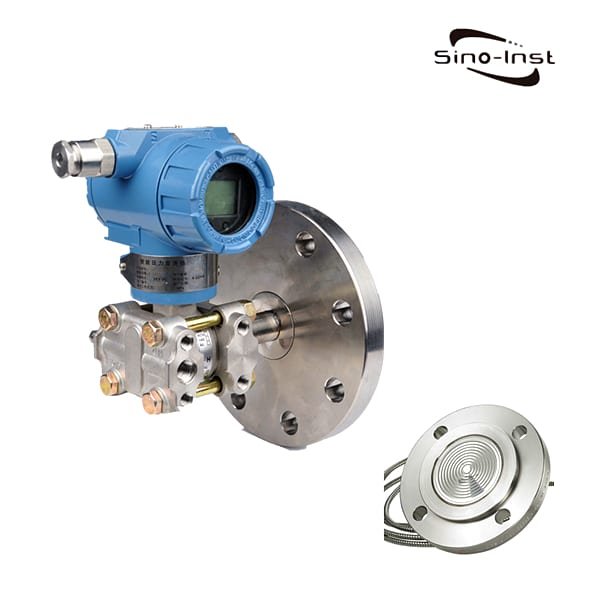
SI-801 Piezoresistive DP Transmitter

SI-801 piezoresistive DP transmitter using monocrystalline silicon sensing. Delivers smart-class accuracy at entry-level pricing for flow, level and filter DP service.

Smart DP Transmitter SI-3051

SMT3151DP smart DP transmitter with German MEMS monocrystalline silicon sensor. HART and RS485 Modbus RTU protocols, 0.075% accuracy — the go-to for flow, level and density loops.
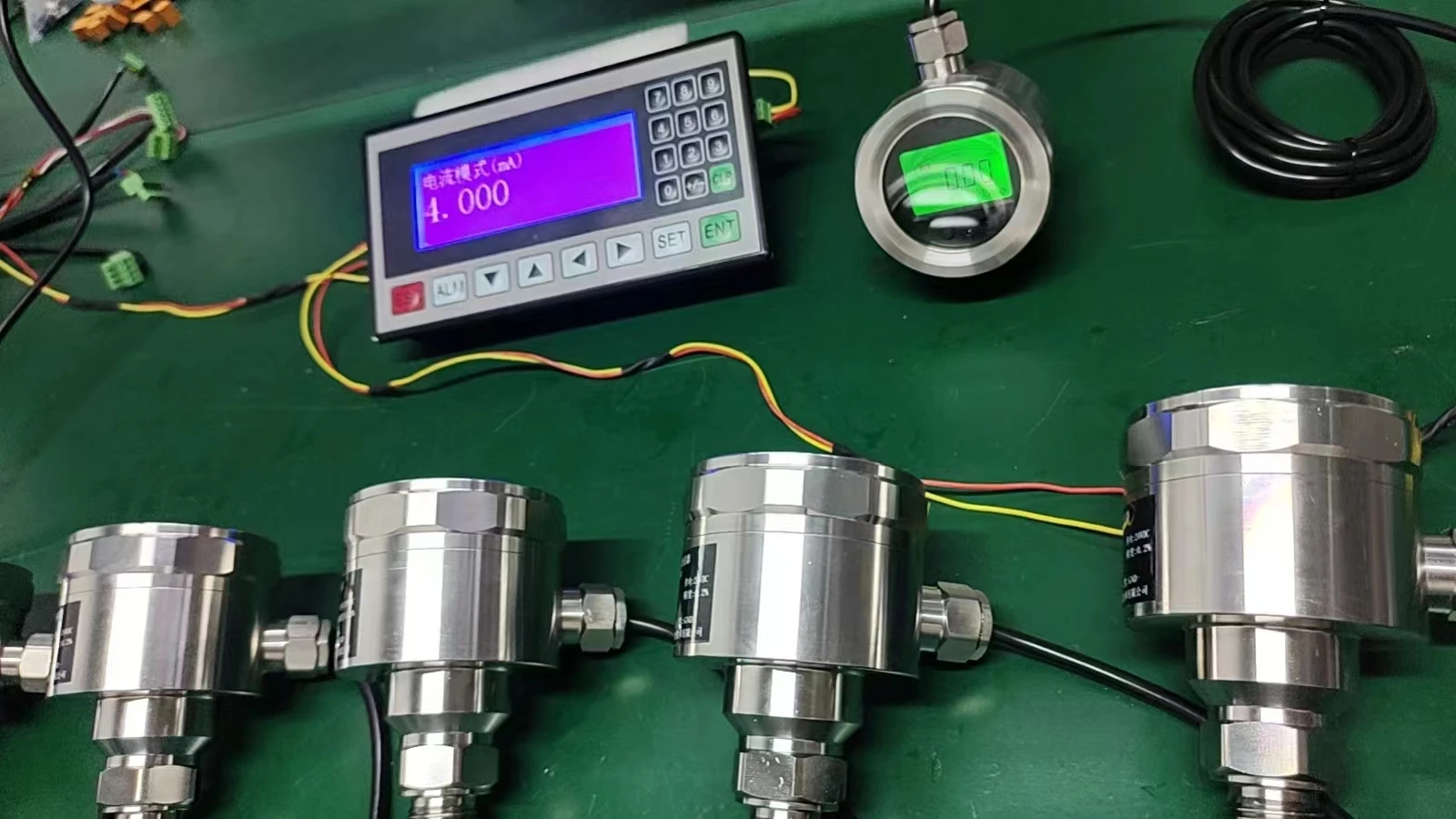
Flange Mounted DP Transmitter

Flush / extended flange DP transmitter for viscous, crystallising or sedimenting liquids. Functionally equivalent to EJA210E — measures level, differential pressure and density at 0.075% accuracy.

FAQ

Where do you mount a DP transmitter for gas, liquid, and steam?

For gas: mount above the tapping points so condensate drains back to the pipe. For liquid: mount below or level with the taps so air vents upward. For steam: mount below condensate pots installed at each tap, keeping both wet legs at the same elevation and fill level.

How do you connect impulse lines to a DP transmitter?

Run 1/2″ OD stainless steel tubing from the process tapping points to the transmitter’s 3-valve or 5-valve manifold. Maintain a continuous slope of at least 1:12 with no flat spots or U-bends. Use compression fittings torqued to the manufacturer’s specification. Both lines should follow the same route and length to equalize temperature effects.

What is the difference between wet leg and dry leg?

A wet leg is an impulse line intentionally kept filled with a reference liquid (usually water or glycol) to create a known, constant head pressure. It is used in steam and vapor service where condensation would otherwise create an unpredictable liquid column. A dry leg contains only gas — it works for clean gas applications where no condensation occurs. If condensation is possible but a wet leg is impractical, a dry leg with heat tracing can be used.

How do you zero a DP transmitter?

With the transmitter installed and impulse lines filled, open both block valves and the equalizing valve on the 3-valve manifold. Both sides of the diaphragm now see the same pressure, so the differential should be zero. Use the local zero pushbutton or a HART communicator to trim the reading to 0.000. Then close the equalizing valve to put the transmitter into service.

What is a 3-valve manifold and why is it needed?

A 3-valve manifold has two block (isolation) valves and one equalizing valve. It serves two purposes: it allows you to isolate the transmitter from the process for maintenance without breaking tubing connections, and it lets you equalize pressure across the diaphragm for safe zero-trimming. Without a manifold, removing or zeroing a DP transmitter under pressure is unsafe and risks diaphragm damage.

Request a Quote

Sino-Inst manufactures and supplies a full range of DP transmitters for flow, level, and pressure applications. Whether you need a standard 4–20 mA unit or a HART/FOUNDATION Fieldbus model, we can configure the right transmitter for your process conditions. Contact our engineering team for pricing and lead times.

Request a Quote

Please enable JavaScript in your browser to submit the form

6 Types of Flow Elements Compared: Selection Guide

Updated Apr 17, 2026 — Differential pressure (DP) flow measurement relies on a flow element — a restriction in the pipe that creates a pressure drop proportional to flow rate. But not all flow elements perform equally. Each type trades off accuracy, pressure loss, and cost differently. This guide compares all six major types of flow elements with real specs and a decision framework so you can pick the right one for your application.

Contents

What Is a Flow Element?

A flow element is a restriction placed inside a pipe that creates a measurable pressure drop proportional to the flow rate. The DP transmitter reads that pressure difference, and the flow rate is calculated using Bernoulli’s equation: Q is proportional to the square root of the differential pressure.

All DP flow elements share this same operating principle. What separates them is the geometry of the restriction — and that geometry determines accuracy, permanent pressure loss, turndown ratio, and how they handle dirty or multiphase fluids. The discharge coefficient (Cd) captures these geometric differences in a single number.

What Are the 6 Main Types of Flow Elements?

The six main types of DP flow elements are: orifice plate, Venturi tube, flow nozzle, wedge meter, V-cone, and averaging pitot tube. Each uses a different restriction geometry to generate differential pressure.

Orifice Plate

The orifice plate is a thin plate with a concentric bore mounted between flanges. It is the most widely installed flow element globally, covering roughly 40% of all industrial flow measurements. Cd is approximately 0.6, accuracy is typically +/-0.5% to +/-2% of rate depending on installation, and turndown ratio is limited to about 3:1 due to the square-root relationship. Permanent pressure loss runs 40-80% of the generated DP.

Venturi Tube

A Venturi tube uses a converging inlet cone, a cylindrical throat, and a diverging recovery cone to gradually accelerate and decelerate flow. This smooth geometry recovers 80-90% of the generated pressure drop. Cd is around 0.98. Accuracy reaches +/-0.5% of rate. The Venturi handles dirty and slurry fluids well because there are no sharp edges to erode, but the unit cost is roughly 5-10x that of an orifice plate.

Flow Nozzle

The flow nozzle sits between an orifice plate and a Venturi in both cost and performance. It features a smooth elliptical inlet converging to a cylindrical throat, but lacks the Venturi’s recovery cone. Pressure recovery is about 40-60%. Cd is approximately 0.99. Flow nozzles are common in steam and high-velocity gas applications where erosion would damage a sharp-edged orifice plate.

Wedge Meter

The wedge meter uses a V-shaped restriction welded into the top of the pipe. It excels with slurries, viscous liquids, and dirty fluids because there are no cavities or stagnation points where solids can accumulate. Accuracy is typically +/-0.5% to +/-1.5%. Turndown reaches 5:1 to 8:1. The wedge geometry works reliably at low Reynolds numbers (below 10,000), where orifice plates become unreliable.

V-Cone

The V-cone positions a cone-shaped element in the center of the pipe, forcing flow to the annular space along the pipe wall. This design conditions the flow profile internally, reducing straight-run requirements to 0-3 diameters upstream. Accuracy is +/-0.5%, turndown reaches 10:1, and pressure recovery is 50-70%. The V-cone is a strong choice for tight installations where long straight runs are unavailable.

Averaging Pitot Tube

An averaging pitot tube (such as an Annubar) inserts a multi-port sensor across the pipe diameter, measuring both total and static pressure at multiple points across the flow profile. Permanent pressure loss is the lowest of any DP element — typically below 5% of the generated DP. Accuracy is +/-0.8% to +/-1.5%. Installation cost is low since the sensor can be hot-tapped into existing pipe without shutdown. Best suited for large pipes (DN200+) in HVAC, utility water, and stack gas.

How Do You Compare Flow Elements?

You compare flow elements across five performance dimensions: accuracy, permanent pressure loss, turndown ratio, relative cost, and application fit. The table below puts all six elements side by side.

Flow ElementAccuracy (% of rate)Pressure Loss (% of DP)TurndownRelative CostBest Application
Orifice Plate+/-0.5 to +/-2.040-80%3:11x (baseline)Clean gas/liquid, budget projects
Venturi Tube+/-0.510-20%4:15-10xHigh-value fluids, slurries, large pipes
Flow Nozzle+/-0.5 to +/-1.040-60%4:12-4xHigh-velocity steam and gas
Wedge Meter+/-0.5 to +/-1.540-60%5:1 to 8:13-5xSlurries, viscous fluids, low Re
V-Cone+/-0.530-50%10:14-7xShort straight runs, wet gas
Averaging Pitot Tube+/-0.8 to +/-1.5<5%4:11-2xLarge pipes, HVAC, retrofit

The key takeaway: orifice plates dominate on cost, but they pay for that savings with the highest pressure loss. For high-value fluids — natural gas, refined chemicals, steam — the Venturi’s 85% pressure recovery translates directly into pumping or compression energy savings that often offset the higher purchase price within 1-3 years.

What Is the Difference Between an Orifice Plate and a Venturi Tube?

The core difference is pressure recovery. An orifice plate recovers only 15-20% of the generated DP, while a Venturi tube recovers 80-90%. This single difference cascades into cost, maintenance, and application decisions.

ParameterOrifice PlateVenturi Tube
Pressure Recovery15-20%80-90%
Cd~0.6~0.98
Purchase Cost (DN100)$200-$600$2,000-$6,000
MaintenancePlate replacement every 2-5 yrs (erosion)Minimal — no wearing edges
Straight Run Upstream15-40D5-10D
Dirty Fluid ToleranceLow (edge buildup)High (smooth bore)
Pipe SizesDN15 to DN1000+DN50 to DN3000+

Consider a 10-inch natural gas pipeline running at 500 SCFM. An orifice plate creates roughly 50 kPa of permanent loss, while a Venturi on the same line loses about 8 kPa. That 42 kPa difference, multiplied across 8,760 hours/year of compressor runtime, can cost thousands in electricity annually. For steam flow measurement, where every kPa of wasted pressure translates to lost thermal energy, the argument for a Venturi or flow nozzle strengthens further.

So when should you stick with an orifice plate? When the fluid is low-value (cooling water, ambient air), the line pressure is high enough that losses don’t matter, or the project budget is tight. Orifice plates are also easiest to re-range — just swap the plate for a different bore.

How Do You Select the Right Flow Element?

Follow a three-step decision process to narrow down six options to one or two candidates.

Step 1: Check Fluid Properties

Is the fluid clean, dirty, or a slurry? For clean gas or liquid, all six elements work. For dirty or viscous fluids, eliminate the orifice plate and averaging pitot tube — solids will foul the pressure taps or erode the sharp orifice edge. Wedge meters and Venturi tubes handle dirty service best.

Step 2: Check Your Pressure Budget

Can the process afford permanent pressure loss? If the system is gravity-fed or the pump is already near its limit, you need a low-loss element: Venturi tube or averaging pitot tube. If line pressure is 20 bar or higher and the loss is negligible relative to system pressure, an orifice plate is perfectly acceptable.

Step 3: Check Accuracy and Turndown Requirements

Do you need +/-0.5% accuracy with custody-transfer traceability? Venturi or V-cone. Is +/-2% enough for process monitoring? An orifice plate saves money. Need turndown beyond 4:1? The V-cone reaches 10:1. Understanding flow meter K-factor behavior across the range helps confirm whether your candidate element stays within spec at both low and high flows.

Frequently Asked Questions

What is the most common flow element?

The orifice plate. It accounts for approximately 40% of all industrial flow measurements worldwide, primarily because of its low cost, simplicity, and the extensive empirical data (ISO 5167) supporting its calibration.

Which flow element has the lowest pressure loss?

The averaging pitot tube produces the lowest permanent pressure loss — typically less than 5% of the generated DP. The Venturi tube comes second, recovering 80-90% of the DP through its diverging cone.

Can I use an orifice plate for steam?

Yes, but flow nozzles are preferred for high-velocity superheated steam. The sharp orifice edge erodes faster in wet or high-velocity steam. If budget requires an orifice plate, use stainless steel 316 or Monel and plan for more frequent inspections.

What turndown ratio can a DP flow element achieve?

Standard orifice plates and pitot tubes achieve 3:1 to 4:1 turndown. V-cone meters reach 10:1. Using stacked DP transmitters or multi-range transmitters can extend turndown to 8:1 or beyond for most element types.

Do flow elements need calibration?

Orifice plates, Venturi tubes, and flow nozzles manufactured to ISO 5167 can be installed without wet calibration — their Cd values are predicted from geometry and Reynolds number. V-cones, wedge meters, and pitot tubes typically require factory calibration against a reference standard.

Featured Flow Elements from Sino-Inst

Orifice Plate Flow Meter

SI-LG orifice plate flow meter — the standard DP primary element for steam, gas and clean liquids. Supports concentric, segmental and eccentric plates, pairs with any smart DP transmitter.

Venturi Tube

Classical venturi flow meter with low permanent pressure loss and high repeatability. Long service life on dirty liquids, gas and steam where orifice plates wear out fast.

V-Cone Flow Meter

V-cone flow meter (inner-cone / integrated cone type) for DP flow measurement in water, steam, natural gas and dirty process fluids. Rated to 450 °C and 40 MPa with high turndown and low pressure recovery.

n

Need help selecting a flow element for your application? Send us your pipe size, fluid type, operating pressure and temperature, and required accuracy. Our engineers will recommend the right element and provide a quotation — typically within 24 hours.

Request a Quote

Please enable JavaScript in your browser to submit the form

How to Install a Pressure Transmitter: Step-by-Step Guide

Updated Apr 17, 2026 — A pressure transmitter is only as accurate as its installation. Get the mounting position wrong, run sloppy impulse lines, or skip the root valve, and you will chase phantom readings for months. This guide walks through every step — from choosing a tap location to final loop checkout — so your transmitter reads true on day one.

Contents

How Do You Install a Pressure Transmitter?

Pressure transmitter installation follows four stages: select the tap and mounting location, run impulse tubing with proper slope, mount and orient the transmitter body, then wire and commission the 4-20 mA loop. Roughly 80 % of installation quality comes from the first two stages — planning and piping — while physical mounting and wiring account for the remaining 20 %.

  1. Choose the measurement point. Pick a straight pipe run with at least 5 D upstream and 3 D downstream of the tap. Avoid dead legs, elbows, and control-valve outlets.
  2. Set the mounting position. Gas taps above the pipe centerline, liquid taps below. Steam requires a condensate pot between the tap and the transmitter.
  3. Install impulse tubing. Slope tubing ≥ 1:12 toward the tap (liquid) or toward the transmitter (gas). Keep total run under 15 m and include a root valve, block valve, and bleed valve.
  4. Wire and commission. Connect shielded 2-wire cable, verify 4-20 mA output at the DCS/PLC, perform a zero trim at atmospheric pressure, and apply a known pressure for span check.

If you want to understand the sensing principle before you start, read our overview of how a pressure transmitter works.

Where Should You Mount a Pressure Transmitter?

Mount the transmitter so that the process media cannot trap gas pockets (in liquid service) or accumulate condensate (in gas service). The table below gives the baseline rules. Every exception — such as a corrosive gas requiring a seal pot — still follows the same logic: keep unwanted phase out of the impulse line.

Media TypeMount PositionImpulse SlopeReason
Clean gasAbove the tap, transmitter higher than tap≥ 1:12 down toward tapCondensate drains back to pipe; no liquid leg error
Clean liquidBelow the tap, transmitter lower than tap≥ 1:12 down toward transmitterGas vents back to pipe; impulse line stays liquid-filled
SteamBelow condensate pot, same elevation both legsLevel between pot and transmitterEqual condensate legs cancel head offset
Slurry / dirty liquidBelow tap with flush/purge connection≥ 1:12 down toward transmitterAllows periodic flushing to prevent clogging

For differential pressure applications — such as orifice-plate flow — both high-side and low-side taps follow the same media rules. Our DP transmitter installation guide covers 3-valve and 5-valve manifold procedures in detail.

Orientation of the Transmitter Body

Most transmitters allow mounting in any orientation, but flange-mounted units should have the diaphragm facing downward in liquid service so air cannot collect against the sensing element. In gas service, face the diaphragm upward or sideways. Always confirm the manufacturer datasheet; some models require a specific mounting angle to meet stated accuracy.

How Do You Run Impulse Tubing to a Pressure Transmitter?

Impulse tubing (also called sensing line) connects the process tap to the transmitter. Bad tubing practice is the single biggest source of measurement error in pressure systems. Follow these rules:

  • Tubing material and size. Use 12 mm OD (½ in.) 316 SS tubing for most chemical and petrochemical services. For high-purity or sanitary applications, use electropolished tubing.
  • Slope. Maintain a continuous slope of ≥ 1:12 (approximately 5°). No sags, no U-bends, no horizontal traps. Even a small pocket will trap air in liquid lines or condensate in gas lines.
  • Length. Keep total impulse line length under 15 m. Longer lines slow dynamic response and increase the chance of temperature-induced errors.
  • Valve arrangement. Install a root valve at the process tap, a block valve immediately upstream of the transmitter, and a bleed valve between the block valve and the transmitter. This three-valve sequence lets you isolate, vent, and remove the transmitter without shutting down the process.
  • Heat tracing. In any ambient below 0 °C, heat-trace the impulse line and insulate it. Frozen impulse lines crack fittings and destroy diaphragms.

Understanding static vs dynamic pressure helps when choosing the tap location — always measure static pressure in a straight run, never at a point where velocity pressure dominates.

What Is the Correct Wiring for a 4-20 mA Pressure Transmitter?

Most field-mount pressure transmitters use a 2-wire, loop-powered 4-20 mA connection: the same two wires carry both power and signal. The 24 V DC supply sits at the control room; the transmitter modulates current between 4 mA (zero) and 20 mA (full scale).

2-Wire vs 4-Wire

  • 2-wire (loop-powered). Two conductors — positive and negative. Power supply voltage must be 12–36 V DC (check transmitter minimum operating voltage). Maximum loop resistance = (V_supply − V_min) / 0.02 A.
  • 4-wire (self-powered). Separate power pair and signal pair. Used when the transmitter requires higher power — for example, units with an integral display or HART/Wi-Fi module drawing > 30 mA.

Cable and Grounding Rules

  • Use shielded twisted-pair cable rated for the ambient temperature range (-40 °C to +85 °C typical).
  • Ground the shield at the control room end only to avoid ground loops.
  • Route signal cable in a separate tray from power cables (> 300 mm separation).
  • Maximum cable run depends on wire gauge: approximately 1 500 m for 1.5 mm² conductor at 24 V supply.

For wiring diagrams covering every common configuration — including HART, split-range, and safety loops — see our pressure transducer wiring diagram reference.

What Are 5 Common Pressure Transmitter Installation Mistakes?

These five errors account for the majority of warranty returns and field callbacks. Each one is preventable with basic planning.

  1. Wrong orientation for the media. Mounting a transmitter above the tap in liquid service traps air against the diaphragm, causing a constant positive offset. Flip the transmitter below the tap.
  2. Missing root valve. Without a root valve at the process nozzle, you cannot isolate the impulse line. Any maintenance requires a full process shutdown — or a dangerous line break under pressure.
  3. Impulse line too long or poorly sloped. Lines over 15 m respond slowly to pressure changes and pick up ambient temperature errors. Sags in the line trap condensate or gas, creating a variable hydrostatic offset.
  4. No heat tracing in cold climates. Water-filled impulse lines freeze below 0 °C. Ice expansion cracks compression fittings and can rupture the sensing diaphragm, causing process leaks.
  5. Over-torquing the diaphragm flange. Flange bolts torqued beyond the manufacturer specification (typically 15–20 Nm for ¼-inch NPT process connections) deform the diaphragm seal, shifting zero and reducing span. Always use a calibrated torque wrench.

If you are seeing erratic 4-20 mA readings after installation, our 4-20 mA fault diagnosis guide walks through every common failure mode.

Frequently Asked Questions

Can I mount a pressure transmitter horizontally?

Yes. Most modern transmitters accept any orientation. However, a horizontal diaphragm in liquid service may trap micro-bubbles. If the datasheet specifies a preferred angle, follow it and re-zero after installation.

How far can impulse tubing run from the tap to the transmitter?

Keep impulse lines under 15 m for gauge and absolute pressure. For differential pressure service, both legs should be equal in length and as short as practical — ideally under 10 m.

Do I need a condensate pot for steam pressure measurement?

Yes. A condensate pot (also called a siphon or pigtail) fills the impulse line with water, protecting the diaphragm from live steam. Without it, steam collapses at the diaphragm face and damages the sensor over time.

What supply voltage does a 4-20 mA transmitter need?

Most 2-wire transmitters operate on 12–36 V DC. The actual minimum depends on loop resistance. Calculate: V_min = transmitter minimum voltage + (0.02 A × total loop resistance).

Should I calibrate the transmitter before or after mounting?

Perform a bench calibration before mounting to confirm factory specs. After mounting, do a zero trim at the installed elevation. A full span calibration after mounting is only necessary if you changed the range.

Featured Pressure Transmitters

High Temperature Pressure Transmitter

High-temperature pressure transducer for media up to 300 °C (further extended with cooling tube). 4-20mA output for boiler drums, reactors and superheated-steam lines.

Differential Pressure Transmitter

DP transmitters measure pressure difference across gas, liquid or steam. 4-20mA / 0-5V output drives liquid level, density and flow loops across process plants.

Sanitary Pressure Transmitter

SI-350 sanitary (tri-clamp / hygienic) pressure transmitter for food, beverage and pharma. Flush diaphragm avoids product pockets; tri-clamp, M27×2 and flange process connections available.

Need Help Selecting the Right Pressure Transmitter?

Our engineering team can review your P&ID, recommend the correct transmitter model, and provide a detailed installation drawing for your specific application. Fill out the form below or contact us directly.

Request a Quote

Please enable JavaScript in your browser to submit the form

Stilling Wells for Radar Level Measurement|What Is It? Why Do You Need It?

Last Updated: April 7, 2026 | Author: Wu Peng, Senior Instrumentation Engineer

Stilling wells isolate radar antennas from surface turbulence, foam, and obstacles. When tanks have agitation or low-dielectric liquids, a properly sized well dampens noise and stabilizes signal. This guide covers sizing, materials, hole specifications, and installation practices based on API 2350 and field experience.

Quick Reference: Typical improvement: 20-40% reduction in measurement noise across foam applications, agitated vessels, and liquids with dielectric constants below 2.5.

What Is a Stilling Well?

A stilling well is a cylindrical pipe inserted into a tank. It creates a low-velocity zone for the radar antenna, isolating it from surface agitation. Small holes in the pipe sidewall allow liquid inside to reach equilibrium with tank level while damping rapid fluctuations from foaming or mixing action.

The mechanism is simple: liquid enters through calibrated holes (typically 4-5mm, spaced 5-10cm apart) on the lower pipe sections. Above those holes, the wall is solid, creating a damping volume. This arrangement allows step changes in tank level to propagate through within 1-2 seconds while filtering high-frequency noise.

Straight Pipe vs. Bypass Chamber

Straight Pipe: Suspended from a tank nozzle. Fast installation, low cost, typical response time 1-2 seconds. Suitable for temperatures up to ~200°C (SS316L). Requires tank drain-down for removal.

Bypass Chamber: External vessel with inlet and outlet connections. Higher cost and larger footprint but operates to 400°C+. Better for high-pressure vessels and where tank shutdown is impractical. Response time ~5-10 seconds due to external chamber volume.

When Do You Need One?

Foam or surface agitation: Radar cannot distinguish between liquid surface and foam layer. A stilling well separates the antenna from the foam zone—typical error without one is 5-15%.

Mixing or agitation: Moving surface creates noise in the radar signal. The well’s damping removes these fluctuations, stabilizing PID loops and reducing false alarms.

Low-dielectric liquids (under 2.5): Weak reflections demand a stable, calm interface. Even small turbulence can cause signal loss. The quiet environment inside a well improves signal return by 30-50%.

Obstacles or internals: Baffles, heating coils, or feed pipes block direct antenna view. A stilling well provides a clear measurement path independent of tank internals.

Floating roof tanks: Roof movement produces false echoes. The stilling well separates the antenna from structural reflections.

High-viscosity liquids: Slow to equilibrate. A stilling well with appropriate hole sizing dampens surface disturbance while allowing level changes to propagate through in 1-2 seconds.

Design Specifications

Material Selection

SS316L: Standard choice for corrosive or food/pharma contact. Resists acids, salts, and most organics. Typically 20-30% cost premium over carbon steel.

Carbon Steel: Adequate for water, non-corrosive oils, and neutral liquids. Requires paint or internal coating—bare steel will scale and affect hole diameter and signal reflectivity. Spherical tanks often mandate SS due to stress concentration at nozzles.

Alternatives: Inconel or Hastelloy for extreme chemical exposure. PVC for very low temperature. Duplex stainless for high-pressure, high-corrosion environments.

Stilling Well Diameter & Sizing Specifications

Nominal Diameter Tank Nozzle Size Antenna Type Typical Length Wall Thickness
DN125 (125mm/5″) 5″ NPT or Flanged Horn antenna, Small horn 1.5 – 3m 2.0-2.5mm SS, 2.5-3mm CS
DN150 (150mm/6″) 6″ NPT or Flanged Standard horn, Drop antenna 2.0 – 4m 2.0-2.5mm SS, 2.5-3mm CS
DN200 (200mm/8″) 8″ NPT or Flanged Large horn, 26GHz/80GHz 2.0 – 5m 2.5-3.0mm SS, 3.0-3.5mm CS
DN250 (250mm/10″) 10″ Flanged Large horn, Multi-antenna 2.5 – 6m 3.0-3.5mm SS, 3.5-4.0mm CS
DN300 (300mm/12″) 12″ Flanged Extra-large applications 3.0 – 7m 3.5-4.0mm SS, 4.0-4.5mm CS

Hole Design

Diameter: 4-5mm is standard. Smaller holes (<3mm) restrict flow and slow level response. Larger holes (>6mm) pass turbulence and foam. Typical tolerance ±0.3mm due to drilling.

Spacing: 5-10cm vertical distance between hole centers. This determines damping time constant. Closer spacing (5cm) increases damping. Wider spacing (10cm) allows faster response but less noise suppression.

Stagger pattern: Alternate holes on opposite sides to prevent preferential flow direction. For a DN200 pipe (200mm OD), alternate left and right every 5-7cm.

Bottom section: Keep the lowest 100-150mm without holes to prevent siphoning. This is critical—if all holes go to the pipe bottom, liquid can siphon out when tank drains, holding a false low reading.

Top vent: Two 6-8mm ports (or one 8mm port with 6mm check valve) near the pipe top. These equalize pressure and prevent vacuum lock when level drops rapidly. Essential for stable response.

Bottom reflector plate: A flat SS plate welded or bolted to the pipe bottom. Improves radar echo return. Thickness 2-3mm. Must be perpendicular to pipe axis (within 1-2°) to avoid side echoes.

Installation Practices

Gap tolerance (OD to nozzle ID): 1-3mm maximum. Larger gaps allow turbulence and foam to bypass the well. Spec a gasket of appropriate thickness. Measure with feeler gauges during assembly.

Connection method: Welded flange for permanent installations on pressurized tanks. Bolted flanges for modular or removable designs. Threaded NPT works for small wells (DN125) at pressures below 10 bar.

Antenna position: Mount on a rigid support to prevent drift or vibration. Center the antenna along the pipe axis. For horn antennas, maintain 5-10cm radial clearance from the pipe wall to avoid reflections. Position antenna 10-15cm below the nozzle top.

Sealing: Use rubber gasket with Teflon or PTFE reinforcement. Silicone gaskets above 150°C. Metal O-rings for high-pressure service (over 20 bar).

Installation height: Submerge the stilling well to about 80% of minimum operating level. This ensures holes remain in liquid for most operating range, preventing air entry that would degrade radar signal.

Radar Transmitter Compatibility

26GHz pulse radar: Preferred for low-dielectric liquids (0.5-20, e.g. refined oils, alcohols). The longer wavelength penetrates weak reflections. Stilling well response time ~1-2 seconds. Cost-effective and robust in industrial environments. See 26GHz pulse radar transmitters.

80GHz FMCW radar: Higher frequency, narrower beam, faster signal processing (0.5-1 second response). Better immune to external RF noise. Suitable for foam and high-agitation tanks. See 80GHz radar level transmitter guide.

Guided wave radar (GWR/TDR): Rod or cable probe conducting signal directly through the liquid. Works on any dielectric over 1.4 (including very low values). Requires only a small bypass nozzle, not a full stilling well. Excellent for complex tank geometry. See guided wave radar specifications.

Common Mistakes

Gap over 3mm: Foam and turbulence bypass the well. Seals fail from corrosion or mechanical stress. Measure with feeler gauges; use proper gasket thickness.

Holes under 3mm: Restrict flow; level lags tank changes. Drilling tolerances widen gaps. Minimum 4mm holes, staggered pattern.

Holes over 6mm: Turbulence enters; noise increases. Bottom holes allow siphoning. Limit to 5mm, place only in middle 70% of pipe.

No vent ports or blocked vents: Vacuum prevents level drop. Liquid gets trapped inside well. Install two 6-8mm ports at top; use ball valves for maintenance access.

Antenna too close to wall: Reflections from metal pipe create double echoes. Center antenna; maintain 5-10cm clearance. Check with feeler gauge during commissioning.

Well positioned too high: Holes above minimum operating level expose antenna to air. Tank bottom becomes unreachable. Keep lowest holes at least 10-15cm below minimum level.

Scale or corrosion buildup: Blocks holes; changes damping. Removes protective surface from stainless steel. Specify removable flange design; implement annual cleaning for corrosive service.

Standards & Compliance

API 2350: Section 5.4 covers stilling well requirements for petroleum tank gauging. Mandates vent ports to prevent siphoning, specifies hole sizing and spacing for equalization within 30-60 seconds, requires documentation of diameter, material, and installation method.

IEC 61511: Functional safety standard applicable to safety-critical level measurement (overflow protection, process interlocks). Stilling well material, pressure rating, and installation must support the required SIL rating of the overall instrumentation system. Material compatibility with the process fluid is mandatory.

ASME B31.1: Power Piping Code governs bypass chamber design and connections. Relevant for high-temperature or high-pressure installations. Specifies weld quality, hydrostatic testing, and pressure relief requirements.

FAQ

What is a stilling well?

A cylindrical pipe inserted into a tank that dampens surface turbulence and foam. Calibrated holes allow liquid inside to equilibrate with tank level while damping rapid fluctuations. Isolates radar antenna from agitation.

When do I need one?

Tanks with foam, agitation, or mixing. Low-dielectric liquids (under 2.5). Obstacles or internals blocking antenna view. Floating roof tanks. High-viscosity liquids. Calm, clear tanks with good dielectric do not require one.

What is the difference between a stilling well and a bypass chamber?

Straight pipe well: suspended from tank nozzle, fast response (1-2 sec), low cost, limited to ~200°C. Bypass chamber: external vessel, high cost, operates to 400°C, slower response (5-10 sec), no tank shutdown needed for maintenance.

What material should I specify?

SS316L for corrosive or food/pharma service. Carbon steel for water, non-corrosive oils (requires coating). Spherical tanks typically mandate stainless due to stress concentration at nozzles. Select based on liquid chemistry and temperature.

What hole size and spacing?

Diameter 4-5mm. Spacing 5-10cm vertical. Staggered on opposite sides. Keep bottom 100-150mm without holes to prevent siphoning. Two vent ports (6-8mm) at top to prevent vacuum lock.

What is the gap tolerance between well and nozzle?

Maximum 1-3mm. Measure with feeler gauges. Larger gaps allow bypass of foam and turbulence. Proper gasket thickness and surface finish are critical.

Which radar frequencies work best?

26GHz pulse radar: preferred for low-dielectric liquids (0.5-20). 80GHz FMCW: faster response, better for high-foam applications. Guided wave radar: smallest footprint, any dielectric over 1.4.

Do stilling wells meet API 2350 and IEC 61511?

Yes. API 2350 Section 5.4 specifies stilling well requirements for tank gauging: vent ports, siphon prevention, hole sizing. IEC 61511 requires material compatibility and pressure rating to support the SIL rating of the overall instrumentation system.

Related Resources

Technical references on radar level measurement:

About the Author

Wu Peng is a Senior Instrumentation Engineer with 18+ years in level measurement, process control, and tank gauging. Leads the technical team at Sino-Inst Engineering across oil & gas, chemical, water treatment, and power generation applications. Certified in IEC 61511 Functional Safety and API 2350 compliance.


Engineering consultation available for: Custom stilling well design, material selection, installation commissioning, API 2350 and IEC 61511 compliance review.

Contact: info@drurylandetheatre.com | +1-555-0123 | https://www.drurylandetheatre.com

Float Switch for Water Tank: Wiring Diagrams + Troubleshooting

Updated: April 16, 2026 | By Sino-Inst Engineering Team

A float switch on a water tank is just a mechanical contact in your pump’s power loop. When the float rises, the contact opens (or closes); the pump stops (or starts). 90% of the calls we get about float switch failures are not failed switches at all — they are wiring mistakes, wrong terminal selection (NO vs NC), or pumps drawing more current than the switch’s contacts can handle. This page walks through the three wiring patterns that cover most water tank applications and a step-by-step fault-finding flow.

Contents

Quick wiring answer (read this first)

For an emptying tank (sump pump that runs when level rises): use the Normally Open (NO) contact. Float floats up → NO closes → pump runs.

For a filling tank (cistern pump that runs when level drops): use the Normally Closed (NC) contact. Float drops → NC stays closed → pump runs to refill.

If the float switch is rated for less amperage than your pump’s full-load current (FLA), wire it to a contactor or pump relay coil instead of directly to the motor. This is covered in Scenario C below.

How a float switch interrupts the pump circuit

A float switch is a single-pole device. Inside the float housing is either a mercury bulb (older designs), a steel ball that rolls into a microswitch (modern tilt-type), or a sealed reed switch on a stem with a magnet inside the float. All three behave the same way at the terminals: there is a common (C) wire and either a normally open (NO) or normally closed (NC) wire — sometimes both, in a single-pole double-throw (SPDT) switch.

The float switch is wired in series with one leg of the pump’s power supply. Power flows from the line, through the switch contact, through the pump motor, and back to neutral. Open the contact and the pump loses power. There is no logic, no controller, no signal — it is the same as a wall light switch with a heavier rating.

Cable-tilt floats use the cable itself as the pivot. The length of free cable below the cord grip sets the differential between pump-on and pump-off levels. For tank gauging applications that need continuous level (not just on/off), see our guide on tank level sensor types and selection.

NO or NC: choosing the right terminal for fill or empty

Read the application backwards. Decide first what state the pump must be in when the tank is full, then pick the contact that gives you that state.

ApplicationPump should run whenFloat position when runningUse terminal
Sump / sewage / lift pumpTank is filling up (empty it)Float UPNO (closes when float rises)
Cistern / make-up waterTank is draining (refill it)Float DOWNNC (closes when float drops)
High-level alarm onlyLevel is dangerously highFloat UPNO to alarm coil
Low-level dry-run cutoutLevel is too low (must STOP pump)Float UP (cuts off when float drops)NO to interlock chain

If your float switch only has two wires, the manufacturer has pre-wired it for one mode. Cable-tilt floats labeled “pump down” or “drain” are NO; floats labeled “pump up” or “fill” are NC. Checking with a multimeter on continuity is faster than reading the data sheet — flip the float by hand and watch the beep.

Scenario A: single float driving the pump directly

This is the simplest setup. Use it when the pump’s full-load amperage is below the float switch’s contact rating (typically 10A at 250VAC for a quality cable-tilt float, 5A for cheap reed-stem types).

  1. Cut the line (hot) wire of the pump cord, not the neutral. Cutting neutral leaves the pump energized when the float opens — a shock risk during service.
  2. Strip both ends of the cut and one lead of the float switch. Junction them in a watertight box outside the tank if possible.
  3. Connect line-in → float common; float NO (or NC, per the table above) → pump line-in.
  4. Cap or insulate the unused float lead (NC if you used NO, and vice versa). A floating bare conductor in a damp pump pit is the #1 reason these systems fail.
  5. Bond the pump’s green/ground wire all the way through to the supply ground. The float switch never interrupts ground.

Cable-tilt models (the egg-shaped floats on a cord) self-set their pump-on / pump-off differential by the length of cord below the cable clamp. A short tether (4–6 inches) gives a tight ±3 inch level band; a long tether (12–18 inches) gives a 12+ inch band. Long tethers reduce pump cycling, which is what kills small submersibles.

Scenario B: dual float for fill and high-level cutoff

Use two floats when one float can’t safely handle both the start command and a backup safety cutoff. Common cases: cisterns where overflow would damage the building, sewage tanks where a stuck float means flooding, fuel transfer systems.

  • Lower float (working float): wired to start/stop the pump on its normal differential band.
  • Upper float (high-level cutoff): wired in series with the working float on a fill system, OR to an alarm/shutdown circuit on a drain system. If the working float jams, the upper float overrides.

For a fill cistern: line → upper-float NC → lower-float NC → pump line-in. Both floats must be DOWN (NC closed) for the pump to run. The pump stops as soon as either float rises. The upper float should be set 4–6 inches below the overflow line so it has time to act before water spills.

For a sump pump: lower float NO drives the pump; upper float NO drives a 12V alarm or an internet-connected sensor. The upper float never touches the pump circuit — its only job is to tell you the working float failed.

Scenario C: float through a contactor for large pumps

If your pump’s nameplate shows more than 8–10 amps, do not run pump current through the float switch contacts. Contact welding is what kills float switches in heavy applications: every start arc burns a little metal, and after a few hundred cycles the contacts fuse closed and the pump runs forever.

The fix is a contactor (motor starter relay) sized to the pump. The float switch only carries the contactor coil current — typically 100–300 mA at 24V or 120V — which is well within any float switch’s rating. The contactor’s heavy contacts handle the pump load and can be replaced as a wear part.

  1. Wire the float switch to the contactor coil terminals (A1, A2). Float NO in series with the coil hot leg.
  2. Wire the pump motor leads to the contactor’s load contacts (T1, T2, T3 for 3-phase).
  3. Add a thermal overload block downstream of the contactor sized to the pump’s FLA × 1.15.
  4. If you need remote start/stop, wire a HAND-OFF-AUTO selector switch in parallel with the float across the coil.

This is also the right approach for explosion-proof installations. The float can be intrinsically safe (low energy, in the hazardous area), the contactor sits in a non-hazardous panel. For a deeper look at high-current and DP-style installation rules, see our DP transmitter installation guide.

Five wiring mistakes that burn out pumps and switches

  • Switching the neutral, not the line. Pump stays energized when float opens; the casing can become live if internal insulation fails.
  • Picking the wrong NO/NC terminal. Pump runs continuously or never starts. Test with a multimeter before powering up.
  • Tether too short on a cable float. Pump cycles every 30 seconds, motor windings overheat in days.
  • Float allowed to rest against the tank wall. Float wedges, never tilts. Always install with at least 6 inches of free swing.
  • Running 15A pump current through a 10A float contact. Contacts weld closed; pump runs the well dry. Add a contactor (Scenario C).

Troubleshooting flow when the pump won’t stop or won’t start

Run this in order. The first three steps catch about 80% of float switch problems without removing the switch from the tank.

  1. Check power at the pump. Disconnect the float from the circuit (jumper across float wires) and try the pump. If the pump still won’t run, the problem is upstream of the switch — breaker, cord, motor.
  2. Manually flip the float. With the system de-energized, lift the float through its full travel. You should hear a faint click (microswitch) or feel a snap (mercury). No sound = stuck switch, replace.
  3. Continuity test at the float wires. Disconnect both float leads. Touch a multimeter on continuity to the two leads. Tilt the float — beep should go on/off cleanly. Intermittent or no change = internal switch failure.
  4. Inspect the cord grip and tether. Cable that has slipped 1–2 inches will shift the trigger level enough to either short-cycle or never trigger. Re-clamp with the original tether length.
  5. Look for grease or scale on the float body. A float coated in pump grease becomes neutrally buoyant and stops tilting. Wipe clean with mineral spirits.
  6. Measure inrush current at the contacts. If you’ve replaced two switches in six months, the pump is over-amping the contacts. Move to Scenario C wiring with a contactor.

When to replace the switch (and when not to)

Replace if: the float body is cracked, the cord insulation is damaged, the continuity test in step 3 is intermittent, or the contacts show black welding marks when opened. Float switches are not user-serviceable — there are no contacts you can clean inside a sealed cable-tilt body.

Don’t replace if: the issue is grease/scale on the float (clean it), the tether has slipped (re-clamp), or the wiring is plain wrong (rewire per the table above). A new switch in the same wrong configuration fails just as fast as the old one.

For continuous water tank monitoring (level reading, not just switching), a 4-20 mA hydrostatic submersible or ultrasonic gauge is a better tool. See our water tank level sensors guide for the trade-offs.

FAQ

Why does my float switch click but the pump doesn’t run?

The switch is doing its job — the pump circuit is broken somewhere else. Test continuity through the float leads while you tilt it, then check the pump’s own cord and breaker. A clicking switch with no pump action is almost never a failed float.

Can I use the same float switch for hot water (over 60°C / 140°F)?

Standard polypropylene cable-tilt floats are rated to about 50°C continuous. For hotter water (boiler feed, condensate tanks), pick a stainless-steel stem float with a Buna-N or Viton seal rated to 120°C. The cheap pool-pump style will deform and sink within weeks at boiler temperatures.

Do I need a relay if my pump is only 1/3 HP?

Probably not. A 1/3 HP submersible pump draws roughly 6–8 amps running and 15–25 amps inrush at start. Most quality cable-tilt floats are rated 13A inductive at 120V, which covers it. If you’re cycling more than 4 times per hour or using a no-name float, add a contactor anyway — it costs less than a replacement switch.

How long should a float switch last?

In clean water with proper sizing, 100,000+ cycles or roughly 5–7 years. In sewage with grease and stringy debris, expect 1–2 years and inspect quarterly. Switches in chemical service rarely make it past 6 months without seal degradation; use a non-contact alternative there.

Can I wire two pumps off one float switch?

Not directly. Wire each pump’s contactor coil in parallel off the same float NO contact, and stagger the contactor pull-in voltages so they don’t both start simultaneously and trip the breaker. For lead/lag duplex pumping, use a duplex pump controller with an alternator relay — the float is just one input.

Need help sizing or troubleshooting?

Send your pump nameplate, tank dimensions, and a photo of the existing wiring to our engineers. We’ll specify the right float series and wiring scheme — and we’ll tell you straight if a continuous-level sensor would be the better tool. Use the form below or contact us via the contact page.

Request a Quote

Please enable JavaScript in your browser to submit the form