Use Differential Pressure Transmitter to Measure Liquid Level

timg

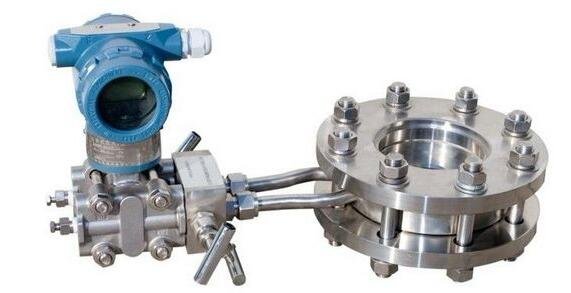
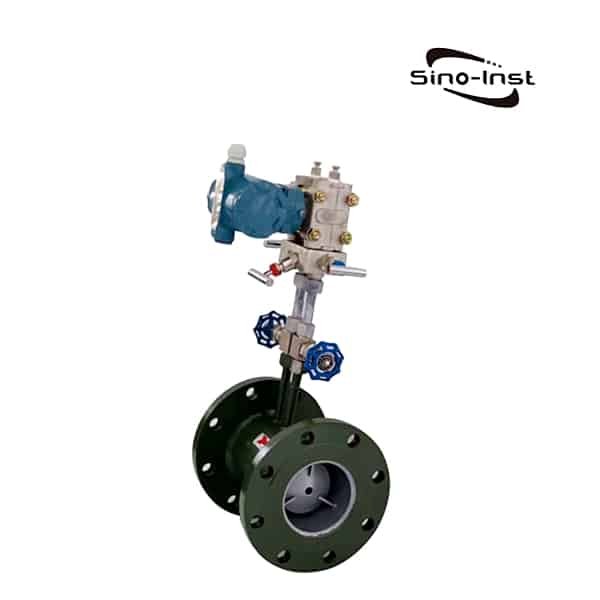
Differential Pressure Level transmitter for Continuous tank level measurement.

A liquid level measurement solution that prevents the measured medium from directly acting on the transmitter.itle

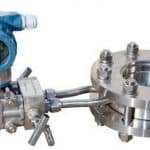
In the chemical production, the medium often encounters problems such as impurities, crystal particles or agglomeration. It is easy to block the connecting pipeline. At this time, a flange-type differential pressure transmitter is required.

Silicone oil is filled in the closed system composed of the bellows, capillary tube and measuring chamber as the pressure transmission medium. The measured medium does not enter the capillary tube and the transmitter to avoid blockage.

Differential Pressure Level transmitters are divided into single flange type and double flange type according to their structure.

Only a flange between the container and the transmitter is called a single flange differential pressure transmitter.

As for the closed container whose upper end is isolated from the atmosphere, the upper space and atmospheric pressure are mostly different. Two flanges must be used to guide the liquid and gas phase pressure to the differential pressure transmitter. This is the double flange differential pressure transmitter.

Read more What is a diaphragm seal?

Differential Pressure Level transmitter for open containers

Open tank level measurement means that the tank is open to the atmosphere. Any change in atmospheric pressure will affect the process fluid pressure in the tank. In this liquid level measurement application, the low pressure side of the transmitter can measure the atmospheric pressure. This eliminates the influence of atmospheric pressure on the tank liquid level. The high-pressure side of the transmitter is connected to the tank. Therefore, the actual liquid level in the tank can be measured.

A single flange is used to measure the liquid level of an open tank.

Differential pressure range calculation method: Need to measure the height of the liquid level (unit: m) × acceleration of gravity (9.8) × measured medium density (unit: g/cm3) differential pressure range (unit: KPa).

The selection must know the measurement medium, measuring range, medium temperature, the size and pressure rating of the process connection flange, and the flange standard.

Extended Reading: Differential Pressure (DP) Flow Meters Technology

Differential Pressure Level transmitter for closed containers

For airtight containers, the inside is isolated from the atmosphere. When the process fluid fills or empties the tank, the pressure in the tank may change from positive pressure to vacuum. This change in tank pressure will directly affect the measured liquid level unless it is compensated for. This can be done by connecting the low-side pipe of the differential pressure transmitter to the top of the tank. Therefore, when measuring the liquid level of a closed tank, a differential pressure transmitter must be used.

Double flanges are used to measure the liquid level of a closed tank.

The calculation method of the differential pressure range: the height of the liquid level to be measured (unit: m) × acceleration of gravity (9.8) × (the density of the measured medium-the density of the capillary filling liquid) (unit: g/cm3) = differential pressure range (unit: KPa).

The selection must know the measurement medium, measuring range, medium temperature, pressure, capillary length, the size and pressure rating of the process connection flange and the flange standard

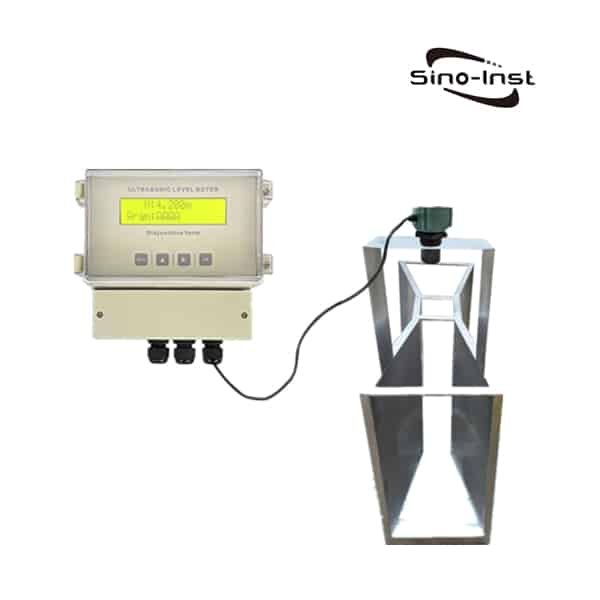
If you need to measure river water level, open channel level, etc. The Ultrasonic Liquid Level Sensor can be used for non-contact continuous level monitoring.

Read more about: 7 Level Senors for Tank Level Measurement

Differential pressure level transmitter working principle

When using Differential pressure (DP) level transmitter to measure the liquid level as shown in the figure below.
The measured liquid density in the figure is ρ.
The working medium density in the capillary of the double flange differential pressure transmitter is ρ0.
The measuring range of the measured liquid level is H.
The center distance of the sampling tube of the measured liquid level is h.
It can be seen from the figure that the maximum measurement range of the liquid level △ P = P + —P- = H × ρ × g-h × ρ0 × g.

It can be seen from the formula that the dual-flange differential pressure transmitter should perform negative migration. The migration amount S is h × ρ0 × g. And the installation position of the double flange differential pressure transmitter has no effect on the migration amount and the measurement result.

Extended reading: Hydrostatic Level Measurement

The dual-flange differential pressure transmitter requires negative migration.

When the measured liquid level is 0, the pressure difference between the positive and negative measurement chambers of the remote differential pressure transmitter is the largest. The output current of the double flange differential pressure transmitter is 4mA.

As the measured liquid level rises, the pressure difference between the positive and negative measurement chambers of the transmitter gradually decreases.

When the measured liquid level rises to the highest Hmax. The pressure difference between the positive and negative measurement chambers of the transmitter is the smallest. The output current of the double flange differential pressure transmitter is 20mA.

Extended Reading: Procurement Guide for Ultrasonic liquid level sensors

You may like:

Sino-Inst offers overs 100 DP transmitters for liquid level, pressure, flow, temperature measurement. Differential pressure (dp) level transmitters suit to measeure water and other liquid level.

A wide variety of DP level transmitters are available to you. Such as SMT3151LT Differential pressure level transmitter.

You can also choose from liquid flow meter and pressure transmitters, not specified. We are differential pressure level transmitter suppliers, located in China. The top supplying country is China(Mainland), which supply 100% of DP transmiters respectively.

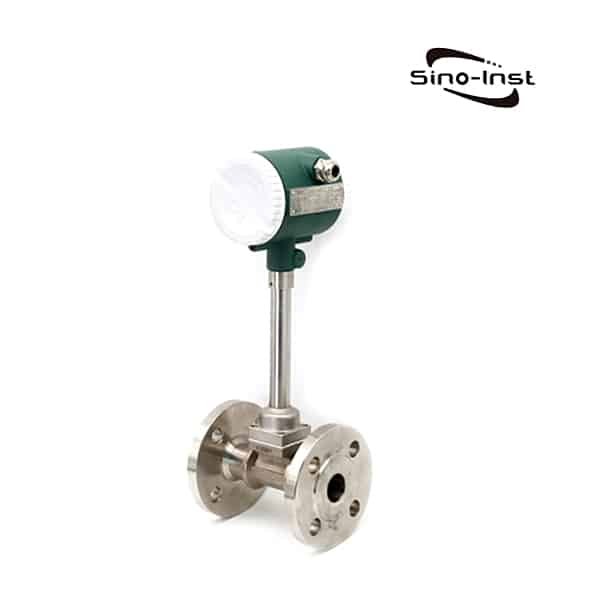
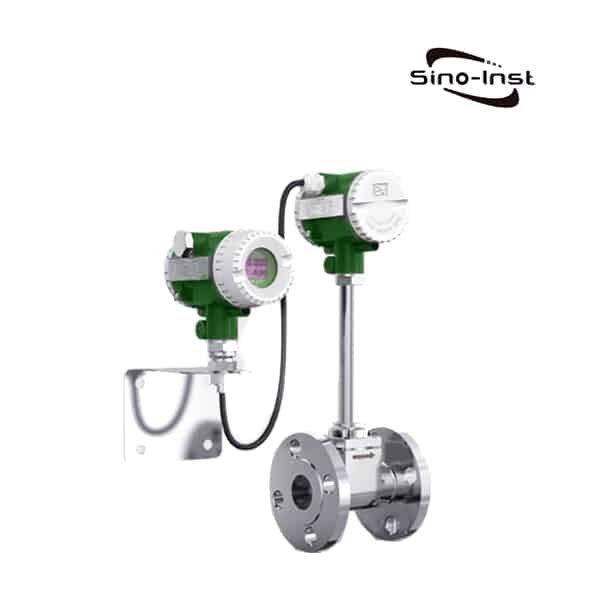
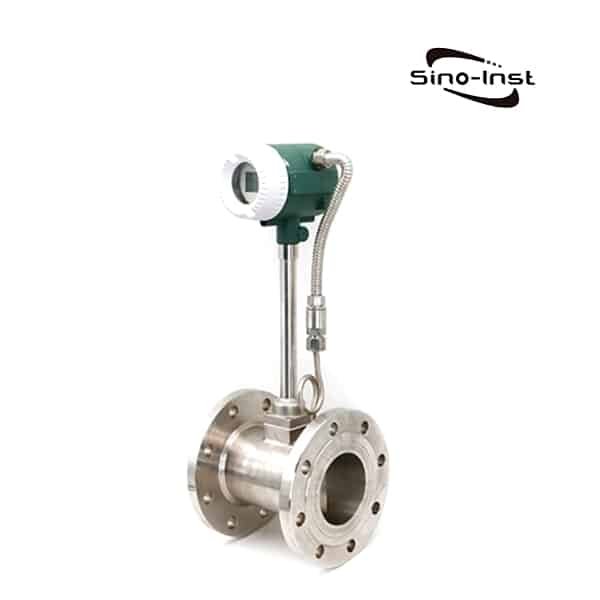
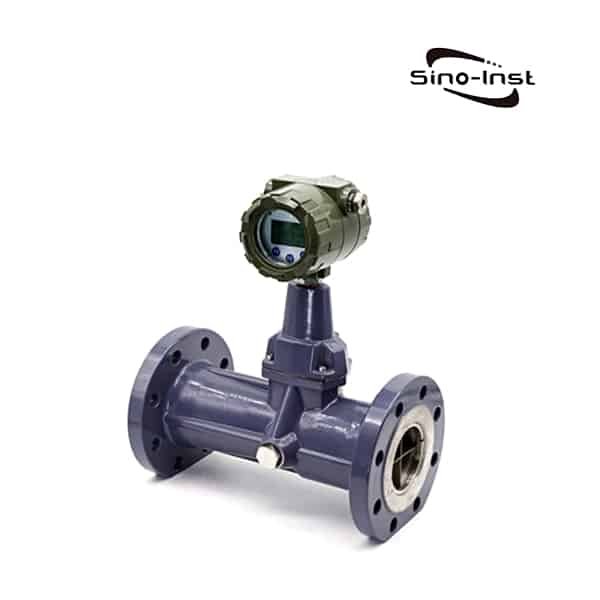
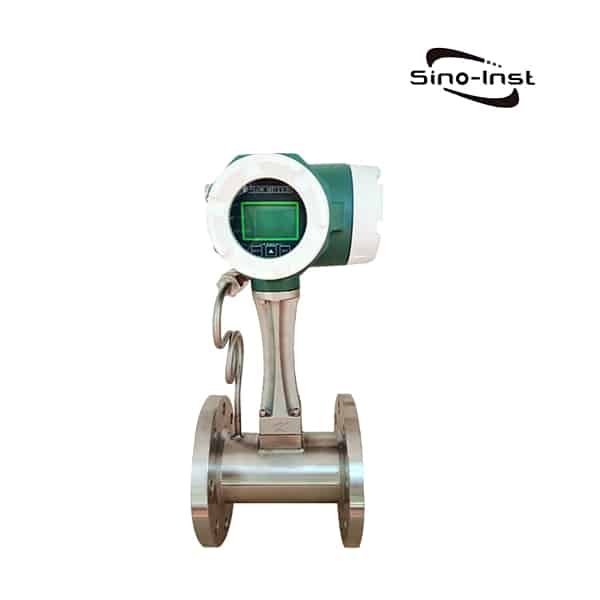
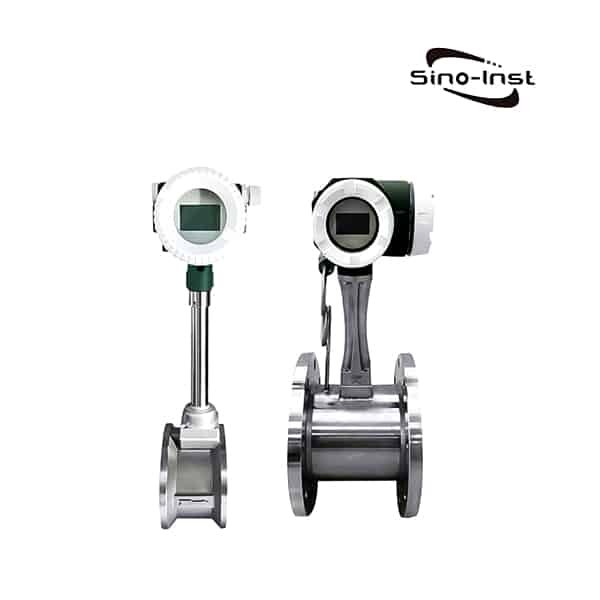
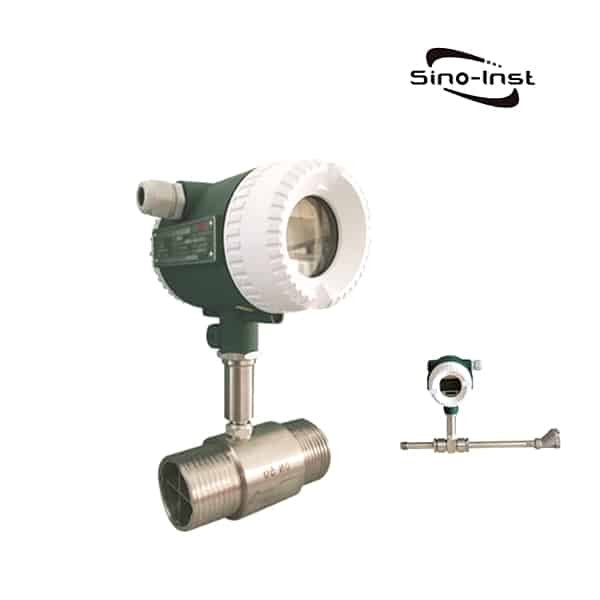
Wafer Flange Vortex Flowmeter

Vortex flow meter is suitable for measuring steam as well as a variety of liquids and gases. Wafer Flange Vortex Flowmeter is suitable for low pressure pipes. Cost is lower.

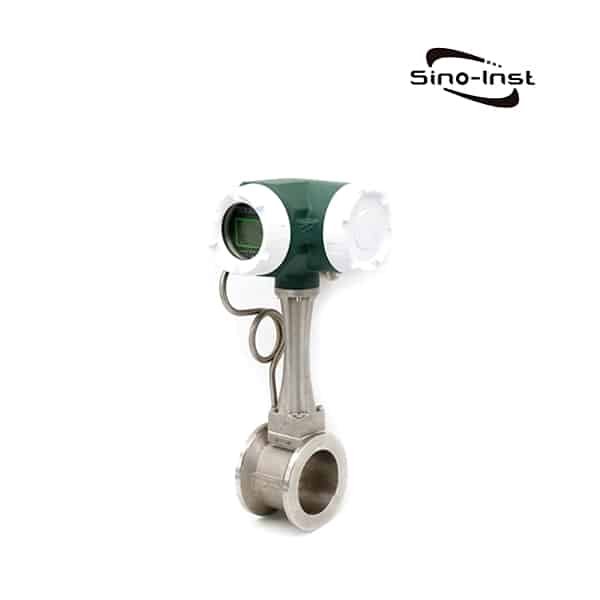
Wafer Flange Vortex Flowmeter means that the flowmeter body does not have flanges. The pipeline has flanges. The pipeline is tightened by bolts to clamp the flowmeter hard, so it is called clamping. The flange type Vortex Flowmeter is that the body and the pipeline have flanges. Use A pair of flanges are fixedly installed. Therefore, the pressure and caliber of the Wafer Flange Vortex Flowmeter is not high. However, two flanges are saved, which can be cheaper.

Wafer Flange Vortex Flowmeter reference price:  USD 200-700/pc.

Sino-Inst offers a variety of  Vortex flow meters for flow measurement. If you have any questions, please contact our sales engineers.

Features of Wafer Flange Vortex Flowmeter

  1. Suitable for use in petrochemical and other hazardous situations requiring explosion protection;
  2. Explosion-proof certification mark: Ex ia ⅡC T6 Ga;
    • Explosion-proof vortex flowmeter. It is not allowed to open the circuit shell when the power is on. It is necessary to alternately switch on and off the power supply for repeated adjustments, which is inconvenient and prone to errors and dangers;
    • Intrinsically safe vortex flowmeter. It can be operated at will when the power is on, which is convenient and safe.
  3. It has a very unique medium versatility. It can be used for flow measurement and control of most steam, gas and liquid;
  4. Simple structure, no holes and gaps design, no wear, dirt resistance, no moving parts, low failure rate, high stability and reliability;
  5. Integrated design of temperature and pressure compensation;
  6. The meter body is made of stainless steel, which is suitable for the measurement of corrosive media;
  7. On-site LCD display, pulse, 4-20mA output or 485 communication, can be connected with industrial automation syst

Specifications of Wafer Flange Vortex Flowmeter

Measuring mediumSuperheated/saturated steam, liquid and gas
Measuring rangeSee flow range table for details
caliberWafer type/flange type: DN15~DN400~DN1000
Medium temperature (℃)(-40~80)℃, (-40~150)℃, (-40~300)℃, (-40~400)℃
Environment temperature (℃)(-20~+70)°C atmospheric pressure: 86kPa~106kPa
Nominal pressureLiquid 1.6MPa, 2.0MPa, 2.5MPa, 4.0MPa, 5.0MPa, 6.3MPa, 10.0MPa, 25MPa
Gas and steam 1.6MPa, 2.0MPa, 2.5MPa, 4.0MPa, 5.0MPa
Accuracy±1.0%, ±1.5%
Flow rate range (m/s)Liquid: 0.15~7 Gas: 1.5~60 Steam: 2~70
output signalThree-wire voltage pulse: high level≥5V low level<1V
Standard current signal: (4-20) mA standard current signal proportional to the flow rate, local display flow, cumulative flow.
And output proportional to the flow rate (4-20) mA standard current signal and pulse frequency signal
Communication method: RS-485 communication
Power supplyThree-wire voltage pulse: DC12V, DC24V
Standard current output, local display: DC24V
Battery power supply (lithium battery): 3.6V
Ambient temperature(-20~+70)°C atmospheric pressure: 86kPa~106kPa
Protection levelIP65
Explosion-proof gradeIntrinsically safe Ex ia ⅡC T6 Ga
displayLCD displays instantaneous flow, cumulative flow, vortex frequency,
temperature and pressure (integrated temperature and pressure)
Cable interfaceM20×1.5 (internal thread, recommended);
1/2NPT (internal thread)
Installation formIntegrated installation;
split installation
(the measuring tube and the indicator are connected by a 10-core special shielded cable)

Vortex Flowmeter Installation Method

Vortex flowmeters are divided into different installation forms: flange type, clamp type, plug-in type, thread type and clamp type.

When selecting the vortex flowmeter, the flange type is given priority, followed by the clamping type and the plug-in type.

The reason is that the accuracy of clamp-on and insertion type is greatly affected by the installation, and non-standard installation will produce errors.

The installation methods of vortex flowmeters differ as follows:

  • Flange type: The instrument is connected to the process pipeline through its own flange, with high pressure resistance and large caliber range. high cost.
  • Clamping type: The instrument is clamped and fixed on the process pipeline by the flange on the pipeline, with low pressure resistance and small caliber range. low cost.
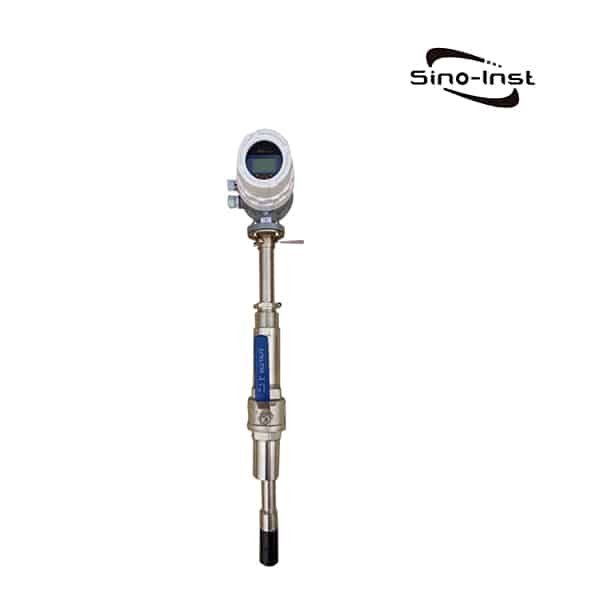
  • Plug-in type: suitable for large diameter pipes. Ball valves can be installed. Convenient online installation and disassembly.
  • Threaded type: Threaded installation can only be used for small diameter pipes. Internal thread/external thread installation can be customized.
  • Clamp type: 316 stainless steel clamp accessories. It is suitable for food, medicine and other hygiene industries. Installation is quick and easy.

Vortex Flowmeter Working Principle

Vortex flowmeter is a speed-type flowmeter produced according to karman’s vortex principle,
which can be used for the measurement and measurement of conventional gas, steam and
liquid.

Vortex flow sensor has high precision and wide range ratio, no moving parts in use, which can
improve mechanical stability and reduce maintenance.Vortex flowmeter is almost not affected by the temperature, pressure and composition of medium when measuring the volume of working condition.

Therefore, it is convenient to calibrate the instrument, so vortex street flow sensor is widely used in production and life.

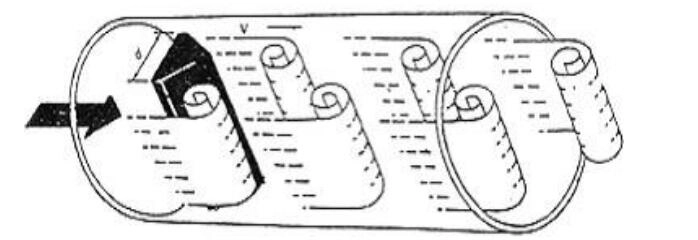
When a trigonal column vortex generator is set in the fluid, regular vortices are generated alternately on both sides of the vortex generator, which is called Carmen vortex.

The vortex columns are arranged asymmetrically downstream of the vortex generator. Vortex flowmeter is produced according to this principle.

Vortexes are generated by generating bodies and the number of vortexes is detected by high-sensitivity sensors. In a certain range, the number of vortexes generated is proportional to the flow rate.


In vortex flowmeter, the relationship between flow rate and the number of vortexes generated
can be expressed by the following formula:

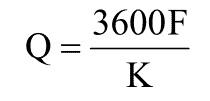
Q:Operating volume flow of the measured medium. The unit is m3/h。
F:Frequency of the number of vortices produced by the generating body. The unit is Hz.
K:Refers to the calculated or calibrated flow coefficient. It represents how many frequency signals per cube. the coefficient is usually obtained by calibration.

The formula of standard table method calibration coefficient K:

The formula can also be used for flow correction.

Read more about: Vortex Shedding Flow Meter Working Principle

Vortex flowmeter advantages and disadvantages

Advantages of vortex flowmeter

  • The vortex flowmeter has no moving parts, and the measuring element has a simple structure, reliable performance and long service life.
  • The vortex flowmeter has a wide measuring range. The turndown ratio can generally reach 1:10.
  • The volume flow of the vortex flowmeter is not affected by thermal parameters such as the temperature, pressure, density or viscosity of the fluid being measured. Generally, no separate calibration is required. It can measure the flow of liquid, gas or steam.
  • The pressure loss caused by it is small.
  • The accuracy is high, the repeatability is 0.5%, and the maintenance is small.

Disadvantages of vortex flowmeter

  • The volume flow of the vortex flowmeter is not affected by the temperature, pressure, density and other thermal parameters of the measured fluid. But the final measurement result of liquid or steam should be the mass flow rate, and for gas, the final measurement result should be the standard volume flow rate. Both mass flow and standard volume flow must be converted by fluid density, and changes in fluid density caused by changes in fluid working conditions must be considered.
  • The factors that cause errors are: errors caused by uneven pipeline flow rates; inability to accurately determine the density of the medium when fluid conditions change; and the wet saturated steam is assumed to be dry saturated steam for measurement. If these errors are not limited or eliminated, the total measurement error of the vortex flowmeter will be very large.
  • Poor vibration resistance. External vibration will cause errors of the vortex flowmeter, or even fail to work normally. The high-velocity impact of the channel fluid will cause additional vibrations to the cantilever of the vortex generator, which reduces the measurement accuracy. The influence of large pipe diameter is more obvious.
  • Poor adaptability to measuring dirty media. The generating body of the vortex flowmeter is very easy to be dirty by the medium or entangled by the dirt, and the change of the geometric body size will greatly affect the measurement accuracy.
  • High requirements for straight pipe sections. Experts pointed out that the straight pipe section of the vortex flowmeter must ensure the front 40D and the 20D to meet the measurement requirements.
  • Poor temperature resistance. Generally, vortex flowmeters can only measure the fluid flow of media below 300°C.

More Featured Vortex Flowmeters

Sino-Instt offer over 10 Voretx FlowMeters, with Best Price.

A wide variety of Voretx Flow Meters options are available to you, such as free samples, paid samples. All of our flow meters can wokrk with the AMS NEW TREX.

Sino-Inst is Voretx Flow Meter suppliers, located in China. Vortex shedding flow meter products are most popular in North America, Mid East, and Eastern Europe.

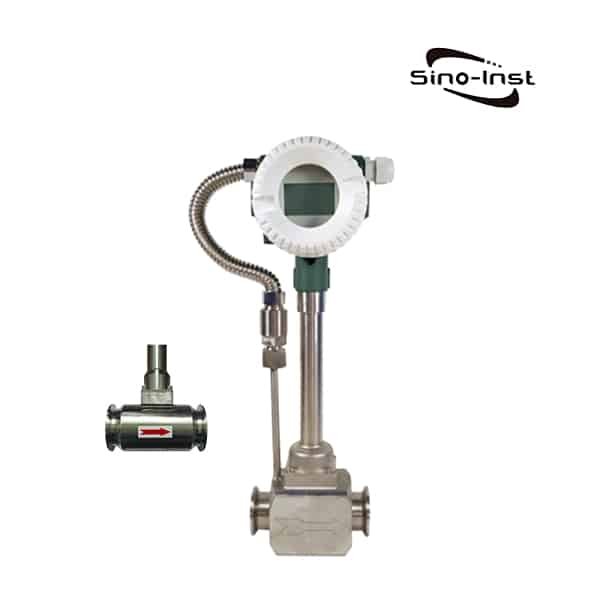
Vortex Hygienic Flow Meter

Hygienic Flow Meter uses stainless steel tri-clamp fittings. Meet the hygiene measurement requirements of food-processing and bio-technology/ pharmaceutical industries.

Hygienic and clean flow metering instruments for measuring the movement of substances in food, beverage and pharmaceutical processes. Hygienic measuring instruments are designed for the food, beverage and pharmaceutical industries, which require a high degree of cleanliness during manufacturing. The Vortex Hygienic Flow Meter is a flowmeter that can be used to measure instantaneous and cumulative flow of liquids, gases and steam.

Vortex Hygienic Flow Meter reference price:  USD 300-700/pc.

Sino-Inst offers a variety of  Vortex flow meters for flow measurement. If you have any questions, please contact our sales engineers.

Features of Vortex Hygienic Flow Meter

  1. Dedicated to the sanitary industry, simple internal components, clamp connection;
  2. Software configuration can realize various configurations required for different measurements of different media;
  3. Parameter setting can set the measurement parameters of different fluids. Example: gas deviation coefficient, instrument coefficient, rated value, etc.;
  4. Self-diagnosis diagnoses the setting parameter range, generator output signal, signal sending and receiving, CPU failure, etc.;
  5. Display function Various parameters such as diagnostic code, flow, total, flow percentage, etc.;
  6. On-site LCD display, pulse, 4-20mA output or 485 communication, can be connected with industrial automation system.
  7. Integrated design of temperature and pressure compensation;

Specifications of Vortex Hygienic Flow Meter

Measuring mediumGas, liquid, vapor
Caliber specificationDN15-300
Flow measurement rangeNormal flow rate range of the measuring child: gas 5~50m/s; liquid 0. 5~7m/s
measurement accuracy1.0 level 1.5 level
Measured medium temperatureRoom temperature -25℃~10℃ High temperature -25℃~150℃ -25℃~250℃
MaterialStainless steel 304 stainless steel
power supplyDC24V or lithium battery 3.6V
Explosion-proof gradeIntrinsically safe type iaIIbT3-T6
Protection levelIP65

Extended reading: What Is Difference Between Rotameter And Flow Meter?

Sanitary Flow Meters

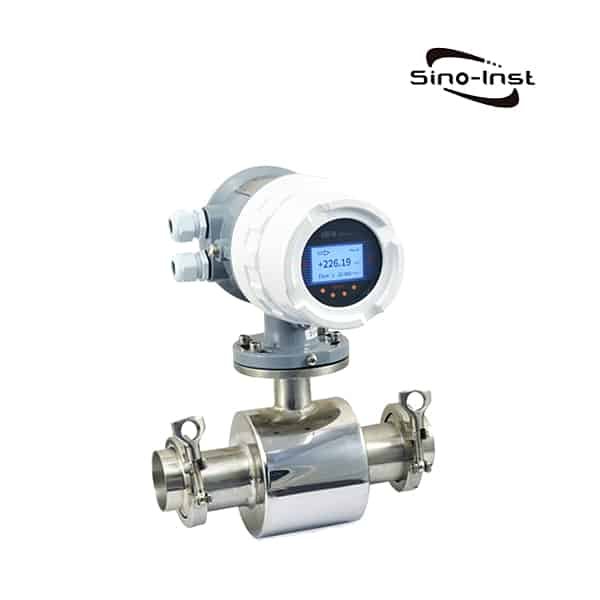
Common sanitary flow meters are sanitary magnetic flow meters and sanitary turbine flow meters. Composed of 304/316 stainless steel. A Sanitary flowmeter with Tri-Clamp fittings is easier to install and disassemble. Suitable for the food hygiene industry.

Sanitary Flow Meter uses a new type of sanitary lining material and lining technology, which meets the sanitary requirements of the food industry. It uses a stainless steel shell and stainless steel clamp connection. It is convenient for the quick disassembly and cleaning of the electromagnetic flow meter. Magnetic flow meter in a sanitary version which meets the strict requirements of the food-processing and bio-technology/ pharmaceutical industries.

Extended reading: Stainless steel flow meters|304-316 optional

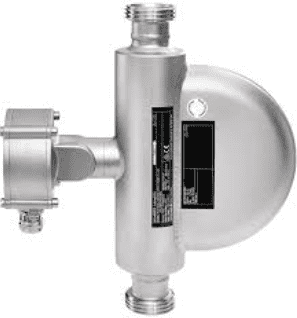
The hygienic mass flowmeter is mainly used to measure the mass flow, total amount and density of the medium. At the same time, it can also measure the volume flow and total amount, medium temperature, moisture content, alcohol content of alcohol. Two liquids that are mixed evenly The concentration of raw materials in the process flow, etc.

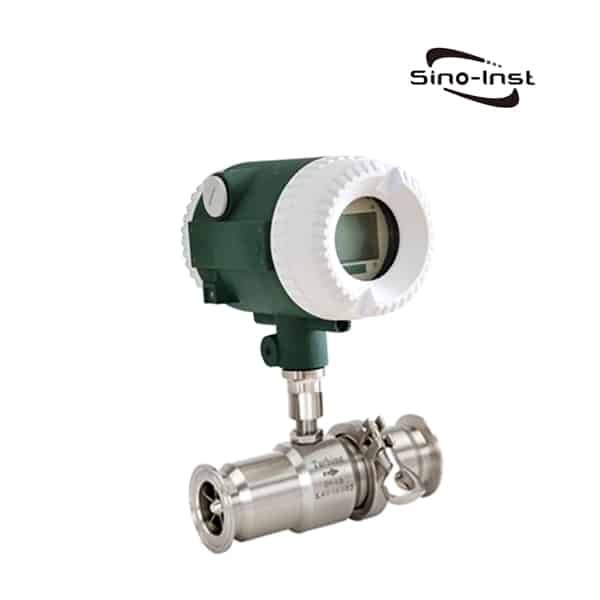
Sanitary Flow Meter, also called sanitary turbine flow meter or Hygienic turbine flowmeter. Ensure Accurate Flow Measurement in Sanitary food-processing and bio-technology industries.

Sanitary turbine flow meters have stainless steel bodies and come standard with Tri-Clover fittings. A Sanitary flow meter is suitable for measuring liquid without impurities. It can output pulse frequency signal. It is used to detect instantaneous flow and total integrated flow. Sanitary flow meter can be used in food, sport drink, liquor and other beverage industries, in preprocess applications.

Read more about Sanitary Flow Meters-316SS,Tri clamp-Pulse- for Brewery

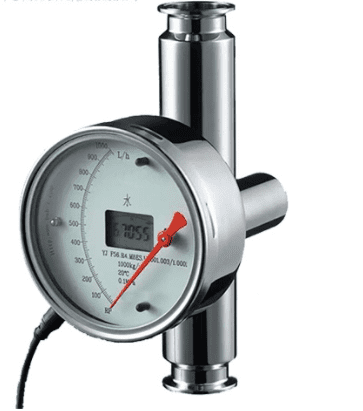
Sanitary metal rotor flowmeters are mainly used in food, beverage, pharmaceutical and other industries. In the production process, it mainly plays the role of metering, ingredient control, and finished product filling. The material needs to be corrosion-resistant to prevent contamination of the product. The structure should not be too complicated and should be simpler. To prevent residual material inside the flowmeter, it is inconvenient to clean. These conditions are met to meet the usage requirements.

For example, a peanut oil processing company needs to use a flowmeter to measure the volume weight of the primary processed oil and the final refined oil, as well as the quantitative control in the filling process.

Extended reading: Featured Hydraulic Flow Meters For Sale

Read more about: Application of sanitary flow meters

Vortex flow meter advantages and disadvantages

Advantages of vortex flowmeter

  • The vortex flowmeter has no moving parts, and the measuring element has a simple structure, reliable performance and long service life.
  • The vortex flowmeter has a wide measuring range. The turndown ratio can generally reach 1:10.
  • The volume flow of the vortex flowmeter is not affected by thermal parameters such as the temperature, pressure, density or viscosity of the fluid being measured. Generally, no separate calibration is required. It can measure the flow of liquid, gas or steam.
  • The pressure loss caused by it is small.
  • The accuracy is high, the repeatability is 0.5%, and the maintenance is small.

Extended reading: non contact flow meter

Disadvantages of vortex flowmeter

  • The volume flow of the vortex flowmeter is not affected by the temperature, pressure, density and other thermal parameters of the measured fluid. But the final measurement result of liquid or steam should be the mass flow rate, and for gas, the final measurement result should be the standard volume flow rate. Both mass flow and standard volume flow must be converted by fluid density, and changes in fluid density caused by changes in fluid working conditions must be considered.
  • The main factors that cause flow measurement errors are: measurement errors caused by uneven pipeline flow rates; inability to accurately determine the density of the medium when fluid conditions change; and the wet saturated steam is assumed to be dry saturated steam for measurement. If these errors are not limited or eliminated, the total measurement error of the vortex flowmeter will be very large.
  • Poor vibration resistance. External vibration will cause measurement errors of the vortex flowmeter, or even fail to work normally. The high-velocity impact of the channel fluid will cause additional vibrations to the cantilever of the vortex generator, which reduces the measurement accuracy. The influence of large pipe diameter is more obvious.
  • Poor adaptability to measuring dirty media. The generating body of the vortex flowmeter is very easy to be dirty by the medium or entangled by the dirt, and the change of the geometric body size will greatly affect the measurement accuracy.
  • High requirements for straight pipe sections. Experts pointed out that the straight pipe section of the vortex flowmeter must ensure the front 40D and the 20D to meet the measurement requirements.
  • Poor temperature resistance. Generally, vortex flowmeters can only measure the fluid flow of media below 300°C.

Extended reading: Food grade flow meters for Food & Beverage industry

Related Blogs

  • Digital Flow Meter for Argon Gas

    What is Digital Flow Meter for Argon Gas? Digital flow meter for argon gas refers to a flow meter that can be used for detection, display, transmission, and signal output…
  • Guide for Digital Fuel Flow Meter

    Digital Fuel Flow Meter is a flow meter dedicated to measuring fuel, diesel, gasoline, and petroleum. Digital Fuel Flow Meter generally has a digital display or signal output. Such as…
  • Water Flow Measurement for Pipes and Open Channels

    Water flow measurement is common in both industry and life. You may often hear about the use of electromagnetic flowmeters to measure wastewater. The clamp-on ultrasonic flowmeter measures large water…
  • Explore Oil and Gas Flow Meters

    An oil and Gas Flow Meter is A device installed in a pump manifold or treating line to measure the fluid flow rate. Oil and Gas Flow Meters can be…
  • Strap on Ultrasonic Flow Meters

    What is Strap on Ultrasonic Flow Meters? Strap on Ultrasonic Flow Meter is also often called Clamp On Type Flow Meter. The unique feature of Strap on Ultrasonic Flow Meter…
  • Industrial Oil Flow Meters

    Industrial oil flow meters measure the volume or mass of oil. Can realize the mutual conversion of volume and mass. The main industrial oils are hydraulic oil. Gear Oil. Turbine…
  • Fluid Flow Meters

    Fluid Flow Measurement Devices Fluid Flow Meters measure the amount of liquid, gas, or steam passing through the piping system. Most Fluid Flow Meters are designed to measure the speed…

Extended reading: Ultrasonic Flow Meters Types & Technical Guide

Sino-Instt offers over 10 Vortex Hygienic Flow Meters, with the Best Price.

A wide variety of Vortex Hygienic Flow Meters options are available to you, such as free samples, paid samples. All of our flow meters can work with the AMS NEW TREX.

Sino-Inst is a Vortex Hygienic Flow Meter supplier, located in China. Vortex shedding flow meter products are most popular in North America, Mid East, and Eastern Europe.

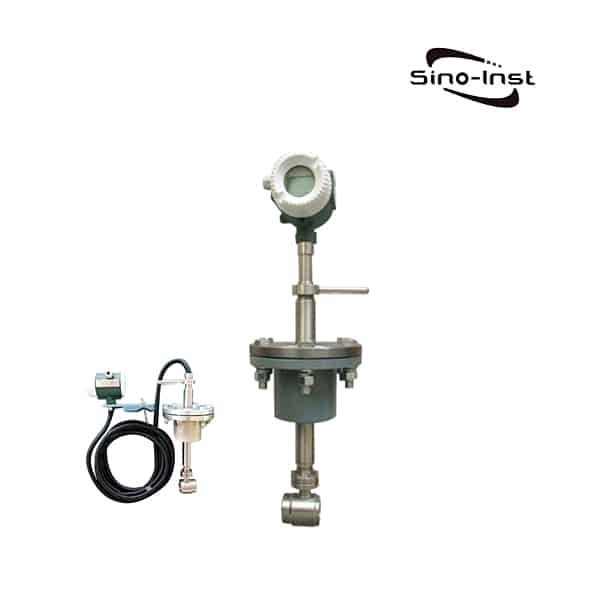
Vortex Split High Temperature Flow Meter

High Temperature Flow Meter is suitable for high temperature flow monitoring. Suitable for high temperature, high pressure, safety and explosion-proof.

The High Temperature Flow Meter uses a split signal converter. The way the vortex body is separated from the vortex converter. The Vortex Split High Temperature Flow Meter is suitable for high temperature, high pressure, safety and explosion-proof applications, where you need to watch the meter data on site. It is widely used in the measurement of steam, gas and liquid. And inconvenience Under complex conditions of reading data.

Vortex Split High Temperature Flow Meter reference price: USD 500-1500/pc.

Sino-Inst offers a variety of  Vortex flow meters for flow measurement. If you have any questions, please contact our sales engineers.

Features of Vortex Split High Temperature Flow Meter

  1. Not affected by temperature and pressure. At the same time, it is not easy to block and scale. It is resistant to high temperature and high pressure, and is suitable for harsh environments.
  2. The product has no wear, dirt resistance, no mechanical maintenance, and long service life.
  3. The current output is electrically isolated, with good common mode interference suppression.
  4. It can accurately measure the flow of gas, liquid and steam in a wide flow range without being affected by the physical properties of the fluid.
  5. Simultaneous display of flow value and accumulated flow value, no need to switch in turn.
  6. Adopt anti-vibration probe to effectively eliminate the influence of external vibration.
  7. Using split signal converter, the cable length is 10 meters.
  8. The circuit adopts surface mount technology, compact structure and high reliability.

Specifications of Vortex Split High Temperature Flow Meter

Measuring mediumSuperheated/saturated steam, liquid and gas
Measuring rangeSee flow range table for details
caliberWafer type/flange type: DN15~DN400
Medium temperature (℃)(-40~80)℃, (-40~150)℃, (-40~300)℃, (-40~400)℃
Environment temperature (℃)(-20~+70)°C atmospheric pressure: 86kPa~106kPa
Nominal pressureLiquid 1.6MPa, 2.0MPa, 2.5MPa, 4.0MPa, 5.0MPa, 6.3MPa, 10.0MPa, 25MPa
Gas and steam 1.6MPa, 2.0MPa, 2.5MPa, 4.0MPa, 5.0MPa
Accuracy±1.0%, ±1.5%
Flow rate range (m/s)Liquid: 0.15~7 Gas: 1.5~60 Steam: 2~70
output signalThree-wire voltage pulse: high level≥5V low level<1V
Standard current signal: (4-20) mA standard current signal proportional to the flow rate, local display flow, cumulative flow.
And output proportional to the flow rate (4-20) mA standard current signal and pulse frequency signal
Communication method: RS-485 communication
Power supplyThree-wire voltage pulse: DC12V, DC24V
Standard current output, local display: DC24V
Battery power supply (lithium battery): 3.6V
Ambient temperature(-20~+70)°C atmospheric pressure: 86kPa~106kPa
Protection levelIP65
Explosion-proof gradeIntrinsically safe Ex ia ⅡC T6 Ga
displayLCD display instantaneous flow, cumulative flow, vortex frequency, temperature and pressure (integrated temperature and pressure)
Cable interfaceM20×1.5 (internal thread, recommended); 1/2NPT (internal thread)
Installation formIntegrated installation; split installation (the measuring tube and the indicator are connected by a 10-core special shielded cable)

Extended reading: Vortex Hygienic Flow Meter

Vortex Split High Temperature Flow Meter Applications

The split display type vortex flowmeter (external power supply, internal battery power supply) can measure almost all conductive, non-conductive, sound-conducting, non-sound-conducting, low-temperature, high-temperature, and viscous media, such as liquid, gas, and steam.

Split display type vortex flowmeter (external power supply, internal battery power supply) is widely used in schools, research institutes, food plants, chemical plants, petroleum, metallurgy, coal mines, pharmaceutical plants, hotels, restaurants, power plants, steel plants, etc. Large and small enterprises in various industries.

The split display type vortex flowmeter is an ideal product for obtaining data from scientific research experiments, real-time measurement of equipment consumption, factory performance evaluation, energy saving and emission reduction, and trade settlement between A and B.

Read more about: Vortex Shedding Flow Meter Working Principle

More Featured High Temperature Flow Meters

Here we simply list the temperature of the following different types of high temperature flow meters:

Please note: high temperature flow sensor is customized ,not standard type. If you need to measure high temperature, please contact Sino-Inst sales engineer.

High temperature mass flow meter

The thermal gas mass flow meter is designed based on the principle of thermal diffusion, which uses the constant temperature difference method to accurately measure the gas. The sensor part consists of two reference grade platinum resistance temperature sensors. Thermal gases are widely used in factory compressed air, blast furnace gas measurement in ironworks, and monitoring and measurement of chimney flue exhaust.

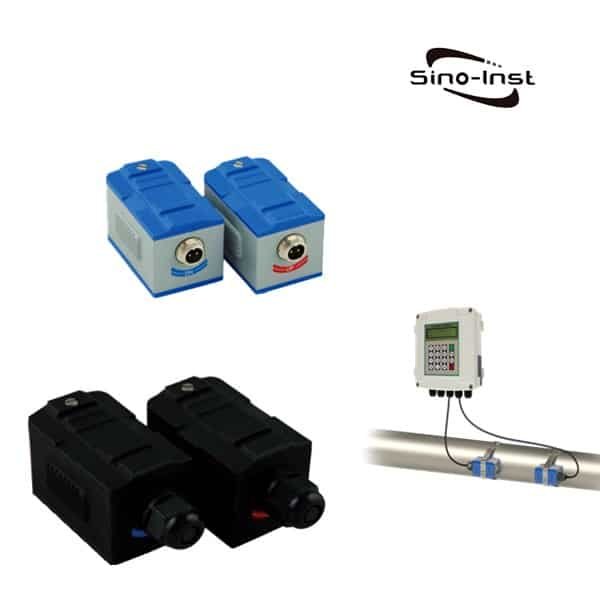
High temperature ultrasonic flow meter

The clamp-on ultrasonic flowmeter composed of wall-mounted host and clamp-on flow sensor can be widely used in various water treatment industries. Applied to online measurement of various liquid volume flow. The main unit and the sensor are installed separately: the sensor is installed on the pipeline, the wall-mounted main unit is installed indoors or in the instrument box, and the main unit and the sensor are connected with an ultrasonic special cable. It is currently the most widely used ultrasonic flowmeter.

High temperature water flow meter

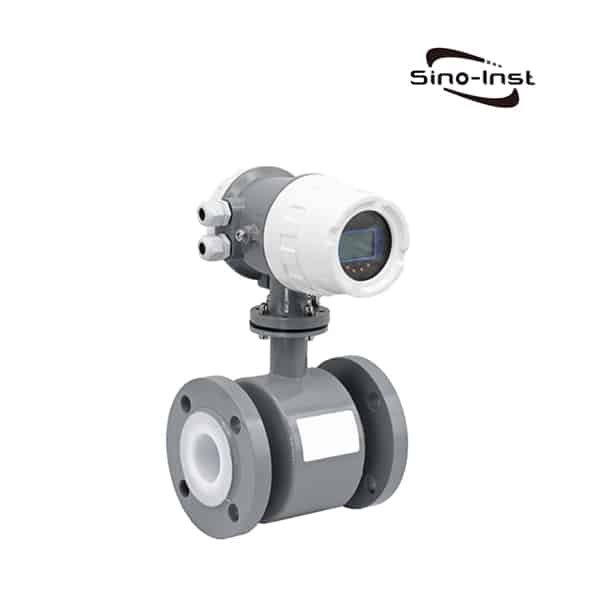
Magnetic Water Flow Meter provide highly accurate flow measurement for a wide variety of conductive fluid applications. Magnetic Water Flow Meter is a volumetric flow meter that measures liquids or liquid slurries that have a minimum conductivity of 5 µS/cm. Based on Faraday’s law of electromagnetic induction. Magnetic Water Flow Meter is ideal for wastewater applications or any dirty liquid which is conductive or water based. It is widely used in water treatment, environmental protection sewage measurement and control, papermaking and other industrial and agricultural production processes for flow measurement and control.

High temperature turbine flow meter

Liquid turbine flow meter is the main type of impeller type flow (velocity) meter. It is composed of sensors and conversion display. The sensor uses a multi-blade rotor to sense the average flow rate of the fluid, thereby deriving the flow or total amount. Liquid turbine flow meter is suitable for measuring liquids that are not corrosive to stainless steel 1Cr18Ni9Ti, 2Cr13 and corundum Al2O3 in closed pipelines and are free of impurities. For milk, soybean oil, edible oil, diesel, purified water.

Sino-Instt offer over 10 High Temperature Flow Meters, with Best Price.

A wide variety of High Temperature Flow Meters options are available to you, such as free samples, paid samples. All of our flow meters can wokrk with the AMS NEW TREX.

Sino-Inst is High Temperature Flow Meter suppliers, located in China. High Temperature Flow Meter products are most popular in North America, Mid East, and Eastern Europe.

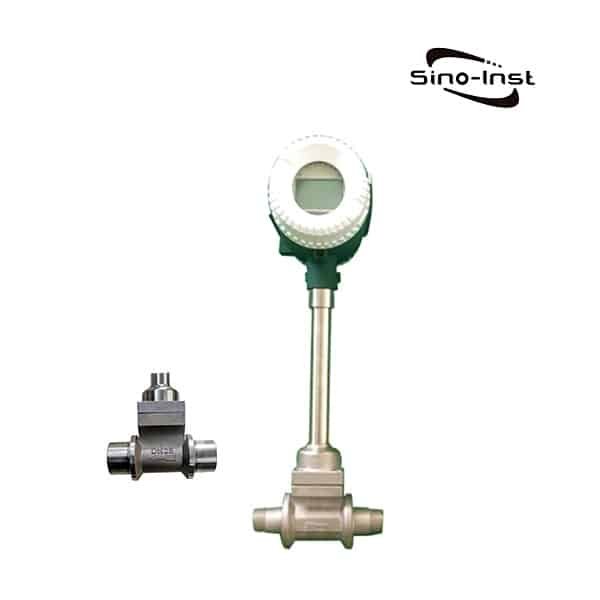
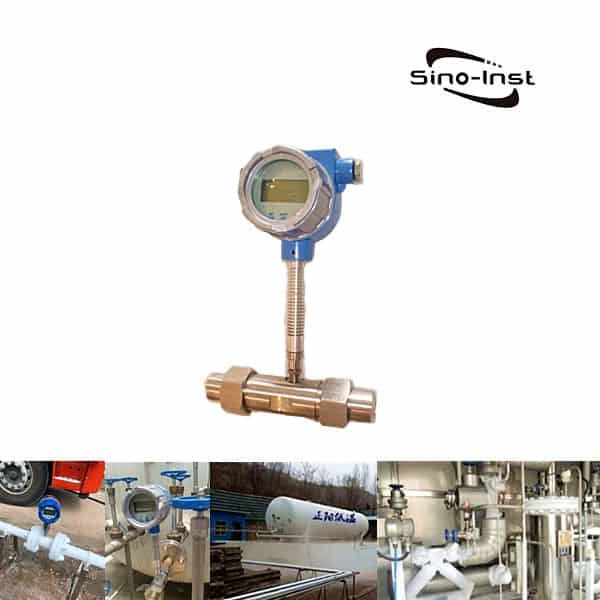
Threaded Vortex Nitrogen Gas Flow Meter

Nitrogen gas flow meter is used to measure the flow rate of N2 gas. Digital vortex flowmeter can be flange-Wafer-threaded installation. Threaded is suitable for small diameter pipes.

Nitrogen gas flow meter is easy to use, reasonably priced. Threaded connection is a widely used detachable fixed connection. It has the advantages of simple structure, reliable connection, and convenient assembly and disassembly. Nitrogen is required in many processes of the chemical and pharmaceutical industry. Predominantly as protective gas, to prevent the occurrence of explosive atmospheres. Sino-Inst vortex flowmeter can be used for natural gas, nitrogen, biogas and other gases.

Vortex Nitrogen Gas Flow Meter reference price: USD 400-1000/pc.

Sino-Inst offers a variety of  Vortex flow meters for flow measurement. If you have any questions, please contact our sales engineers.

Features of Vortex Nitrogen Gas Flow Meter

  • The nitrogen flow can be controlled more precisely to save costs.
  • The nitrogen flow control can also prevent the nitrogen flow from being too large, resulting in insufficient heat supplementation.
  • The amount of nitrogen output can be accurately known.
  • The nitrogen flow meter has no movable parts, no wear, and dirt resistance. No mechanical maintenance is required, and the service life is long;
  • The overall structure design of the instrument is reasonable, the dynamic measurement range is wide, and the pressure loss is small;
  • The measurement is not affected by temperature and pressure, and is resistant to high temperatures & High pressure.

Specifications of Vortex Nitrogen Gas Flow Meter

Executive
standard
《JB/T9249-2015 Vortex flow meter industry standard》
Diameter(mm)15,20,25,40,50,65,80,100,125,150,200,250,300,(300~1000 plug-in)
Nominal pressure(MPa)DN15-DN200 4.0(>4.0,Supply agreement)DN250-DN300 1.6(>1.6,Supply agreement)
Medium temperature(ºC)Piezoelectric type :-40~150,-40~260,-40~330;
Projected Capacitive:-40~400(upply agreement)
Body material 1Cr18Ni9Ti(Other material order by agreement)
Permissible vibration
acceleration
Piezoelectric type :0.2g   Projected Capacitive:1.0-2.0g
Accuracy±1%R,±1.5%R;plug-in:±2.5%R
Range of degrees1:6~1:25
Power SupplySensor:DC+12V,DC+24V;Transmitter:DC+12V,DV+24V;Battery-powered:3.6V battery
Output signalPulse:high level:≥5V low level:≤1V;electricity current:4~20mA
Pressure loss coefficientComply with JB/T9249 standard Cd≤2.4
Explosion-proof coefficientIntrinsic safety :Ex ia II CT2-T4 Explosion-proof type:Exd II CT2-T5
Level of protection Ordinary type:IP65  Diving type:IP68
Environmental conditionsTempersature:-20ºC~55ºC,relative humidity 5%~90%,atmospheric pressure:86~106kPa
Applicable mediumgas ,liquid,steam
Transmission distance Three-wire pulse output:≤300m,Two-wire standard current output:(4~20mA)≤1500m
load resistance≤500Ω;RS485/HART≤1200m.
Counduit entryThread M20*1.5 or other

You may like: Digital Flow Meters Guide| Liquid and Gas

What is the difference between Wafer type and screw type connection vortex flowmeter?

Three connection methods: Wafer, thread, flange, etc.:

The flange connection can be selected according to the process requirements, according to different joint surfaces, pressure levels, etc.

Wafer type can be used for various pipe diameters, but the pressure level is not too high.

The application of threaded connection is relatively small, such as small diameter, medium and low pressure, etc.

Read more about: Liquid Flow Meters Guide

Nitrogen Gas Flowmeters-Liquid Nitrogen Flowmeters

5 matters to pay attention to when choosing threaded Vortex Nitrogen Gas Flow Meter

The principle of the vortex flowmeter is to install a stagnant part in the flowmeter pipe. When the fluid flows through the stagnant part. Due to the stagnant effect on the surface of the stagnant part, there will be two asymmetric rows downstream.

These vortices are separated on the side and rear of the stagnant member to form a so-called Karman vortex train. The rotation directions of the two vortices are opposite. Karman theoretically proved that when h/L=0.281, the vortex train is stable. h is the width between two vortex rows, and L is the distance between two adjacent vortices

Correct selection can ensure the better use of threaded connection vortex flowmeter.
What kind of vortex flowmeter should be selected according to the physical and chemical properties of the fluid medium to be measured?

  1. Precise function inspection

Accuracy grade and function Choose the instrument accuracy grade according to the measurement requirements and use occasions, so as to be economical and cost-effective.
For example, it is used for trade settlement, product handover and energy metering occasions. The accuracy level should be higher, such as 1.0, 0.5, or higher.

For process control occasions, different accuracy levels can be selected according to control requirements.

For some occasions that just check the process flow and do not need to do precise control and measurement, you can choose a slightly lower accuracy level, such as 1.5, 2.5, or even 4.0. In this case, you can choose a cheap plug-in vortex flowmeter.

2. Measurable medium

When measuring general media, the full-scale flow of the vortex flowmeter can be selected within the range of 0.5-12m/s of the measured medium flow rate, and the range is relatively wide.
The selected instrument specification (caliber) is not necessarily the same as that of the process pipeline. It should be determined whether the measurement flow range is within the flow rate range. That is, when the flow rate of the pipeline is low and cannot meet the requirements of the flow meter or when the measurement accuracy cannot be guaranteed at this flow rate. It is necessary to reduce the caliber of the instrument to increase the flow velocity in the pipe and obtain satisfactory measurement results.

3. Selection of screw connection vortex flowmeter transmitter

In the saturated steam measurement, the VA piezoelectric vortex flow transmitter is used. Because the vortex flowmeter has a wide range. Therefore, in practical applications, it is generally considered that the flow rate of the saturated steam should not be lower than that of the vortex flowmeter. Lower limit. That is to say, the fluid velocity must not be lower than 5m/s.

Vortex flow transmitters of different calibers can be selected according to the amount of steam used. The caliber of the transmitter cannot be selected by the caliber of the existing process pipeline.

4. Selection of pressure compensation pressure transmitter

Because the saturated steam pipeline is long, the pressure fluctuates greatly. Pressure compensation must be used. Considering the corresponding relationship between pressure, temperature and density, only pressure compensation can be used in the measurement. Because the pipeline saturated steam pressure is in the range of 0.3-0.7MPa. Pressure The range of the transmitter can be 1MPa.

5. Selection of display instrument for screw connection vortex flowmeter

Intelligent flow indicator, with functions of voltage stabilization compensation, instantaneous flow display and cumulative flow accumulation.

Further reading: Nitrogen(N2) Flow Meter Types

Digital Nitrogen Gas Flow Meters

Currently, on the market, there are four main instruments that can measure nitrogen flow:

Thermal gas mass flow meter. For direct mass measurement of industrial gases, compressed air, and aqueous fluids. Including nitrogen.

Coriolis mass flowmeter. Directly measure the mass flow of gas and liquid. It can be used to measure nitrogen, which is more expensive.

Vortex flowmeter. Directly measure the volume flow of gas and liquid. It is necessary to add temperature and pressure measuring sensors and totalizers to calculate mass flow.

Orifice flow meter

Orifice flowmeter. The orifice is used as a throttling element. With a differential pressure transmitter, the volume flow can be calculated. To convert into mass flow, temperature and pressure sensors and totalizers must also be added.

Extended reading: liquid nitrogen level measurement

Nitrogen Gas Flow Measurement

Nitrogen is required in many processes of the chemical and pharmaceutical industry; predominantly as protective gas, to prevent the occurrence of explosive atmospheres。

Such as when handling dusty products or solvents.

If your work requires you to use nitrogen, having a flow meter installed on your tank is a great way to save some money.

These indicators let you know whether gas is moving through the line, often via the use of a levitating ball, a pressure gauge, or other visual cues.

These options are simple to use and reliable, making them must-haves for welders, HVAC technicians, and more.

There are many types of Nitrogen gas flow meters. There are three types of flow meters commonly used to measure nitrogen. Precession vortex flowmeter, gas vortex flowmeter, thermal gas mass flowmeter. When selecting a model, it is necessary to select a suitable model and specification according to the parameters and cost that can be provided on-site.

Read more about:
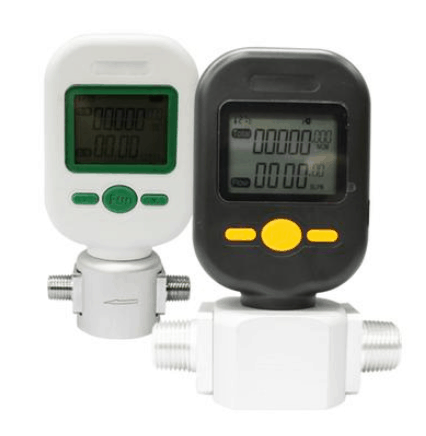
Benefits Of Digital Gas Mass Flow Meters

Frequently
Asked
Questions

Nitrogen Flowmeters are a type of flow meter that can measure the flow of nitrogen or liquid nitrogen. The common nitrogen flow rates are nitrogen and liquefied nitrogen. Nitrogen is often referred to as an inert gas. Used in metal processing in some inert atmospheres. When it is liquid, it is a common reagent for cooling, cooling, and freezing. Optimize your nitrogen system and save costs. Therefore, it is very important to accurately measure the nitrogen flow rate.

A gas flow meter is an instrument that measures the flow of gas. Installed in the pipeline to record the amount of gas flowing through. Can measure gas, air, nitrogen, acetylene, phosgene, hydrogen, natural gas, nitrogen, LPG, hydrogen peroxide, flue gas, methane, butane, chlorine, gas, biogas, carbon dioxide, oxygen, compressed air, argon Gas, toluene, benzene, xylene, hydrogen sulfide, sulfur dioxide, ammonia, etc.

There are many types of gas flow meters. Such as vortex flowmeter, precession vortex flowmeter, orifice flowmeter, thermal mass flowmeter, rotor flowmeter, etc. For the working principle of the specific gas flow meter, you need to query the specific flow category.

During actual measurements. Because nitrogen has similar properties to air. So the air flow meter can measure nitrogen.

However, in theory, it is not universal.
Because the measured medium is different: one is nitrogen and the other is air. The flow meter coefficients are different. Best to check with the flow meter supplier.

The price of different flowmeters varies a lot. The exact flow meter price needs to be calculated based on the measurement parameters.

Related Blogs

  • Slurry Flow Meter

    Flow Meter for Slurry Application Slurry is a product of domestic sewage and industrial wastewater treatment. Slurry consists of solid impurities, a slurry of suspended substances. The main characteristic of…
  • Digital Flow Meter for Argon Gas

    What is Digital Flow Meter for Argon Gas? Digital flow meter for argon gas refers to a flow meter that can be used for detection, display, transmission, and signal output…
  • Measuring Steam Flow and Steam Flow Meters

    Measuring Steam Flow Measuring Steam Flow is a difficult task. But again, it’s a very important thing. Steam flow measurement is difficult, the main reason is determined by the characteristics…
  • Guide for Digital Fuel Flow Meter

    Digital Fuel Flow Meter is a flow meter dedicated to measuring fuel, diesel, gasoline, and petroleum. Digital Fuel Flow Meter generally has a digital display or signal output. Such as…
  • Water Flow Measurement for Pipes and Open Channels

    Water flow measurement is common in both industry and life. You may often hear about the use of electromagnetic flowmeters to measure wastewater. The clamp-on ultrasonic flowmeter measures large water…

Extended reading: Cryogenic Flow Meters | Liquid Nitrogen-Liquid Oxygen

Sino-Instt offer over 10 Threaded Vortex Nitrogen Gas Flow Meters, with Best Price.

A wide variety of Threaded Vortex Nitrogen Gas Flow Meters options are available to you, such as free samples, paid samples. All of our fNitrogen Gas Flow Meters can wokrk with the AMS NEW TREX.

Sino-Inst is Threaded Vortex Nitrogen Gas Flow Meter suppliers, located in China. Nitrogen Gas Flow Meter products are most popular in North America, Mid East, and Eastern Europe.

Vortex Compressed Air Flow Meter

Compressed air flow meter is a upgraded and improved gas vortex flow meter. The karman vortex air flow sensor is researched and produced according to the Karman vortex principle.

Compressed air is an important energy source for manufacturing companies. Therefore, accurate measurement is of great significance to energy saving, emission reduction and cost accounting in the factory. Sino-Inst Vortex compressed air flowmeter is resistant to pipeline vibration. The value is not easy to jump randomly. An excellent partner for you to achieve accurate measurement. Integrated temperature and pressure compensation. The compensated instantaneous flow and cumulative flow can be read directly on the meter, Temperature, pressure and other data.

Vortex compressed flow meter reference price: USD 300-1500/pc.

Sino-Inst offers a variety of  Vortex flow meters for flow measurement. If you have any questions, please contact our sales engineers.

Features of Vortex Compressed Air Flow Meter

  1. Easy to install. Suitable for the measurement of compressed air, nitrogen, argon and other gases;
  2. Integrated temperature and pressure dual compensation. The instantaneous flow and accumulated flow, temperature, pressure and other data after compensation can be directly read on the meter head;
  3. The most advanced FFT spectrum analysis digital signal processing technology is adopted. The lower limit is low and the anti-vibration performance is excellent. It can be installed at the outlet of the air compressor to measure the air output of the air compressor;
  4. RS485 communication output. Equipped with related conversion modules, it can output wireless signals such as NB and GPRS, which can be used with the Internet of Things platform;
  5. Simple structure, no holes and gaps design. No wear, stain resistance, no moving parts. Low failure rate, high stability and reliability;
  6. The vortex flowmeter uses the latest signal processing technology, and the entire system analyzes the measured signal. Then eliminates external interference and media disturbance. Therefore, stable measurement can be achieved even in harsh process conditions;
  7. The piezoelectric element of the vortex flowmeter is embedded in the probe body. It does not touch the medium, and there is no filler inside. The pressure loss is small and the service life is long;
  8. The original signal formed by the vortex flowmeter. The output frequency and flow rate are linear. There is no zero drift problem.

Specifications of Vortex Compressed Air Flow Meter

Measuring mediumcompressed gas
Measuring rangeSee the flow range table of vortex flowmeter for details
口 PathDN15~DN600
Connection methodWafer type, flange type
Medium temperature (℃)(-40~80)℃、(-40~400)℃
Environment temperature (℃)(-30~+65)℃ Atmospheric pressure: 86kPa~106kPa
Accuracy1.0%, 1.5%
Velocity range (m/s)1.5~60
Output signal1: No local display frequency signal: high level≥5V low level 1V, square wave, pulse duty ratio: 1:1, emitter follower output (optional open collector output)
2: Standard current signal; (4-20) mA standard current signal proportional to the flow
3: Local display instantaneous flow, cumulative flowmeter. Simultaneously output proportional (4-20) mA standard current signal and pulse frequency signal or (4-20) mA+HART
4: Communication method: RS485 communication
Power supplyVoltage pulse type: DC12V, DC24V
Standard current output, local display: DC24V
Battery powered local display lithium battery: 3.6V
Ambient temperatureAmbient temperature (-40~+55) ℃, relative humidity 5~90 ​​(%),
atmospheric pressure: 86kPa~106kPa
Protection levelIP65 is used for indoor and outdoor installation,
IP68 can be used for diving installation
Explosion-proof gradeIntrinsically safe Ex ia ⅡC T6 Ga
ShowInstantaneous standard flow, cumulative standard flow, pressure, temperature, instantaneous working condition flow, instantaneous cumulative flow, frequency
Cable interfaceM20×1.5 (internal thread, recommended); 1/2NPT (internal thread)

Extended Reading: Digital air flow meters

Compressed Air Flow Meter Working Principle

The vortex compressed air flowmeter is a volume flowmeter that measures the volume flow of gas, steam or liquid, the volume flow or mass flow of the standard condition according to the Karman vortex principle.

When a triangular cylindrical vortex generator is installed in the fluid, regular vortices are alternately generated from both sides of the vortex generator. This type of vortex is called Karman vortex. When the fluid passes through the vortex flow transmitter in the pipeline, two rows of vortices proportional to the flow velocity are alternately generated up and down behind the vortex generator of the triangular column. The release frequency of the vortex is related to the average velocity of the fluid flowing through the vortex generator and the characteristic width of the vortex generator.

The temperature compensation integrated vortex flowmeter also has a temperature sensor. The temperature of saturated steam can be directly measured and the pressure can be calculated. This shows the mass flow of saturated steam.

The temperature and pressure compensation integrated type is equipped with temperature and pressure sensors for gas flow measurement. The temperature and pressure of the gas medium can be directly measured to display the standard volume flow rate of the gas.

Read more about: Importance Of Air Flow Measurement

Compressed Air Flow Measurement

Compressed air is an important secondary energy source for industrial production. Most of it is converted from electrical or thermal energy through compressors. The working fluids converted from a large amount of energy are managed to achieve the effect of saving energy and improving equipment management. Compressed air It is an important economic indicator for cost accounting of enterprises and institutions. This is the main purpose of compressed air flow measurement.

Compressed air flow is an important parameter that expresses the performance of an air compressor, and it is also an important parameter measured in an industrial process. With the widespread application of air compressors, accurate measurement of its flow is essential for product upgrades, industrial production process control and monitoring, and energy conservation and emission reduction.

Compressed air has the following characteristics. Sino-Inst suggestion: Combine the characteristics of compressed air to make a reasonable selection of compressed air flow meters.

Large vibration

Of course, not every air flow meter is installed in places with high vibration. However, the air flow meters installed in the compression plant and the blower room have to consider vibration issues. This vibration mainly comes from compressors and blowers.

The vibration of the machine can be transmitted to a long distance through the air duct or duct. Among them, the largest vibration is the reciprocating compressor. The vibration generated during the operation of large reciprocating compressors often drives the workshop and the surrounding ground to vibrate together. It poses a threat to the accurate and reliable operation of related air flow meters. It causes the fulcrum of the lever-type differential pressure transmitter to move and causes the meter to drift in indication. Vibration causes the vortex flow sensor to produce an interference signal corresponding to the vibration frequency, causing the flow indication to be significantly higher.

Gas with water

Compressed air is taken from the atmosphere, and the atmosphere always contains a certain amount of water vapor. The content of water vapor is expressed by the partial pressure of water vapor ps.

In rainy and foggy days, the partial pressure of water vapor in the outdoor atmosphere reaches saturation. That is, the relative humidity reaches 100%. At this time, compressing the atmosphere is like compressing a sponge that absorbs enough water. As the volume shrinks, there is a corresponding amount Water precipitates. This is the simple principle of compressed air with water.

In fine weather, the relative humidity of the atmosphere is low. However, as it is compressed and reduced to a fraction of its original volume, the partial pressure of water vapor will increase accordingly, and it may also enter a saturated state and precipitate water droplets.

Large-caliber orifice flow meters used to measure the flow of compressed air often have water in front of the orifice, which will affect the accuracy of the measurement. There is often a section of water in the impulse pipeline, causing the differential pressure measured by the differential pressure transmitter to be inconsistent with the differential pressure produced by the throttling device. These are common causes of errors caused by water in the air.

In addition, due to the high nitrogen oxide content in the urban atmosphere, the water droplets contained in the compressed air are acidic, causing corrosion on the surface of the annular chamber and corrosion of the inner wall of the pipeline. The surface becomes rough.

When the iron oxide produced by corrosion becomes dry under certain conditions, it is easy to fall off from the inner wall of the pipe and be carried by the airflow to the front of the orifice plate. This will also affect the flow rate indication. Therefore, these powdery and massive garbage should be removed when the flow is stopped for maintenance.

Pulsating flow

Most of the compressor and blower outlet fluids contain certain pulsation. For example, a reciprocating compressor exhibits half-wave pulsation. Observed at the scene that the outlet pressure of the compressor and blower swings significantly.

Among them, the pulsation frequency of the outlet of the positive (constant) displacement blower is relatively high, generally tens of Hz. The pulsation frequency of the outlet of the reciprocating compressor is relatively low, generally a few hertz.

Flow arterial movement causes high indications of various flowmeters such as differential pressure flowmeters and vortex flowmeters. Cause the float in the float flowmeter to jump up and down.

There are two common methods to eliminate and weaken the influence of flow arterial movement on the value of the flow meter.

One is to install a buffer tank at the compressor outlet to filter out pulsation. Instead, install the flowmeter behind the buffer. In fact, the systems of reciprocating compressors are designed in this way.

The second is to install the flowmeter away from the source of pulsation. In this way, the gas capacity of the process pipeline and its pipe resistance can be used to form a low-pass filter to attenuate the pulsation.

Read more about: Rotameter flow meter-Variable Area Flow Meters. Suitable for liquid and gas volumetric flow measurement and control.

Is temperature and pressure compensation required for Compressed Air Flow Meter?

Many users encounter such troubles: I am measuring compressed air, do I need temperature and pressure compensation?

SIno-Inst relieves your worries:

Whether you need temperature and pressure compensation depends on your requirements for measurement accuracy.

If you have high requirements for measurement accuracy, temperature and pressure compensation is the most accurate.

If you are not demanding and want to save costs, and the pressure fluctuation is not large, you do not need temperature and pressure compensation.

Extended reading: Featured Cheap flow meters for Sale

More Featured Compressed Air Flow Meter

Sino-Instt offer over 10 Vortex Compressed Air Flow Meters, with Best Price.

A wide variety of Vortex Compressed Air Flow Meters options are available to you, such as free samples, paid samples. All of our flow meters can wokrk with the AMS NEW TREX.

About 13% of these are magnetic flow meter, 14% are Insertion Magnetic Flow Meter, 25% are Venturi flow meter, 13% are Handheld ultrasonic flow meter, and others are Liquid Turbine Flow Meters.

Sino-Inst is Vortex Compressed Air Flow Meterr suppliers, located in China. Vortex shedding flow meter products are most popular in North America, Mid East, and Eastern Europe.

Vortex Flow Meters

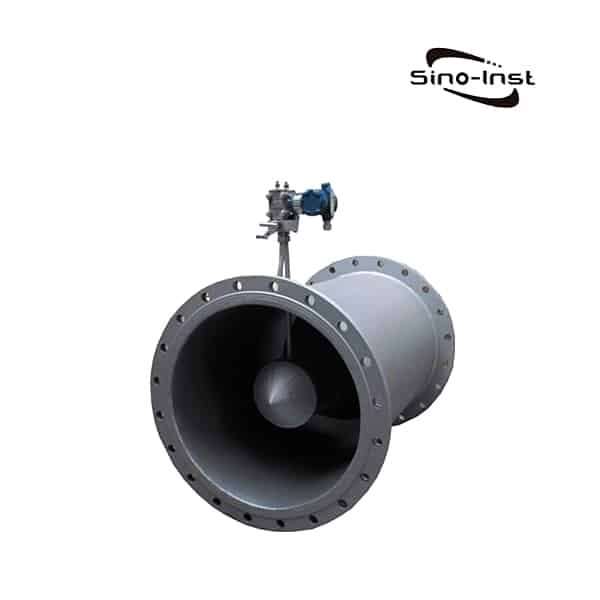
Vortex flow meter also called Vortex shedding flow meter. Vortex Flow Meter is suitable for flow measurement of steam and various liquids and gases.

What is Vortex Flow Meter?

The vortex flowmeter is a volume flow meter that measures the volume flow of gas, steam, or liquid, the volume flow of standard conditions, or the mass flow of gas, steam, or liquid-based on the Karman vortex principle. When the fluid flows through the dust collector rod of the vortex flowmeter, a vortex is formed. The frequency of vortex shedding is proportional to the fluid velocity. Temperature and pressure compensation can be configured.

Sino-Inst offers a variety of  Vortex flow meters for flow measurement. If you have any questions, please contact our sales engineers.

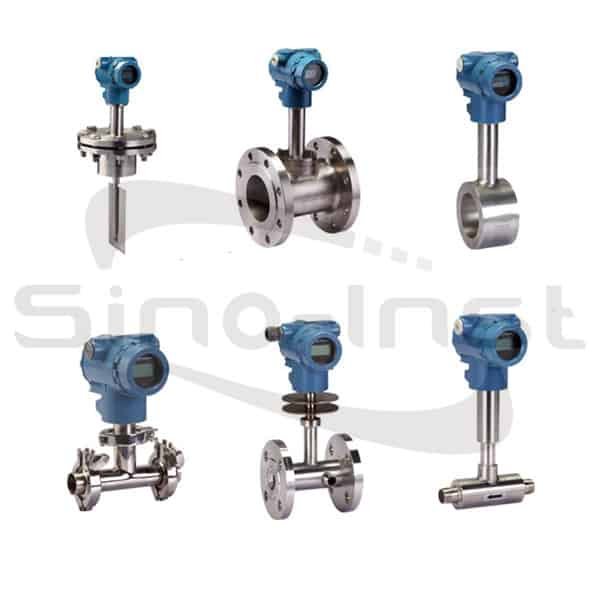
Featured Vortex Flow Meters

Vortex Flow Meter Applications

The vortex flowmeter is mainly used in the flow measurement of industrial pipeline medium fluid. The medium can be gas, liquid, steam, etc.

Read more: Vortex flow meter for Steam Flow Measurement

The main scope of action includes:

  • During industrial production, such as metallurgy, coal, electric power, chemical, pharmaceutical, environmental protection and other manufacturing;
  • Energy measurement. Including the scientific measurement of primary and secondary energy. Such as coal, petroleum gas, natural gas, etc., to achieve energy saving and reduce consumption;
  • Environmental protection engineering. Including flow measurement of flue gas, sewage, etc.;
  • Transportation. Including pipeline transportation for control, distribution and scheduling, and better economic accounting through measurement results.

Extended reading: High Pressure Rotameter for Liquids/gas-Upto 25 Mpa

Vortex Flow Meter Working Principle

Vortex flowmeter is a speed-type flowmeter produced according to karman’s vortex principle,
which can be used for the measurement and measurement of conventional gas, steam and
liquid.

Vortex flow sensor has high precision and wide range ratio, no moving parts in use, which can
improve mechanical stability and reduce maintenance.Vortex flowmeter is almost not affected by the temperature, pressure and composition of medium when measuring the volume of working condition.

Therefore, it is convenient to calibrate the instrument, so vortex street flow sensor is widely used in production and life.

When a trigonal column vortex generator is set in the fluid, regular vortices are generated alternately on both sides of the vortex generator, which is called Carmen vortex.

The vortex columns are arranged asymmetrically downstream of the vortex generator. Vortex flowmeter is produced according to this principle.

Vortexes are generated by generating bodies and the number of vortexes is detected by high-sensitivity sensors. In a certain range, the number of vortexes generated is proportional to the flow rate.

In vortex flowmeter, the relationship between flow rate and the number of vortexes generated
can be expressed by the following formula:

Q:Operating volume flow of the measured medium. The unit is m3/h。
F:Frequency of the number of vortices produced by the generating body. The unit is Hz.
K:Refers to the calculated or calibrated flow coefficient. It represents how many frequency signals per cube. the coefficient is usually obtained by calibration.

The formula of standard table method calibration coefficient K:

The formula can also be used for flow correction.

More about vortex flow meter working principle wikipedia.

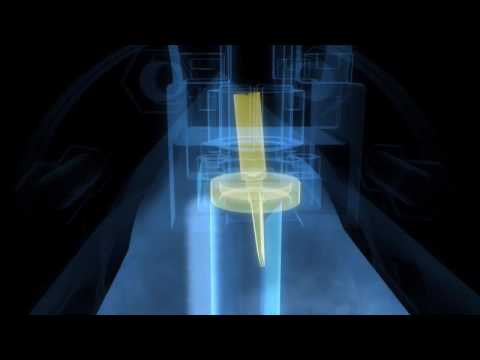
Endress+Hauser has a great explanation video about vortex flow meter working principle. Let’s take a look!

Vortex flow meter advantages and disadvantages

Advantages of vortex flowmeter

  • The pressure loss is small, about 1/4 to 1/2 of the throttling differential pressure flowmeter.
  • Output a pulse signal proportional to the flow rate, without zero drift.
  • The structure is simple, firm, easy to install and maintain. There is no need for pressure guiding pipe and three-valve group, etc., reducing leakage, blockage and freezing. The measuring element has simple structure, reliable performance and long service life.
  • The accuracy is high, generally ±(1~1.5)%R.
  • The measuring range is wide, the vortex flowmeter with a reasonable caliber is determined, and the range can reach 20:1.
  • Within a certain Reynolds number range, the output frequency of the orifice flowmeter is not affected by the physical properties (density, viscosity) and composition of the fluid, that is, the meter coefficient is only related to the shape and size of the vortex generator and the pipeline.
  • The volume flow of the vortex flowmeter is not affected by thermal parameters such as the temperature, pressure, density or viscosity of the fluid being measured. Generally, no separate calibration is required. It can measure the flow of liquid, gas or steam.

Disadvantages of vortex flowmeter

(1) The volume flow of the vortex flowmeter is not affected by the temperature, pressure, density and other thermal parameters of the measured fluid, but the final measurement result of liquid or steam should be the mass flow. For gas, the final measurement result Should be the standard volume flow. Both the mass flow rate or the standard volume flow rate must be converted by fluid density, and changes in fluid density caused by changes in fluid working conditions must be considered.

(2) The main factors that cause flow measurement errors are: measurement errors caused by uneven flow velocity of the pipeline; the density of the medium when the fluid working condition changes cannot be accurately determined; the wet saturated steam is assumed to be dry saturated steam for measurement. If these errors are not limited or eliminated, the total measurement error of the vortex flowmeter will be very large.

Extended Reading: FMCW Radar for High Temperature Level Sensor

(3) Poor vibration resistance. External vibration will cause measurement errors of the vortex flowmeter, or even fail to work normally. The high-velocity impact of the channel fluid will cause additional vibration to the cantilever of the vortex generator, which will reduce the measurement accuracy. The influence of large pipe diameter is more obvious.

(4) Poor adaptability to measuring dirty media. The generating body of the vortex flowmeter is very easy to be dirty by the medium or entangled by the dirt, and the change of the geometric body size has a great influence on the measurement accuracy.

(5) High requirements for straight pipe sections. Experts pointed out that the straight pipe section of the vortex flowmeter must ensure the front 40D and the 20D to meet the measurement requirements.

(6) Poor temperature resistance. Vortex flowmeters generally can only measure the fluid flow of media below 300°C.

There are several classification methods of vortex flowmeter as follows.

(1)Classification by detection method

Vortex detection method is the key technology of vortex flowmeter, according to the vortex detection principle and method can be divided into:

  • Strain vortex flowmeter;
  • Strain relief vortex flowmeter;
  • Capacitive vortex flowmeter;
  • Photoelectric vortex flowmeter;
  • Thermal vortex flowmeter;
  • Ultrasonic vortex flowmeter;
  • Magnetoelectric vortex flowmeter.

(2) According to the sensor structure form classification can be divided into:

  • Pipe type vortex flowmeter. Generally used for small and medium diameter pipe flow measurement;
  • Insertion type vortex flowmeter. Mostly used for large-diameter pipeline flow measurement.

(3) According to the use of flowmeter can be divided into:

  • Explosion-proof vortex flowmeter. Used in petroleum, chemical industry for the instrument explosion-proof requirements of the occasion;
  • High-temperature vortex flowmeter. For the measurement of high-temperature media;
  • Ultra-low temperature type vortex flowmeter. Used for liquid nitrogen, liquid oxygen, and other ultra-low temperature medium measurement;
  • Corrosion-resistant vortex flowmeter. Used for acid, alkali, salt, and other corrosive media measurement;
  • Mass type vortex flowmeter. Used for the measurement of fluid quality.

(4)According to the function of the instrument can be divided into:

  • Conventional vortex flowmeter;
  • Intelligent street flowmeter. Can be signal detection, processing, compensation operation, display, output in one.

Read more about: Inline gas flow meter

Vortex flow meter installation

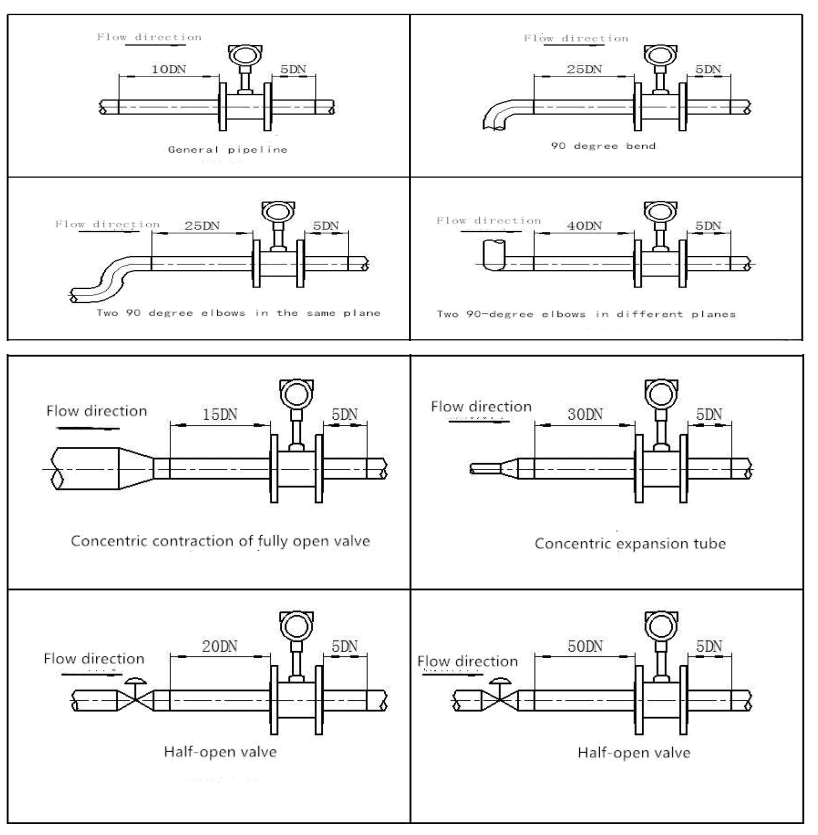
Vortex flow meter has certain requirements on the upstream and downstream straight pipe
section of the installation point, otherwise it will affect the flow field of medium in the pipeline and affect the measuring accuracy of the meter. The length of the upstream and downstream straight pipe section of the instrument is required as shown in FIG. DN is the nominal diameter unit of the instrument :mm.

Vortex flow meter pressure drop

Calculate whether the pressure loss has an impact on the process pipeline, calculated by the following formula:

DP=1.2r × V2(Pa)

Where:
DP: Pressure loss (Pa)
r: density of medium (Kg/m3)
V: Average flow velocity in the pipe (m/s)

When the measured medium is liquid, in order to prevent vaporization and cavitation, the liquid pressure of the sensor should meet the requirements of the following formula:
P≥2.6DP + 1.25P1 (Pa absolute pressure)

Where:
DP: pressure loss value (Pa)
P1: The vapor pressure of the fluid (Pa absolute pressure)

What are vortex flow meters used for?

Vortex flowmeter is mainly used for industrial pipeline medium fluid flow measurement. Such as gas, liquid, vapor and other media. Here are some related applications.

Extended reading: Ultrasonic Flow Meters Types & Technical Guide

Vortex Flow Meter Price

Price is always a topic of concern. Different types of vortex flowmeters can be found online, and the prices of different vortex flowmeter manufacturers are not consistent. The final quotation is still subject to the actual working conditions on site.

Vortex flow meters have different prices due to different calibers, different materials, different media, and different functions! The price list of vortex flowmeter is attached below for reference.

This is a reference price only. Not the price of the order transaction. Please contact our sales engineers. According to the measurement conditions, choose the appropriate model to confirm the price.

Full-tube piezoelectric vortex flow sensor
(Including special flanges, bolts, and nuts)
DN15515 559 
DN20326 312 415 
DN32357 312 415 
DN65349 363 488 
DN80378 407 488 
DN125459 503 606 
DN250518 569 509 
DN300500 544 662 
DN600544 588 662 

Extended Reading: Types Of Crude Oil Flow Meters

Related Products:

Extended reading: Flow Totalizer F3000X for Data collection and calculation

Sino-Inst, Manufacturer for Vortex Flow Meters, like gas vortex flow meter, liquid vortex flow meter, sanitary vortex flow meter, insertion vortex flow meter, steam vortex flow meter, and natural gas vortex flow meter.

Sino-Inst’s vortex Flow Meters, made in China, Having good Quality, With better price. Our flow measurement instruments are widely used in China, India, Pakistan, US, and other countries.

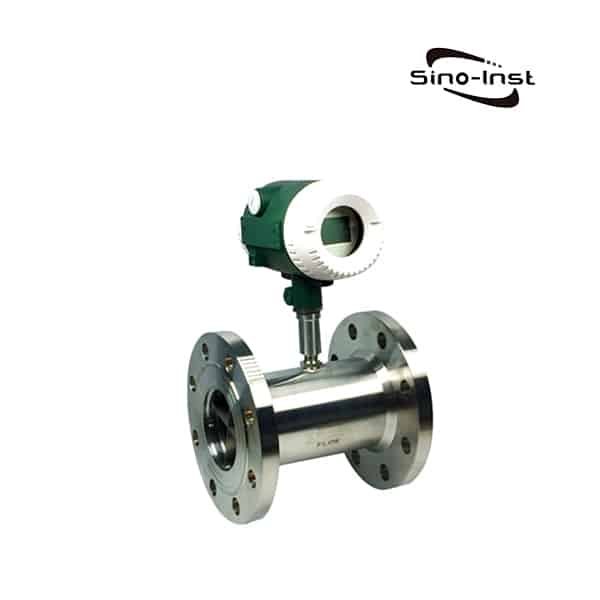
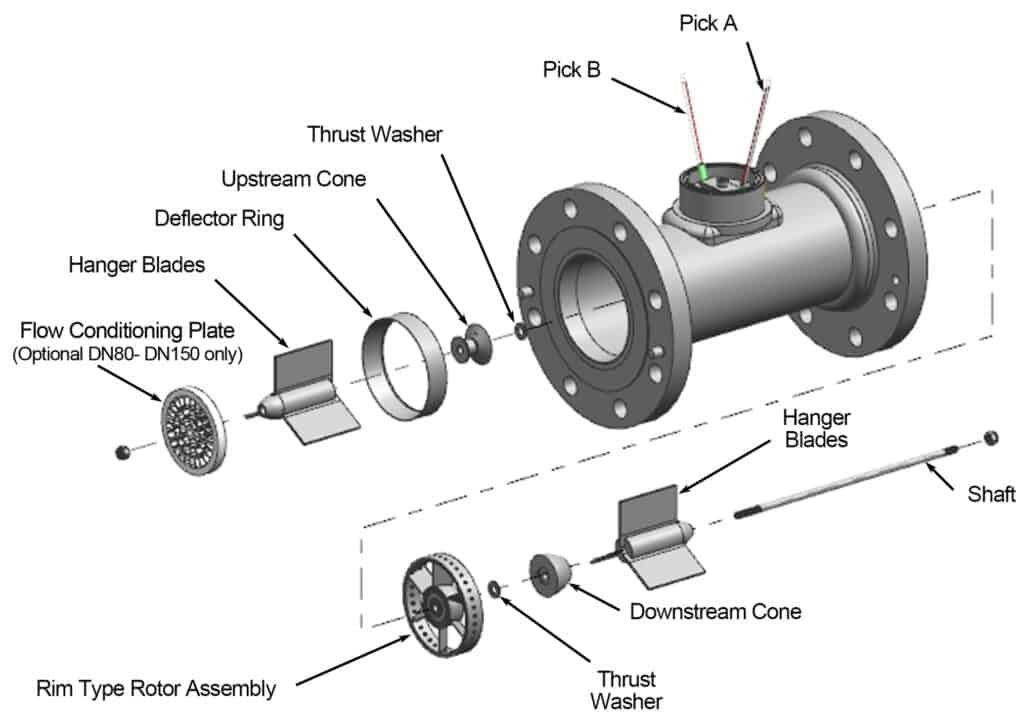
Turbine Pulse Flow Meter

Turbine Pulse Flow Meter refers to a turbine flow meter that can be configured with pulse output. DN4~DN300, 304 stainlees steel, 316 stainlees steel, PE materials are available. It is widely used in measuring the flow of various liquids, including water, aqueous solution, hydraulic oil, etc.

The turbine flowmeter outputs pulse signal is used to detect the instantaneous flow rate and the total integrated flow rate. And is suitable for use with computer control systems such as secondary displays, PLCs, and DCS.

Turbine Pulse Flow Meter is a low-cost flow meter, reference price: USD 300-700/pc.

Sino-Inst offers a variety of  Turbine flow meters for flow measurement. If you have any questions, please contact our sales engineers.

Features of Turbine Pulse Flow Meter

  1. High accuracy. Generally up to ±1%R, ±0.5%R;
  2. Good repeatability. Short-term repeatability can reach 0.05%~0.2%;
  3. Output pulse frequency signal. Suitable for total measurement and connection with computer. No zero drift, strong anti-interference ability;
  4. High frequency signals (3~4kHz) can be obtained, with strong signal resolution;
  5. Wide range. Medium and large diameters can reach 1:20. Small diameters are 1:10;
  6. Compact and lightweight structure. Easy installation and maintenance, large circulation capacity;
  7. Suitable for high-pressure measurement. No holes are required on the meter body. It is easy to make high-pressure meters;
  8. There are many types of special sensors. Various special sensors can be designed according to the special needs of users. Such as low temperature type, two-way type, downhole type, etc.;
  9. It can be made into a plug-in type, suitable for large-caliber measurement. The pressure loss is small, the price is low. It can be taken out continuously, and the installation and maintenance are convenient.

Extended reading: Turbine Flow Meter Advantages and Disadvantages

Specifications of Turbine Pulse Flow Meter

Instrument caliber and connection method4, 6, 10, 15, 20, 25, 32, 40 use threaded connection
15, 20, 25, 32, 40) 50, 65, 80, 100, 125, 150, 200 using flange connection
Accuracy class±1%R, ±0.5%R, ±0.2%R (specially required)
Turndown ratio1:10; 1:15; 1:20
Instrument material304 stainless steel, 316 (L) stainless steel, etc.
Temperature of measured medium (℃)-20~+110℃
Environmental conditionsTemperature -10~+55℃, relative humidity 5%~90%, atmospheric pressure 86~106Kpa
output signalSensor: Pulse frequency signal, low level≤0.8V High level≥8V
Transmitter: two-wire 4 ~ 20mADC current signal
Power supplySensor: +12VDC, +24VDC (optional)
Transmitter: +24VDC
On-site display type: the meter comes with 3.2V lithium battery
Signal transmission lineSTVPV3×0.3 (three-wire system), 2×0.3 (two-wire system)
Transmission distance≤1000m
Signal line interfaceBasic type: Hessman connector, explosion-proof type: internal thread M20×1.5
Explosion-proof gradeBasic type: non-explosion-proof product, explosion-proof type: ExdIIBT6
Protection levelIP65
Instrument caliber  (mm)Normal flow range (m3/h)Extended flow range(m3/h)Routine stress tolerance (MPa)Special pressure rating (MPa) (MPa)
DN 40.04-0.250.04-0.46.312、16、25
DN 60.1-0.60.06-0.66.312、16、25
DN 100.2-1.20.15-1.56.312、16、25
DN 150.6-60.4-86.3、2.5(Flange)4.0、6.3、12、16、25
DN 200.8-80.45-96.3、2.5(Flange)4.0、6.3、12、16、25
DN 251-100.5-16.3、2.5(Flange)4.0、6.3、12、16、25
DN 321.5-150.8-156.3、2.5(Flange)4.0、6.3、12、16、25
DN 402-20 1-206.3、2.5(Flange)4.0、6.3、12、16、25
DN 504-402-402.54.0、6.3、12、16、25
DN 657-704-702.54.0、6.3、12、16、25
DN 8010-1005-1002.54.0、6.3、12、16、25
DN 10020-20010-2001.64.0、6.3、12、16、25
DN 12525-25013-2501.62.5、4.0、6.3、12、16
DN 15030-30015-3001.62.5、4.0、6.3、12、16
DN 20080-80040-8001.62.5、4.0、6.3、12、16

Know more about: Turbine type Flow Meter

Turbine Pulse Flow Meter Working Principle

When the fluid flows through the sensor housing, since the blades of the impeller are at a certain angle to the flow direction, the impulse of the fluid causes the blades to have a rotational torque. After overcoming the friction torque and fluid resistance, the blades rotate. After the torque is balanced, the rotational speed becomes stable.

Under certain conditions, the rotational speed is proportional to the flow rate.

Since the blade is magnetically permeable, it is in the magnetic field of the signal detector (composed of permanent magnet steel and a coil). The rotating blade cuts the magnetic lines of force, periodically changing the magnetic flux of the coil. This causes an electrical pulse signal to be induced at both ends of the coil. This signal is shaped by the amplifier to form a continuous rectangular pulse wave with a certain amplitude. It can be remotely transmitted to the display instrument to display the instantaneous flow rate or cumulative total volume of the fluid.

Within a certain flow range, the pulse frequency f is proportional to the instantaneous flow rate Q of the fluid flowing through the sensor. The flow equation is:

Q=3600*f/k

In the formula:
f—Pulse frequency [Hz]
K-sensor instrument coefficient [1/m3], given by the calibration sheet.
Q-instantaneous flow rate of fluid (under working condition) [m3/h]
3600-conversion factor

The instrument coefficient of each sensor is filled in the calibration certificate by the manufacturer. The K value is set into the matching instrument. The instantaneous flow and cumulative total can be displayed.

FAQ

A pulse flow meter operates by converting the flow rate into a series of electrical pulses. Typically, as the fluid flows through the meter, a mechanical or electronic component will generate pulses. The frequency of these pulses is directly proportional to the flow rate. The generated pulses are then counted and processed by an electronic system to display or record the flow rate. The principle is akin to turning the pages of a book – the faster you turn, the more pages (or pulses) you go through in a given time.

Pulse flow meters are versatile and can be used in various applications, from water distribution to chemical processing.

Yes, a turbine flow meter is specifically designed to measure the flow rate of a fluid. As the fluid passes through the meter, it impinges on the blades of a freely rotating turbine. The speed of the turbine’s rotation is directly proportional to the flow rate. By measuring the rotational speed, the flow rate can be determined.

Turbine meters are commonly used in hydrocarbon industries and are suitable for clean, low-viscosity fluids.

A turbine flow meter is a type of flow measurement device that uses a rotating turbine or impeller to measure the velocity of a fluid. As the fluid flows through the meter’s body, it causes the turbine to rotate. The rotation speed of the turbine is then directly related to the fluid velocity, allowing the flow rate to be calculated. The rotational speed is typically detected using magnetic or optical sensors.

Turbine flow meters have been in use for decades and are recognized by industry standards for their reliability in certain applications.

Turbine flow meters are generally accurate for specific applications, especially when measuring clean and low-viscosity liquids. Their accuracy can range from ±0.5% to ±1.5% of reading, depending on the make and model. However, their performance can be affected by fluid properties, wear and tear of the turbine blades, and the presence of impurities in the fluid.

Trustworthiness Note: For the best results, it’s essential to calibrate turbine flow meters regularly and ensure they are used within the recommended flow range and conditions.

Pulse Output Flow Meter

Pulse flowmeter refers to a type of flowmeter that can express flow in pulse form. The most common one is turbine flowmeter.

A turbine is placed in the center of the pipeline, and the two ends are supported by bearings. When the fluid passes through the pipeline, it impacts the turbine blades. The driving torque is generated to the turbine, so that the turbine overcomes the friction torque and the fluid resistance torque to generate rotation.

Within a certain flow range, for a certain fluid medium viscosity, the rotational angular velocity of the turbine is directly proportional to the fluid flow velocity. Thus, the fluid velocity can be obtained by the rotational angular velocity of the turbine. The fluid flow through the pipeline can be calculated.

The speed of the turbine is detected by a sensor coil installed outside the casing.

When the turbine blade cuts the magnetic field lines generated by the permanent magnet steel in the casing, it will cause the magnetic flux in the sensing coil to change. The sensing coil sends the detected magnetic flux periodic change signal to the preamplifier, amplifies and reshapes the signal, and generates a pulse signal proportional to the flow rate. It is sent to the unit conversion and flow integration circuit to obtain and display the cumulative flow value. At the same time, the pulse signal is sent to the frequency current conversion circuit. The pulse signal is converted into an analog current quantity, and then the instantaneous flow value is indicated.

Know more about: Turbine type Flow Meter for Liquid & Gas technology

More Featured Pulse Output Flow Meters

Flow Meter Pulse Output to PLC

The signal output by the flowmeter is generally a pulse signal or a 4-20mA current signal. Both of these signals output instantaneous flow. There is also a relay to output a cumulative signal. The principle is the same, so I will not repeat it.

Our purpose is to calculate and display the instantaneous flow value and calculate the cumulative value in the PLC. When the input signal is a pulse signal, when calculating the instantaneous flow, a strict time interval must be calculated to ensure the accuracy of the instantaneous flow.

Therefore, when calculating the instantaneous flow rate, a timed interrupt must be used.

Extended reading: Quantitative control with turbine flowmeter

Moreover, only this interrupt program can be run in the PLC system, and no other interrupts are allowed. Even low priority interrupts are not allowed to run. To prevent interference with the accuracy of the timing interruption interval. To calculate the instantaneous flow is to convert the number of accumulated pulses in this time period into the accumulated flow. Divided by time is the instantaneous flow.

For 4-20mA input, the instantaneous flow can be directly obtained by simply converting according to its corresponding range. The cumulative flow is the cumulative flow by adding up the cumulative flow in each time period. The following issues must be paid attention to in the actual use of PLC programming:

  1. Whether the input pulse frequency range exceeds the range that the PLC receives;
  2. How to ensure the correct calculation of the PLC high-speed counter when it reaches the maximum count value;
  3. How to ensure that the timing interruption is not disturbed;
  4. How to avoid errors in calculating the cumulative amount;
  5. The maximum cumulative digits of the cumulative amount;
  6. How to reset the cumulative amount;

Extended reading: Turbine Insertion Flow Meter for Large Diameter Pipeline

More Flow Measurement Solutions

Sino-Inst, Manufacuturer for Turbine Pulse Flow Meters, like: gas turbine flow meter, liquid turbine flow meter, sanitary turbine flow meter, insertion turbine flow meter, steam turbine flow meter, and natural gas turbine flow meter.

Sino-Inst’s Turbine Pulse Flow Meters, made in China, Having good Quality, With better price. Our flow measurement instruments are widely used in China, India, Pakistan, US, and other countries.

Request a Quote

Please enable JavaScript in your browser to submit the form

Turbine Flow Meters

Turbine flow meters are velocity flow meters, also called impeller flow meters. Can be used to measure the instantaneous flow and cumulative flow of liquids and gases.

Turbine flowmeters are widely used in flow measurement: petroleum, organic liquids, inorganic liquids, liquefied gas, natural gas, coal gas and cryogenic fluids. Turbine flowmeter signals can be divided into pulse signals or current signals (4-20mA). It is suitable for use with secondary display, PLC, DCS and other computer control systems.

Turbine Flow Meter reference price: USD 200-1700/pc.

Sino-Inst offers a variety of  Turbine flow meters for flow measurement. If you have any questions, please contact our sales engineers.

Featured Turbine Flow Meters

Features of Turbine Flow Meters

  1. High accuracy, good repeatability, low pressure loss, good vibration resistance;
  2. Adopt high-quality bearings with low friction resistance. Good sealing and long life;
  3. It integrates microprocessor, flow sensor, high-precision temperature and pressure sensor. Directly measure the flow, temperature and pressure of the gas/liquid being measured. And automatically perform flow tracking compensation and compression factor correction operations;
  4. The meter has pulse signal and analog signal output. It can directly realize the centralized collection and real-time management of computer data through the RS485 communication interface or the GPRS system;
  5. Low power consumption. It can be powered by internal battery or external power supply;
  6. With real-time data storage function. It can prevent data loss when the battery is replaced or the power is suddenly lost. In the case of power failure, internal data can be stored permanently;
  7. It can be used in conjunction with IC card prepayment system to facilitate trade settlement;

Turbine Flow Meter Working Principle

Gas turbine flow meter working principle

The gas turbine flowmeter uses a turbine for measurement. It first converts the flow rate into the rotational speed of the turbine, and then converts the rotational speed into an electrical signal proportional to the flow rate.

Gas turbine flowmeter is used to detect instantaneous flow and total integrated flow. Its output signal is frequency, which is easy to digitize.

The induction coil and the permanent magnet are fixed on the housing together. When the ferromagnetic turbine blade passes the magnet, the reluctance of the magnetic circuit changes, thereby generating an induction signal.

The signal is amplified and reshaped by the amplifier and sent to the counter or frequency meter. The total accumulated flow is displayed. At the same time, the pulse frequency undergoes frequency-voltage conversion to indicate instantaneous flow.

The speed of the impeller is proportional to the flow, and the number of revolutions of the impeller is proportional to the total amount of flow. The output of the turbine flowmeter is a frequency modulated signal. It not only improves the anti-interference of the detection circuit, but also simplifies the flow detection system.

The gas turbine flowmeter has a turndown ratio of up to 10:1, and the accuracy is within ±0.2%. The time constant of the turbine flowmeter with small inertia and small size can reach 0.01 second.

Extended reading: Quantitative control with turbine flowmeter

Liquid Turbine Flow Meter Working Principle

Liquid Turbine Flow Meter is a speed type flow meter based on the principle of torque balance.

The fluid flows through the sensor housing. Because the blades of the impeller have a certain angle with the flow direction. The impulse of the fluid makes the blades have a rotational torque. After the friction torque and fluid resistance are overcome, the blades rotate. The speed is stable after the torque is balanced.

Under certain conditions, the speed is proportional to the flow rate.

Due to the magnetic permeability of the blade, it is in the magnetic field of the signal detector (composed of permanent magnets and coils). The rotating blade cuts the magnetic lines of force. The magnetic flux of the coil is periodically changed. Electrical pulse signals are induced at both ends of the coil.

This signal is amplified and reshaped by an amplifier. A continuous rectangular pulse wave with a certain amplitude is formed. It can be transmitted to the display instrument remotely. The instantaneous flow or total amount of the fluid is displayed.

Within a certain flow range, the pulse frequency f is proportional to the instantaneous flow Q of the fluid flowing through the sensor. The flow equation is:

Where:
f——Pulse frequency [Hz]
k——The meter coefficient of the sensor [1/m3], which is given by the calibration sheet.
Q——The instantaneous flow of fluid (under working condition) [m3/h]
3600-conversion factor in seconds

The meter coefficient of each sensor is filled in the verification certificate by the manufacturer. The k value is set in the matching display instrument. The instantaneous flow and cumulative total can be displayed.

Extended reading: Turbine Flow meter Vs Gear Flow meter

Turbine flow meter Advantages and Disadvantages

Turbine Meter Advantages

  • The cost is moderate.
  • Very good at clean, low viscosity fluids of moderate velocity and a steady rate.
  • Turndown is very good as it can read very low compared to the greatest flow.
  • They are reliable if put in a clean fluid especially if it has some lubricity.
  • AGA and API approved for custody transfers.
  • They do cause some pressure drop where that may be a factor such as gravity flows.
  • High accuracy. Among all flowmeters, it is the most accurate flowmeter.
  • No zero drift, good anti-interference ability.
  • High accuracy. Among all flowmeters, it is the most accurate flowmeter.
  • No zero drift, good anti-interference ability.

Extended reading: Featured Cheap flow meters for Sale

Turbine Meter Disadvantages

  • Not reliable for steam.
  • Bearings wear out.
  • Requires constant backpressure to prevent cavitation.
  • Accuracy adversely affected by bubbles in liquids.
  • Turbine meters can be used with clean liquids and gases only (may need to install a strainer upstream to prevent damage from particulates).
  • Not applicable for measuring corrosive fluids.
  • May not function properly with high viscosity fluids where the flow profile is laminar.
  • Cannot maintain calibration characteristics for a long time.

Read more Turbine Flow Meter Application Case: Demineralized Water.

Industries and Applications We Serve

Crude Oil Flow Meter

Crude Oil Flow Meter refers to a type of flow meter that can accurately monitor and measure the flow of…

Sino-Inst, Manufacuturer for Turbine Flow Meters, like: gas turbine flow meter, liquid turbine flow meter, sanitary turbine flow meter, insertion turbine flow meter, steam turbine flow meter, and natural gas turbine flow meter.

Sino-Inst’s Turbine Flow Meters, made in China, Having good Quality, With better price. Our flow measurement instruments are widely used in China, India, Pakistan, US, and other countries.

Magnetic Partially Filled Pipe or Open Channel Flow Meter

Open Channel Flow Meter is used to continuously measure the volumetric flow of conductive liquid in open channels, culverts or Partially Filled Pipes.

Open Channel Flow Meter continuously measures fluid flow in open pipelines. Such as semi-pipe flow sewage pipes and large flow pipes without overflow weirs. Magnetic Open Channel or Partially Filled Pipe Flow Meter uses the flow rate-area method. The Open Channel Flow Meter measures the flow rate and level of the fluid in the pipeline. The user only needs to input the inner diameter of the round pipe or the width of the square pipe. The non-full pipe flowmeter will automatically calculate the flow rate. Open Channel Flow Meter can measure and display data such as instantaneous flow, velocity, and cumulative flow. Especially suitable for municipal rainwater, wastewater, sewage discharge and irrigation water pipelines.

Sino-Inst offers a variety of  Magnetic Flow Meters for flow measurement. If you have any questions, please contact our sales engineers.

Features of Magnetic Partially Filled Pipe or Open Channel Flow Meter

  1. Open Channel Flow Meter can be used for flow measurement of open partially filled pipes (round pipes, rectangular pipes or other special-shaped pipes).
  2. Open Channel Flow Meter can be used for continuous measurement of municipal rainwater, wastewater, sewage discharge and irrigation water pipelines.
  3. Open Channel Flow Meter can realize forward and reverse two-way flow measurement.
  4. The sensor can work reliably for a long time under harsh scenes and sewage water quality.
  5. The measuring range of flow velocity is 0.05-10m/s.
  6. High flow measurement accuracy. Moreover, it is not affected by factors such as downstream, direct flow, obstruction, etc.
  7. Large-screen, backlit LCD. The measurement data can be read clearly under strong light or at night.
  8. The instrument display and output functions are complete. It can display data such as instantaneous flow, flow rate, cumulative flow, and has computer communication interfaces 232, 485 (optional).
  9. With GSM and GPRS wireless data remote transmission function (optional).
  10. With power failure timing, counting and clock functions.

More about : Sewage Flow Meter Selection

Specifications of Magnetic Partially Filled Pipe or Open Channel Flow Meter

Nominal diameterCircular pipe: DN300-DN6000mm
Rectangular pipe: width≤6m≤6m
measurement accuracyWater level: ±2mm
Flow rate: ±1.0%
Flow rate: ±1.5%
Measuring rangeVelocity: 0.05-10m/s
Conductivity of measured medium≥20s/cm
The highest temperature of the measured medium≤60℃
Display deviceLarge screen, backlight LCD. Can display instantaneous flow rate, flow rate, cumulative flow and other measurement data at the same time
Current output signal4-20mA/DC (load resistance≤500Ω)
Pulse output signal1-2000HZ
Digital communication interfaceRs232 and RS485 optional
Wireless data remote transmissionGSM and GPRS optional
Power supply220V/AC or 12v/DC, 24v/DC

Extended reading: Magnetic Large Dia. Pipe Flow Meter

Ultrasonic Open Channel Flow Meter

Ultrasonic open channel flowmeter is used to measure the flow of fluid in the state of free surface of natural flow in a non-full tubular open channel, which is called open channel flow detection.

The measuring tank that is not full is called an open channel. The meter that measures the flow of fluid in the open channel is called an open channel flowmeter.

The ultrasonic open channel flowmeter is composed of three parts: an ultrasonic level gauge, a water measuring tank, and a flow totalizer.

Extended reading: Make Ultrasonic Open Channel Flow Meter Work for You

Open Channel Flow Meter Working Principle

Based on the flow rate-water level algorithm. Advanced flow rate measuring instrument and water level measuring instrument are adopted. A new type of intelligent flow system to ensure the accuracy of speed measurement and calculation. According to the width of the channel and the requirements of measurement accuracy. Adopted. The mathematical model of single probe method or multi-probe method for open channel flow measurement.

The automatic measurement of open channel flow usually adopts the weir level method or the velocity area method.

1. Water level method

The water level method is based on the shape of the open channel and the size of the water flow. A section of flow measuring weir trough is constructed on the open channel. The water level of the weir flow is monitored online. Then the hydraulic formula can be used to calculate the flow through the weir trough.

Water level method Open channel flow meters usually use ultrasonic or microwave radar water level gauges to measure the water level without contact. Ultrasonic or microwave radars use the principle of echo reflection to achieve water level measurement.

2. Velocity area method

The flow velocity area method is a commonly used flow measurement method in open channels. There is no need to build water measuring structures. The flow rate is obtained by measuring the flow velocity and the area of ​​the cross section.

Flow velocity area method Open channel flowmeter is a device for automatic measurement of open channel flow using velocity area method composed of flow indicator, flow meter and liquid level meter.

The flow meter can choose electromagnetic flowmeter or Doppler flow tester. If an electromagnetic flowmeter is selected, the flow rate indicator will convert the flow rate signal into a digital signal proportional to the flow rate signal, thereby realizing the flow rate measurement.

If it is a full tube measurement, then you may need to know: Using of Electromagnetic Flow Meters.

Extended reading: Ultrasonic Insertion Flow Meter for Lined/Large Pipes

More Featured Pipe Flow Meters

Read more about: Shop 101: Key Factors In Selecting A Pipe Flow Meter

Sino-Inst offer over 10 Open Channel Flow Meters, with Best Price.

A wide variety of Open Channel Flow Meters options are available to you, such as free samples, paid samples.

About 13% of these are magnetic flow meter, 14% are Insertion Magnetic Flow Meter, 25% are Venturi flow meter, 13% are Handheld ultrasonic flow meter, and others are Liquid Turbine Flow Meters.

Sino-Inst is Open Channel Flow Meters suppliers, located in China. Open Channel Flow Meters products are most popular in North America, Mid East, and Eastern Europe. The United States, and India, which export 99%, 1%, and 1% of Open Channel Flow Meter respectively.