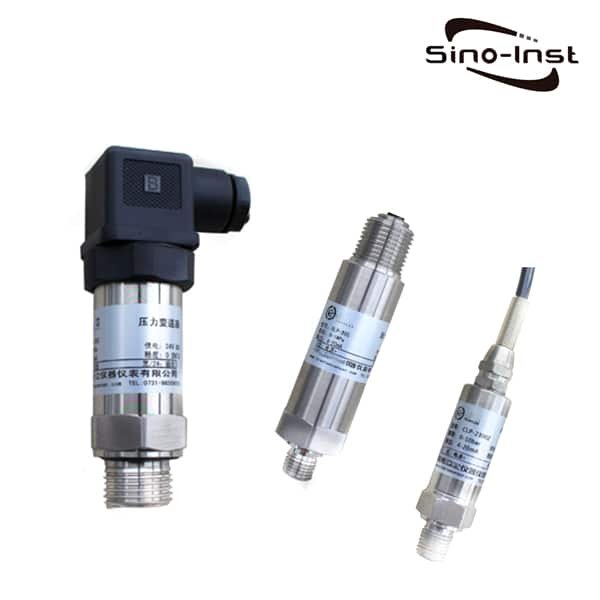
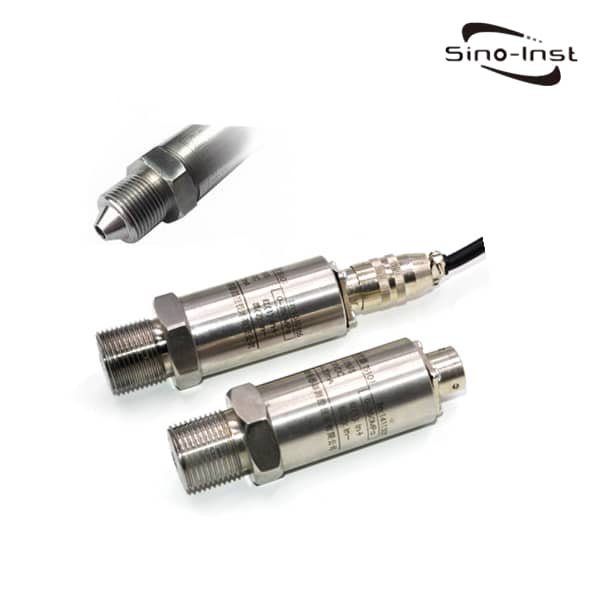
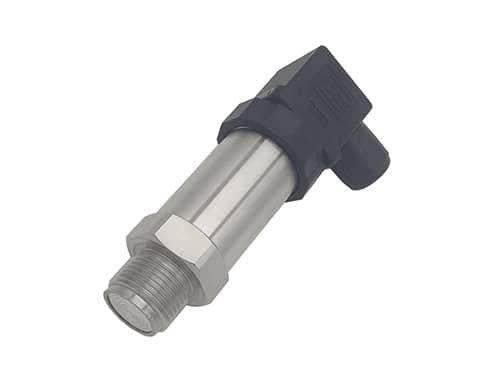
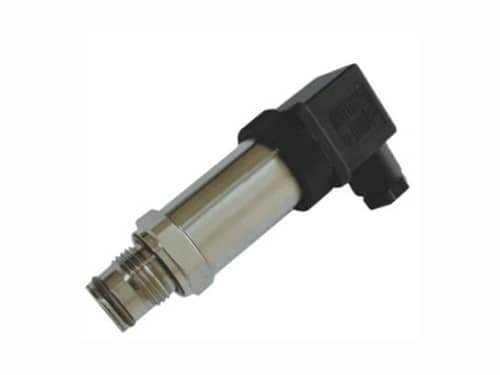
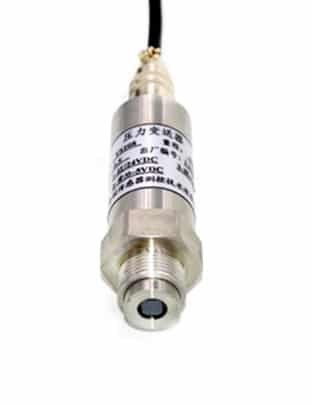
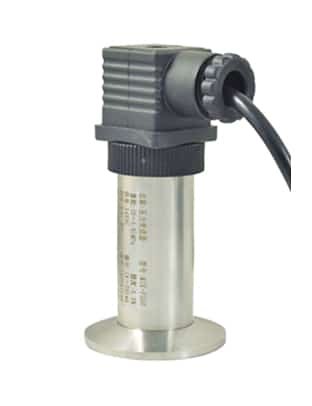
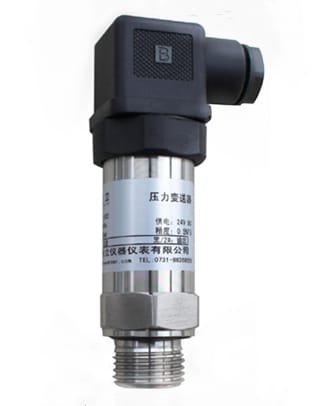
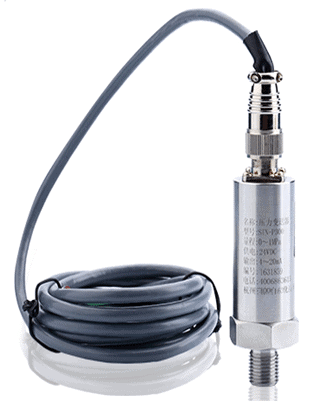
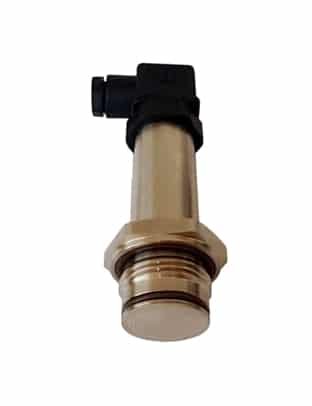
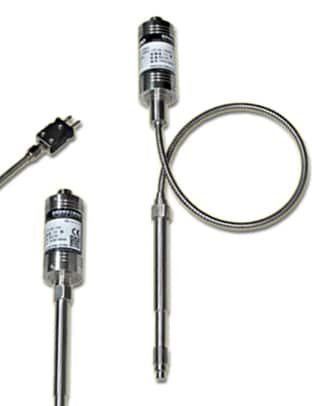
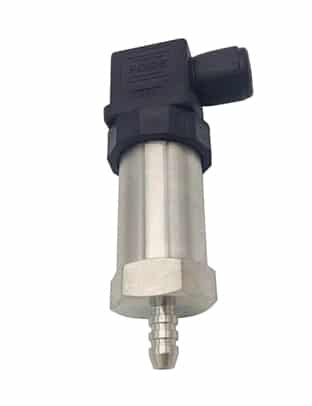
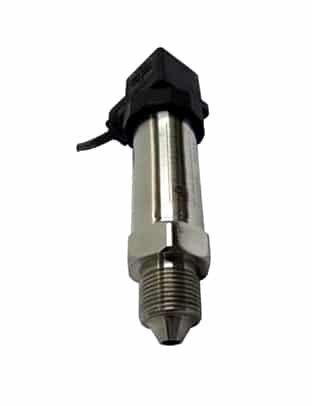
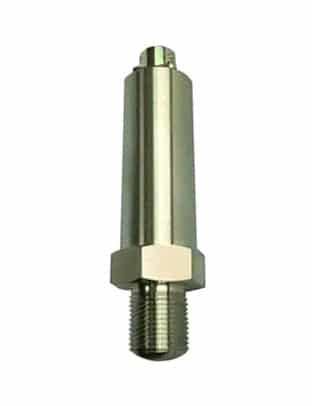
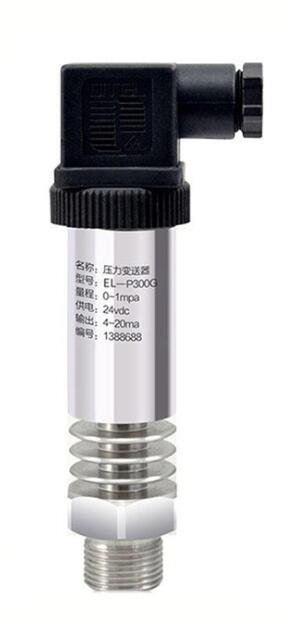
SI-702S Ultra High pressure transducer

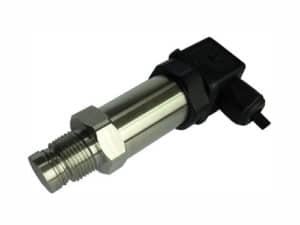
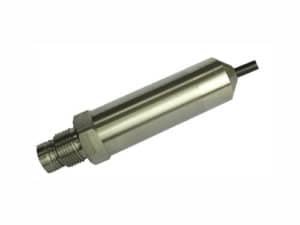
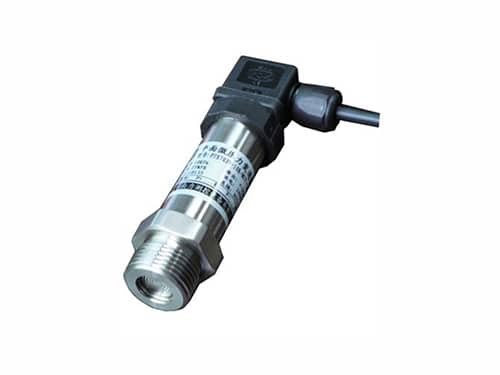
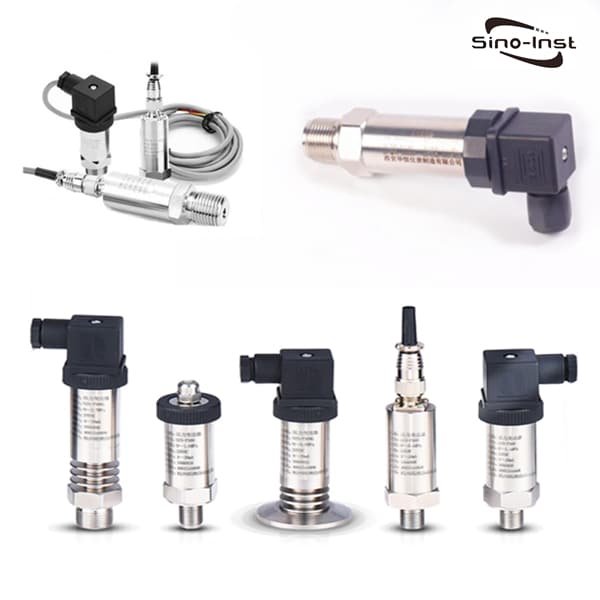
High pressure transducer is used to measure high pressure up to 1500Mpa. Also called ultra high pressure transducer.

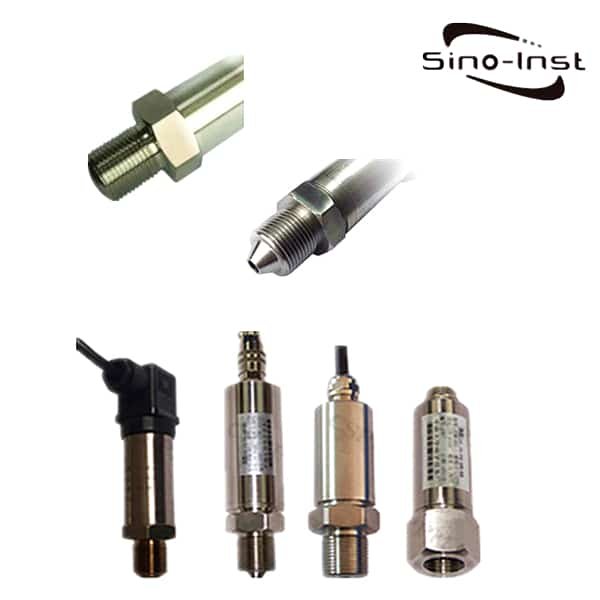
Ultra-High Pressure Senors

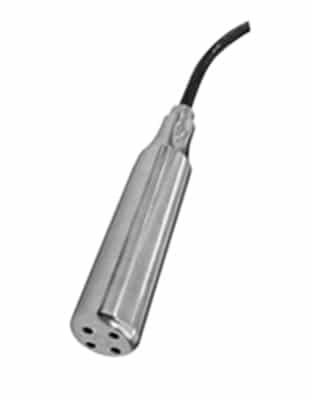
High pressure transducer adopts ultra high pressure design. Suitable for high pressure applications up to 15000bar. SI-702S series ultra high pressure pressure transducer can provide reliable ultra-high pressure measurement. Ultra high pressure transmitter adopts rare metal alloy material. After special process treatment, integrated design. All stainless steel welding package. Laser resistance temperature compensation. With high performance digital processing circuit. The factory has undergone high and low temperature aging and long-term fatigue tests. Good long-term stability. Ultra-long working life. Maintain safe and stable operation in the ultra-high pressure range.

Sino-Inst offers a variety of High pressure transducers for industrial pressure measurement. If you have any questions, please contact our sales engineers.

More High Pressure Transducers:
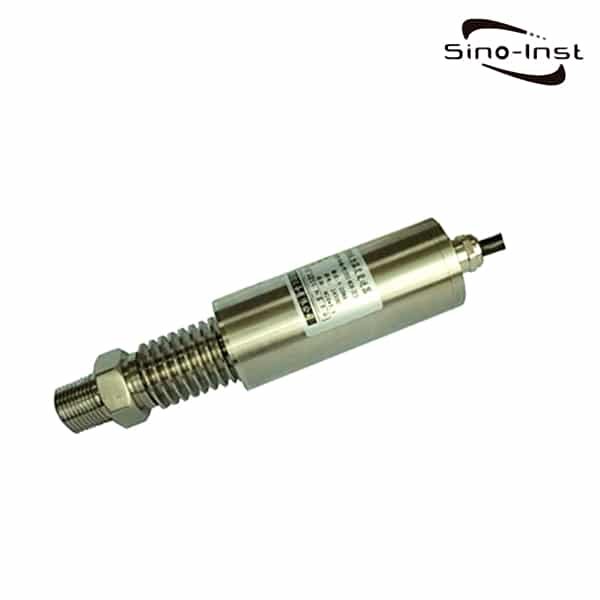
Combined Pressure and Temperature Sensor-Dual function
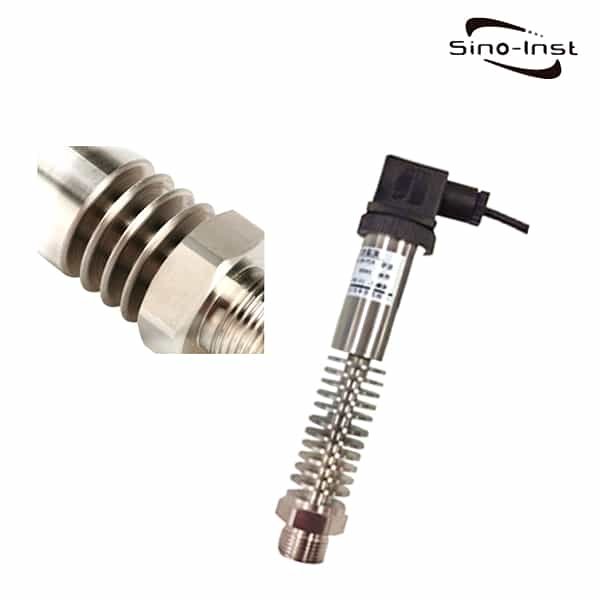
High Temperature Pressure Sensor
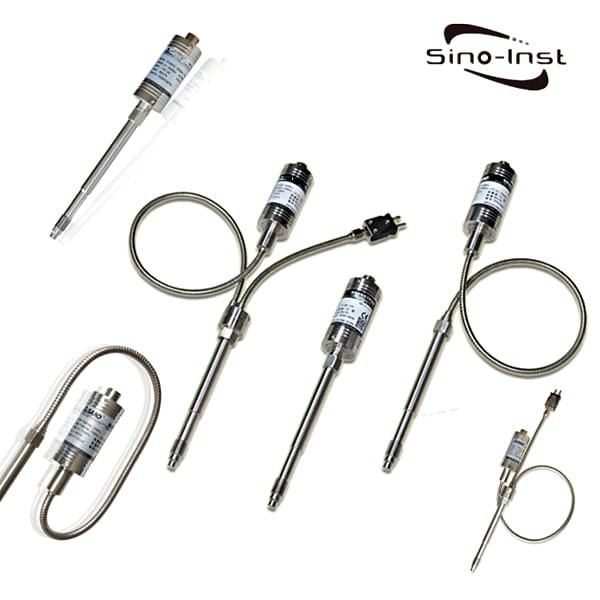
Melt Pressure Sensors/Transducers – High Temperature
Gas Pressure Sensor
Flush diaphragm pressure sensor
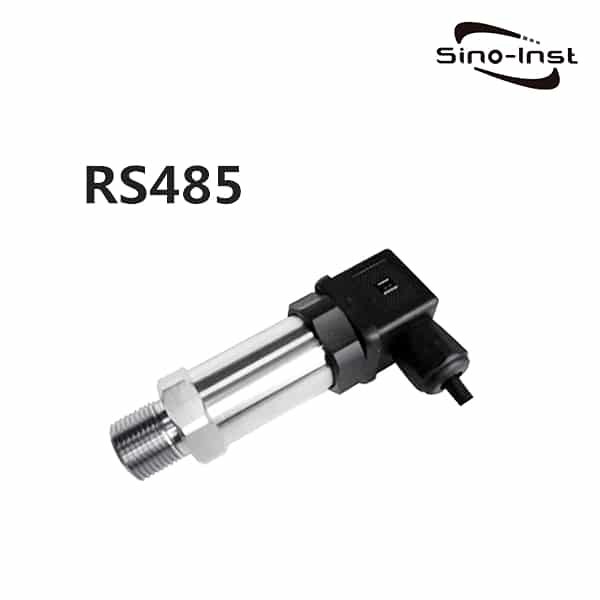
Digital Pressure Sensor
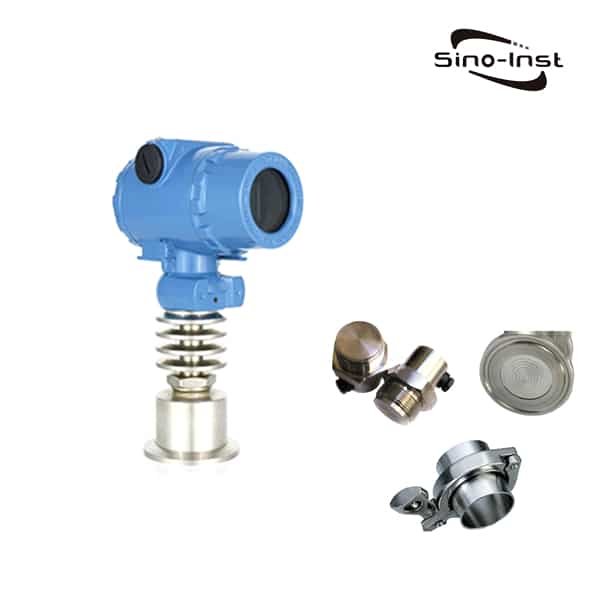
Sanitary Pressure Transmitter
Pressure Transducer 4-20mA/Voltage

Features of SI-702s High pressure transducer

  • Pressure range: 0-1500MPa …. 0-2000MPa to 0-7000MPa (customized)
  • Accuracy level: 0.1% FS, 0.2% FS, 0.5% FS
  • All stainless steel structure
  • Internally generated calibration signal
  • Using high-voltage accessories
  • Protection class IP65

Maybe you just need high pressure pressure sensor: 0 ~ 40MPa… 600MPa.

Specifications of High pressure transducer

Pressure range: 0-1500MPa …. 0-2000MPa to 0-7000MPa (customized)
Comprehensive accuracy: 0.1% FS, 0.2% FS, 0.5% FS
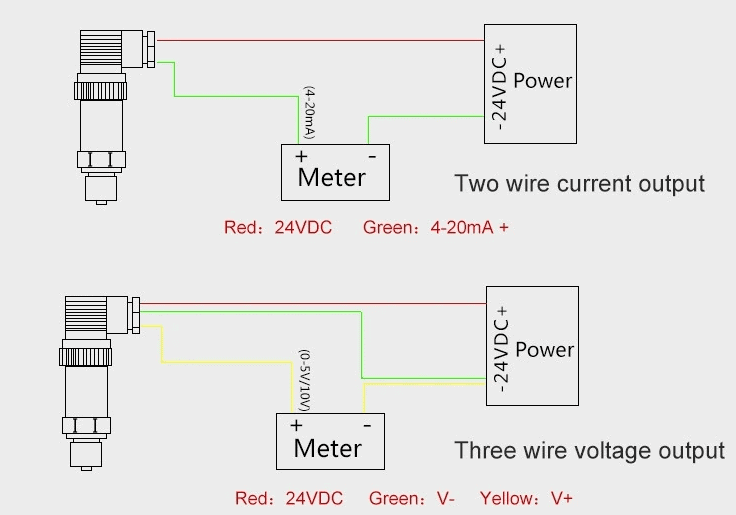
Output signal: 4-20mA ( 2 wire system), 0-5 / 1-5 / 0-10VDC (3 wire system)
Power supply voltage: 24VDC (10-30VDC)
Medium temperature: -20 ~ 75 ℃
Ambient temperature: -20 ~ 75 ℃
Load resistance: Current output type: max. 800Ω; Voltage output type: greater than 50KΩ
Insulation resistance: Greater than 2000MΩ (100VDC
Sealing grade: IP65
Long-term stable performance: 0.1% FS / year
Vibration effect:Within the mechanical vibration frequency of 20Hz ~ 1000Hz, the output change is less than 0.1% FS
Electrical interface: Four-core aviation connector, Hessman connector optional
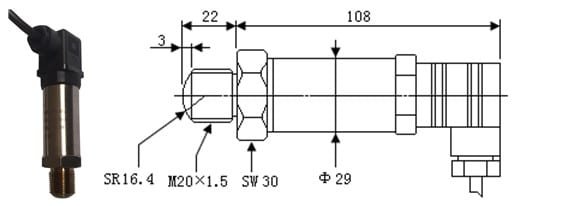
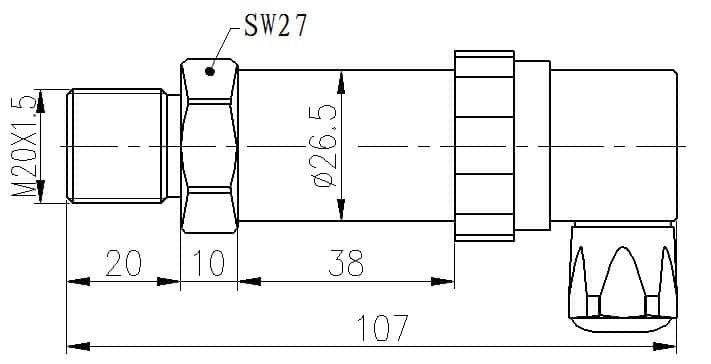
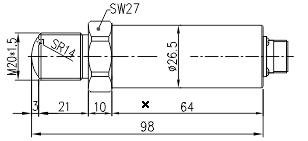
Thread interface: Ball head M20 × 1.5, cone head M20 × 1.5, M22 × 1.5, etc. Other threads can be designed according to customer requirements.

Ultra high pressure quick connector-1 / 4NPT 3 / 8NPT high pressure connector

Features: High-strength carbon steel. Galvanized surface treatment. Check valves at both ends. Steel ball lock. Interchangeable with ENERPAC / parker3000.
Thread: 1 / 4NPT. 3 / 8NPT
Working temperature: -30-100 ℃
Maximum working pressure: 10000psi (700bar)
Features: High-strength carbon steel, galvanized surface, check valves at both ends, steel ball lock, 2 times safety factor.
Product description: The HP high-pressure series is designed for use in high-pressure environments. All metal parts are made of steel. The base of the female connector is treated by QPQ. The base of the male connector is treated by all black galvanizing.

SI-702s High pressure transducers types

SI-702Q Ultra-High Pressure Sensor

SI-702Q Ultra High pressure transducer adopts spherical sealing method. It can choose 0-20mV, 4-20mA, 0-5VDC output. The ultra-high pressure pressure transmitter uses fully integrated rare alloy materials. Fine machining. Multiple heat treatment processes. Each sensor undergoes rigorous pressure testing to ensure absolute safety and reliability. The sensor has high accuracy, long-term stability, and long life specialty.

SI-702Z Ultra High Pressure Sensor

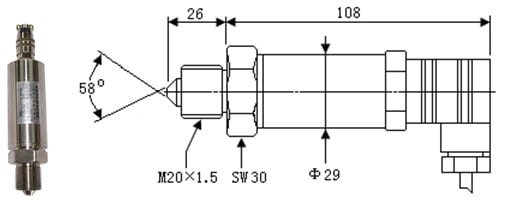
SI-702Z Ultra High pressure transducer is an extended product of 702S. It is characterized by a 58 degree outer cone seal. The ultra-high pressure structure and processing technology ensure the long-term reliability of the product. High accuracy, long life, and various electrical interfaces to choose from.

SI-702W Ultra High Pressure Sensor

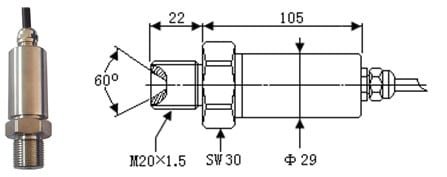
SI-702W Ultra High pressure transducer, M20 × 1.5 external thread with 60 degree inner cone seal. Fine machining, multiple heat treatment processes. Each sensor undergoes rigorous pressure test and high and low temperature aging. It guarantees absolute safety and reliability. The sensor has the characteristics of high accuracy, good stability and long life. Various electrical interfaces are available.

SI-702N Ultra High Pressure Sensor

SI-702N Ultra High pressure transducer, M20 × 1.5 internal thread with 60 degree inner cone sealing method. Each sensor has undergone strict pressure test and aging. It guarantees absolute safety and reliability. It has high accuracy, long-term stability and long life. Features. A variety of shapes can be selected and a variety of electrical interfaces can be selected.

Applications of SI-702S Ultra High pressure transducer

SI-702S Ultra-High Pressure Transducer is designed for high pressure hydraulic circuit applications. The electronic components with excellent stability are selected and the voltage and current output signals are used. Therefore, SI-702S Ultra-High Pressure Senors is used in applications that require long-distance transmission signals or intelligent control and detection systems.

  • Construction of test platform
  • Water jet cutting
  • High-pressure pasteurization
  • High pressure cleaning
  • High voltage processor
  • Water cutting machinery
  • Hydraulic components
  • High-voltage systems, etc.

Technical Support

What is a high pressure transducer?

High pressure transducer is a pressure transmitter suitable for high pressure measurement and control.

Sino-Inst high pressure transducer has gone through thousands of fatigue impact tests and several days of low and medium temperature aging cycles before leaving the factory. It has solved the disadvantages of high pressure sensors in terms of stress and zero instability. Provide customers with reliable products for high voltage measurement. The pressure of SI-702 series can reach 600MPa. The precision level is high, and the mature production technology can ensure the long-term stability of the sensor with excellent characteristics. SI-702 series pressure sensors are suitable for oil extraction platforms, water flow equipment, high pressure measurement equipment, hydraulic control systems, test benches and industrial automation control.

More about high pressure transducer wikipedia.

FAQ

What does a pressure transducer do?

A pressure sensor (Pressure Transducer) is a transmitter that can sense pressure signals and convert them into usable output electrical signals according to certain rules.
The pressure sensor usually consists of a pressure sensitive element and a signal processing unit. According to different test pressure types, pressure sensors can be divided into gauge pressure sensors, differential pressure sensors and absolute pressure sensors.

How do you test a pressure transducer?

Today I will mainly introduce three common detection methods for pressure sensors. Hope it helps everyone.
1. Pressure test. The method of detection is to power the sensor. Use your mouth to blow the air hole of the pressure sensor. Use the voltage file of a multimeter to detect the voltage change at the output of the sensor. If the relative sensitivity of the pressure sensor is large. This amount of change will be obvious. If nothing has changed. You need to use a pneumatic source to apply pressure instead.
2. Zero point detection. Use the voltage file of a multimeter. Detect the zero output of the sensor under no pressure. This output is generally mV level voltage. If the technical specifications of the sensor are exceeded, the zero deviation of the sensor is out of range.
3. Detection of bridges. It mainly detects whether the circuit of the sensor is correct. It is generally a Wheatstone full-bridge circuit. Use the ohm file of the multimeter to measure the impedance between the input terminals and the impedance between the output terminals. These two impedances are the input and output impedances of the pressure sensor. If the impedance is infinite, the bridge is disconnected. It means there is a problem with the sensor or the definition of the pin is not correct.

How does a 3 wire pressure transducer work?

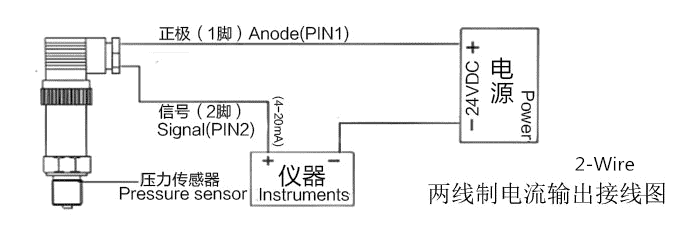
The output signal of the two-wire pressure transmitter is generally 4-20MA. The supply voltage is 24VDC. The two wires are a red (representing positive 24V power supply), and a black or blue (representing positive signal output). The wiring method is that the red wire is connected to the positive source and the blue wire is connected to the signal positive, and then the power supply negative and the signal negative are shorted.
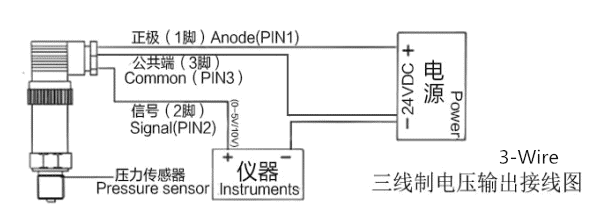
The three-wire pressure transmitter is generally a voltage output. Wire one (red power supply is positive), one black (power supply is negative), and one yellow (signal output is positive). The output ground is common to the power supply.

Why shouldn’t you use a pressure transducer with high oxygen environment?

Oxygen plays an important role in the smelting process, chemical industry, national defense industry, and healthcare. However, the process of oxygen production and use is extremely prone to combustion and explosion.
The analysis is based on the mechanism of the “three elements” of combustion and explosion (combustible materials, oxidants, and excitation energy). The high-purity high-pressure oxygen transported in the oxygen pipeline is a very strong oxidant. The higher the purity, the higher the pressure, the stronger the oxidation, the more dangerous.
The potential sources of excitation energy for combustion or explosion are roughly the following: friction, compression heat, impact force, arc, resonance, etc.
In the construction of industrial oxygen pipelines, multiple cleaning processes such as derusting, scrubbing, sand blasting, blowing, degreasing, and acid cleaning should be carried out. Remove the oil and impurities in the pipeline to make it reach the condition of transporting oxygen medium. Check and accept according to relevant standards, and use it after passing the test.
For oxygen pressure measurement, choosing a clean instrument filled with inert oil not only improves the safety level, but also greatly reduces the risk of economic and time loss caused by maintenance or failure replacement.
Sino-Inst pressure sensor for oxygen measurement
Accuracy: ± 0.15% FS
Fill with Fluorolube® oil to ensure no oxidation reaction
Oil-free production process, oxygen-level cleaning process
Φ19mm standard OEM pressure / differential pressure sensor
Constant current / constant voltage power supply
All stainless steel 316L material

Sino-Instrument offers High pressure sensors. A wide variety of High Pressure sensors options are available to you. Such as free samples, paid samples. Sino-Instrument is a globally recognized manufacturer of High Pressure sensors, located in China. Sino-Instrument sells through a mature distribution network that reaches all 30 countries worldwide. Pressure sensors products are most popular in Europe, Southeast Asia, and Mid East. You can ensure product safety by selecting from certified suppliers. With ISO9001, ISO14001 certification.

Request a Quote

Please enable JavaScript in your browser to submit the form

SI-702 High Pressure Sensor

High pressure sensor is pressure transmitter designed for high pressure measure&control. 0 ~ 40MPa… 600MPa.

High pressure sensor elastic body adopts special material and integrated structure design. SI-702 high pressure sensor has no burst phenomenon during high voltage measurement and control. The high pressure sensor is used under high pressure, differential high pressure and high pressure shock conditions. High pressure sensors are suitable for pressure measurement & control of large hydraulic equipment. SI-702 high pressure sensor adopts spherical or cone seal to ensure the tightness of high voltage system. Such sensor also referred to as: high pressure pressure sensor, high pressure transmitter.

Sino-Inst offers a variety of High Pressure sensors for industrial pressure measurement. If you have any questions, please contact our sales engineers.

More High Pressure Sensors:

Combined Pressure and Temperature Sensor-Dual function
High Temperature Pressure Sensor
Melt Pressure Sensors/Transducers – High Temperature
Gas Pressure Sensor
Flush diaphragm pressure sensor
Digital Pressure Sensor
Sanitary Pressure Transmitter
Pressure Transducer 4-20mA/Voltage

Features of SI-702 High Pressure Sensor

  • Adopt resistance strain gauge pressure sensor chip. The selected patch technology has zero point, full scale compensation and temperature compensation;
  • High precision and high stability amplifier integrated circuit;
  • Micro-mechanical processing technology, integrated structure of measuring diaphragm and pressure interface. Impact resistance, fatigue resistance, high reliability;
  • Integrated design product will not rupture under pressure of 1100MPA, ensuring product safety
  • Diversified output signals (general-purpose analog output, digital RS485 / RS232 output, GPRS wireless transmission);
  • Small structure, minimum outer diameter can reach 26mm. Can be directly matched with local display meter (output is 4-20mA two-wire system);
  • Thread interface adopts 7 degree cone sealing surface;

Specifications of SI-702 High Pressure Sensor

Pressure typeGauge/ AbsolutePressure range 0-80,100,150,200,250,300MPa, …600MPa.
Precision ±0.1%FS   ±0.3%FS   ±0.5%FSZero temperature drift ±0.02%FS/℃
Sensitivity temperature drift ±0.02%FS/℃Long-term stability (1 year) ±0.1%FS
Response frequency (-3dB) 3.2KHzTemperature compensation -20~+85℃
Operating temperature -40~+125℃Storage temperature -40~+125℃
Overload pressure 150%FSDestruction pressure300% FS (limit pressure 10000bar)
Protection class IP65Material 17-4PH
Electrical connectionsDirect lead, M12 connector, Big Hessman, Little HessmanPressure connectionM20 × 1.5, G1 / 2 (others are customized according to requirements)
Signal output 4~20mA 0.5~4.5VDC
(Proportional output)
 0.5~4.5VDC 0~5VDC 0-10VDC
Signal cable specifications 2 Wire 3 Wire 3 Wire 3 Wire 3 Wire
Supply voltage 9~30VDC 5VDC 9~30VDC 9~30VDC 15~30VDC

Extended reading: High Pressure Flow Meters for Liquids-Steam-Gas

Applications of SI-702 High Pressure Sensor

  • Pressure measurement of large hydraulic machinery and hydraulic stations;
  • Pressure measurement and control of water jet cutter and ceramic wire cutter;
  • Pressure measurement of high pressure water pump and high pressure oil pump;
  • Supporting heavy equipment
  • high pressure
  • High load
  • High impact
  • Frequently overloaded areas

Extended Reading: Digital Pressure Sensor-RS485

Dimensions of High pressure sensors

What is High Pressure Sensor?

High pressure transducer is a pressure transmitter suitable for high pressure measurement and co

A high pressure sensor is a device for high pressure measurement of gases or liquids. A high pressure sensor usually acts as a transducer; it generates a signal as a function of the pressure imposed. Such a signal is electrical 4-20mA, 0-5V,etc.

High Pressure sensors are used for control and monitoring in thousands of everyday applications. High Pressure sensors can also be used to indirectly measure other variables such as fluid/gas flow, speed, water level, and altitude. High Pressure sensors can alternatively be called High pressure transducers, High pressure transmitters, High pressure senders, High pressure indicators, piezometers and manometers, among other names.

Sino-Inst high pressure sensor has gone through thousands of fatigue impact tests and several days of low and medium temperature aging cycles before leaving the factory. It has solved the disadvantages of high pressure sensors in terms of stress and zero instability. Provide customers with reliable products for high voltage measurement. The pressure of SI-702 series can reach 600MPa. The precision level is high, and the mature production technology can ensure the long-term stability of the sensor with excellent characteristics. SI-702 series pressure sensors are suitable for oil extraction platforms, water flow equipment, high pressure measurement equipment, hydraulic control systems, test benches and industrial automation control.

You may like: How does a pressure transmitter work?

Technical Support

High Temperature Pressure Sensor

High Temperature Pressure Sensor with high temperature resistant pressure core or sapphire core as pressure measurement material. After high reliability amplifier circuit and precise temperature compensation. The absolute or gauge pressure of the measured medium is converted into standard electrical signals such as 4 ~ 20mA, 0 ~ 5VDC, 0 ~ 10VDC. It is also widely used in industry. Collect pressure signals at the points of some high-temperature steam and fluid pipes.

How do you use a pressure sensor?

1. The key points in the use of pressure sensors and the correct installation position of the transmitter on the process pipeline are related to the measured medium. Only by mastering the correct use of the pressure sensor can the best measurement results be obtained!

2. Prevent the transmitter from coming into contact with corrosive or hot media.

3. Prevent dross from depositing in the duct.

4. When measuring liquid pressure, the pressure taking port should be opened on the side of the process pipeline to avoid sedimentation.

5. When measuring the gas pressure, the pressure taking port should be opened at the top of the process pipeline. The transmitter should also be installed at the top of the process pipeline so that the accumulated liquid can be easily injected into the process pipeline.

6. The pressure guiding tube should be installed in a place with small temperature fluctuations.

7. When measuring steam or other high-temperature media, a condenser such as a buffer tube (coil) must be connected. The transmitter’s operating temperature should not exceed the limit.

Q&A

What is pressure sensor and how it works?

pressure sensor is a device for pressure measurement of gases or liquids.  Pressure sensors can also be used to indirectly measure other variables such as fluid/gas flow, speed, water level, and altitude. Pressure sensors can alternatively be called pressure transducerspressure transmitterspressure senderspressure indicatorspiezometers, and manometers, among other names.
In short, a pressure sensor converts pressure into a small electrical signal, which is sent and displayed. Therefore, these are also commonly referred to as pressure transmitters. Two common signals used are 4 to 20 mA signals and 0 to 5-volt signals.
Most pressure sensors work using the piezoelectric effect. This is when the material generates a charge in response to stress. This stress is usually compressive, but may be twisted, bent, or vibrated.
Pressure sensors detect pressure and can determine the amount of pressure by measuring the charge.
The pressure sensor needs to be calibrated in order to know what voltage or milliamp (mA) signal corresponds to what pressure. This is the basic “zero” and “span” calibration or minimum and maximum, which is a common job for maintenance personnel.
Read more about: What is a pressure sensor and how it works? 

What does a barometric pressure sensor do?

Air pressure sensor is an instrument used to measure the absolute pressure of gas. Air pressure sensor is mainly suitable for physical experiments related to gas pressure. It can also measure dry, non-corrosive gas pressure in biological and chemical experiments.
The main sensing element of the air pressure sensor of the air compressor is a thin film that is sensitive to the pressure of the air pressure and a thimble opening control. In the circuit, it is connected with a flexible resistor. When the pressure of the measured gas decreases or increases, the thin film deforms to drive the ejector pin, and the resistance of the resistor will change. The resistance of the resistor changes. The signal voltage of 0-5V is obtained from the sensing element, and is received by the data collector after A / D conversion, and then the data collector transmits the result to the computer in an appropriate form.
The main component of many air pressure sensors is a variable-capacitance silicon capsule. When the external atmospheric pressure of the variable-capacitance silicon membrane box changes, the thimble moves, and the single crystal silicon membrane box elastically deforms with it, thereby causing a change in the capacitance of the parallel plate capacitor of the silicon membrane box to control the air pressure sensor.
More about Gas Pressure Sensor.

What are pressure sensors made of?

The pressure sensor is a device that detects pressure and converts the pressure signal into an electrical signal and outputs it linearly. Common types include strain gauge, piezoresistive, capacitive, piezoelectric, and vibration frequency pressure sensors.
We use strain gauge pressure sensors as an introduction. It is mainly composed of 4 parts: elastomer, strain gauge, measuring circuit and transmission cable.
Strain gauge pressure sensor measurement principle: When the pressure sensor elastic body is deformed under the action of external force. The strain gauge attached to the elastic body then bends. The resistance of the strain gauge changes. Then the measurement circuit converts the change in resistance into an electrical signal (usually a millivolt signal).
Elastomer: Elastomer is the pressure sensor shell. The main materials are aluminum alloy, alloy steel and stainless steel.
Strain gauge: The strain gauge pressure is an important part of the sensor. Commonly used strain gauge base material adopts polymer film material. The strained material is usually high-purity constantan. The strain gauge is attached to the elastic body through dehydration. The elastic body is deformed by force. The strain gauge then deforms. Thereby changing the resistance value.
Measurement circuit: Transform the resistance change of the strain gauge into a millivolt signal output through the Wheatstone bridge.
Transmission cable: 4-core shielded cable with four wires of red, black, green and white. Red: Power +. Black: Power-. Green: signal +. White: Signal-.

What is the difference between pressure switch and pressure sensor?

Pressure Switch:
As the name suggests, a pressure switch is a switch. It’s just that this switch is the pressure set in advance. When the measured medium reaches this pressure level, the switch can automatically turn on or off. The pressure switch must be given a pressure value in advance. Then turn the switch on or off. They are used for simple control and are all digital outputs.
Pressure Sensor:
The pressure sensor can output not only analog signals but also digital signals. Digital signal processing is more convenient, and remote transmission is also possible. The pressure sensor is composed of a pressure sensitive element and a conversion circuit. Use the pressure of the measured medium to produce a small change in current or voltage output on the pressure sensitive element.

Sino-Inst offers High pressure sensors. A wide variety of High Pressure sensors options are available to you. Such as free samples, paid samples. Sino-Instrument is a globally recognized manufacturer of High Pressure sensors, located in China. Sino-Inst sells through a mature distribution network that reaches all 30 countries worldwide. Pressure sensors products are most popular in Europe, Southeast Asia, and Mid East. You can ensure product safety by selecting from certified suppliers. With ISO9001, ISO14001 certification.

Request a Quote

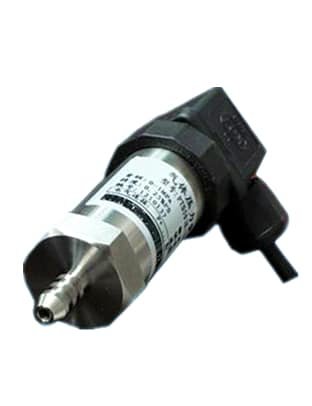
SI-503K Gas Pressure Transducer

Gas Pressure Transducer for industrial gas pressure measurement. Pagoda gas nozzle Φ8. It is used to measure the pressure of weak corrosive gases such as natural gas and exhaust gas pressure sensor.

SI-503K Pagoda Joint Gas Pressure Transducer uses stainless steel as a whole. High-precision strain gage and advanced technology. It has high sensitivity, stable performance and good impact resistance. GB 304 stainless steel welding. Small and compact structure. Has good moisture resistance and excellent media compatibility. Can measure weakly corrosive liquids and gases.Widely used in industrial equipment: Water conservancy. Chemical, medical. Electric power, air conditioning. Vehicle braking and other pressure measurement and control.

Sino-Inst offers a variety of Gas Pressure Transducers for industrial pressure measurement. If you have any questions, please contact our sales engineers.

Features of SI-503K Gas Pressure Transducer

  • High sensitivity and stable performance
  • Compact and compact
  • Good impact resistance
  • Excellent media compatibility
  • Pagoda gas nozzle Φ8, quick connector

Specifications of SI-503K Gas Pressure Sensor

  • Measuring range: -100KPa ~ 0, ~ 0 ~ 1 ~ 10MPa
  • Comprehensive accuracy: 0.25% FS, 0.5% FS
  • Output signal: 4 ~ 20mA (two-wire system), 0-5 / 1-5 / 0-10V (three-wire system)
  • Power supply voltage: 24DCV (9 ~ 36DCV)
  • Medium temperature: -20 ~ 85 ~ 105 ℃
  • Ambient temperature: normal temperature (-20 ~ 85 ℃)
  • Load resistance: current output type: max. 800Ω; voltage output type: greater than 50KΩ
  • Insulation resistance: more than 2000MΩ (100VDC)
  • Response time: <1ms
  • Sealing grade: IP65
  • Long-term stable performance: 0.1% FS / year
  • Impact of vibration: within the frequency of mechanical vibration 20Hz ~ 1000Hz, the output change is less than 0.1% FS
  • Electrical interface: Hessman connector (optional)
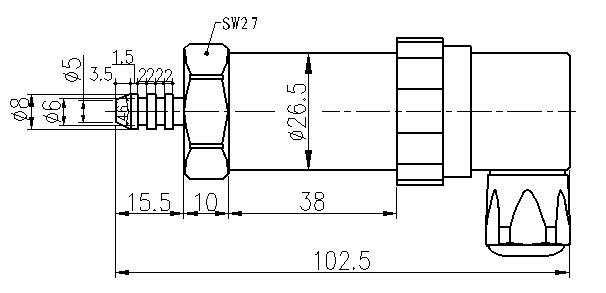
  • Threaded connection: Pagoda nozzle Φ8, quick connector

Dimensions

Wiring

Gas pressure transducer is a special sensor that converts gas pressure into current and voltage signals.

For gas pressure measurement the solution of pressure sensor is used to accomplish the significance of measurement.

Pressure sensors for gas pressure measurement are mainly conversion devices used to measure the absolute pressure of gases.

It can be used for pressure measurement in terms of blood pressure, wind pressure, pipeline gas, etc. It has a stable and reliable performance.

It is mainly suitable for physical experiments related to gas pressure. Such as gas laws, etc. It can also be used in biological and chemical experiments to measure the pressure of dry, non-corrosive gases.

Read more about: What is a pressure sensor and how it works? 

How does gas pressure sensor work?

In short, a pressure sensor converts pressure into a small electrical signal, which is sent and displayed. Therefore, these are also commonly referred to as pressure transmitters. Two common signals used are 4 to 20 mA signals and 0 to 5 volt signals.
Most pressure sensors work using the piezoelectric effect. This is when the material generates a charge in response to stress. This stress is usually compressive, but may be twisted, bent, or vibrated.

Pressure sensors detect pressure and can determine the amount of pressure by measuring the charge.

The pressure sensor needs to be calibrated in order to know what voltage or milliamp (mA) signal corresponds to what pressure. This is the basic “zero” and “span” calibration or minimum and maximum, which is a common job for maintenance personnel.

Read more about: What is a pressure sensor and how it works? 

The price of gas pressure Transducers is mainly affected by the following factors:

  1. Measuring medium
  2. Does the gas contain particles?
  3. Gas temperature
  4. Gas corrosive
  5. Explosion-proof performance
  6. Interface size
  7. Signal output, etc.

Gas pressure Transducer price reference range: USD80-800.00/pc

Natural gas pressure Transducer is 4-20mA current output sensors for monitoring the pressure of natural gas. Measure very low inlet and output pressure or very high natural gas bottle pressures. Where there is the potential for natural gas to be present in the local atmosphere, special approval options such as ATEX intrinsic safety are available.

What pressure sensor is used on the natural gas pipeline?

  1. Natural gas pipelines are pipelines that transport natural gas (including associated gas produced in oil fields) from mining sites or treatment plants to urban gas distribution centers or industrial enterprise users, also known as gas pipelines.
    Using natural gas pipelines to transport natural gas is the only way to transport large amounts of natural gas on land. Natural gas pipelines account for about half of the total pipeline length in the world.
  2. Residential gas inlet pipes should be installed in non-residential rooms such as kitchens, corridors, and enclosed balconies connected to the kitchen (the balconies should be closed when transporting wet gas in cold areas) and other non-residential rooms that are convenient for maintenance. When it is really difficult, it can be introduced from the stairwell, but metal pipes and inlet pipe valves should be installed outdoors.
  3. The gas introduction pipes of commercial and industrial enterprises should be installed in the rooms or gas meter rooms where gas is used.
  4. The gas introduction pipe should be introduced through the wall along the ground on the outer wall. The upper bend of the outdoor exposed pipe section should be installed with no less than DN15 cleaning tee and wire plug, and treated with anti-corrosion treatment. Keep warm when transporting wet gas in cold areas. The introduction pipe can be buried into the room through the outer wall or foundation of the building. When the introduction pipe penetrates the wall or foundation and enters the building, it shall exit the indoor ground within a short distance, and shall not be laid horizontally under the indoor ground.

The sensors used to detect natural gas pipelines can be used to detect the pressure of natural gas pipelines with explosion-proof verification and regular gas pipeline pressure sensors and gas pressure Transducers.

The air pressure sensor is used to measure the absolute pressure of the gas. It is mainly suitable for physical experiments related to gas pressure, such as gas laws, etc. It can also measure dry and non-corrosive gas pressure in biological and chemical experiments.

The air pressure sensor is mainly used to measure the pressure of the gas. One of the atmospheric pressure sensors is usually used to measure changes in weather and use the corresponding relationship between air pressure and altitude for altitude measurement.

The air pressure sensor is a detection device that can feel the measured information, and can transform the detected and felt information into electrical signals or other required forms of information output according to a certain rule to meet the needs of information transmission, processing, and Storage, display, recording and control requirements.

Pressure transmitter types include gauge pressure, absolute pressure, and differential pressure. Gauge pressure refers to the pressure that is less than or greater than atmospheric pressure based on the atmosphere. Absolute pressure refers to the absolute zero pressure as the reference and is higher than the absolute pressure. Differential pressure refers to the difference between two pressures.

According to the working principle of the pressure transmitter:

  • Strain Gauge Pressure Transducers
  • Capacitance Pressure Transducers
  • Potentiometric Pressure Transducers
  • Resonant Wire Pressure Transducers

Read more about: What is industrial pressure transmitter?

Gas pressure Transducer is mainly used to measure the absolute pressure of gas conversion device. It can be used for pressure measurement of blood pressure, wind pressure, pipeline gas, etc. Its performance is stable and reliable, and it is mainly suitable for physical experiments related to gas pressure, such as gas laws. It can also measure the pressure of dry, non-corrosive gases in biological and chemical experiments.

Technical Support

Precision Gauge Pressure Transmitter for the Process Industry. With HART®-Communication and SIL2 (optionally) .

The Gauge Pressure Transmitter SMT3151 TGP, has been specially designed for the process industry, and measures vacuum, gauge and absolute pressure ranges of gases, steam, fluids, and dust up to 600 bar.

Flush diaphragm pressure sensor has Flush membrane / diaphragm structure, anti-blocking design. Pressure measurement of viscous media.

Flush diaphragm pressure sensor uses a diaphragm isolation process. Feel the pressure directly with a flat membrane. There is no pressure hole in the test head. There is no clogging of viscous media during the measurement. 

Are you taking industrial gas measurements? Maybe you need industrial gas flow measurement.

Q&A

What is pressure transducer used for?

The main function of a pressure transmitter is to transmit pressure signals to electronic equipment. The pressure is then displayed on the computer. For example, the mechanical signal of water pressure is converted into an electronic signal such as voltage or current (usually 0-5V or 4-20mA). Pressure and voltage or current have a linear relationship. It is generally proportional, so the voltage or current output by the transmitter increases with increasing pressure.
A pressure transmitter is a sensor commonly used in industrial practice. It is widely used in various industrial automatic control environments. Involving water conservancy and hydropower, railway transportation, intelligent buildings, production control, aerospace, military industry, petrochemicals, oil wells, electric power, ships, machine tools, pipelines and many other industries. The pressure transmitter workshop must be in direct contact with the measured medium. Often run in high temperature, low temperature, corrosion, vibration, shock and other environments. Whether it works normally on the job site depends not only on the quality of the product. It also depends on optimized engineering design and reasonable model configuration. And proper installation and maintenance. Pressure transmitters are a key element in the fluid industry.
Pressure transmitters are mainly used in the following areas:
1.Petroleum, petrochemical, chemical industry, supporting with throttling devices. Provides accurate flow measurement and control. Measures pressure and level in pipes and tanks.
2.Electric power, city gas, and other companies. Places requiring high stability and high accuracy measurement.
3.Pulp and papermaking are used in places that require chemical-resistant liquids and corrosion-resistant liquids.
4. Steel, non-ferrous metals, ceramics, used in furnace pressure measurement and other places requiring high stability, high precision measurement and other places. It is used in places where stable measurement is required under strict control (temperature, humidity, etc.).
5. Machinery and shipbuilding, used to strictly control the place where high precision is required for stable measurement.
In general, the pressure transmitter is mainly used to measure the pressure of the medium and the liquid level.

Sino-Inst is Chinese manufacturer of Gas pressure Transducers for industrial gas pressure measurement.

Gas pressure Transducer for industrial gas pressure measurement which are widely used in India, US, South Africa, and other countries.

Contact us any time, if you need the quotation or technical support.

Request a Quote

SI-703 Flush Diaphragm Pressure Sensor

Flush diaphragm pressure sensor is also called flush diaphragm pressure transducer or flush diaphragm pressure transmitter. Flush diaphragm pressure sensor has Flush membrane / diaphragm structure, anti-blocking design. Pressure measurement of viscous media.

Flush diaphragm pressure sensor uses a diaphragm isolation process. Feel the pressure directly with a flat membrane. There is no pressure hole in the test head. There is no clogging of viscous media during the measurement. Adopting flush membrane structure, diffused silicon pressure-sensitive core body, with good moisture resistance and excellent media compatibility. The sensor interface is available in clamp, thread and flange options. The output signal can be selected from voltage, current, and so on. The flush diaphragm of the sensor prevents problems such as scaling, unsanitary and clogging of viscous liquids.

Sino-Inst offers a variety of Flush diaphragm pressure sensors for industrial pressure measurement. If you have any questions, please contact our sales engineers.

This type of pressure sensor is also commonly known as: Flat film pressure sensor. Diaphragm pressure transmitter. Paint pressure sensor. Food pressure sensor. Diaphragm pressure sensor. Diaphragm pressure transmitter. Or sanitary pressure transmitter.

Flush diaphragm pressure sensor, including strain type and diffused silicon front type.

The strain-type flush-membrane measuring end adopts a special, sturdy flush diaphragm. Hard particles in the measured medium will not damage the isolating diaphragm. Compact structure, corrosion resistance, anti-vibration, anti-particle impact, wide temperature compensation.

Diffusion silicon front type is made of imported diffusion silicon core. Use calibration and digital compensation technology. The product has reliable performance and stable output.

You may like: Diaphragm pressure gauge

Features of SI-703 Flush diaphragm pressure sensor

  • The imported resistance strain gauge is used as a pressure-sensitive chip. The anti-blocking design of the flush membrane / diaphragm structure can measure viscous media.  
  • Advanced patch technology and process; 
  • It can bear large impact pressure, and the bearing pressure can reach 100MPa; 
  • The temperature drift is small, and it can work stably at the working temperature of -20 ~ 85 ℃ for a long time;
  • The elastomer is also connected to the joint using a fully sealed or integrated structure. Solve the oil / gas shortcomings of diffused silicon and ceramic core pressure sensor cores. Reliable work and high fatigue strength;
  • It is specially designed for OEM processing of pressure transmitter manufacturers. Low cost. Suitable for mass production;

Specifications of SI-703 Flush diaphragm pressure sensors

Model703 Flush diaphragm pressure transmitter
Range0-0.6,1,5,10,20,30,40,50 ~ 200MPa
Comprehensive accuracy0.1% FS, 0.2% FS, 0.5% FS
Output signal4-20mA (two-wire system), 0-5 / 1-5 / 0-10VDC (three-wire system)
Supply voltage24VDC (10-30VDC)
Medium temperature-20 ~ 75 ℃
Ambient temperature-20 ~ 75 ℃
Load ResistanceCurrent output type: max. 800Ω; voltage output type: greater than 50KΩ
Insulation resistanceMore than 2000MΩ (100VDC)
Sealing levelIP65
Long-term stable performance0.1% FS / year
Vibration effectWithin the mechanical vibration frequency of 20Hz ~ 1000Hz, the output change is less than 0.1% FS
Electrical InterfaceMetal sealed terminal, four-core aviation connector
Mechanical connectionM20 × 1.5, G1 / 2-14, etc., other threads can be customized
Model703F waterproof Flush diaphragm pressure sensor
Range  0-1, 2, 4, 5, 10, 20, 30, 40, 50 to 200 MPa
Comprehensive accuracy0.2% FS, 0.5% FS, 1.0% FS
Output signal4-20mA (two-wire system), 0-5 / 1-5 / 0-10VDC (three-wire system)
Supply voltage24VDC (10-30VDC)
Medium temperature-20 ~ 75 ℃
Ambient temperature-20 ~ 75 ℃
Load Resistance  Current output type: max. 800Ω; voltage output type: greater than 50KΩ
Insulation resistanceMore than 2000MΩ (100VDC)
Sealing levelIP65
Long-term stable performance0.1% FS / year
Vibration effect  Within the mechanical vibration frequency of 20Hz ~ 1000Hz, the output change is less than 0.1% FS
Electrical InterfaceWaterproof outlet
Mechanical connectionM20 × 1.5, G1 / 2-14, etc., other threads can be designed according to customer requirements
Model703K Flush diaphragm pressure sensor
Range0-2,1,5,10,20,30,40,50 ~ 100MPa
Comprehensive accuracy0.1% FS, 0.2% FS, 0.5% FS
Output signal1-1.5mV / V
Supply voltage10VDC
Medium temperature-20 ~ 85 ℃
Ambient temperature-20 ~ 85 ℃
Load Resistance1500Ω
Insulation resistance  More than 2000MΩ (100VDC)
Sealing levelIP65
Long-term stable performance0.1% FS / year
Vibration effect/
Electrical InterfaceDirect outgoing
Mechanical connectionΦ19 standard size
Model703W Flush diaphragm micro pressure sensor
Range0, 1.5, 2, 10, 30, 50, 100-500KPa, 1-60MPa
Comprehensive accuracy0.25% FS, 0.5% FS
Output signal4-20mA (two-wire system), 0-5 / 1-5 / 0-10VDC (three-wire system)
Supply voltage24VDC (10-30VDC)
Medium temperature-20 ~ 65 ℃
Ambient temperatureNormal temperature (-20 ~ 65 ℃)
Load ResistanceCurrent output type: max. 800Ω; voltage output type: greater than 50KΩ
Insulation resistanceMore than 2000MΩ (100VDC)
Sealing levelIP65
Long-term stable performance0.1% FS / year
Vibration effectWithin the mechanical vibration frequency of 20Hz ~ 1000Hz, the output change is less than 0.1% FS
Electrical InterfaceHessman connector, other optional
Mechanical connectionM24 * 1.5, M25 * 1.5, M27 × 2, etc. Other threads can be designed according to customer requirements
Model703C Flush diaphragm micro pressure sensor
Range0-10, 30, 50, 100 ~ 500KPa, 1-7MPa
Comprehensive accuracy0.1% FS, 0.2% FS, 0.5% FS
Output signal4-20mA (two-wire system), 0-5 / 1-5 / 0-10VDC (three-wire system)
Supply voltage24VDC (10-30VDC)
Medium temperature-20 ~ 65 ℃
Ambient temperature-20 ~ 65 ℃
Load ResistanceCurrent output type: max. 800Ω; voltage output type: greater than 50KΩ
Insulation resistance≥2000MΩ (100VDC)
Sealing levelIP65
Long-term stable performance0.1% FS / year
Vibration effectWithin the mechanical vibration frequency of 20Hz ~ 1000Hz, the output change is less than 0.1% FS
Electrical InterfaceHessman connector, four-core aviation connector optional
Mechanical connection  M20 × 1.5, G1 / 2-14, etc.
Model703G Flush diaphragm pressure sensor
(Alternative WiKa similar products)
Range0 ~ 5, 10, 20, 50, 100-500KPa, 1-7MPa
Comprehensive accuracy0.1% FS, 0.2% FS, 0.5% FS
Output signal4-20mA (two-wire system), 0-5 / 1-5 / 0-10VDC (three-wire system)
Supply voltage24VDC (10-30VDC)
Medium temperature-20 ~ 65 ℃
Ambient temperatureNormal temperature (-20 ~ 65 ℃)
Load Resistance  Current output type: max. 800Ω; voltage output type: greater than 50KΩ
Insulation resistanceMore than 2000MΩ (100VDC)
Sealing levelIP65
Long-term stable performance0.1% FS / year
Vibration effectWithin the mechanical vibration frequency of 20Hz ~ 1000Hz, the output change is less than 0.1% FS
Electrical InterfaceHessman connector, other optional.
Mechanical connectionM20×1.5,G1/2-14
Model703GB Flush diaphragm pressure sensor (Alternative WiKa similar products)
Range  0 ~ 5,10,20,50,100KPa ~ 1MPa, 2,3,10MPa
Comprehensive accuracy0.1% FS, 0.2% FS, 0.5% FS
Output signal4-20mA (two-wire system), 0-5 / 1-5 / 0-10VDC (three-wire system)
Supply voltage24VDC (10-30VDC)
Medium temperature-20 ~ 65 ℃
Ambient temperatureNormal temperature (-20 ~ 65 ℃)
Load ResistanceCurrent output type: max. 800Ω; voltage output type: greater than 50KΩ
Insulation resistanceMore than 2000MΩ (100VDC)
Sealing levelIP65
Long-term stable performance0.1% FS / year
Vibration effectWithin the mechanical vibration frequency of 20Hz ~ 1000Hz, the output change is less than 0.1% FS
Electrical InterfaceHessman connector, other optional.
Mechanical connectionG1

Read more about: What is a pressure sensor and how it works? 

SI-703 Flush diaphragm pressure sensor Applications

The sensor’s Flush diaphragm structure prevents problems such as scaling, unsanitation, and sticky liquid clogging. Widely used in food, pharmaceutical, brewing and other process control fields. It is suitable for the pressure measurement and control of viscous media such as chemical coatings, paints, muds, asphalts, and crude oil under weak pressure. Its industry applications are as follows:

  1. Food hygiene industry;
  2. Paper industry;
  3. Sewage level measurement;
  4. Beverage tank liquid level measurement;
  5. Pipeline level measurement;
  6. Pharmaceutical and biological products processing.
  7. Pressure transmitter manufacturer OEM
  8. Pressure measurement and control of viscous media

Extended reading: Flat Pressure Sensor for High Viscosity Fluids

Flush diaphragms appear flush from the surface, so they are called flush diaphragms.

A flush diaphragm is a diaphragm that is fully open and exposed to the pressure medium. The flush diaphragm is level or slightly recessed with the surrounding surface when installed.

The purpose of the flush membrane is to prevent the viscous medium from blocking the pressure hole, or to use a special material for better measurement with the medium to avoid damage to the sensor chip material, etc.

In short, the way to measure or protect the sensor according to the specific application

Flush pressure sensor refers specifically to Pressure Sensors with Flush Diaphragms. Pressure transmitters and transducers with open flush diaphragms suitable for use with highly viscous media such as plastics, paper pulp, bitumen, sewage, paint and adhesives.

Extended Reading: MEMS Pressure Sensors

Flushing connection is different from the common internal diaphragm pressure measurement method.

Internal diaphragm is the industry standard for most gaseous and liquid media because it is inexpensive and easy to handle.

However, once it encounters the measurement of viscous media, or in the case of high hygiene requirements. Keeping the Flushing connection can effectively avoid blockage. And meet the sanitary cleaning requirements.

Flush Mount Diaphragm can be:
Clamp flat film installation, threaded flat film installation, or flange flat film installation. Sometimes there are customers who need special cavityless flat membranes.

Clamp Flush Membrane Pressure Sensor

The clamp type adopts a silicone oil filling technology, and the pressure felt by the diaphragm is transmitted to the pressure chip through the silicone oil. The compensation circuit corrects the pressure signal to a linear electrical signal.

The stressed diaphragm on the end face of the clamp is exposed to directly feel the pressure. Prevents scaling, unsanitary and sticky pressure clogging problems. It is widely used in hygiene industries such as food, medicine, brewing and other occasions where the measuring medium may be fouled.

Threaded flush membrane pressure sensor

The threaded flush Diaphragm pressure transmitter uses a flat membrane to directly sense the pressure signal. The diffusion silicon pressure core is used as the sensitive element. The standard silicone oil or olive oil is used as the pressure transmission medium.

The measuring end is made of 316L stainless steel, and the flush isolation diaphragm is specially welded. Compact structure, corrosion resistance, vibration resistance, wide temperature compensation.

Flange flush Diaphragm pressure transmitter

  • Shell optional;
  • flange mounting;
  • Two-wire system, 4~20mA analog output, HART® protocol digital communication;
  • Smart LCD head with backlight;
  • Large-size diaphragm, fully welded and sealed, long-term reliability and durability;
  • For pressure measurement of gas, liquid, steam;
  • Anti-corrosion diaphragm is optional (tantalum, Kazakhstan C, 316L, 316L sprayed with PTFE);
  • Especially suitable for high temperature viscous liquid;

Cavityless flush Diaphragm pressure transmitter

Cavityless flush Diaphragm pressure transmitter

The cavityless flush Diaphragm pressure transmitter adopts a high-precision foil strain gauge and has no cavity to measure the diaphragm. It is especially suitable for measuring liquids with high viscosity.

The product adopts an improved and optimized installation structure, which makes the product have good anti-vibration ability.

Equipped with a variety of characteristic amplifying circuits, such as anti-interference, high temperature resistance, intrinsically safe explosion-proof, etc., making the modification suitable for various measurement and control occasions such as oil fields and food.

Working Principle

Flush diaphragm pressure sensors use processes such as diffusion or ion implantation to form resistors and connect them to a Wheatstone bridge. Micro-machining technology is used to form a pressure-sensitive diaphragm under the bridge. When pressure is applied to the diaphragm, the resistance value changes and a linearized output signal is generated that is proportional to the applied pressure. When we add DC power to the Wheatstone bridge, a DC voltage signal will be output. After the second conversion line, the two-wire system 4 ~ 20MA output is realized.

When to Use a Flush Diaphragm Pressure Connection?

In short, there are two cases, we can first consider Flush Diaphragm Pressure Connection.

The first is hygienic applications. Such as Pharmaceutical, Food, Beverage & Biotech.

For these applications the concern is not necessarily high viscosity but more to do with cleanliness. The wetted part of the Flush Diaphragm Pressure Sensor is flat. No holes, no ripples. This way, residue-free cleaning is easy.

The second is High Viscosity Liquids or Crystals.

Substances such as paints, oils, waxes, pastes, tars, plastic melts or slurries can clog the process connections of the pressure sensor.

The media may be too hard to adequately fill the internal voids of the pressure connector. Or once the process cools, the substance may wax. For these types of substances, it is necessary to specify a flushing connection in which the diaphragm is fully open.

Some pressure transducers have the option of flush-embedded diaphragms where mechanical damage to the diaphragm is a concern.

WIKA has a great video on When to use a front-flush pressure connection? Let’s take a look.

Technical Support

Frequently
Asked
Questions

In short, a pressure sensor converts pressure into a small electrical signal, which is sent and displayed. Therefore, these are also commonly referred to as pressure transmitters. Two common signals used are 4 to 20 mA signals and 0 to 5 volt signals.

Most pressure sensors work using the piezoelectric effect. This is when the material generates a charge in response to stress. This stress is usually compressive, but may be twisted, bent, or vibrated.

Pressure sensors detect pressure and can determine the amount of pressure by measuring the charge.

The pressure sensor needs to be calibrated in order to know what voltage or milliamp (mA) signal corresponds to what pressure. This is the basic “zero” and “span” calibration or minimum and maximum, which is a common job for maintenance personnel.

Pressure gauge according to its measurement accuracy:

Can be divided into precision pressure gauges, general pressure gauges.
The precision level of precision pressure gauges is 0.1, 0.16, 0.25, 0.4 and 0.05.
The accuracy levels of general pressure gauges are 1.0, 1.6, 2.5, and 4.0.

Pressure gauge according to its measurement basis:

Pressure gauges are divided into: general pressure gauges, absolute pressure gauges, stainless steel pressure gauges, and differential pressure gauges according to the basis of their indicated pressure.
General pressure gauges are based on atmospheric pressure.
The absolute pressure gauge is based on the absolute zero pressure.
The differential pressure gauge measures the difference between two measured pressures.

Pressure gauge according to its measuring range:

Divided into vacuum gauges, pressure vacuum gauges, micro pressure gauges, low pressure gauges, medium pressure gauges and high pressure gauges.

Vacuum gauges are used to measure pressure values ​​below atmospheric pressure.

Pressure vacuum gauges are used to measure pressure values ​​less than and above atmospheric pressure.

Micro pressure gauges are used to measure pressure values ​​less than 60,000 Pa.

Low pressure meter is used to measure 0 ~ 6MPa pressure value.

Medium pressure gauge is used to measure the pressure value of 10 ~ 60MPa.

High pressure gauge is used to measure pressure value above 100MPa.

Pressure gauge according to its display mode:
Divided into pointer pressure gauge. Digital pressure gauge.

The pressure gauge is divided according to its use function:
Pressure gauges can be divided into local indication pressure gauges and charged signal control pressure gauges according to their different functions.

General pressure gauges, vacuum pressure gauges, shock-resistant pressure gauges, stainless steel pressure gauges, etc. are all in-situ indicating pressure gauges. They have no other control functions except the indicated pressure.

The output signals of the pressure signal-controlled pressure gauge mainly include:

1. Switching signal (such as electric contact pressure gauge)
2. Resistance signal (such as resistance remote pressure gauge)
3. Current signals (such as inductive pressure transmitters, remote pressure gauges, pressure transmitters, etc.)

According to the purpose of the pressure gauge:

It can be divided into: ordinary pressure gauge, ammonia pressure gauge, oxygen pressure gauge, electric contact pressure gauge, remote transmission pressure gauge, vibration resistance pressure gauge, pressure gauge with inspection pointer, double needle double tube or double needle single tube pressure gauge, digital display Pressure gauges. Digital precision pressure gauges.

Pressure sensors are mainly divided into two types: semiconductor piezoresistive type and electrostatic capacity type. Below we introduce their principles.

Semiconductor piezoresistance type:
The semiconductor piezoelectric impedance diffusion pressure sensor forms a semiconductor deformation pressure on the surface of the sheet. The sheet is deformed by an external force (pressure) to produce a piezoelectric impedance effect. The change in impedance is converted into an electrical signal.

Capacitance type:
The electrostatic capacitance type pressure sensor is a capacitor that opposes the fixed pole of glass and the movable pole of silicon to form a capacitance. It converts the change in electrostatic capacity generated by deforming the movable pole by external force (pressure) into an electrical signal.

A pressure sensor (Pressure Transducer) is a device or device that can sense the pressure signal and convert the pressure signal into a usable output electrical signal according to a certain rule.

At present, there are many types of core materials for pressure sensors. The performance of several core materials is briefly introduced below.
1. Single crystal silicon
2. Polysilicon
3. Silicon-Sapphire
4. Compound semiconductor materials
5. SiC thin film material

diaphragm pressure gauge is a device,

that uses a diaphragm with a known pressure to measure pressure in a fluid.

It has many different uses, such as monitoring the pressure of a canister of gas, measuring atmospheric pressure. Or recording the strength of the vacuum in a vacuum pump.

The diaphragm pressure gauge consists of a circular membrane, made from sheet metal of precise dimensions, which can either be flat or corrugated.

The diaphragm is mechanically connected to the transmission mechanism, which will amplify the small deflections of the diaphragm, and transfer them to the pointer.

Read more about: SI-D100 Diaphragm pressure gauge

Related Products

Sino-Inst offers Flush diaphragm pressure sensors. A wide variety of Flush diaphragm Pressure sensors options are available to you. Such as free samples, paid samples. Sino-Instrument is a globally recognized manufacturer of Flush diaphragm Pressure sensors, located in China.

Sino-Inst sells through a mature distribution network that reaches all 30 countries worldwide. Flush diaphragm Pressure sensors products are most popular in Europe, Southeast Asia, and Mid East. You can ensure product safety by selecting from certified suppliers. With ISO9001, ISO14001 certification.

Request a Quote

Please enable JavaScript in your browser to submit the form

Application Analysis of Intelligent Pressure Transmitter

Intelligent Pressure Transmitter is also called smart pressure transmitter.

Current intelligent pressure transmitters are generally hybrid intelligent pressure transmitters that have both digital and analog signals. Communication with DCS is mainly based on passing 4-20mA analog signals. Then superimpose digital signals on them for remote Set the zero point, range, and calibration, configuration, and diagnostics of the transmitter. It is only designed to be compatible with the existing DCS. Smart pressure transmitter is a transition product of true all-digital smart pressure transmitter (such as field bus type intelligent pressure transmitter).

As far as the composition structure of intelligent pressure transmitters widely used in the market is concerned, it mainly includes devices such as microprocessors, sensors, digital-to-analog converters, and memories. Different devices play different automatic control functions. The sensors are mainly aimed at The measured signal is detected. There are some differences in the materials designed in the specific application. As the core part of the entire device, the microprocessor is mainly used for comprehensive analysis and calculation of the relevant data collected by the device. Unit conversion, fault diagnosis, range adjustment, function calculation, etc. are performed for the detection signal. The function of the memory is to implement the configuration for the relevant data and programs in the microprocessor. At present, most of the memory used by people have the function of rewriting and adjusting. Related converters are mainly responsible for the interchange of digital signals related to analog signal machines. Smart pressure transmitters can communicate with DCS by outputting a series of digital signals. A reserve power supply is also set in the transmitter, which can prevent the memory data from being lost in the event of a power failure. According to the different types of sensors used in smart pressure transmitters, the transmitters can also be classified into capacitive, diffused silicon strain, and diffused silicon resonant types.

Featured Smart Pressure Transmitters

Diffused silicon Gauge Pressure Transmitter
A gauge pressure (GP) transmitter compares a process pressure against local ambient air pressure. Gauge pressure transmitters have ports to sample the ambient air pressure in real-time.
High-Temperature Pressure Transmitter
High-temperature pressure transmitters with a 4-20mA output.
which has a temperature capability of over 700 °C and is not pyroelectric.
Explosion-proof Pressure Transmitter
Explosion-proof Pressure transmitter, or explosion-proof pressure transducer, with the explosion-proof enclosure.
For applications in hazardous areas.
Diaphragm Seal Pressure Transmitter
When the process medium should not come into contact with the pressured parts of the measuring instrument. Diaphragm sealed pressure transmitters are used for pressure measurement.
Hygienic / Sanitary Pressure Transmitter
Also called Hygienic pressure Transmitters, or tri clamp pressure transmitter. Sanitary pressure Transmitters is used to food &beverage or pharmaceutical application.
Capacitive Gauge Pressure Transmitter
Gauge pressure (GP) transmitters compare process pressure with local ambient air pressure. Gauge pressure transmitters have ports for real-time sampling of ambient air pressure.
Absolute Pressure Transmitter
Absolute pressure transmitter with 4-20mA output for measuring pressure with absolute type reference. Absolute pressure (AP) transmitter is a measure of the ideal (complete) vacuum pressure.
Hydrostatic pressure transmitter
Hydrostatic pressure transmitter is used for fluid hydrostatic pressure measurement. With working static pressure up to 32Mpa, for liquid, gas or steam .

Function of Smart Pressure Transmitters

  • Type: Pressure- Differential(DPIT), Gauge/ Absolute(PIT), Level(LIT), High Static Pressure, Flow Pressure(FIT)
  • Certificate: SIL2 (TUV, FMEDA), Ex d, Ex ia, FM, ATEX, TR CU(EAC), INMETRO, CE, Rohs, BV, LR, KR, DNV, ABS, KCs, IP66/67, NEMA 4X
  • Feature: 4 to 20mA, HART, Loop Powered
  • Accuracy: ± 0.075% (option ± 0.04%) of CS* 3 lines LCD display, Self Diagnostic Function, External Buttons, DAC, Zero Trim, Eng mode
  • Application: Pressure, Flow, Level measurement for Oil & Gas, Liquid, Water, Maine & offshore, Vessel, Power, Chemical Plants and Refinery

More about: Absolute Pressure Vs Gauge Pressure.

Hydrostatic pressure for level measurement:

SI-151 Hydrostatic Level Sensor
SI-PCM260 Deep Well Water Level Sensor
SMT3151TR Hydrostatic level transmitter-Rod Type

Main Features of Smart Pressure Transmitters

Compared with conventional analog transmitters, smart pressure transmitters have many characteristics. Take Rostman smart pressure transmitters as an example. The characteristics of this pressure transmitter are mainly concentrated on the following points:

1. Wide range and large range ratio

Intelligent pressure transmitters generally have a wide measuring range. The measuring range ratio is large, from 30: 1 to 100: 1, and some even reach 400: 1. The measuring range ratio of the transmitter refers to the maximum measurement range (URV) and the minimum measurement Range (LRV) ratio. Because the intelligent pressure transmitter has a wide measuring range, compared with conventional analog pressure transmitters, the biggest advantage is that it can reduce the inventory. At the same time, according to the process requirements, the measuring range can be changed at any time without following the meter change, without having to change the meter. Don’t worry about exceeding the range.

2.Simple and convenient maintenance

The handheld communicator can be used to communicate with the intelligent pressure transmitter at the terminal of the field transmitter or at the terminal in the control room of the main control room. In this way, the instrument maintenance personnel can perform range modification, parameter setting, and instrument maintenance on the transmitter in a relatively safe and relatively good control room.

3.With high and low voltage side conversion function

Intelligent pressure transmitters generally have high- and low-pressure side conversion functions of the sensor, and the internal parameters can be adjusted with a handheld communicator. I encountered such a problem in production. Because the meter has been running for many years, the pressure guiding tube connected to the transmitter needs to be replaced due to leakage. When the meter is put into operation after replacement, it is found that the positive and negative phase pressure guiding tubes are reversed (because the pressure guiding tube is long , And there is a heat tracing tube together, the positive and negative phases are easily reversed). The intelligent pressure transmitter has high and low pressure side conversion functions, as long as the parameter items in the table are changed from NORMOAL (high pressure on the right side, low pressure on the left side) to REVERSE (low pressure on the right side, high pressure on the left side). After reconfiguring the table, Everything works fine, saving time and effort.

4. With fixed output function

This function is more convenient to use in the following situations: When the transmitter fails, in order to ensure the safety of production equipment and personnel, or to ensure product quality, the transmitter output needs to be a fixed value. After the annual overhaul, due to the meter All links in the control circuit have been overhauled. The entire circuit needs to be co-calibrated before driving. At this time, the fixed output function of the intelligent transmitter can be used by the hand programmer. Generally, any value between 3.8-21.6mA can be set, and the whole circuit where it is located is cascaded.

In addition, the intelligent pressure transmitter has the characteristics of high accuracy, good stability and high reliability.

Extended Reading: Selection of pressure transmitter

Application Analysis of Intelligent Pressure Transmitter

Used as a reminder of impulse pipeline problems

In general, the intelligent pressure transmitter is connected to the process through a small-diameter pipe, and this management is the impulse pipeline. In some applications, such impulse lines may be blocked by materials or frozen due to cold weather. These blockages may cause difficulties in transmitting pressure signals. In this case, the use of conventional pressure transmitters cannot be used to understand this clogging problem. The main reason is that in the case of a blockage problem, there is a certain difference between the signal indicated by the transmitter and the signal provided before the blockage occurred. It must be ensured that the output of the transmitter does not change with the actual flow rate change before it can be found The problem. It has been found in practice that if one or two impulse lines are blocked during some flow measurement processes, the standard deviation at a specific flow will change greatly. The intelligent pressure transmitter can effectively detect such changes. In this way, the blocking position of the impulse pipeline can be controlled in time, which facilitates fault finding and avoids increasing problems.

For flame instability detection in refining furnaces

In many chemical fields, refining furnaces are important equipment. Incineration of different chemical production waste gases is required. Because many BTUs coexist, the flame stability is not very good, which is also an important sign that the refining furnace is out. The application of intelligent pressure transmitter can measure the noise of the fire control pressure in the room. The transmitter can be used to detect the flame stability. The general measurement accuracy is relatively high, and it can detect the abnormal signal in the refining furnace. . Convenient staff to correct equipment problems in time to avoid flameout.At present, smart pressure transmitters are also used in related fields to a certain extent, which belongs to the category of precision instruments. In many fields of application, smart pressure transmitters can accurately detect related signals and data information, find abnormalities in time, and facilitate Find and repair the corresponding faults. It is helpful to reduce system failures and improve system operation efficiency.

Q&A

What is smart pressure transmitter?

Digital smart pressure transmitter is pressure sensor with a 12-bit or higher microprocessor. Smart pressure transmitters are high performance microprocessor-based transmitters with flexibility. Pressure calibration and output, automatic compensation.
Smart pressure transmitter also called intelligent pressure transmitter.
The intelligent pressure transmitter consists of two parts: a smart sensor and a smart electronic board.
The smart sensor part includes: a capacitive sensor. A measuring diaphragm detection circuit. A temperature sensor, and a temperature compensation circuit.
The smart electronic board includes: a microcomputer controller. And the peripheral circuit, complete the pressure signal to 4 ~ 20mA dc conversion.
Smart Pressure Transmitter is used to measure the pressure of liquid, gas or steam. And then convert the pressure signal into 4 ~ 20mA DC signal output. The intelligent pressure transmitter produced by Sino-Inst can communicate with the HART communicator. It is widely used in weakly corrosive liquids in industrial pipelines, Gas and steam measurement and control systems.
Extended reading: How to calibrate HART pressure transmitters

What is the principle of pressure transmitter?

Like other transmitters, a pressure transmitter consists of electronics connected to a sensor. We can find transmitters with many types of pressure sensors on the market – capacitive, piezoelectric, resonant silicon, and more.
So pressure applied to capacitive cells will produce a change in the capacitance of the sensor. This change will affect the oscillator frequency, and the pressure transmitter will detect this change. Then the transmitter translates this data into a standard output signal that we can read.
Using a local setup or a handheld, you can adjust the transmitter, changing information like the unit, measuring range, and output.
More: How does a pressure transmitter work

How do you calibrate a smart transmitter?

To perform the test:
1. Isolate the transmitter from the process being measure and its loop wiring. If measuring the mA signal across the transmitter test diode leave the wires intact, but note this method does not give the best mA measurement accuracy.
2. Connect the mA measurement jacks of the 754 to the transmitter.
3. Connect the pressure module cable to the 754 and connect the transmitter test hose from the hand pump to the transmitter.
4. Press the HART button on the calibrator to see the configuration of the transmitter.
5. Press HART again and the calibrator will offer the correct measure/source combination for the test. If documenting the calibration press As-Found, input the test tolerance and follow the prompts. If the measured mA signal at the test points is found within tolerance the test is complete. If not, adjustment is required.
6. Select, adjust, and trim the pressure zero, mA output signal and input sensor.
7. After adjustment select As-Left, document the condition of the transmitter and after adjustment and if the test passes, it is complete.
More: Pressure Transmitter Calibration

How do you calibrate a pressure transmitter with HART Communicator PDF?

The basic procedure for calibration
1. Isolate the Pressure Transmitter from the Process.
2. Slowly open the vent plug and the vent valve to release the pressure.
3. Connect the multimeter with the transmitter and ensure that output is 4ma when 0 pressures are applied.
4. Connect the handheld test pump (pressure source) to the transmitter.
5. Ensure there is no leak.
6. Apply pressure range at 0%, 25%, 50%, 75%, 100% and check there is any error.
7. If there is any error calibration should be done.
Extended reading: Smart Differential Pressure Transmitter

Industrial Pressure Sensors

Insutrial pressure sensor for the pressure measurement application.

A pressure sensor converts the physical quantity ‘pressure’ into an industry-standard electric signal. Sino-Inst manufactures pressure sensors ranging from the sensing element to system packaging. Based on piezoresistive Micro-electromechanical systems and silicon strain gauge , our sensors measure from 20inWc … 200,000 psi. We can also build custom sensors to meet your specific needs. Our product portfolio covers a wide range of pressure sensors. Suitable for refrigeration and air conditioning applications, the food industry, mobile work machines, medical gas and semiconductor industries.

Sino-Inst offers a variety of pressure senors for industrial pressure measurement. If you have any questions, please contact our sales engineers.

Featured Industrial Pressure Sensors

SI-303 Low-Pressure Transducer
Low pressure transducers for air and non-corrosive gases low pressure measurement. 0 ~ 2.5kPa to 0 ~ 30kPa measurable.
SI-350 Sanitary Pressure Transmitter
Sanitary Pressure Transmitter, also called tri clamp pressure transmitter,
is the pressure transducer with the flush diaphragm (flat membrane) as the pressure sensor.
SI-300 Pressure Transducer 4-20mA/Voltage
The 4-20mA/ Voltage Pressure Transducer,
also called pressure transmitter 4-20mA,
is a pressure sensor with4-20ma/Voltage output.
SI-390 Industrial Pressure Transmitter
Pressure transmitters for general industrial applicaitons. -0.1kPa ~ 0 ~ 0.01kPa ~ 100MPa ~150MPa. 0.1% FS, 0.25% FS, 0.5% FS. 4-20mA (2-wire system), 0-5 / 1-5 / 0-10V (3-wire system)
SI-520 Digital Pressure Sensor
Digital Pressure Sensor is particularly suitable for use in computer control systems. RS485 half-duplex working mode.

SI-302 OEM pressure sensor
OEM pressure sensors from Chinese manufacturer. Silicone filled. Protected by stainless steel diaphragm. Suitable for a variety of fluid media.

SI-703 Flush diaphragm pressure sensor
Flush membrane / diaphragm structure, anti-blocking design. Pressure measurement of viscous media.
SI-10 Liquid pressure sensor
Liquid pressure sensor is widely used for pressure measurement of various liquids. Like water or oils. IP68 waterproof.
SI-503K Gas Pressure Sensor
Gas pressure sensor for industrial gas pressure monitoring. Pagoda gas nozzle Φ8. Such sensors are also commonly referred to as wind pressure transmitters, exhaust pressure sensors.
SI-702 High Pressure Sensor
High pressure sensor is pressure transmitter designed for high pressure measure&control. 0 ~ 40MPa… 600MPa. M20 × 1.5, G1 / 2 (others are customized according to requirements)
SI-702S Ultra-High Pressure Senors
Pressure sensor for Ultra high pressure applications. Ultra high pressures up to 15,00MPa. 0-2000MPa to 0-7000MPa (customized).Ball head M20 × 1.5, cone head M20 × 1.5.
SI-512H High Temperature Pressure Sensor
High Temperature Pressure Sensor for pressure measurement of high temperature gas or liquid. Such as steam pressure. High temperature up to 800 ℃.

SIJC-1000HSM-Silicon Pressure Sensor
silicon pressure sensor, also known as Diffused silicon pressure sensor. Silicon pressure sensors are low cost.
SI-706 Combined Pressure and Temperature Sensor-Dual function
Combined pressure and temperature sensor for Simultaneous measurement of pressure and temperature.
Thermocouple types: J, K, E type or PT100 platinum resistance. Two outputs do not affect each other. 
SI-338 Ceramic Pressure Sensor
Ceramic pressure sensor is a pressure sensor refined from a thick ceramic base using a refined ceramic base. Cost-effective. Support OEM processing. 0-0.2MPa -…- 40MPa

Technical Support

pressure sensor is a device for pressure measurement of gases or liquids.  Pressure sensors can also be used to indirectly measure other variables such as fluid/gas flow, speed, water level, and altitude. Pressure sensors can alternatively be called pressure transducerspressure transmitterspressure senderspressure indicatorspiezometers and manometers, among other names.

From Wikipedia : Pressure sensor

In short, a pressure sensor converts pressure into a small electrical signal, which is sent and displayed. Therefore, these are also commonly referred to as pressure transmitters. Two common signals used are 4 to 20 mA signals and 0 to 5 volt signals.
Most pressure sensors work using the piezoelectric effect. This is when the material generates a charge in response to stress. This stress is usually compressive, but may be twisted, bent, or vibrated.

Pressure sensors detect pressure and can determine the amount of pressure by measuring the charge.

The pressure sensor needs to be calibrated in order to know what voltage or milliamp (mA) signal corresponds to what pressure. This is the basic “zero” and “span” calibration or minimum and maximum, which is a common job for maintenance personnel.

What common types of pressure can you measure with a pressure sensor?

We use three common types in the industry.

  • The first is “gauge pressure”. Measured with reference to atmospheric pressure (typically 14.7 PSI). When above atmospheric pressure, you will display a “positive” pressure; when below atmospheric pressure, you will display a “negative” pressure.
  • The next is “absolute pressure“. In short, this is the pressure relative to an absolute vacuum measurement. The absolute pressure of the full vacuum is zero PSIa and it increases from there. This type of sensor can be used if it is necessary to read pressures below atmospheric pressure.
  • The last type that is usually monitored in the industry is “pressure differential”. It sounds like this, the difference between two pressures, a measured pressure and a reference pressure.

Sino-Inst also provides repair services for pressure sensors. Such as WIKA, Rosemount, and other brands of pressure sensors.

Pressure sensor structure

Pressure sensor wiring

Industrial Applications of Pressure Sensors

Pressure sensors play critical process and quality control roles in industrial applications. Industrial pressure sensors provide a reliable solution for medical, HVAC, and industrial applications. Our sensors are signal-conditioned, calibrated over the entire temperature range. And include digital or analog outputs.

Industrial pressure sensors can be used to measure media, namely different types of gases and liquids:

  • Air
  • Atmosphere / barometric pressure
  • Gas
  • Water
  • liquid
  • Hydraulic / pneumatic
  • Corrosive media

Although many of the above apply to corrosive substances. You can also find sensors specifically designed for measuring corrosive media.

Sensors used in chemical processes may need to withstand exposure to corrosive media such as acids or bases. Many stainless steel enclosures and / or diaphragms can be specified to improve corrosion resistance. They can also withstand corrosion due to atmospheric humidity or water splashes. Or withstand permanent immersion in untreated water or chemical-containing water such as treatment plants or swimming pools.

The corrosion hazard caused by seawater, salt spray or coastal environment exceeds the tolerance of ordinary low grade stainless steel. Housing and diaphragm materials such as super nickel alloys or titanium are generally recommended.

Sensors can also be specified, such as using O-rings made of fluororubber instead of parts made of rubber to increase resistance to aging and corrosion. Alternatively, the diaphragm can be welded to the sensor body to enhance corrosion resistance.

Sino-Instrument offers over 20 Pressure sensors. A wide variety of  Pressure sensors options are available to you. Such as free samples, paid samples. Sino-Instrument is a globally recognized manufacturer of Pressure sensors, located in China. Sino-Instrument sells through a mature distribution network that reaches all 30 countries worldwide. Pressure sensors products are most popular in Europe, Southeast Asia, and Mid East. You can ensure product safety by selecting from certified suppliers. With ISO9001, ISO14001 certification.

Request a Quote

Please enable JavaScript in your browser to submit the form

SI-ML Portable Ultrasonic Liquid Level Indicator

Portable Ultrasonic Liquid Level Indicator allows you to conveniently detect the level of liquid available in a container /cylinder/pipe/tank. Ultrasonic principle, Non-contact.

Portable ultrasonic liquid level indicator is best choice for tanks or pipes level measurement. It is designed to measure the presence or absence of liquid at a certain height position in a tank or in pipelines. Non-contact ultrasonic detection technology. SI-ML works perfect for detection of dangerous toxic or corrosive liquids. Under ordinary conditions, the maximum wall thickness of measurable containers is 30mm. The product is suitable for the detection of various types of liquids. Liquids are non-crystalline or other particulate matter. For example CO2 Tank. Thanks to non-contact detection technology, this level indicator is ideal for detecting hazardous toxic or corrosive liquids.

Please feel free to contact us for Techinical Support, or Request a quote for Portable ultrasonic liquid level indicators (customization available).

Features of Portable Ultrasonic Liquid Level Indicator

SI-ML Portable Ultrasonic Liquid Level Indicator is mainly used for liquid level detection of various tanks and pipes.
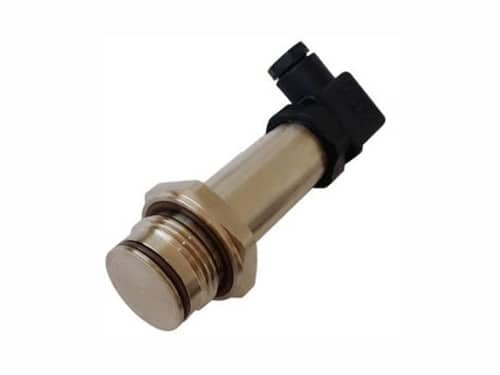
Detect the storage capacity of fire extinguishing agent storage containers in gas fire extinguishing systems (eg, original Indo-European, haloalkane, CO2, etc.). Measure the presence of liquid level in a cylinder or container at a certain height position, such as haloalkane, CO2, etc. It can also indicate the presence of a liquid level in the container.

The material of the measurable container can be various metals, glass or non-foam. And the measurable wall thickness is usually not less than 30mm. This measurement technique is not affected by factors such as medium density, dielectric constant, electrical conductivity, reflection coefficient, pressure, temperature, sediment, and so on.

The product can be used to detect all liquids that do not crystallize and contain no particulate matter. Because it uses non-contact detection, it is ideal for fire detection of toxic and corrosive hazardous liquids and acceptance testing of gas fire suppression systems.

  • No contact with medium
  • Suitable for toxic, corrosive, orinvasive medium
  • No need for drilling or welding on tank wall
  • Advanced ultrasonic sensor technology
  • Reliable measurement results
  • Easy and convenientt ooperate and maintain
  • Ultrasonic adaptive detection algorithm.
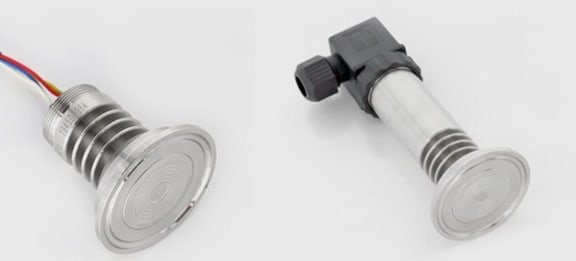
  • High-contrast OLED color display, suitable for outdoor use under strong light.
  • Newly added ultrasonic waveform display function facilitates parameter testing, waveform comparison and other functions to ensure measurement accuracy in complex situations
  • Gooduser interface design
  • The comprehensive software displays the measurement results, and the method is simple

Working principle of Portable Ultrasonic Liquid Level Indicator

The portable ultrasonic cylinder liquid level indicator couples high-frequency ultrasonic pulses generated by the sensor to the outer wall of the container. An ultrasonic signal is then returned from the container wall. Different media attenuate the received ultrasonic signals differently. The received reflected wave generates an electrical signal. The magnitude of the electrical signal can be displayed by the digital value of the LCD on the panel, and the LED corresponding to the liquid level is lit.

Different sensors have different sensitive devices. When measuring, different containers and different liquids will produce slightly different readings, so this reading is not absolute. But the same thing is that when the sensors are connected to the respective inside and outside of the container, the reading of the level indicator will change significantly. In this way, you can determine whether there is liquid at a certain height position in the container by changing the indicator on the instrument and the value displayed on the LCD.
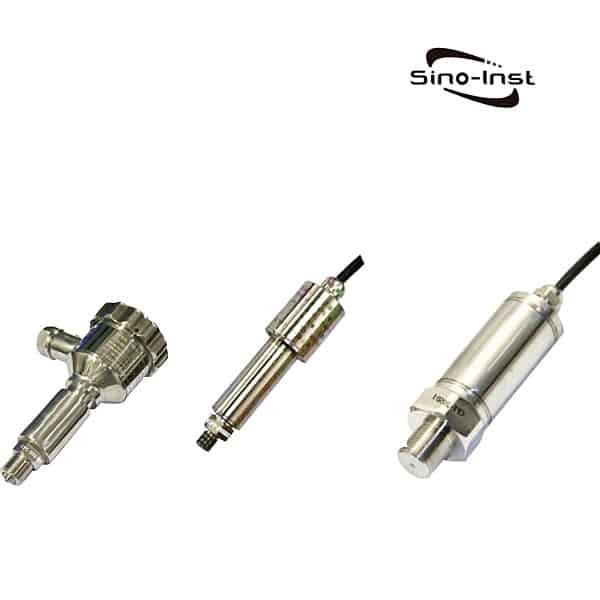
Extended reading: The Secret of Ultrasonic Level Measurement

How to use Ultrasonic Liquid Level Indicator?

Structure of Portable Ultrasonic Liquid Level Indicator

Applications of Portable Ultrasonic Liquid Level Indicator

Note: Usable for calibration of liquid level meter

Extended reading: GWR Corrosive Liquid Chemical Level Sensor

Portable ultrasonic liquid level indicator for Co2

Co2 cylinder specifications (external diameter division):

The CO2 cylinders measured by this meter are divided into the following 4 specifications: 215mm-225mm diameter cylinders. 270mm-280mm diameter cylinders. 345mm-355mm diameter cylinders. 395mm-405mm diameter cylinders. There are no excessive requirements for the height of the medium and the tank.
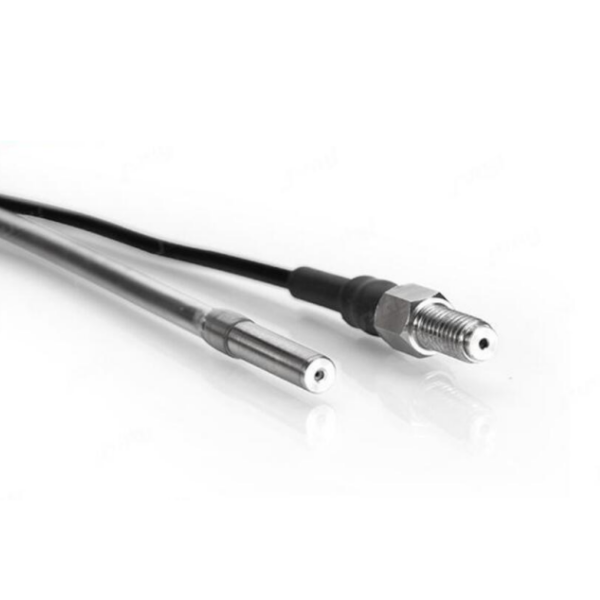
If you need to purchase liquid level gauge for CO2 Cylinders, you may like:

CO2 Cylinder | Portable Liquid Level Gauge

Procurement Guide: Ultrasonic liquid level sensors

Co2 cylinder measurement operation:

  1. Select “co2 cylinder”-“Choose a suitable cylinder diameter” through the menu and enter the measurement interface.
  2. Hold the probe vertically and tightly on the tank, and press the <Measure> button to measure.
  3. Measurement results are based on measurement parameters and level indicator lights (red is “no liquid”, green is “with liquid”)
  4. Generally, the measurement is started from the bottom of the storage tank (measurement with liquid position). If the measurement parameter is> = 2, the current level is considered to be a liquid-free position. And <2 is considered to be a liquid level. if it is floating around 2, It is considered that the liquid level of the horizontal plane is approaching the liquid surface (usually about 5 cm).
  5. Take multiple points on the same horizontal plane for measurement. And take the result with the highest probability as the final result (avoid the interference of welds and unknown factors).
  6. Find the liquid level position step by step through the approximation measurement.

Co2 cylinder measurement Note:

Due to the irregular shape of the air outlet and the many welding kits on the top of the carbon dioxide cylinder, the bottom and top measurement results are invalid. (If the fuel tank is full, the top is usually empty).

FAQ

What is ultrasonic level measurement?

Ultrasonic liquid level measurement is non-contact liquid level measurement. Commonly used for non-contact liquid level measurement. Such as tank level, river level, etc.
Based on the principle of ultrasonic time difference, the ultrasonic liquid level sensor is used to complete the ultrasonic liquid level measurement.
Read more: Guide: Non-contact Ultrasonic Level Sensing transmitters

How does an ultrasonic level transmitter work?

To put it simply, the ultrasonic wave sent by the ultrasonic sensor hits the bottom of the tank or the liquid surface vertically. The sensor then receives the reflected return signal. The time difference between one trip and one trip back and forth. Through intelligent calculation inside the instrument. The calculation formula is as follows: h = H-v * t / 2. Where: h is the required liquid level height. H is the distance between the ultrasonic probe and the bottom of the container. v is the speed of ultrasonic sound. t is the ultrasonic propagation time. It can be seen that the measurement accuracy of liquid level depends on the measurement accuracy of ultrasonic sound velocity v and ultrasonic propagation time t.
Extended reading: Guide to Ultrasonic Level Transmitters

How does water level sensor work?

The water level sensor is an essential component. If not repaired or replaced, a sensor can become damaged over time and fail entirely. Too much water can cause a malfunction and too little water means inadequate water pressure. Either way, repairing or replacing holding tanks is an expensive task you shouldn’t have to undertake because of sub-par sensors.
With Sino-Inst’s water tank level sensors, there’s nothing to break down or rust and our models have a 99% success rate!
In case you encounter any problems with the product, please call us and we will immediately replace or repair it for you for free.
Read more about our water tank level sensors and control systems.

How does a level transmitter work?

There are 7 main types of level transmitters that Sino-Inst offers. Each type of transmitter works in a different way, and makes it useful for different types of processes.
Capacitance Level Transmitters
Hydrostatic Level Transmitters
Magnetic Level Transmitters
Radar Fill Level Transmitters
Ultrasonic Level Transmitter
Guided Microwave Level Transmitters
Magnetostrictive Liquid Level Transmitters

Other Non-Contact Level Measurement

ULT-100A Ultrasonic Level Transducer
ULT-200 Ultrasonic Level Detector
ULT-200A Ultrasonic fuel tank level sensor

More about: Ultrasonic Level Sensor Applications

Sino-Inst offers Ultrasonic Liquid Level Indicators for tank level indicate. Portable co2 bottle liquid level gauge uses ultrasonic non-contact measurement technology. Detect and display the presence or absence of the Co2 cylinder liquid level.

The Digital portable Ultrasonic Liquid Level Indicators are designed to offer a simple, accurate, rapid and reliable method. Determining the liquid level of high or low pressure CO2, Halon, FM200, Propane, Novec 1230 and any liquefied gas under pressure. No need to move or weigh the cylinders.

Request a Quote

Please enable JavaScript in your browser to submit the form

Amazing Solutions for Continuous Liquid Level Measurement

Looking for a specific type or a custom continuous liquid level sensor? Sino-Inst offers High quality Liquid level sensors for continuous level measurement.

Level sensors are used in process control in many industries and they fall into two categories. Continuous level measurement sensors and Point level measurement sensors.

The point level measurement sensor is used to indicate a single discrete level, that is, to indicate a preset level. The function of this type of sensor is the upper limit alarm, which indicates the overfill condition, or the lower limit alarm condition.

Continuous level sensors are more complex, allowing level monitoring of the entire system. They measure the level of the liquid level in a range, not the level of a point. Continuous level sensors produce an analog output that is directly related to the liquid level in the container. To build a level measurement system, this output signal is transmitted to the process control loop and visual indicators.

Sino-Inst offers a variety of Level senors for Continuous level measurement. If you have any questions, please contact our sales engineers.

Featured Continuous Level Sensors


SI-LT Magnetostrictive level transmitter with Local Digital Display
SI-100 Magnetostrictive Level Sensor
SI-U02 Multi-Point Liquid Level Float Switch

SI-U01 Float Level Sensor
ULT-200 Ultrasonic Level Detector
ULT-100A Ultrasonic Level Transducer
SMT3151TR Submersible Level Transmitter–2Mpa,200m
SI-80 Radar Level Sensors
SIRD90 Radar Level Transmitters, Non-Contact

SIRD70 Guided Wave Radar (GWR) Level Transmitters
RF Capacitance Level Transmitter

What is a Continuous Liquid Level Sensor?

Continuous level sensor definition

Continuous level sensors are transmitters that measure liquids within a specified range. Level sensors determine the exact amount of liquid that provides a continuous analog signal. The level signal can be displayed directly on site or integrated into a process control or management system. These products can be installed vertically and horizontally. They are ideal for monitoring liquids in confined or restricted areas.

Wikipedia: Level sensor

Difference between a point level sensor and a continuous level sensor?

Point level sensor

A sensor designed for point detection will detect liquid at a certain point in the tank or chamber. Generally, this applies to processes that require high-level or low-level management.

In most cases, they act as switches when the tank level rises or falls to a certain level. This could be an alarm or a bonding device. Essentially, the sensor detects when the liquid has reached the desired point, and it acts as a switch to activate the necessary response.

Continuous level sensor

The continuous level sensor is designed to detect the level through every point in the tank or chamber. This means that it provides feedback regardless of the level and the entire container range. This is great for processes where level is always important, and for applications that require increased accuracy.

Read more about: Ultrasonic Level Sensors for Liquids Applications

Extended Reading: How to Measure Volume of Liquid

A point level sensor is a device that can detect the presence or absence of almost any liquid medium. Typically, these sensors are used in processes that need to detect high or low levels.

Generally, common applications requiring point sensors fall into two categories:
Leak detection – to prevent costly damage or service interruption to equipment or level measurement – to prevent spillage or dry conditions.

The technology works like a switch. When the level of a tank or container reaches or falls below a certain threshold. It drives an action.

A wide range of point level sensors are available for many applications and materials.

The float level sensor is a common point level sensor.
The float level switch consists of a fixed rod and a float.
The float has a built-in permanent magnet, which moves freely along the fixed rod with the rise and fall of the liquid level. The magnetic field of the permanent magnet acts on the reed switch, and the closer it is to the reed switch, the stronger the force. When the threshold is reached, the reed switch is closed.
The float level sensor has a robust structure and a measurement deviation of less than 1%.

For point level detection applications requiring no moving parts. Optical liquid level sensors are a good option.
Optical liquid level sensors are suitable for high, medium and low liquid level detection. and fits almost any installation. It has no moving parts, emits infrared light through LEDs, and calculates liquid level changes based on the amount of reflected light.
Optical level sensors are available in custom high temperature models and in different sizes to meet the needs of different applications.

Capacitive level sensors are suitable for reflective, viscous or viscous fluids. According to their principle, capacitive sensors enable non-invasive measurements. Internal level changes can be measured without drilling holes in the vessel under test.

Ultrasonic liquid level sensors work by emitting and measuring reflected high-frequency sound waves, which can withstand high pressure, high temperature and vibration. It is suitable for measuring liquids without foam and air bubbles. Ideal for applications in agriculture, mining, construction, printing, and specialty vehicles.

Extended reading: How does a Radar Corrosive Liquid Chemical Level Sensor work?

Continuous level sensor 4-20 ma

Sino-Inst provides signal output for all continuous level sensors. Analog signal output, 4-20mA output, 0-5V, RS485, HART optional.

Advantages of current signal (4 ~ 20mA signal)

  1. The current signal is suitable for long-distance transmission. Because the current signal is not affected by the resistance of the wire. And the voltage signal will be divided when the wire itself has resistance, resulting in inaccurate measurement. Generally, the maximum transmission distance of 4 ~ 20mA is controlled within 100m, and it is recommended to use digital signals (485 communication)
  2. The current signal generally uses a two-wire system, and the voltage signal generally uses a three-wire system. In contrast, the two-wire system saves materials and reduces costs than the three-wire system.
  3. Compared with the on-site working conditions, the anti-interference ability of the current signal is stronger than the voltage signal. In the case of interference, it is recommended that the user select a 4 ~ 20mA signal.
  4. The current signal can appropriately exceed the range of the range and output inaccurate signals. For example, a pressure transmitter with a range of 1MPa and an output of 4-20mA can output 24mA when it exceeds the range. The voltage signal is slightly different depending on the power supply. For example, a pressure transmitter with a range of 1 MPa and an output of 0 to 10 V cannot output signals above 9 V when the power supply is 9 V.
  5. When the wire materials are not the same (such as copper, nickel), a magnetic field will generally be generated. And the voltage signal will have an error, and the current signal will not be required in the case of higher accuracy requirements.

Continuous Level Sensor can also be used with paperless recorder.

Measuring techniques for continuous level measurement

1. Ultrasonic Level Sensors

Ultrasonic Level Transmitters provide non-contact and maintenance-free level measurement, (Like the Radar ) for fluids, pastes, sludges and powdery to coarse bulk materials.

Ultrasonic level measurement, easy installation, wireless, portable and can be explosion-proof.Sonic is the sound we can hear. Ultrasonic is the sound above the human hearing range.

A human can hear maximum up to a frequency of 20 KHz. Ultrasonic frequencies are above 20 KHz. Ultrasonic waves are used to measure the level of liquids and solid objects in industries.

Ultrasonic level measurement is the contactless principle and most suitable for level measurements of hot, corrosive and boiling liquids.

The normal frequency range used for ultrasonic level measurements is within a range of 40-200 KHz.

Extended reading: Ultrasonic liquid level sensors

2. Hydrostatic (Pressure) Level Transmitters

Hydrostatic level transmitters, also called submersible level transmitter, or pressure level transmitters. For Hydrostatic level measurement, Continuous level measurement in liquid applications with pressure sensors. These transmitters help in determining fluid level of a container. By measuring the pressure of resting body of the fluid within it.

3. Continuous Level Radar Sensors

Radar level transmitter, also called Radar level gauge. Non-contact Continuous level measurement in liquids and solids with free space radar sensors

Non-contacting radar, based on microwave technology, detects only surfaces that reflect energy. These transmitters work on the principle of radar by using radio wave emissions. Mounted at the top of a tank filled with a liquid.

The transmitter sends a radar signal into the liquid and receives a reflection of the signal. The transmitters then analyze the current fill level of the tank based on the time taken by the transmitted signal to return.

Extended reading: Radar Liquid Level Sensor|Corrosive, steam, volatile liquids

4. Guided Wave Radar Level Sensors

Guided Wave Radar (GWR) Level Transmitters, also called wave guided radar level transmitter. Using guided wave radar technology, GWR level transmittershave no moving parts. They can measure both level and the interface between two media.

Continuous level measurement in liquids and solids with guided wave radar sensors. These transmitters work by sending a microwave pulse through a sensor cable or rod. The signal hits the surface of the liquid, and travels back to the sensor, and then to the transmitter housing.

Based on the time taken by the signal to travel down the sensor and back up again. The electronics integrated in the transmitter housing determine the filling level.

Extended Reading: Silo/Bin material level measurement system

5. Capacitance level detectors

Capacitance level detectors, also known as Capacitance level transmitter. RF Capacitance Level Transmitter offers continuous and point level detection. In liquids and solids with capacitance probes.

These transmitters use liquid stored in a tank or container as a dielectric medium between two or more electrodes. The energy capacity of the capacitor circuit increases when there is more liquid, and decreases if there is less liquid. Measuring the variations in the capacitance value, capacitance level transmitters calculate level of the tank.

Read more about: Capacitive Level Measurement Principle.

6. Magnetostrictive level transmitter

Magnetostrictive level transmitter, in-tank liquid level transmitter, is a continuous magnetic level gauge. The magnetostrictive level sensor, measure the level of fluid in the vessel.

By detecting the level of the magnets contained within the float and then transmits the measurement back to the control system.

7. Magnetic Float level sensors

Magnetic Float level sensors are continuous level sensors featuring a magnetic float that rises and falls as liquid levels change.

The movement of the float creates a magnetic field that actuates a hermetically sealed reed switch located in the stem of the level sensor, triggering the switch to open or close.

Comparative analysis – 7 Tank Level Measurement Sensors

Applications

Continuous level sensors are versatile in monitoring liquid level needs. They can monitor water, diesel, lube oils and fuels, as well as various chemical and petrochemical liquids. And compatible with corrosive and non-corrosive substances.

Continuous level sensors are and used by industries including:

  • Food and Beverage
  • HVAC
  • Medical
  • Printing
  • Off-Highway Vehicles
  • Semiconductor
  • Oil and Gas
  • Agriculture
  • Wastewater Treatment
  • Concrete/Aggregate
  • Plastic/Vinyl
  • Marine
  • Chemical

Extended reading: Sludge Blanket Level Detector Appliactions

The Silo/Bin level measurement and control system solves the problem of frequent dumping accidents in the powder silo of the mixing station during the feeding process. It avoids the problems of dust flying, waste of cement, and environmental pollution. It reduces the equipment damage caused by the collapse of the dust removal hood of the mixing station Other issues and prevents the safety issues of the workers present.

Extended Reading: Silo/Bin material level measurement system

Generally, we can use radar level sensors, ultrasonic, or guided wave radar to measure.

Tank level senor is a level sensor used to measure the tank level. The liquid level is the level of the liquid in a sealed container (such as a water tank) or an open container (water tank). The instrument that measures the liquid level is called a liquid level sensor, a liquid level gauge or a liquid level transmitter. The liquid level sensor is a kind of level instrument. Hydrostatic, Ultrasonic, Magnetostrictive, Radar, Differential Pressure are commonly choices for tank level measurement. Liquid level sensors have been around for decades for leak detection or level measurement. Common measured medium are: Water, Fuel, Diesel, Gasoline, diesel, liquefied gas, liquid ammonia, etc.

Read more about: Level Senors for Tank Level Measurement

To measure the powder level, most of the radar level gauges and ultrasonics are used. Or heavy hammer level gauge.

High-frequency radar level gauge application: powdery solids, or environments with a lot of dust
① coal bunker, cement bunker, clinker bunker,
② Flour, corn flour, rice flour, sorghum flour, etc.
③Iron powder, aluminum powder, etc.

Ultrasonic level meter (ultrasonic level sensor) is used to measure the level of solid materials such as coal, ore, corn, wheat, glass, straw, garbage, wooden boards, automobiles, plastic particles, etc. It is used in metallurgy, mining, grain processing, storage, security and other industries.

Extended reading: Non Contact Liquid Level Sensor Working Principle

A laser level transmitter is also called a laser level meter. Industrial Accurate, non-contact, and uninterrupted real-time monitoring of material height. Designed for material level and liquid level. A laser level transmitter is a continuous or high-speed pulsed laser beam emitted by a semiconductor laser.

The laser beam meets the surface of the object to be measured and reflects. The light return is received by the laser receiver. And accurately record the time difference between laser emission and reception. In order to determine the distance from the laser radar to the measured object. Laser level transmitter is similar to radar/ultrasonic level sensor.

Read more about: Laser Level Transmitter

There are many types of liquid level sensors that can measure water. From our personal experience, hydrostatic submersible level sensors are the easiest to use and relatively low cost.

Extended reading: Hydrostatic Level Measurement

But,

Sometimes, due to the limitation of measurement conditions, it is necessary to select the external water tank level indicator.
Our Sino-inst external water tank level indicator is based on ultrasonic principle.
When measuring with External Tank Level Indicator, install the ultrasonic probe just below the outer wall (bottom) of the container under test. No need to cut holes, easy to install. Does not affect on-site production. It can realize accurate measurement of various toxic substances and various pure liquids in high temperature and high pressure airtight containers.

Read more about: External Tank Level Indicator

How to select a continuous level sensor?

Selection of level measurement sensor.

Issues to consider before selecting a level measurement sensor include:

  1. Measure liquid or solid?
  2. What is the temperature and pressure range of the application environment?
  3. Need point level measurement or continuous measurement?
  4. What is the level measurement range required?
  5. Is the measured material conductive?
  6. Will the measured material cover or accumulate on the surface?
  7. Will there be turbulence, foam or steam on the liquid surface?
  8. Do you need contact or non-contact level measurement?
  9. What kind of output is required, analog, relay, digital display or other?

Frequently
Asked
Questions

In continuous level measurement, the level of a medium in a tank or silo is detected with the help of different measuring methods and converted into an electronic signal. 

Continuous level sensors are more complex, allowing level monitoring of the entire system. They measure the level of the liquid level in a range, not the level of a point, and therefore produce an analog output that is directly related to the liquid level in the container. To build a level measurement system, this output signal is transmitted to the process control loop and visual indicators.

There are 7 main types of level transmitters that Sino-Instrument offers. Each type of transmitter works in a different way, and makes it useful for different types of processes.

The point level measurement sensor is used to indicate a single discrete level, that is, to indicate a preset level. Normally, the function of this type of sensor is the upper limit alarm, which indicates the overfill condition, or the lower limit alarm condition.

What are the common types of oil level sensors?

  • Magnetic float sensor: Developed according to the principle of buoyancy and magnetic coupling, with good visibility of characteristics and direct reading of values;
  • Pressure sensor: Use liquid pressure to measure liquid depth, suitable for measuring water depth in river channels;
  • Capacitive sensor: Utilize the principle that the capacitance formed between the probe and the container changes linearly with the liquid (material) level. There is no moving or elastic component. Impact resistance, easy installation, high accuracy, high reliability;
  • Magnetostrictive sensor: The principle of the sensor is to generate a longitudinal magnetic field through a permanent magnet and another magnetic field through an electric current. When the two magnetic fields intersect the waveguide, the waveguide generates a “magnetostrictive” phenomenon, and a strain pulse is generated instantly. Features It is fast and accurate. It is mostly used for liquid measurement in tank trucks;
  • Float sensor (reed switch): It is more common. Nowadays, the automatic oil level sensors of automobiles belong to this category. The working principle is to use the buoyancy of liquid on magnetic floating ball, and the dry spring of floating ball level gauge is magnetically attracted to change the liquid level position into an electrical signal. The reed switch is connected in sections, and the length of each section is the test accuracy of the level gauge.

The working principle of the oil level sensor device is through the continuous acquisition of the relative percentage signal of the oil level sensor. With the calibration algorithm, it is converted into the corresponding volume information. The fuel quantity of the fuel tank is monitored. Combined with the GPS system, the vehicle is known Driving status.

Point-level switches are used as high-level and spill-prevention alarms, low-level and pump-protection alarms, and to turn pumps on and off. Continuous level (proportional) measurement, on the other hand, indicates the level in a vessel over the full span of measurement.

Point level measurement is different from Continuous Level Measurement. Used to detect material levels in tanks or silos.

There are high levels (with material) and low levels (without material).

High level measurement allows containers to be filled to full capacity while preventing overflow situations.

Low level measurement alerts facilities to the need for replenishment, preventing process and/or plant downtime.

Technical Support

Sino-Inst offers over 40 Continuous Level Measurement Sensors. About 50% of these are liquid level meters, 40% is the tank level sensor.
A wide variety of Continuous Level Measurement Sensors options are available to you, such as free samples, paid samples.
Sino-Inst is a globally recognized supplier and manufacturer of Continuous Level Measurement Sensors instrumentation, located in China.

Request a Quote

Please enable JavaScript in your browser to submit the form

SI-U05 Cable Float Level Sensor & Swtich

Cable Float Level Sensor (Float level switch) for water/level switch control.

Cable Float Level Sensor (Float level switch) is a high performance level control switch. It can control the work of the liquid pump, adjusting the liquid level. And it can also be installed in the submersible pump to control and protect the motor. High sealing performance is guaranteed by polypropylene injection. It is a switch that can adjust the liquid level in a bucket, tank or well. Cable Float Level Sensor is self-adjusting, easy to operate, easy to install and maintenance-free. It has a resistance to sewage. It is used in mines, oil, irrigation containers, etc.

Please feel free to contact us for Techinical Support, or Request a quote for float level sensors (customization available).

The Cable Float Level Switch is designed using the principles of gravity and buoyancy. Cable Float Level Sensor has a simple and reasonable structure. Including: A floating body. A large-capacity miniature switch set in the floating body.

A driving mechanism capable of turning the switch on and off. And a three-core cable connected to the switch. The outstanding feature of this product is its stable and reliable performance. Cable Float Level Sensor has no malfunction caused by the fluctuation of the liquid surface.

At the same time, it has the characteristics of convenient installation, low price and long service life. This product can be used with various liquid pumps, and automatic control of water levels in water supply, drainage and rotten liquids.

Features of SI-U05 Cable Float Level Sensor

Cable Float Level Sensor can be matched with various liquid pumps. And is widely used for automatic control of water levels in water supply, drainage and corrosive liquids.

  1. Simple construction.
  2. Reliable performance. The product can send switch control signals under normal conditions. Strong reliability.
  3. Durable and long life. 
  4. Easy installation method. Convenient adjustment method. Adjustable water level control range. 
  5. Simple circuit. Economical and practical operating voltage 220v. Current 10A. Simple circuit and low cost.
  6. Resistant to corrosion.

Specifications of SI-U05 Cable Float Level Sensor

Float Materia:PP, SUS304
Contact Capacitance: 10A/250VAC(PP),2A/250VAC(SUS304)
 Contact type: 1A,1B or 1AB(PP),SPDT(SUS304)
 Cable specification: Rubber cable and PVC(PP),Silicone:0.75mm2×3C(SUS304)
 Suitable temperature: Rubber cable: -10℃~80℃,PVC cable:0℃~60℃,Silicone: 0~170℃
 Gravity: >0.6g/cm3(PP),>0.5g/cm3(SUS304)
Lead length: 2m 3m 4m 5m 10m, etc.
Other lengths can be customized
Applicable medium:Clean water, sewage, oils and acid-base liquids below medium concentration

Applicaitons of Cable Float Level Sensor & Swtich

  • Water level monitoring
  • Tank level control
  • High or low level alarm
  • Municipal water control
  • Industrial water control
  • Filling or draining reservoirs and tanks
  • Pump automation
  • General pump control
  • Pump control in wastewater
  • Suitable for low specific gravity materials
  • Can handle high operating temperatures
  • Clean fluids with small process connections
  • Water and wastewater
  • Petrochemical
  • Chemical

Extended reading: Ultrasonic Level Switch-External Mounted

Working Principle of Float Level Sensor

The Cable Float Level Switch is with simple structure of using micro switch or proximity switch or reed switch to control the contact. And it is user friendly design for level measurement. The switches will send out ON or OFF contact signal output. The floating angle is larger than a certain degree. Then the state of the iron ball and reed switch will be changed for actuation. For wastewater and applications at different temperatures, the material of the float can be selected from plastic to stainless steel. Cable float level switch controls long distance and multi-point contact detection. Cable float level switch can be used for transparent liquid and granular liquid industries.

Float Level Sensor Installation

  1. Pass the wire of the float switch from the concave circle of the center of the weight. Push the weight gently to make the plastic ring embedded above the round hole fall off due to the thrust of the wire head. You can also use a screwdriver to remove this plastic ring. Then put the dropped plastic ring on the cable to set the water level by the weight you want.
  2. Gently push the weight to pull out the cable until the center of the weight holds the plastic ring. As long as the heavy hammer is lightly buckled in the plastic ring, it will not slip. If the plastic ring is damaged or lost, it can be replaced with a light bare copper wire into the cable.
  3. Please pull the cable directly to the control box. Avoid using the intermediate connector as much as possible. If there is a connector as a last resort, never immerse the cable connector in the water.
Image source: https://instrumentationtools.com/cable-float-level-switch-working-principle/

Other types of Float Level Switches

SI-U01 Float Level Sensor
SI-U02 Multi-Point Liquid Level Float Switch
SI-U03 Float Switch Water Level Controller
SI-U04 Magnetic Float Level Sensor-Reed Switch

Liquid level float switch is a commonly used liquid level controller. For water Tank & Pump alarm and level control. Can be divided into Continuous Float Level Sensor and Point Level Float Switch. Read more about Guide for Liquid level float switches.

Q&A

The float level switch is based on the principle of buoyancy. The float ball moves a distance with the liquid surface, and this movement plays a limit role. A magnetic floating ball is used to generate a switching action with a reed switch, output a switching signal, and then control the liquid level through wiring.

The float level switch only needs to re-calibrate the water level line before we install it. The switch itself cannot be adjusted. At this time, use a multimeter to measure the switch state, and it will be turned on and off with the water level near the waterline, which means that there is no problem. Just make sure that the water level line of the thermal equipment is consistent during the installation. For example, the liquid level switch of SOR is generally attached to the water level line on the wall of the cylinder. We soak the switch in the water tank and slowly sink, so that the water surface gradually approaches the marking line. When it is closest, we will hear the micro switch action the sound of.
It should be noted that the working temperature of the high-level liquid level switch is high, and the water temperature inside is also high; the density of high-temperature water is less than that of room temperature water. Therefore, the action line of room temperature water is lower than the switch identification line.
Low level alarm is connected to normally closed (NC), high level is connected to normally open (NO). This type of switch is not difficult to install. The liquid level switch itself will have more than two pairs of micro-switches, which respectively output two pairs of normally open and two pairs of normally closed contacts, which are usually “on alarm” when applied.

The liquid level sensor converts the liquid level signal in the container into a switching signal or a voltage and current signal, and then through an external circuit, allows the surveyor to accurately know the liquid level in the container.
There are 7 main types of level transmitters that Sino-Instrument offers. Each type of transmitter works in a different way, and makes it useful for different types of processes.

Liquid level switch, also known as water level switch, liquid level sensor. The liquid level switch is a switch used to control the liquid level. It is mainly divided into contact type and non-contact type. Capacitive liquid level switches are commonly used in non-contact switches. And contact float type liquid level switches are most widely used. Electrode level switches, electronic level switches, and capacitive level switches can also be implemented using contact methods.

There are currently 6 medium level switches:

  1. Float level switch: The magnetic float of the float level switch rises or falls with the liquid level. So that the sensor detects the position of the reed switch chip in the tube, and sends a contact on / off switch signal. Because of its simple structure and economic benefits, it is widely used in the market, mainly for civilian use. But its stability is relatively poor compared to industrial-grade products.
  2. Capacitive liquid level switch: After the probe is wetted, it detects the change in capacitance value and outputs a contact signal, which has certain advantages in the measurement of slightly viscous media.
  3. Electrode type liquid level switch: The electrode type liquid level switch uses the conductivity of the liquid to detect the level of the liquid. Once the measured medium touches the pole, it will conduct electricity and detect the signal. After the signal of the controller is amplified, a contact signal is output to realize the control of the liquid level.
  4. The photoelectric liquid level switch: The photoelectric liquid level switch uses infrared detection, using the principle of refraction and reflection of light. The reflection or refraction of light at the interface between two different media. When the measured liquid is at a high level, the measured liquid forms a kind of interface with the photoelectric switch. When the measured liquid is at a low position, air and the photoelectric switch form another interface. These two interfaces make the intensity of the reflected light received by the light receiving crystal inside the photoelectric switch different. That is, correspond to two different switching states. Generally speaking, compared with other measuring instruments, the applicability of photoelectric switches is poor.
  5. Tuning Fork Liquid Level Switch: It outputs a switch signal by detecting the change in the frequency and amplitude of the fork’s vibration, which is highly versatile. For the viscous working conditions, please consult with the manufacturer to determine the working conditions that are easy to crystallize.
  6. Ultrasonic external liquid level switch: The instrument probe emits ultrasonic waves and detects its residual vibration signal in the container wall. When liquid passes through the probe, the amplitude of this aftershock signal becomes smaller. This change is detected by the meter and outputs a switching signal. It is a non-contact type and is often used in high-risk situations where it is difficult to open holes on the site, but the cost is relatively expensive.

Techinical Support

Sino-Inst is float level sensor manufacturer. On the premise of ensuring product quality, we offer you the best price.


Sino-Instrument
 offers over 10 level transmitters for level measurement.

About 50% of these are liquid level meters,

40% is the tank level sensor.

A wide variety of level meters options are available to you,

such as free samples, paid samples.

Sino-Instrument is a globally recognized supplier and manufacturer of level measurement instrumentation, located in China.

Request a Quote

SI-U04 Magnetic Float Level Sensor-Reed Switch

Magnetic Float Level Switches & Sensors with Magnetic Reed Switches for Continuous Level Measurement.

Magnetic Float Level Sensor works with Reed Switch, is a continuous level sensor. SI-U04 Magnetic Float Level Sensor-Reed operatess on a direct, simple principle. As the magnetic float rises and falls as liquid levels change. The magnetic field generated from the inside of the float drives the sealed reed switch installed in the stem. The stem is made of non-magnetic metal or strong engineering plastic. Magnetic Float Level Sensor gets the liquid level signal, transfers it into digital current signal and switching signal. Generally speaking, there are two structures of magnetic floats. Besides, the Magnetic Float Level Sensor supports multiple mounting methods. Such as top-mounted, side-mounted. So SI-U04 Magnetic Float Level Sensor can be applied to a variety of tank level measurements.

Please feel free to contact us for Technical Support, or Request a quote for float level sensors (customization available).

Features of Magnetic Float Level Sensor

  • Simple structure, stable and reliable, good repeatability;
  • Realize the connection measurement of the liquid level
  • Not affected by the physical and chemical state of the measured medium. Such as: the effects of conductivity, dielectric constant, foam, pressure, temperature, evaporation, boiling, and bubbles;
  • Use different materials, which can be used in various strong and weak corrosion, flammable and explosive, toxic, strong radioactive, and foul media environments;
  • Liquid level measurement or interface measurement of two different density media;
  • Explosion-proof structure design, suitable for use in explosive environments.
  • Two-wire 4-20mA current output, with 0.56 “LED digital display, convenient for long-distance observation at night.

Applications of Magnetic Float Level Sensor

Industries:

  • Marine (commercial ships)
  • Petrochemical
  • Food/beverage
  • Water/wastewater
  • Chemical and textile industry
  • Dyeing and finishing
  • Level control in shipping industry

Applications:

Any liquids including water, oil, and chemicals:

  • Diesel or Lube Oils
  • Vegetable Oils
  • Petroleum products
  • Water, Wastewater
  • Acids
  • Caustics
  • Fuels

Specifications of SI-U04 Magnetic Float Level Sensor-Reed Switch

Measuring    range       200~6000mm(>6M customize)
Resolution factor  10mm,5mm,20mm
signal output 4~20mA(two-line)2000/m(1/2″,3/8″)
Loading resistance500Ω
Transmitting   >1000m
Working power supply  16~30VDC
Density      ≥0.5g/cm3
PressurePN2.5~PN160(×0.1MPa)(Max pressure PN320)
Operating temperature  -40 ~ 80 °C, ≤120 °C, ≤150 °C
Float ball diameterΦ30~Φ120(depending on pressure and density)
Flange installationDN40~DN150/RF/PL(HG/T20592~2009) customize2” thread(downward install)1/2” thread (upward install, resistance   signal output) 3/8” thread(upward install, resistance signal output)
Installation angle≤±25°
Electrical connection M20×1.5 female thread three-lines screening cable
IP gradeIP65
Explosion-proof gradeExia II CT6Ga,EXd IICT6Gb

Extended reading: Food grade flow meters for Food & Beverage industry

Operation Principle of Magnetic Float Level Sensor

Magnetic Float Level Sensor is composed of a reed switch, a precision resistor and a single-chip microcomputer circuit. When the magnetic force line of the magnetic float acts on a certain position of the liquid level gauge, the reed switch in that position is closed. The magnetic float follows the level change of the liquid level (interface). Linear 4 ~ 20 mADC signal output and relay contact output. Realize the detection, transmission and alarm control of the liquid (boundary) surface position signal.
The magnetic float level sensor uses imported high-quality sensing elements and signal conversion devices, which has excellent long-term stability and reliability.

Types of Magnetic Float

Magnetic floating ball (column type)
1.фmm (321, 316L stainless steel)
2.ф40mm (4 fluorine on stainless steel)
3.ф50mm (PVC, PP)
Note: The specification is the diameter of the floating ball, and the length depends on the density of the medium.

Magnetic floating ball (through the core)
ф76 × ф21 × 76
ф51 × ф15 × 51
ф28 × ф10 × 28
ф63 × ф25 × L (mm) is made of PVC and PP. L is determined by the density of the medium, and the diameter can be made according to user requirements.

Other types of Continuous magnetic float level switches

Q&A

Float level sensors are continuous level sensors featuring a magnetic float that rises and falls as liquid levels change. The movement of the float creates a magnetic field that actuates a hermetically sealed reed switch located in the stem of the level sensor, triggering the switch to open or close.
Float level sensor is composed of float, plunger and so on. The float level sensor is installed on the top of the container through the connection flange. The float floats on the liquid surface according to the principle of discharging the liquid volume phase and so on. When the liquid level of the container changes, the float also moves up and down. Due to the magnetic effect, the reed of the ball level sensor is magnetically attracted to change the position of the liquid level into an electrical signal. The actual position of the liquid is displayed digitally by a display instrument. The floating ball level gauge achieves long-range detection and control of the liquid level.

Learn more on Wikipedia

A magnetic float switch is a magnet fixed in a floating ball in the middle. Put the magnetic float on a stainless steel rod. Place a magnetic element (usually a reed switch) inside a rusty steel rod. When the levitation ball moves on a stainless steel rod, the magnetic elements will attract and break.

  • The purpose of a float switch is to open or close a circuit as the level of a liquid rises or falls. Most float switches are “normally closed,” meaning the two wires coming from the top of the switch complete a circuit when the float is at its low point, resting on its bottom clip or stop (for example, when a tank is dry).
  • Most float switches utilize a magnetic reed switch to open or close the circuit. The reed is encased in a glass tube, which is cemented into a plastic or stainless steel stem with epoxy. The illustration to the left demonstrates how a magnet can be used to open or close a circuit by moving it closer to or farther away from a reed switch. When the magnet comes close to the two contacts, they draw together and touch, allowing current to pass through. When the magnet is moved away, the contacts demagnetize and separate, breaking the circuit.
  • In a float switch, the magnetic reed switch is hermetically sealed in a stem, most often made from plastic or stainless steel. The float encases a sealed magnet, which moves up and down the length of the stem as a fluid level rises and falls.
  • As the magnet passes by the contacts in the encased reed switch, they draw together and complete a circuit between the two lead wires, as shown in the cutaway to the left.
  • The operation shown can usually be reversed by removing the bottom clip from the switch, inverting the float and replacing the clip. When this change is made, the switch circuit will be open when the float is resting on the bottom clip and closed when the float rises.
  • Properly used, float switches can deliver millions of on/off cycles, for years of dependable operation. Failures are normally due to overloading, frequently caused by spiking voltage.

Liquid level switch, also known as water level switch, liquid level sensor. Liquid level switch is used to control the liquid level switch. It is mainly divided into contact type and non-contact type. Capacitive liquid level switches are commonly used in non-contact switches, and contact float type liquid level switches are most widely used. Electrode level switches, electronic level switches, and capacitive level switches can also be implemented using contact methods.

Technical Support

Magnetic float level sensor manufacturer

The float level sensor is a fully customized product. Different measurement needs will cause price changes. So before determining the price of the float level sensor, we need to confirm:
1. Junction box style

  1. Connection method
  2. Probe diameter
  3. Float distance
  4. Probe length
  5. Material selection

Sino-Instrument is float level sensor manufacturer. On the premise of ensuring product quality, we offer you the best price.


Sino-Instrument
 offers over 10 level transmitters for level measurement.

About 50% of these are liquid level meters, 40% is the tank level sensor.

A wide variety of level meters options are available to you,

such as free samples, paid samples.

Sino-Instrument is a globally recognized supplier and manufacturer of level measurement instrumentation, located in China.

Request a Quote

Please enable JavaScript in your browser to submit the form