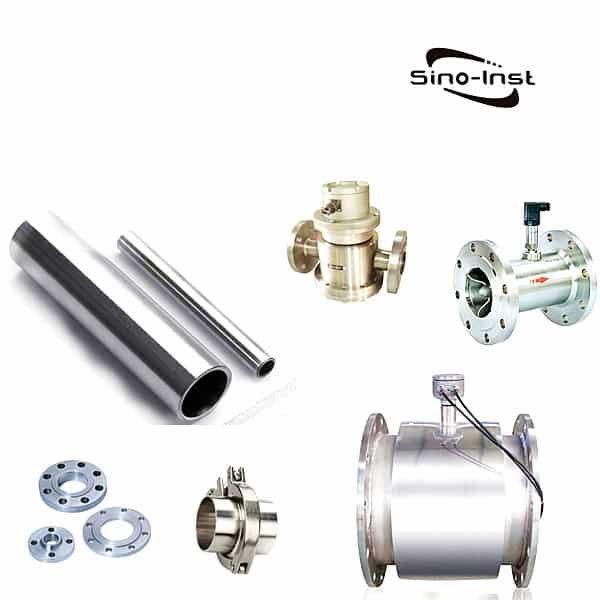
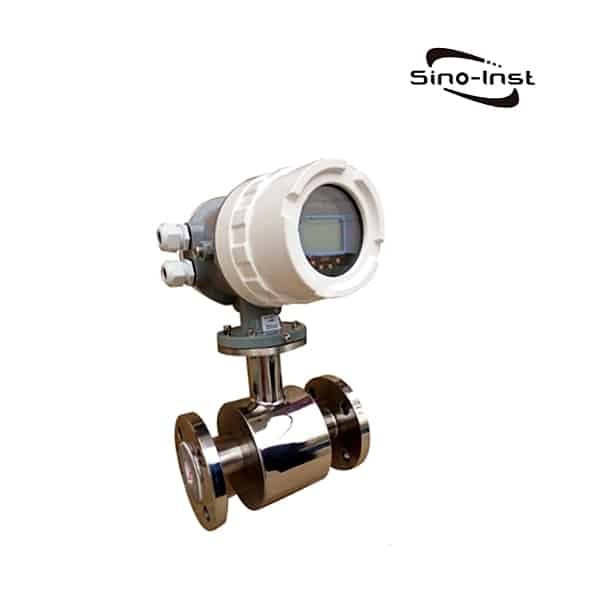
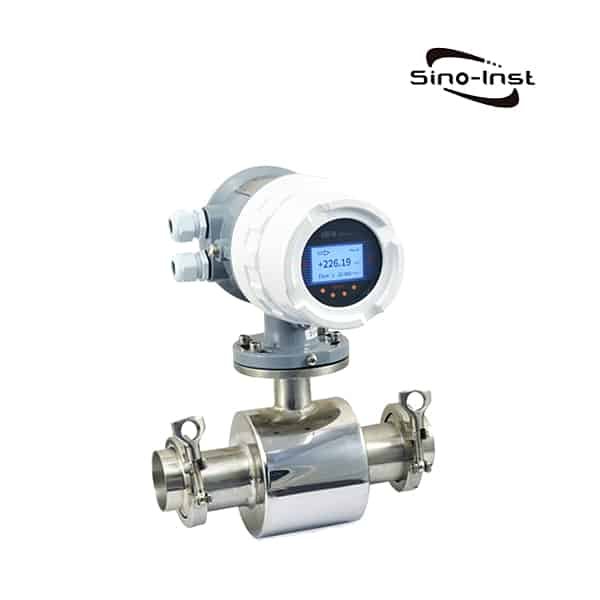
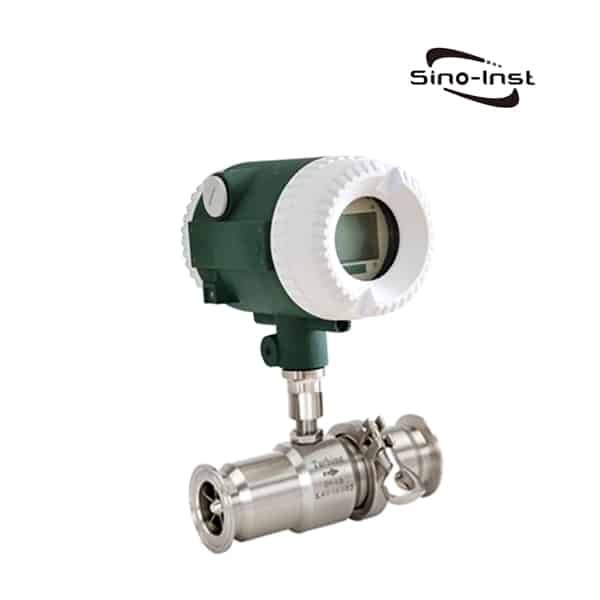
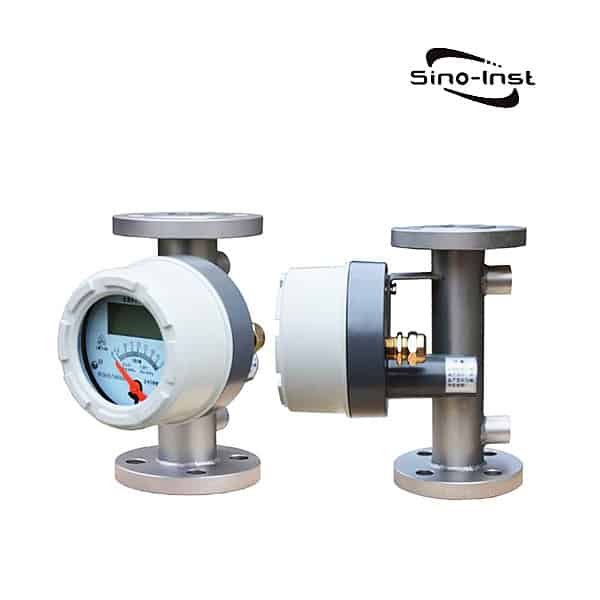
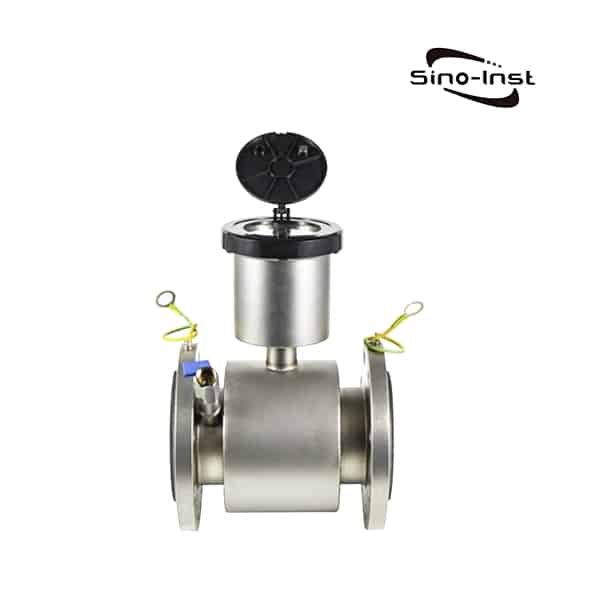
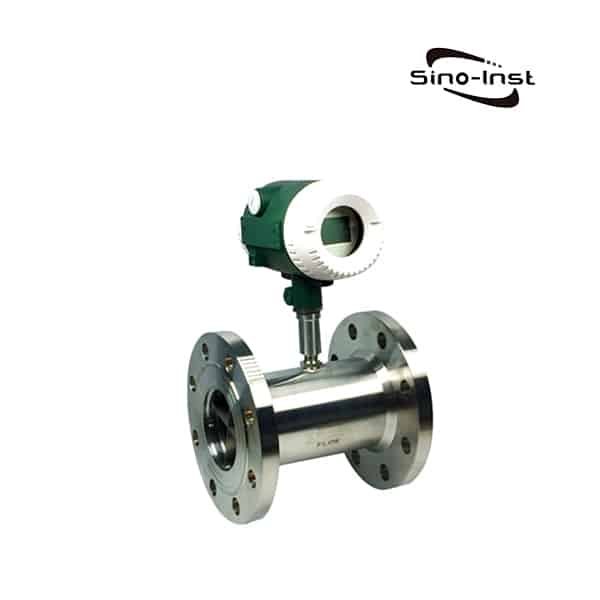
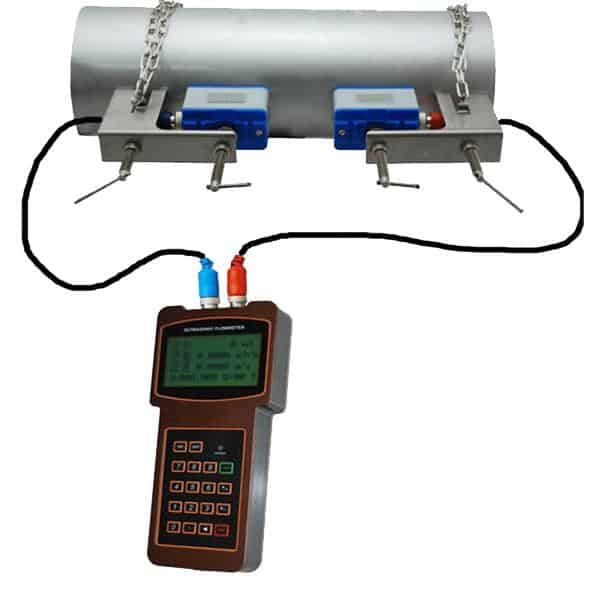
3 inch (3″) Water Meter

Low cost

3″ Water Meter

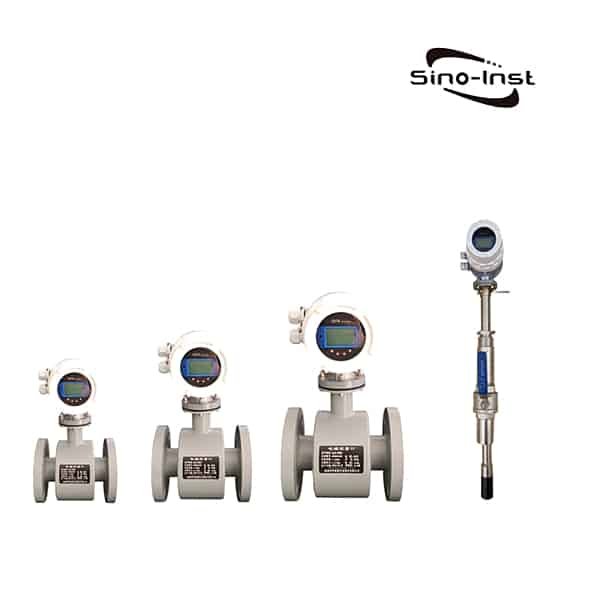
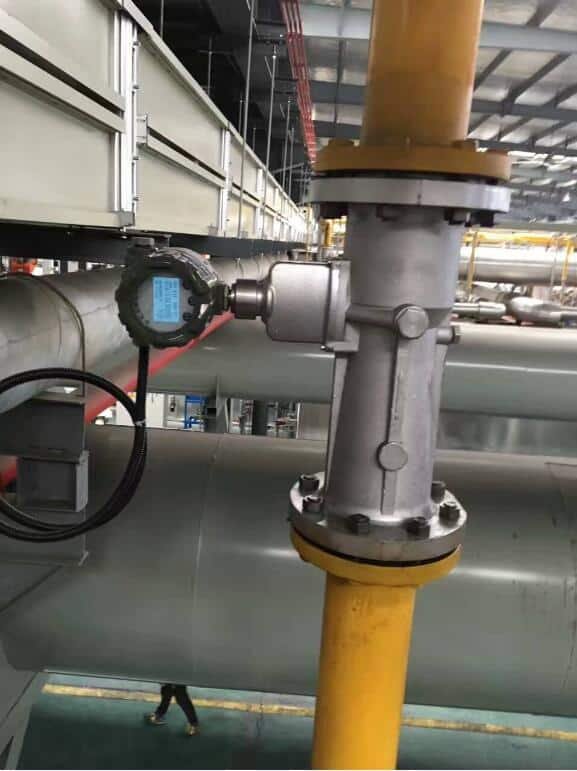
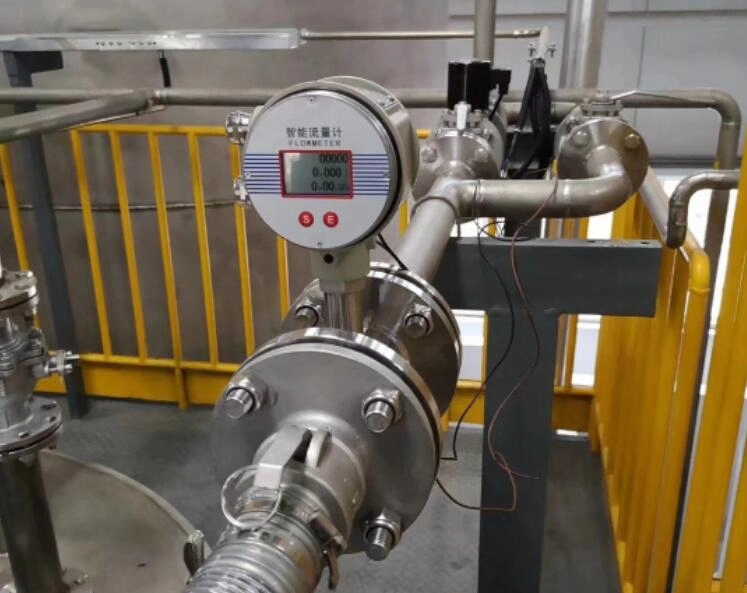
3″ water meter is also DN80 water meter. Easy to read. Totalizing water volume. Intelligent large-caliber remote water meter includes wired remote transmission and wireless remote transmission. RS485 communication equipment, MODBUS, etc.

3" Water Meter

Features of 3″ Water Meter

  • Non-magnetic measurement. There is no problem of strong magnetic field attack;
  • GSM mode wireless meter reading. Convenient on-site construction and long transmission distance;
  • Remote measurement, segmented calibration. High measurement accuracy, with low voltage alarm function;
  • Freeze consumption records regularly and upload historical data. 96 records can be uploaded every day;
  • Ultra-low power consumption (static power consumption less than 10pA) design. High-definition LCD display;
  • The pipe section is a straight-through integrated structure manufactured by forging technology. It is strong and wear-resistant;
  • The measuring mechanism has no moving parts and will never wear out. The measuring accuracy is not affected by the service cycle;
  • Epoxy resin potting. Can work in water. Easy to install. Horizontal and vertical installation;

Extended Reading: Clamp on Water Flow Meter

3″ water meter flow rate

Caliber(mm)InchMeasurement grade Q3/Q1  
m³/h
Overload flow Q4
m³/h
Common flow Q3
m³/h
Boundary flow Q2
m³/h
Minimum flow Q1
m³/h
Minimum reading
Maximum reading
5025031.25250.80.50.001999999
655050401.280.80.001999999
8035078.75632.0161.260.001999999
1004501251003.220.001999999
125– 502001605.123.20.001999999
150650312.5250850.019999999
20085050040012.880.019999999
2501050787.563020.1612.60.0199999999
30012501250100032200.199999999
35014501750140056350.199999999
40016502000160051.2320.199999999
50020503125250080500.199999999
600245060003000600900.199999999

3″ water meter dimensions

Read more about: Flow Meter Selection Guide

3″ Water Meter Pressure Loss

The specifications of 3″ Water Meter are as follows:

Executive standardCJ/T224-2006
Measurement accuracy levelClass B
Temperature classT30, T50, T70, T90
Pressure LevelMAP10
Pressure loss level△P63
Maximum allowable errora) Low area (Q1≤Q<Q2) The maximum allowable error is ±5%
a) When the water temperature is ≤30℃, the high zone (Q₂Q<Q) is the largest
Allowable error is ±2% Q1 Q2
When the water temperature is ≥30℃, the high zone (Q₂QQ) is the largest
Allowable error is ±3% Q2 Q4
Electronic technical indicatorsBus power supply: external supply DC6.5V~18V
Working current: -5uA
Communication interface: RS-485 interface; MBUS interface
External power supply: 5~10V
technical standardThe technical parameters of this product conform to national standards
GB/T778.1~3-2007
(ISO464-1~3:2005IDT) regulations
The electronic device complies with Electronic Remote Water Meter”

The pressure loss level of the water meter is △p63, which represents the maximum pressure loss of 0.063MPa

Read more about Everything You Need To Know About Electronic Flow Meters

3″ water meter with pulse output

The pulse output water meter is a water meter with a very unique design.

It has the characteristics of passive signaling. A square wave signal can be output without a power supply. The distance reached one kilometer. And the transmitted signal is very accurate.

The water meter has a self-retaining function. Avoid more possibility of false signal. It can ensure that the signal has no errors.

Prevent all kinds of water theft from happening.

The service life is also very long, and the service life of the remote transmission part can be as long as ten years.

The water meter supplied by Sino-Inst can be configured with pulse output. When you place an order, please confirm with our sales engineer.

Extended reading: 2 inch Water Flow Meter

Water meter types

In addition to the water meter described at the top of this article. We also have many types of water meters. Such as turbine water meter. Ultrasonic water meter. Electromagnetic water meter, etc.

In addition to the water meter described at the top of this article. We also have many types of water meters. Such as turbine water meter. Ultrasonic water meter. Electromagnetic water meter, etc.

Extended reading: Advantages and disadvantages of ultrasonic water meters

The types of water meters can be divided by the principle of measurement, the common types are:   

a) Mechanical water meter:
Measuring sensors, calculators and indicating devices are all water meters with mechanical principles and structures. There are mainly speed water meters and volumetric water meters.  

b) Mechanical water meter with electronic device:
The mechanical water meter with complete structure is retained, and the water meter with an electronic device is installed on this basis, mainly including IC card water meter and remote water meter.
The measuring sensor of the mechanical sensor electronic water meter is composed of a sensor based on the principle of mechanical motion and a sensor element that can convert the mechanical motion into an electrical signal and input into the calculator. Both the calculator and the indicating device are electronic components, such as a vortex (impeller) wheel electronic water meter.  

Read more about: How does a residential water meter work?

c) Electronic water meter:
Electronic water meters are divided into mechanical sensor electronic water meters and electronic sensor electronic water meters.
The measuring sensor of the electronic water meter is based on the principle of electronic or electromagnetic induction. Both the calculator and the indicating device are electronic components.
Such as ultrasonic water meter, jet water meter, Coriolis water meter, and electromagnetic water meter.

Extended Reading: Chilled Water Flow Meter

More Water Flow Meters

FAQ

The water meter is an instrument that measures the flow of water. Mostly it is the cumulative flow measurement of water.

What is the working principle of the water meter?
It’s actually very simple. Because the housing of the water meter is fixed. Its internal volume is fixed. And the water is flowing. It pushes an impeller to rotate. Whenever the impeller rotates, there is a constant volume of water flowing through.
Therefore, as long as the number of revolutions of the impeller is accumulated and multiplied by this constant volume, the total amount of water flowing through can be obtained.

  1. The diameter of the water meter should be determined according to the diameter of the installation pipeline. The installation position should avoid exposure, flooding, freezing and pollution, and it is convenient to disassemble and swipe.
  2. The water meter should be installed horizontally (display face upward).
  3. The sand, gravel, hemp and other sundries in the pipeline should be removed before new installation to avoid malfunction of the water meter.
  4. The direction of the arrow shown on the water meter should be consistent with the direction of water flow in the pipeline.
  5. If the water meter is installed at the water inlet of the boiler, it is necessary to prevent the return of hot water and steam from the boiler from damaging the internal parts of the water meter. It is best to install a check valve at the water outlet of the water meter.

Extended reading: Hot Water Flow Meters Improve Heating-Boiler System

The prices of water meters vary. The price of the water meter is mainly determined by the material, caliber, and function. For example, residential water meters. 3/4 inch, without special function, reference price USD95.00/pc.

For the specific water meter price, please contact our sales engineer for confirmation.

Extended reading: Featured Cheap flow meters for Sale

More Water Flow Measurement Solutions

Sino-Inst offers over 30 water meter products. About 50% of these are ulrtasonic flow meters. 40% are mechanical water meters.

A wide variety of water meter options are available to you, such as free samples, paid samples.

Sino-Inst is a globally recognized supplier and manufacturer of water meter, located in China.

The top supplying country is China (Mainland), which supply 100% of the water meter respectively.

Sino-Inst sells through a mature distribution network that reaches all 50 states and 30 countries worldwide. Water meter products are most popular in Domestic Market, Southeast Asia, and Mid East.

You can ensure product safety by selecting from certified suppliers, with ISO9001, ISO14001 certification.

Industrial flow meters with analog output

Analog flow meter

The analog flow meter is a flowmeter with the analog output signal. Analog output is a common function of flow meters. The analog signal is mainly used to output the flow signal to the next control system.

Analog signal: poor confidentiality, weak anti-interference ability.

Digital signal: strong anti-interference ability and good communication confidentiality.

Digital signal, as the name implies, means that the independent variable is discrete. And the dependent variable is also a discrete signal. The independent variable of a digital signal is represented by an integer. Its dependent variable is represented by a limited number. The digital signal uses two physical states to represent 0 and 1. Therefore, the quality of the digital signal is very strong, and the anti-interference ability is also relatively strong.

The analog signal refers to the continuous signal of the information parameter in a given range. The characteristic quantity of the information of the analog signal can be transformed into an arbitrary numerical signal in an instant. In the process of transmitting analog signals, the information signals need to be converted into electric wave signals, which are then transmitted through wired or wireless methods.

Read More about: What is an inline flow meter?

Featured analog flowmeters

Analog water flow meter

Analog air flow meter

Analog gas flow meter

Analog diesel flow meter

Read more about: Industrial flow meters for Different industrial applications

FAQ

If you need to know the flow rate in you pipe, or river, that when you need a flow meter. So, flow meter is the instrument that can finish the flow measurement.

Flowmeters consist of a primary device, transducer and transmitter.

The transducer senses the fluid that passes through the primary device.

The transmitter produces a usable flow signal from the raw transducer signal.

These components are often combined, so the actual flowmeter may be one or more physical devices.

Different types of flow meters are available for different applications, and depending upon the requirement, a careful selection of flow meters is made.

For e.g., we prefer vortex flow meters flow steam flow measuremnet. And we like the ultrasonic flow meters for non-contact pipe flow measuremnt.

A turbine-type flow meter cannot be used for measuring the flow in an unclear liquid (wastewater or corrosive liquids).

Read more.

Flow Metering Principals

  • Differential Pressure Flowmeters
  • Velocity Flowmeters
  • Positive Displacement Flowmeters
  • Mass Flowmeters
  • For Open Channel Flowmeters – weirs, flumes, submerged orifices, current meters, acoustic flow meters, and more

For different working principle, We offer different types of flow meters, like:

  • Differential Pressure Flow Meters
  • Orifice Plate
  • Venturi Tube
  • Flow Nozzles
  • The Sonic Nozzle – Critical (Choked) Flow Nozzle
  • Calorimetric Flowmeter
  • Ultrasonic Doppler Flowmeter
  • Positive Displacement Flowmeter
  • Variable Area Flowmeter or Rotameter
  • Velocity Flowmeters
  • Pitot Tubes
  • Electromagnetic Flowmeter
  • Turbine Flowmeter
  • Vortex Flow Meter
  • Thermal Flowmeter
  • Coriolis Flowmeter
  • Mass Flowmeters
  • Open Channel Flowmeters

A flow meter (or flow sensor) is an instrument used to measure the linear, nonlinear, mass, or volumetric flow rate of a liquid or a gas. When choosing flow meters, one should consider such intangible factors as familiarity of plant personnel, their experience with calibration and maintenance, spare parts availability, and mean time between failure history, etc., at the particular plant site.

It is also recommended that the cost of the installation be computed, only after taking these steps different sensors include dial, in-line, ultrasonic, orifice plate, totalizing meters, variable area, venturi, or switch output. The different designs of the flow meters have a variety of applications.

Extended reading: Flow Totalizer F3000X for Data collection and calculation

The flow meter is used to measure liquid, gas (vapor) and solid (impulse flow meter) to meet the needs of process control and metering delivery.

Read more about: Industrial CO2 flow meters

Large-diameter Oval Gear-Marine Fuel Flow Meter

Guess you like: Insertion Magnetic Flow Meter-Large diameter online install

You may like:

Sino-Inst offers over 50 Industrial analog flow meters for flow measurement. About 50% of these are gas flow meters, 40% are the liquid flow sensor, and 20% are the Ultrasonic and mass flow meter.

A wide variety of Industrial analog flow meters options are available to you, such as free samples, paid samples.

Sino-Instrument is a globally recognized supplier and manufacturer of flow measurement instrumentation, located in China.

2 inch Water Flow Meter

2 inch water flow meter is also written as 2″ flow meter. If you are planning to buy a 2 inch water flow meter, please be sure to read this article.

How much is a 2 inch water flow meter? And which type of water flow meter should you buy? We all analyze.

Commonly used 2 inch water flow meters mainly include electromagnetic, ultrasonic, and mechanical water meters.

Here, we mainly introduce these three types of water flow meters.

2 inch Water Flow Meter types

2 inch magnetic flow meter

Magnetic Water Flow Meter is an electromagnetic flowmeter used to measure conductive fluids. Conductive liquids such as drinking water, sewage, wastewater, seawater, ammonia, cement slurry, etc.

Magnetic Water Flowmeters provide highly accurate flow measurements for a wide variety of conductive fluid applications. Magnetic Water Flow Meter is a volumetric flow meter that measures liquids or liquid slurries that have a minimum conductivity of 5 µS/cm. Based on Faraday’s law of electromagnetic induction. Magnetic Water Flow Meter is ideal for wastewater applications or any dirty liquid which is conductive or water-based. It is widely used in water treatment, environmental protection sewage measurement and control, papermaking, and other industrial and agricultural production processes for flow measurement and control.

2 inch magnetic flow meter reference price: USD 500.00/pc.

Caliber2 inch (DN50)
Excitation methodSquare wave constant current excitation
Installation formOne-piece flange, split flange
liningNeoprene, polyurethane rubber, PTFE, F46
Electrode material316L, Hc, Hb, titanium, tantalum, platinum iridium, tungsten carbide
GroundBuilt-in ground electrode (DN25 and above)
MediumConductive liquid
level of accuracy0.5, 1.0
Dielectric conductivity> 5 μS/cm
Flow rate≤ 10 m/s
Flow range0.71~2.12~35.35~70.68 m³/h
Pipe connection flangeGB 81~59
Pipe connectionFlange connection; Tri-clamp
Medium temperatureChloroprene rubber: -10℃~60℃; PTFE: -10℃~120℃
Polyurethane rubber: -10℃~80℃; F46: -10℃~150℃
preset pressure4.0 MPa; 1.6 MPa; 1.0 MPa
Protection levelIP65; IP68
output signal4mA ~ 20mA DC current; pulse/frequency; upper and lower limit alarm
Cable interfaceM20×1.5 internal thread
CommunicationRS 485 communication protocol (Modbus protocol)
RS 232 communication protocol (optional)
DisplayInstantaneous flow, alarm display, percentage, flow rate, forward and reverse cumulative flow and total cumulative
power supply220V AC, 24V DC, 3.6 V battery power supply
Use typeOrdinary type, waterproof type
High pressurecustom made

Guess you like: How to Select Hydraulic flow meter for Hydraulic oil flow?

2-inch ultrasonic flow meter

The ultrasonic flowmeter measures water and can be used as an industrial pipeline type. External clamp installation.

The clamp-on ultrasonic flowmeter is the most popular. Because the installation is simple.

Item Performance and Parameter
Convertor Principle transit-time ultrasonic flowmeter
Accuracy

Flow: over 1%-2%(battery-powered supply over ±2% ),Heat: over ±2%,Repeatability: over 0.2%

Display

2×20 character LCD with backlight, support the language of Chinese, English and Italy Convertor dimension:170*180*56cm

Operation Support 16 key light touch keyboard and the Simulation keyboard software
Signal Output

1 way 4~ 20mA output, electric resistance 0~ 1K,accuracy0. 1%

1 way OCT pulse output ( Pulse width 6 ~ 1 0 0 0 ms,default is 2 0 0 ms)

1 way Relay output
Signal Input

3 way 4~ 20mA input, accuracy 0. 1%,acquisition signal such as temperature, press and liquid level

Connect the temperature transducer Pt100, can finish the heat/energy measurement

Data interface

Insulate RS485 serial interface, upgrade the flow meter software by computer, support the MODBUS, METER-BUS etc.

Other Function Automatically remember the previous flow/energy data of 512 days,  128 months and 10 years
Automatically remember the previous flow/energy data of 512 days working condition and check it
Automatically remember the previous 32 times power on/off time and flow rate
Special Cable

Twisted-pair cable, generally, the length under 50 meters; Select the RS485 communication. The transmission distance can over 1000m.

Pipe Installation Condition Pipe Material

Steel, Stainless steel, Cast iron, Copper, Cement pipe, PVC, Aluminum, Glass steel product, liner is allowed.

Pipe Diameter 32mm—6000mm
Straight length pipe

Transducer installation should be satisfied: upstream10D, downstream 5D, 30D from the pump.

Measuring Medium Type of Liquid

Water (hot water, chilled water, city water, sea water, waste water, etc.);  Sewage with small particle content; Oil (crude oil, lubricating oil, diesel oil, fuel oil, etc.);  Chemicals (alcohol, acids, etc.); Plant effluent; Beverage, liquid food;  Ultra-pure liquids; Solvents and other liquids

More about: Sewage Flow Meter Selection

Temperature

Standard Transducer: -30–90℃; High-temperature transducer: -40–160℃

Turbidity No more than 10000ppm and less bubble
Flow rate 0–±12 m/s
Working Environment Temperature Main Unit: -20–60℃
Flow transducer: -40–160℃;
Temperature transducer: according to the customer’s demands.
Humidity

Main Unit: 85% RH; Flow Transducer: Ip67

Power Supply DC  24V or AC  85-264V
Power Consumption 1.5W

2-inch ultrasonic flow meter, if configured according to the lowest cost. Price is USD 340.00/set

Extended reading: Advantages and disadvantages of ultrasonic water meters

2-inch mechanical water flow meter

Uses:

It is used to measure the consumption of drinking water flowing through a water pipe in a household or a residential unit.

Features:

  • Simple structure
  • Convenient manufacturing and maintenance, low cost
  • Durable, low water quality requirements
  • Errors are easy to adjust
  • Relatively large flow ratio
  • Better sensitivity
  • Lower requirements for straight pipes

Conditions of Use:

  • Water pressure is not more than 1MPa
  • The water temperature of the cold water meter does not exceed 30℃
  • The water temperature of the hot water meter does not exceed 90℃

Extended reading: Hot Water Flow Meters Improve Heating-Boiler System

2-inch mechanical water flow meter, bulk purchase, the cost can be reduced to USD 15.00/pc

Of course, in addition to the three 2inch water flow meters introduced here. There are other types of flow meters that can also be used to measure the water flow rate.

Extended reading: Featured Cheap flow meters for Sale

2 Inch Digital Flow Meter

A Digital flow meter is a flow meter that can display the flow rate, and have the output for the flow rate. Like 4-20mA output, HART, RS 485, and so on. Digital Flow Meter is also called Electronic Water Flow Meter. Digital Flow Meter is widely used in industrial water and household water measurement. Most of the Sino-Inst flow meters are digital flow meters. Like the electromagnetic flowmeter, Portable ultrasonic flow meter, Turbine flow meter…..

Read more about Digital Water Flow Meters.

2 Inch Chemical Flow Meter

A chemical flow meter is a flowmeter used to measure common chemical fluid media. In chemical production control and metering, between chemical reaction storage tanks. As an important monitoring instrument, the flow meter is also used as an instrument for internal cost accounting and foreign trade measurement.

You may often hear about ultrasonic flow meters, electromagnetic flow meters, turbine flow meters, volumetric flow, or mass flow. Chemical flow meters are common in industries like petrochemical plants and refineries. Sino-Inst offers a wide range of liquid and gas flow meters to help you regulate the flow of water, petroleum products, fuels, chemicals, and more.

Read more about Chemical flow meters types.

More Featured Water Flow Meters

Compared with other flow meters, the mechanical flowmeter relies on the rotation and displacement of mechanical parts to measure the flow rate. Common mechanical flow meters have the following categories.

In most cases, we will choose an electromagnetic flowmeter to measure the flow rate of water. But if it is pure water and cannot conduct electricity, then an electromagnetic flowmeter cannot be used. You can choose a turbine flowmeter to measure.

Potable water flow meter also called Drinking water. Potable water flow meters are important for Domestic industries. Accurate flow measurement is essential to cost-conscious drinking water and potable water system. From water storage, transmission lines to raw water, water treatment and more.

Reducing costs and improving flow control is on everyone’s mind. Depending on the requirements of your domestic water applicaiton, there are lots of options.

Including: Insertion and inline electromagnetic flowmeters. Insertion Turbine meters with stainless steel wetted parts. Inline and clamp on type ultrasonic flow meters. Differential pressure flow meters offer unbeatable value in cost of installation and ownership. The extraction of drinking water usually starts from wells, reservoirs and large tanks. Large diameter pipes carry the extracted water and transfer them to the local distribution system.

Therefore, Potable water flow meters usually need to be suitable for large diameter pipes, such as 6 inch, 4 inch, 3 inch. Of course, 2inch and 1inch pipe flowmeters are also very common. Sino-Inst’s potable water flow meters offer versatile, accurate flow measurement used in facilities across the globe.

Please feel free to contact Sino-Inst for further conversation.

Extended Reading: Chilled Water Flow Meter

Inline water flow meters are instruments that can be installed directly on water flow pipes to display flow. In principle, there are mechanical, ultrasonic, electromagnetic, and so on. Used in residential water pipes or industrial water pipes.

Read more: Choose the most suitable Inline flow meter

And check the Featured inline water flow meters.

2 Inch Water Flow Meter Price

On the whole, Water Flow Meter Price, the cost of a mechanical water flow meter will be lower than that of a digital water flow meter.

The prices of 2 inch turbine flowmeters, electromagnetic flowmeters, and ultrasonic flowmeters are all similar.

As a manufacturer. Sino-Inst is more willing to provide better prices for your bulk purchases. If you are interested, please contact our sales engineer as soon as possible.

Check more 1 Inch Flow Meters.

Extended reading: Industrial VS Residential inline water flow meters

You can refer to the following:

FAQ

Mechanical liquid flow meters are a type of positive displacement flow meters, which are the most accurate type of flow meters. It uses a mechanical measuring element to continuously divide the fluid into a single known volume part. The total flow volume is measured according to the number of times that the metering chamber is filled and discharged with the volume part of the fluid successively and repeatedly.

Read more about: Mechanical Flow Meters

An line flow meter is a flow meter with the function of displaying flow rate on-site. The sensor of the flow meter is installed on the fluid pipe. Digital display or pointer shows the flow rate on the spot.

In-line flowmeters could be digital and mechanical flow meters. Common in-line flowmeters include turbine flowmeters, electromagnetic flowmeters, and ultrasonic flowmeters. With stainless steel material, analog and 4-20mA output, in-line flow meters can measure and controll inline flow.

Read more about Everything You Need To Know About Electronic Flow Meters

The water flow meter is an instrument specially used to measure the flow of water in pipes. You can get many different types of water flow meters from your facility.

When used in certain applications, each flow meter has its own advantages. For many pipelines and similar systems, the water must be maintained at a specified flow rate to ensure the effective operation of the system.

Read more: Digital Water Flow Meters

Sewage flow meter, also known as waste water flow meter. Sewage flow meter measures the flow of various sewages in pipes and open channels. Common sewage flow meters are: magnetic flow meter, non-contact ultrasonic flow meter, etc.

Industries like the waste water, river water, industrial gas.

Read more.

2 inch Water Flow Meter supplied by Sino-Inst, customer feedback:

Read more about: What is an inline flow meter?

Sino-Inst offers over 20 2 inch Water Flow Meters, with the Best Price.

A wide variety of flow meter options are available to you, such as free samples, paid samples.

About 13% of these are magnetic flow meters, 14% are Insertion Magnetic Flow Meter, 25% are ultrasonic flow meters, 13% are Handheld ultrasonic flow meters, and others are Liquid Turbine Flow Meters.

Sino-Inst is a Water Flow Meters supplier, located in China.

Wastewater flow meter products are most popular in North America, Mid East, and Eastern Europe.

The United States, and India, which export 99%, 1%, and 1% of ultrasonic level transmitters respectively.

You can ensure product safety by selecting from a certified supplier, with ISO9001, ISO14001 certification.

Digital air flow meters

A digital air flow meter refers to a flow meter that can accurately measure air or compressed air inline. Industrial Digital air flow meters can be divided into mass flow meters or volume flow meters.

What Is Digital Air Flow Meters?

The digital air flow meter is also a digital gas flow meter. The digital air flow meter can measure and display parameters such as mass flow, volume flow, gas temperature, atmospheric pressure and gas pressure of air or other gases. Such as argon, hydrogen, nitrogen, etc.

A digital air flow meter is different from a mechanical gas flow meter. The first is because of the local digital display. For example, a vortex flowmeter, or a handheld gas mass flowmeter. The parameters of the gas pipeline can be displayed locally. The second is because of the signal output. Mechanical gas flow meters cannot support signal output. But digital air flow meter generally supports signal output. Convenient for monitoring system or control system management. Such as 4-20mA, RS485 and so on.

CFM is a common imperial flow unit, cubic feet per minute.
For a certain volume of air flow passing in a unit time, m3/h air volume unit is generally used in China. Other countries also use the British air volume unit cfm (cubic foot per minute). That is ft3/min cubic feet/minute,
1CFM=28.316846592 L/MIN=0.028316847 m3/min

CFM traffic is divided into SCFM and ACFM.

Extended reading: [Working principle&Price]SI3051ANB Annubar Flow Meter

LPM is liter/minute.

Liter/minute to Cubic Meter/hour Conversion Table

Liter/minute [L/min]Cubic Meter/hour [m^3/h]
0.01 L/min0.0006 m^3/h
0.1 L/min0.006 m^3/h
1 L/min0.06 m^3/h
2 L/min0.12 m^3/h
3 L/min0.18 m^3/h
5 L/min0.3 m^3/h
10 L/min0.6 m^3/h
20 L/min1.2 m^3/h
50 L/min3 m^3/h
100 L/min6 m^3/h
1000 L/min60 m^3/h

How to Convert Liter/minute to Cubic Meter/hour?

1 L/min = 0.06 m^3/h
1 m^3/h = 16.6666666667 L/min

Example: convert 15 L/min to m^3/h:
15 L/min = 15 × 0.06 m^3/h = 0.9 m^3/h

Extended reading: liquid nitrogen level measurement

CFM is a common imperial flow unit, cubic feet per minute.
For a certain volume of air flow passing in a unit time, m3/h air volume unit is generally used in China. Other countries also use the British air volume unit cfm (cubic foot per minute). That is ft3/min cubic feet/minute,
1CFM=28.316846592 L/MIN=0.028316847 m3/min

CFM traffic is divided into SCFM and ACFM.

Extended reading: [Working principle&Price]SI3051ANB Annubar Flow Meter

First, We recommend a small digital airflow meter for you. Also called a portable gas mass flow meter. MF5700 series.

MF5700 series portable gas mass flow meter is a digital air flow meter developed based on MEMS flow sensor chip.

It is a measuring instrument with a wide application range. Low power consumption, portable, with the display. And capable of realizing networked.

Gas medium: air; nitrogen; oxygen; chlorine; carbon dioxide; contact the manufacturer for other gases.

Suitable for the monitoring and measurement of clinical oxygen supply in hospitals and various industrial applications.

Digital Air Mass Flow Meter

This flowmeter is also called a handheld digital air flow meter. Suitable for small gas flow monitoring.

  • MEMS flow measurement technology application
  • Battery-powered, portable design
  • RS485 communication mode can realize centralized network management
  • Real-time monitoring of instantaneous flow and calculation of cumulative flow
  • Password management, over-limit alarm
  • Small size, easy to install
  • Low cost and maintenance-free

Converter Tool: Volumetric Flow Rate & Pipe Diameter to Flow Speed Calculator

Performance parameter MF5706 MF5712 Unit
Range 0~10,25 0~200 L/min
Precision +(2+0.5FS) +(2.5+0.5FS) %
Repeatability 0.5 %
Response time ≤2 sec
Power supply 4 AA batteries or external adapter power supply
Power consumption ≤10 mW
Output  FS485 (Optional)
Display LCD
Display unit Instantaneous flow SLPM (L/min), cumulative flow NCM (M3)
display resolution 0.01 0.1 L/min
keyboard Three button
Function description Password setting.
Set the total amount and clear it.
Alarm function
Work pressure ≤0.8 mpa
Operating temperature -10~+55
Pressure loss ≤600 ≤2000 pa
Working time period (battery) >60 days
Standard calibration gas Nitrogen
Lead wire Dedicated minUSB connection communication cable (optional)
Caliber 6mm 12mm
Mechanical interface NPT-1/4 NPT-1/2
Weight About 300 g

Extended reading: What is Modbus Protocol?

ModelCliberMechanical interfaceFLow Range: SLPMFLow Range: NCMH
MF57066mm1/4″10
25
0.6
1.5
MF571212mm1/2″20012

Guess you like: Understand The Background Of Gas Mass Flow Meter Now

Digital compressed air flow meter

A compressed air flow meter is an upgraded and improved gas vortex flow meter. The Karman vortex airflow sensor is researched and produced according to the Karman vortex principle.

Vortex compressed air flow meter reference price: USD 300-1500/pc.

Read more about Rotameter flow meter-Variable Area Flow Meters. Suitable for liquid and gas volumetric flow measurement and control.

Air Flow Meter Types

Sino-Inst provides industrial air flow meters. The main types of air flow meters are:

  1. Thermal mass flow meter
  2. Vortex flowmeter
  3. Precession vortex flowmeter
  4. Annubar flowmeter
  5. Metal Rotameter
  6. Gas turbine flowmeter
  7. Micro gas mass flow meter

All of the above gas flow meters can be used to measure air flow. And the measurement of common industrial gas flow. Such as oxygen, hydrogen, nitrogen, argon, etc. Based on different measurement parameters such as pressure, temperature, pipe size, flow range, etc. We will choose the right flowmeter for you.

Extended reading: What is an air pressure transducer?

More Featured Digital air flow meters

Digital Flow Meters

Digital flow meters measure and display the flow rate of industrial liquid and gas. Like water, oil, natural gas, oxygen, diesel fuel, and more. And all pipe sizes are available, for 1/2″, 2inch, to 8 inches.

Different digital flow sensors include turbine, thermal mass, electromagnetic, ultrasonic, orifice plate, venturi. The different designs of the flowmeters have a variety of applications. With 4-20ma, RS485, or other output.

Read more about Digital Flow Meters

Digital Water Flow Meters

What is a digital water flow meter?

A Digital Water flow meter is a flow meter that can display the water flow rate, and have the output for the flow rate. Like 4-20mA output, HART, RS 485, and so on. Digital Water Flow Meter is also called Electronic Water Flow Meter. Digital Water Flow Meter is widely used in industrial water and household water measurement. Most of the Sino-Inst flow meters are digital water flow meters. Like the electromagnetic flowmeter, Portable ultrasonic flow meter, Turbine flow meter…..

Frequently
Asked
Questions

Digital flow meters are high-tech devices. Also called smart flow meters. They’re used for gauging and displaying qualities like mass flow rate, volumetric flow rate, gas temperature, atmospheric pressure, and gas pressure.

Extended Reading: Rotameter vs Flow meter

The air flow meter is used to monitor the air flow and display the flow parameters, or output the parameters first.

Read more about: Industrial Gas Measurement with Digital Gas Mass Flow Meters

To measure air flow mechanically, an anemometer can be used.
To intelligently measure air flow, you can use the various Digital Air Flow Meters we mentioned above.

A flow meter (or flow sensor) is an instrument used to measure linear, nonlinear,mass or volumetric flow rate of a liquid or a gas.When choosing flow meters,one should consider such intangible factors as familiarity of plant personnel,their experience with calibration and maintenance, spare parts availability,and mean time between failure history, etc., at the particular plant site.

It is also recommended that the cost of the installation be computed,only after taking these stepsThe different sensors include dial, in-line, ultrasonic, orifice plate,totalizing meters, variable area, venturi, or with switch output.The different designs of the flow meters have a variety of applications.

Flow Metering Principles

  • Differential Pressure Flowmeters
  • Velocity Flowmeters
  • Positive Displacement Flowmeters
  • Mass Flowmeters
  • For Open Channel Flowmeters – weirs, flumes, submerged orifices, current meters, acoustic flow meters and more

For different working principle, We offer different types of flow meters, like:

  • Differential Pressure Flow Meters
  • Orifice Plate
  • Venturi Tube
  • Flow Nozzles
  • The Sonic Nozzle – Critical (Choked) Flow Nozzle
  • Calorimetric Flowmeter
  • Ultrasonic Doppler Flowmeter
  • Positive Displacement Flowmeter
  • Variable Area Flowmeter or Rotameter
  • Velocity Flowmeters
  • Pitot Tubes
  • Electromagnetic Flowmeter
  • Turbine Flowmeter
  • Vortex Flow Meter
  • Thermal Flowmeter
  • Coriolis Flowmeter
  • Mass Flowmeters
  • Open Channel Flowmeters

Extended reading: liquid nitrogen level measurement

You may like:

Sino-Instrument offers over 50 Digital air flow meters for air/compressed air flow measurement.

About 50% of these are vortex flow meters, 40% are the thermal mass flow sensor, and 20% are turbine and DP flow meters.

A wide variety of Digital air flow meters options are available to you, such as free samples, paid samples. Read more about: Importance Of Air Flow Measurement

Sino-Instrument is a globally recognized supplier and manufacturer of flow measurement instrumentation, located in China.

Furnace thermocouple Topics

How does a furnace thermocouple work?

In industrial furnaces, armored thermocouples are often used as Furnace thermocouples. The thermocouple body has a metal sheath, which can directly measure the temperature of the medium. Or it can be placed in a protective tube as a temperature measurement core element. It has the advantages of bending, high-pressure resistance, fast thermal response time, sturdiness, and durability.

Armored thermocouples are usually used in conjunction with display instruments, paperless recorders and regulators. It can measure the temperature of liquid, vapor and gaseous media and solid surfaces in the range of 0-1600°C during various production processes.

Place the thermocouple core wire and inorganic mineral insulating material in a metal sleeve. The stretched solid assembly that can be wound becomes an MI Cable.

The armored thermocouple cable made of thermocouple wire as the core is welded to form the measuring end and assembled with the relevant junction box. The thermocouple is called the armored thermocouple. Furnace thermocouples can be manufactured into insulated, grounded, and exposed-end types as required.

Furnace thermocouple-Solution for coal chemical gasifier

The gasifier is the most representative device of the coal chemical industry. Sino-Inst is based on the special conditions of the TEXACO gasifier and the Shell gasifier. It shares the special structure and material selection of the gasifier thermocouple and other professional knowledge. Help users solve special problems The problem of temperature measurement in the occasion.

Accurate measurement and strict control of temperature are the key factors to ensure the normal operation of the process. It will directly affect whether the process is carried out under ideal conditions. It will even affect the service life, safety production and environmental protection of the overall equipment.

The temperature measurement conditions of TEXACO gasifiers and Shell gasifiers in the coal chemical industry are extremely specific due to the gasifier body structure, internal medium, reaction process, and operating conditions. Therefore, the choice of the corresponding Furnace thermocouple also highlights its special importance and complexity.

The author relies on many years of rich experience. The representative and typical working conditions of TEXACO gasifier and Shell gasifier. As well as the selection principles and precautions of the corresponding thermocouples, which I will discuss with you. It aims to provide reference guidance and suggestions for coal chemical users.

1.TEXACO gasifier

① Operating conditions of TEXACO gasifier

Representative sites of TEXACO gasifiers include Ningxia Coal Group’s 250kt/a methanol plant, Shenhua Baotou and Inner Mongolia Jiutai Energy’s coal-to-olefin project.

The above site adopts the TEXACO rapid cooling process and the whole waste boiler process, which is the most advanced energy-saving process in the world.

TEXACO gasifier has special working conditions such as high temperature, high pressure, coexistence of oxidizing and reducing atmospheres, strong scouring, and sudden changes in temperature and pressure.

The operating temperature of the combustion chamber is 1350-1500℃, and the operating pressure is 2.5-8.7 MPa.

The flame gas contains CO, H2, CO2, H2O, CH4, Ar, N2 and H2S and other components.

The melting point of coal ash is 1310-1370°C.

The shell of the combustion chamber and the lining refractory bricks are likely to shear each other due to the different coefficients of thermal expansion.

The most important thing is that the scouring and abrasion in the gasifier is extremely serious, so the measuring point of the thermometer must be located 15-25mm away from the inner wall of the furnace wall.

However, it is difficult to ensure uniformity in the furnace wall during the masonry process. Coupled with the existence of scouring and wear in the furnace. The furnace wall will be inevitably thinned gradually during the production process.

②The performance requirements of TEXACO gasifier for Furnace thermocouple:

Due to the special working conditions of the above-mentioned TEXACO furnace, the temperature sensor must be able to withstand a high temperature of 1600°C and a high pressure of 8.7MPa.

It can resist the double corrosion of oxidizing and reducing gas at the same time.

It has an adjustable insertion length and a follow-up structure. When the inner lining changes in thickness and torsion and shear, corresponding structural changes can be made.

③Temperature measurement solution for TEXACO gasifier

In response to these requirements, the Furnace thermocouple is designed with special materials and structure. It satisfies the harsh requirements of the gasifier operating conditions for the temperature sensor. It is a kind of thermocouple special for gasifiers with adjustable anti-vibration, erosion resistance, anti-oxidation, and multi-stage leakage resistance.

First of all, the main structure of the Furnace thermocouple adopts the design concept of adjustable anti-vibration.

When the thickness of the gasifier wall lining changes, the Furnace thermocouple can be adjusted within the range of ±120mm through the shrinkable threaded sleeve. In order to achieve the measurement, the element is always maintained in the best position.

When the furnace shell and the inner lining are sheared, the universal rotating ball can be used to make the probe rotate with the inclination. And under the action of the limit guide tube and the correction damping spring.

Keep the probe always in the correct position in the center of the wall bushing. It prevents the thermocouple of the gasification furnace from being broken when the furnace wall is deformed.

Multi-stage leak-proof structure design. When the thermowell is damaged, it can prevent convection between the inside of the furnace and the outside through the sleeve. Safety hazards caused by high temperature conduction or even leakage in the furnace. Reflect safety awareness and environmental protection concepts.

Secondly, the Furnace thermocouple protection tube material adopts imported silicon carbide material made by pressureless sintering of sub-micron silicon carbide powder. The material has the dual characteristics of ceramic and metal and can be used reliably even at high temperatures exceeding 1750°C.

Its thermal conductivity is equivalent to stainless steel, 5 times that of alumina. Hardness is one of the high-performance materials second only to diamond. Ultra-fine crystals smaller than 10μm have been tested by helium gas leak detection.

The porosity is almost 0, which can effectively prevent H2 and CO from damaging the Furnace thermocouple wire through the pores on the tube wall. Ultra-high hardness and density make it have ideal wear resistance and long-term resistance to material erosion. It can work in oxidizing and reducing atmospheres and corrosive environments of strong acids and alkalis even at ultra-high temperatures.

2.Shell gasifier

At present, more than ten sets of Shell gasifiers have been introduced in China. Representative sites are Henan Kaixiang Methanol Project, Yunwei Group’s synthetic ammonia and Guangxi Liuhua coal gasification plants.

①Shell gasifier operating conditions characteristics

Conditions to ensure the normal operation of Shell gasifiers:

Neither can cause damage to the over-temperature of the vaporizer. It is necessary to consume the lowest amount of oxygen as much as possible. To achieve complete carbon conversion, temperature control is essential.

However, the structural characteristics of the Shell gasifier determines that the temperature of the gasifier cannot be directly measured. It can only be controlled by indirect methods.

An “annular space” is formed between the inner membrane wall of the gasification furnace and the outer shell. Hot syngas cannot escape into the “annular space”, causing the shell to overheat. Calculating the temperature in the furnace by measuring the temperature of the water wall in the “annular space” is the characteristic of Shell gasification furnace temperature measurement.

The temperature in the “annular space” is collected at multiple points, and each temperature measurement point is the key to understanding whether the gasifier is operating normally. If there is any abnormality, find and analyze the cause immediately. And deal with it in time, otherwise it will cause major damage to the gasifier.

②Shell gasifier performance requirements for Furnace thermocouples

Because the pulverized coal of Shell gasifier is 4MPa. It is combusted with O2 and steam in a gasifier at around 1500°C. And when it was sent to the coal burner, it was already under a pressure of 2MPa. Therefore, the thermometer is required to have a pressure resistance of not less than 2MPa. It also has emergency measures in case of overpressure, and can withstand a high temperature of 1500°C.

Because the Shell gasifier is composite equipment that integrates dynamic and static equipment, as well as combustion, reaction, heat exchange, and quenching processes. Therefore, it is required that the thermocouple used must be easy to install and remove, and easy to replace. Because of its complex structure and many control points, a multi-point thermocouple must be used.

③Shell gasifier temperature measurement solution

The design solution of the special Furnace thermocouple for the multi-point core-pulling and leak-proof Shell gasifier has solved the on-site requirements.

a. Multi-point thermocouples of different lengths (up to 6m) are used to measure the temperature of different control points in one fell swoop, using 3-point or 4-point thermocouples.

b. According to the characteristics of on-site installation, 4in (1in=25.4mm) No. 600 flange mounting parts are used. This part and the temperature measurement body are separable structures. The flange installation and fixing can be completed first. Then the temperature measurement body Installation with flange.

This solution allows the bulky flange to be installed at one time. In daily maintenance, only the main part needs to be replaced, which is convenient and quick. Closely combined with this structure is the independent replaceability of the core elements. Each measuring element is a detachable individual. If any one fails, it can be taken out and replaced separately. The maintenance cost and the quantity and expense of spare parts are reduced.

c. Due to the large amount of HCl in the medium in the furnace. Incoloy and Inconel alloys are often used in equipment manufacturing. In order to maintain a high resistance to high temperature and corrosion, the selection of Furnace thermocouple protection tube materials must all use Inconel600 alloy. Keep temperature measurement components , The material consistency of the mounting flange and the sealing sleeve.

d. The thermometer must have a multi-stage leak-proof sealing structure design. That is, each element must have a double-stage leak-proof device. When any temperature measuring element is damaged, due to the existence of leak-proof, the “annular space” The high temperature and high pressure airflow will not leak. It also guarantees the safety and environmental protection on-site requirements.

3.Furnace thermocouple installation instructions

①After the gasifier is shut down, consider the decompression effect of refractory materials and pressure vessels and the problems of thermal expansion and contraction. The pressure relief and replacement process of the gasifier is carried out slowly, and the furnace pressure should be basically reduced to atmospheric pressure and completely replaced.

After that, while the molten slag has not completely solidified, the gasifier thermocouple is drawn out of the furnace.

If the slag is solidified, the thermocouple ceramic sleeve cannot be pulled out, only the metal part at the back can be pulled out. The ceramic sleeve is usually driven into the furnace with a special tool.

②When installing a new gasifier thermocouple, put the assembled gasifier thermocouple on a special bracket. The bracket is placed on the wheeled trolley so that the gasifier thermocouple is exactly aligned with the gasifier thermocouple.

The equipment takes over in the middle. Slowly push the gasifier thermocouple into the furnace, about 10mm every 5 minutes. Protect the thermocouple from thermal shock.

Related Products:

Sino-Inst, Manufacuturer for Temperature Transmitters, like: Armoured thermocouple, assembly thermocouple, explosion-proof thermocouple, etc.

Sino-Inst’s Temperature Transmitters, made in China, Having good Quality, With better price. Our Temperature measurement instruments are widely used in China, India, Pakistan, US, and other countries.

Guidebook: Bimetallic Stemmed Thermometer

A bimetallic stemmed thermometer is a simple but effective tool used in a variety of industries, including food, HVAC, medical, and automotive. It’s easy to use, requires no external power source, and is highly durable. In this guidebook, we’ll explain how a bimetallic stemmed thermometer works, its advantages and disadvantages, how to use it, and its various applications. So, whether you’re a professional or just curious about thermometers, you’ll find everything you need to know right here. Let’s get started!

What is a bimetallic stemmed thermometer?

Bimetallic stemmed thermometer is an instrument that uses two different metals to measure temperature. Combine two metals with different coefficients of linear expansion and fix one end. When the temperature changes, the two metals thermally expand differently. Drive the pointer to deflect to indicate the temperature. This is the bimetallic thermometer. It can directly measure the temperature of liquid, steam, and gaseous media in the range of -80℃~+500℃ in various production processes.

Benefits of Bimetallic stemmed thermometer

(1) The thermoelectric potential is not disturbed. The thermoelectric potential of the bimetal thermometer is not disturbed by other factors. It has strong adaptability to different measurement environments. 

(2) The structure is diverse and can meet different measurement requirements. It can be used as electric contact bimetal thermometer, explosion-proof electric contact bimetal thermometer, bimetal thermometer with remote transmission, etc.

(3) The temperature response speed is fast, and there is strong sensitivity. At the same time, temperature changes are intuitive and can be displayed and recorded on site.

(4) Small size, convenient application, and strong temperature measurement reliability. Nominal diameter of dial: 60,100 (4 inch), 150 optional;

(5) It has a long service life, can be used in the temperature detection of chemical production for a long time, and has stable physical and chemical properties.

(6) Stable anti-corrosion performance. The application of bimetallic thermometers in chemical production often needs to be used in liquid and gas environments. It has a good anti-corrosion ability to protect pipes. It will not be affected by measurement conditions and cause corrosion problems that affect measurement quality.

(7) Strong pressure bearing. It has good pressure-bearing capacity, can be measured in different pressure levels, and has strong adaptability to measurement conditions.

(8) The conductivity is high. The temperature coefficient of resistance is small, and the thermoelectric potential has a linear relationship with the temperature, and the linearity is good.

A bimetallic stemmed thermometer works by using two different metals that are joined together. When the temperature changes, the two metals expand at different rates, causing them to bend or twist. This movement is then translated into a temperature reading on the dial. It’s like when you’re trying to open a jar that’s been in the fridge – you run it under hot water to expand the lid and make it easier to open. The bimetallic thermometer works in the same way, using the different expansion rates of the two metals to measure temperature accurately. It’s a simple but effective method that has been used for many years.

Here are some benefits of using a bimetallic stemmed thermometer that you might find helpful:

Highly Accurate: A bimetallic stemmed thermometer is one of the most accurate ways to measure temperature.
Durable: These thermometers are made to last.
No External Power Source Required: You don’t need to plug a bimetallic stemmed thermometer into an electrical outlet or replace batteries.
Versatile: You can use a bimetallic stemmed thermometer in many different situations.

In summary, a bimetallic stemmed thermometer is a simple, reliable, and accurate tool that is versatile and durable. It’s a great option for anyone who needs to measure temperature regularly.

How to Calibrate a Bimetallic Thermometer

Method 1: Ice water

1. Fill the container with ice cubes, and then top up with cold distilled water to form a watery slurry.

2. Insert the thermometer probe into the container, making sure not to touch the side.

3. The temperature should be 32°F (0°C) after 30 seconds. If not, the thermometer needs to be recalibrated. Record the difference and offset the thermometer as needed.

Method 2: boiling water

1. Boil a clean container of distilled water.

2. Once the water boils, insert the thermometer probe. Make sure again that the probe does not touch the side or bottom of the pot.

3. The temperature should be 212°F (100°C). Record the difference and offset the thermometer as needed. Note that the boiling point of water varies with altitude. Use this handy water boiling point calculator to find the temperature that suits your altitude.

The bimetal thermometer is an on-site detection instrument for measuring low and medium temperatures. It can directly measure the temperature of liquid, steam and gas medium in the range of -80℃~500℃ in various production processes.

The electric contact bimetal thermometer is used in the production site for temperature control and alarm.

Directly measure the temperature of liquid, steam and gaseous media in the range of -80℃~500℃ in various production processes.

The explosion-proof bimetal thermometer can directly measure the presence of hydrocarbons and other explosives at the scene. Directly measure the temperature of liquid, steam and gaseous media in the range of -80℃~500℃ in various production processes.

The remote bimetal thermometer can directly read the field temperature. And can transmit the temperature signal to the remote control system.

Extended reading:  Tri Clamp Sanitary Thermometers

Temperature range Accuracy class Graduation value ℃ Minimum insertion depth Lmin (mm)
Φ6 Φ8 Φ10
-40℃~80℃ 1.5 2 45 55 60
0℃~50℃ 1.5 1 110 130 140
0℃~100℃ 1.5 2 55 65 70
0℃~150℃ 1.5 2 40 45 50
0℃~200℃ 1.5 5 30 35 40
0℃~300℃ 1.5 5 50 60 60
0℃~400℃ 1.5 10 40 50 50
0℃~500℃ 1.5 10 35 40 40
0℃~600℃ 1.5 10 30 35 35
customizable 1 * * * *

Related Products:

Sino-Inst, Manufacturer for Bimetallic stemmed thermometers, like Digital Thermometer/Transmitter, Digital Thermometer/Transmitter, explosion-proof thermocouple, etc.

Sino-Inst’s Bimetallic stemmed thermometers, made in China, Having good Quality, With better price. Our Temperature measurement instruments are widely used in China, India, Pakistan, the US, and other countries.

Oil-water Interface Level Measurement Guide

Interface level measurement is very important for oil and gas, chemical tanks. At the same time, Interface level measurement is also a measurement and control challenge.


In today’s increasingly modernized oilfield production, automated crude oil processing has become a guarantee for the quality of refined oil. The performance of the oil-water interface fundamentally affects several key issues in crude oil processing: the water content of crude oil, energy consumption, sewage discharge indicators, etc.

Here we mainly compare the working principle, usage and common failures of several oil-water interface instruments commonly used in North China Oilfield. Hope to help you find a suitable solution when measuring oil-water interface.

Interface level measurement technologies

According to the different measurement principles of the interface instrument, the interface instrument can be roughly divided into: magnetic radio frequency admittance type, short wave absorption type, capacitive type, servo type and so on.

Among them, the magnetic interface instrument is divided into: reed tube type magnetron interface instrument, magnetostrictive interface instrument and other forms.

Interface level measurement using Magnetostrictive interface instrument

A rigid tube or flexible tube leads from the top to the bottom of the tank, and the float with magnetic steel moves up and down along the wave guide with the liquid surface.

During the measurement, the current pulse excites a stress pulse on the waveguide in the tube where the magnetic float is located. Propagate along the waveguide to the measuring part in the top electronic box at the speed of sound. Is converted into electrical pulses.

The position of the liquid level can be determined based on the propagation time of the stress pulse.

If there is a second float, choose the relative density appropriately. Make it float on the oil-water interface. Then the position of the oil-water interface can be measured at the same time.

Interface level measurement using Reed switch level sensor

The reed tube type magnetic control interface instrument is also called the magnetic float ball level gauge.

This type of interface instrument was used earlier in the oil field, and now there are more problems.

The measurement principle is extremely simple. Attach a circuit board consisting of a reed switch and resistors. The length is determined by the height of the measured medium.

Put it into a stainless steel tube, as the magnetic float sleeved outside the steel tube moves with the liquid surface, the magnetic force will attract the corresponding dry reed tube. The resistance value of the output terminal of the circuit board also changes accordingly.

According to the density of the measured crude oil. Appropriately match magnetic floats with different relative densities. The liquid level and interface can be measured.

Know more about: Continuous Float Level Sensor & Switches

Interface level measurement using Shortwave

The meter is based on the theory of medium absorption of short waves. Electric energy is radiated into the oil-water medium in the form of an emulsion in the form of electromagnetic waves. The content of the two media is detected based on the difference in the electric energy absorbed by the oil and water.

The dielectric constant of oil is about 2.3, while that of water is about 80. There is a great difference between the two.

The oil-water interface is detected by measuring the oil-water content.

Extended reading: Radar Oil Tank Level Sensor

Interface level measurement using Capacitive

Capacitive interface meter uses the difference in electrical conductivity between oil and water media to make the capacitance and the height of the water have a linear relationship. To achieve the purpose of monitoring the oil-water interface.

Nowadays, radio frequency admittance type is used to replace the traditional capacitive interface instrument.

Capacitive Level Sensors can be used for point level detection and continuous level measurement, particularly in liquids. The measuring principle is based on the change of the capacitance in a capacitor. The electrically conductive tank wall and a probe inside of the tank form a capacitor, The capacity changes of which are used to determine the level. This animation shows the measuring principle in conductive liquids and non-conductive liquids. The Capacitive Level Sensor can convert the changes of various levels and the height of the liquid level into standard current signals. Level Sensors can also support wireless transmission, RS485 digital communication transmission, etc.

Interface level measurement using Servo Level Meter

Servo Level Meter is a high-precision measuring instrument that measures the level of liquid level with microelectronic technology and servo motor drive technology.

Servo Level Meter can carry out routine and accurate measurement and signal transmission of liquid level, interface level and density of the measured medium. It also has functions such as temperature transmission. It can meet the requirements of storage tank inventory management, loss control cost saving and safe operation.

Servo Level Meter is explosion-proof design and has strong expandability. It can be widely used in a variety of flammable and explosive places. It is an ideal choice for liquid level measurement in storage tanks in the fields of petroleum and petrochemical, electric power, medicine, and food.

Single Servo Level Meter: It can realize real-time oil tank level, boundary level measurement display and remote transmission display.

Servo Level Meter is equipped with a multi-point thermometer: it can realize the temperature measurement of the oil tank’s liquid level, boundary level, and different point heights on site.

Servo Level Meter is equipped with a multi-point thermometer and a tank side display: it can measure and display the liquid level, boundary level and temperature of the oil tank at different heights on site.

Explore Oil and Gas Flow Meters

Interface level measurement using DP transmitter

Differential pressure (DP) transmitters are used to measure the interface of two fluids with different specific gravities. This measurement can be made with or without a distal seal. It is important that the height must be large enough to create a reasonable DP between the two specific gravity limits.

Suppose the measuring H distance is 1.2m, the density of oil is 0.7, and the density of water is 1.0. The pressure guiding pipe on the high and low pressure side is filled with water as a sealing liquid. Find the range of the differential pressure transmitter.

Solution:

Differential pressure at the lowest water level: P=(ρoil×g×H)-(ρwater×g×H)

=(0.7×9.8×1.2)-(1.0×9.8×1.2)=-3.528Kpa

Differential pressure at the highest water level: P=(ρwater×g×H)-(ρwater×g×H)

=(1.0×9.8×1.2)-(1.0×9.8×1.2)=0Kpa

The range of the transmitter is: -3.528Kpa to 0 Kpa

Quick calculation of range: (ρ water-ρ oil)×g×H=3.528Kpa

Note: This algorithm is only used for working conditions with obvious oil and water layers. It is undesirable if oil and water are miscible to form an emulsified quality.

Read more about: 7 Level Senors for Tank Level Measurement

In oil field production, oil-water separation is an extremely important link in crude oil processing. After the crude oil enters the joint station, it has to go through treatment processes such as sedimentation and power-off. Oil-water interface control is the key to the separation effect.

Nowadays, oilfields generally use special oil-water interface meters to monitor the process. To achieve the purpose of automatic control.

At present, there are many types of oil-water interface instruments. The performance difference is relatively large. Based on the actual situation of the North China Oilfield, the use of the interface instrument is specifically analyzed.

First, give a general introduction to the basic process flow of oilfield production. After the crude oil is extracted, it is sent to the oil production metering station for measurement, and then enters the joint station.

At the joint station, after metering and heating, the crude oil is sent to the primary settling tank. The crude oil in the primary sedimentation tank is kept at about 60°C all year round.

After sedimentation and separation, it is sent to the intermediate tank. After dehydration pump dehydration. After secondary heating, it enters the secondary settling tank.

The crude oil in the secondary settling tank is kept at about 80℃ all year round. The separated crude oil enters the electric dehydrator for final treatment. After reaching the moisture content standard (0.5%). Finally, it is sent to the refined oil storage tank.

In the whole process, it is necessary to measure the oil-water interface. The accurate monitoring of the oil-water interface is critical to the recovery of water content of oil products and the cost of treatment.

Extended reading: Magnetostrictive Hydraulic Cylinder Position Sensor

Frequently
Asked
Questions

Capacitive level sensor is based on the change of capacitance to perform liquid/level measurement. The level gauge electrode and the container form two electrodes of a capacitor. The capacitance value varies with the container.
The level of the material medium changes and changes, and is converted to the corresponding level output signal.
A basic requirement for measuring liquid/level with a capacitance level meter is: the relative medium of the measured medium.
The electrical constant (the ratio of the dielectric constant of the measured medium to the air) should not change during the measurement.
Extended reading: Amazing Solutions for Continuous Liquid Level Measurement

There are 7 main types of level transmitters that Sino-Instrument offers. Each type of transmitter works in a different way, and makes it useful for different types of processes.

Capacitance Level Transmitters
Hydrostatic Level Transmitters
Magnetic Level Transmitters
Radar Fill Level Transmitters
Ultrasonic Level Transmitter
Guided Microwave Level Transmitters
Liquid Level Transmitters
Extended reading: Oil Level Measurement Solutions for the Oil & Gas Industry

Related Products

Related Blogs

Extended reading: Water Tank Level Controller

Sino-Inst offers over 10 Solutions for Oil-water Interface Level Measurement. About 50% of these are interface liquid level meters, 40% is the level switches.

A wide variety of Solutions for Oil-water Interface Level Measurement options are available to you, such as free samples, paid samples.

Sino-Inst is a globally recognized supplier and manufacturer of Solutions for Liquid Level Measurement instrumentation, located in China.

Request a Quote

Please enable JavaScript in your browser to submit the form

64-80GHz FMCW Level Radar

64-80GHz FMCW Level Radar is a radar sensor for continuous level measurement of liquids. Sino-Inst also launched a radar level sensor operating at 76-81 GHz.

  • FMCW radar operating at 76-81 GHz;
  • Maximum measuring range of 120m and a minimum blind zone of 8cm;
  • 3°antenna beam angle;
  • Suitable for small water tanks or small process accessories in narrow spaces.
  • Good signal focusing ability can be used for containers with many internal installations.
  • Measurement accuracy:±1mm
  • Installation method: Thread or flange, clamps are optional.
  • Anti-dust, anti-steam condensation

Sino-Inst offers a variety of Radar Level Sensors for industrial level measurement. If you have any questions, please contact our sales engineers.

Features of 76-81GHz FMCW Level Radar

The LM78xx series is an FMCW radar operating at 76-81 GHz, which has a maximum measuring range of 120m and a minimum blind zone of 8cm. It supports 4-wire and 2-wire applications. Higher operating frequency and shorter wavelengths make it ideal for solid applications, including those with extreme dust and high temperature to + 200℃.

The radar consists of an electronic circuit coupled to a lens antenna and flange for quick and easy positioning.

The main benefits of using 78 GHz over devices using lower frequency are:

  • Based on the self-developed CMOS millimeter wave RF chip, a more compact RF architecture, a higher signal-to-noise ratio, and a smaller blind zone are realized.
  • 5GHz working bandwidth means higher measurement resolution and accuracy.
  • 3°antenna beam angle, so the interference in the environment has less impact on the instrument, and the installation is more convenient.
  • Shorter wavelength yields good reflection properties on sloped solids, so aiming towards material angle of repose is usually not necessary.
  • Support remote debugging and remote upgrading to reduce the cost of field personnel.

Communication and Programming

LM78XX supports 485 bus protocol (4-wire), serial-port (2-wire) protocol, and hart (2-wire) protocol. It is very easy to install and configure via an optional graphical local display interface on a PC. Or you can modify the built-in parameters either locally via the pushbuttons. Or you can use a cell phone to control LM78xx via Bluetooth.

Extended Reading: Case: High Temperature Radar Level Transmitter for Melted Salt-Solar Photovoltaic Power Station

Specifications of 76-81GHz FMCW Level Radar

Frequency76GHz ~ 81GHz,  5GHz FMCW bandwidth
Measuring rangeLM78x0: 0.3 m ~ 60m LM78x1: 0.08m~30m LM78x2: 0.6m ~ 120m
Measurement accuracy±1mm
Beam angle3°/8°
Minimum measured dielectric constant>=2
Power15~28VDC
CommunicationLM782x: MODBUS LM783x: HART/Series
Signal outputLM782x: 4 ~ 20mA or RS-485 LM783x: 4~20mA
Fault output3.8mA, 4mA, 20mA, 21mA, hold
Field operation / programming128 × 64 dot matrix display / 4 buttons PC software Bluetooth
 humidity≤95%RH
EnclosureAluminum alloy, stainless steel
Antenna typeLens antenna/anti-corrosive antenna/flange isolated by quartz
Process temperatureT0:-40~85℃; T1:-40~200℃; T2:-40~500℃; T3:-40~1000℃
Process pressure-0.1~2MPa
Product SizeØ100*270mm
Cable entryM20*1.5
Recommended cablesAWG18 or 0.75mm²
Protection classIP67
Explosion-proof gradeExdiaIICT6
Installation methodThread or flange
Weight2.480Kg/2.995Kg
Packing box size370*270*180mm

Extended reading: FMCW Radar Level Transmitter 120GHz

64-80GHz FMCW Level Radar Applications

Application area:

Special advantages are the small process fittings for small tanks or tight spaces. The very good signal focusing allows use in vessels with many internal installations.

LM78 series FMCW Level Radar Applications

It is suitable for large range, high dust, steam condensation, mixing, narrow installation space, and occasions with high precision and blind zone requirements.

Applicable working conditions:

  • Intermediate silo
  • Warehouse
  • hopper
  • Storage tank
  • Process tank
  • Mixing tank

Extended Reading: Influence of Dielectric Constant on Liquid Level Measurement | Radar-Guided Wave Radar Level Meter

https://www.drurylandetheatre.com/wp-content/uploads/2021/03/76-81GHz-FMCW-Level-Radar-test-1.mp4

The influence of high frequency and low frequency of radar liquid level sensor on measurement

  1. The influence of frequency on measurement

The radar level sensor emits electromagnetic waves through an antenna, and the higher the frequency of the electromagnetic waves. The higher the energy of the electromagnetic wave and the shorter the wavelength, the more obvious the scattering phenomenon. Conversely, the lower the energy, the longer the wavelength, and the energy is not easily absorbed by the gas phase layer.

For an antenna of the same size, a level gauge with a wavelength of 1.2 cm and a frequency of 26 GHz has 6 times higher gain than a level gauge with a wavelength of 3 cm and a frequency of 10 GHz. (Note: Antenna gain is a parameter indicating the degree of concentration of directional antenna radiation).

The received signal diagrams of different frequencies (26-10-6 GHz), the same antenna, dielectric constant, and distance increase are as follows:

The total beam width of the radar level sensor is inversely proportional to the frequency of the device.

Therefore, for an antenna with the same diameter, if the frequency of the radar level sensor is increased, the beam width will be lower than that of a lower frequency device. The narrow beam minimizes the influence of the nozzle, tank wall, and interference.

As shown in the picture (the left side is 6 GHz, the right side is 26 GHz).

At the same time, the measurement range of the radar liquid level sensor is also affected by factors such as frequency, antenna size, the dielectric constant of the liquid, and process conditions.

  1. The application difference between high frequency and low frequency of radar liquid level sensor

When measuring steam, foam, and condensate, choose low-frequency radar first. In most other applications, choose high-frequency radar first for ease of installation.

1) The lower frequency reduces the sensitivity to steam, foam, and antenna contamination. The wave velocity angle of low-frequency radar is wider. It can better deal with the problems of steam, dust, condensation, pollution, and turbulent surfaces.
2) The higher frequency can minimize the impact on the nozzle, tank wall, and interference.

Extended reading: Drop Antenna Radar Tank Level Sensor

Application of 80G radar level sensor in liquid level measurement with stirring and strong steam

The micro-powder business department of a chemical plant has a variety of tanks, with a field measuring a range of 25 meters. There is a stirrer and heating device inside, and there is high steam when feeding.

As shown in the figure below, when the staff opened the observation cover, strong steam could be seen coming out.

A guided wave radar level gauge is selected before the scene. However, guided wave radar is easily affected by factors such as the corrosiveness of the measuring medium and the viscosity of the medium, and the measurement effect is not good.

Extended reading: guided wave radar level sensor advantages and disadvantages

Later, the customer chose the 80G radar level meter, and the historical trend chart after use is as follows. It can be seen that the liquid level of the four 80G radar level gauges installed on-site can be measured well in several loading and unloading processes.

Extended Reading: FMCW Radar for High Temperature Level Sensor

Why do we have to choose an 80G millimeter-wave radar level gauge for liquid level measurement under high steam and stirring conditions? Can the 26G radar level gauge measure?

Explain briefly. The 80G radar level gauge has a high transmission frequency, has good penetration, and is not affected by steam.

The launch angle of 3° can effectively avoid the interference of the stirring blade;

The unique echo tracking algorithm (echo locking function) avoids reading multiple echoes when the material level is high.

However, when the 26G radar level gauge is in a high-steam environment, the radar wave cannot penetrate the steam or the echo is greatly weakened after the radar wave reaches the interface of the medium, and the measurement is unstable;

In addition, the launch angle of the 26G radar level gauge is generally above 20°, so that the radar wave is easily affected by the stirring blade, causing false alarms;

And when the material level is high, there is no internal steam and the range is large, the echo is very strong, and it is easy to read multiple echoes.

Therefore, the 80G radar level gauge can be selected to obtain a good measurement effect for liquid level measurement under high steam and stirring conditions.

Extended reading: Radar Level Meter for Corrosive Liquids


Download Datasheet

More Featured Non-Contacting Radar Level Measurement

Sino-Inst offers Alternative to 64-80GHz FMCW Level Radars for level measurement.

A wide variety of 64-80GHz FMCW Level Radars options are available to you, such as free samples, paid samples.

Sino-Inst is a globally recognized supplier and manufacturer of radar level measurement instrumentation, located in China.

Request a Quote

Please enable JavaScript in your browser to submit the form

Industrial Petrol Flow Meters | Selection Guide

Petrol flow meters are often used for inline monitoring of gasoline flow rates. Positive displacement & Turbine flow meters are commonly used industrial fuel flow meters.

Petrol is also called industrial gasoline. As industrial gasoline, it can be divided into industrial solvent gasoline, extraction solvent gasoline, rubber industrial solvent gasoline and so on. Liquid turbine flowmeter and oval gear flowmeter are generally used to measure gasoline.

Sino-Inst offers a variety of petrol flow meter for flow measurement. If you have any questions, please contact our sales engineers.

Featured petrol flow meters for sale

Further reading: Industrial LPG/Propane flow meter

Industrial petrol flow meters Types

Volumetric Flow Meter, as a mechanical flow meter, is also called a Positive displacement flowmeter. It can measure the volume flow of high viscosity and corrosive fluids.

Volumetric Flow Meter is a mechanical instrument used to measure the volume flow of fluids. A volumetric flow meter is an instrument which can measure either directly or indirectly the volume of a substance which is passing through a specific location in a set period of time. The main advantage of these types of flow meters is that they can handle high viscosity and corrosiveness fluid.

Read more about: Large-diameter Oval Gear-Marine Fuel Flow Meter

Turbine flow meters are velocity flow meters, also called impeller flow meters. Can be used to measure the instantaneous flow and cumulative flow of liquids and gases.

Turbine flowmeters are widely used in flow measurement: petroleum, organic liquids, inorganic liquids, liquefied gas, natural gas, coal gas and cryogenic fluids. Turbine flowmeter signals can be divided into pulse signals or current signals (4-20mA). It is suitable for use with secondary display, PLC, DCS and other computer control systems.

Turbine Flow Meter reference price: USD 200-1700/pc.

You may like: Industrial CO2 flow meters for sale

Coriolis flow meter is also called Coriolis mass flow meter. Based on the principles of Micro motion mechanics. Coriolis meters provide extremely accurate mass or volume flow, density and temperature measurement.

A Coriolis flow meter is a type of mass flow meter. It is designed differently and works differently than thermal or differential mass flow meters. Coriolis meters provide extremely accurate mass or volume flow, density and temperature measurement with few moving parts and no straight pipe requirements.

Read more about: Density, Mass Flow, And Volumetric Flow

Extended reading: Fuel Flow Meter for Boat-Selection & Application

Industrial Petrol/Diesel Quantitative Control Systems

Dosing control systems are widely used for dosing process control of fluid media, filling, proportioning, packaging and other metering equipment. Together with various flow meters, they can measure, calculate, convert, display, record, communicate and control the flow and process of flowing liquids. It can greatly improve the efficiency of industrial production and reduce production costs. It has to be said that it is the gospel of industrial production control.

As workers’ wages continue to rise, automatic control has become the trend.

Intelligent digital display quantitative control instrument is one of the items that many enterprises will use or need to improve at present.

For example: automatic filling system, automatic dosing system, automatic loading system, automatic proportioning system, etc..

For the traditional controller dosing control system in the production process of complex work, poor precision and other shortcomings. It is developed and produced with PLC as the main body and touch screen or LCD as the auxiliary dosing control box. It has many advantages such as easy to operate and learn, good working stability and powerful function. It can directly replace manual dosing, manual dosing, and the accuracy is better than manual. At the same time, this system has the characteristics of intuitive display, manual control or automatic control combination.

Industrial Petrol/Diesel Quantitative Control Systems are especially suitable for oil blending, water blending, chemical blending, dosing, water injection and quantitative or steady flow control of various liquids, gases or steam. It is especially suitable for enterprises that still use manual operation for tank filling/batching/dosing and do not want to invest too much cost, but want to improve the working efficiency.

Frequently
Asked
Questions

If you want to divide the flow meter into three categories. I think it can be divided into volumetric flowmeters, mass flowmeters, and velocity flowmeters.

Extended Reading: Petroleum Flow Meter

If the flowmeter is divided into 5 categories. Then the five commonly used flowmeters are:

  1. Electromagnetic flowmeter
  2. Differential pressure flowmeter
  3. Turbine flowmeter
  4. Ultrasonic flowmeter
  5. Volumetric flowmeter (PD)

Industrial Fuel oil flow meters measure the volume or mass of fuel oil. Can realize the mutual conversion of volume and mass.

The main industrial oils are hydraulic oil. Gear Oil. Turbine oil. Compressor oil. Refrigeration oil. Transformer oil. Cylinder oil, heat treatment oil, heat transfer oil, etc. Of course, edible oil can also be produced in the industry. In addition, there are greases with lubricating oil as base oil and thickening agent.

Therefore, whether it is a company that uses, trades, or produces oil, it needs to accurately measure the oil flow.

There are many common oil flow meters, such as turbine flow meters, positive displacement flow meters, gear flow meters, mass flow meters, etc.

Positive displacement flow meters and turbine flow meters are often used as gasoline flow meters because of their high accuracy and repeatability and their ability to directly measure the volume of gasoline.

Fuel flow meter refers to a type of flow meter that can measure the volume flow or mass flow of fuel in the pipeline with high accuracy. For example, turbine flow meters, elliptical gear flow meters, etc.

Normally, our fuel flow meters have a local display. In particular, digital fuel flow meters can display both instantaneous and cumulative flow rates.
Alternatively, you can use the flow rate calculation tool: Flow Velocity & Pipe Diameter to Volumetric Flow Rate Calculator

The gasoline pump measures fuel by using a gasoline flow meter (e.g. PD flow meter, turbine flow meter).
The operator sets a set value based on currency/liter. The flow meter instantly calculates the volume by splitting it into smaller volumes. and ultimately measures the number of liters of fuel dispensed.

More Feature Flow Measurement Solutions

  • Air mass flow meter VS Controller

    Air mass flow meter (abbreviated as MFM) is used for precise measurement of gas mass flow.A gas mass flow controller (abbreviated as MFC) is used for precise measurement and control of gas mass flow. Related products What is a mass flow meter? Air mass flow meter, namely Mass Flow Meter (abbreviated as MFM). It is an instrument for accurately measuring gas flow. The measured value is not inaccurate due to temperature or pressure fluctuations. No temperature pressure compensation is required. Guess…
  • Industrial flow meters with analog output

    Analog flow meter The analog flow meter is a flowmeter with the analog output signal. Analog output is a common function of flow meters. The analog signal is mainly used to output the flow signal to the next control system. Featured analog flowmeters Analog water flow meter Analog air flow meter Analog gas flow meter Analog diesel flow meter Read more about: Industrial flow meters for Different industrial applications FAQ Guess you like: Insertion Magnetic Flow Meter-Large diameter online install You…
  • Digital air flow meters

    What Is Digital Air Flow Meters? The digital air flow meter is also a digital gas flow meter. The digital air flow meter can measure and display parameters such as mass flow, volume flow, gas temperature, atmospheric pressure and gas pressure of air or other gases. Such as argon, hydrogen, nitrogen, etc. A digital air flow meter is different from a mechanical gas flow meter. The first is because of the local digital display. For example, a vortex flowmeter, or a…
  • 3 inch (3″) Water Meter

    Low cost 3″ Water Meter 3″ water meter is also DN80 water meter. Easy to read. Totalizing water volume. Intelligent large-caliber remote water meter includes wired remote transmission and wireless remote transmission. RS485 communication equipment, MODBUS, etc. Features of 3″ Water Meter Extended Reading: Clamp on Water Flow Meter 3″ water meter flow rate Caliber(mm) Inch Measurement grade Q3/Q1  m³/h Overload flow Q4m³/h Common flow Q3m³/h Boundary flow Q2m³/h Minimum flow Q1m³/h Minimum readingm³ Maximum reading 50 2 50 31.25 25 0.8…
  • Digital Gas Flow Meters & Controllers List For Air-O2-N2-CO2

    Sino-Inst offers a variety of Digital gas flow meters for flow measurement. If you have any questions, please contact our sales engineers. Featured Digital gas flow meters for Sale Are you looking for a flow meter for measuring gas volume or mass flow? For Air-O2-N2-CO2 etc. Every day, in the production process, the production or consumption of various gases may need to be metered. Accurate gas measurement is important work. Sino-Inst offers volumetric or mass flow meters available for various gases.If…
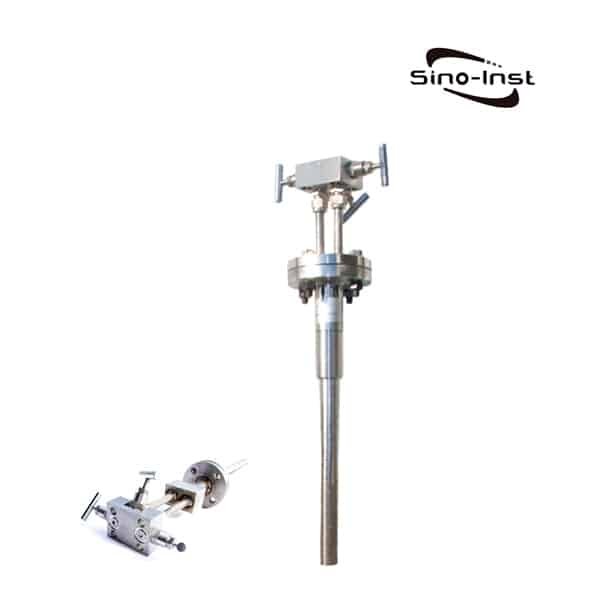
  • Industrial CO2 flow meters

    CO2 flow meters are instruments that can measure the flow of gaseous or liquid carbon dioxide. CO2 is a common industrial gas, and effective measurement is very important. Sino-Inst offers a variety of CO2 flow meters for flow measurement. If you have any questions, please contact our sales engineers. CO2 gas flow meter Vortex flow meters and gas turbine flow meters are the most commonly used carbon dioxide flow meters. In addition to vortex and gas turbine flowmeters, we mainly recommend…
  • Industrial Oxygen Flow Meters

    Oxygen Flow Meters are digital flow meters that can measure industrial oxygen. It is very important to choose a suitable flow meter to measure and monitor the oxygen flow. Sino-Inst offers a variety of Industrial Oxygen Flow Meters for flow measurement. If you have any questions, please contact our sales engineers. Featured Industrial Oxygen Flow Meters for Sale Extended reading: Flow Totalizer F3000X for Data collection and calculation Applications of industrial oxygen Industrial oxygen generally only requires oxygen purity, and has…
  • Biogas Flow Meters Selection Guide

    Biogas Flow Meters are instruments that can measure the flow of biogas. Could be a vortex flow meter, thermal mass flow meter, etc. Commonly used in biogas stations, biogas production fermentation tanks, etc. Sino-Inst offers a variety of Biogas Flow Meters for flow measurement. If you have any questions, please contact our sales engineers. renewable energy source-biogas At present, the use of biogas is mainly concentrated in three major fields: rural areas, aquaculture, and industry. Utilization of rural biogasThe comprehensive utilization…
  • Digital Beer Flow Meters

    Sino-Inst offers a variety of Digital Beer Flow Meters for flow measurement. If you have any questions, please contact our sales engineers. Featured Beer Flow Meters for Sale More about: Sanitary Flow Meters for Sale The Use of Beer Flow Meter in Beer Production Process In the main technological process of beer production. For effective control in the production process. It is necessary to measure and control the intermediate raw materials – wort, sake in semi-finished products, raw juice wine in…
  • LPG flow meters

    LPG flow meter is used for flow measurement of liquefied petroleum gas. The flow measurement of LPG is very important in industrial production, transportation and trade settlement. Sino-Inst offers LPG/propane gas flow meter at competitive low price from China gas flow meter manufactures. If you have any questions, please contact our sales engineers. Featured LPG Flow Meters for Sale Extended reading: Gas Mass Flow Meter Features of LPG LPG refers to petroleum gas liquefied at high pressure or low temperature, referred…
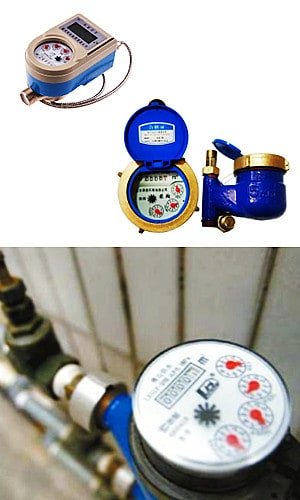
  • Industrial LPG/Propane flow meter

    Featured Inline Propane Flow Meter Propane is also generally referred to as liquefied petroleum gas (LPG). So what is the difference and connection between propane and LPG? Next, let’s take a look together. Propane VS LPG Because propane is one of the main components of liquefied petroleum gas. Propane is pure, and liquefied petroleum gas is a mixture. LPG is a by-product obtained during the catalytic cracking and thermal cracking of crude oil in refineries. The main source of commercial LPG…
  • Inline Air Flow Meters

    Featured Inline Air Flow Meters Inline air flow meter units conversion Inline air flow meter cfm CFM is a common imperial flow unit, cubic feet per minute.For a certain volume of air flow passing in a unit time, m3/h air volume unit is generally used in China. Other countries also use the British air volume unit cfm (cubic foot per minute). That is ft3/min cubic feet/minute,1CFM=28.316846592 L/MIN=0.028316847 m3/min CFM traffic is divided into SCFM and ACFM. Extended reading: [Working principle&Price]SI3051ANB Annubar…
  • Industrial Fuel Flow Meters

    What is a fuel flow meter? The fuel flow meter is an instrument that can monitor fuel flow. Industrial Fuel is an important energy source. For example, diesel, marine fuel, gasoline, etc. Sino-Inst offers a variety of Fuel Flow Meters for flow measurement. If you have any questions, please contact our sales engineers. Featured inline fuel flow meters for sale Common Industrial Fuel Fuel oil refers to light distillate fuel oil and heavy distillate fuel oil obtained after crude oil is…

Read more about: Industrial flow meters for Different industrial applications

Sino-Inst is a manufacturer of Industrial Petrol Flow meters. We offer more than 20 types of Industrial Petrol Flow meters, 40% are turbine flow meter, 30% are mechanical fuel flow meters and the rest.

We have a variety of Industrial Petrol Flow meters for most fuels including diesel, biodiesel, kerosene, gasoline, motor oil, DEF, heating oil, grease, and certain chemicals. Industrial Petrol Flow meters are available in a variety of sizes, from DN4 to DN200. Extended reading: High-quality hydraulic fluid flow meters

Industrial Petrol Flow meters can be stable flow measurement without modifying the pipeline. This greatly meets the measurement needs of many applications.

Our Industrial Petrol Flow meters solutions are brought together here to allow you to choose from a variety of flow rates or technologies. The most common types are mechanical or digital readout fuel meters. When it comes to technology, either turbine or oval gear diesel flow meters can be purchased directly from our website.

Sino-Inst’s Industrial Petrol Flow meters, made in China, have good quality, with better prices. Our flow measuring instruments are widely used in China, India, Pakistan, USA and other countries.

Sino-Inst’s entire team is well trained, so we can ensure that each customer’s needs are met. If you need any help with your product requirements, whether it is Industrial Petrol Flow meters, level sensors, or other equipment, please give us a call.

Cheap flow meters-Low Cost measurement solutions

Cheap flow meters means to choose the lowest cost flow meter while satisfying your measurement needs. How to choose the lowest cost flow meter?

Cheap flow meters are not equal to any flow meter. Different flowmeters are required to measure air velocity, water, and other liquids. For example, if you need to measure water flow rate, electromagnetic flow meters and ultrasonic flow meters are more suitable. On top of this, let’s choose a low-cost configuration.

Featured Cheap flow meters for Sale

Cheap flow meter for water

The measurement of water flow is the most widely used method in industrial production. Raw water, domestic sewage, industrial wastewater, etc. all need to be monitored. So how to choose a low-cost water flow meter?

Here, Sino-Inst proposes the following suggestions for you based on experience:

  1. If it is measuring drinking water, beverages, etc. Sanitary electromagnetic flowmeters can be used. Meet the requirements of drinking and hygiene.
  2. If it is industrial wastewater or corrosive liquid, you can choose electromagnetic flowmeter. Choose the lining made of tetrafluoroethylene and the electrode of 316L, which can resist corrosion.
  3. If it is residential water, you can use an ultrasonic water meter. Simple to use. low cost.
  4. For water flow measurement with super large pipe diameters, plug-in electromagnetic flowmeters or externally clamped ultrasonic flowmeters can be used. Can reduce costs.
  5. If it is a short-term measurement requirement, or for convenience, you can choose an external ultrasonic flowmeter. The host can be handheld or wall-mounted, and the cost is extremely low. And can be applied to different pipe diameter measurement.

Of course, the above is only Sino-Inst’s suggestion. In order to choose the right water flow meter, you can contact our sales engineer. According to your measurement medium, pressure, pipe diameter, use function, accuracy and all requirements, choose the best cost flowmeter.

Maybe you will like: the prices of electromagnetic flowmeter

How much is a 2 inch water flow meter? Let’s find out.

Mechanical water flow meters refer to a type of flow meter suitable for clean water processes or applications. The working principle of a mechanical water flow meter is to measure the speed of water flowing through a pipe. This causes the piston or turbine to rotate. The volume flow of water is proportional to the rotation speed of the blades. Compared with electronic water flow meters, mechanical water flow meters may become clogged when the water is dirty or contains large particles. When the water flow is low, the mechanical water meter does not work well.

Read more about Mechanical Water Flow Meters VS Mechanical Water Meters.

Ultrasonic flow meters, especially clamp-on ultrasonic flow meters, have a very high cost performance.
Especially compared to large diameter pipes. For example: measuring water in large diameter pipes. Either an electromagnetic flowmeter or a turbine flowmeter can be used. But their costs are not low.
At this time, the cost of the clamp-on ultrasonic flowmeter will be much lower.

There are 4 types of gas flow meters commonly used in industrial production and trade calculations. They are vortex flowmeter, precession vortex flowmeter, rotameter, differential pressure flowmeter, etc.

The cost of these gas flow meters is different. It is necessary to select the appropriate model according to the actual measurement parameters and confirm the cost.

Flow meters are classified into liquid flow meters and gas flow meters according to the medium. Then the common liquid flow meters mainly include: vortex flowmeter, turbine flowmeter, electromagnetic flowmeter, ultrasonic flowmeter, differential pressure flowmeter, open channel flowmeter, Coriolis mass flowmeter, etc.

Read more Liquid Flow Meters Selection Guide.

Digital Fuel Flow Meter is a flow meter dedicated to measuring fuel, diesel, gasoline, and petroleum. Digital Fuel Flow Meter generally has a digital display or signal output. Such as pulse or 4-20mA. Such as turbine flow meters, gear flow meters. It can be used to measure the pipeline flow of oil medium storage, transportation, trade, etc. Different pipelines and working conditions require flow meters with different principles or functions. Next, we will analyze in detail.

Read more How to Choose the Right Digital Fuel Flow Meter?

Industrial water flow meter

Water flow meters are flow meters that can diaplay the flow rate of industrial water pipe.

A water flow meter measures the amount of water flowing through a pipe. We have several kinds to choose from, depending on the application, maintenance needs, and budget.

There are four common water flow meter types:

Turbine (also called mechanical), Vortex, Ultrasonic, and Magnetic. We will tell you everything you need to know about them and help you choose one for your application.

Digital water flow meters|Water flow meter types

Read More

You may like: Digital Flow Meters Guide| Liquid and Gas

Frequently
Asked
Questions

Low Flow Meters refer to those flow meters that can be used to measure micro-flow-low-flow rate media. Including metal rotor type, gear type, electromagnetic type microflow meter, microturbine type, and thermal type small mass flow meter. It can measure the Low flow rate of a variety of liquids and gases. For example, it needs small volume, high-temperature resistance, low-temperature resistance, or medium viscosity. etc. We all have suitable product recommendations.

Read more Low flow meters for Liquids.

For different working principle, We offer different types of flow meters, like:

  • Differential Pressure Flow Meters
  • Orifice Plate
  • Venturi Tube
  • Flow Nozzles
  • The Sonic Nozzle – Critical (Choked) Flow Nozzle
  • Calorimetric Flowmeter
  • Ultrasonic Doppler Flowmeter
  • Positive Displacement Flowmeter
  • Variable Area Flowmeter or Rotameter
  • Velocity Flowmeters
  • Pitot Tubes
  • Electromagnetic Flowmeter
  • Turbine Flowmeter
  • Vortex Flow Meter
  • Thermal Flowmeter
  • Coriolis Flowmeter
  • Mass Flowmeters
  • Open Channel Flowmeters

Generally speaking, the accuracy of Coriolis mass flow meters is relatively high.
High precision: standard configuration ±0.2%, ±0.1%, ±0.05% optional.
However, general industrial liquid flow measurement does not require such high accuracy. An accuracy of 0.5% or 1% is sufficient. You can choose the appropriate flowmeter according to the measurement requirements.
Extended reading: Micro flow meters for low flow liquids

Generally, it needs to be measured according to the measured medium, use environment, installation method and other aspects. If it is ordinary non-corrosive water, it is USD300-500. The specific decision is based on different site conditions.
The price of electromagnetic flowmeters is determined according to the measured medium. Different mediums, ranges, installation methods, and prices will vary greatly.

Sino-Inst offers over 30 Cheap flow meters-Low Cost products. About 50% of these are differential pressure flow meters. 40% are water meters (like the Insertion Turbine Flow Meter), and 40% are water treatment (like the Annubar flow meter ).

A wide variety of Cheap flow meters-Low Cost options are available to you, such as free samples, paid samples.

Sino-Inst is a globally recognized supplier and manufacturer of Cheap flow meters-Low Cost, located in China.

The top supplying country is China (Mainland), which supply 100% of the Cheap flow meters-Low Cost respectively.

Sino-Inst sells through a mature distribution network that reaches all 50 states and 30 countries worldwide. Cheap flow meters-Low Cost products are most popular in Domestic Market, Southeast Asia, and Mid East.

You can ensure product safety by selecting from certified suppliers, with ISO9001, ISO14001 certification.