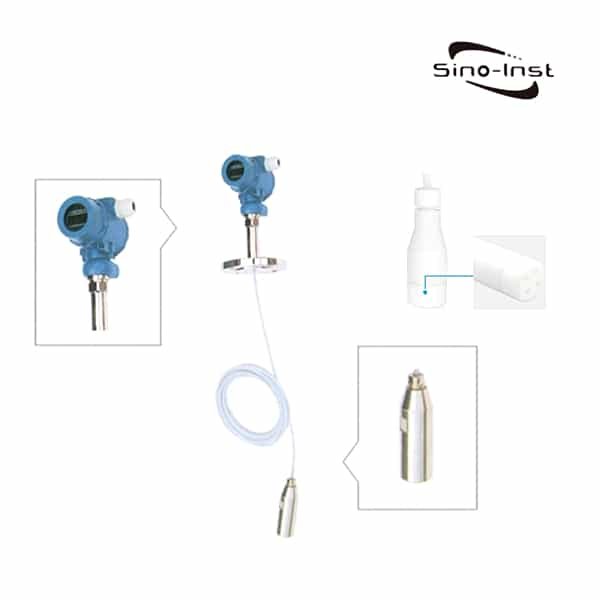
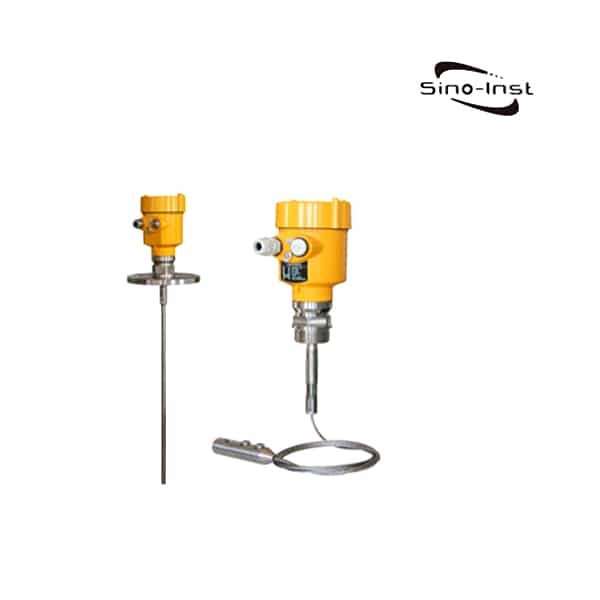
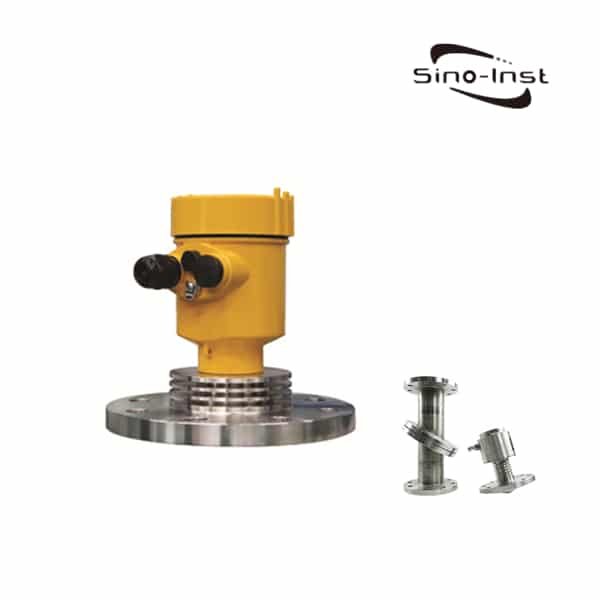
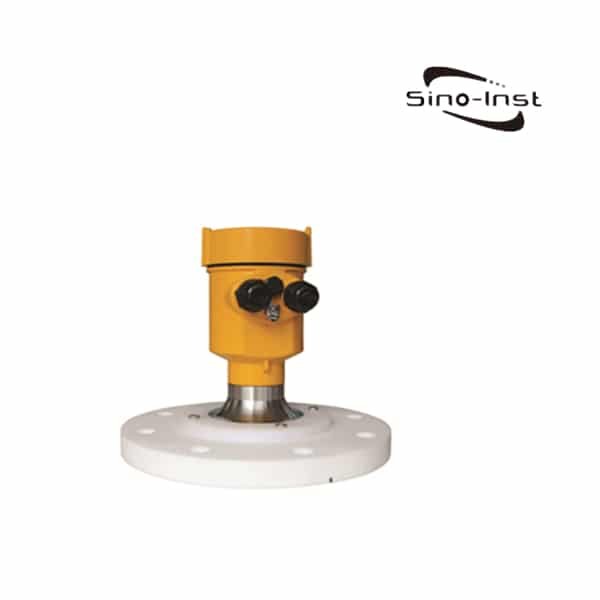
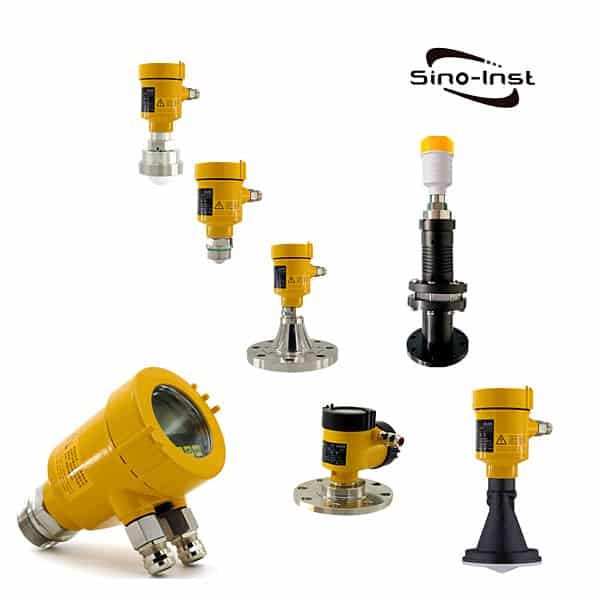
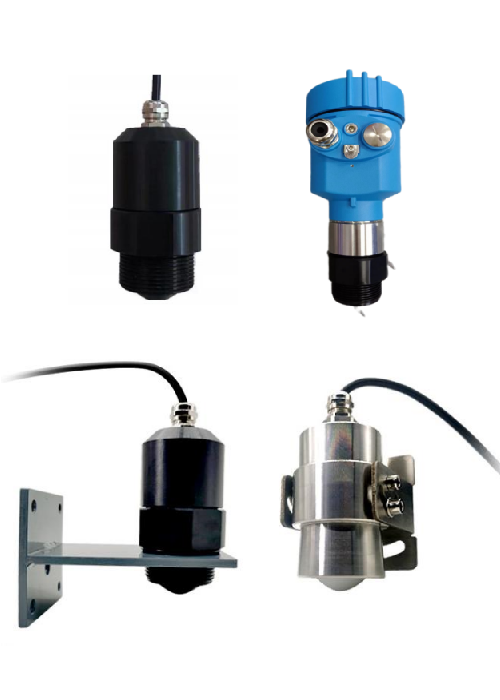
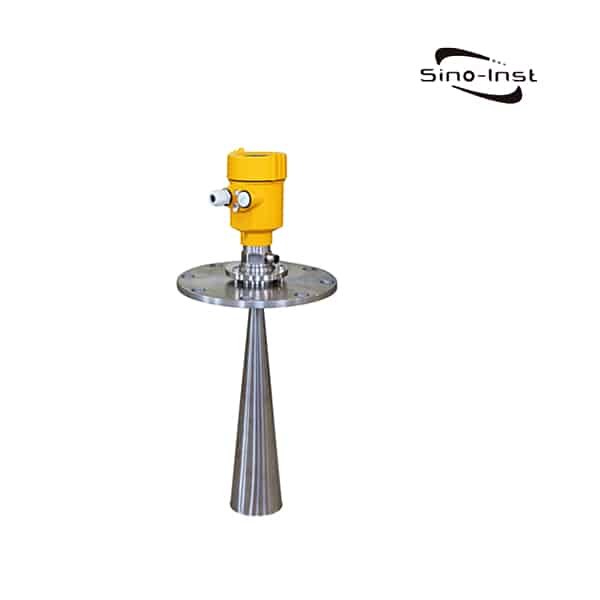
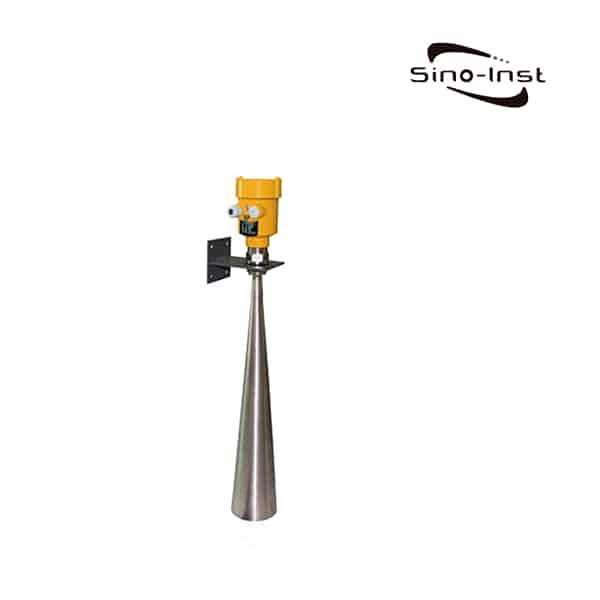
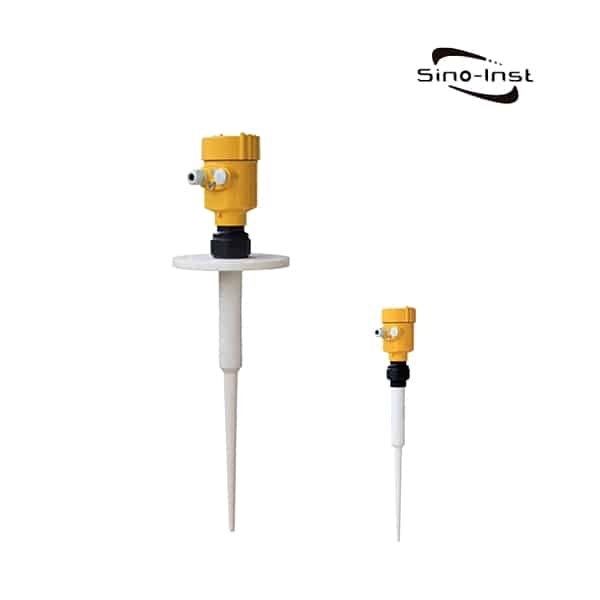
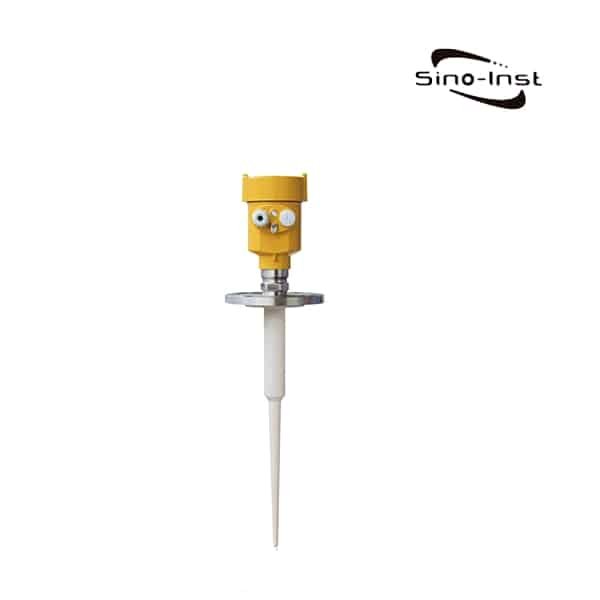
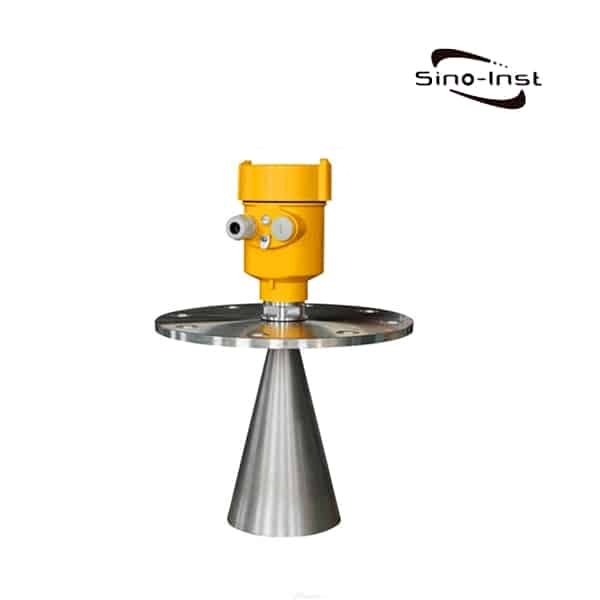
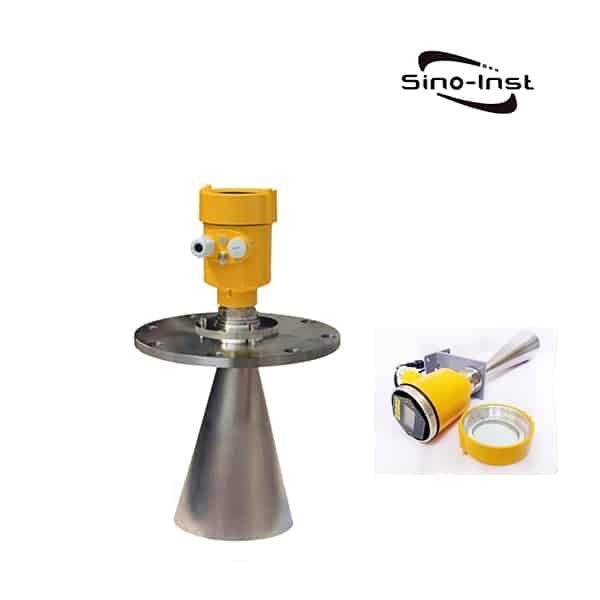
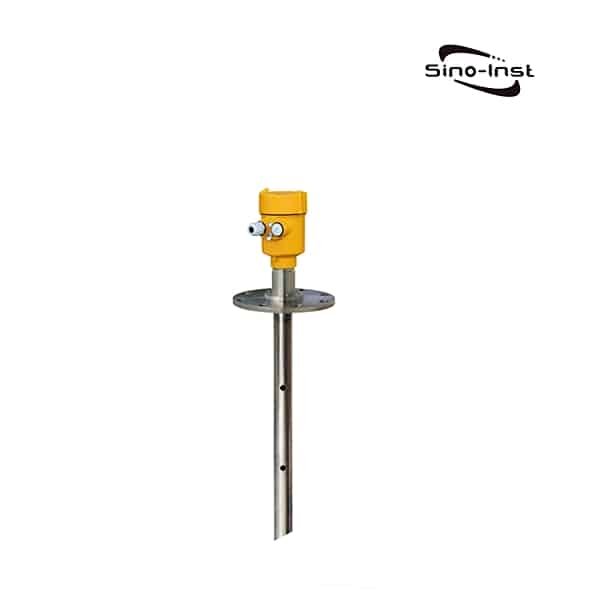
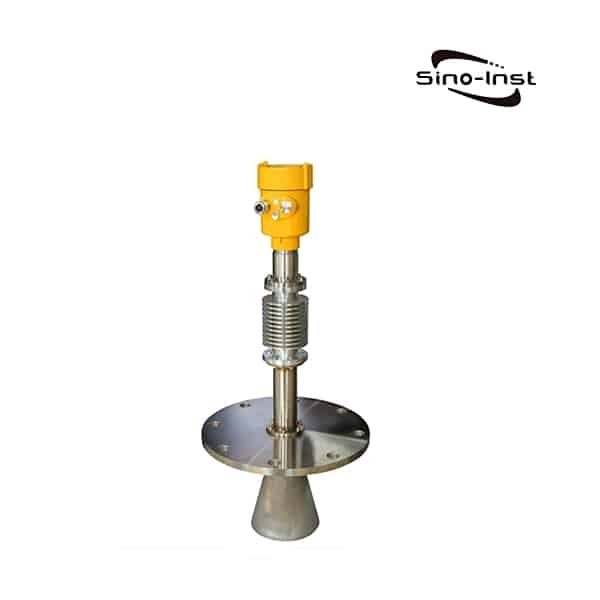
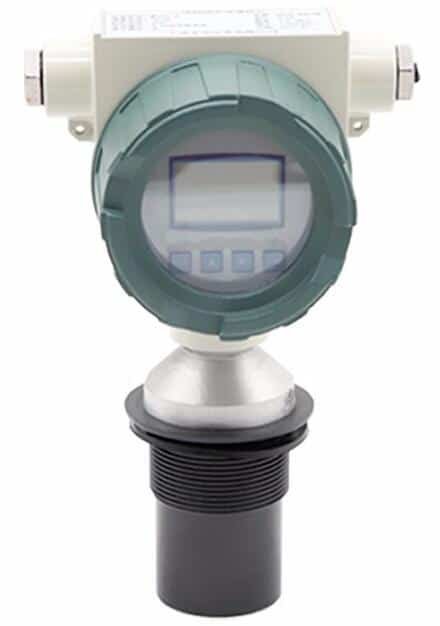
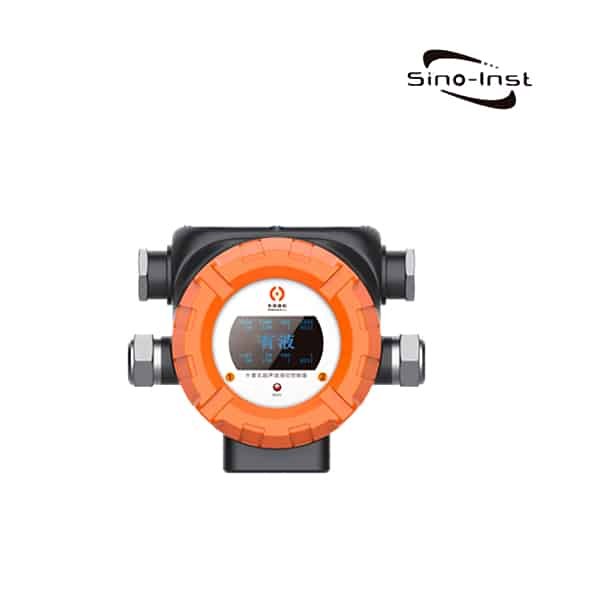
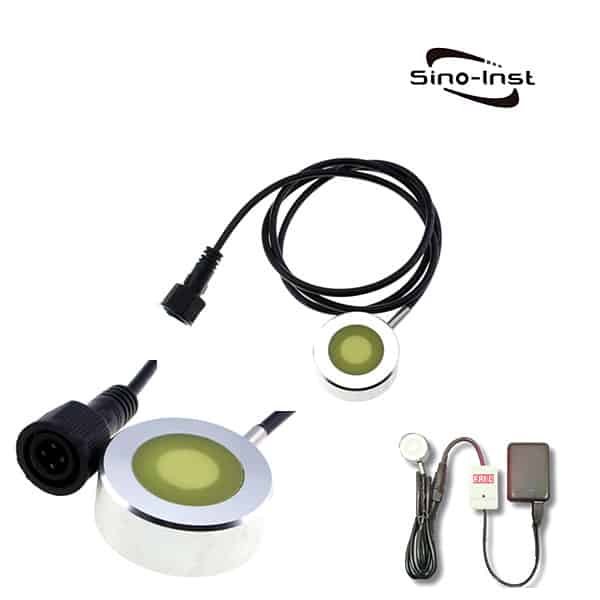
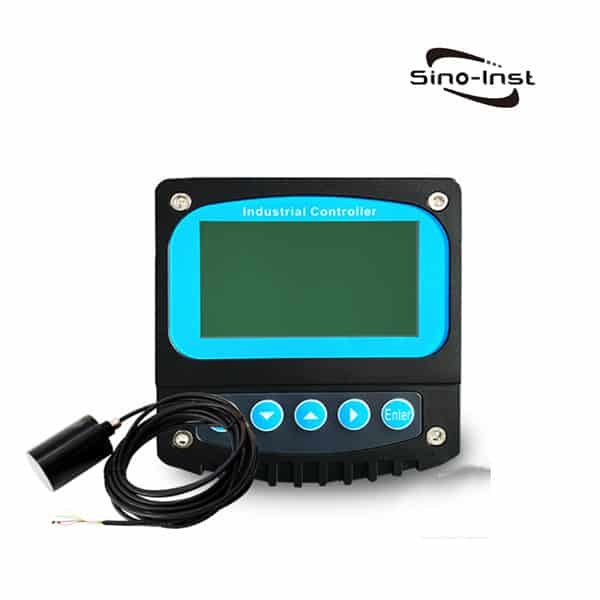
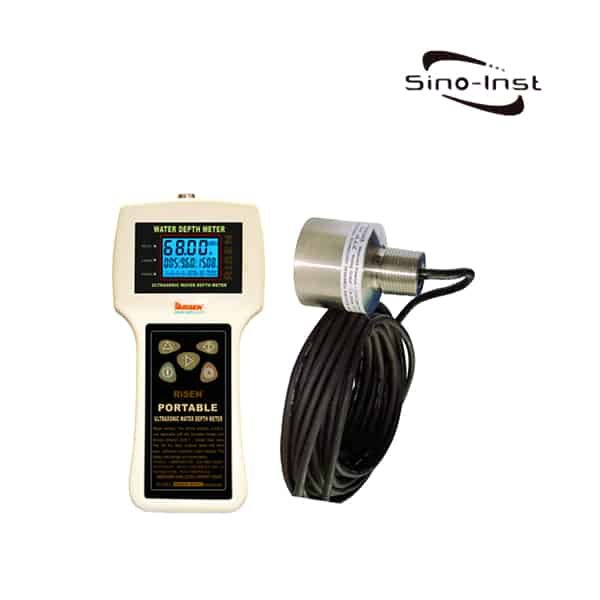
SIRD-704 Coaxial Probe Guided Wave Radar Level Transmitter

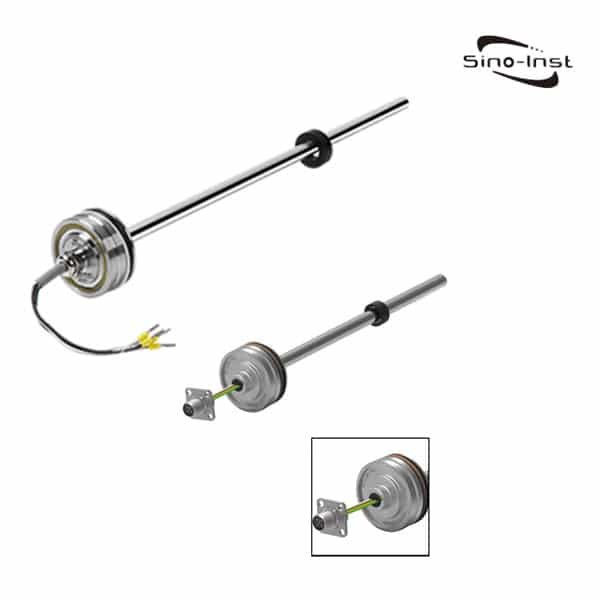
Guided Wave Radar Level Transmitter with Coaxial tube type antenna is used to measure & control liquid with low permittivity. Contact measurement.

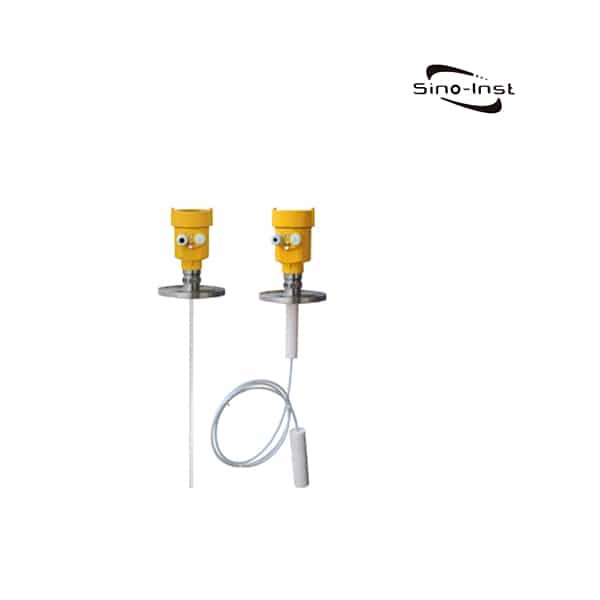
SIRD-704 Coaxial Probe Guided Wave Radar Level Sensor

Guided wave radar level transmitters equipped with Coaxial Probe are used in liquids. Especially liquids with low dielectric constant. For example: non-ionized water, deoxygenated water and other liquid measurement. If the dielectric constant of the liquid is too low, radar level sensors are not suitable. Coaxial Probe Guided Wave Radar Level Transmitter can measure and control the level of liquids with low electrical constants or surface fluctuations. Signal output (4~20) mA/HART.

Sino-Inst offers a variety of Guided wave radar Level Sensors for industrial level measurement. If you have any questions, please contact our sales engineers.

Features of Coaxial Probe Guided Wave Radar Level Transmitter

  1. Applicable medium: liquid. Especially liquid with low dielectric constant. It can measure any medium with a dielectric constant greater than or equal to 1.4.
  2. Generally used to measure the medium with viscosity ≤ 500cst and not easy to produce adhesion.
  3. The maximum range of rod radar can reach 6 meters.
  4. It has a strong ability to inhibit steam and foam, and the measurement is not affected.
  5. For liquid materials with a relatively small dielectric constant. A double probe type measurement method can be used to ensure good and accurate measurement.

Find out about the Influence of Dielectric Constant on Guided Wave Radar Level Meter.

Specifications of Coaxial Probe Guided Wave Radar Level Transmitter

Applicable medium:Liquid, especially liquid with low dielectric constant
Should use:Measurement of non-ionized water, deoxidized water, and other liquids
Explosion-proof certification:Exia IIC T6 Ga/ Exd IIC T6 Gb
Measuring range:6m
Frequency rate:500MHz-1.8GHz
Day Line:Coaxial tube antenna
measurement accuracy:±5mm
Process temperature:-40~130℃(standard type)/-40~250℃(high-temperature type)
Process pressure:(-0.1~4)MPa
Signal output:(4~20)mA/HART
On-site display:Four-digit LCD programmable
power supply:Two-wire system (DC24V)/Four-wire system (DC24V/AC220V)
Outer shell:aluminum single cavity/aluminum dual cavity/plastic/stainless steel single cavity
Process connection:Thread/flange (optional)

Extended Reading: Influence of Dielectric Constant on Liquid Level Measurement | Radar-Guided Wave Radar Level Meter

Advantages of Coaxial Probes

From an antenna perspective, there are roughly three types of guided wave radar level transmitters for tank level measurement. Rod-type, cable-type, and coaxial probe-type.

For rod-type and cable-type, please refer to the product page. Here, we will focus on the Coaxial Probe Guided Wave Radar Level Transmitter.

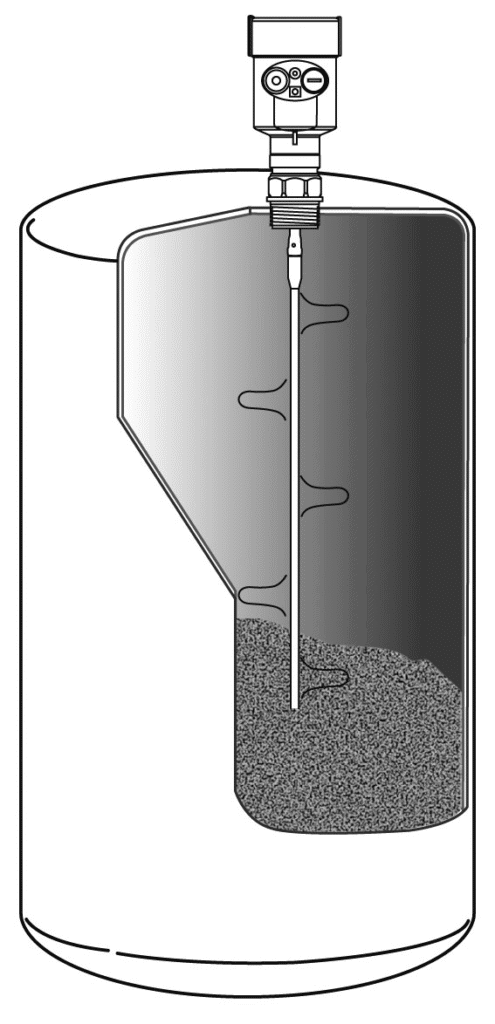
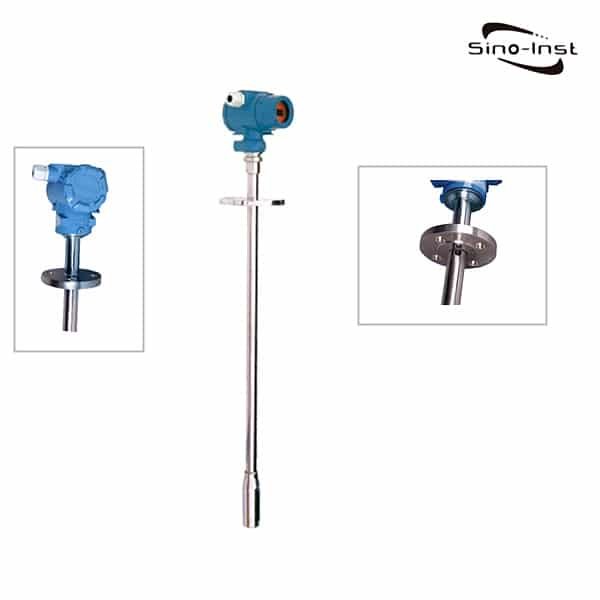
The antenna of the coaxial probe-type guided wave radar level transmitter mainly consists of two parts: a metal circular tube and a metal rod. To prevent the metal rod from touching the inner wall of the metal circular tube and causing interference. A fixing method must be used inside the tube.

In addition, circular holes are distributed on the metal circular tube. Which are used for the inflow of liquid medium in the tank.

The radar wave emitted by the coaxial probe-type guided wave radar level transmitter propagates in the space inside the metal circular tube. And the effective echo signal is stronger, resulting in more accurate measurement. Therefore, this measurement method is more suitable for measuring the level of liquids with low dielectric constants. Many deionized water and ion-free water level measurements will first consider this measurement method.

In addition, the special antenna structure of the coaxial probe-type guided wave radar level transmitter has strong anti-interference ability and is not easily affected by external factors. For certain special working conditions, this measurement method is more effective.

Furthermore, the coaxial probe-type guided wave radar level transmitter can complete measurements in small spaces and high temperature and pressure environments, making it more adaptable to different environments.

Finally, it has been documented that the coaxial probe-type guided wave radar level transmitter can be used to measure the height of different liquid interfaces. As different liquids have different dielectric constants. The radar wave emitted by the level transmitter encounters the interface and reflects back. Allowing for the theoretical possibility of measuring the position of different liquid interfaces.

In summary, from the above content, we can see that the coaxial probe-type guided wave radar level transmitter has a more concentrated energy, less interference. And more accurate measurement compared to other guided wave radar level transmitters.

Extended reading: GWR Solid Level Sensor-for Cement silo-Ash powder measure

Guided Wave Radar Level Transmitter Calibration Procedure

Here, we introduce the relatively common debugging methods and means of guided wave radar level transmitters. Users can determine the most appropriate method of use according to their actual situation. Finally proceed. Remember to be cautious when choosing a method, otherwise errors will easily occur.

More details about: Guided Wave Radar Level Transmitter Calibration

  1. Via HART handheld programmer. However, the HART handheld programmer has its adjustment range, which is not suitable for all products. The measurement range is 4-20mA corresponding value.
  2. Through the handheld adjustment module. Its function is equivalent to an analysis and processing instrument. The programmer is composed of buttons and a liquid crystal display. The adjustment menu and parameter settings can be displayed.
  3. Through the debugging software. Guided wave radar level gauge can be debugged through software. The process is: mainly use HART software for debugging, and an instrument driver is needed. Among them, when using software for debugging, power up the radar instrument with 24VDC. At the same time, add a 250 ohm resistor to the front end of the HART adapter. If the integrated HART resistance power supply meter, the internal resistance is 250 ohms. There is no need to add an external resistor. At this time, the HART adapter can be connected in parallel with the 4–20mA line.

Extended reading: Radar Level Meter for Corrosive Liquids

Frequently
Asked
Questions

Guided wave radar level transmitter is a type of level measurement device that uses high frequency radar pulses guided along a probe to determine the level of a liquid or solid in a container. The radar pulses are reflected back to the transmitter by the liquid or solid. And the time delay between the transmission and reception of the pulses is used to calculate the level. The probe can be inserted into the container or mounted externally. And is suitable for use in a wide range of industries, including oil and gas, chemical processing, and food and beverage.

The main difference between radar and guided wave radar level transmitters lies in the way they transmit and receive the radar signal.

Traditional radar level transmitters use free space transmission. Where the radar signal is transmitted through the air to the liquid or solid surface, and then reflected back to the receiver. These types of radar level transmitters are effective for measuring level in large tanks and vessels, and for detecting the presence of liquids or solids.

Guided wave radar level transmitters, on the other hand, use a probe or cable that is inserted into the liquid or solid material being measured. The radar signal is guided along the probe or cable, and reflected back to the transmitter by the surface of the material.

Guided wave radar level transmitters are typically used for measuring level in smaller tanks or vessels, or in situations where the material being measured has low reflectivity or is highly viscous.

Overall, both types of level transmitters use radar technology to measure the level of liquid or solid materials. But they differ in the way the radar signal is transmitted and received.

The range of a guided wave radar level transmitter can vary depending on the specific device and its application. But generally ranges from a few centimeters to over 30 meters (100 feet). The range of the transmitter is determined by the length of the probe or antenna used. The dielectric constant of the material being measured. And the strength of the transmitted signal. In some cases, the range of the transmitter can be extended through the use of specialized probes or antennas or by using multiple devices in tandem.

Because the general testing distance of radar level transmitters is usually 2-10m or more than 10m. It is difficult to simulate the distance required for calibration in the laboratory. Therefore, radar level gauges mostly use online calibration. However, on-line routine calibration must use on-site process conditions. During the calibration period, on-site process equipment-storage tanks or reaction tanks must be shut down, which seriously affects on-site process production. At the same time, the on-site liquid level change is affected by the process conditions and the stabilization time is too long, so the online routine calibration time is usually longer.
Extended reading: Applications of Radar Corrosive Liquid Chemical Level Sensor

Guided wave radar level transmitter price

The price of guided wave radar level transmitters can vary depending on several factors. Including the manufacturer, the model, the range, and the features of the device. Generally speaking, guided wave radar level transmitters are more expensive than other types of level measurement devices. Such as ultrasonic or capacitance level sensors, due to their advanced technology and accuracy.

Prices can range from a few hundred dollars to several thousand dollars per unit, depending on the specifications of the device.

In addition to the cost of the transmitter, there may be additional costs for installation, calibration, and maintenance.

While guided wave radar level transmitters can be a significant investment, they offer many benefits. Including improved accuracy, reliability, and versatility, which can make them a valuable asset in many industries.

Sino-Inst Guided wave radar level transmitter, made in China. Has a good product quality and price advantage. The price of our Guided wave radar level transmitter ranges from USD400-800.

The specific product price needs to be determined according to the actual product parameters. So, if you need a quotation for Guided wave radar level transmitter, please contact our sales engineer in time. Provide your measurement requirements, and you can get the price of Guided wave radar level transmitter within 24 hours.

More Level Measurement Solutions

Sino-Inst offers over 10 Guided Wave Radar level transmitters for level measurement. About 50% of these are Radar level meters, 40% is the tank level sensor.

A wide variety of Guided Wave radar level meters options are available to you, such as free samples, paid samples.

Sino-Inst is a globally recognized supplier and manufacturer of Guided Wave radar level measurement instrumentation, located in China.

Request a Quote

Please enable JavaScript in your browser to submit the form

SIRD-703 GWR Solid Level Sensor-Cement silo-Ash powder measure

Solid Level Sensor continuously detects changes in the level of solid materials. Monitor and Indicate the level of bulk solids in silos, storage tanks, or other containers.

A solid Level Sensor is very important for the production process. Fly ash powder measurement. Chemical plant level measurement. Cement silo powder measurement. Controlling the change of material level can maximize the efficiency, prevent overflow, exhaust, or track the volume or mass. SIRD-703 GWR Bulk Solids & Powder Solid Level Sensor is mainly suitable for solid powder level measurement.

Sino-Inst offers a variety of Solid Level Sensors for industrial level measurement. If you have any questions, please contact our sales engineers.

Solid Level Sensor is mainly divided into two categories: continuous type and switch type continuous type. Continuous type includes ultrasonic wave and guided wave radar. There are many types of switches. Rotary resistance, tuning fork, capacitance, heavy hammer, RF admittance.

Features of SIRD-703 GWR Solid Level Sensor

  1. The guided wave radar level meter is highly versatile. It is suitable for the measurement of acids, alkalis or other corrosive media
  2. Anti-hanging material. The unique circuit design and sensor structure of the guided wave radar level meter make its measurement not affected by the hanging material of the sensor. No regular cleaning is required to avoid false measurements.
  3. Maintenance-free. The guided wave radar level gauge has no moving parts during the measurement process. There is no damage to mechanical parts and no maintenance is required.
  4. Anti-jamming. Contact measurement by guided wave radar level meter. Strong anti-interference ability, can overcome the influence of steam, foam and stirring on the measurement.
  5. Accurate and reliable. The measurement volume of the guided wave radar level gauge is diversified, which makes the measurement more accurate. The measurement is not affected by environmental changes, with high stability and long service life.

Extended reading: Radar level sensor for solids – Dust solid level measurement

Specifications of SIRD-703 GWR Solid Level Sensor

Suitable for Medium:Solid powder
Application:Cement silo powder measurement; Ash powder measurement
Explosion-proof Grade:Exia IIC T6 Ga/Exd IIC T6 Gb
Measuring Range:30m
Frequency:500MHz-1.8GHz
Antenna:Double cable type antenna
Accuracy:±10mm
Process Temperature:(-40~150)℃
Process pressure:(-0.1~4)MPa
Signal output:(4~20)mA/HART
The Scene Display:Four LCDs/Can be programmed
Power Source:Two-wire (DC24V);Four-wire(DC24V/AC220V)
Shell:Aluminum /Plastic
Connection:Flange (optional) / Thread

Solid level measurement is the measurement of the position of the solid block or powder surface in the silo to know the amount of material stored in the silo.

The device that detects Solid level is called Solid Level Sensor.

Solid Level Sensor refers to an instrument that detects changes in the height of solid materials in a container in real time.

Solid Level Sensor is also known as level transmitter, level controller, level meter, level meter, etc.

Extended Reading: Featured Silo Level Sensors

The Advantages and Disadvantages of GWR Bulk Solid Level Sensor

Guided wave radar liquid level gauge is a contact type liquid level gauge. Its working principle is to use electromagnetic waves to transmit signals-reflect-receive signals. Unlike conventional radar level gauges, guided wave radar requires a medium to transmit signals. This medium can be a rod or a cable, depending on the installation environment. So what are the advantages and disadvantages of the guided wave radar level gauge compared with other level gauge products? Let us explain for you.

Advantage:

  1. Can measure a variety of different media. Including liquid, solid, particles, powder, etc., and will not be affected by the density or temperature of the media.
  2. Continuous measurement, safe, stable and reliable.
  3. For the medium with a low dielectric constant, a guide rod can be added to improve the accuracy of the measured data.
  4. The fluctuation of the level has little effect on the measurement results.
  5. The signal is stable and the anti-interference ability is strong.
  6. Vapor or foam will basically have no effect on the measured data.
  7. Two output modes of 4~20 or digital signal adapt to different installation environments.
  8. Guided wave radar level sensors have various materials, process connections, probe types and accessories to provide this option.
  9. Guided wave radar level sensor is suitable for small storage tanks, storage tanks with complex geometric shapes, and when there are obstacles in the tanks. It is not affected by the mechanical design of the bypass pipe. Thereby minimizing the risk of leakage.

Disadvantages:

  1. Because it is a contact measurement, for those flammable and explosive media, a higher explosion-proof level is needed to deal with it.
  2. Compared with the non-contact horn radar level sensor, the guided wave radar level sensor directly comes into contact with the measured medium. Therefore, the daily maintenance of the guide rod is relatively more.
  3. The volume is relatively large, and transportation is not convenient.
  4. If measuring a solid medium, the medium needs to be kept horizontal. And the dust can not be much, otherwise it will affect the measurement accuracy.
  5. The measuring guide rod or cable is easy to foul, and it needs to be cleaned regularly.
  6. The price is higher than other level sensor products.
Coal powder, cement level measurement-GWR Bulk Solids & Powder Solid Level Sensor

Solid State Level Sensors

Solid state-level sensors perform real-time detection of changes in the height of solid materials in the container. Solid state-level sensors are also called level transmitters, level controllers, bulk solid level sensors, dry material level sensors, etc.

Solid state-level sensors are mainly divided into two categories: continuous type and switch type.

Continuous type includes ultrasonic and guided wave radar.

There are many types of switch type, resistance rotary type, tuning fork type, a capacitive type, heavy hammer type, RF admittance.

Among them, the resistance-rotation and tuning-fork level gauges have high requirements on the use occasions, and are not resistant to impact, and cannot measure viscous materials.

The capacitive type should be said to overcome the shortcomings of other level gauges, but it cannot identify fake materials. In order to overcome this defect, a radio frequency admittance level meter was developed on the basis of capacitance.

Three technologies for solids measurement:

The solids measurement technology is usually from top to bottom, with a level gauge mounted on the top of the container pointing downwards to the material. The three types of level meters are guided wave radar, non-contact radar, and sonar radar that use probes to measure pulse travel.

Each technology has its own particularity, mainly related to the characteristics of how to deal with solids. Under normal circumstances, calculations for all three measurements are based on the time required for the energy pulse to be emitted to a certain point on the surface of the material and then return to the meter.

Guided wave radar is a very small point. The diameter of the meter probe is only 1 or 2 inches. With only one point, the meter cannot measure the entire surface profile. But for some applications, one point is enough to receive information. Non-contact radar and sonic level meters, especially the latter, although they can measure a large area, may still produce an incomplete image. Whether this is sufficient depends on the needs of different application processes.

The non-contact radar instrument emits electromagnetic pulses. When the pulse encounters the boundary where the dielectric constant changes, part of the energy is reflected back. In this case, the boundary is the interface between the air above the container and the surface of the material in the container. These materials can be solid or liquid. The higher the dielectric constant of the material, the stronger the reflection.

When measuring the solid material level, the surface angle can cause a problem. If the surface of the material is level, the energy will be directly reflected back into the meter. However, if the pulse encounters an inclined material, part of its energy will be reflected to the side of the container and cannot be captured. In most cases, the transmitted signal is strong enough to be measured. But if the material has a low dielectric constant and a high angle of repose, this combination is more difficult. In solid applications, algorithms for specific materials on meters and parabolic antennas can help to measure solid material levels.

Acoustic instruments have a similar but different constraint. The sound pulse or sound wave emitted by the instrument passes through the air and reaches the surface of the material in the container or the container wall. The intensity of the reflection depends on the bulk density of the material, that is, the mass of the material in a given volume. Therefore, if the surface of the material is rough, it will absorb part of the energy and the reflected wave will be weakened.

ultrasonic level sensor for solids

Ultrasonic Level Sensing sensors and transmitters are used for continuous, non-contact level measurement.

Multiply the time from ultrasonic transmission to reception by the speed of sound to calculate the height of the material level. Since the air temperature will affect the speed of sound wave propagation, the air temperature needs to be measured to correct the speed of sound. The ultrasonic level meter is suitable for measuring the block material level with larger granularity.

The top of the storage warehouse is equipped with an ultrasonic generator and a receiver. The ultrasonic wave emitted by the generator is reflected by the air layer to the material surface, and part of the reflection is received by the receiver.

Capacitive level sensor for solids

In general, capacitive level gauges are not affected by the environment such as vacuum, temperature, and pressure. Firm structure, convenient installation, easy maintenance, and low price.

However, capacitive level gauges have certain limitations in use. There are many types of capacitive level gauges. It can measure both conductive and non-conductive media. It can also measure the liquid level of high-speed containers caused by tilting and shaking.

The medium requirement of the measured object of the capacitive level meter is not as strict as other meters. It can not only control the liquid level but also continuously measure, so it can be regarded as a common measuring instrument.

When measuring continuous liquid levels, concentric cylindrical capacitors are generally used. In principle, cylindrical capacitive object flow meters can detect the level of conductive liquids. It can also detect the level of solid particles.

If the medium to be measured is a conductive liquid, the circular electrode will cause a short circuit in the conductive liquid. Therefore, when measuring the level of conductive liquids, the electrodes must be covered with insulators.

Extended reading: Radar Level Meter for Corrosive Liquids

Non-Contacting Radar Level Measurement

Radar level transmitters use radar technology to perform the non-contact continuous level measurement. The radar level indicator converts the level into an electrical signal. The level signal output can then be utilized by other instrumentation to monitor or control. Liquids and solids are commonly measured with this measuring technique. Like: Fly ash silo. Radar level sensors are divided into: Pulsed radar technology and frequency modulated continuous wave (FMCW) radar level sensors.

Extended reading: ​Solid flow meter | For bulk solids-powder-soybean-cement 

Liquid level sensor refers to an instrument that measures the high and low liquid levels of liquid media in a container.

Liquid level sensor types are:
Input level sensor,
Plug-in level sensor,
Float float level sensor,
Magnetic flap level sensor,
Radar level sensor,
Magnetostrictive level sensor,
Reed switch liquid level controller,
Level Switch,
Tuning fork level sensor,
Static pressure level sensor,
Quartz glass level sensor,
Ultrasonic level sensor,
Capacitive level sensor,
RF admittance level sensor.

Read more about: 8 Types Liquid level measurement methods

Frequently
Asked
Questions

Various types of liquid level transmitters can be used to measure the oil level.
A magnetostrictive liquid level sensor can be used as a fuel tank level sensor. With LCD digital display. Perfect choice for Continuous Level measurement of the diesel tank/fuel tank.

Point level measurement sensors are used to mark a single discrete liquid height–a preset level condition. Generally, this type of sensor functions as a high alarm, signaling an overfill condition, or as a marker for a low alarm condition.
Like Float Level Sensors.

Our common liquid level transmitters can be used to measure the water level.
However, from a cost perspective, the hydrostatic level transmitter is most commonly used to measure the water level.

Common liquid level sensors are:
Float type liquid level sensor, magnetostrictive liquid level sensor,
Capacitive liquid level sensor, resistance liquid level sensor,
Radar level sensor, laser level sensor,
Ultrasonic liquid level sensor, pressure sensor,
Bubble level sensor, isotope level sensor,
Thermodynamic liquid level sensor
There’re are 7 main types of level transmitters that Sino-Instroffers. Each type of transmitter works in a different way and makes it useful for different types of processes.

The Level sensor is a common sensor that measures the liquid level position. It converts the height of the position into an electrical signal for output.

An instrument that detects changes in the height of solid materials in a container in real time is called a level gauge.

Material level meter is also called material level transmitter, material level controller, material level meter, material level meter and so on.

Related Blogs

Sino-Inst offers over 10 GWR Bulk Solids & Powder Solid Level Sensors for level measurement. About 50% of these are float liquid level meters, 40% is the level switches.

A wide variety of Solid Level Sensors options are available to you, such as free samples, paid samples.

Sino-Inst is a globally recognized supplier and manufacturer of Solid Level Sensors instrumentation, located in China.

Request a Quote

SIRD-702 GWR Corrosive Liquid Chemical Level Sensor

Liquid chemical level sensor is suitable for chemical storage tanks or chemical processing. Especially for highly corrosive liquids.

In chemical storage tanks or chemical processes, there is a risk of corrosive liquids and explosions. Therefore, the requirements for the liquid level indicator are extremely high. SIRD-702 liquid chemical level sensor is a corrosion-resistant guided wave radar level sensor. The maximum range of anti-corrosion guided wave radar level meter can reach 20 meters. It is used to measure the liquid of strong acid and strong alkali. Such as hydrochloric acid, sulfuric acid, hydrofluoric acid, strong alkali and sodium hydroxide. SIRD-702 liquid chemical level sensor adopts all PTFE sealed cable or rod antenna.

Sino-Inst offers a variety of Liquid Chemical Level Sensors for industrial level measurement. If you have any questions, please contact our sales engineers.

Features of Corrosive Liquid Chemical Level Sensor

  1. The guided wave radar level meter is highly versatile. It is suitable for the measurement of acids, alkalis or other corrosive media
  2. Anti-hanging material. The unique circuit design and sensor structure of the guided wave radar level meter make its measurement not affected by the hanging material of the sensor. No regular cleaning is required to avoid false measurements.
  3. Maintenance-free. The guided wave radar level gauge has no moving parts during the measurement process. There is no damage to mechanical parts and no maintenance is required.
  4. Anti-jamming. Contact measurement by guided wave radar level meter. Strong anti-interference ability, can overcome the influence of steam, foam and stirring on the measurement.
  5. Accurate and reliable. The measurement volume of the guided wave radar level gauge is diversified, which makes the measurement more accurate. The measurement is not affected by environmental changes, with high stability and long service life.

Specifications of SIRD-702 GWR Corrosive Liquid Chemical Level Sensor

Suitable for Medium:  Liquid,  especially corrosive liquids
Application:  Acids, bases or other corrosive media 
Explosion-proof Grade:   Exia IIC T6 Ga/Exd IIC T6 Gb  
Measuring Range: 20m 
Frequency:  500MHz-1.8GHz
Antenna:  Full PTFE sealing cable type or rod antenna 
Accuracy: ±10mm
Process Temperature: (-40~200)℃
Process pressure: (-0.1~0.3)MPa
Signal output:  (4~20)mA/HART
The Scene Display:  Four LCD/Can be programmed
Power Source:  Two-wire (DC24V) ; Four-wire(DC24V/AC220V)
Shell:  Aluminum /Plastic
Connection:  Flange (optional) / Thread 

What is the best method for sensing the level of a corrosive liquid in a tank

If the user’s tank can be perforated. Then choose guided wave radar liquid level sensor, use corrosion-resistant material. It is the most cost-effective option.

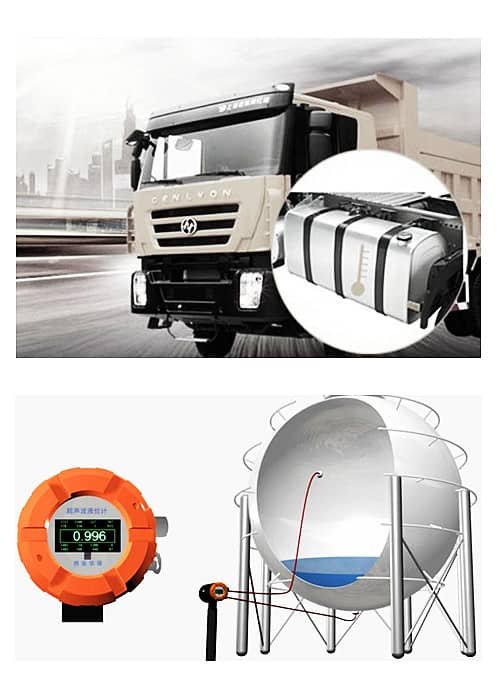
If the user’s tank cannot be perforated. Then it is the best choice to choose an externally attached ultrasonic liquid level meter. Because the sensor can be directly attached to the bottom and side of the tank. No need to cut holes, easy to install. But the cost will be a little higher.

External Tank Level Indicator refers to an externally mounted level sensor. It is used to install on the outside of the liquid storage tank to measure the liquid level of the tank. When measuring with External Tank Level Indicator, install the ultrasonic probe just below the outer wall (bottom) of the container under test. No need to cut holes, easy to install. Does not affect on-site production. It can realize accurate measurement of various toxic substances and various pure liquids in high temperature and high pressure airtight containers.

Ultrasonic Tank Level Sensors

Ultrasonic Level Sensing is a low-cost liquid level measurement technology. Ultrasonic Level Sensing sensors and transmitters are used for tank or river level measurement. Ultrasonic Level Sensing does not need to contact the medium, can be continuously measured, low cost. Therefore, Ultrasonic Level Sensing is very popular among users. Ultrasonic liquid level sensors are available in general and intrinsically safe types. Output 4~20mA standard signal or output the measurement result to the secondary meter through RS-485. Meets the system’s automatic control.

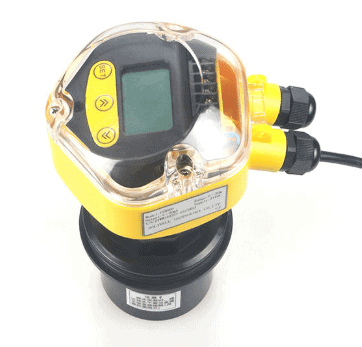
Float Switch Level Sensors for chemical processing

Float level sensors are continuous level sensors. Float level gauges use magnetic floats as measuring elements. magnetic float that rises and falls as liquid levels change. The movement of the float will generate a magnetic field. The sensor’s internal resistance changes linearly, and the intelligent converter converts the resistance change into a 4~20mA standard current signal. It can display the liquid level percentage, 4~20mA current and liquid level value on the spot. It can also output the switching value signal to conduct liquid Bit switch control.

SI-U01 Float Level Sensor
SI-U02 Multi-Point Liquid Level Float Switch
SI-U04 Magnetic Float Level Sensor-Reed Switch

We also supply various chemical flow meters. Can meet the flow measurement of various chemical liquids.

Anti-corrosive Submersible Level Transmitter

A submersible level transmitter made of PTFE is perfect in the harshest applications. Like Acid and alkali environment, Sludge and Slurries. Anti-corrosive Submersible Level Transmitter utilizes the linear change law of liquid height, density, and pressure. It converts the change of liquid level into linear 4-20mADC standard signal output. Integrate temperature compensation calibration technology. Easy installation. Anti-corrosive Submersible Level Transmitter adopts a two-wire system. 4 ~ 20mA output. 24V DC power supply. ATEX, 3 wire, remote mount transmitter optional.

Extended reading: Radar Level Meter for Corrosive Liquids

Frequently
Asked
Questions

Common liquid level sensors are:
Float type liquid level sensor, magnetostrictive liquid level sensor,
Capacitive liquid level sensor, resistance liquid level sensor,
Radar level sensor, laser level sensor,
Ultrasonic liquid level sensor, pressure sensor,
Bubble level sensor, isotope level sensor,
Thermodynamic liquid level sensor
There’re are 7 main types of level transmitters that Sino-Instroffers. Each type of transmitter works in a different way and makes it useful for different types of processes.

Yes. You can buy a capacitive pressure sensor installed at the bottom of the tank. The current output by the capacitive pressure sensor reflects the level of the water level.

1. Flow sensor is a kind of detection instrument used to detect the flow parameters of liquid, gas and other media and convert it to other forms of signals for output. The flow sensor has many advantages such as small size, lightweight, intuitive and clear reading, high reliability, and no pressure loss.
2. Level sensor is a sensor that can replace manual measurement. The liquid level sensor can convert the height of the liquid level into an electrical signal for output, so as to achieve the purpose of controlling the liquid level.

Ultrasonic Level Sensing is a low-cost liquid level measurement technology. Ultrasonic Level Sensing sensors and transmitters are used for tank or river level measurement. Ultrasonic Level Sensing does not need to contact the medium, can be continuously measured at, low cost. Therefore, Ultrasonic Level Sensing is very popular among users. Ultrasonic liquid level sensors are available in general and intrinsically safe types. Output 4~20mA standard signal or output the measurement result to the secondary meter through RS-485. Meets the system’s automatic control.

The liquid level sensor converts the liquid level signal in the container into a switch signal or a voltage and current signal. Then through the external circuit, the measurer can intuitively know the liquid level in the container accurately.

These substances are usually liquids, but level sensors can also be used to monitor solids such as powders.

There are many different types of liquid level sensors and they have a variety of uses, such as industrial and domestic.

Extended reading: How do you calibrate radar level transmitter?

Sino-Inst offers over 10 GWR Corrosive Liquid Chemical Level Sensors for level measurement. About 50% of these are Guided Radar level meters, 40% is the tank level sensor.

A wide variety of GWR Corrosive Liquid Chemical Level Sensors options are available to you, such as free samples, paid samples.

Sino-Inst is a globally recognized supplier and manufacturer of Guided Wave radar level measurement instrumentation, located in China.

Request a Quote

Please enable JavaScript in your browser to submit the form

SIRD-701 Guided Wave Radar Level Sensor

Guided Wave Radar Level Sensor for Liquid and Bulk Solids Contact level measurement.

Guided wave radar is a measuring instrument based on the principle of time travel. The radar wave runs at the speed of light. The operating time can be converted into level signals by electronic components. The probe emits high-frequency pulses and propagates along the cable or rod probe. When the pulse meets the surface of the material, it is reflected back and received by the receiver in the instrument. And convert the distance signal into level signal. SIRD-701 Guided Wave Radar Level Sensor is suitable for liquid and Bulk Solids measurement, and complex process conditions.

Sino-Inst offers a variety of Guided wave radar Level Sensors for industrial level measurement. If you have any questions, please contact our sales engineers.

Features of Guided Wave Radar Level Sensor

Guided wave radar level sensor can be used for continuous measurement of liquids, slurries and granular materials with relatively low dielectric constants. It is suitable for applications where the temperature, pressure changes greatly, and there is inert gas or steam. And has the following characteristics:

1. Strong versatility. Guided wave radar level sensor can continuously measure the level of liquid, solid and powder particles. Choose different probes according to different working conditions. The main probes are divided into three types. They are cable probes, rod probes and coaxial rods. The maximum measurement distance of the cable probe can reach 35 meters. And it has a good measurement effect on the measurement of liquid and solid material levels. Rod probes are mainly used for liquids. Coaxial rod probes are used for liquids and can be used in harsh working conditions such as corrosion and impact.

2. Prevent hanging material. The circuit design and sensor structure of the guided wave radar level gauge make it unaffected during the measurement. It does not require regular maintenance and cleaning to avoid delaying the measurement.

3. Maintenance free. There are no moving parts in the measurement process. integrated design. There is no damage maintenance problem.

4. Strong anti-interference. Guided wave radar level meter uses contact measurement. Strong anti-interference ability. It can also be measured stably under the working conditions containing steam, foam and stirring.

5. Accurate and reliable measurement. The measurement is more accurate. The measurement is not affected by environmental changes. High stability and long service life.

Specifications of Guided Wave Radar Level Sensor

  • Suitable for Medium: Liquid, solid powder
  • Application: Liquid and solid powder measure, complicated process conditions
  • Explosion-proof Grade:  Exia IIC T6 Ga/Exd IIC T6 Gb 
  • Measuring Range: 30m
  • Frequency: 500MHz-1.8GHz
  • Antenna: Single cable or single rod antenna
  • Accuracy: ±10mm
  • Process Temperature:(-40~250)℃
  • Process pressure:(-0.1~4)MPa
  • Signal output:(4~20)mA/HART
  • The Scene Display: Four LCD/Can be programmed 
  • Power Source: Two-wire (DC24V)
  • Four-wire(DC24V/AC220V)
  • Shell: Aluminum /Plastic
  • Connection: Flange (optional) / Thread

Extended reading: Radar Level Meter for Corrosive Liquids

Guided Wave Radar Level Sensor Working Principle

High-frequency microwave pulses from guided wave radar propagate along the detection component (steel cable or steel rod). When encountering the measured medium. Due to a sudden change in the dielectric constant, it causes reflection. A part of the pulse energy is reflected back. The time interval between the transmitted pulse and the reflected pulse is proportional to the distance of the measured medium.

Extended reading: FMCW Radar Level Transmitter 120GHz

Guided wave radar is a measuring instrument based on the principle of time travel. The radar wave runs at the speed of light. The running time can be converted into a level signal by electronic components. The probe emits high-frequency pulses and propagates along the cable or rod probe. When the pulse meets the surface of the material, it is reflected back and received by the receiver in the instrument, and the distance signal is converted into a level signal.

The reflected pulse signal is transmitted to the electronic circuit part of the instrument along the cable or rod probe. The microprocessor processes this signal. Identifies the echo generated by the microwave pulse on the surface of the material. The correct echo signal identification is done by the pulse software.

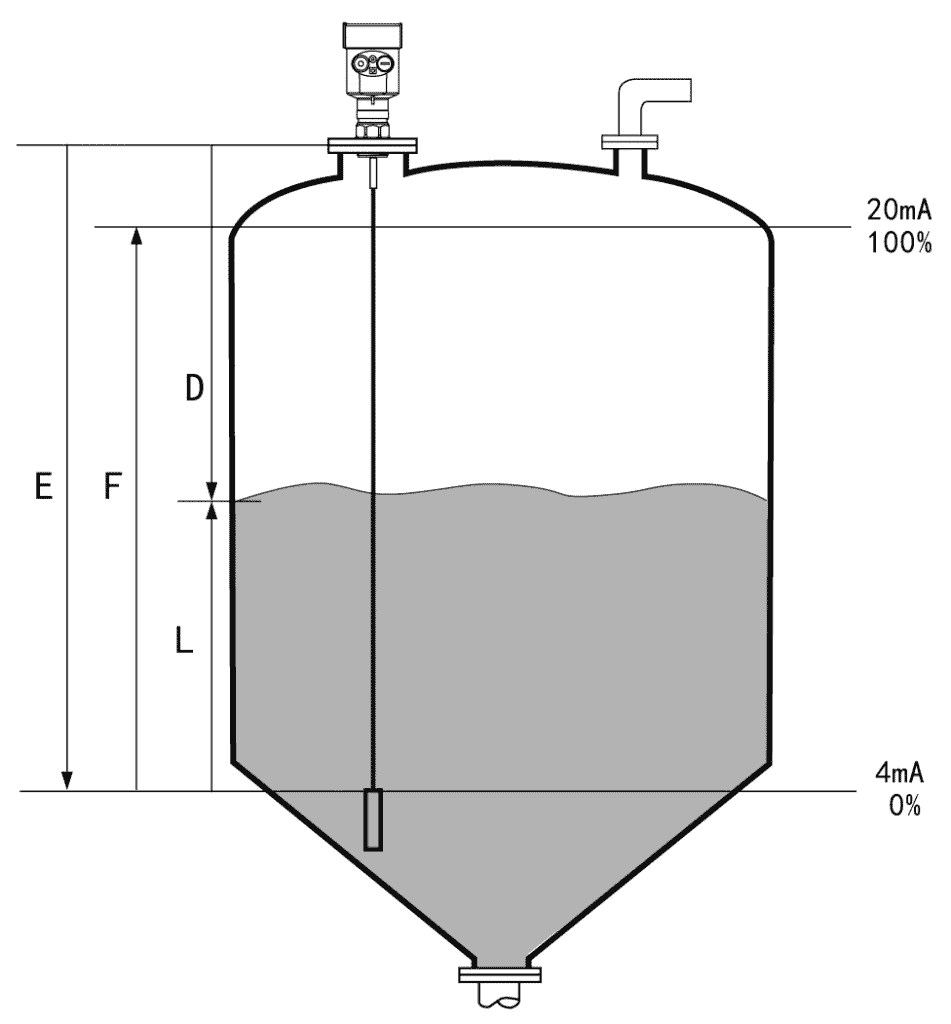
The distance D from the surface of the material is proportional to the time travel T of the pulse:

D=C×T/2

Where C is the speed of lightSince the distance E of the empty tank is known, the level L is:

L=E-D

Set by inputting empty tank height E (=zero point), full tank height F (=full scale) and some application parameters. The application parameters will automatically adapt the instrument to the measurement environment. Corresponding to 4-20mA output.

Ultrasonic Level versus Guided Wave Radar Level

Ultrasonic level sensors are non-contact and provide a cost-effective choice for most straight-wall tank applications. Guided wave radar sensors are suitable for liquid and solid applications and operate independently of process conditions.

Ultrasonic level measurement technology

The ultrasonic liquid level sensor operates by transmitting the sound wave generated by the piezoelectric transducer to the surface of the processing material to be measured. The level sensor measures the length of time it takes for the reflected sound wave to return to the transducer. Successful measurement depends on the reflection of ultrasonic waves from the process material and movement back to the sensor in a straight line. Factors such as dust, heavy steam, water tank obstacles, surface turbulence, foam, and even surface angle will affect the return signal when using an ultrasonic level sensor. It is therefore necessary to consider how the operating conditions affect the sound waves.

  • Sound waves-Sound must travel through the medium (usually air). This makes the liquid level sensor unsuitable for use in vacuum applications where air molecules do not prevent sound waves from propagating.
  • Surface Condition-Foam and other debris collected on the surface of the liquid will absorb sound waves and prevent them from returning to the sensor.
  • Angle of incidence and angle of reflection-Sound waves must be sent and received in a straight line. And the reflective surface must be flat.
  • Operating temperature-Ultrasonic devices are usually plastic with a maximum operating temperature of 60°C. In addition, varying process temperatures may produce inaccurate level readings.
  • Working pressure-Ultrasonic equipment is not suitable for extreme pressure limits; the maximum working pressure should not exceed 30 psig.
  • Environmental conditions-Steam, condensed moisture and other contaminants will change the speed of sound through the air. And greatly affect the accuracy of the returned signal. Therefore, ultrasonic equipment should be installed in a predictable environment.

Guided wave radar (GWR) level measurement

Guided wave radar (GWR) is a method of contact level measurement. It uses a probe to guide high-frequency electromagnetic waves from the level gauge to the measured medium.GWR is based on the principle of Time Domain Reflectometry (TDR). Using TDR, low-energy electromagnetic pulses are guided along the probe. When the pulse reaches the surface of the measured medium, the pulse energy is reflected by the probe to the circuit. The circuit then calculates the liquid level based on the time difference between the transmitted pulse and the received reflected pulse. The sensor can output the analyzed level as a continuous measurement reading through the analog output. Alternatively, the value can be converted into a freely positionable switch output signal.

  • Unstable process conditions-changes in viscosity, density or acidity will not affect accuracy.
  • Stirring surface-boiling surfaces, dust, foam and steam will not affect the performance of the device. GWR can also be used with circulating fluids, propeller mixers and aeration tanks.
  • High temperature and high pressure-GWR performs well at temperatures up to 315°C and can withstand pressures up to 580 psig.
  • Fine powders and viscous liquids-GWR is used with vacuum tanks containing used cooking oil and tanks filled with paint, latex, animal fat, soybean oil, sawdust, carbon black, titanium tetrachloride, salt and grains.

Extended reading: Radar level sensor for solids – Dust solid level measurement

FAQ

How does radar level sensor work?

The radar level sensor is a radar level gauge based on the principle of time domain reflection (TDR). The electromagnetic pulse of the radar liquid level sensor propagates along the steel cable or probe at the speed of light. When encountering the surface of the measured medium, part of the pulse of the radar liquid level sensor is reflected to form an echo and returns to the pulse transmitting device along the same path. The distance between the transmitting device and the surface of the measured medium is proportional to the propagation time of the pulse between them. The liquid level height is calculated.

What is GWR level transmitter?

GWR level transmitter is a guided wave radar level sensor.

How do you calibrate a radar level transmitter?

Three calibration methods:
①Display/debug module (View Point)
② PC debugging software
③HART handheld programmer

Sino-Inst offers over 10 Guided Wave Radar level transmitters for level measurement. About 50% of these are Radar level meters, 40% is the tank level sensor.

A wide variety of Guided Wave radar level meters options are available to you, such as free samples, paid samples.

Sino-Inst is a globally recognized supplier and manufacturer of Guided Wave radar level measurement instrumentation, located in China.

Request a Quote

Non-Contacting Radar Level Measurement

Radar level measurement uses Non-contacting radar technology for Continuous level measurement. Liquids and solids are commonly measured with this measuring technique.

Radar level transmitters use radar technology to perform non-contact continuous level measurement. The radar level indicator converts the level into an electrical signal. The level signal output can then be utilised by other instrumentation to monitor or control. Liquids and solids are commonly measured with this measuring technique. Like: Fly ash silo. Radar level sensors are divided into: Pulsed radar technology and frequency modulated continuous wave (FMCW) radar level sensors.

Sino-Inst produces 120GHz FMCW radar level sensor, 26GHz radar level meter, 6GHz level meter.

Sino-Inst offers a variety of Radar Level Sensors for industrial level measurement. If you have any questions, please contact our sales engineers.

Featured Radar Level Transmitters

FMCW Radar Level Transmitters – 120GHz

Measuring medium: liquid;
Measuring range: 0.05m~30m;
Process connection: G1½A / 1½NPT thread / flange ≥DN50;
Process temperature: -40~80℃;
Process pressure: -0.1~0.3 MPa;
Antenna size: 32mm lens antenna;
Antenna material: PTFE

SI-FMF12 Frequency Modulated Continuous Wave Radar Level Sensor

Measuring medium: liquid Measuring range: 0.05m~35m Process connection: G2A thread/flange≥DN65 Process temperature: -40~110℃ Process pressure: -0.1~1.6MPa Antenna size: 42mm lens antenna Antenna material: PTFE

SI-FMF13 FMCW Radar Water Level Sensor

Measuring medium: liquid
Measuring range: 0.1m~100m
Process connection: flange ≥DN80
Process temperature: -40~110℃
Process pressure: -0.1~0.3MPa
Antenna size: 78mm lens antenna
Antenna material: PTFE

SI-FMF15 FMCW Radar High Temperature Level Sensor

Measuring medium: liquid and Solids
Measuring range: 0.1m~120m
Process connection: flange≥DN80
Process temperature: -40~200℃; -60~1200℃
Process pressure: -0.1~2.5MPa
Antenna size: 78mm lens antenna
Antenna material: PTFE/full filling

Measuring medium: solid
Measuring range: 0.3m~150m
Process connection: flange≥DN80
Process temperature: -40~110℃
Process pressure: -0.1~0.3MPa
Antenna size: 78mm lens antenna + purging (or without purging)
Antenna material: PTFE

Radar Level Transmitters – 80 GHz

80 GHz radar sensor for continuous level measurement of liquids.

Sino-Inst also launched radar level sensor operating at 76-81 GHz.

Radar Water Level Sensor 0.05m~35m ~70m~120m;

Measure the water level of reservoirs, rivers, lakes, dams, deep wells, etc.

Radar Level Transmitters – 26 GHz

SIRD-901 Radar Corrosive Liquid Chemical Level Sensor

Application: various corrosive liquids
Measuring range: 10 meters
Process connection: thread, flange
Process temperature: -40~130℃
Process pressure: -0.1~0.3 MPa
Accuracy: ±5mm
Protection level: IP67

SIRD-902 Drop Antenna Radar Tank Level Sensor

Application: temperature-resistant, pressure-resistant, slightly corrosive liquid
Measuring range: 30 meters
Process connection: thread, flange
Process temperature: -40~130℃ (standard type) / -40~250℃ (high temperature type)
Process pressure: -0.1~4.0MPa
Accuracy: ±3mm
Protection level: IP67

SIRD-902T Microwave Radar Liquid Level Sensor

Application: corrosive liquid, steam, volatile liquid
Measuring range: 20 meters
Process connection: flange
Process temperature: -40~130℃ (standard type) / -40~250℃ (high temperature type)
Process pressure: -0.1~2.0MPa
Accuracy: ±3mm
Protection level: IP67
Frequency range: 26GHz

SIRD-903 26 GHz Radar level Sensor -Dust solid level measurement

Application: solid materials, strong dust, easy to crystallize, condensation occasions
Measuring range: 70 meters
Process connection: universal flange
Process temperature: -40~130℃ (standard type) / -40~250℃ (high temperature type)
Process pressure: -0.1~4.0 MPa (flat flange) -0.1~0.3 MPa (universal flange)
Accuracy: ±15mm
Protection level: IP67

SIRD-904 Radar Level Gauge with Parabolic Antenna

Application: solid materials, strong dust, easy to crystallize, condensation occasions
Measuring range: 80 meters
Process connection: threaded, universal flange
Process temperature: -40~130℃ (standard type) / -40~250℃ (high temperature type)
Process pressure: -0.1~0.3MPa
Accuracy: ±15mm
Protection level: IP67

SIRD-905 Horn Antenna Radar Tank Level Sensor

Application: solid particles, powder
Measuring range: liquid 35 meters / solid block 20 meters / solid powder 15 meters
Process connection: thread, flange
Process temperature: -40~130℃ (standard type) / -40~250℃ (high temperature type)
Process pressure: -0.1~4.0 MPa (flat flange) -0.1~0.3 MPa (universal flange)
Accuracy: ±15mm
Protection level: IP67

SIRD-906 Radar Sanitary Level Sensor

Application: sanitary liquid storage container, strong corrosive container
Measuring range: 20 meters
Process connection: flange
Process temperature: -40~130℃ (standard type) / -40~200℃ (high temperature type)
Process pressure: -0.1~4.0MPa
Accuracy: ±3mm
Protection level: IP67

SIRD-909 Radar Non-Contact Water Level Sensor

Application: rivers, lakes, shallows
Measuring range: 70 meters
Process connection: thread G1½ʺ A / bracket / flange
Process temperature: -40~100℃
Process pressure: normal pressure
Accuracy: ±10mm
Frequency range: 26GHz

SIRD-908 Radar Water Level Sensor

Application: rivers, lakes, shallows
Measuring range: 30 meters
Process connection: thread G1½ʺ A / bracket / flange
Process temperature: -40~100℃
Process pressure: normal pressure
Accuracy: ±3mm
Frequency range: 26GHz

Radar Level Sensors – 6 GHz

SIRD-801 Radar Level Sensor-Suitable for Liquid, Slightly Corrosive Liquid

Applicable medium: liquid, slightly corrosive liquid
Application: Sewage level measurement; low volatile acid-base level measurement; slurry level measurement
Explosion-proof certification: Exia IIC T6 Ga/ Exd IIC T6 Gb
Measuring range: 20m
Antenna: Rod antenna (PP/PTFE)
Frequency: 6 GHz
Process temperature: (-40~130)℃

Applicable medium: liquid, especially suitable for strong corrosive liquid
Application: pressure level measurement; sewage level measurement; volatile acid-base level measurement; slurry level measurement
Explosion-proof certification: Exia IIC T6 Ga/Exd IIC T6 Gb
Measuring range: 20m
Antenna: Rod antenna (PTFE)
Frequency: 6 GHz

SIRD-803 Radar Oil Tank Level Sensor

Applicable medium: liquid, especially pressure and volatile liquid
Application: crude oil, light oil level measurement; aluminum hydroxide level measurement; raw coal, limestone storage level measurement; coke level measurement
Explosion-proof certification: Exia IIC T6 Ga/ Exd IIC T6 Gb
Measuring range: 35m
Antenna: Horn antenna
Frequency: 6 GHz

SIRD-804 Radar Solid Level Sensor

Applicable medium: solid particles or blocks, not suitable for solid powder
Application: Lime block measurement; raw coal measurement
Explosion-proof certification: Exia IIC T6 Ga/ Exd IIC T6 Gb
Measuring range: 35m
Antenna: Horn antenna
Frequency: 6 GHz
Process temperature: -40~130℃(standard type)/-40~250℃(high temperature type)

SIRD-805 Radar Slurry Tank Level Sensor

Applicable medium: liquid, especially low-dielectric constant, slightly viscous, agitated liquid
Application: 20% flour slurry tank measurement; liquid measurement with stirring
Explosion-proof certification: Exia IIC T6 Ga/Exd IIC T6 Gb
Measuring range: 20m
Antenna: Horn antenna
Frequency: 6 GHz
Process temperature: -40~130℃(standard type)/-40~250℃(high temperature type)

SIRD-806 Radar High Temperature Level Sensor

Applicable medium: solid, especially medium measurement in high temperature environment
Application: Blast furnace level measurement
Explosion-proof certification: Exia IIC T6 Ga/Exd IIC T6 Gb
Measuring range: 15m
Antenna: Horn antenna
Frequency: 6 GHz
Process temperature: (-40~400)℃

Extended Reading: What is level transmitter working principle?

Features of Radar Level Measurement

  1. Radar level gauge can measure liquid and solid media. For example: crude oil, slurry, raw coal, pulverized coal, volatile liquids, etc.;
  2. Can be measured in vacuum can measure all media with a dielectric constant> 1.2. Measuring range up to 150m;
  3. The power supply and output signal pass a two-core cable (loop circuit), using 4…20mA output or digital signal output;
  4. Non-contact measurement and installation are convenient and extremely stable materials are used. It is accurate and reliable with a resolution of up to 1mm;
  5. Not affected by noise, steam, dust, vacuum and other working conditions;
  6. Not subject to changes in medium density and temperature. Process pressure can reach 400bar, medium temperature can reach -200℃ to 800℃;
  7. There are various installation methods to choose from: Top installation. Side installation. Bypass pipe installation. And waveguide installation;
  8. Debugging can be selected in many ways: Using programming module debugging , equal to an analytical processing instrument. SOFT software debugging. HART handheld programmer debugging. Debugging is convenient and fast.

Extended reading: Oil-water interface measurement-Magtech magnetic level indicator

Radar Level Measurement: Measuring Principle

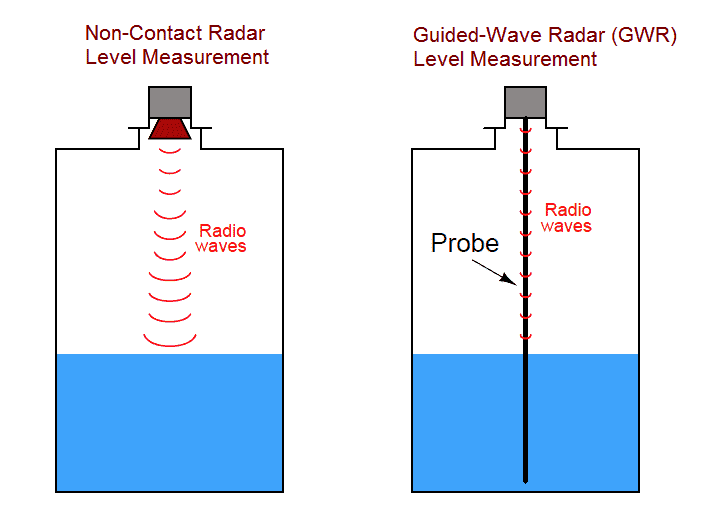
Radar Level Measurement and guide wave radar level measurement Image source: https://instrumentationtools.com/radar-level-measurement/

Very short microwave pulses with very low energy are transmitted and received through the antenna system. The radar wave runs at the speed of light. The operating time can be converted into level signals by electronic components. A special time extension method can ensure stable and accurate measurement in a very short time.

Electromagnetic waves propagate in the air at the speed of light. The distance between the radar level gauge and the surface of the material can be expressed by the following formula:   

D = (1/2)*CT

In the formula:

D ———the distance between the radar level gauge and the surface of the material;   

C ———Speed of light   

T ———Pulse time.

Then the liquid level is:   L = E-D

In the formula:

L — liquid level;   

E ———The total height of the tank;   

D ———Air height.

Even in the presence of false reflections, the new micro-processing technology and the unique ECHOFOX- software can accurately analyze the level echo. By inputting the size of the container, the distance value can be converted into a signal proportional to the level. The instrument can be debugged with empty positions.

Extended reading: Amazing Solutions for Continuous Liquid Level Measurement

Types of radar level transmitters

Generally speaking, we have the following two division methods for the types of radar level sensors.

1. There are two types of radar level sensor: contact and non-contact.

Also known as: Noninvasive or Invasive.

The non-contact type includes pulse radar and continuous frequency modulation. The probe is usually a horn antenna, that is, a tubular antenna, but the diameter of the horn is different, and the length of the horn is different. So it looks like some speakers, and some look like tubes, but they are actually one.

In addition, the contact radar is equipped with a rod antenna, usually called a guided wave radar, which is a pulse radar in principle. You can also learn more about guided wave radar level sensors.

2. In principle, radar level sensors can be divided into three main types: Pulsed. Frequency modulated continuous wave. And guided wave radar.

Non-contact radar is called a radar level sensor, which includes two types of rod antenna and horn.The contact radar level gauge can also be called a guided wave radar level gauge. Including single rod type and single cable type, double cable type, coaxial type, etc., which includes high-frequency and low-frequency radar level gauge.

Extended Reading: Dielectric constant for radar level transmitter

Advantages of radar level measurement

  • Measurement is not affected by temperature, pressure or dust
  • User-friendly adjustment saves time
  • Non-contact, continuous level measurement over larger ranges
  • Unaffected by sludge and biomass, dust, foam, oil, grease and other coatings, uneven surfaces, turbulence, pressure, and vacuum
  • Single frequency radar level sensors for liquid sensing, dual frequency radar level sensors for level measurement of aggregates, gravel, sand, coal, asphalt, and other solids
  • Simple mounting and push-button calibration

Extended reading: Radar Level Sensor Working Principle

Read More about: List of Differences: Radar vs Ultrasonic Level Measurement

Disadvantages of radar level measurement

  • Very sensitive to build-up on the sensor surface.
  • They are very expensive. Price increases with accuracy.

Extended Reading: Low Cost Float Level Sensor for Tank Liquid Volume Monitoring

Radar VS Guided Wave Radar level measurement

Guided wave radar level sensor
Principle:
The guided wave radar level sensor is a measuring instrument based on the principle of time travel. The radar wave runs at the speed of light. The running time can be converted into a level signal by electronic components. The probe sends out high-frequency pulses and propagates along the cable probe. When the pulse meets the surface of the material, it is reflected back and received by the receiver in the instrument. The distance signal is converted into a level signal.

Extended Reading: Guided-wave radar (GWR) level transmitter working principle

Is there any difference between them?

  1. Different ways of contact:
    Radar level gauges are non-contact. Guided wave level gauges are contact-type. That is to say, the guided wave type cannot be used in the occasions where food grade requirements are high.
  2. The working medium is different: Guided wave radar level gauges also need to consider the corrosiveness and adhesion of the medium. Moreover, the installation and maintenance of guided wave radars that are too long are more difficult. In the case of low dielectric constant, the measurement principle of radar or guided wave radar is based on the difference in dielectric constant. Since the waves emitted by ordinary radar are divergent, when the dielectric constant is too low, the signal is too weak to measure. Stable. The guided wave radar wave propagates along the probe. The signal is relatively stable. In addition, the general guided wave radar also has a bottom detection function, which can be corrected according to the measured value of the bottom echo signal to make the signal more stable and accurate.
  3. Selection is different: Ordinary radars can be used interchangeably. Guided wave radars cannot be used interchangeably due to the fixed length of the probe (cable) according to the original working conditions. The selection of guided wave radars is more troublesome than ordinary radars.
  4. Different measuring ranges: Ordinary radar is more commonly used on 30 and 40m tanks, and can even measure 150m. Guided wave radar also needs to consider the force of the probe (cable). It is also because of the force that the measurement distance of the guided wave radar is generally not very long. However, the guided wave radar has obvious advantages in some special working conditions, such as stirring in the tank and large medium fluctuations. The measured value of the guided wave radar fixed at the bottom of such working conditions is more stable than that of the flexible radar. There are also small tanks. For level measurement, due to the small installation measurement space (or many interferences in the tank), general radar is not suitable, and the advantages of guided wave radar are revealed at this time.
https://www.drurylandetheatre.com/senors-for-tank-level-measurement/

FAQ

What is blocking distance in Level transmitter?

The measurement dead zone refers to: when the measurement range falls into the blind zone, the deviation between the measured value and the true value does not meet the accuracy requirements set by the level gauge.
For example, a 6GHz electromagnetic radar level gauge has a wavelength of several centimeters. At a distance of several wavelengths from the probe, the waveform will reflect interference multiple times, making it difficult to identify the correct reflected wave. The distance of these several wavelengths is the blind zone of the radar level gauge.
Some level gauges do not have blind spots, such as capacitance (RF admittance)/static pressure/ray type, etc…
It should be noted that blind spots and sensitivity (resolution) are not a concept.
Extended reading: Features Of Magnetostrictive Level Transmitters

How do you calibrate radar level transmitter?

How do you calibrate radar level transmitter?

Set up the guided wave radar level transmitter

Check the configuration of the lower range value (0% level, 4 mA) and high range value (100% level, 20 mA).
Make sure that the inputted data is as per the datasheet.
For example, the lower range value is 10 inch and the high range value is 35 inch (both of it are measured from the bottom of level transmitter probe)

Fill the level transmitter chamber with water up to the 0% level.
Read the level measurement in the transmitter LCD (or in the HART communicator). Set this condition as 0% level through HART communicator.

Read the mA output of the transmitter by using a multimeter.
Adjust (if any) through the HART communicator so that the output of the transmitter (on the multimeter) is 4 mA.

Fill the level transmitter chamber with water up to the 100% level.
Read the level measurement in the transmitter LCD (or in the HART communicator). Set this condition as 100% level through HART communicator.

Read the mA output of the transmitter by using a multimeter.
Adjust (if any) through the HART communicator so that the output of the transmitter (on the multimeter) is 20 mA.

Extended reading: Non contact level measurement

Sino-Inst offers over 10 Radar level transmitters for level measurement. About 50% of these are Radar level meters, 40% is the tank level sensor.

A wide variety of radar level meters options are available to you, such as free samples, paid samples.

Sino-Inst is a globally recognized supplier and manufacturer of radar level measurement instrumentation, located in China.

Request a Quote

Please enable JavaScript in your browser to submit the form

Ultrasonic Level Sensing

Ultrasonic Level Sensing sensors and transmitters are used for continuous, non-contact level measurement.

Ultrasonic Level Sensing is a low-cost liquid level measurement technology. Ultrasonic Level Sensing sensors and transmitters are used for tank or river level measurement. Ultrasonic Level Sensing does not need to contact the medium, can be continuously measured, low cost. Therefore, Ultrasonic Level Sensing is very popular among users. Ultrasonic liquid level sensors are available in general and intrinsically safe types. Output 4~20mA standard signal or output the measurement result to the secondary meter through RS-485. Meets the system’s automatic control.
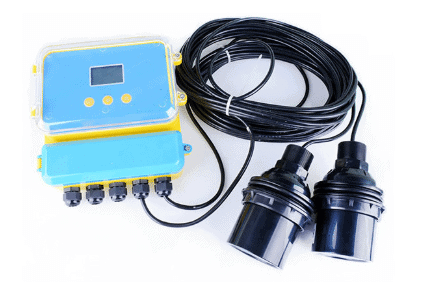
Sino-Inst offers a variety of ultrasonic liquid level sensors and transmitters for continuous, non-contact tank level measurement. If you have any questions, please contact our sales engineers.

Featured Non Contact Ultrasonic Level Sensing Devices

What is Ultrasonic Level Measurement?

Ultrasonic Level Sensing measures liquid levels based on the principle of ultrasound. When ultrasonic waves encounter a high-density medium while propagating in a low-density medium, they cannot penetrate the high-density medium. There will be reflections at the interface of the two media. The ultrasonic liquid level gauge is made using this feature.

In the measurement, the ultrasonic pulse is emitted by the sensor (transducer), and the sound wave is reflected by the liquid surface and then received by the same sensor or ultrasonic receiver. Through piezoelectric crystal or magnetostrictive device into electrical signals. The distance between the sensor and the measured liquid surface is calculated by the time between the transmission and reception of sound waves.

Due to the non-contact measurement, the measured medium is almost unlimited. It can be widely used to measure the height of various liquid and solid materials.
The ultrasonic liquid level transmitter is composed of three parts: ultrasonic transducer, processing unit and output unit.

Ultrasonic Level Sensor Working Principle

The working principle of the ultrasonic liquid level sensor is:

Ultrasonic transducer (probe) emits high-frequency pulse sound waves, and the surface of the measured level (material) is reflected back. The reflected echo is received by the transducer and converted into an electrical signal. The propagation time of the sound wave is proportional to the distance from the sound wave to the surface of the object.

The relationship between the sound wave transmission distance S and the sound speed C and the sound transmission time T can be expressed by the formula: S=C×T/2.

The probe part emits ultrasonic waves, which are then reflected by the liquid surface. The probe part is received again. The distance from the probe to the liquid (object) surface is proportional to the elapsed time of the ultrasonic wave:
hb = CT2
Distance [m] = time × speed of sound/2 [m]
The temperature compensation formula of sound velocity:
Ambient sound velocity = 331.5 + 0.6 × temperature

Ultrasonic Level Sensor Advantages and Disadvantages

The advantages of ultrasonic liquid level gauge are very outstanding. It is mainly reflected in the following aspects:

  1. The structure is simple. The reading is convenient. It is very easy to install and maintain.
  2. Safe and clean. The instrument has long service life. The measurement is stable and reliable with high precision.
  3. Adopt non-contact measurement. It is not easily affected by the viscosity and density of the liquid.

More about: Top 5 Ultrasonic Level Sensor Applications

Of course, the ultrasonic liquid level gauge also has its own limitations and insurmountable defects. Specifically, it is mainly manifested in:

  1. There is a blind spot in the ultrasonic liquid level measurement. The dead zone is the area where the meter cannot measure. During the transmission of ultrasonic pulses, a small area near the ultrasonic transducer usually cannot receive sound waves. The blind zone where sound waves cannot be received is related to the measurement distance of ultrasonic waves. Generally speaking, the smaller the measurement distance, the smaller the blind zone. The larger the measurement distance, the larger the blind zone;
  2. Ultrasonic liquid level measurement is easily affected by temperature. In the actual measurement, the change of temperature will cause the change of sound speed. This will lead to errors in the measurement;
  3. There should be no obstacles under the sound wave. Because the ultrasonic liquid level meter uses the principle of sound wave reflection to achieve liquid level measurement. If there are obstacles, it will affect the ultrasonic emission, causing signal loss and affecting the measurement effect;
  4. Ultrasonic liquid level gauge should not be used to measure pressure vessels. Because the pressure mainly affects the probe. There is also a certain relationship between the pressure and the temperature. The change in pressure will affect the change in temperature. This will affect the change in the speed of sound. The accuracy of the measurement will be affected;
  5. Ultrasonic liquid level gauge can not be used in the occasions with water mist, medium that is easy to produce a lot of foam, and volatile medium. Because this kind of working condition is easy to absorb the sound wave or interfere with the sound wave emission, the signal is lost and the accuracy is reduced;
  6. Ultrasonic liquid level gauge is greatly affected by dust. This is because although the dust environment has little effect on the speed of sound, it has a very significant effect on the attenuation of sound waves. Therefore, it is best not to use an ultrasonic level gauge in the presence of dust.

FAQ

Can ultrasonic sensor detect water level?

Ultrasonic liquid level sensor can be used for water level measurement. The principle of ultrasonic reflection used. According to the contact between the sound wave emitted by the pool ultrasonic liquid level gauge and the liquid surface. According to the length of time it reflects back. To measure the height of the liquid level in the tank.
Liquid level sensors are used in many sites to detect some conditions that require liquid level monitoring. It is well known that the liquid level of some sewage treatment tanks, the liquid level on the tank, the liquid level on the river channel and so on.
Extended reading: Case Study: Automatic Sludge Blanket Level Detector

How does a capacitive level sensor work?

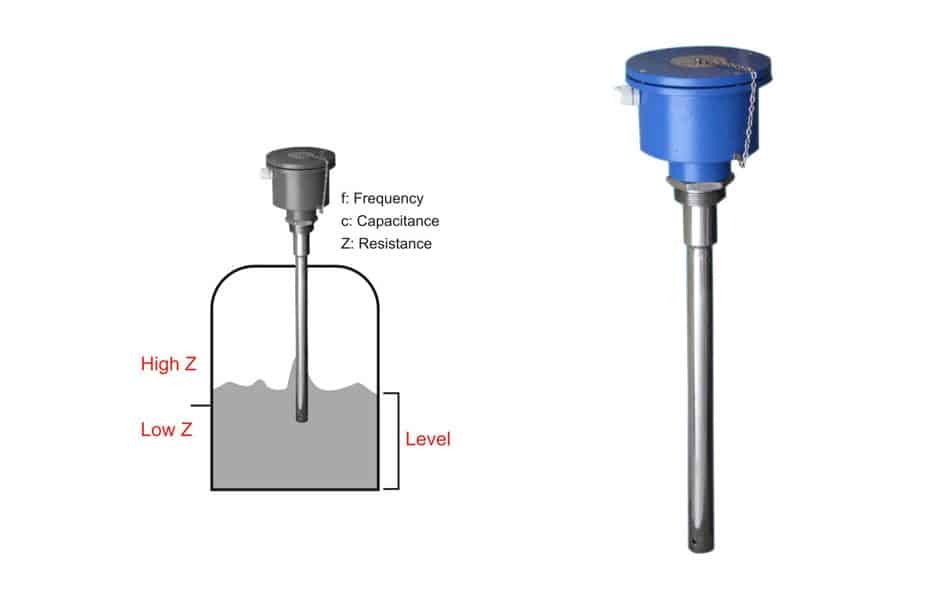
The principle of capacitive level measurement
is based on the capacitance change of a capacitor.
The probe and the tank wall form a capacitor,
whose capacitance is dependent on the amount of product in the tank:
An empty tank has a lower, a filled tank a higher capacitance.
A simple capacitor consists of two electrode plate,
separated by a small thickness of an insulator,
such as solid,
liquid, gas, or vacuum.
This insulator is also called as dielectric.
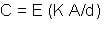
Value of C depends on dielectric used,
area of the plate and also distance between the plates.


Where:
C = capacitance in picofarads (pF)
E = a constant known as the absolute permittivity of free space
K = relative dielectric constant of the insulating material
A = effective area of the conductors
d = distance between the conductors
This change in capacitance can be measured using AC bridge.

How does water level sensor work?

There are many types of water level sensors. Including single flange static pressure / double flange differential pressure water level sensor, float type water level sensor, magnetic water level sensor, input type water level sensor, electric inner float water level sensor, electric float level sensor, capacitive water level sensor, magnetostrictive Water level sensor, servo water level sensor, etc., ultrasonic water level sensor, radar water level sensor, etc. It can be divided into contact type and non-contact type.
Extended reading: Radar Non Contact Water Level Sensor

How does a radar level transmitter work?

In radar level measurement,
microwaves are transmitted by the antenna system of the radar sensor,
to the measured product, reflected by the product surface,
and received back by the antenna system.
The time from emission to reception of the signals is proportional to the level in the vessel.
In continuous non-contact level measurement with radar,
the sensor sends microwave signals towards the medium from above.
The surface of the medium reflects the signals back in the direction of the sensor.
Using the received microwave signals,
the sensor determines the distance to the product surface
and calculates the level from it.
Liquids and solids are commonly measured with this measuring technique.

Sino-Inst offers over 10 Ultrasonic Level Sensing sensors and transmitters for level measurement. About 50% of these are float liquid level meters, 40% is the level switches.

A wide variety of Ultrasonic Level Sensing sensors and transmitters options are available to you, such as free samples, paid samples.

Sino-Inst is a globally recognized supplier and manufacturer of Ultrasonic Level Sensing sensors and transmitters instrumentation, located in China.

Request a Quote

Please enable JavaScript in your browser to submit the form

Float Level Sensors – Single and Multipoint

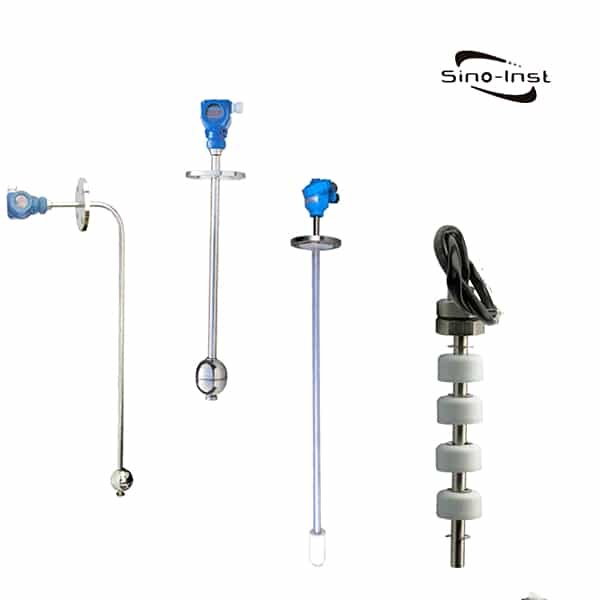
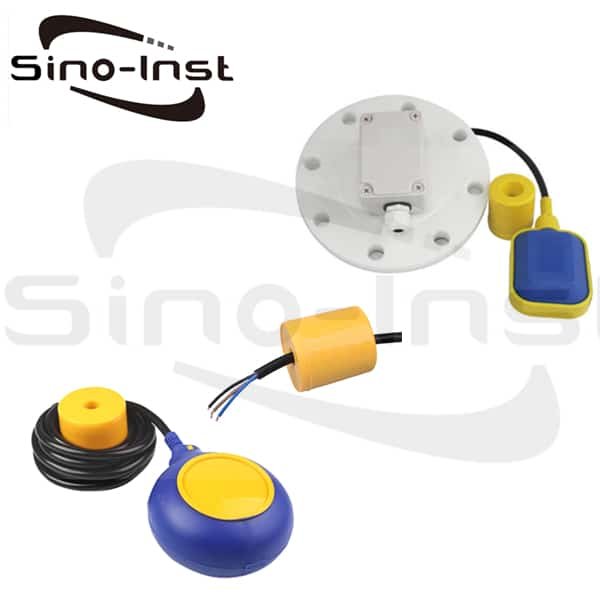
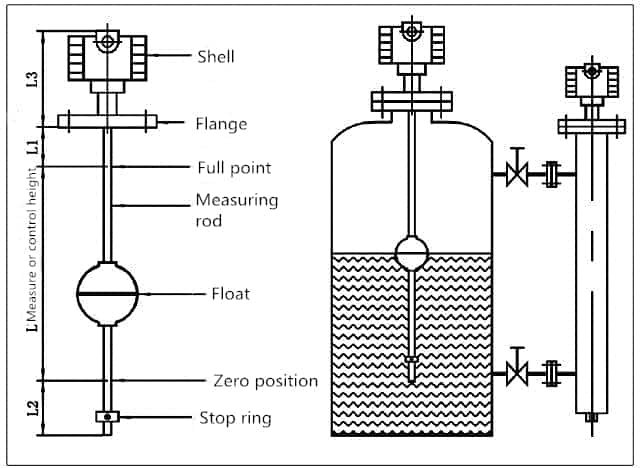
Float level sensor is a kind of continuous liquid level measurement sensor. Also called float level switch, float level gauge, float level transmitter.

Float level sensors are continuous level sensors. It can display the liquid level percentage, 4~20mA current and liquid level value on the spot. Output the switching value signal to conduct liquid Bit switch control. Low-cost. Single-point or multi- point measurement and control optional.

Sino-Inst offers a variety of Float level sensors for industrial level measurement. If you have any questions, please contact our sales engineers.

Featured Float Level Sensors & Switches

SI-U01 Float Level Sensor
SI-U02 Multi-Point Liquid Level Float Switch
SI-U03 Float Switch Water Level Controller
SI-U04 Magnetic Float Level Sensor-Reed Switch
SI-U05 Cable Float Level Sensor & Swtich

What is float level sensor?

Float level sensor uses magnetic float as the measuring element. Through magnetic coupling, the internal resistance of the sensor changes linearly. The smart converter converts the resistance change into a 4-20mA standard current signal. It can display the percentage of liquid level, the current of 4 ~ 20mA and the value of liquid level. Remote transmission control room can realize automatic detection, control and recording of liquid level. This instrument is suitable for petroleum, chemical, power, light industry and pharmaceutical industries, such as sewage treatment and medium level measurement in various atmospheric and pressure vessels, especially for underground tanks and tanks.

Float level sensor working principle

Float level meter is an instrument for measuring liquid level. It is widely used in the field of liquid measurement. Many industries will choose to use it for measurement equipment. Such as the petroleum, chemical, and pharmaceutical industries.

Float level sensor: Float level sensor is designed and produced based on the principle of buoyancy and static magnetic field. The position of a floating ball with a magnet (floating ball for short) in the measured medium is affected by buoyancy. The change of the liquid level causes the position of the magnetic float to change. The role of the magnet and sensor (reed switch) in the floating ball changes the number of components (such as fixed resistance) connected in series to the circuit. Thereby changing the electrical quantity of the instrument circuit system. That is, changes in the position of the magnetic float cause changes in the electrical quantity. The change of the electrical quantity is detected to reflect the liquid level in the container.

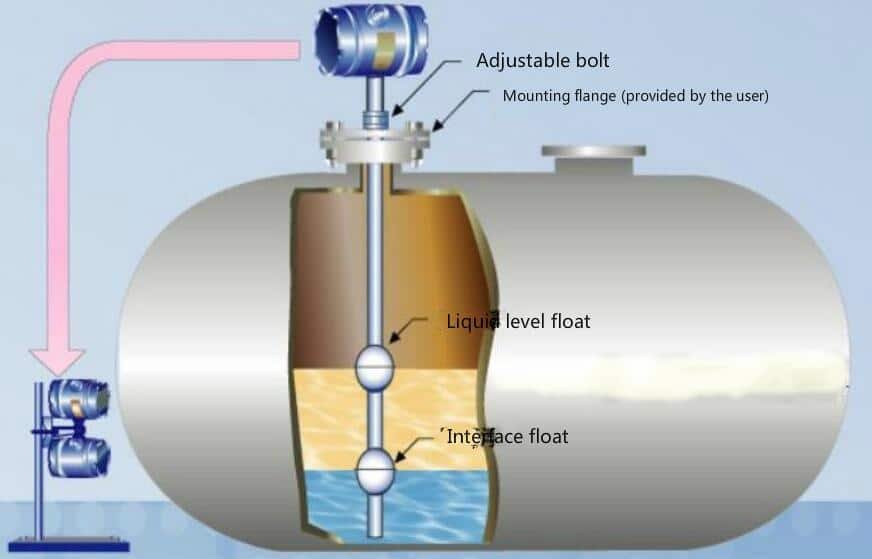
The float level sensor is installed on the top of the container through a connection flange. The float ball floats on the liquid surface according to the principle of discharging the liquid volume phase and so on. When the liquid level of the container changes, the float ball also moves up and down. The reed switch of the ball level gauge is magnetically attracted to change the position of the liquid level into an electrical signal. The actual position of the liquid is displayed digitally by the display instrument. The floating ball level gauge can achieve long-range detection and control of the liquid level.

Float level sensor advantages and disadvantages

Advantages

  • Long life span, stable and reliable operation, easy installation, almost no maintenance
  • None influence of measured medium in physical and chemical state. Eg: medium electrical conductivity, dielectric constants, foam, pressure, temperature, evaporation, boiling, bubbling effect etc, .
  • Choose appropriate material can be used in a variety of bad media environment with densities ≥ 0.5G/CC ;
  • Interface measurement with two media of different density control;
  • Wide range of application. Pressures from vacuum to PN160 (special up to PN320), temperature -40~+150 ° c
  • Design, explosion-proof, suitable for explosive environments;
  • Controller can be used to control the upper and lower liquid level.

Disadvantages

  • Low accuracy.
  • The installation position is limited by the shape of the container.
  • Most float level gauges are not suitable for corrosive or hazardous liquid media.

Many users are consulting float ball level timing and often confuse it with float ball level switches and float ball level controllers.
But they are not the same product, and the functions and prices differ greatly.
If they are mixed, it will cause the impression that some of them are sold abnormally and some of them are extremely low in price.
So, what are the differences between float level gauge, float level switch and float level controller?

What is a liquid level switch?

The float level switch uses magnetic force to operate. There is no mechanical connection. The operation is simple and reliable.

The magnetic float of the float level switch is used to rise or fall with the liquid level, so that the reed switch chip at the set position in the sensor detection tube is activated, and the contact open (close) conversion signal is issued.

One or more Reed tubes are installed in the sealed non-magnetic tube. Then the tube is passed through one or more hollow floating balls with ring magnets inside. The rise or fall of the liquid will move the floating balls up and down together. Thereby, the reed switch in the non-magnetic conductive tube is attracted or disconnected, thereby outputting a switching signal.

More about: 😉Liquid level float switch technology|continuous-point level

More about Float switch From Wikipedia.

Level switch working principle

The Cable Float Level Switch is with simple structure of using micro switch or proximity switch or reed switch to control the contact. And it is user friendly design for level measurement. The switches will send out ON or OFF contact signal output. The floating angle is larger than a certain degree. Then the state of the iron ball and reed switch will be changed for actuation. For wastewater and applications at different temperatures, the material of the float can be selected from plastic to stainless steel. Cable float level switch controls long distance and multi-point contact detection. Cable float level switch can be used for transparent liquid and granular liquid industries.

The Multi-Point Liquid Level Float Switch operates magnetically, without mechanical connections. And it is simple and reliable. When the floating ball switch measures the floating medium of the test medium, the float moves the main body. And at the same time, the magnet on the other end of the float will control the magnet on the switch operating lever.Set one or more reed switches in a closed metal or plastic tube. And then pass the tube through one or more, hollow and floating ring with ring magnet inside. And use the fixed ring to control the floating ball and the magnetic spring. The switch is in the relevant position, which makes the float float up and down within a certain range. The magnet in the float is used to attract the contacts of the reed switch, which generates the opening and closing action.

Frequently
Asked
Questions

The float level switch is a kind of level switch. The float level switch uses magnetic force to operate. No mechanical connections. The operation is simple and reliable. When the float switch floats the measured medium, the float moves the main body. At the same time, the magnet on the other end of the float will control the magnet on the switch action lever.

Continuous liquid level sensors provide continuous liquid measurement and provide accurate liquid levels in tanks/vessels at all times.

Typical applications that require continuous liquid level sensors are. In some processes, understanding the liquid level is critical, or in some processes, high accuracy is essential. Such as process control or inventory control and management.

Examples that can be used as continuous level sensors:
Optical Level Sensor; Submersible Level Sensor; Ultrasonic Level Sensor

The float level detector is used to measure liquid levels in a tank in which a float rests on the surface of the liquid and follows the changing level of the liquid.

Ultrasonic Level Indicator, also called Ultrasonic level sensor, or ultrasonic level transmitter. In this type of transmitter, an ultrasonic transducer is mounted at, or near the top of a container containing liquid. The transducer sends out an ultrasonic pulse. The pulse hits the surface of the liquid, and gets reflected. The sensor then calculates the fill level based on the time between the transmitted and received signal.
Extended reading: Ultrasonic Level Switch-External Mounted

Common liquid level sensors are:
Float type liquid level sensor, magnetostrictive liquid level sensor,
Capacitive liquid level sensor, resistance liquid level sensor,
Radar level sensor, laser level sensor,
Ultrasonic liquid level sensor, pressure sensor,
Bubble level sensor, isotope level sensor,
Thermodynamic liquid level sensor
Therhere are 7 main types of level transmitters that Sino-Instroffers. Each type of transmitter works in a different way, and makes it useful for different types of processes.

Related Blogs

Sino-Inst offers over 10 Float Level Sensors – Single and Multipoints for level measurement. About 50% of these are float liquid level meters, 40% is the level switches.

A wide variety of Float Level Sensors – Single and Multipoints options are available to you, such as free samples, paid samples.

Sino-Inst is a globally recognized supplier and manufacturer of Float Level Sensors – Single and Multipoint instrumentation, located in China.

Request a Quote

Magneto-strictive Hydraulic Cylinder Position Sensor

Hydraulic Cylinder Position Sensor is Designed for use in compact hydraulic cylinders

Magnetostrictive cylinder position sensor is a compact linear displacement sensor. Sino-Inst supplies cylinder position sensors suited to hydraulic and pneumatic applications. Cylinder position sensor output signals include: analog, SSI, Canopen.

  • Designed for use in compact hydraulic cylinders;
  • Linear measurement, absolute position output;
  • Measuring range: 50mm~2500mm, customized according to customer needs
  • Humidity/dew point: 90% humidity, no frost
  • Output signal: current, voltage
  • Power supply voltage: 9-32Vdc
  • Temperature range: -40℃ ~ +105℃
  • Electrical protection: IP67
  • Pressure resistance: 35MPa (continuous)/70MPa (peak)

Specifications of Hydraulic Cylinder Position Sensor

Input
Measurement dataLinear displacement
Measuring stroke50mm-2500mm, can be customized according to user needs
Number of measurementsOne
Output
Voltage0.5~4.5Vdc  Maximum load resistance of the controller: ≥10kΩ)
Electric current4~20mA, 20~4mA, 0~20mA, 20~0mA      (Minimum/large load 0/250 Ω)
Accuracy
Resolution±0.1mm(50~400mm) Range÷4096(>400mm)
Nonlinearity±0.1mm(50~400mm)   0.02%(>400mm)
Repeat accuracy±0.1mm
Update time2.0ms
Working condition
Magnetic ring speedAny
Operating temperature-40~105℃
Humidity/Dew point90% humidity, no condensation
Temperature Coefficient<30ppm/℃
Impact indexGB/T2423.5 100g (11ms)
Vibration indexGB/T2423.10 25g/10-2000HZ
Electrical protectionIP67
EMC testGB/T17626.2/3/4/6/8, grade 4/3/4/3/3, Class A, CE certification; ISO13766, ISO11452-2/4
Structure and materials
Electronic warehouseStainless steel 304
RodStainless steel 304
Magnetic ringVarious magnetic rings
Outer tube pressure350bar/700bar (peak value) when installed in the liquid cylinder
Installation
Installation directionAny direction
Installation formElectronic warehouse outer circle
Electrical connections
Outgoing wayStraight out cable or aviation plug
Input voltage9-32Vdc
Power consumption1W
Polarity protectionMaximum -30Vdc
Overpressure protection36Vdc max
Insulation resistance>10MΩ
Dielectric strength500V

Features of Magnetostrictive Hydraulic Cylinder Position Sensor

  • Compact structure: suitable for occasions with strict requirements on the installation space of the electronic head. It has a large number of applications in construction machinery
  • Rugged and durable: fully enclosed design. Adapt to harsh environments. The highest IP68 protection level
  • Straight line measurement: absolute output. No need to return to zero. Multiple signal interfaces are optional
  • Small size and easy to use.
  • Standard signal output, maintenance-free
  • Never wear: continuous non-contact measurement
  • Strong anti-interference and anti-vibration capabilities
  • Low power consumption. Effectively reduce system heating
  • Full range adjustable: 100% adjustable zero and full range
  • High resolution: resolution up to 1um

Magnetostrictive Cylinder Position Sensor analog output method

The MH series Magnetostrictive Cylinder Position Sensor has a built-in 16-bit D/A converter. It can accurately convert the absolute position of the vernier magnetic ring into a standard 4-20mA current signal or other signals in real time. The output signal has a linear relationship with the effective range. The zero point, full scale and positive and negative directions can be set by a screwdriver 100% according to the needs of on-site use. The output standard analog signal can be directly output to the PLC control module (such as Siemens 331 module) or other instruments.

Magnetostrictive Hydraulic Cylinder Position Sensor installation dimensions

MH series Magnetostrictive Cylinder Position Sensor, all built-in compact products. The size of the electronic head is only 48mm (diameter) × 21mm (thickness). It is suitable for built-in measurement occasions that have strict requirements on the installation space of the electronic head. Compact structure and strong anti-interference ability. It can be widely used in construction machinery, walking machinery, power machinery and other occasions. And it can be replaced with the same type of linear displacement sensor abroad.

Extended reading: Hydraulic oil flow measurement solutions.

Magnetostrictive Cylinder Position Sensor installation

MH series pressure-resistant outer tube, stainless steel electronic warehouse, specially designed for the use of hydraulic systems. Built into the hydraulic cylinder. Withstand pressure up to 35MPa continuous (70MPa peak).

Installation Notes:
To install the sensor housing, M5 DIN913 grub screws are required. The sensor can only be fixed in the direction of the axis. Since the screw can only contact the housing, the maximum torque to the screw can only be 1Nm. Otherwise the sensor housing will be damaged. And you need to remove the glue (such as Loctite Blue) to apply and seal the installed fixing sleeve screws.

Installation Precautions:

  • Cut off all sensor connections during welding!
  • Do not connect the ground terminal to the piston rod or the bottom of the cylinder.
  • If there are sensors inside the cylinder block, do not weld any part of the cylinder block.
  • If there are sensors inside the cylinder, do not weld near the cylinder.
  • Any place in contact with the welding machine may generate current or voltage. This is caused by the lubrication of the isolation bearing or the sliding part of the plastic part. In this case, the same consequences may be caused.

You may like: How does a hydraulic flow meter work?

The cylinder position sensor is mainly used to detect the position of the piston in the cylinder, and the user can directly install it in the cylinder. As a detection device, the sensor is the primary link to realize automatic control and automatic detection and can meet the various requirements of users for equipment information transmission, processing, storage, recording, display, and control.

The position sensor can be used to detect the position. A switch that reflects a certain state. Unlike the displacement sensor, the position sensor has two types: a contact type and proximity type.

The contact of the contact sensor is actuated by two objects contacting and squeezing. Common ones are travel switch, two-dimensional matrix position sensor, and so on. The travel switch has a simple structure, reliable action, and low price. When an object touches the travel switch during its movement, its internal contacts will act to complete the control. If travel switches are installed at both ends of the X, Y, and Z-axis of the machining center, the movement can be controlled. range. The two-dimensional matrix position sensor is installed on the inner side of the manipulator’s palm to detect the contact position between itself and an object.

A proximity switch refers to a switch that can send out an “action” signal when an object is close to a set distance, and it does not need to be in direct contact with the object. There are many types of proximity switches, mainly electromagnetic type, photoelectric type, differential transformer type, eddy current type, capacitive type, reed switch, Hall type, etc. The application of proximity switches on CNC machine tools is mainly tool holder selection control, worktable stroke control, oil cylinder and cylinder piston stroke control, etc.

Extended reading: Magnetostrictive Hydraulic Cylinder Position Sensor

Rated Products:

Guess You’ll like:

FAQ

What is hydrostatic level transmitter?

Hydrostatic level transmitter is actually a type of pressure transmitter. Hydrostatic level transmitter is the application of pressure transmitter to liquid level measurement. The submersible Hydostatic pressure level transmitter is based on the principle that the measured liquid static pressure is proportional to the height of the liquid. Piezoresistive effect using diffused silicon or ceramic sensitive elements. Convert static pressure into electrical signal. After temperature compensation and linear correction. Convert to 4-20mADC standard current signal output. In order to achieve liquid level measurement.

What is magnetostrictive transducer?

Magnetostrictive liquid level transmitter is a kind of liquid level sensor. But it uses the principle of magnetostrictive operation internally. And combines modern electronic technology to measure the time value between pulse waves to achieve the purpose of accurately measuring the liquid level . The magnetostrictive liquid level meter works with waveguide pulses. During the work, the measured displacement is determined by measuring the time of the start pulse and the end pulse, so the measurement accuracy is high.

How do you measure pressure using a level transmitter?

Usually we measure the liquid level by measuring the pressure.
When the liquid level transmitter is put into a certain depth in the measured liquid, the pressure formula of the sensor facing the liquid surface is: Ρ = ρ.g.H + Po. In the formula:
P: the pressure on the liquid face of the transmitter
Ρ: measured liquid density
G: local gravity acceleration
Po: atmospheric pressure on the liquid surface
H: Depth of transmitter into liquid
At the same time, the pressure of the liquid is introduced into the positive pressure chamber of the sensor through the air-conducting stainless steel. Then connect the atmospheric pressure Po on the liquid surface to the negative pressure chamber of the sensor. To offset Po on the back of the sensor, the pressure measured by the sensor is: ρ.g.H. Obviously, by measuring the pressure P, the liquid level depth can be obtained.
Of course, if the liquid level is measured, the pressure value can also be converted.

Read more about: Common Types Of Heating Oil Tank Level Sensors

Sino-Inst offers over 10 Magnetostrictive Hydraulic Cylinder Position Sensors for measurement.

About 50% of these are liquid level meters, 40% is the tank level sensor. A wide variety of level meters options are available to you, such as free samples, paid samples.

Sino-Inst is a globally recognized supplier and manufacturer of Magnetostrictive Hydraulic Cylinder Position Sensor, located in China.

Hydraulic Cylinder Position Sensor products are most popular in North America, Domestic Market, and South America. You can ensure product safety by selecting from certified suppliers, with ISO9001, and ISO14001 certification.

Request a Quote

Please enable JavaScript in your browser to submit the form

Magnetostrictive Level Transmitters

Magnetostrictive Level Transmitters are level sensors for continuous level measurement. It is the best technology for monitoring and controlling liquid level interface.

Magnetostrictive Level Transmitters are used for continuous measurement of liquid level and interface. Magnetostrictive level measurement is currently the best liquid level measurement and control technology.Sino-Inst’s Magnetostrictive Level Transmitters can provide two independent outputs: interface; overall level. It can be applied when the difference in specific gravity drops to 0.02. Magnetostrictive Level Sensors Commonly used for the measurement of the oil-water interface. And others include acid tanks, propane containers, desalter and sewage tanks. Magnetostrictive Level Transmitters are composed of three parts: probe rod, circuit unit and magnetic float. The flexible cable type and the outer buoy type are derived from the basic model. And has a variety of communication modes 4~20mA, 0~5V, 0~10V, HART, RS-485 and so on.

Sino-Inst offers a variety of magnetostrictive level transmitters for industrial level measurement. If you have any questions, please contact our sales engineers.

Featured Magnetostrictive Level Transmitters

Features of Magnetostrictive Level Transmitters

Magnetostrictive Level Transmitters are divided into three types: flexible probe type, hard probe type, and outer float isolation detection. The watch body contains two main parts: the electronic part and the sensing part. The advantages of Magnetostrictive Level Transmitters are:

  1. Strong reliability:
    Because the magnetostrictive liquid level gauge adopts the principle of waveguide, there is no mechanical movable part. Therefore, there is no friction and no wear. The entire converter is enclosed in a stainless steel tube and is not in contact with the measurement medium. The sensor works reliably and has a long life.
  2. High precision:
    Because the magnetostrictive liquid level gauge works with waveguide pulses. In the work, the measured displacement is determined by measuring the time of the start pulse and the end pulse. Therefore, the measurement accuracy is high and the resolution is better than 0.01%FS. The accuracy achieved.
  3. Good security:
    Magnetostrictive liquid level gauge has high explosion-proof performance. Intrinsically safe explosion-proof and safe to use. Especially suitable for the measurement of chemical raw materials and flammable liquids There is no need to open the tank lid during the measurement. Avoid the unsafeness of manual measurement.
  4. Easy to install and maintain:
    The magnetostrictive liquid level gauge is generally installed through the existing pipe opening on the top of the tank. It is especially suitable for the installation of underground storage tanks and storage tanks that have been put into operation. It can not affect normal production during the installation process.
  5. Facilitate system automation:
    The secondary instrument of the magnetostrictive liquid level gauge adopts the standard output signal. It is convenient for the computer to process the signal. It is easy to realize the network work and improve the automation degree of the entire measurement system.

Sensing part (ie probe rod):

The probe has a diameter of 5/8” and the end is sealed. The inside of the probe is hollow and equipped with precision magnetostrictive wires. In addition to the magnetostrictive wires, the probe can also hold up to 8 RTD The sensor is used to detect the temperature. The maximum length of the probe can be 23 meters, and the flexible cable structure is used above 6 meters.

Electronic part (ie controller):

The shell is made of aluminum alloy or 304 stainless steel. It is a double-chamber type (that is, the transmission part is separated from the wiring part). One of the chambers is a micro-processing module and a circuit board, and the micro-processing module has operation buttons. The other chamber is a binding post. There is a wire connected between the circuit board and the probe processing board. This wire should not be loosened without authorization from the manufacturer.

magnetostrictive level transmitter working principle

The magnetostrictive liquid level/boundary transmitter is designed using a physical phenomenon – the principle of magnetostriction. The specific working principle is as follows:

A fine magnetostrictive wire is installed in a non-magnetic sensing tube. A piezoelectric sensor is connected to one end of the magnetostrictive wire. The piezoelectric sensor sends 10 current pulse signals to the magnetostrictive wire every second. and time it.

The current pulse travels down the magnetostrictive wire. A circular magnetic field is generated that moves downward.

Magnetostrictive Level Sensor Operating Principle

The annular magnetic field interacts with the magnetic field of the magnetic float. A torsional stress wave is generated on the magnetostrictive line. This torsional stress wave travels from the float position up and down the magnetostrictive line at a known speed. Knowing The piezoelectric magnetic sensor receives this torsional stress wave signal.

The time interval between the initial current pulse wave and the return torsional stress wave can be known through the timing circuit. The position of the float can be determined according to the time interval. Since the float always floats on the liquid surface, the liquid level can be accurately determined s position.

Applicaitons of Magnetostrictive Level Transmitters

Industries served:Applications:
Oil and GasPosition Sensing
PetrochemicalSanitary Service
ChemicalValve Positioning
Power GenerationInventory Control
Water and wastewater treatmentCorrosive Process
Pulp and PaperUnderground Tanks
BiotechPrimary Level/Interface
Marine  Process Temperature and Level

Extended Reading: Low Cost Float Level Sensor for Tank Liquid Volume Monitoring

magnetostrictive level transmitter advantages and disadvantages

When the sensor of the magnetostrictive liquid level transmitter works, the circuit part of the sensor will excite a pulse current on the waveguide wire. When the current propagates along the waveguide wire, a pulsed current magnetic field is generated around the waveguide wire.

Magnetostrictive level transmitter advantages:

  1. The magnetostrictive liquid level gauge is suitable for liquid level measurement of clean liquid level with high precision requirements. The precision reaches 1mm, and the product precision can reach 0.1mm.
  2. It can be used to measure the interface between two different liquids.
  3. The biggest advantage of magnetostriction lies in its extremely high resolution, which can be at the micron level. A typical application is to measure the position of a rolling mill load hydraulic cylinder. But the design here is not the same as level measurement. The position measurement of the hydraulic cylinder is not that the hydraulic oil drives the magnetic ring (ie, the floating ball). Instead, the movable part of the cylinder body drives the magnetic ring to move through the mechanical structure, so the position is very clear. Usually, the precision requirements of the rolling mill for the thickness of the sheet are usually several to tens of microns. Therefore, the resolution of the magnetostrictive sensor must reach the micron level.
  4. The explosion-proof intelligent electronic circuit design can calculate the volume
  5. The movable part of the magnetostrictive liquid level gauge is a float, and the maintenance is extremely low. It is used in liquid level measurement of various storage tanks and has the characteristics of strong environmental adaptability and convenient installation.

Compared with liquid level gauges such as radar, it has a very high cost performance and many functions in short-range measurement. The display screen has current, temperature and interface display. This is exactly why the magnetostrictive level gauge can become one of the most common products used on metering tanks such as gas stations today.

Disadvantages of magnetostrictive level transmitter:

  1. The anti-interference ability is slightly poor (generally it is not recommended to be used in places with strong electromagnetic radiation such as power plants).
  2. It must be a contact measurement, but the real measurement unit is not in contact with the liquid, and only its protection tube is in contact with the liquid.
  3. The medium is in direct contact, and the floating ball sealing requirements are strict, and the viscous medium cannot be measured.
  4. Installation is limited. Higher installation and maintenance requirements, so the market is not widely used.

Extended reading: How To Select Hydraulic Flow Meter?

Magnetostrictive level transmitter price

The price of a magnetostrictive level transmitter is determined based on the measurement conditions. Sino-Instrument is a manufacturer of magnetostrictive level gauges. We offer magnetostrictive level gauges at the right price.

Selection considerations: 

1. The selection of the level gauge should be consistent with the environment of the media on the site. Including ambient temperature, pressure, vibration, shock, compatibility of structural materials and media, etc.   

2. When the temperature of the measured medium is high (100 ~ 200), it is recommended to choose a probe with an outer float type and use a side flange installation. When the temperature is higher (200 ~ 300), it is recommended to choose a probe with a side-bundled type with an outer float, and install it with a side flange.   

3. There are measurement dead zones at the upper and lower ends of the measuring rod of the magnetostrictive level gauge, which should be considered when selecting the range.   

4. The size of the stainless steel magnetic float commonly used for level gauges is Ф45 × 56 × Ф15, and flange connection of DN50 or above is required. For the liquid level gauge with thread connection, users need to install flange or bracket.

More Level Senors for Tank Level Measurement

Radar level transmitter, also called Radar level gauge. Non-contact Continuous level measurement in liquids and solids with free space radar sensors. Non-contacting radar, based on microwave technology, detects only surfaces that reflect energy. These transmitters work on the principle of a radar by using radio wave emissions. Mounted at the top of a tank filled with a liquid. The transmitter sends a radar signal into the liquid, and receives a reflection of the signal. The transmitters then analyze the current fill level of the tank based on the time taken by the transmitted signal to return.

Guided Wave Radar (GWR) Level Transmitters, also called wave guided radar level transmitter. Using guided wave radar technology, GWR level transmittershave no moving parts. They can measure both level and the interface between two media. Continuous level measurement in liquids and solids with guided wave radar sensors. These transmitters work by sending a microwave pulse through a sensor cable or rod. The signal hits the surface of the liquid, and travels back to the sensor, and then to the transmitter housing. Based on the time taken by the signal to travel down the sensor and back up again. The electronics integrated in the transmitter housing determine the filling level.

Hydrostatic level transmitters, also called submersible level transmitter, or pressure level transmitters. For Hydrostatic level measurement, Continuous level measurement in liquid applications with pressure sensors. These transmitters help in determining fluid level of a container. By measuring the pressure of resting body of the fluid within it.

Read more about: Hydrostatic Submersible Level Transmitter-Straight Rod Insertion

Ultrasonic Level Indicator, also called Ultrasonic level sensor, or ultrasonic level transmitter. In this type of transmitter, an ultrasonic transducer is mounted at, or near the top of a container containing liquid. The transducer sends out an ultrasonic pulse. The pulse hits the surface of the liquid, and gets reflected. The sensor then calculates the fill level based on the time between the transmitted and received signal.

Frequently
Asked
Questions

Magnetostrictive liquid level transmitter is a kind of liquid level sensor. But it uses the principle of magnetostrictive operation internally. And combines modern electronic technology to measure the time value between pulse waves to achieve the purpose of accurately measuring the liquid level . The magnetostrictive liquid level meter works with waveguide pulses. During the work, the measured displacement is determined by measuring the time of the start pulse and the end pulse, so the measurement accuracy is high.

1.The device electronics generates a low energy current pulse at fixed intervals.
2.The electrical pulses create a magnetic field which travels down a specialized wire inside the sensor tube.
3.The interaction of the magnetic field around the wire and the magnetic float causes a torsional stress wave to be induced in the wire. This torsion propagates along the wire at a known velocity, from the position of the magnetic float and toward both ends of the wire.
4.A patented sensing element placed in the transmitter assembly converts the received mechanical torsion into an electrical return pulse.
5.The microprocessor-based electronics measures the elapsed time between the start and return pulses (Time of Flight). And converts it into a position measure-ment which is proportional to the level of the float.

The level of the liquid medium in the container is called the liquid level. And the instrument that measures the liquid level is called the liquid level transmitter. Level transmitter is a kind of level instrument. There are two types of level transmitterss, one is continuous and the other is point-off. The continuous level transmitter is a real-time monitor of the height of the liquid in the container. The point type, which generally takes two points, high and low, and outputs an alarm signal when the medium in the container reaches these two points.The types of liquid level transmitters is very wide. Specific include: magnetic flap liquid level gauge, tuning fork vibration type, differential pressure type, pressure type. Ultrasonic, magnetostrictive liquid level gauge, magnetic flap, radar and so on.
Levels of media such as: water, viscous fluids, and fuels, or dry media such as bulk solids and powders can be measured using the transmitter.
Level measurement transmitter are used in a myriad of applications that require level measurement within containers or tanks. These transmitters often find their application in material handling, food and beverage, power, chemical, and water treatment industries.
Learn More

Radar level transmitter is a kind of liquid level transmitter which uses the principle of radar operation.
Radar Level Sensor also called radar level transmitter, are the indicating transmitter for liquid level.
Non-contact Continuous level measurement in liquids and solids with free space radar sensors.
RADAR (Radio Detection And Ranging) is a device which can detect the presence of faraway objects by obtaining a reflection of electromagnetic waves emitted from the device itself. Although invented much earlier, wide deployment of radar was done by Britain during the Second World War to detect oncoming German bombers.
Radar level measurement is a safe solution. Even under extreme process conditions (pressure, temperature) and vapors. Various antenna versions for every kind of radar applications are available.
In continuous non-contact level measurement with radar, the sensor sends microwave signals towards the medium from above. The surface of the medium reflects the signals back in the direction of the sensor. Using the received microwave signals, the sensor determines the distance to the product surface and calculates the level from it.

Magnetostrictive probe technology provides underground storage tank and above ground storage tank owners a highly accurate device to measure and transmit water height, fluid height and temperature to a monitoring device. In addition, Veeder-Root probes support in-tank leak detection to assist in compliance management.

Related tank liquid level measurement solutions

Sino-Instrument offers over 10 Magnetostrictive level transmitters for level measurement. About 50% of these are Magnetostrictive liquid level meters, 40% is the tank level sensor.

A wide variety of Magnetostrictive level meters options are available to you, such as free samples, paid samples.

Sino-Inst is a globally recognized supplier and manufacturer of Magnetostrictive level measurement instrumentation, located in China.

Request a Quote

Please enable JavaScript in your browser to submit the form

LP series Magnetostrictive Tank Level Indicator

Tank Level Indicator is important for liquid level monitoring of industrial storage tanks. Magnetostrictive Tank Level Indicator is suitable for corrosive liquids. PVDF/ PPH/ PTFE/ PFA/ PP are optional.

Tank Level Indicator is based on the basic model of magnetostrictive level sensor, using corrosion-resistant materials. The shell structural parts are all made of anticorrosive materials such as PVDF/PPH. It is widely used in the media conditions of strong acid and alkali such as petrochemical industry and new energy. For fuel oil tank, explosion proof is optional.

Sino-Inst offers a variety of Magnetostrictive Tank Level Indicators for industrial level measurement. If you have any questions, please contact our sales engineers.

Featured Tank Level Indicators

Rigid Probe Magnetostrictive Level Transmitter
Integral flange Magnetostrictive level sensor
Digital Display Magnetostrictive liquid level sensor
Multi-Point Liquid Level Float Switch
Magnetic Float Level Sensor-Reed Switch
Portable Ultrasonic Liquid Level Indicator
Hydrostatic level transmitter-Rod Type
Differential pressure(DP) level transmitter

Features of Magnetostrictive Tank Level Indicator

  • The shell is made of Teflon (Teflon) and other materials, resistant to strong acids and bases. Suitable for super corrosive environment.

  • The effective stroke is 0~20000mm, and the range can be customized.
  • There are voltage, current, analog/485 digital/can bus, and various signal output options.
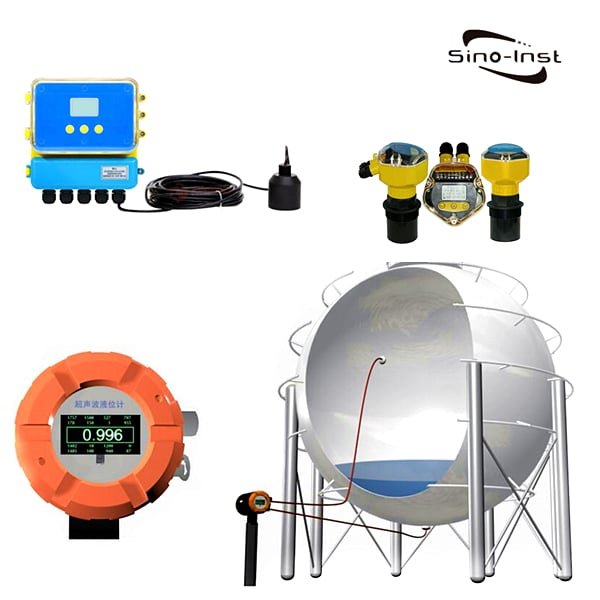
  • Built-in imported waveguide wire as the measuring unit. After DSP digital signal processing. High precision, no temperature drift, no contact. Life span up to 20 years;
  • Strong adaptability to temperature environment; the pole can withstand high temperature 300C°.
  • Pressure resistance and corrosion resistance, float pressure 1.5MPa. It can be applied to most corrosive liquid level measurement applications such as strong acids and bases.
  • Protection grade IP68
  • Strong anti-interference ability
  • High precision
  • Low power consumption and high cost performance;
  • Easy to disassemble and install;
  • Non-contact measurement, high stability.
  • The absolute value displacement measurement is not affected by power failure;
  • Can replace LVDT, electronic ruler, encoder and other displacement sensors.
Specifications of Magnetostrictive Tank Level Indicator

Range (mm)50~2000mm or customized according to customer needs
Power supply voltage: +11VDC~+36VDC
Output form/working voltage: Analog signal: 4~20mADC, 0~5VDC, 1~5VDC, 0~10VDC (+15VDC~+36VDC) Digital signal: RS485
Load capacity: Voltage signal output load ≥1KΩ. Current signal output load ≤1KΩ
Non-linear error: ±0.05%FS; maximum error 100μm below 200mm
Repeatability error: better than 0.005%FS
Resolution: better than 0.005%FS
Hysteresis: better than 0.002%FS
Working temperature: 0~+70℃ -15~+60℃ -25~+70℃ -40~+85℃
Rod material: 0Cr18Ni9 (304) 316 stainless steel (special customization)
Electronic enclosure shell material: 0Cr18Ni9 (304) 316 stainless steel (special customization)
Lead way: PVC shielded cable. Default length: 1m, also available according to user requirements. Aviation plug (not applicable to explosion-proof products) terminal
Enclosure protection level: IP68

Tank level indicator float type

Float level sensor (float switch) is one type continuous level sensor for industrial level measurement. Float level sensor has a magnetic float that rises and falls as liquid level changes. The movement of the float creates a magnetic field. Through the magnetic coupling effect, the internal resistance of the sensor changes linearly. The resistance change is converted into a standard current signal of 4 ~ 20mA by an intelligent converter. The percentage of the liquid level, 4 ~ 20mA current and liquid level value, can be displayed on site. Applications like: water tank, fuel tank, level measurement and level control. Vertical, horizontal, and side mounted, all can be satisfied

Extended reading: Industrial Tank level indicators and Tank Level Gauges.

Large water tank level indicator

The water level sensor of your water tank is an essential component. If not repaired or replaced, a sensor can become damaged over time and fail entirely. Too much water can cause a malfunction and too little water means inadequate water pressure. Either way, repairing or replacing holding tanks is an expensive task you shouldn’t have to undertake because of sub-par sensors.
With Sino-Inst’s water tank level sensors, there’s nothing to break down or rust and our models have a 99% success rate!

In the high unlikely event that you experience any issues with your product, call us and we’ll replace or repair it immediately at no charge.

Read more about our water tank level sensors and control systems.

About Level Sensor Types and how they work, OMEGA Engineering has a good explanation. Video source: https://www.youtube.com/watch?v=bHxEXlIHSHY&feature=emb_logo

Propane tank level indicator

Propane, three-carbon alkane, chemical formula is C3H8, structural formula is CH3CH2CH3. Colorless, liquefied gas is slightly soluble in water, soluble in ethanol and ether Mixed with air to form explosive mixture. Exist in natural gas and petroleum pyrolysis gas. The chemical properties are stable, and chemical reactions are not easy to occur. Used as refrigerant, internal combustion engine fuel or organic synthetic raw materials.

A propane gauge shouldn’t be hard to pick, and it shouldn’t cost a lot of money. We know that, so we’re going to show you how to pick the best propane tank gauges.

See if there is stirring in the tank. If there is a mixer, then add a measuring tube on the side of the tank. Generally, the magnetic flap level gauge, float level gauge or magnetostrictive level gauge are commonly used.

It also depends on your working conditions, such as temperature and pressure to measure the density of the medium, and whether your spherical tank is supported.

The external measuring liquid level gauge is also called an externally attached ultrasonic liquid level gauge. Its working principle is ultrasonic echo ranging. That is, the ultrasonic wave is transmitted through the tank wall in the liquid medium and returned to the liquid level to be received by the sensor. Through its time difference To calculate the liquid level height, on-site OLED display.

At the same time realize the remote transmission of the monitoring liquid level and realize automatic control. Also suitable for liquid level measurement of liquefied gas, propylene, propane, ethane spherical tank.

💡 Industrial Propane Tank Level Indicators for Industrial Tank Level Measurement

You may like:

FAQ

What is magnetostrictive level transmitter?

Magnetostriction means that the change of the magnetization direction in ferromagnetic substance will cause the change of the medium lattice spacing. As a result, the length and volume of the ferromagnetic substance change.
Magnetostrictive level transmitter is a level transmitter based on the principle of magnetostriction. It is a high-precision, high-resolution transmitter driven by a magnetic float.

How does a magnetostrictive sensor work?

1. When the sensor of the magnetostrictive level transmitter works, the circuit part of the sensor will excite a pulse current on the waveguide wire.
2. When this current propagates along the waveguide wire, a pulsed current magnetic field is generated around the waveguide wire.
3. There is a float outside the sensor rod of the magnetostrictive liquid level gauge. This float can move up and down along the rod with the change of liquid level.
4. Inside the float there is a set of permanent magnetic rings. When the pulsed current magnetic field and the magnetic ring magnetic field generated by the float want to meet. The magnetic field around the float changes so that the waveguide wire made of magnetostrictive material generates a torsional wave pulse at the position of the float.
5. This pulse is transmitted back along the waveguide wire at a fixed speed and detected by the detection mechanism.
6. The position of the float, that is, the position of the liquid surface can be accurately determined by measuring the time difference between the pulse current and the torsional wave.

What is flow and level sensor?

1. Flow sensor is a kind of detection instrument used to detect the flow parameters of liquid, gas and other media and convert it to other forms of signals for output. The flow sensor has many advantages such as small size, light weight, intuitive and clear reading, high reliability, and no pressure loss.
1. Level sensor is a sensor that can replace manual measurement. The liquid level sensor can convert the height of the liquid level into an electrical signal for output, so as to achieve the purpose of controlling the liquid level.

Read more about: Ultrasonic Tank Level Sensors for Tank Level Monitoring

Sino-Inst offers over 10 Tank Level Indicators for level measurement.

About 50% of these are Magnetostrictive liquid level sensors, 40% is the tank level sensor. A wide variety of level meters options are available to you, such as free samples, paid samples.

Sino-Instrument is a globally recognized supplier and manufacturer of level measurement instrumentation, located in China.

Tank Level Indicator products are most popular in North America, Domestic Market, and South America. You can ensure product safety by selecting from certified suppliers, with ISO9001, and ISO14001 certification.

Request a Quote

Please enable JavaScript in your browser to submit the form