What Is a BTU Meter?

What is a BTU Meter?

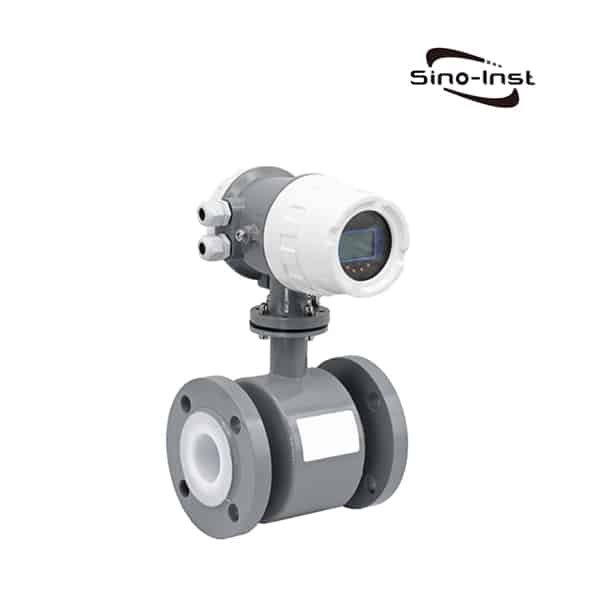
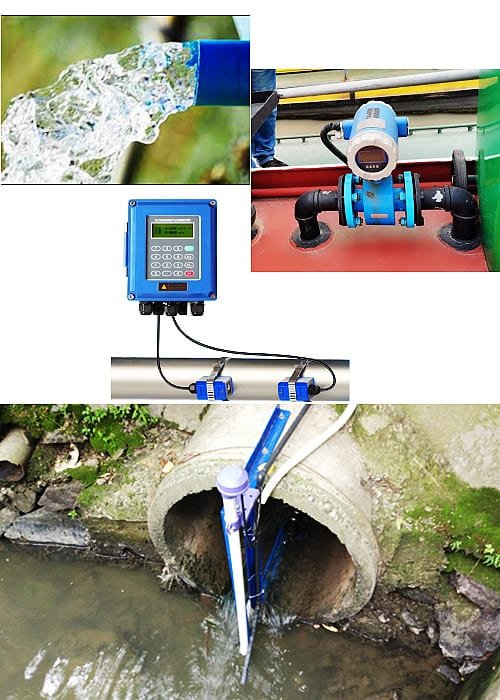
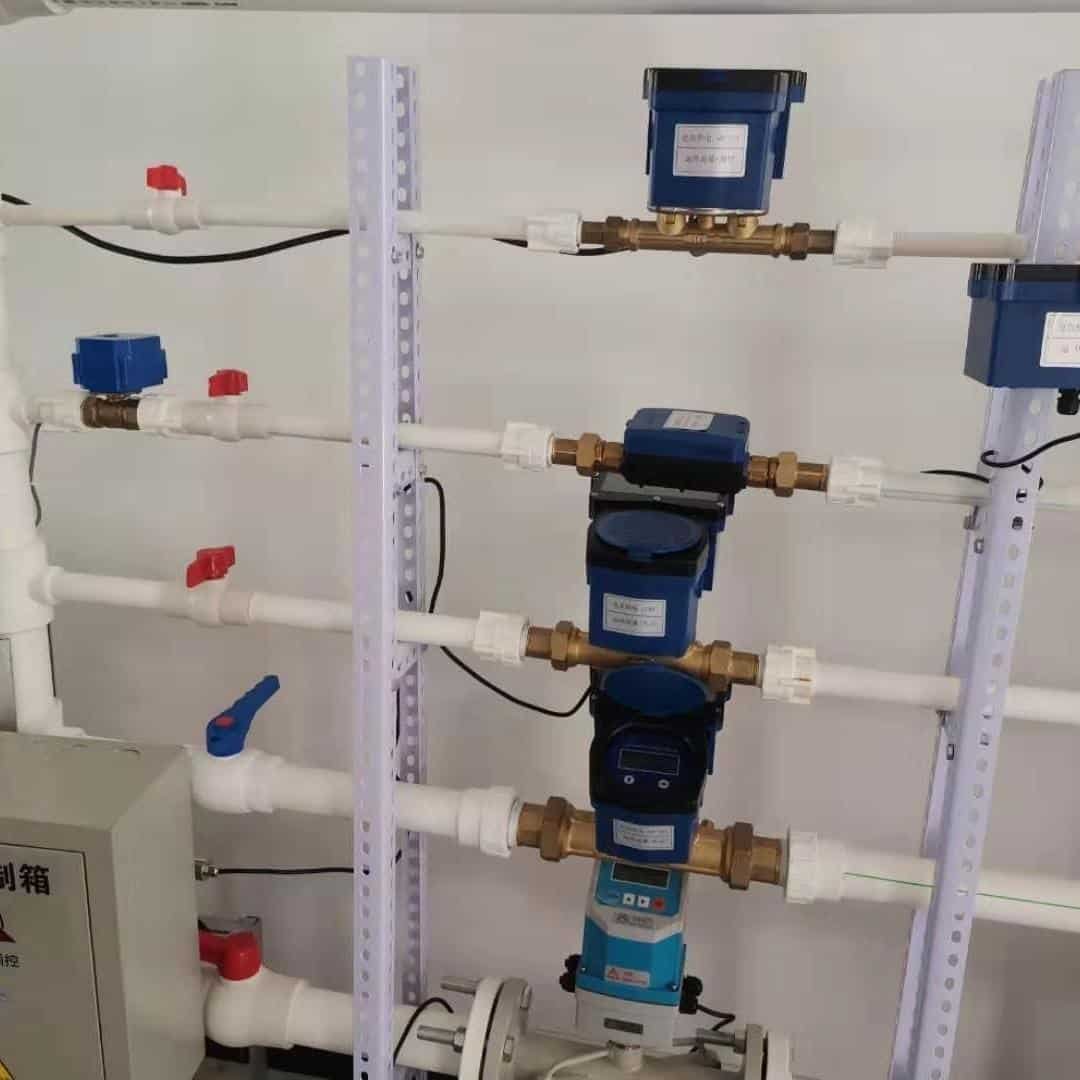
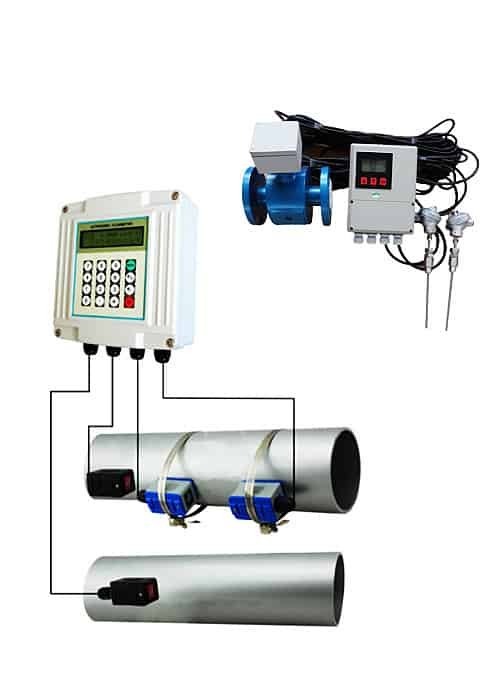
A BTU meter is a special instrument that measures the thermal energy transferred in a heating or cooling system. BTU meters are also known as energy meters, heat meters. Commonly used are electromagnetic energy meters and ultrasonic energy meters. It is widely used in online metering of central air-conditioning cooling and heating energy metering and heating network. It can also be used to measure the performance of energy conservation measures or the loss of system efficiency that affects revenue.

RFQ More Flowmeters
What Is a BTU Meter?

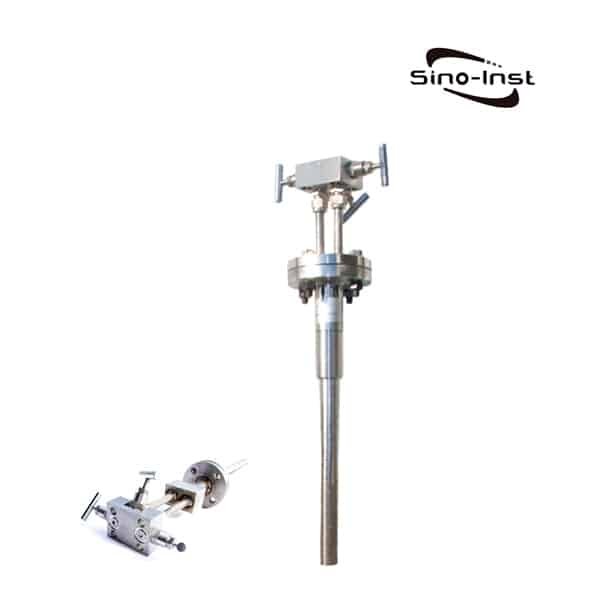
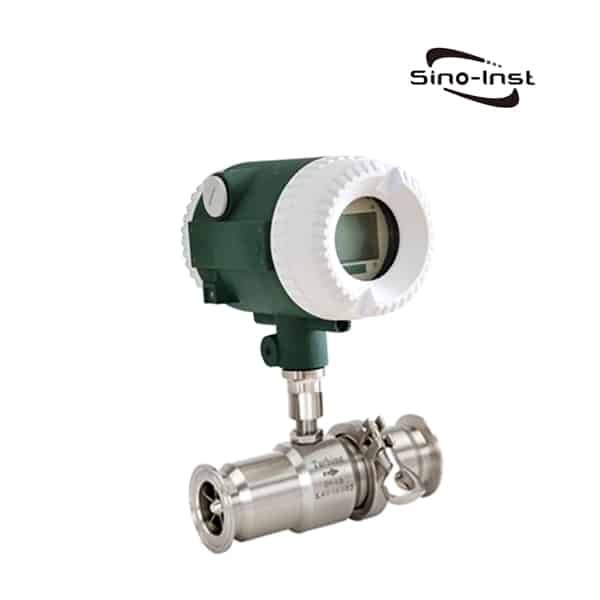
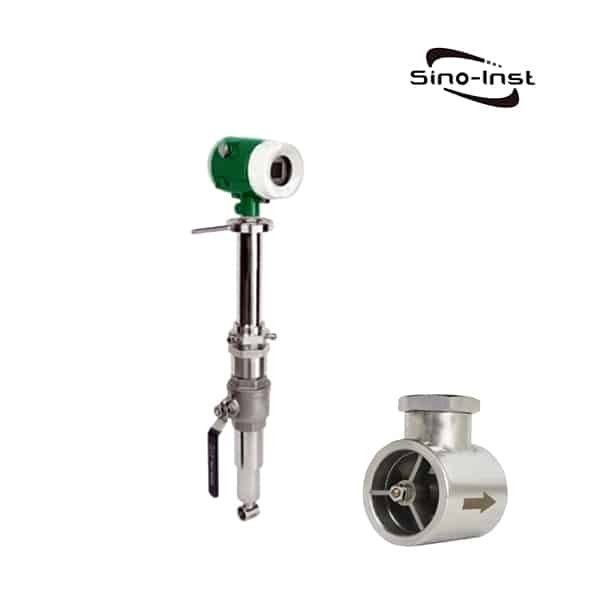
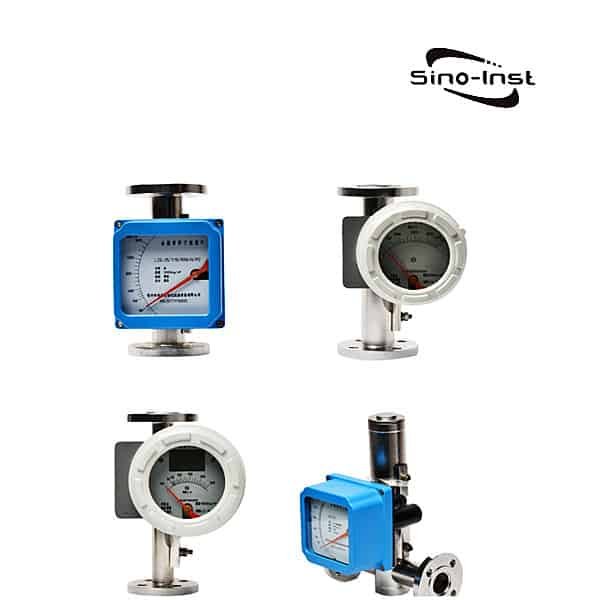
Featured Flow and BTU Meters
What is BTU?

BTU (British Thermal Unit). 1BTU is approximately equal to 252.1644 calories (calorie) = 0.293 watt-hour (watt-hour) = 1.055 kilojoules (killojoule)

1 BTU is the amount of heat required to heat 1 pound of pure water from 59 degrees Fahrenheit to 60 degrees Fahrenheit at an atmospheric pressure of 14.696 pounds per square inch. ​​

Btu is British Thermal Unit (British Thermal Unit) and Btu/h is “British Thermal Unit per hour”. Since 1(British Thermal Unit) = 1055.056(Joule), and 1 Watt = 1 Joule/Sec. ​​

So 1 (Btu per second) = 1055.056 (Watts), converting seconds to hours is: 1 BTU per hour = 1055.056/3600 = 0.293071 (Watts). ​​

Therefore, the power of an air conditioner with a (BTU/H) of 10000 is 10000*0.293 = 2.93 (kW).

BTU Meter Working Principle

When the water flows through the system, according to the flow rate given by the flow sensor and the temperature signal of the supply and return water given by the paired temperature sensor, as well as the time that the water flows. Calculate and display the heat energy released or absorbed by the system through the calculator.

Its basic formula is as follows:

In the formula:

Q—the heat released or absorbed by the system, J;
qm flow through heat meter
The mass flow of water, kg/h;
qv is the volume flow of water passing through the heat meter, m5/h;
ρ Density of water passing through the heat meter, ks/m3;
△h—the difference in the enthalpy of water at the inlet and outlet temperatures of the heat exchange system, J/kg;
T a time, h.

From the working principle of the heat meter, it can be seen that the heat meter is mainly divided into three parts: the base meter, the temperature sensor and the totalizer.

The base meter refers to the meter that measures the flow and converts the flow information into electrical signals.

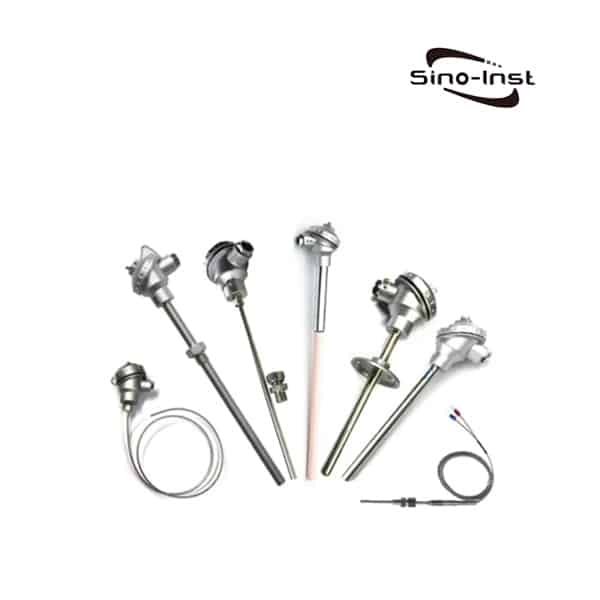
The temperature sensor refers to a sensor that measures the temperature of the supply and return water of the heat exchange system.

The totalizer is a device that integrates and displays heat according to the formula.

Video source: https://www.youtube.com/watch?v=keD50bX1mec

BTU meter calculations are based on the measurement of flow rate and temperature difference in a heat transfer system. We now take a chilled water system as an example, and we want to calculate the amount of energy used for cooling.

Starting Data:

Flow rate of chilled water: 500 gallons per minute (GPM).
Inlet water temperature (before cooling): 70°F.
Outlet water temperature (after cooling): 50°F.

BTU Meter Calculation Steps:

  • Measure Temperature Difference: Calculate the difference in temperature between the inlet and outlet, which is 70°F – 50°F = 20°F.
  • Calculation Formula: The BTU calculation formula is BTU = Flow Rate (in lbs) x Temperature Difference x Specific Heat of Water. The specific heat of water is approximately 1 BTU/lb°F.
  • Convert Flow Rate to Weight: Convert the flow rate from gallons per minute to pounds per minute. Since water weighs about 8.34 pounds per gallon, the conversion for 500 GPM is 500 x 8.34 = 4170 lbs/min.
  • Final BTU Calculation: Plug the values into the formula:BTU = 4170 lbs/min x 20°F x 1 BTU/lb°F, which equals 83,400 BTU/min.

The industrial cooling system uses 83,400 BTUs per minute to cool the machinery and processes.

BTU Measurement System

BTU measurement systems are an important component in the pursuit of energy efficiency and sustainability in heating and cooling systems.

Define BTU measurement system:

BTU measurement systems are an important tool for understanding and managing energy in heating and cooling systems. At its core, the system relies on the British Thermal Unit (BTU), a unit of measurement of heat energy. 1 BTU represents the amount of energy required to raise the temperature of one pound of water by one degree Fahrenheit.

Components of a BTU measurement system:

A key component of this system is the BTU meter. Measure the flow rate and temperature difference of a liquid passing through a heat exchanger.

The system includes:

  • Two temperature sensors: installed at the inlet and outlet of the heat exchanger to measure the temperature difference.
  • Flow sensor: This component tracks the flow of liquid through the heat exchanger, which is a key part of energy calculations.
  • Calculator: It processes data from temperature and flow sensors to provide accurate calculations of heat energy transfer.

Applications beyond the basics

BTU measurement systems have uses far beyond basic temperature and flow measurements:

  • Energy Consumption Monitoring: It provides a detailed view of system energy usage, enabling smarter, more cost-effective decisions.
  • HVAC System Optimization: Ensure your heating and cooling systems are running at peak performance by pinpointing inefficiencies.
  • Leak and inefficiency detection: The system can alert on leaks or inefficiencies, preventing energy loss and potential system damage.
  • Improvement identification: It plays a key role in identifying areas where energy consumption can be reduced, promoting sustainable practices.

BTU Meter Types

There are different types of BTU meters, each suited for specific applications and system requirements.

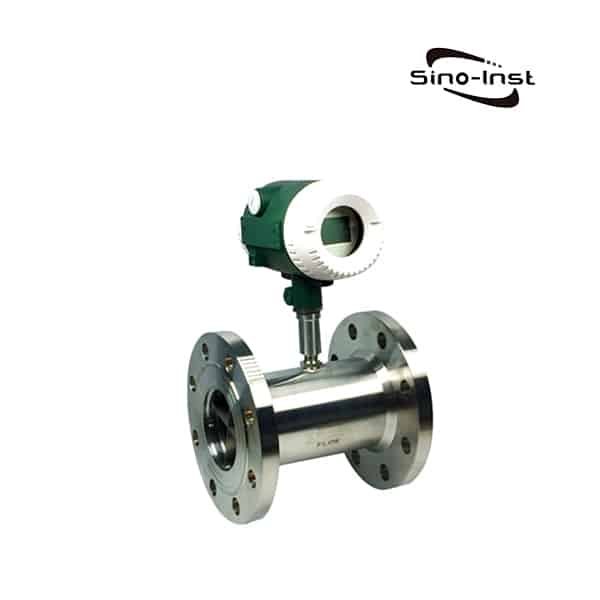
The mechanical heat meter is mainly based on the impeller heat meter. Its working principle is to measure the flow rate of the heat medium by measuring the speed of the impeller, and then measure the heat value.

Turbine Meters: These meters use a rotating turbine to measure the flow rate of the fluid. The turbine’s rotational speed is proportional to the flow rate, providing a direct measurement of energy transfer.

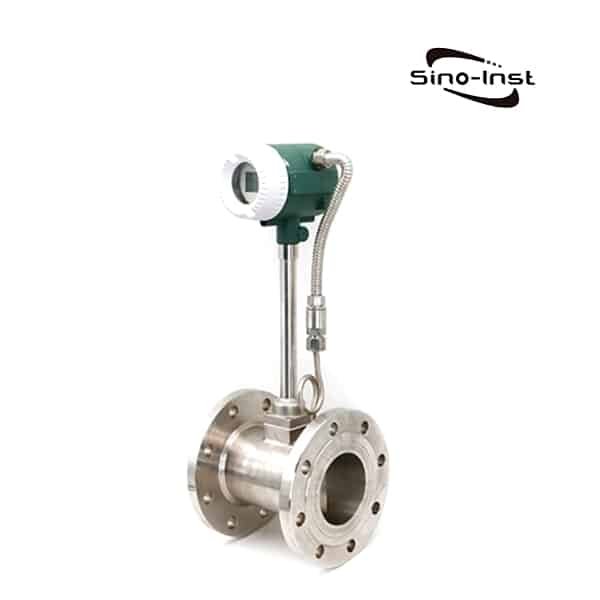
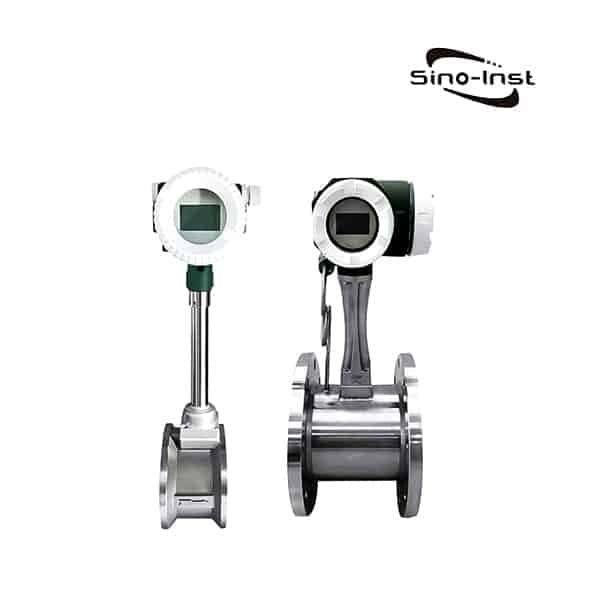
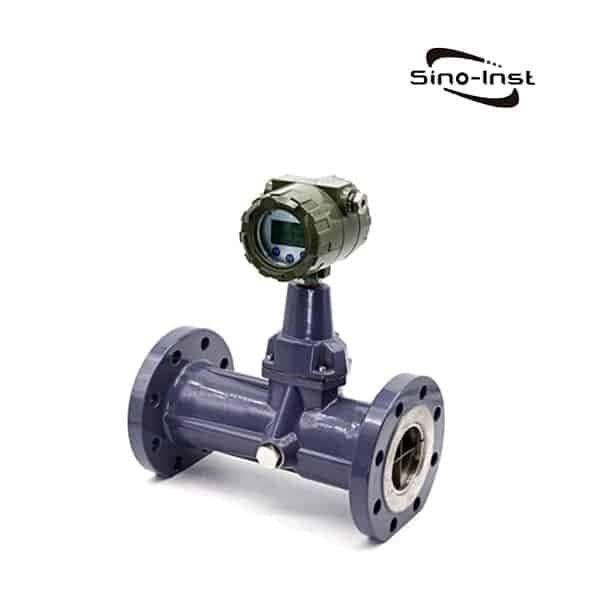
Vortex Meters: Vortex meters detect vortices that are created when a fluid flows past an obstruction. The number of vortices is proportional to the flow rate and is used to calculate energy usage.

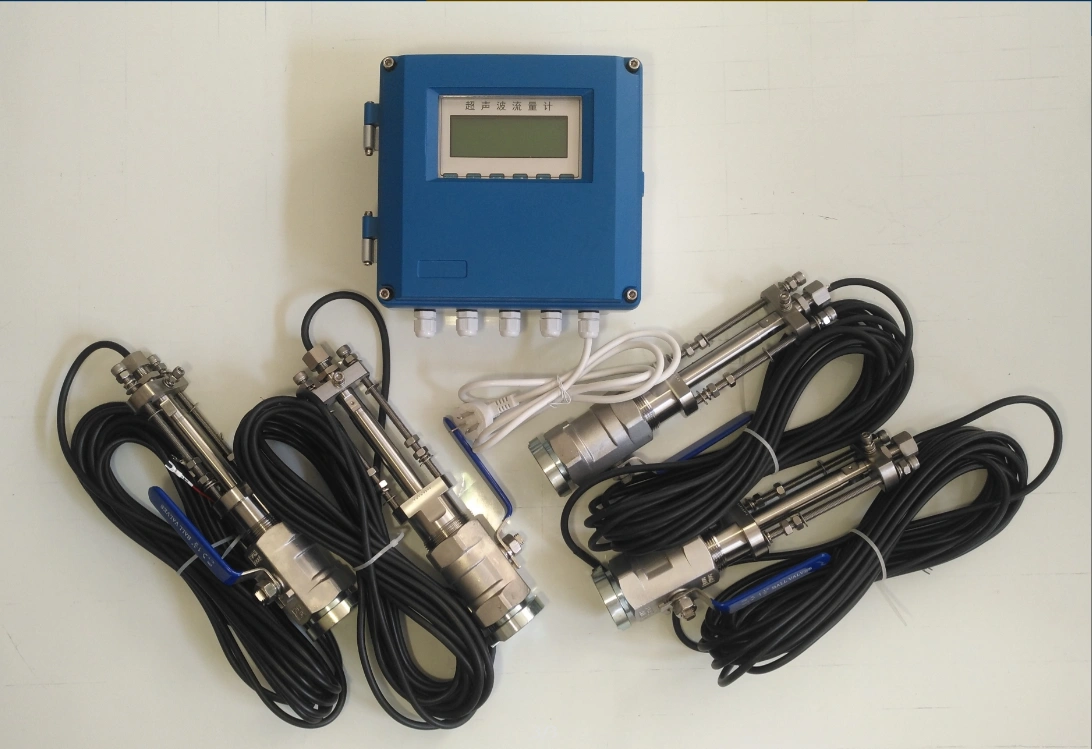
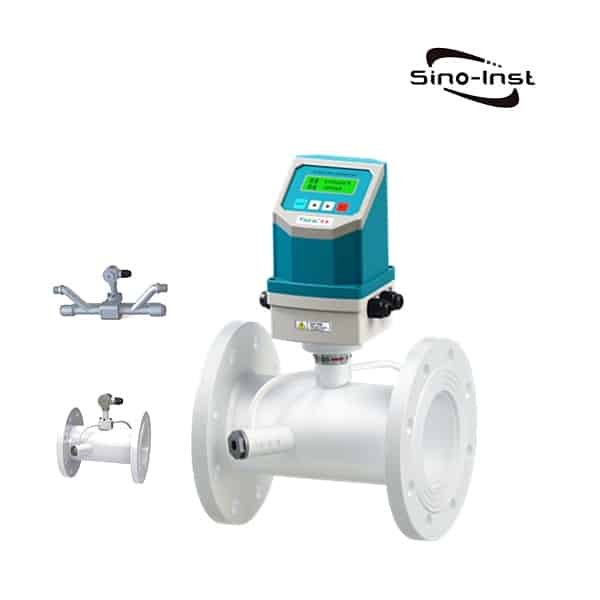
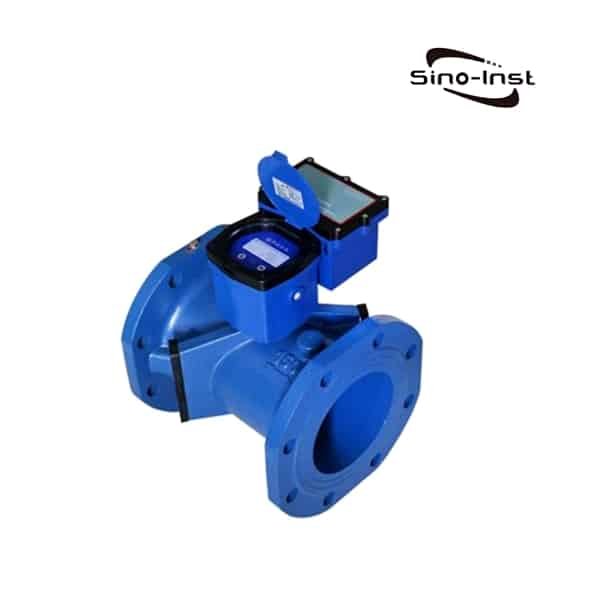
The ultrasonic heat meter uses a pair of ultrasonic energy exchange energy to send and receive ultrasonic waves alternately (or simultaneously). By observing the propagation time difference between the forward and reverse flow of the ultrasonic waves in the medium, the flow rate of the fluid is indirectly measured. The flow rate is then used to calculate the flow rate. Then calculate the heat value.

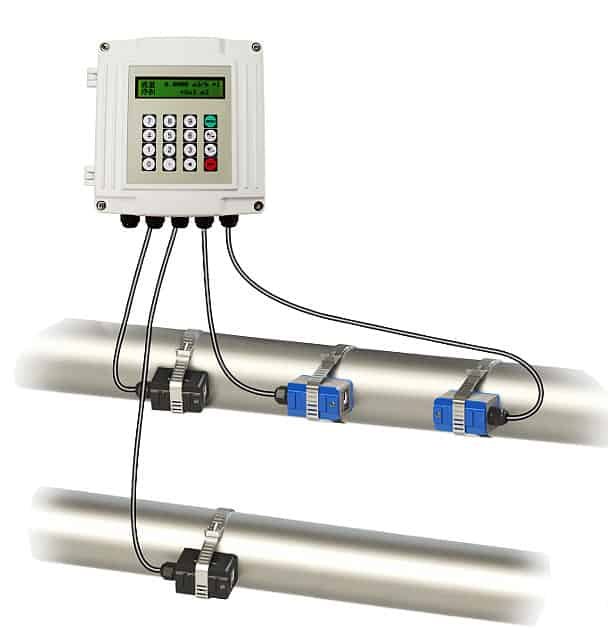
Clamp-On Meters: These meters use external sensors that are clamped onto the pipe. They measure the flow rate using ultrasonic signals, which is non-intrusive and causes no disruption to the system.

Inline Meters: Inline ultrasonic meters are installed within the pipeline. They offer high accuracy and are ideal for systems where a non-intrusive setup is not critical.

The main features of the ultrasonic heat meter are that there is no mechanical impeller rotation and no mechanical wear. The maintenance cost is low for later use. The service life is much longer than that of the mechanical heat meter. The flow measurement accuracy is high and the measurement reliability is good.

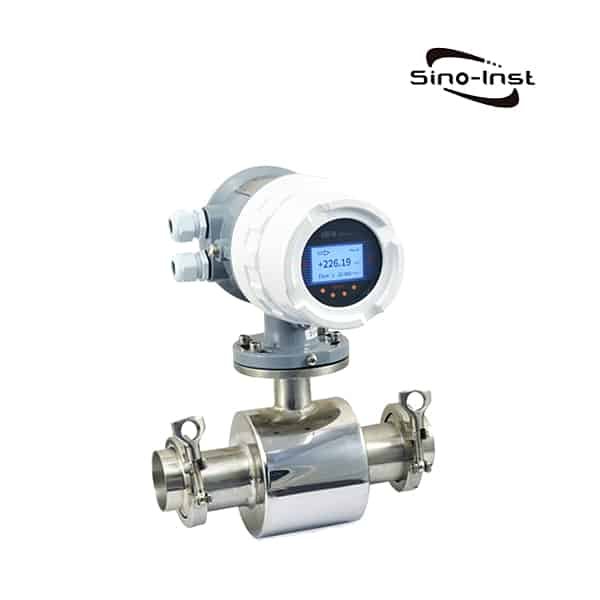
Electromagnetic heat meter is a measuring instrument that measures the heat released by the heat transfer fluid in the heat exchange system. A high-precision and high-reliability electromagnetic flowmeter is used as a flow meter. At the same time, a high-precision, high-stability platinum heat meter is used The resistance is used for temperature measurement. The thermal energy meter has excellent measurement performance.

At present, the electromagnetic heat meters used in the market are mainly integrated electromagnetic heat meters. Its main feature is to improve the measurement accuracy. It increases the reliability and stability of the product. It is free of debugging and maintenance. It is easy to install, But the price is relatively high.

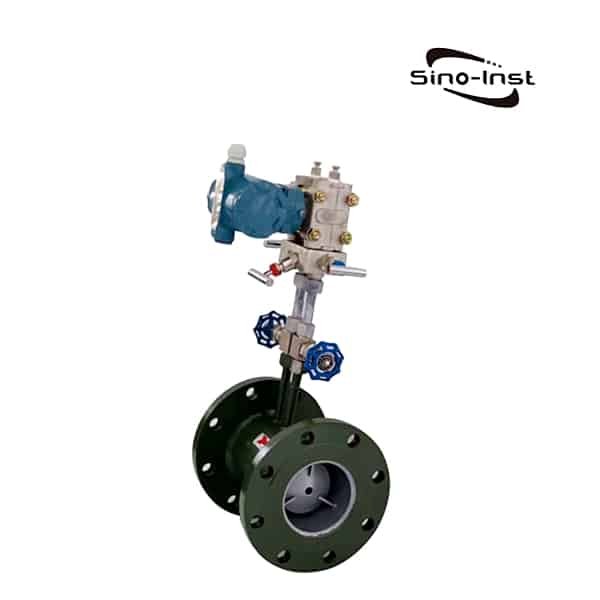
Orifice Plate Meters: These meters use an orifice plate to create a pressure drop, which is measured to determine the flow rate.

Venturi Meters: Similar to orifice plate meters, but use a venturi tube to create a pressure drop. They are more efficient and have a lower pressure drop compared to orifice plates.

BTU Meter for Chilled Water

A BTU (British Thermal Unit) meter for chilled water is a specialized device used in cooling systems, particularly in HVAC (Heating, Ventilation, and Air Conditioning) applications. Its primary function is to measure the energy consumed in cooling processes by calculating the heat removed from the chilled water

The BTU meter consists of a flow measurement sensor, two temperature sensors, and a microprocessor-based energy calculator.

The flow sensor should be installed in the chilled water return line, and the chilled water flow direction should be installed in a vertical or horizontal position. Two temperature sensors, one sensor is installed on the oil return line. The second sensor is installed on the water supply line. The thermal energy transferred from the cooling water to the consumer over a specified period of time is proportional to the temperature difference between the flow and return flow and the amount of cooling water flowing through.

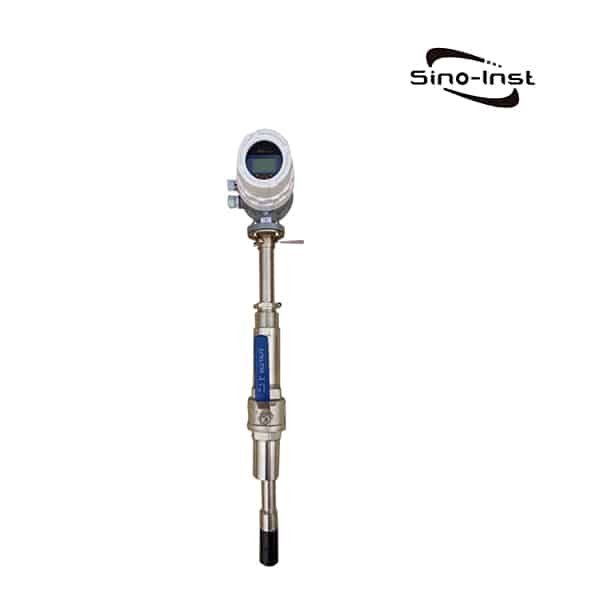
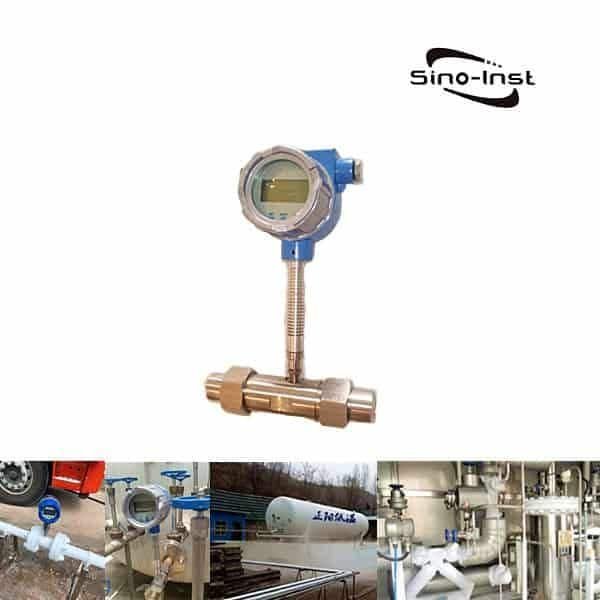
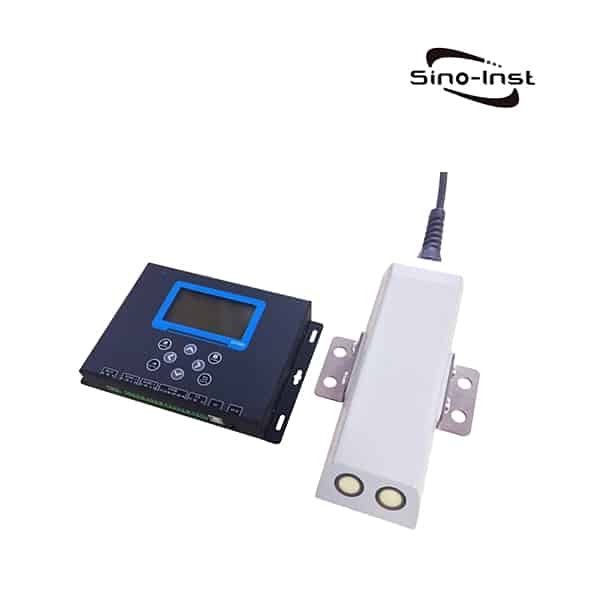
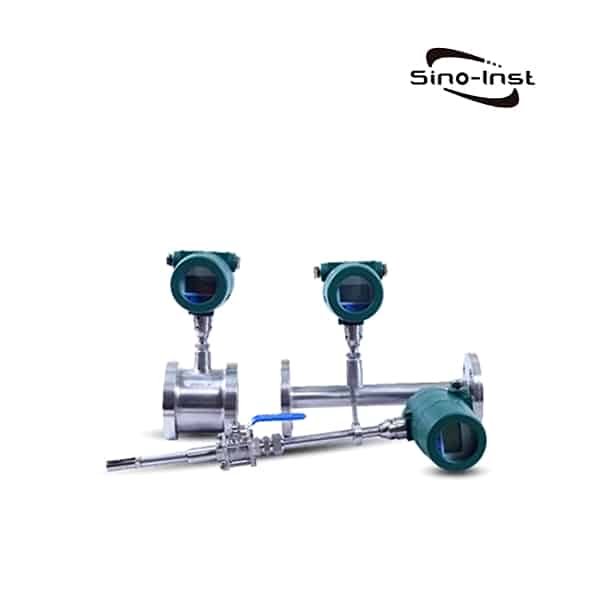
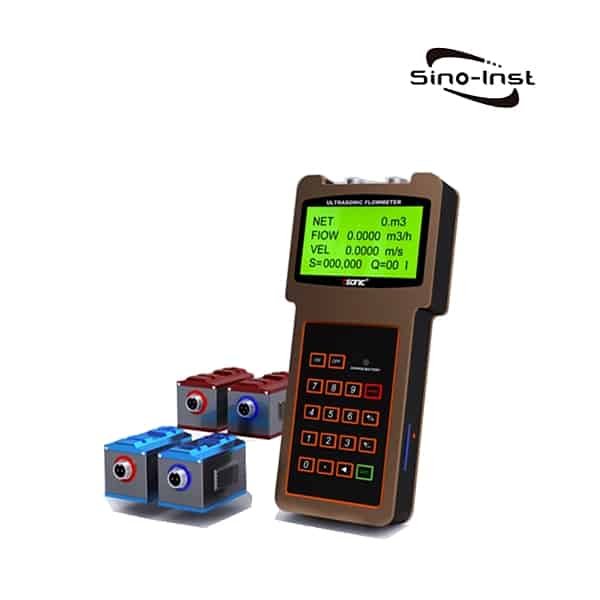
Sino-Inst offers two types of BTU meters, one with ultrasonic measurement technology (ultrasonic BTU meter) and the other with electromagnetic measurement technology (electromagnetic BTU meter).

BTU meters are widely used in:

  • Building HVAC Systems: In large buildings, accurate measurement of chilled water energy use is crucial for efficient system operation and cost allocation.
  • Industrial Cooling Processes: Industries that require precise temperature control rely on these meters for energy management and to ensure optimal operation of cooling equipment.
  • District Cooling Systems: They are also essential in district cooling systems, where chilled water is supplied to multiple buildings from a central plant.

Benefits of Using BTU Meters in Chilled Water Systems:

  • Energy Efficiency: By providing accurate energy usage data, these meters help in optimizing the operation of cooling systems, leading to energy savings.
  • Cost Allocation: In multi-tenant buildings, BTU meters enable fair billing based on actual energy usage for cooling.
  • System Monitoring and Maintenance: Regular readings from these meters can indicate system performance and help in early detection of issues.

Whether in a commercial, industrial or residential environment, a chilled water system’s BTU meter is an important tool in managing the cooling process.

BTU Meter Installation

The installation requirements for electromagnetic heat meters and ultrasonic heat meters vary.

Personally recommend the Clamp-On ultrasonic heat meter. Because the installation is the easiest.

Clamp-On ultrasonic sensors and external clamp-on temperature sensors are available. Installation is simple and low cost.

About the installation of electromagnetic heat meter. You May refer to the following PDF.

bTU meter vs flow meter

Both BTU meters and flow meters have their own importance. BTU meters help keep heating and cooling systems efficient, while flow meters ensure the correct movement of fluids through various systems.

FeatureBTU MeterFlow Meter
Primary FunctionMeasures energy usage in heating or cooling systems.Measures the volume or speed of a fluid (like water or gas).
Measurement TypeCalculates energy by assessing temperature change and flow rate.Measures the amount or flow rate of the fluid passing through it.
Typical Use CasesUsed in HVAC systems (heating, ventilation, and air conditioning), for efficiency monitoring in heating or cooling processes.Used in various industries, including water treatment, chemical processing, and residential water systems.
Key Information ProvidedProvides data on heat energy added or removed, crucial for energy management.Provides data on the quantity or speed of fluid, important for volume control and monitoring.
ComplexityGenerally more complex, as it combines flow measurement with thermal energy calculation.Simpler in operation, focusing solely on fluid flow measurement.
ImportanceEssential for energy efficiency and cost management in temperature control systems.Critical for managing and monitoring fluid flow in diverse applications.

Understanding the differences can help you choose the right tool for the job. If you need to know how well your heating or cooling is working, a BTU meter is your first choice. But if you just need to know how much water or gas is flowing, then a flow meter is what you need.

Frequently
Asked
Questions

1 btu per (square meter) =1 055.05585 kg / s2

Formula

BTU = Flow Rate In GPM (of water) x (Temperature Leaving Process – Temperature Entering Process) x 500.4*Formula changes with fluids others than straight water.

BTU Calculator Tool

BTU is short for British Thermal Unit, a unit of measurement that shows just how much energy your air conditioner uses to remove heat from your home within an hour. It may seem overly technical, but BTU is an important metric that can help you determine the kind of air conditioner you need for a home your size.

Flow meters measure flow, and heat meters measure heat. The heat meter consists of an integrator (calculator), a flow meter, and a pair of temperature sensors. The first detection is the supply/return water temperature and flow rate, and then the integrator is used to calculate the heat. The basic principle is Q=Cm△t.

Compared with thermistors, platinum resistors have the advantages of accurate measurement and small resistance drift. Therefore, general heat meters use pairs of platinum resistors as temperature sensors. Usually there are PT100, PT500, and PT1000, with PT1000 being the most common (i.e. At 0℃, the resistance value is 1000Ω)

Related Blogs

Sino-Inst offers over 10 BTU Meter products. About 60% of these are ulrtasonic flow meters. 40% are magnetic meters.

A wide variety of BTU Meter options are available to you, such as free samples, paid samples.

Sino-Inst is a globally recognized supplier and manufacturer of BTU Meters, located in China.

The top supplying country is China (Mainland), which supply 100% of the BTU Meter respectively.

You can ensure product safety by selecting from certified suppliers, with ISO9001, ISO14001 certification.

Request a Quote

Please enable JavaScript in your browser to submit the form

Request a Quote

Please enable JavaScript in your browser to submit the form

Flow Rate and Pressure: How They Relate and How to Calculate

Updated April 2026 — By Sino-Inst Engineering Team

Flow rate and pressure are the two most measured variables in any piping system. They are connected, but not in a simple linear way. Pressure difference drives flow. No pressure difference, no flow — even if the pipe is full and pressurized.

Contents

This article covers the actual physics behind the relationship, gives you the working formulas, and shows how to calculate one from the other in real piping systems.

How Flow Rate and Pressure Are Related

A common misconception: high pressure means high flow. Not true. A pipe can sit at 150 psi with zero flow if both ends are at equal pressure. Flow happens only when there is a pressure difference (ΔP) between two points.

Once a piping system is fixed (pipe diameter, length, roughness, fittings), flow rate is proportional to the square root of the pressure difference:

Q ∝ √ΔP

Double the pressure difference and flow increases by about 41%, not 100%. This square-root relationship appears everywhere — in Venturi tubes, orifice plates, and control valve sizing equations.

Key Formulas

Bernoulli’s Equation

For an ideal (inviscid, incompressible) fluid flowing along a streamline:

P₁ + ½ρv₁² + ρgh₁ = P₂ + ½ρv₂² + ρgh₂

Where P is static pressure (Pa), ρ is fluid density (kg/m³), v is velocity (m/s), g is gravity (9.81 m/s²), and h is elevation (m). This equation tells you: when velocity goes up, pressure goes down. That is the principle behind every differential pressure flow meter.

Bernoulli applies to clean, low-viscosity fluids at moderate speeds. For real-world pipe systems, you need to account for friction losses.

Darcy-Weisbach Equation (Pressure Drop in Pipes)

The standard formula for friction-based pressure drop in a straight pipe:

ΔP = f × (L/D) × (ρv²/2)

Where f is the Darcy friction factor (dimensionless), L is pipe length (m), D is internal diameter (m), ρ is density (kg/m³), and v is flow velocity (m/s). The friction factor depends on Reynolds number and pipe roughness — use a Moody chart or the Colebrook equation to find it.

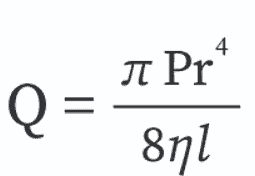
Poiseuille’s Law (Laminar Flow Only)

For laminar flow (Re < 2100) in a circular pipe:

Q = π × d⁴ × ΔP / (128 × μ × L)

Where Q is volumetric flow rate (m³/s), d is pipe diameter (m), ΔP is pressure drop (Pa), μ is dynamic viscosity (Pa·s), and L is pipe length (m). This equation works for heavy oils, glycol, and other viscous fluids moving at low velocity.

DP Flow Meter Formula

For an orifice plate, Venturi, or flow nozzle:

Q = C × ε × A₂ × √(2ΔP / (ρ(1 − β⁴)))

Where C is the discharge coefficient, ε is the expansion factor (for gases), A₂ is the bore area, β is the diameter ratio (bore/pipe), and ΔP is measured differential pressure. This is how every DP flow meter converts a pressure reading into a flow rate.

How to Calculate Flow Rate from Pressure

You cannot calculate flow from a single pressure reading. You need pressure difference between two points, plus information about the system. Here is the practical approach:

  1. Measure ΔP — Install pressure taps at two points along the pipe. The difference is your driving force.
  2. Know your pipe — Internal diameter, length between taps, material (roughness), and any fittings or valves.
  3. Know your fluid — Density and viscosity at operating temperature.
  4. Estimate Reynolds number — Start with an assumed velocity, calculate Re = ρvD/μ. This determines if the flow is laminar or turbulent.
  5. Apply the right formula — Laminar: use Poiseuille. Turbulent: use Darcy-Weisbach with the Moody friction factor. Iterate if needed — start with an estimated f, solve for v, recalculate Re, update f, repeat until values converge.

In practice, most engineers skip the manual calculation. Install a differential pressure flow meter and let the transmitter do the math internally. Modern DP transmitters compute flow rate in real-time from the measured ΔP, programmed pipe data, and fluid properties.

Pressure Drop in Piping Systems

Every pipe, valve, elbow, and fitting consumes energy. That energy loss shows up as pressure drop. Two categories:

Friction loss (major loss) — Caused by fluid viscosity against the pipe wall. Proportional to pipe length and the square of velocity. Longer pipes and faster flow mean more pressure drop.

Minor losses — From elbows, tees, valves, reducers, and flow meters. Each component has a loss coefficient (K-factor). In short runs with many fittings, minor losses can exceed friction losses.

Total pressure drop: ΔP_total = ΔP_friction + Σ(K × ρv²/2)

When selecting a flow meter, check its permanent pressure loss specification. An orifice plate typically causes 40-70% permanent loss of the measured ΔP. A Venturi tube recovers most of the pressure — only 5-20% permanent loss. For applications where pumping energy matters, the Venturi tube or V-Cone meter is a better choice.

Quick Reference: Flow-Pressure Formulas

FormulaUse CaseKey Variables
Q ∝ √ΔPGeneral pipe systemsΔP = pressure difference
Bernoulli (P + ½ρv² + ρgh = const)Ideal flow, DP metersP, v, ρ, h
Darcy-Weisbach (ΔP = f·L/D·ρv²/2)Turbulent pipe frictionf, L, D, ρ, v
Poiseuille (Q = πd⁴ΔP/128μL)Laminar flow (Re < 2100)d, ΔP, μ, L
DP meter (Q = CεA√(2ΔP/ρ(1−β⁴)))Orifice, Venturi, nozzleC, ε, A, ΔP, β, ρ

Featured DP Flow Meters from Sino-Inst

Orifice Plate Flow Meter

Accuracy: ±1% | DN15–DN1200
4-20mA/HART | Steam, gas, liquid

Venturi Tube Flow Meter

Low pressure loss: 5-20% | DN50–DN2000
High accuracy for large pipes

Integral DP Flow Meter

Built-in ΔP transmitter | Compact
4-20mA/HART | Easy install

Browse all flow meters | Use our flow & pressure calculators

Frequently Asked Questions

Does higher pressure always mean higher flow rate?

No. Flow depends on pressure difference, not absolute pressure. A pipe at 200 bar with equal pressure at both ends has zero flow. Increase the pressure at one end while keeping the other constant, and flow begins.

Why is the flow-pressure relationship a square root, not linear?

Friction losses in turbulent flow are proportional to velocity squared (Darcy-Weisbach equation). Since pressure drop goes as v², flow rate (which is proportional to v) goes as the square root of ΔP. Double the flow requires four times the pressure difference.

How do I measure flow rate using pressure?

Use a differential pressure flow meter — an orifice plate, Venturi tube, or flow nozzle installed in the pipe. A DP transmitter measures the pressure drop across the restriction and calculates flow using the square-root relationship. This is the most widely used industrial flow measurement method per ISO 5167.

What is the difference between pressure drop and pressure loss?

They mean the same thing in practice. Pressure drop is the reduction in pressure as fluid moves through a pipe or component. Some engineers reserve “pressure loss” for permanent, non-recoverable losses (friction, turbulence) and “pressure drop” for the total change including recoverable portions (like in a Venturi).

Can I calculate flow rate from a single pressure gauge reading?

Not directly. You need two pressure readings (upstream and downstream) to get a ΔP, or you need a known flow restriction with calibrated characteristics. A single gauge reading tells you the static pressure at one point — it says nothing about velocity or flow rate.

Which flow meter has the lowest pressure drop?

Among DP meters, the Venturi tube has the lowest permanent pressure loss (5-20% of ΔP). Magnetic flow meters and ultrasonic flow meters cause almost no pressure drop because they have no flow obstruction. Orifice plates have the highest pressure loss (40-70% of ΔP).


Request a Quote

Tell us your application — pipe size, fluid, temperature, pressure, required accuracy. Our engineers will recommend the right flow meter and provide a quote within 24 hours.

Request a Quote

Please enable JavaScript in your browser to submit the form

About the Author
Sino-Inst Engineering Team — With over 20 years of experience in industrial process instrumentation, our team specializes in flow, level, pressure, and temperature measurement solutions. We have completed 10,000+ installations across oil & gas, water treatment, chemical, and power generation industries worldwide. Our engineers hold certifications in ISA, IEC, and ISO standards. For technical questions, contact us at rfq@sino-inst.com or call +86-180 4861 3163.

807 Low Temperature Liquid Level Sensor

807 Low Temperature Liquid Level Sensor is a customized product specially designed for liquid level measurement in low temperature environments such as liquid nitrogen, LNG, and liquid ammonia. -196℃~80℃ available.

This product has no moving parts and is not disturbed by the external environment. It has the advantages of stable and reliable long-term operation, high sensitivity, good linearity, low temperature resistance and corrosion resistance. The cryogenic level meter provides a variety of output signals RS232\ RS485\ 0~5V \4~20mA.

Technical Parameters

No.ItemCurrent sensor metricsCustomizable
1Operating VoltageDC12V~24V5V~36V
2Detector working temperature-196℃~80℃custom made
3Ambient temperature-40℃~80℃-40℃~80℃
4Detection lengthAs shown on the nameplate50mm~3000mm
5Pressure range≤ 1.6MPaSpecial customizable
6Probe diameterΦ16            Φ8~Φ25
7Installation methodM20*1.5M10~M30/NPT/G/sanitary chuck
8Explosion-proof level2088 explosion-proof shell2088 explosion-proof shell/304 stainless steel micro shell
9Accuracy level1.0/2.00.5/1.0/2.0
10Output signal4~20mA4~20mA/0~5V/RS485/RS232

807 Low Temperature Liquid Level Sensor Wiring

The connection position is equipped with integrated 4-bit terminal, defined as shown in Figure:

OUT +: Power Supply +
OUT-: Power Supply-
TEST +: Debug the interface
TEST-: Debug the interface
Note: The sensor TEST (R485) for 4 ~ 20 mA signal is for commissioning only

Precautions for use

  1. There can only be one type of RS232/RS485/0-5V/4~20mA signal, and you can choose to use any one of them. The RS485 bus can connect multiple sensors at the same time, but the communication address of each sensor must be set in advance. The communication address of each sensor must be unique to prevent the bus from locking up. The RS485 bus uses a half-duplex chip, so the module should be allowed time to respond when reading data. The reading speed cannot be too fast. The time interval between two instructions during continuous reading cannot be less than 200ms.
  2. It is recommended that the sensor be connected with a shielded wire, especially for RS232 communication. The communication wire should not be too long.
  3. For RS232/RS485 signal sensors, when troubleshooting communication failure, you can swap the blue and yellow wires for testing. If the communication is successful, it means there is a wiring error. This operation is for digital communications only.
  4. The power supply voltage of the sensor shall not exceed its normal working voltage, and the power consumption of the sensor power supply shall not be less than the power consumption of the sensor during normal operation.
  5. The actual environment should meet the basic parameter requirements of the sensor and must not exceed the normal range, otherwise it will cause damage to the sensor and even cause other accidents.
  6. The sensor outputs the position height signal of the medium. When the filtering is zero, the output value reflects the actual change of the liquid level. The output value changes with the rise or fall of the liquid level. After adding the filtering, the value will Becomes stable and lagging, the larger the filter value, the higher the temperature, the liquid level value will lag behind the change of the actual liquid level. Therefore, customers adjust the filter value based on device usage.
  7. Please do not disassemble or damage the sensor maliciously, otherwise the warranty will be void.
  8. All accessories such as rubber pads and O-rings of the sensor are not covered by the warranty.

More Low Temperature Liquid Flow and Pressure Measurement

807 Low Temperature Liquid Level Sensor is a customized sensor, which is limited to the measurement of low-temperature liquid level and cannot be used for other media.

We, Sino-Inst, are a professional high-tech enterprise focusing on the research and development, production, sales and engineering services of liquid level/pressure/flow sensors and transmitters, intelligent instruments and automated control systems. Our main products include liquid level, pressure and flow sensors, transmitters and other field measurement instruments.

We provide customers with measurements under various high temperature, low temperature, explosion-proof and other special working conditions. If you need Low Temperature Liquid Level measurement, please feel free to contact our sales engineers.

Request a Quote

Please enable JavaScript in your browser to submit the form

Pressure Transducers for Air Conditioning & Refrigeration

The necessity of pressure sensors in refrigeration

About Refrigeration cycle

To gain a deeper understanding of the role of refrigerants in the refrigeration process and its impact on pressure sensor requirements, we can analyze each step of the refrigeration cycle and its thermodynamic principles in detail:

Compression Phase: The refrigeration cycle begins with the compressor, where low-pressure refrigerant gas is compressed. During this process, the temperature and pressure of the refrigerant increase significantly. As the gas is compressed, the distance between the molecules decreases, resulting in an increase in energy, which increases the temperature.

Condensation stage: The high-temperature and high-pressure gaseous refrigerant then flows into the condenser. Here, it releases heat to the external environment, thereby condensing into a liquid state. This stage is a critical link in the transfer of heat from the refrigeration system to the external environment.

Expansion stage: The condensed liquid refrigerant passes through the expansion valve, and its pressure and temperature decrease significantly. During this process, the refrigerant partially evaporates, forming a low-temperature mixture of liquid and gas.

Evaporation stage: This low-temperature refrigerant mixture enters the evaporator, where it absorbs heat from the surrounding air and becomes gaseous again. This process causes the temperature of the surrounding environment to decrease, achieving a cooling effect.

The entire refrigeration cycle is a precise thermodynamic process, which has strict requirements on the pressure and temperature control of the refrigerant. Therefore, high-quality pressure sensors play a vital role in this process. They ensure that the refrigerant is maintained at optimal pressure and temperature at each stage to ensure efficient and stable operation of the entire refrigeration system.

So why should you care about measuring pressure in this whole process?

Benefits of pressure sensors in refrigeration

If your refrigeration system does not properly measure all inputs and outputs, your system will not operate properly. Typically, the pressure sensor is placed near the compressor outlet, but there can be more sensors depending on the application and complexity of the refrigeration system. The data collected by the pressure sensor is sent to the controller, which can automatically control the compressor in the system.

The following are the benefits of using pressure transmitters in air conditioning and refrigeration systems:

  • Accurately monitor pressure: The pressure transmitter can accurately monitor the pressure within the system to ensure that the system is operating at its best.
  • Improved cooling efficiency: Proper pressure levels help improve the cooling efficiency of the system while reducing energy consumption.
  • Detect potential problems in time: Real-time monitoring can detect problems such as leaks or pressure abnormalities in time to prevent system failure.
  • Reduce repair costs: By preventing failures, pressure transmitters help reduce repair costs and downtime.
  • Extended system life: Reduces wear and damage caused by pressure fluctuations, extending the life of your air conditioning and refrigeration systems.
  • Improve overall performance: ensuring efficient, reliable and economical operation of the entire air conditioning and refrigeration system.

How to Choose Pressure Transducers for Refrigerant

There are several key factors to consider when selecting and using pressure transmitters in different types of refrigeration systems:

Type and size of system: The first thing to consider is the type and size of the refrigeration system (such as a household air conditioner, commercial cold storage, or industrial refrigeration system). Different types and sizes of systems have different requirements for the accuracy and durability of pressure transmitters.

Temperature tolerance: The operating temperatures of refrigeration systems can be extremely different. Therefore, the pressure transmitter selected must be able to work properly within these temperature ranges to ensure accurate and stable performance.

Pressure range and accuracy: Different refrigeration systems may need to operate within different pressure ranges. When selecting a pressure transmitter, make sure it can provide accurate measurements over the required pressure range.

Ease of installation and maintenance: Choosing a pressure transmitter that is easy to install and maintain can reduce system downtime and maintenance costs.

In summary, when selecting and using a pressure transmitter, decisions should be made based on the specific refrigeration system type, operating environment, required pressure range and accuracy, and ease of installation and maintenance. This not only ensures efficient operation of the refrigeration system, but also improves overall safety and reliability.

Featured Refrigeration Pressure Transducers

SI-303 Low-Pressure Transducer
Low pressure transducers for air and non-corrosive gases low pressure measurement. 0 ~ 2.5kPa to 0 ~ 30kPa measurable.
SI-300 Pressure Transducer 4-20mA/Voltage
The 4-20mA/ Voltage Pressure Transducer,
also called pressure transmitter 4-20mA,
is a pressure sensor with4-20ma/Voltage output.
SI-520 Digital Pressure Sensor
Digital Pressure Sensor is particularly suitable for use in computer control systems. RS485 half-duplex working mode.
SI-503K Gas Pressure Sensor
Gas pressure sensor for industrial gas pressure monitoring. Pagoda gas nozzle Φ8. Such sensors are also commonly referred to as wind pressure transmitters, exhaust pressure sensors.
SI-702 High Pressure Sensor
High pressure sensor is pressure transmitter designed for high pressure measure&control. 0 ~ 40MPa… 600MPa. M20 × 1.5, G1 / 2 (others are customized according to requirements)
SI-338 Ceramic Pressure Sensor
Ceramic pressure sensor is a pressure sensor refined from a thick ceramic base using a refined ceramic base. Cost-effective. Support OEM processing. 0-0.2MPa -…- 40MPa
SI-706 Combined Pressure and Temperature Sensor-Dual function
Combined pressure and temperature sensor for Simultaneous measurement of pressure and temperature.
Thermocouple types: J, K, E type or PT100 platinum resistance. Two outputs do not affect each other. 
SI-512H High Temperature Pressure Sensor
High Temperature Pressure Sensor for pressure measurement of high temperature gas or liquid. Such as steam pressure. High temperature up to 800 ℃.

More Pressure Measurement Solutions

Before deciding which pressure sensor your system will use, carefully define the needs of your refrigeration system. This will guide product selection and enable your team to create the most efficient refrigeration system possible.

Choosing a Sino-Inst pressure transmitter means choosing high accuracy, reliability and excellent customer service. Sino-Inst provides comprehensive customer support, including technical consultation, installation guidance and after-sales service, ensuring customers can make full use of our products.

Customer reviews and feedback are the best proof of our product quality and service. Many customers appreciate the performance and reliability of our pressure transmitters, especially in improving system efficiency and reducing maintenance costs. They also speak highly of our responsive customer service team, which not only strengthens their trust in our products but also enhances their experience.

In short, when you choose Sino-Inst’s pressure transmitter, you will get high-performance products and a first-class customer experience. We are committed to providing the best solutions for your refrigeration system needs.

Request a Quote

Please enable JavaScript in your browser to submit the form

Quickly Set Level Monitoring System for Industrial Holding Tanks

Holding tank level indicators can help us monitor and control liquid levels. Whether it is a fuel tank on a truck, a fire water storage tank, an underground sewage storage tank, or even a marine storage tank, etc. Replacing manual inspection with automated Level Monitoring System can be faster and more accurate.

Disassemble the system

Before setting up a Level Monitoring System for Industrial Holding Tanks, we need to first understand what should be included in the system.
Based on our many years of experience in level monitoring services at Sino-Inst, we have simplified the entire system from complexity. Simply put, the system can be divided into two parts: Level sensor + Tank level Monitor.

These two parts are both independent and interrelated. You can choose different types of level sensors and Tank level Monitors according to actual needs. Then use the connection key, which is our signal output (such as RS485, 4-20mA) to make them work synchronously.

Exploring Advanced Level Monitoring Technologies

Part 1: Level Sensor

We have analyzed the working principles, advantages and disadvantages of various level sensors in detail in our previous blog. You can learn more about it. Here, we briefly introduce a few commonly used ones:

  • External ultrasonic level sensor: It can be simply pasted on the bottom of the tank for liquid level measurement. Suitable for tanks less than 2 meters. Like a truck fuel tank.
  • Capacitive level sensor: suitable for liquid level measurement under various special conditions such as high pressure, high temperature, extremely low temperature, etc.
  • Ultrasonic level sensor: low-cost non-contact measurement. You can choose anti-corrosion and explosion-proof materials.
  • Radar level sensor: wider application range. High measurement accuracy. Can be applied to tanks with a measuring range of 30m.
  • Magnetostrictive level sensor: the most accurate level sensor. Can be customized as an oil level interface sensor. It can also be customized to measure temperature at the same time.
  • Hydrostatic pressure level sensor: enables low-cost, large-range measurement.
  • Float level sensor: The measurement principle is the simplest.

Part 2: Monitor System

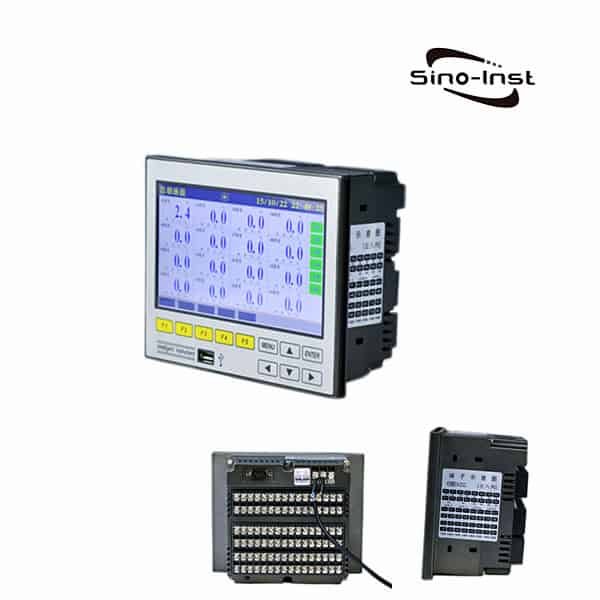
We generally configure paperless liquid level recorders for users to measure and record on-site liquid level signals. It can even perform alarm, signal output, printing and other functions according to user needs.

For example, some of our common models:

7620/7620R Series LCD Volume Display Regulator/ Recorder is specifically designed for industrial on-site regular and irregular canned liquid, volume and mass conversion.

The device has empowered by the surface mounting technology, featuring the design of multiple-layered protection and isolation, with a strong anti-interference capability and high reliability. It has used the embedded operating system with USB data dump function. The data storage time could reach up to 720 days. By using U disk and host computer analysis software, one could call and view the historic curve of process variants and relevant historic data from time to time. It also could match with various liquid sensors, such as ultrasonic liquid level meter. The device has sound anti-theft and anti-damage and other features.

T710 series paperless recorder adopts the new large-scale integrated circuits to realize the reliable protection and robust anti-jamming for input, output, power supply and signals. The recorder can achieve eight-channel universal signal input (the configurable and optional inputs include standard voltage, standard current, thermocouple, thermal resistance and millivolt), four-channel alarm output and one feed output. It has the RS485 communication port, Ethernet port, micro-printer port, USB device port and SD card socket. The recorder enjoys a Powerful display function, which can achieve real-time graphic display, historical graphic recalling, bar graph display and alarm status display.

Universal input of NHR-8100/8700 series color paperless recorder (capable of inputting by means of configuration: standard voltage, standard current, thermocouple, thermal resistance, millivolt, etc.). It can be equipped with 18-channel alarm output or 12 -channel analog transmitting output, RS232/485 communication interface, Ethernet interface, mini-printer interface, USB interface and SD card socket; can provide sensor distribution; is equipped with powerful display function, real-time curve display, historical curve retrospection, bar graph display, alarm list display, etc. The meter is of high cost effectiveness due to its humanized design, perfect function, reliable hardware quality and exquisite craftsmanship.

Other requirements support customization.

Part 3: Featured Products

Steps to quickly build an industrial holding tank level indicator

Let’s say you only have the tank now. There is no liquid level sensor or system.

Understand the basic parameters of the tank. For example, the shape, height, width, wall thickness, pressure, and temperature of the tank. Is there stirring inside the tank?

  • Understand the condition of the media. Is the medium corrosive? Will there be evaporation?
  • Be clear about your needs. For example: You want to achieve synchronous detection of liquid levels in 6 storage tanks.
  • Choose appropriate level sensors and tank level monitors. Make purchases based on the parameters and needs you have mastered above.
  • Install the liquid level sensor. (For specific installation steps and installation details, refer to the manufacturer’s recommendations)
  • Signal connection. Output the signal line of the level sensor to the Tank level Monitor system. For example, the access of 4-20mA signal line.
  • Calibration and testing. After setup and testing, you can easily monitor the liquid level of industrial holding tanks.

If you already have a holding tank level sensor, just select the applicable level monitors based on the output signals supported by the level sensor.

More Level Measurement Solutions

We at Sino-Inst are professional suppliers of holding tank level indicators. Our level sensors and level monitoring systems are widely used in various industries. For example, it can be used as sewage holding tank level indicator or marine holding tank level indicator.

In addition to supplying holding tank level indicators for tanks, we also provide pressure and temperature measurement solutions for various tanks. Including measurements under extreme conditions such as explosion-proof, anti-corrosion, high temperature, extremely low temperature, etc. There are also flow meters that can be used to monitor the flow of tank media filling pipes.

If you need to configure holding tank level indicators or other holding tank detection instruments, please feel free to contact our sales engineers!

Request a Quote

Please enable JavaScript in your browser to submit the form

Water Flow Measurement for Pipes and Open Channels

Water flow measurement is common in both industry and life. You may often hear about the use of electromagnetic flowmeters to measure wastewater. The clamp-on ultrasonic flowmeter measures large water pipes. The establishment of a new irrigation system requires monitoring of water flow. Even rivers and open channels need water flow detection. Use various water flow meters to detect flow and output 4-20mA or RS485 digital signals. Helps us effectively monitor and manage water flow.

Next, we will boldly analyze and sort out the method of Water flow measurement.

Water Flow Measurement

Water Flow Measurement can be simply divided into the following two situations: closed pipes and open channels.

Among them, pipeline water flow measurement is divided into full pipe and non-full pipe measurement. Open channel water flow measurement can be divided into regular channels and irregular rivers.

Extended Reading: LORA water meter

Water flow measurement in water pipes generally refers to measuring the water velocity or water flow in the pipe.

In closed pipes, water flow measurement can be divided into two situations: full pipe and non-full pipe.

Full Pipe measurement:

Full pipe measurement, as the name suggests, refers to the situation when the pipe is completely filled with water. At this time we usually use electromagnetic flowmeter or ultrasonic flowmeter for measurement.

The electromagnetic flowmeter uses the Faraday electromagnetic induction principle to accurately measure the water flow velocity and then calculate the flow rate.

The ultrasonic flow meter determines the flow rate by detecting the time difference in the propagation of ultrasonic waves in the fluid.

Partially full pipe measurement:

For non-full pipes, the situation is slightly more complicated. A partial pipe means that the water does not fill the entire pipe. In this case, we usually use a special electromagnetic flowmeter to measure it.

Further reading: Inline water flow meters

Open channel flow meters can be used in harsh environments. Such as urban water supply diversion channels, sewage treatment inflow and discharge channels, and corporate wastewater discharge.
Next, we will introduce to you the specific method of open channel flowmeter such as flow measurement.

And when our sight shifts from underground pipes to open channels on the ground, there are different methods for measuring water flow.

Regular drains:

In a regular channel, the shape and size of the flow are known. In this case we usually use a weir or Farrer flume to measure the flow. From the change in height of the water as it passes over these structures, we can calculate the amount of water flowing through.

Irregular river channels:

For irregular river channels, due to the complex and changeable shapes of the river bed and river banks, we generally use a current meter to directly measure the speed of the water flow and calculate the flow of the entire river channel based on the cross-sectional information of the river channel.

Extended reading: Make Ultrasonic Open Channel Flow Meter Work for You

Extended reading: non contact flow meter

Water Flow Measurement Methods

With the development of science and technology and production, many places need to measure the flow of different liquids under different conditions. For this reason, after research, a variety of flow meters have been developed. These methods can be summarized as:

  1. Container method. Including weight method, volume method.
  2. Throttling method. Including orifice plate, nozzle, venturi tube, venturi nozzle, etc.
  3. Weir flow method. Including right-angled triangle weir, rectangular weir, full-width weir and other methods.
  4. Differential pressure method. Including volute differential pressure, elbow differential pressure, runner differential pressure, draft tube differential pressure, etc.
  5. Flow meter method.
  6. Tracer method. Including concentration method, integral method, transit time method, etc.
  7. Water hammer method.
  8. Ultrasonic method.
  9. Metering method. Including electromagnetic flowmeter, turbine flowmeter, vortex flowmeter, etc.
  10. Other methods. Including laser flow measurement technology, Pitot tube method, etc.

Extended reading: Ultrasonic Flow Meters Types & Technical Guide

Types of Water Flow Meter

A water flow meter measures the amount of water flowing through a pipe. We have several kinds to choose from, depending on the application, maintenance needs, and budget.

Extended reading: 2 inch Water Flow Meter

There are four common water flow meter types:

Turbine (also called mechanical), Vortex, Ultrasonic, and Magnetic. We will tell you everything you need to know about them and help you choose one for your application.

The electromagnetic flowmeter can measure the speed of the water by using a simple magnetic field.

When water passes through a magnetic field, a voltage is generated. In this way, higher flow rates always generate more voltage when sent through the electromagnetic flowmeter. The electronic system connected to this meter will receive the voltage signal and convert it into volume flow.

Remember that the water needs ions to generate voltage, which means that the electromagnetic flowmeter cannot be used with pure water without pollutants.

Guess you like: Magnetic Flow Meters types and technical guide

Extended Reading: 3 inch (3″) Water Meter

Turbine flow meters easily become the most common flow meters around, mainly because these flow meters are more affordable than other types.

The mechanical flow meter measures the water flow through the rotation of the turbine, which uses a basic propeller, blade, or split flow design. The flow rate of water is equal to the speed of the blades.

If mechanical flow meters are to be used, they may become clogged if the water is dirty or more contaminated than expected.

Therefore, you probably should not use this kind of flowmeter to measure the flow of slurry. Since these flow meters can become clogged, they are more frequently maintained than other flow meters.

Know more about: Turbine type Flow Meter for Liquid & Gas technology

The vortex flowmeter is a unique flowmeter that measures the flow of water by using vortex flow.

When the fluid pushes over the obstacle, it will produce a vortex and form a vortex. The flowmeter is equipped with a sensor tab. As long as the vortex flows through the sensor tab, the tab will bend, which will produce a frequency output indicating the flow rate of the water.

If you decide to choose a multivariable vortex flowmeter, it can measure up to five different variables that are useful for your specific application.

These variables include mass flow, temperature, density, flow rate and pressure. These meters are especially suitable for large pipelines.
Extended reading: High Pressure Rotameter for Liquids/gas-Upto 25 Mpa

Ultrasonic flow meters are designed to use ultrasonic technology to measure the speed of water as it passes through the pipeline.

You should understand two basic types of ultrasonic flow meters, including runtime flow meters and clamp-on ultrasonic flow meters.

If you choose a run-time flow meter, send a standard ultrasonic signal downstream before sending another signal upstream. These two signals are then compared to determine the water flow rate. This is mostly a pipeline water flow meter. It is often used for household water.

For clamp-on ultrasonic flowmeters, can be placed outside the pipe and are designed to emit acoustic pulses through the pipe wall in order to receive the measured value. Since they can be installed outside the pipeline, they can be used for almost any application and can be used with larger pipelines.
Extended reading: Industrial VS Residential inline water flow meters

Rotameter is also called float flowmeter. Rotameter is composed of three units: float flow sensor part, displacement-angle conversion mechanism part, and information conversion processing part. It is a traditional variable area flow measurement device. When the flow rate changes, the float moves up and down in the vertical tapered tube. The circular flow area formed between the cone and the float changes. It is a volumetric flow meter that realizes flow measurement based on this principle.

Extended reading: Metal Tube Flow Meter-Variable Area Flow Meters Principle

Rotameter can measure water and gas. But you must explain the medium and flow range with the manufacturer when selecting the model. The method of calibration by the manufacturer is different. The completed flowmeter cannot be used mutually.

Extended reading: Liquid Bitumen/Asphalt Flow Meter

Read more about: Hydrostatic Submersible Level Transmitter-Straight Rod Insertion

There are several methods/flow meters that can be used to measure open channels:

Use a flow meter to directly measure the flow of the river. There are many types of flow meters, mainly including differential pressure, electromagnetic, launder, and weir flow meters. It can be selected and used according to the actual flow rate range and test accuracy requirements.

Extended Reading: Chilled Water Flow Meter

Put the river water into a container of known capacity. Measure the time it takes to fill the container. Repeat the measurement several times. Find the average value t(s). A method to calculate the amount of water.

This method is simple and easy to implement, and the measurement accuracy is high. It is suitable for rivers with small river flows. However, there should be a proper drop between the overflow outlet and the receiving water body or an error can be formed by the aqueduct.

Select a straight river section. Measure the area of ​​the cross-section of the water flow within a 2m interval of the river section. Find the area of ​​the average cross-section.
Put a buoy in the upper reaches of the river and measure the time it takes for the buoy to flow through a certain section (L). Repeat the measurement several times. Get the average of the required time (t), and then calculate the flow velocity (L/t). The flow can be calculated as follows:

In the formula, Q is the water flow, the unit is m^3/min. v is the average flow velocity of the water flow, and its value is generally 0.7L/t, and m/s.S is the average cross-sectional area of ​​the water flow, the unit is m^2.

Calculate the river flow by measuring the cross-sectional area of ​​the water flow, measuring the river water velocity with a flow meter.
During the measurement, the number of vertical and horizontal measurement points at the point must be determined according to the depth and width of the channel. The method is simple, but it is easily affected by water quality and difficult to achieve continuous measurement.

Understanding the relationship between Flow Rate and Pressure may help you calculate mass or volume flow.

Acoustic Doppler flow measurement is developed using the principle of Acoustic Doppler. It can simultaneously measure the cross-sectional shape, water depth, velocity, and flow of the river bed at one time, and is suitable for flow monitoring of large rivers.

The host and transducer of the flowmeter are installed in a waterproof container. All are immersed in water when working and are connected with a portable computer through a waterproof cable. The operation and control of the flowmeter are carried out on the portable computer.
From the initial blind zone above 1m, it is reduced to the so-called “zero blind zones”. The profile unit is reduced to the current 0.05~0.25m. It is possible to apply it on wide and shallow rivers.

Extended reading: Insertion Ultrasonic Water Flow Meter – Designed for Agricultural Irrigation, Garden Management

Read more about: 5 Types of Flowmeters | 2023 New Guide to Flowmeter Types 

Featured Water Flow Measurement Devices

Read more about: How to Measure River Water Level?

Frequently
Asked
Questions

Flow is the volume of fluid that passes in a unit of time. In water resources, flow is often measured in units of cubic feet per second (cfs), cubic meters per second (cms), gallons per minute (gpm), or other various units.

Read more about: Flow Unit Conversion Table

Users can also choose unit of flow rate. For volume flow, L/s, L/min, L/h, m3/s, m3/min and m3/h are available; while for mass flow, kg/s、kg/m、kg/h、t/s、t/m、t/h can be selected from. It is up to the habits and application requirements to pick up a proper unit.

Extended reading: Liquid Bitumen/Asphalt Flow Meter

There are many ways to calculate flow.
For example, Using the Flow Rate Formula: Q​ = ​A​ × ​v​.
where ​Q​ is the flow rate, ​A​ is the cross-sectional area at a point in the path of the flow and ​v​ is the velocity of the liquid at that point.

Or, Flow Rate Calculation Using Pressure:

Extended reading: Orifice Plate Flow Meter

A water flow meter is an instrument that can measure the amount of water passing through a pipe. There are a variety of water flow meter technologies to choose from. It depends on the water measurement application, budget terms, and maintenance requirements. Each of these flowmeter types has novel process principles, overall use value and unique advantages in use.

The water flow meter can measure hot water, cold water, clean water, dirty water and mud.

Extended reading: Hot Water Flow Meters Improve Heating-Boiler System

To measure the flow of water in a river, you can use the following methods:

  • Choose a suitable measuring point: Find a relatively regular place in the river with smooth water flow for measurement.
  • Using a current meter: Deploy a current meter (such as an electromagnetic current meter or buoy) into the river to measure flow velocity at different depths and locations.
  • Calculate the cross-sectional area: measure the width and depth of the river, draw the flow cross-section, and calculate the cross-sectional area.
  • Integrating the data: Multiply the flow velocity by the cross-sectional area to get a value for flow, usually expressed in cubic meters per second (m³/s).
  • Multi-point measurements: To get a more accurate estimate of flow across an entire river channel, measurements may need to be taken at a number of different locations and then averaged.

For example, radar flow measurement is currently a commonly used method. It consists of a vertical pole, a horizontal arm, a chassis, a solar power supply system, a collection equipment, a radar flow meter, and a radar water level meter.

Choose a suitable position for the pole and cross arm on the shore. The length can be used to fix the sensor radar current meter and radar water level meter above the river surface, facing the water flow, and can monitor the river surface flow rate and real-time water level at the same time. The collection and transmission equipment RTU in the chassis is then used to receive and process the real-time data and then wirelessly transmit it to the remote platform. Time can be set for real-time viewing, threshold alarm, etc.

For mechanical flow meters, there is usually a rotating needle or a series of rollers to display the flow rate. Record the readings on all rollers, from left to right, which represent the total amount of water that has flowed through since installation.

For electronic flow meters, just read the value on the digital display directly. The electronic flow meters we supply from Sino-Inst can display instantaneous flow and cumulative flow.

Read more about: Flow Meter Selection Guide

More Liquid and Gas Flow measurement techniques

Sino-Inst offers over 30 water flow meter products for Water Flow Measurement. About 50% of these are differential pressure flow meters. 40% are water meters (like the Insertion Turbine Flow Meter), and 40% are water treatment (like the Annubar flow meter ).

A wide variety of water flow meter for Water Flow Measurement options are available to you, such as free samples, paid samples.

Sino-Inst is a globally recognized supplier and manufacturer of water flow meters, located in China.

The top supplying country is China (Mainland), which supply 100% of the water flow meter respectively.

Sino-Inst sells through a mature distribution network that reaches all 50 states and 30 countries worldwide. Water flow meter products for Water Flow Measurement are most popular in Domestic Market, Southeast Asia, and Mid East.

You can ensure product safety by selecting from certified suppliers, with ISO9001, ISO14001 certification.

Request a Quote

Please enable JavaScript in your browser to submit the form

Analog Pressure Transducers vs Digital Pressure Transducers | How to Choose?

In industrial control systems, Pressure Transducers play a key role in monitoring and regulating pressure. You must have heard of 4-20mA pressure transmitter, 0-10V pressure transmitter, RS485 pressure transmitter, etc. When it comes to analog Pressure Transducers and digital Pressure Transducers, although they have the same goal – to accurately deliver a pressure signal, the technical details and practical application are very different.

Next, we’ll dive into the differences between analog Pressure Transducers and digital Pressure Transducers. Help you make informed decisions and ensure your control system operates efficiently and accurately.

We Sino-Inst are professional pressure transmitter manufacturers. More than 50 types of pressure transmitters are available to choose from. The output signals of the pressure transmitter are available in a variety of options: mV/V, 0/5 V, 0/10 V, 4/20 mA, as well as RS485, HART, etc. We also offer multiple levels of customization to meet your needs. Including customization of installation dimensions, measurement range, explosion-proof and anti-corrosion, high temperature, low temperature, etc.

Featured Analog & Digital Pressure Transducers

SI-303 Low-Pressure Transducer
Low pressure transducers for air and non-corrosive gases low pressure measurement. 0 ~ 2.5kPa to 0 ~ 30kPa measurable.
SI-703 Flush diaphragm pressure sensor
Flush membrane / diaphragm structure, anti-blocking design. Pressure measurement of viscous media.
SI-10 Liquid pressure sensor
Liquid pressure sensor is widely used for pressure measurement of various liquids. Like water or oils. IP68 waterproof.
SI-702S Ultra-High Pressure Senors
Pressure sensor for Ultra high pressure applications. Ultra high pressures up to 15,00MPa. 0-2000MPa to 0-7000MPa (customized).Ball head M20 × 1.5, cone head M20 × 1.5.
SI-512H High Temperature Pressure Sensor
High Temperature Pressure Sensor for pressure measurement of high temperature gas or liquid. Such as steam pressure. High temperature up to 800 ℃.
SI-350 Sanitary Pressure Transmitter
Sanitary Pressure Transmitter, also called tri clamp pressure transmitter,
is the pressure transducer with the flush diaphragm (flat membrane) as the pressure sensor.
SI-300 Pressure Transducer 4-20mA/Voltage
The 4-20mA/ Voltage Pressure Transducer,
also called pressure transmitter 4-20mA,
is a pressure sensor with4-20ma/Voltage output.
SI-390 Industrial Pressure Transmitter
Pressure transmitters for general industrial applicaitons. -0.1kPa ~ 0 ~ 0.01kPa ~ 100MPa ~150MPa. 0.1% FS, 0.25% FS, 0.5% FS. 4-20mA (2-wire system), 0-5 / 1-5 / 0-10V (3-wire system)
SI-520 Digital Pressure Sensor
Digital Pressure Sensor is particularly suitable for use in computer control systems. RS485 half-duplex working mode.
SI-706 Combined Pressure and Temperature Sensor-Dual function
Combined pressure and temperature sensor for Simultaneous measurement of pressure and temperature.
Thermocouple types: J, K, E type or PT100 platinum resistance. Two outputs do not affect each other. 

More about pressure transmitters

The pressure transmitter converts the pressure changes of the medium into electrical signal output. When the pressure of the medium acts on the sensor, the sensor will produce corresponding physical deformation. This deformation is converted into an electrical signal through an electronic circuit, usually a standard signal such as 4-20mA or 0-10V. In this way, pressure changes can be read and processed by the control system or display device. This enables the monitoring and control of pressure in industrial processes.

Different types of pressure transmitters use a number of different operating principles to achieve this:

Pressure Transmitter Working Principle

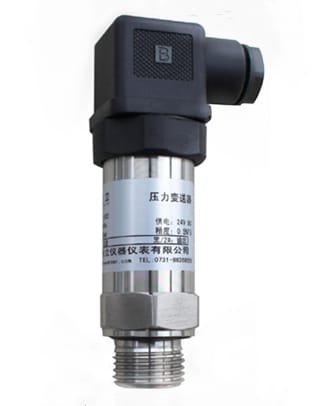
Submersible pressure transducer is a sensor specially designed for measuring liquid pressure and can be completely immersed in liquid.

The static pressure of the liquid is sensed through the sensitive diaphragm of the sensor, and this pressure is converted into an electrical signal output. Common output signals include 4-20mA or 0-10V, etc.

Submersible pressure transmitters have good waterproof characteristics and are widely used in water level monitoring, deep well measurement, sewage treatment and other fields. Able to accurately provide pressure readings in harsh environments. Because its structural design allows it to withstand extended dives, it is particularly useful in applications requiring long-term or continuous water pressure monitoring.

A differential pressure transducer is an instrument used to measure the pressure difference between two pressure points. It converts the voltage difference into a continuous electrical signal output, such as 4-20mA or 0-10V.
This type of transmitter is widely used in areas such as flow measurement, liquid level monitoring and filter clogging detection. By measuring the pressure difference between two points in a pipe, tank or system. Differential pressure transducers can provide important information about fluid flow characteristics and system performance to help achieve precise process control and optimization.

There are subtle functional differences between pressure transducers and pressure sensors.
A pressure sensor generally refers to a device that detects pressure and converts it into an electrical signal. This electrical signal is generally raw and unprocessed and requires further conversion and amplification.
The pressure transducer not only contains all the functions of the pressure sensor, but also standardizes this electrical signal. Output industry standard signals such as 4-20mA or 0-10V. Can be read directly by the control system or display device.

In short, pressure sensors focus more on the detection of pressure, while pressure transducers provide a complete pressure measurement solution that can be used by the system.

Pressure transmitters can be divided into analog output and digital output according to the output signal. Analog output means that the output signal is an analog quantity, such as 4-20mA, 0-5V, etc. Digital output means that the output signal is a digital quantity, such as RS485, CAN bus, etc.

Analog Pressure Transducers

Analog Pressure Transducers convert mechanical pressure into continuous analog electrical signals, such as 4-20mA current or 0-10V voltage. This conversion occurs through physical pressure acting on the sensor’s sensitive element (usually a diaphragm or piezoelectric material), causing it to deform. This deformation is then converted into an electrical signal, the size of which is proportional to the pressure acting on the sensor.

The advantages of Analog Pressure Transducers are their simple structure, low cost, and durability. They typically do not require complex programming or special interfaces, making them easy to integrate with existing systems. In addition, analog signals can withstand electrical noise during long-distance transmission, which makes analog transmitters ideal for use in industrial environments with high electromagnetic interference.

Digital Pressure Transducers

Digital Pressure Transducers convert pressure information into digital signals. In terms of working mechanism, these transmitters usually contain a pressure sensor that senses pressure changes and converts it into an electrical signal, and then converts the analog signal into a digital signal through a built-in analog-to-digital converter (ADC). During this process, the transmitter will also perform signal amplification, filtering and digital processing to ensure the accuracy and stability of the output signal.

The advantages of Digital Pressure Transducers are significant. First, they provide greater accuracy and resolution because digital signals are not as susceptible to noise as analog signals.
Second, digital transmitters often have self-calibrating capabilities, reducing maintenance.
Furthermore, these transmitters can interface directly with computer systems to facilitate remote monitoring and data logging.

Analog Pressure Transducers vs Digital Pressure Transducers

Accuracy comparison

Digital Pressure Transducers: Typically provide greater accuracy. The high resolution of digital signals and their resistance to external interference. This gives digital transmitters an advantage in providing accurate readings.

Analog Pressure Transducers: Can provide relatively accurate measurements in environments without severe electromagnetic interference. However, signal attenuation may occur in long-distance transmission or high-interference environments.

Stability

Digital Pressure Transducers: In theory, digital technology can provide better stability, but special designs may be needed to protect electronic components in extreme environments.

Analog Pressure Transducers: With simple structure and mature technology, they are more suitable for harsh industrial environments, especially in high temperature, high pressure, and high vibration situations.

Responding speed

Digital Pressure Transducers: Fast response times, especially where fast change detection is required.

Analog Pressure Transducers: Relatively slow to respond, but generally adequate for most industrial applications.

Ease of use

Digital Pressure Transducers: Can integrate directly with computer systems and modern control systems to provide easy-to-understand digital readouts, but may require complex programming and configuration.

Analog Pressure Transducers: Simple to install, easy to use, no complex configuration required, suitable for users of different technical levels.

Cost-benefit ratio and long-term return on investment

Digital Pressure Transducers: The initial investment is higher, but in the long term, accurate data collection and processing increases efficiency and reduces maintenance costs, thus potentially providing a better return on investment.

Analog Pressure Transducers: Low initial cost, suitable for projects with limited budgets. While long-term maintenance costs may be higher, its stability and durability may reduce overall replacement and repair costs.

When selecting a suitable pressure transmitter, all of the above factors should be considered to ensure that performance requirements are met while maximizing cost-effectiveness within the budget.

More Pressure Measurement Solutions

When faced with choosing between Analog Pressure Transducers or Digital Pressure Transducers, the key is to understand the capabilities and benefits of each. Analog Pressure Transducers are known for their stability and cost-effectiveness, while Digital Pressure Transducers are favored for their high accuracy and ease of integration.

We at Sino-Inst not only offer a wide range of pressure transmitters, but also cover a wide range of flow, level and temperature measuring instruments. These instruments have excellent performance in the fields of crude oil flow measurement, liquid level measurement, and temperature measurement.

If you are looking for reliable pressure measurement solutions, please contact us. Sino-Inst will provide you with professional advice and customized services to help your project succeed.

Request a Quote

Please enable JavaScript in your browser to submit the form

Vacuum Pressure Transducers | Product List and FAQs

What is a vacuum pressure transducer?

Vacuum pressure transducer is an instrument that can measure and convert vacuum pressure signals into standard electrical signals (such as 4-20mA, 0-5V, etc.). Typically used for precise monitoring and control of pressure in closed systems with high vacuum levels. The measurement range is usually from below atmospheric pressure to a specific low pressure value. It is widely used in vacuum acquisition and control systems in chemical, pharmaceutical, food processing and other industries as well as scientific research experiments.

Sino-Inst manufactures and supplies a range of pressure transmitters. This covers negative pressure transmitters, absolute pressure transmitters, high vacuum absolute pressure transmitters, etc.

The high vacuum absolute pressure transmitter uses imported metal film capacitor and ionization gauge technology. The minimum range can be extended to 200Pa to achieve true high vacuum pressure measurement.
The negative gauge pressure transmitter uses a MEMS diffused silicon sensor. Through range migration and equipped with a dedicated signal processing unit, accurate measurement of negative pressure can be achieved. The product has stable performance and long service life, and the measuring range can be selected arbitrarily between 0~-100KPa.
It can be specially designed and customized according to the specific requirements of users to meet various practical application needs.

Featured Pressure and Vacuum Transmitters

FAQs

Can pressure transmitters measure vacuum?

Pressure transmitters do measure vacuum. Pressure transmitters designed specifically for measuring vacuum are capable of measuring pressure levels below atmospheric pressure and are often referred to as vacuum pressure transducers.

How does a negative pressure transmitter work?

The working principle of a negative pressure transmitter is usually to use pressure sensing elements (such as piezoelectric, capacitive, strain gauge, etc.) to sense the pressure difference, and then convert the physical pressure changes into electrical signals. In a negative pressure environment, the sensing element of the transmitter will deform accordingly according to the magnitude of the negative pressure, thereby changing the resistance, capacitance or other electrical performance parameters. These changes are converted into a standard electrical signal output through the signal processing circuit, such as 420mA. Or 05V, etc. to facilitate pressure monitoring and control.

How many PSI is full vacuum?

A complete vacuum is a state without any gas molecules at all, and its pressure is zero. In pressure measurement, atmospheric pressure is usually used as the reference. The standard value of atmospheric pressure is 14.696 PSI (pounds per square inch), so the pressure in a full vacuum state can be considered to be 0 PSI. In technical applications, this complete vacuum state is difficult to achieve. What is often called “full vacuum” is a relative term. In fact, there may be very slight pressure.

Are vacuum pressure transducers and negative pressure transducers the same?

Vacuum pressure transducers and negative pressure transducers have similarities in application, but there are differences between them.

Vacuum pressure transducers are usually used to measure pressure below atmospheric pressure, mainly for measuring vacuum. Its measurement range is usually from standard atmospheric pressure (101.325 kPa) to absolute zero pressure, which is a complete vacuum state.

Negative pressure transducers are used to measure pressure below atmospheric pressure but not reaching a vacuum state, also called negative pressure or negative differential pressure. Its measurement range is usually from above atmospheric pressure to some low pressure value, but not to a complete vacuum.

Both are devices that work at standard atmospheric pressure and are used for pressure measurement in low-pressure environments of varying degrees. When selecting equipment, you need to determine whether to use vacuum pressure transducers or negative pressure transducers according to the pressure range of the specific measurement environment.

What are the types of pressure sensors?

Pressure sensors can be classified based on the range of pressures they measure over the operating temperature range and, most importantly, the type of pressure they measure. Pressure sensors have different names depending on their purpose, but the same technology may be used under different names.

  1. Absolute pressure sensor
    • This pressure sensor measures pressure relative to a complete vacuum.
  1. Gauge pressure sensor
    • This pressure sensor measures pressure relative to atmospheric pressure. A tire pressure gauge is an example of a gauge pressure measurement; when it indicates zero, it is measuring the same pressure as the ambient pressure.
  1. Vacuum pressure transducers
    • Used to describe sensors that measure pressure below atmospheric pressure, showing the difference between low and atmospheric pressure, but can also be used to describe sensors that measure absolute pressure relative to a vacuum.
  1. Differential pressure sensor
    • This sensor measures the difference between two pressures, one attached to each side of the sensor. Differential pressure sensors are used to measure many properties. For example, pressure drop across an oil filter or air filter, fluid level (by comparing the pressure above and below the fluid), or flow rate (by measuring the change in pressure within a limited range). Technically, most pressure sensors are actually differential pressure sensors; for example, a gauge pressure sensor is just a differential pressure sensor with one side open to the surrounding atmosphere.

More About: Unraveling the Pressure Puzzle: Absolute Pressure vs Gauge Pressure

pressure conversion tools

Tools for converting and calculating pressure values. Help users choose suitable pressure sensors and transmitters!

Absolute pressure-Gauge pressure ConverterPressure Unit ConverterLiquid Depth/Level to Hydrostatic Pressure Calculator
Differential Pressure CalculatorPressure Transducer 4-20ma Output CalculatorPressure to Liquid Level Calculator

In many industrial situations, a closed environment needs to be evacuated. At this time, the vacuum pressure transducers can be used to detect the vacuum degree of the closed environment in real time. Generally, vacuum pressure transducers that measure negative pressure have the function of detecting negative pressure and positive pressure at the same time.

We at Sino-Inst are professional pressure transmitter manufacturers. We offer over 50 types of pressure transmitters. Can measure gauge pressure and absolute pressure. Negative pressure, vacuum, differential pressure, etc. Features a variety of analog outputs including 4-20ma, 0-10 VDC and 0.5-4.5 VDC proportional outputs. We also offer industry-proven rugged vacuum sensor designs and flexible, low-cost and reliable OEM solutions.

Do you need the right equipment to measure vacuum pressure? Please feel free to contact our sales engineers for consultation!

Request a Quote

Please enable JavaScript in your browser to submit the form

Industrial Helium Flow Meters

Helium is a noble gas. Helium is widely used due to its unique properties as a rare gas, such as in ultra-low temperature coolants, aeronautics, welding, leak testing, semiconductors and other application fields.

Sino-Inst offers 4 common helium flow meters. Vortex flowmeter, thermal gas flowmeter, precession vortex flowmeter and metal rotor flowmeter. Meets helium flow measurement for pipe sizes from DN10 to DN1000.

Helium flow meters

Thermal mass flow meter for helium gas flow measurement

Helium (He) is an inert gas that does not easily react with other elements and is widely used in many industrial applications. Therefore, helium flow measurement devices are very important.

Thermal gas mass flowmeter is a flowmeter that can directly measure the mass flow of helium gas. Not only is it not affected by temperature, it is also not affected by pressure. The user does not have to make corrections for pressure and temperature. And for pipes above DN65 size, plug-in installation can be selected. Effectively reduce measurement costs.

The thermal gas mass flow meter produced by Sino-Inst to measure helium has the following advantages:

  1. A true mass flow meter does not require temperature and pressure compensation for gas flow measurement, and the measurement is convenient and accurate. The mass flow rate or standard volume flow rate of the gas can be obtained.
  2. Wide range ratio, can measure gases with flow rates as high as 100Nm/s and as low as 0.5Nm/s. It can be used for gas leak detection.
  3. Good seismic resistance and long service life. The sensor has no moving parts and pressure sensing parts, and is not affected by vibration on measurement accuracy.
  4. Easy to install and maintain. If site conditions permit, non-stop installation and maintenance can be achieved. (Special customization required)
  5. Digital design. Overall digital circuit measurement, accurate measurement and easy maintenance.
  6. Adopt RS-485 communication or HART communication. Factory automation, integration, and optional wireless remote monitoring can be realized.
  7. The power supply is optional AC220V, DC24V or AC220V/DC24V dual power supply.
  8. Display content: standard voltage, instantaneous flow, cumulative total, standard flow rate, etc.;
  9. Display units: NL/m, NL/h, Nm3/m, Nm3/h, L/h, Kg/h, Kg/m, t/h, t/m, g/S;
Applications of Thermal Mass Flow Meter

Vortex flow meter for helium gas flow measurement

The vortex flowmeter is based on the Karman vortex principle. That is, when the fluid flows through an object without flow resistance placed in the flow channel, alternating vortices will be formed behind it. Suitable for various industrial gases.

This flow meter has the following advantages for measuring helium flow:

  • High accuracy and repeatability: For low-density gases such as helium, it can accurately detect the vortex frequency formed after flowing through the probe. This frequency is directly proportional to the flow rate, allowing for accurate measurement.
  • No need for temperature and pressure compensation: Since helium is a single-component gas, its physical properties have little impact on flow rate due to changes in temperature and pressure within a certain range. Vortex flowmeters can directly measure volume flow without the need for additional temperature or pressure compensation.
  • Wide flow range: Vortex flowmeter has a wide flow measurement range. Able to adapt to the variable flow requirements of helium in different industrial applications.
  • High temperature and high pressure resistance: Vortex flowmeter can work at higher temperatures and pressures. This makes it possible to measure helium flow in harsh industrial environments.

Therefore, vortex flowmeters are ideal for measuring helium flow. Whether in precision measurements in the laboratory or in large-scale applications in industrial production processes.

Precession Vortex Flow Meter for helium gas

The intelligent precession vortex flowmeter is a new type of gas flow meter. This flowmeter integrates flow, temperature and pressure detection functions. And can automatically compensate for temperature, pressure and compression factor. It is widely used in petroleum, chemical industry, electric power, metallurgy, urban gas supply and other industries to measure various gas flows.

Therefore, the advantages of using a precession vortex flowmeter to measure helium are obvious. Installing a precession vortex flowmeter eliminates the need to install pressure sensors and temperature sensors. This also saves costs and installation time.

Metal Rotameter for helium gas flow measurement

Metal rotor flowmeter is an area flow measurement instrument commonly used in industrial automation process control. It has small size and stable and reliable operation. Suitable for measuring liquids, gases, various flow rates and use in various environments.

The metal rotor flowmeter is only suitable for helium flow measurement in DN15~DN150 pipelines. But its measurement also has unique advantages:

  • Suitable for flow measurement of small diameter and low flow velocity media;
  • The requirements for the front and rear straight pipe sections are low; More about: Flow Meter Straight Length Requirements Guide;
  • The pointer indicates instantaneous flow, and the double-row LCD displays instantaneous flow and cumulative total (optional);
  • All-metal structure, suitable for high temperature, high pressure and highly corrosive media;
  • Can be used in flammable and explosive hazardous locations;
  • With data backup and power-off protection functions (LCD display type);
  • Reliable work, low maintenance and long life;
  • Wider range ratio 10:1;
  • Multi-parameter calibration, keyboard setting alarm (with alarm type);
  • Optional external power supply or built-in 3.6V lithium battery power supply;

More Gas Flow Measurement Soluitons

Helium is very inert and does not easily react chemically with other substances. It can be widely used in various industries. Additionally, helium has low density, low boiling point, and high thermal conductivity properties, making it a very valuable gas.
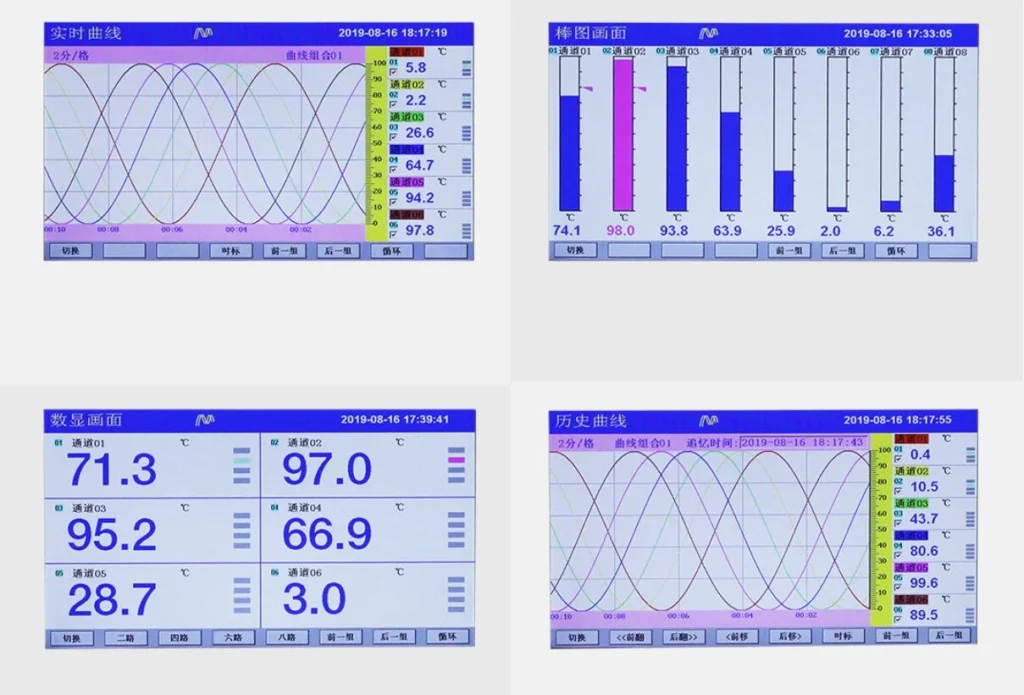
In applications in the welding and metallurgical industries, helium can be used as a welding shielding gas;
In applications in cryogenic engineering, helium gas is usually used as the working medium of closed cycle cryogenic refrigerators.
Helium also has many special industrial applications.

We, Sino-Inst, are a professional flow meter manufacturer. In addition to helium flow meters, we also produce steam flow meters, oxygen flow meters, hydrogen flow meters, argon flow meters, and various other liquid and solid powder flow meters.

If you need to measure helium flow or purchase a helium flow meter, you can contact our engineers for technical support at any time!

Request a Quote

Please enable JavaScript in your browser to submit the form

How to check Level in Underground Tanks? What Tank Level Indicators to Choose?

Underground tanks refer to tanks installed below the ground for storing gas or liquid. So is measuring the level of an underground tank the same as measuring the level of a tank above ground? The answer is no. Most underground tanks come pre-assembled. Once installed, it will not change year after year. The most common ones are underground oil storage tanks at gas stations.

So how to measure the liquid level of underground tanks? What tank level indicators are available? Let’s take a look together.

Underground tanks are generally installed pre-buried. After installation, it is difficult to make changes to the bottom, sides, etc. of the tank. Of course, underground tanks generally have reserved manholes, feed openings, discharge openings, etc. Some will also reserve installation locations specifically for level meters.

Based on our experience, underground tank level indicators can be divided into two categories: contact and non-contact. For example, ultrasonic level meter and radar level meter are commonly used non-contact level indicators. For example, Hydrostatic Level Sensor, float level sensor, and magnetostrictive level meter are commonly used contact level indicators.

The specific choice needs to be determined based on the conditions of the medium in the storage tank. The second half of our blog will explain this with examples.
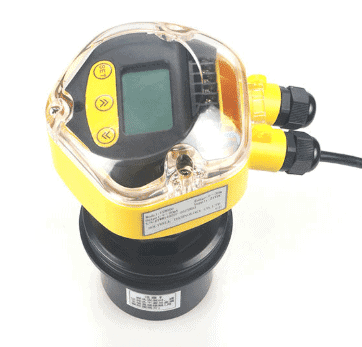
Below are the various underground tank level indicators we supply at Sino-Inst. You can choose to delve deeper into the measurement parameters:

Available underground tanks level indicators

OK Next, we will use our actual cases to hand over the choice of underground tank level indicators for you.

Gas station underground oil storage tanks

We all know that most diesel and gasoline at gas stations are stored in underground tanks. The oil level needs to be accurately monitored in real time. Including when feeding and discharging materials. The accuracy of this tank level indicator needs to be very high. Because it is directly linked to money.
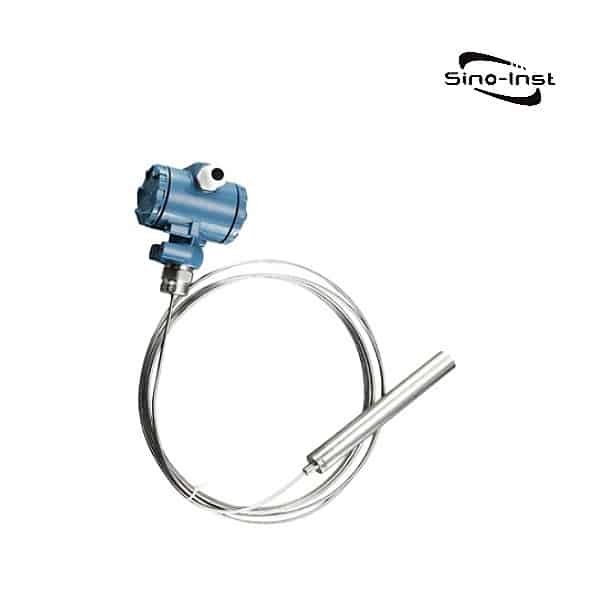
So based on our experience, in this case we would recommend users to choose Magnetostrictive liquid level sensor.

Mainly because Magnetostrictive liquid level sensor can meet the following characteristics:

  1. Large range: 0.2m~25m;
  2. Meet the explosion-proof requirements of gas stations. Explosion-proof level: ExdⅡCT6 Gb;
  3. High precision. Magnetostrictive level transmitter has a maximum accuracy of 1mm;
  4. Can meet high temperature, high pressure and other parameter customization. -40 ℃ ~ +350 ℃, 10MPa;
  5. The installation size can be customized. According to the installation requirements of underground oil storage tanks, threaded or flange installation can be configured.
  6. Support signal output, 4~20mA, 0~5V, 0~10V, HART, RS-485. It is convenient for real-time monitoring of oil level in the office.
  7. The Magnetostrictive level transmitter can also be customized according to needs: interface output (measurement of oil-water interface), and simultaneous output of temperature and liquid level (up to 8 RTD temperature sensors can be installed for temperature detection).

Read more about: Magnetostrictive Level Transmitter Working Principle

Of course, if the measurement accuracy requirements are not high. Then it is also possible to choose explosion-proof ultrasonic level meter.

Underground sewage storage tanks

Here is an example of a measurement taken by one of our users. Their 2 storage tanks are underground tanks for sewage.

  1. The 2 storage tanks are sewer septic tanks;
  2. The on-site storage tanks are underground storage tanks; horizontal tanks; the heights are 1800mm and 1500mm respectively;
  3. The tank has a reserved manhole of Φ450mm.

Comprehensive consideration of measurement parameters and installation dimensions. We configure anti-corrosion antennas for the optional 80G radar level meter. Customized installation dimensions for reserved manhole installation in the tank.

Read more about: Crude Oil Measurement, 80G Radar Level Meter Should Be Your First Choice!

Chemical corrosive raw material storage tanks

The capacity of underground storage tanks in the chemical industry can range from thousands to millions of gallons. For example, some large chemical plants may have underground storage tanks with a capacity of 300,000 gallons for storing raw materials such as ethylene and benzene.

This type of Underground Tanks level measurement will be more complicated than the above two. We need to comprehensively consider many factors, especially the characteristics of the medium:

  1. The size and shape of the tank.
  2. The temperature, pressure, viscosity, corrosiveness, etc. of the medium.
  3. Is there stirring in the tank?
  4. The installation position of the inlet and outlet, etc.;

Here we discuss the level indicators available for corrosive media. Generally there are radar level meters and guided wave radar level meters. Or customize an anti-corrosion input level sensor made of PTFE.

The following is also a case of measurement by one of our customers. The measuring medium is: a metal tank containing 98% sulfuric acid. The tank is large and comes with a picture of the level transmitter installed.

We equipped him with an antenna made of PTFE anti-corrosion material to meet the measurement requirements:

Radar level meter
Model: FMW11
80G
Measuring the level in a sulfuric acid tank
PTFE antenna,
Temperature resistance: -40-80℃,
Pressure: -0.1-0.3MPa
Mounting Dimensions: 1 1/2″ NPT PTFE Coated
Digital display with measurement and programming
24VDC
4-20mA (two wires) +HART
1/2″ NPT Head Electrical Connections

FAQ

To check the water level in your underground tank, there are several methods you can use:

  • Manual measurement: Use a dipstick or water measuring rope to lower it into the water tank to directly measure the water level.
  • Install a water level sensor: Install a float or pressure water level sensor in the water tank, which can monitor the water level in real time.
  • Electronic water level indicator: uses an electronic probe to monitor the water level and displays the water level height through a digital display.
  • Ultrasonic water level meter: Ultrasonic waves are emitted from the top of the water tank and the water level height is calculated based on its reflection time.
  • Radar water level gauge: Using the principle of radar waves, the signal is also emitted from the top of the water tank and the reflection time is measured to determine the water level height.

The best water level indicator depends on the specific application scenario and needs, such as accuracy requirements, installation environment, maintenance costs and budget. The more commonly used ones at present are:

  • Ultrasonic water level meter: non-contact measurement, less maintenance, suitable for most application scenarios.
  • Radar water level gauge: It is also non-contact and suitable for extreme working conditions, such as high temperature, high pressure, corrosive media and other environments.
  • Float water level switch: simple and reliable, low cost, but average accuracy.
  • Capacitive water level sensor: high accuracy, but relatively complex to install and expensive.

The main difference between a water level indicator and a water level gauge is their function and usage:

Water level indicator (Level Indicator) usually refers to a visual or electronic display of the water level inside the container. It can be a simple window or a complex electronic device that converts water level information into readable data.

Water level gauge (Level Gauge) refers more to a measuring tool or device, which is used to accurately measure and read water level. Water level gauges often provide more detailed water level data, such as precise readings in millimeters or inches.

Simply put, water level indicators tend to visually display water level status, while water level gauges provide more precise measurements. In actual industrial applications, the water level indicator may be part of the water level gauge for visual display, while the water level gauge is part of the entire measurement system.

More Level Measurement Solutions

An important reason for using underground storage tanks is that they can reduce the occupation of surface space. At the same time, they have certain functions of thermal insulation, fire prevention and reducing environmental pollution. However, underground storage tanks also require strict compliance with environmental regulations and safety standards to prevent leaks and contamination of soil and groundwater. Liquid level monitoring of underground storage tanks can effectively avoid economic losses.

We at Sino-Inst are professional suppliers of Underground Tanks level indicators. We provide users with various standard and customized level meters. It can meet the liquid level measurement needs of various tanks with different parameters.

If you need to measure Underground Tanks level, please feel free to contact our sales engineers for consultation.

Request a Quote

Please enable JavaScript in your browser to submit the form