Steam Flow Measurement: Do you need temperature and pressure compensation?

Steam flow measurement has always been a problem. Today we solve a problem of temperature and pressure compensation. So Do you need temperature and pressure compensation for Steam Flow Measurement?

Steam Flow Measurement

There are two types of steam, saturated steam and superheated steam.
The temperature and pressure compensation is superheated steam. For the real saturated steam, only temperature or pressure compensation is required. Check the density table according to the temperature and pressure during measurement to obtain the required mass flow.

Generally speaking, vortex flowmeter manufacturers will provide saturated and superheated steam mass flow range tables for users to select.

In the actual measurement, due to changes in working conditions, saturated steam and superheated steam are willing to deviate from the original design. It will change the relationship between steam temperature and pressure to obtain its density. Affect the accuracy of measurement.

Wet saturated steam

When the vortex flowmeter is installed behind the pressure reducing valve. The wet saturated steam suddenly decompresses greatly. The fluid undergoes adiabatic expansion. The water droplets partially evaporate. At the same time, the heat of vaporization is absorbed from the liquid and vapor phases. Reduce the vapor and liquid phase temperature.

If the temperature does not drop much or the humidity is high before evaporation, the temperature will quickly drop to the saturation temperature corresponding to the new pressure. Create a new balance. At this time, the steam is still saturated steam.

If the pressure drops a lot or the humidity is low before evaporation. After the temperature is lowered due to the evaporation of water droplets, it is still higher than the saturation temperature corresponding to the new pressure. The steam becomes superheated steam.

Superheated steam

In the flow calculator, the mass flow can be calculated according to the density of the superheated steam temperature and pressure. But when the superheated steam is transported over a long distance. Or due to improper pipe insulation measures. Often due to the decrease in heat loss temperature, it will enter the critical saturation state from the overheating state. Even part of the steam condenses and undergoes a phase change to become water droplets. At this time, it becomes wet saturated steam (supersaturated steam).

Read more about: Condensate Flow Meter-Steam Condensate Flow Meter|Types & Selection Guide

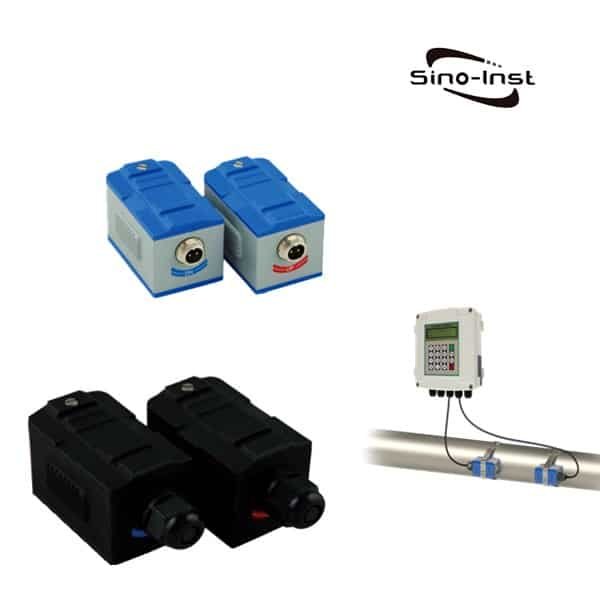
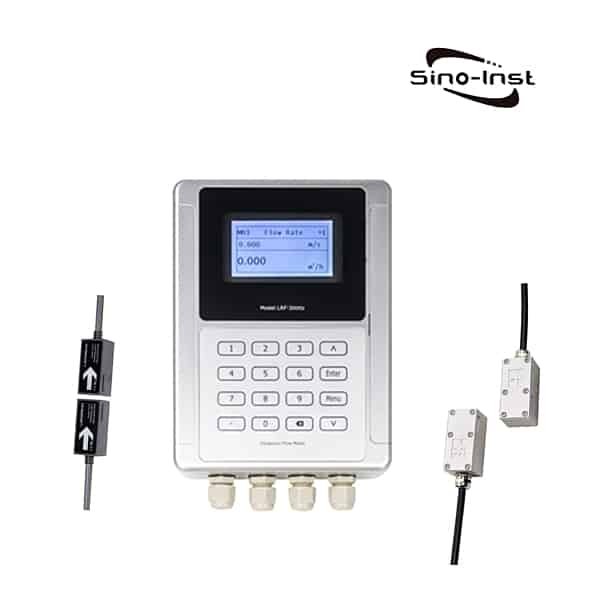
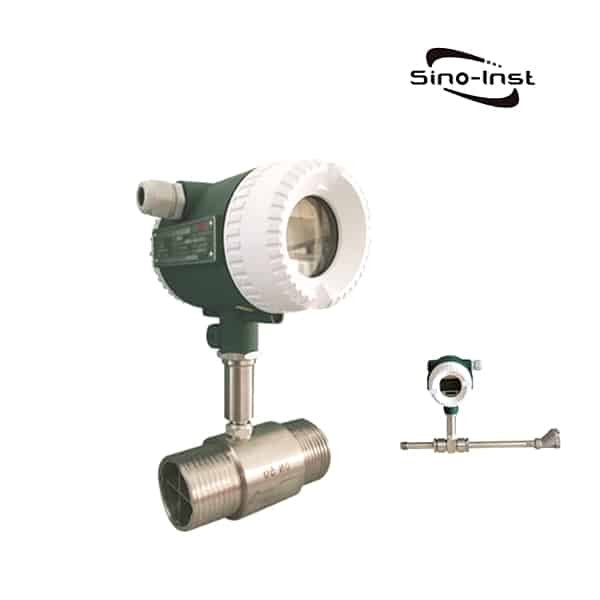
Featured Flow Meters for Steam Flow Measurement

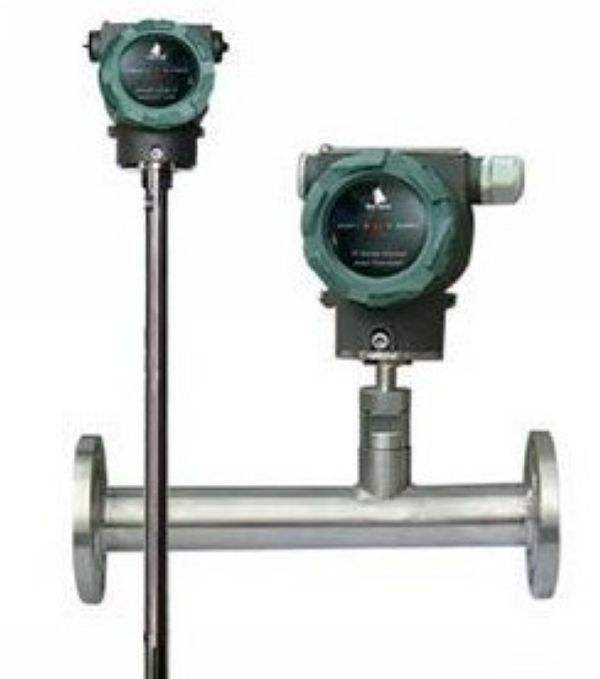
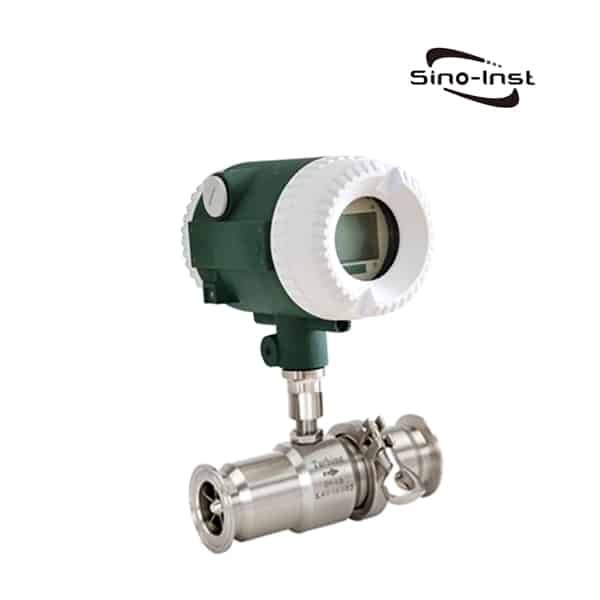
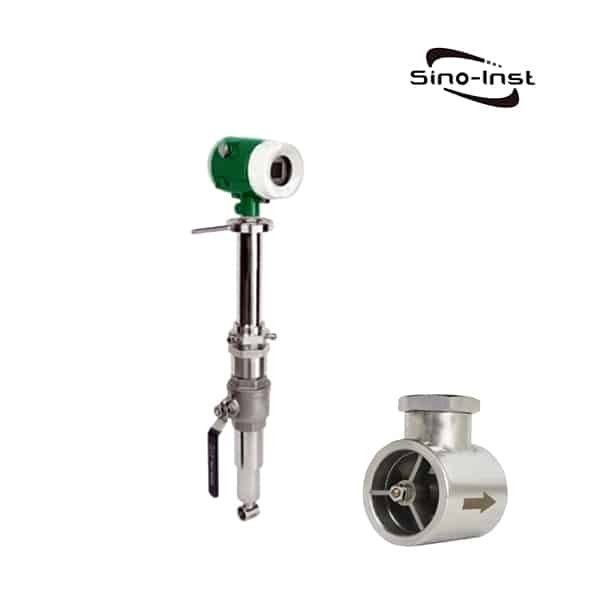
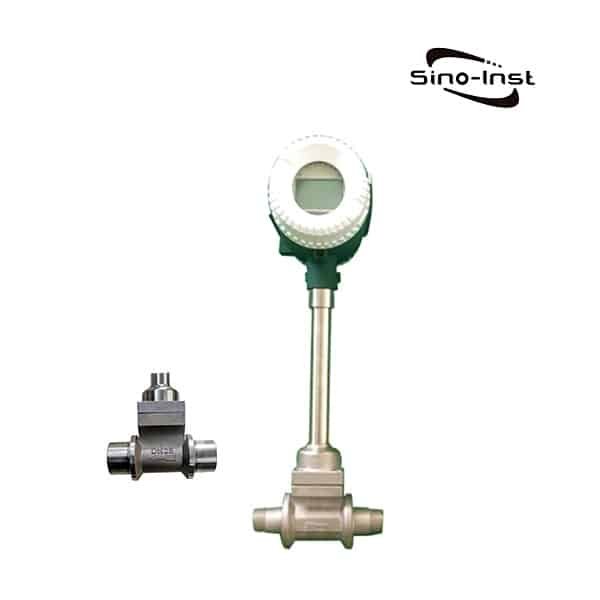
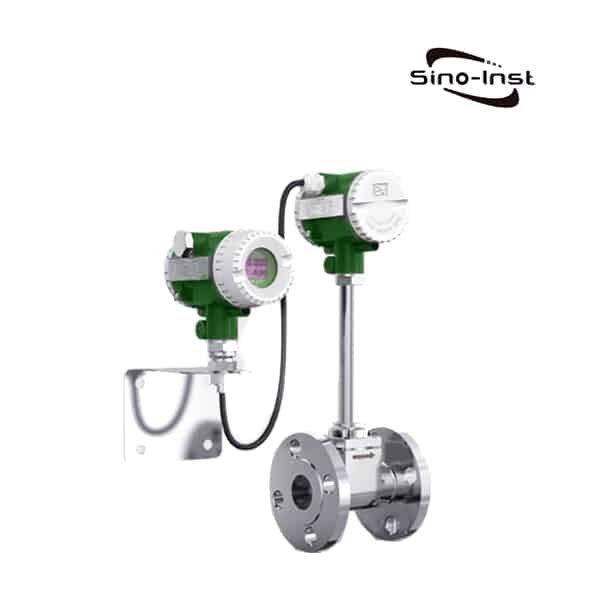
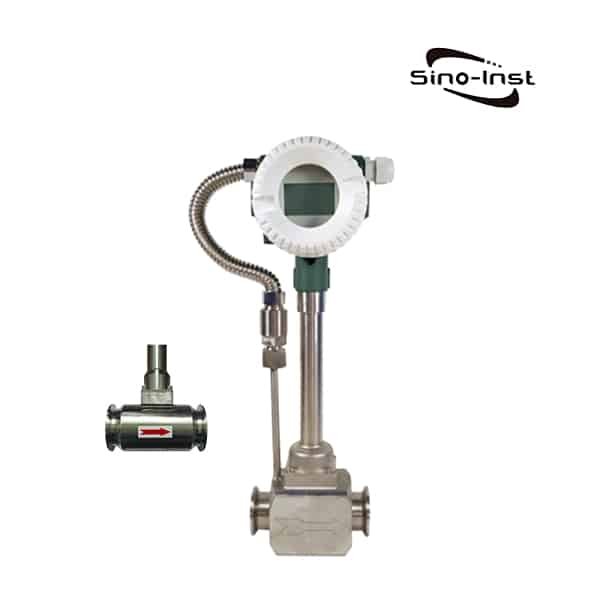
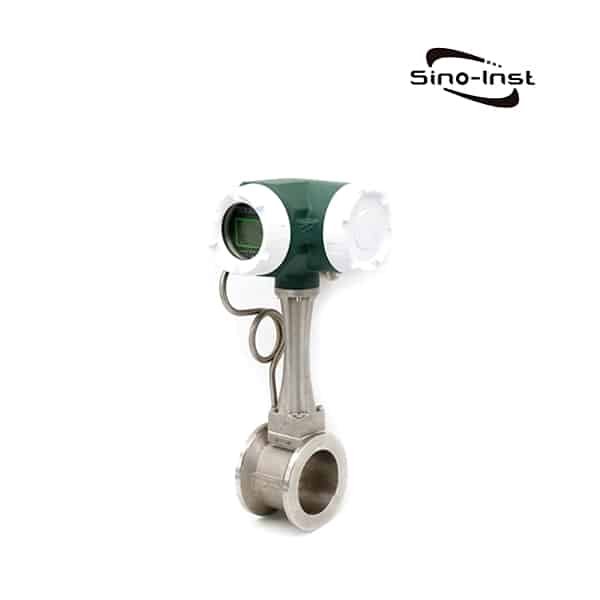
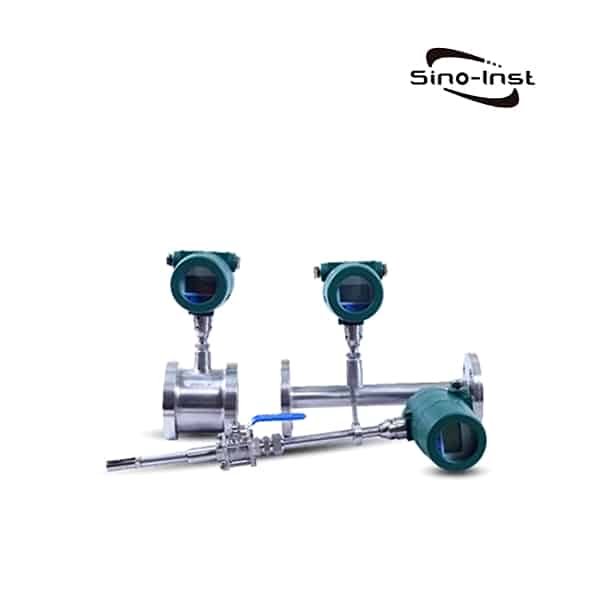
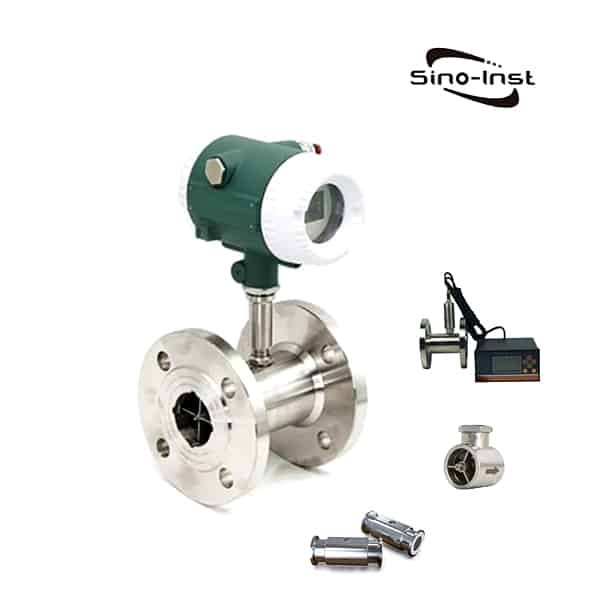
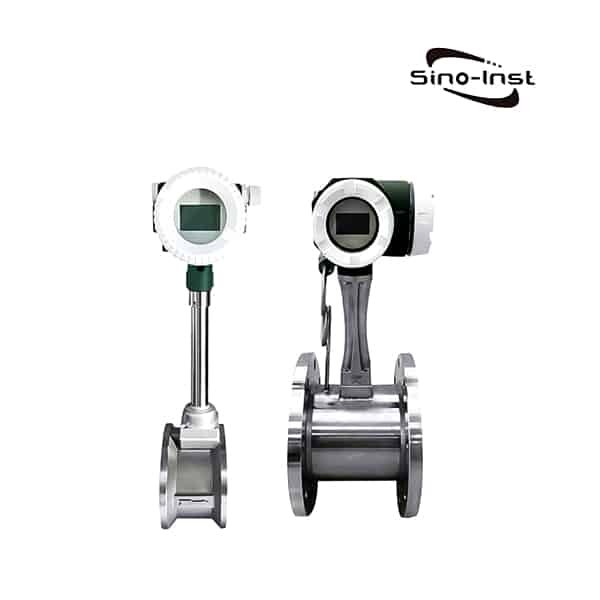
Vortex flow meter for Steam Flow Measurement

The output of the vortex flowmeter is only proportional to the flow rate of the fluid flowing through the measuring tube. When measuring the humidity of saturated steam, the influence of water droplets on the output of the vortex flowmeter is negligible. Therefore, it can be considered that the output of the vortex flowmeter is completely caused by the dry part (saturated part) of the wet and saturated steam. The density of the dry part can be accurately detected according to pressure compensation or temperature compensation.

When steam metering, if the two parties agree to settle the cost based on the dry part of the steam, there is no charge for condensate. The influence of the phase change on the measurement is negligible and can be ignored. If the condensate is also charged as steam. The measurement result of the vortex flowmeter is low.

After the above evaporation occurs, the former has no effect on compensation. Only the dry part in the steam increases, and the dryness increases accordingly.

In the latter case, the wet saturated steam becomes superheated steam. At this time, the impact on the flowmeter is divided into the following three situations:

  1. The design has taken into account that the steam becomes superheated. Or in what state is difficult to determine. Or sometimes it is overheated and sometimes it is saturated. So use temperature and pressure compensation. Then the above-mentioned phase change has no influence on the measurement result.
  2. Consider saturated steam when designing, and adopt pressure compensation. Then the above-mentioned phase change will bring a smaller error. That is, the compensation error caused by the density difference corresponding to the difference between the superheated steam temperature and the saturated steam temperature.
  3. Consider saturated steam when designing. But use temperature compensation. That is, the superheated steam temperature is regarded as the saturation temperature to check the density table. Generally, large errors will be caused.

There are three ways to solve the above problems:

  1. Install the total steam flow meter before the pressure reducing valve. Because the above steam is not decompressed. There is no phase change problem. So install the flowmeter before the pressure reducing valve. According to the saturated steam compensation method. The measurement accuracy can be guaranteed.
  2. If the flow meter can only be installed behind the pressure reducing valve. A pressure transmitter can be added for temperature and pressure compensation.
  3. If the stability of the pressure reducing valve is better. The upstream pressure value of the flowmeter can be set as a constant value into the display instrument for temperature and pressure compensation.

Sino-Inst, Manufacuturer for Steam Flow Measurement Flowmeters.

Sino-Inst’s Steam Flow Measurement Flowmeters, made in China, Having good Quality, With better price. Our Steam Flow Measurement instruments are widely used in China, India, Pakistan, US, and other countries.

Magnetostrictive Level Gauge Application: Refined Oil Storage Tank

The magnetostrictive level gauge is applied to the information system of the refined oil storage tank oil depot. Real-time monitoring and measurement management of refined oil storage tanks.

1. Introduction

In order to grasp the operation information of the storage tank in real time and accurately. For example the level, density, pressure, temperature, volume, and quality of the storage medium in the storage tank. To ensure the safety of the storage tank, many oil storage tanks have been studied at home and abroad. Detection and measurement methods and devices. Such as static pressure method, liquid level meter, hybrid method, etc., designed to a variety of measurement technologies, such as pressure type, servo type, radar type, magnetostrictive type, float steel belt type, etc.

Due to many factors such as technology, economy, and use. The monitoring, measurement, and safety management of oil storage tanks in our oil depots mainly rely on manual rulers, manual measurements, and manual inspections. Its measurement accuracy, reliability, maintainability, and real-time performance are difficult to meet the development needs of oil depot informatization construction.

An oil tank level gauge based on magnetostrictive measurement technology has a simple structure and high measurement accuracy. It can measure liquid level, boundary level, multi-point temperature, and other advantages at the same time.

This year, it has been applied more and more in the monitoring and measurement of oil storage depots, such as Sinochem Nantong Oil Depot. Therefore, the magnetostrictive level gauge is applied to the information system of the product oil storage tank oil depot. Real-time monitoring and metering management of refined oil storage tanks. Not only can real-time collection, storage, and management of oil depot receiving, sending, and storing information. It can also reduce staff to increase efficiency and improve oil depot management.

2. Working principle of the magnetostrictive level gauge

2.1 The composition of the magnetostrictive level gauge

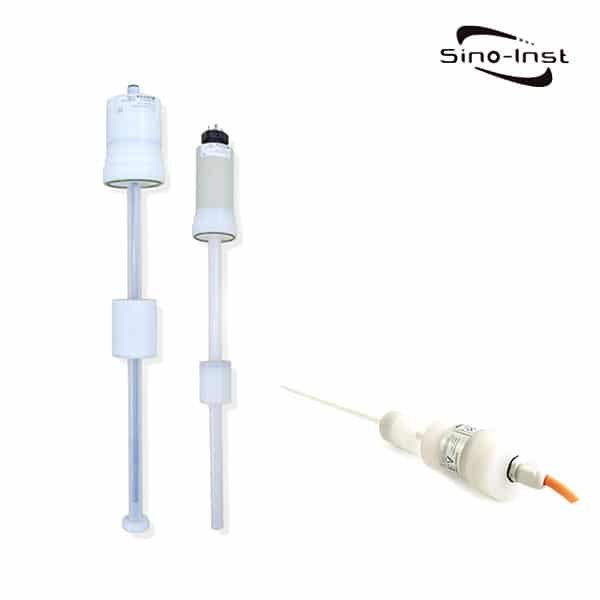
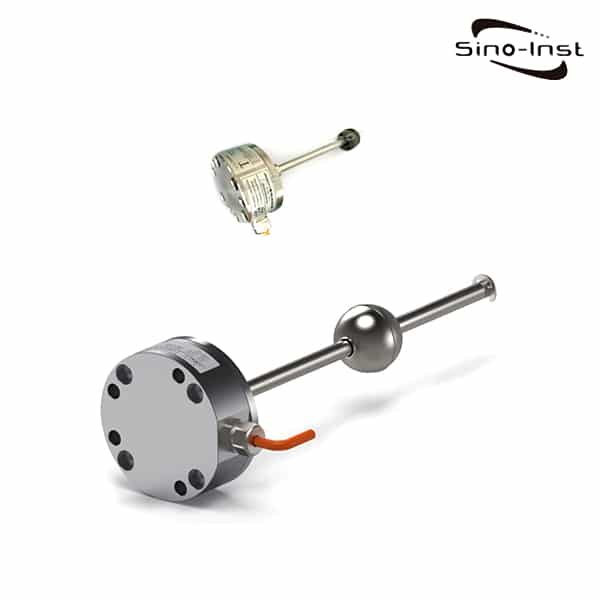
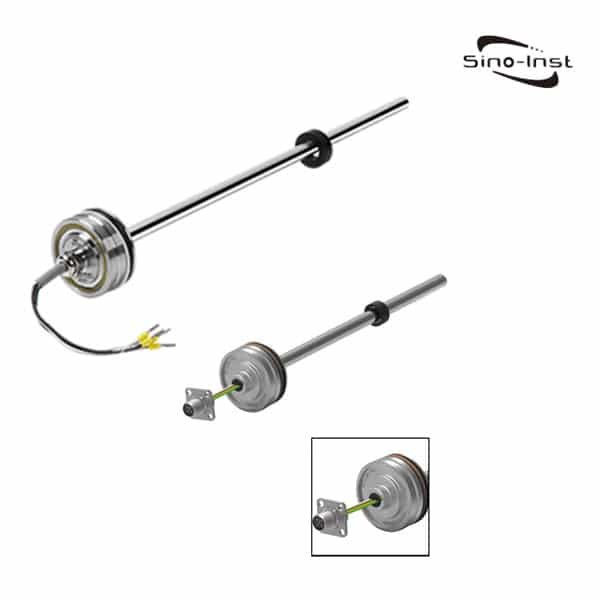
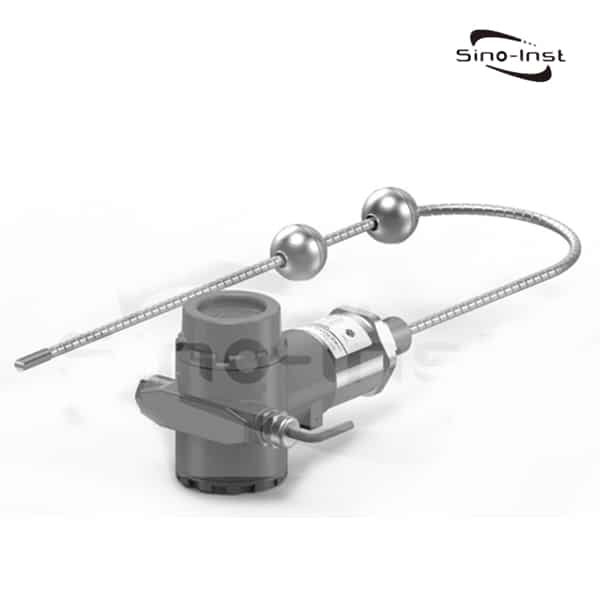
The magnetostrictive level gauge is mainly composed of a float (with a magnetic ring inside), a transmitter (or an electronic warehouse is composed of a pulse generator and a receiver), a waveguide equipped with a magnetostrictive wire and a temperature detector. . The transmitter (electronic warehouse) is equipped with a magnetostrictive wire waveguide and temperature detector are integrated structure. The transmitter and temperature detector adopt a modular and integrated design.

2.2 Working process of the magnetostrictive level gauge

The working principle of the magnetostrictive level gauge is mainly to use the combination of magnetic effect and super-generating effect to achieve the purpose of measurement. Magnetic effect and Weidmann effect and Villari effect.

When the transmitter is powered on, the pulse generator and receiver start to work. The pulse generator in the electronic head of the level gauge first applies an electrical pulse signal to the magnetostrictive waveguide wire. This electrical pulse is accompanied by a circular magnetic field. When the magnetic field encounters the longitudinal magnetic field generated by the magnet in the float at the speed of light. It will be vectorially superimposed to form a spiral magnetic field.

According to the Weidmann effect, when the magnetic field of the magnetostrictive material changes. The weak size of the magnetostrictive material itself will also change accordingly. Therefore, when the synthetic magnetic field changes to form a spiral magnetic field, the magnetostrictive waveguide wire will be twisted and deformed. This excites the torsional wave (or return pulse).

The torsion wave will be transmitted back to the induction coil in the sensor head in the form of ultrasonic waves along the waveguide wire and will change. When the coil in the sensor, it will be converted into transverse stress.

According to the Villari effect, when a magnetostrictive material is physically deformed. Will cause changes in the magnetic field strength in the magnetostrictive material. Therefore, the magnetic flux passing through the sensor coil will change, and an induced electromotive force that can be detected will be generated at both ends of the sensor coil. The propagation speed of the supergenerated torsion wave is only related to the elastic modulus and density of the magnetostrictive waveguide filament, which is a constant.

Therefore, the time difference from the moment the current pulse is emitted to the detection of the induced electromotive force is multiplied by this fixed velocity V. The position of the magnet (float) can be accurately calculated. Its liquid level height L=V*(t1-t2).

Extended reading: Fuel-Diesel-Water Tank Level Sensor Monitoring

2.3 Technical characteristics of the magnetostrictive level gauge

The petrochemical industry has gradually paid attention to the monitoring of oil levels. According to the working principle, it can be roughly divided into the following types:

  • Mechanical float level gauge. The price is low, but its accuracy is low, and it cannot meet the requirements for use as a measuring instrument. And the failure rate is high, and the steel belt is prone to jam.
  • Capacitive liquid level gauge. The price is moderate and the measurement accuracy is acceptable. However, due to its large temperature drift, its stability is insufficient, the accumulated error is large, and the measured value is not accurate.
  • Light guide type liquid level gauge. The price is moderate, but the measurement accuracy is low and the stability is poor.
  • Radar level gauge. The price is expensive, the liquid level accuracy, reliability, and stability are all ideal, the installation is also very convenient, and different media are practical.
  • Magnetostrictive liquid level gauge. The price is more expensive, the stability is better, and it is easy to install. But it cannot be used in heavy oil with high viscosity and high density. Of course, the magnetostrictive level gauge has many other outstanding advantages. Specifically in:

① The work is very reliable. Because the second son telescopic level gauge uses the waveguide principle to work. Therefore, there are no mechanical moving parts inside the device, and there are no defects such as wear. The entire converter is enclosed in a stainless steel tube. No contact with the measured medium. Therefore, the sensor works reliably and has a long life span.

②Multi-parameter measurement. Another major feature of the magnetostrictive level gauge is that it integrates measurement of liquid level, water interface, temperature and other parameters. Because the electronic components in the magnetostrictive level gauge can detect the continuous magnetic waves generated by the same emission pulse. Therefore, two or more magnetic floats can be installed on the same sensor. Just ensure that the weight of the float corresponds to the specific gravity of the medium. The liquid level and interface can be measured at the same time, realizing multi-parameter measurement.

③High measurement accuracy. Because the magnetostrictive level gauge uses waveguide pulses to achieve measurement. During work, the displacement of the measured liquid surface is measured by the time difference between the excitation pulse and the induction pulse. Therefore, the accuracy is extremely high, which is a measurement accuracy that is difficult to achieve with other sensors. At roughly the same or lower cost, magnetostrictive level gauges have higher accuracy and better economic benefits than other measuring systems that use capacitance, pressure, mechanical, ultrasonic or servo devices.

④ Good safety performance. The explosion-proof grades of magnetostrictive level gauges are generally flameproof and intrinsically safe. Suitable for working in various flammable, explosive, high temperature, high pressure and other dangerous places. No need to manually open the filling cap during measurement. Avoid the hidden danger of insecurity caused by manual measurement.

⑤ Easy to install and maintain. Since the magnetostrictive level gauge adopts flange connection, the installation is extremely simple. Moreover, the core components are not in contact with the medium, and the product has a modular structure. Intelligent design, no need for regular maintenance and regular calibration, which brings great convenience to users.

⑥Easy to realize networking. The output of the magnetostrictive level gauge is a standard signal. It is convenient for crisis management and can better cooperate with computer. It is also easy to make long-distance transportation possible.

Of course, the change of medium density will have a certain impact on the accuracy of the magnetostrictive level gauge. But it can be installed by installing a suitable float. Reduce the immersion of the float, reduce the outer diameter of the float, and overcome and avoid it to the greatest extent through temperature compensation. After on-site testing, the magnetostrictive level gauge is the same as the radar level gauge, with blind spots and inaccurate measurement of tank bottom oil.

Extended reading: Radar Oil Tank Level Sensor

3. Application of magnetostrictive level gauge in Sinochem Zhuhai Phase II product oil tank

At present, Sinochem Zhuhai Phase II Chenpin Oil Depot with a total of 412,000 m3 has been completed. Among them, the online liquid level monitoring system involving 12 light product oil tanks totaling 192,000 m3 uses magnetostrictive level gauges. The liquid level system consists of a magnetostrictive liquid level gauge, H-500 field display, H-1000 (oil depot) 10.4 inch color touch screen controller and YSMK-YK oil depot information monitoring and management system.

This system can display liquid level, interface height and temperature with H-500 on-site display in the field. In the control room, the H-1000 (oil depot) controller is used to display data in real-time with three-dimensional graphics and digital methods. Use sound and light alarm to prevent oil spill and oil shortage. Therefore, the detailed functions of the system are as follows:

  • Accurate real-time measurement of oil level, water level and temperature. Using 10.4 color LCD screen, the number of storage accuracy points is not limited. It can be customized according to the customer’s volume meter, and the oil height, water height, temperature, volume, and remaining volume can be displayed in graphical and digital ways.
  • Alarm function. The system has multiple alarm functions such as high liquid level (pre) alarm, low liquid level (pre) alarm, and high water level alarm. Use sound and light alarm to prevent oil spill and oil shortage.
  • Self-diagnosis, management and equipment failure alarm.
  • Oil intake report. It is possible to compare the liquid level before and after oil intake. Automatically calculate and save the amount of oil in and out.
  • Communication function. The system is connected to the sensor through a 485 interface for data collection. At the same time, it can provide a built-in Ethernet interface, 2 RS-232 interfaces and an open protocol. Data communication with the local system and remote server.
  • Product lightning protection design. With internal lightning protection and external lightning protection functions. In the event of a lightning strike, the internal circuit automatically discharges the strong lightning current and will not detonate or ignite combustible gas. The external wiring steel pipe is connected to the protective grounding system of the storage tank.
  • Active communication and timing transmission data settings. The system can use external equipment to achieve active communication settings. Be able to set the target server IP address, port, user name, password and data sending time. And upload the data to the target server at the specified time and shift shift.
  • Leak detection function. Due to the high measurement accuracy, the static and dynamic liquid level of the oil tank can be monitored in real time. It can also realize pipeline leakage monitoring in accordance with pipeline leakage testing procedures.

Extended reading: Oil Level Measurement Solutions for the Oil & Gas Industry

Since Sinochem’s Zhuhai Phase II oil depot currently does not have the oil intake conditions, the instrument and system cannot be fully tested and verified. But through other petrochemical companies have used the magnetostrictive level gauge as an oil tank level monitoring system for in-depth understanding. The above-described functions can all be realized, and the measurement accuracy function is carefully compared with the manual ruler. It is found that the accuracy is very high, basically reaching the level of measurement.

In summary, the magnetostrictive level gauge has outstanding advantages such as high reliability, high accuracy, low failure rate, and multi-parameter measurement. It has been regarded by experts in the petrochemical industry as the preferred instrument for liquid level and boundary level measurement. It is an ideal choice for metering and process-level monitoring. Especially in applications where the dielectric constant of the medium is low, the medium is volatile, and the measurement interface is required. Because the magnetostrictive characteristics are not affected by factors such as dielectric constant, temperature, pressure, and meteorological conditions, it has become the first choice for users. Under the trend of industrial production integration and large-scale production. Magnetostrictive level gauges will have a broader application space in future level measurement.

Request a Quote

Please enable JavaScript in your browser to submit the form

Industrial Measurement and Control Solutions

Pressure Measurement Sloutions

Level Measurement Solutions

Flow Measurement Solutions

Temperature Transmitters

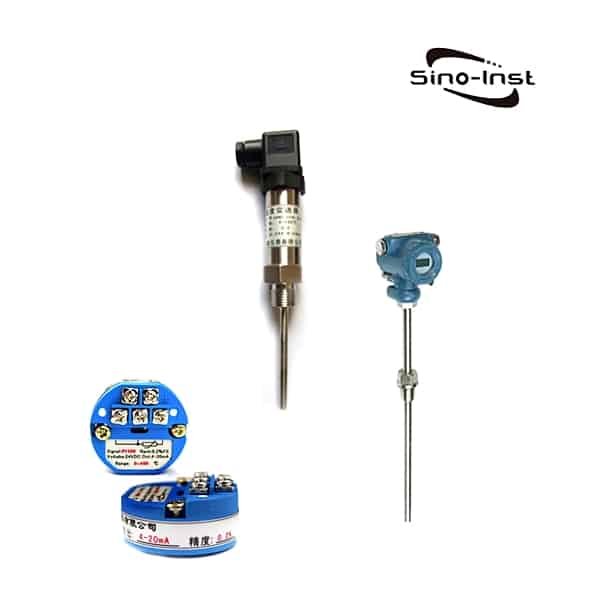
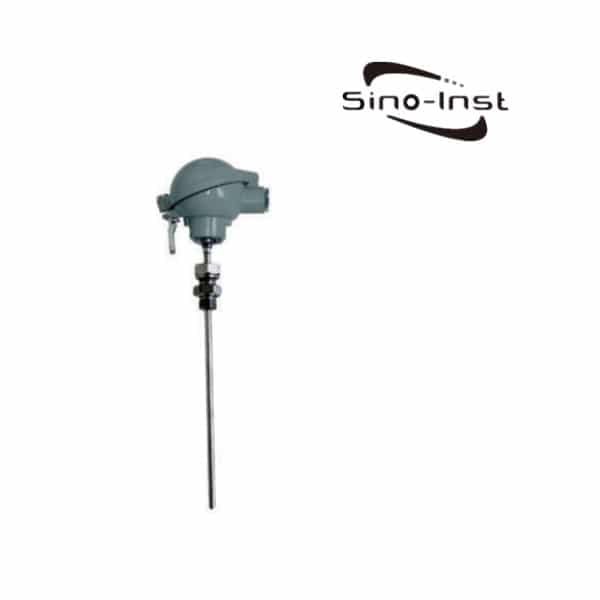
Temperature transmitter is an instrument that converts a temperature variable into a standardized output signal that can be transmitted. Output signal 4~20mA two wires.

The temperature transmitter adopts thermocouple and thermal resistance as the temperature measuring element. The output signal from the temperature measuring element is sent to the transmitter module. After voltage stabilization filtering, operational amplification, nonlinear correction, V/I conversion, constant current and reverse After protection and other processing, it is converted into 4~20mA, 0-5V/0-10V signal, RS485 digital signal output.

Sino-Inst offers a variety of  Temperature Transmitters for temperature measurement. If you have any questions, please contact our sales engineers.

Temperature Transmitter 4-20mA

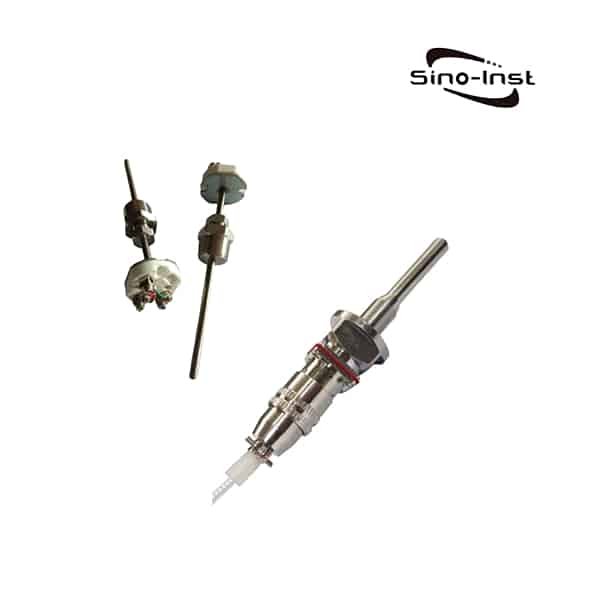
SBWR thermocouple temperature transmitter, and SBWZ thermal resistance temperature transmitter are field-mounted temperature transmitter units in thermocouple and thermal resistance series instruments.
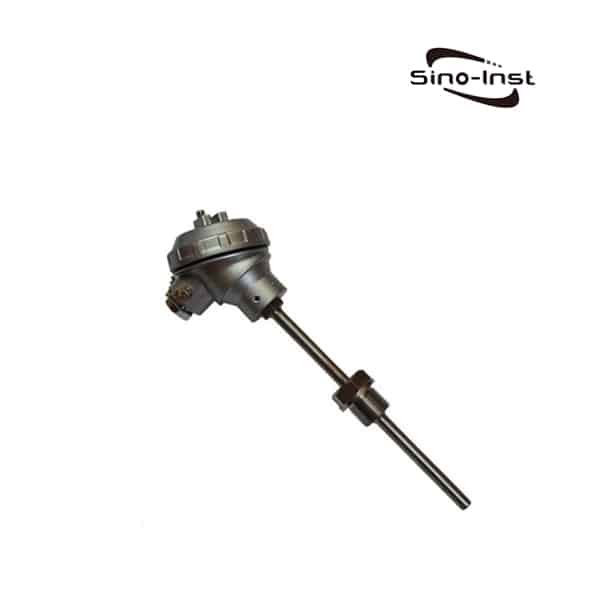
The SI-SBW series integrated temperature transmitter, is a perfect combination of temperature sensor and transmitter.

It converts the temperature signal in the range of -200~+1600 °C, into two-wire 4~20mA DC signal transmission in a very simple way.

Accurate measurement and control of temperature for displays, regulators, recorders, DCS, etc.

RTD Temperature Transmitter

An RTD Temperature Transmitter (Resistance Temperature Detector or Resistance Temperature Device) is one of the most prevalent temperature sensors used in industry today.

Also commonly referred to as PT100/PT1000, its resulting popularity is due to its accuracy and repsonse, at temperatures between -300 to + 600 ° C.

Industrial thermal resistance is used as a temperature measuring sensor. It is usually used with instruments, recorders, and electronic regulators.

Field Mounted HART Temperature Transmitter

The Series SI-SBW HART® temperature transmitter is a 2-wire transmitter, with an analog output.

It has measurement input for resistance thermometers (RTD) in 2-, 3- or 4-wire connections, thermocouples, resistance and voltage inputs.

The transmitter can be programmed with a PC or HART® protocol hand-held terminal.

These small units can be mounted in Pyromation DIN (Form B) connection heads, or they can be used for surface mounting by using a 35 mm DIN-rail mounting clip.

Extended reading: RTD vs. Thermocouple: What’s the Difference, and Which Should You Use?

What is a temperature transmitter

Temperature transmitter is a device that converts physical measurement signals or ordinary electrical signals into standardized electrical signal output or can be output by means of communication protocols. Mainly used for measurement and control of temperature parameters in industrial processes. The current transmitter converts the AC current of the main circuit under test into a constant current loop standard signal, which is continuously transmitted to the receiving device.

The temperature variable is transformed into the appearance of a transmittable standardized output signal (4-20mA is common in industry).

The temperature transmitter uses thermocouple and thermal resistance as the temperature measuring element. The output signal from the temperature measuring element is sent to the transmitter module. Through voltage stabilization filter, calculation expansion, nonlinear calibration, V/I conversion, constant current and reverse After maintenance and other circuit processing.

Extended reading:  Tri Clamp Sanitary Thermometers

Temperature Transmitter Working Principle

The heat balance is achieved through conduction or convection, so that the indication value of the thermometer can directly indicate the temperature of the measured object. Generally, the measurement accuracy is high.

Within a certain temperature range, the thermometer can also measure the temperature distribution inside the object. But for moving objects, small targets or objects with small heat capacity, larger measurement errors will occur.

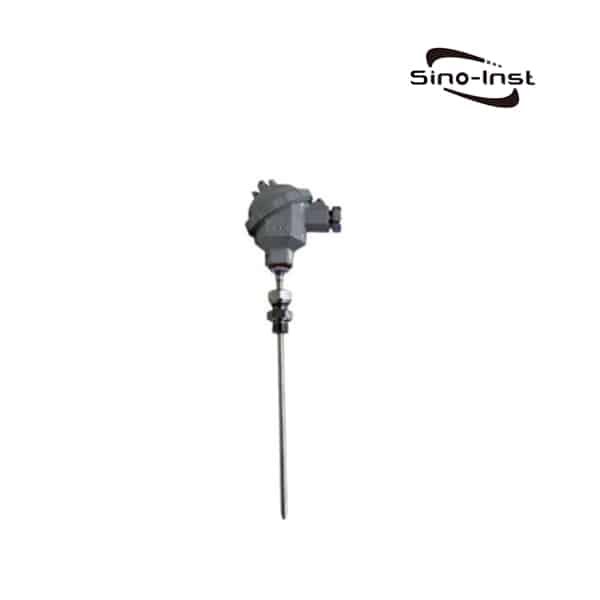
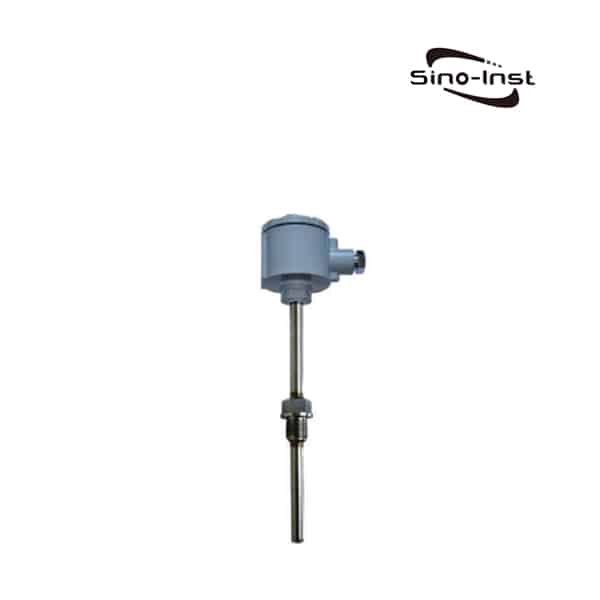
The temperature transmitter generally consists of a temperature measuring probe, that is, a thermocouple or thermal resistance sensor and a two-wire solid electronic unit. The temperature measuring probe is directly installed in the junction box in the form of a solid module to form an integrated transmitter.

Temperature transmitters are widely used in industries, agriculture, commerce and other sectors.

With the wide application of cryogenic technology in national defense engineering, space technology, metallurgy, electronics, food, medicine and petrochemical sectors, and the research of superconducting technology.

Low-temperature thermometers that measure temperatures below -153°C have been developed, such as low-temperature gas thermometers and vapor pressure thermometers.

Sino-Inst, Manufacuturer for Temperature Transmitters, like: Armoured thermocouple, assembly thermocouple, explosion-proof thermocouple, etc.

Sino-Inst’s Temperature Transmitters, made in China, Having good Quality, With better price. Our Temperature measurement instruments are widely used in China, India, Pakistan, US, and other countries.

Bimetallic Thermometers

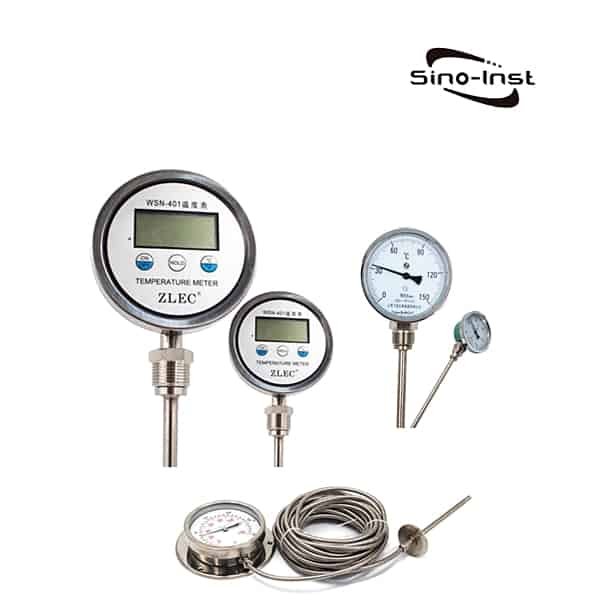
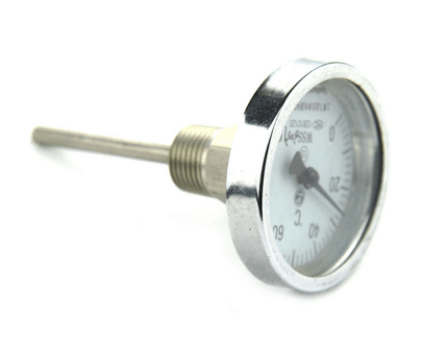
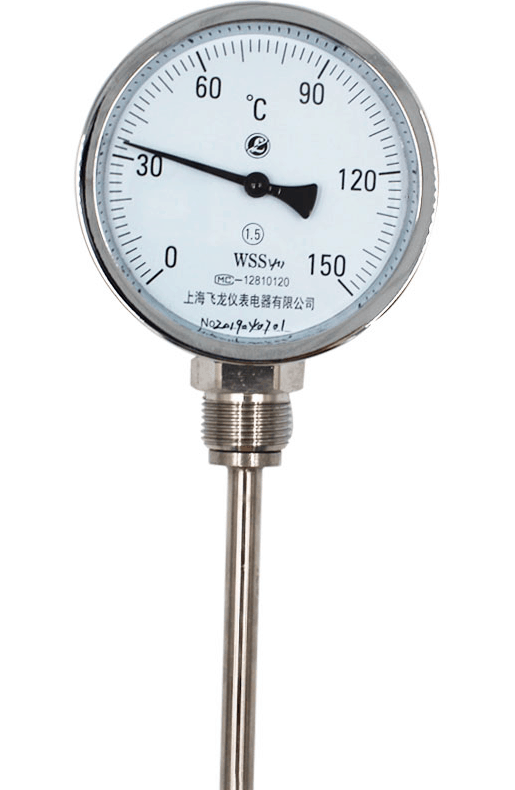
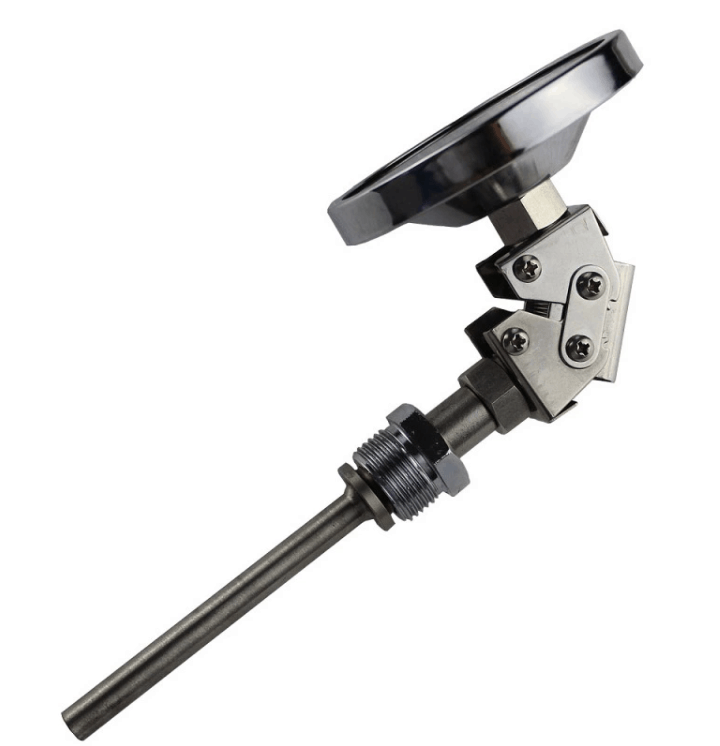
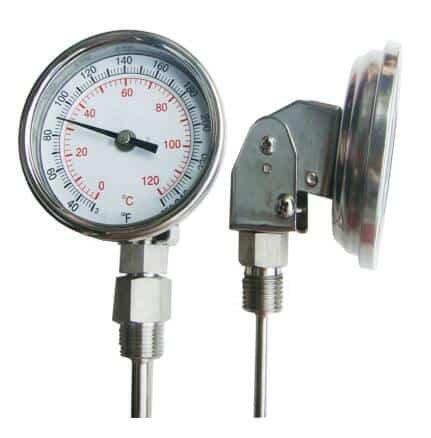
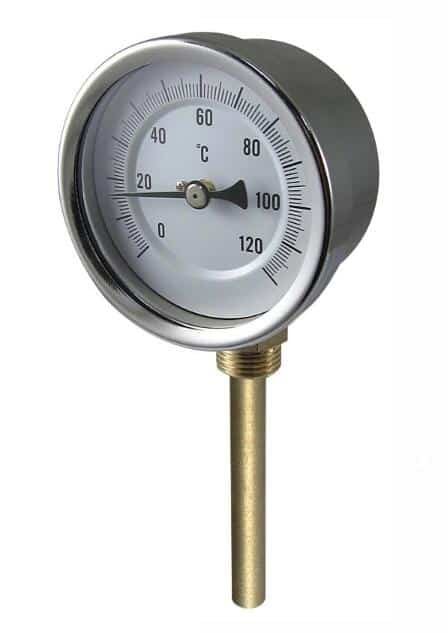
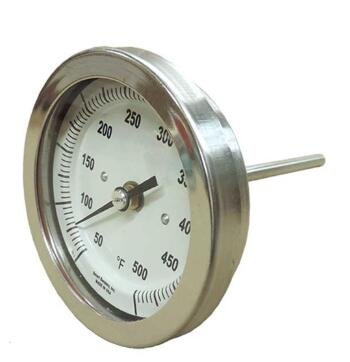
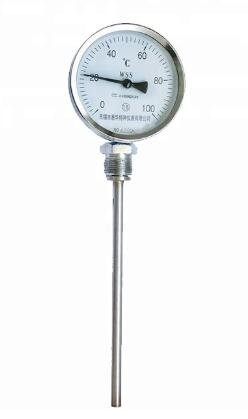
Bimetallic thermometer is an on-site temperature detection instrument for measuring low and medium temperatures.

The bimetal thermometer is based on a bimetallic sheet wound into a circular bending shape. When one end is heated and expanded, it drives the pointer to rotate, and the working instrument displays the temperature value of the thermoelectric potential. Bimetal thermometer is an on-site temperature detection instrument for measuring low and medium temperatures. It can directly measure the temperature of liquid, steam and gaseous media in the range of -80℃~+500℃ in various production processes.

Sino-Inst offers a variety of  bimetal thermometers for temperature measurement. If you have any questions, please contact our sales engineers.

Main technical parameters of Bimetallic Thermometers

  1. Product implementation standard: JB/T8803-1998;
  2. Nominal diameter of dial: 60,100,150;
  3. Accuracy grade: (1.0), 1.5;
  4. Thermal response time: ≤40s;
  5. Protection level: IP55;
  6. Angle adjustment error;
    The angle adjustment error should not exceed 1.0% of its range;
  7. Return difference: The return difference of the thermometer should not be greater than the absolute value of the basic error limit;
  8. Repeatability: The repeatability limit range of the thermometer should not be greater than 1/2 of the absolute value of the basic error limit;
  9. Temperature measurement range

Bimetallic thermometer of electric contact point

The electric contact bimetal thermometer is used in the production site to automatically control and alarm the temperature. Directly measure the temperature of body, steam and gaseous media in the range of -80℃~+500℃ in various production processes.

The electric contact bimetal thermometer uses the temperature change to drive the contact change when it is in contact with or disconnected from the upper and lower limit contacts. At the same time, the relay in the circuit is activated, thereby automatically controlling and alarming.

Explosion proof electric contact bimetallic thermometer

The bimetal thermometer can directly measure the temperature of body, steam and gas medium and solid surface in the range of -80℃~+500℃ in the process of explosives such as hydrocarbons and other explosives at the production site.

Main technical parameters

  • Nominal diameter of dial: 100
  • Thermal response time: ≤40s
  • Explosion proof grade: dⅡBT4
  • Rated power: 10VA
  • Maximum operating voltage: 220V
  • Maximum operating current: 0.7A

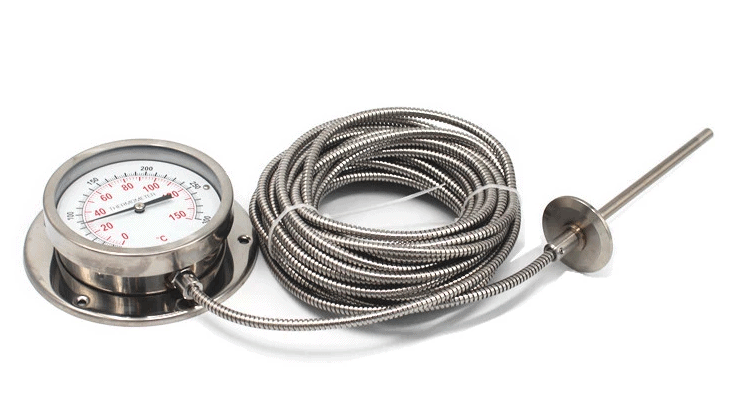
Remote Bimetallic thermometer

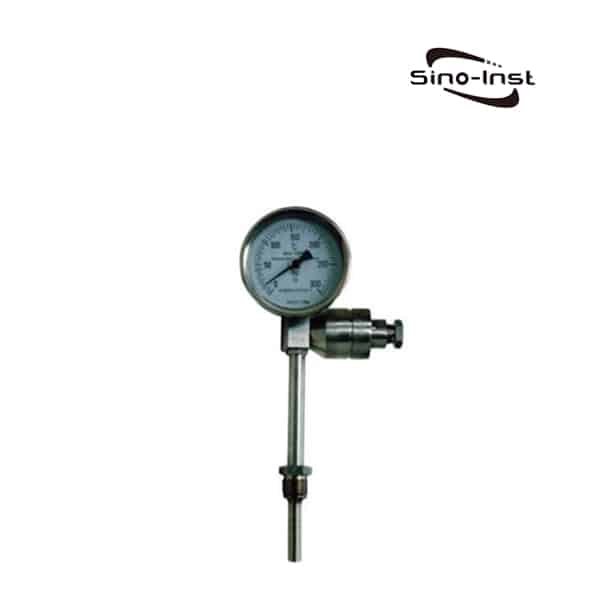
The bimetal thermometer and thermocouple (resistance) are integrated. It not only meets the needs of on-site temperature measurement, but also meets the needs of long-distance transmission. It can directly measure the temperature of liquid, steam and gas medium and solid surface in the range of -80℃~+500℃ in various production processes.

Main technical parameters

  1. Nominal diameter of dial: 100, 150
  2. Thermal response time: ≤40s
  3. Accuracy grade: (1.0), 1.5
  4. Thermocouple; Class I, 1.5℃; Class II, 2.5℃
  5. Thermal resistance: Class A, ±(0.15+0.005 ItI) Class B, ±(0.30+0.005 ItI)
  6. Protection level: IP55

Digital Thermometer/Transmitter

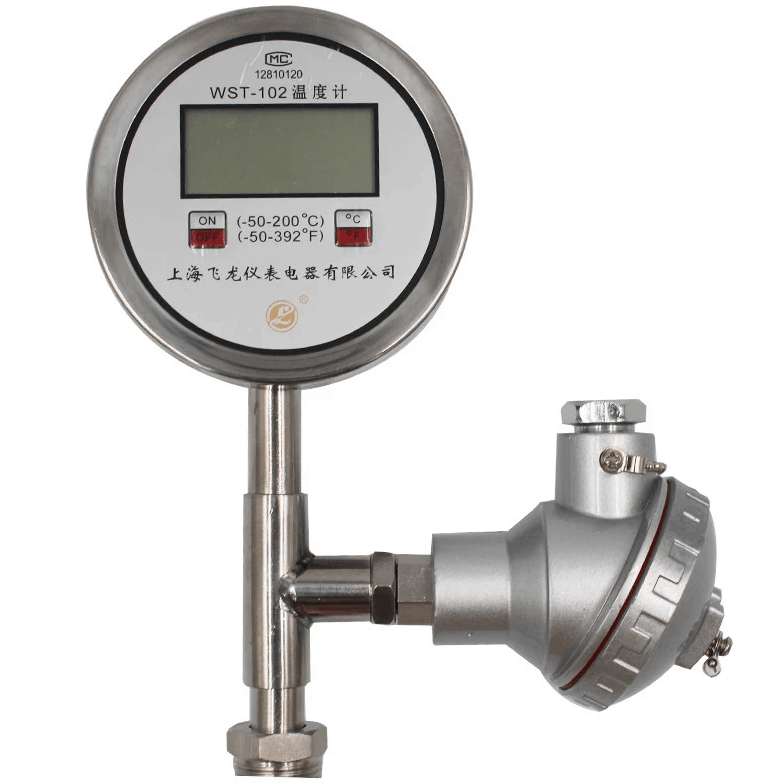
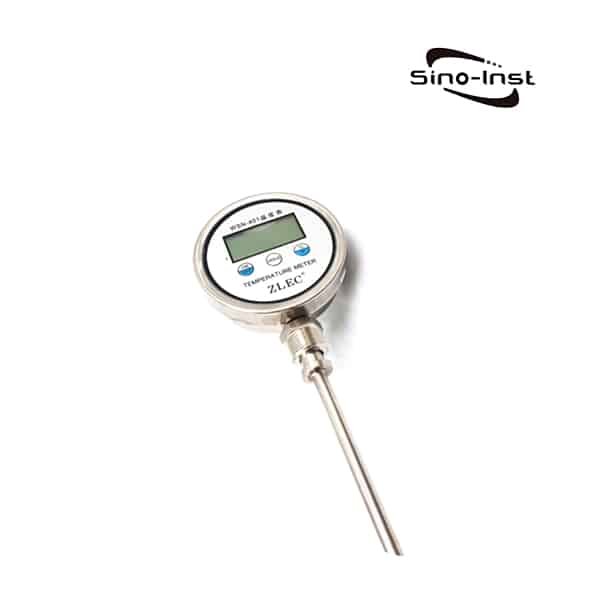
Digital Thermometer/Transmitter is practically used to measure medium and low temperature field detection instruments. It can be used to directly measure the temperature of gases such as liquids. Compared with glass mercury thermometers, it has the advantages of no mercury hazard, easy reading, strong and durable. It can directly replace double Metal, pressure type, glass mercury thermometer, etc. At the same time, the defects of bimetal thermometers cannot be bent and used restrictions are changed.

For the installation of bimetal thermometers, attention should be paid to accurate temperature measurement, safety and reliability, and convenient maintenance. And it does not affect equipment operation and production operations.

The above requirements must be met. When choosing the installation location and insertion depth of the thermal resistance, pay attention to the following A few points:

(1) In order to have sufficient heat exchange between the measuring end of the thermal resistance and the measured medium, the location of the measurement point should be selected reasonably and try to avoid installing thermal resistance near the dead corner of the valve, elbow, pipeline and equipment.

(2) Thermal resistors with protective sleeves have heat transfer and heat dissipation losses. In order to reduce measurement errors, thermocouples and thermal resistors should have sufficient insertion depth:

a. For the thermal resistance measuring the temperature of the fluid in the center of the pipeline. Generally, the measuring end should be inserted into the center of the pipeline (vertical installation or inclined installation). If the pipe diameter of the fluid to be measured is 200 mm, the insertion depth of the thermal resistance should be 100 mm;

b. For temperature measurement of high temperature, high pressure and high speed fluids (such as main steam temperature). In order to reduce the resistance of the protective sleeve to the fluid and prevent the protective sleeve from breaking under the action of the fluid.

The shallow insertion method of the protective tube or the hot sleeve type can be adopted Thermal resistance. Shallow plug-in thermal resistance protection sleeve, the depth of its insertion into the main steam pipe should not be less than 75mm. The standard insertion depth of thermal resistance is 100mm;

c. If you need to measure the temperature of the flue gas in the flue. Although the flue diameter is 4m, the insertion depth of the thermal resistance is 1 m;
d. When measuring the original insertion depth more than 1m, it should be installed vertically as far as possible. Or add support frame and protective sleeve.

Sino-Inst, Manufacuturer for Thermal Resistances, like: Armoured thermocouple, assembly thermocouple, explosion-proof thermocouple, etc.

Sino-Inst’s Thermal Resistances, made in China, Having good Quality, With better price. Our Temperature measurement instruments are widely used in China, India, Pakistan, US, and other countries.

Thermal Resistance

Thermal resistance is the most commonly used temperature detector in the medium and low temperature areas.

Thermal resistance is based on the characteristic that the resistance value of a conductor or semiconductor changes with temperature to measure temperature and temperature-related parameters. Thermal resistors are mostly made of pure metal materials. Currently, platinum and copper are the most widely used. Materials such as nickel, manganese and rhodium have been used to make thermal resistance. Thermal resistance usually needs to transmit the resistance signal to the computer control device or other secondary instruments through the lead.

Sino-Inst offers a variety of  Thermal Resistance for temperature measurement. If you have any questions, please contact our sales engineers.

Sheathed thermal resistance

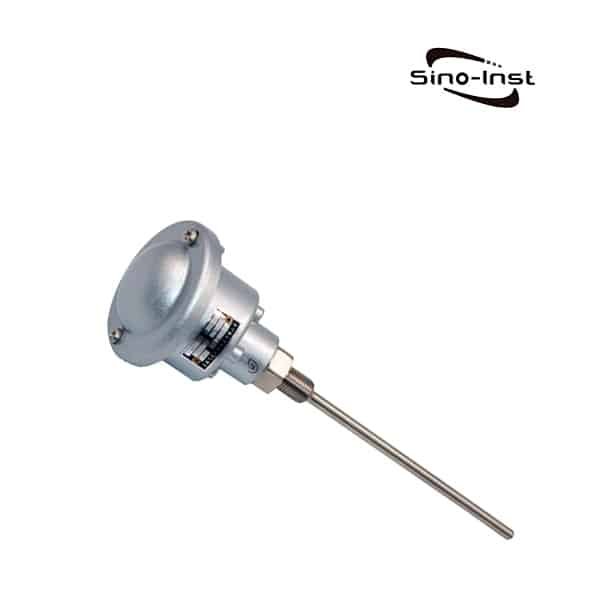
Sheathed thermal resistance uses the feature that when the
temperature of the material changes, its resistance will change too. When the resistance changes, the instrument will display relevant temperature corresponding to the resistance.

It is usually used along with display instruments, recording
instruments, electronic computers and so on. It is able to directly measure the temperature of liquid, steam and gas and solid surface within the range of -200℃~500℃.

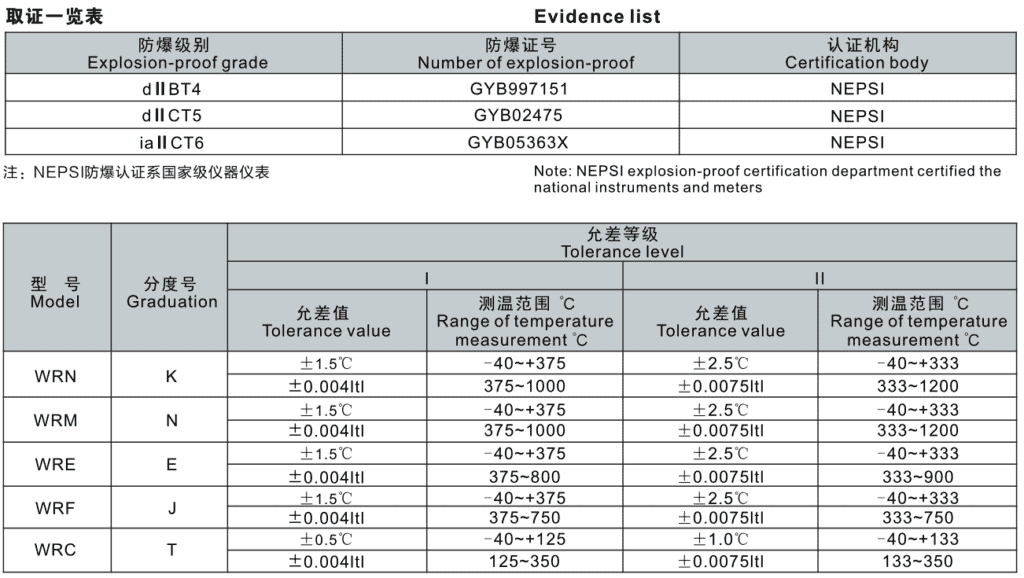
Tolerance level

Assembling thermal resistance

The assembled PT100 thermal resistance is assembled by thermal resistance/platinum resistance element, metal protection tube, magnesium oxide insulating powder, and extension wire.

The product has a simple structure and a wide range of applications. This method is used in most thermal resistance temperature measurement occasions. According to the requirements of different customers, it is made of wear-resistant, anti-corrosion, explosion-proof, waterproof and high-temperature resistant types.

  1. With temperature-sensing element of pressure spring type, so it has good anti-vibration performance;
  2. With no compensation wire, which is cost-saving
  3. High measurement accuracy;
  4. High mechanical strength, good pressure resistance;
  5. Imported thin-film resistor with reliable and stable performance;

Explosion-proof thermal resistance

Explosion-proof thermal resistance is based on the principle of explosion-proof material gap. Design the junction box and other components with sufficient strength. All parts that generate sparks, arcs and dangerous temperatures are sealed in the junction box cavity. When an explosion occurs in the cavity, The flame can be extinguished and cooled through the gap of the joint surface, so that the flame and temperature after the explosion can not be transmitted to the outside of the cavity. Therefore, explosion-proof.

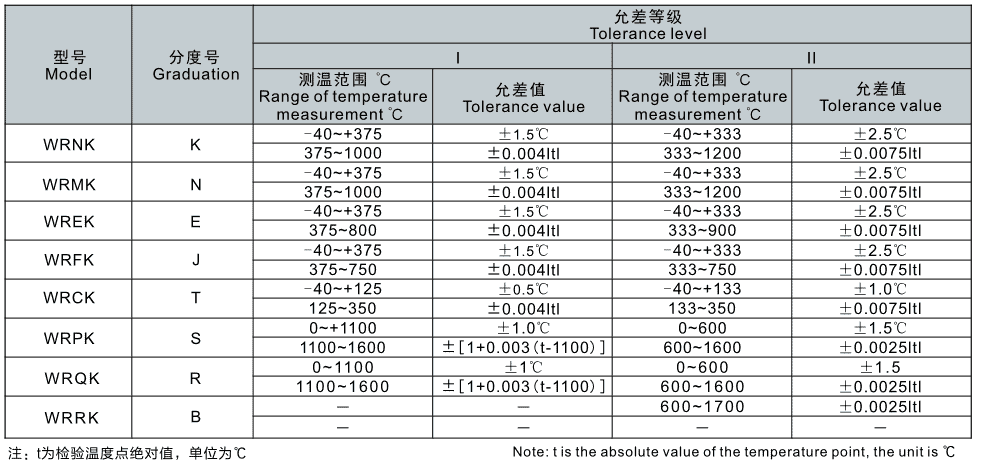
Range of temperature measurement and the error tolerance

Evidence list

PT100

Pt100 is a platinum thermal resistance, its resistance is proportional to the change of temperature. It is often used for temperature detection in low temperature areas. It realizes the functions of industrial field temperature control signals of one input and two output, and one input and four output.

Pt100 platinum thermal resistance is currently widely used in high-precision temperature equipment such as medical, electrical, industrial, temperature calculation, resistance calculation, etc.

The main types of thermal resistance:

①Ordinary thermal resistance

From the temperature measurement principle of the thermal resistance, the change of the measured temperature is directly measured by the change of the resistance of the thermal resistance. Therefore, the change of the resistance of various wires such as the lead wire of the thermal resistance will affect the temperature measurement.

②End surface thermal resistance

The end-face thermal resistance temperature-sensing element is wound by a specially treated resistance wire, which is closely attached to the end face of the thermometer. Compared with general axial thermal resistance, it can reflect the actual temperature of the measured end surface more accurately and quickly. It is suitable for measuring the end surface temperature of bearing bushes and other mechanical parts.

③Armored thermal resistance

The armored thermal resistance is a solid body composed of temperature sensing elements (resistors), lead wires, insulating materials, and stainless steel sleeves. Its outer diameter is generally φ2–φ8mm, and the smallest can reach φmm.
Compared with ordinary thermal resistance, it has the following advantages:

  1. Small size, no internal air gap, thermal inertia, small measurement lag;
  2. Good mechanical properties, vibration resistance and impact resistance;
  3. It can be bent and is easy to install;
  4. Long service life.

④Explosion-proof thermal resistance

Explosion-proof thermal resistance through the junction box of special structure, the explosion of explosive mixed gas inside the shell due to the influence of sparks or arcs is confined in the junction box, and the production site will not cause excessive explosion. Explosion-proof thermal resistance can be used for temperature measurement in places with explosion hazard in Bla-B3c level zone.

The difference between thermal resistance and thermocouple

Difference 1: The principle of temperature measurement is different

Thermal resistance temperature measurement is based on the characteristic that the resistance value of a metal conductor increases with temperature. Its main features are high measurement accuracy and stable performance. Among them, the measurement accuracy of platinum thermal resistance is the highest. It is not only widely used in industrial temperature measurement, but also made into a standard reference instrument.

The thermocouple welds two conductors or semiconductors A and B of different materials to form a closed loop. When there is a temperature difference between the two attachment points 1 and 2 of the conductors A and B, an electromotive force is generated between the two. Thus, a large current is formed in the loop. This phenomenon is called the thermoelectric effect.

Difference 2: The classification of thermocouple and thermal resistance is different.

The common thermal resistance materials are mostly single metal. The most widely used thermal resistance materials are platinum and copper. Platinum resistance has high precision, good stability, and certain nonlinearity. The higher the temperature, the smaller the resistance change rate. Copper resistance There is a linear relationship between the resistance value and the temperature in the temperature measurement range, the number of temperature lines is large, and it is easy to be oxidized if it exceeds 150. The index numbers of the thermal resistance are Cu50, Pt100, Pt1000, etc. The letter in the front refers to the material of the thermal resistance, and the number behind is the resistance value of the thermal resistance.

A thermocouple is composed of two different conductors (called thermocouple wires or thermoelectrodes) connected at both ends into a loop. The common K-type thermocouple is composed of nickel-chromium-nickel silicon. Standardized thermocouples China Since January 1, 1988, thermocouples and thermal resistances have all been produced in accordance with IEC international standards. Seven standardized thermocouples of S, B, E, K, R, J, and T are designated as China’s unified design. Thermocouple.

Difference 3: Different temperature range

Thermal resistance is a commonly used temperature sensor in the middle and low temperature areas. It is divided into platinum thermal resistance, copper thermal resistance, etc. The temperature measurement range is also different. In general, thermal resistance can measure the temperature from -200 to 600 ℃.

Compared with the thermal resistance, the temperature measurement range of the thermocouple is much larger. The B-type thermocouple with the largest temperature measurement range can even measure the temperature of 0-1800 ℃. The ordinary K-type thermocouple can also measure Temperature of -40-1200℃. But because the measurement of thermocouple in low temperature area is not very accurate. Therefore, it is more appropriate to use thermal resistance when measuring lower temperature.

Difference 4: Different connection methods

There are currently three main ways to connect thermal resistance: two-wire, three-wire, and four-wire. The accuracy of the two-wire system is relatively low, while the four-wire system is more used for accurate measurement in the laboratory. Most of our commonly used thermal resistances are three-wire systems. This is because the circuit for measuring thermal resistance is generally an unbalanced bridge. A three-wire system is used. One wire is connected to the power terminal of the bridge. The other two are connected to the heat. The bridge arm where the resistance is located and the bridge arm adjacent to it. This can eliminate the measurement error caused by the wire line resistance, and greatly improve the accuracy.

Thermocouples are not so particular about thermal resistance. They are all two-wire systems. Unlike thermal resistance, the output resistance of thermocouple is mV signal.

Sino-Inst, Manufacuturer for Thermal Resistances, like: Armoured thermocouple, assembly thermocouple, explosion-proof thermocouple, etc.

Sino-Inst’s Thermal Resistances, made in China, Having good Quality, With better price. Our Temperature measurement instruments are widely used in China, India, Pakistan, US, and other countries.

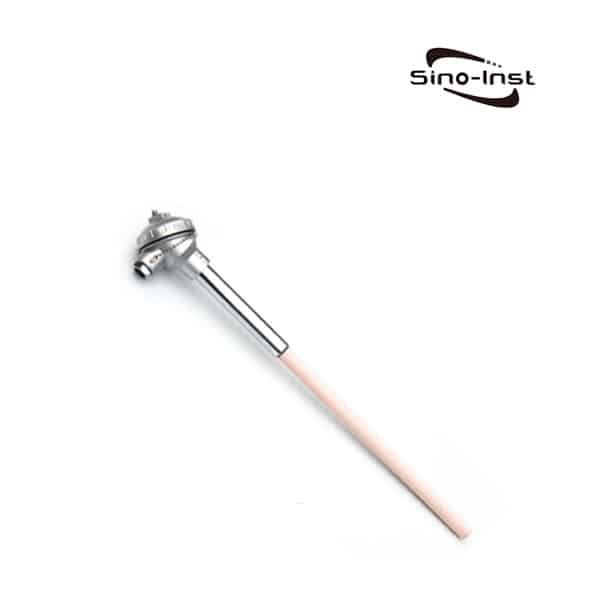
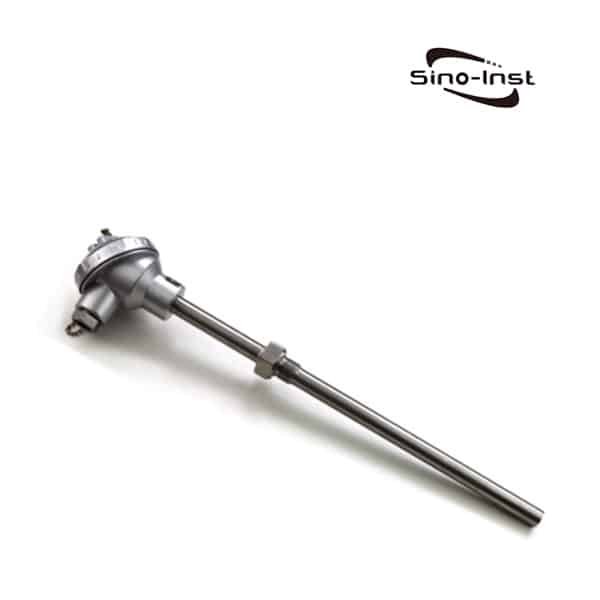
Thermocouple

Thermocouples are often used to measure the temperature of liquid, steam and gaseous media and solid surface temperatures.

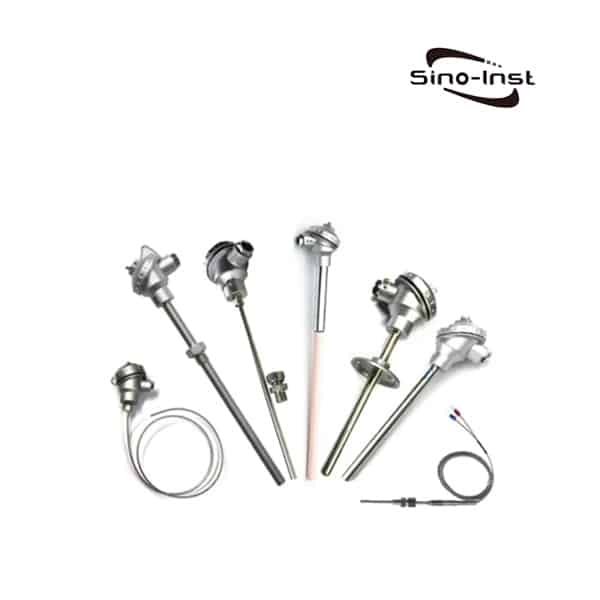
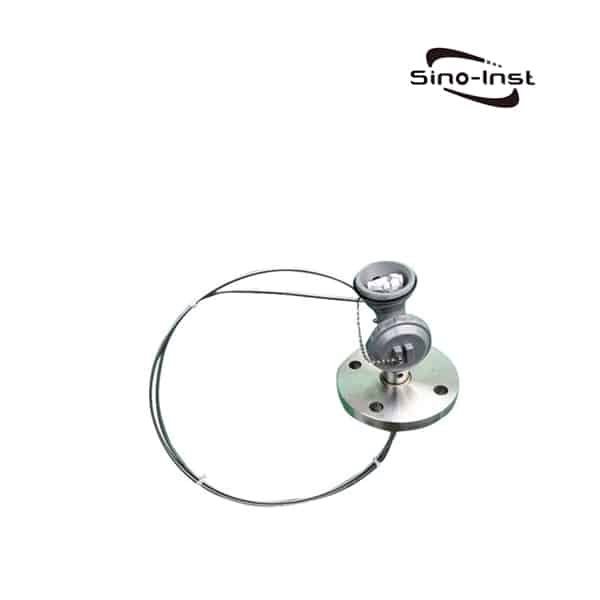
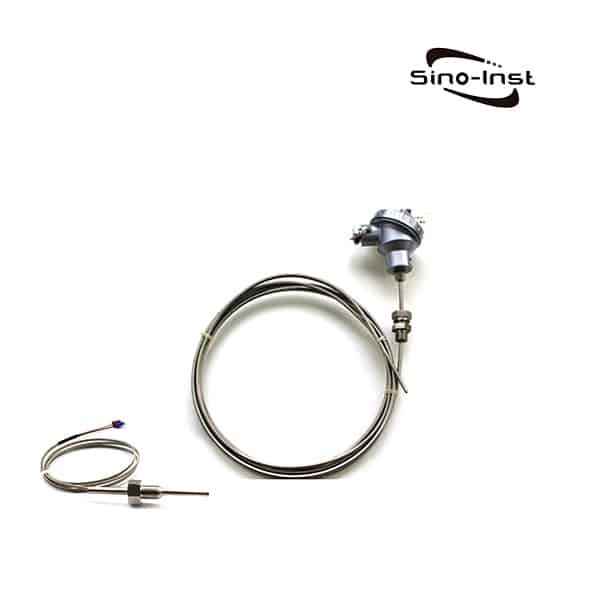
Thermocouples are commonly used temperature measuring components in temperature measuring instruments. It directly measures temperature and converts the temperature signal into a thermoelectromotive force signal. It is converted into the temperature of the measured medium by electrical instruments. Thermocouples are usually composed of main parts such as hot electrodes, insulating sleeve protection tubes and junction boxes. Usually used with display instruments, recording instruments and electronic regulators.

Sino-Inst offers a variety of  Thermocouples for Temperature measurement. If you have any questions, please contact our sales engineers.

Sheath Thermocouple

It is usually used along with display instruments, recording instr-uments, electronic computers and so on. It is able to directly me-asure the temperature of liquid, steam and gas and solid surfacein a variety of production processes within the range of 0 ~1300℃.

The electrode of sheath thermocouple are consisted by two different materials of conductor. When there is a temperature difference between the measuring end and the reference end. It will generate the thermal electric potential. The working instrument will show the corresponding temperature value of the thermal electric potential.

Range for temperature measurement and error-tolerance

Extended reading: LN2 tanks sensor

Assembled Sheathed Thermocouple

Product Applications

  • Cooling and heating systems
  • Water supply and water heating systems
  • Air-conditioning systems
  • Automation system temperature mensuration and control
  • Suited for temperature measurement in industrial environments, especially around motors, generators and other high voltage equipment.
  • Widely used in the injection molding mold.

Temperature measurement range and tolerance error

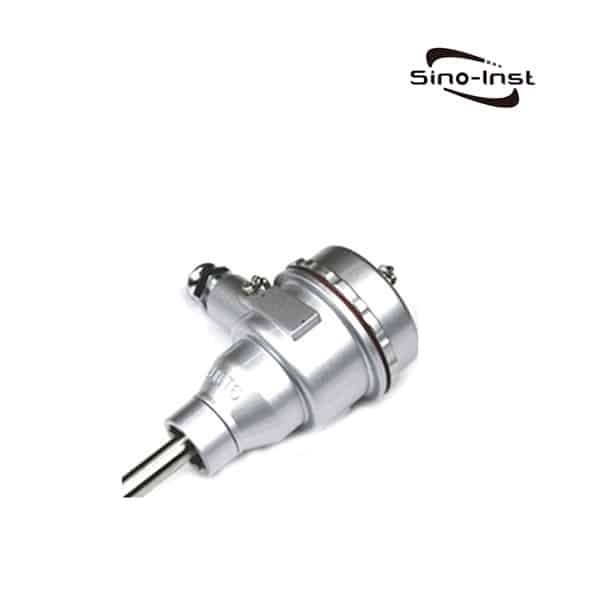
Explosion-proof Thermocouple

Explosion-proof thermocouple uses the principle of interval
explosion-proof with the junction box and other parts with enough strength where the dangerous parts which will generate spark, electric arc and dangerous temperature are sealed, so when the explosion occurs inside the cavity, the flame of the explosion can be cooled and distinguished in the gap between the joint surface so that the flame and the temperature will not be passed to the cavity.
Finally, the explosion-proof is realized.

Explosion-proof thermocouple Temperature measurement range

Read More About: Difference Between Class 1 Div 1 And Class 1 Div 2

Platinum Rhodium Thermocouple

The platinum rhodium thermocouple is a traditional temperature measuring element. It has stable thermoelectric performance and strong oxidation resistance, and is suitable for continuous use in an oxidizing and inert atmosphere. The long-term use temperature is 1600℃, and the short-term use temperature is 1800℃. The technical indicators are as follows:

  1. Temperature measurement range: 0~1800℃
  2. Temperature measurement accuracy: <± 0.5% t
  3. Time constant: ≤180s
  4. Insulation resistance: 5MΩ (at 20℃)
  5. Specification and size: 500, 750, 1000, 1200 (mm)
Product nameModelOuter sleeve materialRecommended maximum operating temperature
S-type platinum rhodium thermocouple
(Platinum Rhodium 10 platinum)
WRPGH3030GH303925Cr20Ni800~1000℃
R-type platinum rhodium thermocouple
(platinum rhodium 13 platinum)
WRQGH3030GH303925Cr20Ni800~1000℃
Type B platinum rhodium thermocouple
(Pt Rh 30-pt RH 6)
(double platinum rhodium)
WRRGH3030GH3039N102761200~1300℃

K-type Thermocouple

The K-type thermocouple is used as a temperature sensor. The K-type thermocouple is usually used with display instruments, recording instruments and electronic regulators.

The K-type thermocouple can directly measure the surface temperature of liquid vapor, gaseous media and solids in various production ranges from 0℃ to 1300℃.

K-type thermocouple is the cheapest metal thermocouple with the largest consumption at present, and its consumption is the sum of other thermocouples.

  • The diameter of K-type thermocouple wire is generally 1.2mm~4.0mm.
  • The nominal chemical composition of the positive electrode (KP) is: Ni:Cr=90:10, the nominal chemical composition of the negative electrode (KN) is: Ni:Si=97:3, and its service temperature is -200℃~1300℃.
  • The K-type thermocouple has the advantages of good linearity, high thermoelectromotive force, high sensitivity, good stability and uniformity, strong oxidation resistance, and low price. It can be used in oxidizing inert atmosphere and widely used by users.
  • K-type thermocouples cannot be directly used in sulfur, reducing or reducing, oxidizing alternate atmospheres and vacuum at high temperatures, nor are they recommended for use in weakly oxidizing atmospheres.

Thermocouple Types

Commonly used thermocouples can be divided into two categories: standard thermocouples and non-standard thermocouples.

The so-called standard thermocouple refers to a thermocouple with a unified standard indexing table that specifies the relationship between the thermoelectric potential and the temperature, the allowable error, and the national standard. It has a matching display instrument for selection.
Non-standardized thermocouples are inferior to standardized thermocouples in use range or order of magnitude. Generally, there is no unified indexing table. It is mainly used for measurement in some special occasions.

Standardized thermocouples China started from January 1, 1988. Thermocouples and thermal resistances are all produced in accordance with IEC international standards. Seven standardized thermocouples of S, B, E, K, R, J, and T are designated as China’s unified design. Thermocouple.

In theory, any two different conductors (or semiconductors) can be made into thermocouples. However, as a practical temperature measuring element, there are many requirements for it.

In order to ensure the reliability in engineering technology and sufficient measurement accuracy. Not all materials can form a thermocouple. Generally, the basic requirements for the electrode material of a thermocouple are:

  1. In the temperature measurement range, the thermoelectric properties are stable. It does not change with time. It has sufficient physical and chemical stability and is not easy to be oxidized or corroded;
  2. Low temperature coefficient of resistance, high conductivity, low specific heat;
  3. The thermoelectric potential generated in temperature measurement should be large, and the relationship between thermoelectric potential and temperature is linear or close to linear single value function;
  4. Good reproducibility of materials. High mechanical strength, simple manufacturing process and low price.

Sino-Inst, Manufacuturer for Thermocouples, like: Armoured thermocouple, assembly thermocouple, explosion-proof thermocouple, etc.

Sino-Inst’s Thermocouples, made in China, Having good Quality, With better price. Our Temperature measurement instruments are widely used in China, India, Pakistan, US, and other countries.

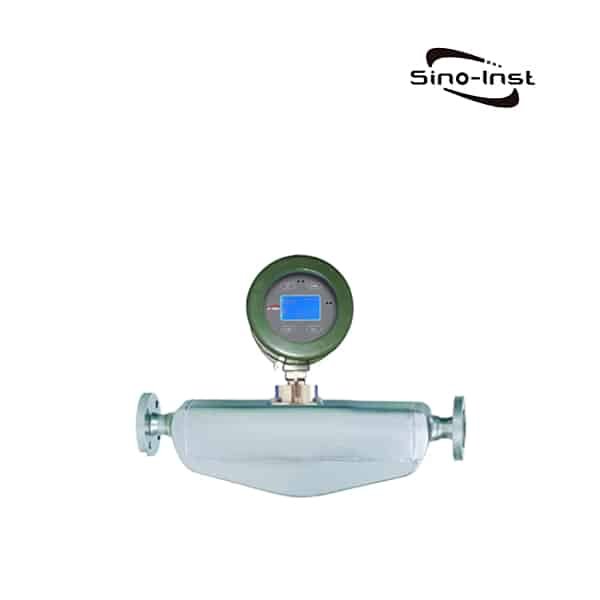
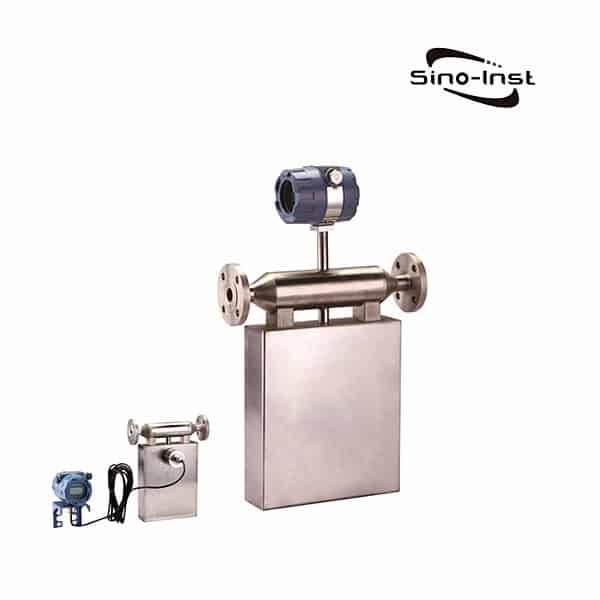
V-series Curved Digital Mass Flow Meter

Digital Mass Flow Meter is a micro-bend Coriolis mass flow meter, a general measurement principle for liquids and gases.

Digital Mass Flow Meter can be divided into elbow type and straight pipe type according to different measuring tube shapes. Among them, U-shaped and slightly curved types are the most widely used. The elbow types are divided into U-shaped, slightly curved, △, Ω, water drop, fly swatter, etc., and U-shaped and slightly curved The most extensive. V-series Curved Digital Mass Flow Meter simultaneously measures mass flow, density, temperature and viscosity.

Features of V-series Curved Digital Mass Flow Meter

  • General measuring principle for liquids and gases
  • Multivariable measurement: simultaneous measurement of mass flow, density, temperature and viscosity
  • High measurement accuracy: typical value is ±0.2% o.r.; optional: ±0.1%
  • The measurement principle is completely unaffected by the physical properties of the fluid and the flow field
  • No front/rear straight pipe length requirements
  • Wide measuring range: 1:10, 1:20
  • The sensor has self-flow performance, easy to drain and easy to clean
  • Optimized overall structure reduces pressure loss
  • The installation space is reduced and is not affected by installation conditions and process engineering
  • High measurement accuracy and good stability
  • No elbow parts, low wear and long working life
  • High working frequency, adapt to harsh working conditions

Specifications of V-series Curved Digital Mass Flow Meter

Working temperature of measured medium -200℃~350℃,Standard form:-50~200℃Low temperature type:-200~200℃
  Measurement display unit mass flow:g/h,kg/h,t/h,g/m,kg/m,t/m
 Volume flow:cm³/h,d m³/h,m³/h,cm³/m,d m³/m,m³/m
Density:kg/m³ or g/cm³,temperature:℃,K,℉
 ambient temperature -40~60℃
 Texture of materialMeasuring tube:316L ,Shell:304 
 Accuracy of liquid flow measurement 0.1%,0.15%,0.2%
 Measurement range of liquid density 0.3~3.000g/cm³,measurement accuracy±0.002g/cm³
 Temperature measurement range -200~350℃ ,measurement accuracy:±1℃
 communication RS485,MODBUS  Agreement
 output signal 0~10000Hz Pulse signal, flow signal,collector open circuit signal,
4~20mADCCurrent, Flow and Density Output Signals
 Power supply 18~36VDC Power supply:7W(basic)85~265VACPower supply:10W(additional)

Pros and cons of Coriolis Digital Mass Flow Meter

Advantages

  • The Coriolis mass flow meter directly measures the mass flow rate with high measurement accuracy.
  • It can measure a wide range of fluids, including high-viscosity liquids, slurries containing solids, liquids containing trace gases, and medium and high-pressure gases with sufficient density.
  • The measuring tube has a small vibration amplitude and can be regarded as a non-moving part, and there are no obstructions and moving parts in the measuring pipe.
  • It is not sensitive to the flow velocity distribution of the upflow, so there is no requirement for upstream and downstream straight pipes.
  • The measured value is not sensitive to the fluid viscosity, and the change of fluid density has little effect on the measured value.
  • Multi-parameter measurement can be done, such as measuring density at the same time, and deriving the concentration of solute in the measurement solution from this.

Read more about: The Pros and Cons of Micro Motion Flow Transmitters

Disadvantage

  • Coriolis mass flow meters cannot be used to measure low-density media and low-pressure gases. The gas content in the liquid exceeds a certain limit (varies by model) will significantly affect the measured value.
  • Coriolis mass flowmeters are more sensitive to external vibration interference. In order to prevent the impact of pipeline vibration, most models of Coriolis mass flowmeters require high installation and fixation of flow sensors.
  • Cannot be used for larger pipe diameters, currently limited to less than 200mm.
  • The inner wall of the measuring tube is worn, corroded, or deposited and scaled, which will affect the measurement accuracy, especially for the Coriolis mass flowmeter of the thin-walled tube.
  • The pressure loss is relatively large, which is equivalent to that of volumetric meters. Some Coriolis mass flowmeters are even 100% larger than volumetric meters.
  • Most models of Coriolis mass flow meters are relatively large in weight and volume.
  • expensive. The foreign price is 5,000 to 10,000 US dollars for a set, which is about 2 to 5 times that of the electromagnetic flowmeter of the same caliber. The domestic price is about 2 to 8 times that of the electromagnetic flowmeter.

Extended reading: U-series Liquid Mass Flow Meter | Liquid-slurry flow measure

Thermal mass flow meter

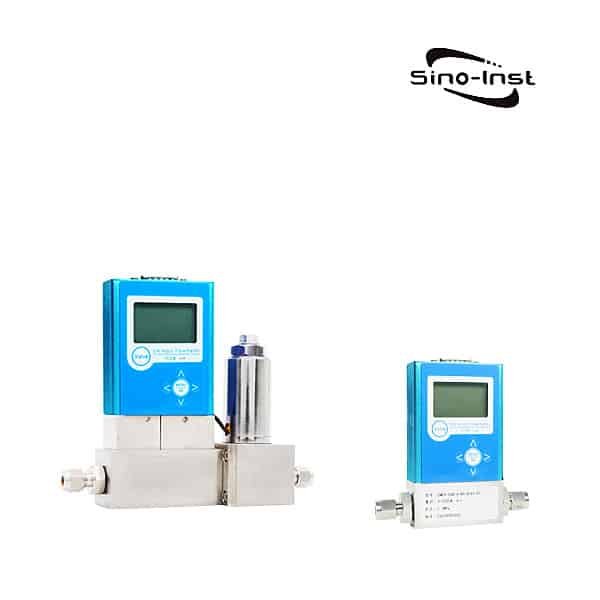
Thermal mass flow meters (TMF for short) are used to weigh thermal flow meters in China. It is to measure the mass flow of fluid by using the temperature field change generated when the fluid flows through the pipe heated by the external heat source. Or a flow meter that uses the relationship between the energy required to increase the temperature of the fluid to a certain value and the mass of the fluid when the fluid is heated to measure the mass flow of the fluid.
Generally used to measure the mass flow of gas. Has low pressure loss. The flow range is large. High precision, high repeatability and high reliability. There are no moving parts and it can be used for extremely low gas flow monitoring and control.

You may like:

Read more about: Coriolis meter for High viscosity liquid

Sino-Inst offer over 10 Digital Mass Flow Meters, with Best Price.

A wide variety of Curved Digital Mass Flow Meters options are available to you, such as free samples, paid samples. All of our flow meters can wokrk with the AMS NEW TREX. About 13% of these are magnetic flow meter. 14% are Insertion Magnetic Flow Meter. 25% are Venturi flow meter. 13% are Handheld ultrasonic flow meter, and others are Liquid Turbine Flow Meters.

Sino-Inst is V-series Curved Digital Mass Flow Meter suppliers, located in China. Mass flow meter products are most popular in North America, Mid East, and Eastern Europe.

The United States, and India, which export 99%, 1%, and 1% of V-series Curved Digital Mass Flow Meter respectively.

You can ensure product safety by selecting from a certified supplier, with ISO9001, ISO14001 certification.

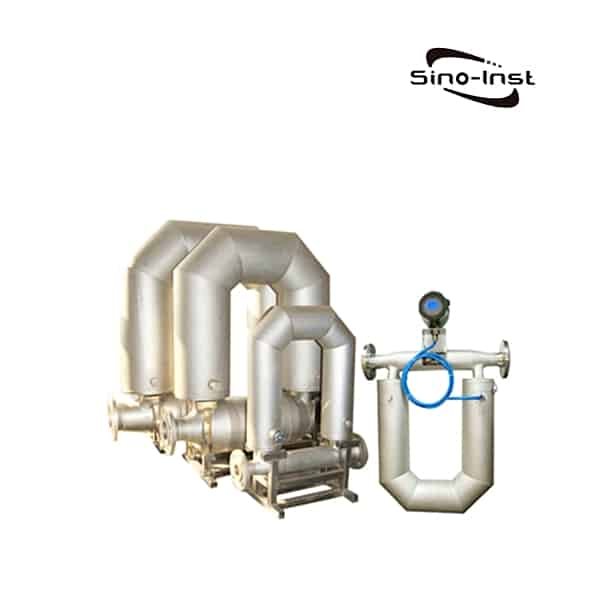
T-series Coriolis Mass Flowmeter for Small Flow-High Viscosity Fluids

Coriolis Mass Flowmeter is suitable for measuring various non-Newtonian fluids, slurries, suspensions, high viscosity fluids and other media.

The T-series Triangle Coriolis Mass Flowmeter can directly measure the mass flow rate of the fluid in the closed pipe and the density of the medium. The T series Coriolis mass flowmeter has a triangular sensor structure. The smallest diameter can be DN3. This structure flowmeter is easy to measure when the instantaneous flow is small. The compact triangular shell structure saves installation space. The installation is simple and superior Downstream straight pipe requirements

Sino-Inst offers a variety of  Mass flow meters for High Viscosity Liquids flow measurement. If you have any questions, please contact our sales engineers.

Features of T-series Triangle Coriolis Mass Flowmeter

  • Triangular internal measuring tube design.
  • It can directly measure the mass flow of fluids. This is of great significance for the measurement and control of production processes such as energy metering and chemical reactions.
  • High measurement accuracy. The measurement accuracy can be guaranteed between 0.1% and 0.5%.
  • The measurable ratio is relatively large. Generally, the measurable ratio to ensure the basic accuracy is 10:1 or 20:1.
  • Wide application range. In addition to normal fluid measurement, it can also measure industrial media that are difficult to measure with general fluid measuring instruments, such as high-viscosity fluids, various slurries, suspensions, etc.
  • .Completely provide mass flow, volume flow, density, temperature measurement and calculation parameters. Reliable results can be obtained without tedious conversion, and volume tables can be directly replaced.
  • Compact triangular shell structure. Save installation space and simple installation. No upstream and downstream straight pipe section requirements
  • Simultaneously measure the instantaneous flow rate, cumulative flow rate, temperature, density
  • Direct measurement of fluid quality. The measurement accuracy is not affected by temperature, pressure, density, viscosity, without any compensation conversion
  • No need to re-calibrate when measuring fluid changes

Extended reading: Liquid mass flow controller for process liquid -Sino-Inst

Specifications of T-series Coriolis Mass Flowmeter

Sensor technical parameters:

(1) Sensor specification, range, zero stability:

Diameter (DN)Flow RangeZero stability
mmkg/hkg/h
30~96~1440.0144
60~540~8100.081
80~960~14400.144
100~1500~22500.225
150~3000~45000.45
200~6000~90000.9
250~9600~144001.44
320~18000~270002.7
400~30000~450004.5
500~48000~720007.2
800~120000~18000018
1000~192000~30000030
1500~3600060

Note: The flow range gives two parameters, the middle parameter is the standard flow range, and the general factory inspection is carried out according to this range. At the same time, it is also recommended that the user choose the instrument within this range. The latter parameter is the upper limit flow to ensure the stable operation of the sensor scope.

(2) Flow (liquid) measurement accuracy

Flowmeter AccuracyMeasurement errorrepeatability
0.10%±0.1% ±(zero point stability/measured value)%1/2 measurement error%
0.15%±0.15% ±(zero point stability/measured value)%1/2 measurement error%
0.20%±0.2% ±(zero point stability/measurement value)%1/2 measurement error%

Read more about: The Pros and Cons of Micro Motion Flow Transmitters

(3) Density (liquid) measurement range and accuracy
Measuring range: 0.3~3.000g/cm3 Measuring accuracy: ±0.002g/cm3

(4) Temperature measurement range and accuracy
Measuring range: -200~350°C Measuring accuracy: ±1°C

(5) Working temperature of the measured medium: -200℃~350℃
Standard type: -50~200℃
Low temperature type: -200~200℃

(6) Applicable ambient temperature: -40℃~60℃

(7) Material: measuring tube 316L shell 304

(8) Working pressure: 0~4.0MPa
Note: The actual withstand voltage of the sensor varies from specification to specification, here is only the standard withstand voltage.

(9) Explosion-proof mark: Exd[ia]ⅡCT6Gb

Extended reading: What Is Difference Between Rotameter And Flow Meter?

Converter parameters

(1) Measurement parameters: mass flow, volume flow, medium working density, medium working temperature
Display: double-row LED display, three-row LCD display
Window size: 62×32mm (W×H) (Φ80mm)
Measurement display accuracy: 0.05%
Measurement display unit: mass flow g/h, kg/h, t/h, g/m, kg/m, t/m
Volume flow cm3/h, dm3/h, m3/h, cm3/m, dm3/m, m3/m
Density kg/m3 or g/cm3
Temperature °C, K, °F

(2) Converter output signal

Converter output signal: 0~10000Hz pulse signal
Flow signal Collector open circuit signal 4~20mADC current signal
Flow, density output signal choose one of the current output load capacity: not less than 750 ohms (24VDC power supply)

Note: Two current signals can be provided as required

Output signal accuracy: pulse signal 0.05%
Current signal 0.2%
Communication signal: RS485 MODBUS protocol

(3) Operating ambient temperature -40~60℃
Power supply 18~36VDC Power supply: 7W (basic power supply)
85~265VAC power supply: 10W (additional power supply)

(5) Instrument protection and explosion-proof protection level: IP67
Explosion-proof grade: Exd[ia]ⅡCT6Gb\Exd [ib]ⅡCT6Gb

(6) Structural size and weight Φ125×180mm, 2.7kg

Coriolis Mass Flowmeter Working Principle

The principle of Coriolis mass flowmeter mass measurement is Newton’s second law F=Ma. When the fluid flows in the vibrating tube, it will produce Coriolis force proportional to the mass flow.

When there is no fluid flowing, the vibrating tube will not be twisted, and the signals detected by the electromagnetic signal detectors on both sides of the vibrating tube are in phase.

When fluid passes by, the vibrating tube will be twisted under the action of torque, and there will be a phase difference between the two detectors.

The transmitter measures the lag time between the left and right detection signals. This time difference is multiplied by the flow calibration coefficient to determine the mass flow.

The density measurement principle of Coriolis mass flowmeter is that the vibration frequency is inversely proportional to the square root of the fluid density. The fluid density is determined by measuring the vibration frequency.

Therefore, the mass flow meter can realize the measurement of fluid mass flow and the measurement of fluid density.

How does a T-series Triangle Coriolis Mass Flowmeter measure mass flow and density?

Coriolis mass flow measurement is the MOST ACCURATE FORM for a flow measurement for a wide range of industrial processes. Each Coriolis flowmeter has one or more measuring tubes.

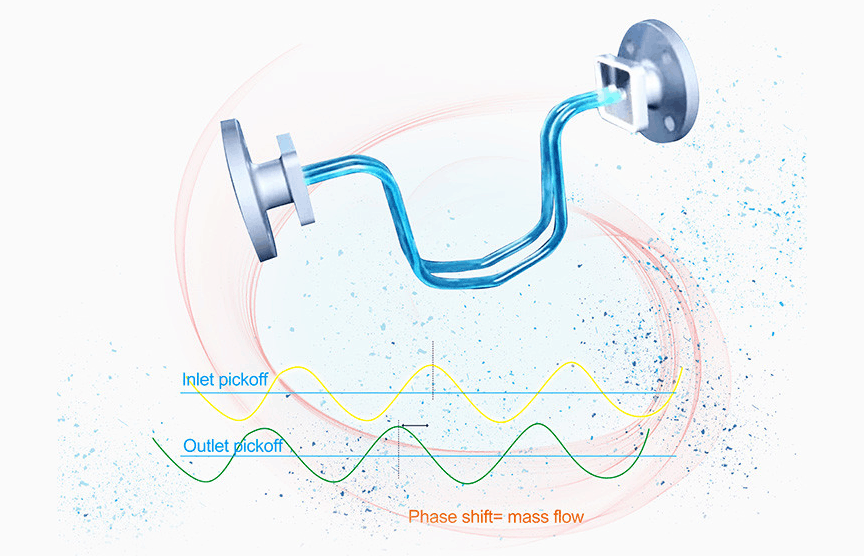
As soon as the fluid starts to flow in the measuring tube, additional twisting is imposed on this oscillation due to the fluid’s inertia. Two sensors detect this change of the tube oscillation in time and space as the “phase difference.”
Phase difference= mass flow
Oscillation frequency= density

The so-called high-viscosity liquid means that the liquid is viscous and thick, which is not only different from ordinary liquids, but also different from non-Newtonian fluids (mud, paper pulp). The activity is slow and it is very difficult to filter by simple methods. What’s more, in addition to some dust, the liquid also contains colloidal particles that are not completely dissolved.

For example: solutions such as rubber, paraffin, cellulose acetate, viscose, polyacrylonitrile, paint and animal glue.

High Viscosity Flow Measurement is a Tough Job.

The property that generates the above-mentioned internal friction force when the fluid flows is called viscosity, and the physical quantity that represents the magnitude of viscosity (the magnitude of frictional resistance generated when the molecules inside the liquid move relative to each other) is called viscosity.

The greater the viscosity of the fluid, the worse the fluidity of the fluid.

For example, the viscosity of oil is greater than that of water, and the fluidity of oil is worse than that of water. The honey has a high degree of staining and is difficult to flow. For honey, screw pump products can be used. The viscosity of fluid is of great significance to the study of fluid flow, heat and mass transfer processes.

The physical meaning of viscosity is the size of the internal friction force generated by the fluid viscosity on the single value area when the fluid is caused to produce a unit velocity gradient (l/s). Therefore, the viscosity of the fluid is only displayed when it is in motion.

The greater the viscosity of the fluid, the greater the internal friction when flowing at the same speed. In other words, the greater the viscosity of the fluid under the same flow, the greater the resistance of the fluid and the greater the head loss of the fluid. . Therefore, in order to reduce the head loss, a lower flow rate should be used for fluids with human viscosity.

Extended reading: U-series Liquid Mass Flow Meter | Liquid-slurry flow measure

Oval gear flow meters and Coriolis mass flow meters can be used for high viscosity liquids.

The oval gear flowmeter is a positive displacement flowmeter. It has high accuracy for the measurement of malignant liquids, such as the flow of viscous fructose syrup.

Coriolis flowmeters have excellent performance in various types of media measurement, and now our customers often request them.

Sino-Inst is a supplier of high-viscosity fluid flow meters from a Chinese manufacturer. Welcome to contact us to get the low prices of these flow meters.

Extended reading: LCD Display Oval Gear High Viscosity Flow Meter

It is the most convenient choice to measure high viscosity liquid with ultrasonic flowmeter.

1. The ultrasonic flowmeter sensor converts electrical energy into ultrasonic energy and emits it into the fluid to be measured. The receiver receives the ultrasonic signal, which is amplified by the electronic circuit and converted into an electrical signal representing the flow rate to the meter for display.

2. The main thing is that it can be installed outside the pipeline. Do not touch the measured fluid. It is not affected by fluid temperature, pressure, viscosity, density, etc., so it fully meets your above requirements.

3. Because it is ultrasonic, the accuracy is not very high, generally 1%. Compared with some flowmeters on the market, it has fewer failures and easier maintenance.

Coriolis Mass Flowmeter is suitable for measuring various non-Newtonian fluids, slurries, suspensions, high viscosity fluids and other media.

The advantages of mass flow meters are:

  1. The time difference has a linear relationship with the measurement effect;
  2. Direct measurement of mass flow;
  3. The measuring instrument can additionally detect fluid density ρ and medium temperature T;
  4. The measurement results have high accuracy (typical accuracy: mass flow is ±0.1% (relative error of indication) + ±0.005% of the end value; density ρ is ±0.5kg/m³; △T is ±0.05% ( Relative error of indication) +5℃;
  5. The measurement result has nothing to do with pressure and temperature;
  6. The measurement result has nothing to do with the performance of the fluid (density, viscosity, electrical conductivity and thermal conductivity);
  7. The measurement result has nothing to do with the flow velocity distribution, that is, no special inlet guide pipe is required. The flowmeter can measure the true average mass flow rate. There is no need to apply back pressure at the outlet end, and no outlet guide pipe is needed;
  8. The installation location can be selected arbitrarily;
  9. Two-way measurement can be performed;
  10. All pressurized media can be measured, such as liquid and gaseous media. Especially polluted and corrosive media;
  11. Because there are no moving parts. Therefore, the flowmeter does not require maintenance and has high working reliability;
  12. The usable temperature range of the flowmeter is wide (-240℃~+426℃), and the pressure can reach 39.3 MPa.

Extended Reading: Rotameter vs Flow meter

In addition to the above-mentioned numerous advantages, there are also shortcomings;

  1. The flowmeter is expensive;
  2. The measuring pipeline with complex geometry increases the pressure loss;
  3. In addition to single straight pipes, some flow meters have many elbows, which are difficult to clean and have poor self-emptying ability;
  4. Pay attention to their compatibility between the material of the measuring pipe and the measured medium;
  5. The maximum flow rate that can be measured is 680T/h;
  6. Strong vibration and shock will affect the mechanical device of the flow meter, and will produce larger measurement errors in severe cases;
  7. The installation of some flow meters is restricted by installation regulations;
  8. A flow meter with a flow distributor will produce larger measurement errors when measuring uneven media;
  9. The measurement of high viscosity media requires additional excitation energy and special calibration.

Extended reading: Liquid Mass Flow Meter

The oval gear flowmeter has high measurement accuracy and is suitable for measuring the flow of high-viscosity media. But it is not suitable for fluids containing solid particles. If the measured liquid medium contains gas, it will also cause measurement errors.

Usually, the accuracy of the oval gear flowmeter can reach 0.5 level, which is a relatively accurate flow meter. However, if the flow rate of the measured medium is too small during use, the leakage error of the oval gear flow meter will be prominent. Sufficient measurement accuracy can no longer be guaranteed.

Technical features and advantages of oval gear flow meters:

Oval gear flowmeter is also called fixed displacement flowmeter, or PD flowmeter for short. It is a kind of high precision in the flow meter, especially suitable for the measurement of high viscosity medium flow. Oval gear flow meters use mechanical measuring elements to continuously divide the fluid into a single known volume. The total volume of fluid is measured according to the number of times that the metering chamber is filled and discharged with this volume of fluid successively and repeatedly.

The flow measurement has nothing to do with the flow state of the fluid. This is because the oval gear flowmeter relies on the pressure head of the measured medium to push the oval gear to rotate for measurement.

The greater the viscosity of the medium, the smaller the leakage from the gear and the metering gap. Therefore, the larger the sticky skin of the nuclear test medium, the smaller the leakage error, which is more beneficial to the measurement.

The oval gear flowmeter has high measurement accuracy and is suitable for measuring the flow of high-viscosity media. But it is not suitable for fluids containing solid particles (solid particles will jam the gear, so that the flow cannot be measured). If the measured liquid medium contains gas, it will also cause measurement errors.

Limitation of Gear Flowmeter

  • Poor choice for medium for water, because the carbon steel wet material can rusty, also an increase in fluid slippage.
  • The flow meter is really bully and heavy, increase a lot shipping charges when delivery
  • Relatively high price cost for large gear flow meter sizes for stainless steel material.
  • Not good for the multi-phase fluids flow measurement such as used as Refrigerant flow meter.
  • More moving parts needs maintenance compared ,it can be destroyed by flow surges and gas slugs

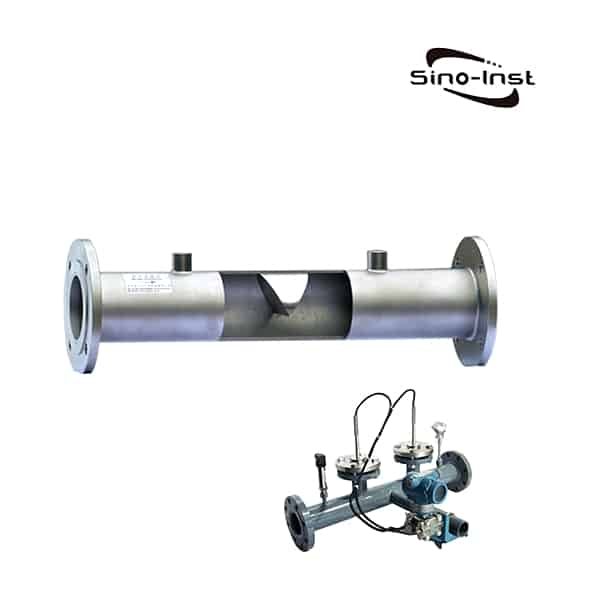
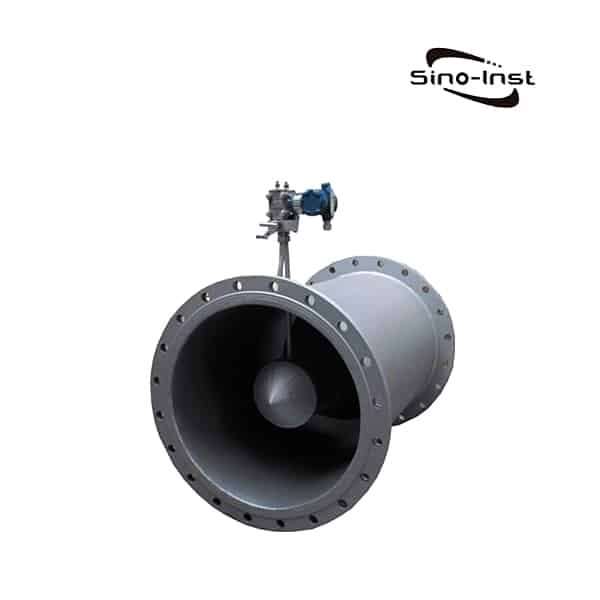
To measure high-viscosity fluids, you can use differential pressure flowmeters or ultrasonic flowmeters to measure. Such as V-cone flowmeters, balanced flowmeters, orifice flowmeters can all be solved, no matter how high the viscosity is, it will not affect .

More Featured Flow Meters

More Feature Flow Measurement Solutions

Sino-Inst, Manufacuturer for Coriolis Mass Flowmeters.

T-series Triangle Coriolis Mass Flowmeter simultaneously measures mass flow, density, temperature and viscosity.

Sino-Inst’s T-series Triangle Coriolis Mass Flowmeters, made in China, Having good Quality, With better price. Our flow measurement instruments are widely used in China, India, Pakistan, US, and other countries.

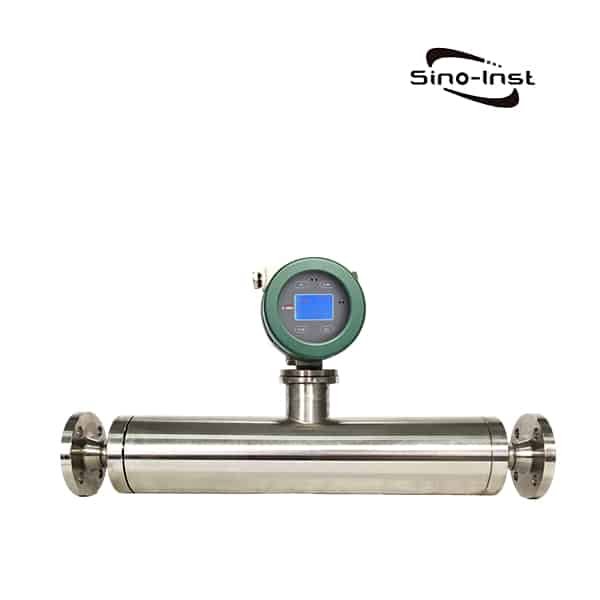
Z-Series Straight Tube Micro Motion Coriolis Flow Meter

Micro Motion Coriolis Flow Meter is a flow meter made according to the Coriolis acceleration theory. Z-Series Straight Tube Micro Motion Coriolis Flow Meter simultaneously measures mass flow, density, temperature and viscosity.

The Z-Series Straight Tube Micro Motion Coriolis Flow Meter can directly measure the mass flow rate of the fluid in the closed pipe and the density of the medium. No front/rear straight pipe length requirements. The measurement principle is completely unaffected by the physical properties of the fluid and the flow field. Can measure various liquid and gas flow.

Features of Z-Series Straight Tube Micro Motion Coriolis Flow Meter

  • General measuring principle for liquids and gases
  • Multivariable measurement: simultaneous measurement of mass flow, density, temperature and viscosity
  • High measurement accuracy: typical value is ±0.2% o.r.; optional: ±0.1%
  • The measurement principle is completely unaffected by the physical properties of the fluid and the flow field
  • No front/rear straight pipe length requirements
  • Wide measuring range: 1:10, 1:20
  • Straight pipe structure, small pressure loss, small sensor volume and light weight
  • The sensor has self-flow performance, easy to drain and easy to clean
  • High working frequency, not easy to be interfered by external industrial vibration frequency, adapt to harsh working conditions
  • Small installation space, not affected by installation conditions and process engineering
  • High measurement accuracy and good stability
  • No elbow parts, low wear and long working life

Straight Tube Micro Motion Coriolis Flow Meter Specification

Liquid Accuracy / Repeatabilityup to ±0.2± of rate (up to ±0.1± of rate)
Gas Accuracy / Repeatability±0.20± of rate
Density Accuracy / Repeatability±0.002 g/cm3 (±0.0005 g/cm3)
Line Size1/4″ (DN8) – 2″ (DN50)
Pressure Rangeup to 1450 psig (100 barg)
Temperature Range-60 to 300 F (-51 to 149 C)

Micro Motion Coriolis Flow Meter Applicaitons

Micro Motion Coriolis Flow Meter can be monitored in the following areas to meet the needs of its ingredients, mixing processing and commercial metering:

  • Chemical industry, such as systems with chemical reactions
  • Petroleum industry, such as moisture content analysis
  • Oil industry, such as vegetable oil, animal oil and other oils
  • Pharmaceutical industry
  • Paint industry
  • Paper industry
  • Textile printing and dyeing industry
  • Fuel industry, such as oil, heavy oil, coal water slurry and other fuels, lubricants
  • Food industry, such as dissolved gas drinks, health drinks and other liquids
  • Transportation industry, such as the metering of liquids in pipelines

Read more about: The Pros and Cons of Micro Motion Flow Transmitters

Micro Motion Coriolis Flow Meter Working Principle

The micro-motion mass flowmeter is a flowmeter made according to the Coriolis acceleration theory. There is a straight tube that rotates in a plane around a fixed axis O at an angular velocity w, and a particle in the tube moves outwards along the straight tube at a speed v. Because The mass point m is in a system with both rotational motion and linear motion, so it will obtain two accelerations.

Serving size:

① Centripetal acceleration a, its value is rw^2 (r is the distance from the particle m to the axis O), and the direction points to the axis O.
② Tangential acceleration ac, its value is 2uw. The direction is perpendicular to a, it comes from the rotating pipe. At the same time it produces a reaction force to the pipe. This reaction force is the Coriolis force. Its calculation formula is:

F=2muw —————-(3-8)

Where:
F is Coriolis force, N;
w is the angular velocity, 1/s;
u is the radial velocity in the rotating system, m/s,
m is the mass of the moving object, kg.

If the density of the fluid is p, the tangential Coriolis force on any section of pipe △x is:

△F=2pA△xuw ———(3~9)

Where:
A is the cross-sectional area of ​​the pipe.

In the formula (3-9), pAu is the natural flow rate of the fluid, set as QM’, then the formula (3-9) can be expressed as:

△F= 2w△xQm————-(3-10)

From the above equation, we can know the mass flow Qm as long as the Coriolis force △F is measured. This is the measuring principle of micro-motion mass flowmeter.

Read more about: Coriolis meter for High viscosity liquid

More Featured Flow Meters

Sino-Inst, Manufacuturer for Micro Motion Coriolis Flow Meters.

Z-Series Straight Tube Micro Motion Coriolis Flow Meter simultaneously measures mass flow, density, temperature and viscosity.

Sino-Inst’s Micro Motion Coriolis Flow Meters, made in China, Having good Quality, With better price. Our flow measurement instruments are widely used in China, India, Pakistan, US, and other countries.